Dan Brown, TVo
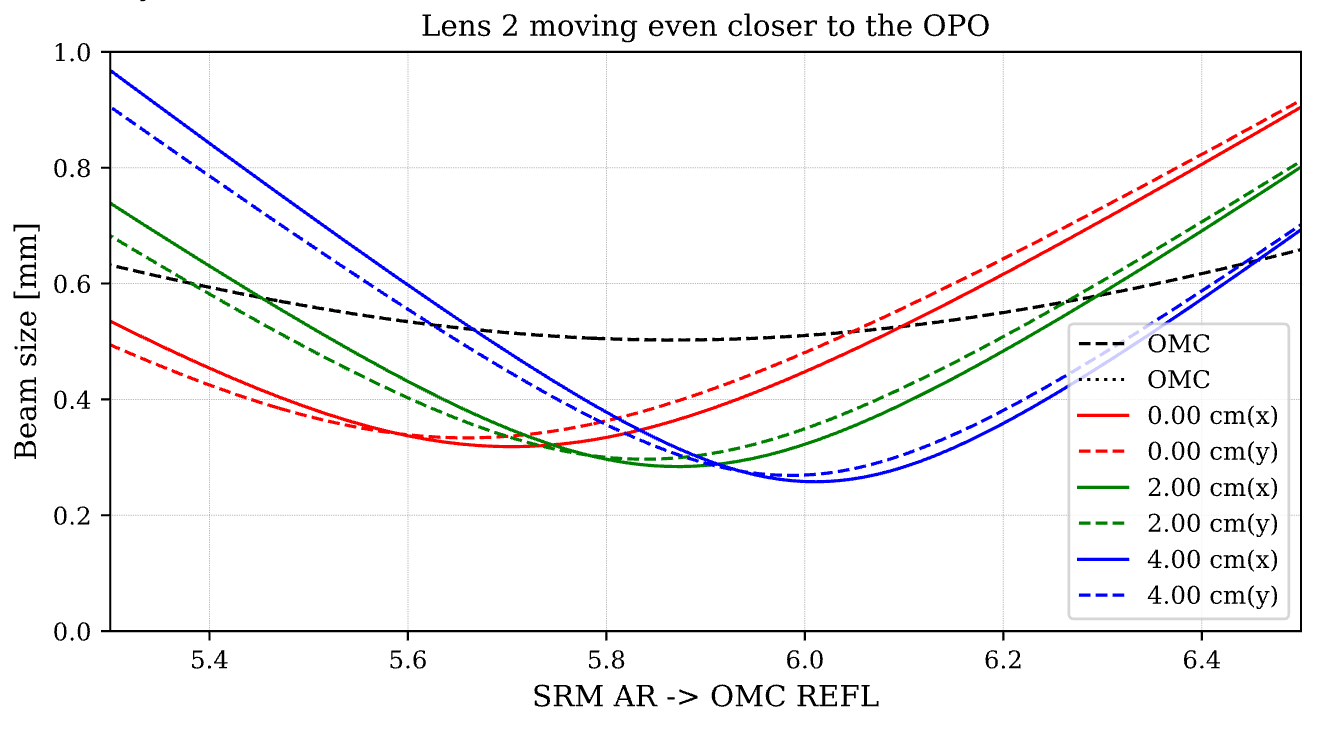
In alog 41504 we looked at the mode matching of the OPO beam to the OMC whilst varying an adjustable lens. With the lens positioned closest to the OPO we got the best (estimated) matching of ~80%. We wanted to know if moving the lens even closer would improve on this. The Finesse models suggest that moving the lens closer doesn't help and actually reduces the modematching (down to ~60%) as the waist gets too small, ~80% is about as good as it gets with the current setup.
Next we want to look at adjusting the lens closest to the OPO and perhaps trying different lens options in the model.
Details
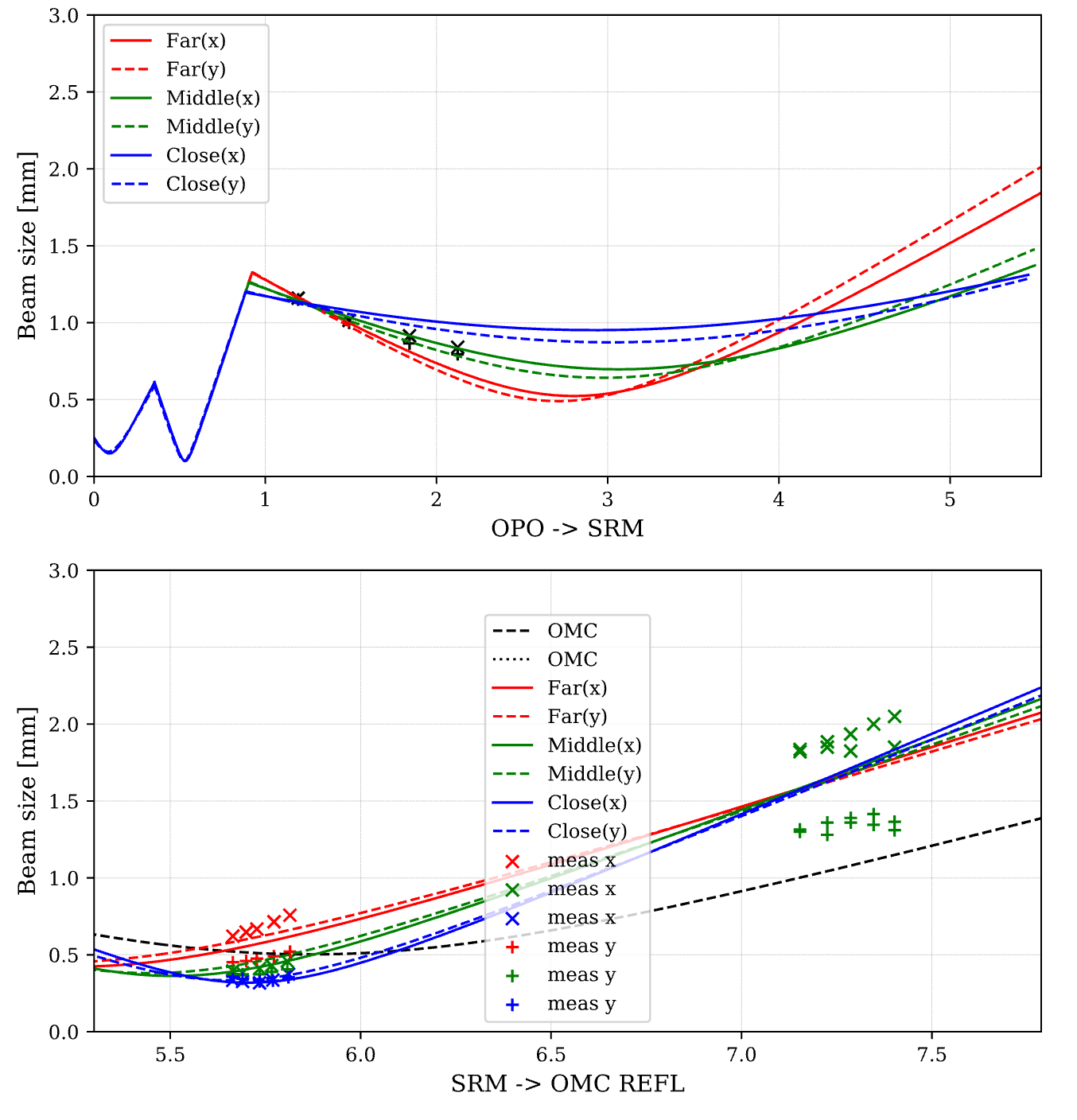
The largest uncertainties we have are the lengths between all the optics. The model updates were mostly a combination of measurements and inferred lengths (from Solidworks models), I've tried to keep track of where these have come from in the LHO file. We we're able to get a reasonable agreement for the propagation of the OPO beam to the OMC for the "close" and "middle" positions on the translatable lens stage near the OPO, as can be seen in figure. The farthest position has a lot of astigmatism compared to the other two, so we're not sure if that's comparable to what the model predicts too much. To narrow down the beam shapes better, Nutsinee and Terry took another beamscan between ZM1 and HAM5. This allowed us to get a much better idea of the beam shape heading towards the SRM. There were also measurements taken from OMC REFL, seen in figure around 7.25m which appear very astigmatic. The model does not currently replicate this large astigmatism but the average of the two seem to roughly agree.
The notebook with the code and measured data for all this is in: https://git.ligo.org/IFOsim/Finesse_playground/blob/8370d9bb0c0b01b7e79d6565d831ec33e598f728/daniel_brown/LHO/OPO_to_OMC_beamscan_matching.html
The LHO parameters used can be found in: https://git.ligo.org/IFOsim/Finesse_playground/blob/8370d9bb0c0b01b7e79d6565d831ec33e598f728/daniel_brown/LHO/LHO.py