[Robert S. , Jason O., Suresh D.]
Objective:
1) At present the oplev signal is dominated by electronic noise above 1 Hz. In attempt to see if increasing the whitening helps wished to increase the whitening stages on the signal.
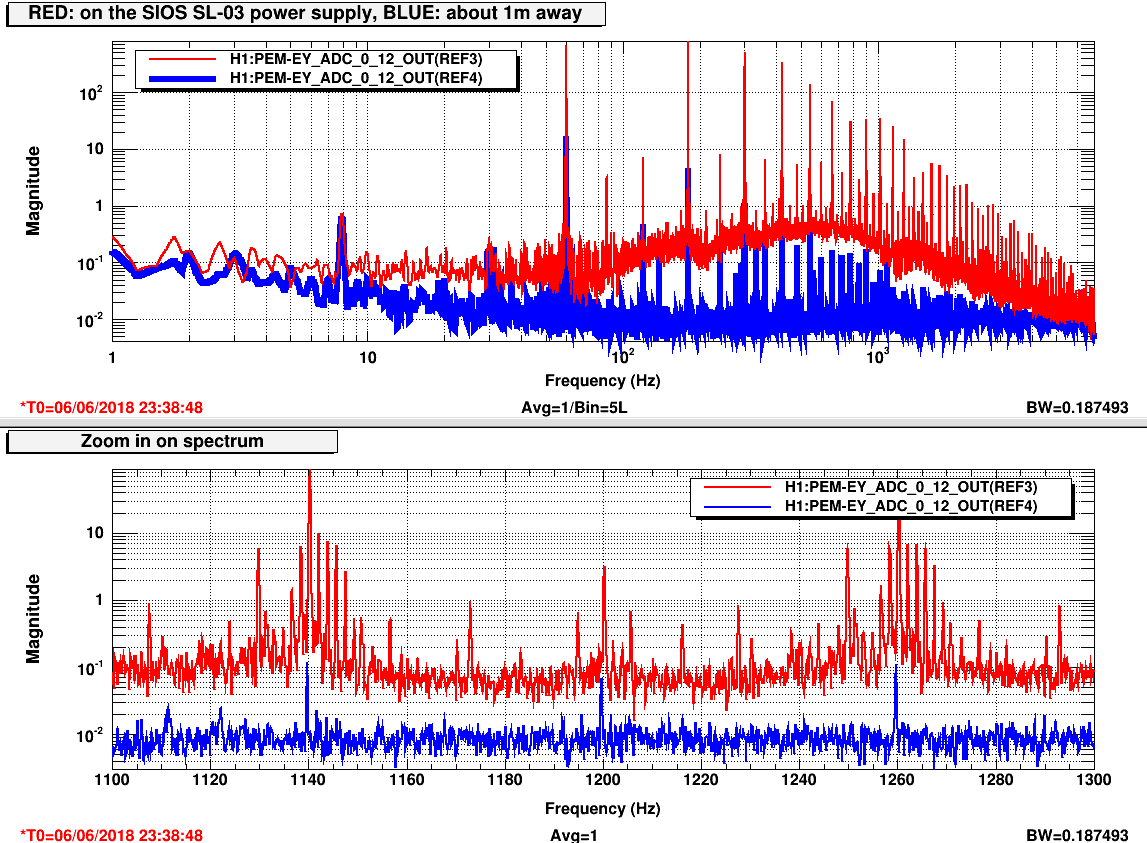
2) We wished to investigate the EMI emission from the He-Ne laser power supply using the magentometer.
Things we did:
1) First, Robert investigated the EMI emissions. During this process we shifted the location of the He-Ne laser and its power supply to a new location that is further away from all other power supplies and electronic devices. See picture below. Robert will report on the results of this investigation in a separate alog.
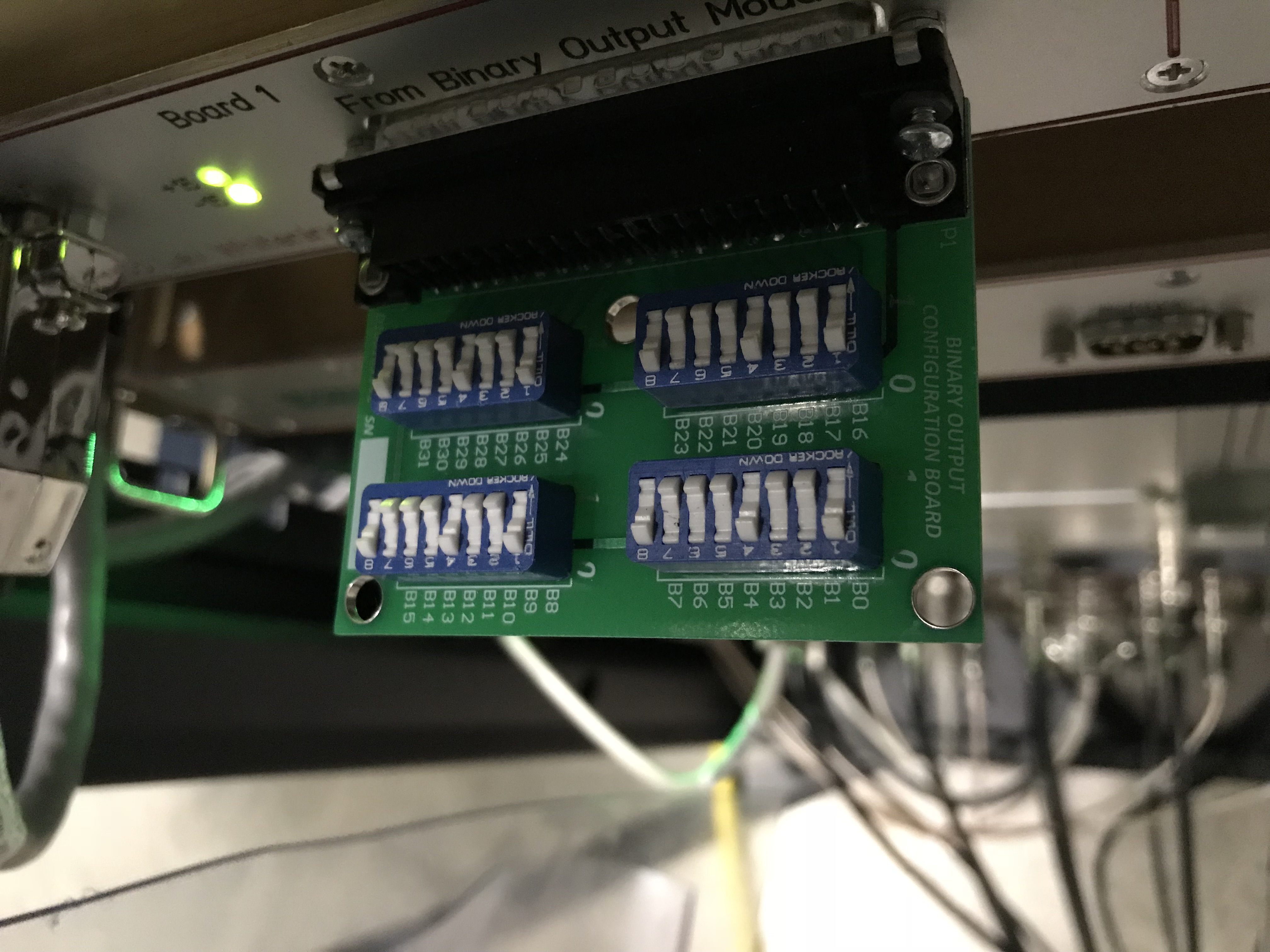
2) Then Jason switched on the third analog whitening stage and also the digital dewhitening stage on the ETMY oplev QPD segments. The new dip-switch state on the binary switch card is attached.
Note: We also reduced the gain by about 20dB, because at high gain of 39dB, switching on the third whitening stage probably caused saturation of an opamp in the chain and the output signal flipped sign.
We will analyse ETMY oplev signals under this new condition and see if we can get a better signal to noise ratio than before.
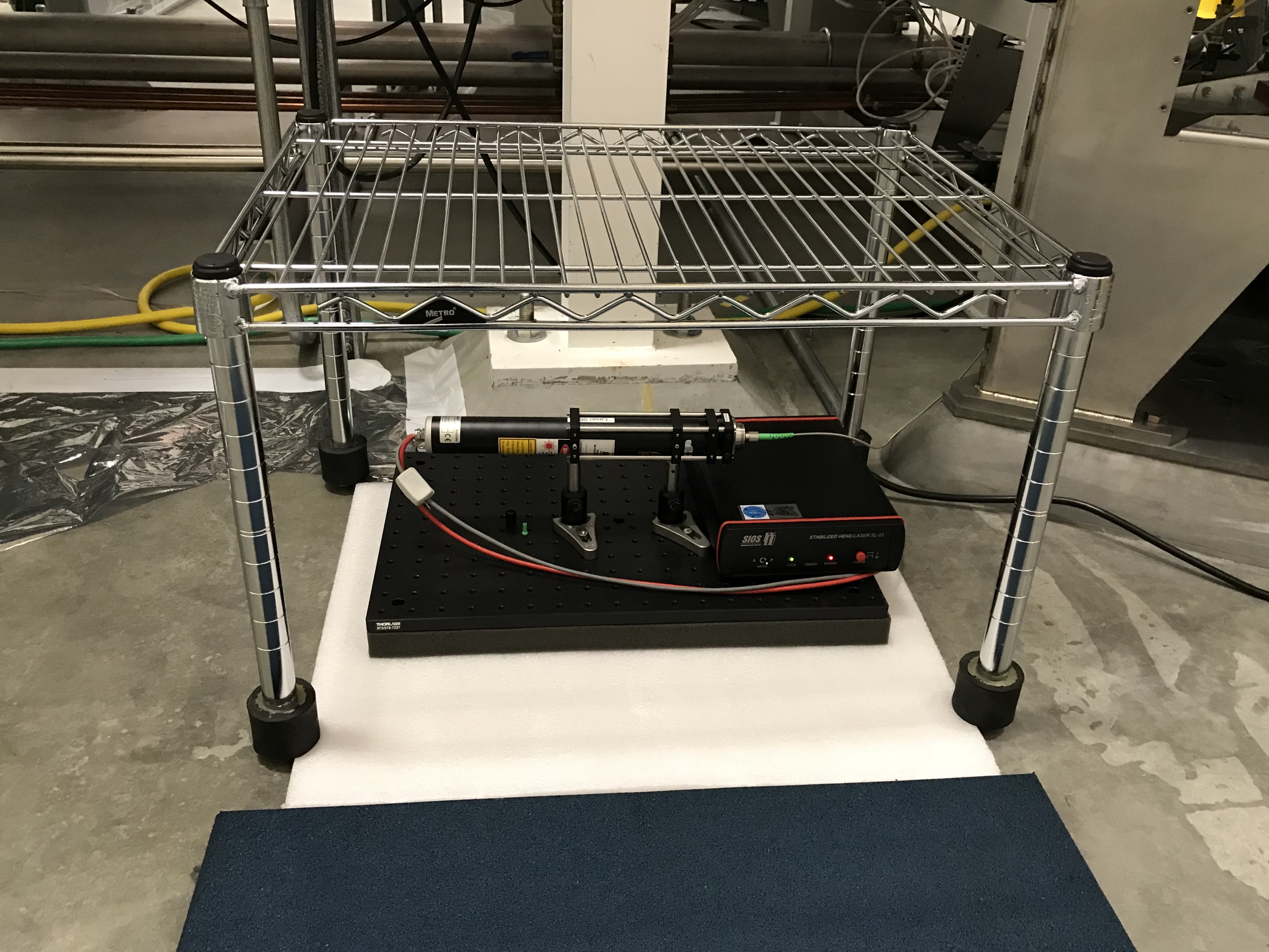
The laser power supply is quite noisy as shown in the figure. In addition to broad band noise there is also a 2 Hz comb, and it draws a lot of power, about 30W. I compared it to a rouge switcher that somehow made it into the VEA and the magnetic noise was orders of magnitude louder from the laser power supply. All of these observations suggest it may be a noise source. I think that we would need to do a more careful test when DARM is at high sensitivity before we could be sure that the noise from the laser power supply will not be a problem. Short of passing this further test, I dont think we should let the SIOS SL-03 in the VEA.