craig.cahillane@LIGO.ORG - posted 19:53, Thursday 28 June 2018 - last comment - 21:02, Thursday 28 June 2018(42703)
Electric Field Meter Y Arm Peaking, X Arm Gain Increased
Georgia and I went down to the X-end to quickly enhance the sensitivity of the EFM.  We were marginally successful, but unfortunately discovered more problems.

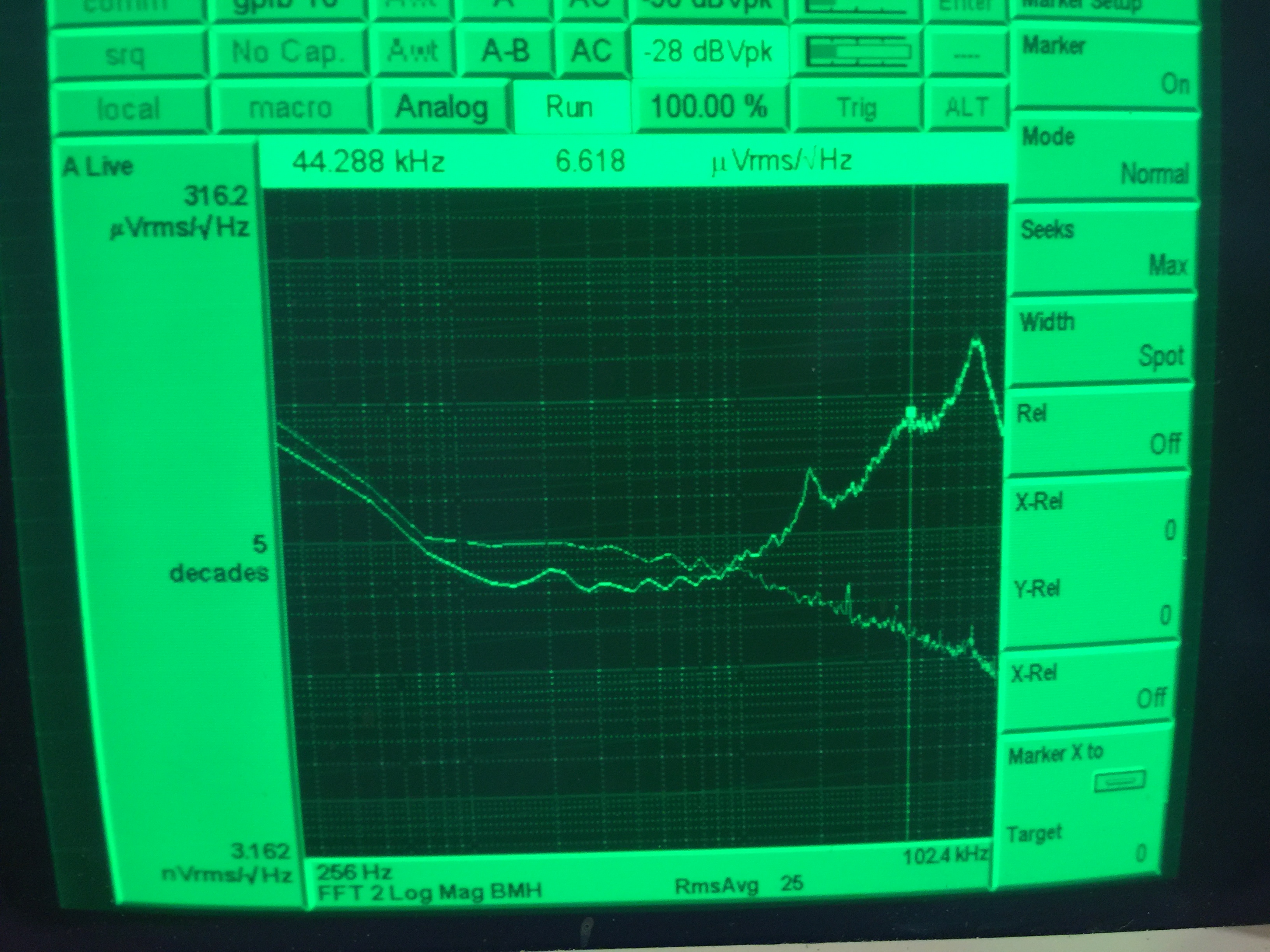
First and foremost was an large peak at 80 kHz in the Y arm (Picture 1, the main curve is the Y arm spectrum, the reference curve is the X arm spectrum).  There was also a 900 kHz peak we read with an Agilent.
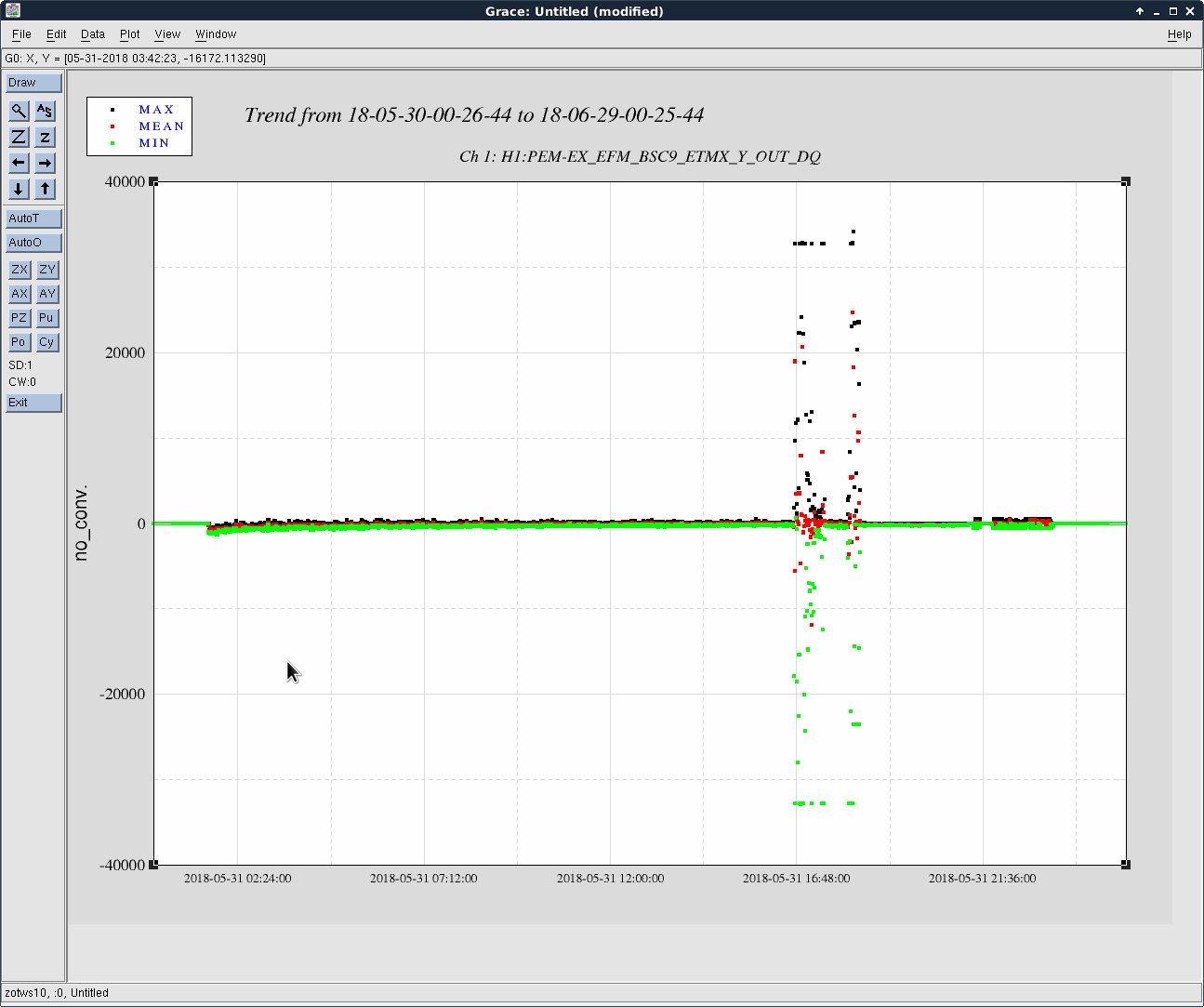
On May 31st, at around 18:05:00 UTC, the Y arm spectrum becomes much worse, with a large peaks everywhere and high RMS.  This corresponds with in-chamber closeout work where the EFM may have been knocked around and some circuitry could have come loose/been shorted.

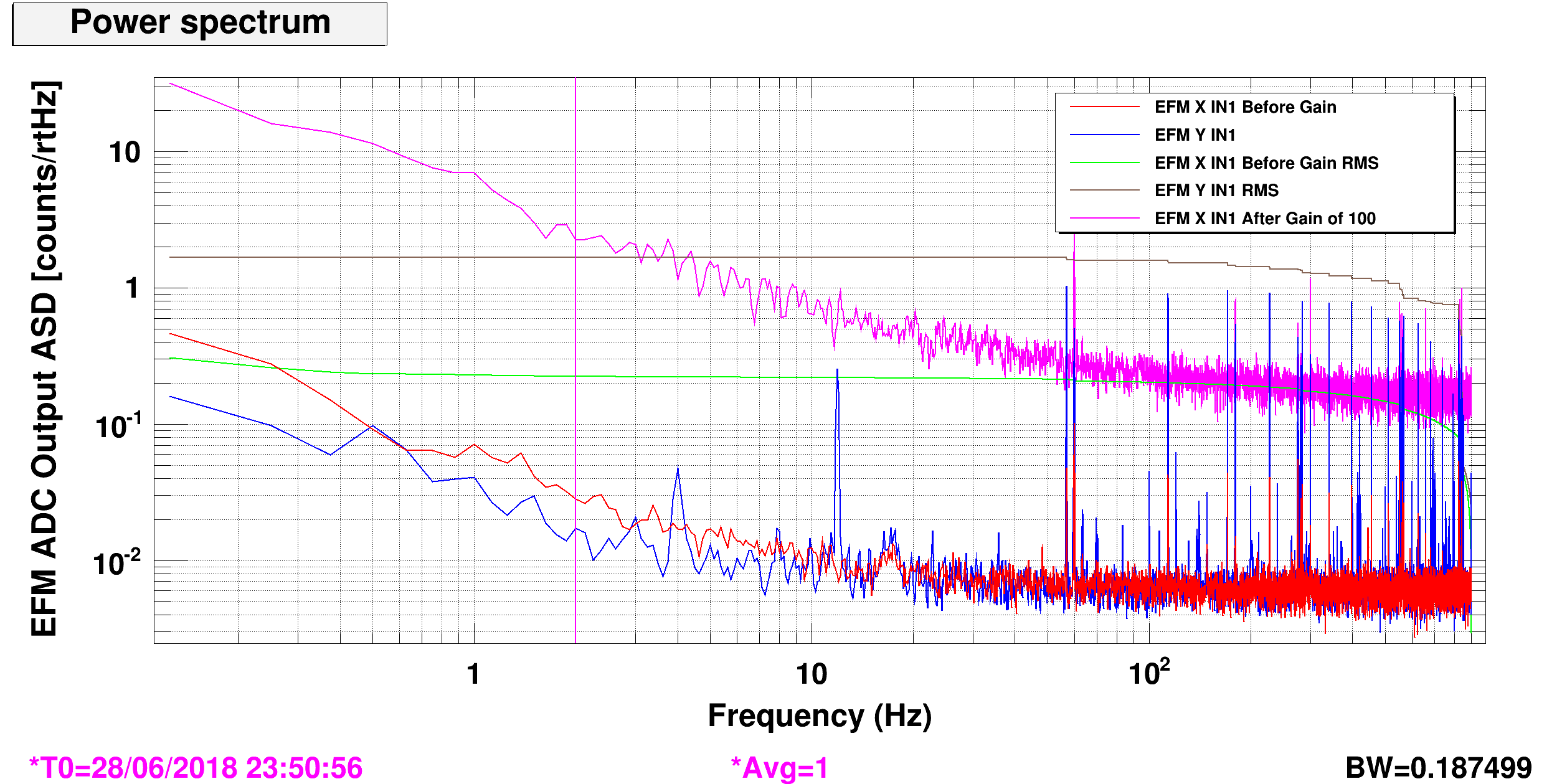
We took an SR560 and plugged the EFM X arm differential output into it with a gain of 100, then routed the output into the ADC.  We did this because our CDS EFM noise was clearly limited by the ADC noise floor of 4 µV/rtHz above 100 Hz.

Plot 2 shows the ADC output before and after the gain has been applied to X arm, as well as the messy Y arm spectrum.
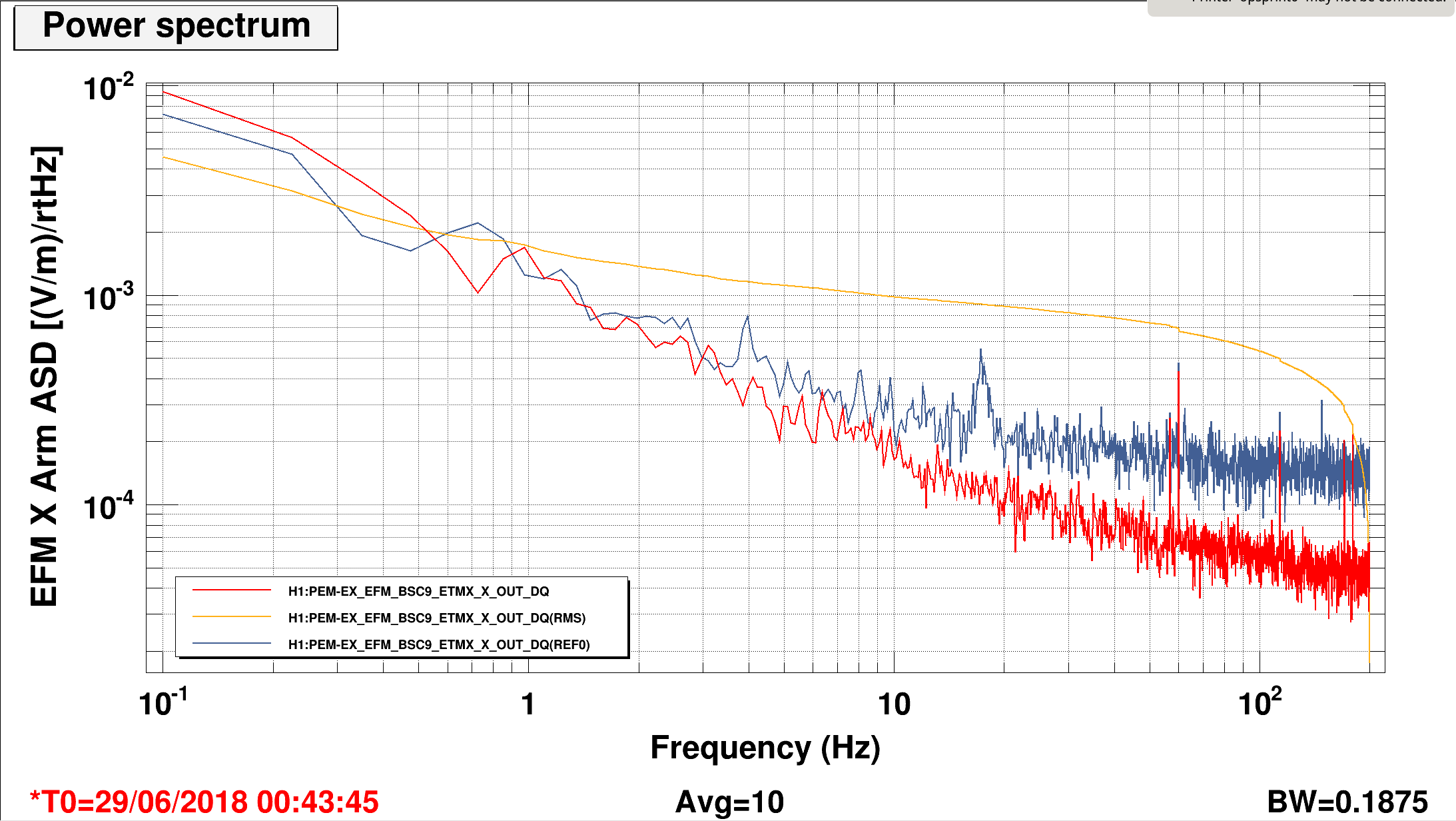
Plot 3 shows the EFM CDS channel calibrated into volts/meter before (in blue) and after (in red).
We win a little bit of sensitivity to electric fields by avoiding the ADC noise, but also amplify the EFM sensor noise by too much.

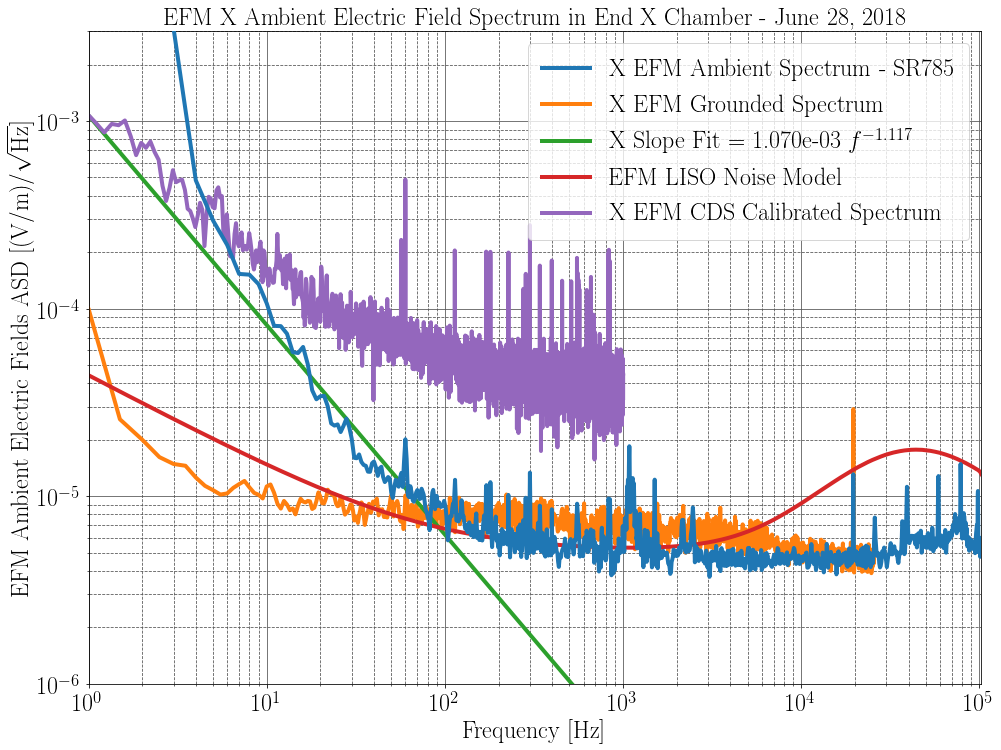
Plot 4 shows that our EFM X arm CDS channel (purple) is still not at the same level of sensitivity as the SR785 (blue).  We will have to go back down to the X-end and be more clever about this.
Images attached to this report
Comments related to this report
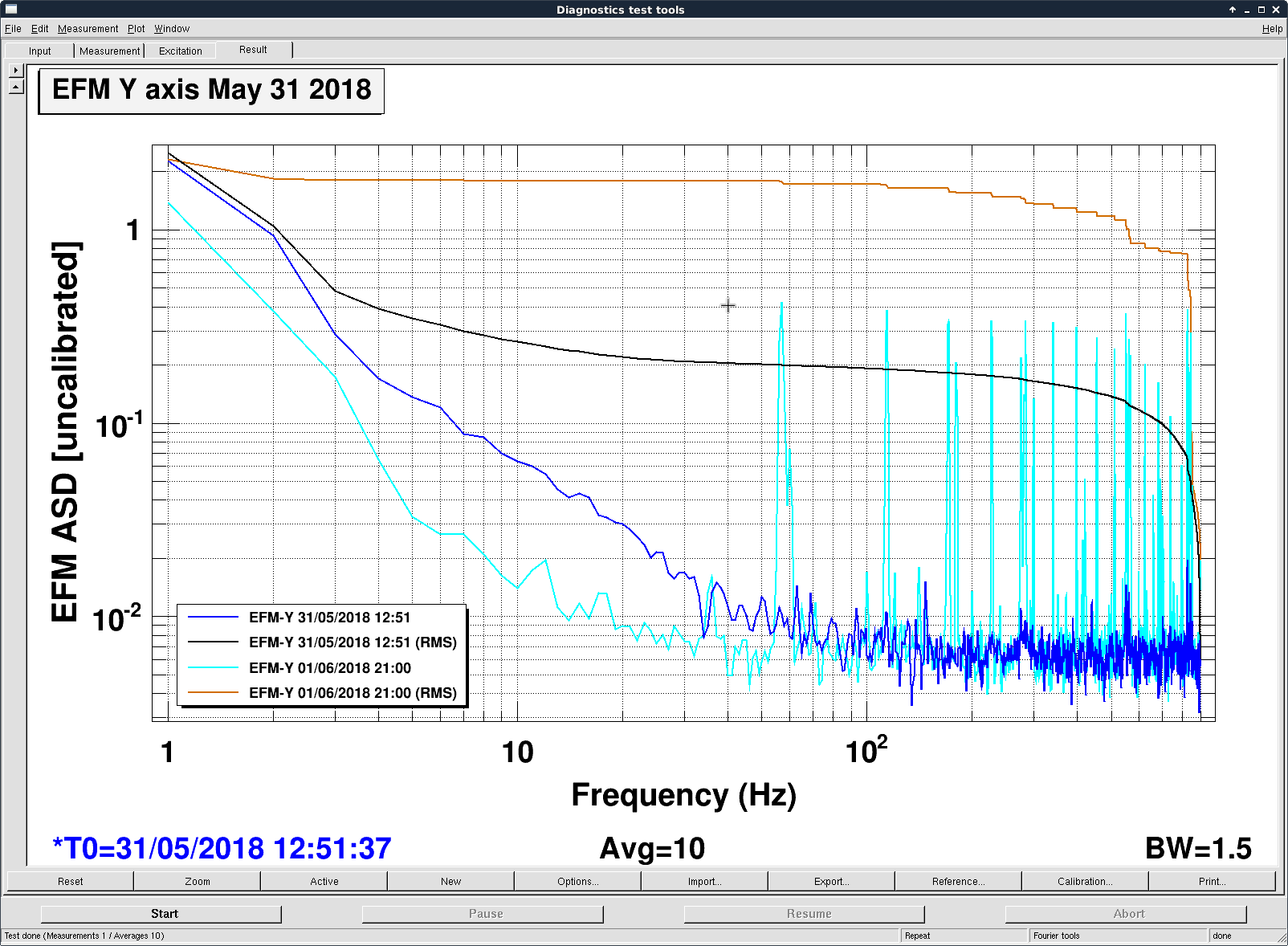
I'm attaching spectra from the Y-axis OUT_DQ of the EFM from May 31 - before (12:51 UTC) and after (21:00 UTC) the in-chamber close out activity, and a time series of this channel, which shows when there were active periods, for reference. The spectrum now looks very much like the the 21:00 UTC, except with reduced low frequency slope, presumbly due to reduced acoustic coupling.
Images attached to this comment
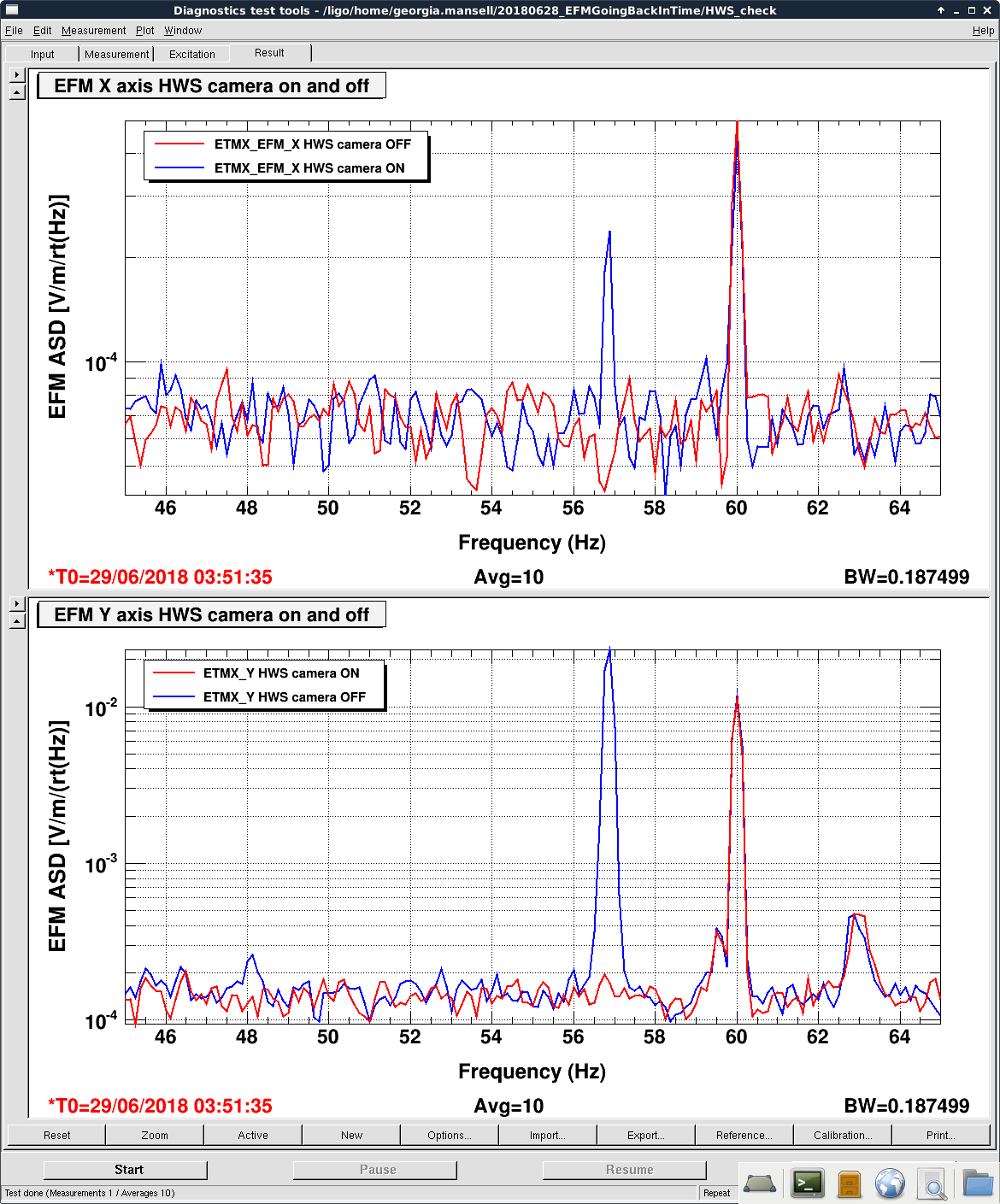
Aidan spotted a 57Hz line in the EFM spectrum, and suspected it to be caused by the ETMX HWS camera.
I did a quick test where I turned off both the Dalsa 1M60 and RCX CLink on the ETMX HWS MEDM screen, and the 57 Hz line disappears. Screenshot attached.
Images attached to this comment