Josh, Jeff Bidler, Alex Macedo, Jess McIver, TJ Massinger, Evan Goetz, Detchar
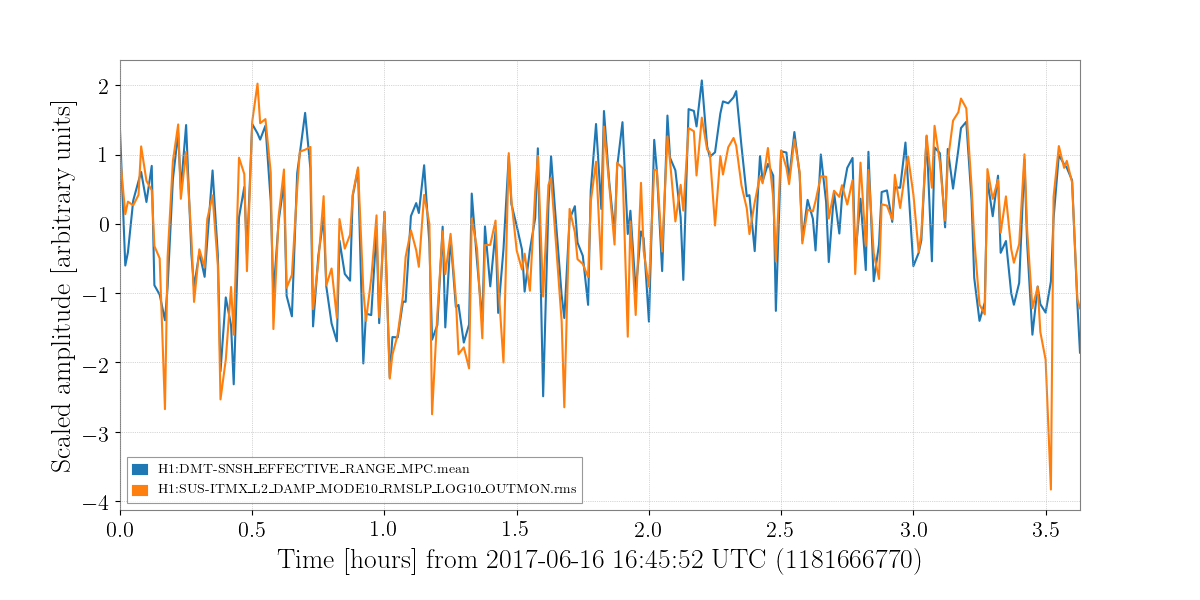
Summary: The SUS-ITMX_L2_DAMP_MODE10 channel correlates strongly with H1 range during O2 (e.g. Fig 1). When the LOG10 version of this channel is above about -10.4 it seems to predict noise bumps in strain (cleaned or uncleaned) that come in harmonics separated by 12 Hz (in an ASD) and also move around by ~Hz over time. This correlation was active throughout O2 in at least 17% of locks and may be related to the rattiness of the range. We don't know yet why this signal correlates (i.e. if it somehow causes the bumps).
The detchar group is using lasso correlations (arxiv paper) to look at correlations between BNS range fluctuations on minute or longer timescales and the ~400,000 auxiliary channels. Individual lasso pages for O2 are available here. Beverly Berger, Alex Macedo and Jeff Bidler presented on some of the correlations found in this week's DetChar meeting (in DCC here and here).
The channel that lasso machine learning most often selects for all of O2 is H1:SUS-ITMX_L2_DAMP_MODE10*. This is a violin mode damping channel produced by monitoring OMC DARM, adjusting phase, gain, and applying a strong/narrow bandpass around 994.27Hz.
The MODE10 channel is selected by lasso in 123/714 (~17%) of O2 lock segments of over 2 hours duration [txt summary] (and these are spread throughout the run). So this correlation is active quite persistently throughout O2.
Figure 1 shows how strong this correlation can be on ~hours timescales. Wow. Often, the MODE10 channel matches the faster ~minute(s) scale ups and downs of the range quite well, so we think it may be related to some of the peak-peak rattiness of H1's range.
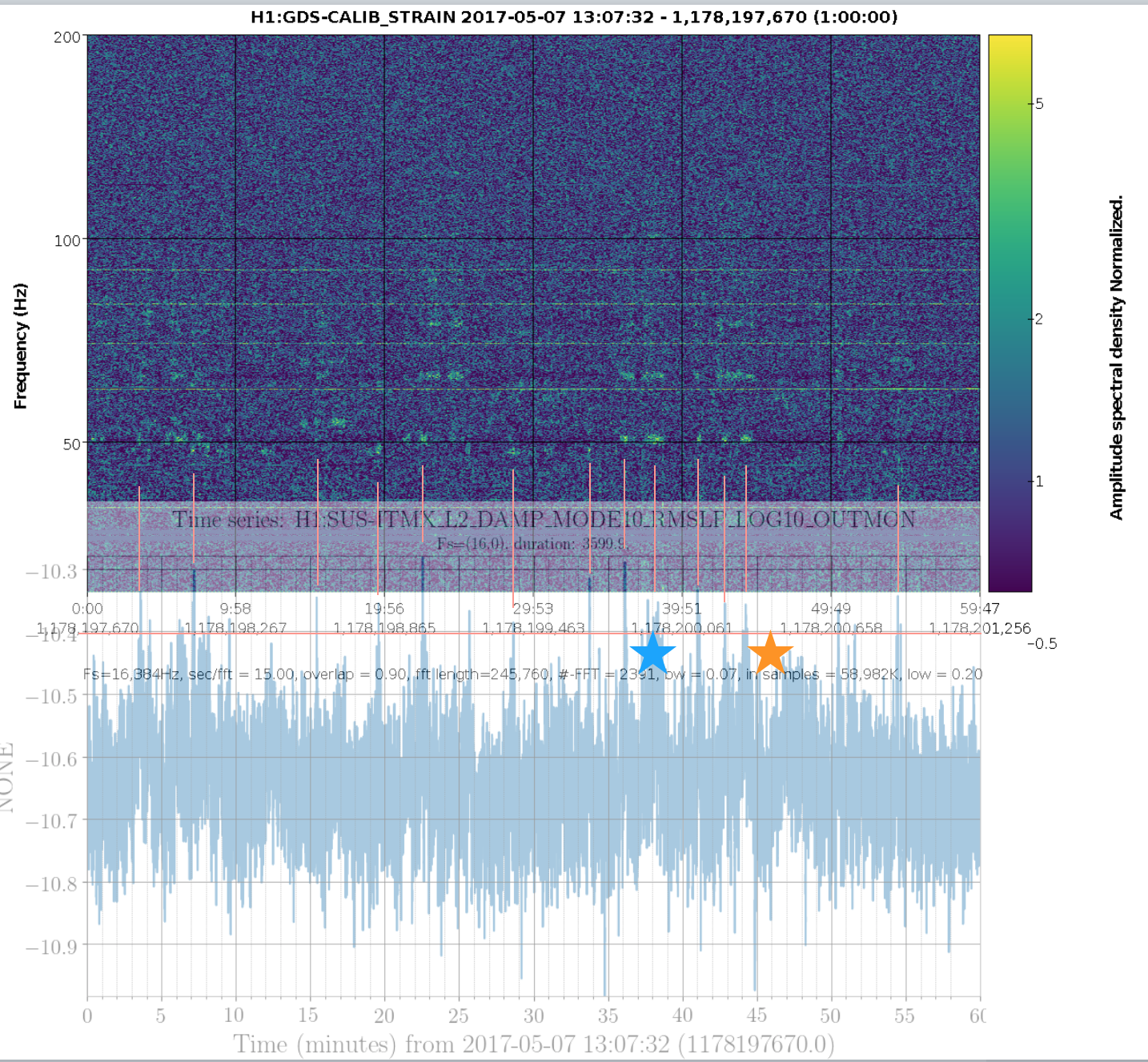
Figure 2 shows a 1-hour long line up of a strain spectrogram with the MODE10 timeseries. When the MODE10 channel goes above -10.4 there are some noise bumps in strain.
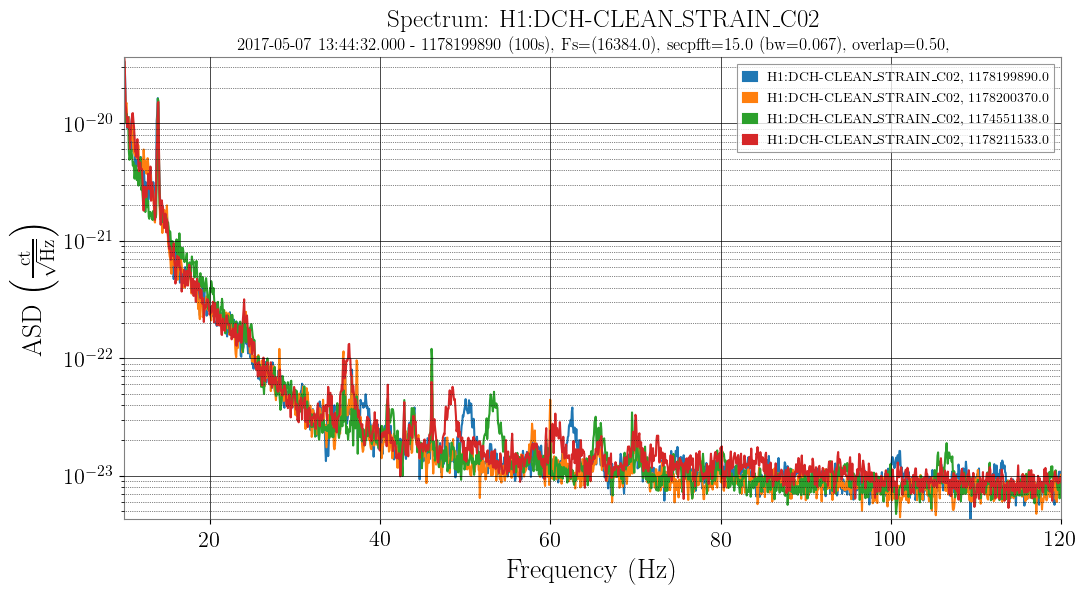
Figure 3 shows a cleaned strain ASD for a good time (orange) and three times when MODE10 was high and noise bumps were present (red, blue, green). The bumps are separated by about 12Hz and move around a few Hz from time to time.
Attachment 4 is a multi-page PDF that walks though all of this in a little more detail and with labels on the plots (also in the DCC).
Looking forward to checking this again in pre-O3 data.

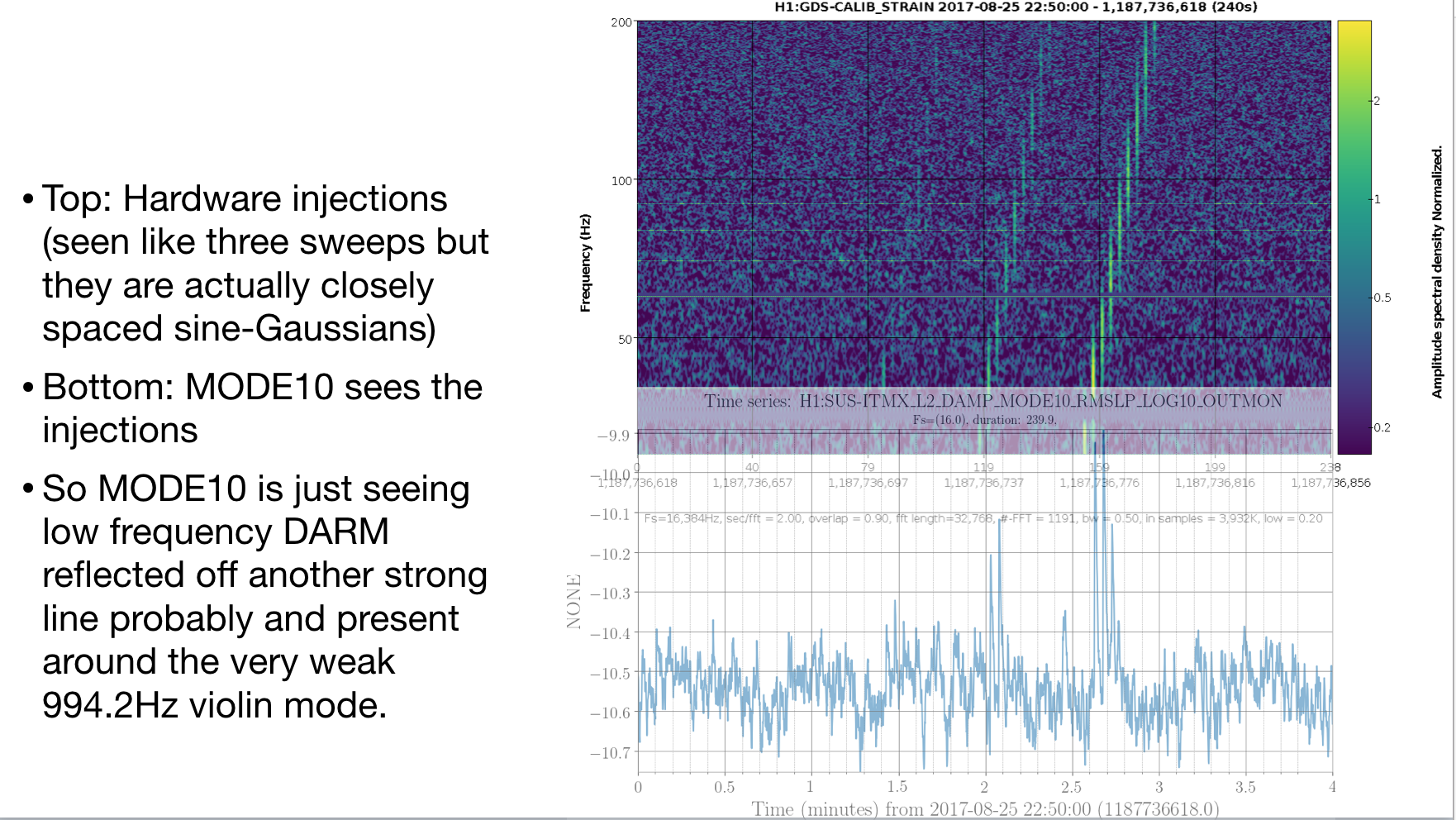
Update/Retraction: In our detchar discussions we thought to look at whether the MODE10 channel could be just seeing low-frequency DARM reflected off another violin mode and overlapping the 994.27Hz "line" which is mostly buried in noise. It turns out this is true. This channel sees the Detchar hardware injections and picks up on the ones from 30-90Hz, as shown in the attachment. So this channel is "unsafe" because high frequency DARM has some low frequency DARM mixed into it. On the other hand, that reflection is not good.