Haocun, Nutsinee
-1.3 dB squeezing observed for the first time today. Not everything was optimized. Tiny but a good start!
Details
We went in today hoping to just test run CLF with lower power and new LO power we decided on making sure 3MHz doens't saturate. So our fringe visibility wasn't at its optimal (85% good enough for what we planned to do). With 10 uW of CLF we can push LO to 1mW without saturating the homodyne. This already cleared the dark noise by 20 dB.
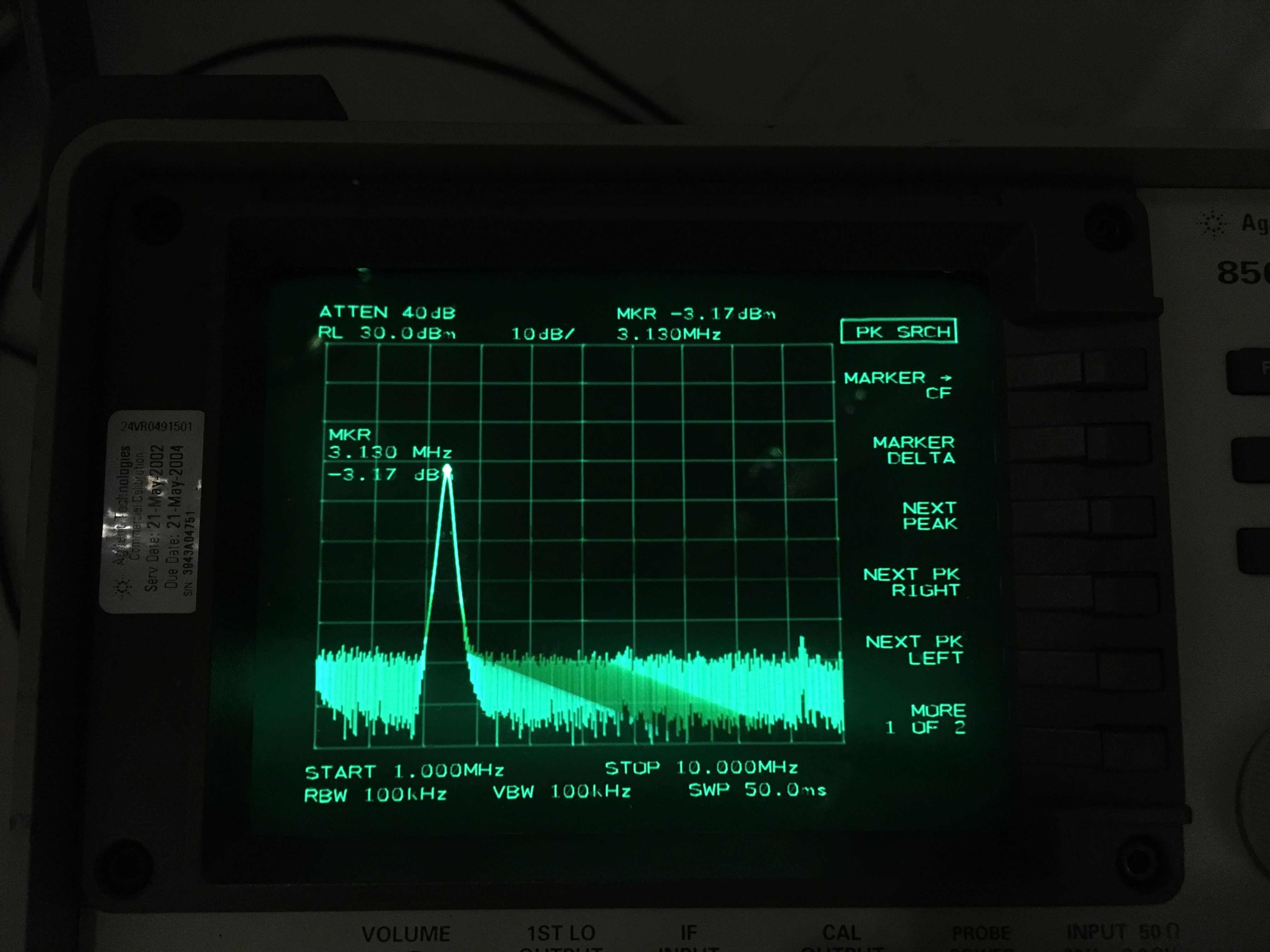
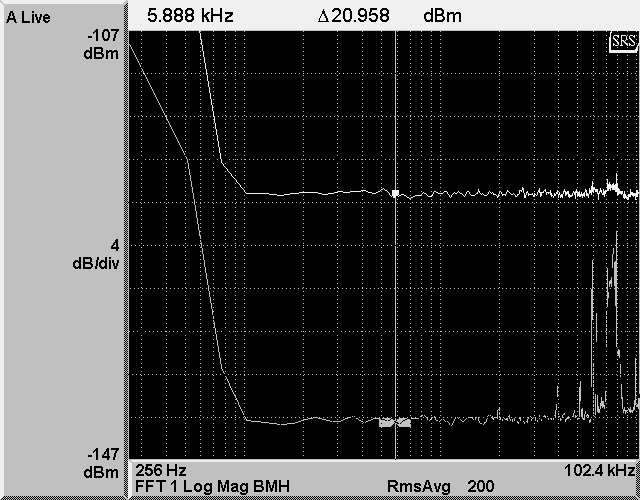
(shotnoise with just 1mW LO compared to dark noise, homodyne balanced)
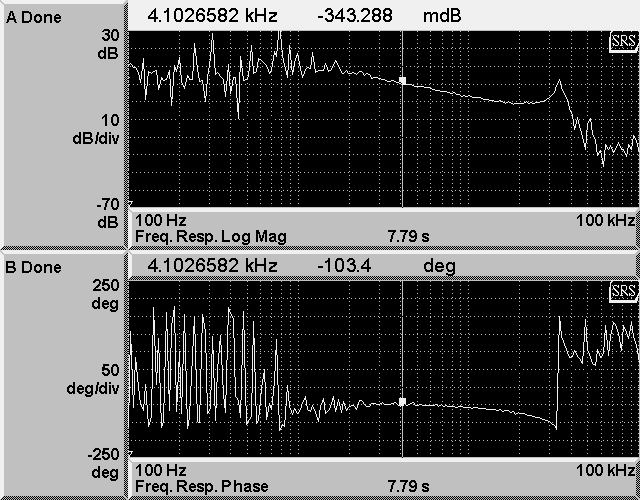
The signal looked decent enough. LO locked (almost) without issues. Currently we are limited but ~34kHz PZT resonance. Maybe we should replace the 6kHz notch slow option on the common mode board with a 34kHz notch filter? LLO had one (not on the common mode board I was told) LLOalog39503
(Here's the transfer function. Plenty of phase margin at UGF.)
Now that we closed the LO loop again (seemed stable this time). We thought why not try to see squeezing?
Green input power to the fiber coupler was ~17mW. This corresponds to roughly 5mW into the OPO. We didn't optimize the temperature for the best non linear gain. We were also using one out of two phase delay to adjust the relative phase between LO and CLF at the time.
The best we observed was 1.3 dB squeezing and ~3-4 dB of anti-squeezing. Sorry the screen shot doesn't quite reflect that.
(Note that the roll-off starting at ~20kHz might be due to the fact that we ran the cable from SQZT6 all the way to the ISC rack where SR 785 was parking. I don't think that's real, compared to the dark noise clearance plot from above, which I brought SR785 right next to the HD)
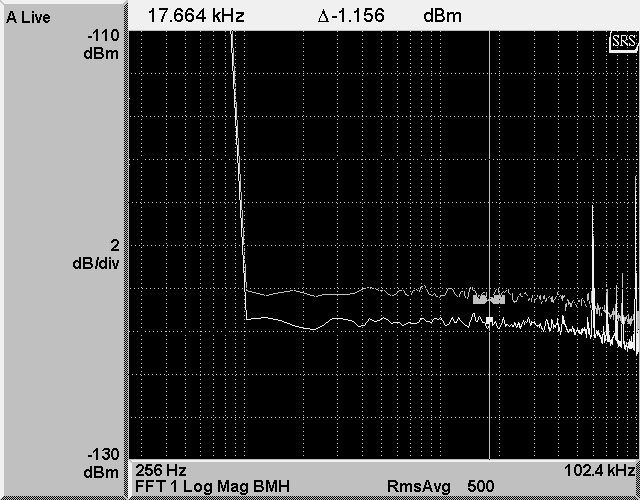
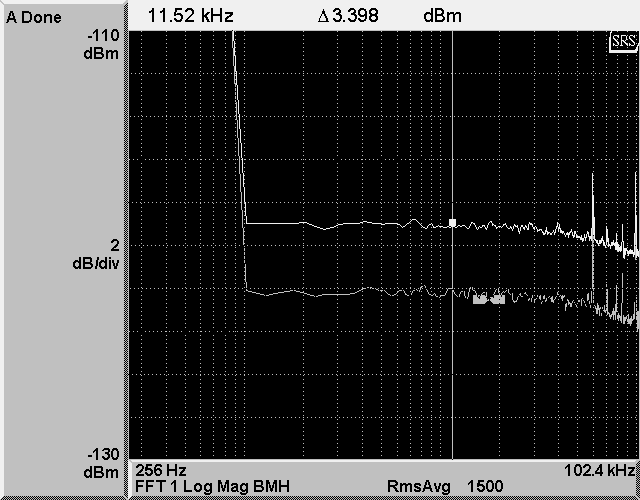
So there're lots of room for improvement here without getting into phase noise hunting just yet. We will try to make a measurement again tomorrow more carefully/thoroughly.
We also measured the homodyne shot noise with LO at its nominal operated power (as of now). Will post that in a separate alog.
Note that TTFSS wasn't locked during all these measurements (pump laser not locked to PSL). With the TTFSS locked the noise hump around 2kHz became visible with no obvious improvement at high frequency. Given what we see today I don't think it's beneficial to keep going with the current TTFSS we have. I think we are ready for the modified board.
Nice! Can't wait to see it injected to the IFO!.