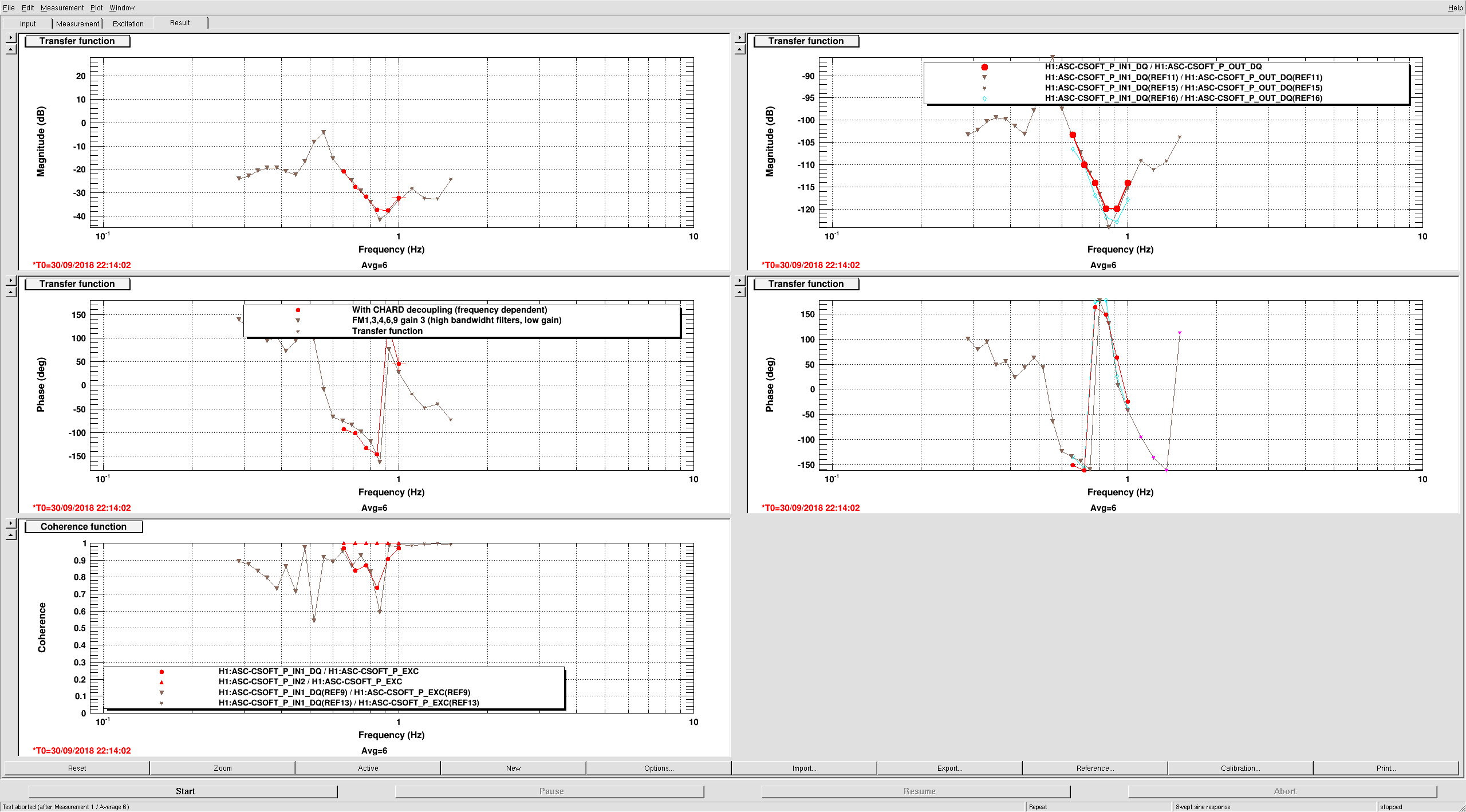
Spoiler alert: no success (yet) in fixing the right-half-plane zero in CSOFT_P
Attempt 1
I added a line at 1 Hz on CHARD_P (amplitude 1000 cts) and could see it well in both CHARD_P and CSOFT_P. The transfer function at the line was CSOFT_P / CHARD_P = -1.3e-5, although the phase was not exactly 180 degrees. Nevertheless, I used this value of 1.3e-5 in the CSOFT blend filter bank, and could reduce the CHARD_P to CSOFT_P coupling by a factor of 3-5 or so (compare green trace TF with blue trace TF).
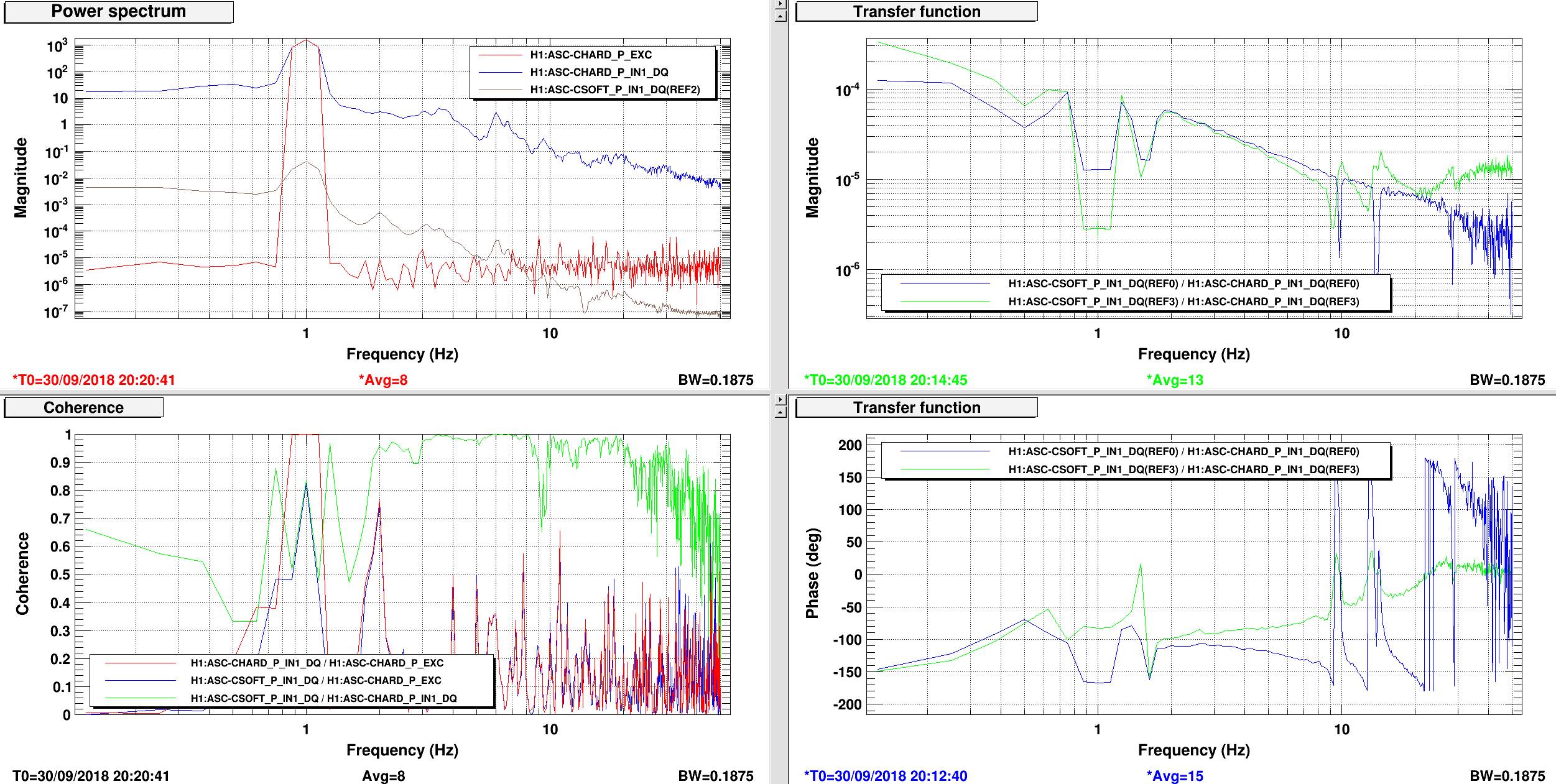
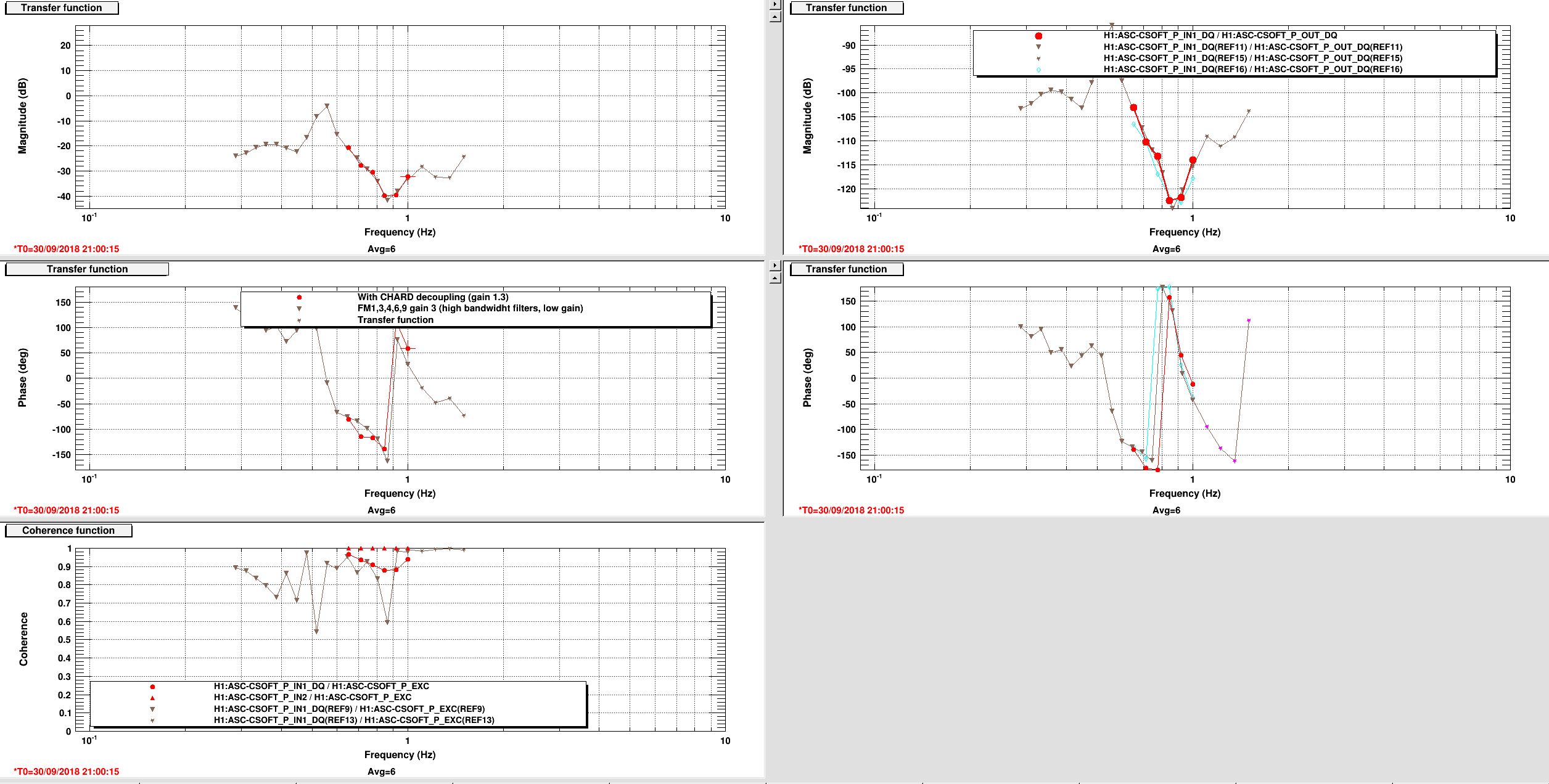
I measured again the CSOFT plant and found that the right-half-plane zero is still there.
Attempt 2
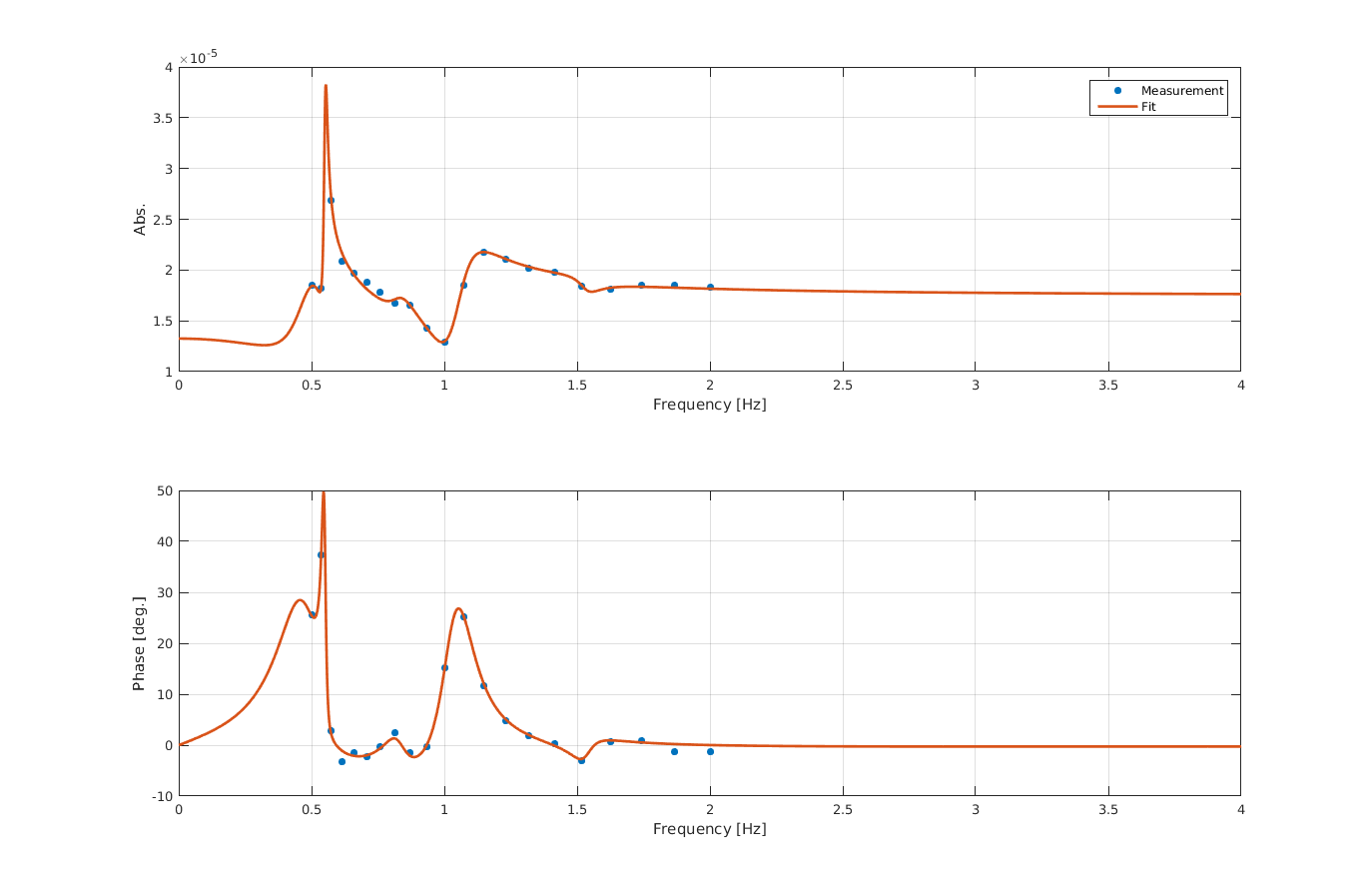
Since I saw a different optimal gain at different frequencies, and some phase rotation, I set up a sweep sine measurement of the coupling. The result is shown below, for frequencies between 0.5 and 2 Hz. There is indeed some structure and some (not too small) phase rotation, ecpecially around 1 Hz. The blue dot are the measurements, and the orange trace is a fit:
I implemented this filter in the CSOFT blend filter bank and measured again the coupling with the subtraction on. At all frequencies the coupling is now at least 20 times smaller. With a frequency dependent constant I was never able to get better than a factor of a few at frequencies around 1 Hz:
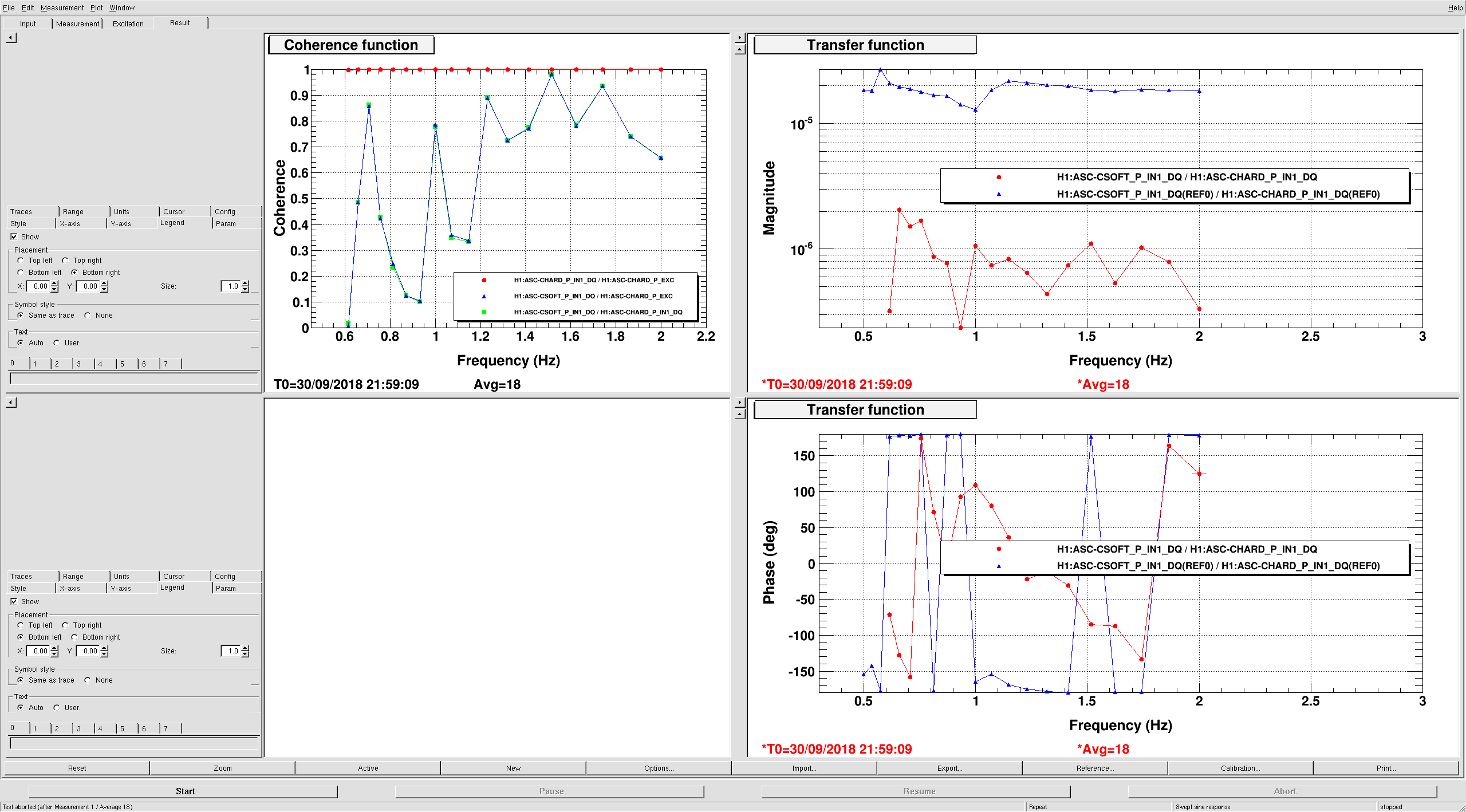
Unfortunately, this has almost no effect on the bad zero in the CSOFT_P transfer function.