Danny V., Dan Brown, TVo
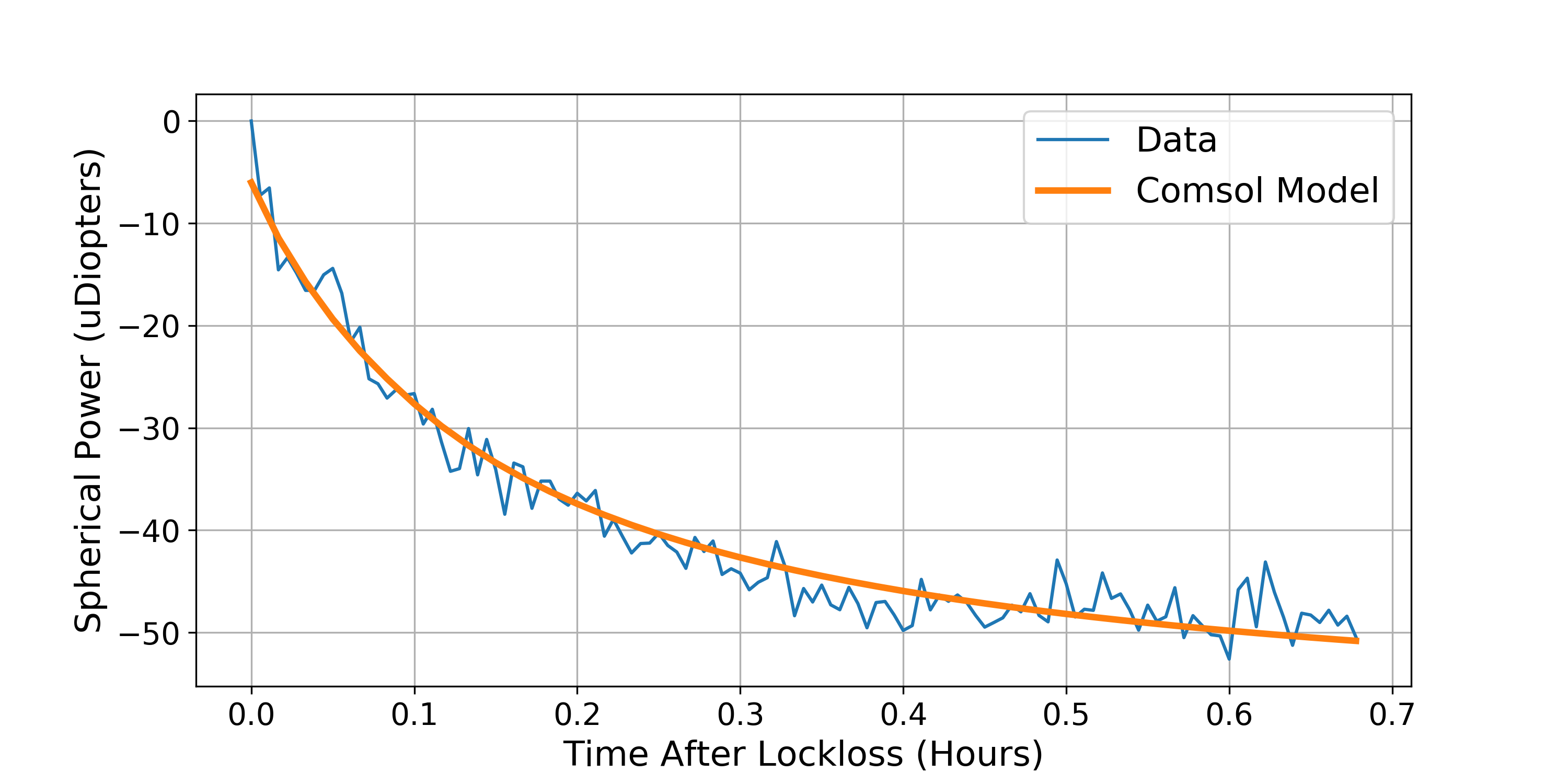
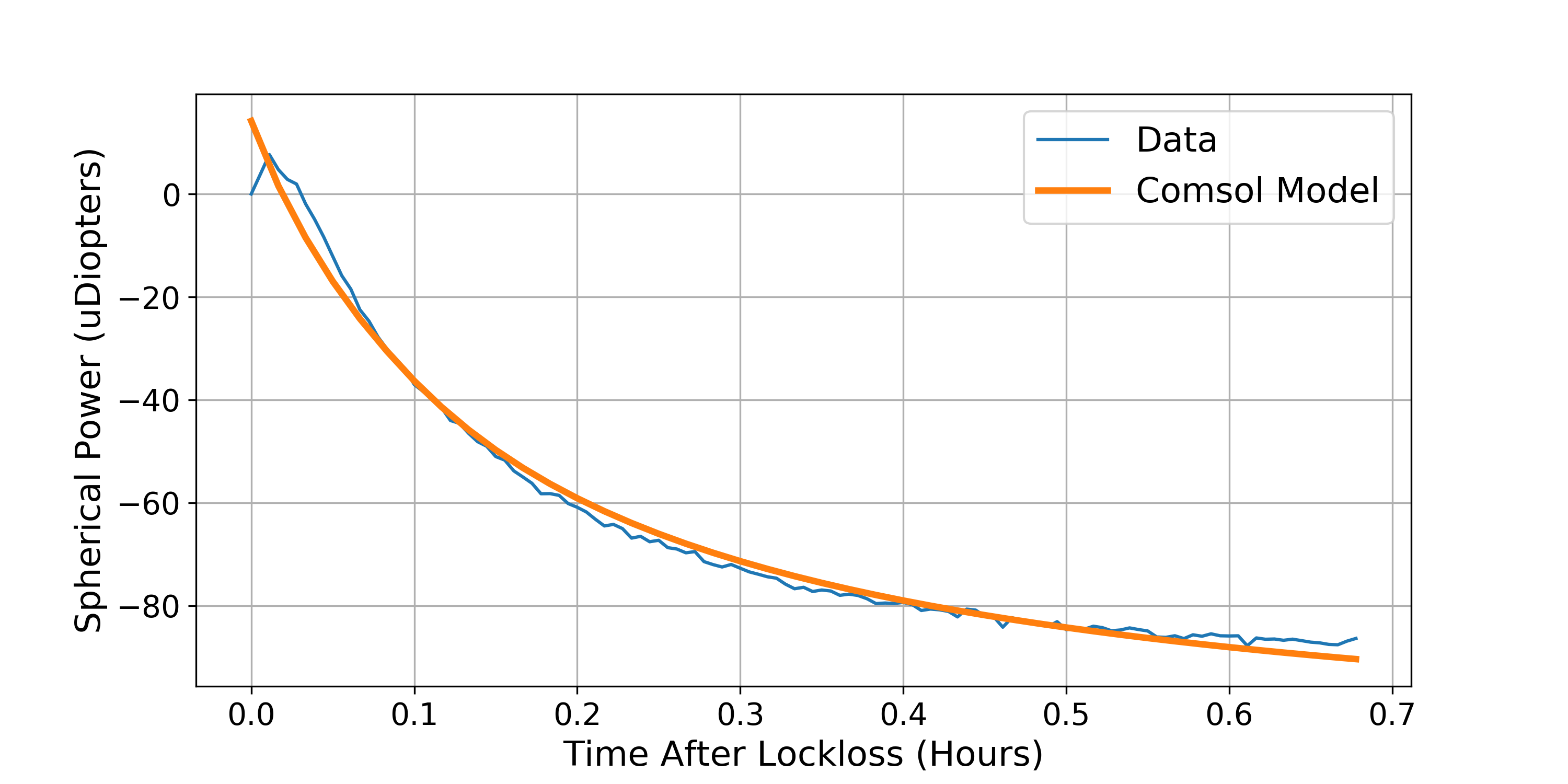
During one of the lock losses last week, we paused the CO2 compensation on both ITMs in order to get an absorption measurement with just IFO cooling. Also during this time, Dan did some post processing on the Hartmann data in order to better fit the spherical power to the wavefront distortion. Previously, the HWS code provided did not take into account for an offset in the IFO beam relative to the center of the Hartmann camera and Dan was able to add the ability to re-fit using the IFO beam as the center and this has cleaned up our data a lot. With this new data we use the exponential decay from a COMSOL model from this ALOG-14634 and provides a pretty good fit for both ITMs ( Figure 1 and 2), the largest uncertainty is estimated by varying the starting time for our fits from when the lock loss actually occurred because the optics swinging around caused a lot of noise in the Hartmann sensor. It should be noted that we haven't subtracted any point absorbers from the ITMY data which will over-estimate the amount of ring heater compensation, this means that we could have some CO2 left over at 50 watts for CO2Y.
ITMX absorption: 304 +/- 38 ppb
ITMY absorption: 804+/- 42 ppb
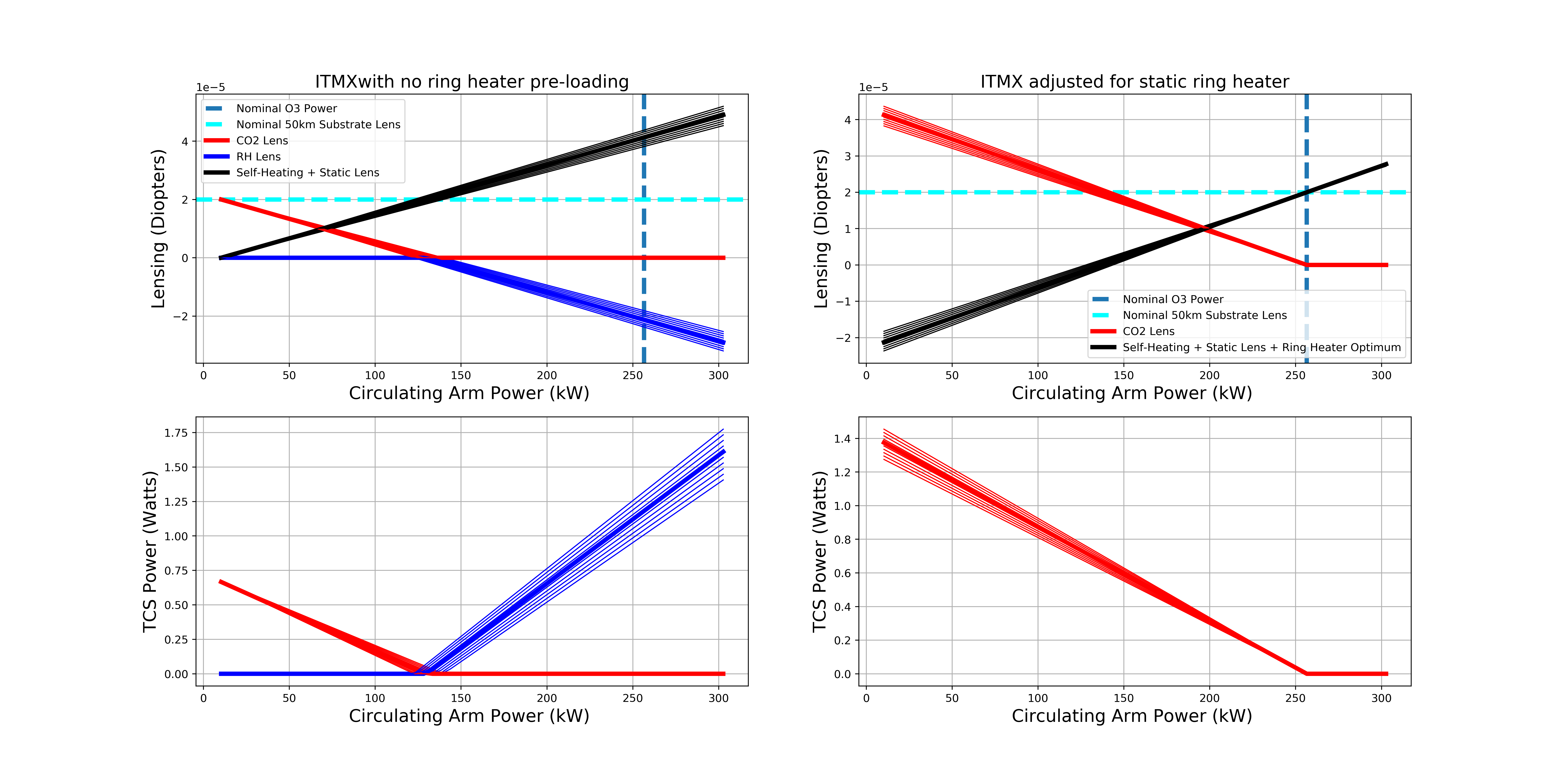
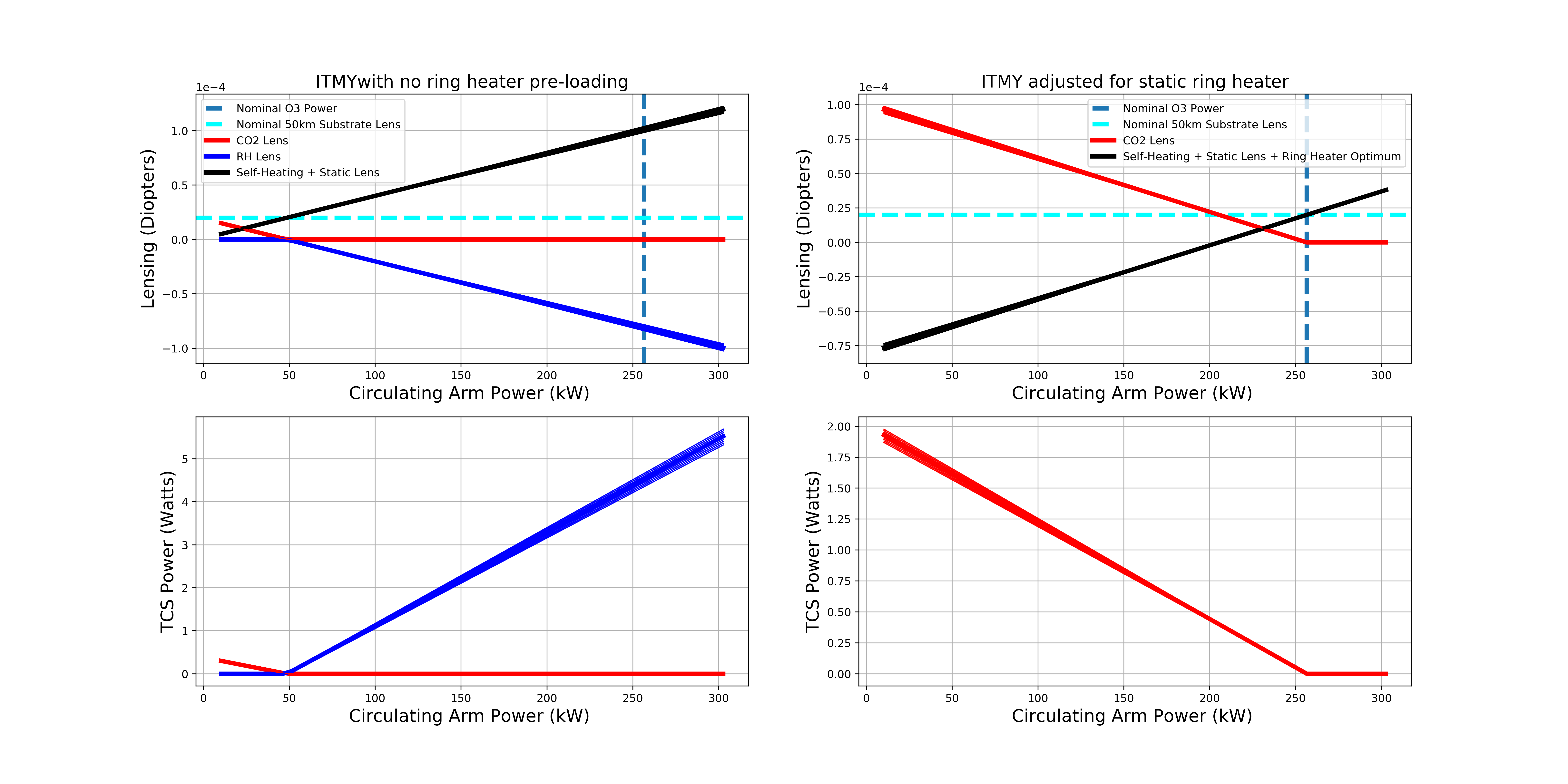
Figure 3 and 4 provide the pre-loading settings estimates for 50 Watts using this absorption data and some actuator calibrated numbers which we fine-tuned during this quiet vent break (while the corner is under vacuum but HAM1&6 are open) , interestingly, the amount of spherical power for ITMX-CO2 differs ITMY-CO2 by a factor of two according to the HWSs, we're still trying to track this down.
Parameters used to work out the TCS settings for O3 (diopters/watt):
#factor of 2 for the double pass
RH_SUBdef = -2*9e-6
#factor of 2 for the double pass
ITMX_CO2_SUBdef = 2*1.5e-5
ITMY_CO2_SUBdef = 2*2.5e-5
SelfSUBdef = 4.87e-4
# Parameters for surface deformation
RH_SURFdef = 9.91e-7
SelfSURFdef = -3.60e-5
Calculated O3 Actuator:
ITMX:
Self Lensing is 41.2594 uDiopters
Required RH Lensing is -0.0 uDiopters
RH Power required is 1.1811 Watts
CO2 Lensing required 42.9709 uDiopters
CO2 Power required 1.4324 Watts
ITMY:
Self Lensing is 101.4137 uDiopters
Required RH Lensing is -100.0 uDiopters
RH Power required is 4.523 Watts
CO2 Lensing required 100.4321 uDiopters
CO2 Power required 2.0086 Watts
We can dial in the CO2 laser power now and when we have reached the Paschen limit, we will turn on the ring heaters and use the HWS to track the wavefront through this process.
Any ideas why the ITMX absorption value has increased by ~4 relative to the old value given in alog 43979, whereas ITMY looks consistent?
I made a mistake and swapped the ITMX, ITMY numbers around, this is fixed.
The Hartmann fitting code that takes the wavefront and fits a spherical power has improved because we were able to more precisely fit over interferometer beam in post-processing.. Previously, the Hartmann code would try to fit assuming the lensing occurred at the origin of the camera but we found that this caused some significant differences when the interferometer heating was offset so Dan was able to use saved images to reconstruct the calculation for the spherical lensing with better offsets by hand. Now this is implemented in the real-time code so our spherical power should be fitting around where we think the interferometer beam is.
We had aligned the Hartmann beam on the test mass using the ring heaters (which they still are), but found that this puts the IFO beam about 4cms to the right on the test mass as measured by the HWS. However, I don't think that's very physical which makes me question the centering of the ring heaters relative to the test mass
We should go back and revisit that data from the previous absorption measurement and implement this fix as well to see if our numbers hang together.
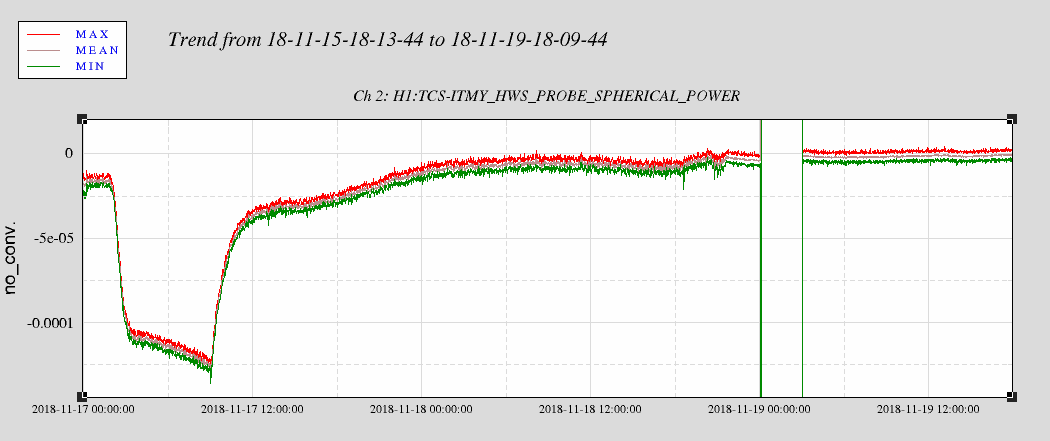
Attached is the preoloading for ITMY, the ring heater brings the spherical power down and the CO2 laser central heating brings the lensing back up towards zero. We probably overshot the CO2 compensation a bit so we can reduce it a little. The glitch at 00:00:00 is from mis-aligning ITMY so that's explainable.