Dan Brown, Danny V, TVo
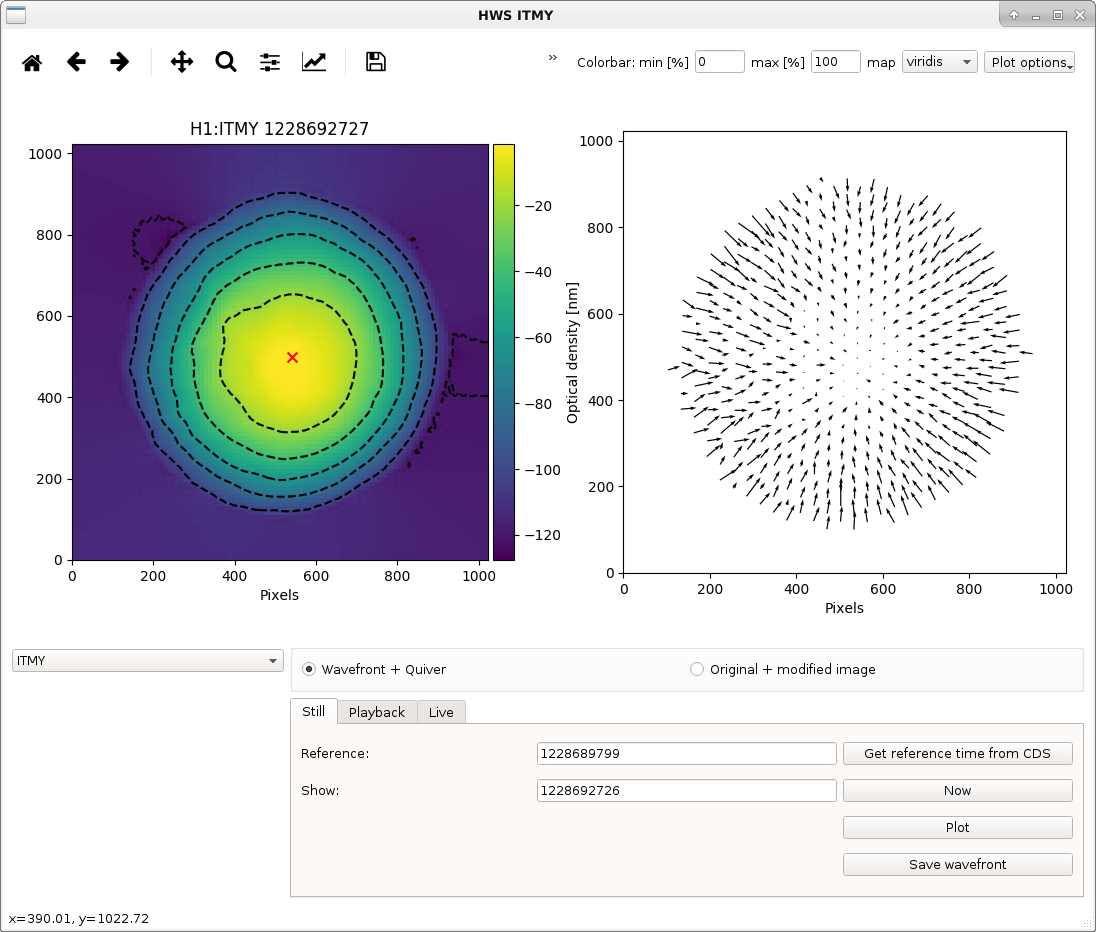
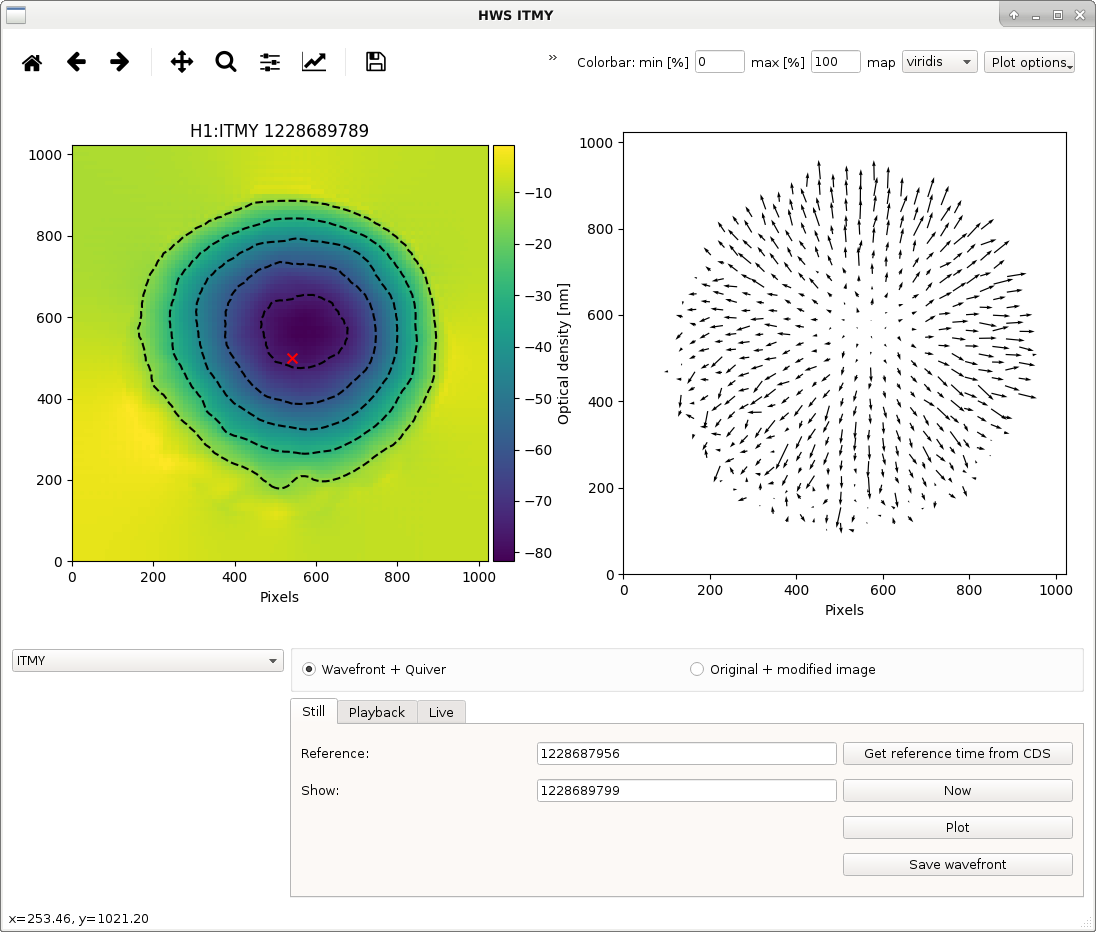
Because backing off the TCS settings to a less aggressive pre-loading made DRMI locking easier, we wanted to know how different the wavefront and the spherical power readings are between the two pre-loaded states. Yesterday we were able to get approximately 5000 seconds of data before locking began where we made these TCS changes, attached is the time series and estimating the difference in spherical lensing:
Spherical power difference for ITMX: -8.0 udiopters
Spherical power difference for ITMY: +10.0 udiopters
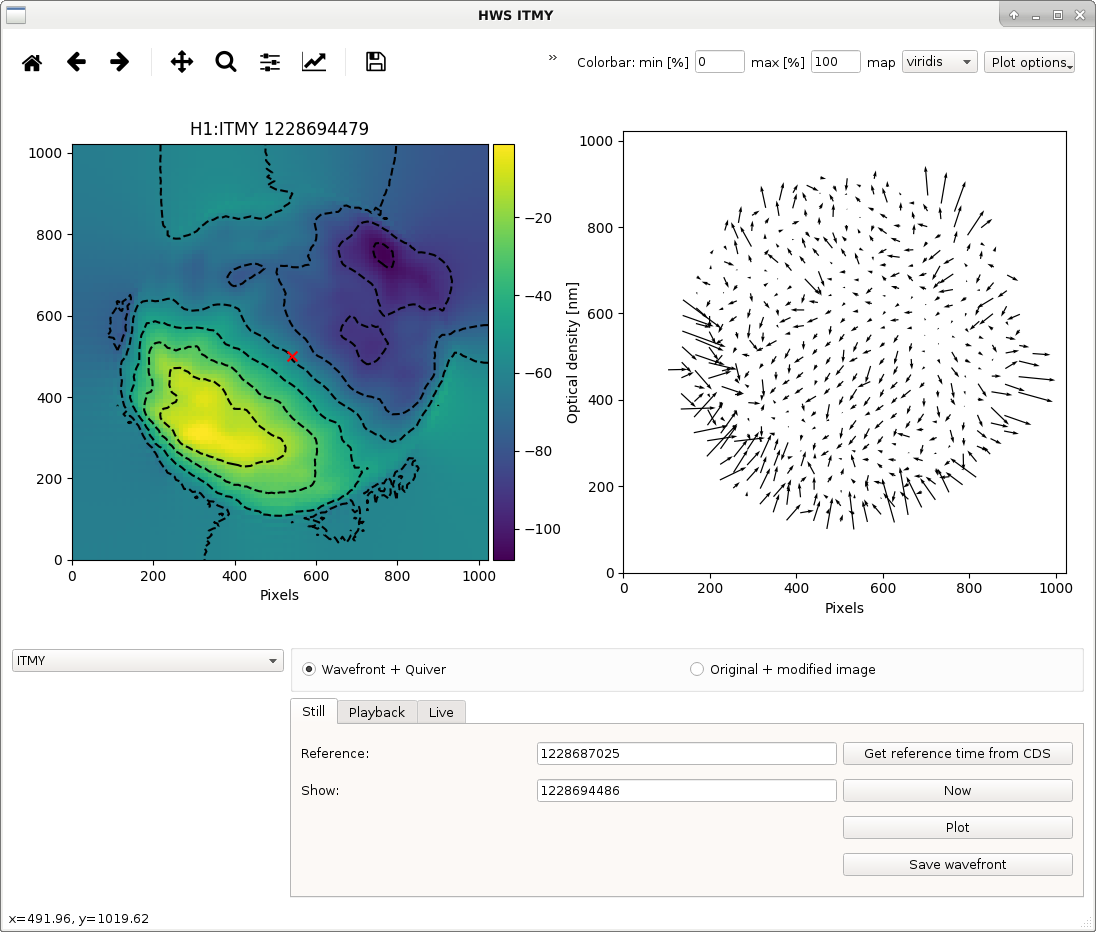
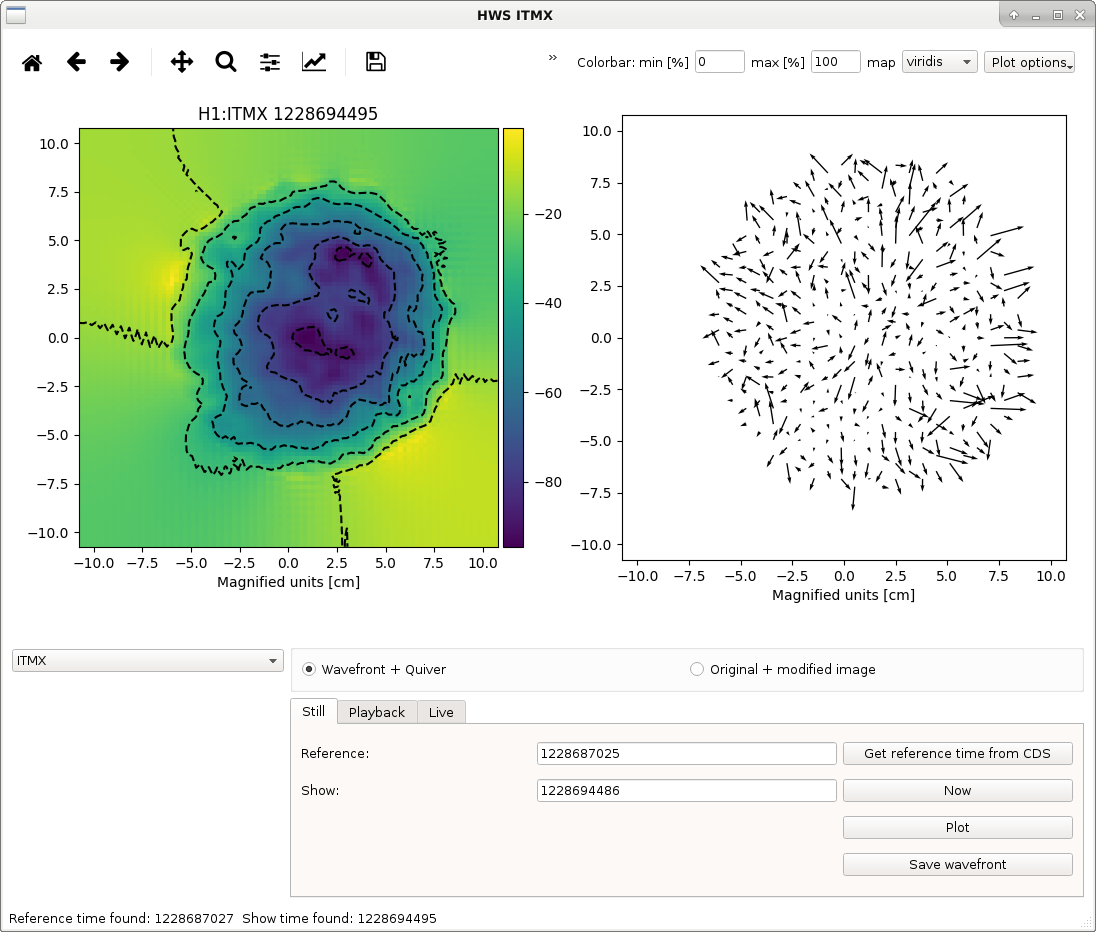
They are seemingly small but maybe enough to be a problem in DRMI acquisition. I also attached a wavefront map which shows that ITMX has pretty good centering but ITMY shows considerable asymmetric heating, color bar is in units of optical path distortion (nm). This level of badness was not seen during our Thanksgiving tests so I'm a little perplexed on why this is so misaligned.

From looking at just the math the difference between the 50W and 30W preloading at 2W input power is (all single pass lens powers):
50W:
- ITMX: CO2 = 1W, Heater = 1.1W => D = 4.9uD
- ITMY: CO2 = 1.78W, Heater = 5.24W => D = -2.6uD
30W:
- ITMX: CO2 = 0.2W, Heater = 0W => D = 3uD
- ITMY: CO2 = 0.65W, Heater = 0.95W => D = -0.85uD
Overall the 50W preloading setting had slightly stronger lenses:
- ITMX difference = 1.9uD or 120mW more CO2X
- ITMY difference = 1.75uD or 70mW more CO2Y
But the TCS guardian only tries to get the CO2 powers within +-80mW of the requested power using the rotation stage, so it doesn't seem that these preloadings are dramatically different.
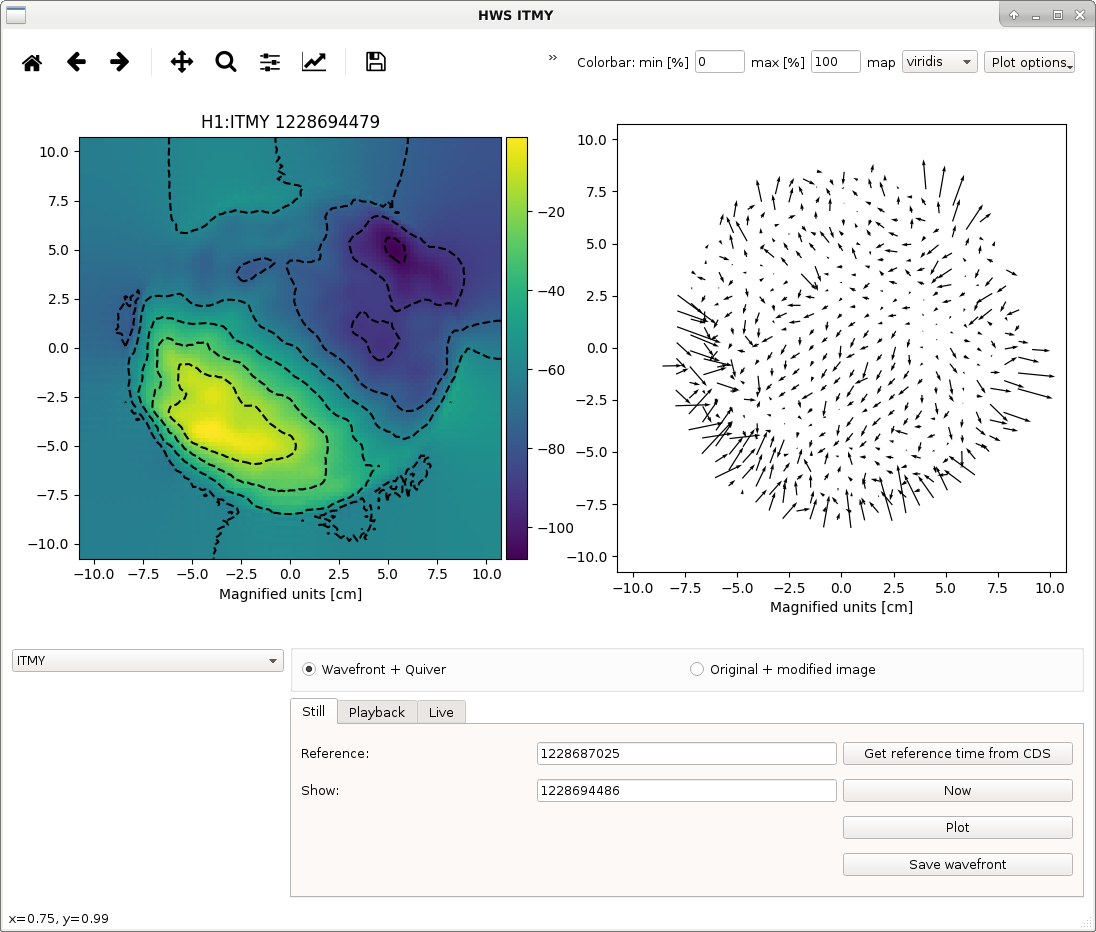
The ITMY cooldown looks a bit odd because the CO2 and RH are not well aligned. This shows the interferometer beam is well aligned to the RH but the CO2 is slightly off, the red cross being the self heating deformation position during a powerup. The combined effect shows the ifo beam is in the linear looking wavefront distortion region so was probably experiencing a tilt and some higher order distortions. Could be why we were seeing a more astigmatic mode in the MICH dark with the 50W preloading. We saw after the vent they were not exactly overlapped, at the time we decided to leave it and run with the 50W loading to see how far we got.