
Craig, Dan
Tonight we have been tuning some TCS settings to try and improve the RF18. When we go from 2W -> 20W RF18 drops from ~80 to ~60 on a thermal time scale and we haven't had much luck on improving it.
- We haven't gone past increase power yet.
- Seems remarkably stable given all the issues we had throughout ER13... wind has spiked to nearly 40 mph and microseism is still hovering around 0.8um/s. The issues we had with large oscillations in PRG and POP18/POP90 seem to be less now
- After each lockloss DRMI needs quite a bit of manual alignment.
- ALS glitching was causing us some grief for an hour or so.
- The computer keeps complaining about "EX" around CARM offset reduction, not sure why
- Tried to go up to NLN low noise ASC wasn't happy: 'EZCA CONNECTION ERROR: Could not connect to channel (timeout=2s): H1:OAF-BOUNCE_ETMX_RMS_LOG10_OUTMON'?? Craig commented it out
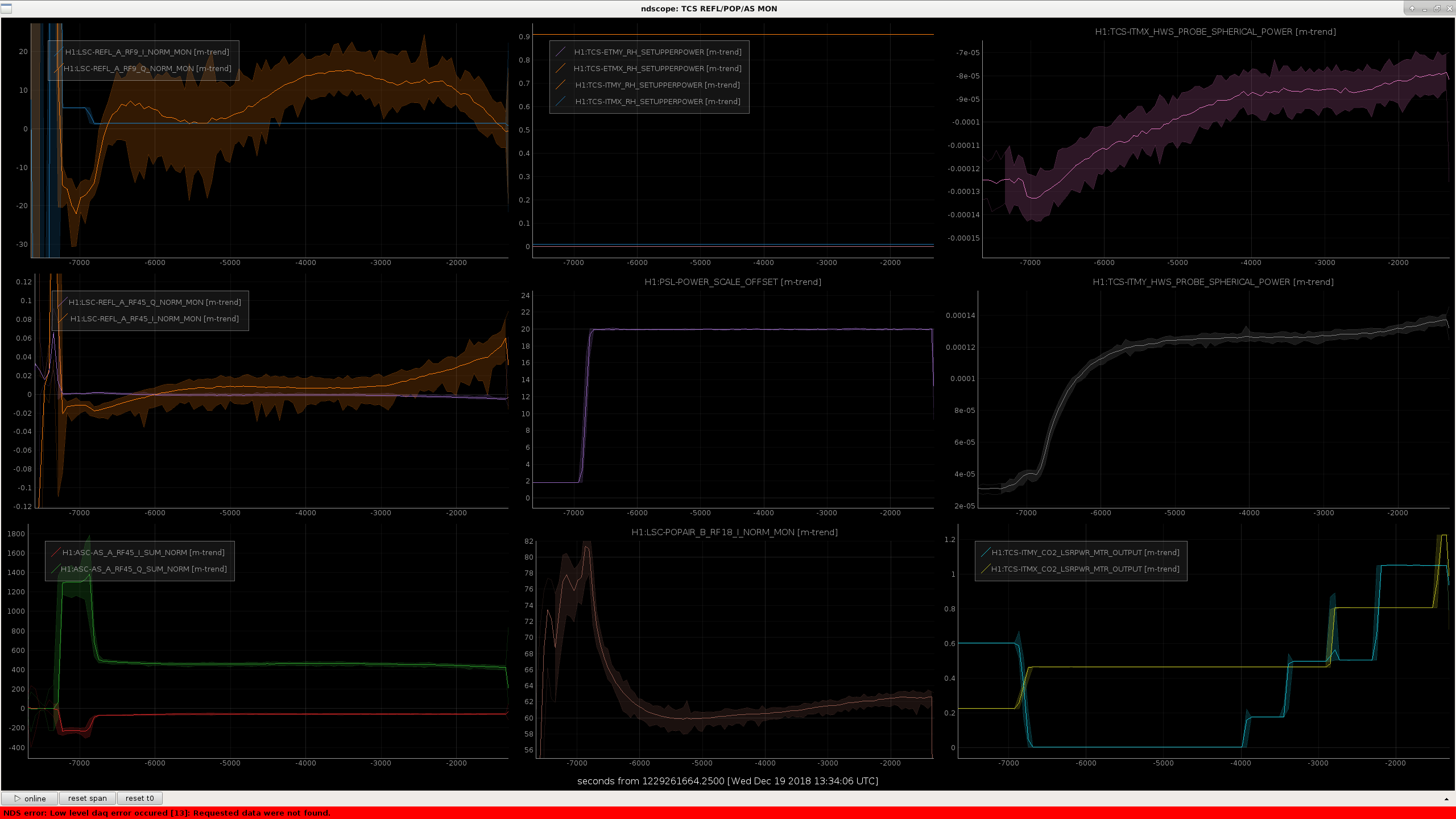
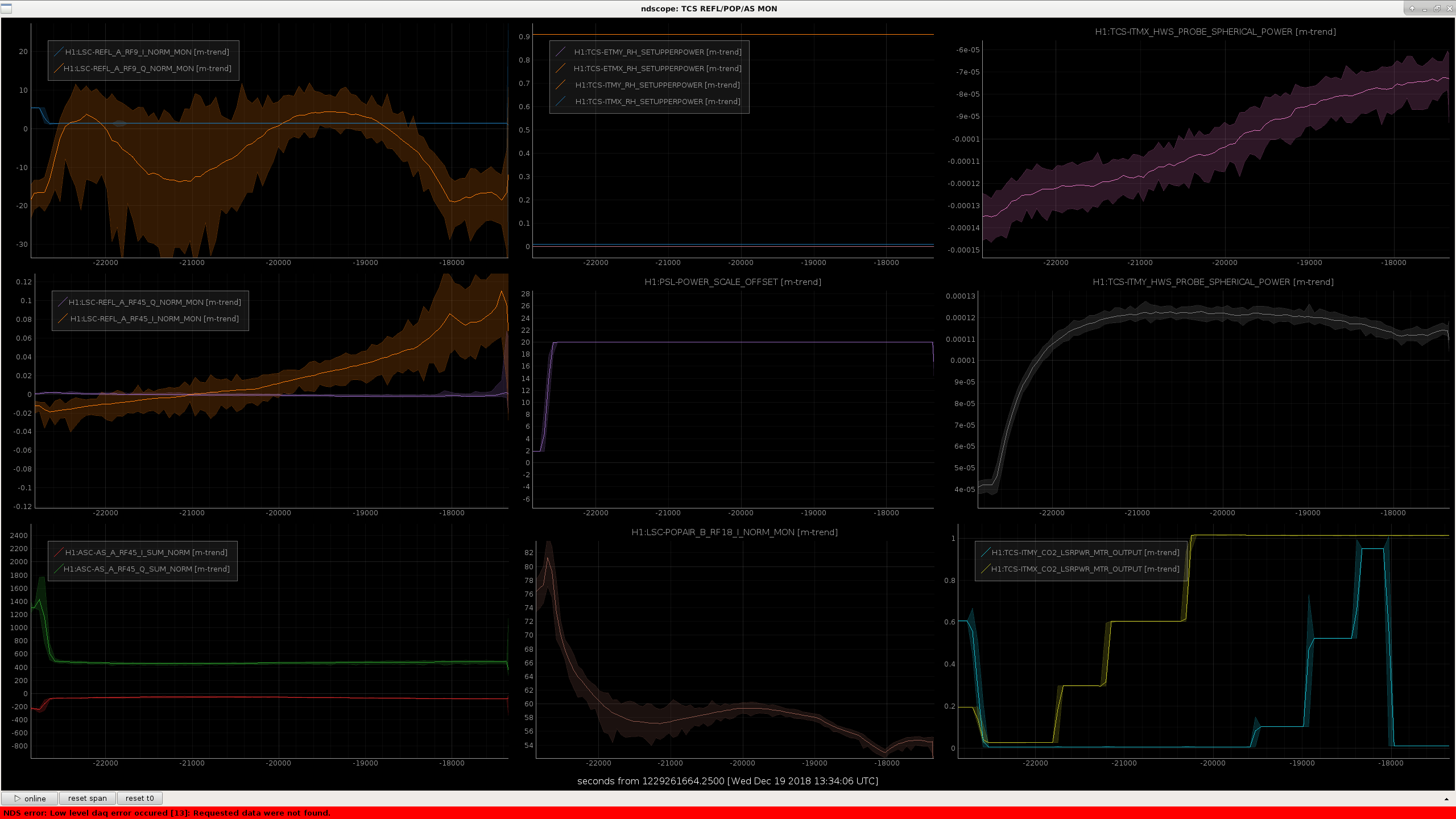
Given the high absorption on ITMY the substrate lens increases significantly more than ITMX's during power up. To combat this the prevailing thought was to either turn down CO2Y or increase the ITMY ring heater to induce a negative substrate lens. However, this didn't work and only made the POP18 and REFL_RF9_Q worse it seems: Increasing the substrate lens using CO2X made a significant difference to the quality of the lock (see here around 20000s) and increased RF18 by ~2, increasing too much more didn't help. The idea behind this is that it makes the differential lens smaller as well as increasing the common lensing. What also helped was increasing CO2Y, surprisingly, this helped bring REFL_RF9_Q back towards zero when CO2X was increased too much and also improved RF18 slightly. It also increased the PRG and TRX/TRY so it seemed to be helping the overall mode matching of the IFO. Pushing this too high led to a CHARD instability though and lost lock. We also tried annular CO2Y (see here around 18000s), from the Hartmann output we were inducing a negative lens but this made POP18 significantly worse.
I've set CO2X=0.6W and CO2Y=0.3W when we reach 20W in the Guardian, POP18 should level off ~61 at increase power. However, going up to low noise it dropped further to ~57 and it starts becoming noisier again, which suggests we can get it back up with some alignment tweaks as well as TCS changes.
Lock losses:
- 28 Hz instability on power up to 30W
- 22 Hz CHARD instability on pushing CO2 X and Y too high
- Tried powering up to 25W on NLN, not sure why
- Numerous ALS glitches
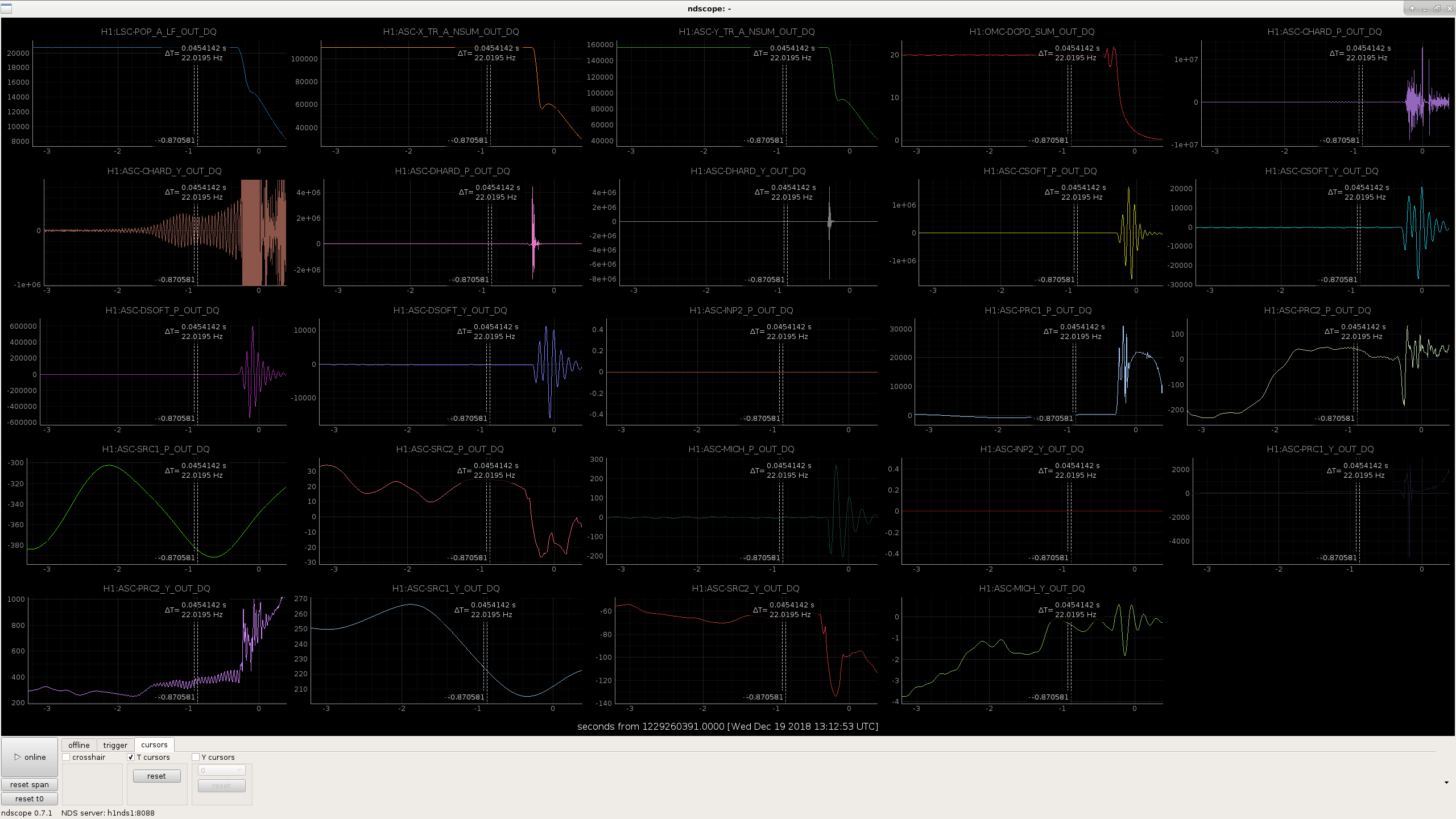
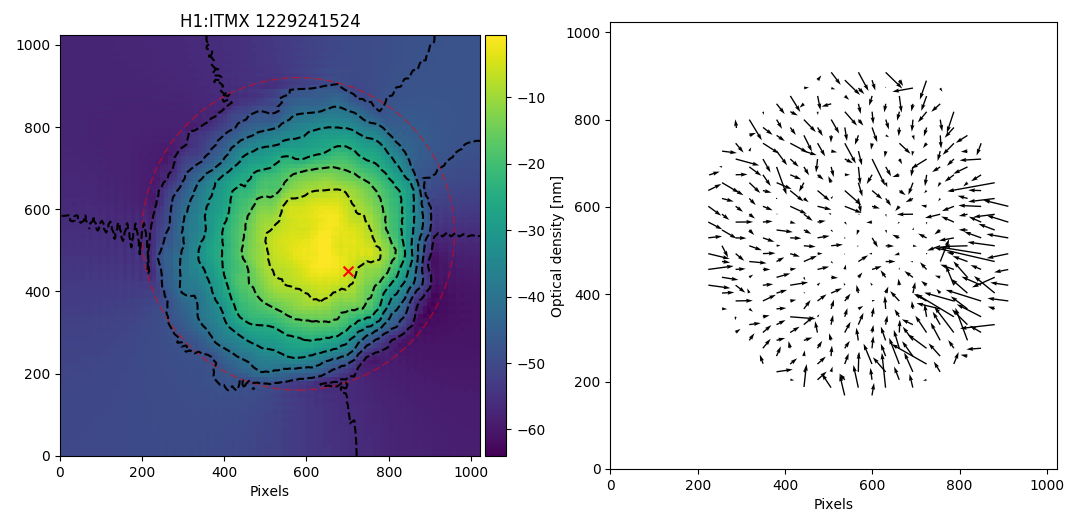
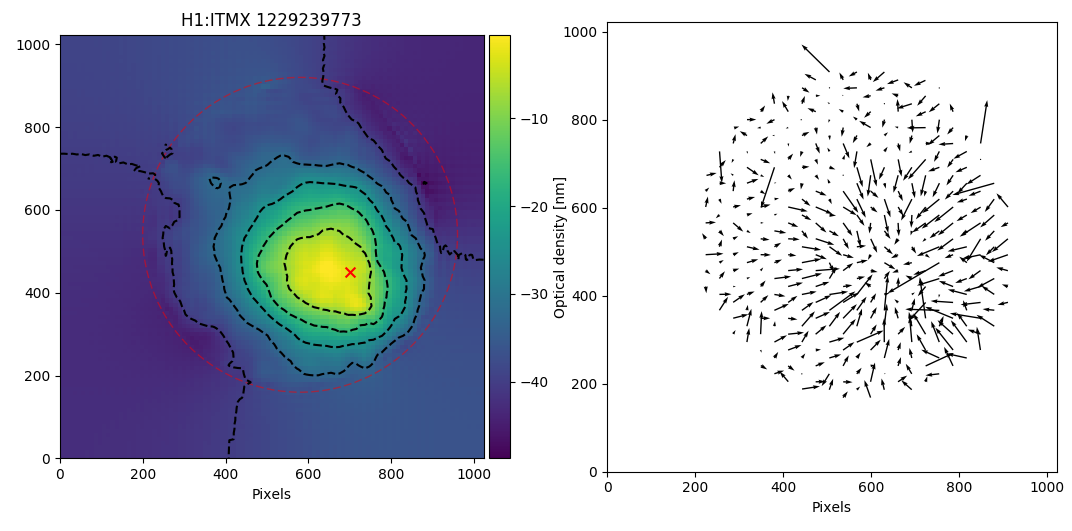
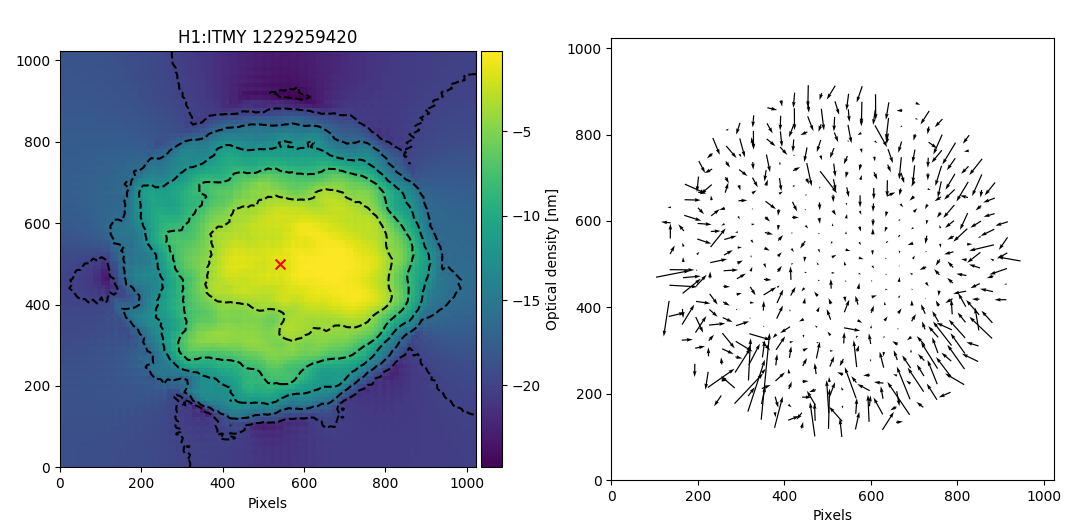
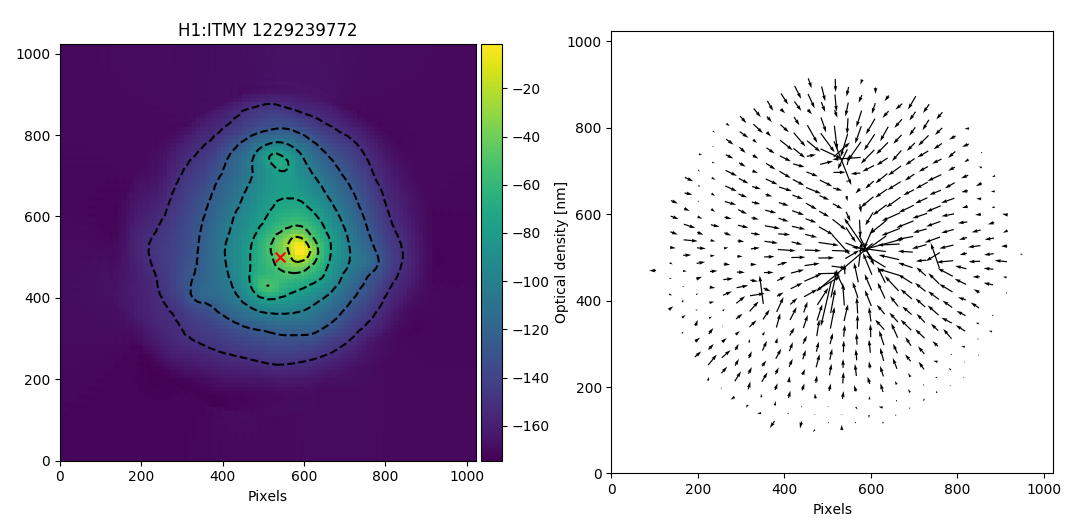
Comparing the locks that Dan posted about the CO2 steps can give us an little more understanding about the pico-motoring we did relative to the IFO beam positioning. I attached four wavefront maps which compare the IFO beam to the CO2 beams, all in all, CO2Y looks a lot better than it previously did here.
Regarding the ezca error with bounce/roll mode monitoring checks in the LOWNOISE_ASC state of the ISC_LOCK guardian:

After yesterday's move of these monitors from the h1oaf to h1susproc (LHO aLOG 46047) the
    $(IFO):OAF-BOUNCE_$(OPTIC)_RMS_LOG10_OUTMON
channels have changed name to
    $(IFO):SUS-BOUNCE_$(OPTIC)_RMS_LOG10_OUTMON
and likely the above team found that ETMX was the problem because it's the first element in the array in a for loop over checking that these channels values are low before moving on.

I've updated the ISC_LOCK guardian code to look at this new channel name and reloaded it.