This is a quick companion to my post for LLO 42583. Please look through or see the associated https://dcc.ligo.org/G1900011 that for context on these plots
I ran the same pipeline for H1 at 2019-01-03T08:00:00 UTC averaged for 700 seconds. I also looked at O2 data, but the machine did not appear to be sufficiently shotnoise limited around the UGF to compare with LLOs O2 in the presentation. Now it is.
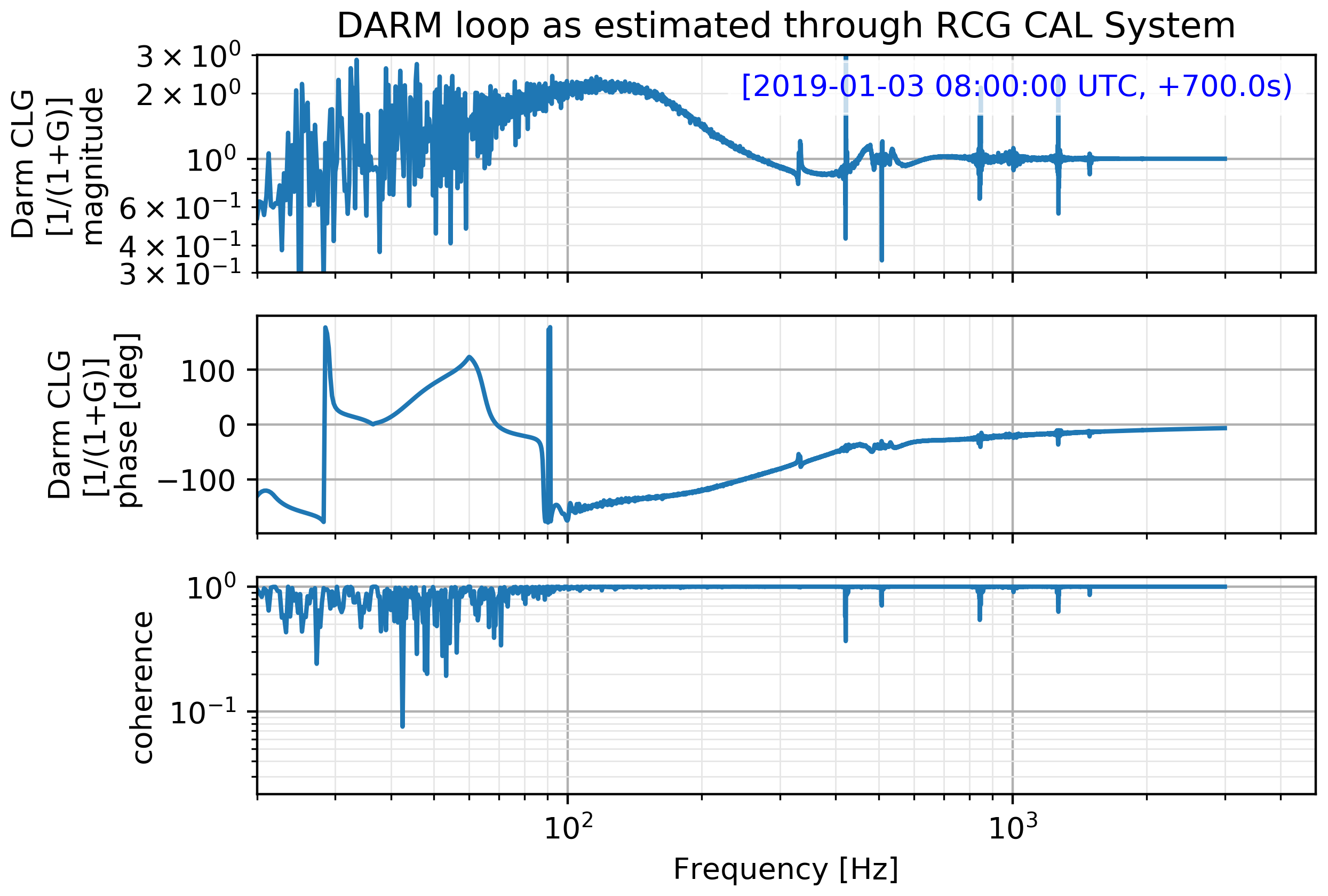
darm_loop20190103T080000.png : the DARM loop I get from the RCG calibration system. I do not know yet why it is a poor estimator at low frequencies given A: the coherence, B: that the same thing works fine at LLO. May be from more cal lines in LHO, but those shouldn't have a broadband effect. In any case it works OK above 70Hz. I'll dig in to figure out why this is.
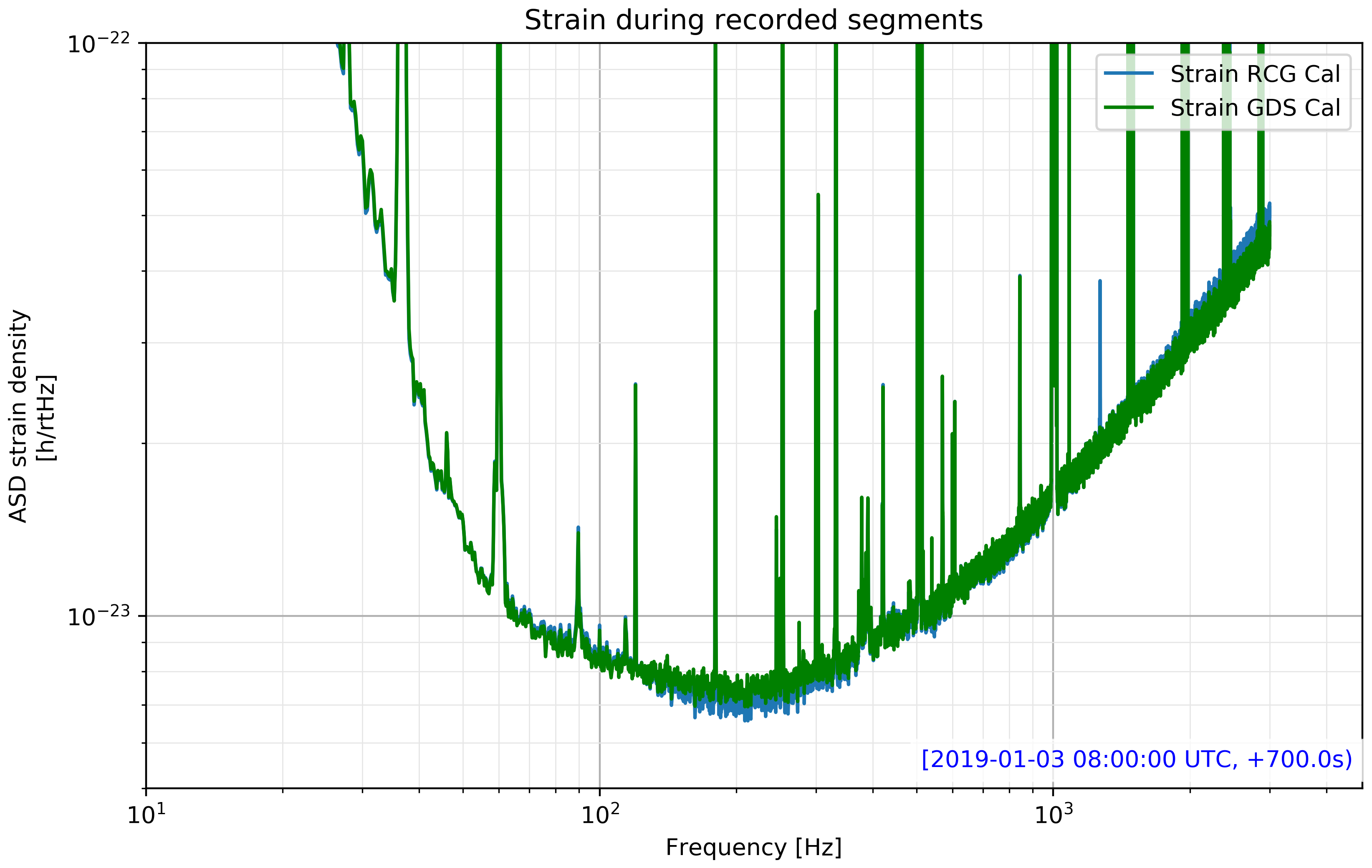
strain20190103T080000.png : The strain averaged over this time, from both cal systems.
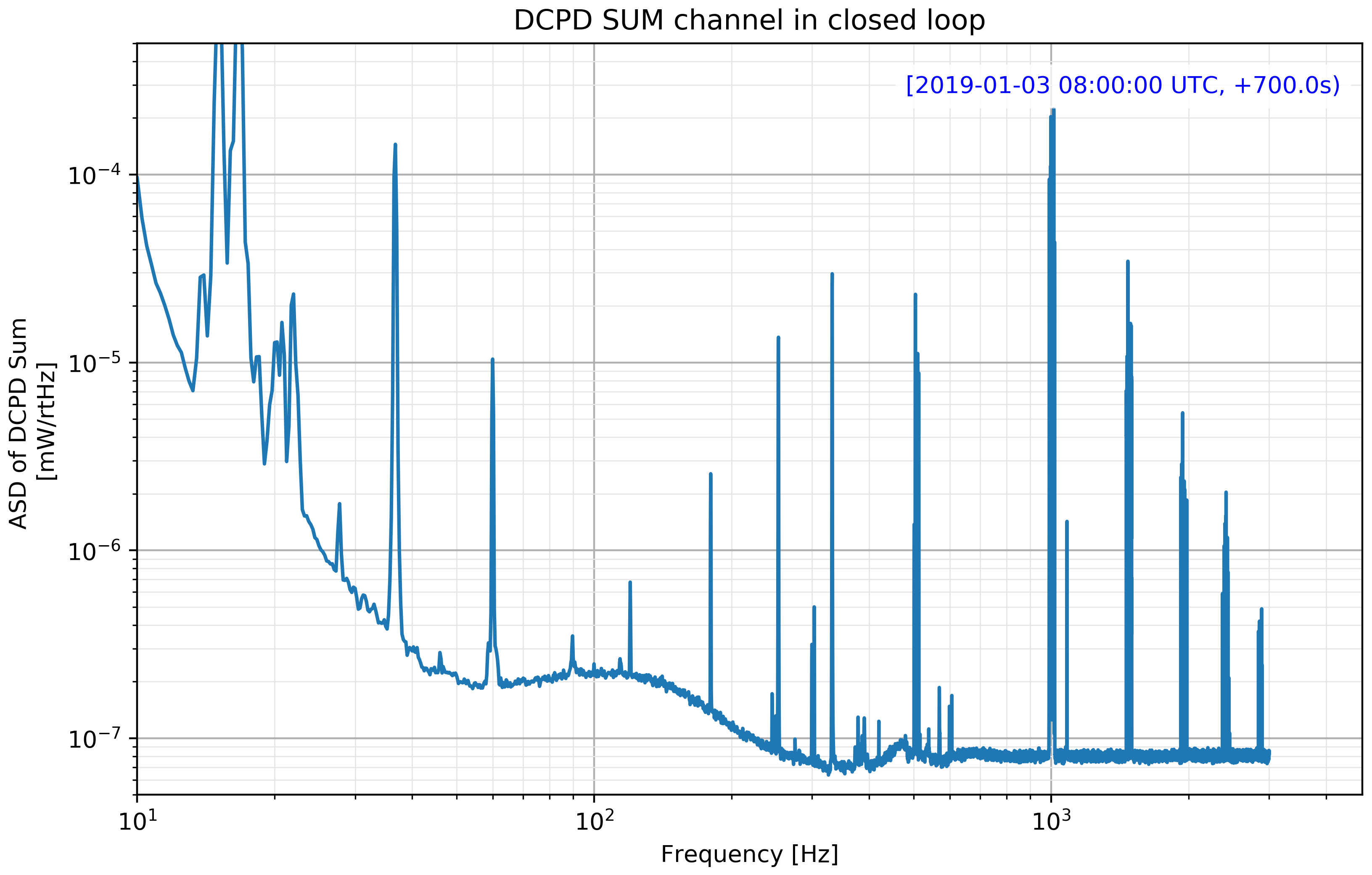
DCPDCL20190103T080000.png : DCPDs in closed loop
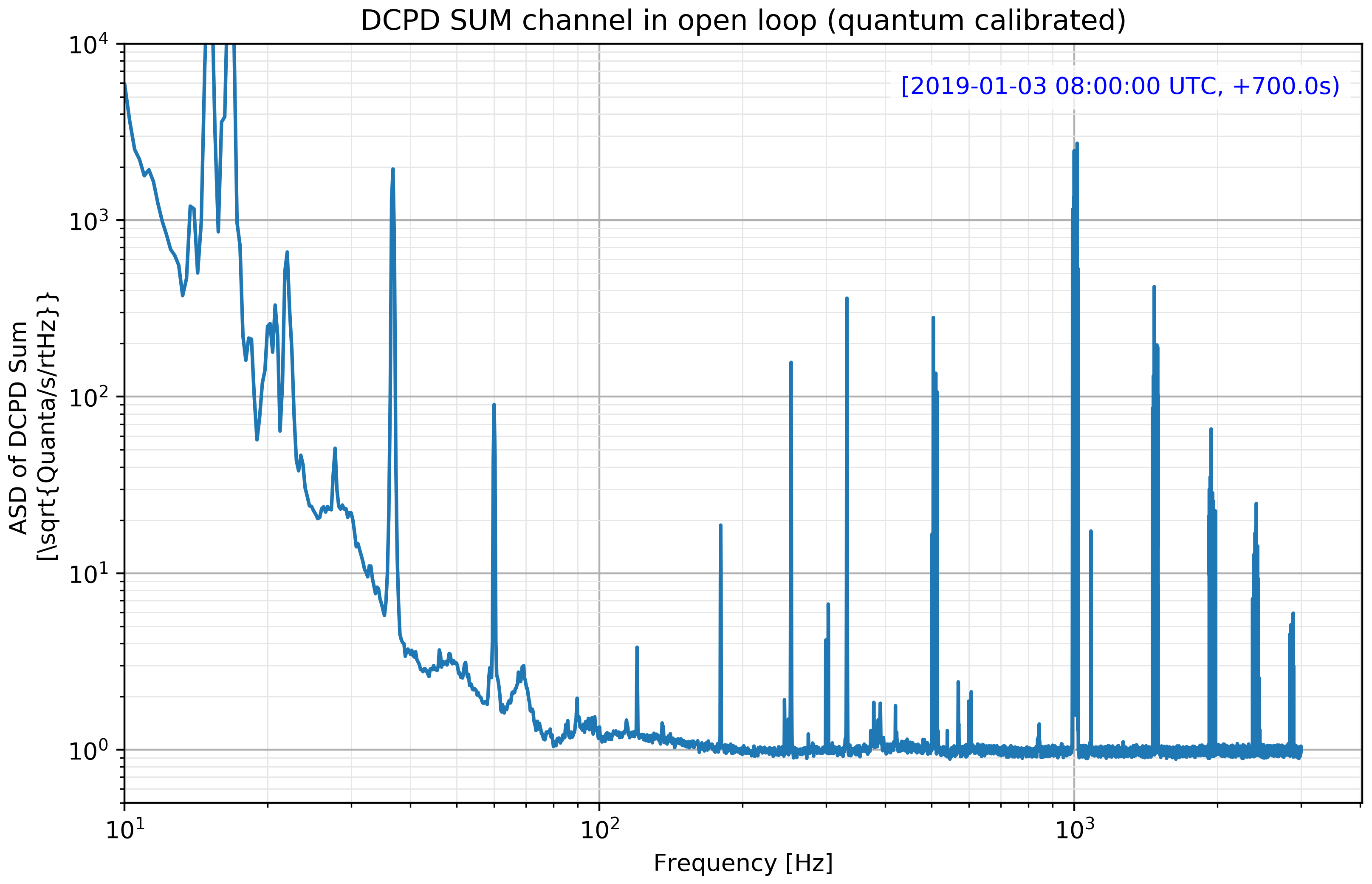
DCPDOL20190103T080000.png : DCPDs in open loop, zoomed way out
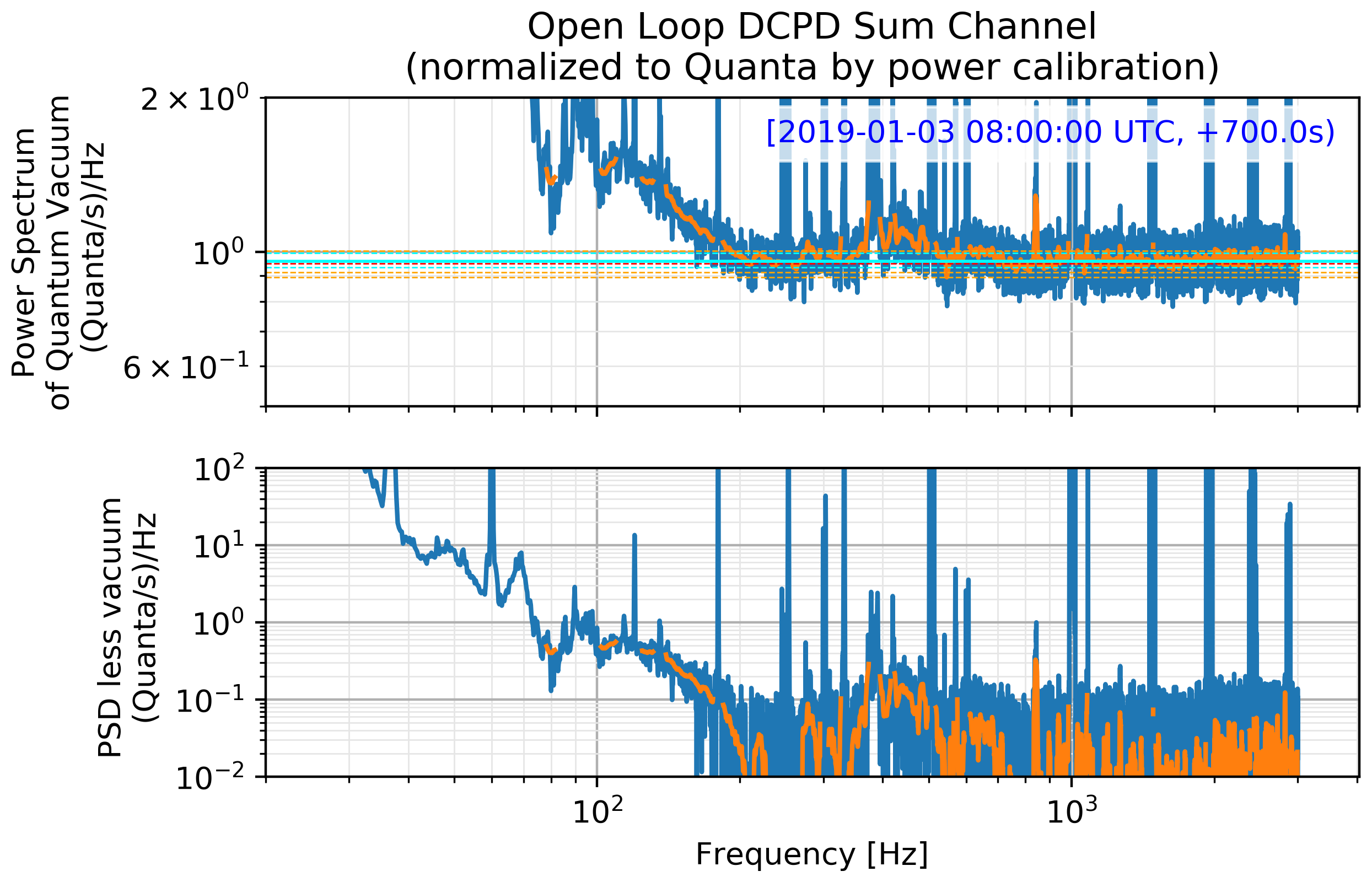
spec20190103T080000.png : The PSD of the open loop DCPDs, calibrated to shot noise. as well as the noise-subtracted version.
I might say that the same loop-injected excess I'm curious about at LLO is also occurring at LHO. Curiously, the same .95 correction factor to the ASD as I used for the absolute calibration at LLO is also necessary for LHO, suggesting that the power/transimpedance calibration is 10% off.
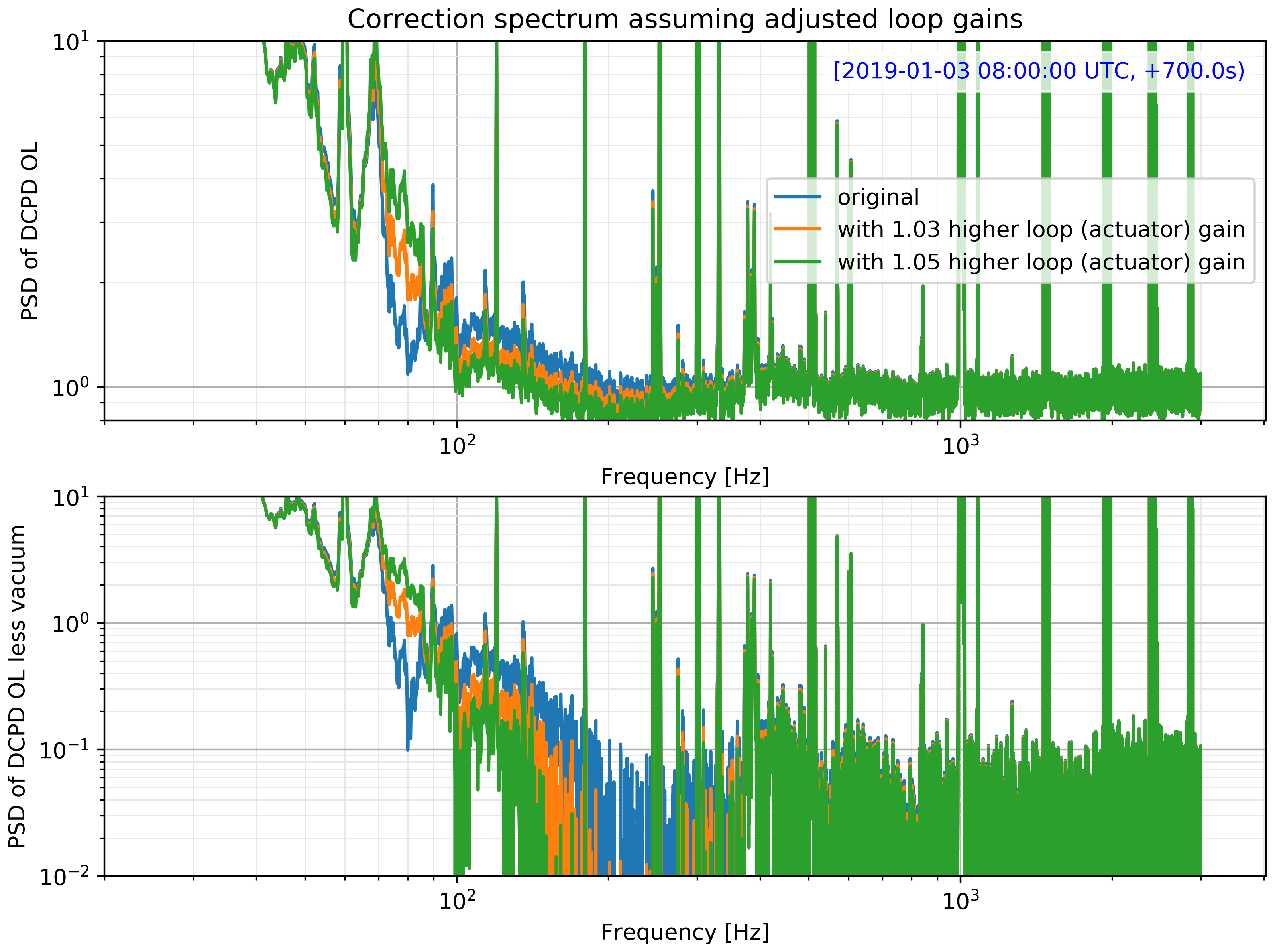
loop_adjusted.png : If I try to virtually retune the loop correction, I do not get a flattening of the noise curve the way I can in the LLO O2 data shown in the presentation.
Once we see a sufficient segment of squeezing (or antisqueezing), I will analyze further.