The 16-hour lock from Jan 3rd hovered around 78 Mpc BNS range but had very strong scattering as described in 46222. This is a response to Jenne's request in that alog for detchar help on where the scattering might come from. This scattering is very broad and reaches to frequencies as high as 80Hz in strain, while it is seen at mostly 10-20Hz in auxiliary channels. The most strongly related channels to this scattering are Y-arm related, and the motion of ETMY's upper stage matches the fringes qualitatively.
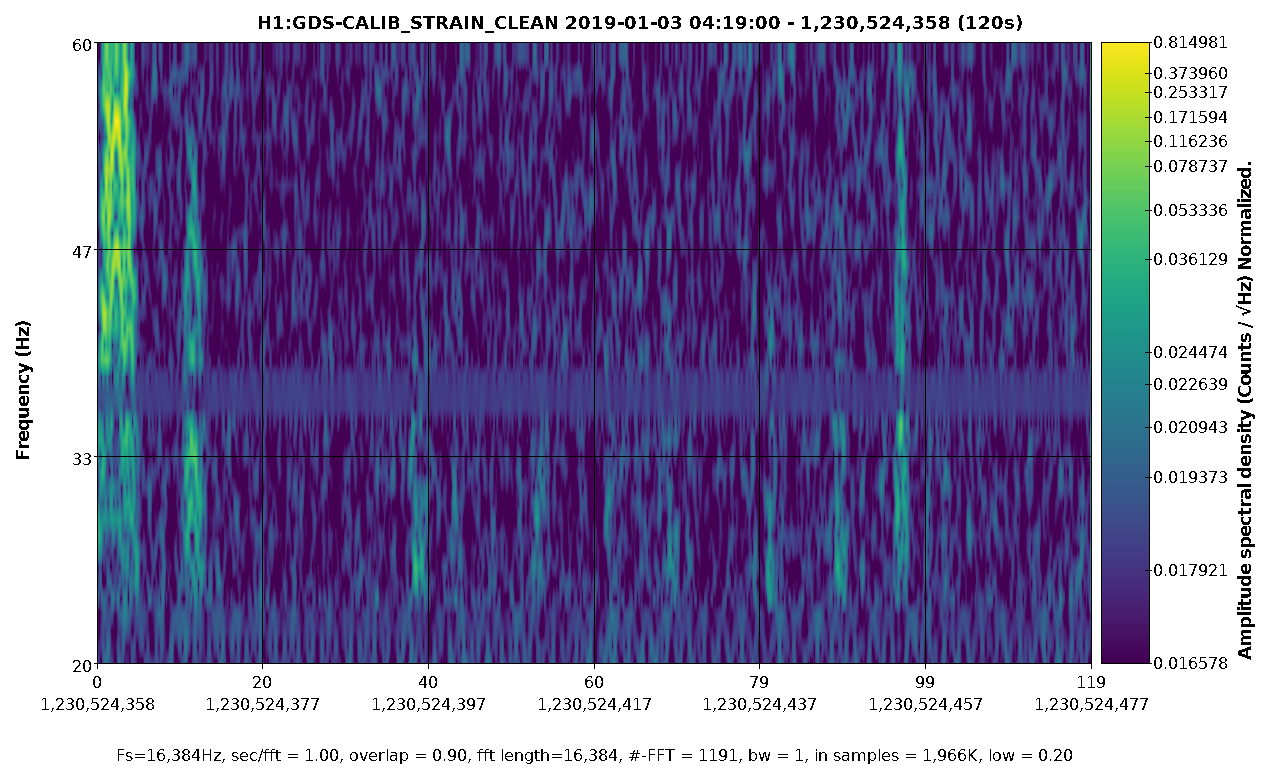
Fig 1 shows a normalized spectrogram of (cleaned) strain with about 10 scattering events in 2 minutes. Hveto identified a strong correlation with the channel ASC-Y_TR_B_PIT_OUT_DQ. Glitches at 10-20Hz in that ASC channel are coincident with glitches 40-70Hz in strain. Note that this channel only sees the very loud/high frequency scattering.
Fig 2 shows the characteristic SNR vs frequency behavior of the scatter, where scatter that reaches higher frequency has higher SNR (as the detector noise drops to higher frequency).
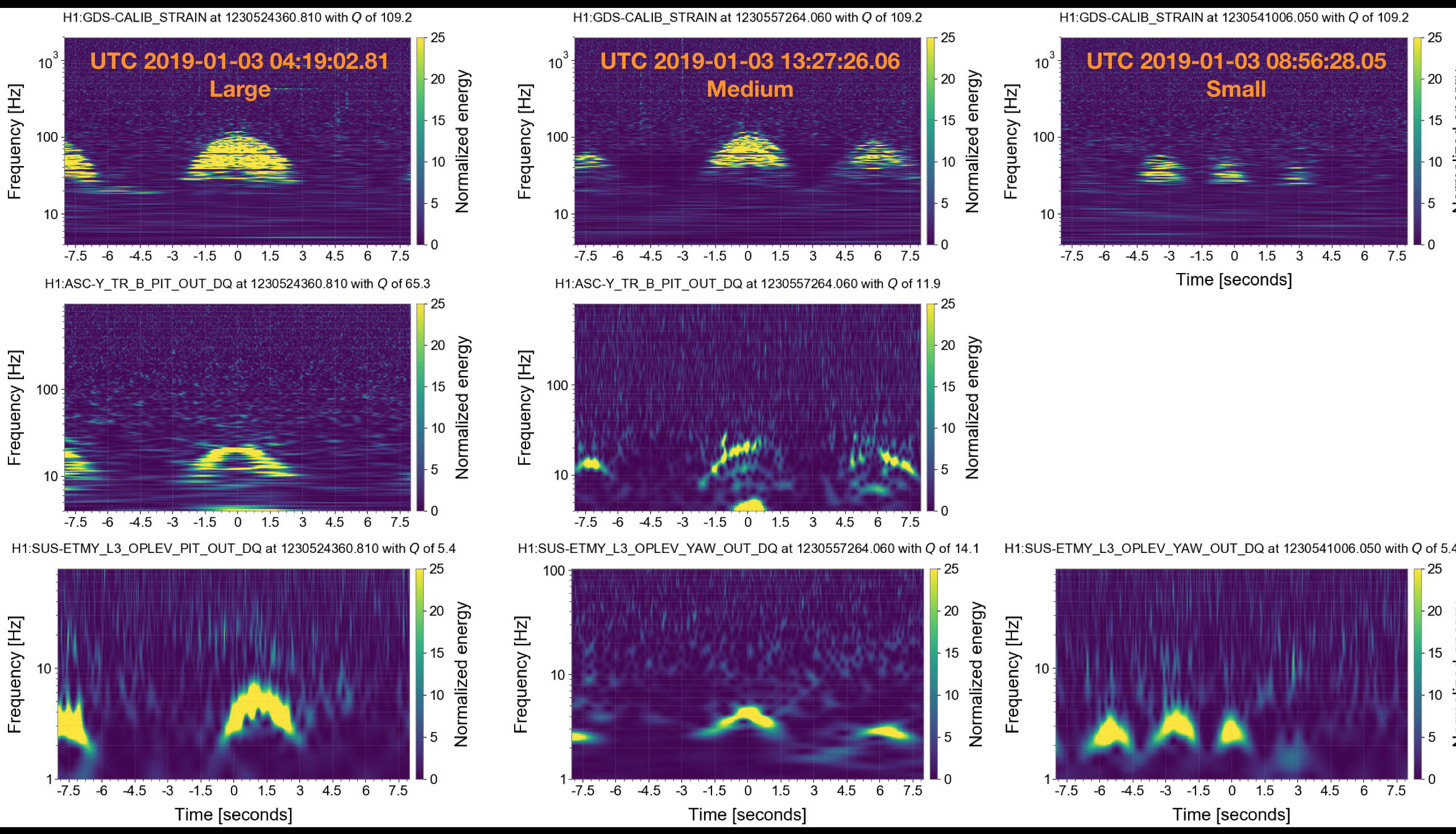
Fig 3 shows a montage of three omega scans of scattering events, a large one (the same as the first one in fig 1), a medium one, and a weak one. The fringes are very broad in h(t), and reach ~80Hz in strain. The fringes are at lower frequency, narrower and stronger (higher SNR) in ASC-Y_TR. There are also fringes in ETMY Oplev Pitch channels with similar period at even lower frequency, but as you can see, these don't really line up.
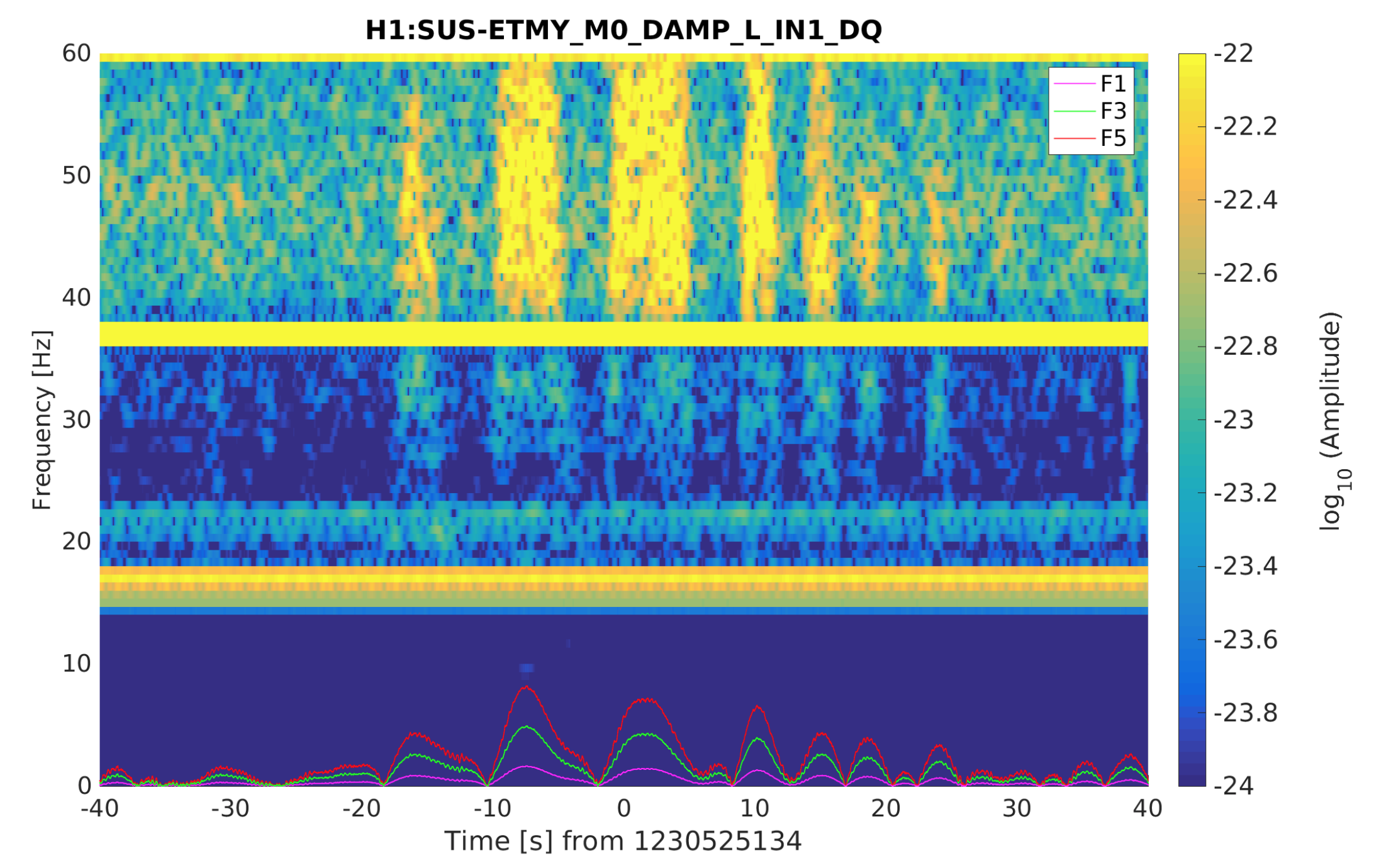
Figs 4,5 show spectrograms of ASC-Y_TR_B_PIT_OUT_DQ with fringe frequencies calculated from the long motion of the upper mass* of ETMY and SRM suspensions. Out of all H1 suspensions, ETMY M0/R0 and SRM line up best. Fig 5 is an alternative look at a different time from Guillermo.
Finally, if I understood Jenne's alog correctly, they were intentionally moving the compensation plate from roughly 17:30-19:30 UTC, so I ignored those times when doing this work.
* As Rana pointed out, there are no laser beams on the upper mass. We're using these for convenience because the long signals there are calibrated to um, but we'd love to switch to an estimated lower mass displacement w/r/t something (to calculate fringe frequency) and are very open for suggestions.