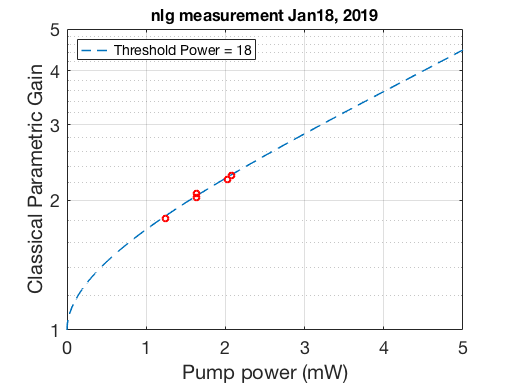
Yesterday I double checked that our threshold power still makes sense compared to alog45528. This could be an indication that our crystal is doing fine. The measurement was taken with 20dB attenuator on 80MHz RF modulation.
I measured SQZ/ASQZ using Mephisto LO to get a direct comparison to alog45586. Along the way I found that I have been saturating the homodyne (I normally set the RF analyzer to 1MHz - 5MHz so I missed all the peaks at 6, 9, 12, ... MHz). I used LO power of 0.5mW and CLF of 5uW. The total power was less than what we used back in August (alog43738) which we used 1 mW LO power and 10uW seed without saturating the homodyne.

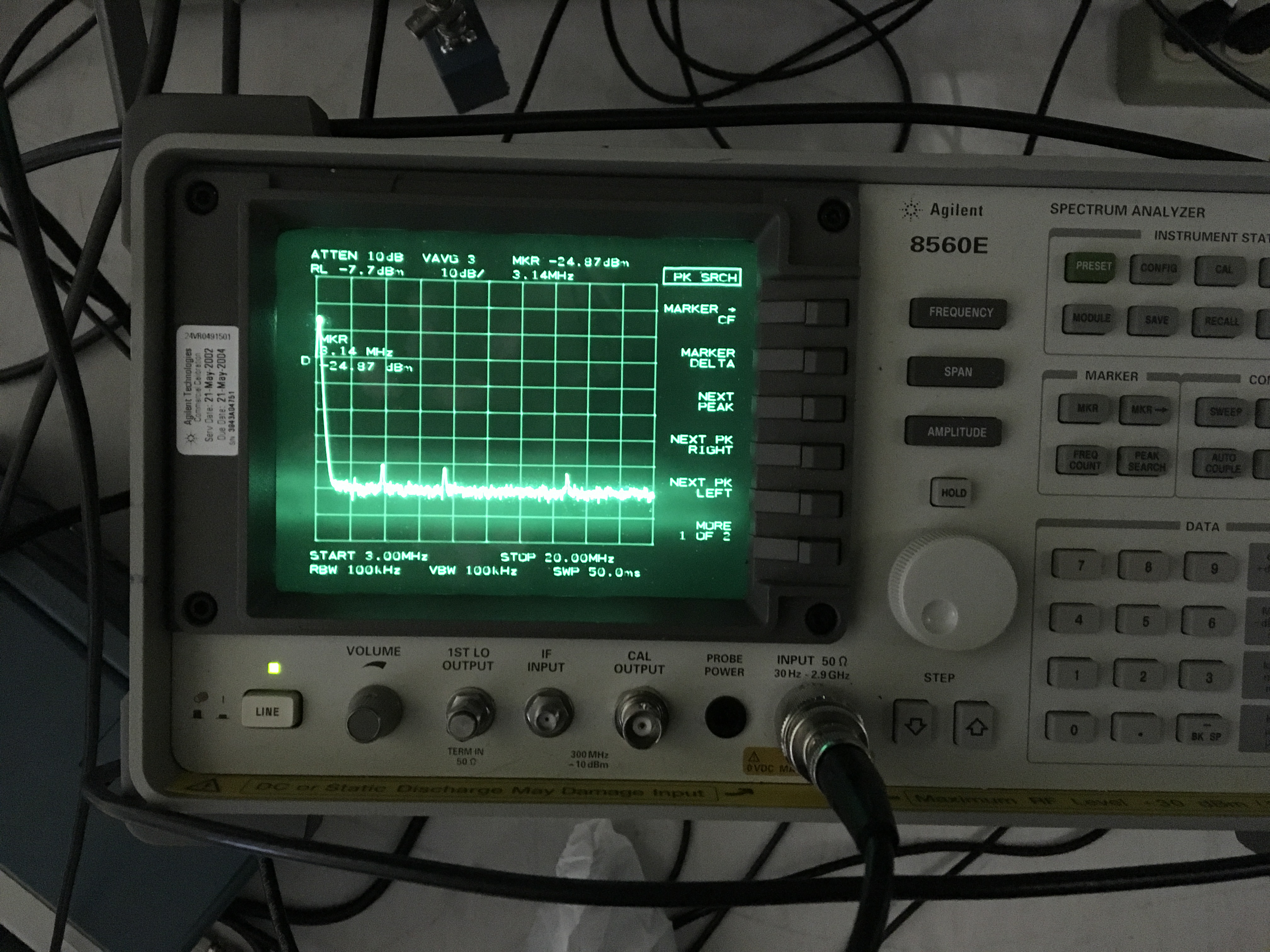
Attached a sqz/asqz result. The magenta/round datapoint were taken with 20dB attenuator on the 80MHz modulation signal, HD not saturated. The black Xes were taken without 20 dB attenuator on the 80MHz modulation signal to ensure that extra 80MHz sidebands do no harm (except that we get less non linear gain). The red round data points were taken when the HD was saturated. The CLF needed to be turned down by a factor of 10 (0.5uW total to the HD) for the HD to not saturate (where we saw no more 3MHz harmonics).
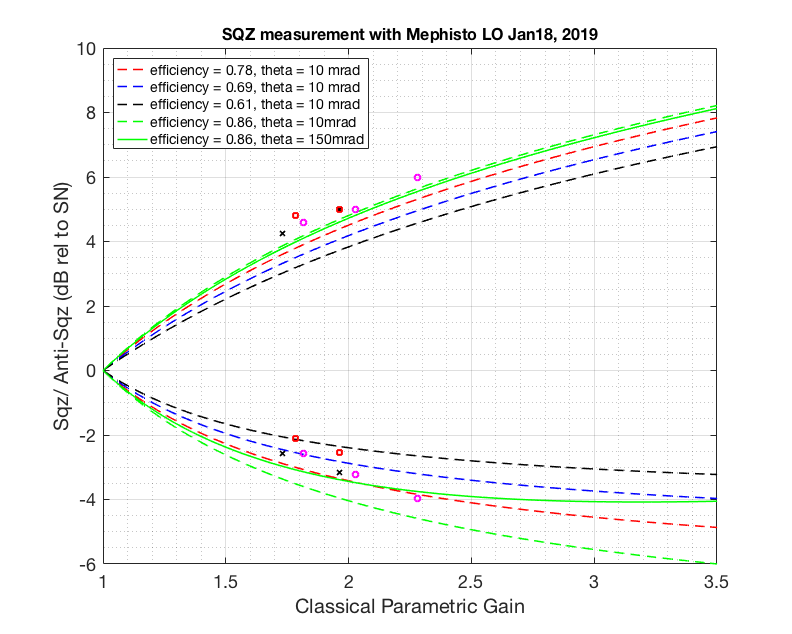
Looking at ASQZ alone it almost seems like we have 95% efficiency but you would need A LOT of phase noise to explain the squeezing. ASQZ also doesn't seem to be affected by extra phase noise introduced by the saturated homodyne, only sqz does (which makes sense, so I'm not sure if it totally explains what we measured with PSLLO here). But the fact that we can see 4dB here is a good enough indication that we can move on (and that we probably don't need to move the crystal). The solid green plot I tried giving it an arbitrary phase noise (that LLO found) just to see how that fits. If it's real I wouldn't know where that could have come from (it doesn't show on LO IMON).
