We took some CHARD, DHARD P measurements tonight, neither seem responsible for the 1 Hz oscillation reported earlier.
We lost lock due to a 6.4 earthquake five hours ago.
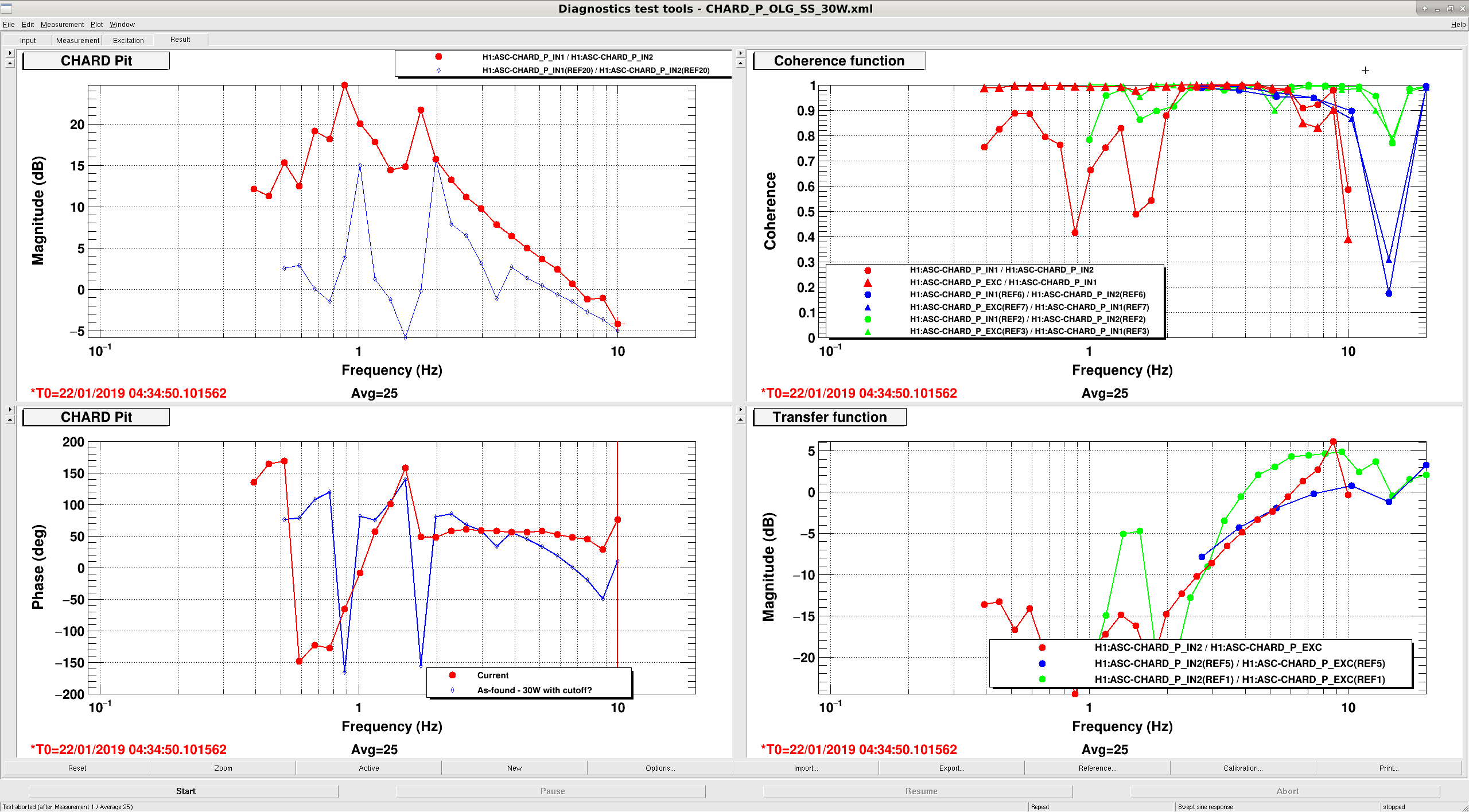
These measurements were taken with a gain of 2 in CHARD P, and a SWSTAT of 38429, which means this happened before the gain is reduced to 0.6 (10dB lower) and the elliptic low pass at 10 Hz is engaged. Although we have 0 degrees of phase at 1 Hz, it seems like even after the changes in low noise ASC we should still have 10dB of gain at 1 Hz.
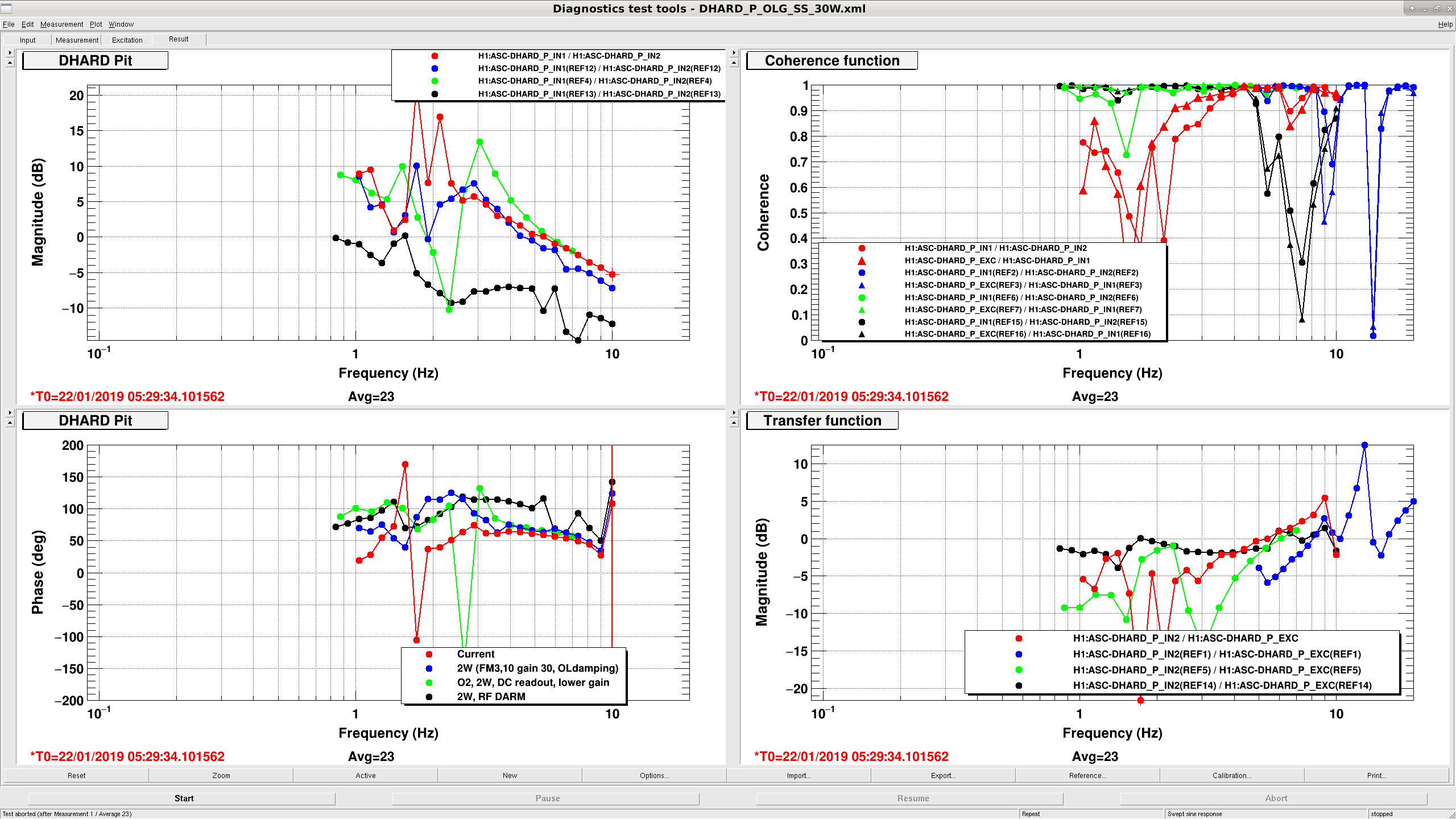
For DHARD P this was also taken before the changes in low noise ASC (gain is 50, SWSTAT is 38420), where the gain will be reduced by 4.5 dB and the one of the low passes will be engaged (either ELP10 or ELP17). The gain reduction for DHARD seems like the most suspect thing here, especially since the coherence is low for the 1 Hz point in Craig's measurement.
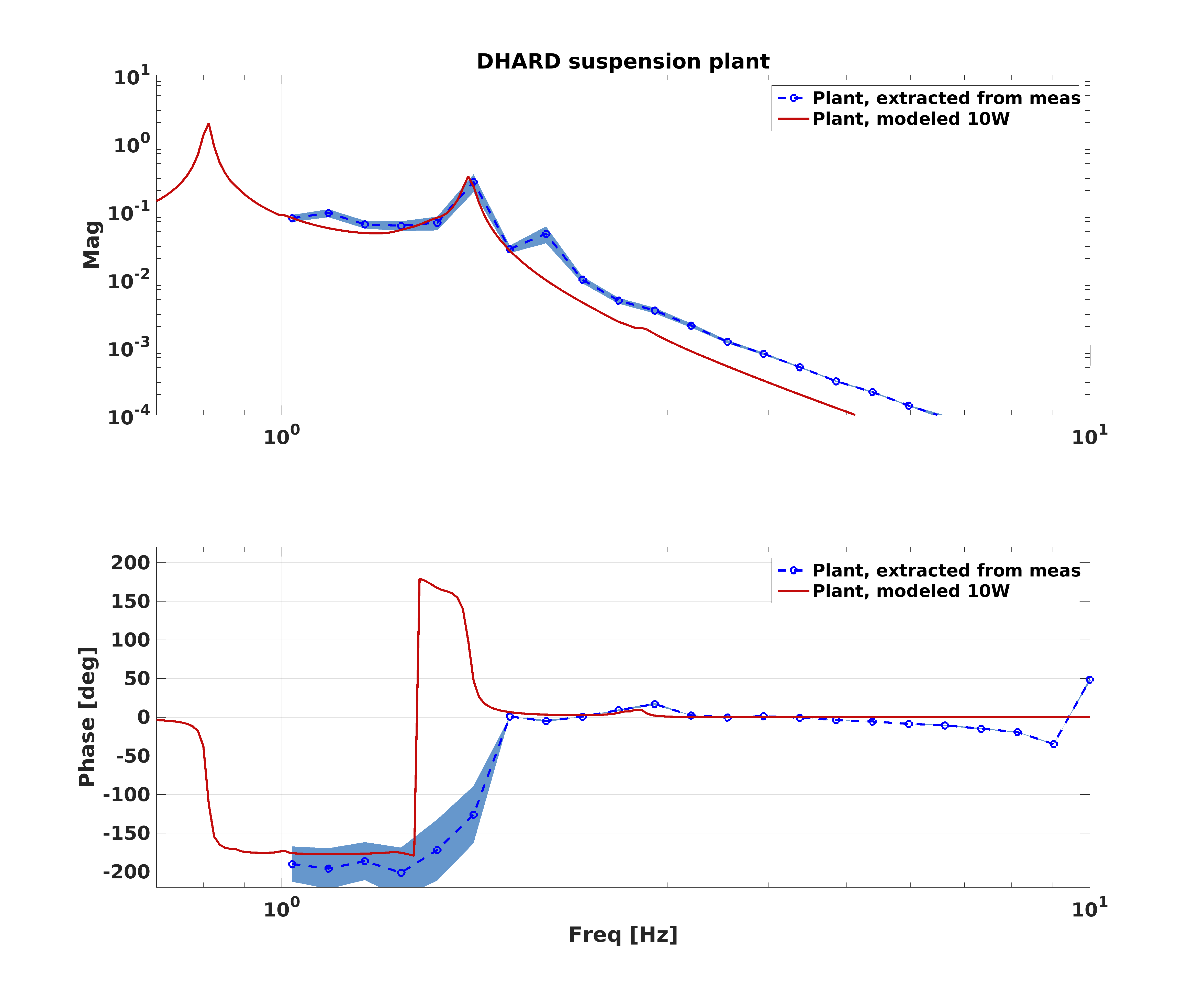
I think we may need to understand our DHARD plant better. I've taken the measurement from the parent alog, and extracted the suspension plant by dividing by the control filters that were in use at the time. I plot this against a model of the DHARD pitch plant at 10W. (Note that the measured data was taken at 30W, but the radiation pressure compensation was engaged to make it look like a 10W plant, which is why I compare to the 10W system.)
Also plotted are some rough uncertainties for the measured plant.
You can see that this measurement is consistent with Hang's in alog 46179, where he notes that the measured phase is doing opposite of what one expects for a pendulum system. So, while the OLG looks stable, we probably have something funky going on here.