
craig.cahillane@LIGO.ORG - posted 22:04, Friday 15 February 2019 - last comment - 02:29, Saturday 16 February 2019(46968)
IMC and FSS investigations
Sheila, Keita, Jenne, Daniel, Georgia, Craig

Today we have been having issues powering up due to large glitches in the CARM loop when lowering the IMC fast gain.  This has not been an issue in the recent past, and no changes have been applied to the CARM or IMC loops since the 6 dB gain redistribution back in January.

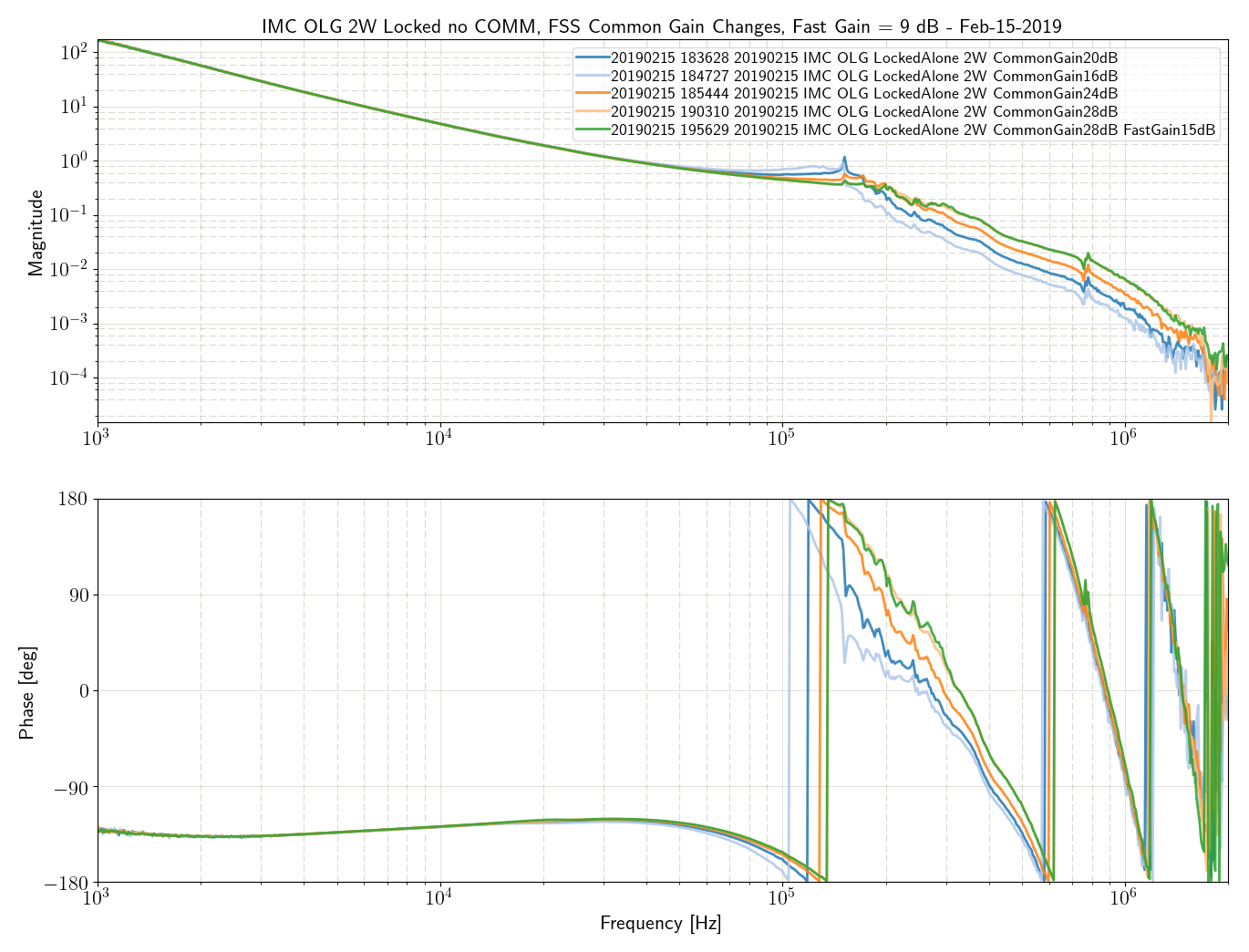
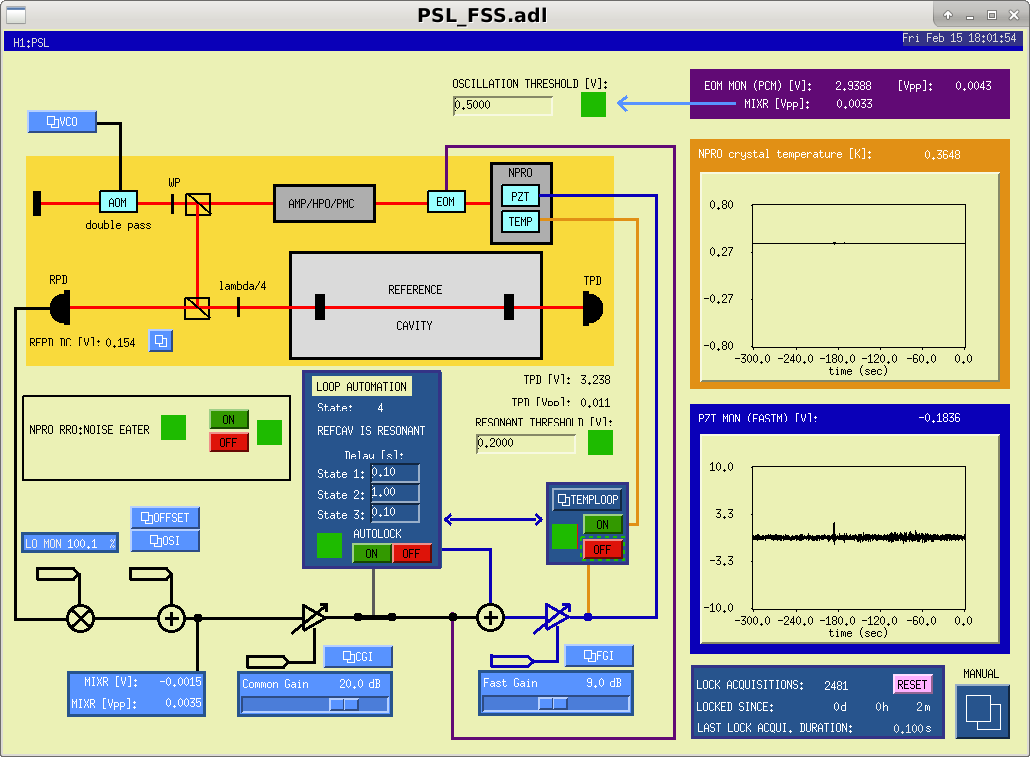
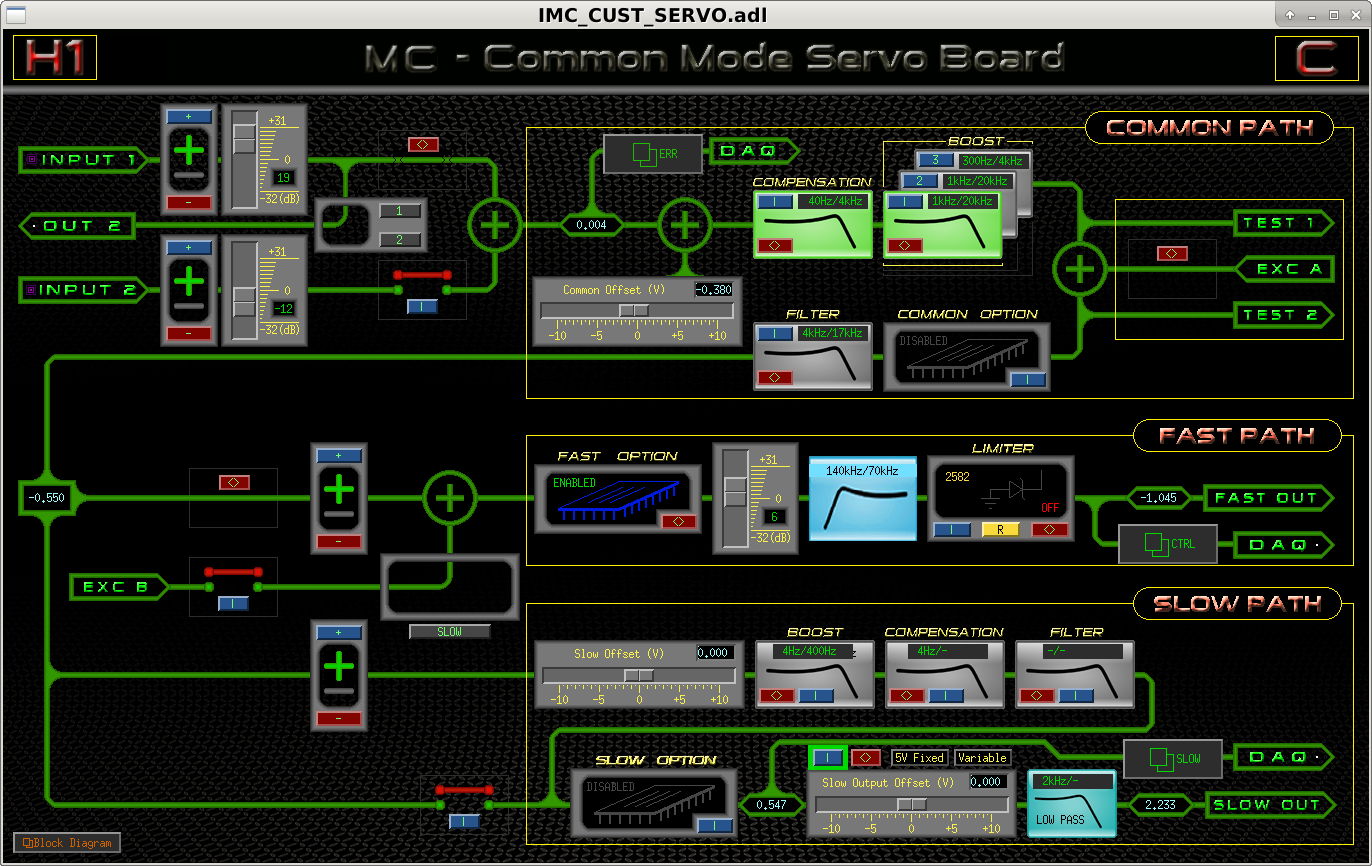
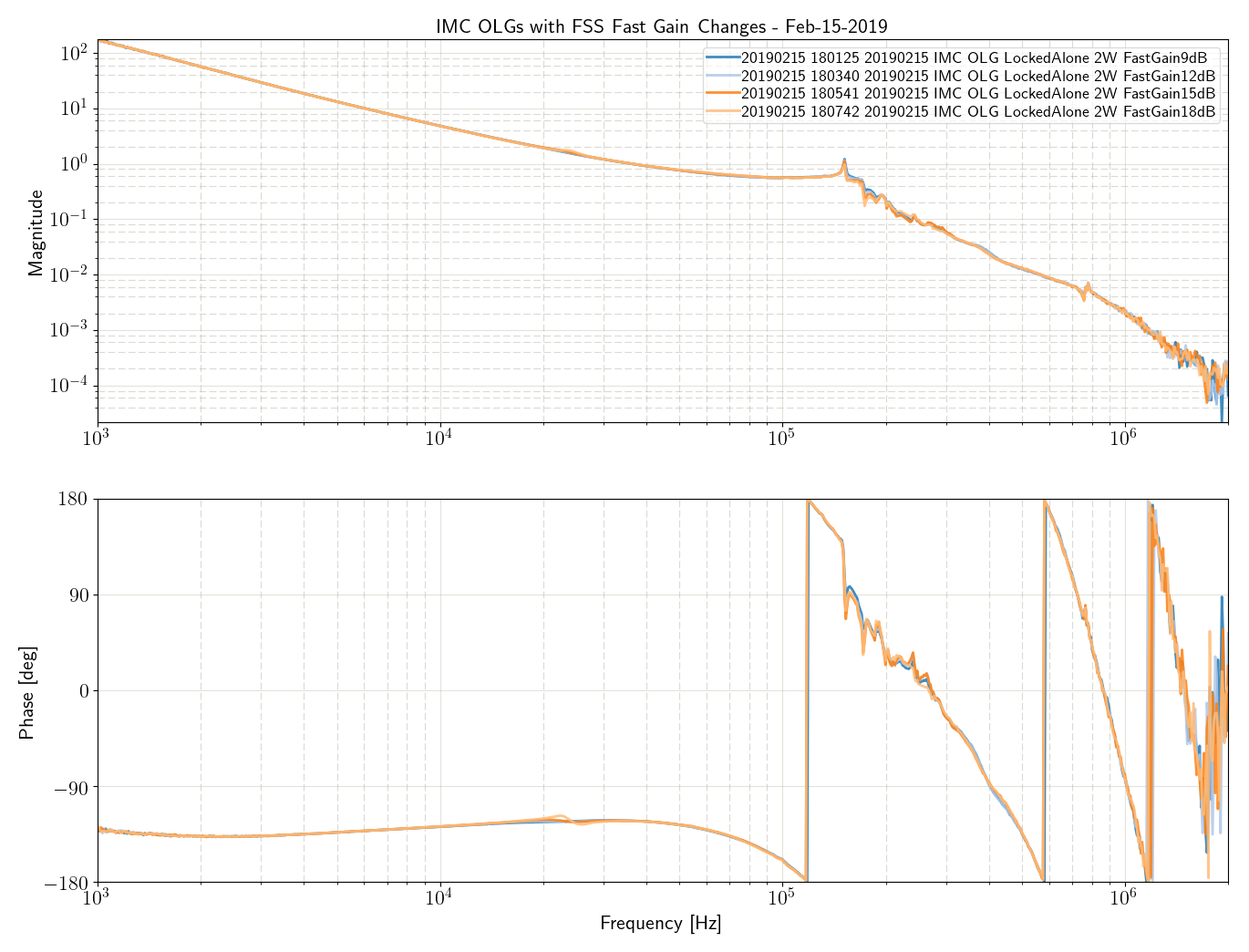
We measured the IMC OLG in it's former nominal configuration (OLGs in attachment 1, nominal configs pictured below in attachments 2 and 3).

There was a feature at 150 kHz causing a second UGF in the IMC OLG in it's nominal configuration.
When we increased the FSS Common Gain, the feature was suppressed. (Attachment 1)
Changing the FSS Fast Gain did not change the 150 kHz feature.  (Attachment 4)

We increased the FSS common gain from 20 dB to 28 dB, and the FSS fast gain from 9 dB to 15 dB.  This suppressed the glitches associated with the IMC fast gain slider changes during INCREASE_POWER, and we were able to power up to 30 W.
We suspect that the FSS common gain somehow fell significantly over the past week, causing some small feature in the FSS loop to approach a gain of 1, causing excessive oscillations in the IMC around 150 kHz, eventually leading to locklosses due to powerup gain slider glitches.

More investigation into the FSS is required to understand if the FSS gain really fell, and why.

Relevant alogs:
Peter King's last FSS OLG measurement (400 kHz UGF)
August 2018 test of the FSS common gain setting
August 2018 test of the FSS fast gain setting
Recent 2W IMC and CARM OLGs (with old FSS settings)

Relevant spectra:
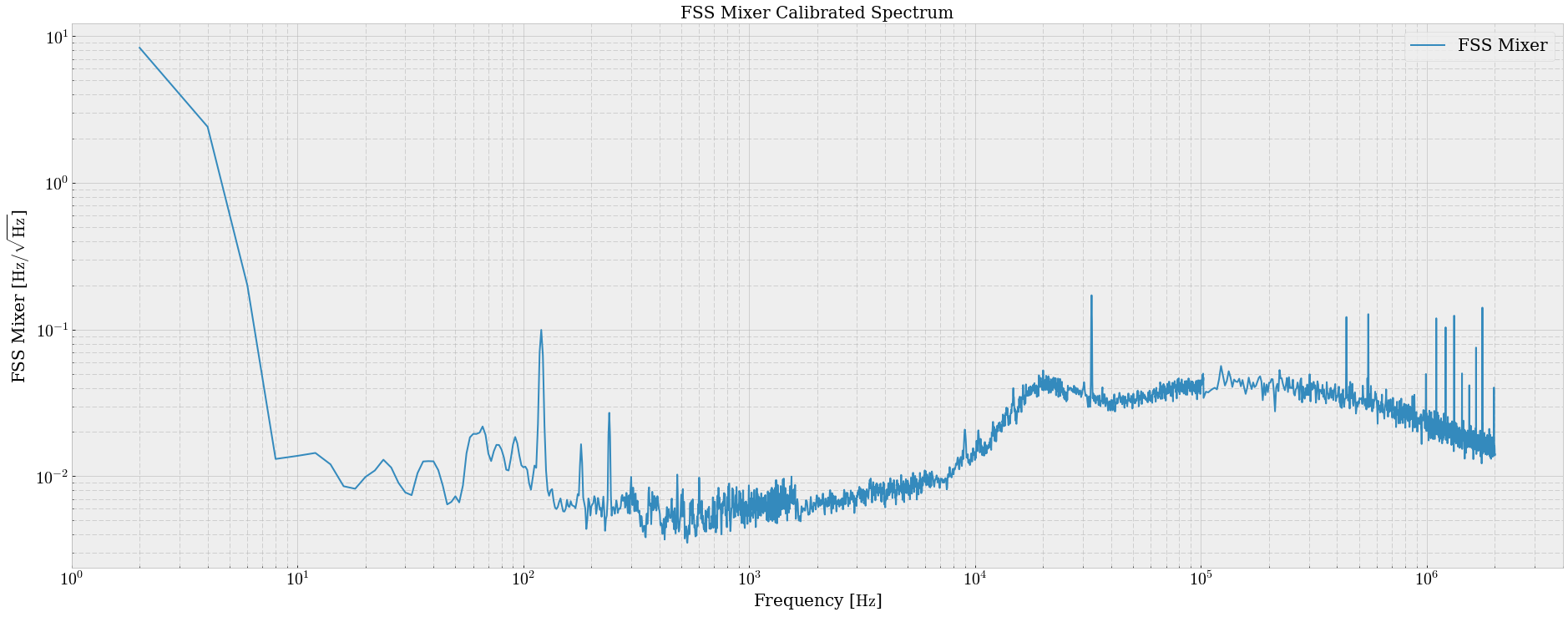
Latest FSS Mixer Error Spectrum (alog 46631)
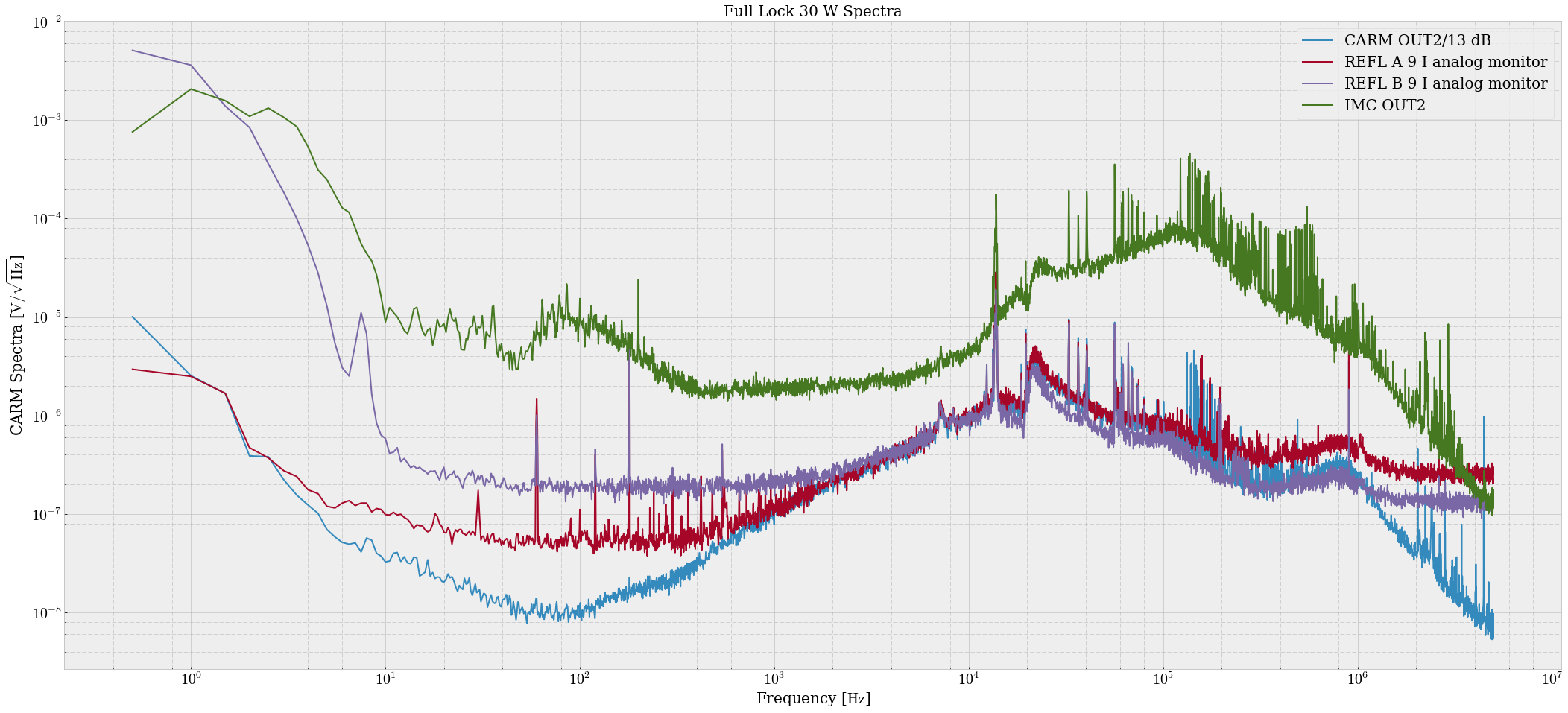
Latest CARM and IMC Error Spectra (alog 46635)
Images attached to this report
Comments related to this report
Some other notes from locking today:
- The microseism is around 0.7-0.9 um/second, but there is no wind today. We are able to ALS + DRMI reliably.
- We had a lot of difficulty with the transition to RF DARM and the DHARD WFS state. We changed the TR_CARM offset at which this transition happens from -3.7 to -5, and we also removed the DARM gain increase to 1000 (which will just be undone in the state CARM_OFFSET_REDUCTION anyway.) This has worked the two times that we have tried it.
- We also had many random locklosses while locked on ALS earlier in the day that might have been fixed by the FSS gain adjustment that Craig describes.
- We also turned off the limiter on the IMC board earlier today while investigating the problems which turned out to be solved by changing the FSS gain.
- we have out the ISS second loop back into the guardian (we had taken it out yesterday while trying to investigate the power increase problems.) Craig has also added 12dB of gain to the ISS, in the state ISS_DC coupled, which seems to work OK. (A previous attempt to add this gain while the ISS was still AC coupled caused problems).
- We have been manually reducing the PRCL gain from 16 to 12 after powering up, because we are seeing gain peaking in the PRCL spectrum at about 120 Hz. This puts the UGF at 50 Hz. This also means that we are seeing less of a decrease in the POP9I optical gain as we increase the power. POP 18 is staying at around 55 counts after the thermal transient.
- The transition from ETMY+ITMX ESD to ETMX L3/L2/L1 did not work as written in the guardian.
- Tonight while we were actuating on ETMY L1 we saw a return of the huge scattering shelves.
- Last Friday, when we first got this transition to ETMX with a more stable UIM/PUM offloading to work, we first transitioned the UIM, then transitioned the PUM. We also did this once we were in low noise. When I put the transition into the guardian, I tried to put it in the LOWNOISE_ESD_ETMX state, and tried to transition the ESD, PUM and UIM at the same time. After the guardian failed we were able to make the transition manually with the same settings as last week, by repeating the same steps (going to low noise, transitioning UIM, then PUM.)
- For now I have edited the guardian to add only the ESD + UIM transition in the LOWNOISE_ESD state, to see if it is possible to do at least this transition in the LOWNOISE_ESD state. So, as the guardian is now written, you will end up with the DARM actuator being ETMX L1, ETMY L2, ETMX L3. If you want to transition this to all ETMX, do this:
- ezca['SUS-ETMY_L2_LOCK_L_TRAMP'] = 10
ezca['SUS-ETMX_L2_DRIVEALIGN_L2L_TRAMP'] = 10
ezca['SUS-ETMY_L2_LOCK_L_GAIN'] = 0
ezca['SUS-ETMX_L2_DRIVEALIGN_L2L_GAIN'] = 1
- ezca['SUS-ETMY_L2_LOCK_L_TRAMP'] = 10
- If this doesn't work (if the lownoise ESD ETMX state fails), you can set the use_EX_L1 flag back to False.
- I haven't changed the crossover for the ETMY UIM/PUM to the more stable one, which might help to make these transitions easier.
Some other brief locking note from tonight:
- Sheila and I noticed the CO2Y power was continuously being adjusted by the guardian, since there was a discrepancy between the requested angle and requested power out. We tweaked the CO2Y rotation stage calibration, changing the "Power In (W)" from 4.5 to 5.3 W.
- Once we were locked at low noise, I re-put the pit5 dither at 20 Hz. like last week this helped with the low frequency noise. I put this back in the guardian, undoing the change from yesterday. It's unclear if this or the extra pit3 gain was the reason we lost lock in engage_soft_loops.
- Craig calibrated the circulating arm power channels (H1:ASC-[X,Y]_PWR_CIRC_OUT) to reflect the results of the SRM dither measurement.