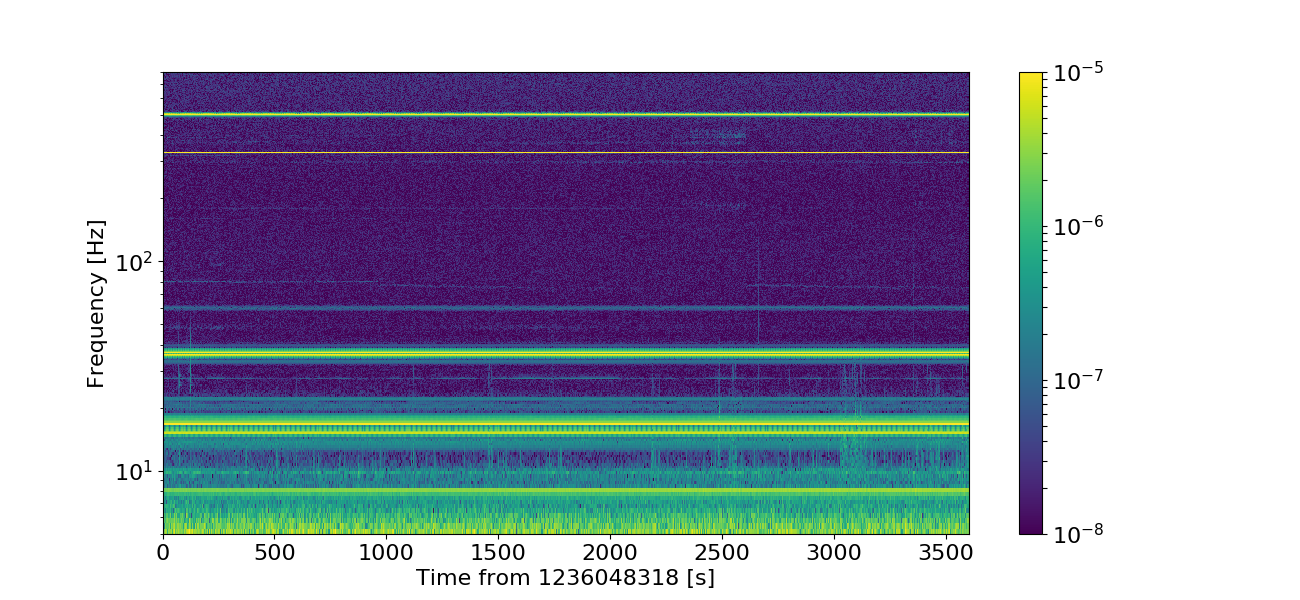
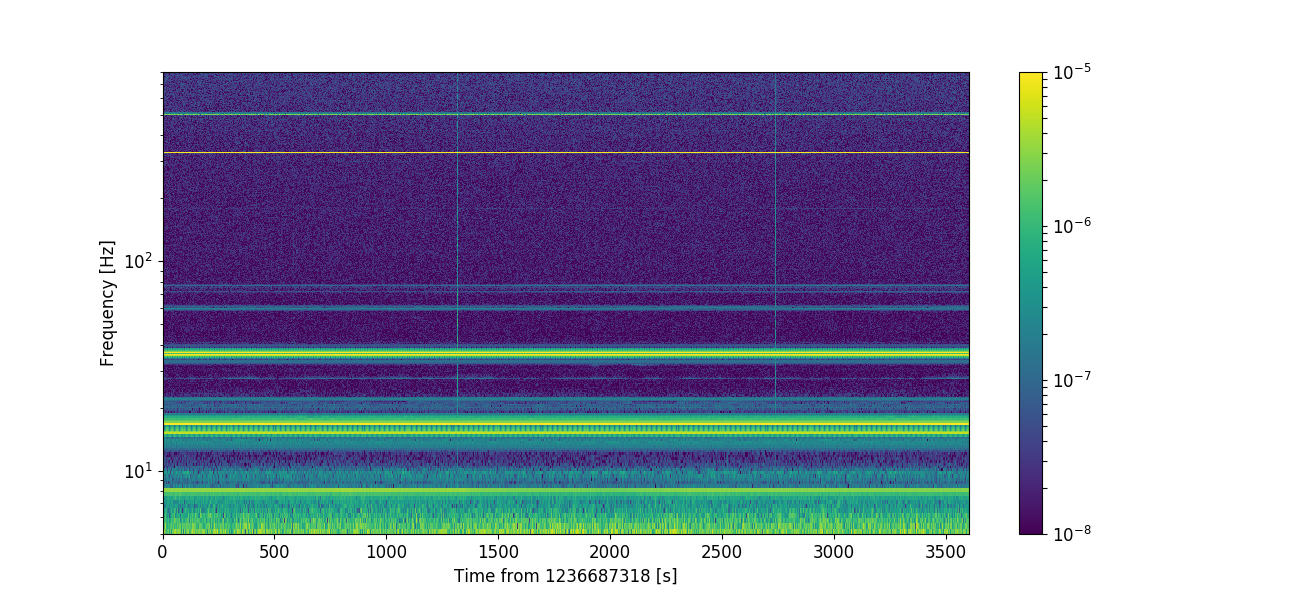
I compared spectrograms of CAL-DELTAL_EXTERNAL_DQ from an old lock when there was evidence of scattered light from OMC motion (47399, 2019-03-07 18:45:00 PST, 2019-03-08 02:45:00 UTC) with spectrograms from last night (2019-03-15 05:15:00 PDT, 2019-03-15 12:15:00 UTC, GPS: 1236687318).
In brief: there's no more evidence of scattered light noise at low frequency, see the comparison of the spectrograms below (left old, right new)
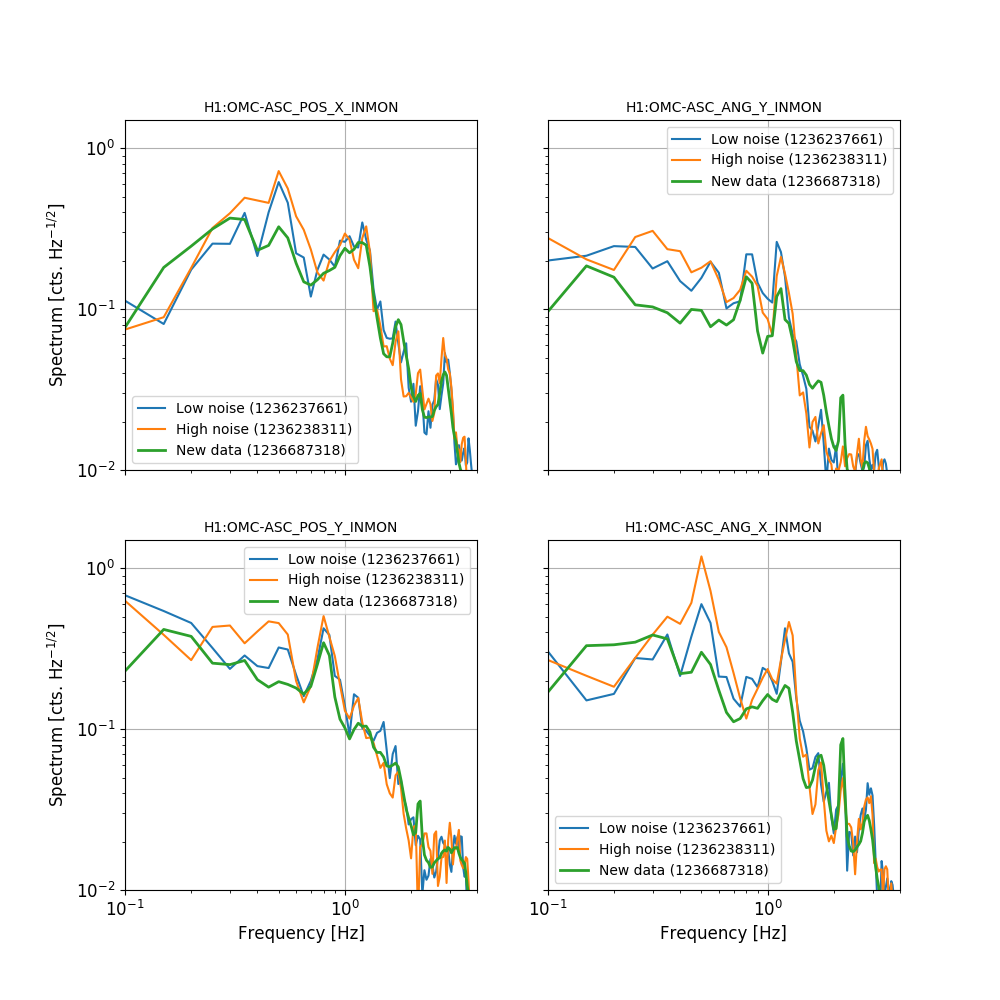
This might eb due to the fact that the OMC ASC signals all show much less motion. Below: high and low noise are two periods where there was high or low scattered light noise (correlated with OMC ASC motions), and new data is from last night. The OMC ASC signals move much less last night. This is probably due to the improvements described in 47488.
Craig, Georgia
We re-ran a couple of the OMC ASC 0.5Hz injections, to check if updating the OMC A2L changed the coupling between the ASC and DARM as well as reducing the noise in the ASC as reported above by Gabriele.
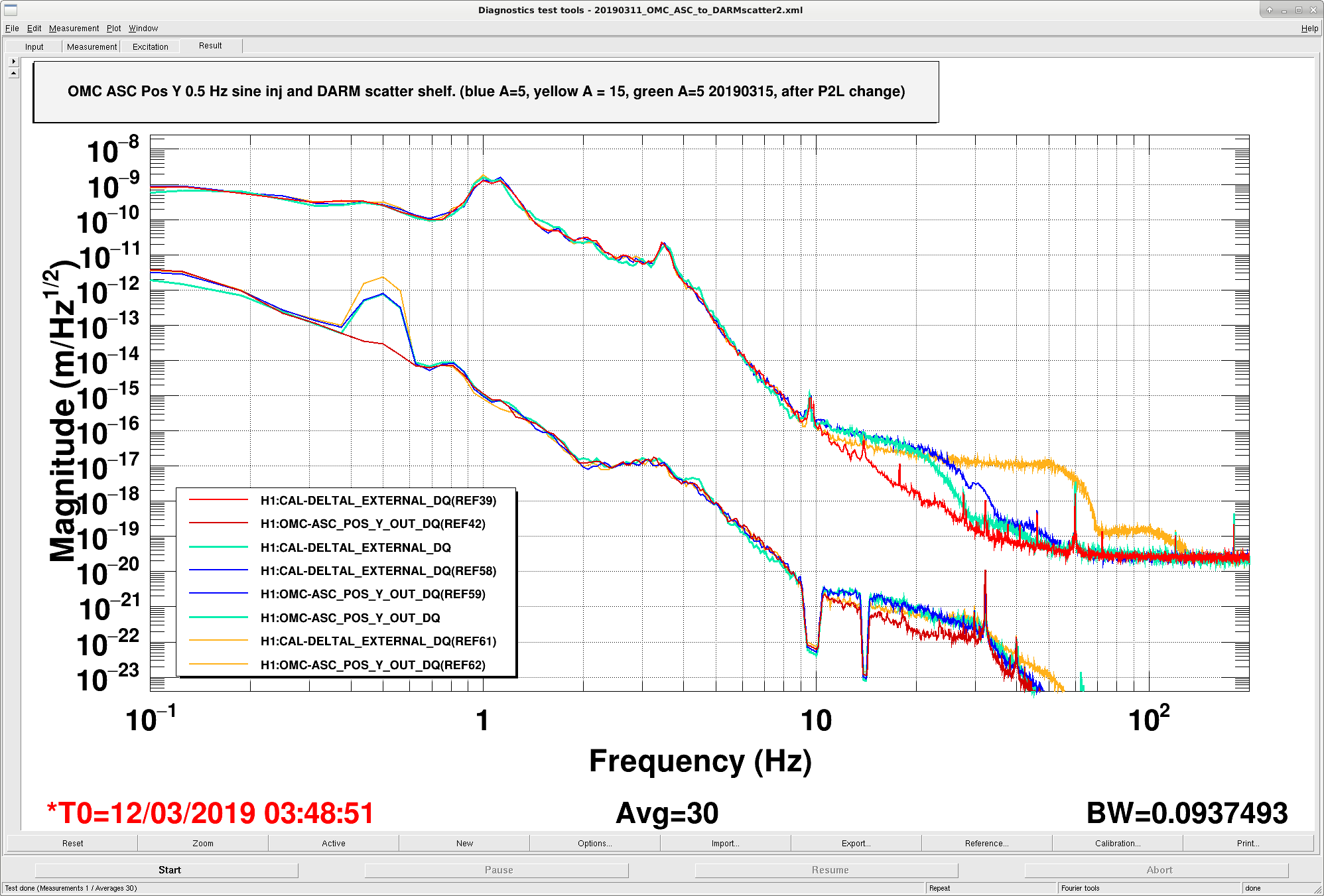
Attached plot is the same as the top right shown here, the new green trace is the same excitation as the blue ran today. There is a slight difference in the middle fringe but broadband this excitation couples the same to DARM as before the OMC A2L change.
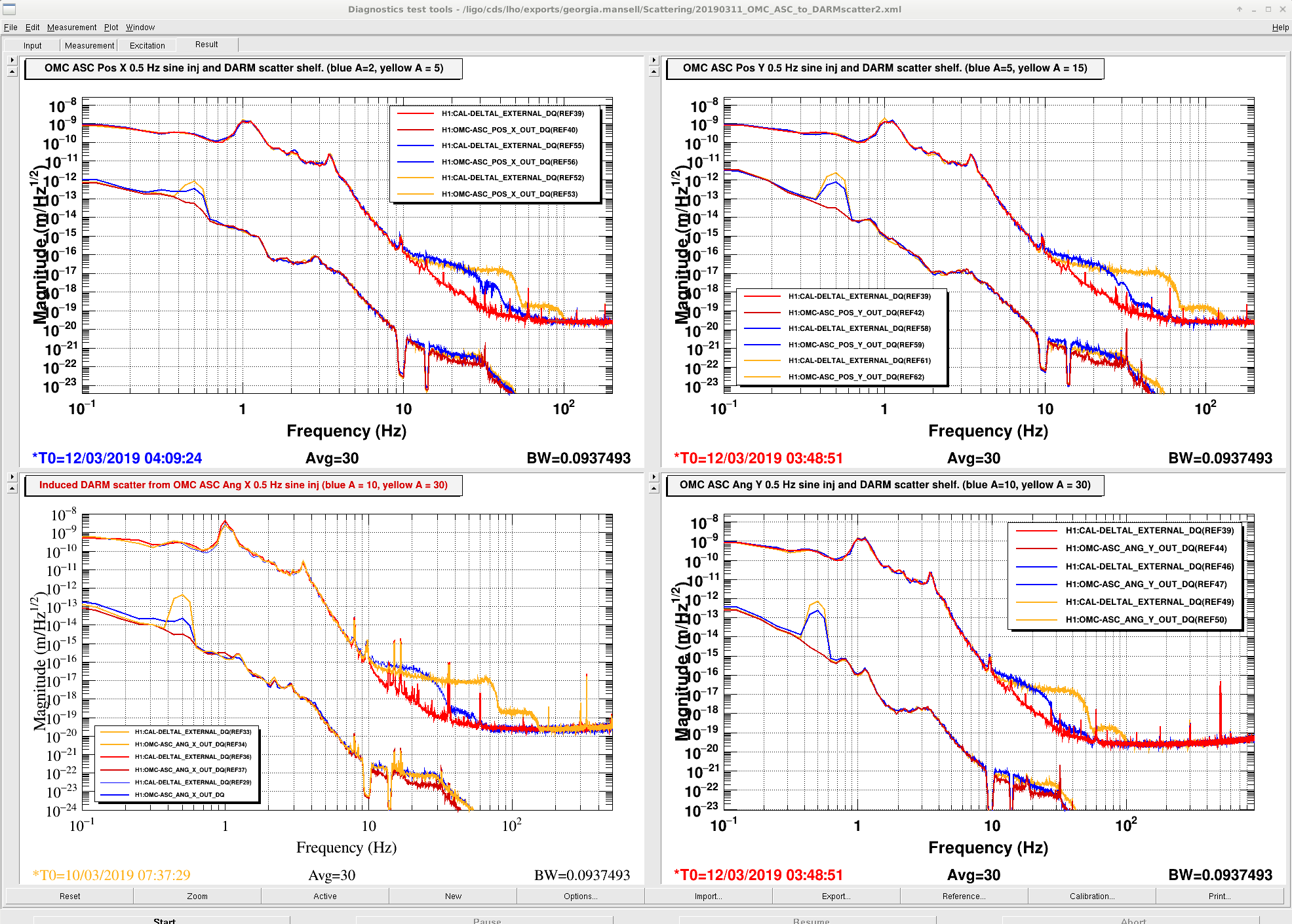
We ran the larger (A=15) excitation on POS_Y and the coupling looked identical to the orange trace, i.e. no change with the A2L change. We also ran these excitations on the POS_X degree of freedom and saw the same behaviour - identical coupling for the large excitation and similar-but-slightly-reduced for the small excitation.