JenneD, NikoL, SharanB, RickS
In response to Evan Goetz's observation of increased modulation harmonics impacting CW searches (see LHO log 48192), we went down to Yend to address the decrease in diffracted power we have known about for some time (JeffK noticed that the 14 Hz harmonic of the 7 Hz excitation had increased weeks ago).
As found, the power incident on the Pcal AOM was about 1.88 W and the diffracted power (with the OFS loop unlocked) was about 1.01W (54% diffraction efficiency).
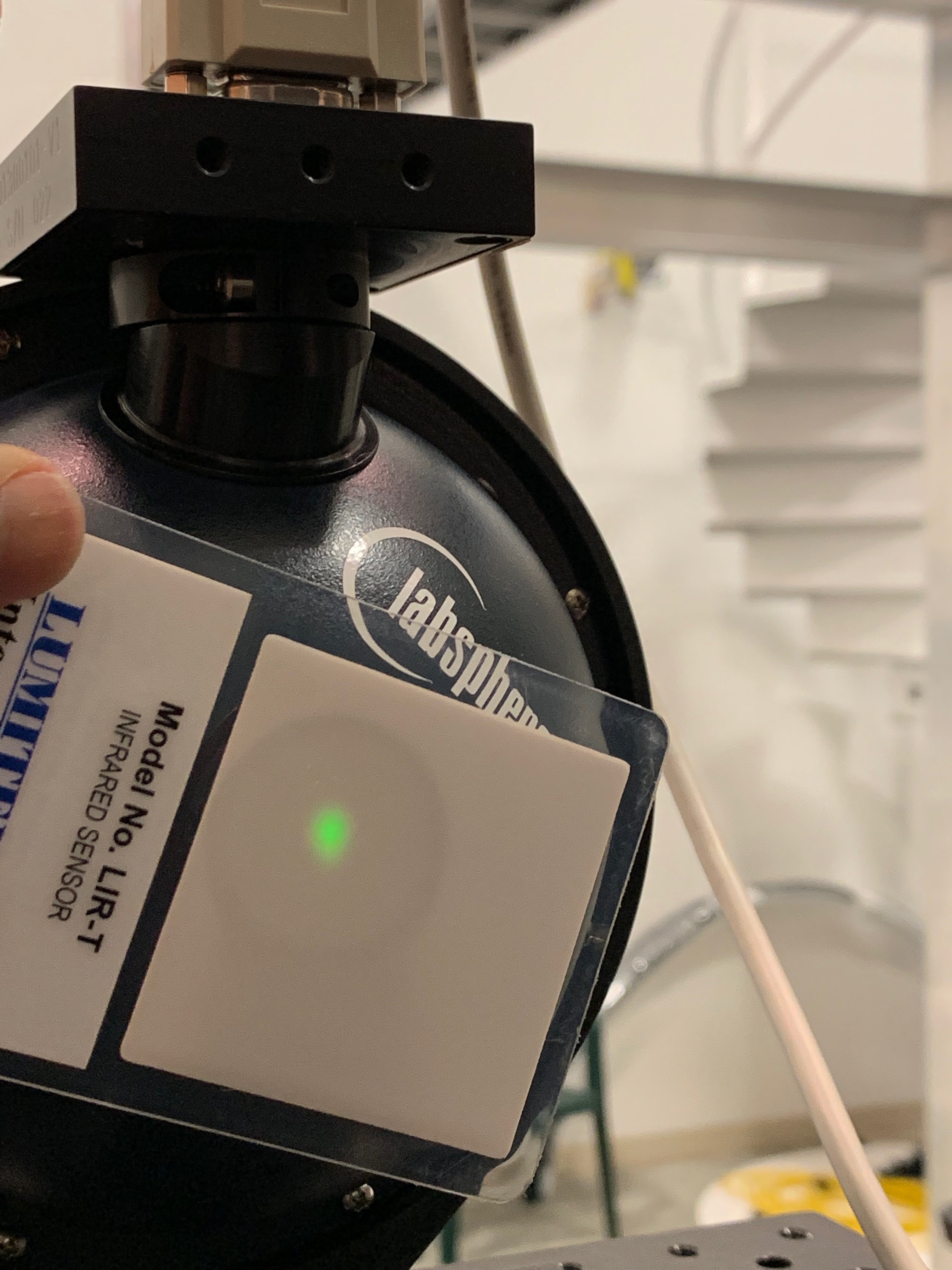
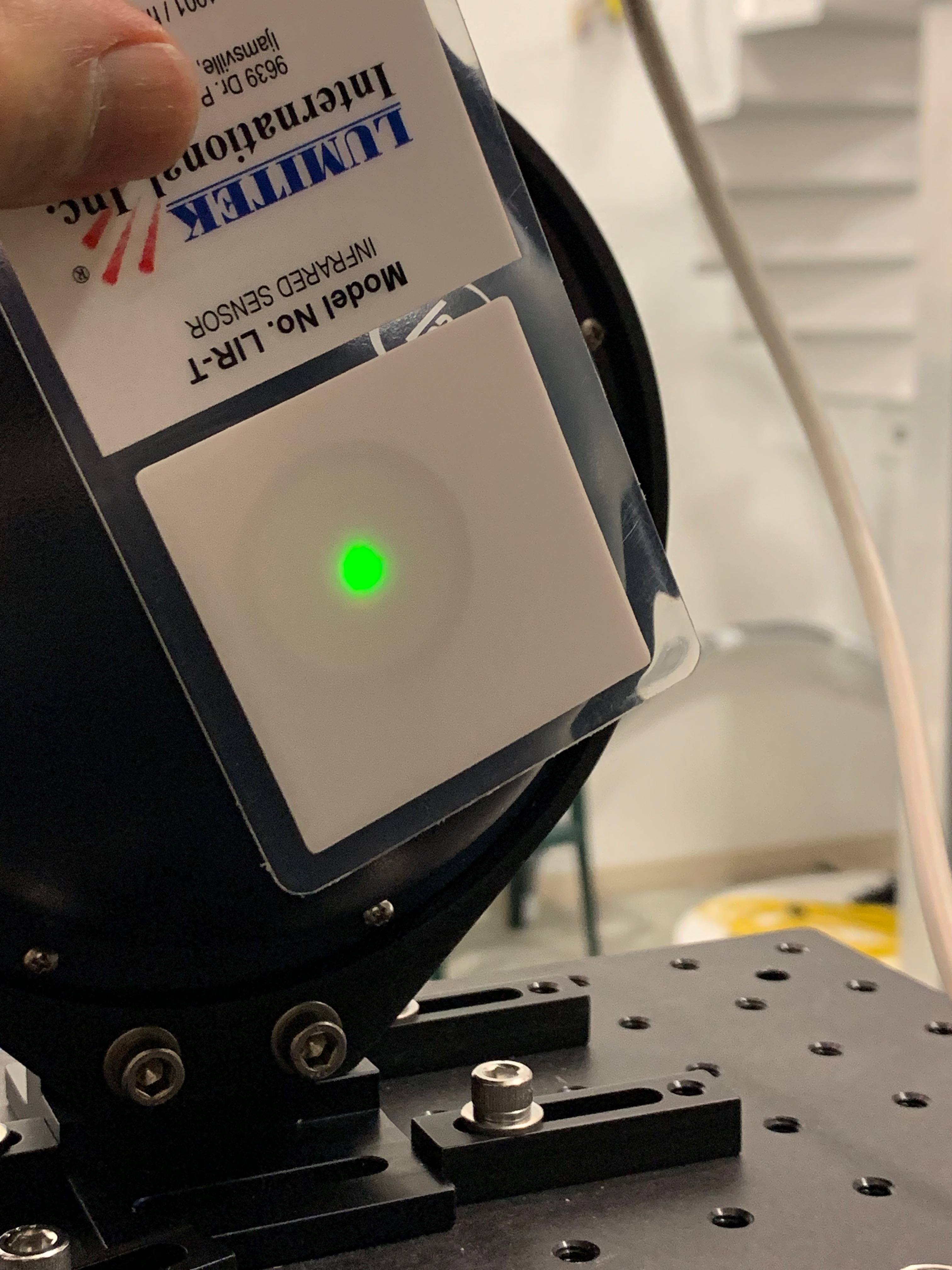
We checked that the beams were in their nominal positions at the Rx power sensor aperture (see first attached image). Then we carefully adjusted the alignment apertures in the Pcal transmitter module. Then, we adjusted the rotation and height of the AOM. Nothing was gained by rotating the AOM, but raising it turning the height adjusters on the 4-axis NewFocus stage by almost one full turn gave us about 1.56 W diffracted power (83% diffraction efficiency).
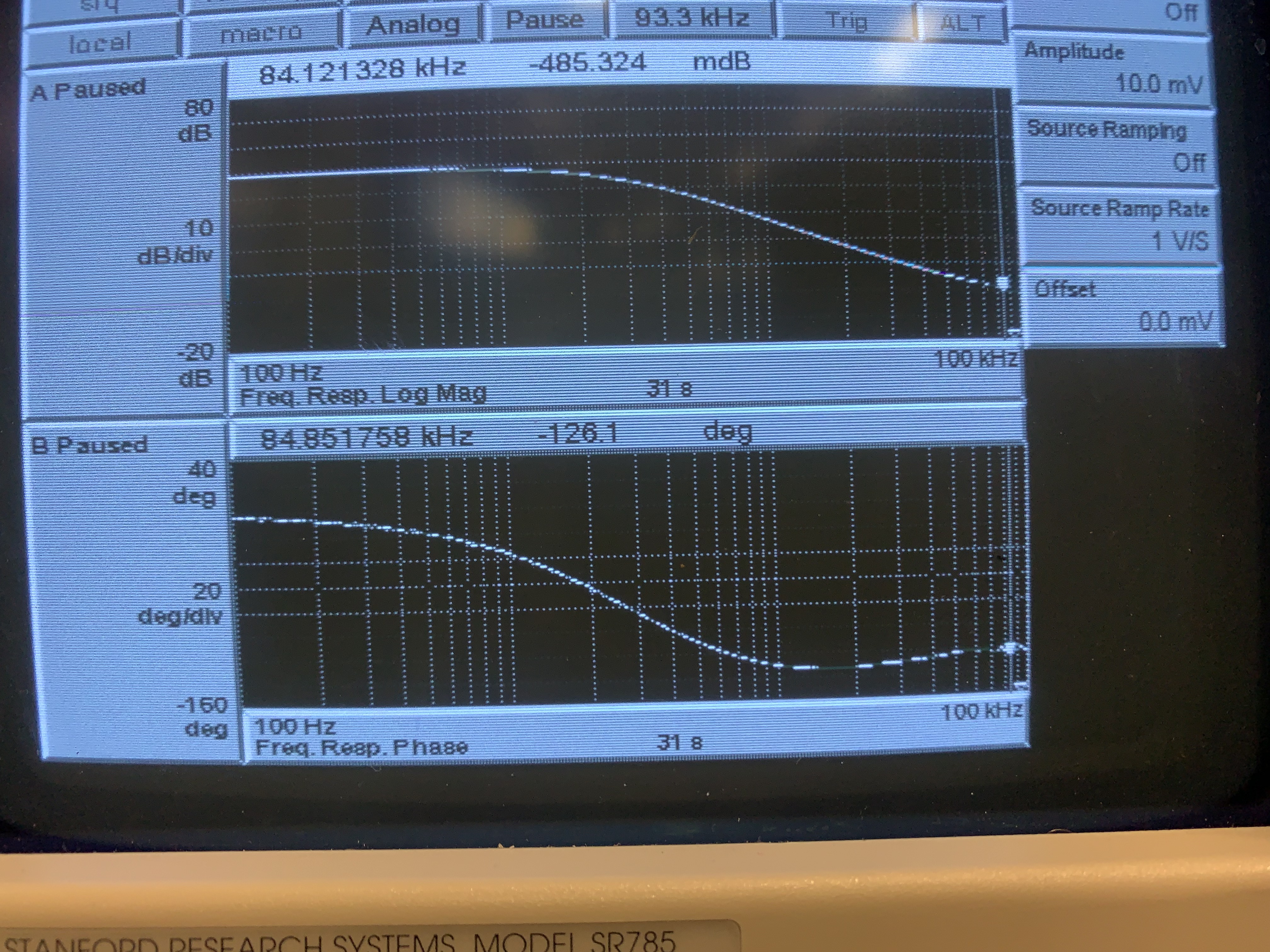
We adjusted the OFF gain to 36 dB from 43 dB. The OLTF of the OFS loop is attached (UGF about 100 kHz with about 50 deg. of phase margin).
We adjusted the OFS offset from 2.725 to 3.8.
We adjusted the two Pcal beam positions on the Rx power sensor aperture (see attached photo).
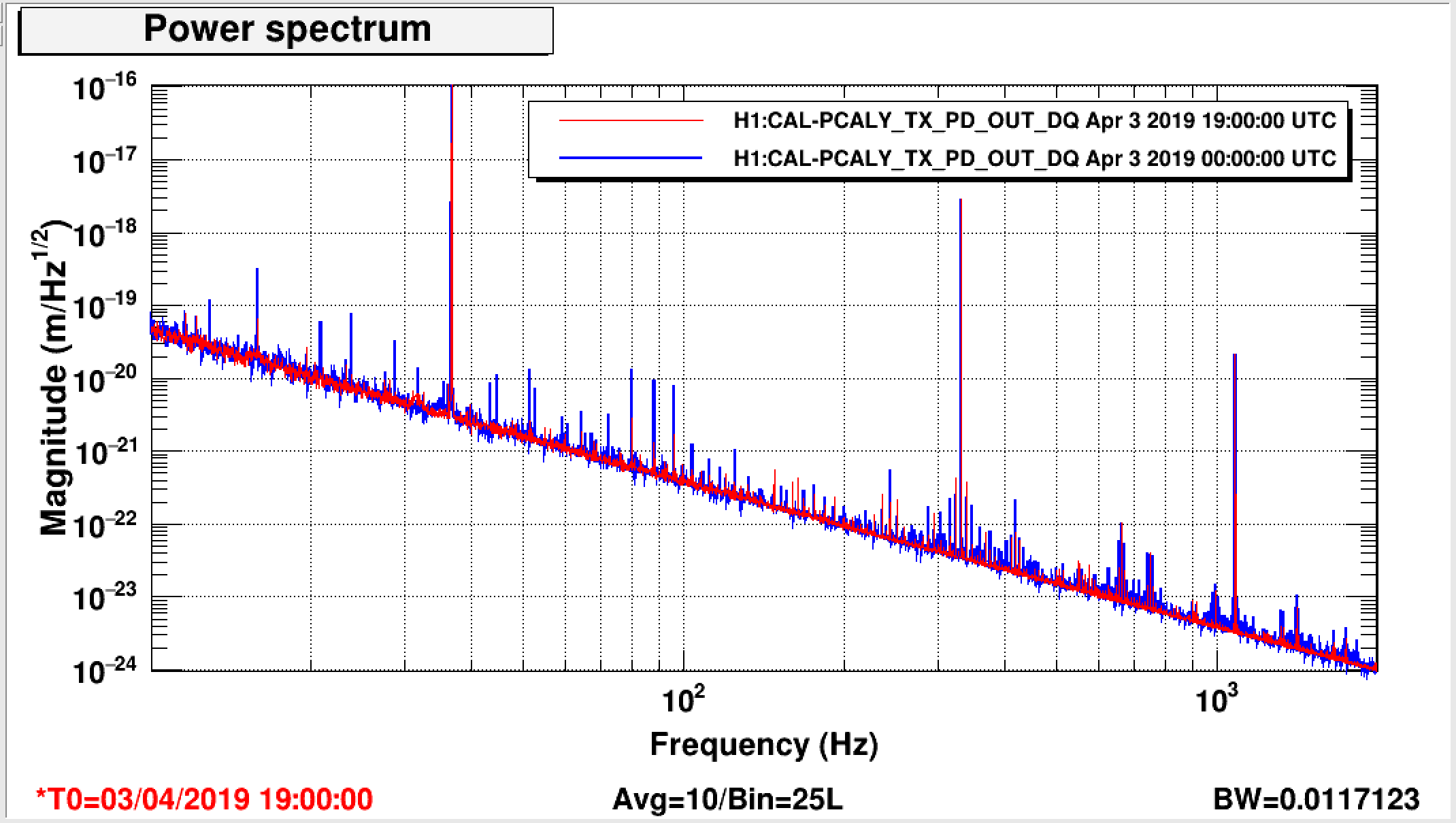
We then looked at the harmonics of the 7 Hz Pcal exctiation in the Rx PD signal. It has been reduced by about a factor of ten (see attached ASD plot).

Nice work! Thanks for addressing this.

I attach below a spectrum comparison of the before and after work PCAL Y transmission PD output. Blue is before the work and red is after the work. We can see the reduction in a number of peaks and other features, but they are not all gone completely (and a few are slightly higher than before, but hopefully not in a region the IFO is maximally sensitive). A watchful eye should be kept on the Pcals, perhaps also as part of the the DetChar DQ rota, so that we catch any potential problems like this going forward.