[Rick Savage, Jeff Kissel, Patrick Thomas, Timesh Mistry]
Delayed post for 04th October 2019
Assembly of the NCAL
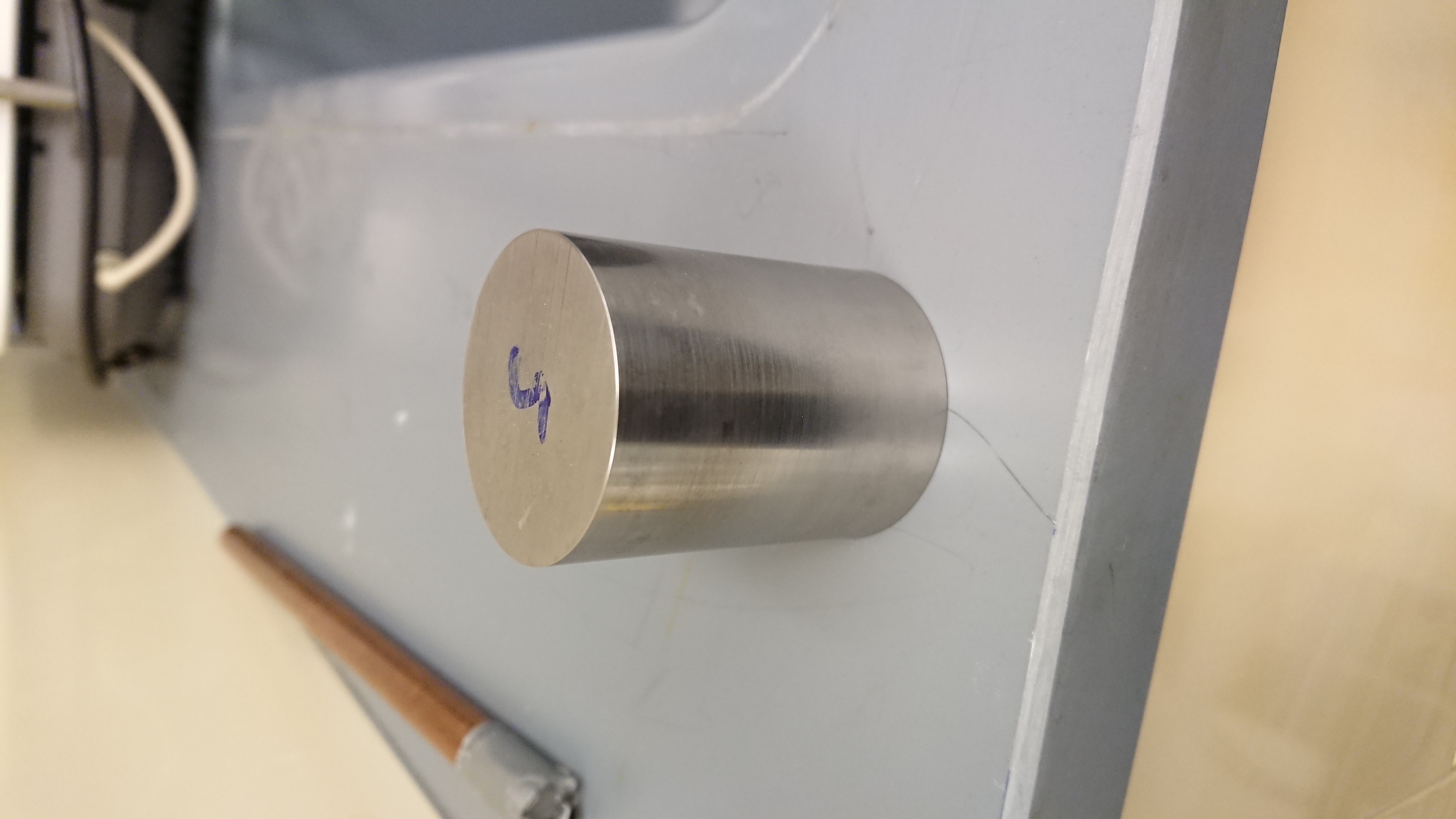
Installing the Tungsten Masses
We initially put the NCAL rotor into the oven, preheated to 70 DegC, to try and test fit the NCAL masses. We left the rotor in the oven for around 30 minutes and tried inserting the masses into the NCAL rotor. The process of test fitting was to try and place the tungsten masses into the allocated holes, without fully dropping them in, to see which of holes and masses would require some polishing. We were careful to place the tungsten masses in as straight as possible such that the sharp edges of the tungsten masses would not damage the NCAL rotor bores any further. All the masses were not able to fit inside their allocated hole prior to the NCAL rotor being baked. Mass #4 was able to slip into its' hole without resistance however, the remaining masses were not able to slip into their holes. The NCAL rotor was removed from the oven and allowed to cool before the rework comensed.
It was already known the mass and hole #1 were going to be problematic. From the first installation and removal of the NCAL masses (given in LHO alog 505012):
Needed aggressive hammering and dedicated heating to get it out.
Remember -- the slugs were asked to be ~10 um but came back from the shop much closer.
When inspecting hole #1, there was large scoring within the hole as well as, many sharp (protruding) surfaces. Apart from hole #4, the remaining holes also had rough surfaces. We used 1000 grit wet and dry sandpaper to remove the rough surfaces. For future design, the tungsten masses should have leading edges (much like a dowel pin) to allow smoother installation and removal of the masses and would reduce the risk of damaging the surface of the rotor bores.
The tungsten masses were polished using a scotchbrite pad. They were polished until the outer surface no longer had any surface residue from where it had binded with the aluminium rotor. In some cases, there were particulates of aluminium that needed to be removed. We did this by swiping the mass over a sheet of 1000 grit wet and dry, that was on a granite plate, in single direction. We repeated the steps until all the aluminium particulates were removed and the surfaces were smooth. The tungsten masses were cleaned with alcohol wipes to remove any final dust and debris.
We baked the NCAL rotor in an over, preheated to 70 DegC, for ~2hrs whilst the tungsten masses were left at room temperature. After the 2hrs had elapsed, the tungsten masses dropped in one by one. There was sufficient clearance such that each tungsten mass fit smoothly into its allocated hole with little to no play. Once all the masses were in, the oven was turned off and the door left open to allow the assembly to cool.
Once the NCAL was cool enough to handle, it was transferred into the optics lab and set upon the cover plates upside down. None of the masses fell out confirming the tolerances of the holes and the masses were up to spec.
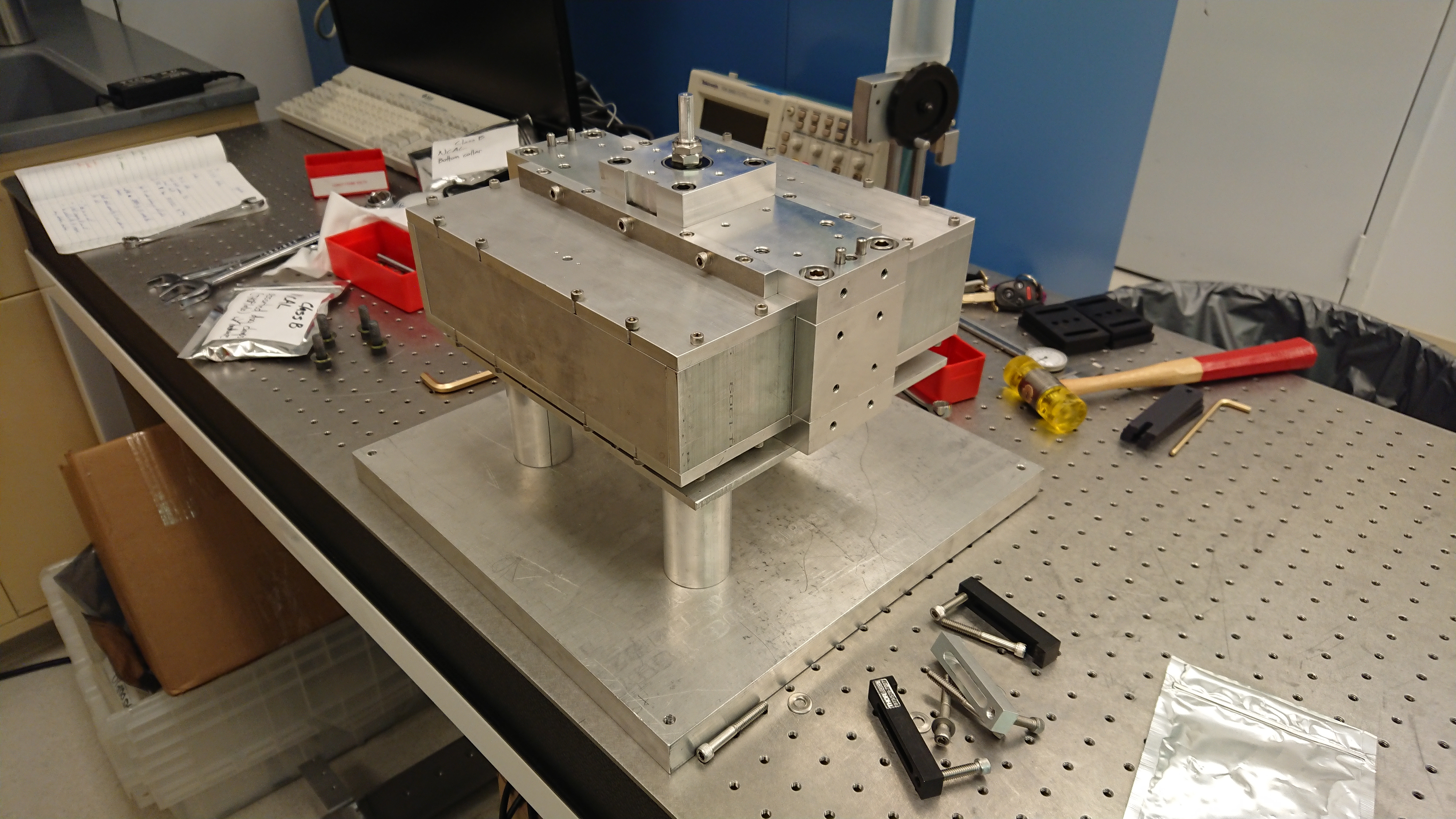
NCAL Assemble
Once the rotor was uprighted, it was assembled the NCAL was fully assembled with tungsten masses. This includes the new bearing assembly (LHO alog 52301), the adjusted height of the top dowel pins for the frame (LHO alog 52272) and the remaining class B cleaned parts (LHO alog 52258) Full assembly notes will be given in a future alog. Before the covers were bolted on, we gave the rotor a spin and confirmed the bearing run smooth and there are no interference or misalignment issues.
Beckhoff/Computer Status
The Beckhoff PC supplied has a very limited storage capacity and this has caused issues with installing the other software (TwinCAT3, Windows and Visual Studio came with the unit). The PC will probably require a reset and restored to the condition it was delivered to us in as well as upgrading the internal storage capacity.