Jenne, Chiara.
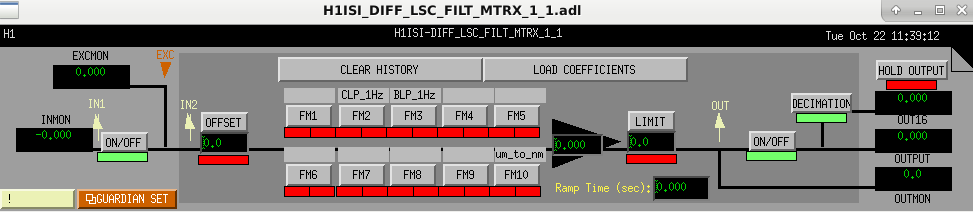
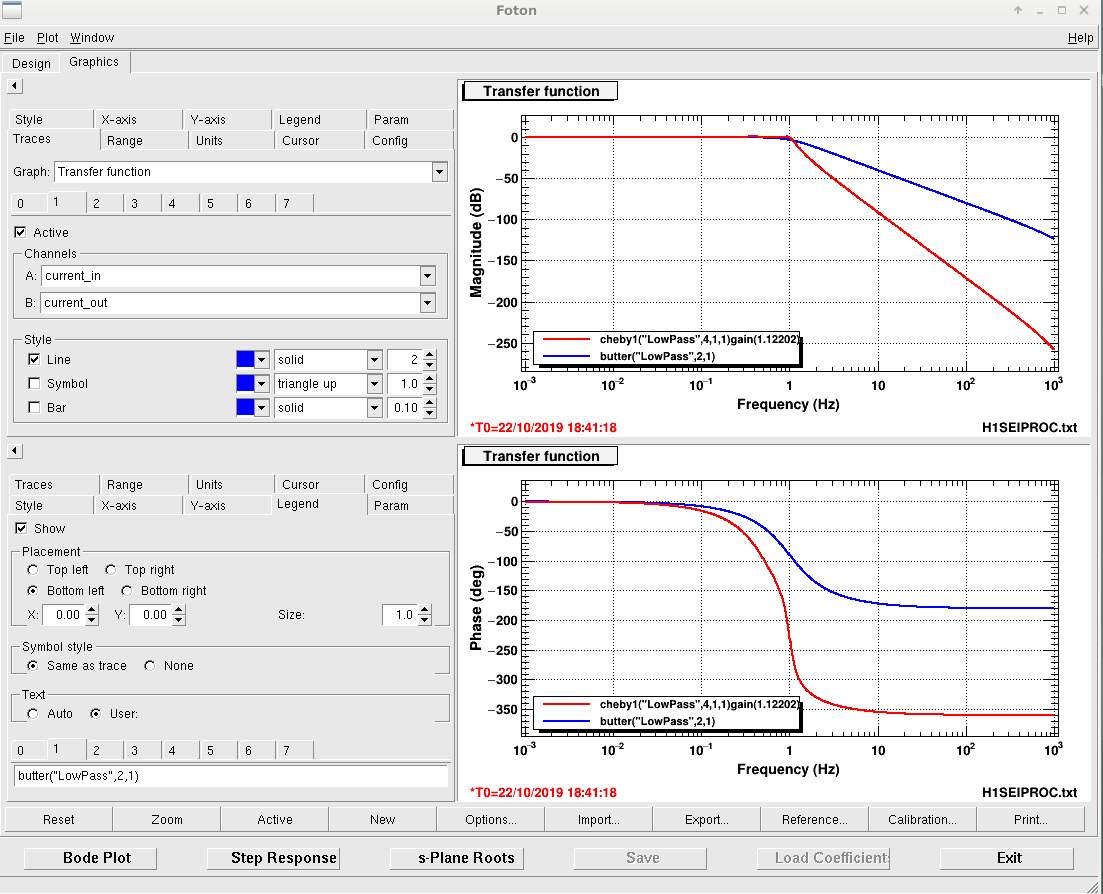
Yesterday we started to test to see what would be the actuation on the ISI CPS diferential configuration for PRCL using the LSC signals: the aim was to look at the forseen actuation. We tried to look at the output from the filters in real time but it did not succed because we found out that we were using an "unknown" calibrated PRCL signal (from OAF model, unused anymore; the proper ones have to be taken from CAL_CS model); so we decided to test the filters receiving the CAL_CS LSC signal (first pic): these filters are two low pass filters shown in second pic.
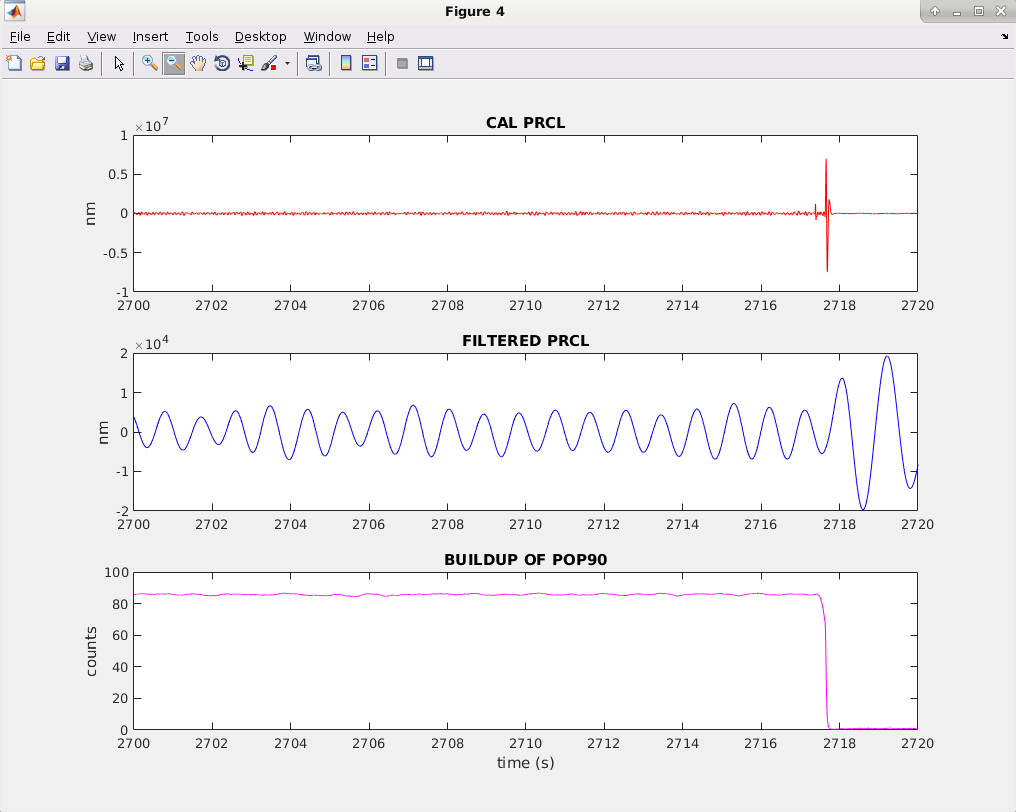
In Matlab, we chose a time when a lockloss happened and the calibrated PRCL data have been taken from H1:CAL-CS_PRCL_DQ. To be sure that we were choosing a lockloss moment, we used data from H1:LSC-POPAIR_B_RF90_I_ERR_DQ: this is a signal from a photodiode showing the amount of light in the cavities. When a lockloss happens, the signal on the phododiode drops off.
Calibrated PRCL is given in um, so we made sure we were working in the same units of measure, chosen to be nm because this is the unit of seismic loops. We applied the filters to the calibrated PRCL time series and we got the results in third pic: during a lockloss, calibrated PRCL shows a high frequency pulse, which is successfully low passed when filters are applied. This shows that if we use this filters, the actuation to apply would be such that the ISI would move of what shown in FILTER PRCL trace.
However, during lockloss the actuation would be around 20um, which is not bad, but maybe more that we want. So, this value could be lowered by a trigger that detects a lockloss and ramps off the LSC drive to the ISI. The trigger has been installed and we are going to use it once we are ready to push on the ISI.