On Friday (alog 55108) I measured the LSC feedforward filters that we'll need when we re-try increasing our DARM offset. I've now got some candidate SRCL FF filters, although as usual they are tricky to fit.
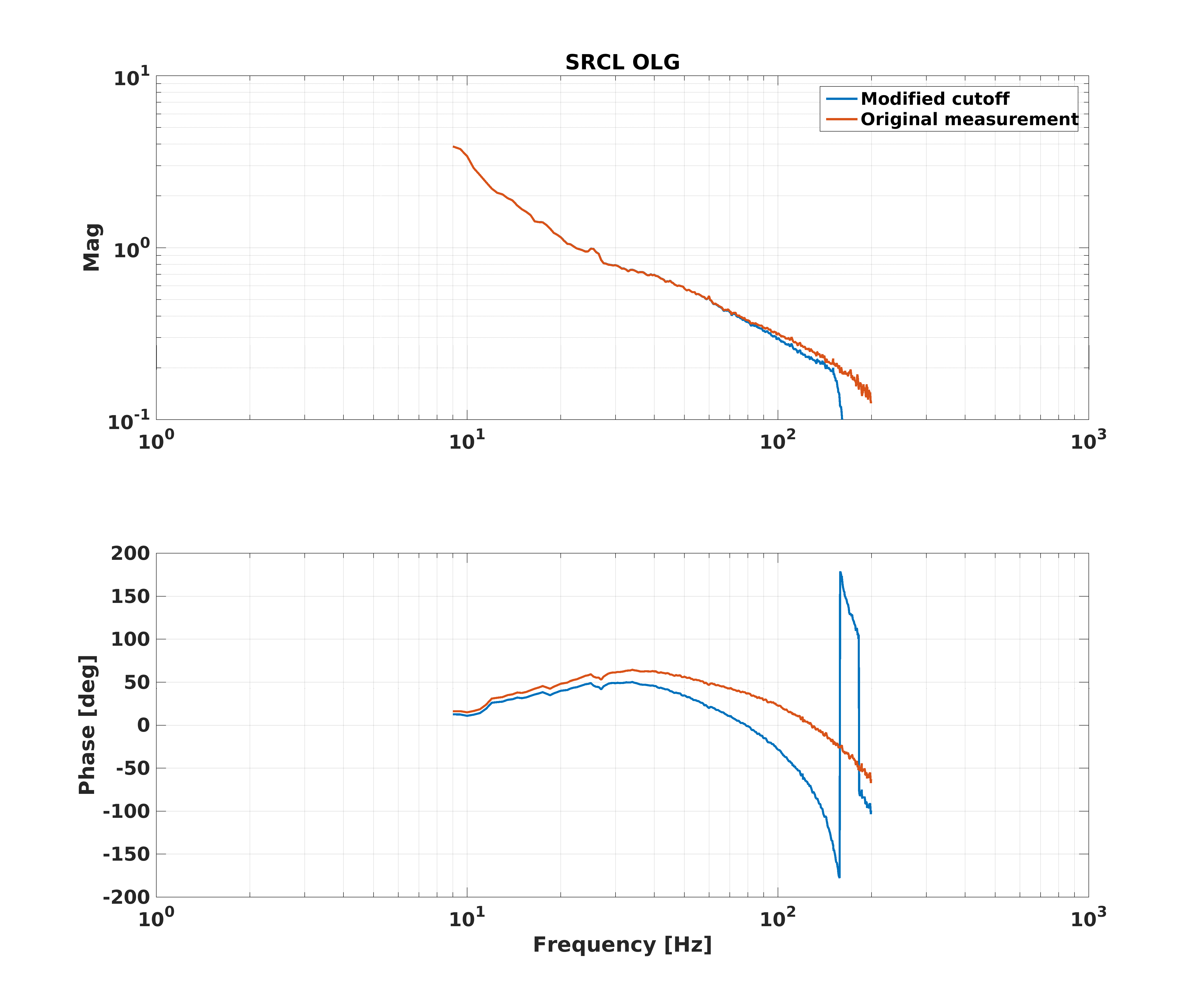
This SRCL FF filter would inject excess SRCL control into DARM above ~150 Hz, since the fit is not good above there. It's hard to convince the fit of the feedforward to maintain high fidelity in the mid frequencies (where we really care) and also roll off the high frequencies. So, an alternate solution might be to more sharply cutoff the SRCL LSC loop. According to our most recent SRCL OLG measurement (albeit from May 2019) we have more than 50 degrees of phase margin in SRCL, so should have some room for additional rolloff.
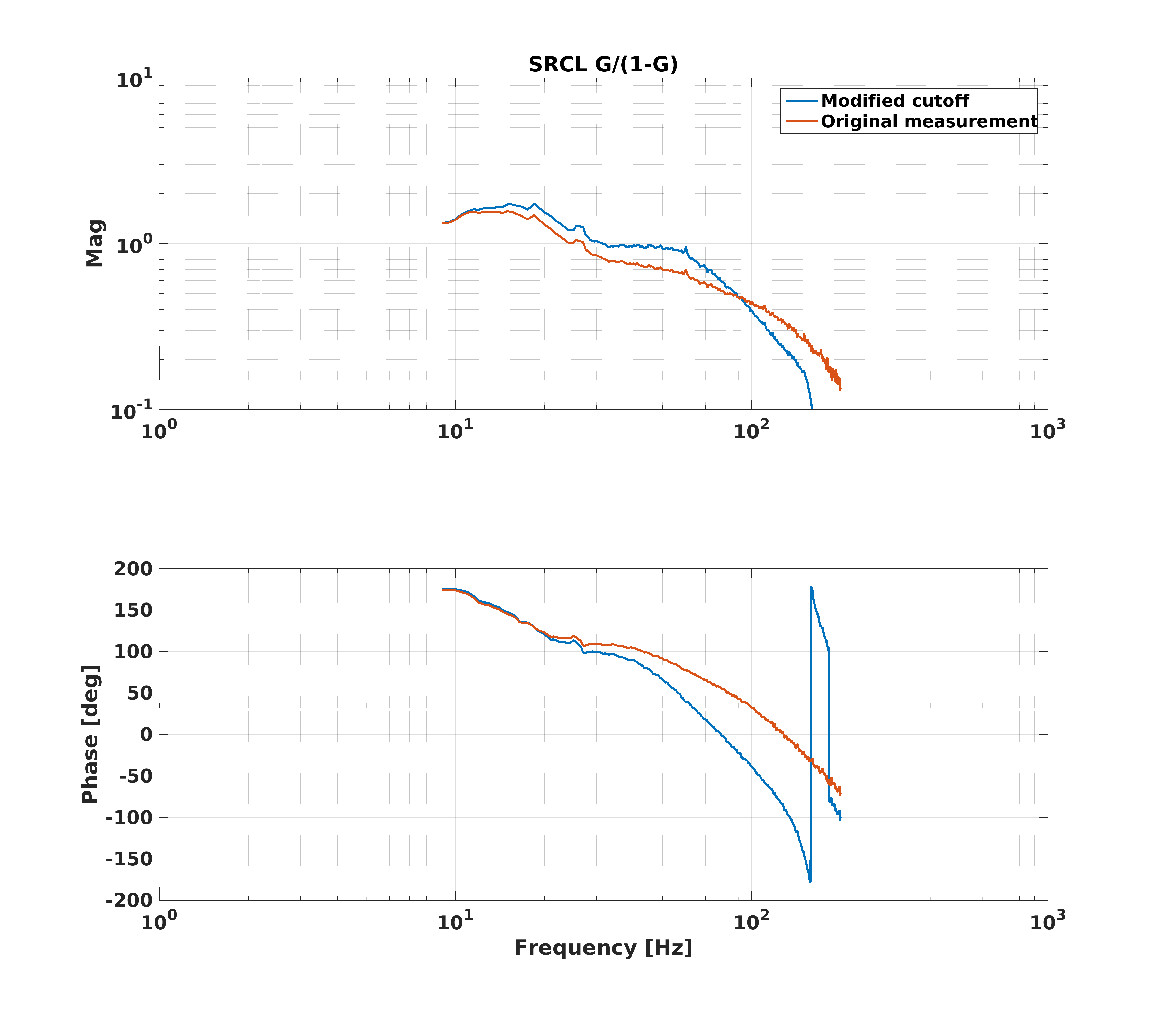
I have created a candidate new SRCL LSC cutoff, and calculated how the change in gain peaking we will expect to see. It seems not so bad, so I propose that before we start our DARM offset test tomorrow morning we measure the SRCL OLG (to confirm that that phase margin is correct), and put in the new cutoff filter. Then we will increase the DARM offset, turn on the new SRCL FF filter, do a quick scan to ensure that we're at the optimal squeezing angle, and then compare this 14 pm DARM offset configuration with our current nominal 10 pm DARM offset configuration.
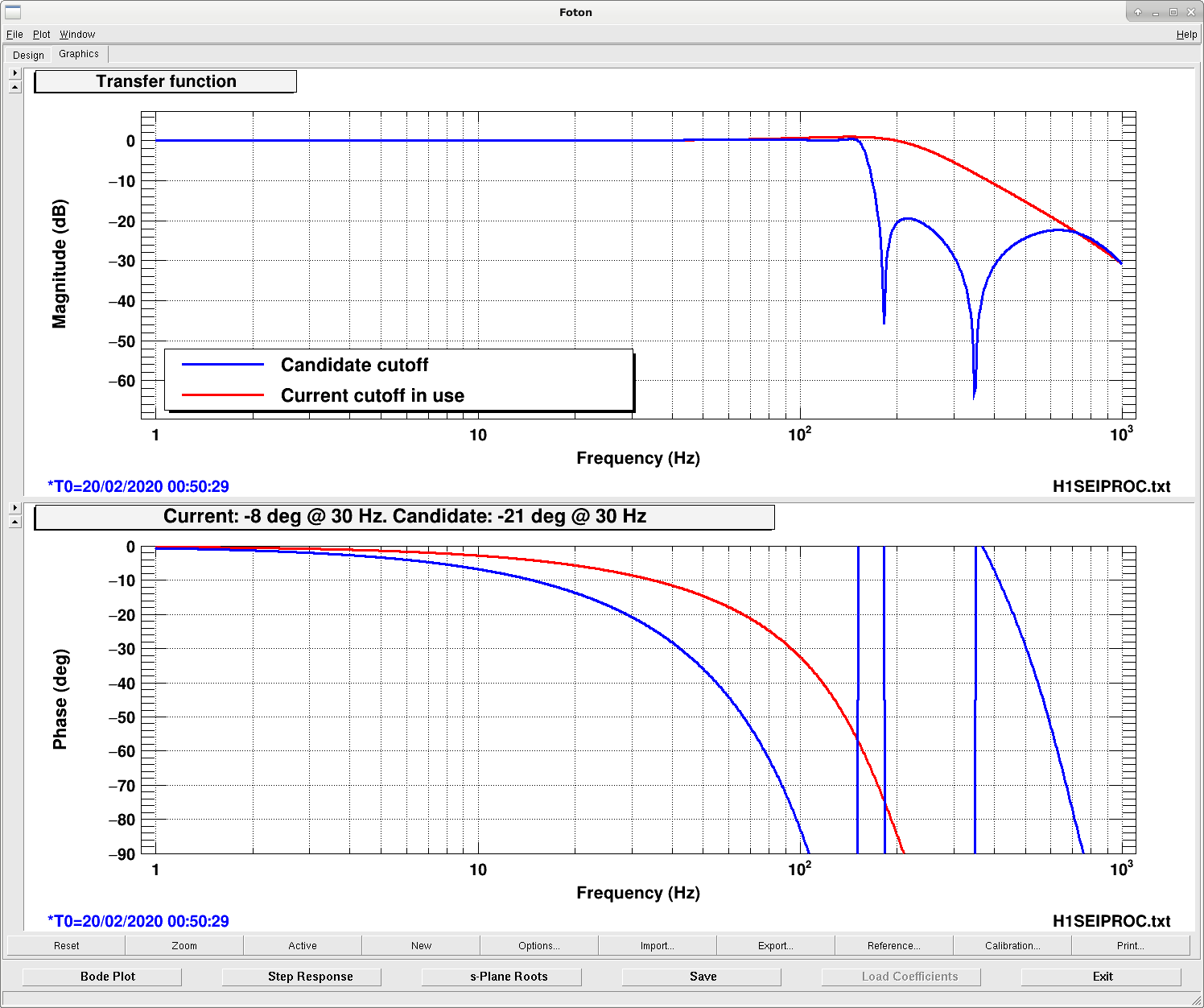
In the first attachment I show the current SRCL LSC cutoff in red versus the candidate cutoff in blue [ ellip("LowPass",4,0.3,20,150)ellip("LowPass",2,1,20,650)gain(1.16145) ]. The candidate filter takes away an additional 13 degrees of phase margin than the current filter.
In the second attachment I show the SRCL OLG measurement from May 2019 in red/orange, and then what that measurement would look like if the cutoff were replaced with the candidate cutoff in blue.
In the third attachment I show G / (1 - G) for both of the cases from the second attachment (current situation in red/orange, and candidate situation in blue).
I think that it should be fine to try the new SRCL cutoff.
All that said, the fourth attachment is my candidate fit for SRCL FF at the higher DARM offset. This is an iterative filter, so if the currently in-use filter were perfect, this iterative filter should be unity. The blue points are the measured TF to fit, and the green is the filter output (IIRrational plus some hand adjustments to make the low frequency and high frequency less egregiously bad). The fit above 150 Hz isn't good, which is why I'm interested in making the SRCL loop cutoff more sharp. The fit also isn't so great below 10 Hz, but at least that part is out of the GW band, and shouldn't hurt us too much when testing the higher DARM offset. The bottom half of the 4th attachment is a representation of how good or poor the fit is to the data.

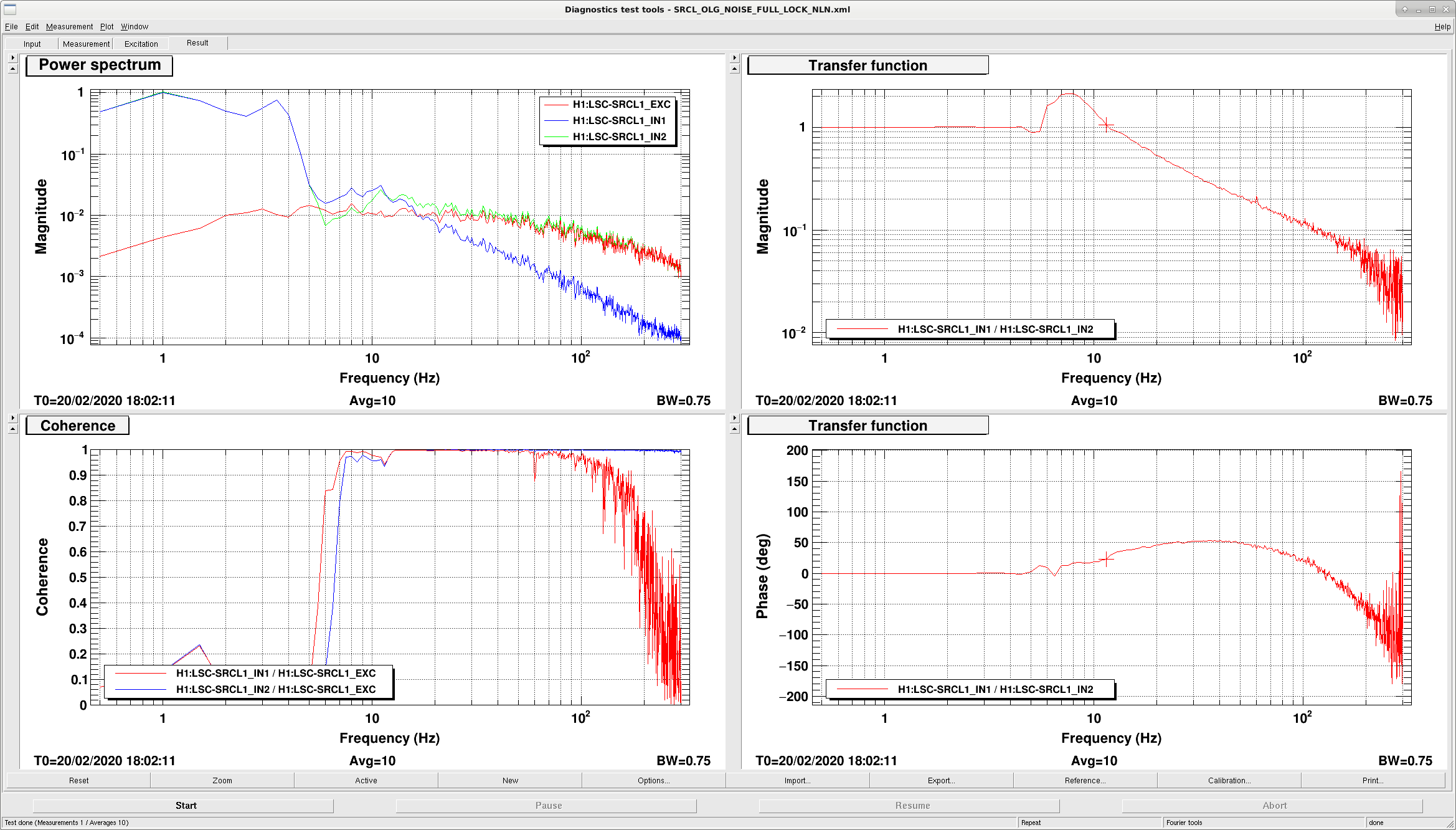
Before changing the cutoff filter, I measured SRCL in NomLowNoise, since the reference measurement I was working from was from May 2019. It seems like the reference measurement was from a time before we lower the SRCL gain, not actually in nominal low noise.
We run SRCL near the very low end of the phase bubble, and so can't afford the phase loss from my proposed new cutoff filter. We tried SRCL FF with higher DARM offset today without any change to the cutoff, and it's mostly fine. Even though there is a teensy bit more coherenece with DARM at ~300Hz, it's still at the 1e-2 level and so shouldn't be a big problem, at least for checking the efficacy of the higher DARM offset.