[Sheila, Jenne, Keita]
Since we thought that increasing our DARM offset would improve our sensitivity slightly (alog 55105) we wanted to do one more on/off test using online SRCL FF with the new filter (alog 55189). We took 2 sets of on/off, and then determined that although very slight, there did seem to be a consistent improvement with the higher DARM offset and so put into guardian to relock with the higher DARM offset. However it has been reverted since it seems that we can't hold lock through glitches.
After noting that I couldn't change the SRCL LSC loop's cutoff filter (alog 55207) we moved the DARM offset such that we had 40mA sum on the OMC DCPDs and turned on the iterative SRCL FF filter. Sheila did a brief scan of squeezing angle to see if there was any change to the squeezing angle from the DARM offset change (not that we expect that their should be). We left the squeezing angle 5 degrees different from how it had been, but determined that this was a pretty small change and didn't change it again when going back to check the 20mA DARM offset.
We took 2 sets of on/off spectra to (try to) convince ourselves that it was a real effect that we were seeing, and determined that we could also continue to look at more new configuration spectra after going to Observing. The difference is much more subtle than we were expecting, although it seems to be repeatable.
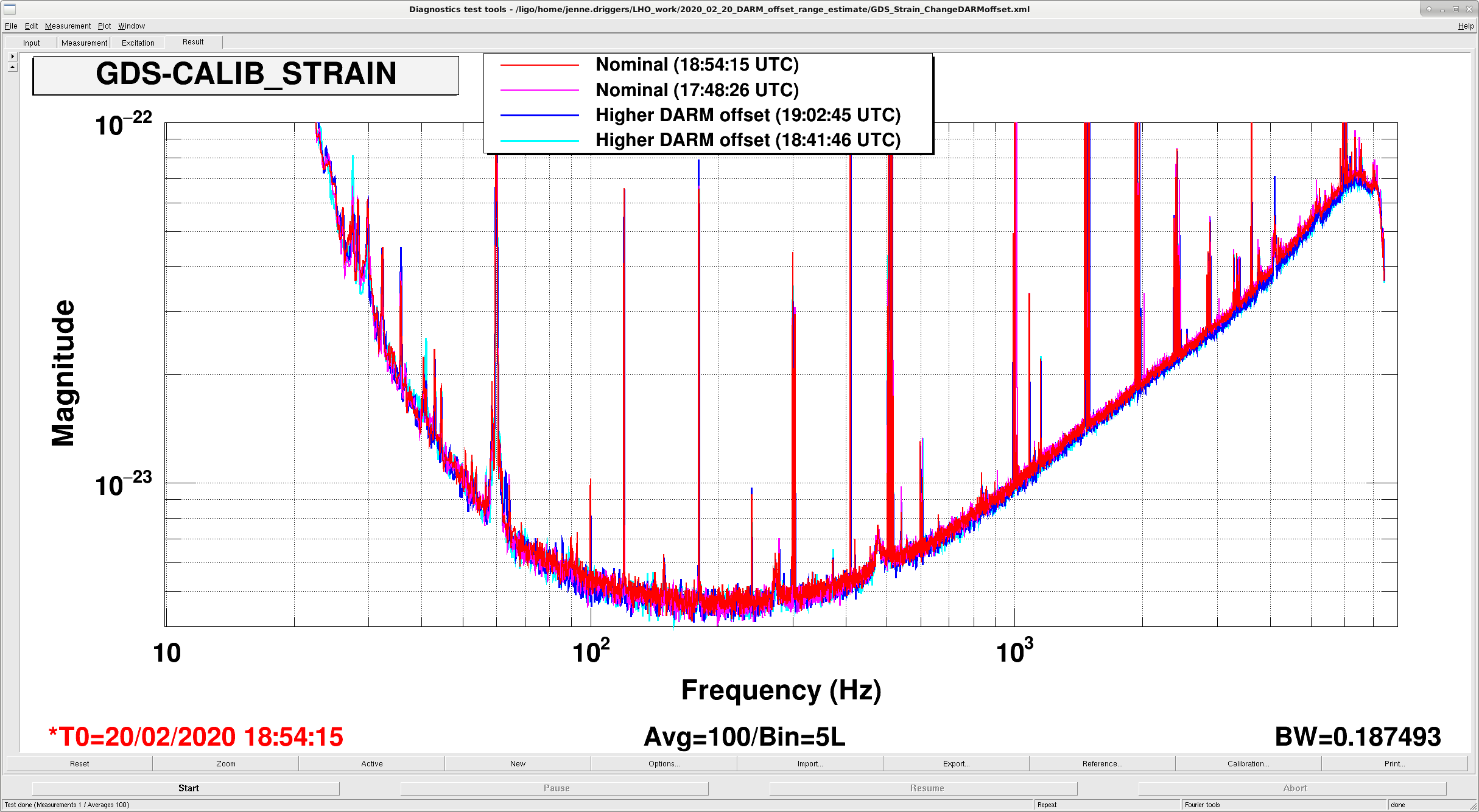
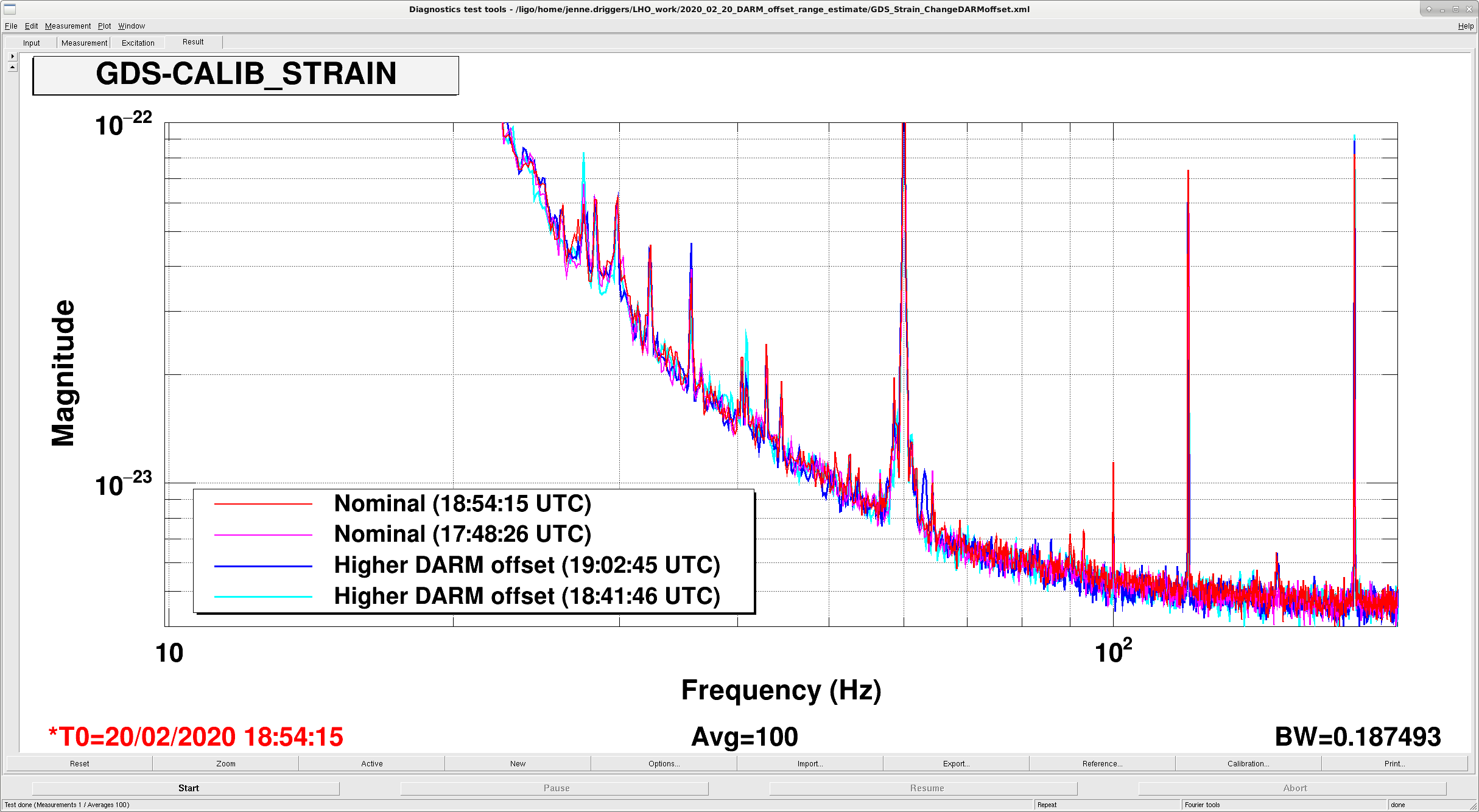
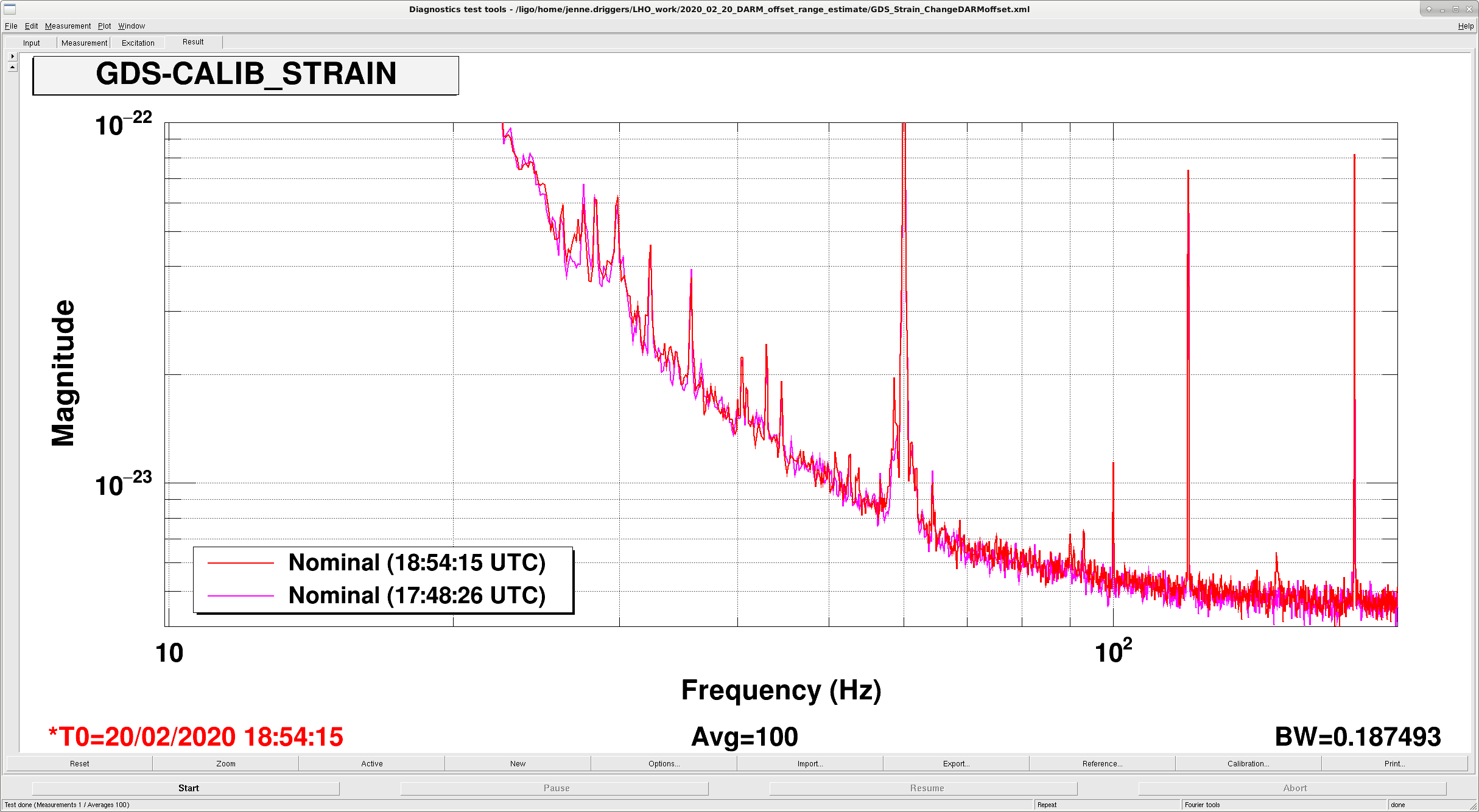
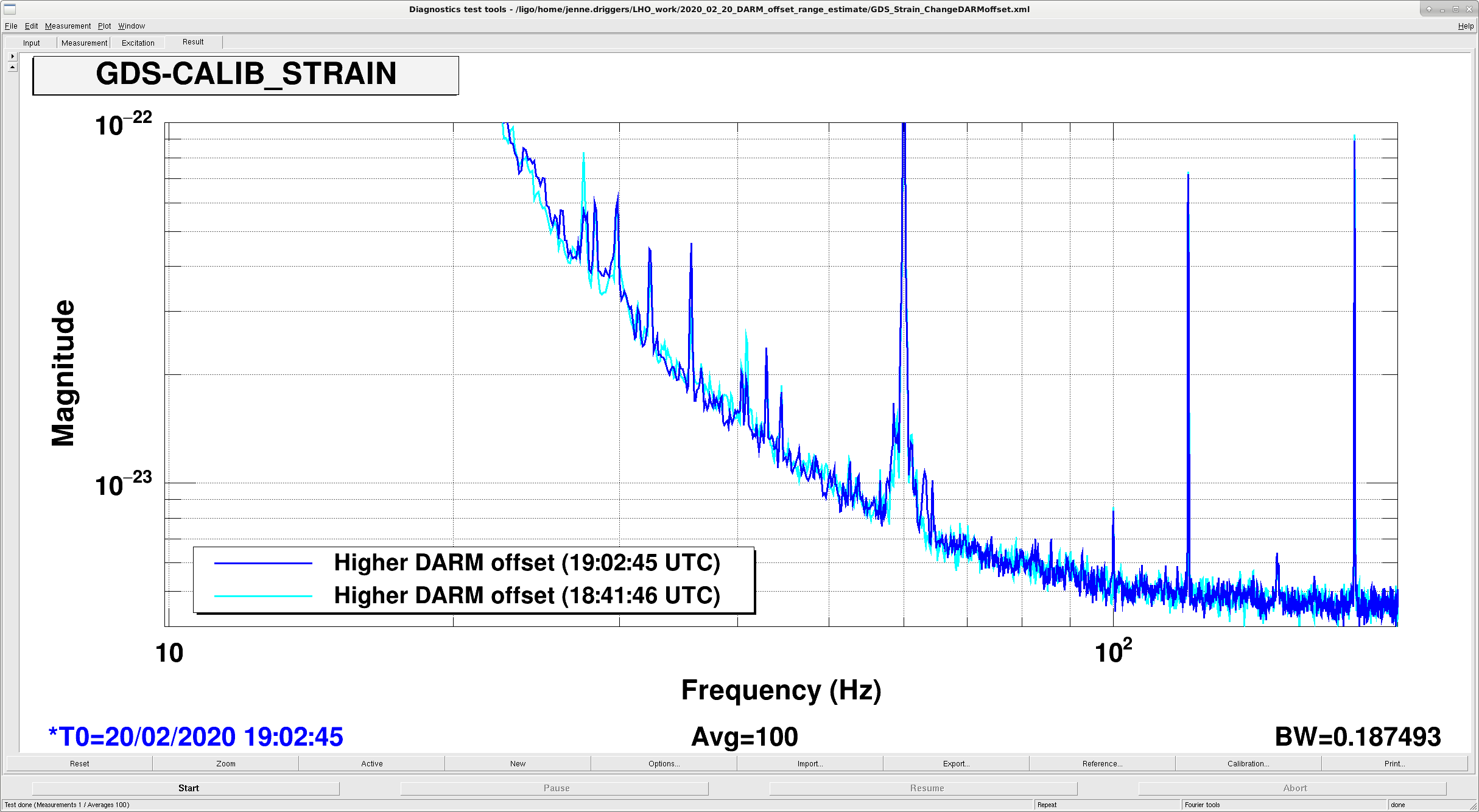
The first 4 attachements are all the same spectra (2 old nominal config, 2 candidate high DARM offset config) in 4 different zooms. The first attachment is over the full GW band, and the other 3 are zoomed from 10-200 Hz. The second plot is to show a zoom of the small improvement we see, and then the third and fourth plots are just to show that the spectra in each configuration are similar to one another, since they are all overlapped in the second plot. In all of these plots, the pink/red traces are from the nominal DARM offset, and the blue/cyan traces are with the higher DARM offset.
Particularly around 90 Hz, there seems to be a repeatable improvement with the higher DARM offset. There is also an improvement at higher frequencies, perhaps due to smaller influence of any intensity noise or frequency noise on the junk light.
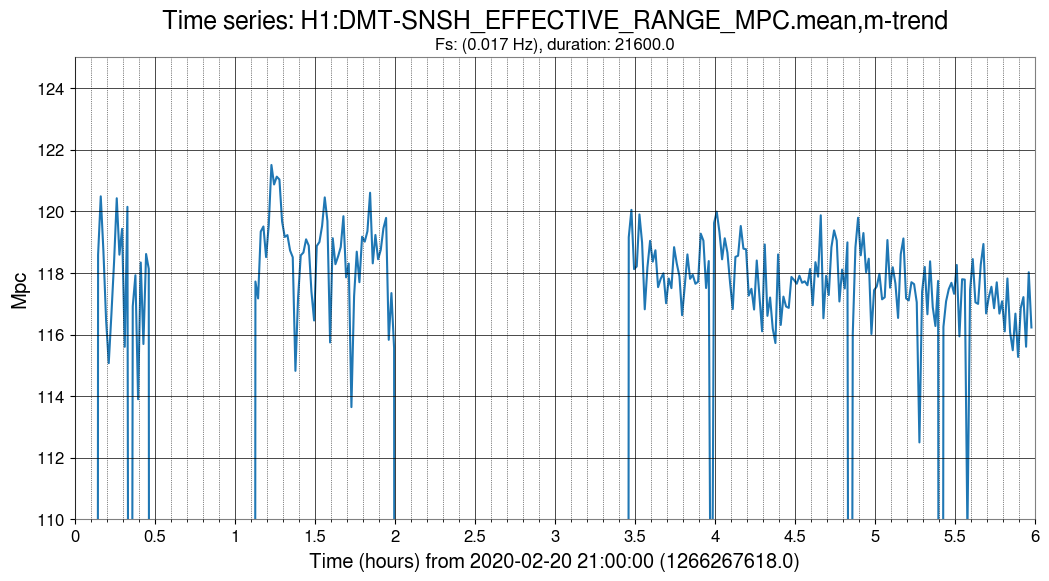
I added a new state to the ISC_LOCK guardian to change the DARM offset just after Lownoise_length_control, and added the new iterative SRCL FF filter to the guardian, and it worked twice to relock. The 5th attachment shows the range calculated by the summary page (after the effect on calibration is taken into account), showing that we seem to have eked out a small improvement. Noteable is that with the slightly different optical gain, in the high DARM offset configuration the control room reported range number (which does not track time dependent calibration corrections) becomes a slight underestimate rather than our usual case of a slight overestimate.
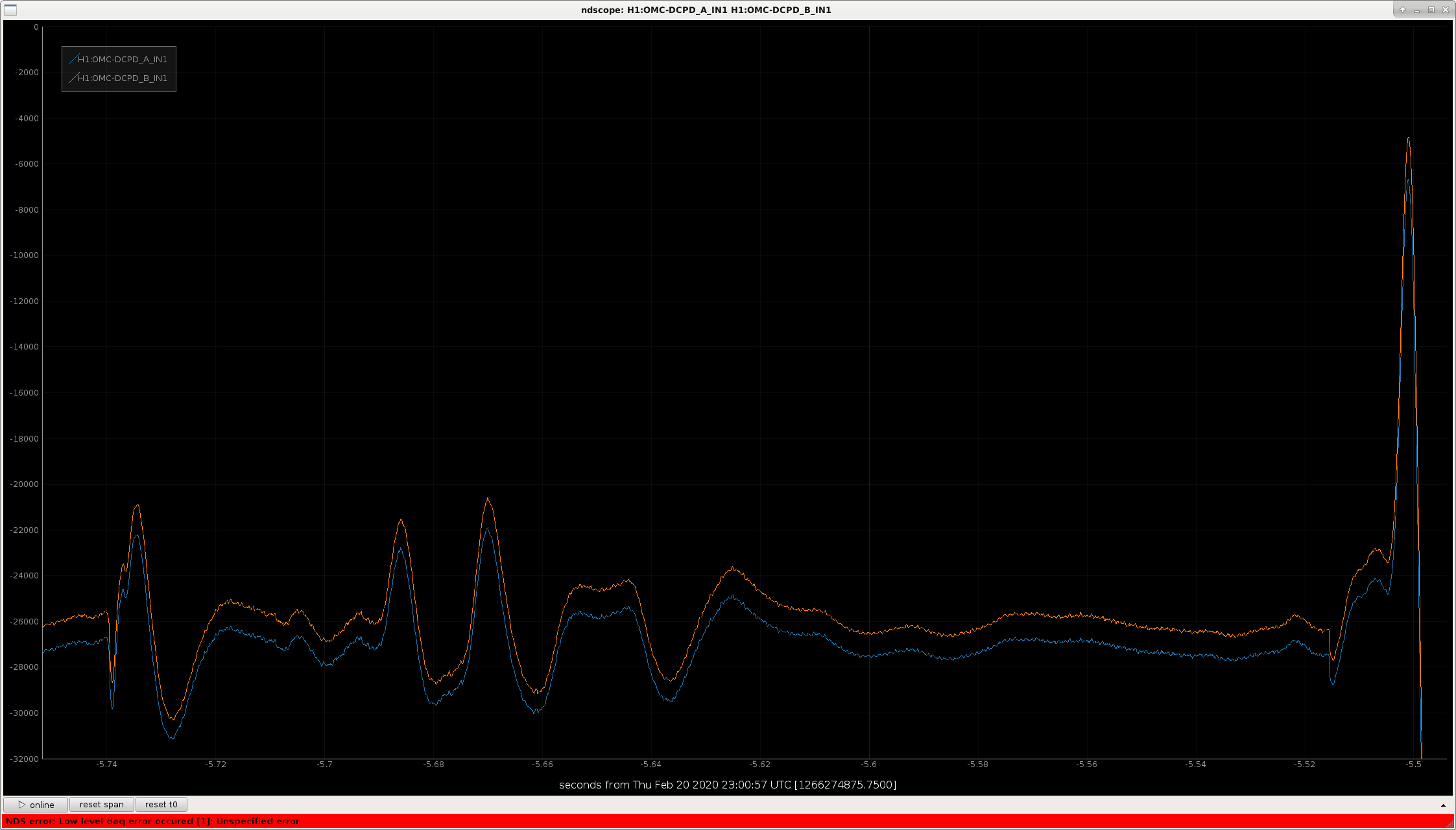
The higher DARM offset does put us much closer to the edge of our ADC range when we have 2 stages of whitening on (as is our nominal configuration). We seem to not be able to survive glitches when running in this state, and have had 2 locklosses after very brief Observing segments with the higher DARM offset, and so have backed out the change by bypassing the new change_darm_offset state and taking out the iterative SRCL FF filter. The 6th figure shows the OMC DCPD inputs before they are filtered to account for the analog whitening, and you can see that just before we lost lock we came extremely close to hitting the ADC limit, although we didn't actually go over 32000 counts. Something that we may consider is what the tradeoff would be if we were to operate in the LowZ transimpedance option for the DCPDs, since that would keep us farther away from the edge.

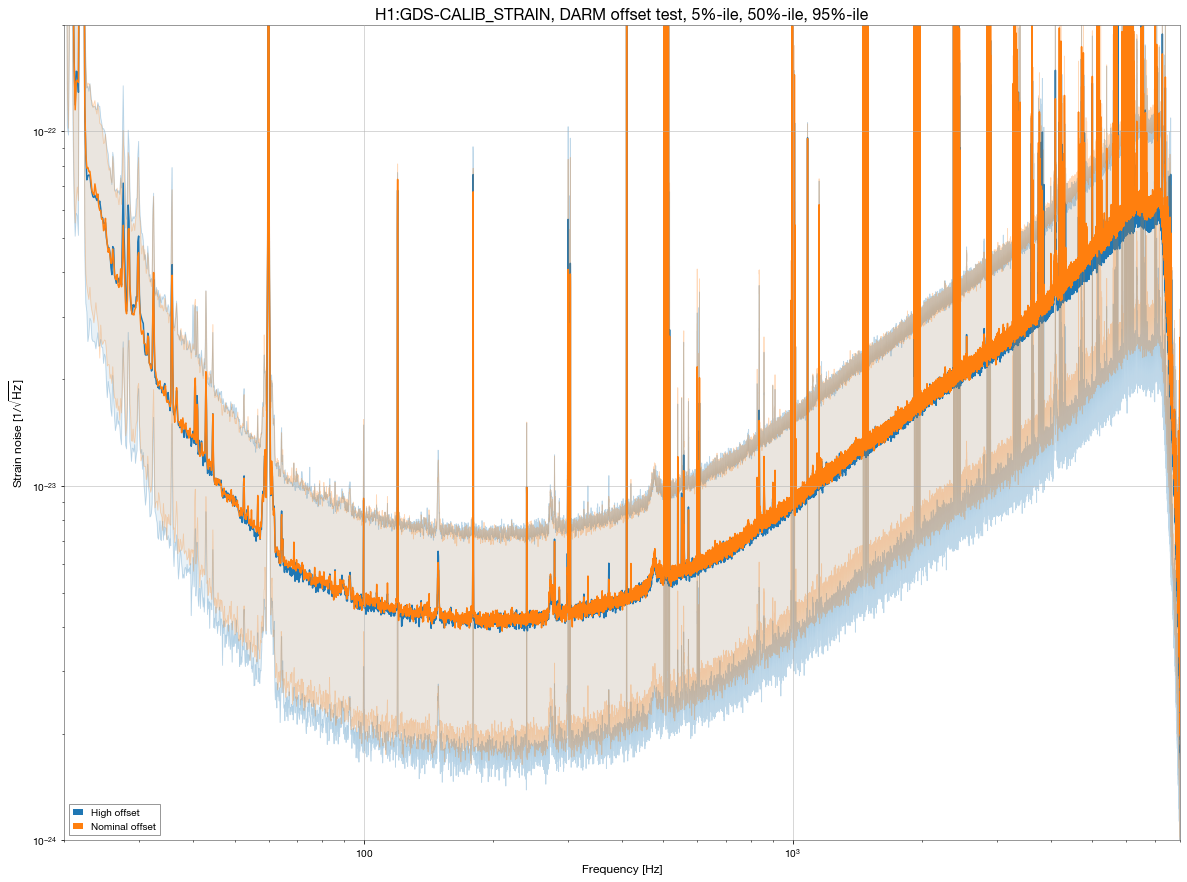
Sheila suggested that looking at the spectra with ranges just like on the summary pages might help illuminate where we are seeing an improvement.
The first attached plot is of 2 1-hour-long stretches of data, with orange the nominal 20mA OMC DCPD sum, and blue being the candidate higher DARM offset of 40mA OMC DCPD sum. There certainly does seem to be better sensitivity with the higher DARM offset, although as we found last week we can't actually hold the lock through glitches with the higher DARM offset. Calculating the expected range improvement from the median spectra here, we expect to see about a 1.7 Mpc improvement, which is consistent with what we see in the range plot (2nd attachment).
We could consider trying to run at 30mA, although that would take time and would likely result in a minimal improvement. Right now, we're choosing to defer this in favor of measurements to help us actually understand our junk light at the AS port.