The electromagnetic actuator's bobbin coil has nearly 600feet of wire wound in 22 layers and 440 loops. Each layer of the wire must be bonded to the lower layer to prevent movement which would lead to wear and performance degradation. The bonding is done with a potting compound, N-Methyl -2-pyrrolidone for which Caltech's DeSalvo established a curing program set forth in T080148. This log is to validate the curing oven's performance with an eye on avoiding over-temperature as the bobbin wire's maximum operating temperature is in the neighborhood of the curing temperature; and, to be sure the oven programming is understood and correct yielding assembly efficiencies.
1) McCarthy procured a simple k-type thermocouple and 18 hour USB recorder, I like simple.
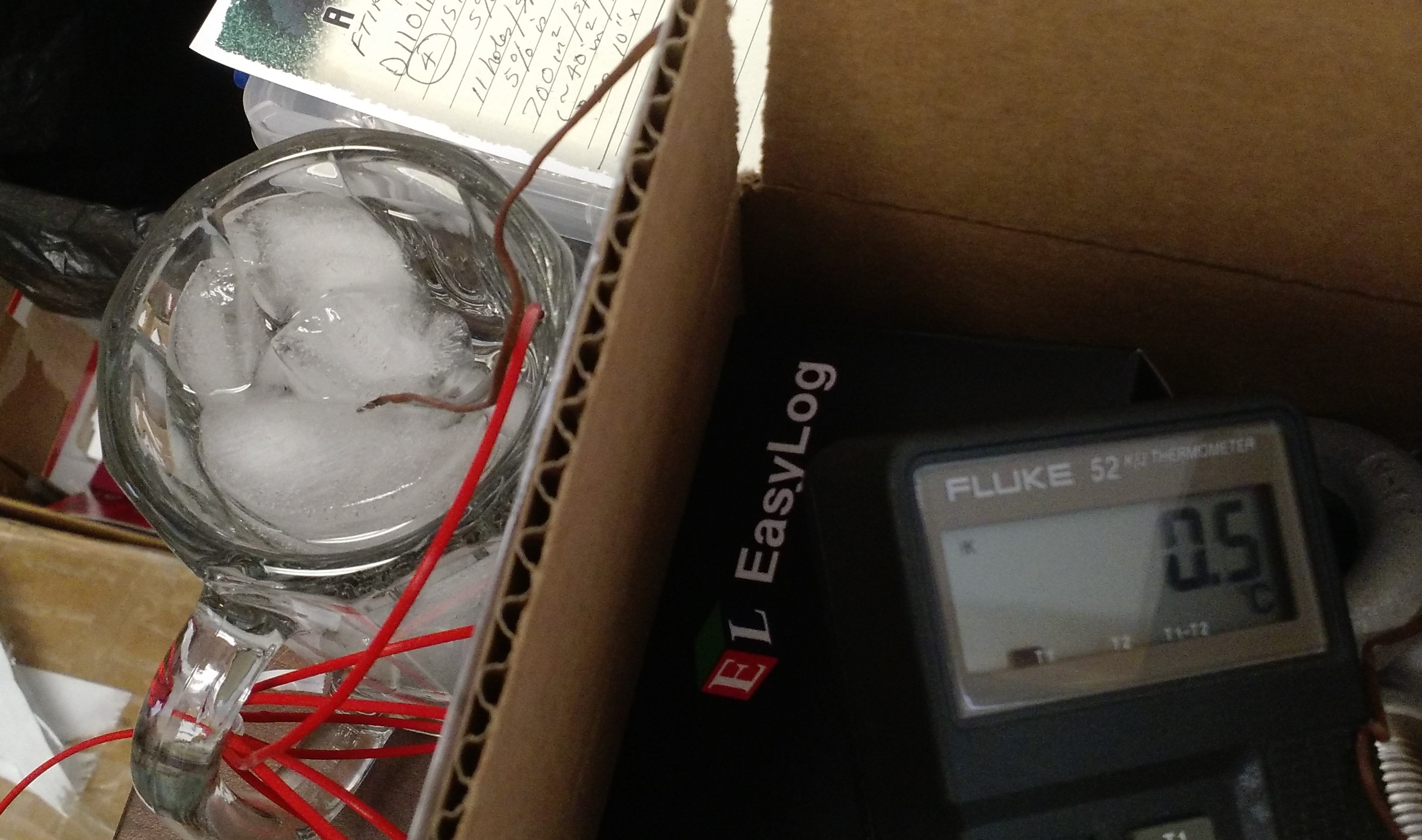
2) The thermocouple/recorder was checked against a Fluke meter in an ice bath.
3) The thermocouple was checked in a boiling water bath.
See the first image for a view of the iced mug and the fluke reading. The first pdf is the TC profile recorded in the ice bath followed by the boiling water bath.
In the ice bath, the TC recorded values of 0.5 to 0.0°C, just as the fluke meter was recording. In the boiling water bath, the TC recorded 99.0 & 99.5°C.
4) The thermocouple was run in the empty oven zero to max ASAP to look at that performance and set the available high-limit switch.
The second pdf shows the step to maximum temp as soon as possible profile. During the ~first 10 minutes, the oven temp increases at about 7C°/minute. During the ~last 10 minutes of heating, the oven temperature was climbing at just 1.6C°/minute. The maximum reading on the TC suspended in the air of the oven was 296.5°C. The oven thermometer was reading 300C. The temperature over limit was set while sitting at 300°.
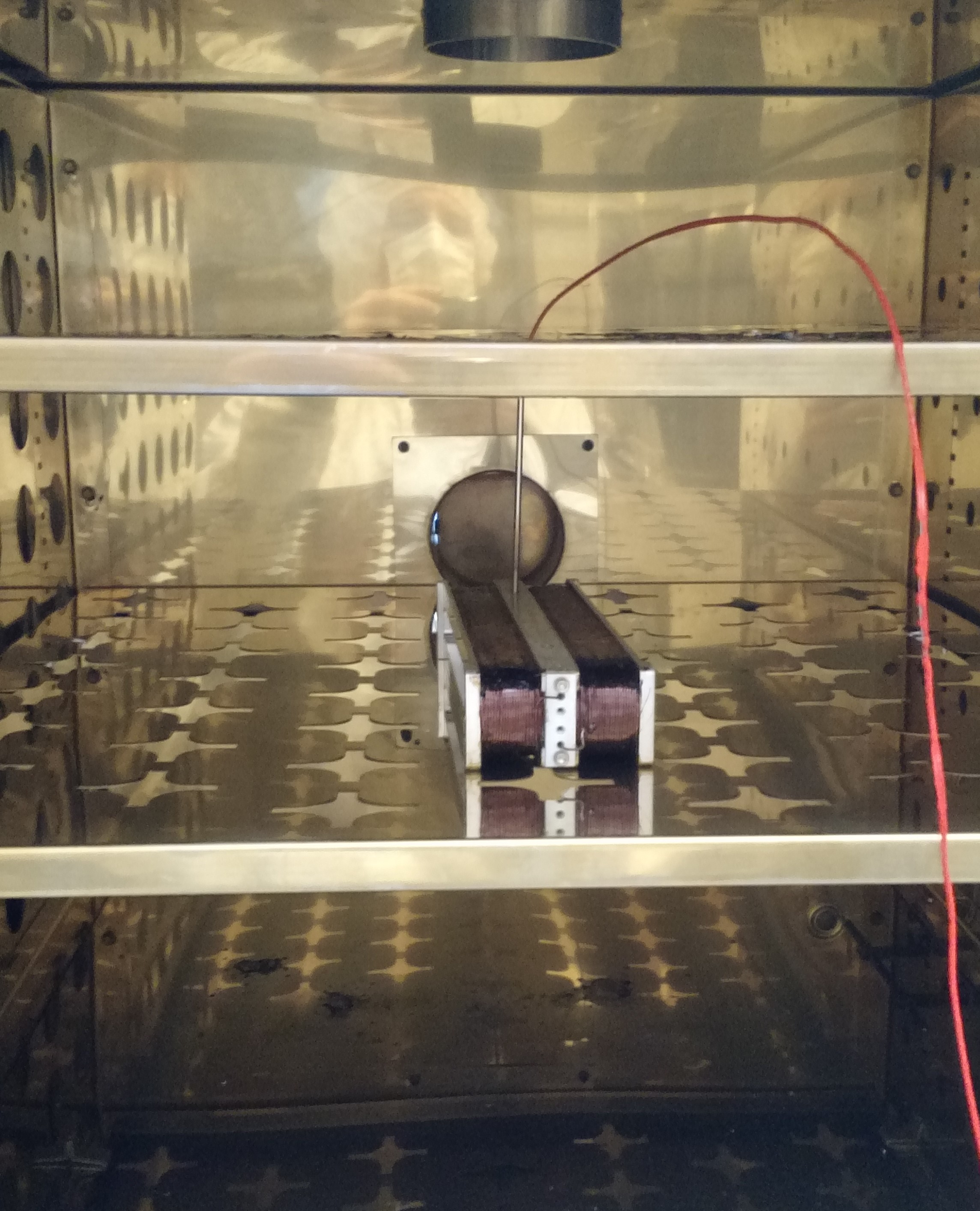
5) The curing program was run with an existing wound bobbin and thermocouple.
The second image attachment shows the interior of the oven with the wound bobbin on the second shelf and the TC probe coming from above to rest in a screw hole on the bobbin. The final pdf shows the TC recording while the oven runs the profile prescribed in T080148.
The temperature recorded during the profile run shows a few things:
1) Even though the first soak period of 40 minutes was programmed to not start counting until the oven reached 200°C, the TC/bobbin was only at 192C when the countdown started. If critical, maybe this soak should go for 50 or 60 minutes. 2) As we already knew, at the higher temperature, the oven/part was unable to heat at the programmed 4C°/minute but only 2.2C°/minute. 3) This slower heat up during the second ramp allowed the part/TC to heat as well leading to a more preferred full 40minute soak at temperature. 4) The PID control of the oven and maybe it's lack of umph indicates there is little risk of temperature overshoot.