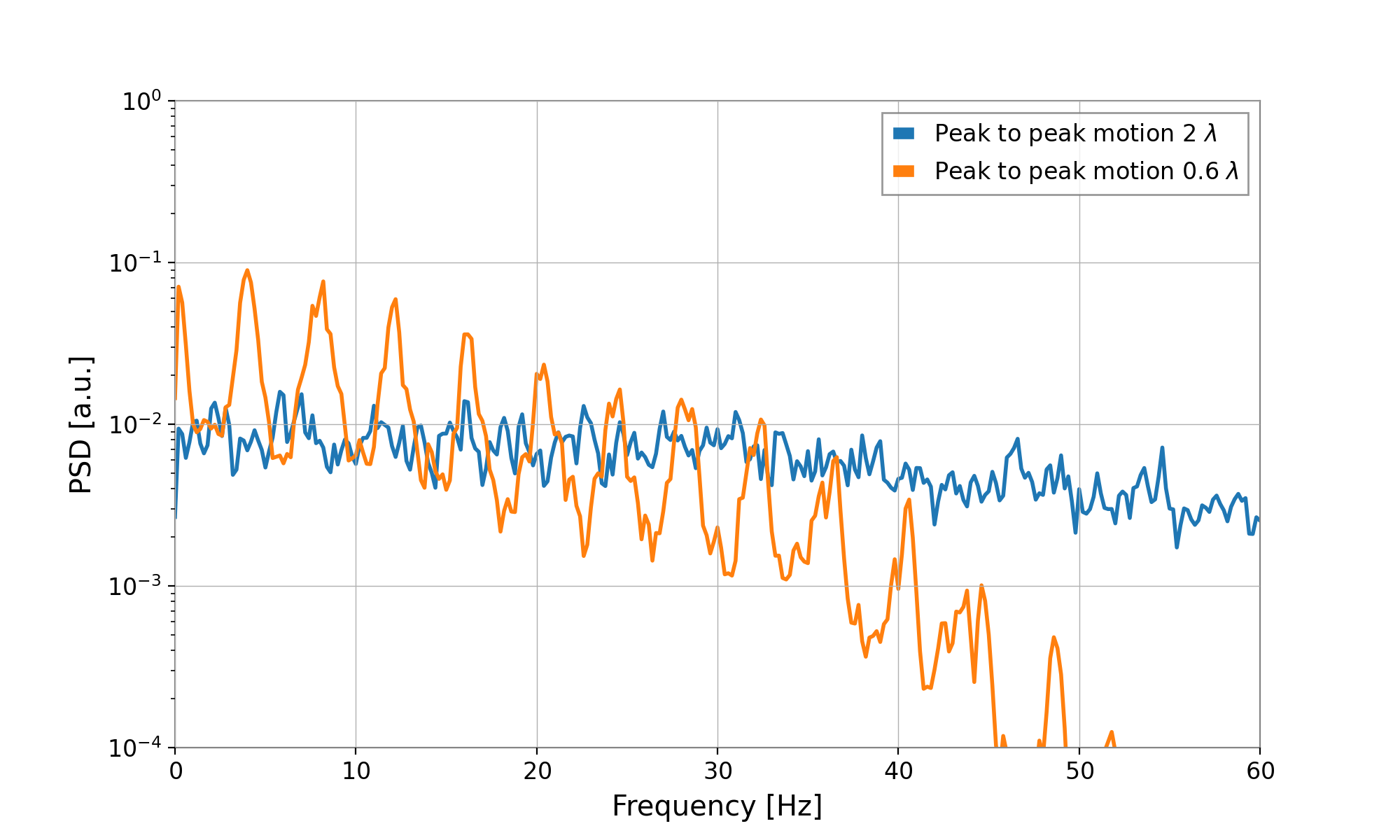
A simple classic scattered light model for the 4 Hz bumps can explain the bumpy shape. For example, something moving at 4.05 Hz with a Q of ~80 seems reasonable.
We would see scattered light bumps only when the scattering element peak to peak motion is lower, for example 0.6 lambda peak. If the object is moving faster, like 1-2 lamba peak, then the scattered light noise would be broad band and without any distincitve feature.
If this were the case, we would see the 4 Hz bumps only when the scattering object is, by chance, moving slower than normal, and we would always have a continuos scattered light background.
This would also imply that all attempts to find the origin of the 4 Hz bumps by exciting the scattering object would fail: we see the bumps only when the scattering element is by chance moving less than usual.