There has been excess DARM noise mostly in 20 to 40 Hz region at LHO recently. Gabriele and others have been investigating the potential role of 2.6 Hz peak in this noise, for more info on their work please see alogs 71005, 71092, 71205. This noise can be seen as excess glitches in 20-40 Hz band as seen in the first plot for July 2.
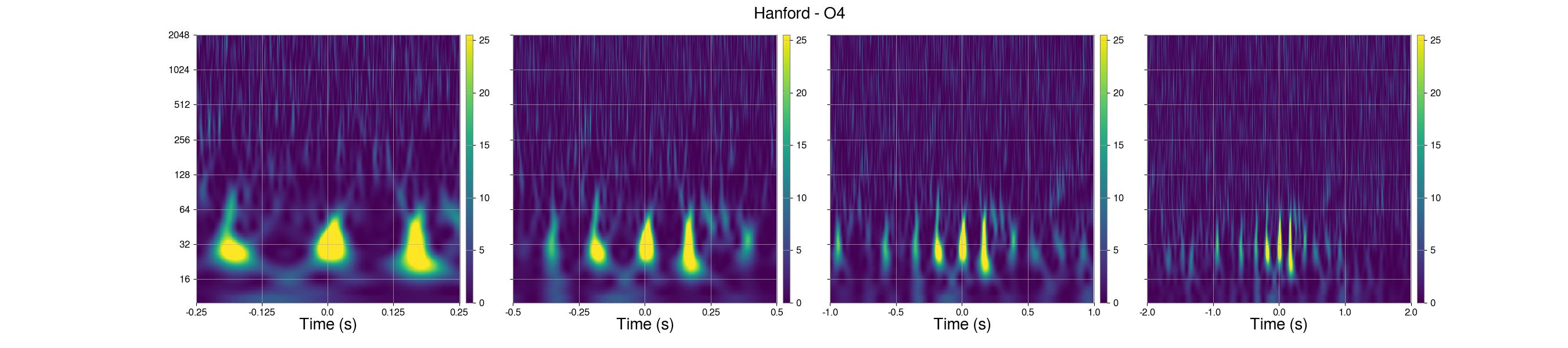
This noise kinda got worse June 22 onwards can be seen in the glitchgram of the day as an increase in glitches few hours before the end of the day. Marissa pointed out during a Detchar call that GravitySpy has been classifying a lot of glitches as Fast Scattering. The time-frequency spectrograms (second file) of these glitches do not look very similar to the fast scatter at LLO but as long as they are high frequency (which these are) and could be some form of scatter, this classification seems apt.
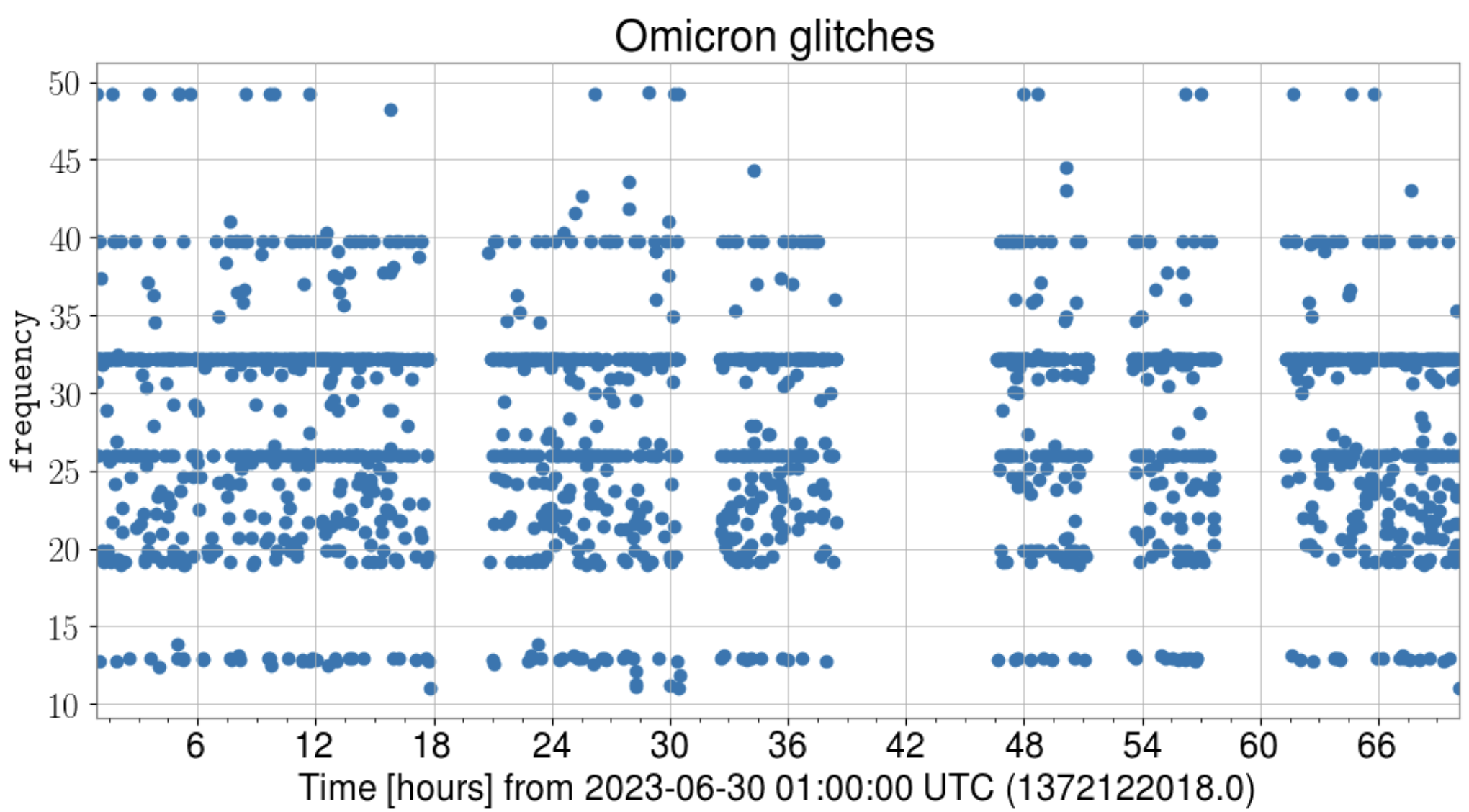
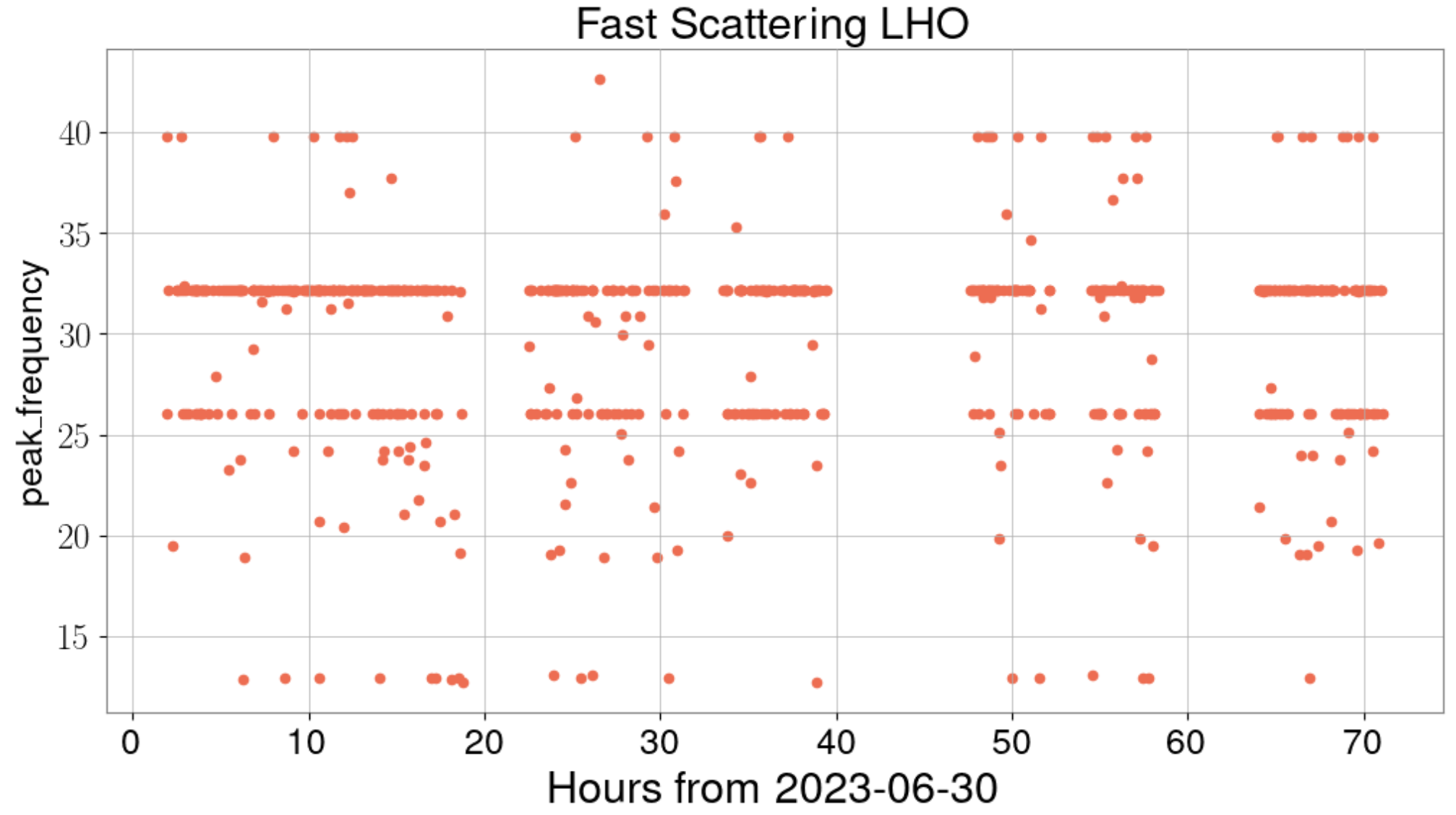
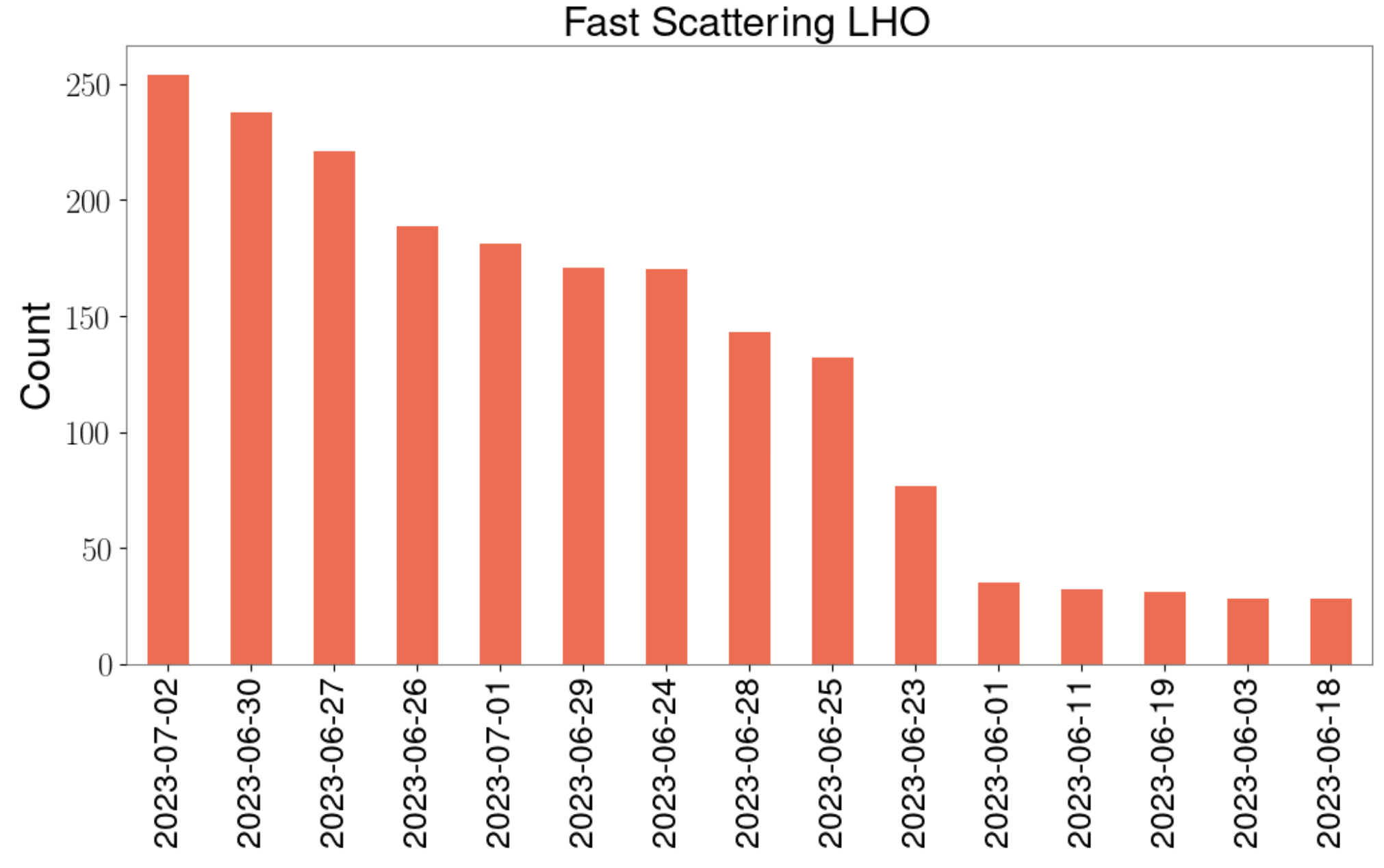
The third plot below shows all the omicron triggers between Jun 30 and Jul 3 and the fourth plot shows those classified as Fast Scattering by Gravityspy above a confidence of 0.9. Furthermore the fifth plot shows an increase in the number of glitches classified as Fast Scattering after June 22.
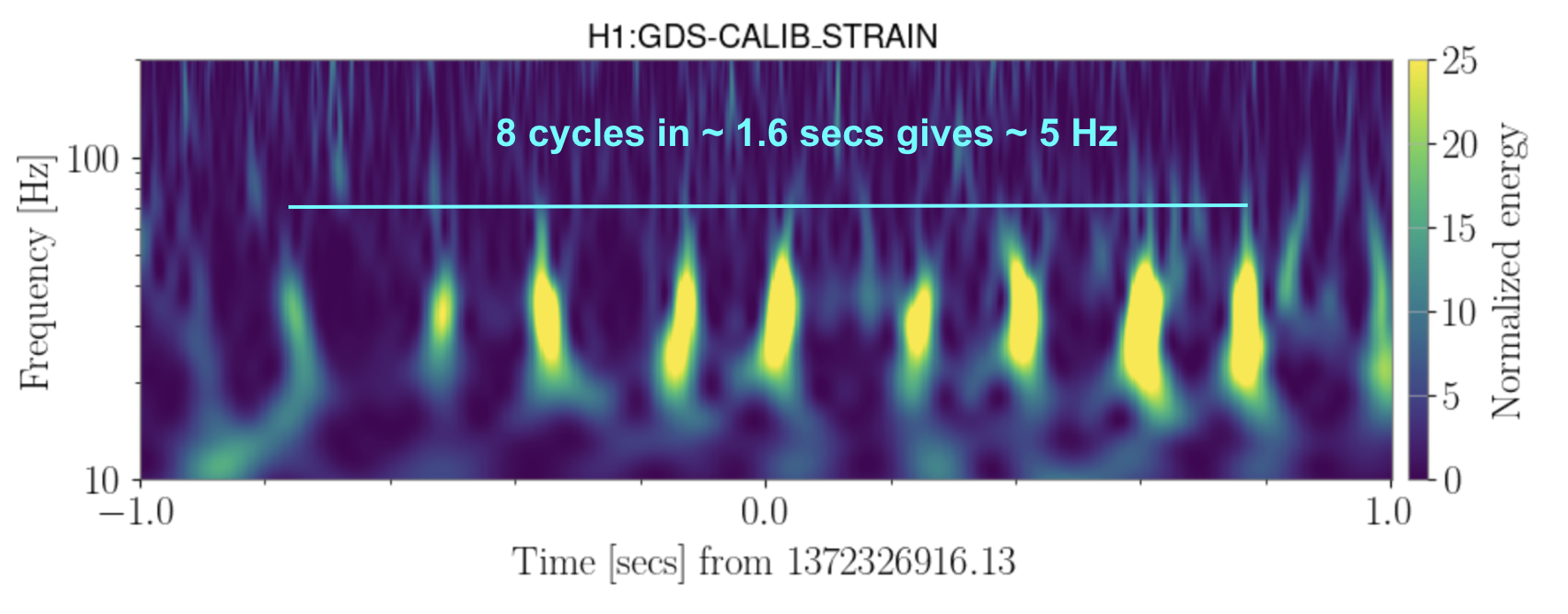
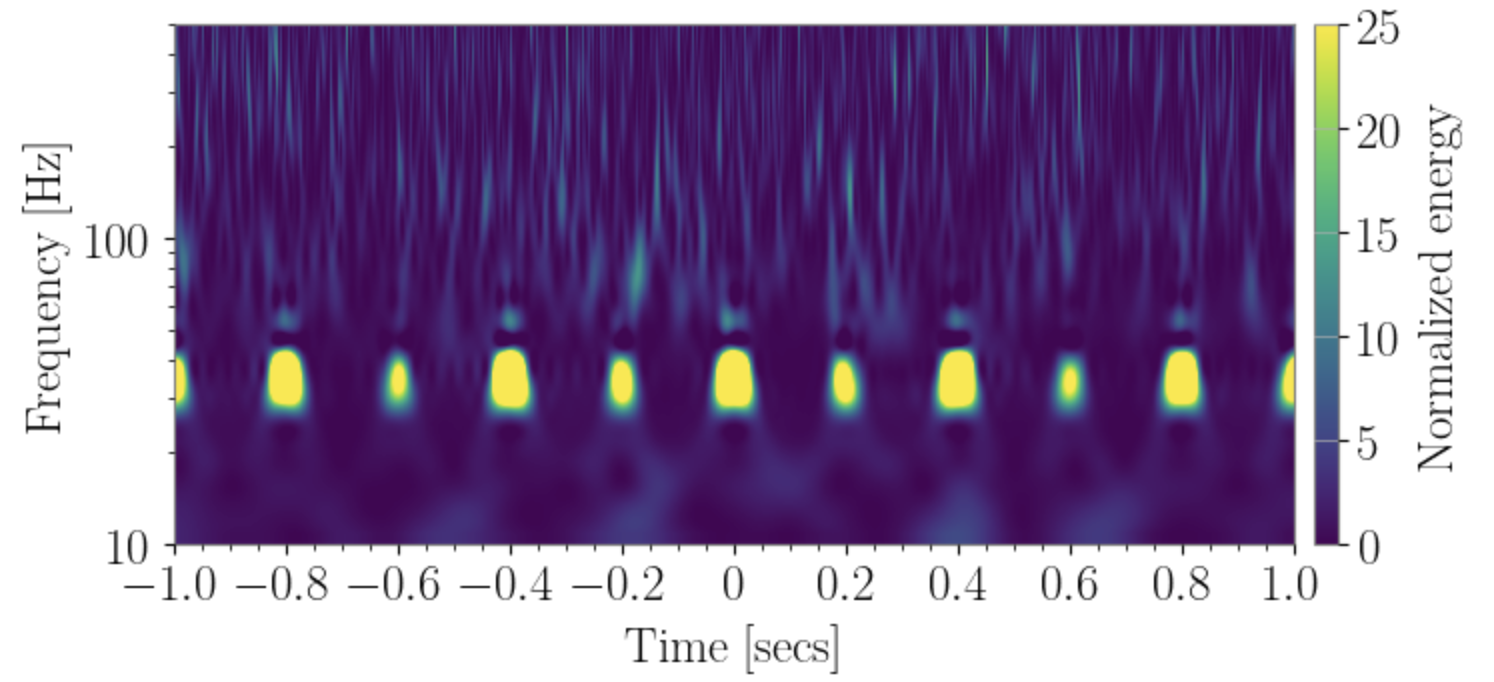
From the Q scan (sixth figure), we can see that this is ~5 Hz Fast Scatter, which means the scattering surface is moving at ~ 2.5 Hz. When microseism is low, anthropogenic motion at f Hz, shows up as fast scatter at 2f Hz. More details on this noise modeling can be found in G2300482. Sixth figure is actual noise, seventh figure is a model based on 2.5 Hz motion.
Assuming the peak frequency to be 30 Hz, the scattering surface is moving at 15 µm/s.
Substituting V and f = 2.5 in , Vscatter = Ascatterωscatter
We get Ascatter ~ 0.96 µm. Somewhere there is a scattering surface moving about 2 microns peak to peak, at 2.5 (or 2.6) Hz (it's very difficult to distinguish between 2.5 Hz and 2.6 Hz in the Q scan) causing this noise. Not sure if we have had injections around this frequency in the ACBs.