
[Jenne, Naoki, Brina, Caden, Robert, Lance, Camilla]
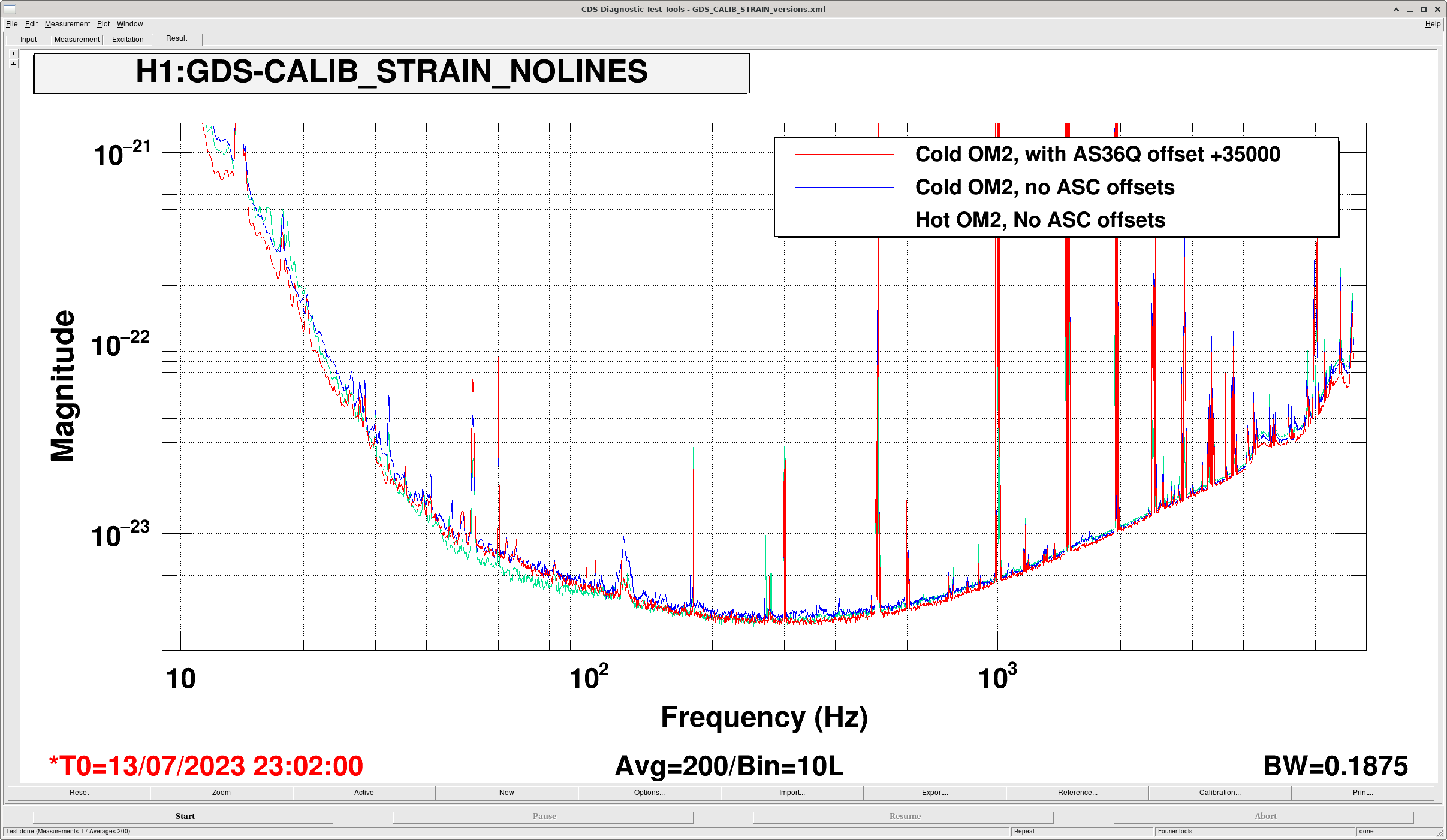
Since alignment changes were so impactful yesterday (alog 71302) and we still have higher noise than when OM2 was hot last week, and also higher noise than our April 60W times with cold OM2 (eg, Elenna's alog 71284 yesterday), we tried some alignment shifts today with some PEM vibration injections going, to see if we could find a better alignment. For now, we've left the IFO with the same settings it had last night since there's nothing that's significantly better. Nothing we've found comes close to matching the broadband (good) noise level of the April 60W time, or the last week hot OM2 times.
- The camera servos are very slow, so I wanted to switch back to ADS. However, just asking the camera servo to do so dramatically changed the alignment of the IFO; arm buildups were going down and some of the ASC looked unstable.
- There isn't a handy way to switch back to the camera servos without having the offsets be set to your current position, so we used the Camera servo guardian to go back to using the cameras (which reset the camera offsets), and then Naoki by hand set the camera servo offsets to where we had been overnight.
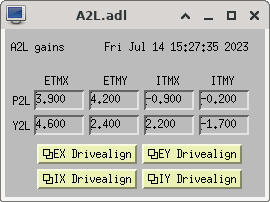
- I then turned on the A2L excitations (but not the servos), and changed the A2L gains to zero the error signals.
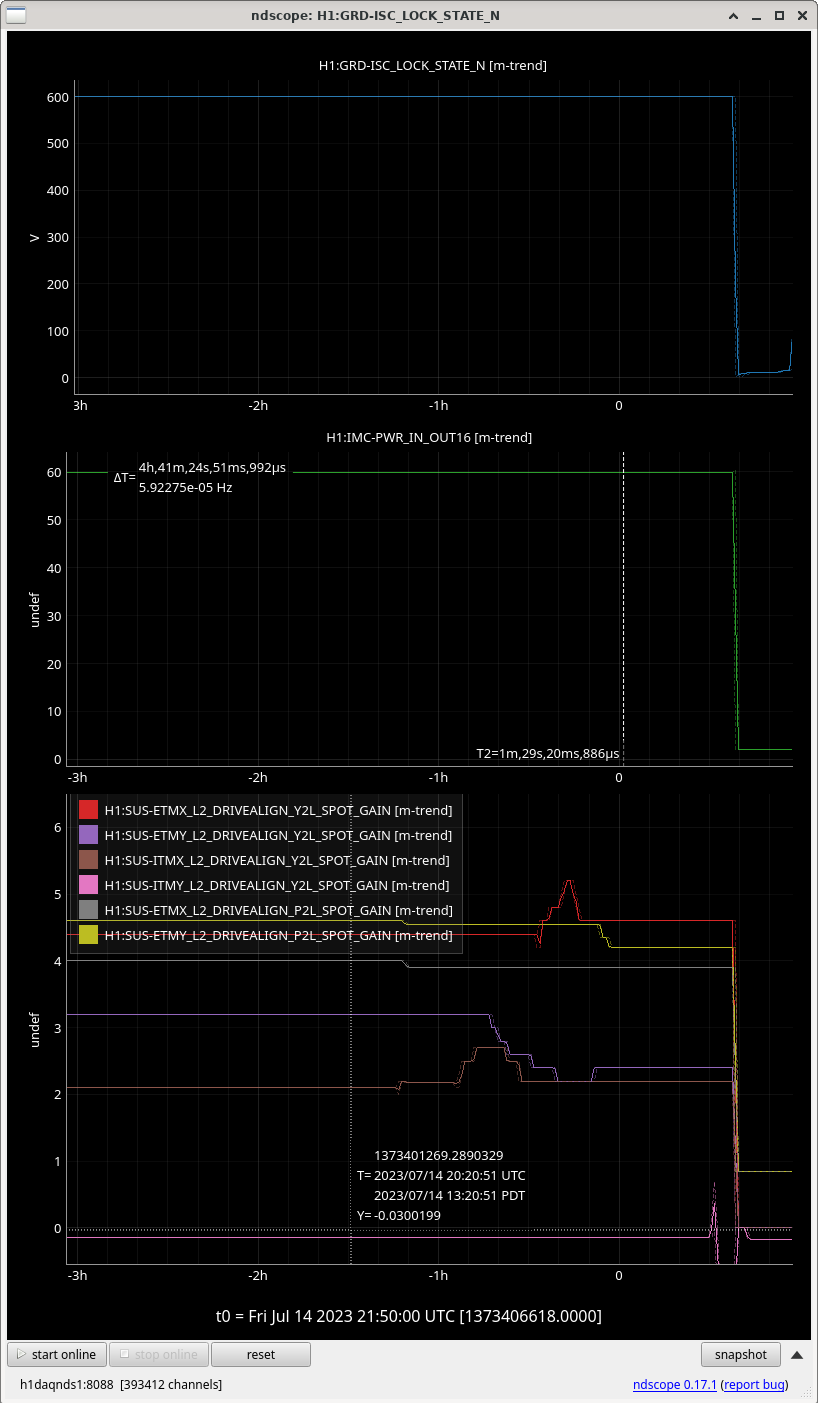
- Then we again used the camera servo to switch over to ADS, and we saw much less change in the circulating power buildups. The third attachment shows the situation at that time.
- Note that this means that after a long time of thermalization, the place the ADS would keep the IFO is different than the place the camera servos keep the IFO. I *think* that it's better with the camera servos, since that's where we're maintaining better buildups.
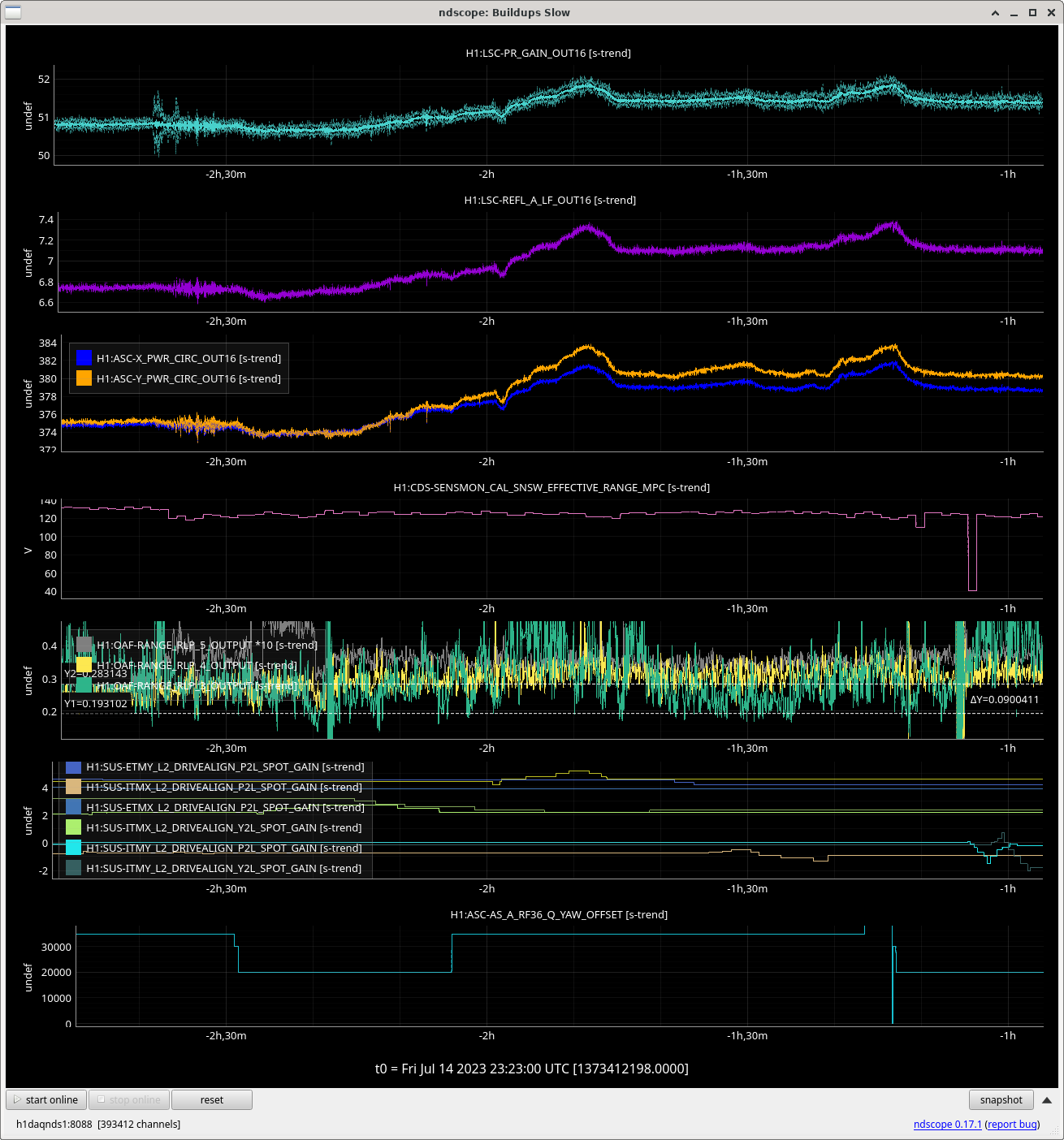
- Once back on ADS, I tried moving A2L setpoints to see if that would change the jitter peak around 120 Hz, and see if it would change the broadband excess noise we seem to have. I also tried changing the AS36Q yaw offset, but I think that even with A2L moves, the current value of 35k count offset is the best.
- I can pretty dramatically change the circulating arm powers. In particular, changing the ETM Y2L set points was giving us an extra 10kW circulating, but that seemed to not be the best place.
- Robert reminded me / pointed out that the 120 Hz jitter peak isn't necessarily the only thing to be mindful of, since he can likely move that by adjusting damping and weights on the PSL periscope, so we should probably focus on the broadband noise increase and try to fix that. Unfortunately, none of the moves we made today seemed to affect it.
- Around 21:50:00 UTC seemed to be a pretty good time, but again not better than with the hot OM2.
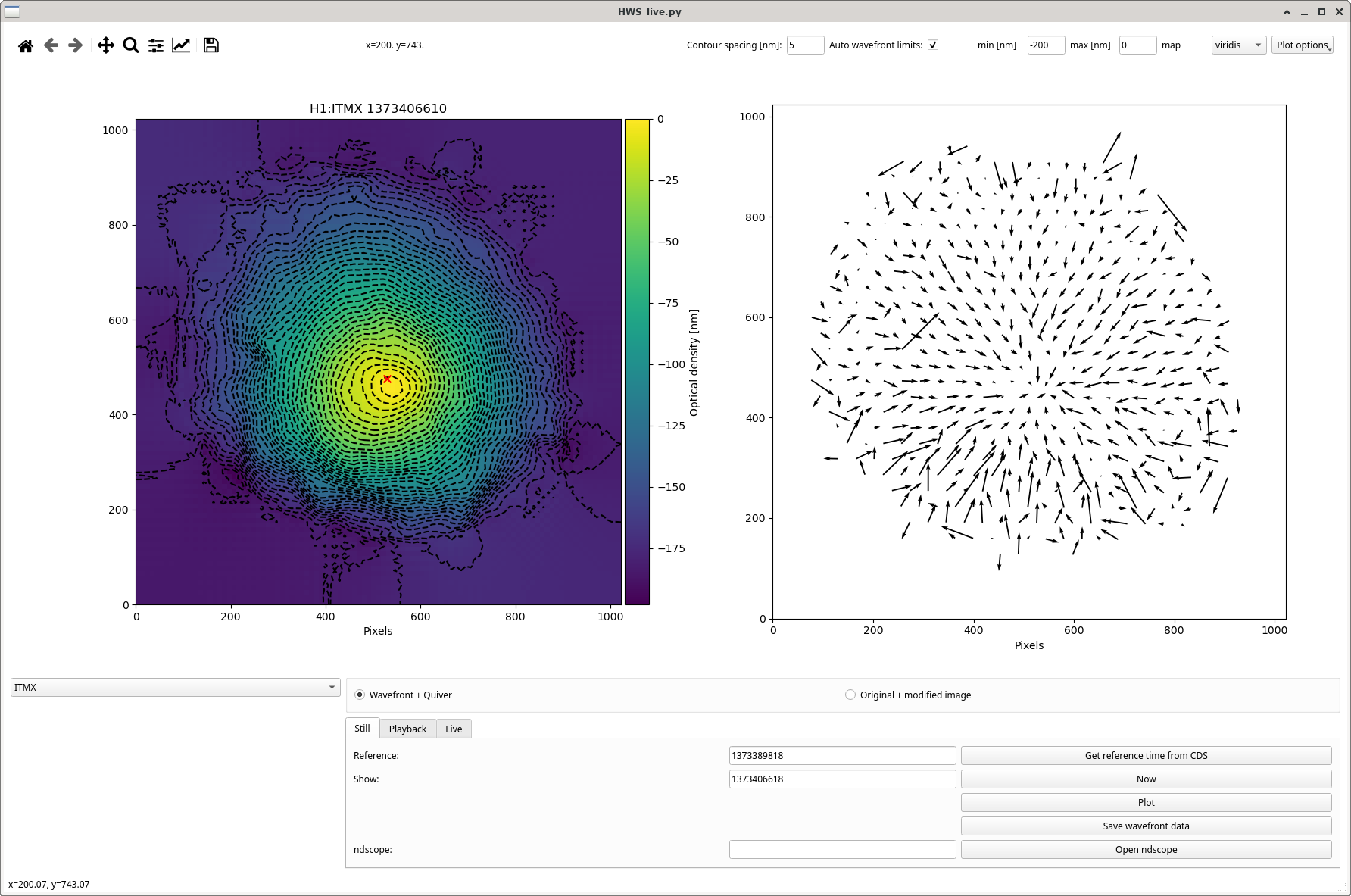
- We ended things by trying to improve some of the low freq by changing the ITMY A2L gains. The second attachment shows where I left things when we lost lock due to a closeby earthquake.
The first attachment shows a big-picture of the moves we made today.
Daniel points out that the time with OM2 hot may have been some of our best-ever sensitivity around 70 Hz. It would be helpful to have a plot like alog 71309, but including Elenna's time from April 6th, to see if pre-O4 we ever had as good of sensitivity around 70 Hz.
It's also a little tricky to compare our HWS data using our plotter to what Elenna and Cao posted yesterday. It would be helpful to either have the times from Cao's plot, or have Cao plot where it looks like our ITMX spot was at 21:50 UTC today.
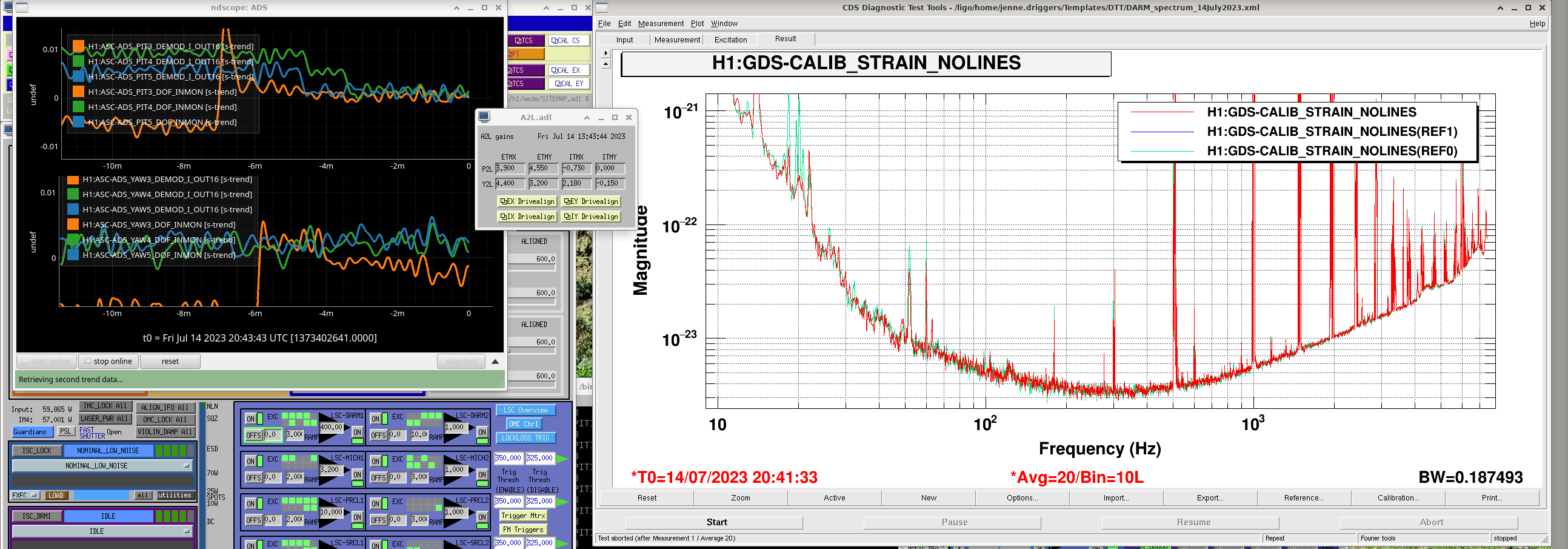
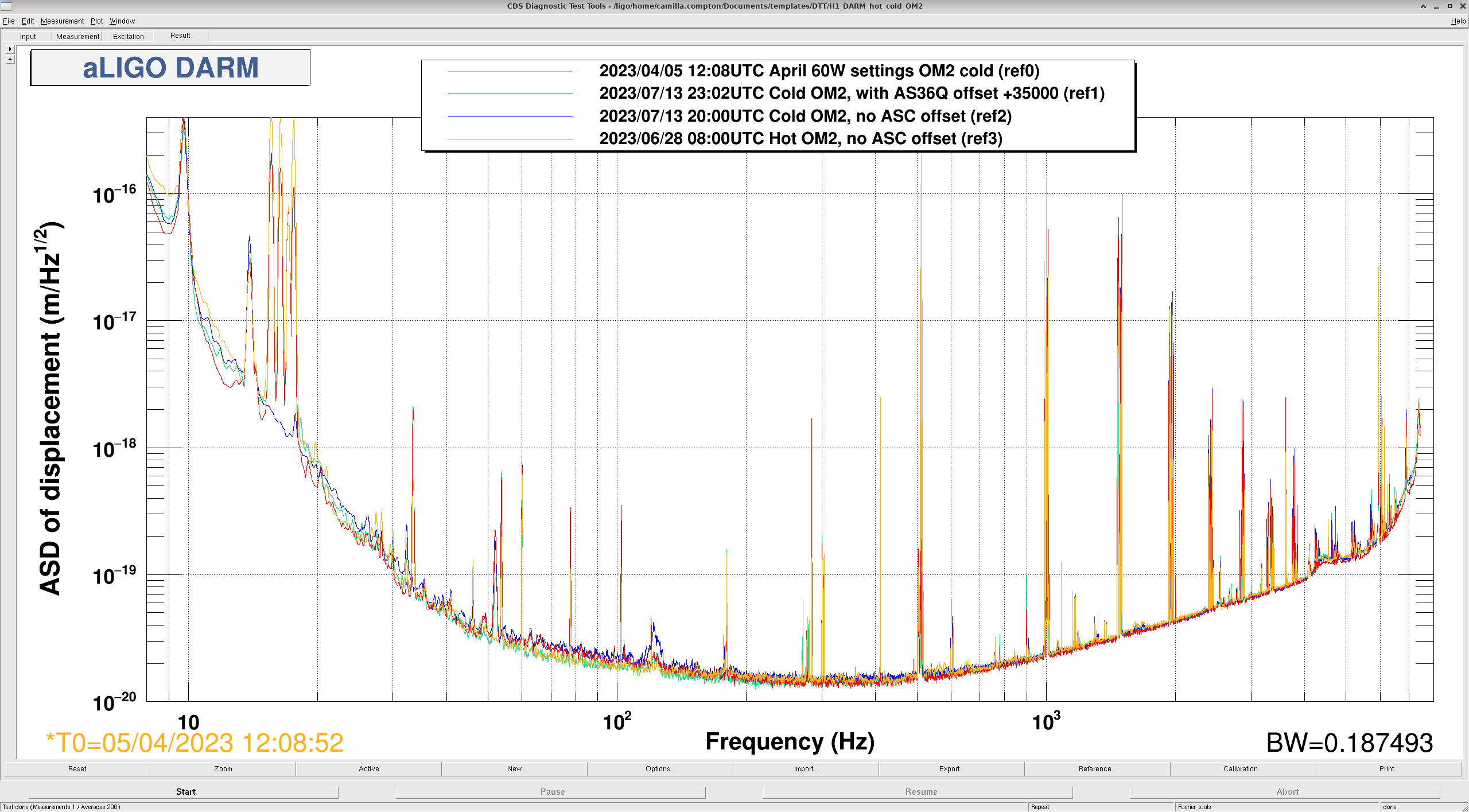
Looks to me the big difference is in the frequency region from 50 to 100Hz. The excess noise in this band has been rather stubern since O3 and its origin is unknown.