Yesterday during commissioning time I did a couple of experiments with CHARD_Y (71738)
How much margin do we have for CHARD_Y noise?
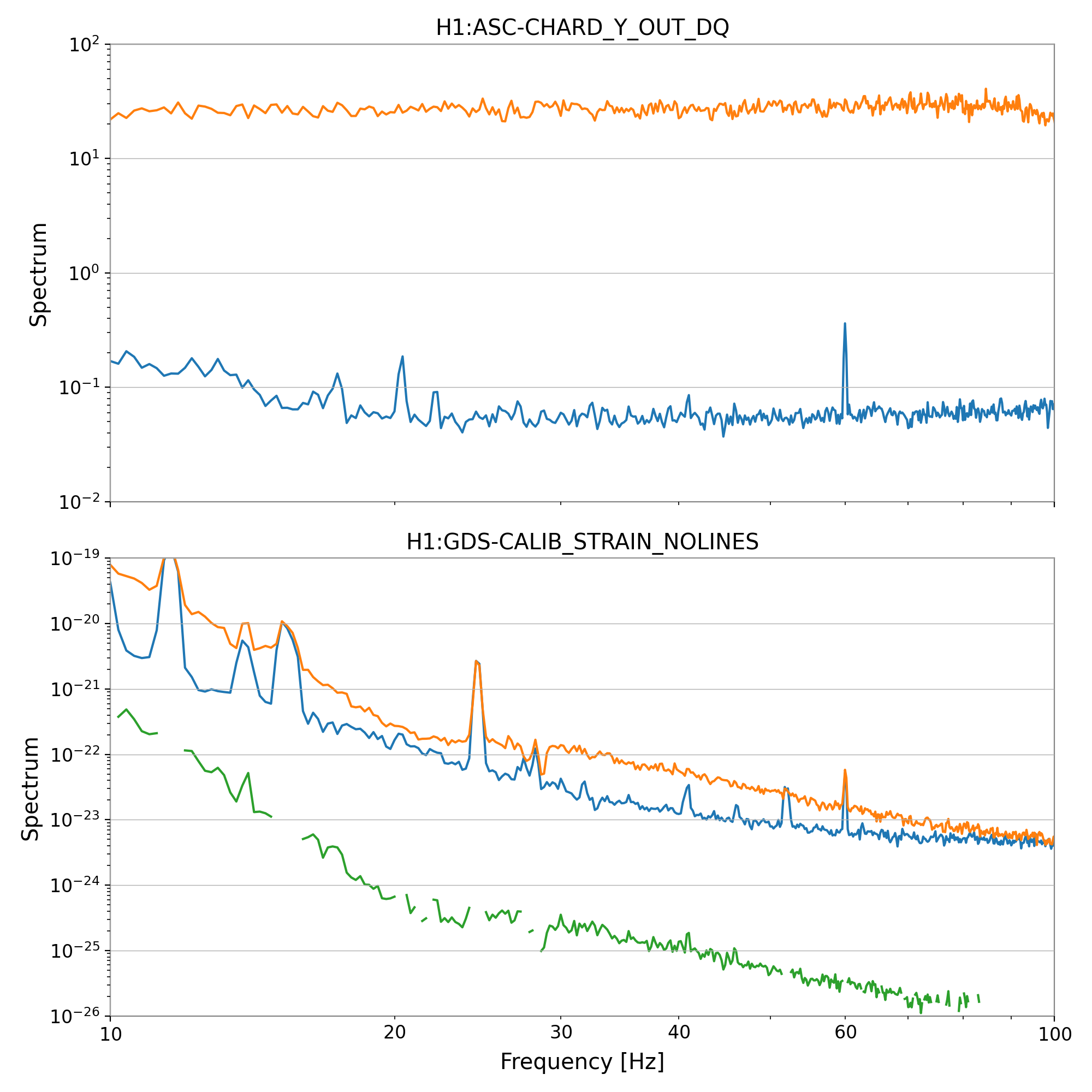
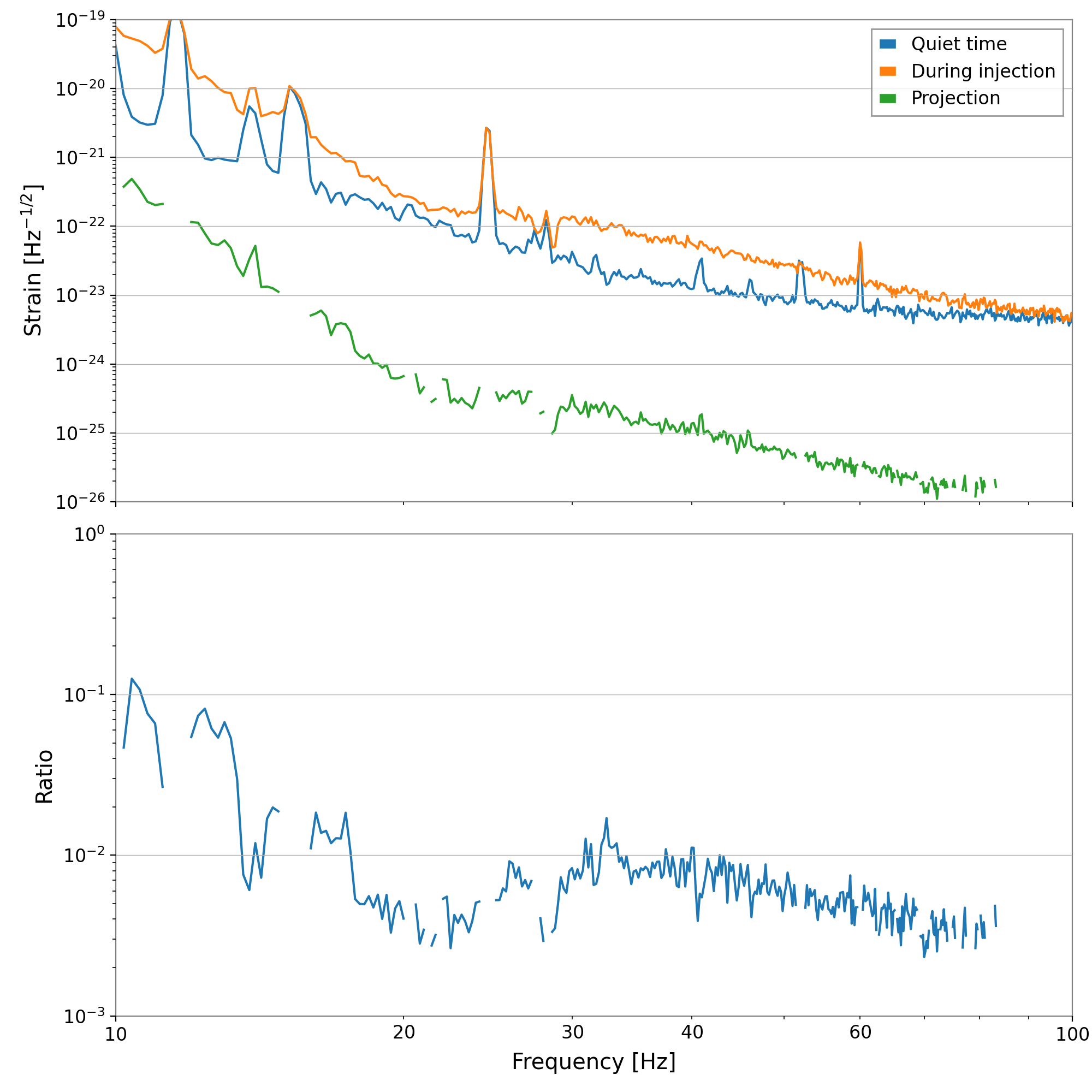
With the 10-100 Hz noise injection, I could estimate a CHARD_Y noise projection to DARM, using the excess power method (ratio of PSD). Using the measured transfer function between CHARD_Y and DARM gies the same result. The first plot shows the effect of the noise injection in CHARD_Y. The second plot shows the noise projection, and that we have a safety factor of about 30-100 above 15 Hz. We can use this information to design a new CHARD_Y filter.
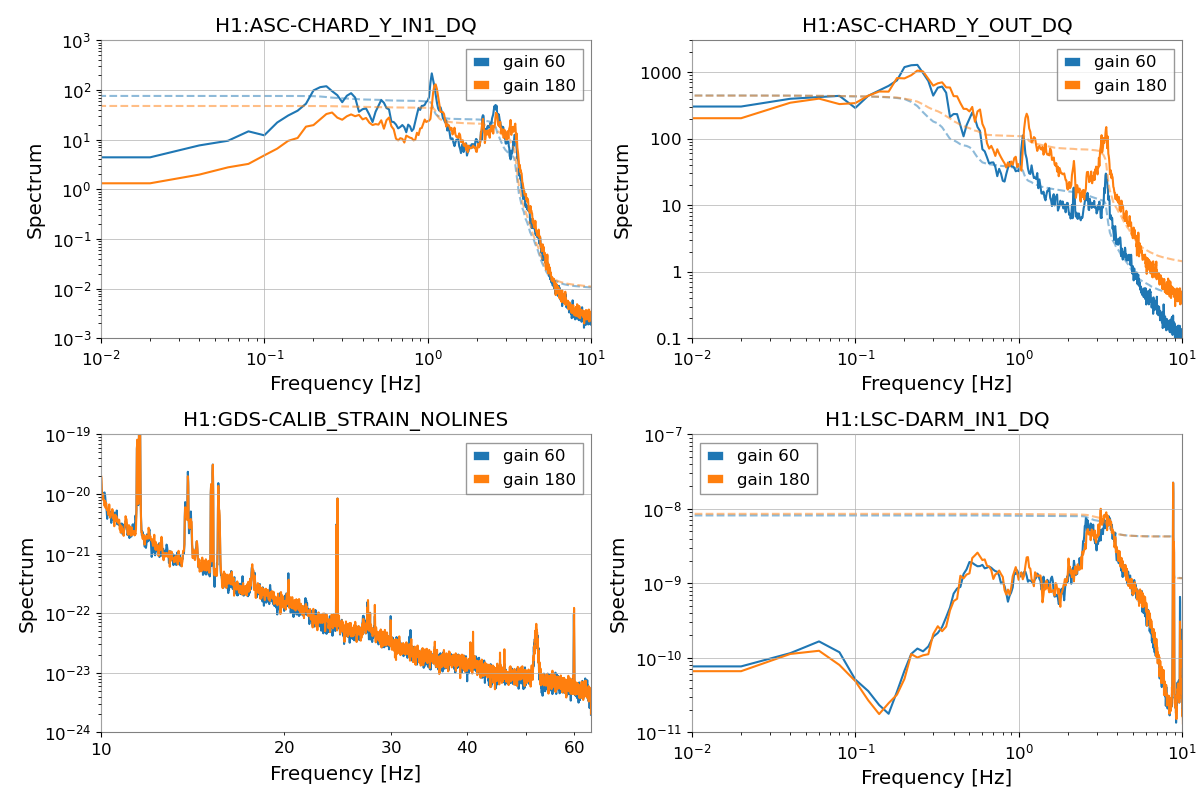
Increasing the CHARD_Y gain by 3
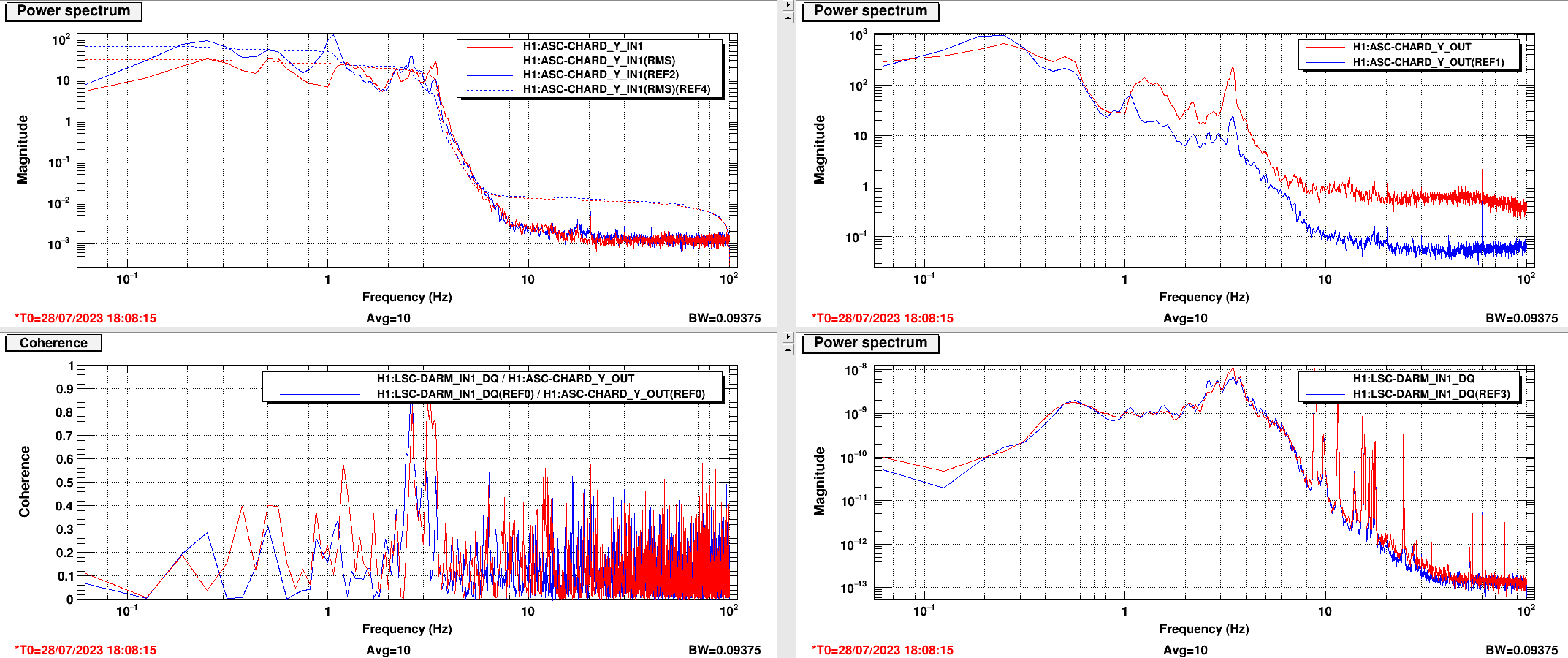
In the second experiment I increased the CHARD_Y gain by a factor of 3, since the model predicted that the loop would be stable. This would give me more suppression at low frequency and a bit of suppression of the 2.6 Hz peak. This is pretty much what we observed. The change in the DARM or CHARD_Y residual RMS isn't large, as expected. So there is no effect on the sensitivity. We should try to design a better filter that gives us suppression at 1 Hz and 2.6 Hz to reduce the CHARD_Y RMS.
Note that the 1 Hz peak in CHARD_Y is coherent with PR2 and PR3 damping loops, so maybe we can gain something by also looking at those damping loops.
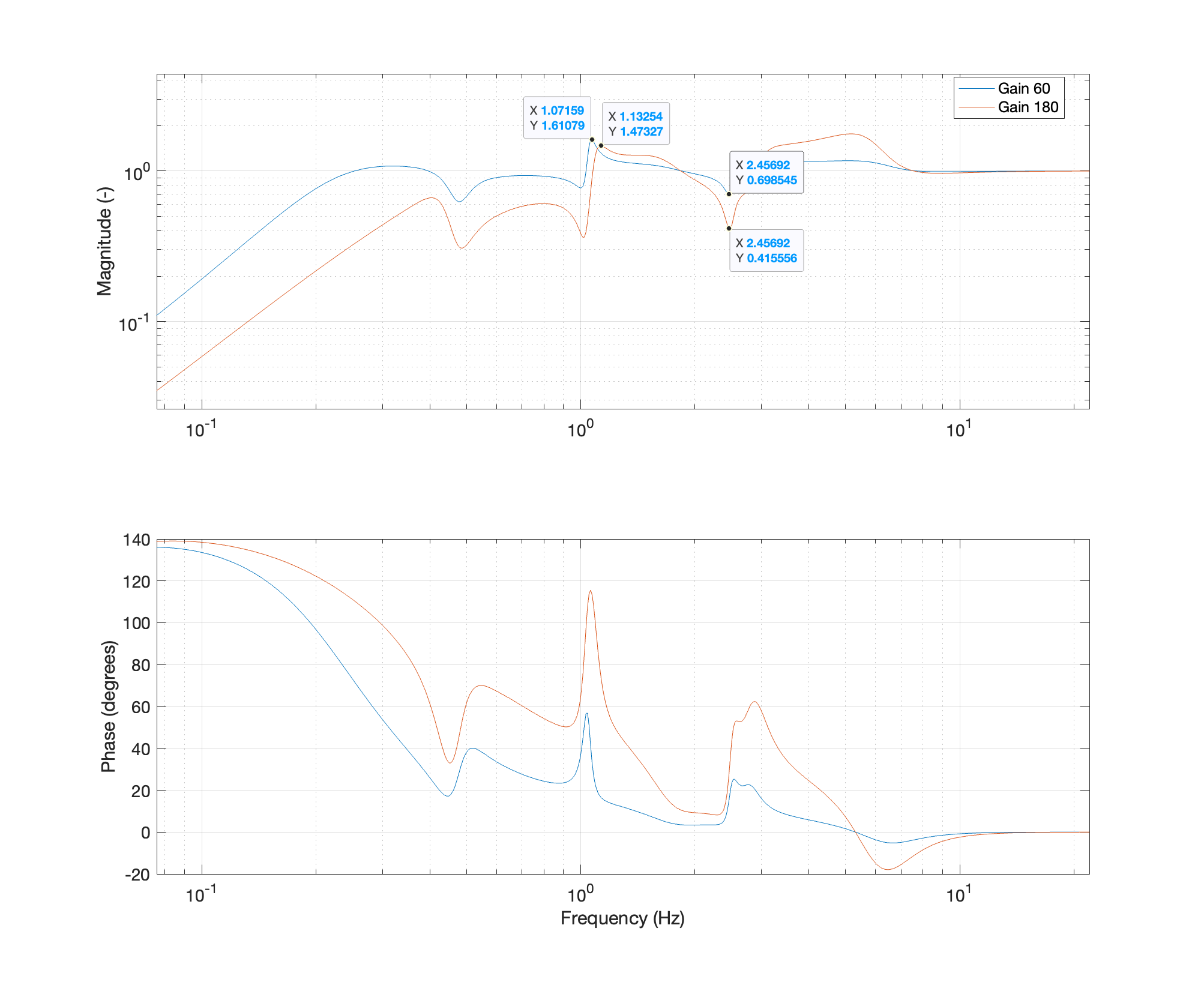
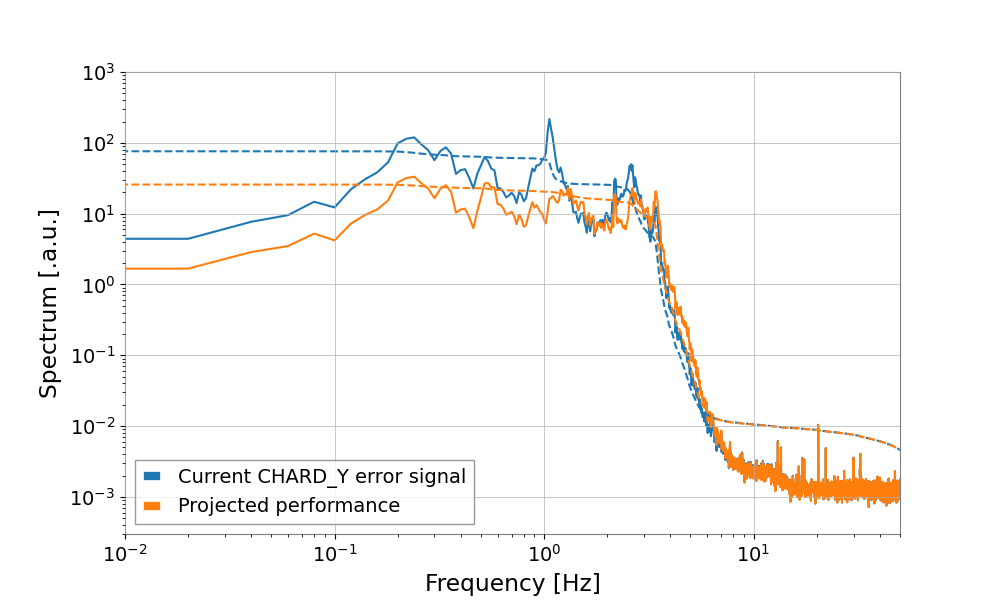
Here's a proposed new CHARD_Y controller, based on the 3x gain, adding more suppression at 1 and 2.6 Hz, and with increased noise injection above 10 Hz that should be ok given the measured coupling to DARM.
The last plot shows the predicted performance of this new loop: residual motion below 3 Hz should be largely suppressed. Only the 3.4 Hz peak is increased less than a factor 2.
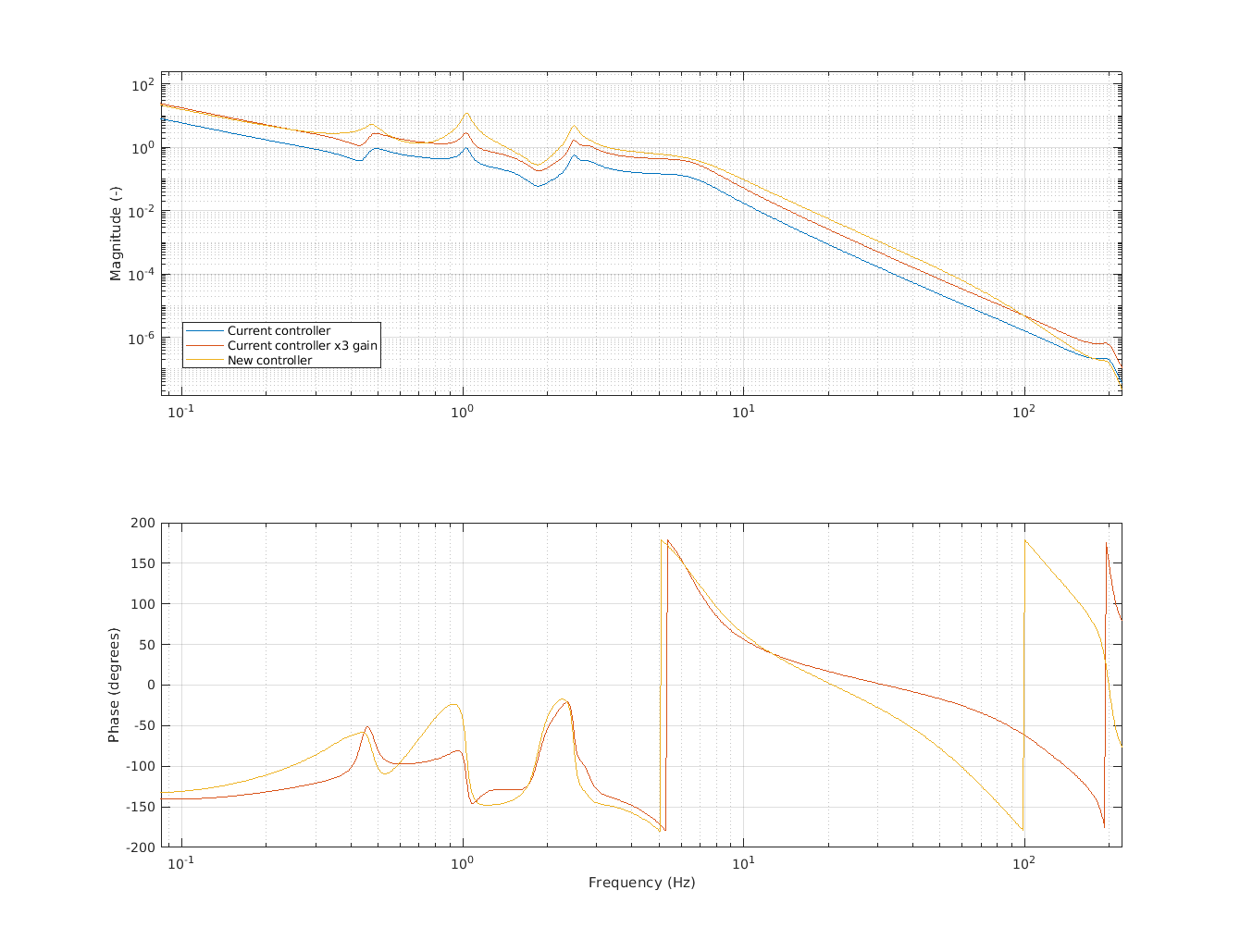
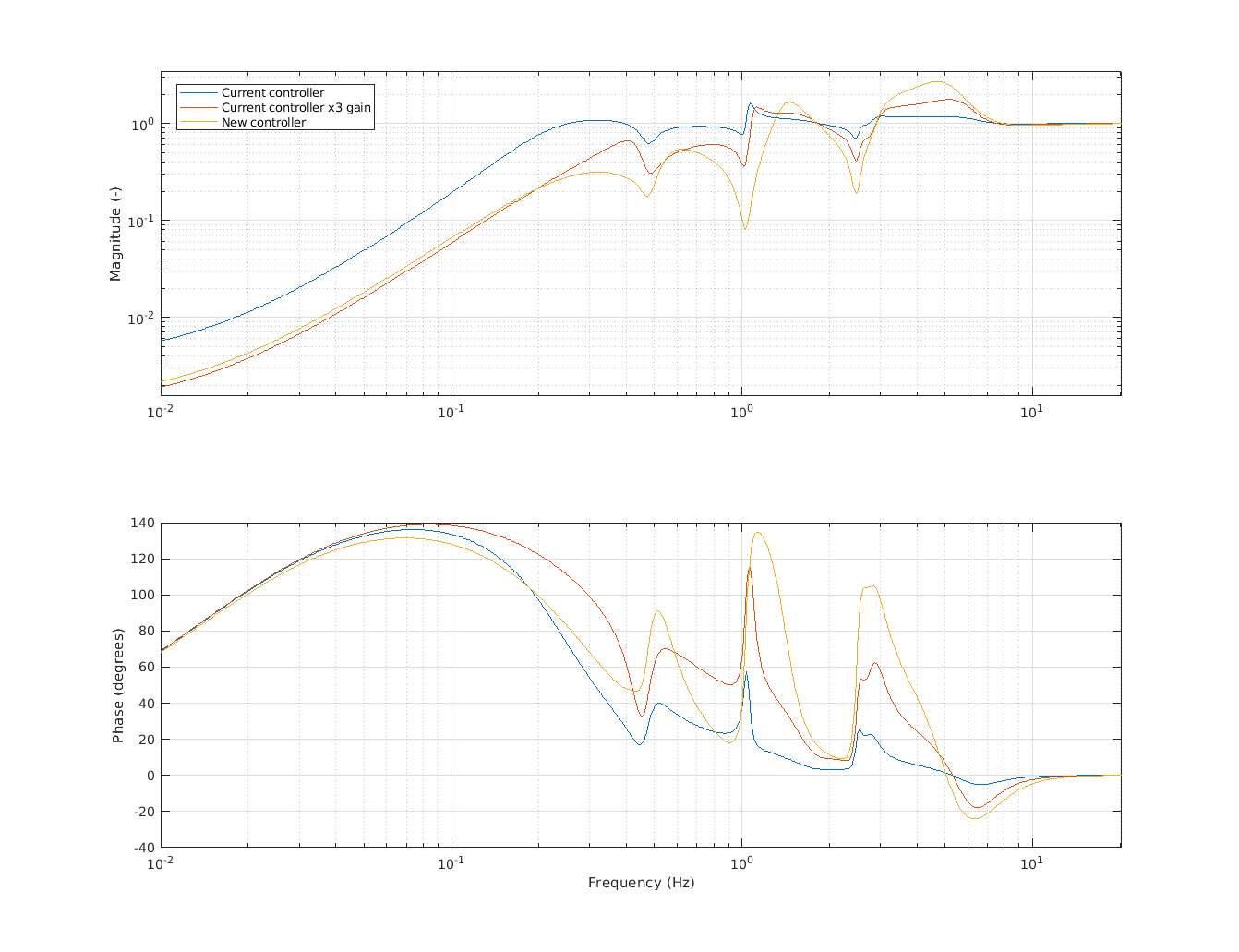
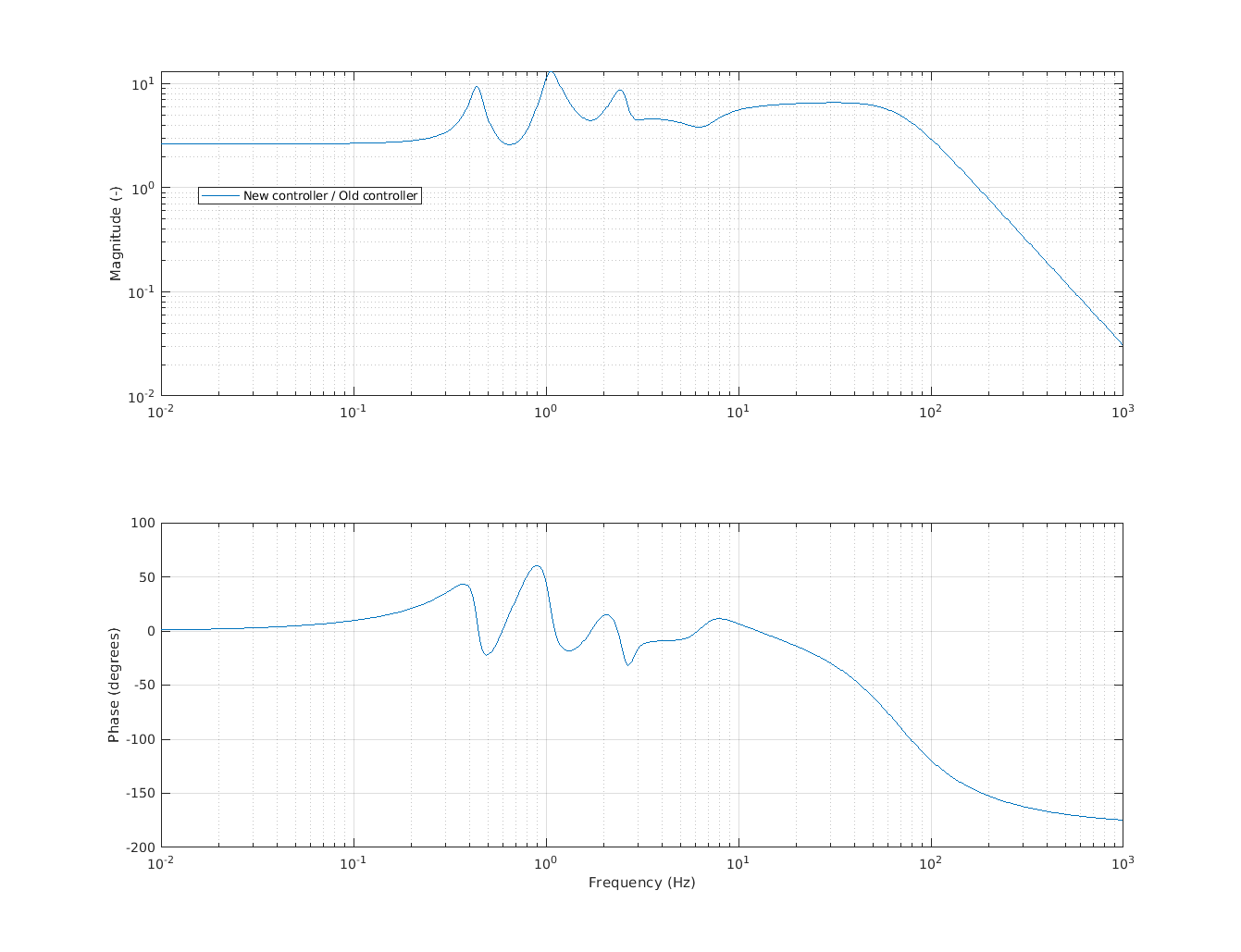

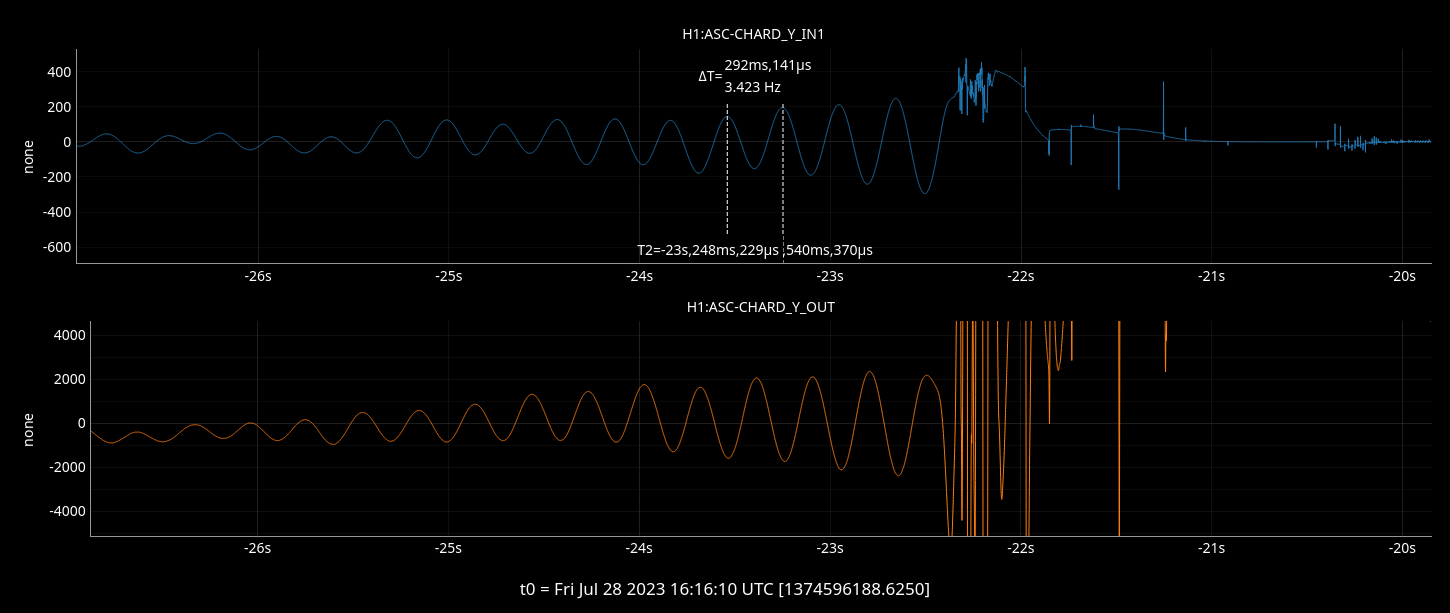
Engaging this new controller with a gain of 180 caused a lock loss with an oscillation at 3.4 Hz, which is the expected higher UGF.
Probably the plant measurement is not accurate enough at such high frequency.
Tried a slighlty modified controller with more phase margin at 3-4 Hz. Now uploaded to FM9. This can be engaged with the nominal gain of 60, and it is supposed to be stable all the way to the working gain of 180.
However, incrreasing the gain to 120 already generates a large peak at 3.4 Hz. This is consistent with the previous lock loss.
The low frequency performance with this new controller with a gain of 120 is good as expected, but the new peak at 3.4 Hz actually increases the DARM RMS. I believe thin increase is responsible for the higher noise in DARM at >10 Hz, since there isn't much coherence between CHARD_Y and DARM.
I wanted to measure again the CHARD_Y plant, since the previous measurement was not very good at >2 Hz, and I suspect the real plant gives less phase margin that the fit model we have now. Unfortunately I incraesed the noise amplitude too much and we lost lock. To be repeated.
I also tried to reduce the coupling of CHARD_Y to DARM by fine tuning the ITMY A2L, but I couldn't get any improvement. I injected a 21.5 Hz line in CHARD_Y, but that showed up in DARM with a lot of sidebands and appeared quite non-stationary. More care will be needed to retuned the A2L to reduce CHARD_Y coupling to DARM: this might be necessary if the new controller injects too much noise at frequencies above 10 Hz