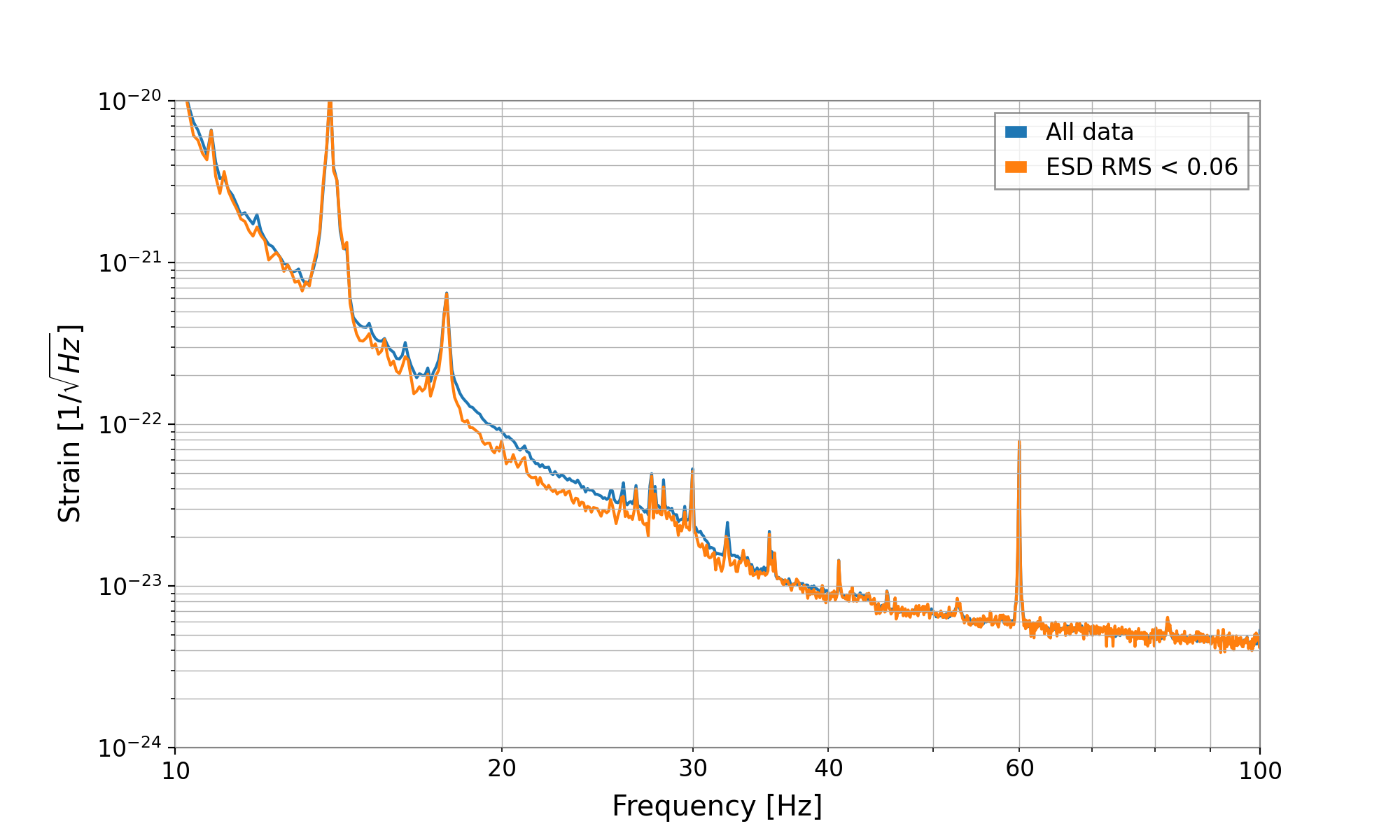
This is a follow up on 74315, just another way to see that the low frequency (1-4 Hz) ESD actuation is modulating the DARM noise at higher frequency (15-25 Hz).
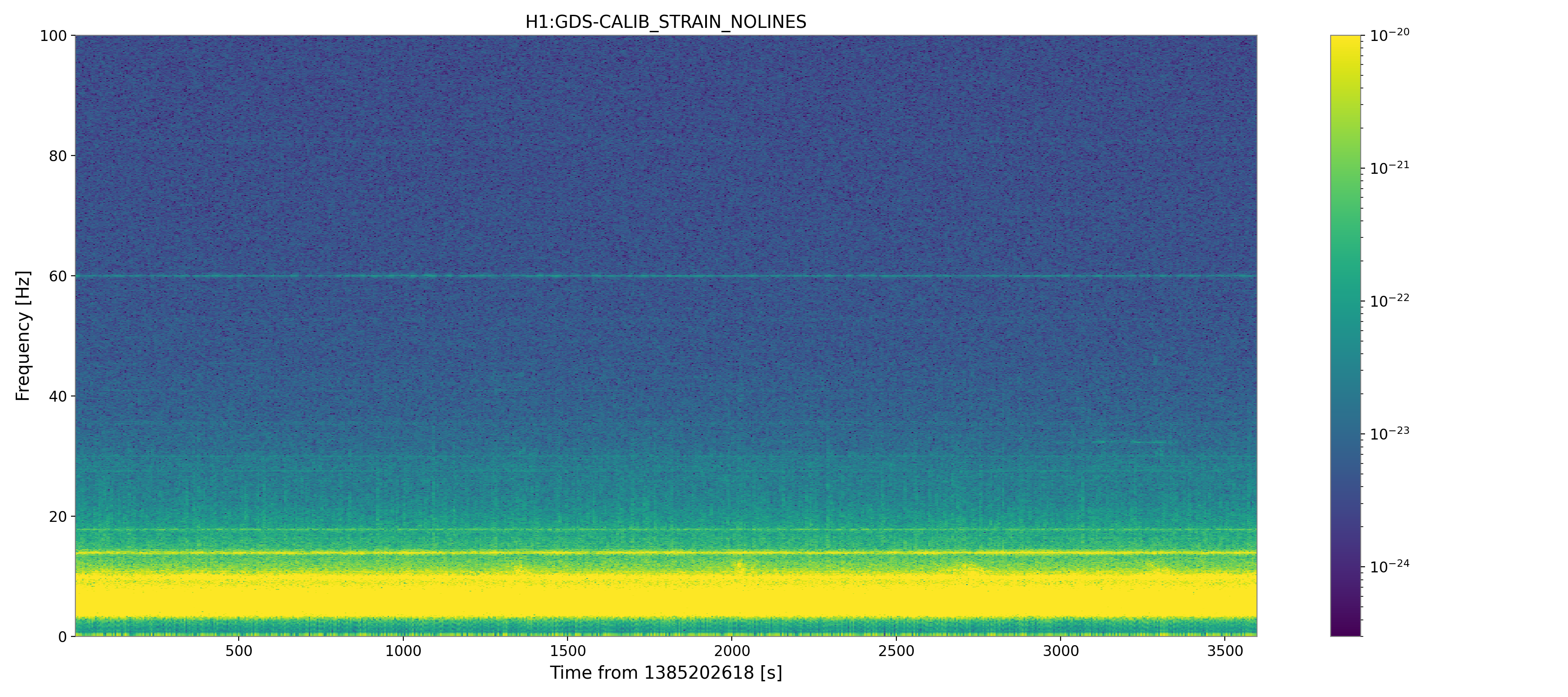
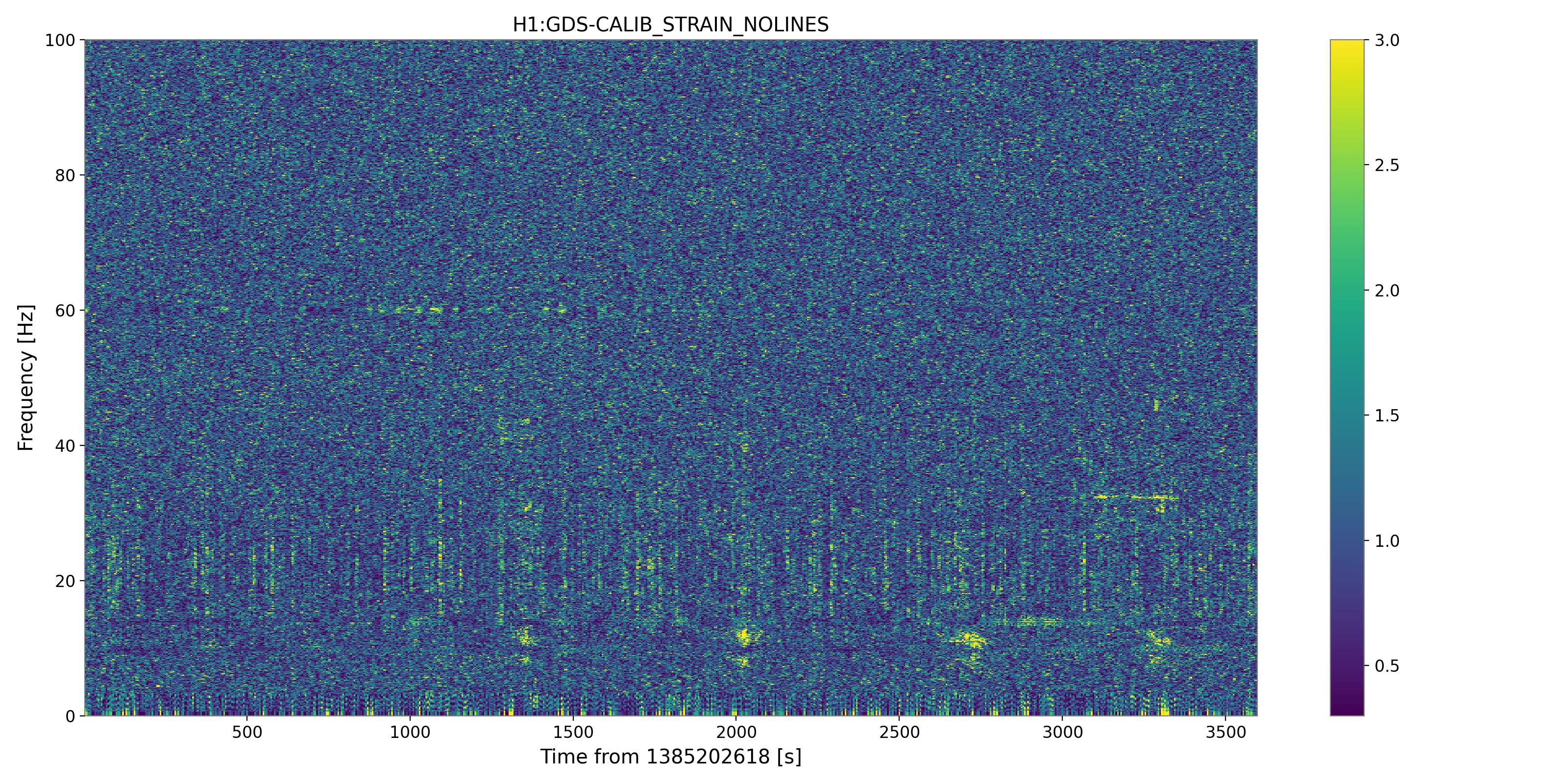
Looking at a DARM spectrogram, noise in the low frequency range (<30 Hz) is non-stationary. This is not a new observation, and the effect if even more visible looking at a whitened spectrogram.
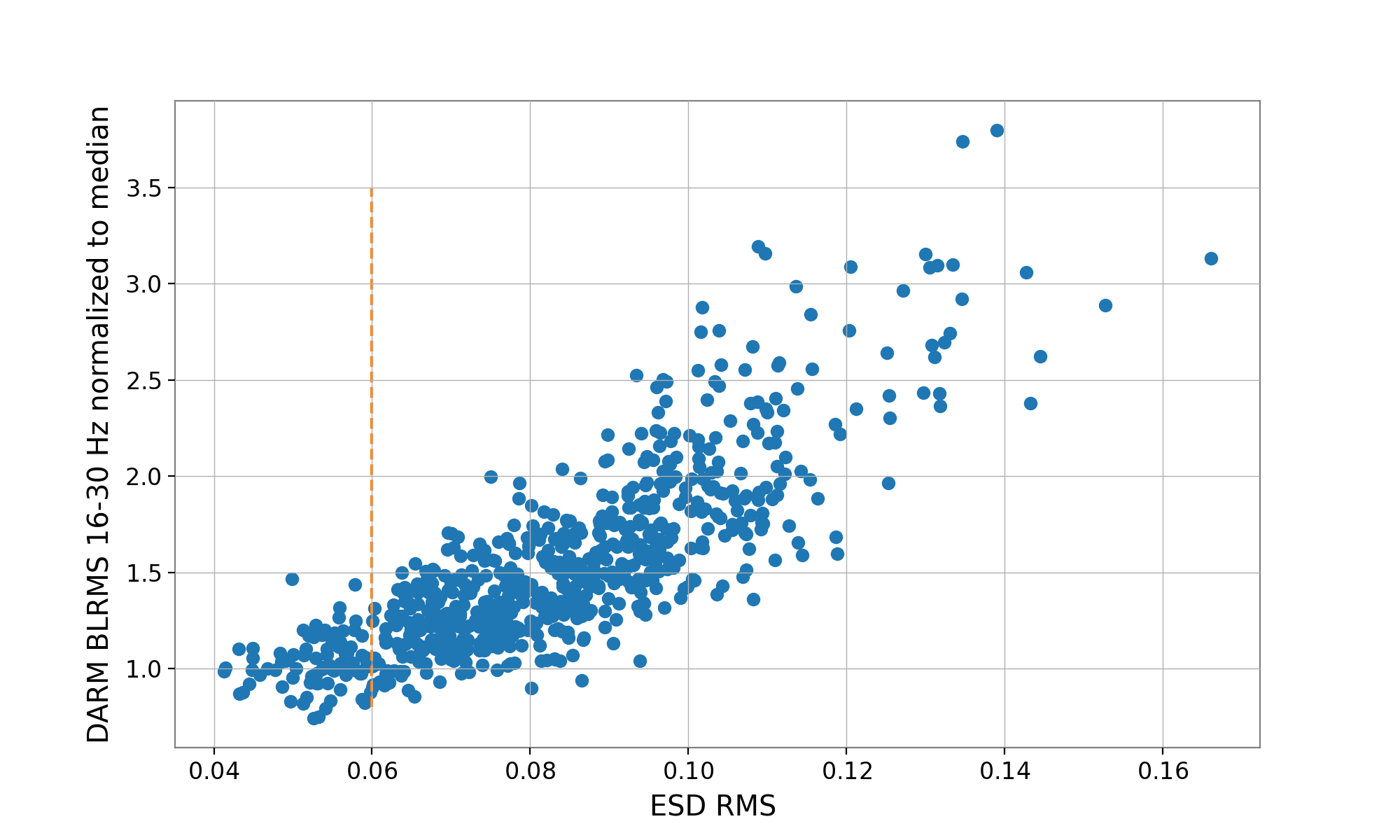
One can compute the band-limited noise in DARM by summing over frequency bins between 16 and 30 Hz in the whitened spectrogram (so averaged over 5s windows). And compute the total RMS in the ESD signal in the same windows (dominated by the low frequency part). A scatter plot of ESD RMS vs DARM noise shows a clear correlation.

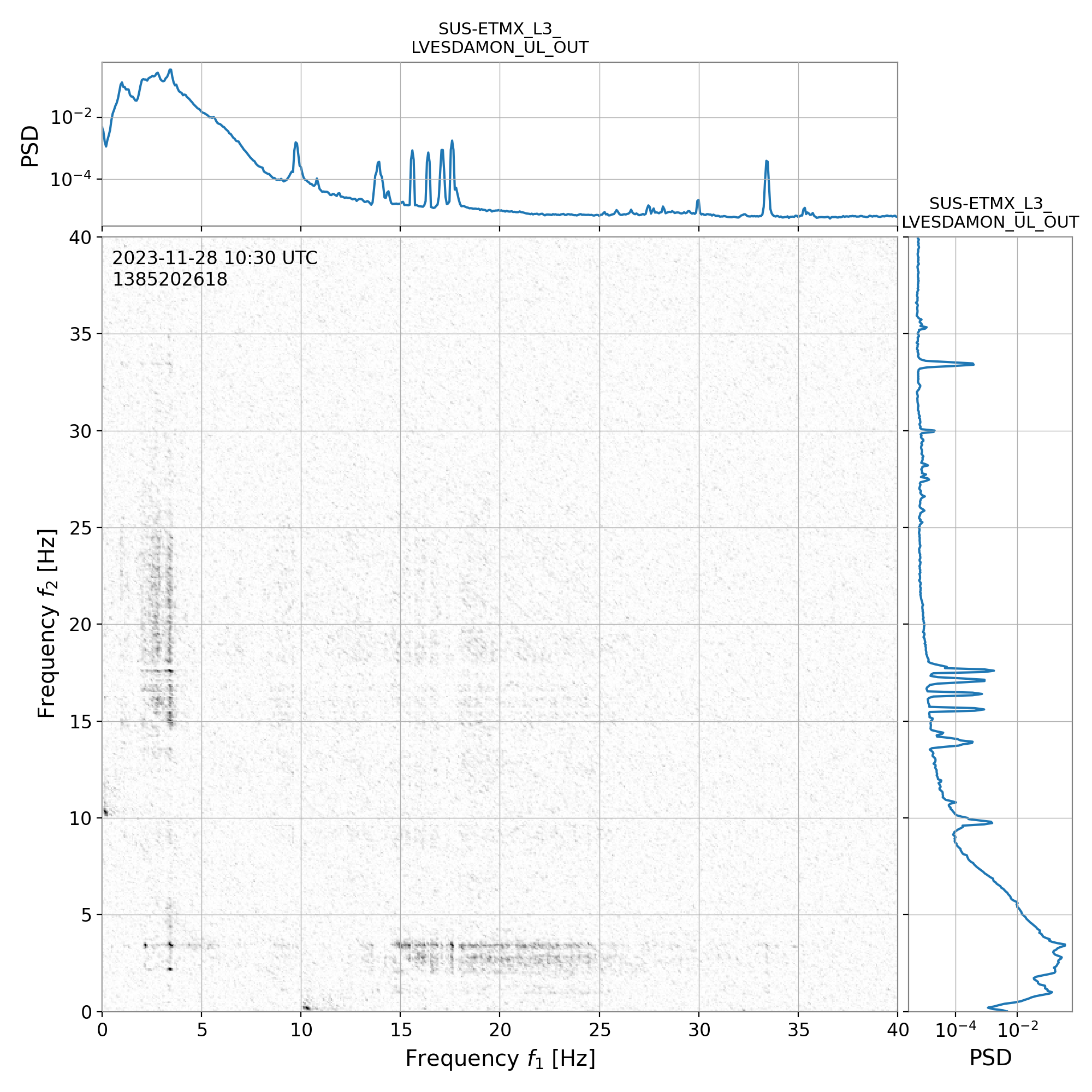
Similarly, one can comput the bicoherence of the triplet (ESD, ESD, DARM), so that the 2d plot shows how ESD(f_1) * ESD(f_2) contributes to DARM(f_1+f_2). There is strong bicoherence of the low frequency ESD signal with DARM at frequencies above 10 Hz.
One can select all times when the ESD RMS is below 0.06 (in the units of the scatter plot) and average DARM during those times. A comparison with an average over all times gives us an idea of how much DARM could be improved by reducing the ESD drive (if the non-linear noise behavior is due to the ESD, as we believe).