This is a belated report of work done by me, Oli and Keita on the OMC builds for the BHSS, done yesterday March 19.
Exciting summary: build for OMCA is complete, including DCPDs and butter dish. OMCA is installed onto the BHSS platform and ready for beam alignment!
Less exciting summary: build for OMCB is halted as tombstone for DPCD A (transmission) is missing a required PCB hole for the electronic connection.
OMCA build notes:
- We picked up where we left off to complete the OMCA build (see 89562)
- We noticed some dust and metal bits on the surface of OMC breadboard glass. Some of the dust appeared yesterday during DCPD install- we think the install drops small metal shaving onto the glass. We're not sure if the rest of the dust was already there or got on it during our install work. Keita took an alcohol soaked q-tip and tried to remove many of the particulates
- We had some confusion about the overhang of the OMC breadboard on the cradle. Turns out it was because we didn't realize the side posts (stops?) had two different sizes. One set is 16 mm in width, the other 20 mm. With the appropriate 20 mm side post, the OMC breadboard can be placed up against the viton stop as detailed in the instructions without any overhang
- We installed the remaining side horizontal and vertical posts, and adjusted the screws with viton tips to the required distance from the breadboard
- We took out the butter dish for install and noticed all the dishes were very dusty. We took the one we planned for install over to the top gun and dusted it off. We will have to do the same for the OMCB butter dish. Again, not sure if they were already dusty or got that way during storage and handling
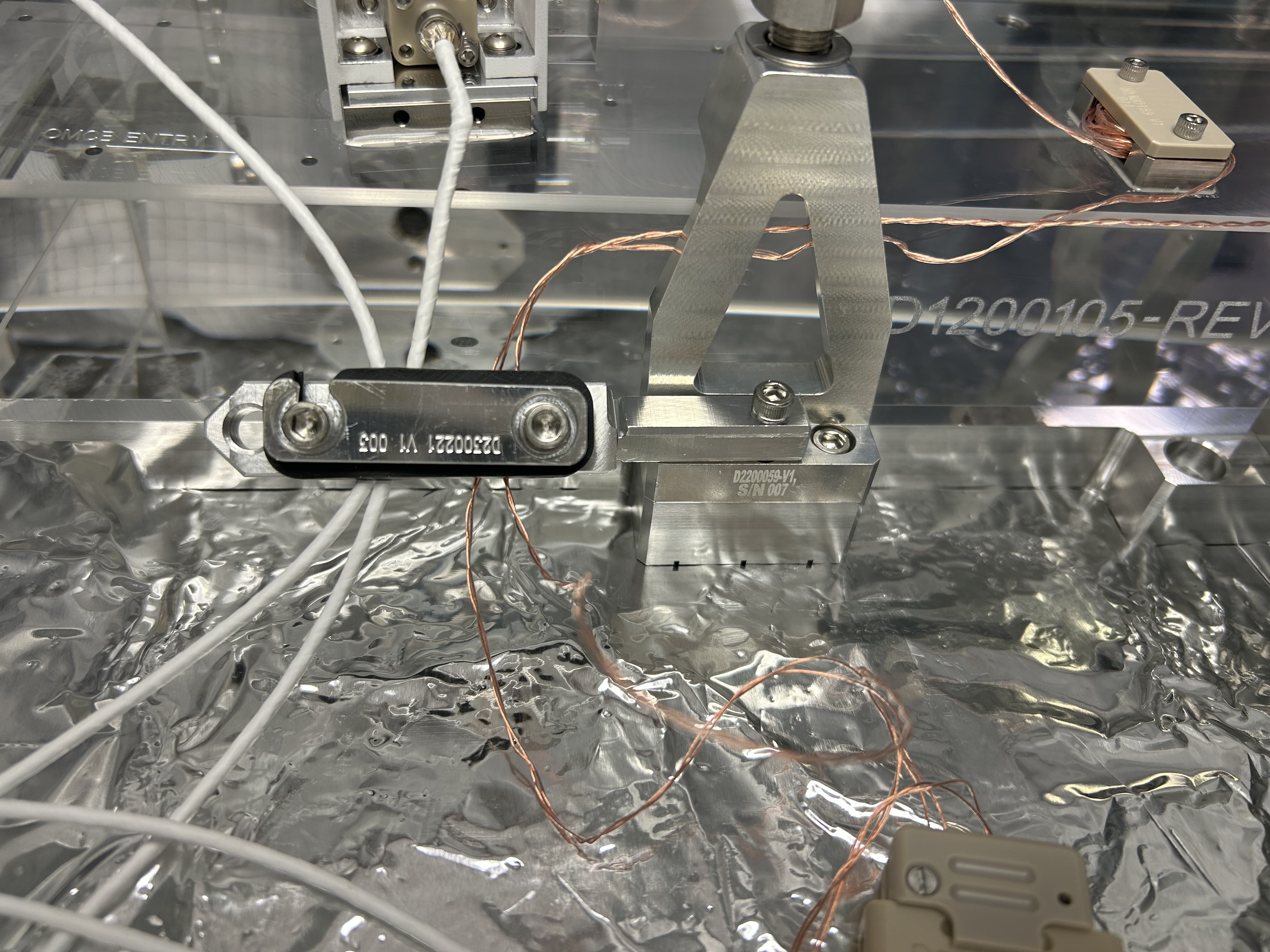
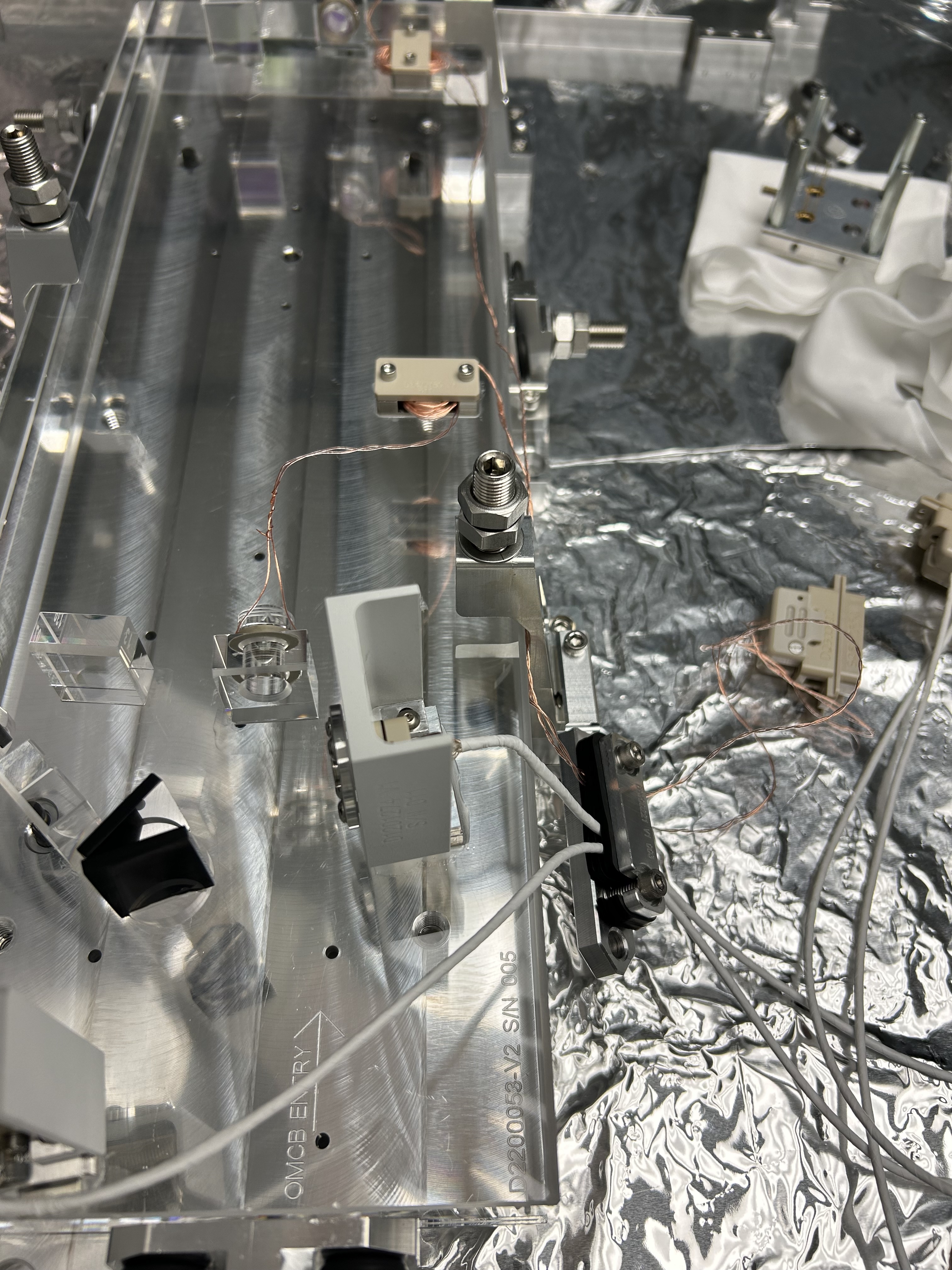
- We routed the PZT and DCPD cables through the cable clamp.
- We are a bit concerned one of the PZT cables could fall into the beam eventually, but there's nothing we can do about it, picture, you can see that the cable is routed off the PZT, and over the beam path to where it is wound and mounted
- the routing of the PZT cables crosses an area where there is a vertical viton stop. We're concerned the cables could be caught between the viton stop and the breadboard at some point. We removed the vertical post so we could run the cables along the side of the breadboard instead. There is enough clearance for the cables here. picture1, picture2
- here are two other pictures of the cable routing and cable clamp, picture1 and picture2
- We went to install the butter dish and realized that the supplied pins which are inserted for install and then removed later don't even fit the holes.
- the purpose of the pins is to elevate the butter dish slightly as it is clamped on either side by the viton-covered "grabbers" (don't know the word for them). the pins are removed once the dish is clamped
- we decided since we were three people, two could hold up the dish while a third screwed on the viton holders
- we can confirm by eye that the holes we would align with the pins are aligned from this process
- We used the empty OMCB cradle to practice the placement of the cradle onto the BHSS a few times before I picked up the entire OMCA assembly and gently placed it on the platform. It's a bit tricky because the finger slots on the cradle are sized for what appears to be very small fingers and the OMC assembly is quite heavy.
- Oli started working out how to place the OMC alignment template tooling, so the OMC can be properly aligned to the platform and screwed down
OMCB build notes:
- We unpacked the second OMC, SN 105 from its box and placed it and aligned it on the cradle
- Keita once again macgyvered a grounding anklet for me, and I set out to install the DCPDs
- I cut the legs of the first DCPD down by eye remembering how much to remove from yesterday and set out to install it onto the transmission PD tombstone (DCPD A we think)
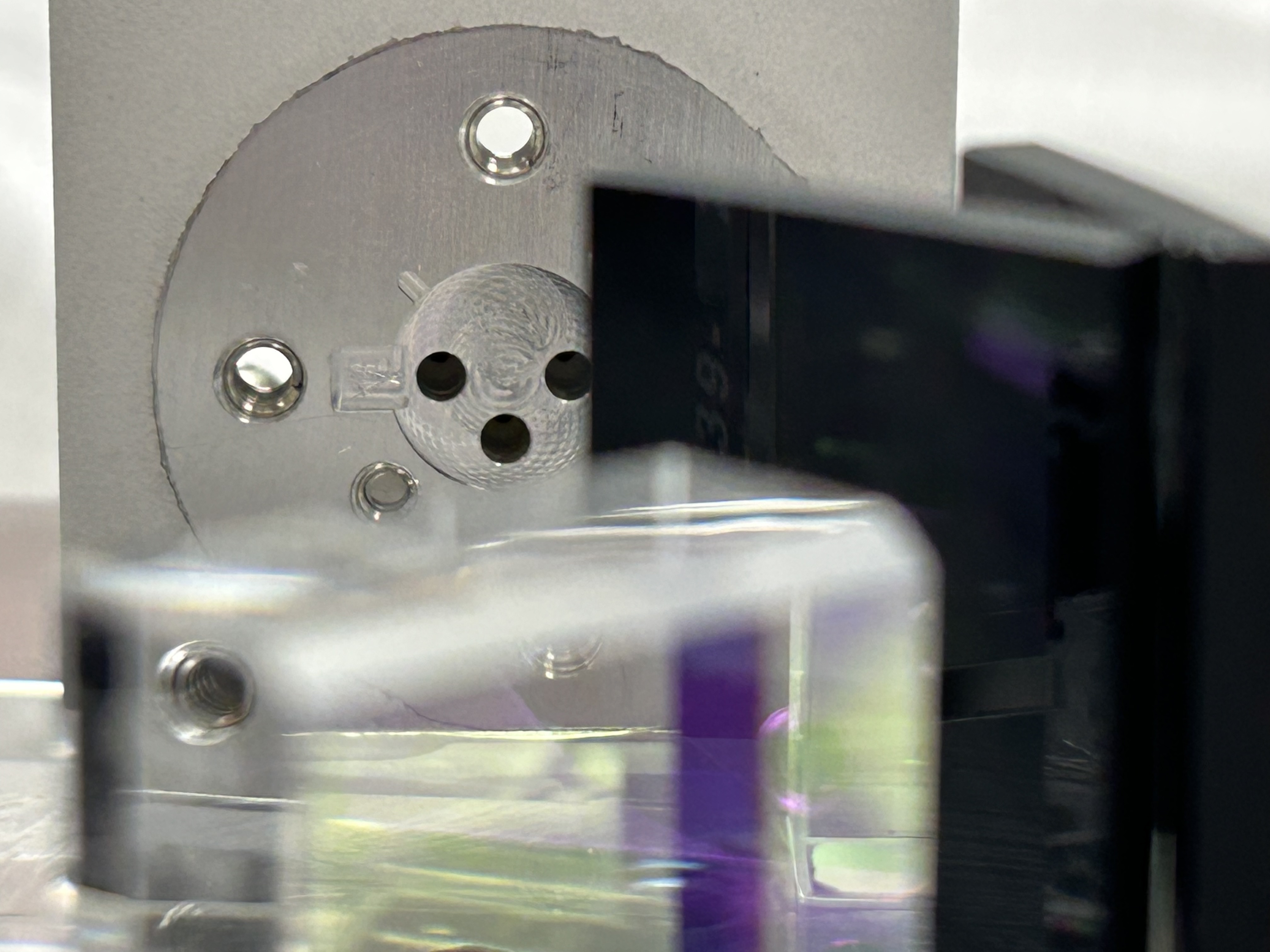
- I spent 15 minutes fiddling around trying to get the diode through the hole (I actually watched the clock) before I exasperatedly looked into the faceplate holes and realized that through the bottom hole, there is no corresponding PCB hole for the leg of the diode! see picture. There are three holes on the faceplate, and you can see that for two they lead to holes in a PCB where the diode legs are inserted. There is no hole on the bottom.
- How did this happen? We are very confused and not sure what to do. We confirmed that the reflection tombstone has the expected three PCB holes after the faceplate holes. We can't proceed on the rest of the build and install before this is resolved.
- Keita thinks it is possible that the mount is rotated, and we could unscrew the component from behind the tombstone and flip it, but I would want to confirm with an expert before I start fiddling with it, especially if it could mess up the alignment



[Elenna, Camille, Arnaud]
We had a quick zoom meeting to discuss this issue. Relevant drawing is https://dcc.ligo.org/D1201273
It is likely that the backshell+PCB assembly was assembled flipped 180 degrees (items 4,5,6 on the drawing). To fix, remove the two 2-56 screws (item 14), flip the assembly and reattach it to the housing. Camille suggest slightly pressing down on the housing while removing those screws to avoid torquing the base with the bond.
Tagging for EPO.
After consultation with Arnaud and Camille, Oli and I were able to correct the problem with the PCB assembly.
On the call with Camille and Arnaud, we referred to the diagram in D1201273 and determined that part #4 is rotated 180. I could also see from this diagram that part #5 is rotated, since there was no notch visible at the top. So, for future installation, make sure the notch in part #5 is oriented upwards! This indicated to us that all that needed to happen was to unscrew the #14 screws, flip the assembly, and screw it back in (we had some concern that we might have to take apart the "sandwich" of parts between #5 and #4).
Indeed, that's all that needed to happen. I carefully unscrewed the screws on the back, flipped the assembly, and screwed it back in. I was then able to install the DCPD. We can now see the notch along the top!


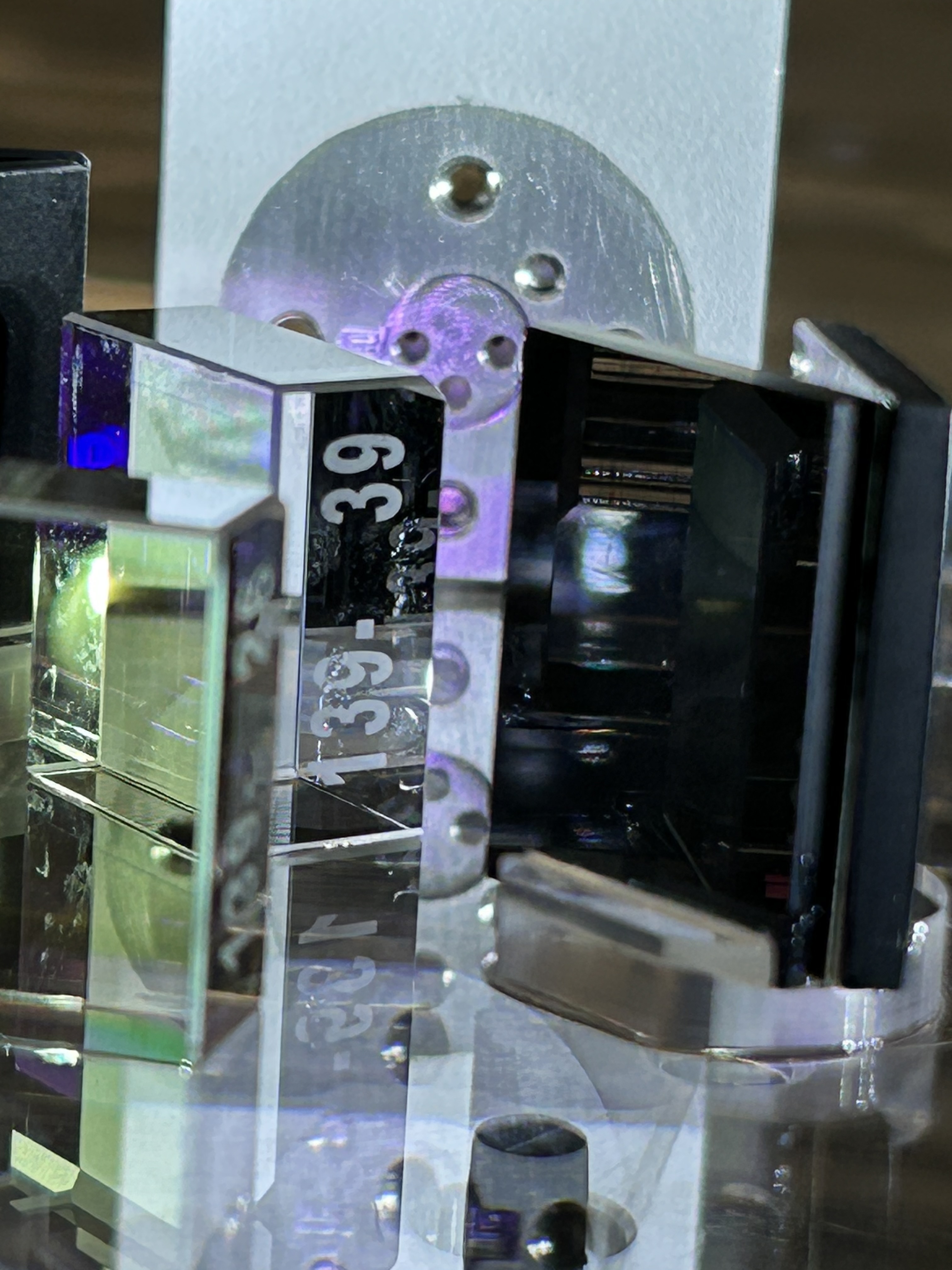
I went back into the lab today to try to get a better photo of the problem. I wasn't able to, but I did get an ok photo of the other tombstone (on reflection of the BS) which has the correct three holes. It's hard to see, but you can use it as a reference to compare with the photo I have attached to the original post which is missing a hole. I tried looking from many angles, and I don't see even a hint of the third hole, which is evidence in support of Keita's theory that the electronics assembly is flipped 180 degrees.