jeffrey.kissel@LIGO.ORG - posted 15:22, Friday 05 June 2026 (90509)
SPI Pathfinder Foray into Picomotor + IXM100 Mount Science
J. Kissel, S. Koehlenbeck, J. Wright
D2400144
D2400145

For those who haven't been following closely, the SPI pathfinder was chasing what we *thought* were alignment issues -- during which we pointed our finger at the (Newport) pico-motor actuated (Siskiyou) IXM100 1" mount assemblies (both IXM100.C2 right-handed and IXM100.C2L left-handed). While this ended up *not* being the problem, we still took action on these mounts. This is the summary of that activity -- we figure worth a separate aLOG because LIGO has been using these pico-motor actuated IXM100 assemblies for a long time, and we're surprised that no one has raised this as an issue before.

The issue: (repeat of what's burried in LHO:90382)
   - "Out of the box" the Siskiyou IXM100 mount has two carbide plates that kinematically receive the manual alignment pushers on the moveable front-plate (item 1) of the mount. See item 7 in D1100362.
   - Notice that v-grooved carbide plate, item 7, is called out twice, one for pitch and one for yaw, just installed in a different orientation such that the v faces the pitch drive and the flat faces the yaw drive.
   - This means the pitch and yaw manual drive pusher screws must be at different depths to achieve the "nominal" position of movable mounting plate. Not my favorite, but it's a non-issue with system "out-of-the-box" because the outer-diameter of 1/4-100 alignment screws clears the inner diameter of the housing carved out for the carbide plate in the movable mount plate.
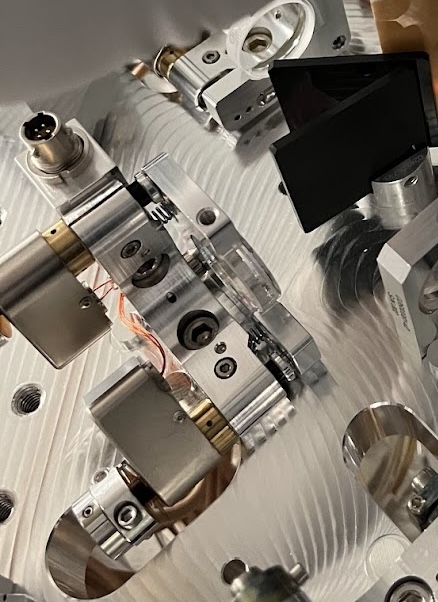
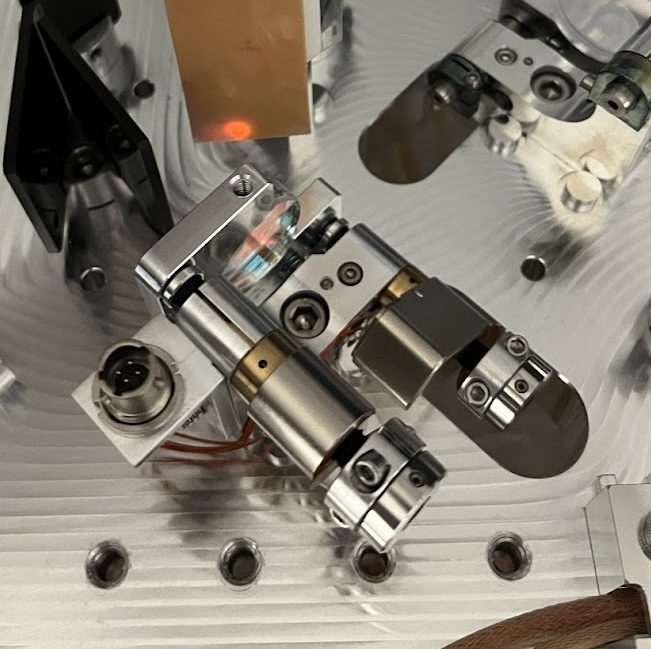
   - HOWEVER this discrepant drive depth matters when we instead drive the plate with the Newport 830X-UHV, because its stopper nut (see it called out in 830X-UHV_RC_revA.pdf from E1000197) *sometimes* does NOT clear the moveable plate. And this *only* happens in the pitch drive, because Siskiyou didn't need to worry about the different depth of drive.

So, you get varying results of how close the stopper nut is to the movable plate depending on how it was fixed by the Newport manufacturer, potentially shorting the design-intended, kinematic, ball-to-v-groove connection. If it's the stopper nut making contact then you get circular-plate-to-flat-plate drive which can rock-around and is poorly-constrained enough to cause some unwanted cross-coupling to yaw drive.

See pictures of "BEFORE" of the two examples we were suspicious of:
    2026-05-29_M_B4_PicoPitch_BEFORE.jpg
    2026-05-29_M_B4_PicoPitch_BEFORE_02.jpg
    2026-05-20_M_M2_PicoPitch_BEFORE.jpg
    2026-05-20_M_M2_PicoPitch_BEFORE_02.jpg

It was recommended to us to "just move the stopper nut." Like I mentioned in LHO:90382, this was *not* a thing meant to be done often. With an allen key holding the pusher screw in place from the back, it required a great deal of clamping and twisting with pliers to get the nut to budge. Plus, given the 100 TPI thread, you gotta turn it a lot in order to get the nut to back off even 1/4 [in] (a few [mm]).

See pictures of "cranking":
    2026-06-02_PicomotorScience_StopperNut_Cranking_01.jpg
    2026-06-02_PicomotorScience_StopperNut_Cranking_02.jpg
    2026-06-02_PicomotorScience_StopperNut_Cranking_03.jpg
    2026-06-02_PicomotorScience_StopperNut_Cranking_AFTER.jpg

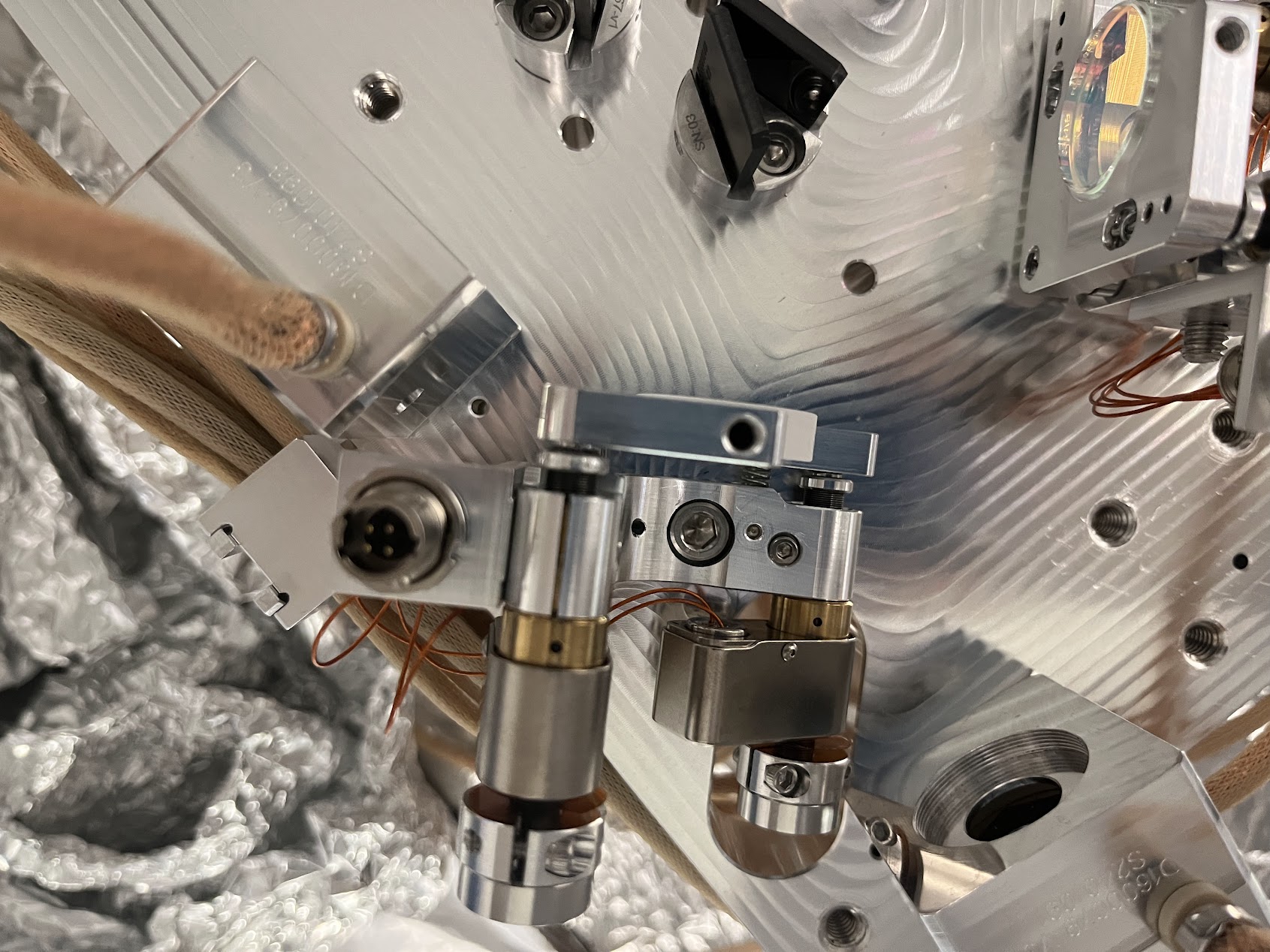
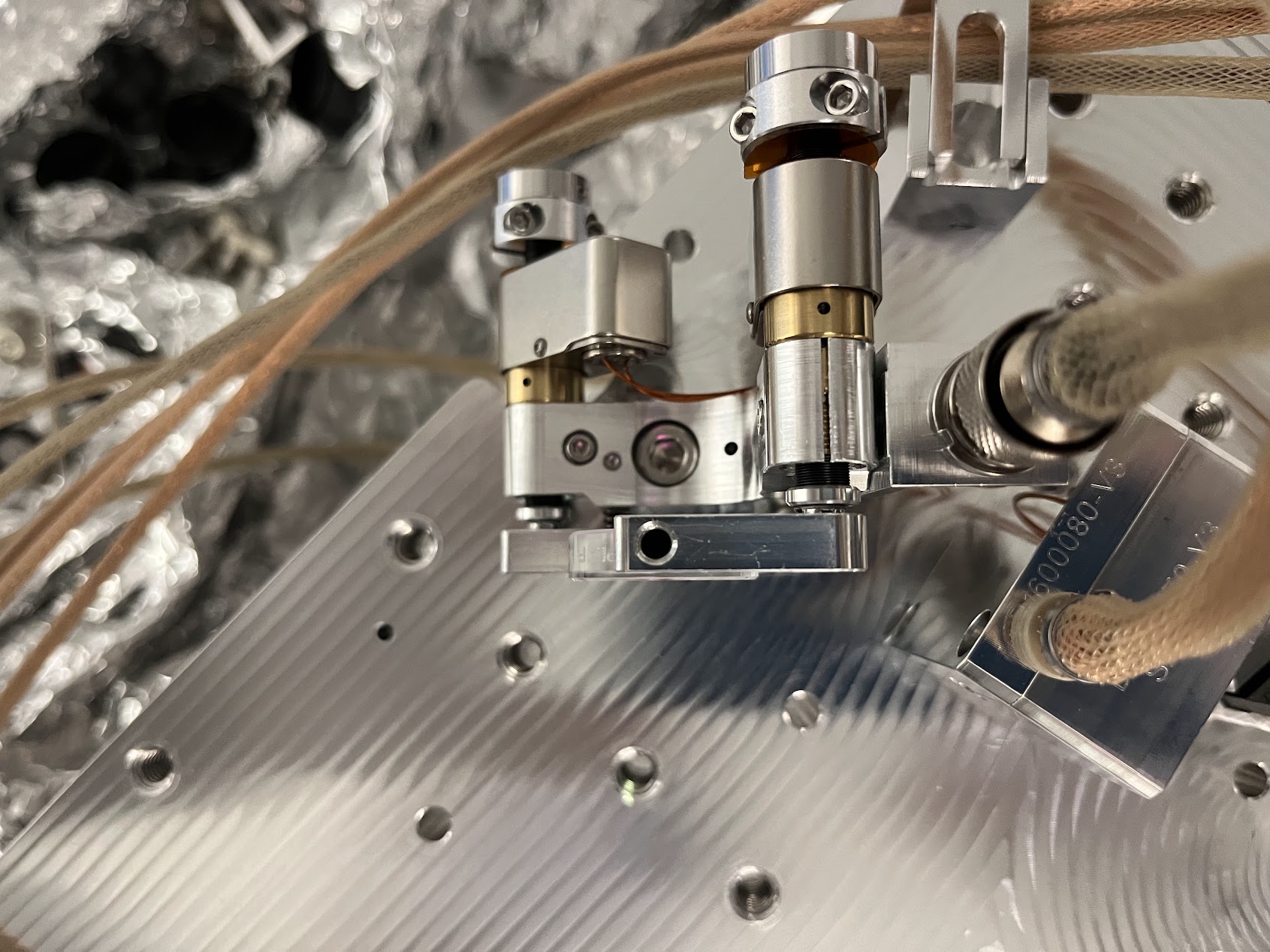
Once done, you can see an obvious and clear gap, see pictures of "AFTER:"
    2026-06-02_ISIKTransceiver_M_M1_PicoPitch_AFTER.jpg
    2026-06-02_ISIKTransceiver_M_B4_PicoPitch_AFTER.jpg
    2026-06-02_ISIKTransceiver_M_M2_PicoPitch_AFTER.jpg
Images attached to this report