jeffrey.kissel@LIGO.ORG - posted 11:01, Monday 29 June 2026 - last comment - 11:16, Monday 29 June 2026(90791)
2026-06-26 Some HAM3 ISI CPS Upgraded, Targets Grounded and Positioned (Centered) at Zero Offset
J. Kissel / J. Warner / A. Pele
(Belated aLOG)
ECR: E2100347 and E1800270

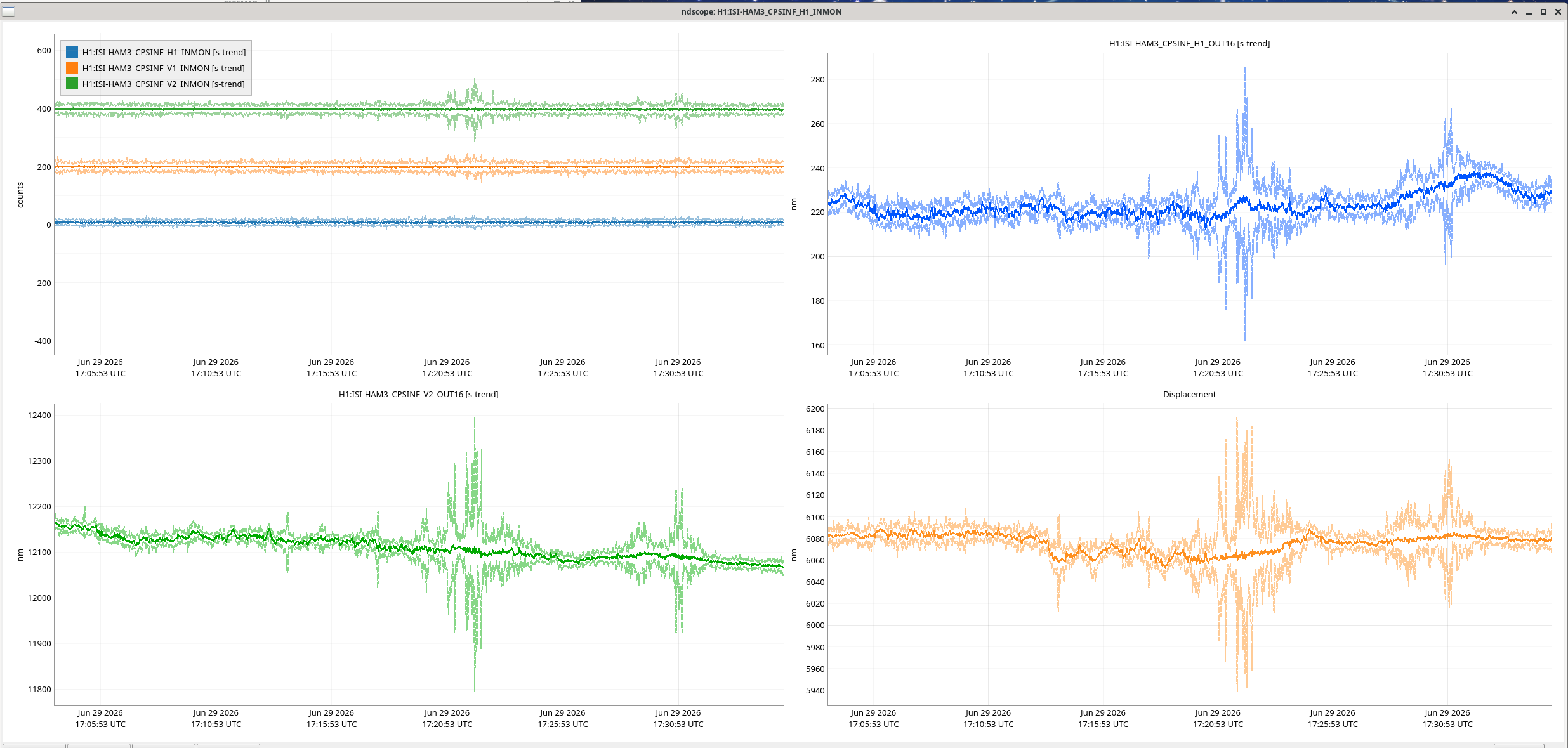
Wrapping up the in-mode-cleaner-tube work underneath the -X side of HAM3, Jim, Arnaud, and I started the work to upgrade all the HAM3 ISI capacitive position sensors (CPS) to triaxial BNC "triax" cabling for connecting the target to a known ground (per ECR:E1800270), and convering verticals sensors to "fine" resolution sensors (per ECR:E2100347). I worked on the install of V2, and Jim got through H1, V1, and H2 before we had to quit for the day. After Arnaud fixed some teething issues with the CPS readout that were causing a LOT of excess noise (LHO:90763), we were able to position the H1, V1, and V2 target in the middle of the range of the sensor probe head (i.e, near zero [ct] in the range of the  +/- 32k [ct] ADC).

See 2026-06-26_H1ISIHAM3_CPSCenteringWork_Timeline.png for a trend of the three sensors that we've centered.
The y-axis are in ADC counts because I wasn't sure if the "Crs_Cal_V2" calibration,
    FM1    zpk([1.5916],[0.1447], 30.5176)
was a good calibration.

If so, the readout of the position is
           ADC [ct]        Apparent Position [um = 1e-6*m]
    H1          6.9               0.23
    V1        198.8               6.07
    V2        395.9              12.10
see 2026-06-29_H1ISIHAM3_CPSCentering_CalibratedValues.png.

Three things of note:
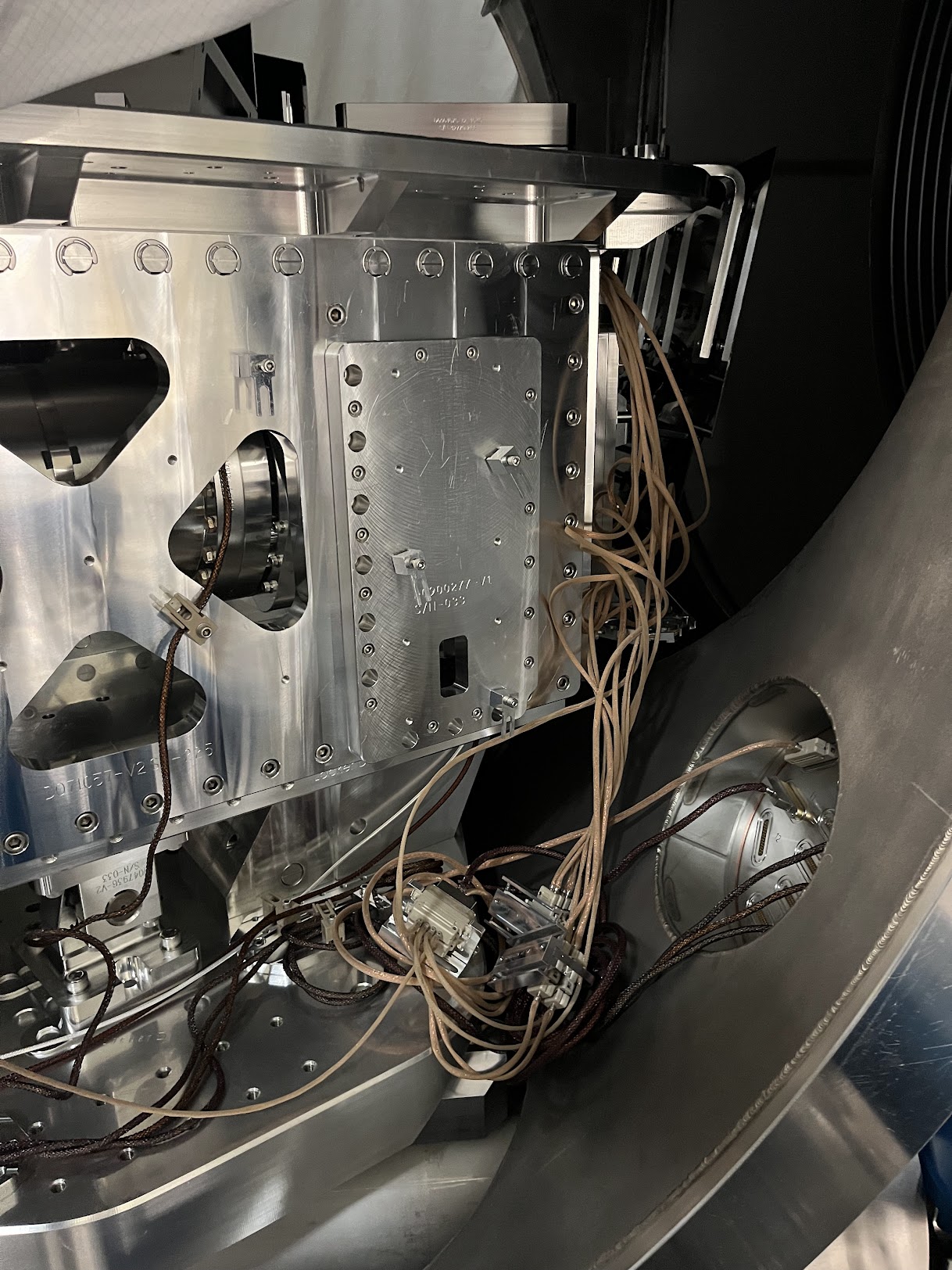
(1) In order to gain access to the H2 sensor probe for the upgrade, Jim had to remove all the SPI ISIK transceiver cabling that had been bolted on the Horizontal Corner 1 hatch on 2026-06-10 (LHO:90581). While he centered the target in the middle of the ADC range and re-bolted the hatch back on, he didn't have time to restore the SPI cabling. We'll do re-dress later.

(2) This is probably already known by the SEI team proper, but the in-chamber work securing things to the platform in various places -- even with the lockers engaged -- does change the position of the platform slightly. See the main timeline for time periods of chamber work vs. (apparent?) change in position.

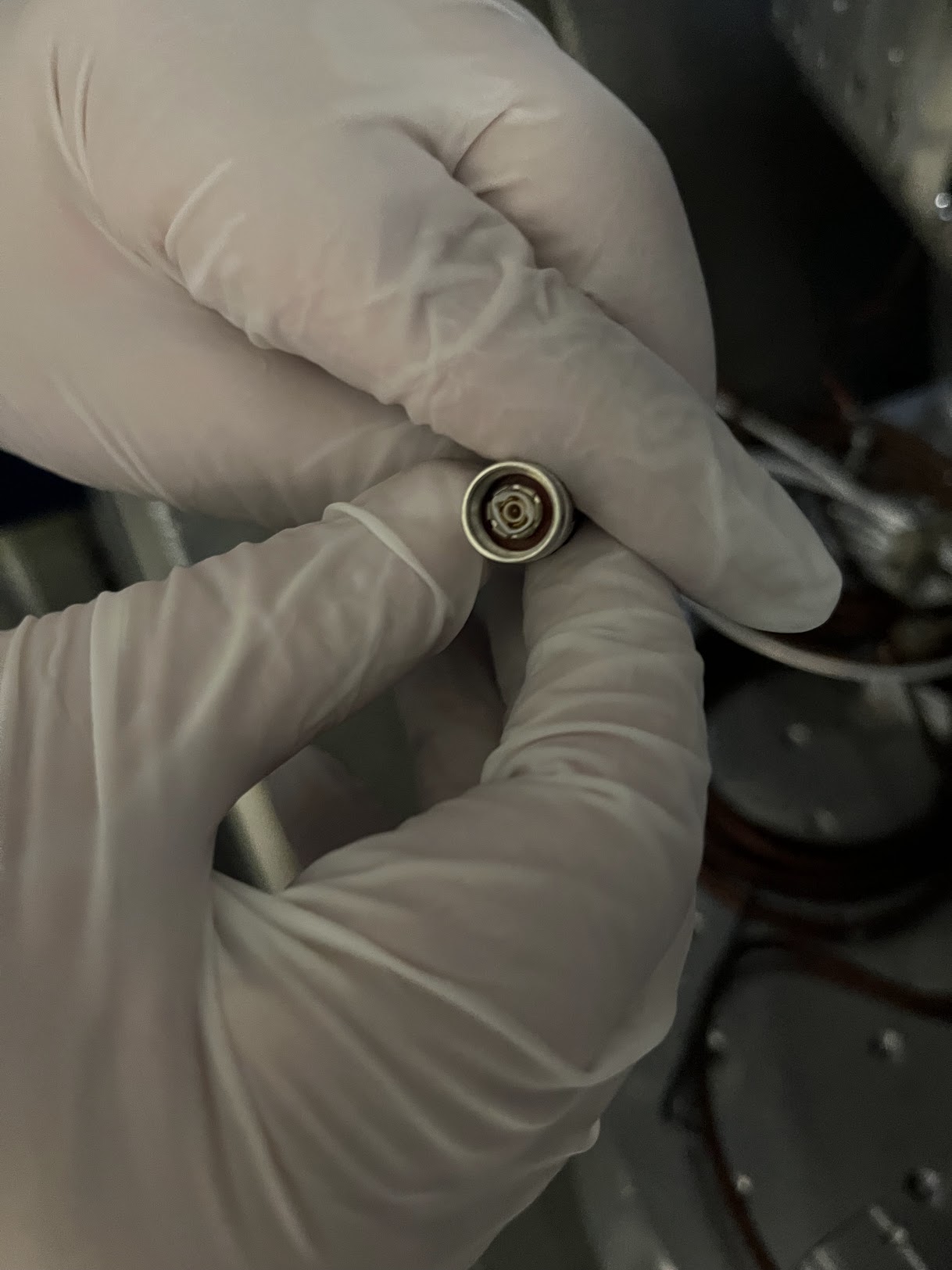
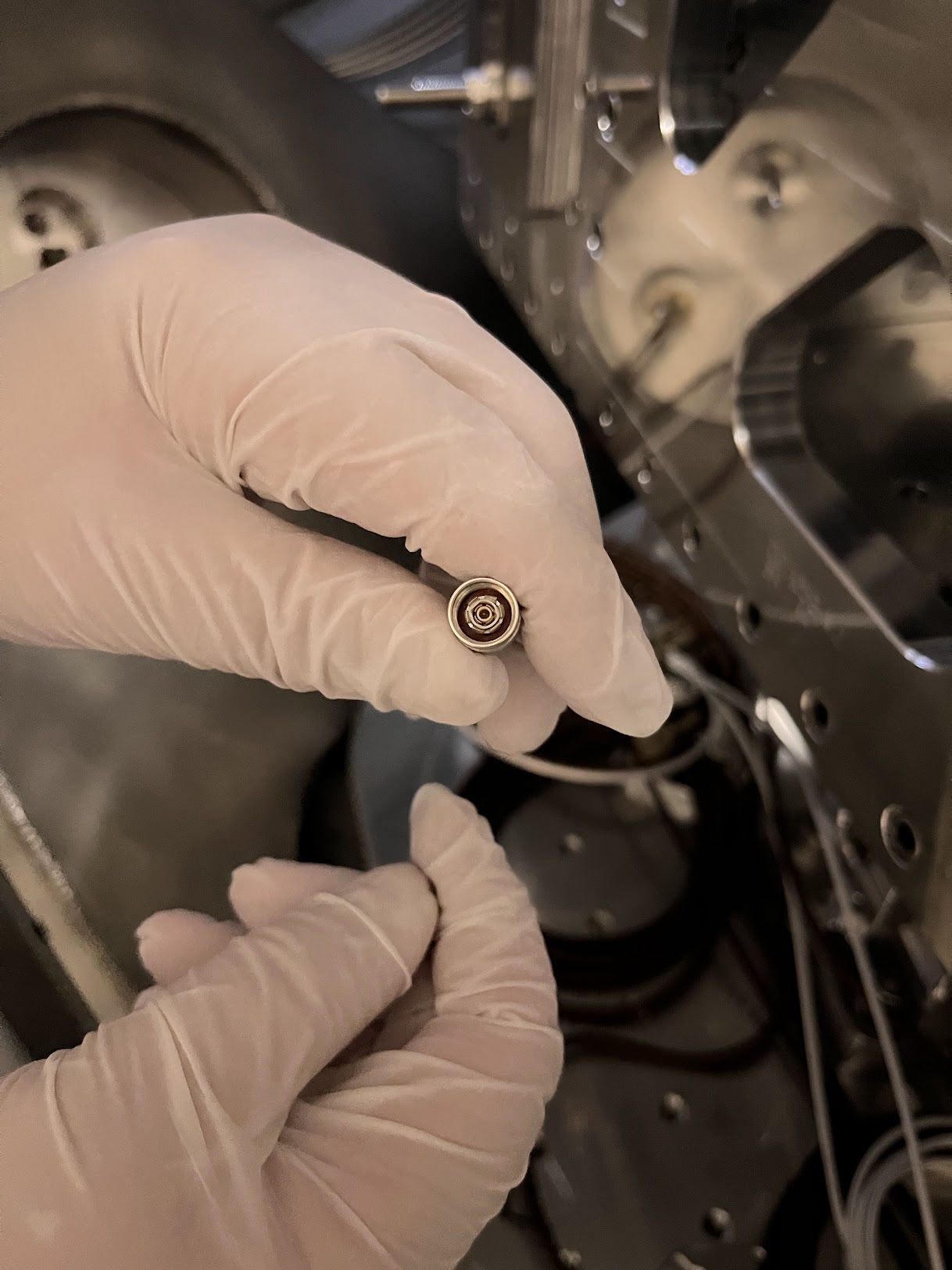
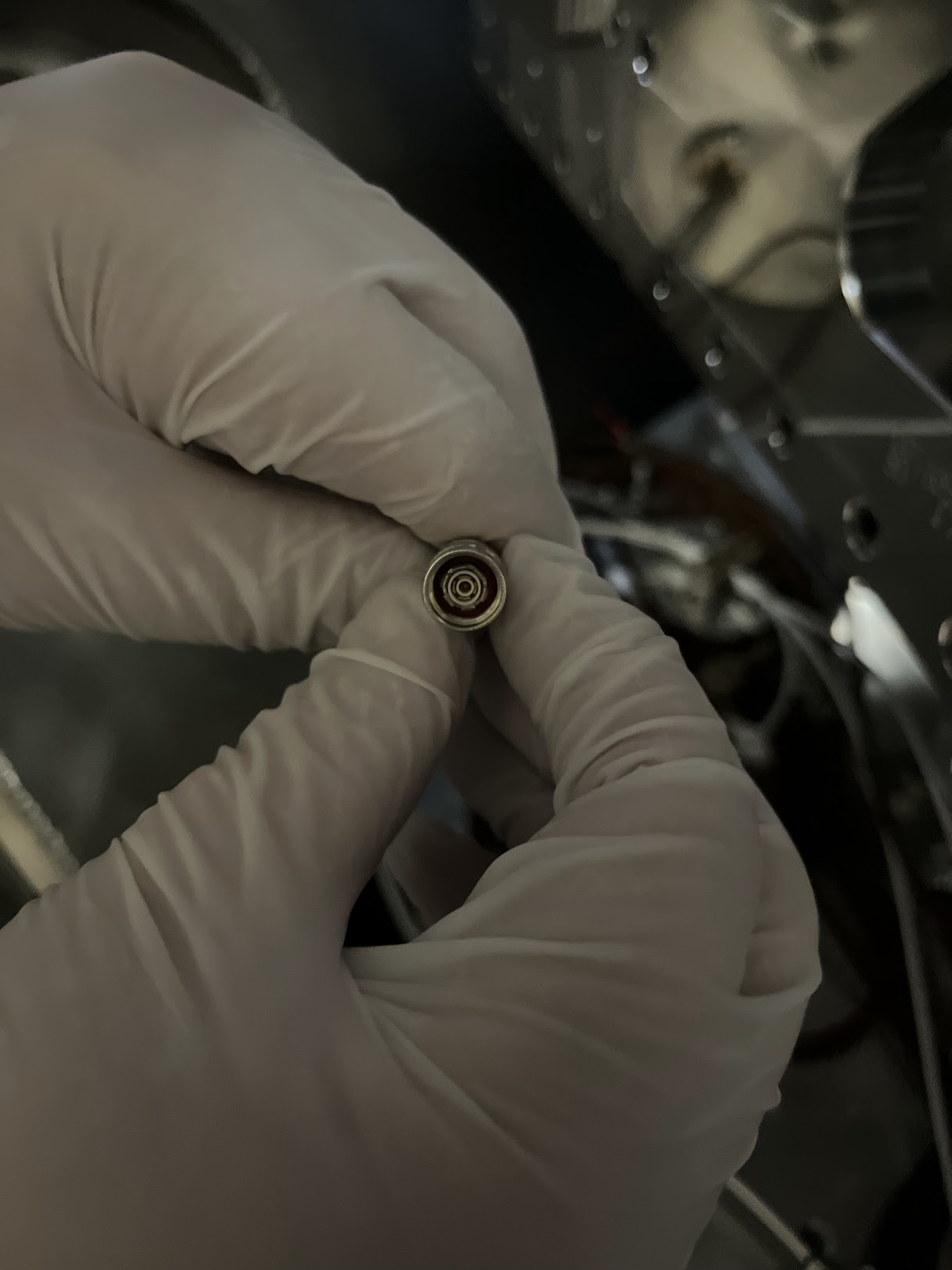
(3) When plugging in the H1 CPS triax, Jim found that the cable wouldn't seat well at the D1-1A1 feedthru. Upon inspection, the teflon insulator between conductors was quite mangled -- see 2026-06-26_ISIHAM3_CPSCenteringWork_H1_BEFORE_BADBADBAD.jpg. He then used a pair of needle-nosed pliers to straighten out the teflon, and got it good enough that it engaged with the feedthru -- see 2026-06-26_ISIHAM3_CPSCenteringWork_H1_AFTER_GOODENOUGH.jpg. We took a look at the adjacent V1 connector head and it seemed fine, and felt fine going into the socket -- see 2026-06-26_ISIHAM3_CPSCenteringWork_V1_ALREADYGOOD.jpg.
Images attached to this report

Comments related to this report
Picture of how the Corner 1 hatch was left after upgrading and centering the H1 CPS.
Images attached to this comment