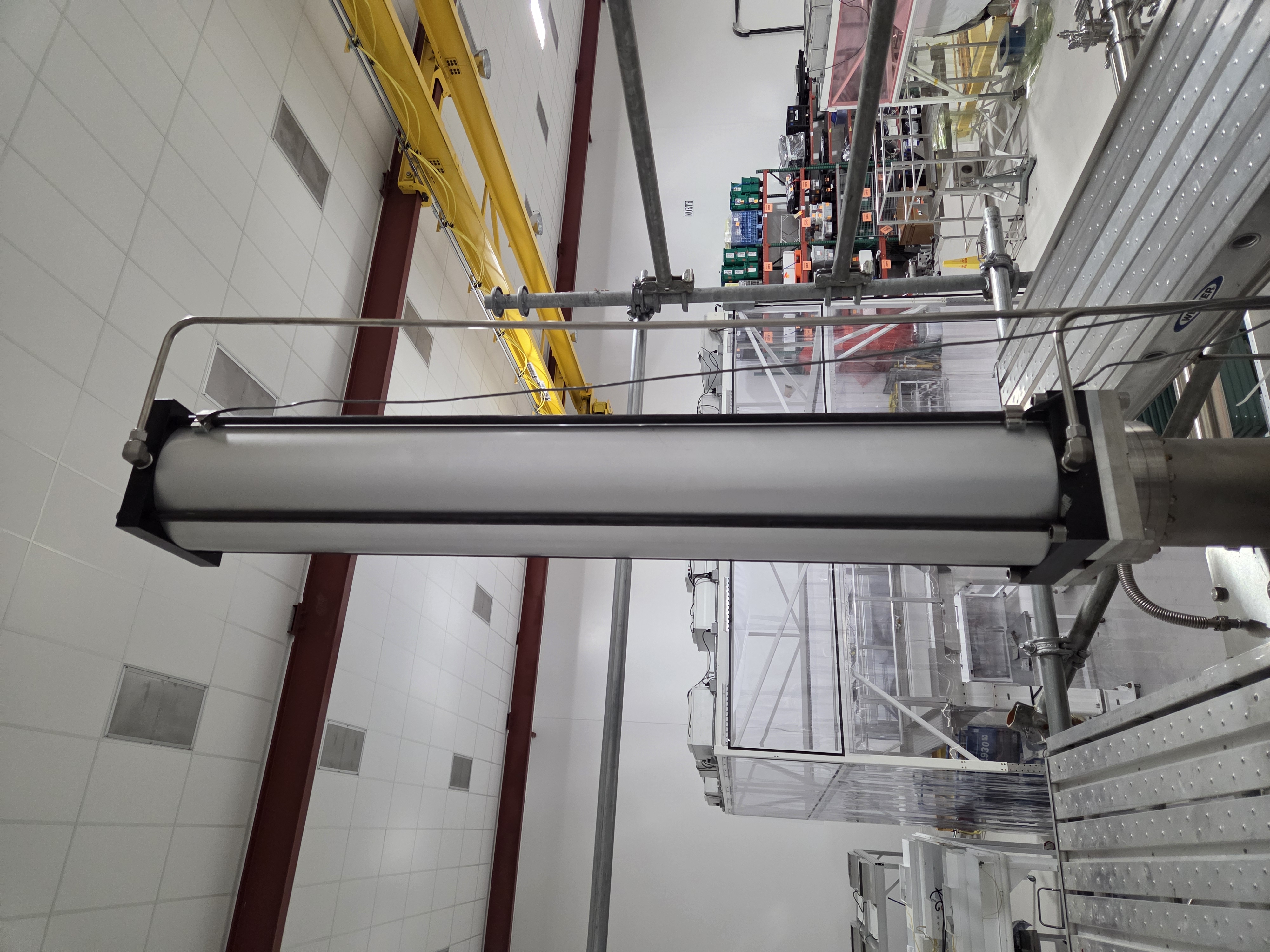
Travis, Gerardo, Jordan
During the closing of GV6 back in May, we noticed that there was some blow-by in the pneumatic system when trying to hard close the valve, see alog 90093.
We were able to hard close the valve eventually but as preventative maintenance we wanted to replace the air cylinder seals, similar to GV7.
Prior to disassembly we measured the locations of the reed switches from the top surface of the bottom plate to the bottom surface of the reed switches:
Bottom Switch: 1 1/8"
Top Switch: 49 1/4"
We then disassembled the air cylinder and replaced the seals following procedure/notes collected during the GV7 repair. During cleaning of the old grease on the piston head, we noticed there were two burrs on the top of the piston, we did not notice any damage to the inside of the cylinder, but as a precaution we used a small flat file to remove the burrs. We also chased the threads on the four threaded rods with a die to aid with reinstallation. After cleaning and inspection of the cylinder tube, we found no issues or damage so we decided to continue to use that cylinder and keep the new one as a spare.
No other issues encountered, we removed the old seals, cleaned the grooves, added copious amounts of the supplied grease to the o-rings, seals and the inside of the air cylinder, and then re-assembled the cylinder tube. Pictures posted below and a final procedure is in progress and will be posted to the DCC.
We did not get a chance to cycle the valve after the seal replacement, so we will continue tomorrow with cycling the valve.
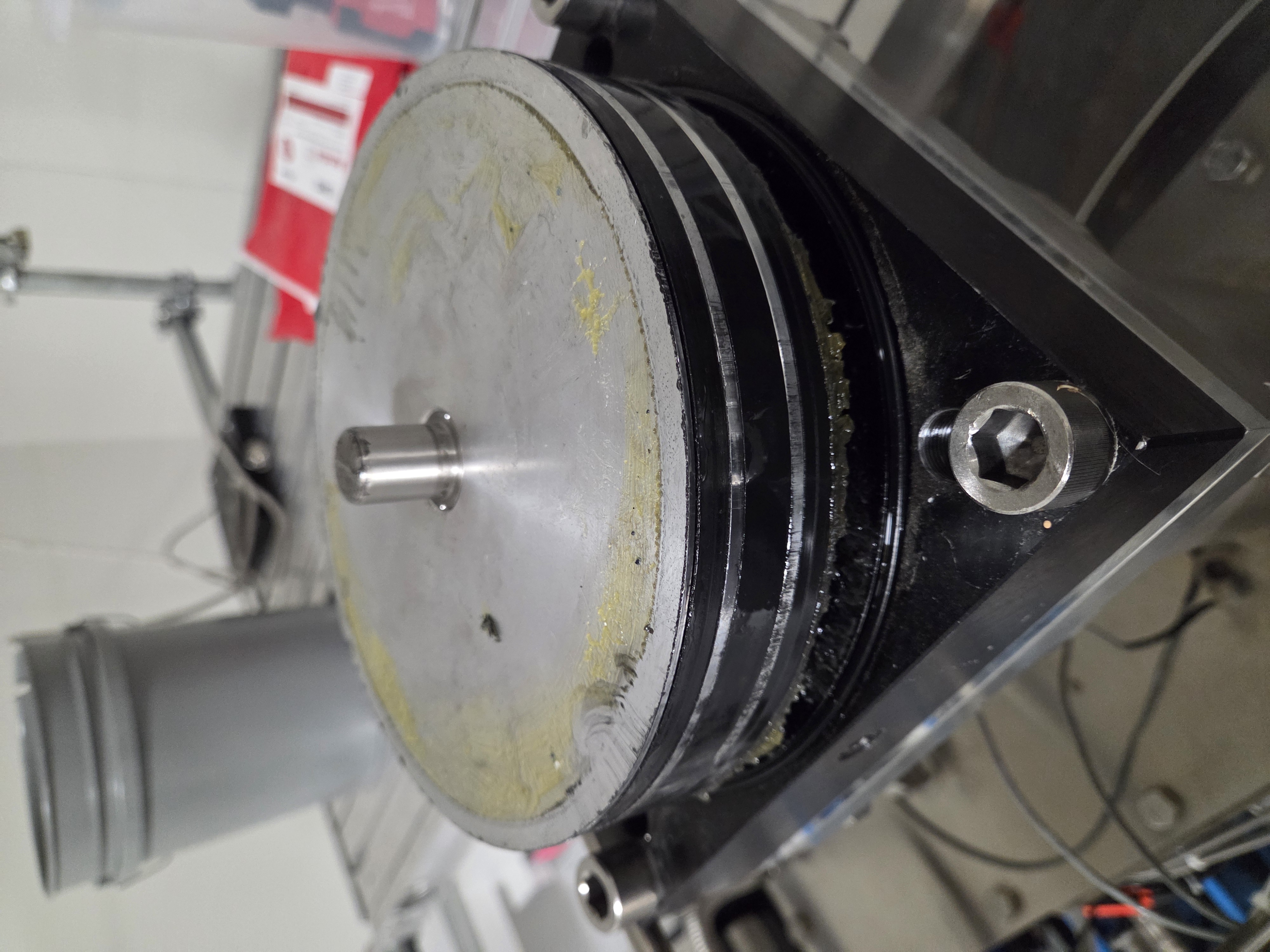
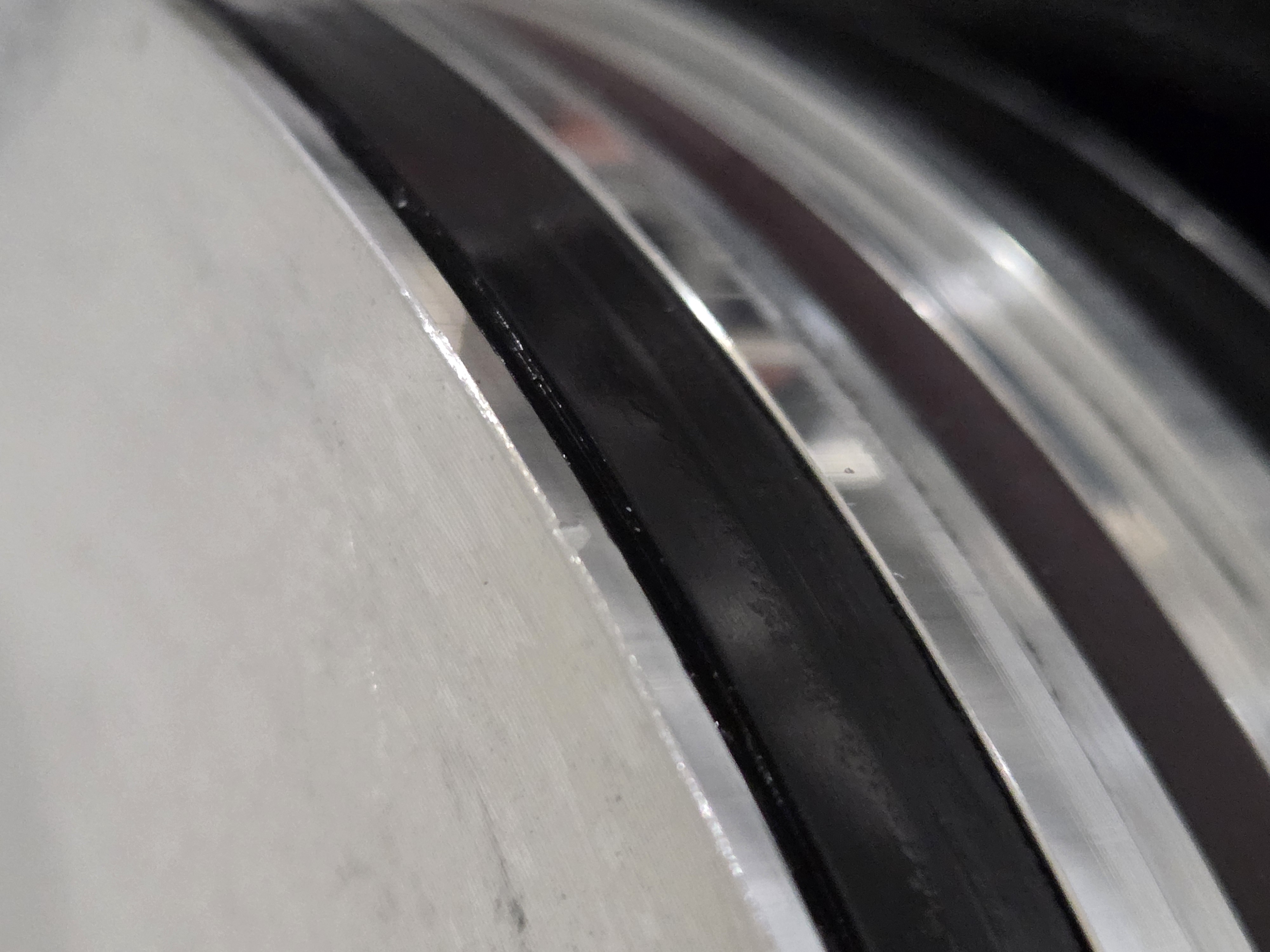


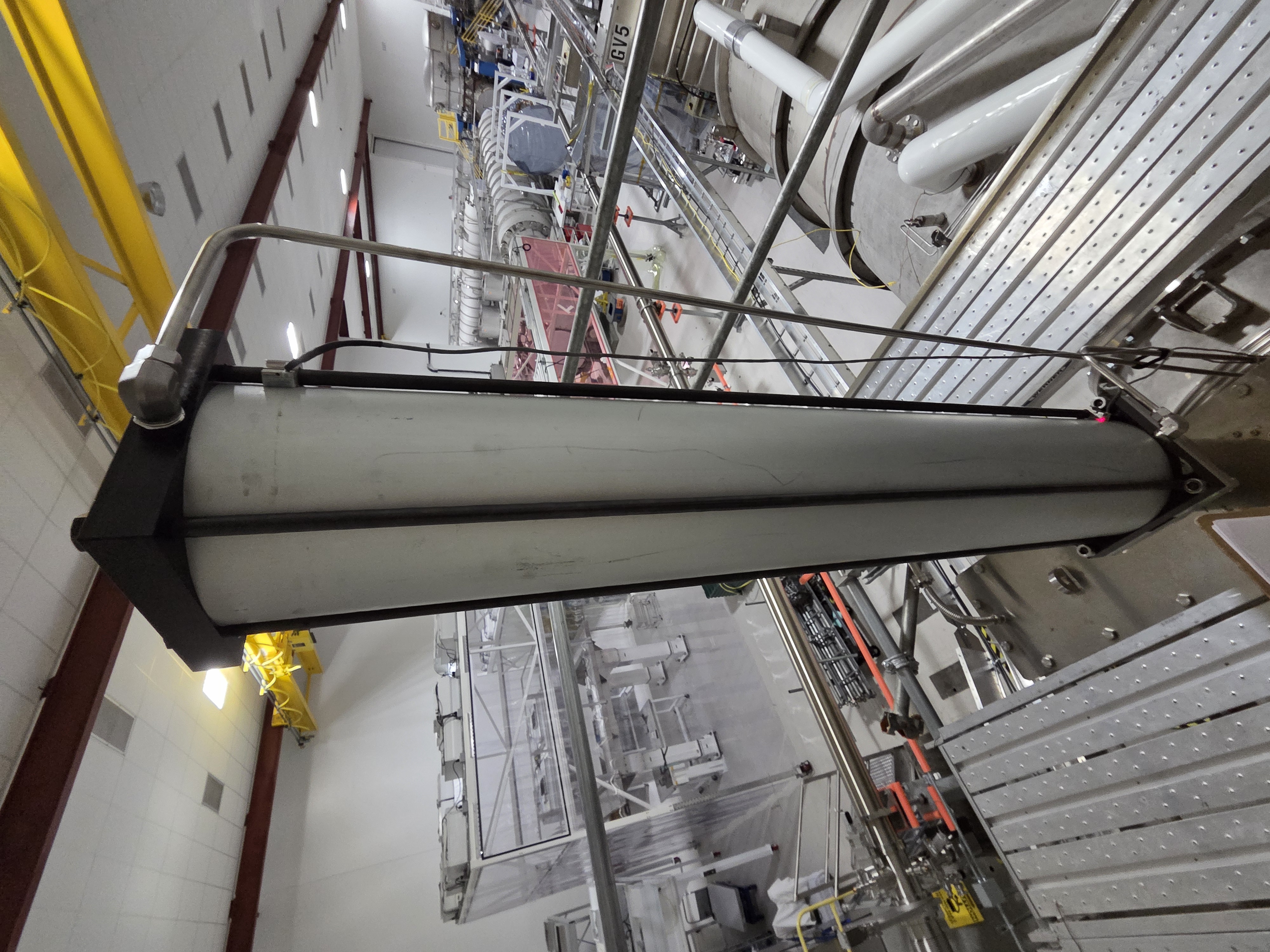
We were unable to fully open GV6 today after the cylinder repair. We heard the clunk of the gate camming over at 45 psi, but it did not start to raise until 55 psi, at which point we could hear air blow-by at the solenoid manifold, and up at the cylinder itself.
So we stopped trying to open the valve any further and slowly reduced the regulator output in order to bleed out the accumulated pressure on the bottom side of the piston. This lowered the gate back down and we heard the gate touch down indicating it is soft closed.
We will have to disassemble to air cylinder again and see what may be the issue. We still have 4 sets of replacement seals and one brand new air cylinder on hand if needed.
The valve remains soft closed until we are able to troubleshoot and repair the cylinder.
8/3/2026
Travis, Gerardo, Jordan
Today we again disassembled the GV6 air cylinder with the valve soft closed to try and see what may have been causing the air blow-by which prevented us from fully opening the valve last week.
We did not find anything immediately obvious such as a seal that had jumped out of the groove, so we measured the ID of the original air cylinder, which was re-used, and found that it was ~0.01" larger than the ID of the spare cylinder (original ID ~8.015", spare ID ~8.005"). We then elected to use the spare cylinder instead to make sure there is good sealing contact with the cylinder wall, so we re-distributed the grease on the new cylinder and attempted to install over the piston, but the tube seemed to be slightly out of round and would not fit over the piston. So we flipped the tube 180 degrees and measured that side of the tube and found it was better. We again added grease to that side of the cylinder and installed it over the piston, ensuring the seals and wear band stayed in place, Then we re-installed the threaded rods, torqued the nuts, installed the reed switches and installed the air lines.
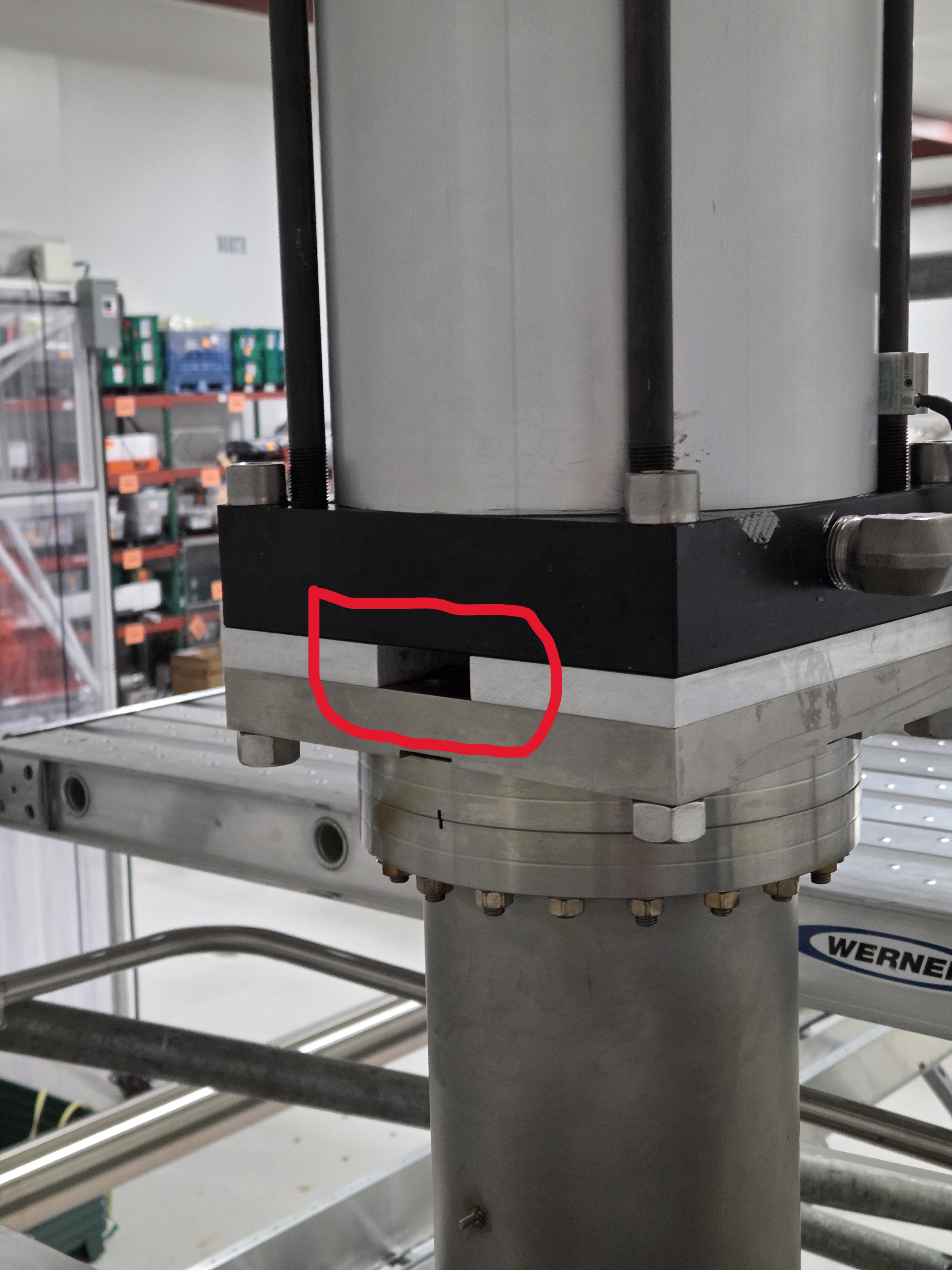
To verify all the new joints/connections were ok, we put ~10 psi to the top of the cylinder and then to the bottom to see if there were any leaks. There were none so we started to open the valve by increasing air pressure at the regulator, once we got to ~25 psi we could hear and feel air coming out of the bottom plate/adapter flange below the cylinder assembly, see picture below the area where air is coming out of is circled in red, at which point we stopped trying to open the valve and closed the quarter turn isolation valve to the air line.
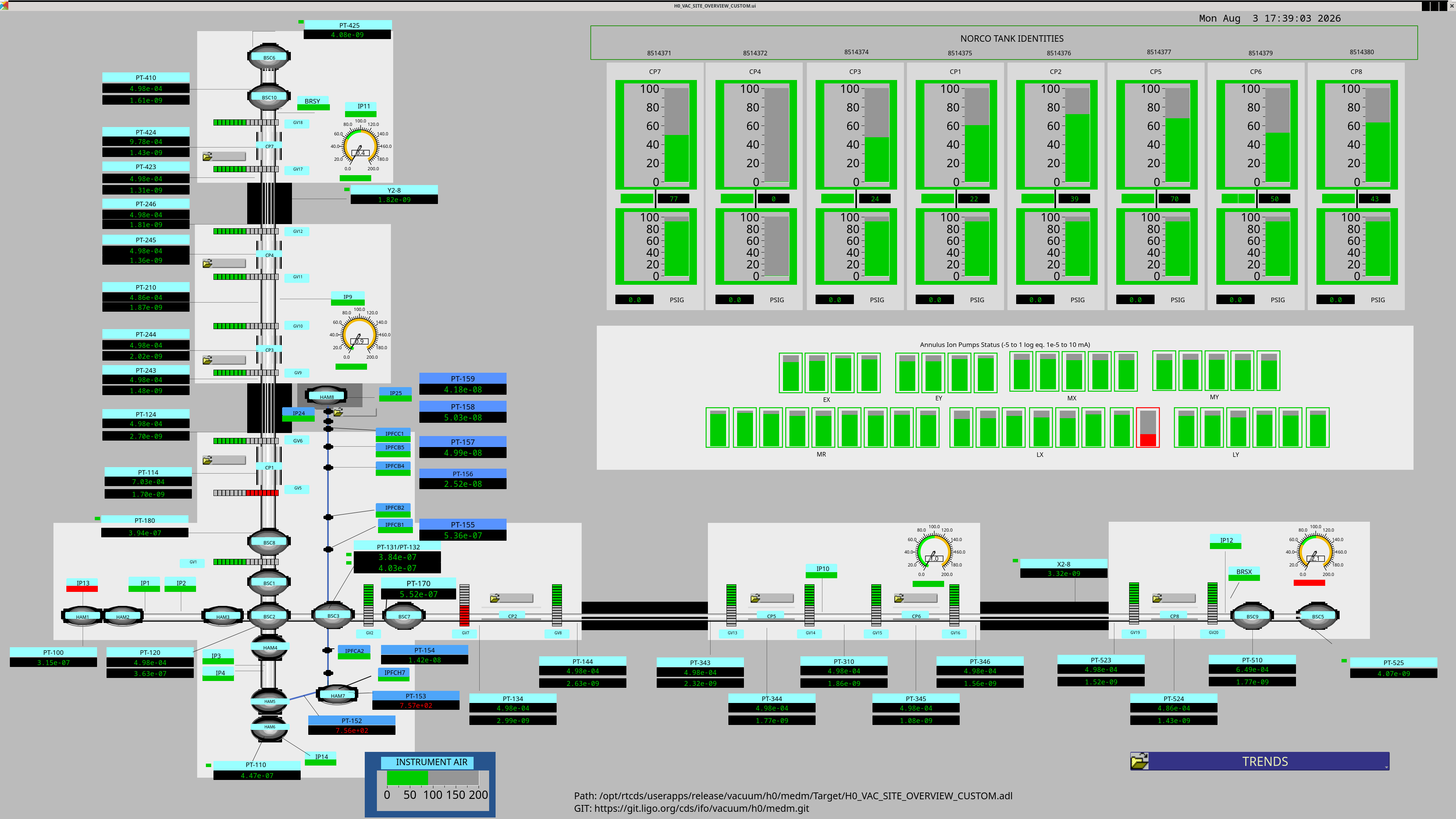
We spoke with a GNB rep who advised we try to to open at a higher pressure and see if the bottom seals, so we then tried to open the valve again. This time we started at 20 psi and followed our normal opening procedure with the exception of increasing by 5 psi instead of 10 and waiting 3 minutes between increases. At ~35 psi, air stopped leaking out of the bottom flange, there was no air blow-by in the cylinder and we could hear the carriage starting to move. The gate fully opened at ~48 psi and Gerardo was able to take a video where you can hear the piston incrementally move up the cylinder. We increased the holding pressure to 58 psi and verified the MEDM screen showed the valve status as green.