[Elenna, Louis, Keita]
Today we continued working on the transition of DRMI to the 3f signals. We have not gotten there yet. What follows is a rough list of events.
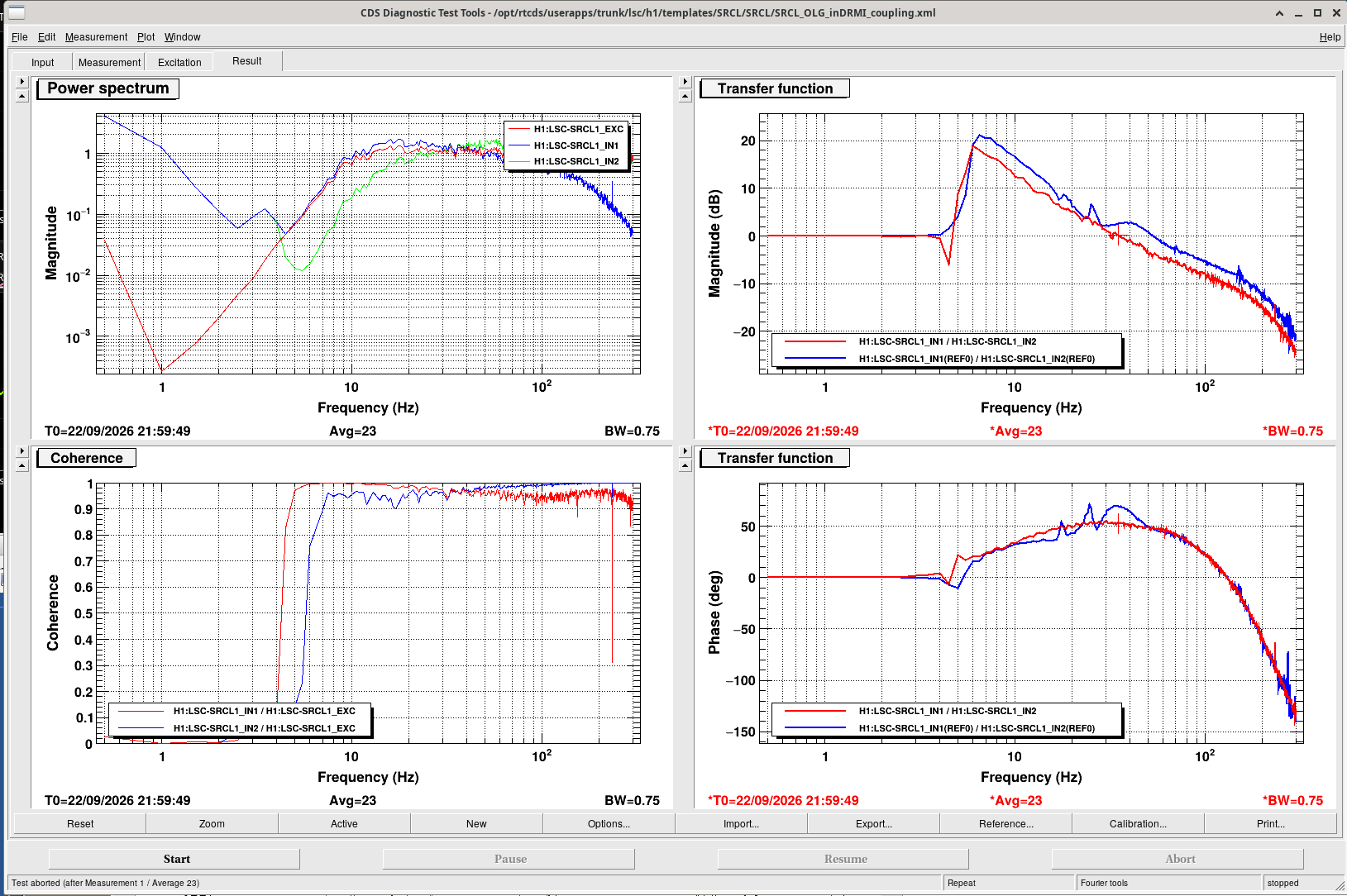
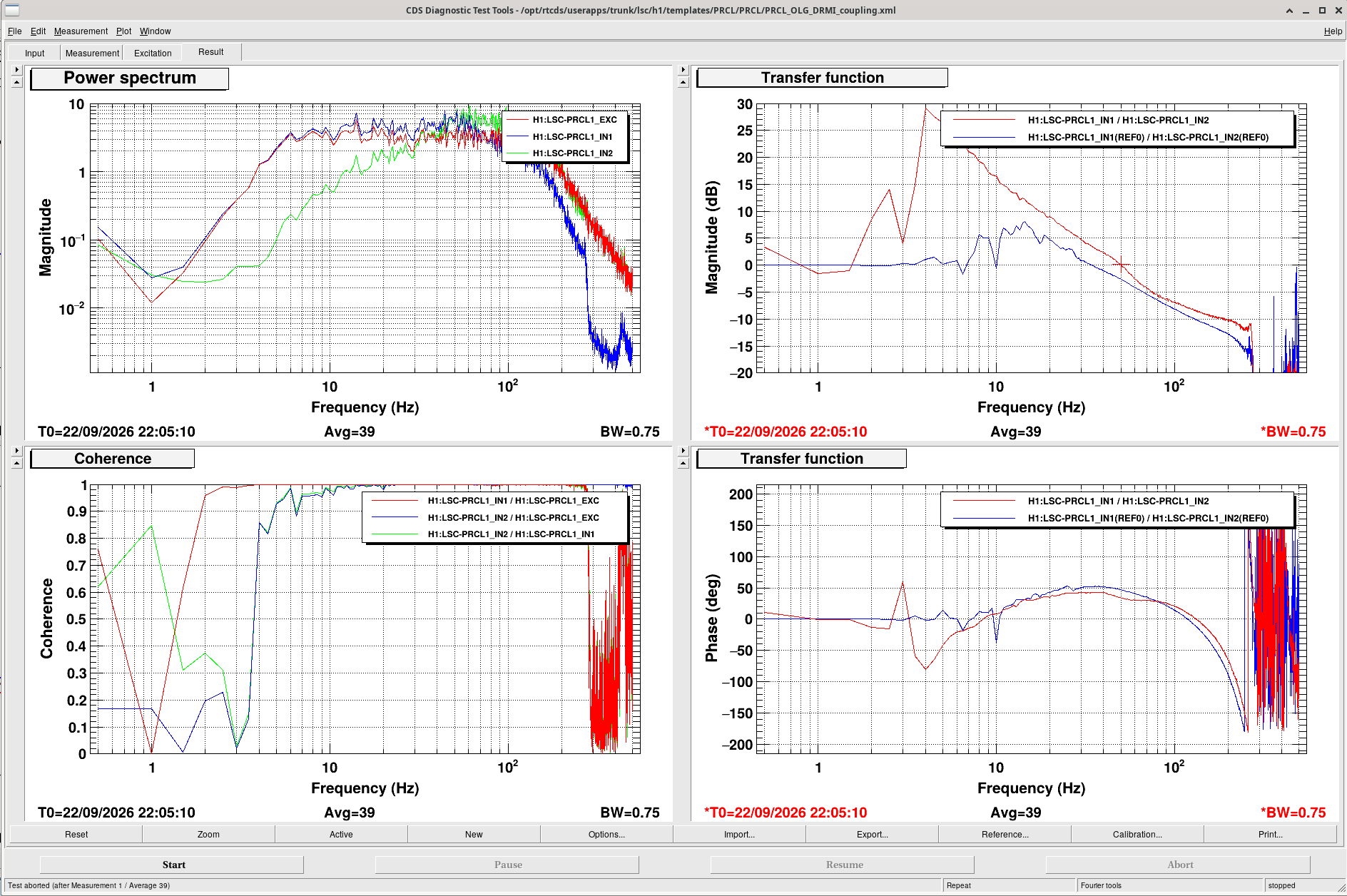
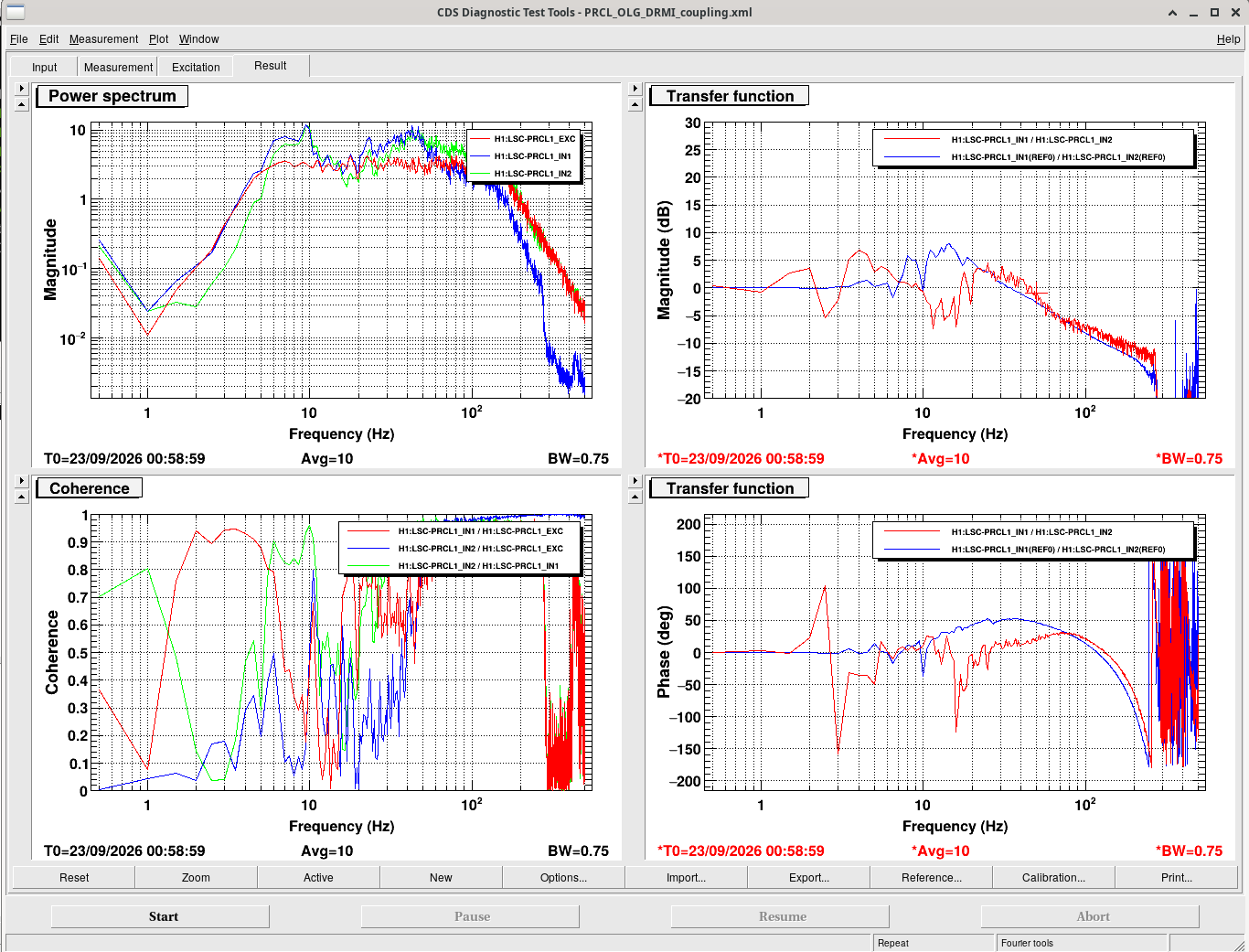
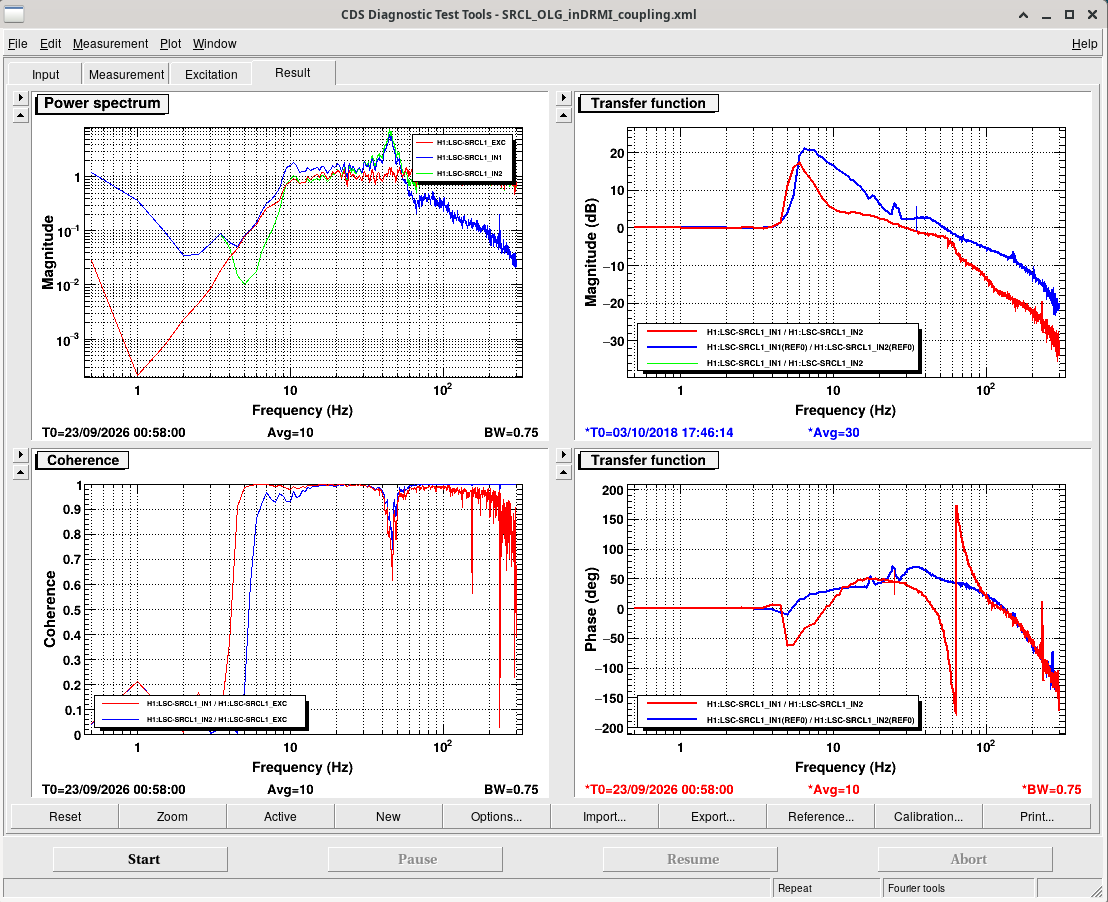
* After maintenance I measured the OLG of MICH, PRCL, and SRCL in DRMI (ISC_DRMI:PREP_DRMI_ASC).
- PRCL UGF was at 50Hz.
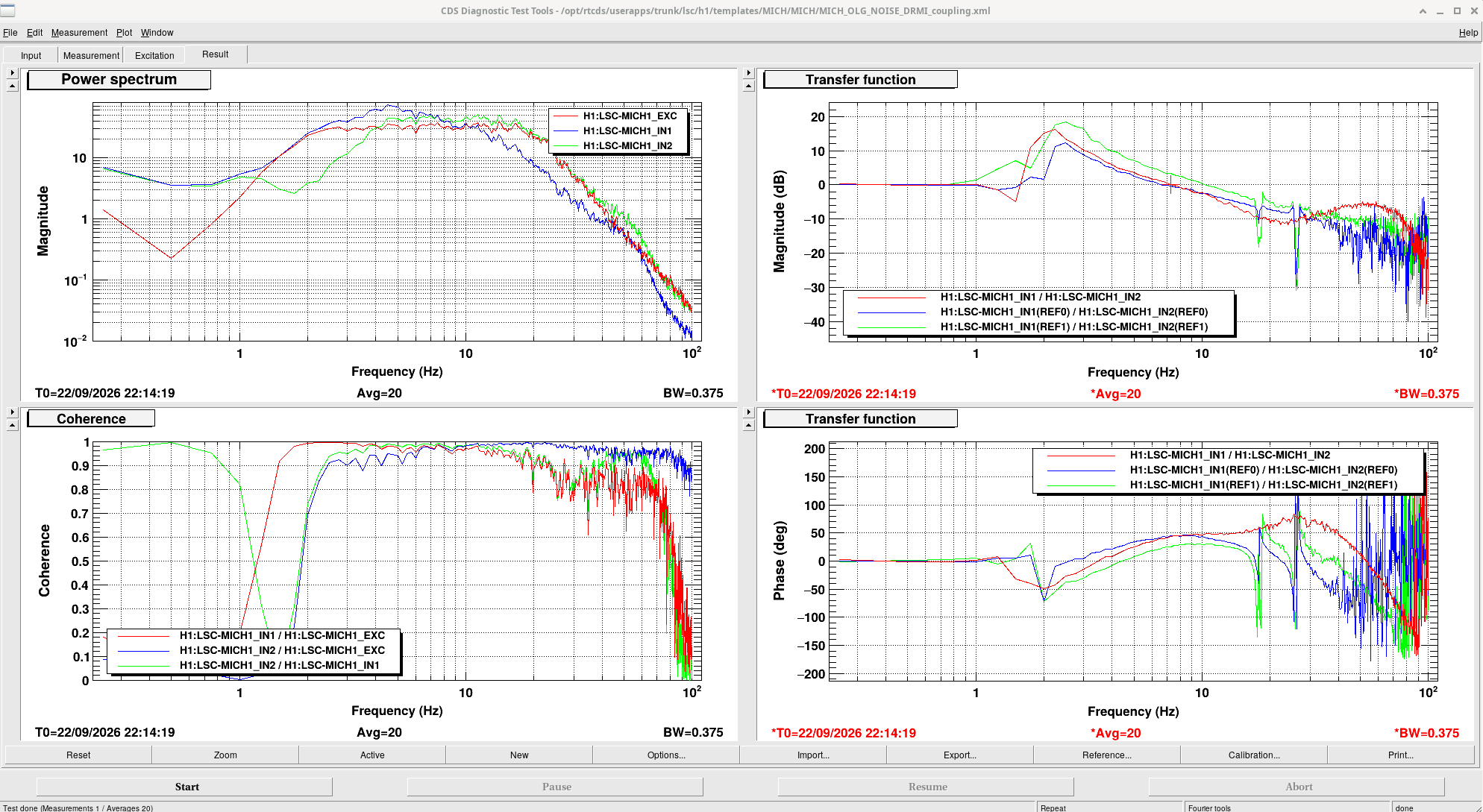
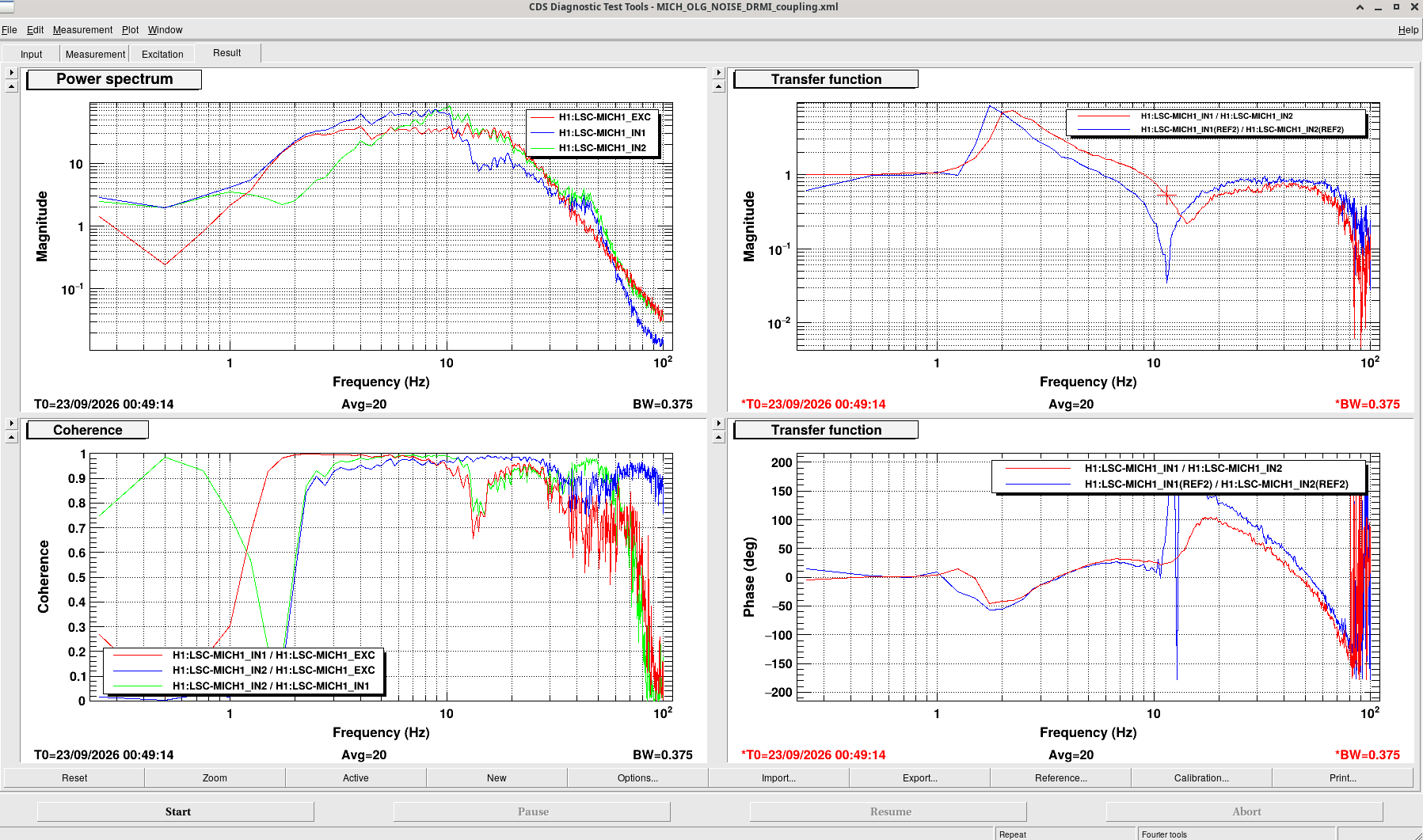
- MICH UGF is at about 7.2Hz. We don't understand the OLG TF feature at 30Hz+. We suspect that this is due to cross-coupling with other dofs. The MICH gain during the measurement is 3. There was discussion in the control room regarding the drop in MICH gain by a factor of 3 in 92004 (which helped the mode hopping at the time). It's not clear how/why this gain adjustment worked since it looks like the gain would have dropped the UGF through 0deg phase and should have gone unstable(?). i.e. Elenna & I would have expected the drop in gain to not have worked if this OLG TF is representative of MICH during Keita's adjustments on Monday night.
- SRCL UGF is at 35Hz.
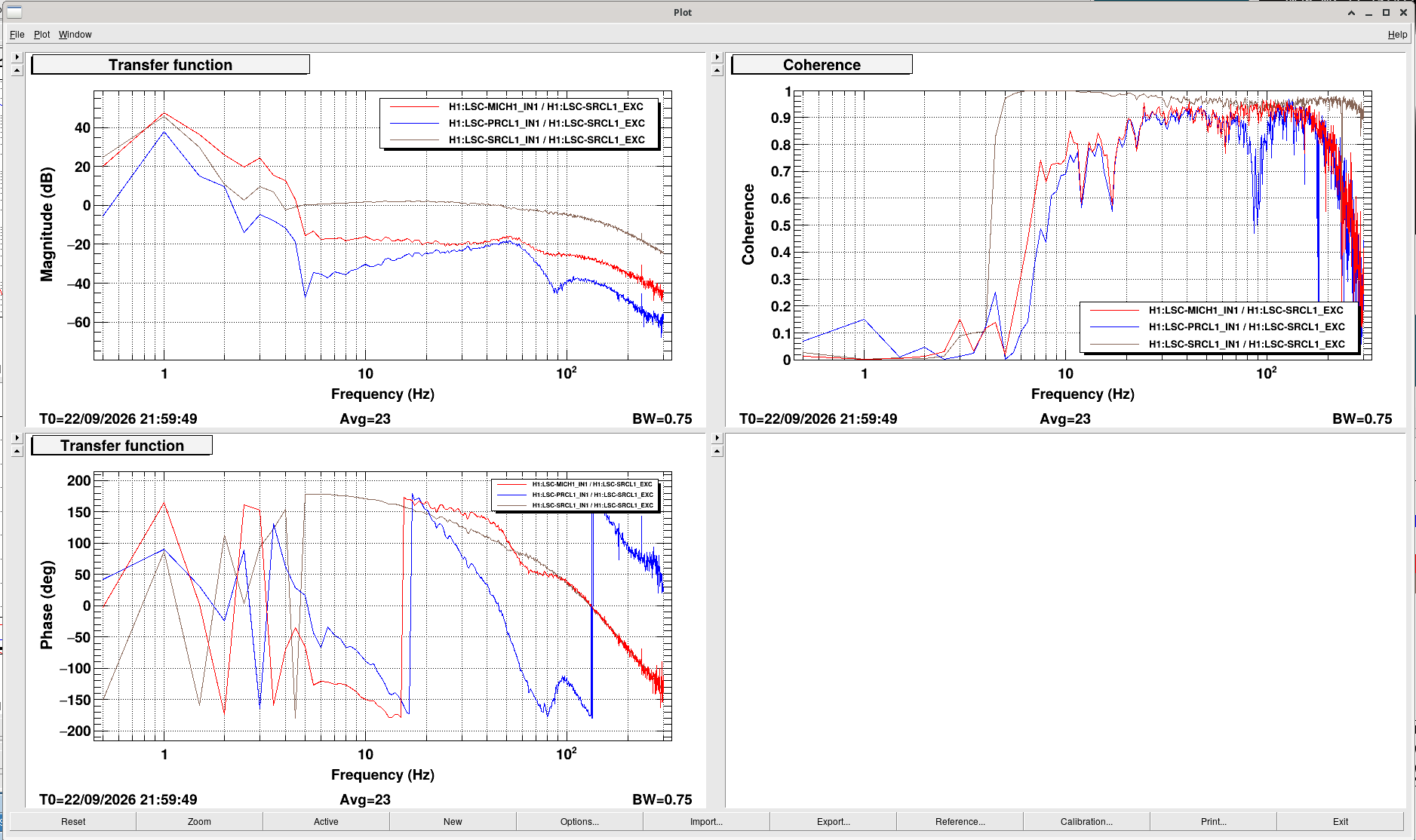
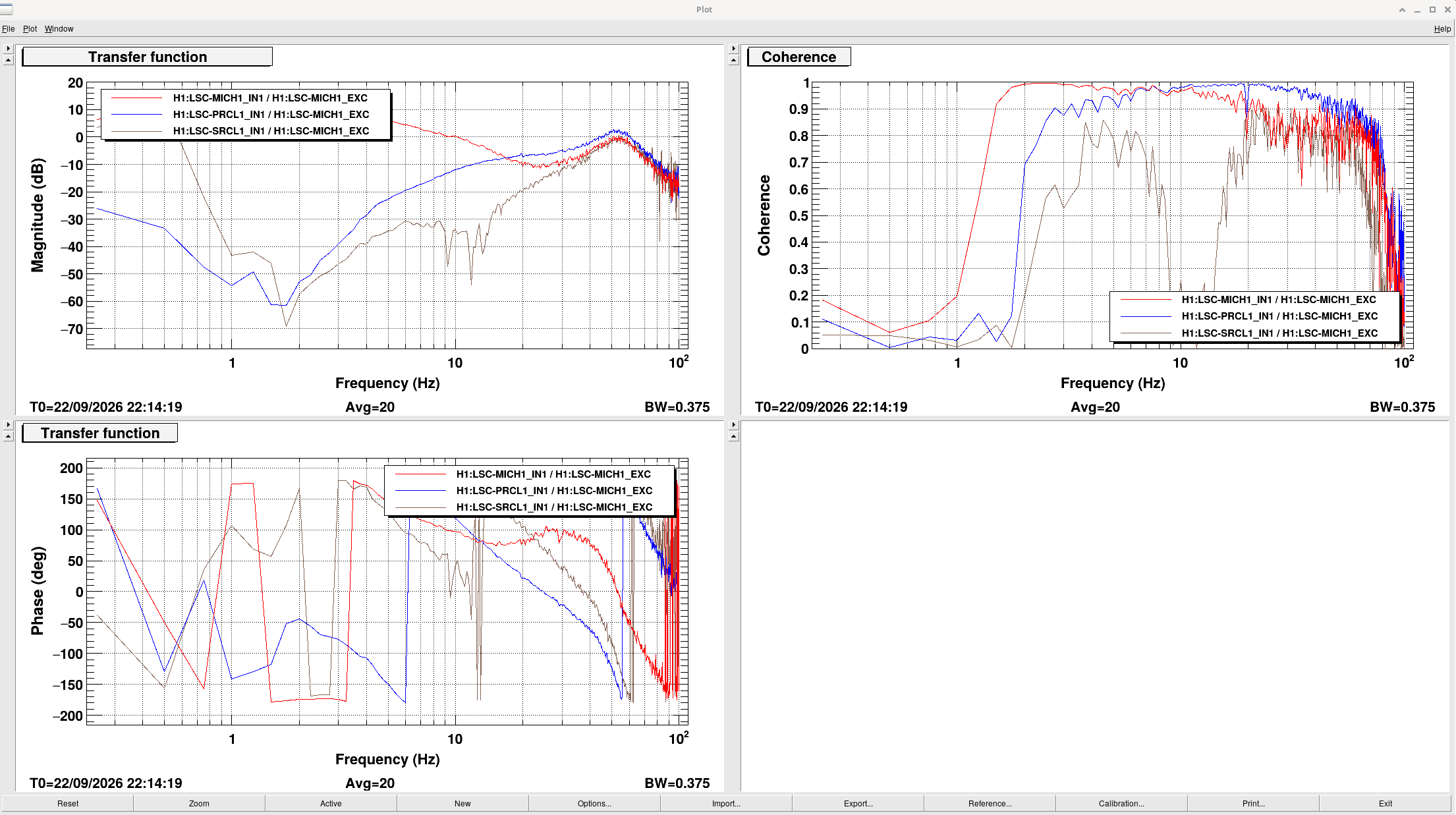
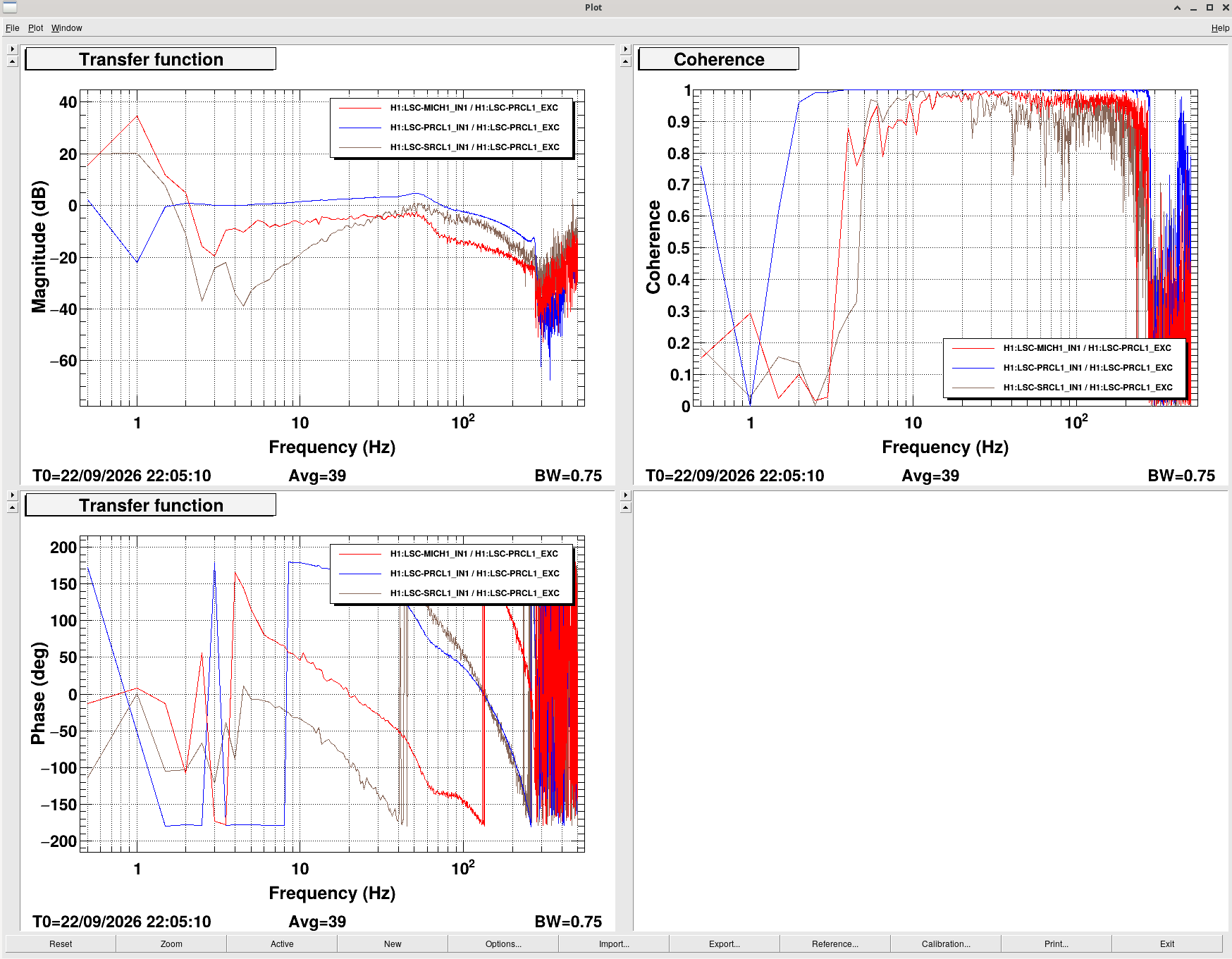
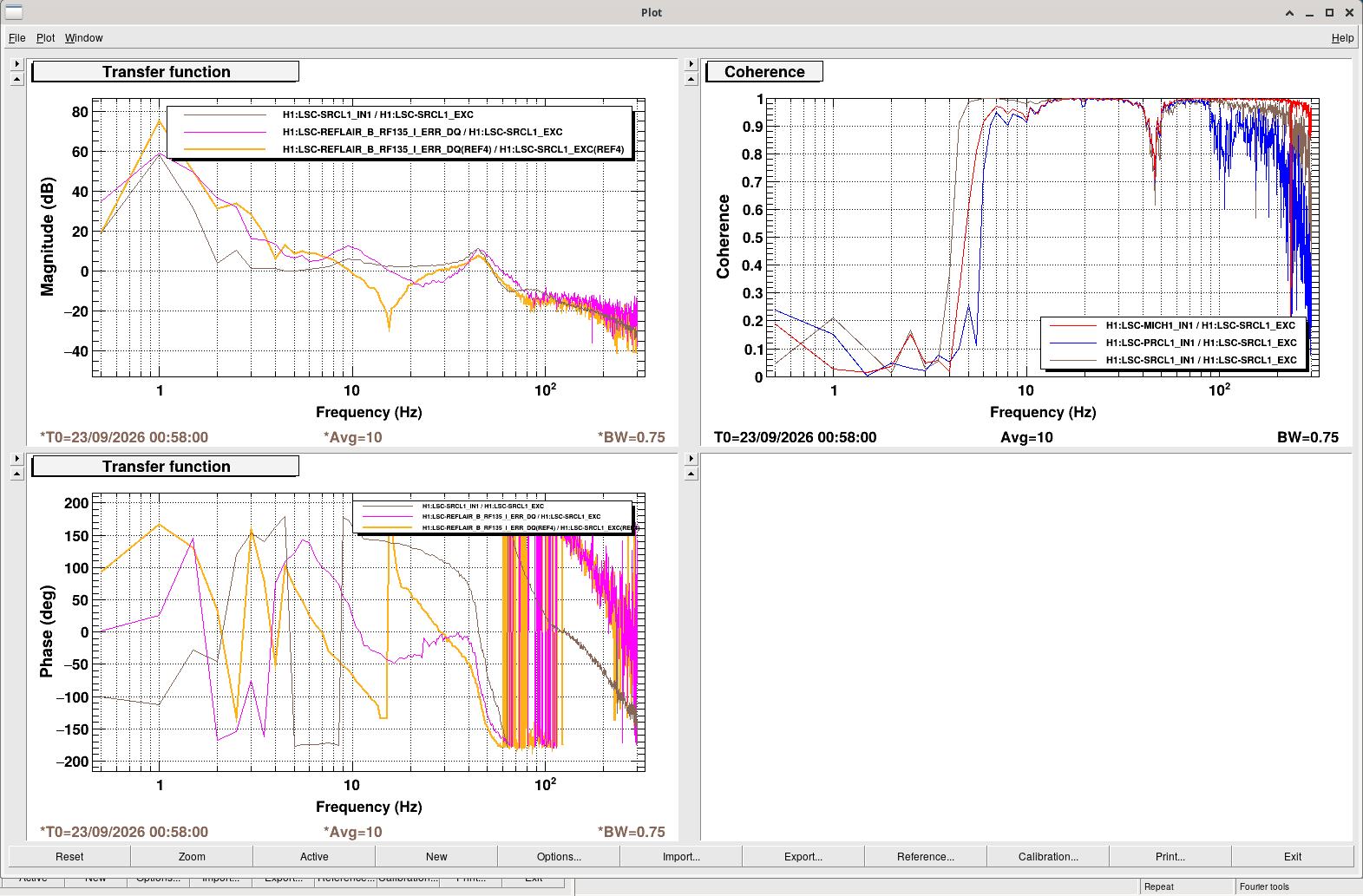
* DRMI LSC is cross-coupled: At Keita's suggestion, I ran the OLG templates with the MICH, PRCL, and SRCL inputs to gauge the cross-coupling from each excitation to the other two LSC dofs. These are attached as the <_inj>. png files (MICH exc, SRCL exc, PRCL exc). Judging from the coherence alone (top right subplot), there is a substantial degree of cross-coupling at the moment in DRMI 1f. For instance, it PRCL has more coherence than MICH during the MICH excitation above 10Hz.
* The 3f transition is only partially working right now. PRCL transition works well consistently. MICH is not yet working (it fails immediately). We decided to work on SRCL before coming back to MICH.
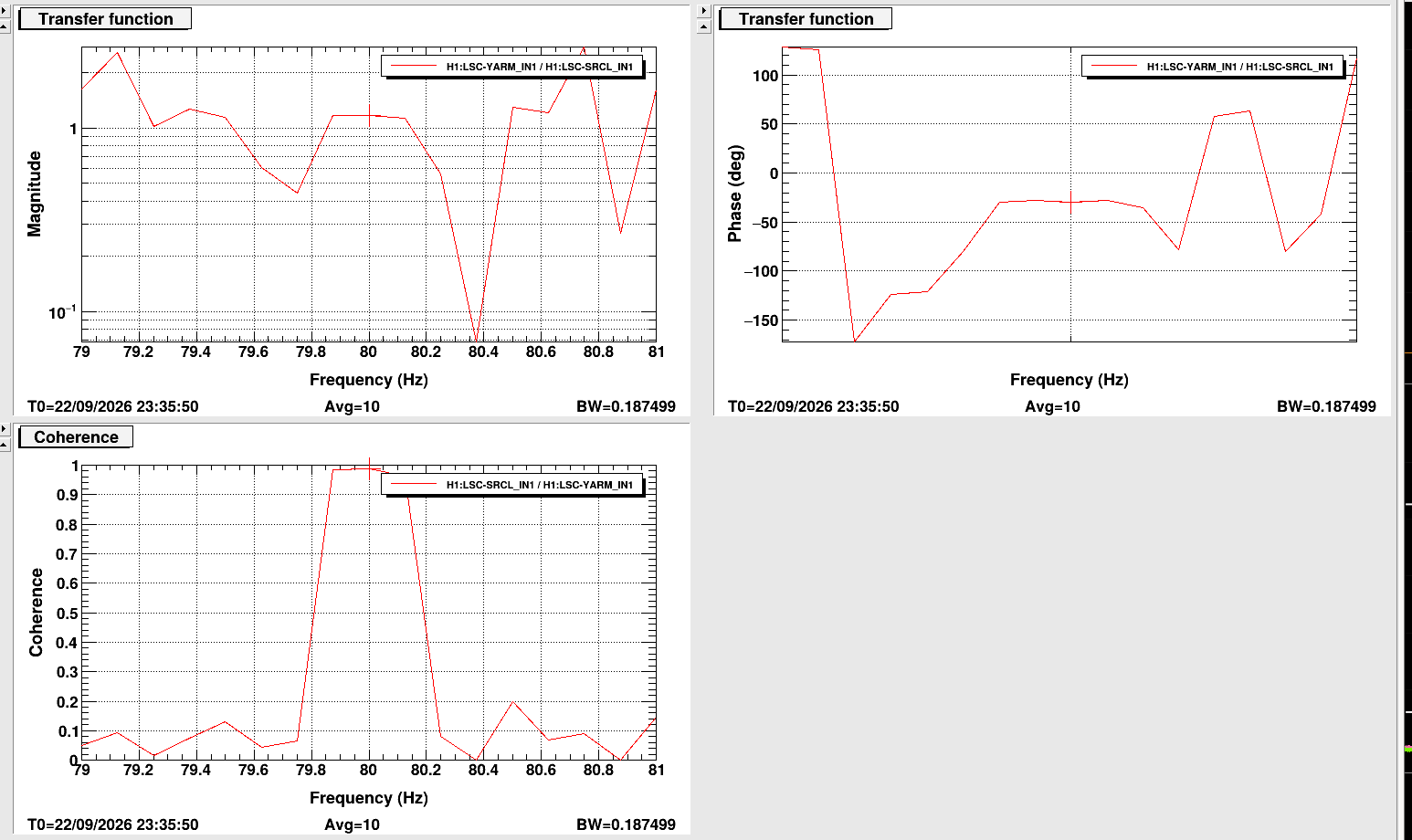
* For the SRCL 3f transition, we measured the 3f input matrix gains today and got -3.7 for REFLAIR_B_RF135I and +2.7 for REFLAIR_B_RF27I. We put these gains into the 3f input matrix for YARM and measured YARM (3f) /SRCL_IN (1f) at 80Hz and showed that we pretty much get unity, suggesting good agreement between the 1f and 3f signals. So we're pretty sure that the input matrix gains are correct (assuming no dominant frequency-dependent contribution that we aren't seeing at 80Hz, chosen because notches already exist for this frequency in the relevant feedback loops). However, when we load the (ramping) input matrix values to transition to 3f it fails every time.
* We decided to inject PRM, SRM, and BS lines to populate a full 3x3 sensing matrix and invert it to construct proper diagonalized input signals. As Elenna was injecting a PRM line Keita noticed that it was poorly phased in REFLAIR RF45. We paused to get that phased back up. Not sure why it wasn't phased properly. There was discussion about just having done that recently. We changed REFLAIR_A_RF45 by 20 degrees (from -171 to -151). Following that we changed the PRCL gain by 3dB, SRCL by 6dB, and had to change the SRCL RF9 input matrix element from -1.7 to -1.2 to account for how much PRCL was making it into RF9 due to the phase change.
* After this we started seeing bizarre features in the OLG tfs in both 1f and 3f (MICH OLG, PRCL OLG, SRCL OLG). During the SRCL excitation we pulled up the REFLAIR_B_RF135I (45 3f) signal (gold) and see a 15 Hz instability that we really don't understand. It's our conclusion for the evening that we can't transition to 3f while we don't understand the broadband nature of this signal.
* We didn't finish collecting the full 3x3 sensing matrix measurements. We should probably restart and complete those measurements so that we can try diagonalizing the input matrix in both 1f and 3f.
I also want to mention that we lost lock several times today due to JAC suddenly unlocking throughout the day.
* 22:55:56 UTC while Elenna was tuning up the alignment
* 23:45 UTC while we were debuggin the 3f transition
* again at 00:09 UTC
* and again at 00:59 UTC
While would usually be able to acquire DRMI relatively quickly after JAC came back, the JAC-induced lock losses did make the process a bit more painful than it otherwise would have been.