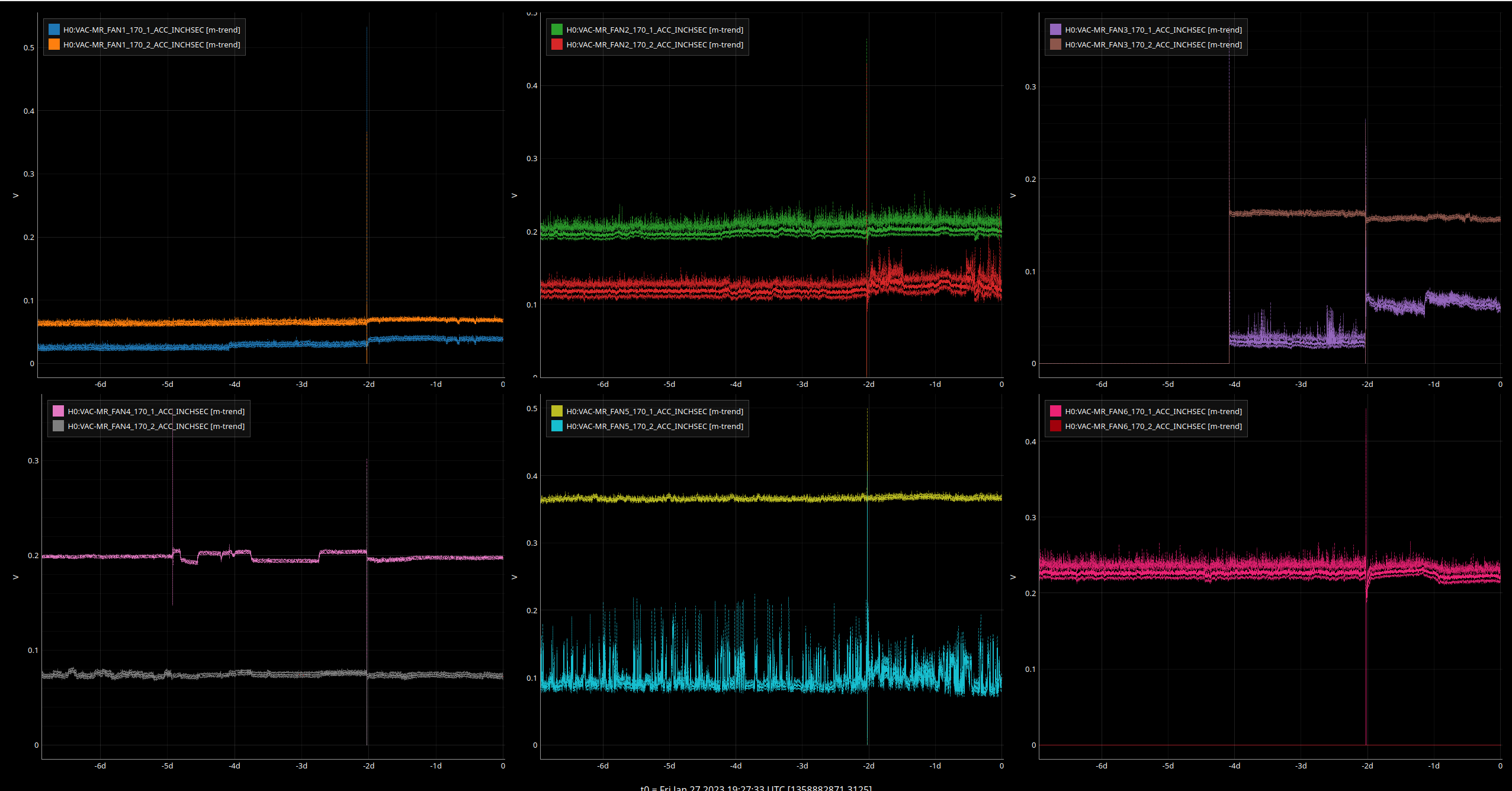
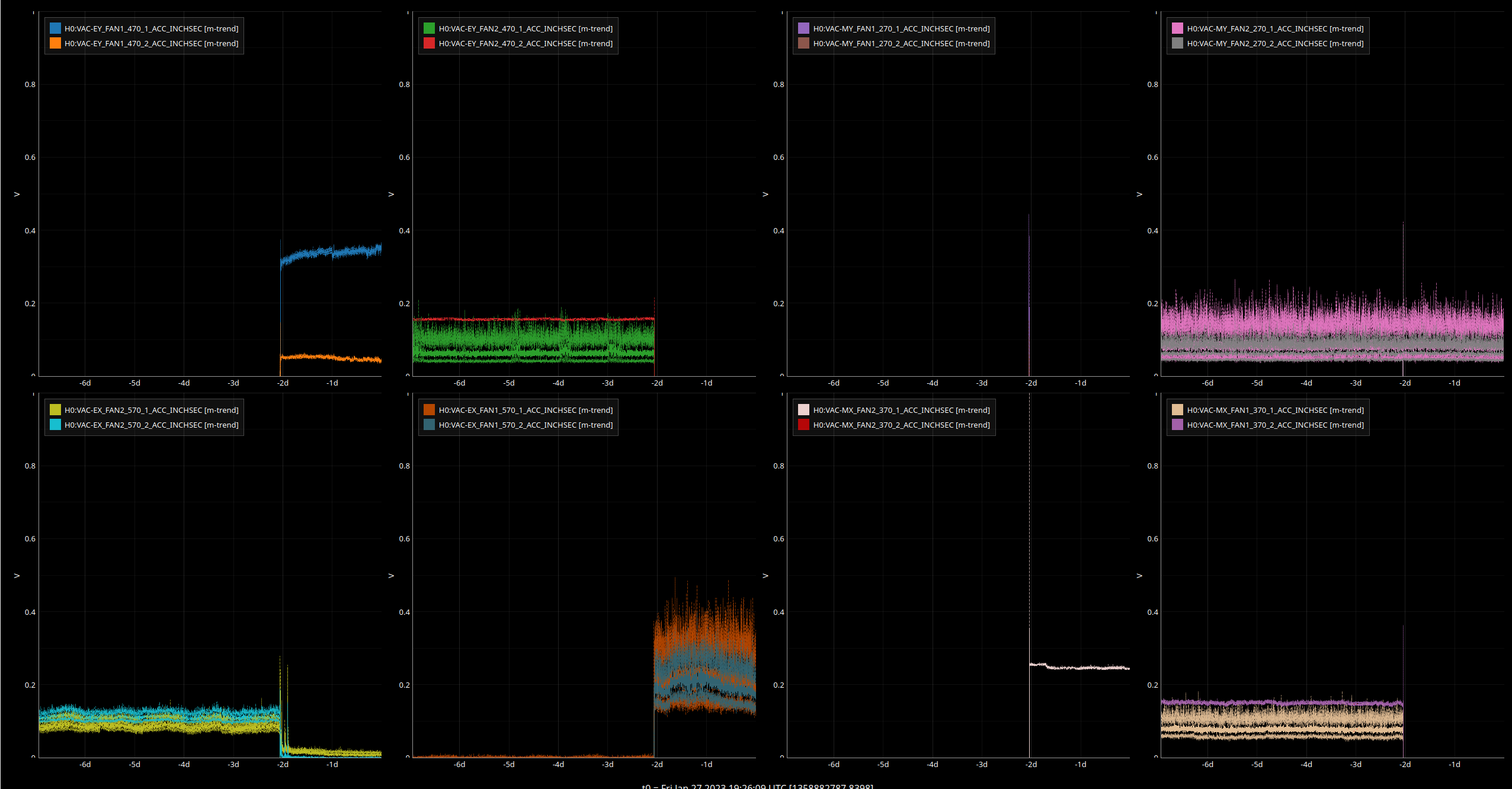
Anamaria, TJ, Jonathan, Dave:
A new h1calcs model was installed. Two fast and two slow DAQ channels were renamed.
++: slow channel H1:PEM-CS_ACC_SQZT0_SQZLASER_X_MON added to the DAQ
++: slow channel H1:PEM-CS_ACC_SQZT7_HOMODYNE_X_MON added to the DAQ
++: fast channel H1:PEM-CS_ACC_SQZT0_SQZLASER_X_DQ added to the DAQ
++: fast channel H1:PEM-CS_ACC_SQZT7_HOMODYNE_X_DQ added to the DAQ
--: slow channel H1:PEM-CS_ACC_ISCT6_SQZLASER_X_MON removed from DAQ
--: slow channel H1:PEM-CS_ACC_SQZT6_HOMODYNE_X_MON removed from DAQ
-!: fast channel H1:PEM-CS_ACC_ISCT6_SQZLASER_X_DQ removed from DAQ ***GDS-CHAN***
-!: fast channel H1:PEM-CS_ACC_SQZT6_HOMODYNE_X_DQ removed from DAQ ***GDS-CHAN***
Total number of DAQ changes = 8
(4 additions, 4 deletions)
Note that the fast channels are in the GDS broadcaster channel list. I initially made the change by hand for h1daqgds[0,1] and Jonathan then made the changes permanent in puppet.
h1daqgds0 daqd was down for an extended period while I made the first hand-edit.
R. McCarthy, F. Clara, F. Mera, M. Pirello
Per WP11193
1 - Added a +/-24V tap to the ISC-C4 junction box
2 - Moved the +/-24V sequencer cable from ISC-C3 to the new tap in ISC-C4
3 & 4 - Adjusted mezanine rack cabling to accomodate the new configuration in the CER racks.
5 - Moved the Beckhoff +24V rail cable from ISC-C2 LHS to ISC-C3 RHS, this supply is now "ISC-C2-SC1 +24V"
6 - Moved the Beckhoff +24V rail cable from ISC-C2 RHS to ISC-C2 LHS, this supply handles "ISC-C2-SC2 +24V"
The remaining supply on the ISC-C1 is now "ISC-C1-IO LSC&ASC +24V"
We ran into a Beckhoff issue and had to replace an EK1011 terminal in Ethercat Corner 2 to bring beckhoff back online.
We did not finish the 7th & 8th task of the work permit, which is to isolate the OMC-IO from the SQZ Beckhoff, and replace H1-ISC-C1&C2 -18V RHS swith new supply. We will do this next Tuesday or sooner if environment allows.
See LHO:69633 for further information on this work (both steps that were completed and those which were not).
Jeff brought up a good point that after the LSC, ASC, and OMC rack work today, it would be a good idea to run the dark offset script to get new offsets. These dark offsets are basically offsetting electrics noise that can change as the state of the electronics changes.
Corey followed these usual steps:
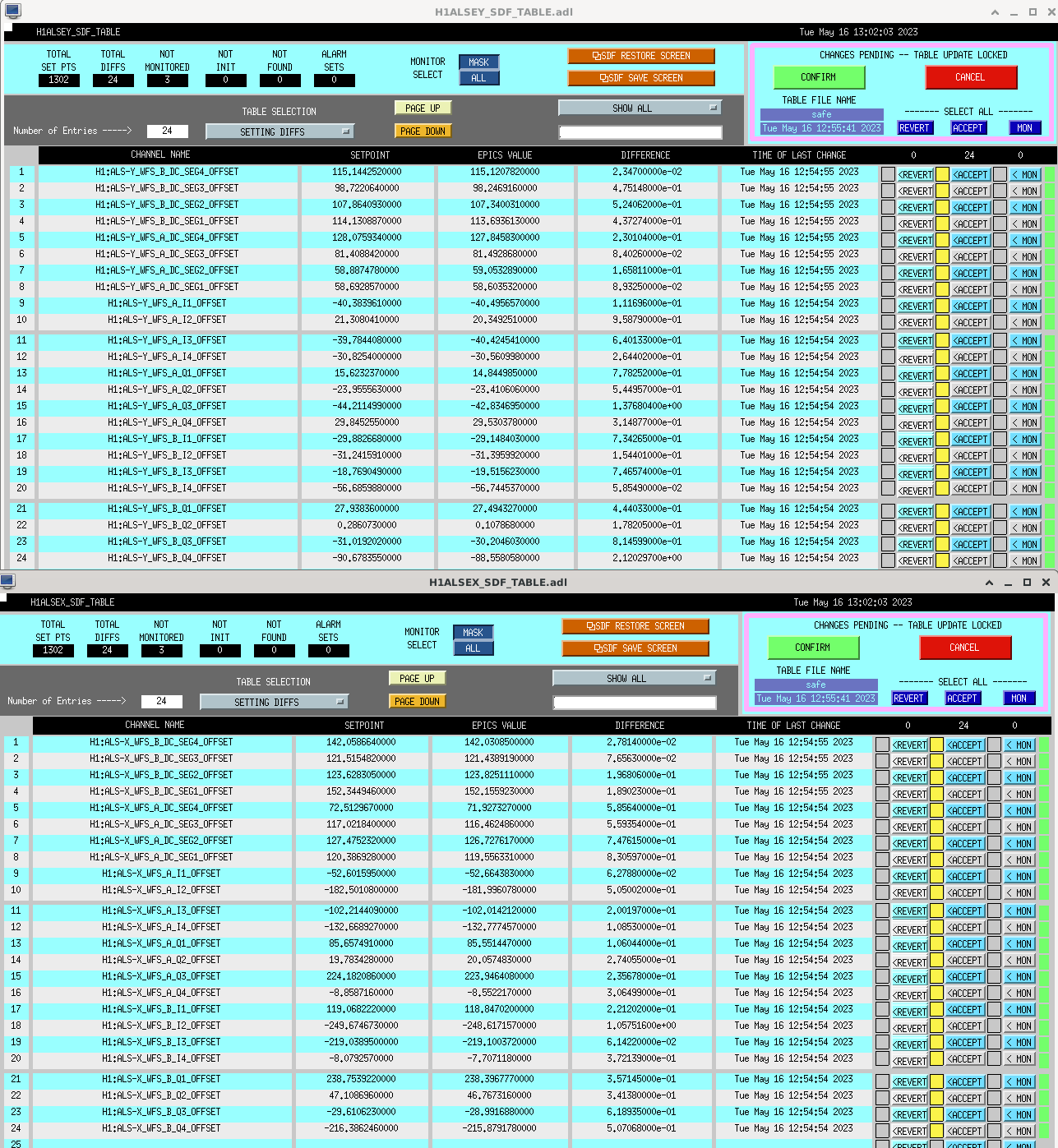
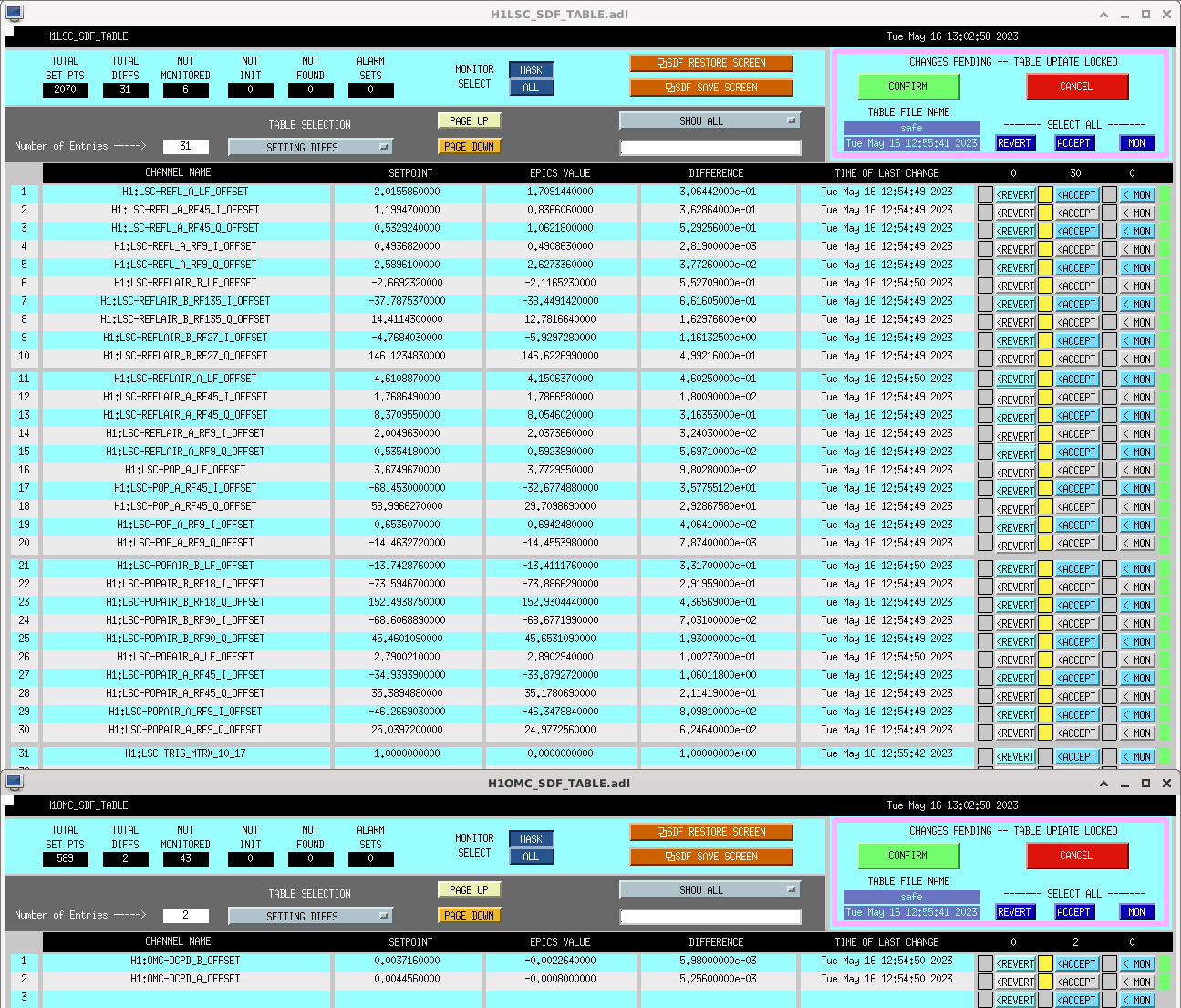
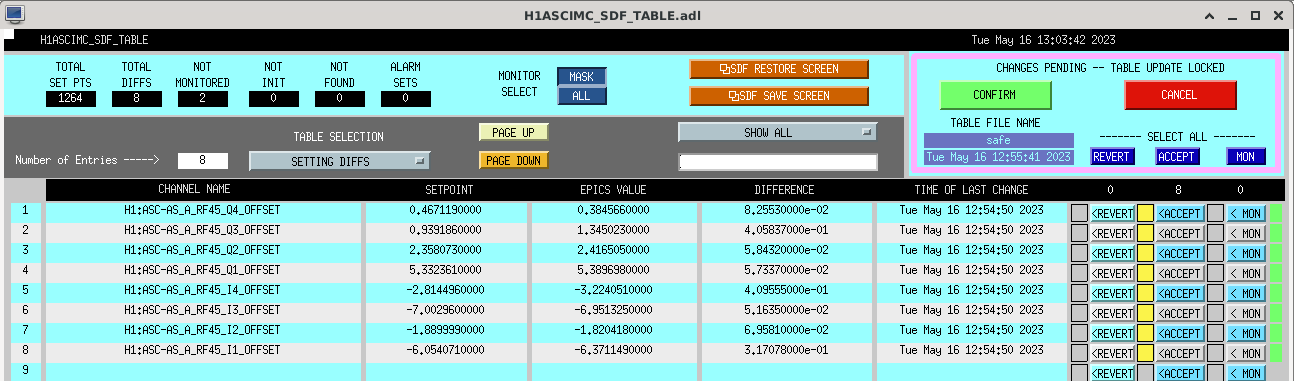
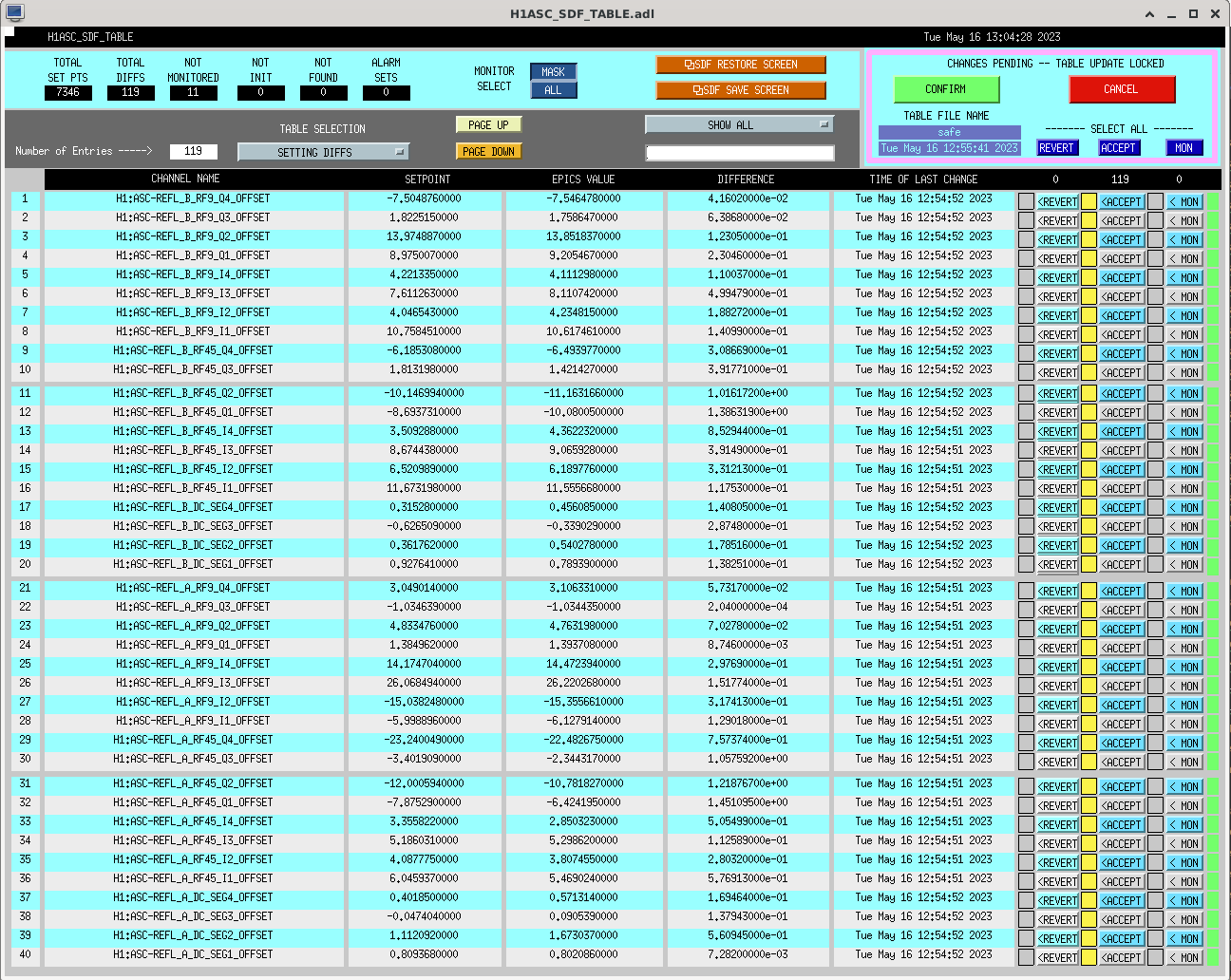
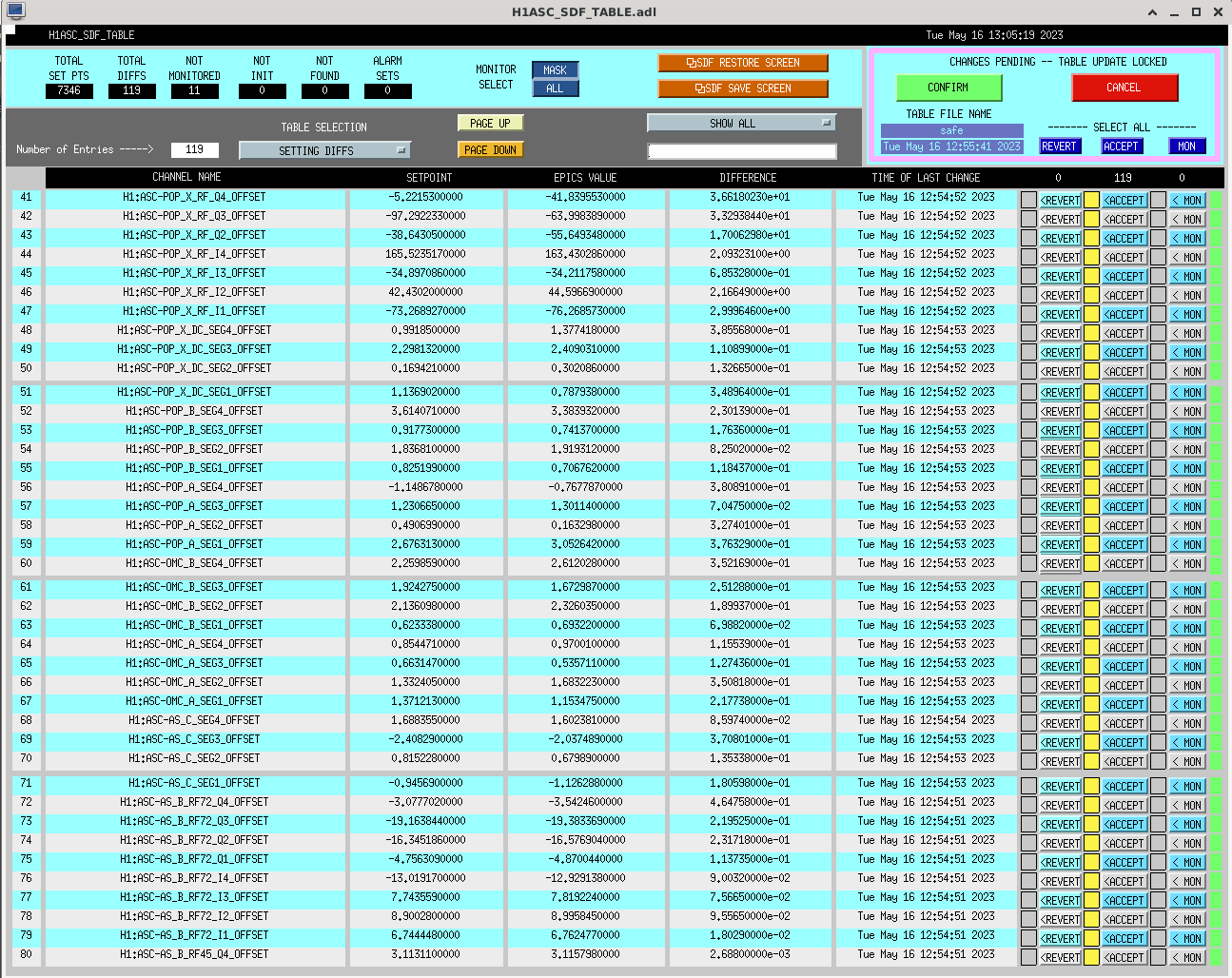
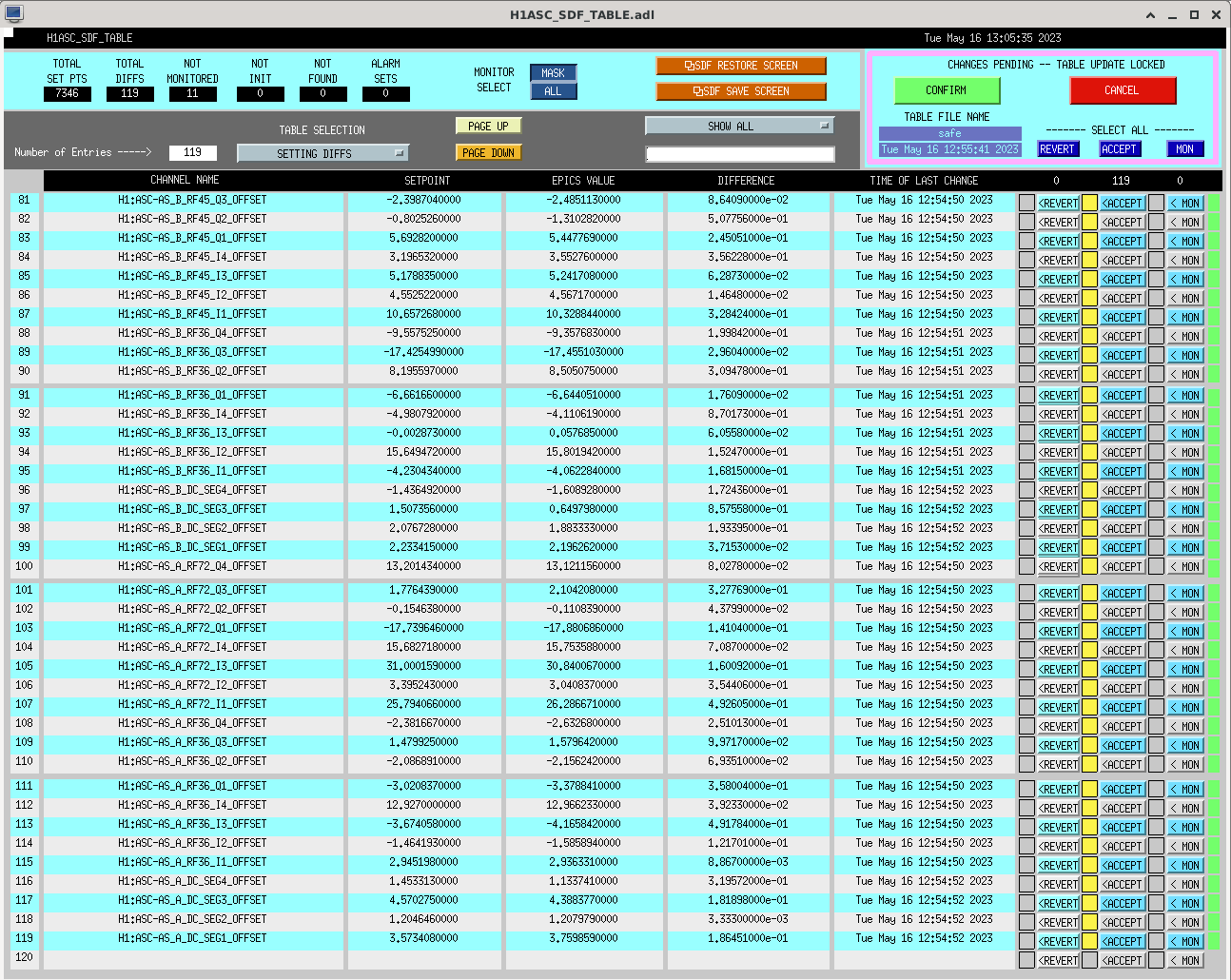
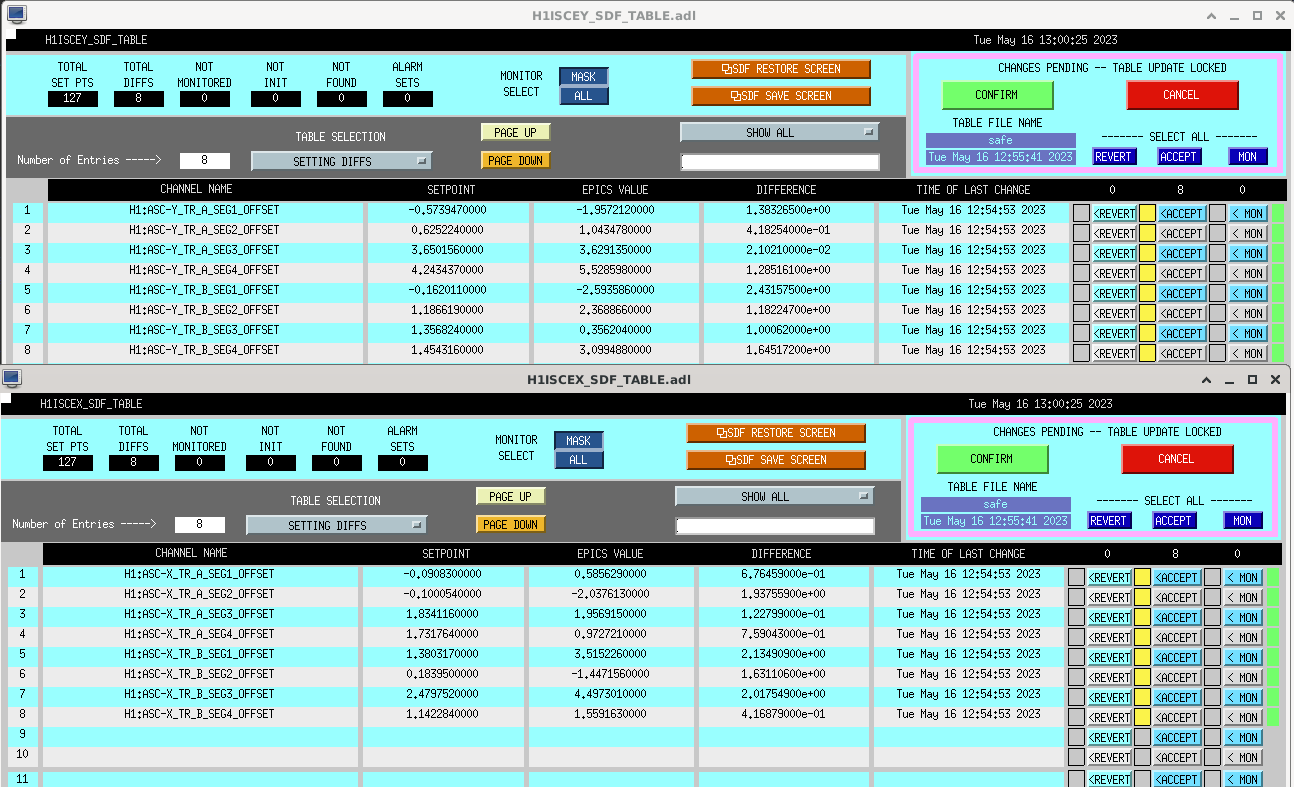
I've attached screenshots of the safe SDF changes, I'll work on the observes when we get up.
Gabriele, Camilla, Elenna
We have not updated the in-loop LSC feedforward since the increase in the DARM offset and the new SRCL offset (also small increase in MICH gain). These changes had a large effect on the feedforward, and Jenne has been able to subtract some but not all of the LSC noise using nonsens cleaning. I made three injections last night that would allow Gabriele to fit the feedforward and update the filters. I ran a MICH and SRCL injection, as well as a filter bank injection (input off, filters off, gain 1) to get the other preshaping effects in the feedforward. I did not run a PRCL injection, as we will need to update MICH and SRCL first, and then measure PRCL. The PRCL fit will depend on the MICH and SRCL feedforward.
The injection measurements are saved in "/ligo/home/elenna.capote/LSCFF".
Both new filters are labeled "5-16-23" and are placed in FM9 of MICHFF and SRCL1FF respectively. These filters should be used with a gain of 1. I updated the ISC_LOCK guardian to use these filters in lownoise_length_control.
Given that the PRCL feedforward is so dependent on MICH and SRCL FF, in the event that we are unable to implement a new PRCL FF in a timely manner, it is worth checking if the current PRCL feedforward is still improving noise or injecting noise with the MICH and SRCL update.
Unfortunatelt this made the LSC noise worse, which is the exact opposite direction we want to go. I am reverting the change.
The error was likely a sign flip. These filters should be tried one more time.
Overall, this implementation was a failure. The new SRCL filter did not work and caused a lockloss (there was a large high frequency portion of the filter we forgot to correct for). The MICH filter increases the noise in DARM. Both Gabriele and I are confused why the new feedforward has failed to improve the noise.
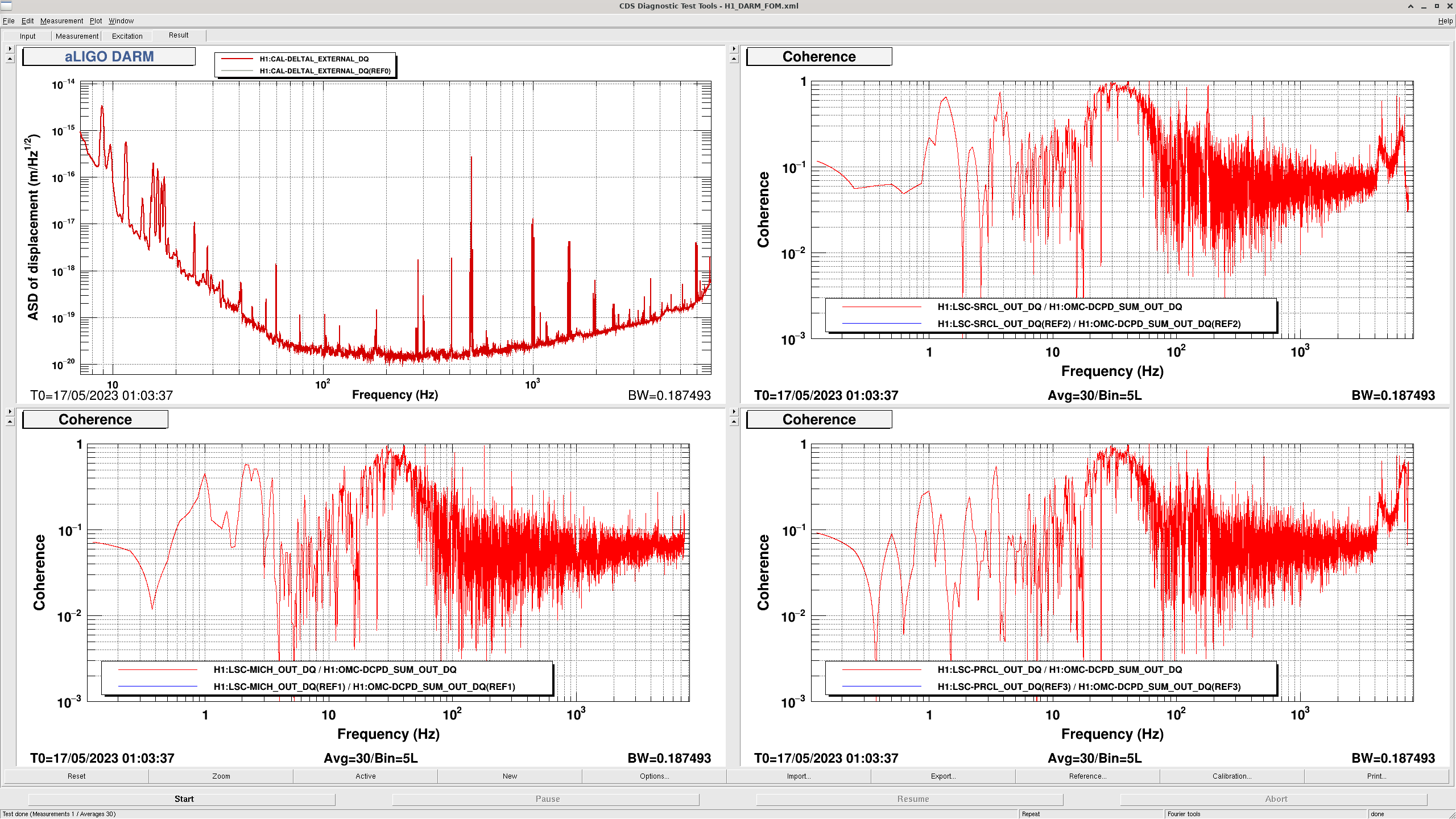
However, I think we need to try again. I am attaching a quick coherence I took from this lock, showing the high coherence from all three LSC loops. This is costing us significant range. This likely explains most of our range drop after we implemented the new DARM and SRCL offsets.
WP 11184 This morning, Tony and I turned back on both ETMX and ETMY HWS lasers and their cameras. Had them off for one week (alog 69431) to check for any noise caused by them. Tagging DetChar.
Evan Goetz, Debasmita Nandi, Taylor Starkman, Ansel Neunzert
We compared the weekly average spectrum starting May 10 with the week starting May 17. We saw a few noticeable changes in the weekly spectra, but careful follow-up shows that several of them are unassociated with the HWS changes. In particular, daily spectra show that changes in the 29.96 Hz and 1.66 Hz combs do not happen at the same time as the HWS changes.
There is a small 14.9009 Hz comb that seems to turn on during the week of the test and off afterward. (That is, the comb seems to be associated with the HWS being in the off state, which is fairly counterintuitive). Only a few peaks are visible, and it has not been noticed since.
Mostly noting these things here for future reference and searchability. We do not see large-scale spectral changes associated with this test.
We ran the functionality test on the main turbopump at EX, MX and MY. The scroll pump is started to take pressure down to low 10^-02 Torr, at which time the turbo pump is started, the system reaches low 10^-08 Torr after a few minutes, then the turbo pump system is left ON for about 1 hour, after the hour the system goes through a shut down sequence.
No issues were encountered while performing the functionality test on this station.
EX Turbo:
Bearing Life:100%
Scroll Pump Hours: 6304
Turbopump hours: 263
MX Turbo:
Bearing Life:100%
Scroll Pump Hours: 197
Turbopump hours: 107
MY Turbo:
Bearing Life:100%
Scroll Pump Hours: 11388
Turbopump hours: 198
Closes WP 11198 FAMIS 24911 24863 24839
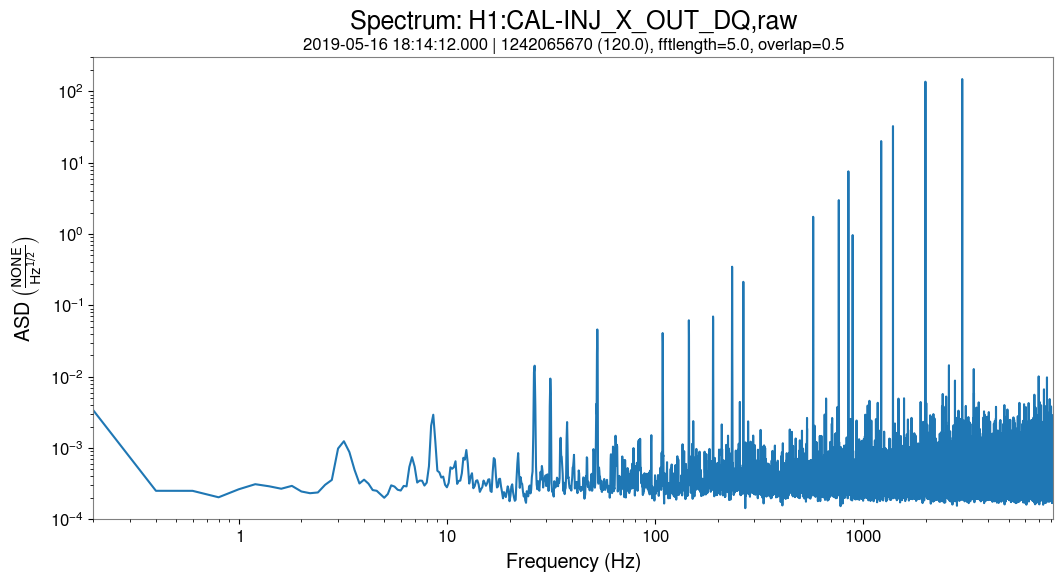
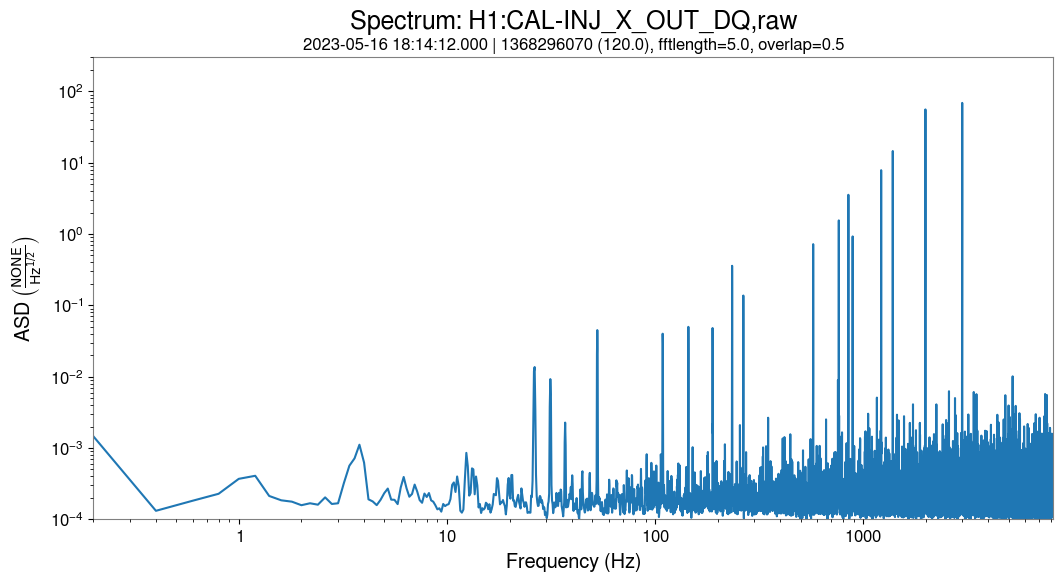
CW hardware injections have been started back up after a long hiatus and their amplitudes have been adjusted for O4 running. All other parameters of the 18 signals (ranging from 12 Hz to 2991 Hz) remain as they were in O3. As described in LIGO-T2100373, six of the amplitudes are meant to allow daily monitoring, with the other 12 allowing long-term monitoring over the full band covered. The same amplitudes are used for corresponding H1 and L1 signals, Because of the dramatic improvement in the sensitivities of both detectors since O3 at high frequencies, the amplitude reductions for signals above 140 Hz have been reduced by factors close to two, with some variations. For the time being, signal amplitudes at lower frequencies remain the same as in O3. A table of the injection parameters can be found here. Attached are ldvw spectra of H1:CAL-INJ_X_OUT_DQ for May 16, 2019 (O3 amplitudes) and May 16, 2023 (nominal O4 amplitudes) at the same time of day (to give approximately equal antenna pattern factors). Although the non-amplitude intrinsic signal parameters remain the same as in O3, the actuation function used has been updated with what Evan G posted here last week, for which there is an overall 2% change in magnitude and a negligible change in phase.
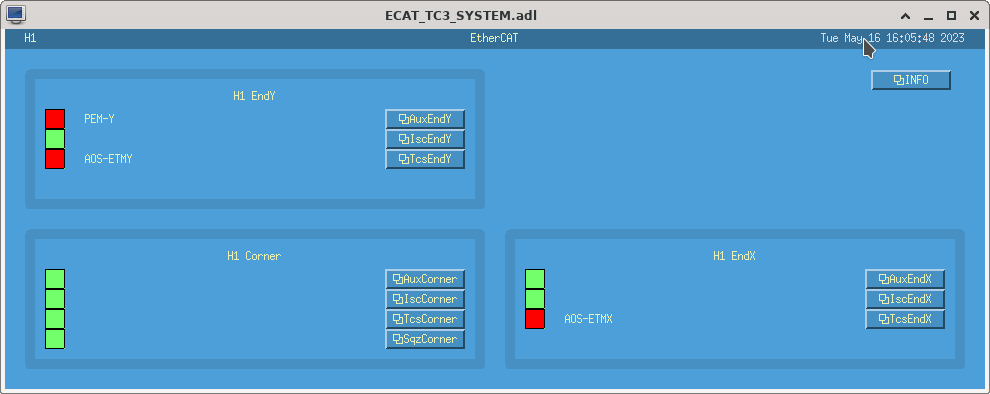
Updated the TwinCAT code and removed several unnecessary checks from the error handlers:
The EtherCAT overview screen is now mostly green.
3 of the baffle PDs are saturated: H1:AOS-ETMX_BAFFLEPD_1, H1:AOS-ETMY_BAFFLEPD_1, and H1:AOS-ETMY_BAFFLEPD_4. This could be fixed by reducing their gain by 20dB to 0dB, when we are in high power.
The other channel with an issue is H1:PEM-Y_EBAY_RACK1_TEMPERATURE which reads unrealistic values and needs fixing.
TJ, Betsy
Keith Riles requested that we "enable" the H1:CAL-INJ_X_OUT injections - we have enabled the Master H1:CAL-INJ_MASTER_SW switch to ON and toggled the drive to the H1:CAL-INJ_X_OUTPUT channel in the lower right.H1:CAL-INJ_X_OUTPUT. Signal is flowing.
Today I did a quick tune-up of the PSL FSS alignment, as the TPD had been trending down and remote alignment wasn't bringing it back to its usual level (an indication an on-table alignment tweak is needed). I began by taking a quick power budget of the FSS beam path:
The single-pass diffraction efficiency is roughly where it normally is, but the double-pass diffraction efficiency is lower than usual. To correct this I slightly tweaked mirror M21 to tweak the double-pass alignment. After the tweak:
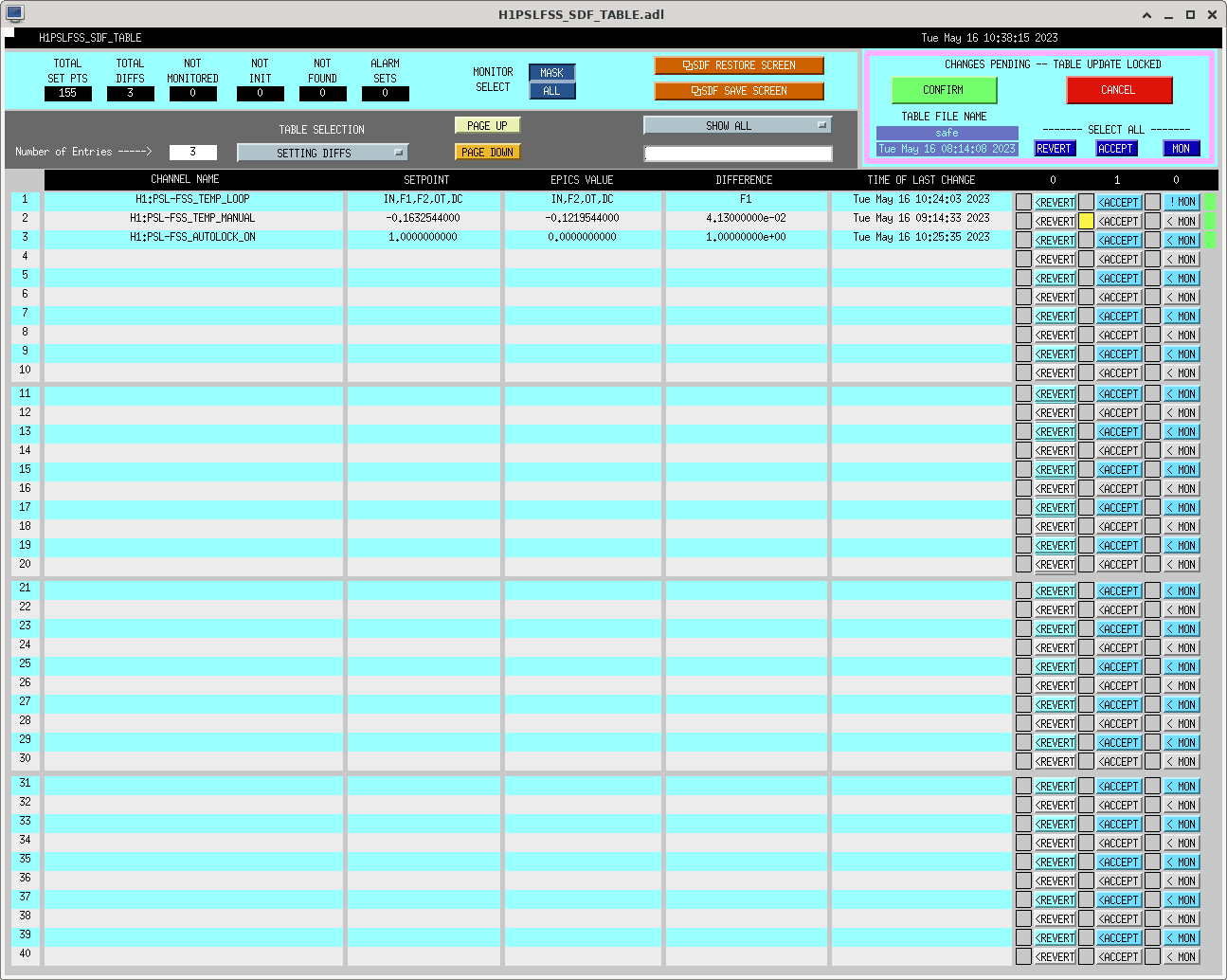
While not as high as we've seen in the past, this is close enough to where we generally run so I began recovering the RefCav. The alignment was far enough off that I had to lock the RefCav manually (this generated an SDF diff for H1:PSL-FSS_TEMP_MANUAL, which I accepted), then used the picomotors to tweak the alignment. In then end, I ended up with a RefCav TPD of 0.961 V. Finally, I adjusted the alignment into the RefCav RFPD and took locked and unlocked measurements for a quick visibility calculation:
I then left the enclosure and turned on the ISS. With the enclosure environmentals off and the ISS on, we now have a RefCav TPD of ~0.980 V. I've attached a screenshot of the accepted SDF diff from the manual RefCav locking; only the highlighted SDF difference was accepted, the other two differences are due to the RefCav being unlocked with the ongoing CER power supply work, which took down the RF distribution system and unlocked the PMC and RefCav. They will go away once the RefCav is locked at the end of maintenance. This closes WP 11201.
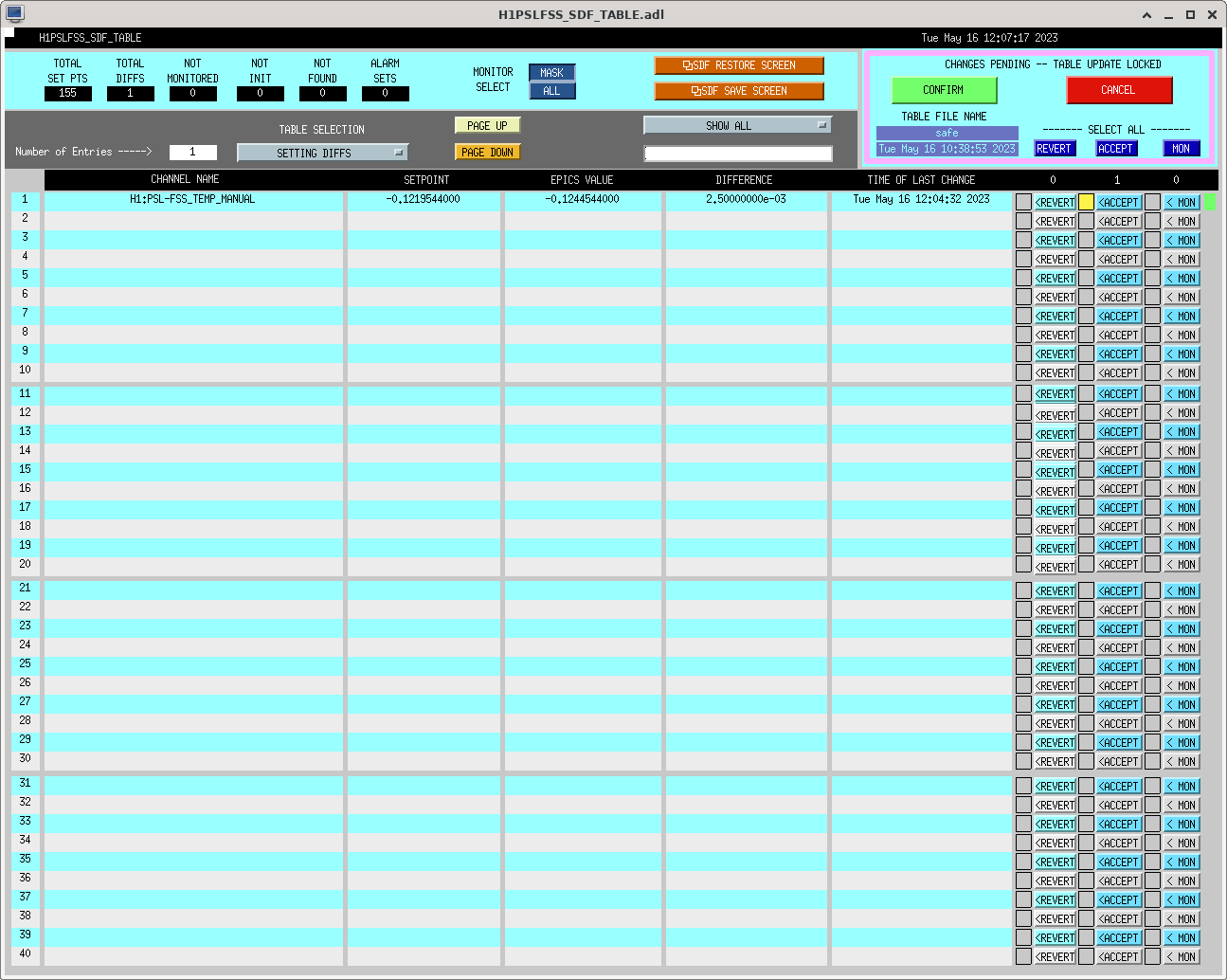
When re-locking the RefCav after RF was powered back on, I had to do it manually at first. It would catch, but then oscillate and would not stop and the autolocker would not engage the temperature loop. Once I re-locked manually and manually engaged the temperature loop, the oscillations stopped. The manual re-locking necessitated a change in H1:PSL-FSS_TEMP_MANUAL again, with corresponding SDF diff, so I acccepted it and attach a screenshot here. Will keep an eye on the RefCav to see if this behavior with the autolocker continues.
Tue May 16 10:10:00 2023 INFO: Fill completed in 9min 59secs
Richard confirmed a good fill curbside.
Due to some concerns raised by Evan Hall regarding vibration and noise from the # 1 supply fan at End X, I have switched from Fan 1 to Fan 2.
Tagging ISC, PEM, and DetChar -- this is a follow-up action taken now that we've found that the detector is particularly sensitivity to scattered light from the ETMX cryo baffle; see LHO aLOGs 69598 from Evan, and 69603, Andy's ID that it may be this fan that Bubba has now turned off as indicated in the above aLOG. The game plan: since improving the isolation / damping of the cryo baffle would require an end-station vent which we're not willing to do, we're instead looking to reduce the input motion to the cryo baffle's isolation system.
Last night after this change, the detector was left in observing mode for roughly 9 hours. This data that does not contain any visible 4 Hz glitching (see attached spectrogram). Additional checks of data during daytime hours would be helpful to confirm that the 4 Hz glitching is no longer an issue, but this is a promising sign.
D. Barker, C. Gray, J. Kissel, B. Weaver, T. Shaffer In order to prepare for the work Marc & co. are doing today re-organizing the DC power supplies to the ISC and SQZ racks work permit (WP 11193), we thought hard about the racks and subsystems impacted by that work. As such, we've taken the following actions (in the order listed): - IMC -- was locked, un-managed the IMC_LOCK guardian, and brought the state request to OFFLINE. - Filter Cavity -- was locked on green, brought the SQZ manager to DOWN - The following computer systems for ISC models are using ADCs and DACs from the similarly named IO chassis are powered by the power supplies in the WP -- including even some (again, but not all) CHANS_NOT_MON, :: h1iopomc0 >> This IO chassis is in rack SQZ-C1, whose +24V power is going to be changed to be supplied by a different power supply (needed due to actions 3 and 7 listed in WP) - h1omc - h1omcpi :: h1lsc0 >> This IO chassis is in rack ISC-C1, whose faulty -18V power supply is going to be replaced (needed due to action 8 listed in WP) - h1lsc - h1lscaux - h1sqz - h1ascsqzfc :: h1asc0 >> this IO chassis is in rack ISC-C1, whose faulty -18V power supply is going to be replaced (needed due to action 8 listed in WP) - h1asc - h1imcasc - h1ascsqzifo So, - we browsed through (though did not peruse) the SDF systems for the above listed models, confirmed that there were no SDF diffs for these model's monitored signals (and even some). Didn't find any, but accepted the unmonitored, guardian controlled, signals for the h1omc just so we start from a better place (e.g. the DARM offset was set at -42 rather than the modern 9.7). - Finally, we asked Dave to power down these IO chassis safely by first removing them from the Dolphin Network, and then shutting down all the front-end processes, and he has now done so (see LHO:69630). We're ready for ISC rack power supply work!!
WP 11193 The primary motivation for today's work is to truly isolate the DC power supply for new, segregated h1omc0 IO chassis that houses only the new 524 kHz low-noise ADC which reads out the OMC DCPDs -- i.e *the* DARM gravitational wave sensors -- from known loud RF source generators, like Bekchoff chassis and the RF distribution system. That rack, SQZ-C1, had been powered by a cobbled together mish-mash of available DC power supplies in the DC power rack H1-VDC-C2, which powers lots of other things including RF sources, which -- we suppose -- are polluting and down-converting the OMC DCPD (the DARM) sensitivity. So, technically, you might say this work falls under the scope of ECR E2200441, and IIET Ticket 25756. This covers actions 1, 2, 3, and 4 below. The secondary motivation is to continue the campaign of replacing ailing and failing power supplies. I'll leave it to Marc to aLOG what actually happens today (cite the old addage "plans are out of date as soon as you make them"), but for historical reference, here's the list of changes he's planning on doing plus some context as I understand it, and a gathering place for all of the drawings and serial numbers involved. Actions: * This swap is to keep the SQZ and ISC supplies grouped together. 1 - Add a +/-24V tap to the C4 junction box above H1-ISC-C4, connect tap to internal +/-24V source. # Impact: TEMPORARY BAD: ISC-C4 must get powered down, GOOD: segregating the h1omc0 # IO chassis power (in SQZ-C1) from RF distribution system, less lines in DARM 2 - Move +/-24V sequencer cable from C3 junction box to new C4 junction box +/-24V. # Impact: TEMPORARY BAD: ISC-C3 must get powered down, GOOD: segregating the h1omc0 # IO chassis power (in SQZ-C1) from RF distribution system, less lines in DARM 3 - Move H1-SQZ-C1 cable in H1-VDC-C2 Power Rack from U26 to U34 RHS, set U34 RHS Kepco to +24V. # Impact: TEMPORARY BAD: SQZ-C1 must get powered down, h1omc0 IO chassis must get # powered OFF, GOOD: h1omc0 IO chassis gets this dedicated power supply, less lines in DARM 7 - Install new power run from H1-VDC-C2 to H1-SQZ-C1 for +24V supply for the segregated SQZ-IO [h1omc0] chassis. # Impact: TEMPORARY BAD: SQZ-C1 must get powered down, h1omc0 IO chassis must get # powered OFF, GOOD: h1omc0 IO chassis gets this dedicated power supply, less lines in DARM * balance load between the two Beckhoff +24V power rails 4 - Move H1-ISC-C3 cable in H1-VDC-C2 Power Rack from U34 to U26 RHS, set U26 RHS Kepco to +24V. # Impact: TEMPORARY BAD: ISC-C3 must get powered down, GOOD: as stated in Marc's work permit, # balancing the DC power to Beckhoff chassis, and a cable rearrangment fall out of Action 3 above 5 - Move +24V H1-ISC-C3 Breakout Rail input cable to old H1-ISC-C3 +24V junction box above rack. 6 - Move ISC-Beckoff +24V cable from IO-ALS & IO-LSC power and to the new +24V power rail powered from H1-ISC-C3. * repair failing power supply 8 - Replace H1-ISC-C1&C2 -18V RHS with new supply. # Impact: TEMPORARY BAD: ISC-C1 and ISC-C2 must get powered down, GOOD: noise source from failing power supply mitigated Systems Affected: ISC-RF Generation ISC-C3 & ISC-C4 ISC-Signals Conditioning ISC-C1 & ISC-C2 ISC-Beckhoff in ISC-C3 SQZ-IO Chassis in SQZ-C1 SQZ-C1 - Primary Functions: New home for Segregated OMC IO Chassis (and AA Chassis) and SQZ system's Beckhoff chassis - Wiring diagram: D1100683 for Bekchoff, New Segregated OMC IO Chassis Location Not indicated in D1900511 - Graphical layout: D1600513 for Beckhoff, New Segregated OMC IO Chassis Location Not indicated in D1600513 - Serial Number: S1800536 H1-VDC-C2 - Primary Function: +/-18 and +/-24 V DC power supplies for many PSL, ISC and SQZ racks (and +/- 18 V for SUS field racks, SUS-R1, SUS-R2, SUS-R3, SUS-R4) - Designation of which power supply powers which rack D2300167, page 7 - Serial Number: S1301896 H1-ISC-C1 - Primary functions: Audio Frequency ("Fast") Signal Conditioning for LSC and ASC IO chassis, and the IO chassis themselves - Wiring Diagram: D1900511, pages 1 and 2 - Graphical layout: D1001427 - Serial Number: S1301876 H1-ISC-C2 (Not involved in today's work) H1-ISC-C3 - Primary functions: (Radio Frequency) RF distribution and CER IO Chassis Timing Fanout - Wiring diagram: D1900511, pages 6 and 7 - Serial Number S1301878 - Graphical layout: D1001427 - Note: timing system is powered by different power supplies that the work planned today, so the work today should not impact CER timing system. #crossfingers H1-ISC-C4 - Primary functions: RF generation and distribution system RF oscillators and DEMODs used by PSL, IMC, ALS, SQZ, LSC, ASC, etc. - Wiring diagram: D1900511, pages 8 and 9 - Graphical layout: D1001427 - Serial Number: S1301879
Additional Effects From This Morning's Power Supply Work For The ISC RF Racks:
See LHO:69652 for Marc's description of what was actually completed. In short, they did NOT do Actions 7 -- isolate the h1omc0 IO chassis on its own power supplies, nor did they do action 8 -- replaced the failing power supplies that support ISC-C1 and ISC-C2.
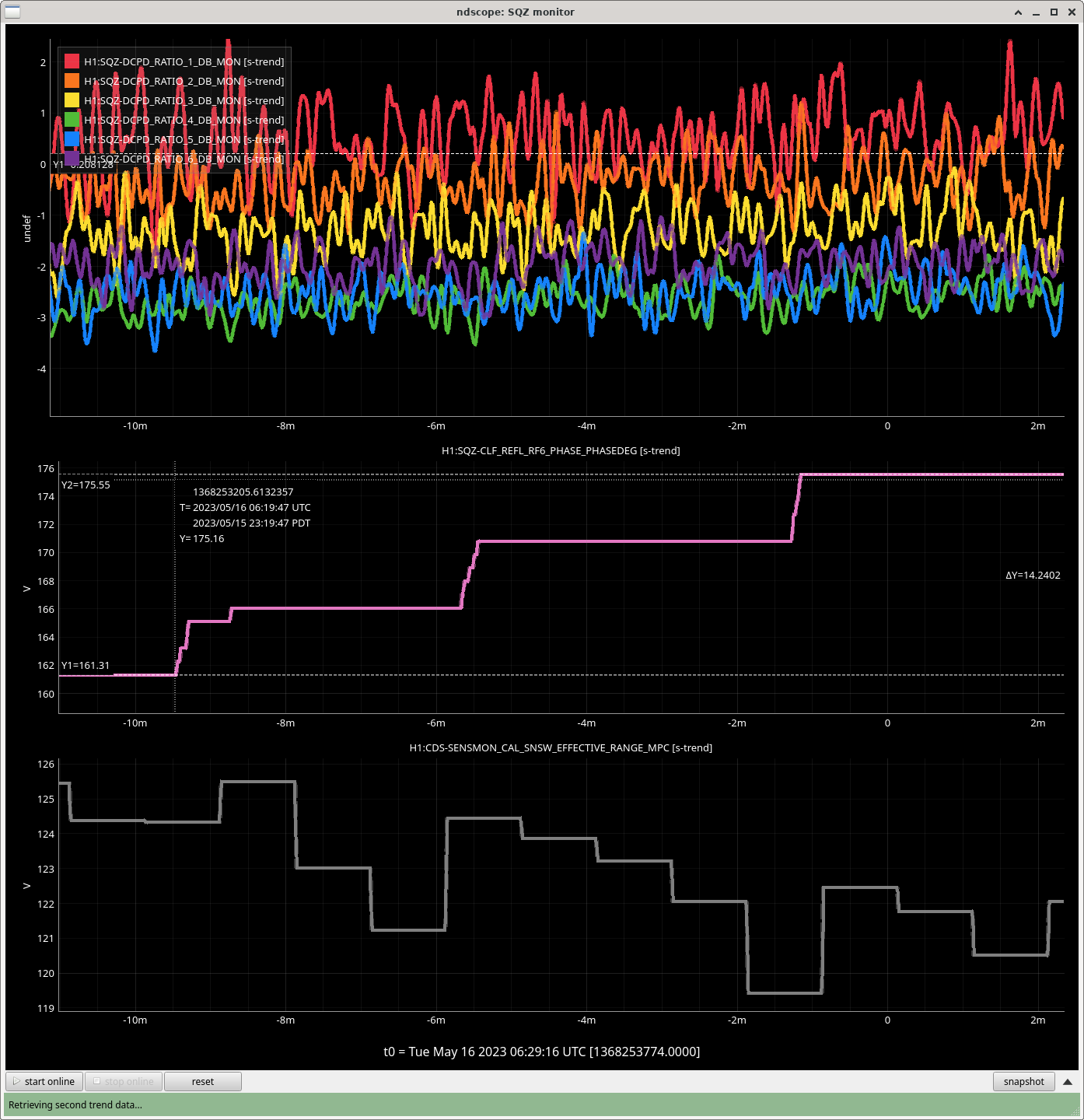
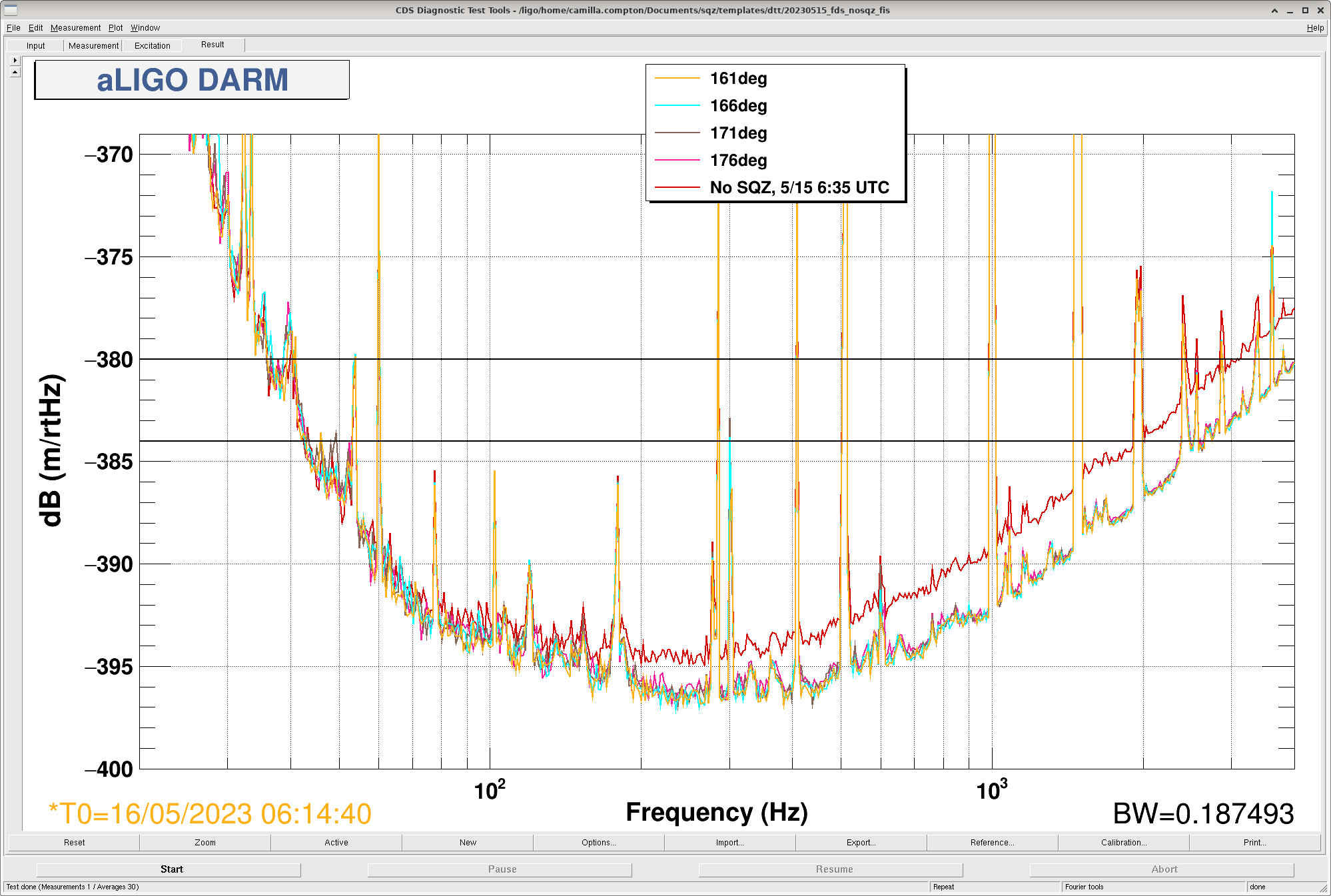
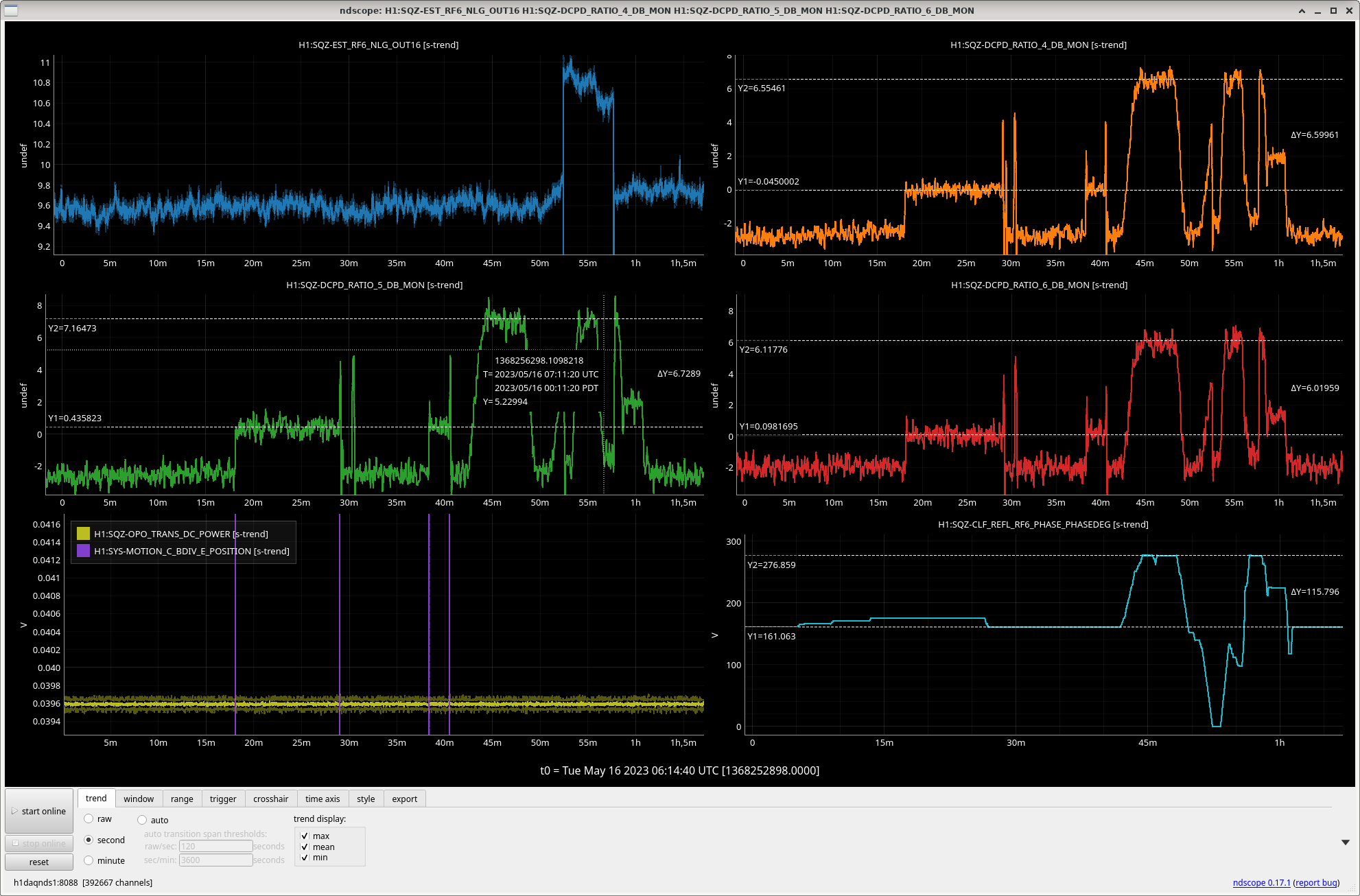
While LLO were not Observing, I took some SQZ data to help better understand our SQZ angle for future overnight tests. Our squeezing hasn't been great over the last few days, we expect as our NLG and power though the SHG have decreased, we will go onto SQZT0 tomorrow.
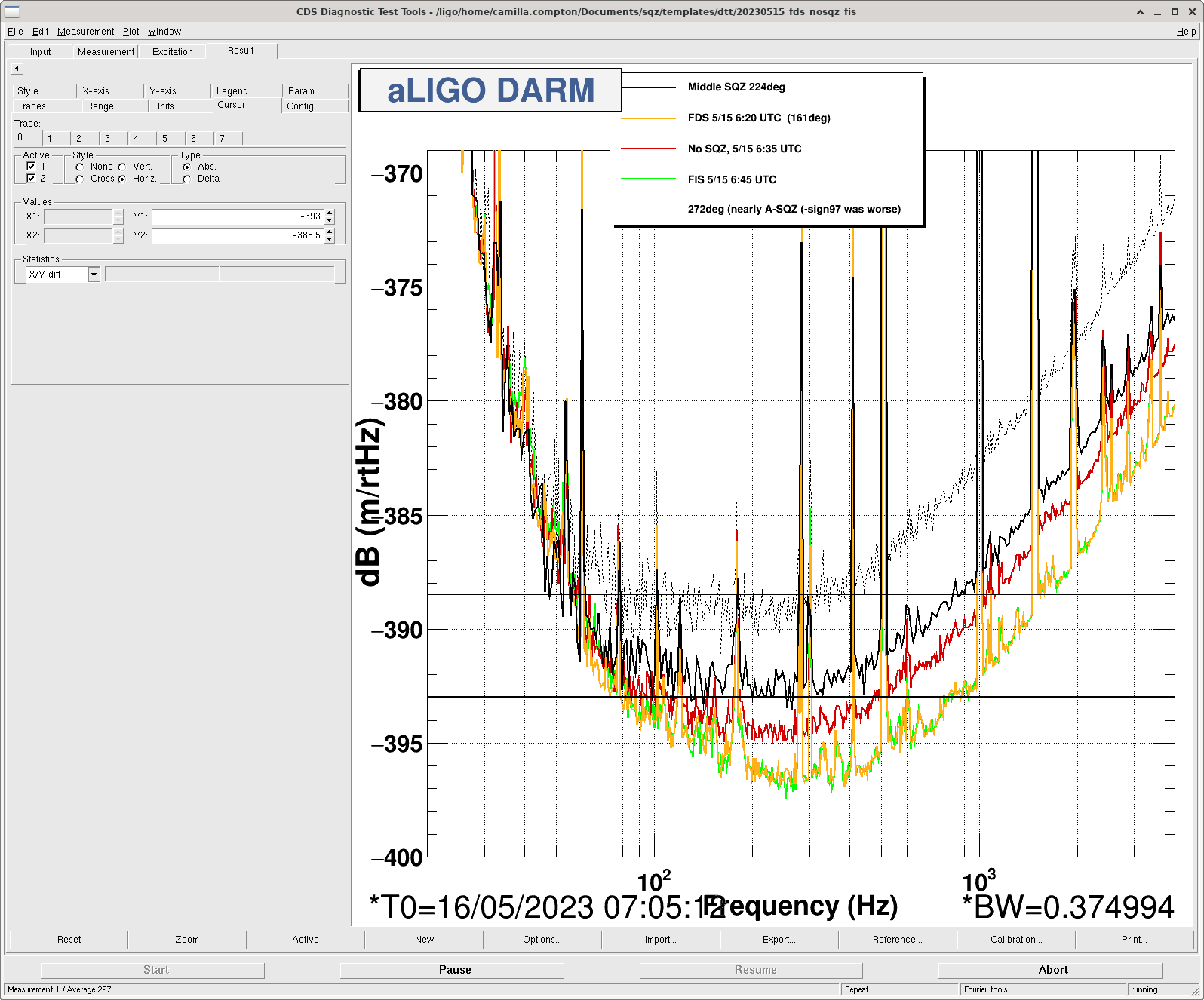
Naoki, Sheila, Vicky. It was great that Camilla did these meausurements last night!
OPO TRANS DC POWER = 39.6 uW. According to calibration on 2/3/23, which has been pretty trustworthy, this is about NLG = 3.92, so generated SQZ = 9.24dB.
Based on the no-sqz data at this time, IFO losses are below 35%, and more like 20-30%. These sqz/asqz levels suggest either significant 50% squeezer losses (15-30% excess sqz losses from ifo losses), or that our NLG is mis-calibrated/mis-tuned due to wrong opo temperature at the time.
If we had only the known levels of squeezer injection losses (say common 20-30% losses with ifo + additional 7% sqz injection losses, total ~30% loss), I'd expect we'd have seen ~7.5-8 dB asqz, and over -3.7dB sqzed noise reduction, which was clearly not the case.
Assuming fixed/real NLG, adjusting losses to match observed sqz/asqz. With NLG = 3.92, this gives generated SQZ = 9.24dB. To only see Anti-SQZ = 6.5dB and sqz = -2.5dB, suggests the squeezer sees 45-50% total losses, so like 15-30% excess of ifo losses.
Given these SQZ/ASQZ levels, calculate NLG and losses. Best-case for losses, an NLG=3.3 and losses 42% would be sensible. This is still excess 10-20% sqz losses from ifo losses.
What was our NLG? Today Naoki measured NLG=3.75 after several DAQ restarts. This would need about 50% sqz total losses, 15-30% excess sqz loss from ifo losses.
Potentially the opo co-resonance temperature is mistuned for red/green co-resonance, given that I'm not sure we re-tuned the OPO temp optimally with this lower NLG and the recent LVEA temperature drifts. Maybe our AS42 offsets are also bad, we have not updated them in a while, and there have been many computer restarts last week. As well, we've had FC alignment/ASC changes; we've checked for clipping but maybe with recent computer restarts it is worth double-checking. We'll check everythign again after today's sqzt0 table work, and see if we can reconcile these numbers. We can try to more often quickly check asqz/mean-sqz to better understand our losses.
I checked the logic and removed the weighted the edge between SQZ_ASC and FREQ_INDEP_SQZ in SQZ_MANAGER so it should now go straight to FIS if it is requested. It can also go between FIS and FDS as icky and I previously added.
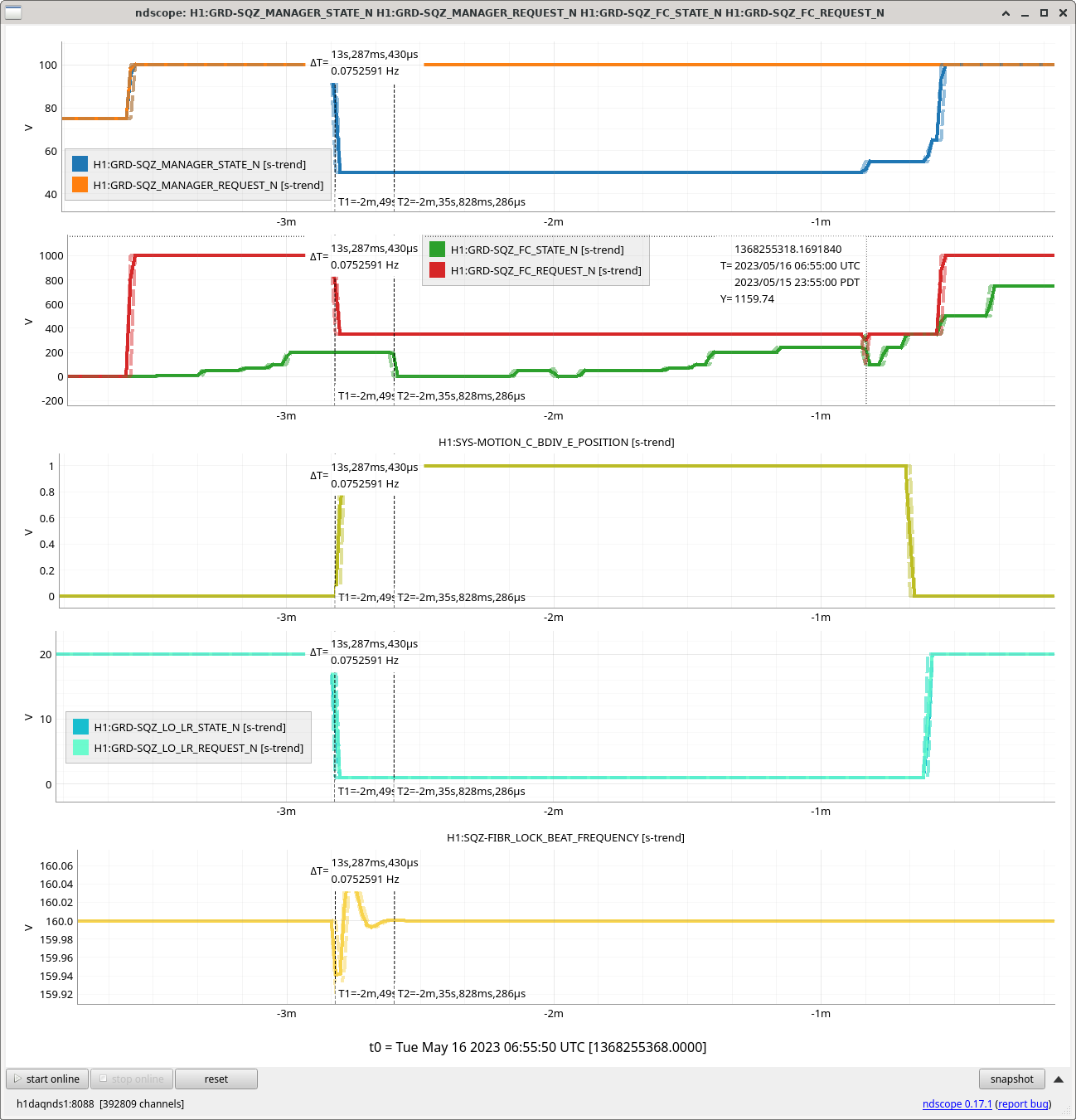
Looking into why SQZ_FC was slow (3 minutes) getting from FIS to FDS, see attached:
As the FC goes from FIS --> FDS, the FC guardian is bringing FC2 from MISALIGNED --> IR_LOCKED. But in the process of physically moving FC2 back, it is free-swinging, and I wonder if maybe the CLF glitches through FC resonance in this time. The CLF going through FC resonance kicks the LO loop, which kicks TTFSS, and in turns brings down the LO loop, causing SQZ_MANAGER to go back to SQZ_READY_IFO, since it looks like the LO loop failed. When we're locked next, we can check if the LO loop can stay locked while the CLF glitches through, and if it can, maybe the guardian brings down the LO loop pre-emptively even if it doesn't have to.
Maybe we don't care to switch faster between FIS --> FDS. But if we do, I wonder if we could just tune the FC out of band, as far as the RLF-CLF can go. Or, we can bring FC-IR back with bdiv closed, or open with the LO loop unlocked. If we need to do this for upcoming sqz scans, I think we can smoothen out this transition.
To comment about the losses quoted above -- I think the losses were weirdly high b/s squeezer was in a not optimal way, related to our SDF mess after computer restarts, maybe our low NLG and higher CLF powers we happened to be using for a week or so, and other semi-random technical problems that have popped up over the last 1-2 weeks. I think our previous measurements of 3.5-4dB SQZ exclude losses of order 50%, when the squeezer is operating nominally and things are "normal". But we will check asqz/sqz more regularly now, to help track losses.
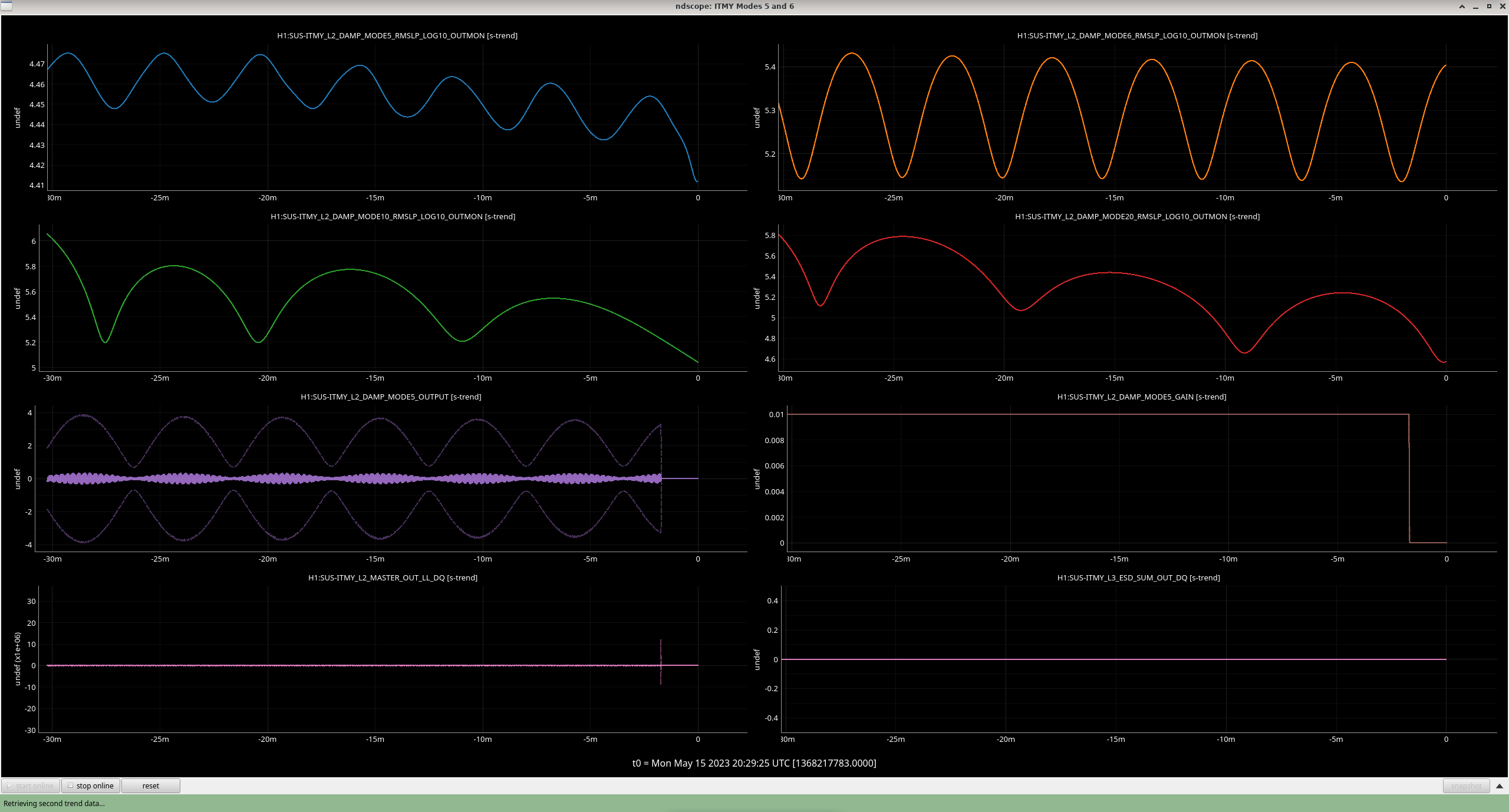
The nominal settings for ITMY mode05/06 has stopped working past few IFO locks and both the modes are gradually growing. The nominal setting had a -30 deg phase filter engaged with a gain of -0.01. I tried flipping the sign but the mode was still growing. Hence I switched off FM2 (-30 deg phase filter) and applied a positive gain, which looks to be working (during the last lock) - see screenshot of the ndscope which shows both the modes damping down slowly (both narrow and broad band monitor filters). Given below are the setting which I will try in the next lock and if everything goes fine then I will make the changes in lscparams and accept them in the SDF.Observe file.
IY05/06 FM1 + FM10, Gain +0.01
Also, for IY07 someone found the mode to be growing with -60deg phase filter engaged (I see a comment on lscparams). I tested it this morning and found it to working fine with the -60degree phase filter. I will keep an eye on this mode but at the moment I am going with the following filters and gain,
IY07: FM1+FM2+FM10 Gain +0.1
Accepted the changes for IY07 on SDF.OBSERVE, screenshot is attached below.
I can confirm that the new IY05/06 settings work well for multiple locks. They can be guardianized!
I have confirmed the above settings in the lscparam.
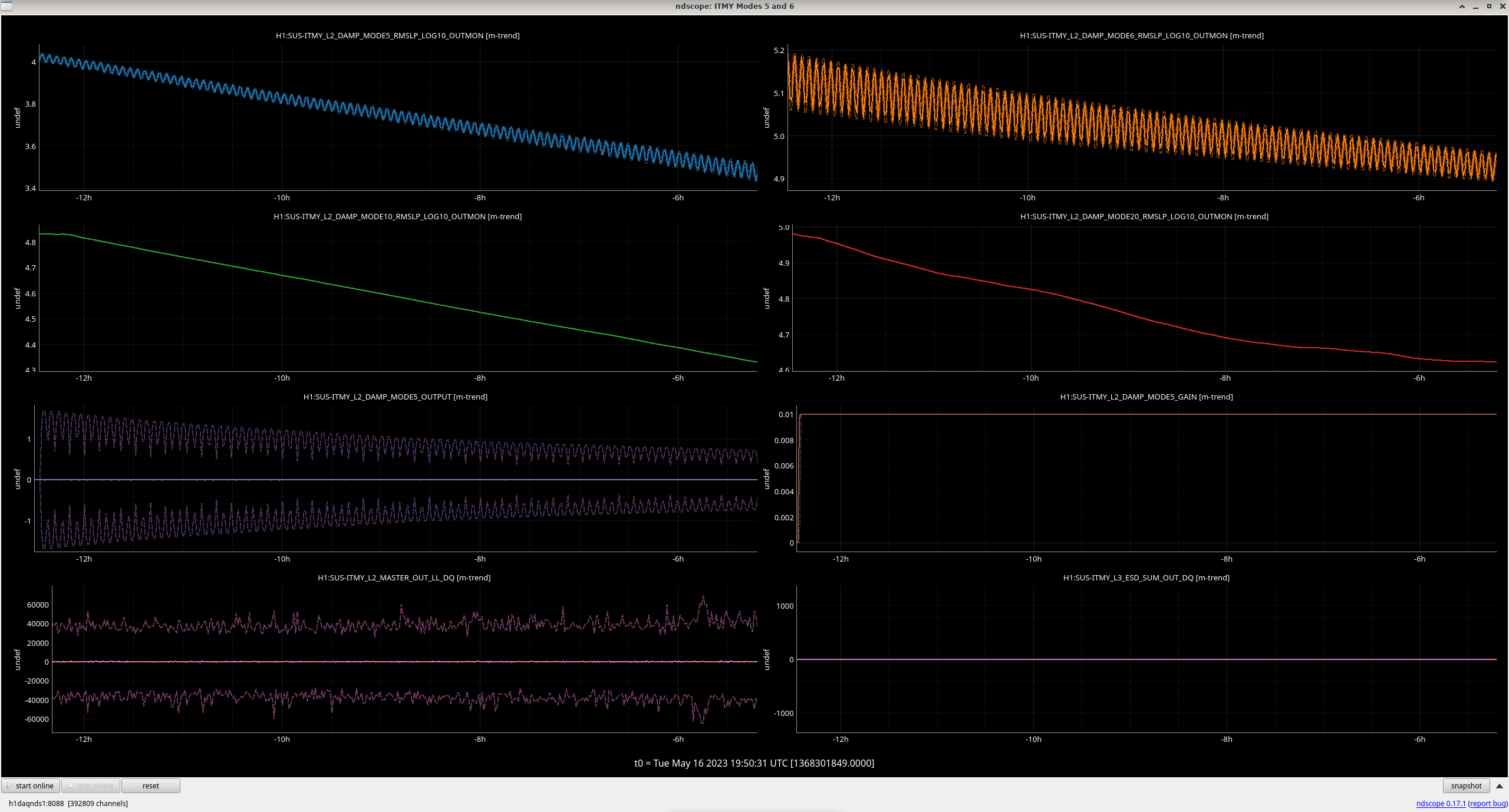
Attaching a plot from last night (6 hours of damping went fine).
FAMIS 20878
CS Fan3 can see our on/off tests from this week, which can also seen in the fan1 vibrometers. The overall noise changed a bit on Wednesday when Chris and Floyd greased fans. For CS fans 2,3, 5, the noise might be a bit worse, but nothing that looks worrying yet. EX fan2 looks much better after Wednesday.
For the noise impact we eventually found from this change in fans -- specifically in fan 1 -- see LHO:69603.
These channels were remnants of the pem changes from O3 to O4 (there is no more SQZT6 or ISCT6), and we overlooked changing them earlier. As such, people who use static channel lists might run into issues with the disappearance of the ISCT6 and SQZT6 channels.
Tagging DetChar.