TITLE: 05/05 Day Shift: 15:00-23:00 UTC (08:00-16:00 PST), all times posted in UTC
STATE of H1: Lock Acquisition
CURRENT ENVIRONMENT:
SEI_ENV state: CALM
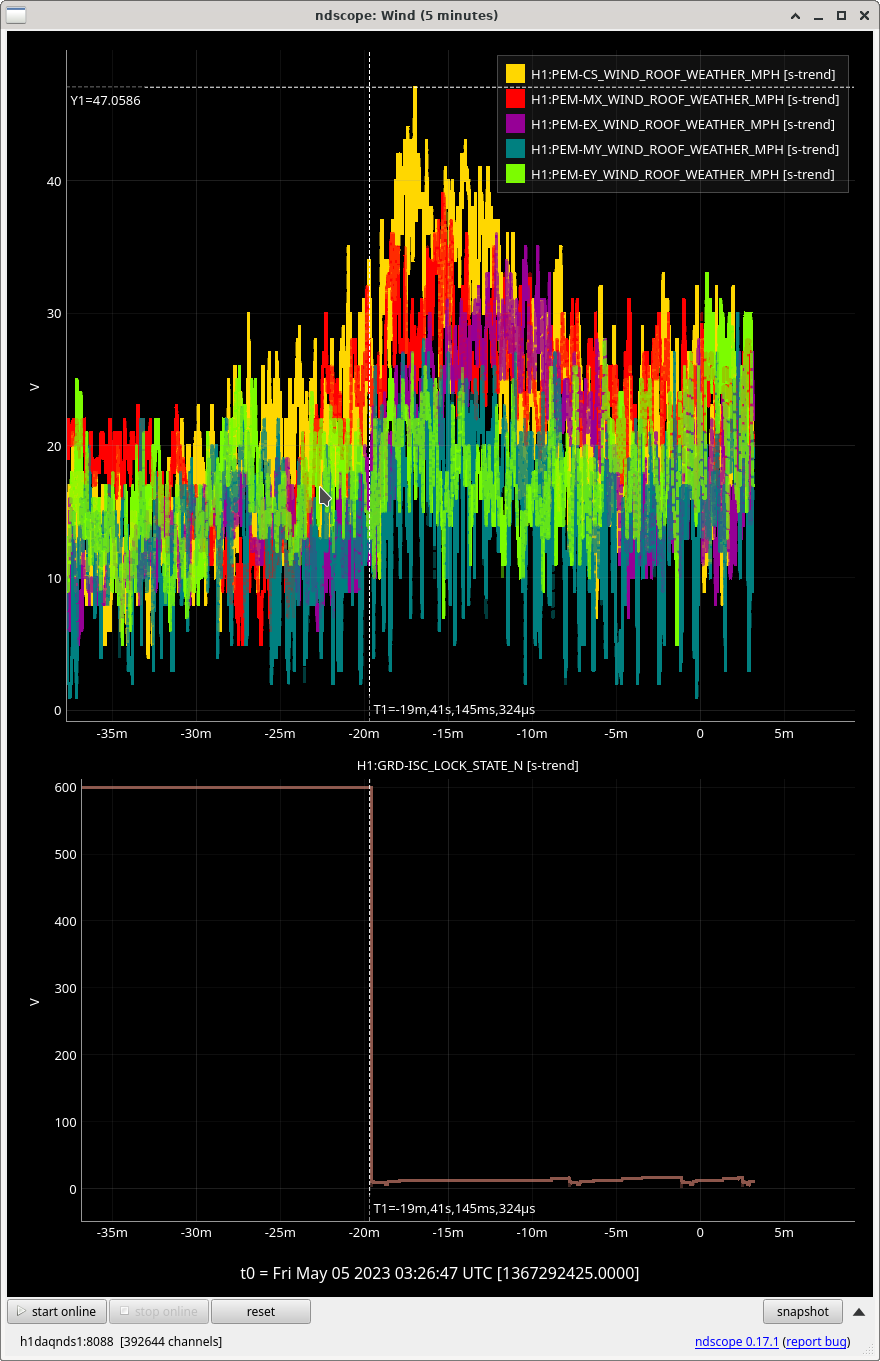
Wind: 15mph Gusts, 12mph 5min avg
Primary useism: 0.04 μm/s
Secondary useism: 0.13 μm/s
QUICK SUMMARY:
H1's been locked just over 2hrs (after being down ~100min to relock on its own). Range is hovering just below 135Mpc.
TITLE: 05/05 Eve Shift: 23:00-07:00 UTC (16:00-00:00 PST), all times posted in UTC
STATE of H1: Lock Acquisition
SHIFT SUMMARY: Locked for the first half of shift and high winds and an earthquake kept us unlocked for the second half. Currently locking well at ENGAGE_ASC_FOR_FULL_IFO.
LOG:
| Start Time | System | Name | Location | Lazer_Haz | Task | Time End |
|---|---|---|---|---|---|---|
| 21:23 | CAL | Jeff/Louis/Camilla | CR | N | Calibration sweeps | 02:00 |
| 22:36 | VAC | Travis/Gerardo | MX | N | Measure pumps | 00:00 |
| 01:25 | - | Rick | Arms | N | Bike Ride | 02:50 |
| 02:00 | CDS | Nyath, Jonathan | Offices | N | Internet down alog 69337 | 05:02 |
Naoki, Vicky
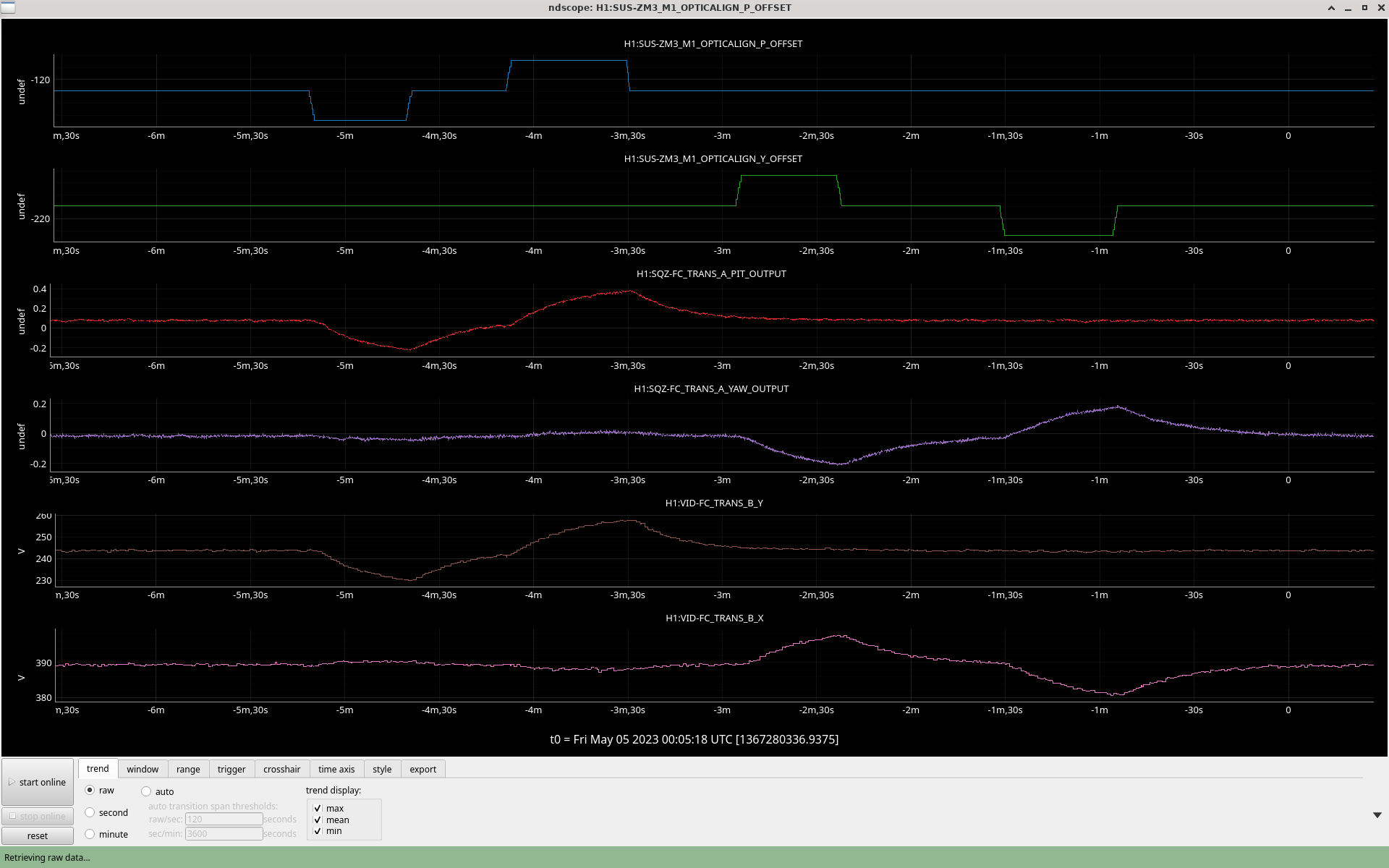
This is the continued work of alog69276. After centering the FC2 by ZM3, the optimal green QPD output is 0.046 for pitch and -0.0037 for yaw. So we set the offset of input matrix for INJ ANG as -0.046 for pitch and 0.0037 for yaw. Then we moved the ZM3 and checked the response of green QPD and IR camera as shown in the attached figure. The green QPD and IR camera respond to the ZM3 well. We will implement the beam spot control with these signals soon.
We attempted to move to the SRX router again today. We took an outage from about 6:20pm to 10:00pm localtime (1am-5am UTC). We were able to have some ESnet engineers and a Juniper support engineer working with us. Unfortunately we were unable to get bits flowing through the SRX. Neither us, ESnet, nor the vendor understand why the packets are not flowing. We ruled out issues with the fiber, optics. We rewrote, removed, disabled firewall rules. We reworked the routing setup and policies several times. We could send packages but not receive them, a symptom of that was we were never able to get an arp entry for ESnet. ESnet received packets from us and had a correct apr entry. We also tried set a static arp rule on our end, but that did not help.
Below I have listed the relvant alogs for TCS changes while at 76W input power. Alog 68491 listed the TCS changes with 60W input power.
I'm not documenting between 7th April and 13th April as at that time we were experimenting with 70 and 78W locks.
|
Date
|
IX
|
IY
|
EX
|
EY
|
CO2X
|
CO2Y
|
Notes
|
|
2023/04/13
|
0.44
|
0.0
|
1.2
|
1.2
|
1.7
|
1.7
|
Starting values.
We did some CO2 common and diff steps here, could make IFO worse but not better 68643.
|
|
2023/04/14 00UTC/06UTC
|
|
|
1.3
|
1.1
|
|
|
68676 contrast defect = 1.6mW.
|
|
2023/04/14
21UTC
|
|
|
|
1.0
|
|
|
68715 HOMs are coming together
|
|
2023/04/17 20UTC/01UTC+1
|
|
|
1.7
|
0.6
|
|
|
|
|
2023/04/18
23UTC
|
|
|
1.7
|
1.7
|
|
|
68810 Aimed to squash HOM, this change moved the peaks below the PI forest but dropped PRG by 20%
|
|
2023/04/19
02UTC
|
|
|
1.4
|
1.0
|
|
|
|
|
2023/04/19
07UTC
|
|
|
1.3
|
1.0
|
|
|
68813 Reverting settings.
|
|
2023/04/19
19UTC
|
|
|
|
1.1
|
|
|
68859 Gave us a reduced 1.7mW contrast defect
|
|
2023/04/20
21UTC
|
|
|
|
1.2
|
|
|
68875 Reduced high freq noise. Moves HOM further apart.
|
|
2023/04/21
12UTC
|
|
|
|
|
|
|
68884 Pulsed SR3 Heater, 2W for 10minutes
|
|
2023/04/24
18UTC/21UTC
|
|
|
|
|
4.0 |
|
|
|
2023/04/26
04UTC/15UTC
|
0.44
|
0.0
|
1.3
|
1.2
|
1.7
|
1.7
|
Final Settings 69032
|
IFO has been locked for 6h45. In observing for the last hour. Range is 130-138MPc.
Louis, Jeff, Camilla
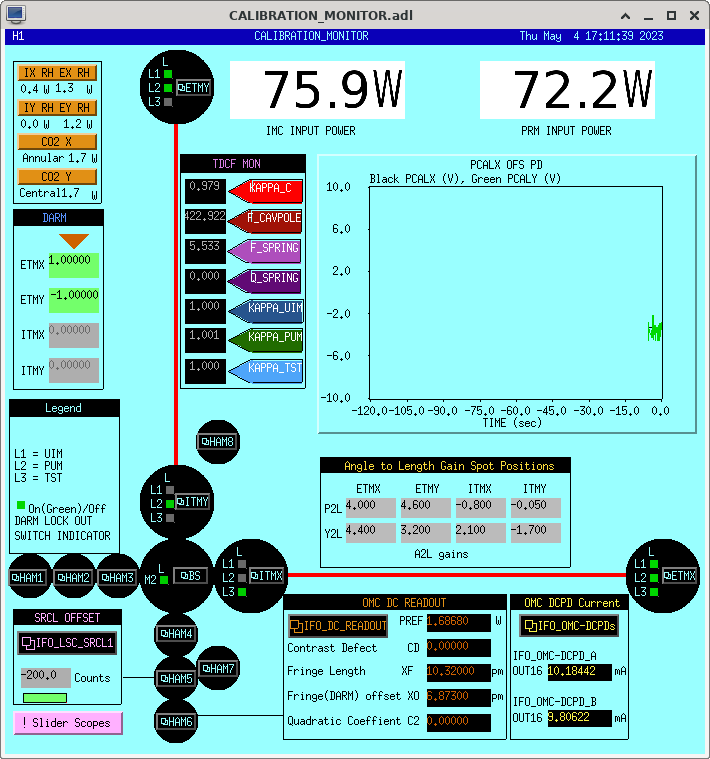
Attached is the sitemap > CAL CS > Calibration Monitor screen ~5 minutes after the first measurement was started. Note that Both CO2s are Annular not central as shown in the screenshot, I'll adjust this medm.
'pydarm report' command gave attached report H1_calibration_report_20230505T012609Z.pdf
I've been making a few changes to the ALS_COMM node over the past couple of days to attempt to fix some of the ir finding issues we've been seeing. After pulling myself out of an awful conditional and lack of sleep mess I made, we're now in a good spot. Summary of changes:
ALS_DIFF's IR finding works a bit different, but I think some of this can be carried over. Working on that next.
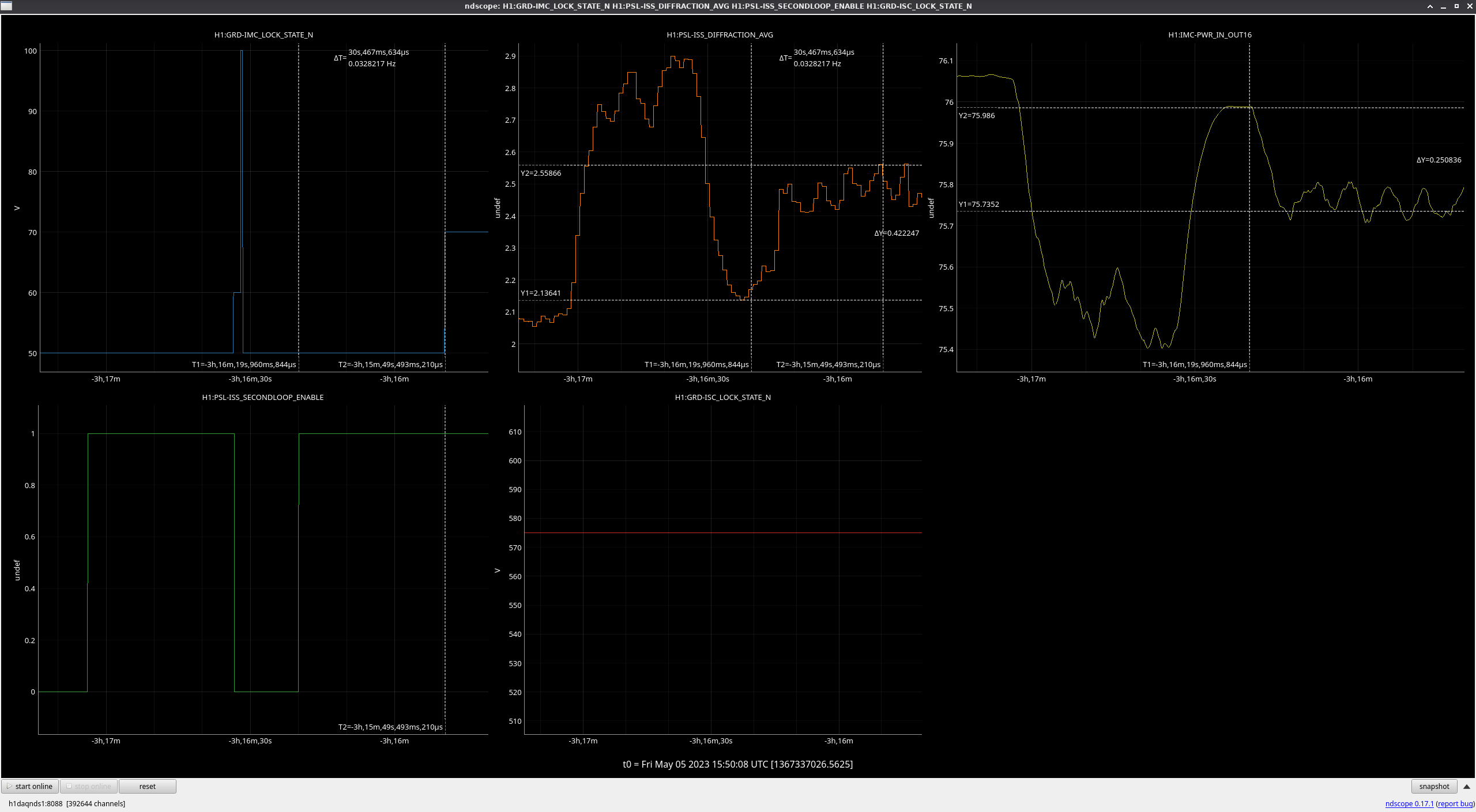
I have updated the IMC_LOCK guardian to open the ISS second loop if the diffracted power changes by more than 30% when first closed, then close it again. The check lives in the CLOSE_ISS state, where the necessary things are done to close the second loop. When the second loop closes, the guardian now waits for 30 seconds to see if the ISS diffracted power changes by more than 30% (high or low), and if it does, request OPEN_ISS to open it again. The node will stall briefly, but then it will move to close the second loop again by going through the LOCKED and CLOSE_ISS states. This update should fix our recurring issue where the input power differs lock to lock due to the second loop engaging its DC coupling at an irregular place and changing our input power, sometimes by up to 1.5W.
I encountered an issue when testing this change where if the node had a notification, in this case the IMC WFS needed centering, the unstall_nodes decorator used by ISC_LOCK to revive its subordinates wouldn't work. This meant that IMC_LOCK would see the diffracted power had changed too much, correctly move to OPEN_ISS, then get stuck. To remedy this, TJ and I decided the best course of action was to move this notification into DIAG_MAIN. I then raised the threshold for the IMC WFS checker in IMC_LOCK to 0.7, up from 0.5, so that IMC_LOCK would only show a notification if the WFS are very off-centered.
All of these changes have been appropriately updated in svn.
JoeB, DriptaB, RickS
After a lengthy discussion on the Pcal call today, we have developed a revised plan for realizing the Pcal XY comparison.
In a nutshell, it is to:
a) drive the X-end systematic error Pcal line at 283.91 Hz with an ampliutude (sin only) of approximately 10 x the current amplitude (200 cts -> 2000 cts)
b) drive a Y-end Pcal XY comparison line at 284.01 Hz (0.1 Hz higher) with similar amplitude (in DARM). This should require about 1430 cts.
LLO plans to implement a similar scheme. This should enable calculation of the Pcal XY comparison factor with sufficient SNR.
We plan to hold off implementing this scheme until tomorrow to avoid overlap with other ongoing calibration-related work and to allow some time for further discussion.
TITLE: 05/04 Eve Shift: 23:00-07:00 UTC (16:00-00:00 PST), all times posted in UTC
STATE of H1: Commissioning
CURRENT ENVIRONMENT:
SEI_ENV state: CALM
Wind: 22mph Gusts, 19mph 5min avg
Primary useism: 0.04 μm/s
Secondary useism: 0.17 μm/s
QUICK SUMMARY: IFO has been locked for 2h45. Currently in commissioning for some SQZ changes and calibration measurements.
TITLE: 05/04 Day Shift: 15:00-23:00 UTC (08:00-16:00 PST), all times posted in UTC
STATE of H1: Commissioning
SHIFT SUMMARY:
Main Notes:
- LOCKLOSS @ 14:35 UTC, DCPD saturation, then again trying to relock at LOCKING_ALS, not sure why
- Held at LOCKING_ALS to allow TJ for automation work on IR locking
- Lock #1:
- Lock #2:
- Other Notes:
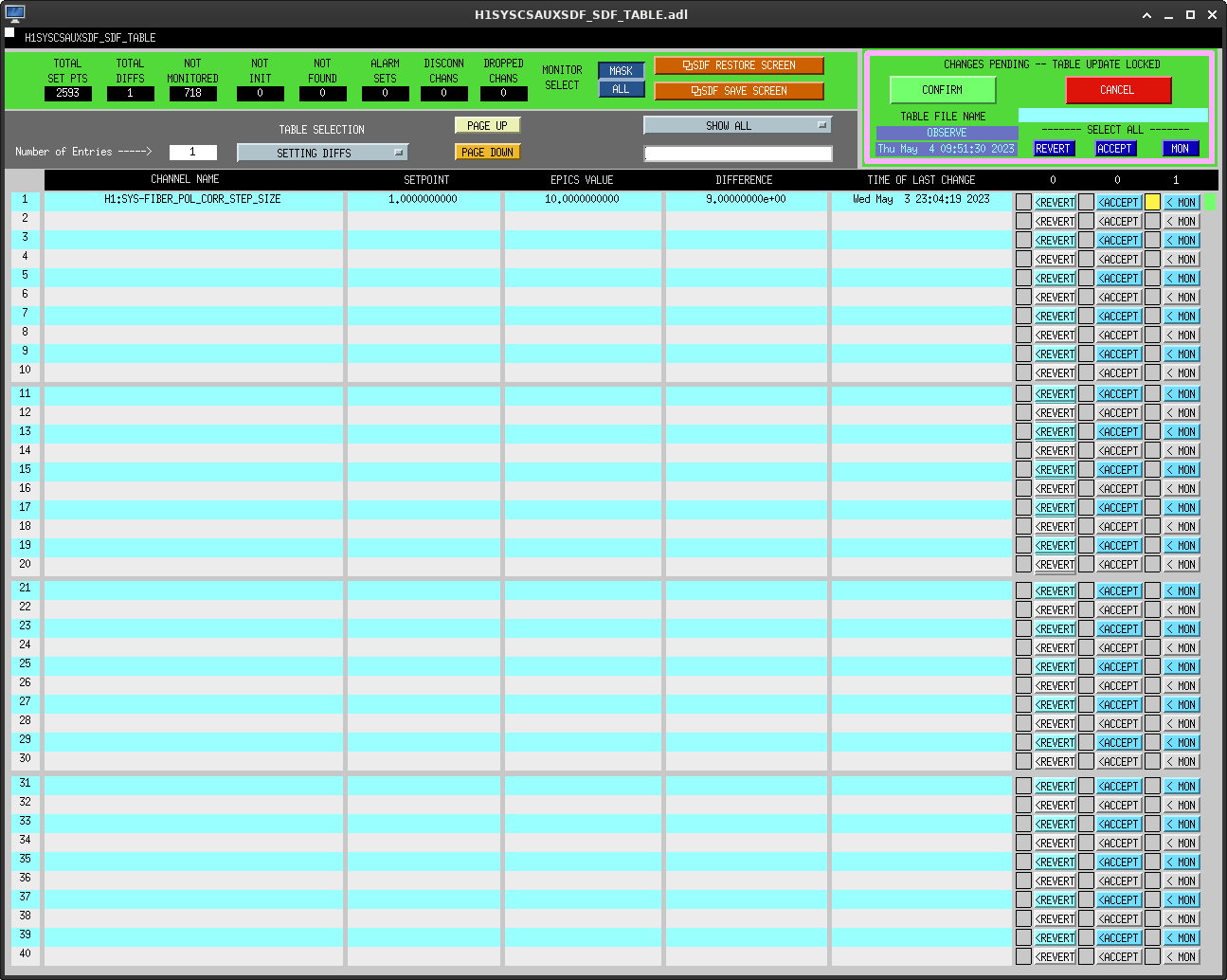
- Unmonitored ALS POL step size channel - Screenshot attached
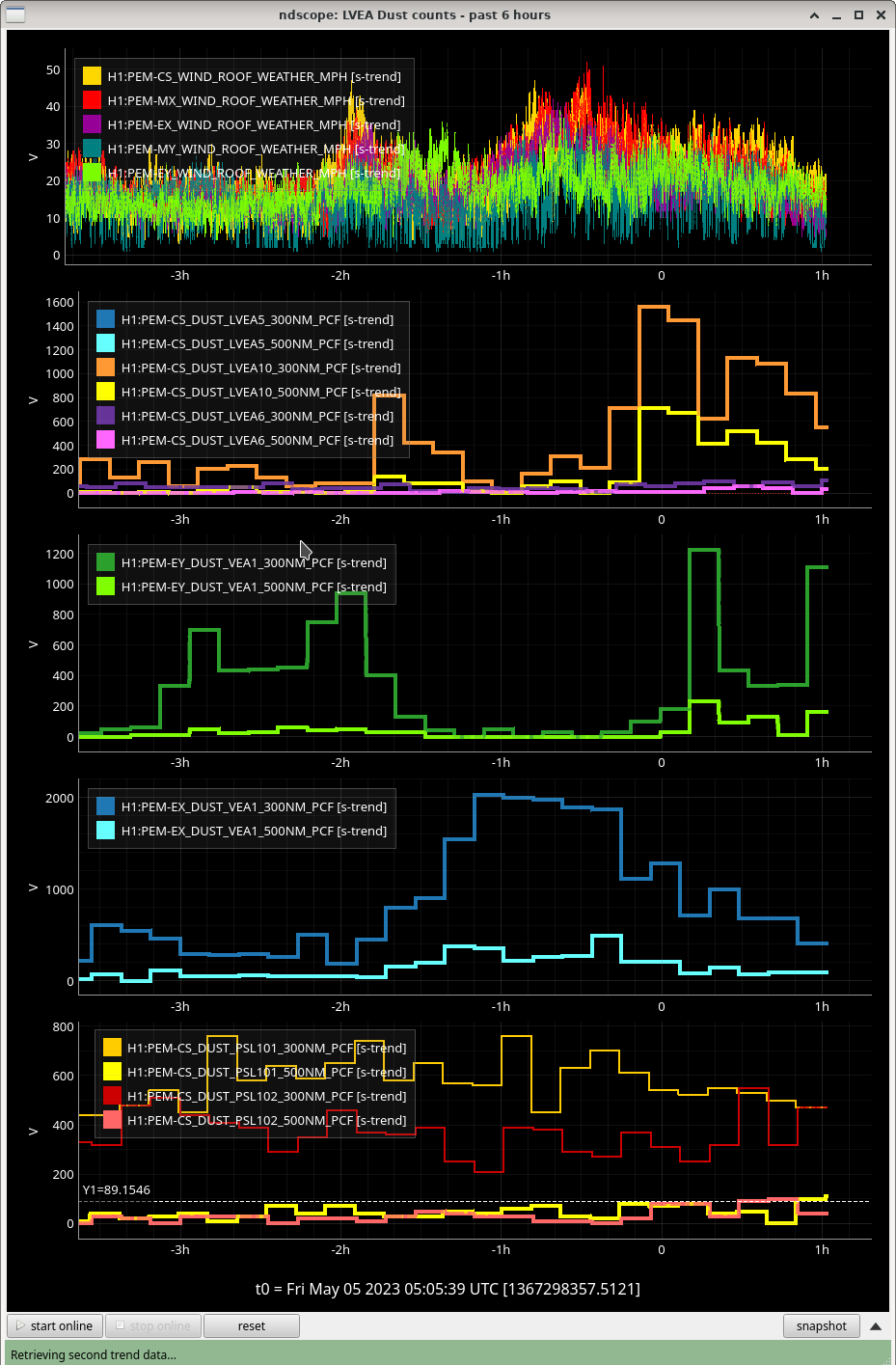
- PSL DM counts - room 101 300 nm alert - trended at was ~320 counts and has been slowly creeping up over the past 4 hrs, Screenshot attached
- Vicky reverted the PI damping guardian to old working settings (success)
LOG:
| Start Time | System | Name | Location | Lazer_Haz | Task | Time End |
|---|---|---|---|---|---|---|
| 13:19 | grd ALS | Jenne | home | n | init align | 14:01 |
| 15:33 | FAC | Tyler | EY | N | Repair a flat | 17:33 |
| 15:38 | PEM | Fil | LVEA | N | Terminate cables | 16:28 |
| 16:38 | FAC | Kim | CER | N | Grab kits | 17:38 |
| 16:50 | PEM | Fil | EY | N | Switch cables | 17:23 |
| 17:26 | PSL | RyanS | CR | N | ISS second loop investigations | 17:29 |
| 17:34 | EE | Fil | OSB Rec. | N | Drop off parts | 18:44 |
| 17:56 | ISC | Elenna | CR | N | Measurement | 17:58 |
| 18:08 | SUS | Rahul/Karla | CER | N | Grab parts | 18:18 |
| 20:39 | PSL | RyanS | CR | N | ISS second loop troubleshooting | 21:27 |
| 20:46 | PCAL | Tony | PCAL Lab | Y (LOCAL) | Take pictures | 20:56 |
| 21:23 | CAL | Jeff/Louis | CR | N | Calibration sweeps | 00:23 |
| 22:36 | VAC | Travis/Gerardo | MX | N | Measure pumps | 00:36 |
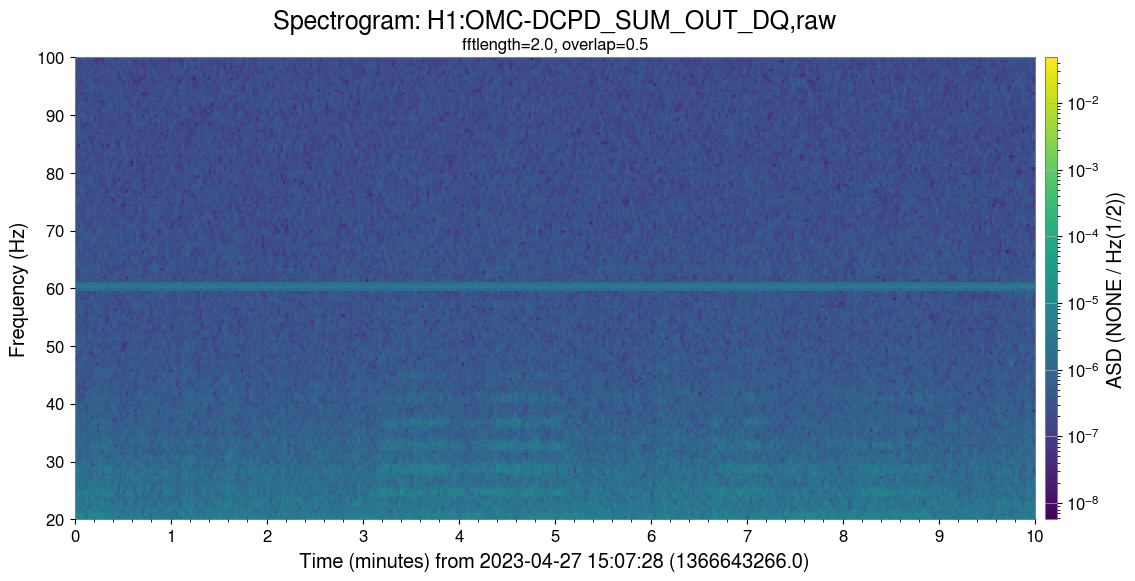
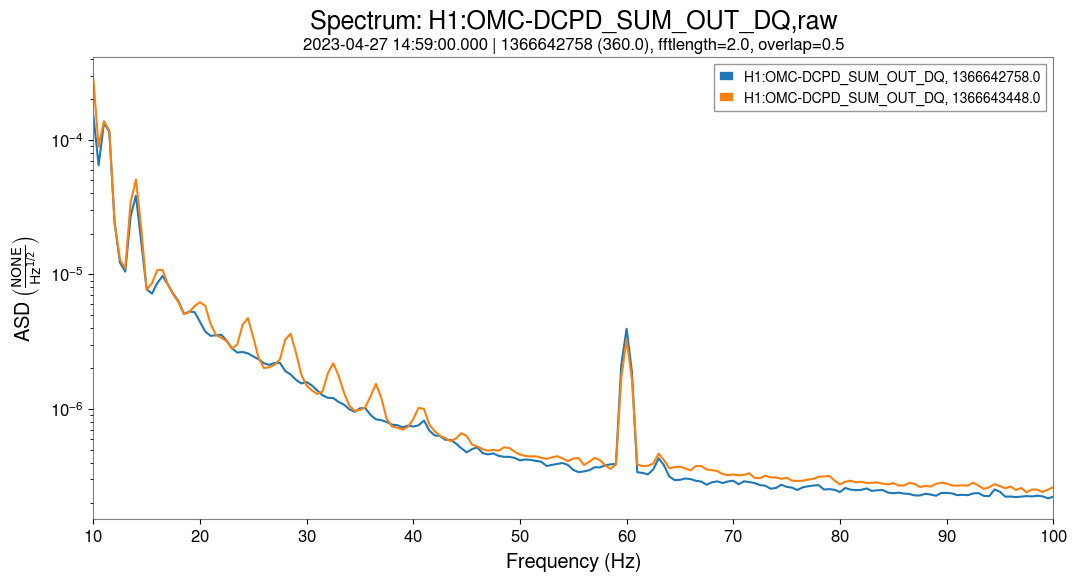
There was an occurence of the 4 Hz bumps during a ten minute test where the squeezer was off (alog 69077). So we can eliminate the squeezer as a cause.
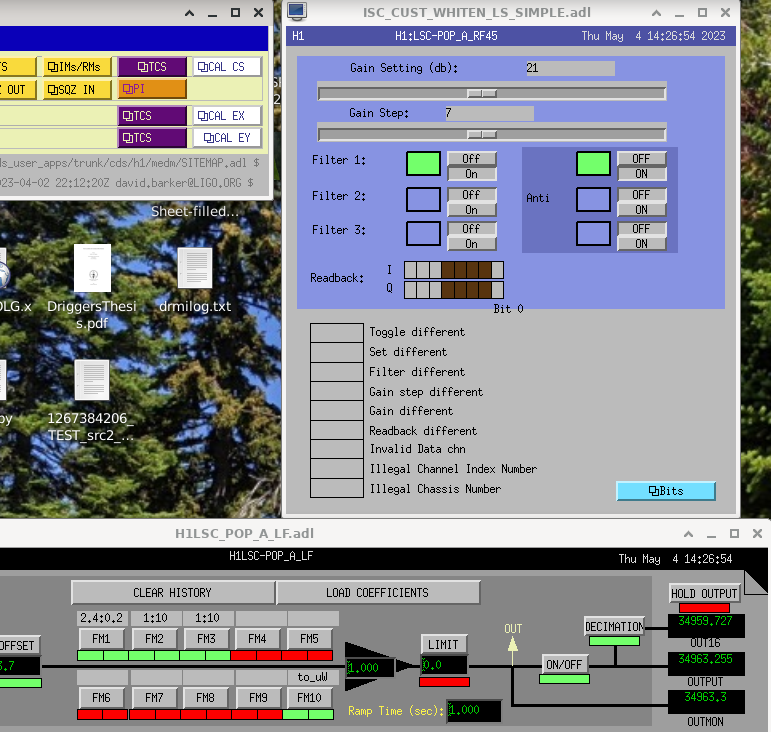
Daniel made the good point at the commissioning meeting that we should try turning down the analog gain of the LSC-POP_A PD, to avoid saturating the I ADC signal if we can. Attached shows that we currently have 21dB of analog gain, so we probably have some room to turn it down. I think we semi-recently checked the power calibration filters of many of our PDs, so if we believe this to-microWatt filter, then we have 35 mW on that diode.
We concluded the analysis concerning the back-scattered light introduced by the OFI. We used the data mentioned in the logbook entries: 68910 and 68926. A presentation summarizing the analysis and the results can be found on the DCC: G2300951-v1.
We first estimate the G-factor from the spctrum during the noise injections and then we used this factor to simulate the scattered light noise projections.
In Fig. 1 it is show the noise spectrum considering the OFI displacement signals during the Earthquake in New Zeland (24th April 2023 00:42:00 UTC). In green is the correct projection, where the differential motion between the SRM and the OFI is shown. The orange curve takes into account only the displacement of the OFI.
In Fig. 2 it is show the noise spectrum considering the OFI displacement signals during a low seismic activity period (27th April 2023 12:00:00 UTC). In green is the correct projection, where the differential motion between the SRM and the OFI is shown. The orange curve takes into account only the displacement of the OFI.
The conclusion is that for the moment the back-scattered light coming from the OFI is not limiting the sensitivity of LHO.
WP 11173
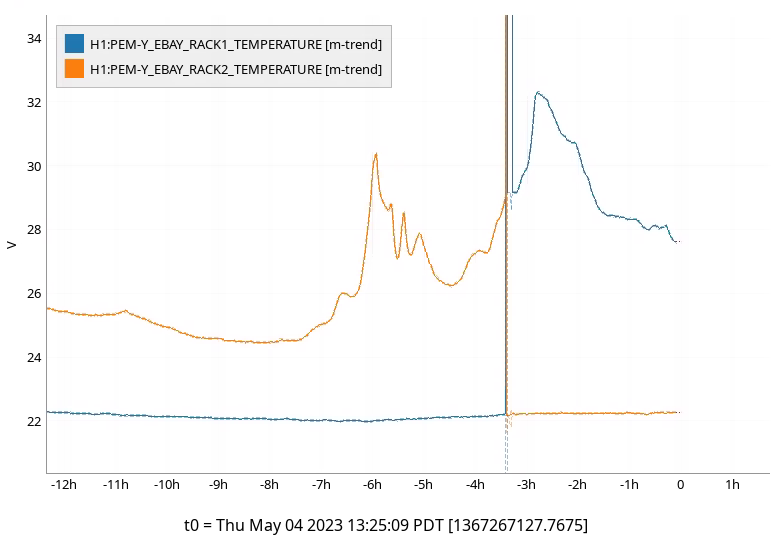
Issues reported with EY temperature channel H1:PEM-Y_EBAY_RACK2_TEMPERATURE. With fence work ongoing this morning, we swapped cabling for Rack1 and Rack2 sensors on the EtherCAT End Link Chassis. This will help us determine if issue stays with Beckhoff channel or sensor. I did note that the M12 connector threads on port 1 seems to striped. Connector will need to be replaced.
Time cables were swapped: 10-10:30 am
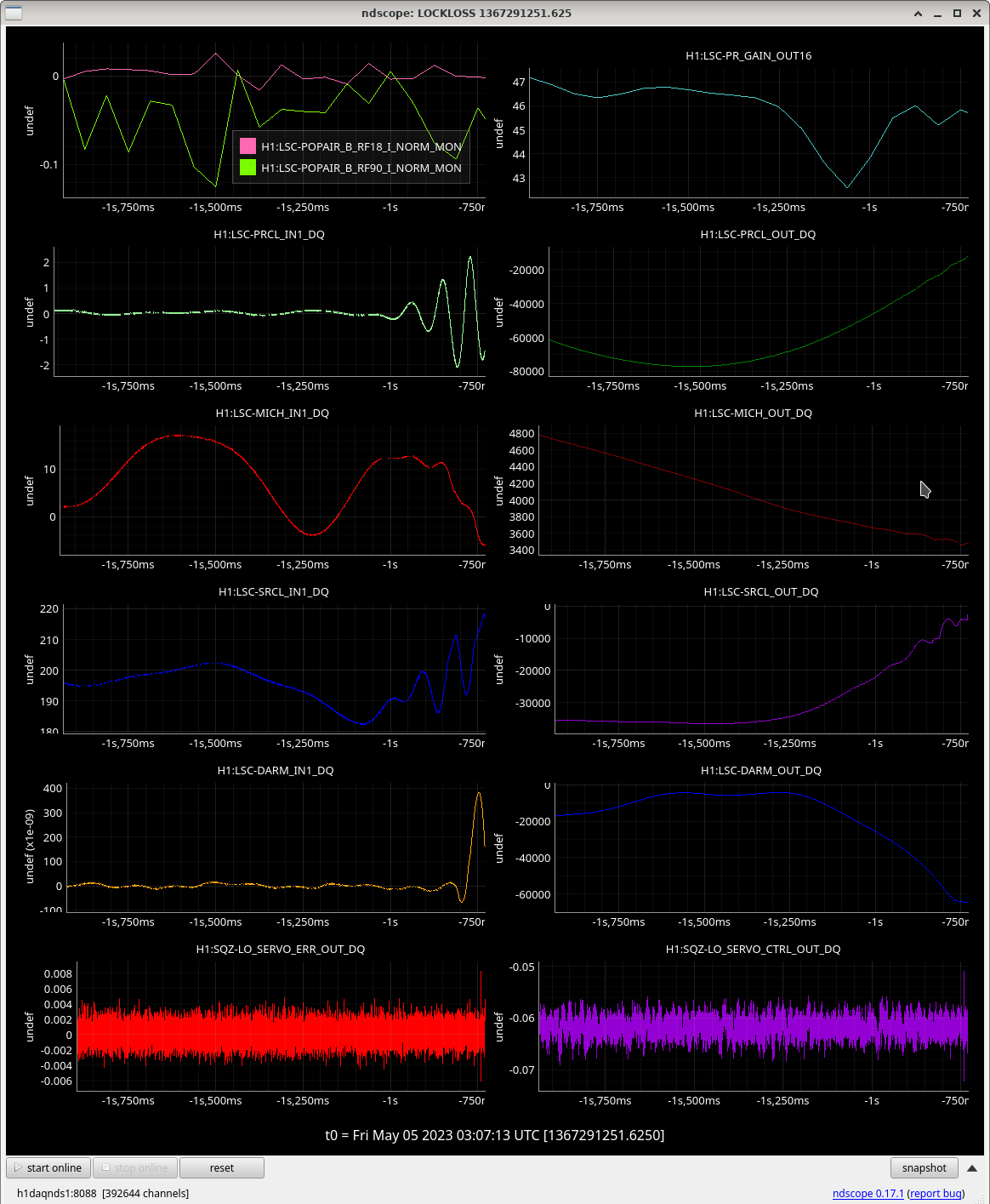
We just had a lockloss after 20.5 hours of lock that appears to be from the ASC, specifically CSOFT P. The oscillation was at about 0.45 Hz and the ring up occurred within the last two minutes of lock. The oscillation appears in other ASC signals, such as INP1, DHARD, and MICH.
I am suprised to see this kind of lockloss so long into the lock, so I am not exactly sure what action to take. I have increased the DSOFT P and CSOFT P gain to give more bandwidth to the loops. I also think we should try to get an OLG of CSOFT P at this higher power (the last OLG was taken at 60W, 67539). OLGs of all arm ASC loops at 430 kW of power would be ideal, but take time.
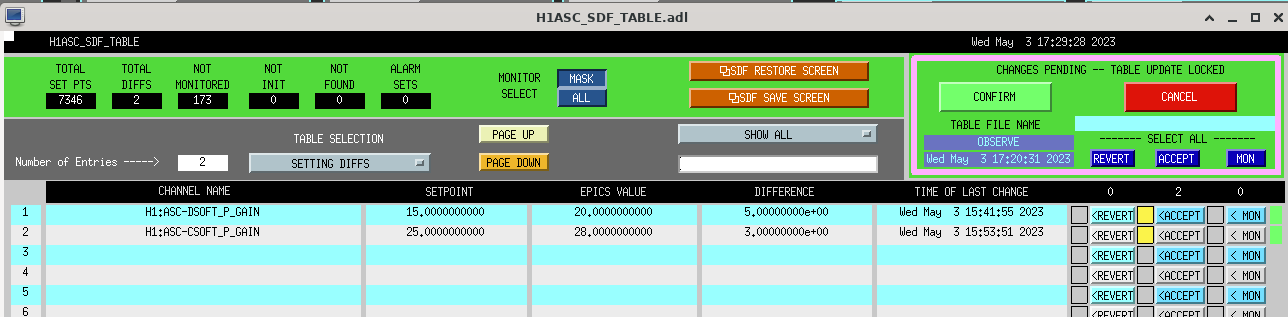
Accepted in DSOFT, CSOFT sdf, see attached.
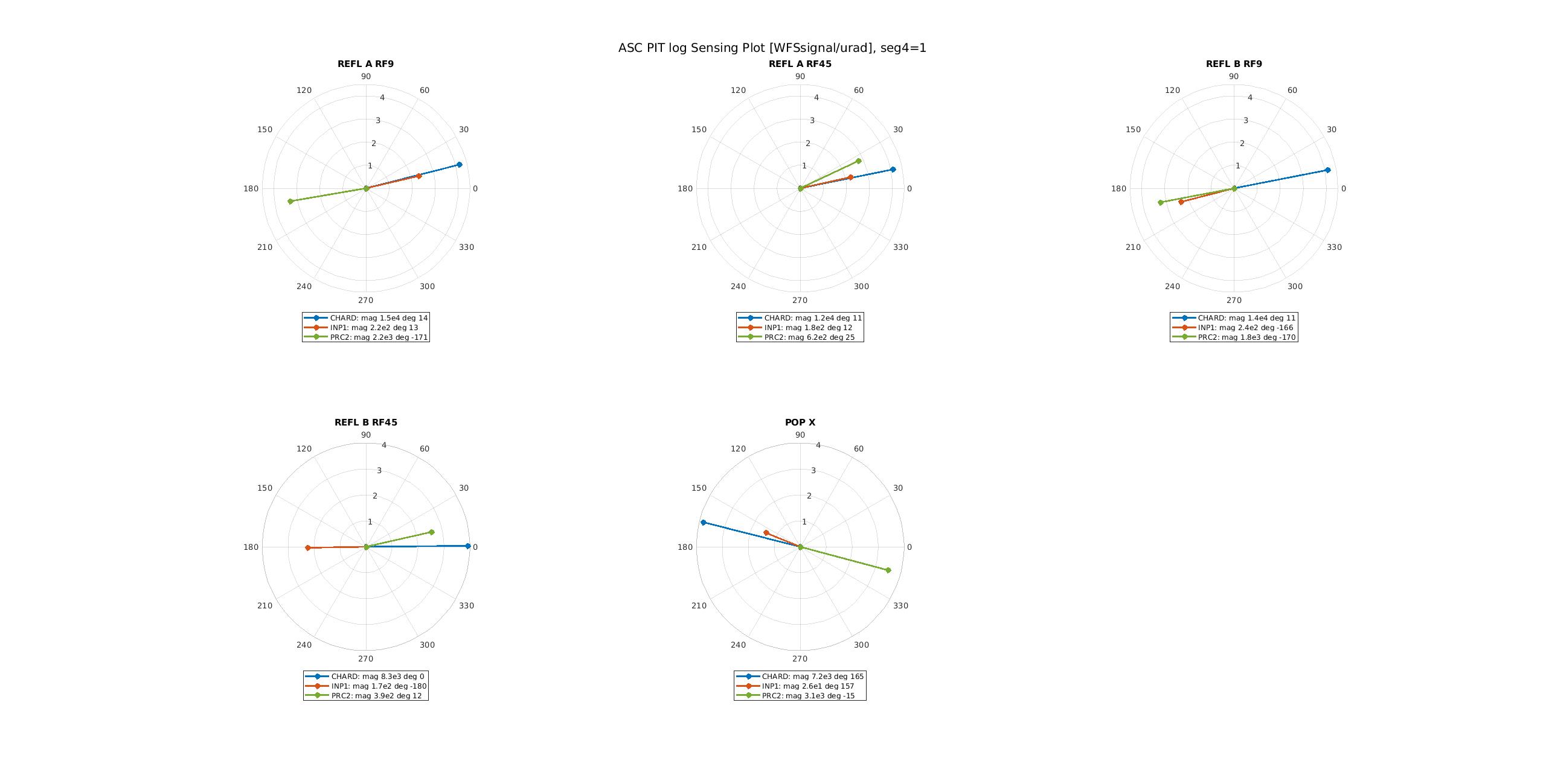
Camilla noted another CSOFT P ringup last night. I decided to run another sensing matrix measurement at the REFL port to see if any optical gains or phases changed. I have attached the old sensing matrix measurement at 2W (on which our current sensing matrix is based), and the sensing matrix I took at 76W with the new SRCL offset. (Just a note, I forgot to open the POP beam diverter before taking this measurement, so I have no data of the sensing in POPX at 76W).
As a reminder, our current pitch input matrix is as follows:
| REFL A RF9 | REFL A RF45 | REFL B RF9 | REFL B RF45 | |
| CHARD P | 0.175 | 1.337 | 0.232 | 1.356 |
| INP1 P | 0 | 2.4 | 0 | -2.4 |
| PRC2 P | 0.056 | 0 | 0.034 | 0 |
It appears that the INP1 P signal has flipped sign in REFL WFS A RF45. Assuming that INP1 P and CSOFT P are cross coupled, that is likely the culprit. INP1 P also did ring up in the locklosses. Hopefully, the fix will be as simple as flipping the sign of the INP1 P sensing in A RF45. We will test this on the next lock.
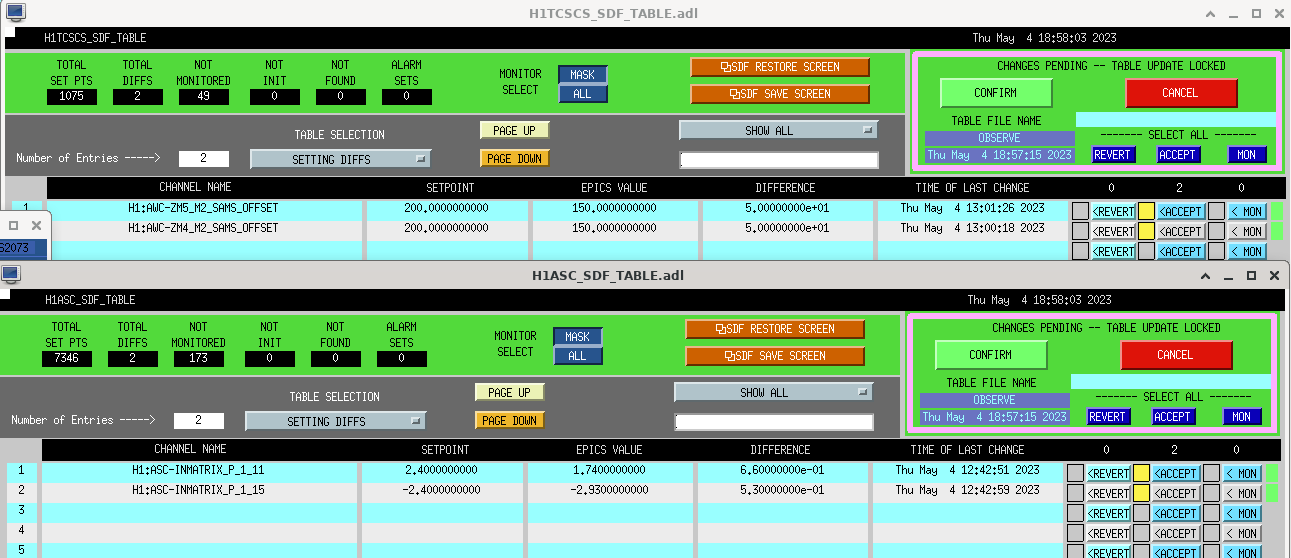
At 2W I changed the sensing matrix for INP1 P slighty to be 1.74 of REFL A 45 and -2.93 of REFL B 45. I obtained these values by inverting the sensing matrix I measured at 76W. This uses the recommended ratio of A and B 45 suggested by the matrix, rescaled to match the gain of the loop. I also checked that the phase of INP1 is correct. I injected CHARD and PRC2 lines and saw that there was minimal coupling of those two loops into the new INP1 signal. This is a relatively small change. If we still have problems in full lock, we probably need to update the CHARD and PRC2 sensing to ensure the subtraction of the INP1 signal is correct. I will update the guardian with the new INP1 values.
Austin, Betsy, Karla, Rahul
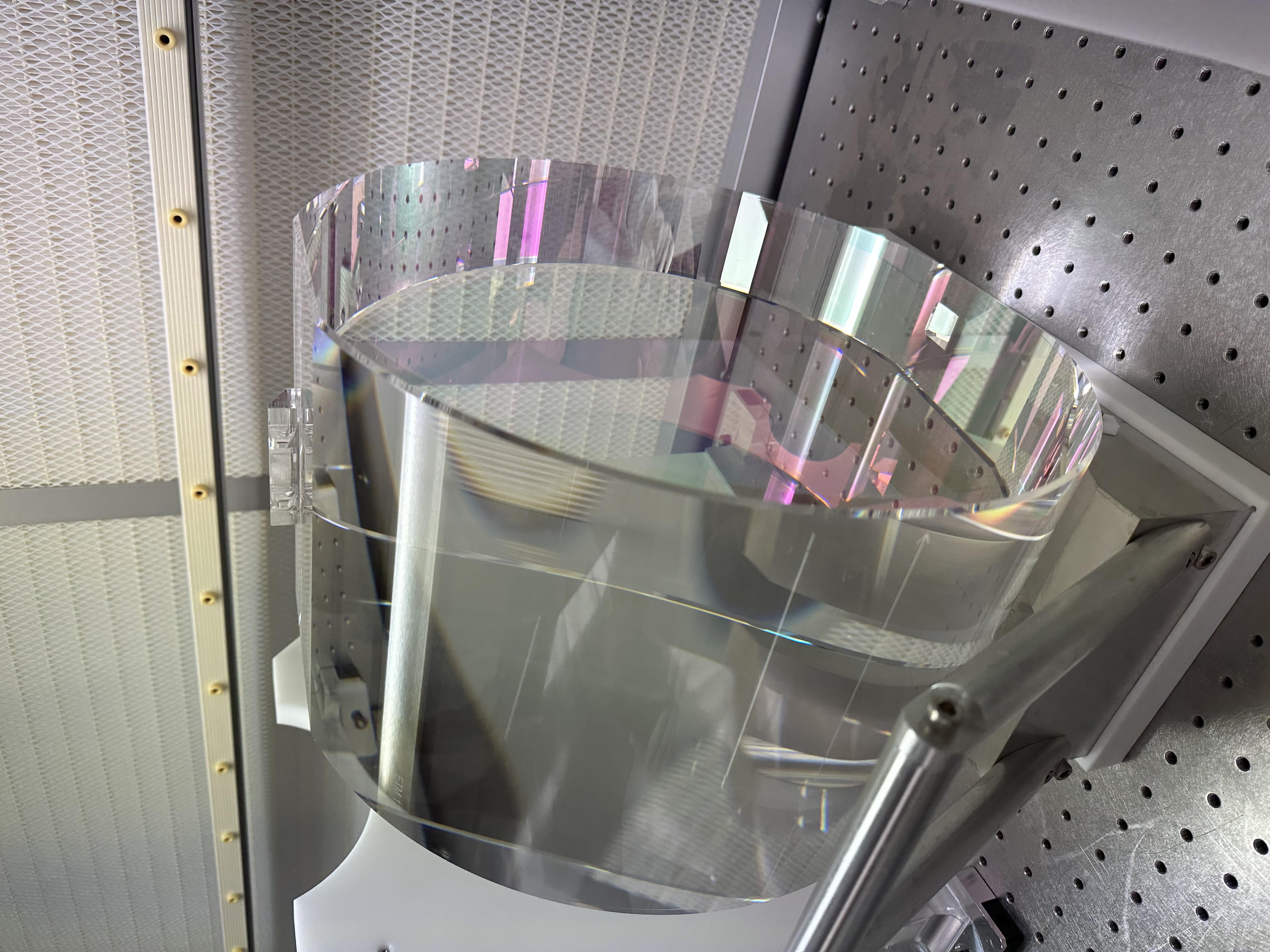
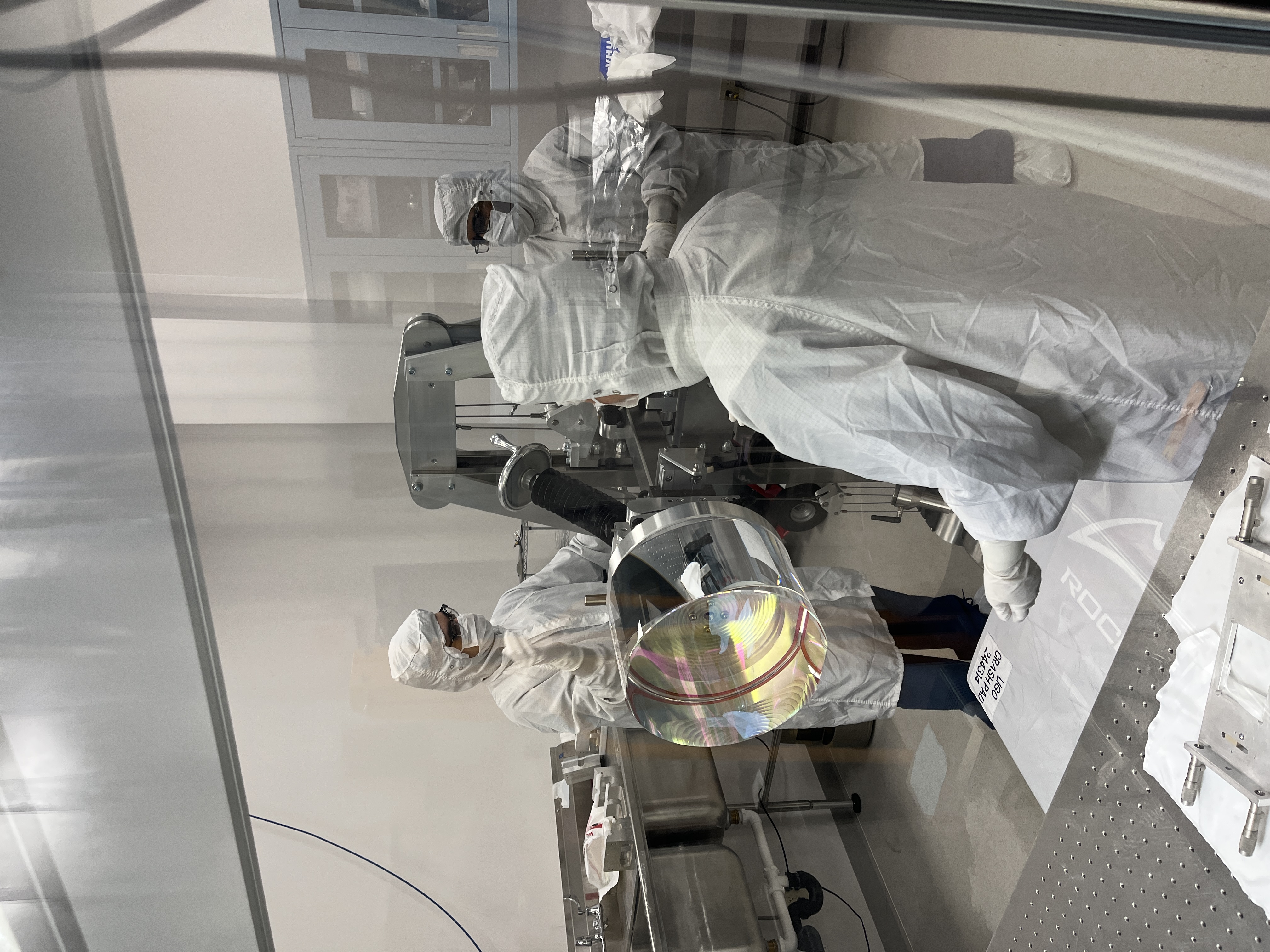
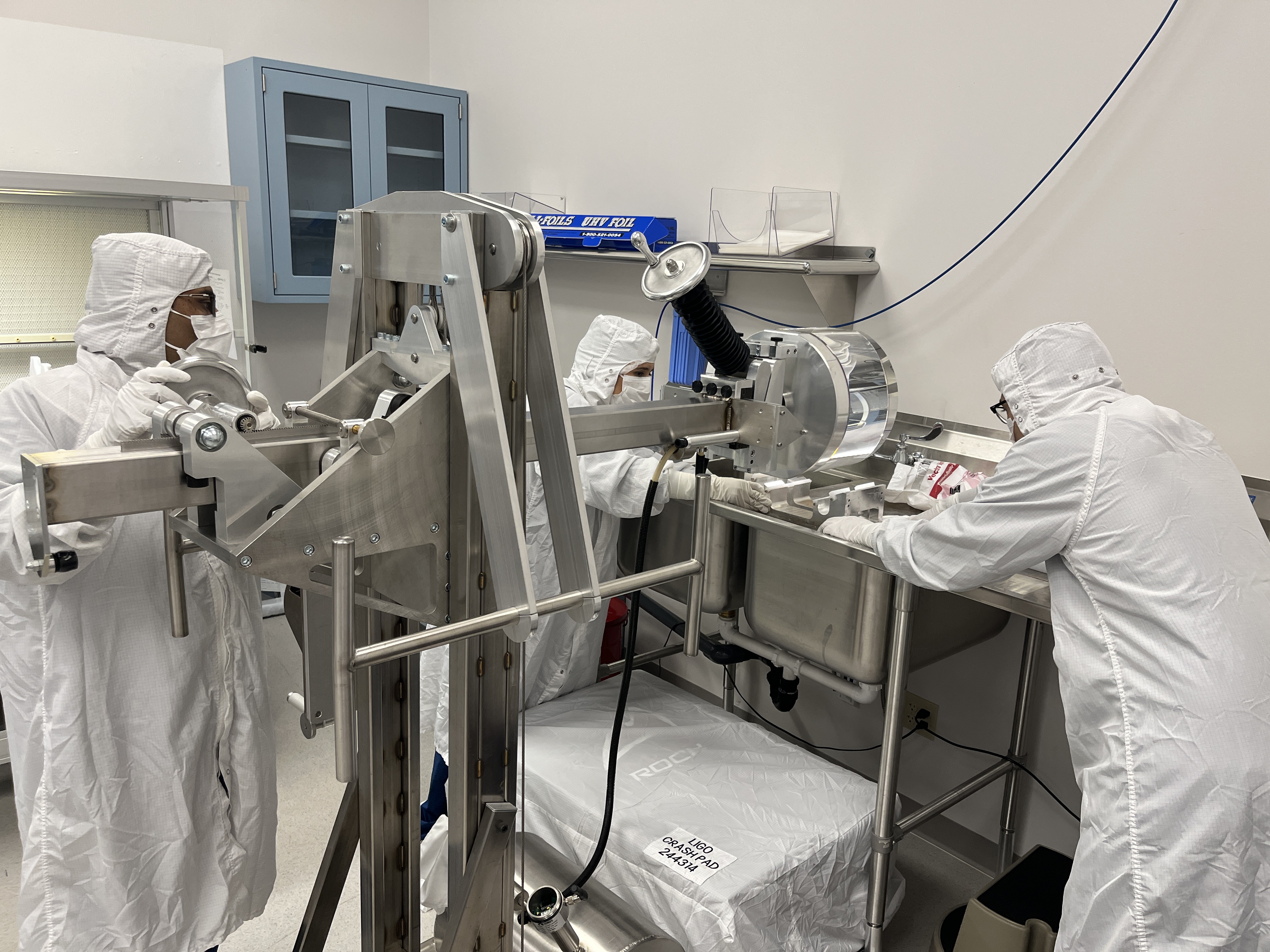
We have finished bonding fused sillica Ears to ETM12 using Hydroxide Catalysis Bonding (HCB) technique, please see pictures attached below for reference. The ear-test mass bond layer has few air bubbles within our tolerance (less than 50 sq mm of the total bond area). We can confirm that the position of both the ears on the two flat surface of the mirror are within the required +-0.1mm.
ETM12 (also see galaxy page for details on the optic) is a our spare test mass mirror between the two sites. The details of the ear and test mass mirror is given below,
- Ear s/n 30077403-04 (Q2300015) is bonded to the flat side S3.
- Ear s/n 30077403-05 (Q2300016) is bonded to the flat side S4.
Both the ears were 22.3 grams heavy (measured using a calibrated scale in a clean room).
The fiducial line measurements on the optic was performed at CIT and the details are posted in E2200356_v1.
I have uploaded the latest version V27 of Jig settings calculation on the DCC.
We still need to measure the total weight of the optic and apply First contact to clean the HR side.
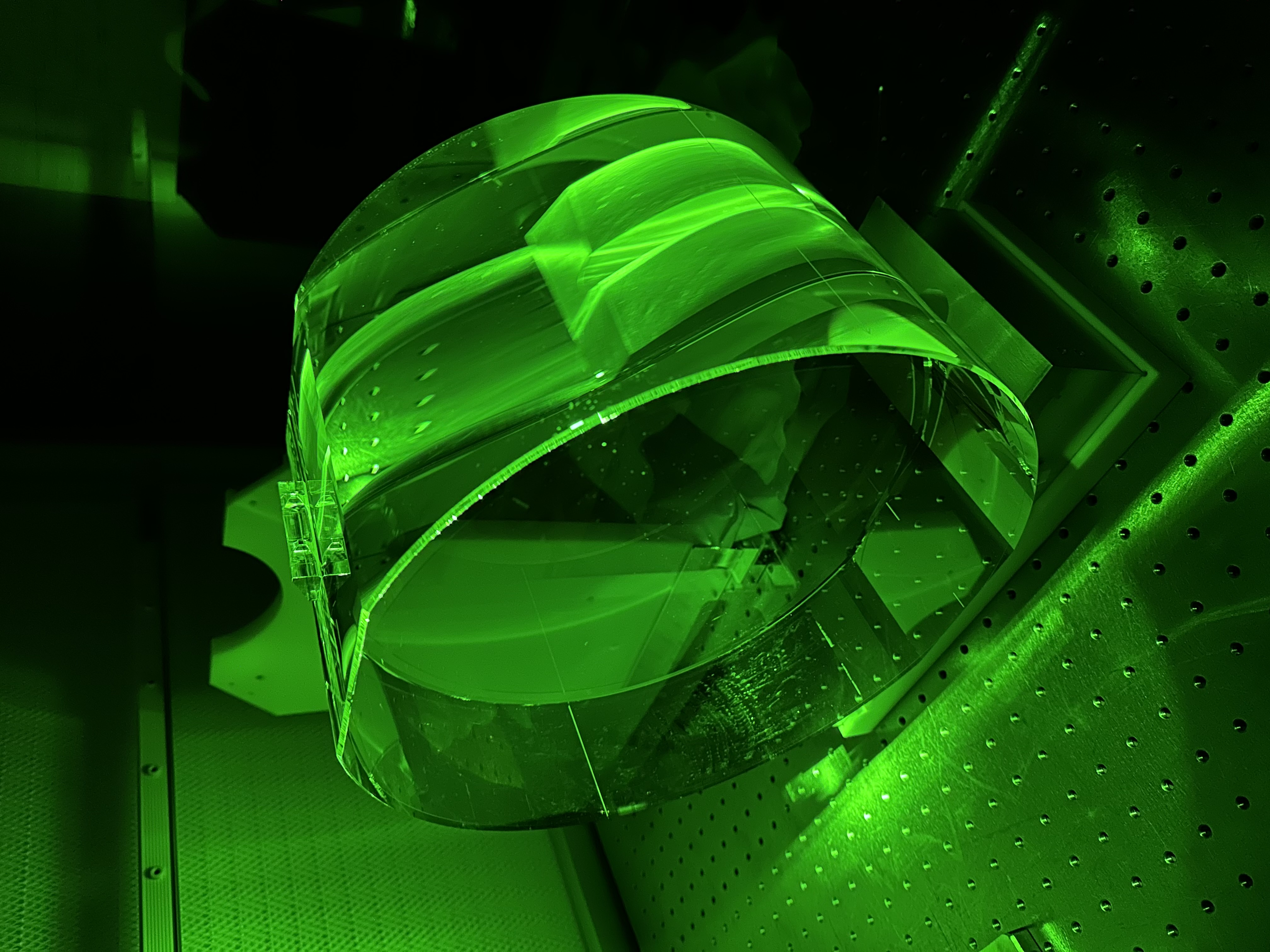
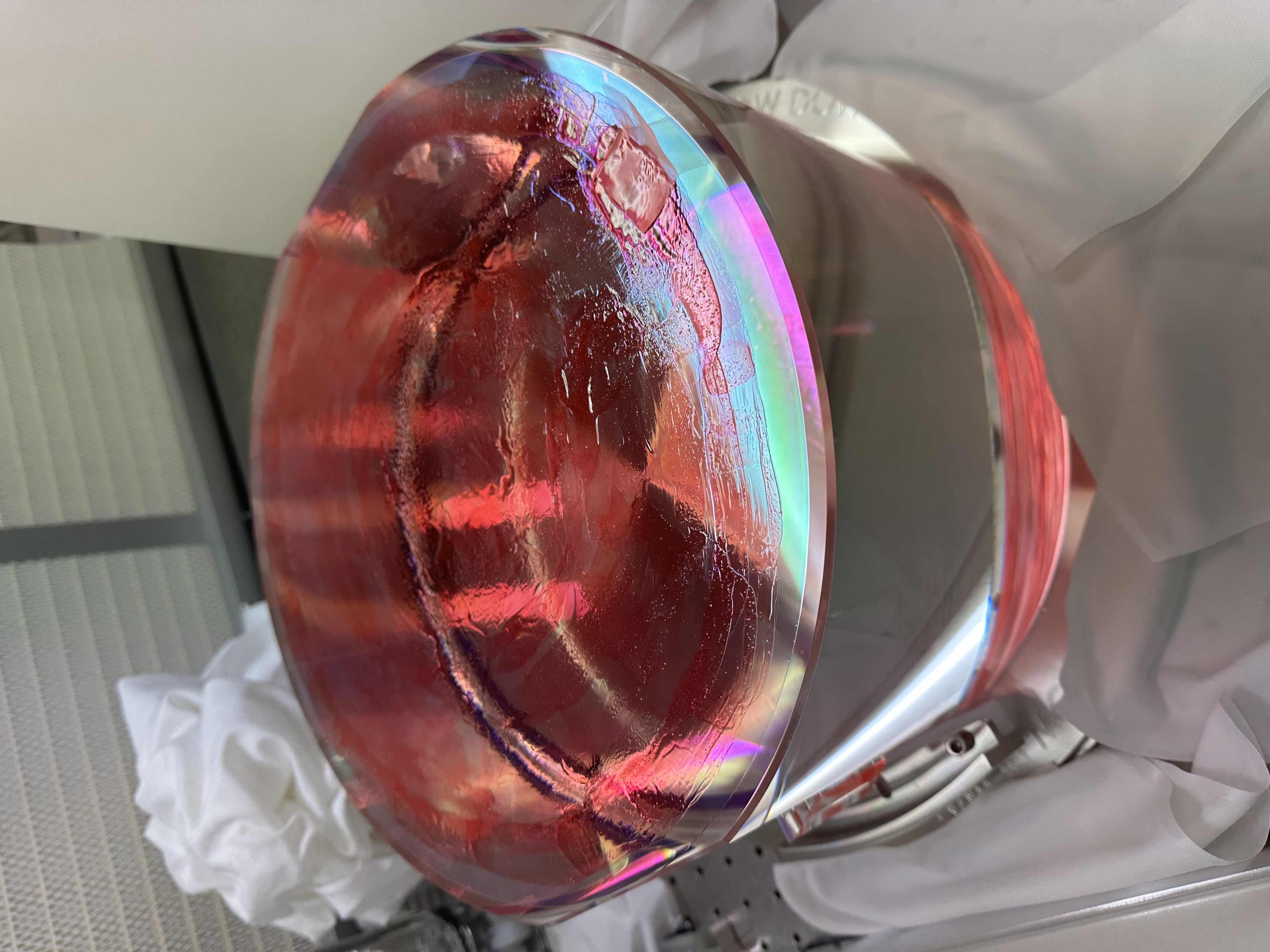
This afternoon Karla and I applied First Contact on the HR side of ETM12 to clean the speckles. See the picture attached below. Later we removed it when it was dry. We then inspected the HR surface and it looks cleaner than before.
Today we measured the mass of ETM12 and it was found to be 39606 grams (Jig + ETM12 =46602grams, Jig= 6996grams).
The humidity in the lab was 40% and temperature was 20.2 degree C (measured using ThermPro borrowed from Rick's PCAL stuff).
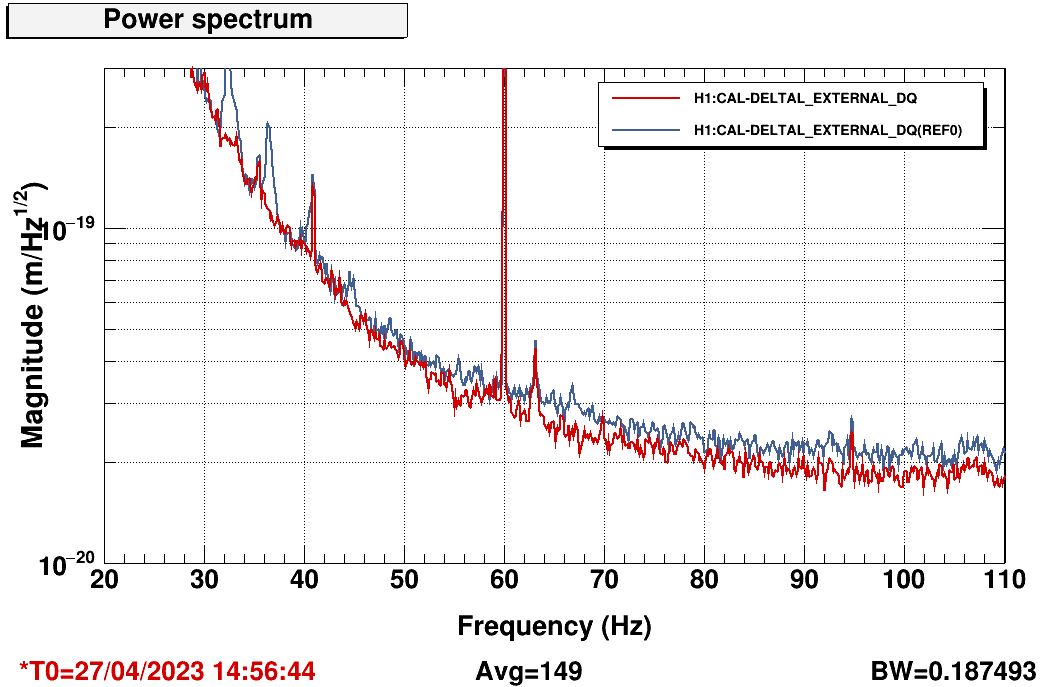
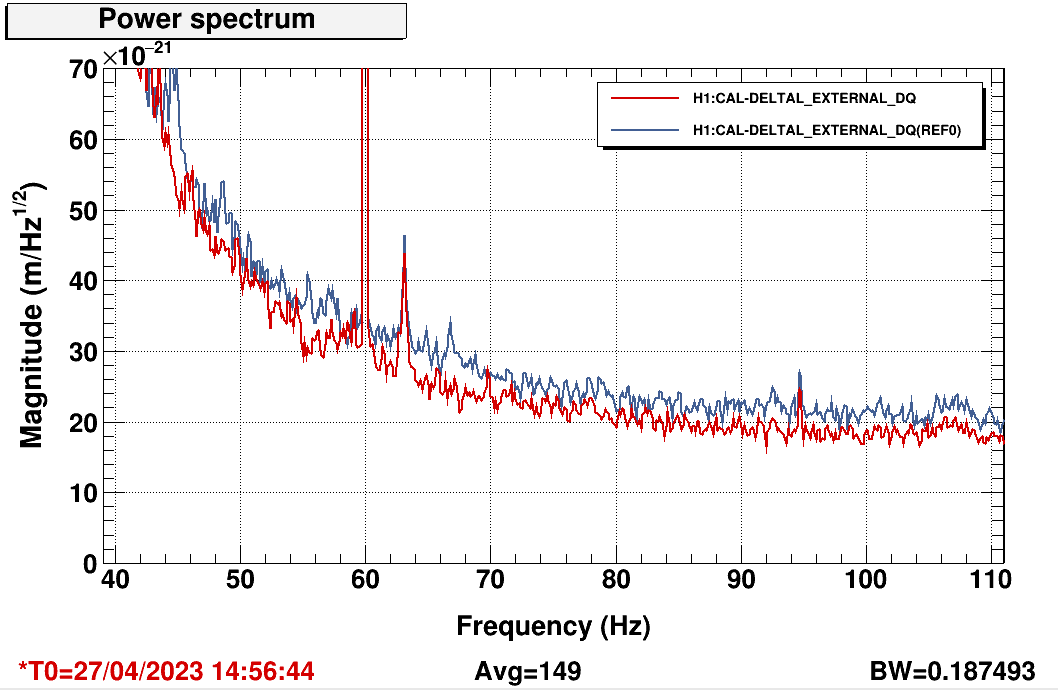
- all calibartion lines off (NLN_CAL_MEAS) with frequency dependent squeezing
from PDT: 2023-04-27 07:56:44 PDT
UTC: 2023-04-27 14:56:44 UTC
GPS: 1366642622
to PDT: 2023-04-27 08:06:56 PDT
UTC: 2023-04-27 15:06:56 UTC
GPS: 1366643234
- no squeezing
from PDT: 2023-04-27 08:07:28 PDT
UTC: 2023-04-27 15:07:28 UTC
GPS: 1366643266
to PDT: 2023-04-27 08:17:29 PDT
UTC: 2023-04-27 15:17:29 UTC
GPS: 1366643867
I forgot to note we are running in "Automatic" with GRD_IFO and we are NOT in observing. In SDF I do see (2) diffs for SUS damping filters for ITMx & ETMy. (screenshot is attached). Didn't see anything in a quick scan of chat, and will look at alog next.
Also: When I click the "list" feature for the Observation Bit, it comes up with an error: "python3: can't open file '/opt/rtcds/userapps/release/sys/ifo/guardian/IFO_NODE_LIST.py': [Errno 2] No such file or directory"
ACCEPTED the ITMX/ETMy L1_DAMP Filter diffs noted aboe. Which automatically took us to OBSERVING. (I then switched to Managed Observation Bit mode.)