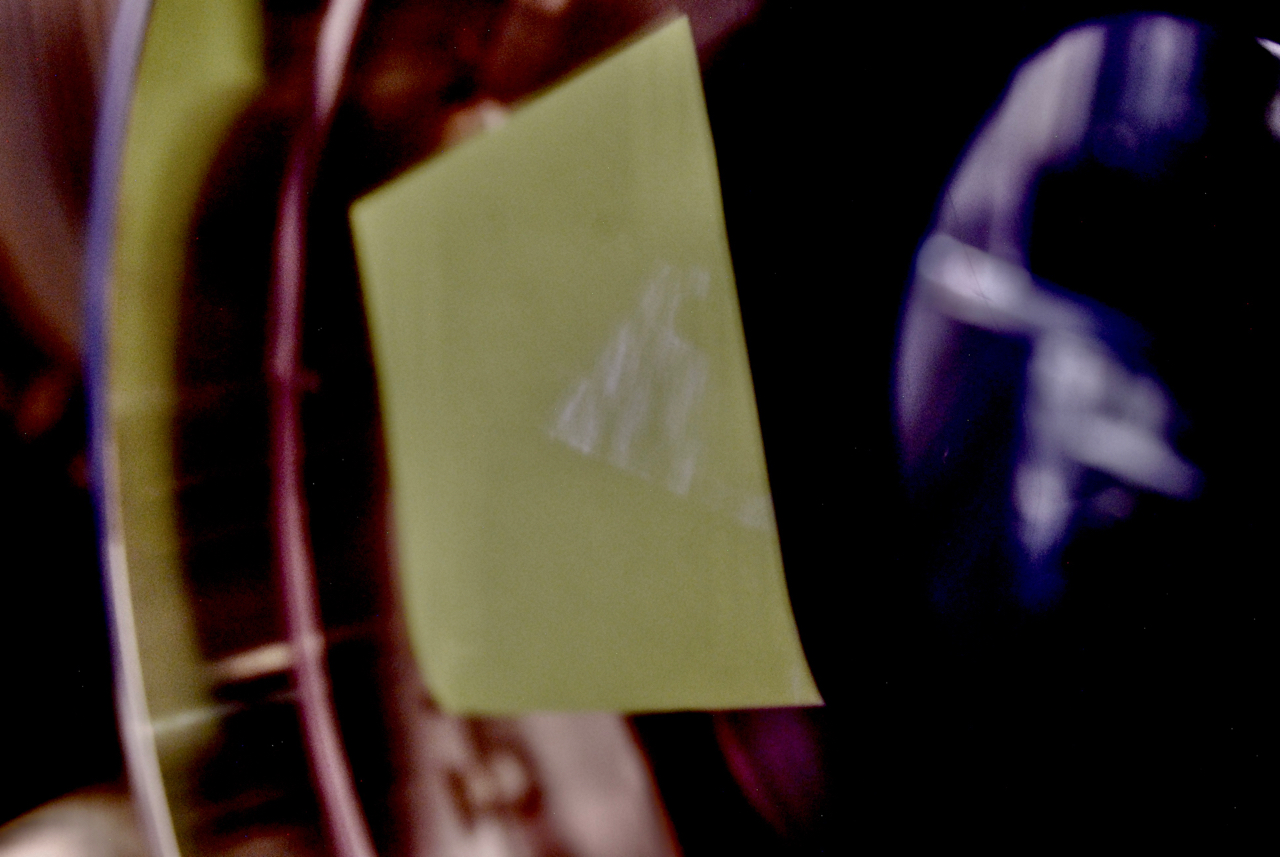
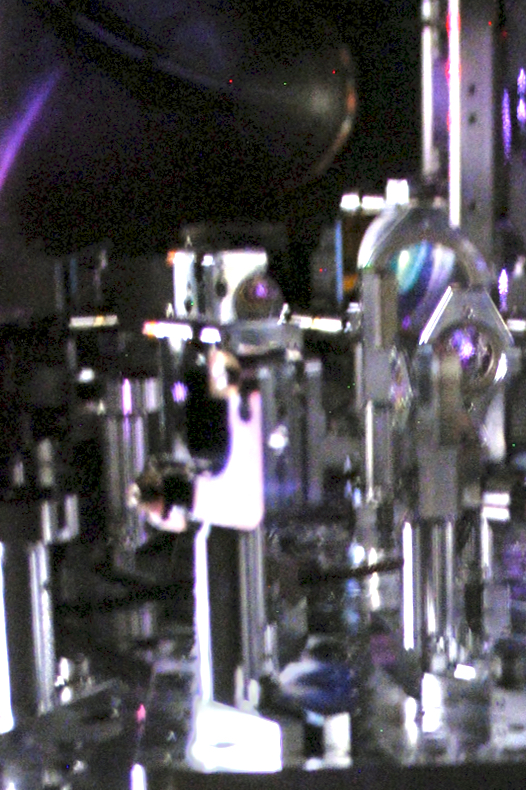
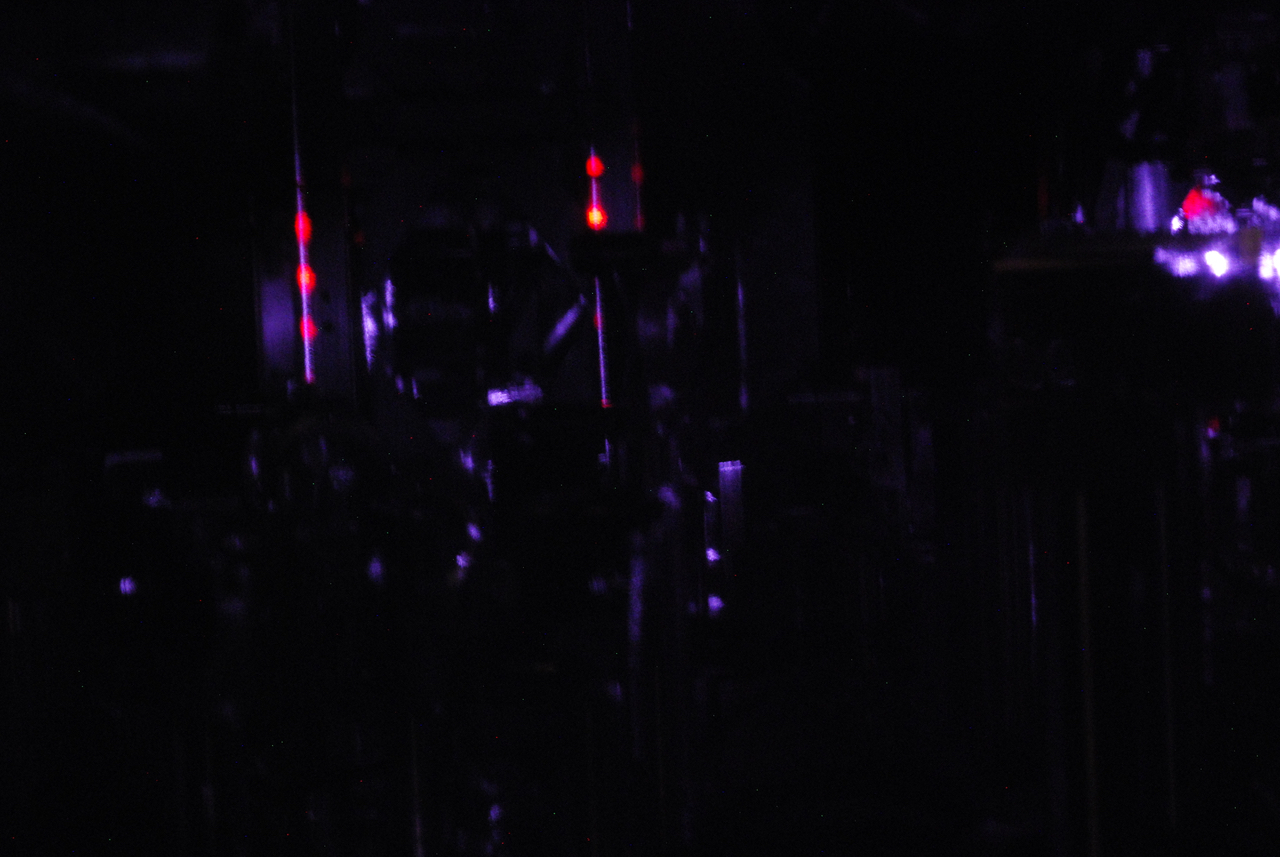
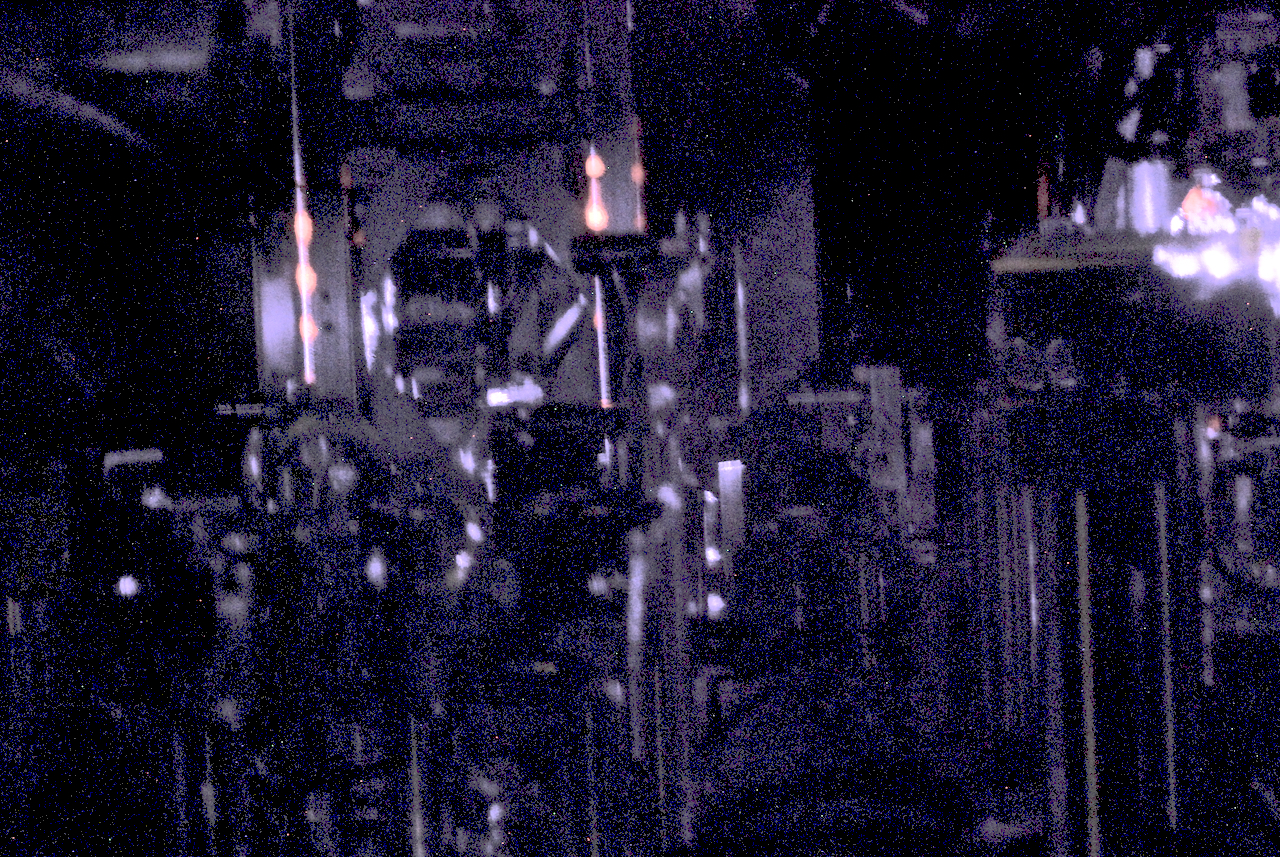
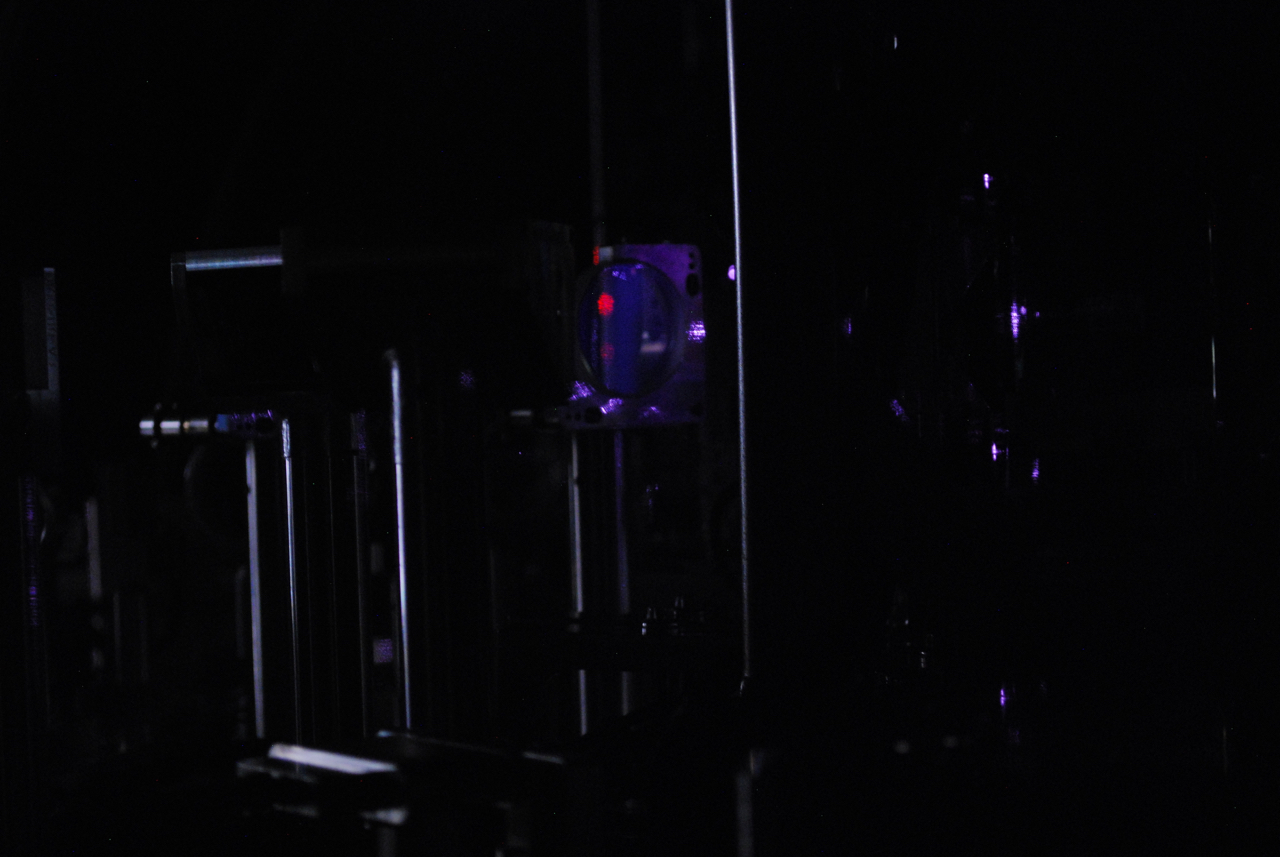
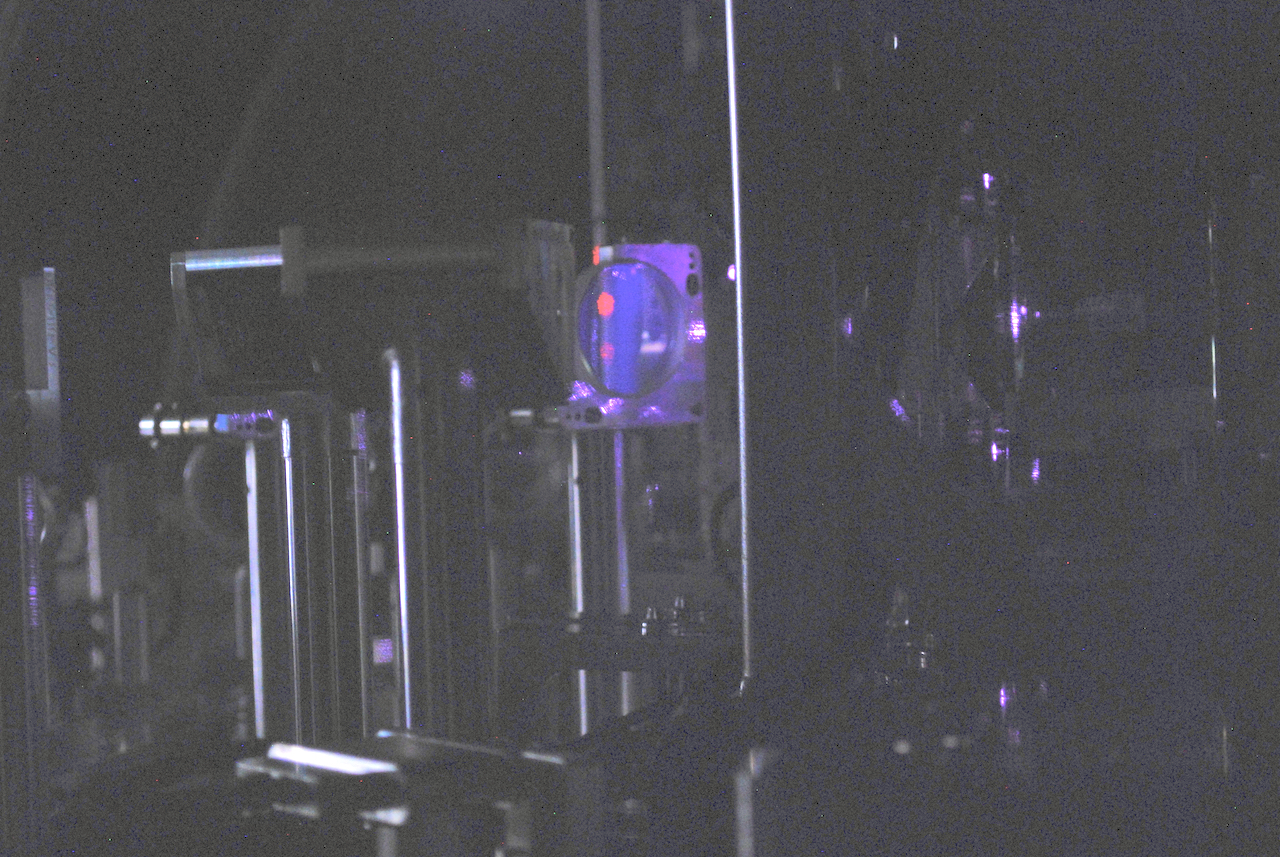
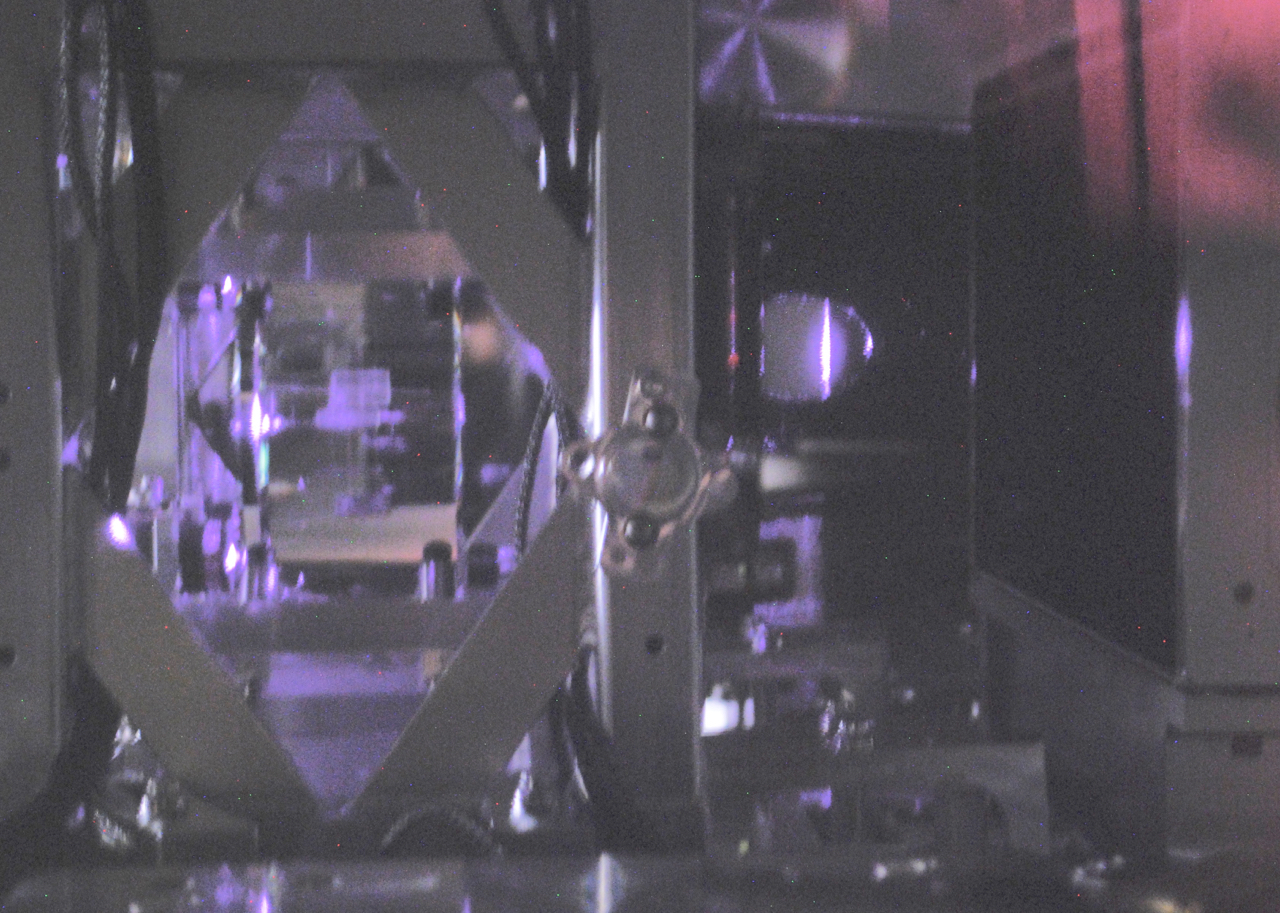
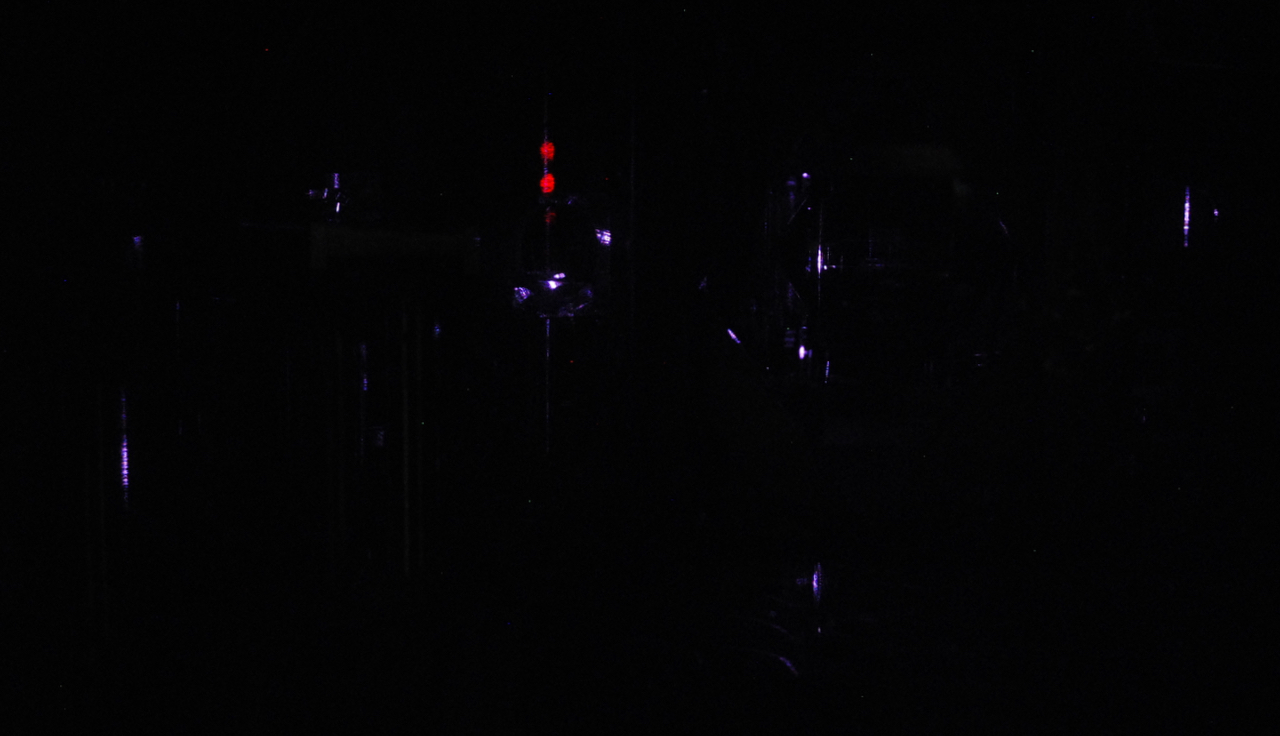
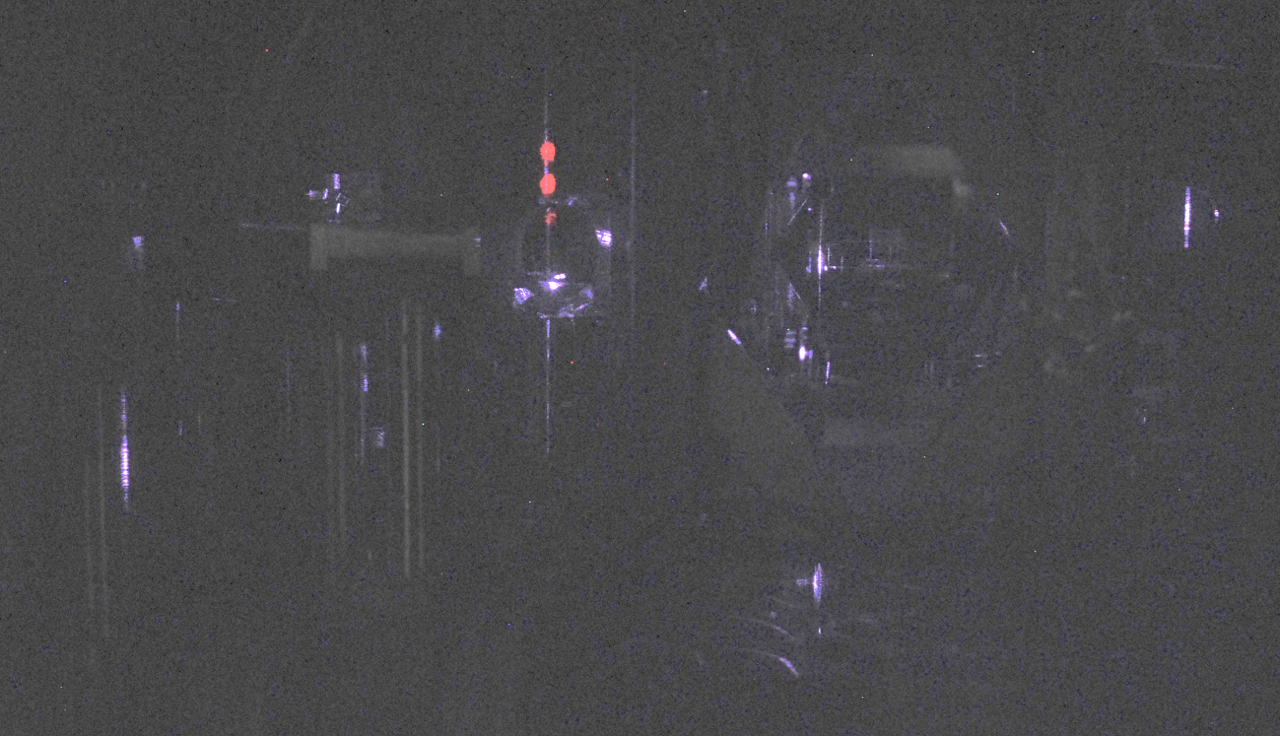
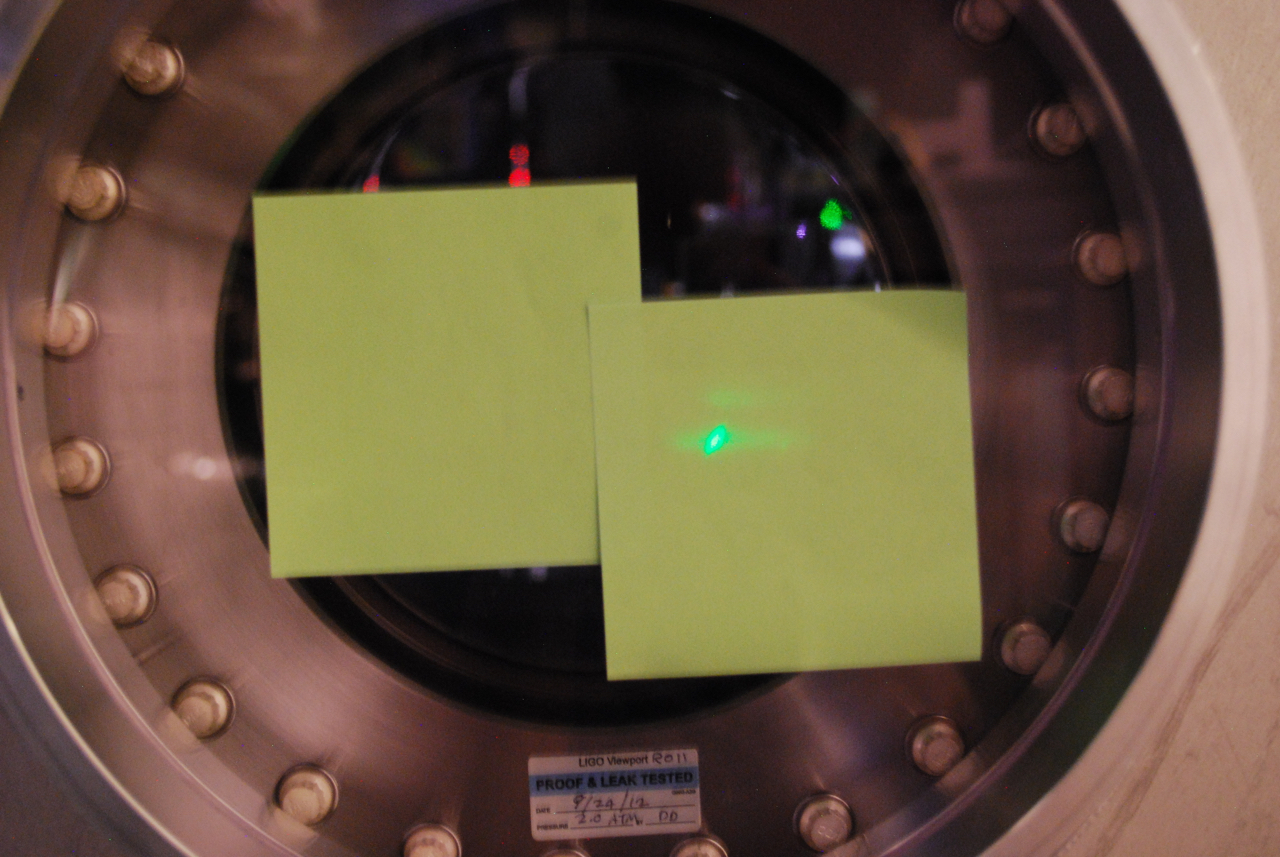
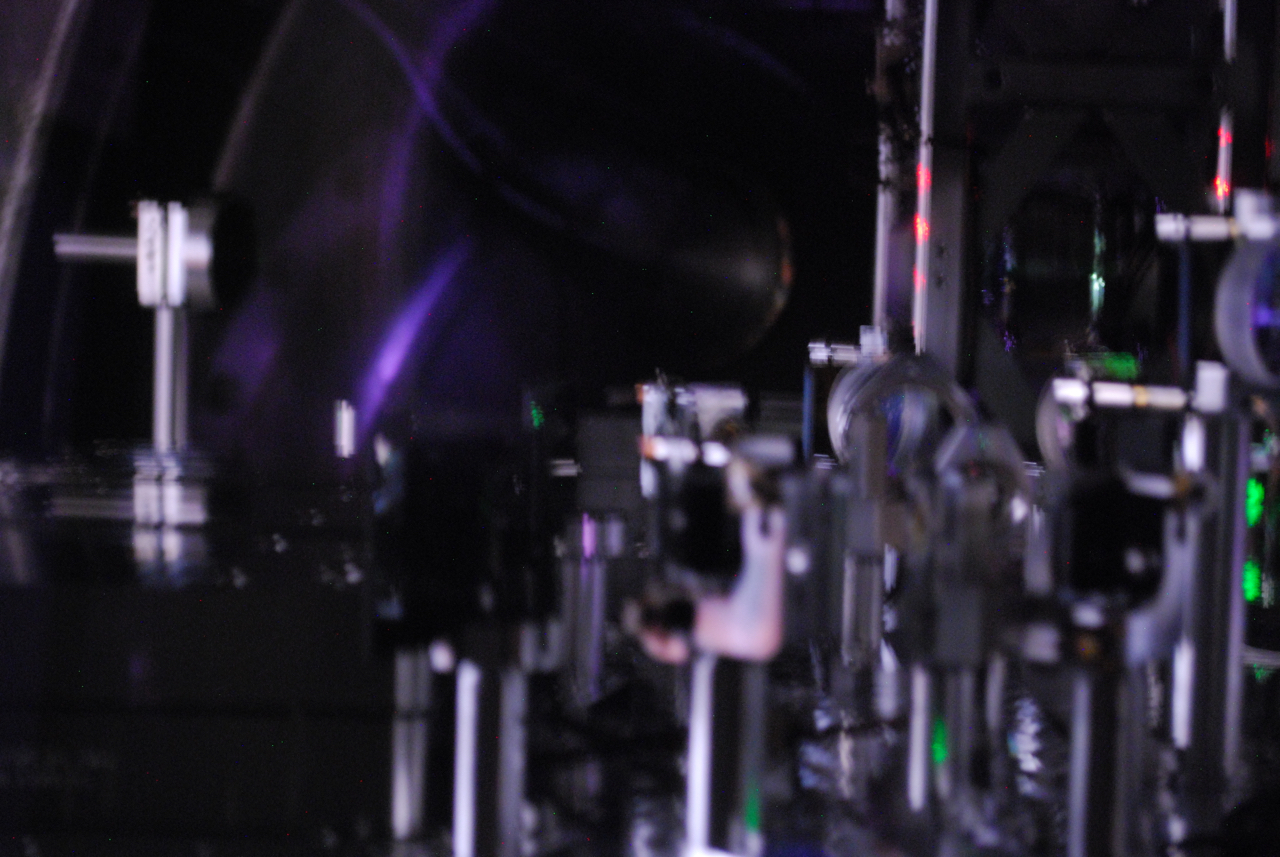
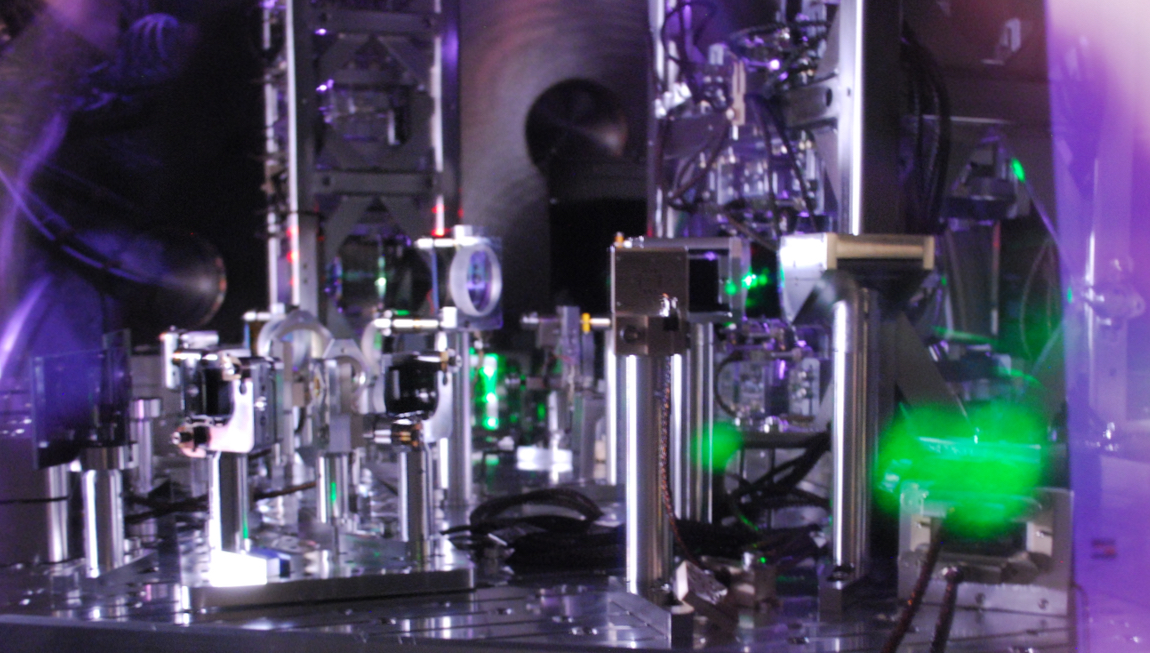
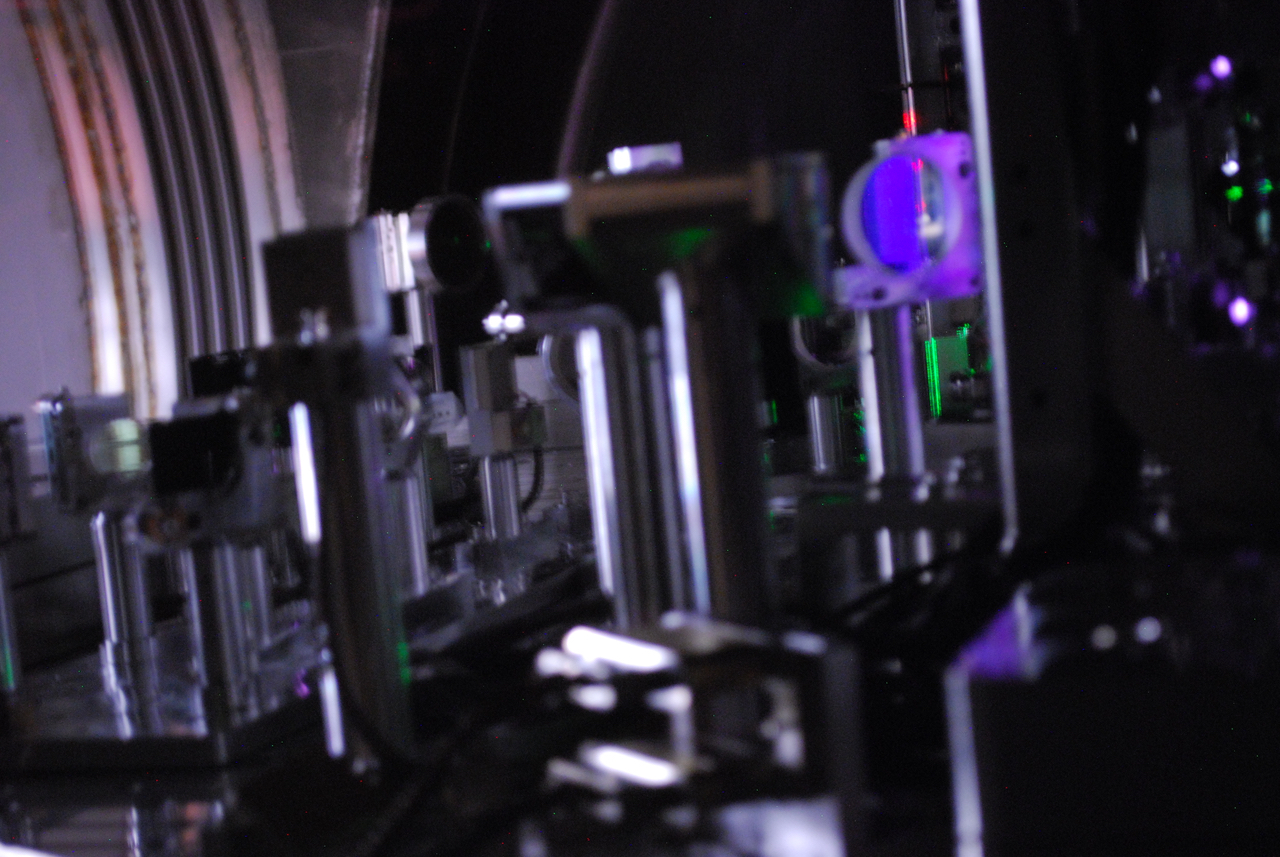
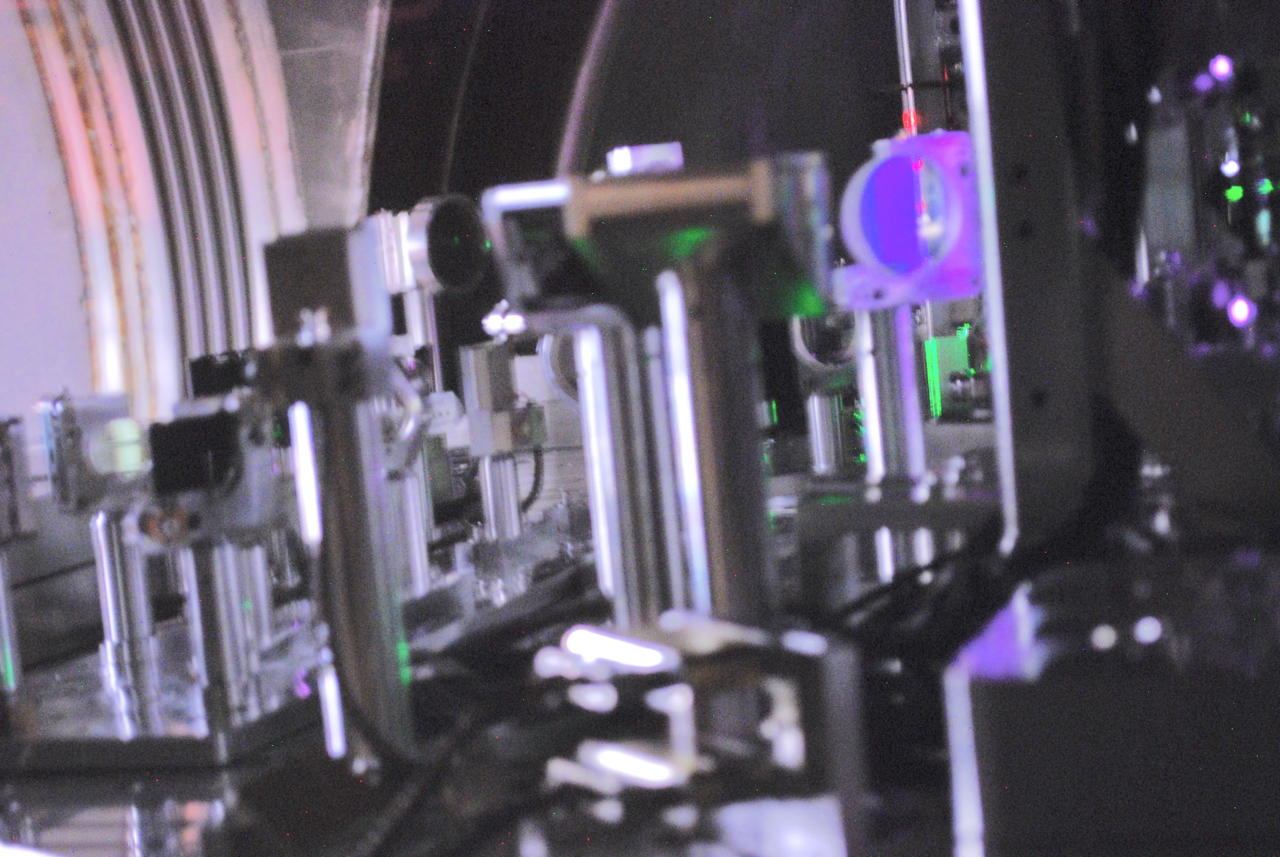
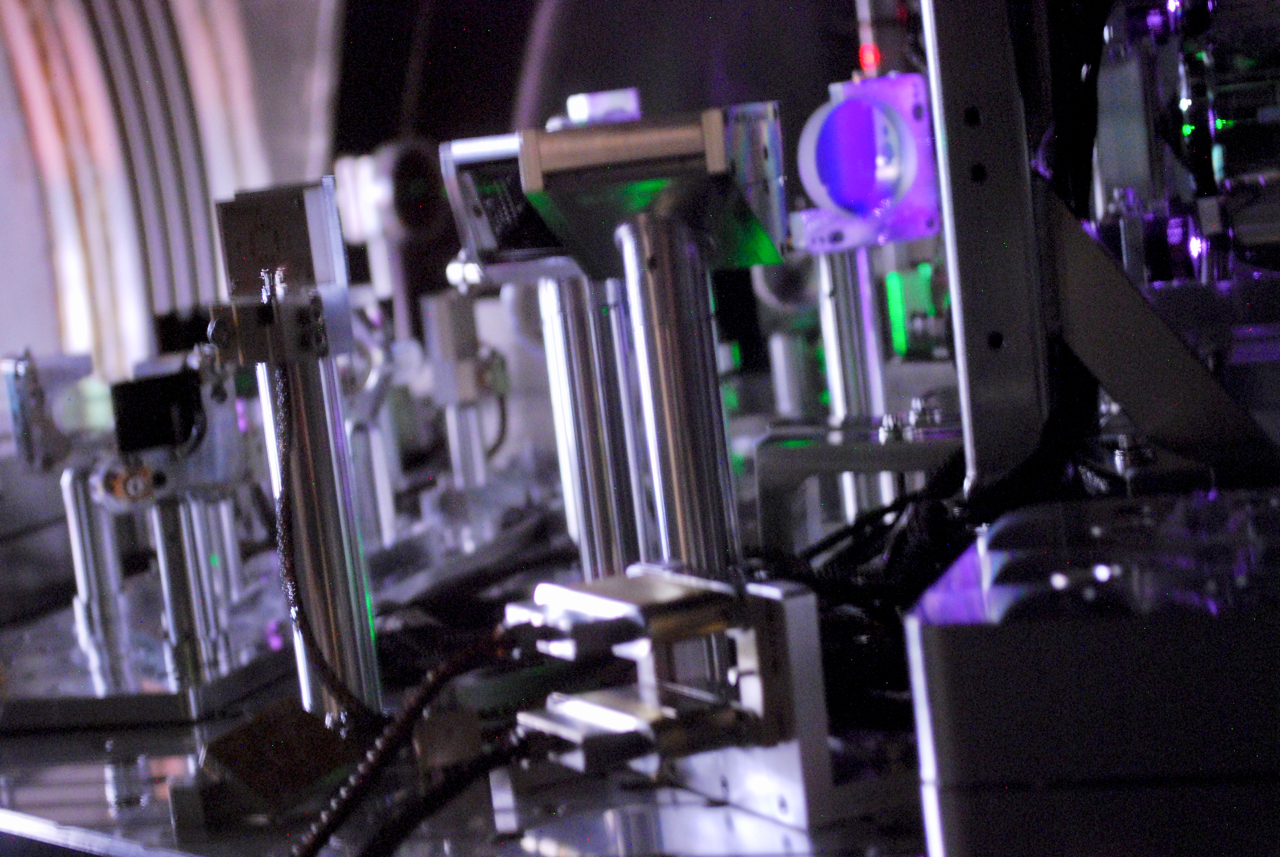
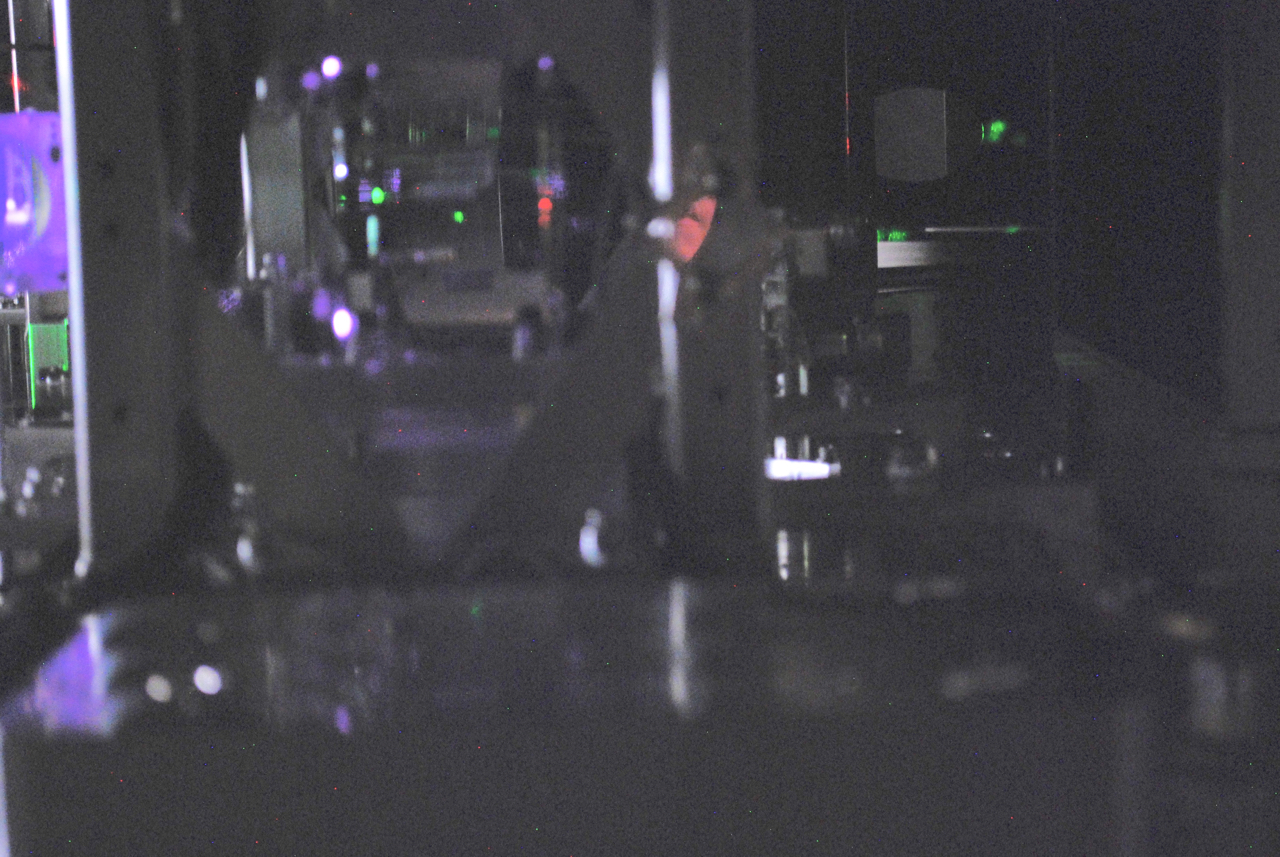
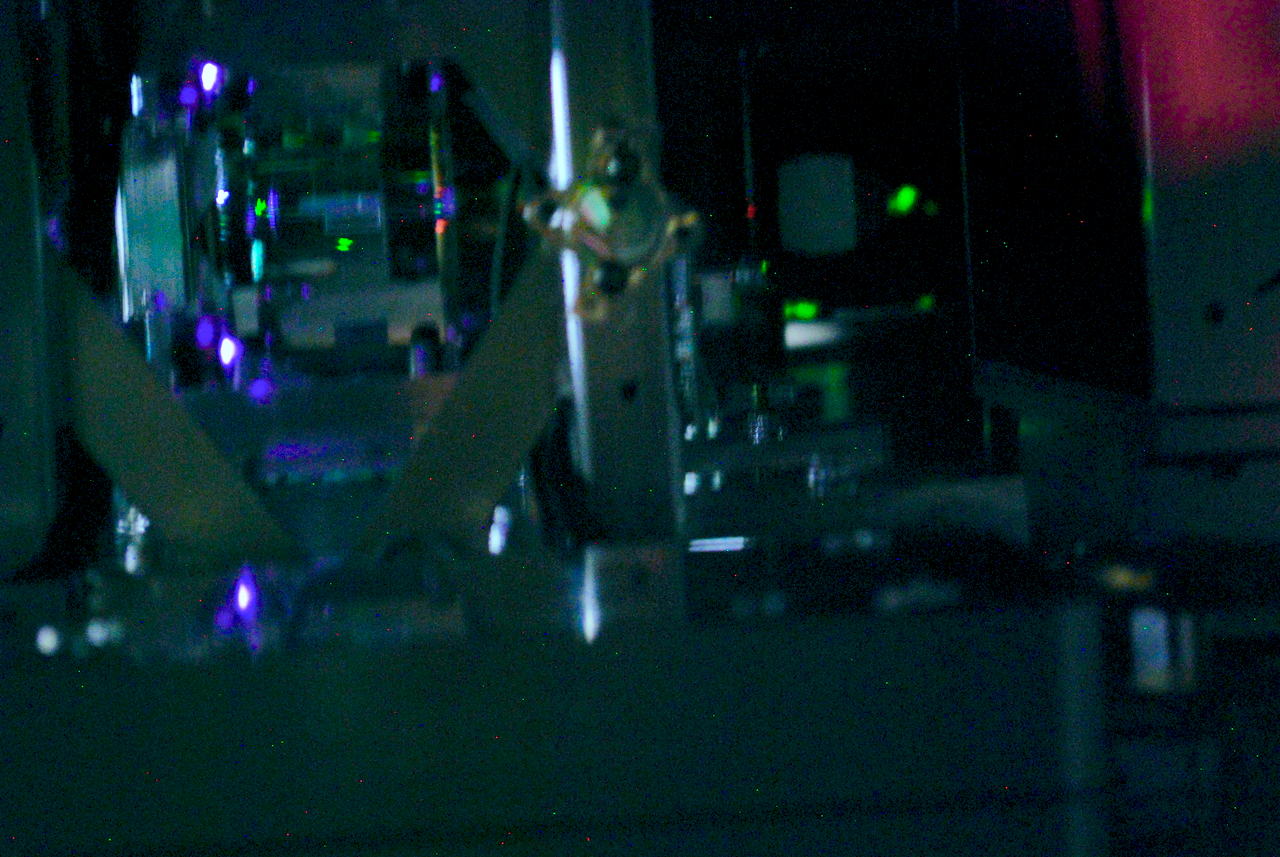
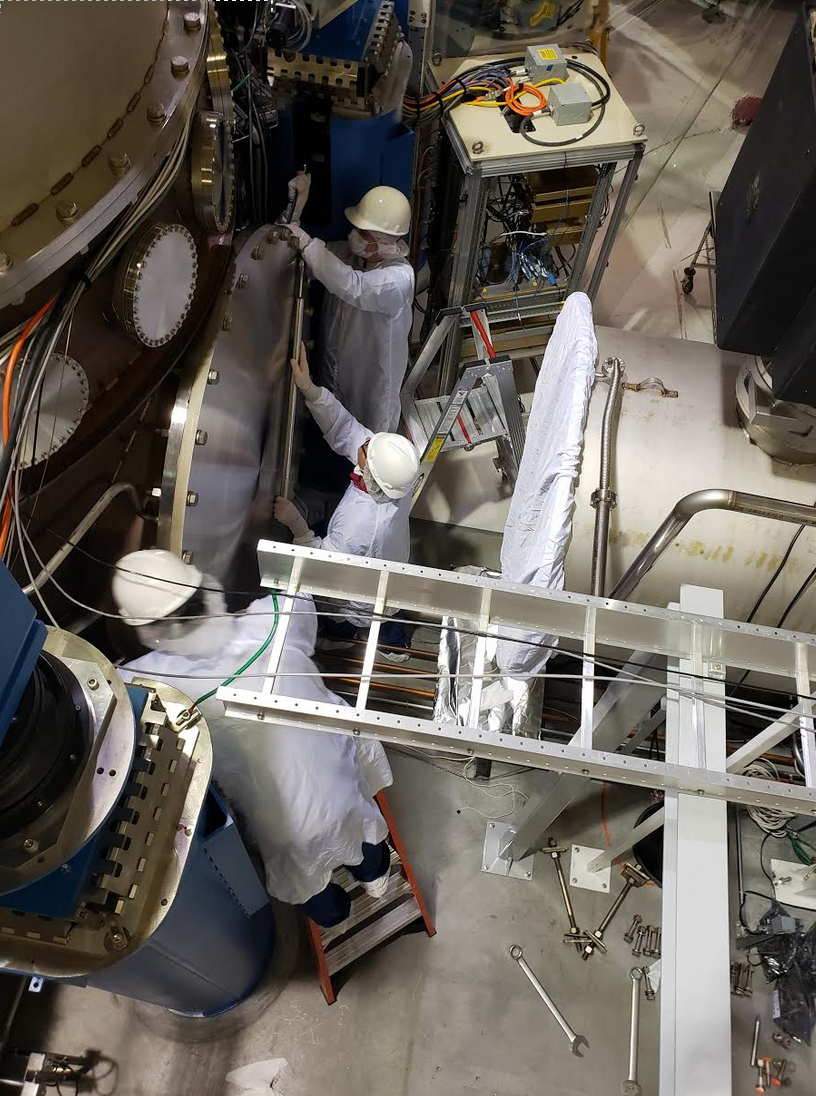
Images from HAM3, West door: H1 locked in NLN
HAM3 West door H1 not locked, ISC_LOCK in Locking Arms Green, X arm locked in green, Y arm locked and unlocked in green, IMC locked, IM4 moved to it's in-lock NLN position.
| IM4, H1 unlocked | IM4, H1 locked NLN | diff, urad | |
| H1:SUS-IM4_M1_DAMP_P_IN1_DQ | -2880.6 | -2943.0 | -62.4 |
| H1:SUS-IM4_M1_DAMP_Y_IN1_DQ | -63.7 | -75.0 | -11.3 |
Images:
By moving IM4 to it's NLN position, with X arm locked in green, the green beam takes the path that the IR beam takes on it's way from the PR2 baffle to the West door North viewport.
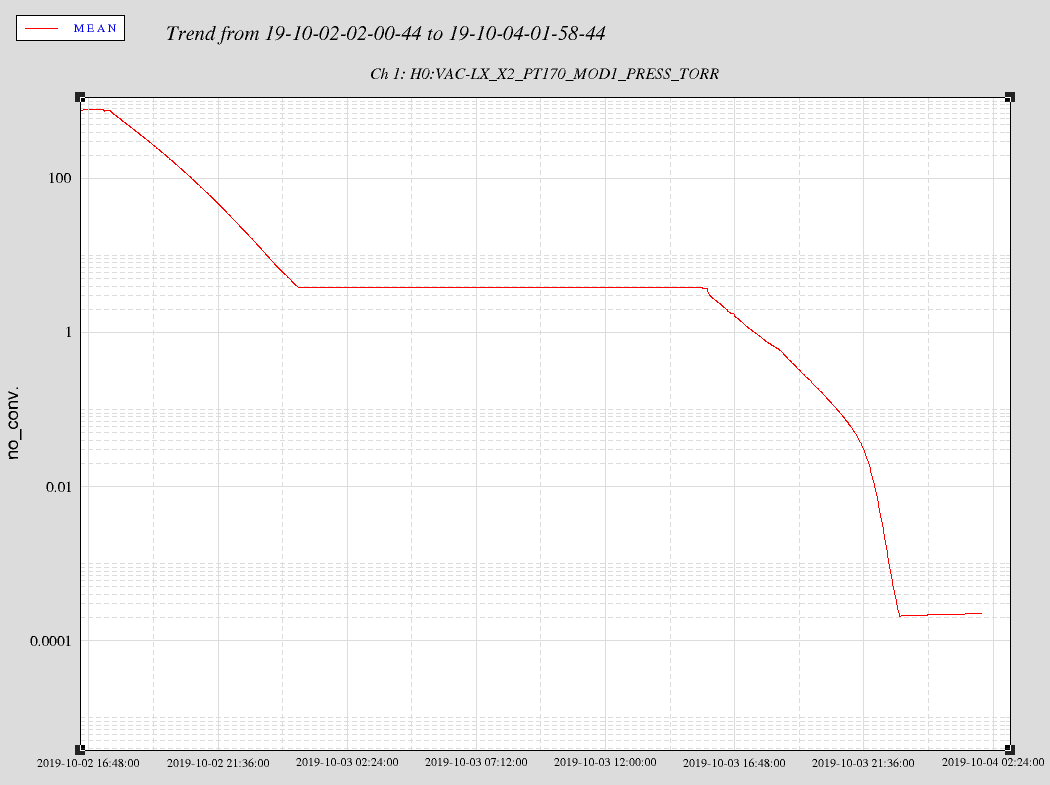
Resumed XBM pump down today by valving the QDP80 back in. At about 500 mTorr, spun up turbo and pressure fell to mid -4 Torr range within a few hours.
Needed custom adapter cable used at XBM for YBM turbo to start its pump down (for safety valve engagement) and in the process of swapping cables at XBM turbo station, the QDP80 tripped. Scroll was running and turbo was in local mode, anticipating a trip, but I forgot to close the QDP80 manual valve, so there was some backstream flow that caused the turbo to trip from overpressure. Thankfully the 10" isolation gate valve was closed the entire time, so the main volume pressure was not affected. Turbo volume pressure rose to about 10 Torr.
Upon start up after incident, the turbo pump tripped from strong vibration and won't come up to full speed. We tried several the tricks including feeding a gas load at inlet to load the bearing. This turbo has a history of failing from rotor resonance and in the past front loading with gas has helped. May the XBM Seiko rest in peace.
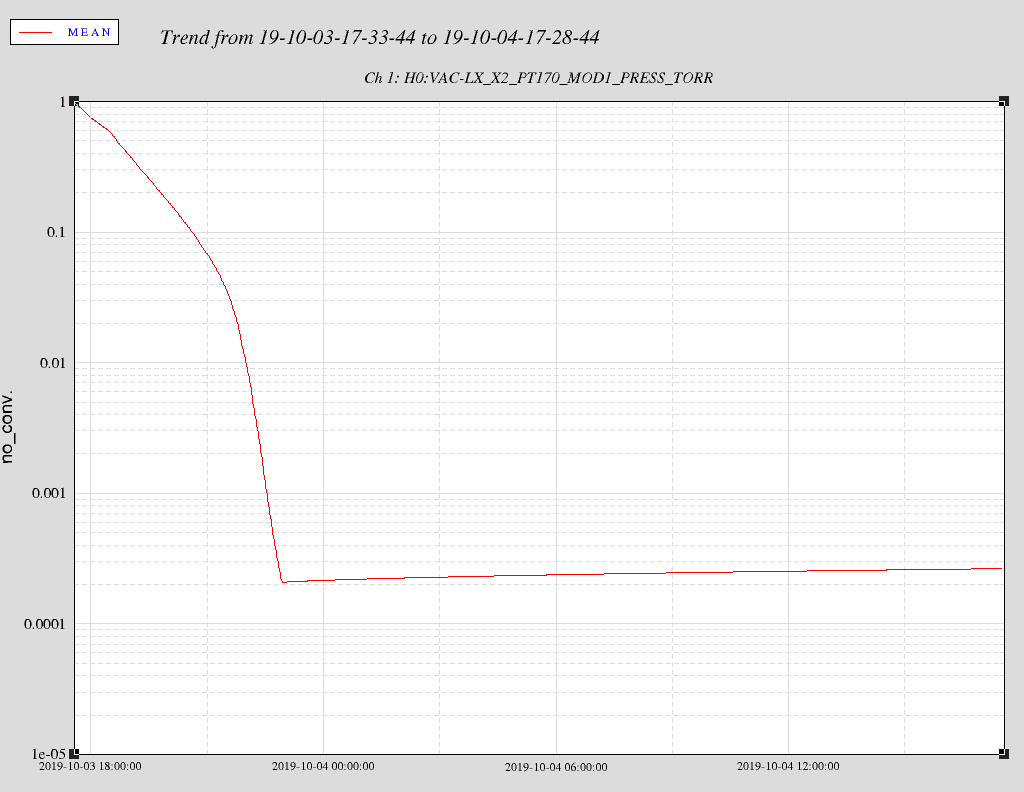
Pressure in XBM is currently reading 2e-4 Torr. We could leave it sit until we start pumping on adjacent vertex volume next week, by opening GV2 and combining volumes, or make an effort to: a) install old turbo that was just removed from vertex or SS500b; or b) install new turbo station, untested (scheduled to replace this turbo in third week of vent). Will sleep on it and see how pressure rises overnight.
Seiko turbo spun back up this morning to full speed, after being totally shut down last night. However, all pressure gauges are acting strange. Inlet and foreline piranis read e-1 Torr at full speed (with scoll) and then jumped to -3 Torr and cold cathode read -11 Torr. I don't trust this pump station so we are moving forward with replacement. Kyle should be able to test new turbo by afternoon, while we decouple old pump. XBM pressure trend attached.
{Bubba, Tyler, Chris, Chub, Jordan, Chandra}
BSC8 flat door is installed (D1800205) and annulus is being pumped down. Blew down purged air in YBM volume and measured -31.4degC dew point. Needed to rework some of the custom signal cable to enable safety valve so we will start roughing out volume tomorrow.
BSC 7,8 doors were cleaned and baked at LHO and FTIR samples passed test at JPL. Results in DCC under E1900248.
Jason O, Georgia M
This week we have been in the PSL installing a new fiber pick-off for the ALS and squeezer lasers. The old pick off is on transmission of the reference cavity while the new one is on the ALS bypass, after the PMC. Peter K started this work a month ago (alog 51610).
We currently have installed a mode matching lens (f=200mm f=150mm) between the beam splitter and the steering mirror, and achieved ~73% ~82% power transmission through the fiber so far.
We think we can get more light through the fiber by tweaking the mode matching lens position. We will need to go back into the PSL again to finish this work and feed the fiber and photodiode cable out to the rack.
Once the layout is finalised I'll update the psl table layout document (D1300348).
Modifications to the fiber distribution box are also ongoing.
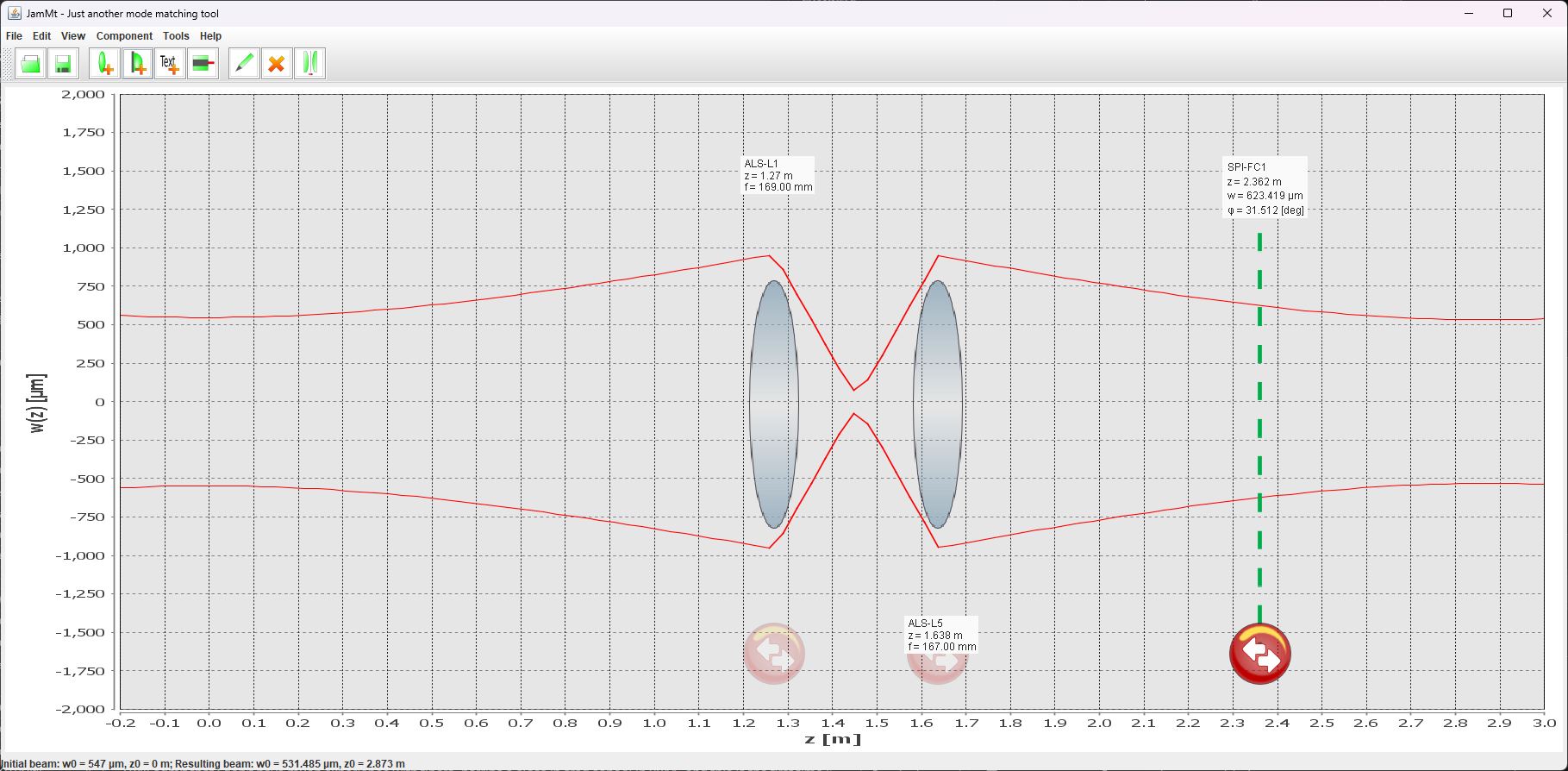
J. Kissel for J. Oberling As we work through the history of the ALS pick-off path in order to augment it and create an SPI pick-off path within (ECR E2400083), Jason shared a screenshot of his beam-profile model from JAMMT when he suggested placement of ALS-L5 (the f=150 mm lens mentioned abov). I post it here for historical reference. For the record the fiber collimator used in the ALS/SQZ distribution pick-off is a Thor Labs F220 APC-1064.
So there is clarity here for future reference, I created that quick-and-dirty JamMT model from the as-built LHO PSL table layout in March 2024, not when the ALS pickoff was installed in October 2019.
Further, the SPI pickoff install team discovered that the as-built PSL table layout has had an error in the ALS beam path since the IO side of the PSL table was installed during aLIGO PSL installation in the 2012 timeframe. The beam line from ALS-M1 to ALS-M2 is misplaced on the as-built layout; the layout shows the beam line along table row 23 but in reality it is along table row 25, 2 inches further +Y (using the IFO coordinate axes) than the layout indicates. Corey took pictures of the PSL table in 2013 (D1301029) that show ALS-M1 in line with the 2nd ISS turning mirror, which is along table row 25. Because of this the distances shown on the JamMT model are too short by 2 inches, rendering the beam waist size and location results given by that model incorrect. In addition, the overall ALS path is longer by 4 inches than the as-built layout implies.
I will correct this when I update the PSL as-built layout after the SPI team is done.
Right! The mode-matching model that Georgia put together can be found in an other file in the ECR E1900246, specifically PMCtoFiberMM.png.
Sheila, Fabrice, Daniel, Nutsinee
Today we went in to check our pump mode matching into the OPO with the new fiber. The mode mismatch (2nd order mode) was high so we decided to swap the collimator as well. After some alignment tweak we were able to get >90% mode matching. The new collimator part number is 355230-FCAPC-532--00-H9Q001, Bake load number is 9435.
We tried to improve the alignment into the coupler on ISCT6 but only got a few % improvement. The overall transmission from ISCT6 to SQZT6 is 40-45%
We scanned the second PZT (PZT1 on the red interface box) and saw similar behavior as the other PZT that we have been using (~2-3 FSR over 100V scan).
We tried to check the sqz beam (seed) on the OMC side but because both HAM5 and HAM6 ISI were tripped this check will have to wait. Both pump and seed came through SQZT6 just fine. Sheila and Fabrice tuck in the 5m fiber into the orange conduit. The new in-air fiber from ISCT6 to HAM6 is labeled O3-B.
We are back to where we were exactly a year ago.
SudarshanK, JeffK, LilliS
Two additional sets of high frequency sweeps (2019-09-10 and 2019-09-22) have been processed and included in the HDF5 file that was previously generated and describe in alog #52132.
The resultant HDF5 file and the script used to generate it can be found here:
^trunk/Runs/O3/H1/Scripts/Uncertainty/process_allmeas_includingPCALXHFdata_writeGPRHDF5_model20190909-C.py
^trunk/Runs/O3/H1/Results/Uncertainty/O3_H1_C_GPR_20190909_nofsQcorr_fmin20Hz_lengthscaleZp5_withPCALXHFdata.hdf5
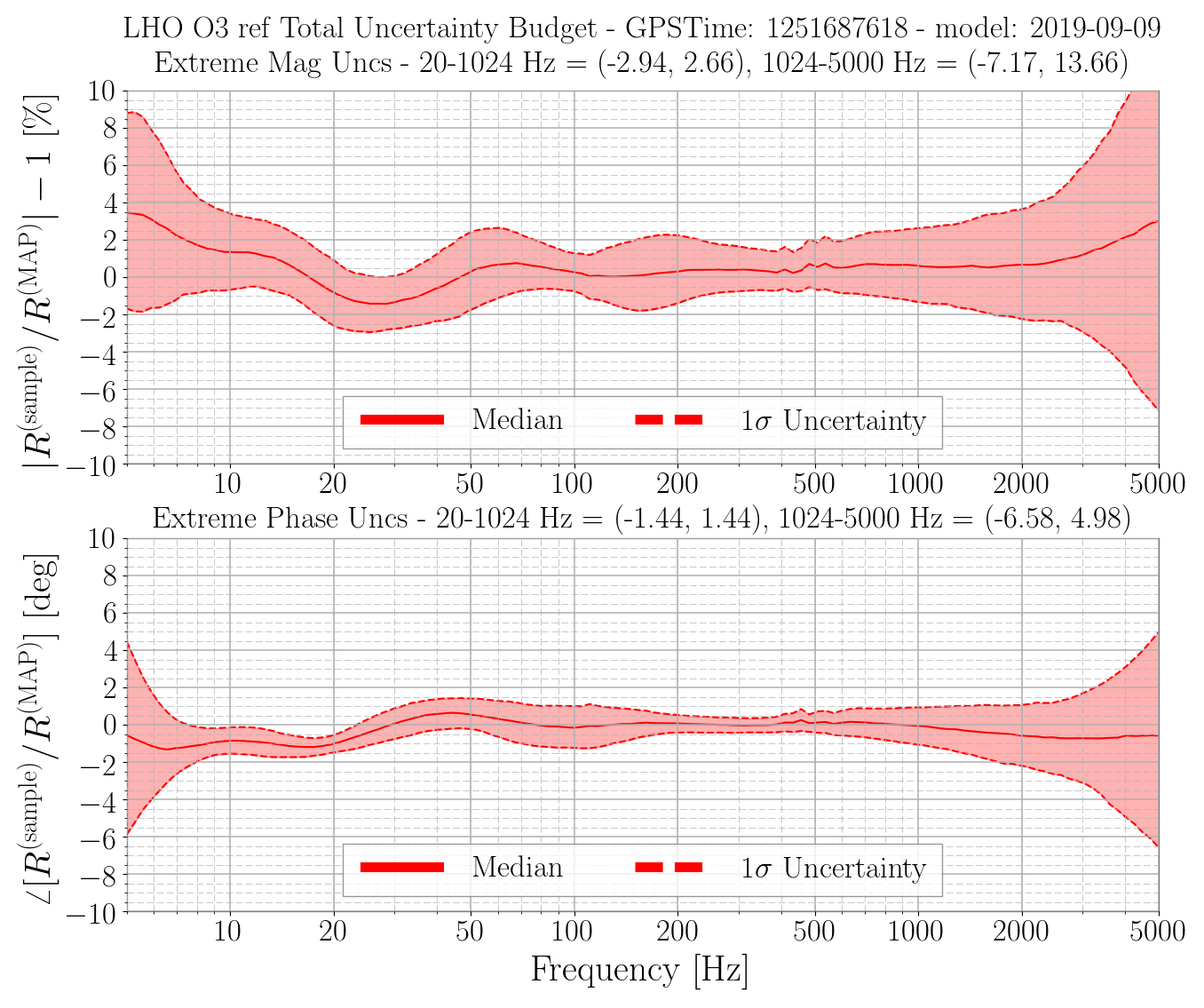
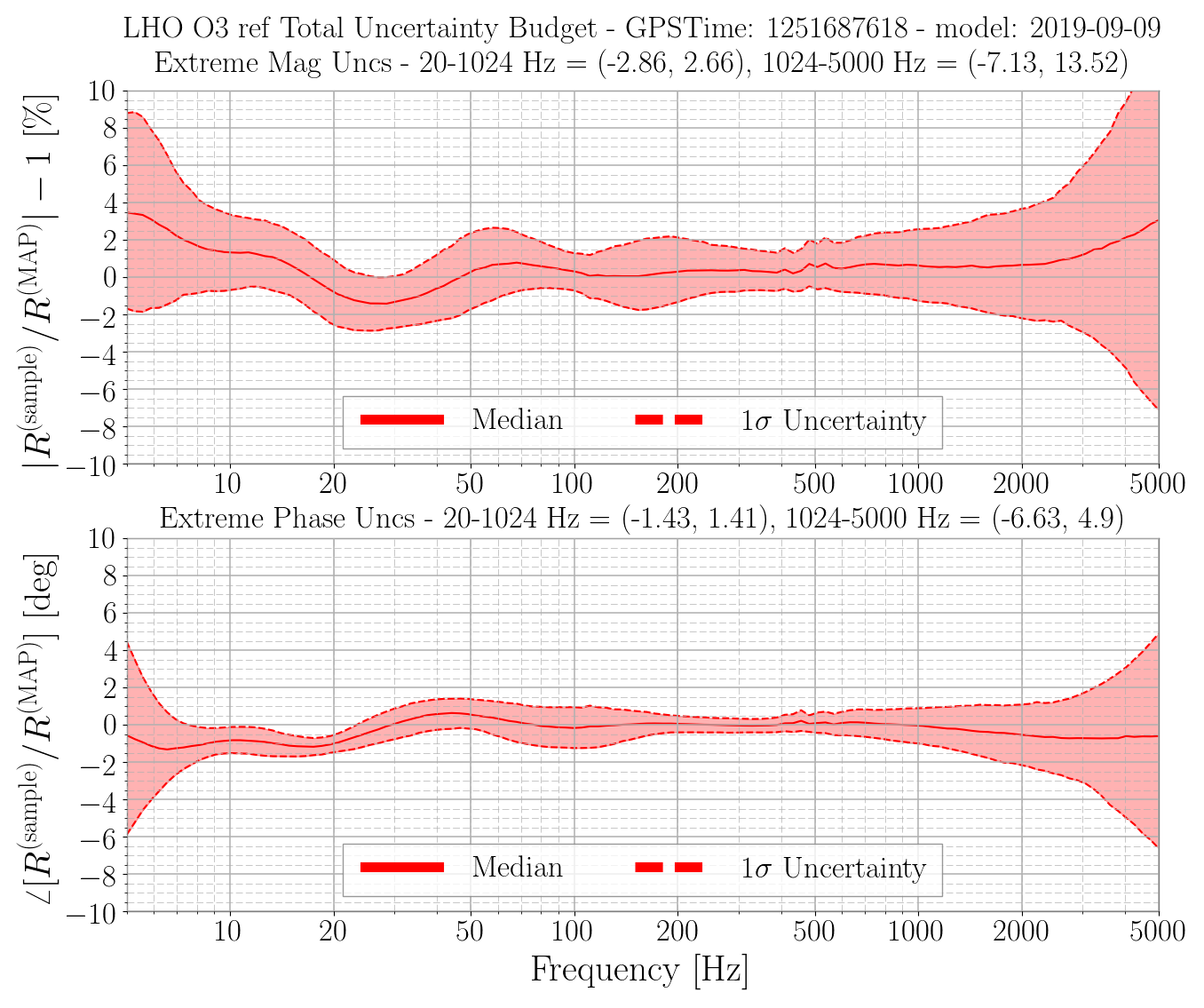
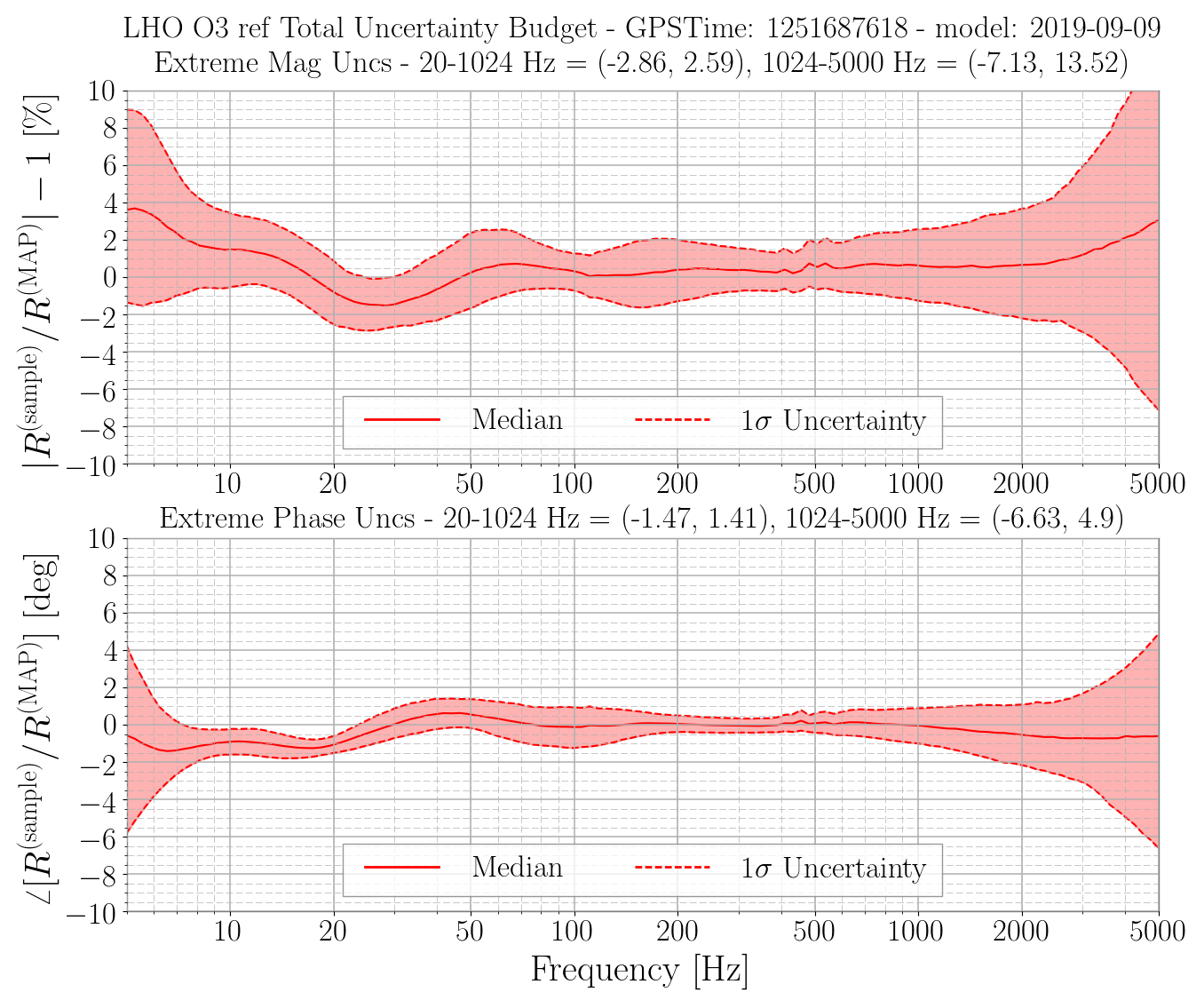
The plots are attached with this alog.
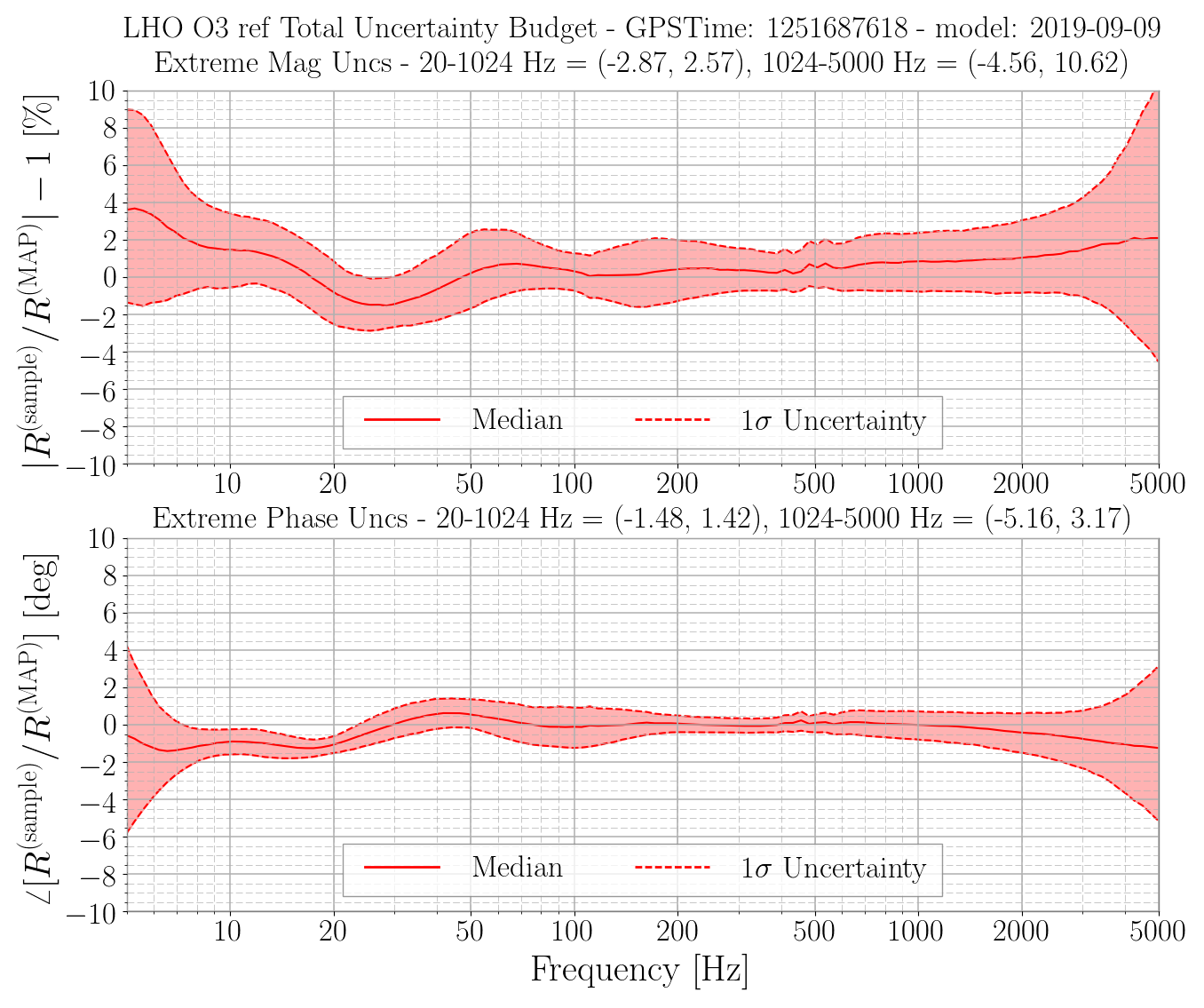
Using the updated GPR results, the uncertainty improves at high freq. See plot.
Command line:
python3 RRNom.py --IFO=LHO --HDF5_A_MCMCresults=/ligo/svncommon/CalSVN/aligocalibration/trunk/Runs/O3/H1/Results/Uncertainty/O3_H1_A_MCMC_20190404.hdf5 --HDF5_A_GPRresults=/ligo/svncommon/CalSVN/aligocalibration/trunk/Runs/O3/H1/Results/Uncertainty/O3_H1_A_GPR_20190909_multi.hdf5 --HDF5_C_MCMCresults=/ligo/svncommon/CalSVN/aligocalibration/trunk/Runs/O3/H1/Results/Uncertainty/O3_H1_C_MCMC_20190904_nomconfig_fmin20Hz_finaltrial.hdf5 --HDF5_C_GPRresults=/ligo/svncommon/CalSVN/aligocalibration/trunk/Runs/O3/H1/Results/Uncertainty/O3_H1_C_GPR_20190909_nofsQcorr_fmin20Hz_lengthscaleZp5_withPCALXHFdata.hdf5 --modelPath=/ligo/svncommon/CalSVN/aligocalibration/trunk/Runs/O3/H1/params/ --modelFilename=modelparams_H1_20190909 --IFOmodel=modelPars --outDir=/ligo/svncommon/CalSVN/aligocalibration/trunk/Runs/O3/H1/Results/Uncertainty/ --plot1SigmaUncs --sampleNumber=1000 --seed=1234 --version=ref --gpsTime=1251687618 --saveSummaries
The comparison between the new results and the uncertainty without including these 2 new HF data sets are attached as the pdf.
The two data sets being compared are:
^trunk/Runs/O3/H1/Results/Uncertainty/2019-09-27_O3_LHO_GPSTime_1251687618_ref_RelativeResponseUncertainty_FinalResults.txt
^trunk/Runs/O3/H1/Results/Uncertainty/2019-10-03_O3_LHO_GPSTime_1251687618_ref_RelativeResponseUncertainty_FinalResults.txt
Patrick, Jonathan, Dave:
PT180 (BSC8) was upgraded from a BPG402 to a BCG450. Patrick generated a new h0vaclx.ini file with the following changes:
MOD2 number of channels down by 2
MOD3,MOD4 added, each 7 channels
So net increase of +12 channels.
I created two new INI files, one for the standalone EDC (h1nds3) and one for the main DAQ.
I restarted h1nds3 at 12:30 PDT, the number of channels increased as expected and all channels connected correctly.
I restarted the main DAQat 12:38 PDT in the sequence: h1dc0 shutdown, followed a few seconds later by h1edc restart.
Monit had lost connection with the h1dc0 daqd process and did not restart it automatically. I manually instructed monit to restart using the web interface, and the DAQ came back after a downtime of several minutes.
[Dan Brown, Jenne]
We cleaned up several no-longer-used optical components that had been stored in the corner of ISCT1, in order to make some space for the placement of the phase camera.
Attached is a photo from mid-August of most of the stuff that we removed. The 1" optics were all unmounted, boxed, and labled, and put into the optics lab. The 2" optic was put in the ISC cabinet in the squeezer bay. The 4" beam alignment aperture was also put into the ISC cabinet in the squeezer bay. Razor beam dumps and the mounting hardware was all put into their drawers in the optics lab. The 1611 1GHz PD went with the others of that type on a shelf in the optics lab. The old REFL WFS are with Fil for inventory and storage.
REFL WFS PD S1300502
REFL WFS PD S1300504
TITLE: 10/03 Day Shift 15:00 – 23:00 (08:00-16:00), all times posted in UTC
STATE of H1: Planned Engineering
INCOMING OPERATOR: None
SHIFT SUMMARY: Updated PT-180 software, turbo replacement underway, XBT manifold pump down underway, PSL work ongoing, ISCT1 prep done
LOG:
Tyler, Chris, Kyle, to LVEA -- start spool work, misc. Work
15:10 (08:10) Chub, Jordan to LVEA -- assist VAC team
15:54 (08:54) Jason to Optics Lab
16:04 (09:04) Patrick finished with PT-180 software upgrade
16:15 (09:15) Jason out of Optics Lab
16:33 (09:33) Sheila to SQZT6 -- check alignment
16:33 (09:33) Dan to LVEA -- prep for ISCT1 work
16:37 (09:37) Gerardo to LVEA -- assist Kyle
16:47 (09:47) Chris, Tyler out of LVEA -- crane work done
17:10 (10:10) Tyler to LVEA
17:13 (10:13) Karen to woodshop
17:31 (10:31) Tyler out of LVEA
17:33 (10:33) Gerardo to MY -- grab tools
17:56 (10:56) Tyler to LVEA -- start craning old turbo
17:57 (10:57) Gerardo back from MY
18:02 (11:02) Jason, Georgia to PSL enclosure -- continue ALS bypass pick-off work
18:05 (11:05) Betsy to LVEA -- find Chandra
18:05 (11:05) Handing off to Cheryl
activities: 18:10UTC to 20:27UTC
20:27 (13:27) Taking over for Cheryl
20:37 (13:37) Vanessa to LVEA
20:57 (13:57) Chris to LVEA -- find Tyler
21:38 (14:38) Jason, Georgia to PSL enclosure -- continue pick-off work
21:42 (14:42) Chub, Jordan to end station -- take cryopump measurements
21:44 (14:44) Tyler out of LVEA
WP 8396 Done to change PT180 from a BPG402 Inficon gauge to a BCG450 Inficon gauge. Changes to C# and Powershell scripts submitted to svn yesterday. Restart done today. Did not go as smoothly as expected. Upon regenerating the solution the names of most of the channels in the I/O list for each of the BPG402 gauges changed to what I thought was the 1.3.0.0 version. However, the version listed for the gauges is still 1.2.1.0. I do not understand why this happened. For now I have changed the Powershell script to use the 1.3.0.0 version names. I am not submitting this change to svn. Burtrestored to 8:00 am this morning. DAQ restart and medm changes still needed.
I found this alog: https://alog.ligo-wa.caltech.edu/aLOG/index.php?callRep=44196 Does /ligo/home/vacuum/alarm_set.bsh need to be run?
Ran /ligo/home/vacuum/alarm_set.bsh
{Bubba, Chris, Tyler, Chub, Jordan, Chandra}
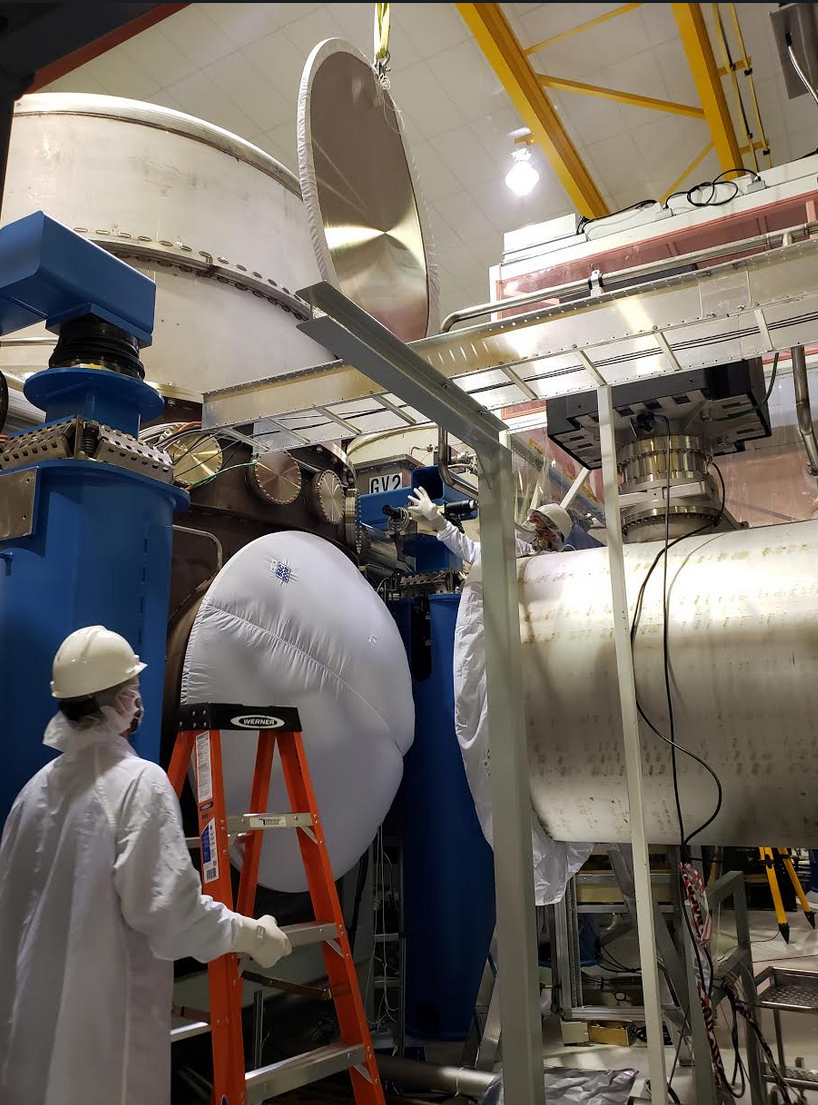
Another good day of H2 decoupling work. We removed the expansion spool from BSC7 and installed the new door with no issues. Annulus pumped down quickly indicating no inner and outer o-ring leaks. We then blew down XBM volume (-37degC dew point) and proceeded to rough out volume. PT170 is currently reading 5 Torr. We will valve the QDP80 out for the night and resume pumping tomorrow morning.
Had time to vent YBM and remove expansion spool on BSC8. BSC8 flange is currently covered with C3 soft cover with a healthy purge air flow. The spool is connected to west crane and will be transferred to LVEA high bay area tomorrow morning when we're in full laser safe mode.
I moved the annulus pumping system from BSC7 to BSC8 in preparation for door installation tomorrow morning.
Well done!
New BSC7 door is PN D1800205. The PN and SN were accidentally stamped on vacuum side of plate! (same with BSC8 plate)
Lilli S, Jeff K,
All valid low-fre and high-freq meas for the new 0909 model are processed together (including 0821, 0828, 0904x2, 0909x2, 0916 LF meas, and 0903 HF meas).
The sensing GPR fitting results are attached in the pdf files.
The script used to generate the GPR fitting is:
^trunk/Runs/O3/H1/Scripts/Uncertainty/process_allmeas_includingPCALXHFdata_writeGPRHDF5_model20190909-C.py
The resulting hdf5 file is:
^trunk/Runs/O3/H1/Results/Uncertainty/O3_H1_C_GPR_20190909_nofsQcorr_fmin20Hz_lengthscaleZp5_withPCALXHFdata.hdf5
The uncertainty plot was generated using this command line:
python3 RRNom.py --IFO=LHO --HDF5_A_MCMCresults=/ligo/svncommon/CalSVN/aligocalibration/trunk/Runs/O3/H1/Results/Uncertainty/O3_H1_A_MCMC_20190404.hdf5 --HDF5_A_GPRresults=/ligo/svncommon/CalSVN/aligocalibration/trunk/Runs/O3/H1/Results/Uncertainty/O3_H1_A_GPR_20190909_multi.hdf5 --HDF5_C_MCMCresults=/ligo/svncommon/CalSVN/aligocalibration/trunk/Runs/O3/H1/Results/Uncertainty/O3_H1_C_MCMC_20190904_nomconfig_fmin20Hz_finaltrial.hdf5 --HDF5_C_GPRresults=/ligo/svncommon/CalSVN/aligocalibration/trunk/Runs/O3/H1/Results/Uncertainty/O3_H1_C_GPR_20190909_nofsQcorr_fmin20Hz_lengthscaleZp5_withPCALXHFdata.hdf5 --modelPath=/ligo/svncommon/CalSVN/aligocalibration/trunk/Runs/O3/H1/params/ --modelFilename=modelparams_H1_20190909 --IFOmodel=modelPars --outDir=/ligo/svncommon/CalSVN/aligocalibration/trunk/Runs/O3/H1/Results/Uncertainty/ --plot1SigmaUncs --sampleNumber=1000 --seed=1234 --version=ref --gpsTime=1251687618
The online uncertainty code will start to use this new hdf5 for 0909 model.
The last LF measurement before the break taken on 0925 was added to the GPR fitting. The fitting results are shown in the attached pdfs. The uncertainty budget slightly improves compared to the results posted yesterday. Here only one set of HF data is included (only the 0903 set is valid for the new model 0909). The HF part can be further improved when more HF data sets are added.
I've re-run the RRNom.py command that Lilli indicates above, but have added the "--saveSummaries flag such that text files representing the curves above are saved:
python3 RRNom.py --IFO=LHO --HDF5_A_MCMCresults=/ligo/svncommon/CalSVN/aligocalibration/trunk/Runs/O3/H1/Results/Uncertainty/O3_H1_A_MCMC_20190404.hdf5 --HDF5_A_GPRresults=/ligo/svncommon/CalSVN/aligocalibration/trunk/Runs/O3/H1/Results/Uncertainty/O3_H1_A_GPR_20190909_multi.hdf5 --HDF5_C_MCMCresults=/ligo/svncommon/CalSVN/aligocalibration/trunk/Runs/O3/H1/Results/Uncertainty/O3_H1_C_MCMC_20190904_nomconfig_fmin20Hz_finaltrial.hdf5 --HDF5_C_GPRresults=/ligo/svncommon/CalSVN/aligocalibration/trunk/Runs/O3/H1/Results/Uncertainty/O3_H1_C_GPR_20190909_nofsQcorr_fmin20Hz_lengthscaleZp5_withPCALXHFdata.hdf5 --modelPath=/ligo/svncommon/CalSVN/aligocalibration/trunk/Runs/O3/H1/params/ --modelFilename=modelparams_H1_20190909 --IFOmodel=modelPars --outDir=/ligo/svncommon/CalSVN/aligocalibration/trunk/Runs/O3/H1/Results/Uncertainty/ --plot1SigmaUncs --sampleNumber=1000 --seed=1234 --version=ref --gpsTime=1251687618 --saveSummaries
The text files are now committed to the repo here:
/ligo/svncommon/CalSVN/aligocalibration/trunk/Runs/O3/H1/Results/Uncertainty/
2019-09-26_O3_LHO_GPSTime_1251687618_ref_RelativeResponseUncertainty_FinalResults.txt
2019-09-26_O3_LHO_GPSTime_1251687618_ref_RelativeResponseUncertainty_MinMax.txt
Now I've added the last set of A meas (0925) to the hdf5 file: ^trunk/Runs/O3/H1/Results/Uncertainty/O3_H1_A_GPR_20190909_multi.hdf5. The resulting uncertainty budget is attached.
The GPR script is: ^trunk/Runs/O3/H1/Scripts/Uncertainty/process_allmeas_writeGPRHDF5_model20190909-A.py
The RRNom command is the same as above.
The txt summary files are ^trunk/Runs/O3/H1/Results/Uncertainty/2019-09-27_O3_LHO_GPSTime_1251687618_ref_RelativeResponseUncertainty_FinalResults.txt and 2019-09-27_O3_LHO_GPSTime_1251687618_ref_RelativeResponseUncertainty_MinMax.txt
To be consistent with the file name convention established in Chunks 1 and 2, I've changed the name of the script that produces the GPR estimate and committed the file name change:
/ligo/svncommon/CalSVN/aligocalibration/trunk/Runs/O3/H1/Scripts/Uncertainty/
process_allmeas_writeGPRHDF5_meas20190828-20191001_withHF_model20190909-C.py