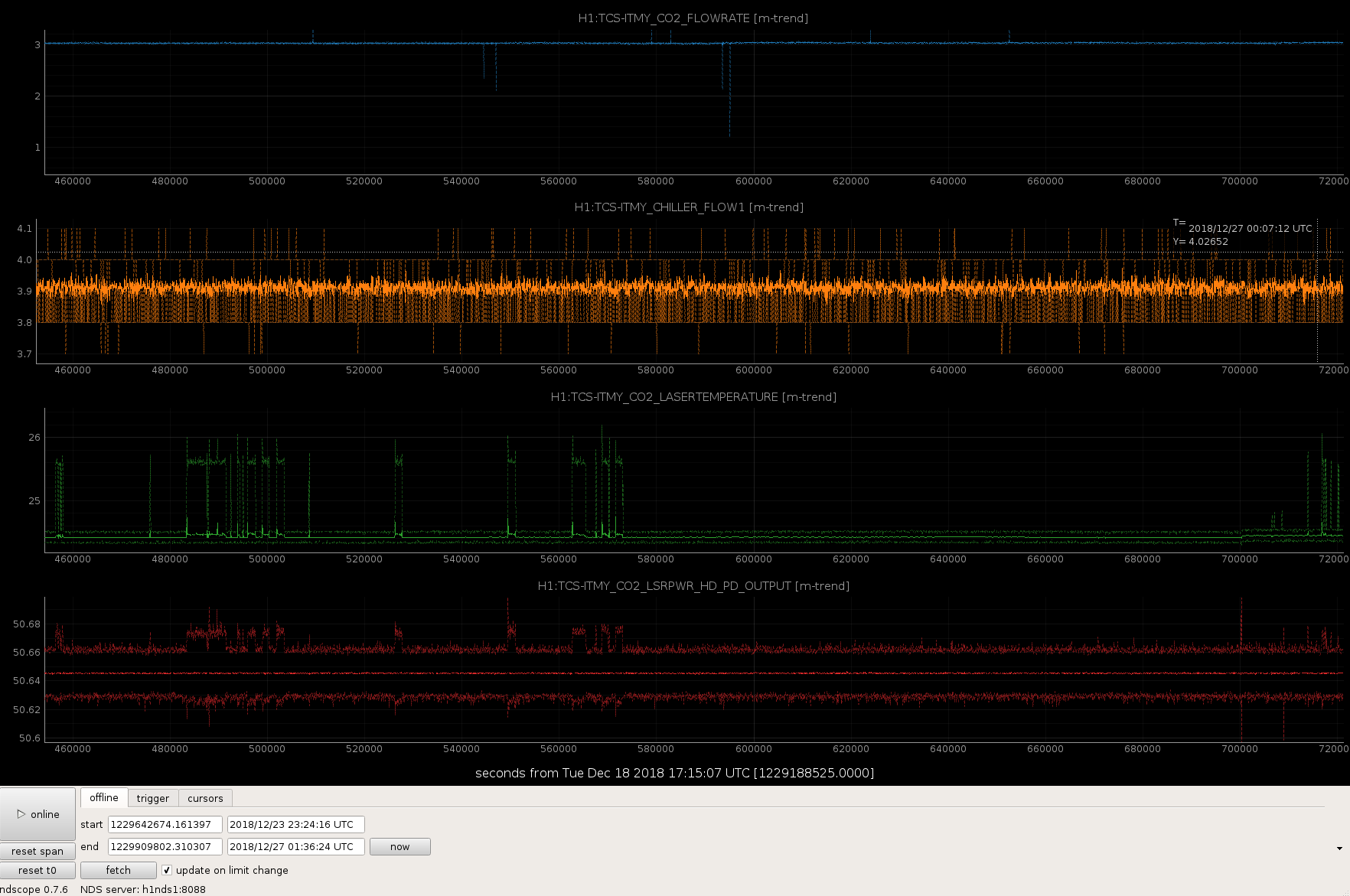
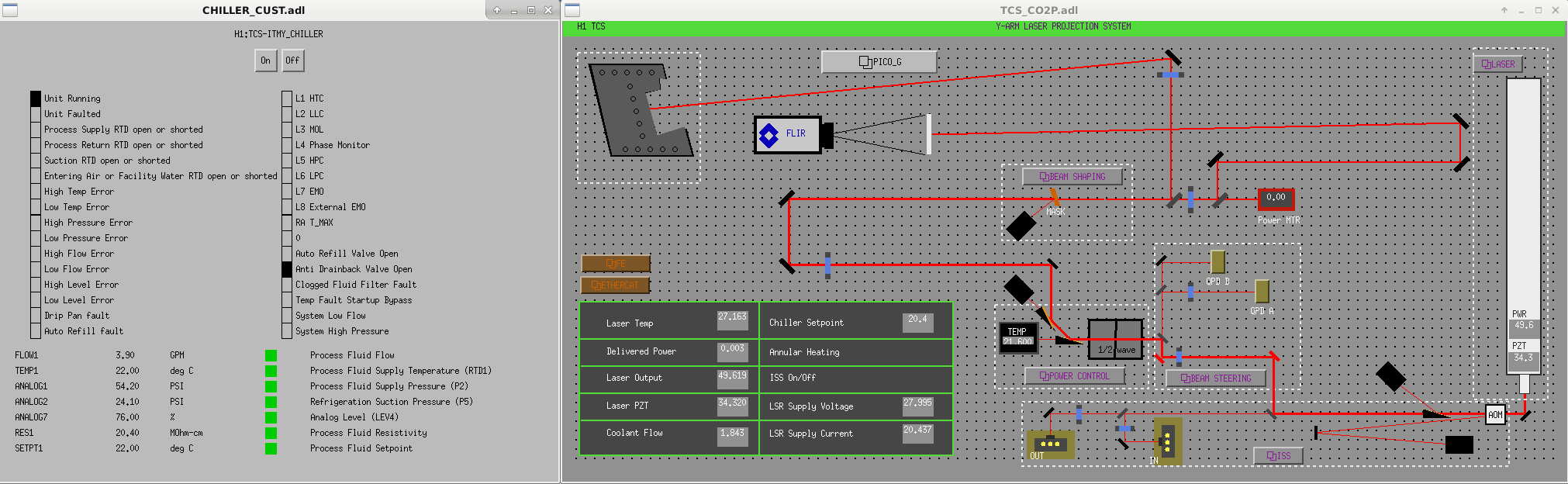
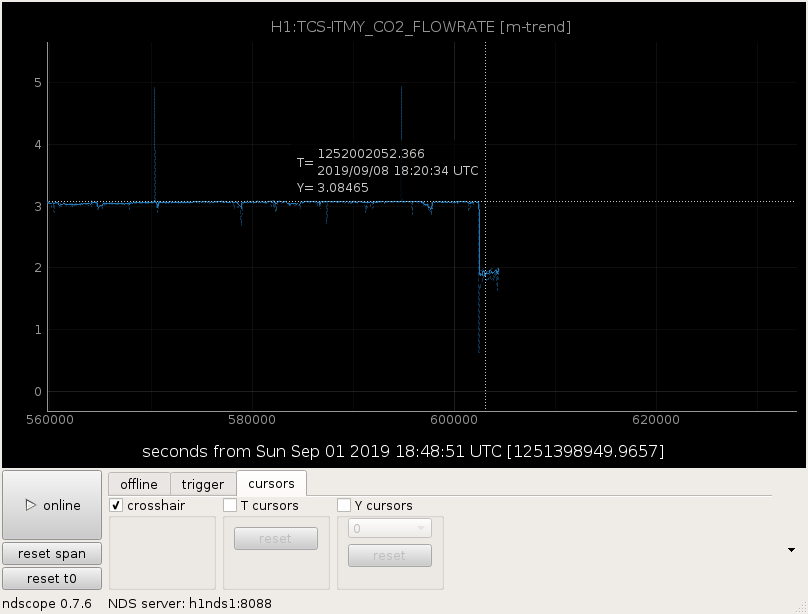
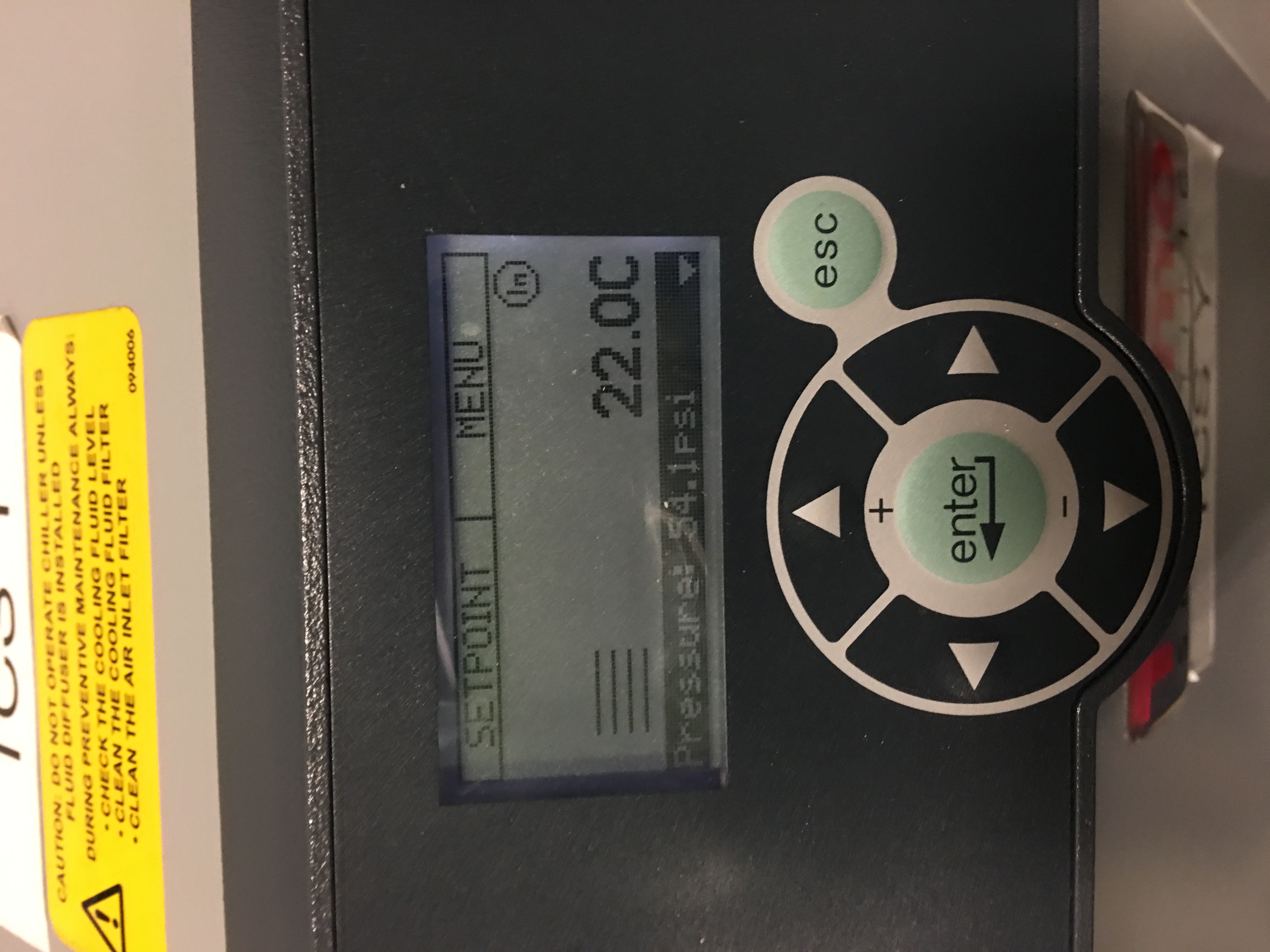
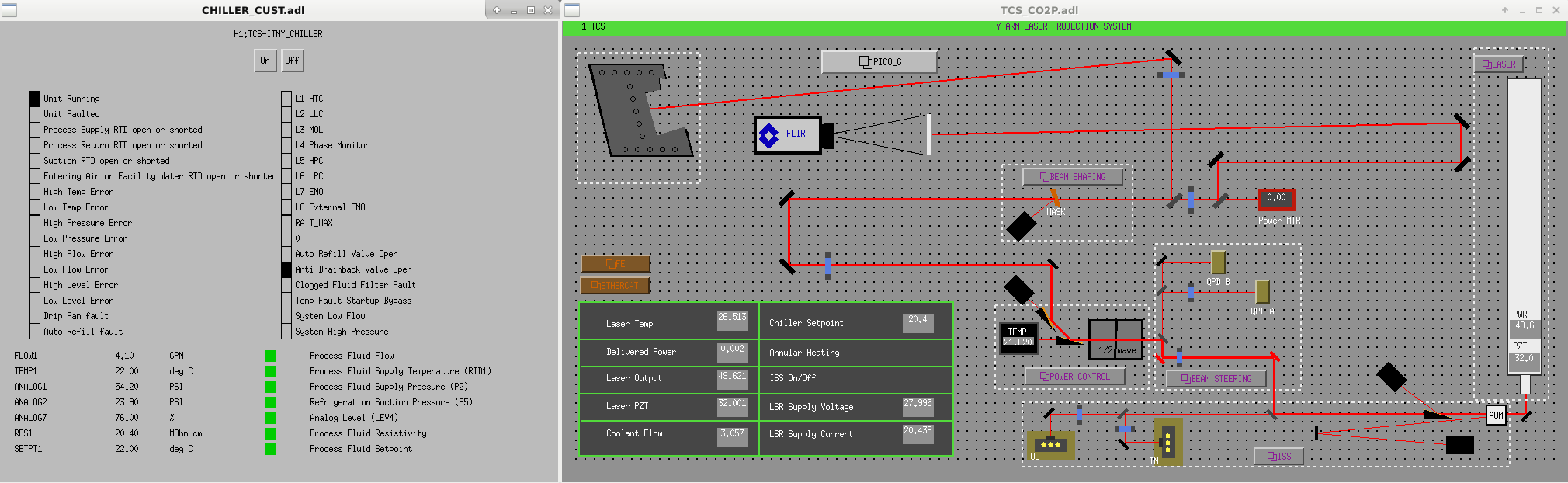
Yesterday I got a call from Ed that the TCSY flow rate was reporting under 2gpm, lower than the usual 3gpm (alog51806). While the flow at the flow meter was reporting lower, the chiller was still reporting its usual flow rate, ~4gpm. I was immediately concerned of a leak, but Ed found no water missing in the chiller. We are still full today as well.
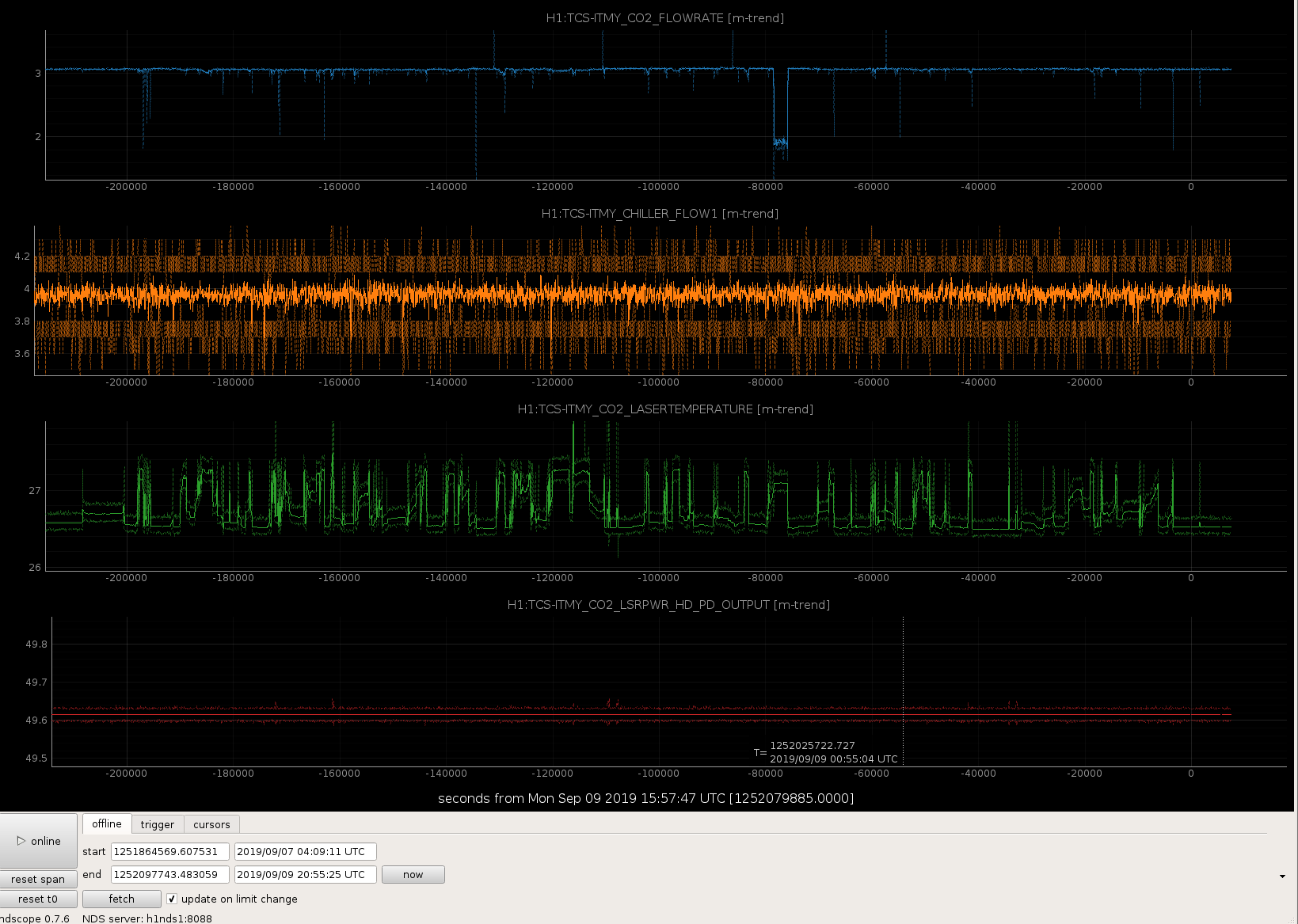
My next suspect was the flow meter. Our water in the system is not the cleanest, and we have had issues in the past with the paddles in these flow meters getting gunked up (see Peter's alog32777 for pictures). This particular flow meter was replaced December 20, 2016, for similar issues, and the TCSX flow meter was replaced October16, 2018. The situation looks a bit different now because we have less of what we have been calling glitches in the flow. The difference is that yesterday and on the 5th we had this flow meter report the flow as ~1gpm lower for a few tens on minutes, before returning to normal. Meanwhile, the chiller flow doesn't seem to be affected. The laser temperature goes up slightly when this happened, about 0.5C, but this has been happening more frequently when we replaced the chiller.
The current, running TCSY chiller is actually our spare. We swapped it out on January 15, 2019 due to a leaky shaft seal. The flow on the current chiller seems to be less consistent than on the normal TCSY chiller. As Jason notes in alog50789, this may be part of the reason we have had more relocks from this laser. The normal chiller has be repaired with a new motor and pump, but still needs to be tested.
Going forward:
It definitely looks like we need to swap out and rebuild the TCSY flow meter soon. This isn't hugely invasive, but runs the risk of breaking pipes because the meter is dry-fit into the pipe and each time has been more difficult than expected. Because of this, we are hoping to push this off till the October vent, when we have more time. In the mean time we would like to swap the TCSY chiller as soon as we can get a long term test on the backup unit. The inconsistency of the current chiller can't be helping the flow problems, and it's an easy swap.
Attachment 1 - The flow rate from the flow meter, the flow from the chiller, the laser temp., and the laser output from the last few days.
Attachment 2 - Same channels as above, but in December, before the chiller swap.
[J. Kissel, A. Viets]
I just restarted the primary and redundant calibration pipelines around GPS time 1252087593, or Mon Sep 09 18:06:15 GMT 2019. They are using the new filter described in LHO aLOG 51795. This change is coordinated with the front-end changes noted in LHO aLOG 51819.
First OBSERVATION READY SEGMENT with this new 2019-09-09 model installed started at GPS Time 1252088806 (Sep 09 2019 18:26:28 UTC; Sep 09 2019 11:26:28 PDT).
YES THIS WILL DROP THE FRONT-END COMPUTED BNS RANGE, because we're improving the accuracy of the real-time pipeline in order to better matrch the current IFO (more power than when it was last updated, no detuning, good spot positions, SRCL offset, accounting for new UIM boost, etc.) Should be done in an hour or three. When we come back in to OBSERVATION READY, the new model will be in place. See details of the model in LHO aLOG 51784, and references there in. The decision point to change the model is documented in LHO aLOG 51782, which has yet more references and explanation.
INSTALLATION COMPLETE. As predicted, front-end BNS range dropped by ~5 Mpc, and now in better agreement with GDS produced BNS range. First OBSERVATION READY SEGMENT with this new 2019-09-09 model installed started at GPS Time 1252088806 (Sep 09 2019 18:26:28 UTC; Sep 09 2019 11:26:28 PDT).
Reference Model values at calibration line frequencies (aka "EPICs records") for this model update have been generated and installed.
/ligo/svncommon/CalSVN/aligocalibration/trunk/Runs/O3/H1/Results/CALCS_FE/
epicsrecords_model-H1_20190909_created-20190909.txt
In doing so, I've created the script
/ligo/svncommon/CalSVN/aligocalibration/trunk/Runs/O3/H1/Scripts/CALCS_FE/
python3.5 createEPICS_for_20190909.py rev 8397.
and modified it and computeDARM.py to be able to write the EPICs records to file separately from actually pushing it to the front-end.
/ligo/svncommon/CalSVN/aligocalibration/trunk/Common/pyDARM/src/
computeDARM.py rev 8399
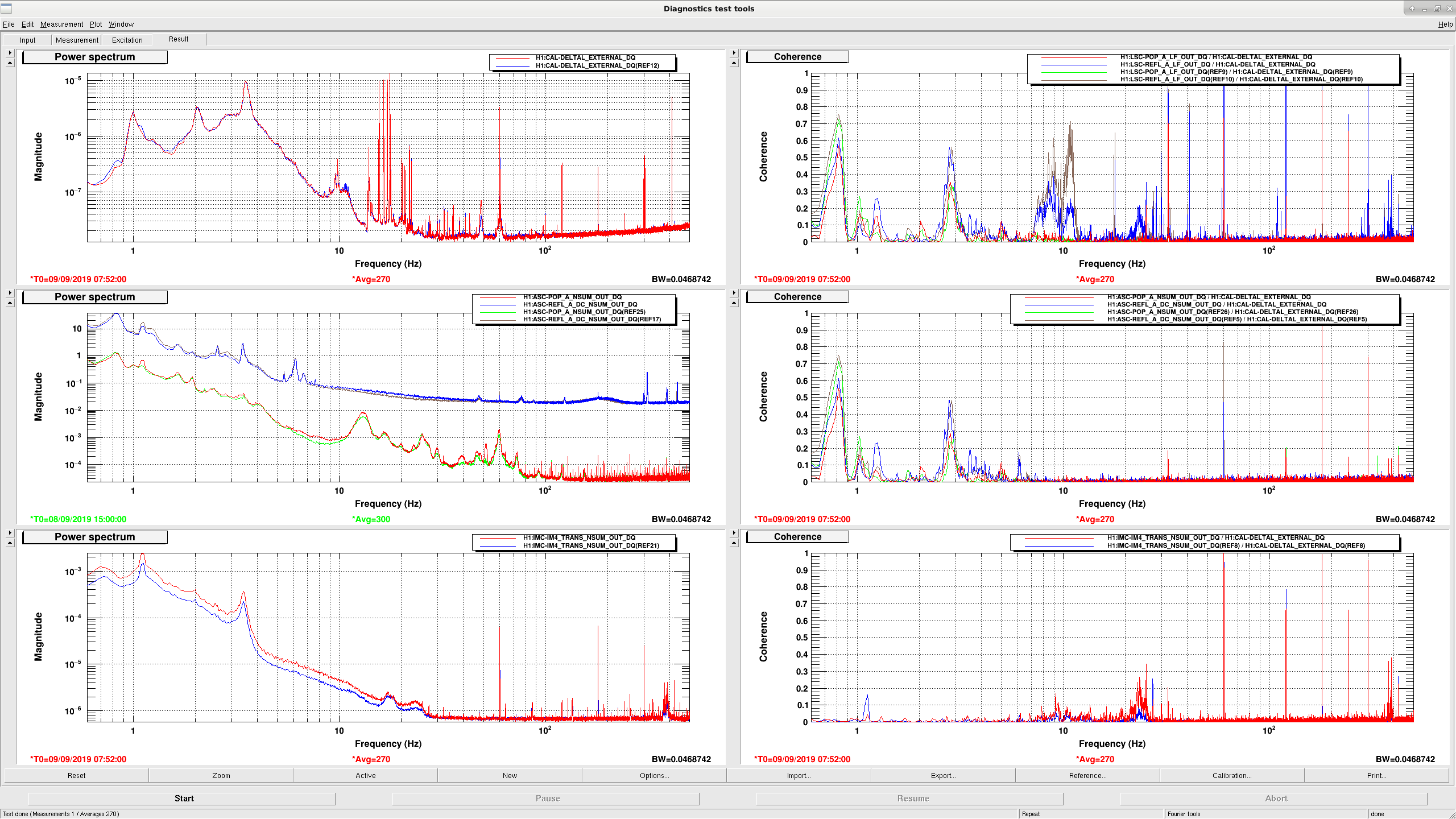
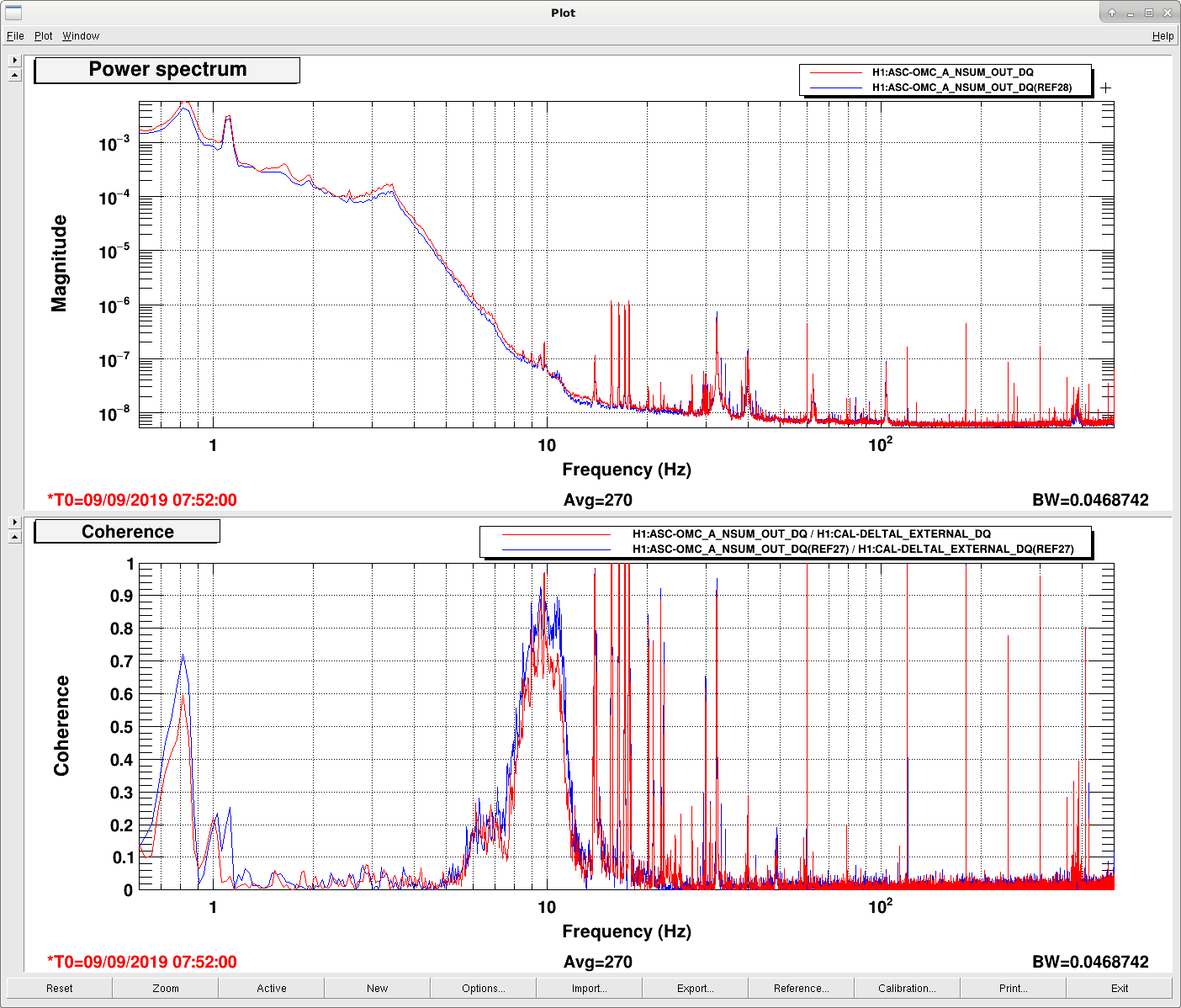
I've used the broadband injection made just after the model update to do a comparison of calibration accuracy with different levels of time-dependent corrections applied, using the new model. This is similar to the analysis done in LHO aLOG 51794. The attached plot has 4 versions of offline calibration, each with different TDCF corrections applied, as indicated in the plot legend. The 5th (red) curve is from the online GDS data (C00). The previous conclusions are still supported by this data: 1) We should not be correcting for SRC time dependence; and 2) We should not be applying the imaginary parts of the actuation kappas. Note the large errors caused by applying corrections for SRC time dependence. This may be due to the fact that the model value of f_s is zero, causing numerical instability when applying time-dependent corrections.
This plot, as well as text files with the data, are available in the calibration SVN here:
aligocalibration/trunk/Runs/O3/H1/Measurements/FullIFOSensingTFs/DCS_BB_plots
The values of the TDCFs used by the GDS and DCS calibration pipelines to produce the calibrated data during this broadband injection were:
For the C00 data (this can be seen on the summary page for that day, just after 18 UTC):
For the DCS data (very similar, but not quite identical):
TITLE: 09/09 Day Shift: 15:00-23:00 UTC (08:00-16:00 PST), all times posted in UTC
STATE of H1: Observing at 116Mpc
OUTGOING OPERATOR: Corey
CURRENT ENVIRONMENT:
SEI_CONF state: WINDY
Wind: 5mph Gusts, 4mph 5min avg
Primary useism: 0.01 μm/s
Secondary useism: 0.13 μm/s
QUICK SUMMARY:
TITLE: 09/09 Owl Shift: 07:00-15:00 UTC (00:00-08:00 PST), all times posted in UTC
STATE of H1: Observing at 116Mpc
INCOMING OPERATOR: Ed
SHIFT SUMMARY:
Nice shift with H1 in Observing for nearly the entire shift. This current lock has a different input pointing (via IMs), so if there are any issues you can easily revert that pointing (see SDF diffs here).
LOG:
Smooth running for H1 with a range averaging between 118-119Mpc. Small EQ rolled through, but not requiring a change to the SEI_CONF.
During shift Hand-off of an H1 in NOMINAL LOW NOISE, I accepted SDF diffs which came up. We were at a nice range of 118Mpc.
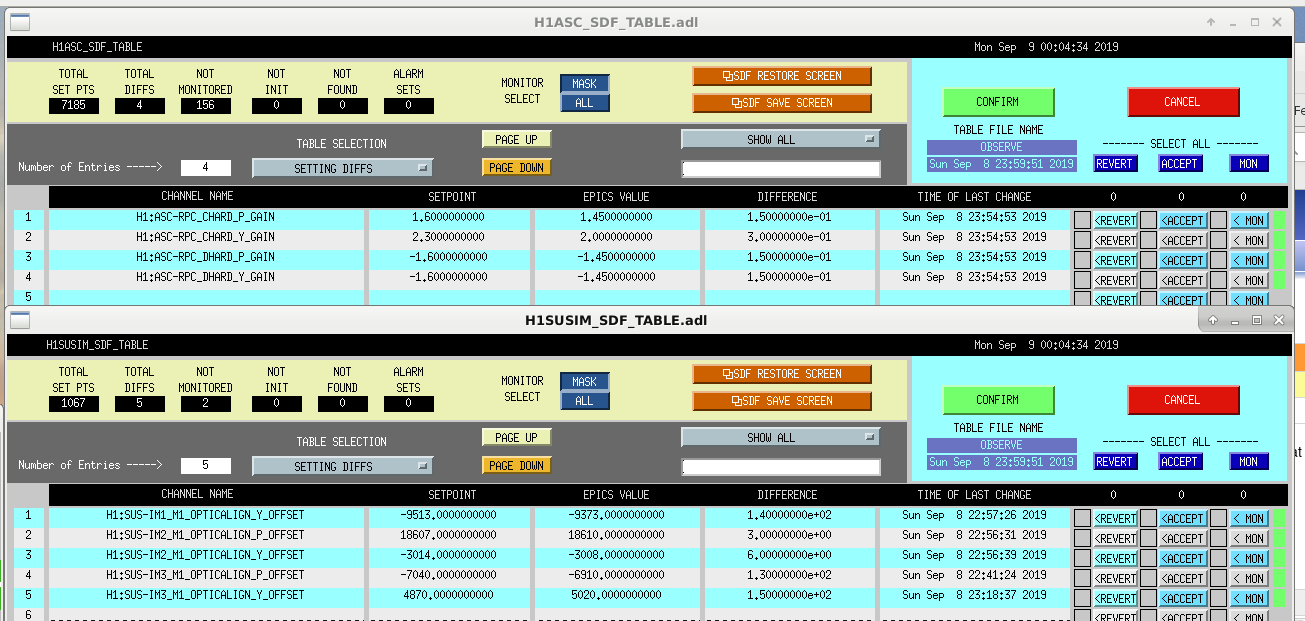
SDF Diffs
The Diffs are attached and were:
1) SUSIM for IM1, IM2, & IM3
These are known and related to a change Cheryl made for relocking. She will make an alog about this.
2) ASC: RPC gains
Have a few small gain changes for ASC-RPC_DHARD & CHARD pit/yaw. These looked new to me (what's "RPC"?) & Cheryl was not familiar with them as well. I did a quick scan of ASC medms, but I could not track them down. Nevertheless, I went ahead and accepted them.
Note for OBSERVATORY MODE: The last 2.5-3hrs of downtime was listed as OBSERVING (vs. LOCK ACQUISITION or EARTHQUAKE). I switched it very briefly to LOCK ACQUISITION so we can mark that we were in fact down due to a lockloss.
The IM1-3 slider values were reverted today. See LHO aLOG 51858.
TITLE: 09/09 Eve Shift: 23:00-07:00 UTC (16:00-00:00 PST), all times posted in UTC
STATE of H1: Observing at 118Mpc
INCOMING OPERATOR: Corey
SHIFT SUMMARY: dropped lock during EQ, relocked with small changes to IMs, in Observe
LOG:
While I didn't plan to make any changes to the IMs, I am aware that the IMs haven't had their alignment looked at for a significant amount of time, while the input pointing, the IMC mirrors, and the rest of the optics in H1 have changed, so I made some very small changes, that imporved POPAIR_B_REF18_I_NORM, and REFL_A LF.
Changes made to IMs, which are 6.5urad or less.
Summary:
These IM alignment slider positions have been reverted -- see LHO aLOG 51858.
TITLE: 09/09 Owl Shift: 07:00-15:00 UTC (00:00-08:00 PST), all times posted in UTC
STATE of H1: Observing at 116Mpc
OUTGOING OPERATOR: Cheryl
CURRENT ENVIRONMENT:
SEI_CONF state: WINDY
Wind: 7mph Gusts, 6mph 5min avg
Primary useism: 0.01 μm/s
Secondary useism: 0.12 μm/s
QUICK SUMMARY:
Cheryl had H1 at NOMINAL LOW NOISE a few seconds before my shift, and I took H1 to Observing shortly thereafter.
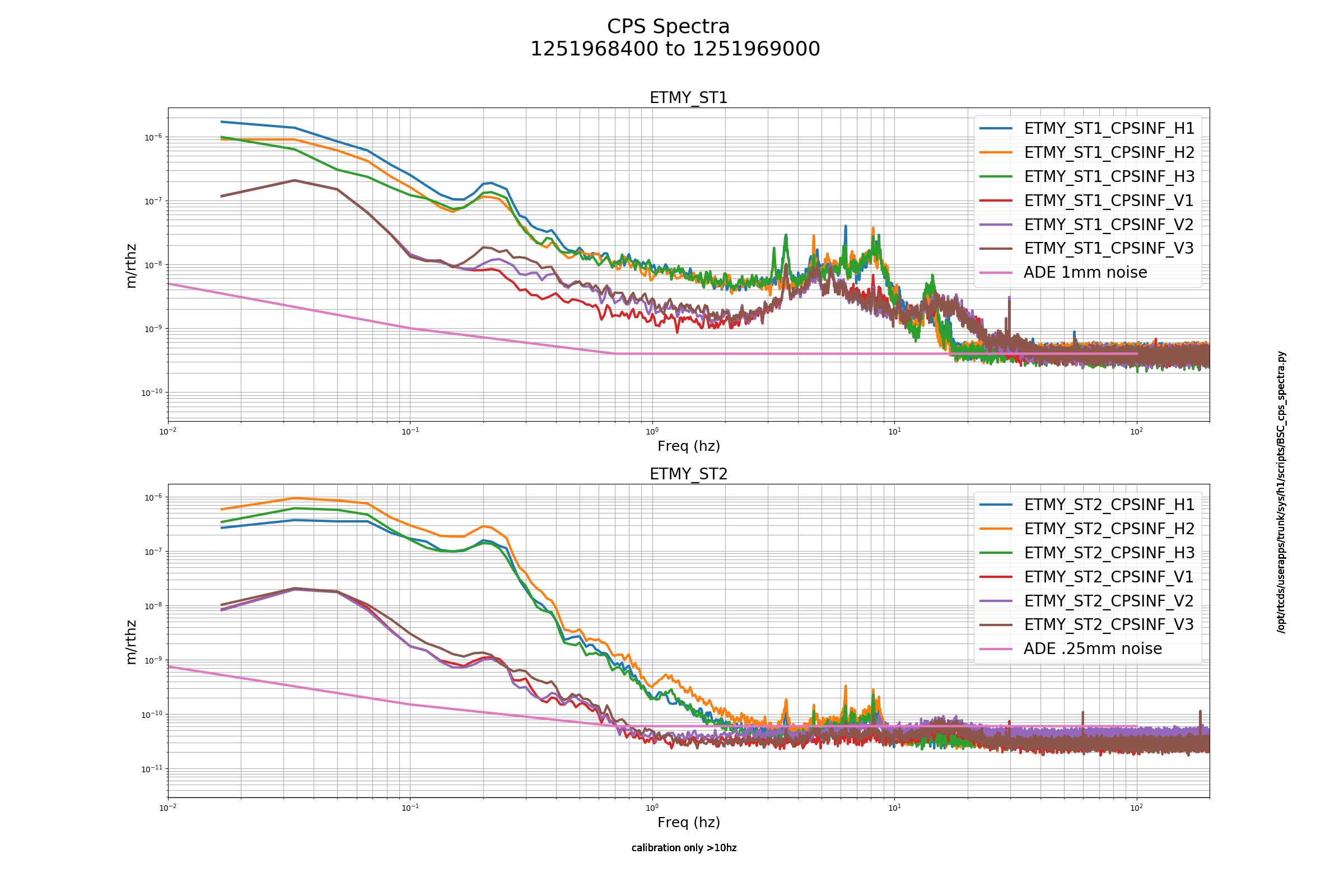
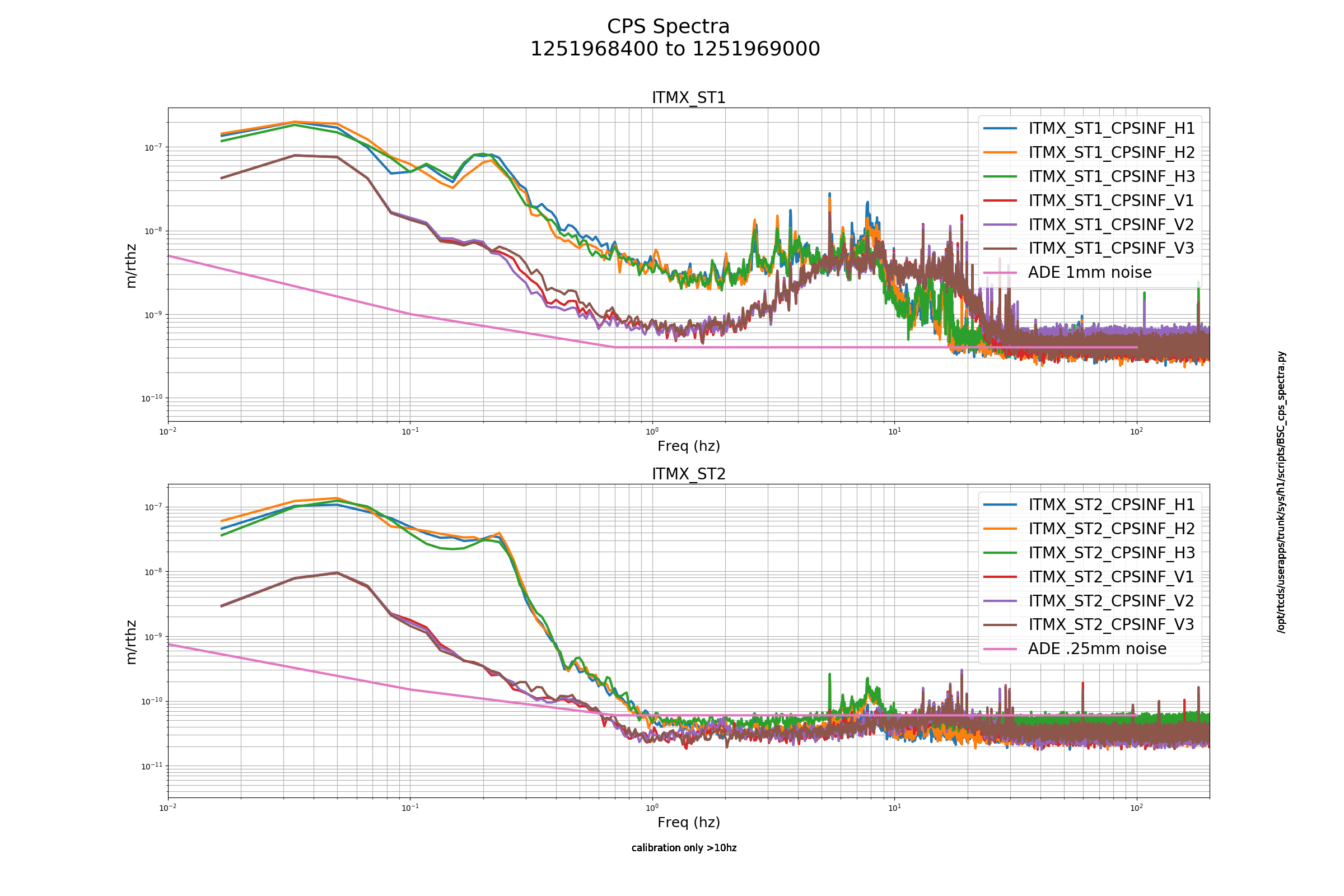
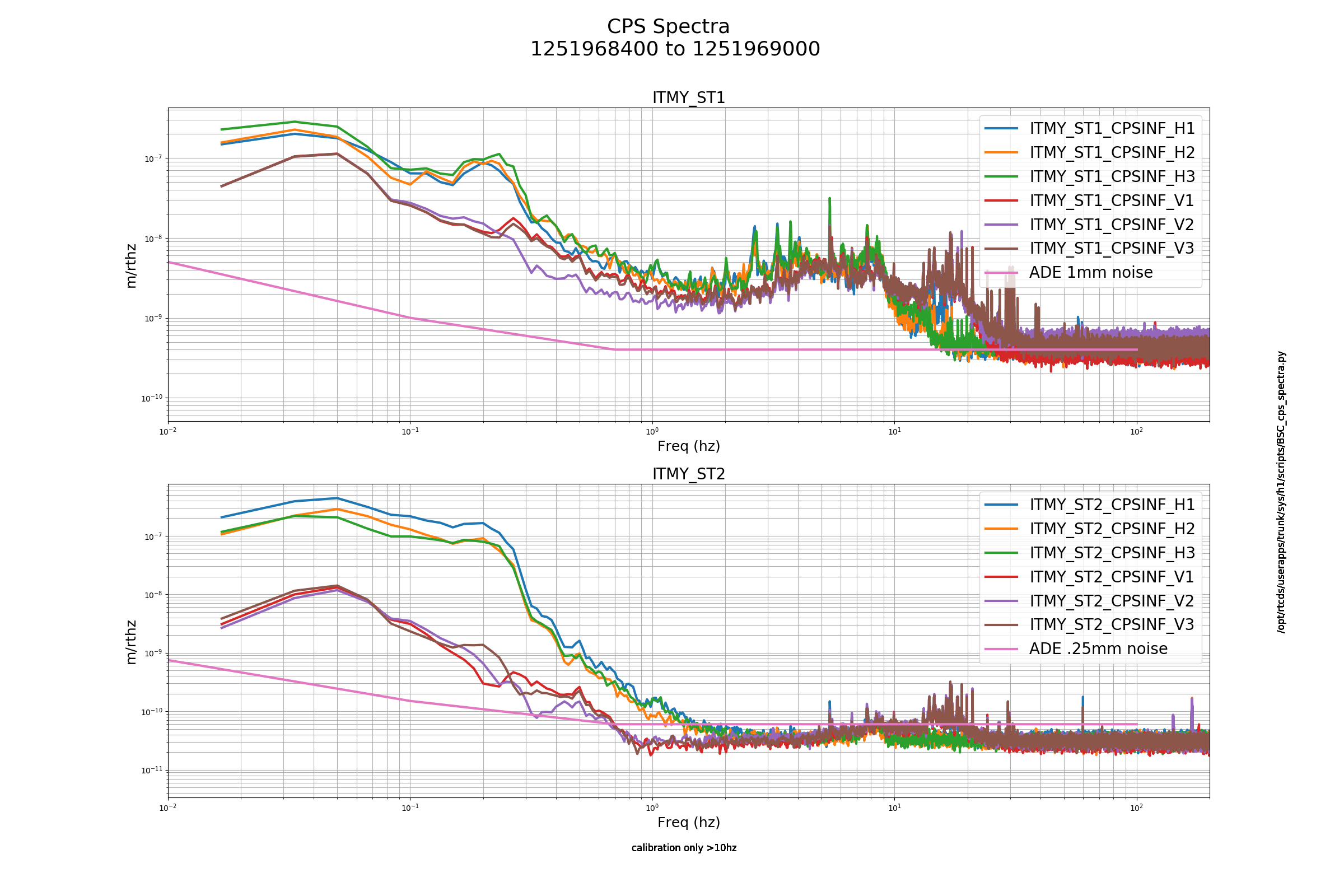
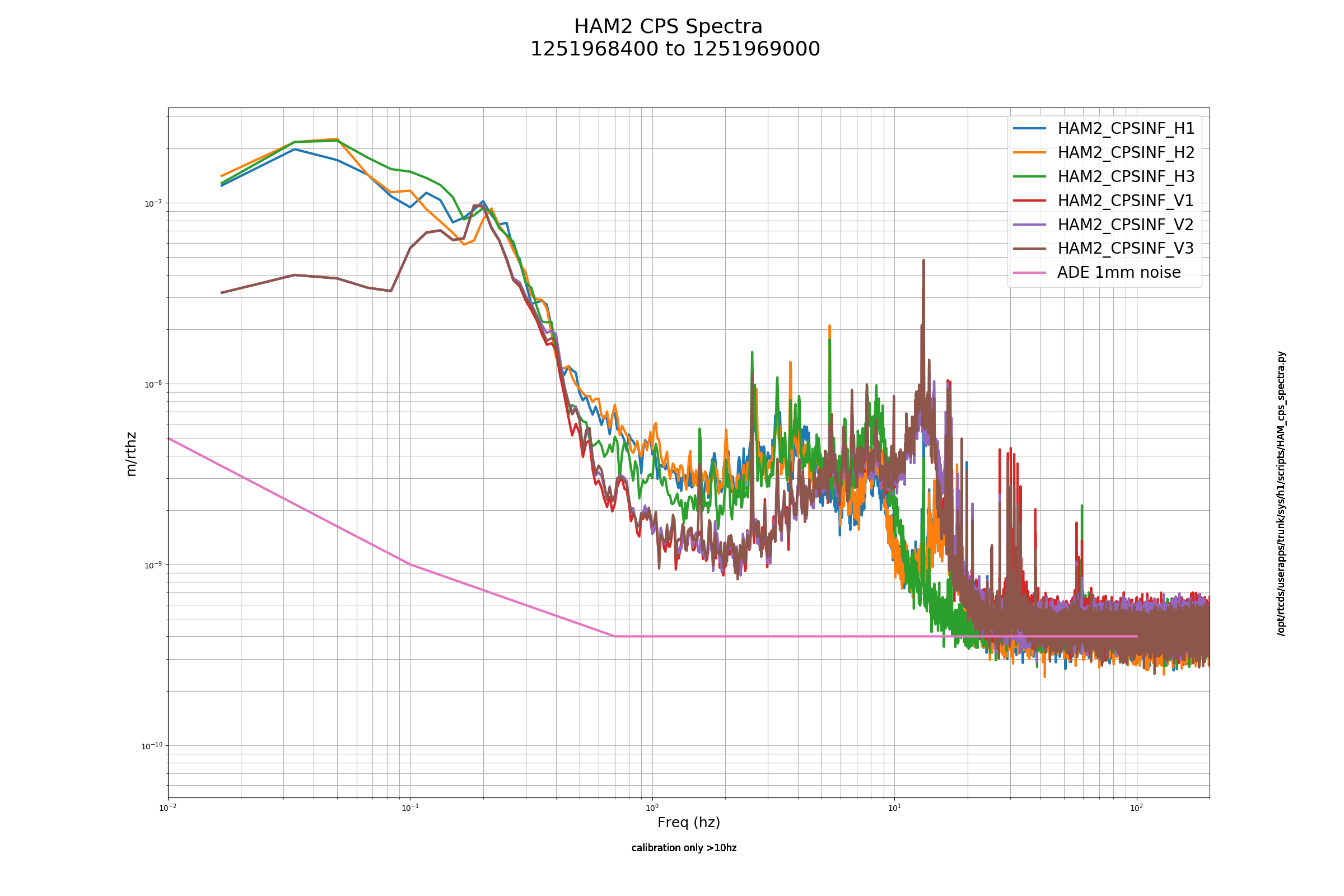
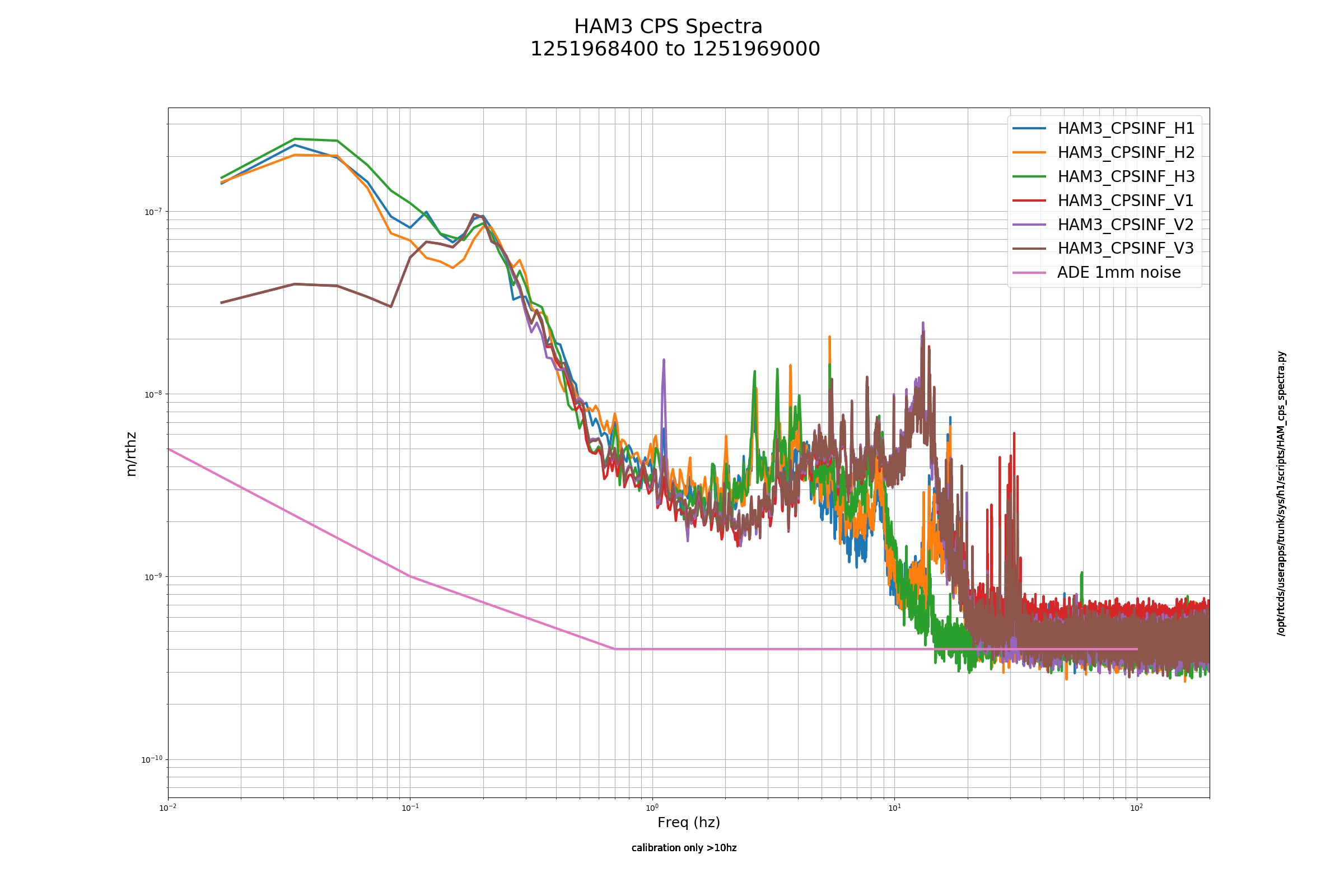
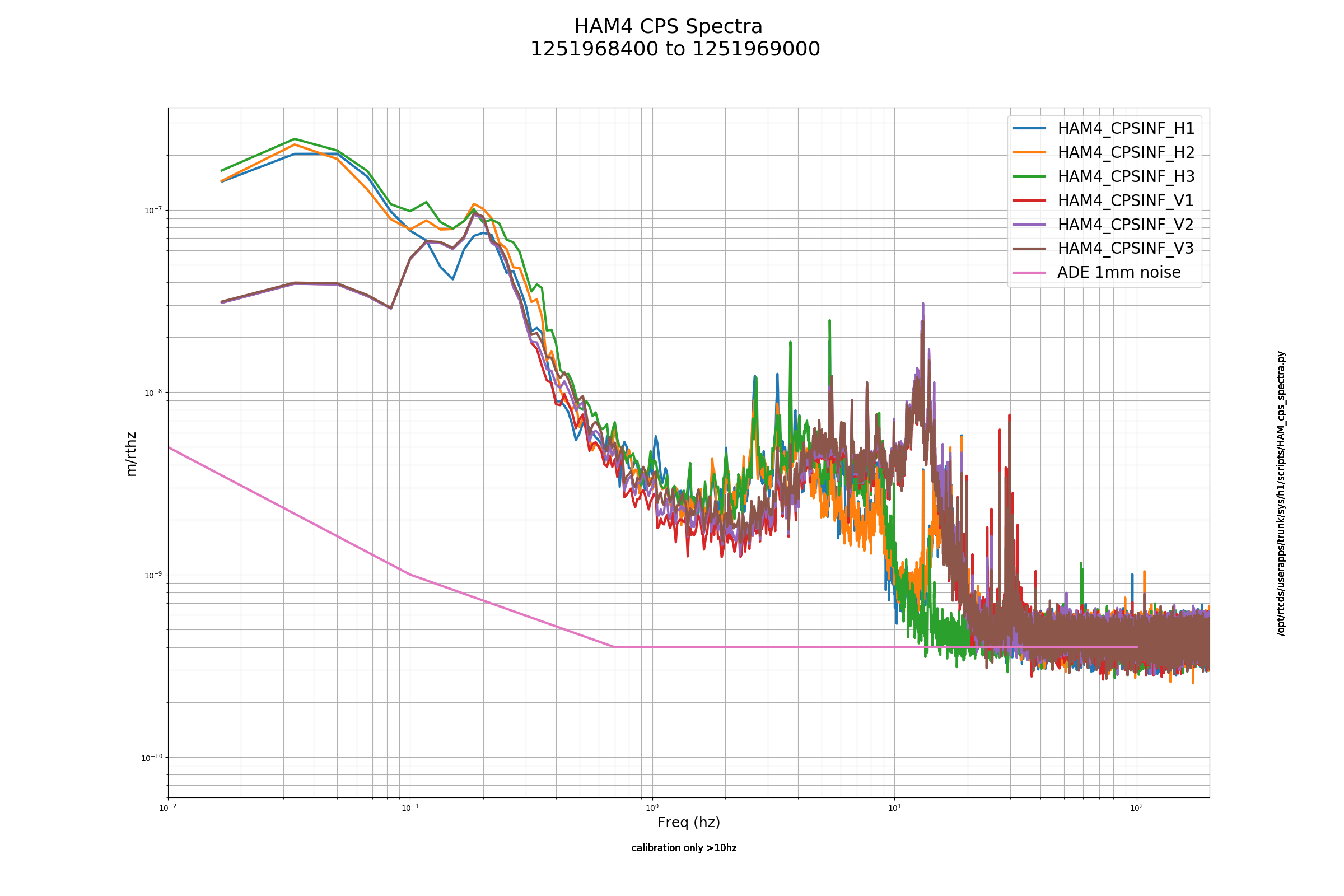
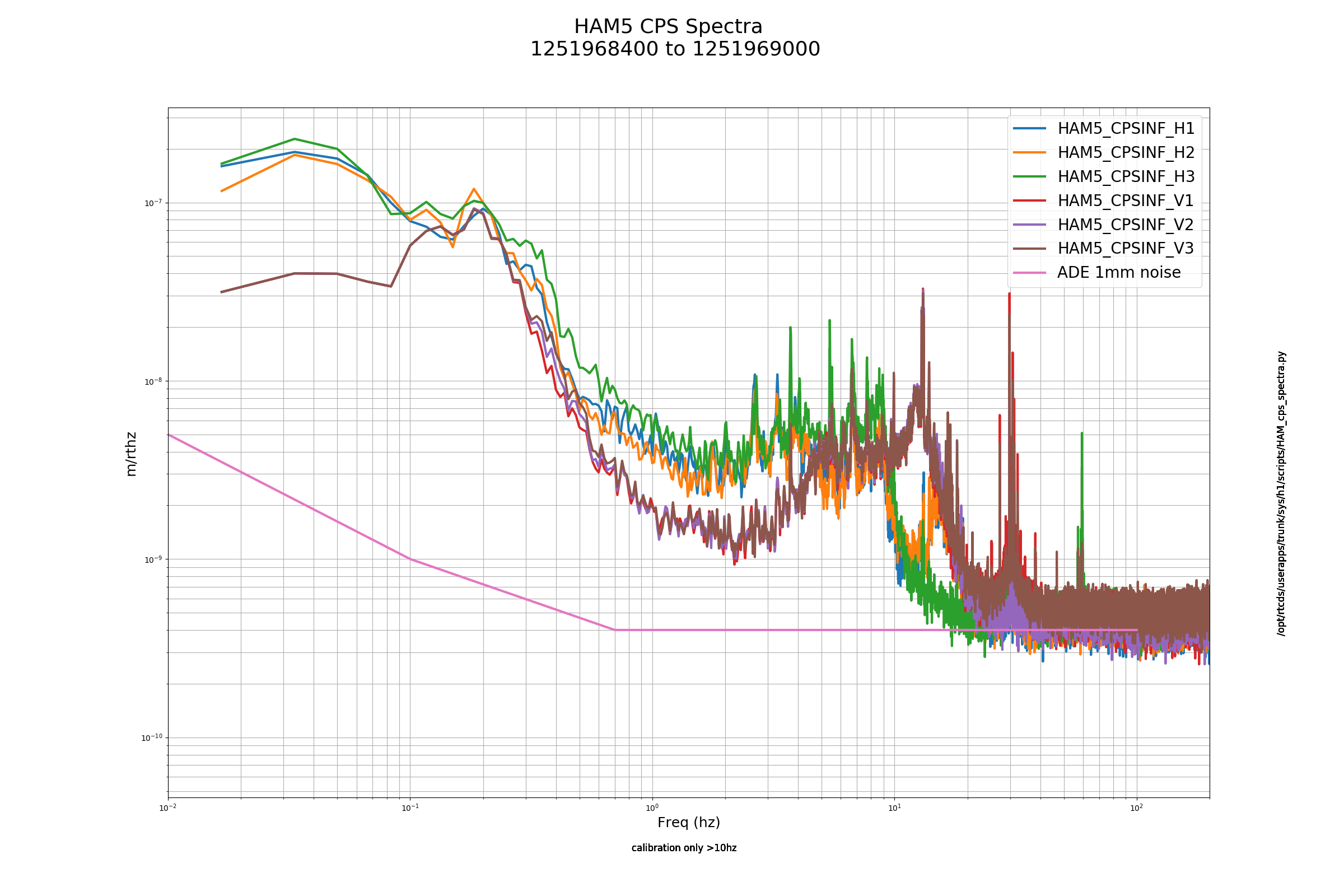
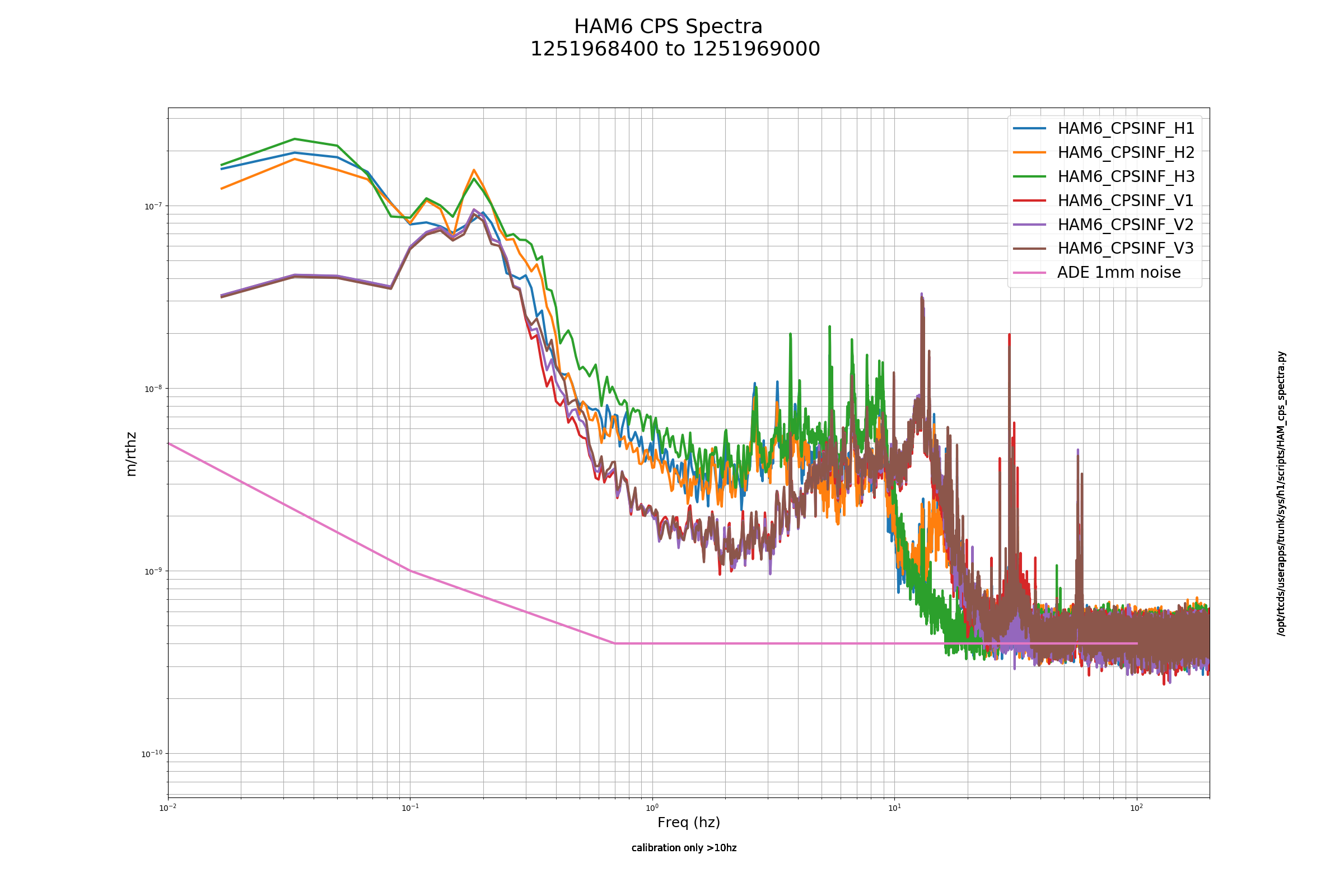
BS check has an increase in noise between 1Hz and 6Hz, on 3 sensors, when compared to May 2019 spectra (alog 49425), no issues at high frequency.
Spectra for other sensors look OK.
There are 8 T240 proof masses out of range ( > 0.3 [V] )!
All other proof masses are within range ( < 0.3 [V] ):
2019-09-08 18:32:37.355305
All STSs prrof masses that within healthy range (< 2.0 [V]). Great!
TITLE: 09/08 Eve Shift: 23:00-07:00 UTC (16:00-00:00 PST), all times posted in UTC
STATE of H1: Observing at 115Mpc
OUTGOING OPERATOR: Ed
CURRENT ENVIRONMENT:
SEI_CONF state: WINDY
Wind: 21mph Gusts, 16mph 5min avg
Primary useism: 0.05 μm/s
Secondary useism: 0.12 μm/s
QUICK SUMMARY: locked in Observe, wind spike to around 30mph
TITLE: 09/08 Day Shift: 15:00-23:00 UTC (08:00-16:00 PST), all times posted in UTC
STATE of H1: Observing at 113Mpc
INCOMING OPERATOR: Cheryl
SHIFT SUMMARY:
LOG:
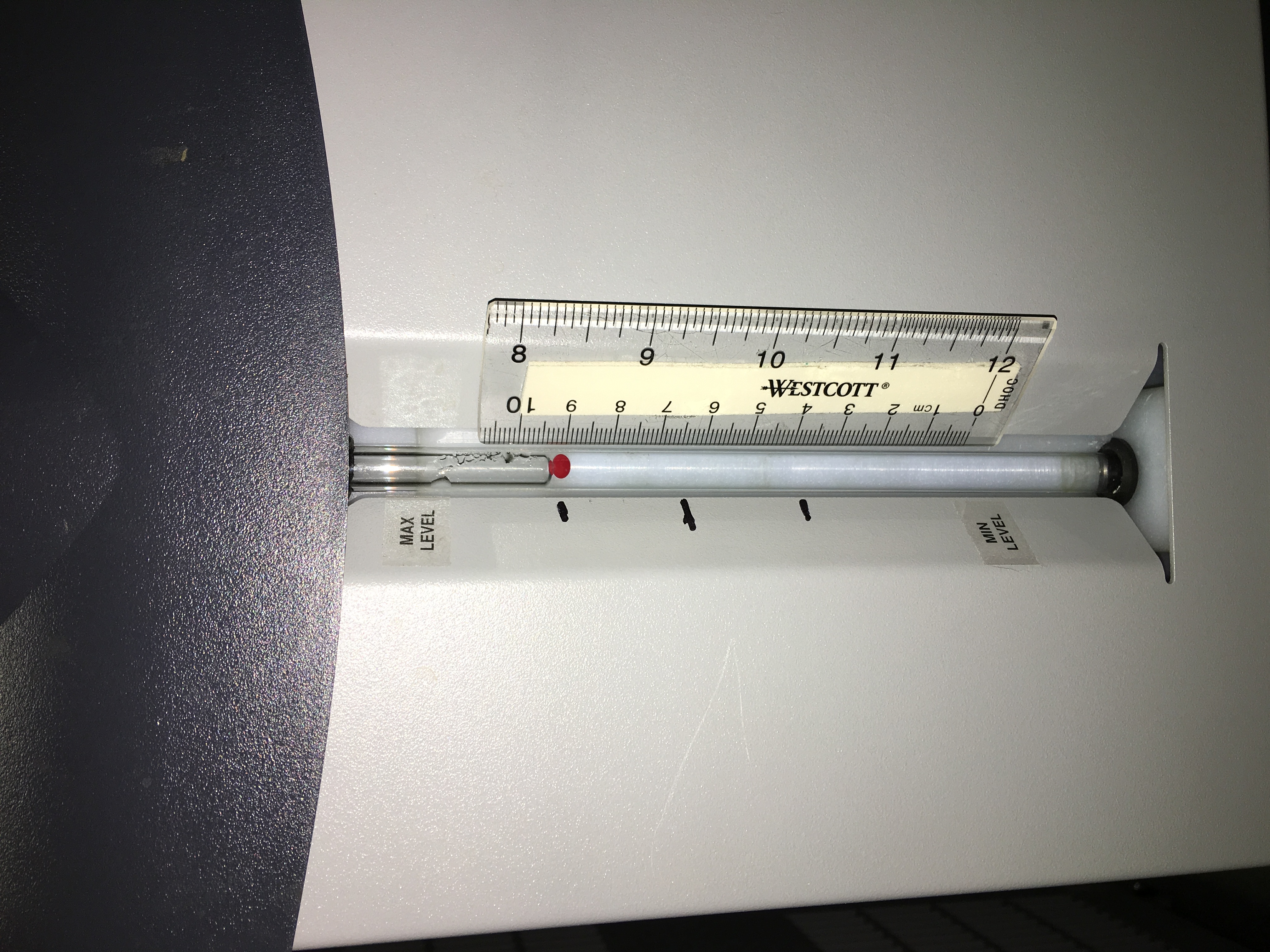
I got this verbal at 18:23UTC. I contacted TJ before trotting off to the mechanical room. We found that the 'CO2 Y' & 'CO2Y CHILLERS' screens show a discrepancy in flow rates. I went out to the chiller and found that the water level was at 9 (down from 10) so I added 50ml. At 18:55, after I returned to the CR I got another verbal. Trending shows this sudden drop in flowrate (possible leak) or possibly sudden malfunction in flow meter?
TITLE: 09/08 Day Shift: 15:00-23:00 UTC (08:00-16:00 PST), all times posted in UTC
STATE of H1: Observing at 119Mpc
OUTGOING OPERATOR: Corey
CURRENT ENVIRONMENT:
SEI_CONF state: WINDY
Wind: 9mph Gusts, 7mph 5min avg
Primary useism: 0.01 μm/s
Secondary useism: 0.14 μm/s
QUICK SUMMARY:
H1 locked and reading 119+ Mpc. It just started raining again. All seems well at the moment.