TITLE: 08/28 Owl Shift: 07:00-15:00 UTC (00:00-08:00 PST), all times posted in UTC
STATE of H1: Observing at 118Mpc
OUTGOING OPERATOR: Corey
CURRENT ENVIRONMENT:
SEI_CONF state: WINDY
Wind: 7mph Gusts, 5mph 5min avg
Primary useism: 0.01 μm/s
Secondary useism: 0.06 μm/s
QUICK SUMMARY:
Currently in standown from Super Event S190828L
TITLE: 08/27 Eve Shift: 23:00-07:00 UTC (16:00-00:00 PST), all times posted in UTC
STATE of H1: Observing at 117Mpc
INCOMING OPERATOR: Ed
SHIFT SUMMARY:
EX HEPI Pump: Want to monitor the output for this pump (see Hugh's alog) since it sounds like this pump is having issues. I passed on to Ed what channel to look at for this. If this pump happens to crash, Hugh will need to address (possibly swap out) the pump.
EY BRS: This was balanced yesterday. Jim mentioned we should also be mindful of this since there is the possibility it could drift out of range---he was guessing we should be fine, but just gave us a heads up about it.
LOG:
H1 rode through a 6.6 EQ & just recently transitioned back to the WINDY state.
We now are back to triple coincidence as well.
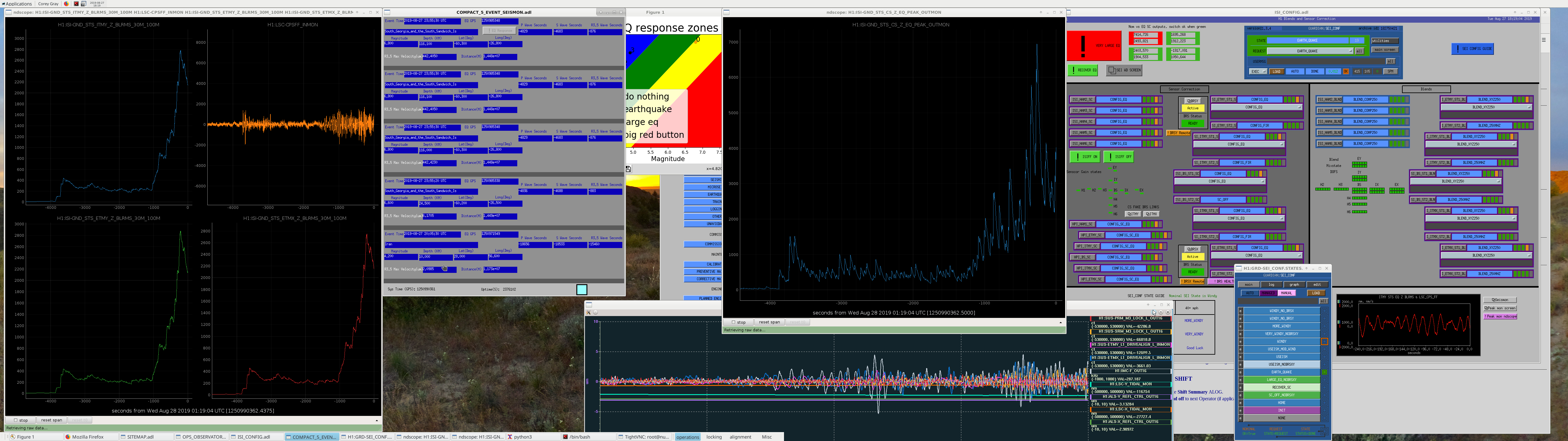
H1 was was able to ride through a 6.6EQ (it was transitioned to the EARTHQUAKE state). Here is a timeline:
0:05 Verbal for 6.8 EQ (was later listed as 6.6)
Attached is a screenshot of the desktop after the R-wave rolled through.
J. Jones, J. Kissel, P. Thomas Some notes on recovery today: - After lock loss for unknown reasons at 2019-08-27 14:38 UTC (see LHO aLOG 51536), we proceeded with maintenance day as planned. Note, several plans involved using the IFO during maintenance (i.e. it would stay up in to maintenance period, and maintenance/commissioning would be performed with the full IFO), but could not proceed due to the unknown lock loss. - As usual, ground motion sensor correction for the seismic isolation systems (which includes input from BRS) was turned off site wide, as a is normal practice to avoid the cleaning crew and others impacting chamber motion by ringing up/exciting ground sensors. - The following *unplanned* things happened: (a) Early in the morning, H1 ETMX HEPI Pump Tripped. Took a long time to recover, sucking up ETMX from use with the IFO, slowing recovery. (b) Mid-morning, TCSY laser tripped. Short time to recover, did not impact recovery. (c) Mid-morning, planned activity on BRS EY went south [only diagnosably so by late morning], needed further adjustment late in the morning - The recovery began at 18:43 UTC [11:34 PDT], (still with all sensor correction OFF), when activity ceased enough that I could begin Initial alignment in green on Y-ARM (IMC was already up, locked, stable, and running). - I knew that gym was done with his BRS work at EY, and that initial alignment of the green arms takes ~10-20 minutes, so I wanted to launch at least some of the long poles. At this point, we still didn't have end-X. - Instead of engaging the automated initial alignment system as per normal, I - took the ISC_LOCK guardian to INITIAL_ALIGNMENT, which used ALIGN_IFO to begin configuring the IFO for initial alignment, and triggered the start of the INIT_ALIGN automatic initial alignment sequence. - HOWEVER, I think switch the INIT_ALIGN guardian to AUTO, so I was the manager, and held it on PREP_FOR_GREEN, let it finish, then brought the ALS_YARM guardian (normally managed by INIT_ALIGN) to INITIAL_ALIGNMENT. - Didn't work, because (i) the arm motion was a little too high, and (b) the alignment of the ETM / TMS was such that the flashes were too low. - Requested ALS_YARM to UNLOCKED, manually touched up the alignment of ETM/TMS to get green flashes high, - Re-requested ALS_YARM to INITIAL_ALIGNMENT, and with success held there, in holding pattern waiting for ETMX to be recovered. - 19:52 UTC - Hugh, Jeff B and Richard M recovered HEPI operation with a temporary solution (i.e. fixed (a) from above), and brought ETMX seismic platform back to nominal configuration. - Also configured site-wide system sensory correction "ON", except for BRS Y, which is still off. - Began initial alignment of X-arm with some confusion about how to bring INIT_ALIGN guardian to the right state vs. management of ALS_XARM, ended up requesting INITIAL_ALIGNMENT_COMPLETE, which essentially restarted everything and lost progress on Y-ARM. Should have requested "GREEN_ARMS_OFFLOADED" from ALS_YARM before pushing forward with the INIT_ALIGN guardian. - 20:19 UTC - Both green arms aligned and offloaded. On the rest of initial alignment (which no longer needed the arms), thus - Launched Jim traveling to EY to continue addressing EY BRS (i.e. (c) from above) - brought site-wide observatory sensor correction configuration to WINDY_NOBRSY (i.e. nominal for everyone but ETMY, which could not yet use the currently non-functional BRS EY). Jim manually further modified that end station's sensor correction configuration - 20:35 UTC - Problems with MICH_BRIGHT, in that repeated attempts to lock flip-flopped (as it should) ALIGN_IFO between MICH_BRIGHT_LOCKED and DOWN in order to stop oscillations of MICH_BRIGHT. Tried holding in DOWN, touching up the beam splitter in pitch using AS_B and the AS camera as my metric, re-requesting MICH_BRIGHT_LOCKED and the oscillations continued.... - 20:40 UTC - .... until they didn't. Problem resolved itself. Jenne suspects that there is still tuning to do with optical lever damping that wasn't coded up in guardian after last week's commissioning of the same issue (see LHO aLOG 51409) - 20:46 UTC - Rest of initial alignment went automatically and completely. - 21:48 UTC - Back to NOMINAL_LOW_NOISE -- once back on the normal lock acquisition sequence, post-initial alignment, the acquisition sequence was entire automatic, save for one Patrick flip (instead of automated flip) from DRMI lock acquisition to PRMI acquisition. (Went into commissioning PRCL Feed-Forward activity instead of directly in to observing. During that commissioning, Jim deemed BRS EY fixed, and we re-engaged it by requesting site-wide sensor correction configuration to WINDY). Total time between lockloss and regaining NOMINAL_LOW_NOISE: 7.17 hours. Total time between recovery start and finish: 3.08 hours. Delay due to unplanned FAULTS (all on HEPI EX): 1.15 hours. Issues that impacted recovery time as a result of planned Maintenance Day activity: None (-ish***). (***You could claim that the extra BRS EY activity "impacted" recovery, but really not, since we were able dis-engage it from forward progress and parallelize its recovery and the lock acquisition sequence).
During Maintenance, TCSY laser tripped off, and Patrick and Betsy and I restored it to nominal, which required going out to eh floor and resetting with the key and the Gate button.
Today, Wednesday, the next day, I've looked and have not found any obvious reason for TCSY to have tripped off, alog 51582.
Summary--HEPI is running and the platform is isolated but, the Pump Station pump could be on its last legs. The motor is now turning at 3x the previous speed to achieve nominal pressures; and, based on the PID controller, the plant is different.
Cronological Details [edits in brackets]
1531utc (0831pdt) HEPI Tripped [there was activity in the LVEA at this time]; JeffB entered the EndX Mech Room, from the VEA at 1533 (percomm RichardM.) Jeff recorded HEPI Reservoir Fluid level (after doing Dust Monitor Pump checks) after the HEPI had tripped based on the level he recorded. It is very noisy in this space and he did not realize when he read the reservoir level that the pump was not running. Based on conditions later found, this first trip was a fluid level trip.
Almost an hour later, JeffB and JimW initiated restarting the pump station. This was not successful mainly likely because the fluid level was still low and would trip before reaching nominal pressures. After these operators had reached their maximum cpu output, I was called in. Observation and test revealed the fluid level was in fact low and this was mitigated by adding ~1/4" more fluid to the revervoir. [The accumulator pressures were checked and a thorough look for fluid leaks was performed--accumulators were fine and no leaks were found.]
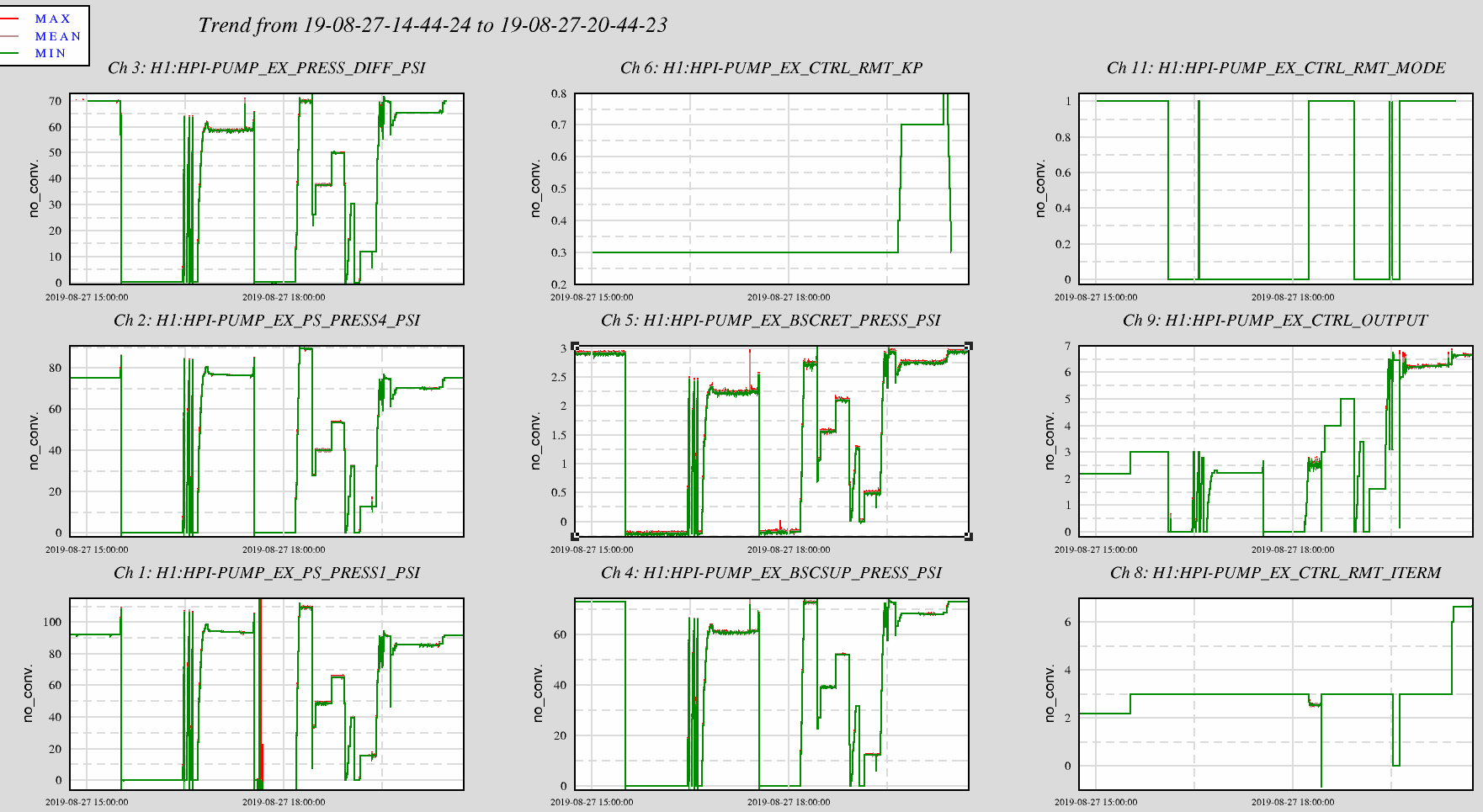
Once fluid level was comfortably above trip level, the drive was manually run up to achieve nominal differential pressure. At this point, in hind site with trends to review, the return pressure was running low almost 10% and the supply pressure was ~nominal but much noisier. Further, at this point the output of the pump station was running almost 15psi higher than normal while the pump was running at close to nominal speed! Does this mean that something was obstructing the flow bewteen the pump station and the chamber pressure sensors?
After running like this for about 10 minutes and meanwhile having swept the VEA, JeffB and I were about the drive away, Patrick informed us the Platform had tripped again. The trends reveal that at this time§, the supply pressure (at the chamber) spiked almost 15 psi (return pressure did as well.) Of course this spiked the differential pressure and the PID drove the output towards zero. Within 5 seconds, the pressures drop and the PID turns the output around and it now maxes out at long established output limits. blah blah...
At this point RichardM checked the power supply confirming we still had all phases and we also checked that the rotational speed of the motor matched the VFD output. So it seems the pump is not now able to pressure the system as before. Once we figured out Patrick's PID controller we got the output pressures nominal and got the SEI platforms isolated. But, to achieve this pressure, the motor/pump is now spinning +3x faster than before. Pressures are ~nominal and no more or less noisy than they were before, except, the first two pressure points after the pump is down 0.4 and 0.2psi suggesting with a stretch that some obstruction cleared...
Attached are two graphs, the first is 6 hours from before the trip to final operation state and the second is 20 seconds around the big change point discussed above §. I'll take some time to annotate these graphs but for now I'll get these into the log.
[While the motor/pump here is now running 3x faster than before, it is still only running at 2/3 maximum. For reference, the corner station pumps all run at ~1/2 maximum. So, there should be no issues until the pump falls apart. Comforting, right!]
Associated with FRS Ticket 13482.
TITLE: 08/27 Eve Shift: 23:00-07:00 UTC (16:00-00:00 PST), all times posted in UTC
STATE of H1: Observing at 118Mpc
OUTGOING OPERATOR: Cheryl
CURRENT ENVIRONMENT:
SEI_CONF state: WINDY
Wind: 8mph Gusts, 6mph 5min avg
Primary useism: 0.02 μm/s
Secondary useism: 0.07 μm/s
Microseism continues it's trend down for the last 48hrs.
QUICK SUMMARY:
Arrived to an H1 in Observing after a Maintenance Day (Yay!), and Patrick mentioned it wasn't too bad getting us back with JeffK doing an Initial Alignment and Patrick getting us back to NLN.
Operator Note: Jim mentioned BRS-Y rebalancing work today and possibility it could drift out of range (If that happens, ISI will trip & we will want to take SEI_CONF to WINDY_NO_BRSY).
Check of HEPI Pump Stations this morning: (1). Corner Station fluid level = 6 6/16, change = -1/16 No new leaks or drips observed (2). End-Y fluid level = 9 0/16, change = 0/16 No new leaks or drips observed (3). End-X fluid level = 8 11/16, change = +3/16 No new leaks or drips observed The increase in fluid level was due to the pump having tripped off 2 minutes before I entered the building. Hugh and I worked on recovering the pump station. The fluid level was actually down and hitting the trip levels. We added 4/16" of fluid to the reservoir. This appeared to bring the running level to 8 6/16. Need to let it run for a bit to get a good fluid level reading. The current trip level is between 8 5/16 and 8 4/16. Hugh is writing an aLOG on the incident.
TITLE: 08/27 Day Shift: 15:00-23:00 UTC (08:00-16:00 PST), all times posted in UTC STATE of H1: Observing at 118Mpc INCOMING OPERATOR: Corey SHIFT SUMMARY: Lock loss shortly before start of maintenance. End X HEPI pump tripped, motor may need to be replaced, currently running above nominal. TCSY laser tripped off, temperature alarm. Cheryl and Betsy turned it back on. Jeff K. ran through initial alignment. Only intervention to relock was to lock PRMI. LOG: 14:38 UTC Lock loss 14:47 UTC Richard to end Y then end X, moving camera equipment 14:58 UTC Chandra and Matt to LVEA to look at viewport 15:02 UTC Jeff B. to end Y, end X, and HEPI mezzanine (dust monitors and HEPI pumps) 15:09 UTC Matt back, viewport cover replaced 15:13 UTC Chris moving snorkel lift, working on gutters near Corey's office 15:14 UTC Karen to end Y 15:19 UTC Cheryl running transfer functions on IM2 15:23 UTC Reuters through gate 15:28 UTC Gerardo to LVEA 15:29 UTC Matt to LVEA to clean up cables 15:31 UTC end X illuminator turned on 15:31 UTC ** end X HEPI pump tripped ** 15:33 UTC Filiberto installing network switch in MSR 15:36 UTC Reuters in control room 15:45 UTC Cheryl transitioning LVEA to laser safe 15:56 UTC Marc to LVEA, phase noise measurements 16:00 UTC Cheryl done, LVEA laser safe 16:01 UTC Karen leaving end Y 16:01 UTC Filiberto done 16:01 UTC Richard back 16:03 UTC Filiberto to CER, isolating SUS racks 16:08 UTC Peter to LVEA to look at HAM3 16:09 UTC Richard to CER 16:14 UTC Mike and Reuters to LVEA 16:16 UTC Jim and Jeff B. to end X 16:16 UTC Peter done 16:27 UTC Chandra to LVEA 16:39 UTC Dick to CER 16:56 UTC Mike and Reuters back from LVEA, driving down arm 17:11 UTC ** Verbal alarm: TCSY CO2 laser output off. RTD/IR SENS. ALARM is red. FLOW ALARM is green. Cheryl and Betsy reset it. ** 17:12 UTC Gerardo back 17:31 UTC Matt back from LVEA 17:31 UTC Kara to end X 17:34 UTC Matt to high bay 17:40 UTC LN2 delivery 17:41 UTC Jeff to CER 17:50 UTC Matt back 18:12 UTC Kara to electronics bay 18:14 UTC Paradise Water through gate 18:16 UTC Tyler to mid stations 18:20 UTC Christina to end Y, mid X 18:26 UTC end X illuminator off 18:46 UTC Restart of FMCS IOC computer 18:56 UTC Tyler back 18:59 UTC Kyle, Chandra, and Gerardo out of LVEA 19:19 UTC Mike and Reuters done 19:38 UTC Changed observatory mode to corrective maintenance for HEPI pump recovery 20:04 UTC Peter to optics lab 20:15 UTC Jeff B. to cleaning area 20:18 UTC Jeff B. done 20:46 UTC Initial alignment done 21:48 UTC NLN. Commisioning. 22:15 UTC Jeff B. moving equip from OSB receiving to mechanical room 22:29 UTC Jeff B. done 22:37 UTC Observing
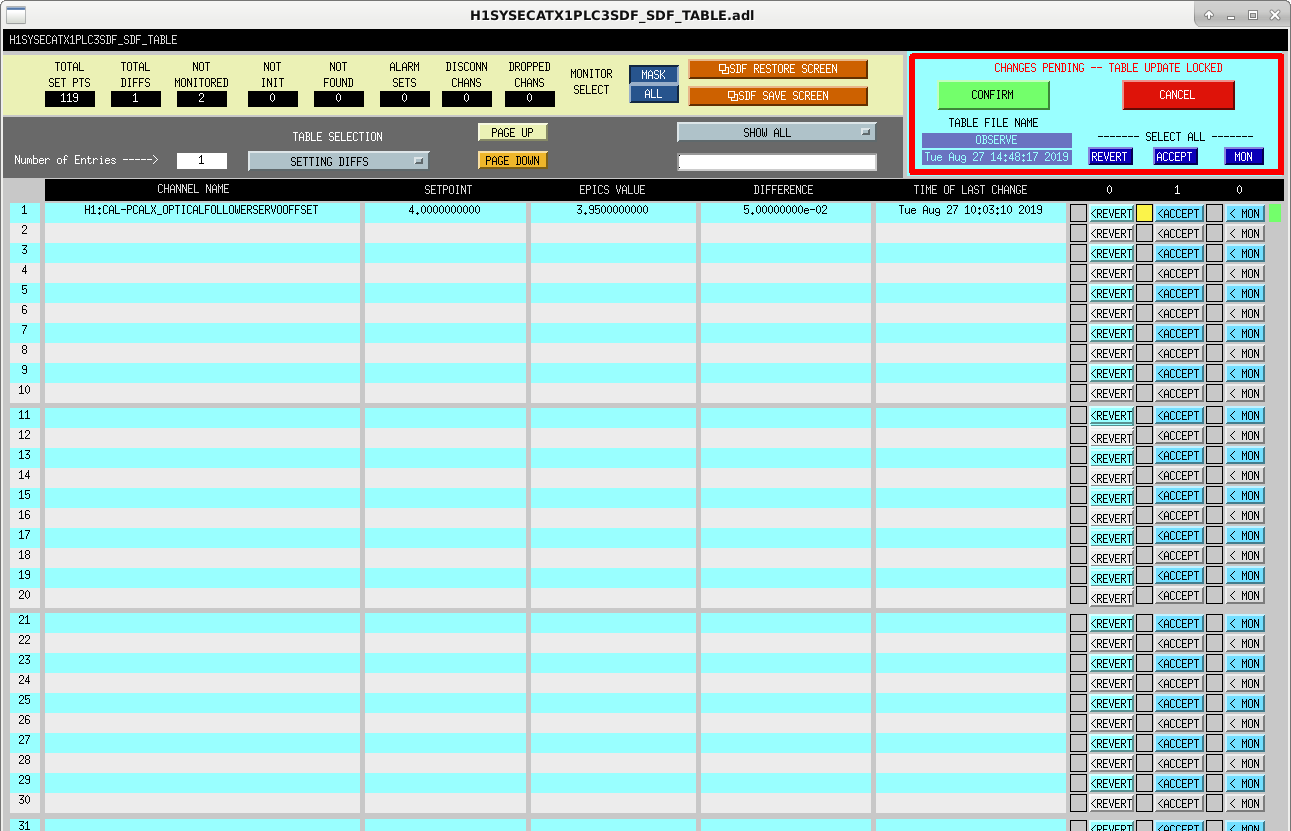
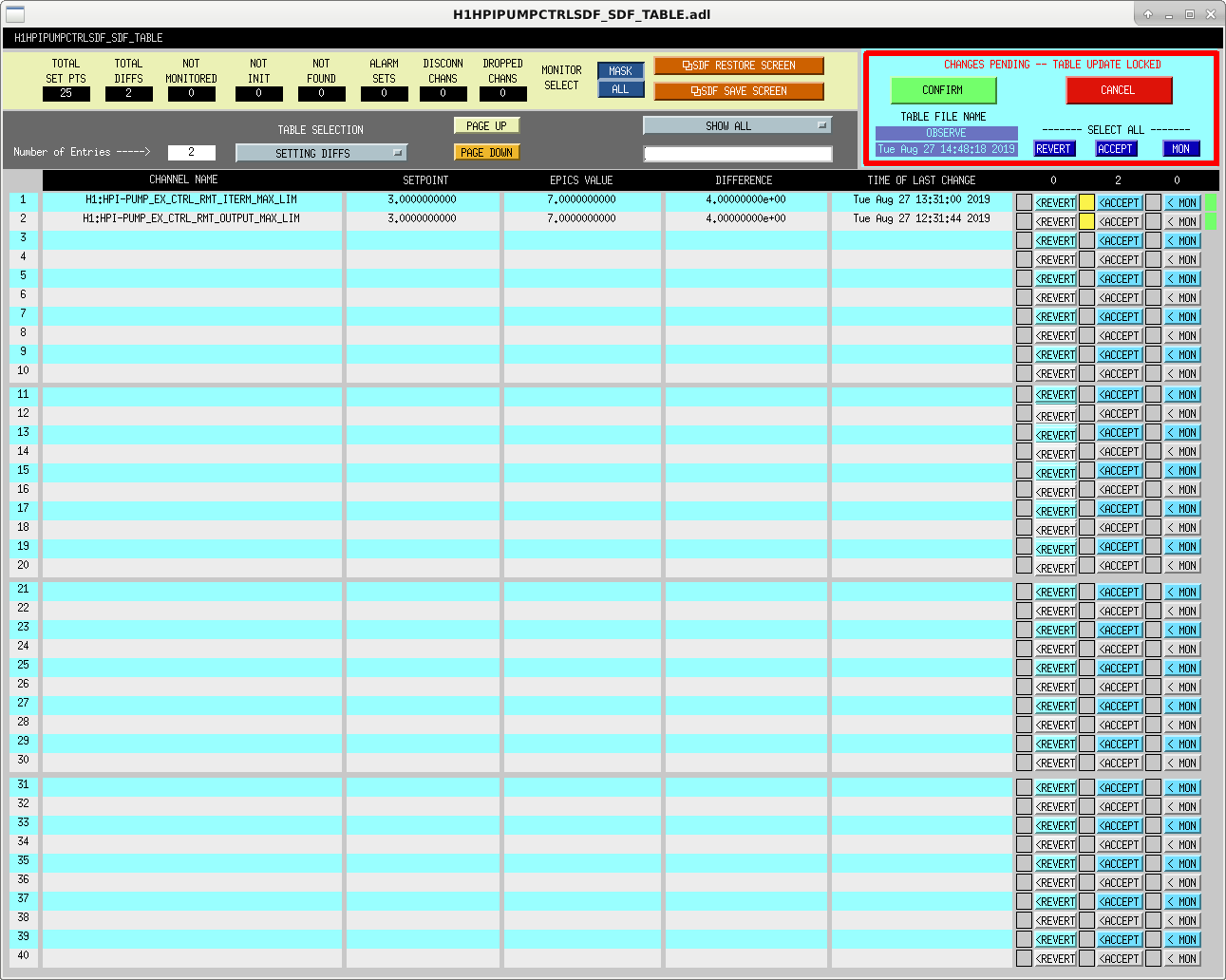
22:37 UTC SDF differences: First is explained by alog 51542. Second is from HEPI pump trip and recovery.
M. Pirello, D. Gustafson, D. Sigg
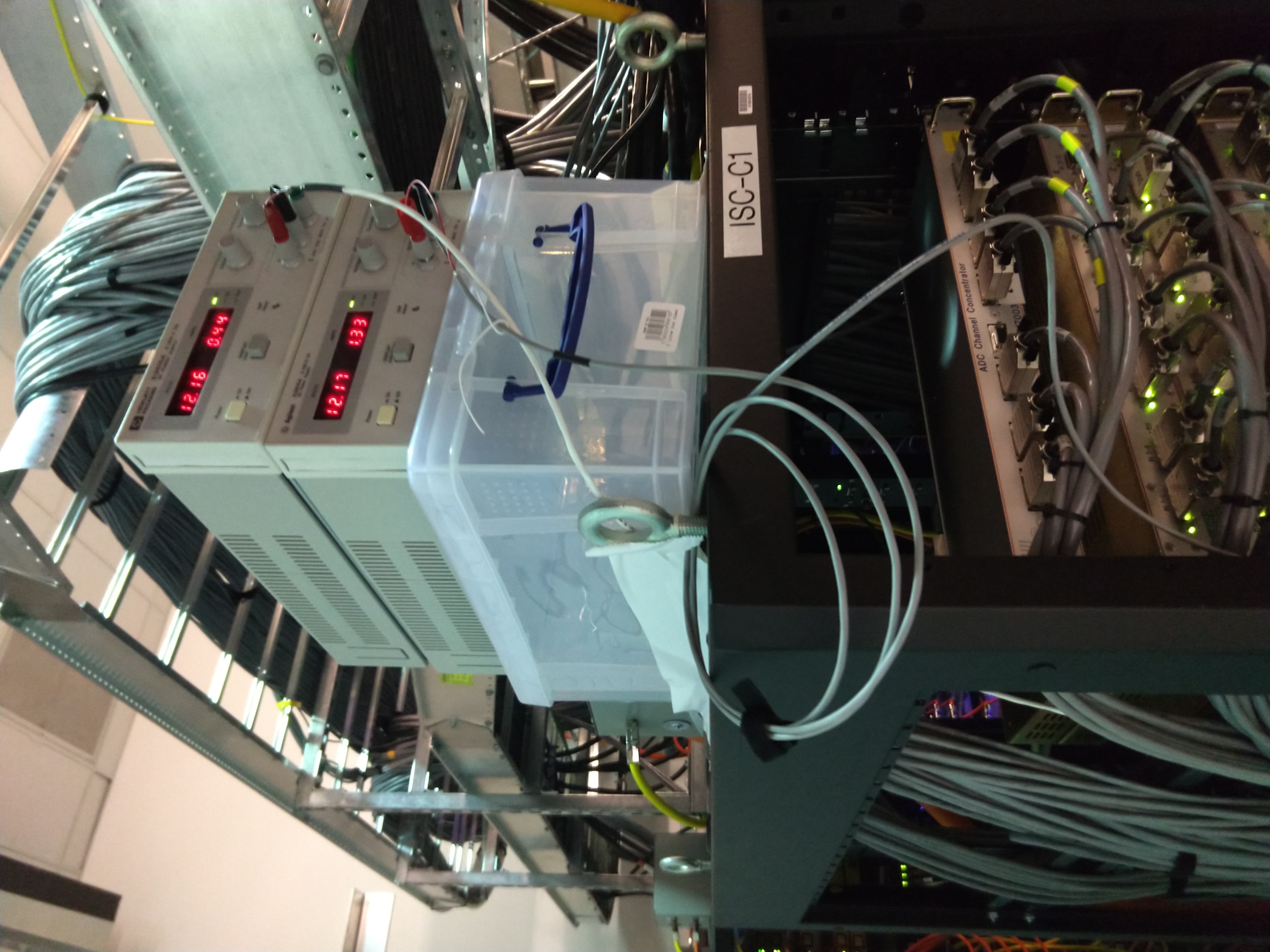
While looking for noise in the CER, Dick noticed these temporary fan power supplies were sitting close to an ADC Concentrator chassis at the top of ISC-C1. He recommended that we add space between the supplies and the chassis to reduce coupling to the ADC channels. Daniel authorized the supplies to be moved so we installed a spacer as shown to increase distance between supplies and the ADC Concentrator chassis.
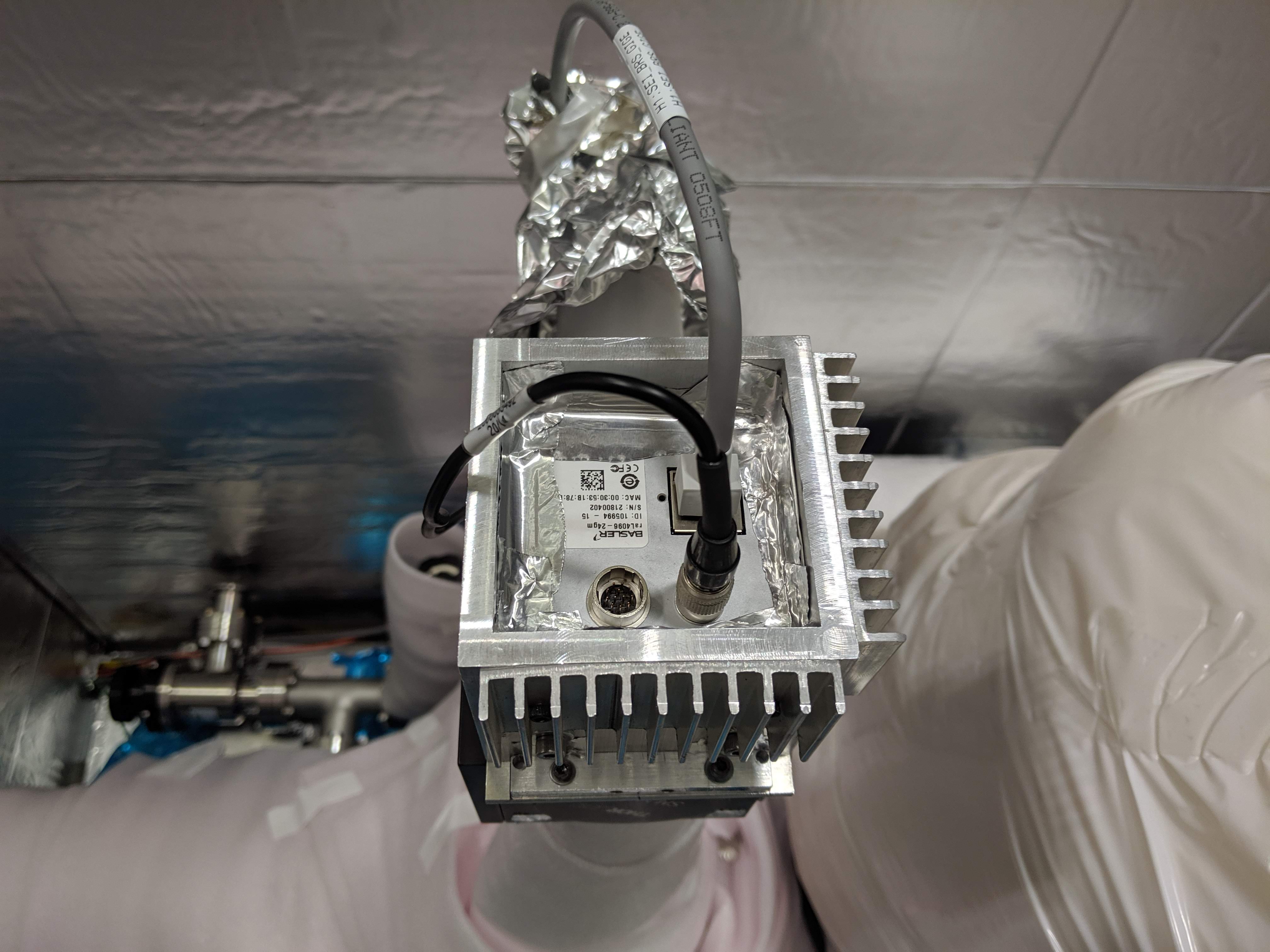
This morning Chiara helped me tape up BRSY. We only taped up the upper part of the light pipe, around the beam splitter, I didn't want to disturb the lower part, see attached photos.
While I was there, I started getting concerned about the centering of the BRS which was already close to the edge, so I attempted to use my "easy-mode" rebalance of the BRS. This didn't work, so I asked to go out again. I got lucky this time and it only took about an hour to get to what I think is a good position. I worry a bit that after the temps settle down in the box BRSY may drift out of range the other direction. It's sitting at about 5000 ct on the driftmon, which is very good, but the tape is enough to affect the final equilibrium temp inside the box and I'm not sure how far it will drift. I'll keep monitoring.
Also, Jeff asked that I make accessing the remote desktop connections to the BRS easier. I have aliases set up in my bashrc file so I just have to type my alias in a terminal. I've added buttons to the ISI config screen, called BRSX/Y Remote near the BRS status blocks on the ISI_CONFIG screen. The links are the orange buttons on my attached screenshot of the ISI_CONFIG screen.
I also added Jeff's BRS health ndscope, which is now in the isi/h1/ndscope folder, called BRS_Health_Check. It's launched from the pink button next to the BRSX remote desktop button.
End-X, End-Y, and CS dust monitor vacuum pumps checked out OK. Made a couple of tweaks to the vacuum pressure. All temps were good. Reset the End-X dust monitor.
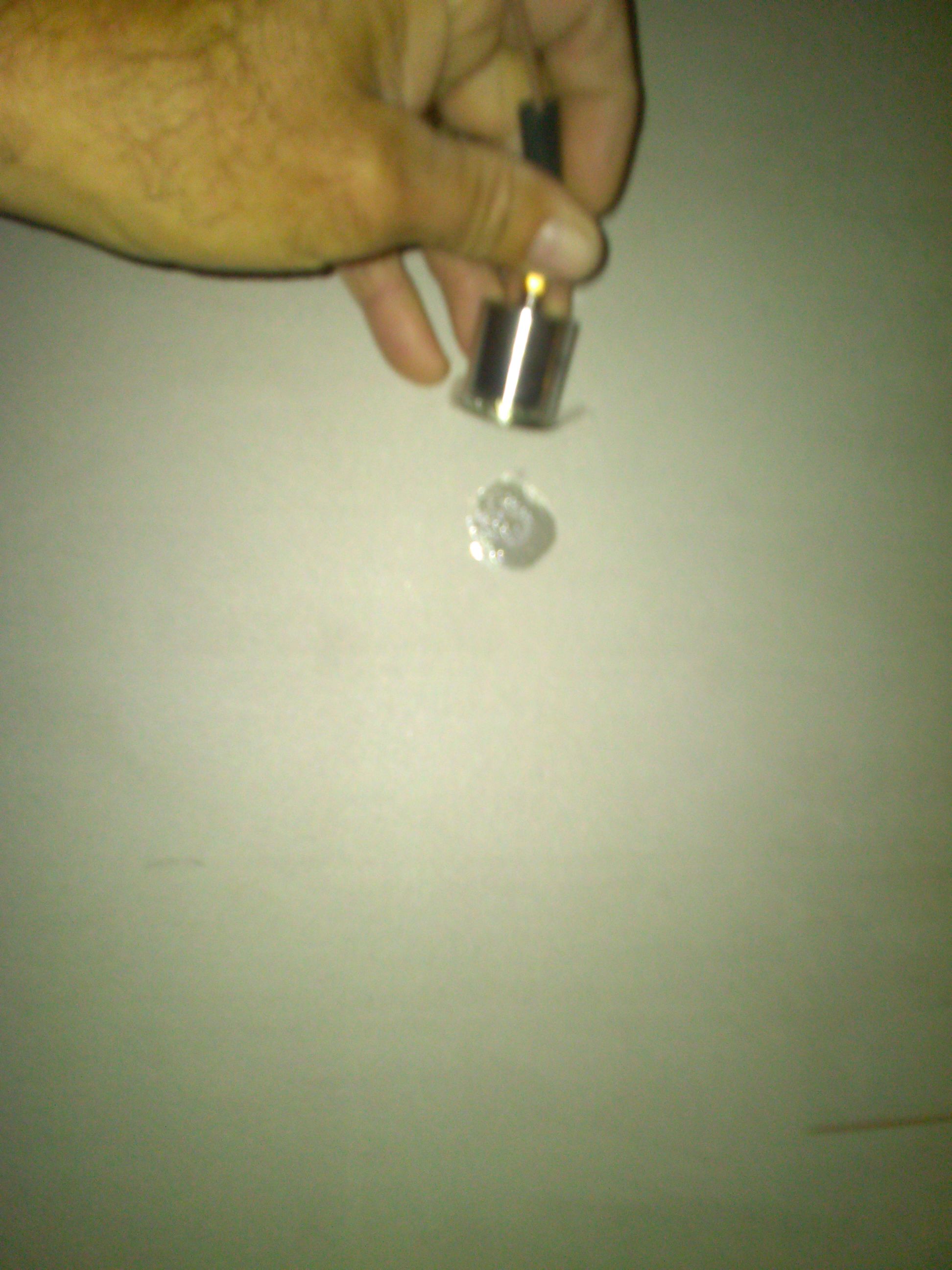
I accidentally "hooked" a wire that was hanging in free space while working around the Vertex Turbo and pulled off an accelerometer that was adhered to the OMC tube. This had been glued to the north side of the OMC near the pipe bridge (see pict).
Data will be posted later.
WP 8321 Dave B., Patrick T. Dave installed subversion and I checked out /projects/trunk/epics/iocs/fmcs_bacnet into /home/cdsadmin/svn. I then replaced the following files with soft links to the files in the checkout: /home/cdsadmin/BACnet_R0-8/iocBoot/e2b-ioc/st.cmd /home/cdsadmin/BACnet_R0-8/iocBoot/e2b-ioc/startup.fmcs /home/cdsadmin/BACnet_R0-8/epics2bacnetApp/Db/chiller_bacnet.db /home/cdsadmin/BACnet_R0-8/epics2bacnetApp/Db/fmcs_bacnet.db I added the following line to startup.fmcs: ssh controls@h1fescript0 'touch /opt/rtcds/lho/h1/target/fmcs-epics-cds/logs/reboot.log;chmod 777 /opt/rtcds/lho/h1/target/fmcs-epics-cds/logs/reboot.log' I ran chmod +x on the startup.fmcs link. I then ran make distclean and make install and restarted the computer. I started the IOC per the wiki (https://cdswiki.ligo-wa.caltech.edu/wiki/h0fmcsbacnet) and Dave verified that the reboot got logged. Dave is currently working on installing burtwb so that the alarm levels can be restored.
Dave burtrestored to 11 AM this morning.
[Ethan, Niko]
In response to some raised concerns about PcalX glitching, Ethan and I checked the maximum OFS PD output at both end stations. PcalY is unchanged, and the PcalX maximum PD output has lowered slightly from 8.0 to 7.9. We have reset the PcalX OFS offset from 4.0 to 3.95, and will continue investigations into other potential causes.
L. Sun
The hourly C01 uncertainty budget plots and txt files are stored here https://ldas-jobs.ligo.caltech.edu/~ling.sun/Calibration/Uncertainty/O3C01/LHO/
LHO: from 1237827584 == Mar 28 2019 16:59:26 UTC to 1244307456 == Jun 11 2019 16:57:18 UTC
Note: If the detector is not locked or the calibration line uncertainty > 0.005, the results are not produced for that given time. (Results cover 71% of the whole duration.)
The attachment demonstrates that the variation of the envelopes is negligible.
- White dashed curve: median of the median values from all the hourly data
- White solid curve: median of the +/- 1 sigma values from all the hourly data
- Color: percentiles of the +/- 1 sigma curves (i.e., variation of the envelope)
L. Sun,
I've fixed the RRNom.py code to exclude kappa_U and kappa_P correction before 0416 in LHO. On the other hand, I found that some jobs unexpectedly failed due to cluster issues in the previous run. Some of the hourly data were missing. I've regenerated C01 statistics for the whole period. Now the coverage is 77% for LHO.
The updated percentile plot and the max mag/phase bound curves are attached. In the percentile plot, we see larger variation at low freq because kappa_U and kappa_P were not corrected before 0416.
The plots are generated using the script ^/trunk/Common/pyDARM/RRNomStat.py
Sample command: python3 RRNomStat.py --statDir=/home/ling.sun/public_html/Calibration/Uncertainty/O3C01/LHO/ --IFO=LHO --nameTag=O3_C01
L. Sun
The max bound plot in the previous comment shows the max of all statistics. Now it's updated to show the max bounds of different percentiles.
The variation in the uncertainty percentiles seen in the 95th ("2 sigma") and 99th ("3 sigma") from the 68th ("1 sigma") are a result of H1's h(t) not correcting for \kappa_P and \kappa_U during the observational stretched before April 16th, when we didn't trust them enough (see details in FRS Ticket 12997 and associated dependencies).
Why didn't we trust them? In short:
Because ETMX calibration lines used to determine \kappa_U and \kappa_P were too far apart from the PCAL absolute reference line -- and the time-dependent sensing function was varying enough (see 51115 and FRS Ticket 13012) that the approximation that "the calibration lines are close enough that the time variance of the ratio of C/(1+G) at PCAL frequency and each ETMX line is negligible" [see section 2.4 in T1700106] breaks down).
Thus, the (yes, still untrustworthy) measured values of \kappa_P and \kappa_U are applied as a *systematic error* in the uncertainty and error budget, and thus that budget is time-variant, and increasing the 95th and 99th percentile values. This creates an *over-estimate* of the systematic error, as PUM and UIM actuation strengths as measured with frequency dependent sweeps have remained entirely static over the run thus far -- see LHO aLOG 50992 and G1901479. However, we accept this poor assessment as of the time-dependence actuator systematic error as a "conservative" estimate of what it could be (where the GPR covers the unknown static frequency dependence).
After April 16th, we moved all actuator calibration line frequencies lower and much closer to each other (see LHO aLOG 48551).
Attached is supplemental material from Lilli showing what the percentiles look like if O3 uncertainty and systematic error estimates prior to April 16th are *excluded.*
One can see much less variance, and the 95th and 99th percentile curves lie right on top of the 68th percentile curve, as expected.
[Editor's note -- these were sent to calibration mailing list on Aug 27 2019, under thread "To Use or Not to Use: TDCFs for H1 until Apr 16th" -- 2019-08/msg00166.html. Unclear if they were yet put in the repo, but I've committed them to /ligo/svncommon/CalSVN/aligocalibration/trunk/Runs/O3/H1/Results/Uncertainty/, perhaps redundantly, and will remove and delete once I find out if /where they were committed elsewhere .
1:35UTC7:35UTC Stand Down expired as per Keita's instructions7:51UTC INJ_TRANS returned to nominal. I got involved in aLogging a couple of things and forgot to actually perform the action. d'oh!