yannick.lecoeuche@LIGO.ORG - posted 20:35, Saturday 10 August 2019 (51197)
Lockloss at 20:30 (power glitch)
Lights flickered in the control room and we dropped lock suddenly. Attempting re-lock now.
Lights flickered in the control room and we dropped lock suddenly. Attempting re-lock now.
Ops Shift Transition: 08/10/2019, Eve Shift 23:00 – 07:00 (16:00-00:00) - UTC (PT)
State of H1: Locked
Intent Bit: Observing
Weather: 0-10mph wind
Primary 0.03 – 0.1Hz: 0.01 um/s
Secondary 0.1 – 0.3Hz: 0.1 um/s
Outgoing Operator: Jeff
Quick Summary: BNS range still fluctuating. Locked for 49 hours, Observing 12.5 hours
Another EY chilled water overtemp, attached 24 hour trend. Bubba is investigating.
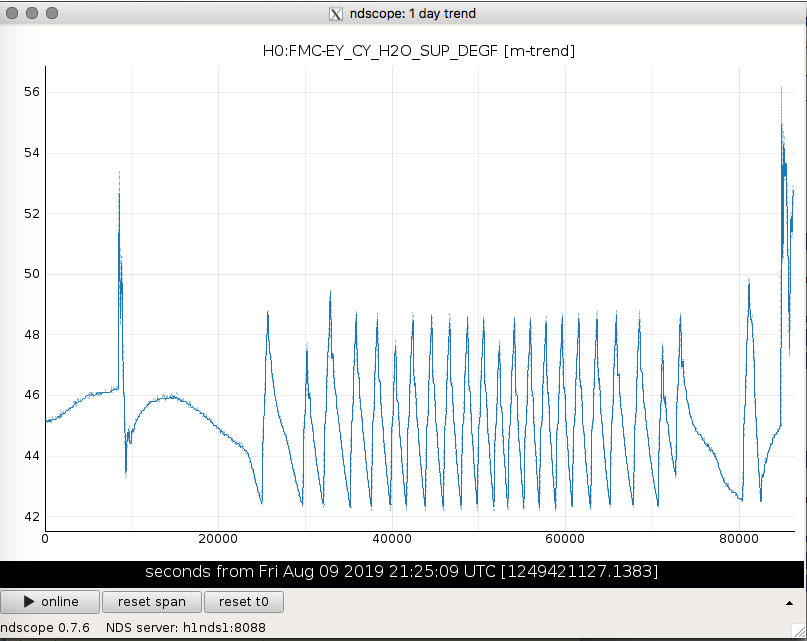
Reminder to the group: this alarm is triggered if the EY chiller supply water temperature exceeds 49F for 5 minutes or more. The above trend suggests the temperature went above 50F yesterday afternoon, but not for more than 5 minutes.
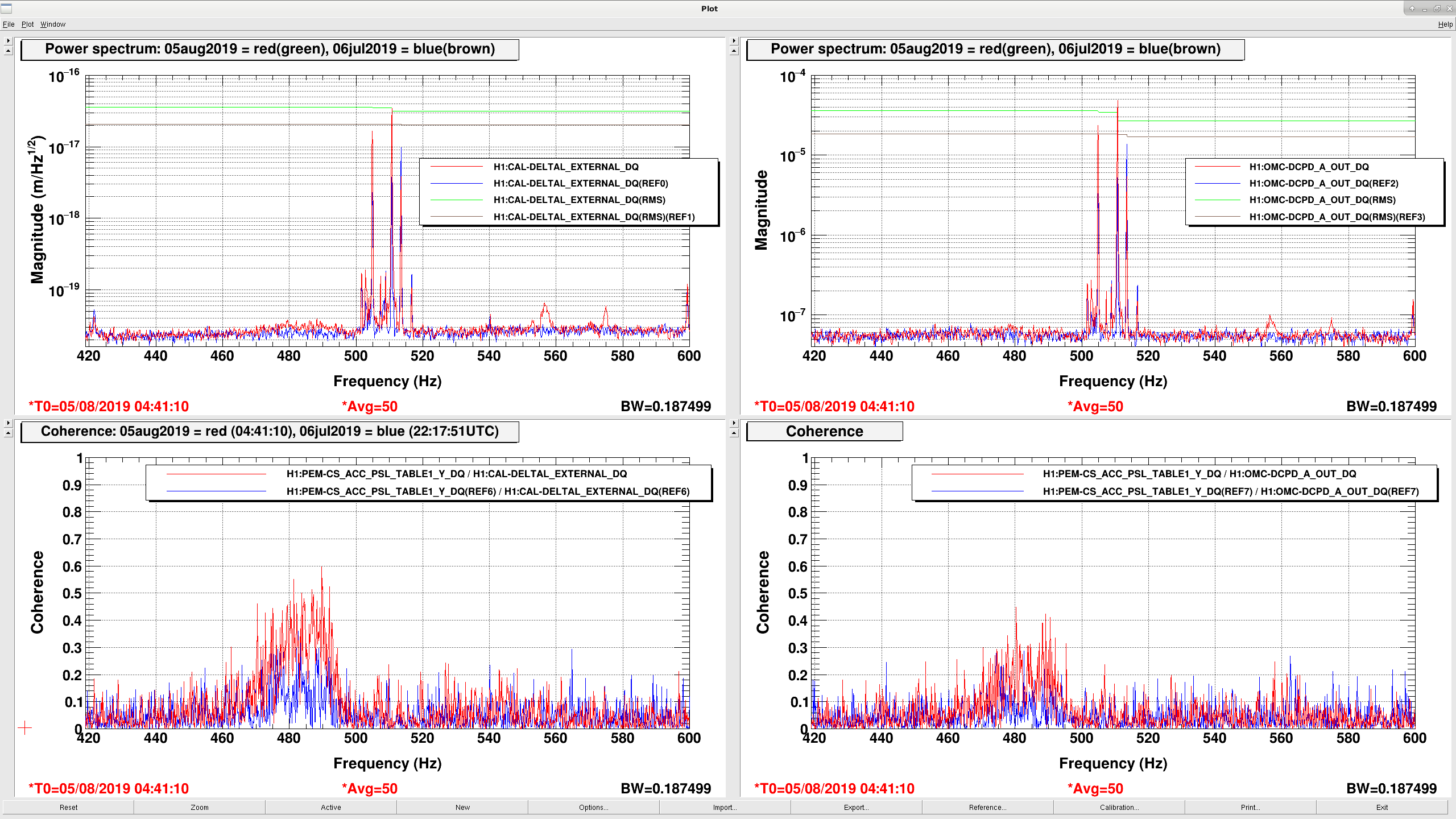
Following up on Jenne's alog 50988 and Robert's comment to check coherence, the increase in noise at 480Hz is coherent with H1:PEM-CS_ACC_PSL_TABLE1_Y_DQ, and Robert's identified that as noise coming from the optic/mount IO_MB_M3.
   One GRB alert early in the shift.

   A bit later started seeing range fluctuations possibly due to low Squeezer conversion efficiency error. The range is seesawing around 97 to 112Mpc. No other issues to report.

   As this is outreach Saturday, expecting site tours starting around 13:30 PT.
   Noticed a drop in range to around 100Mpc (between 97 & 108Mpc).

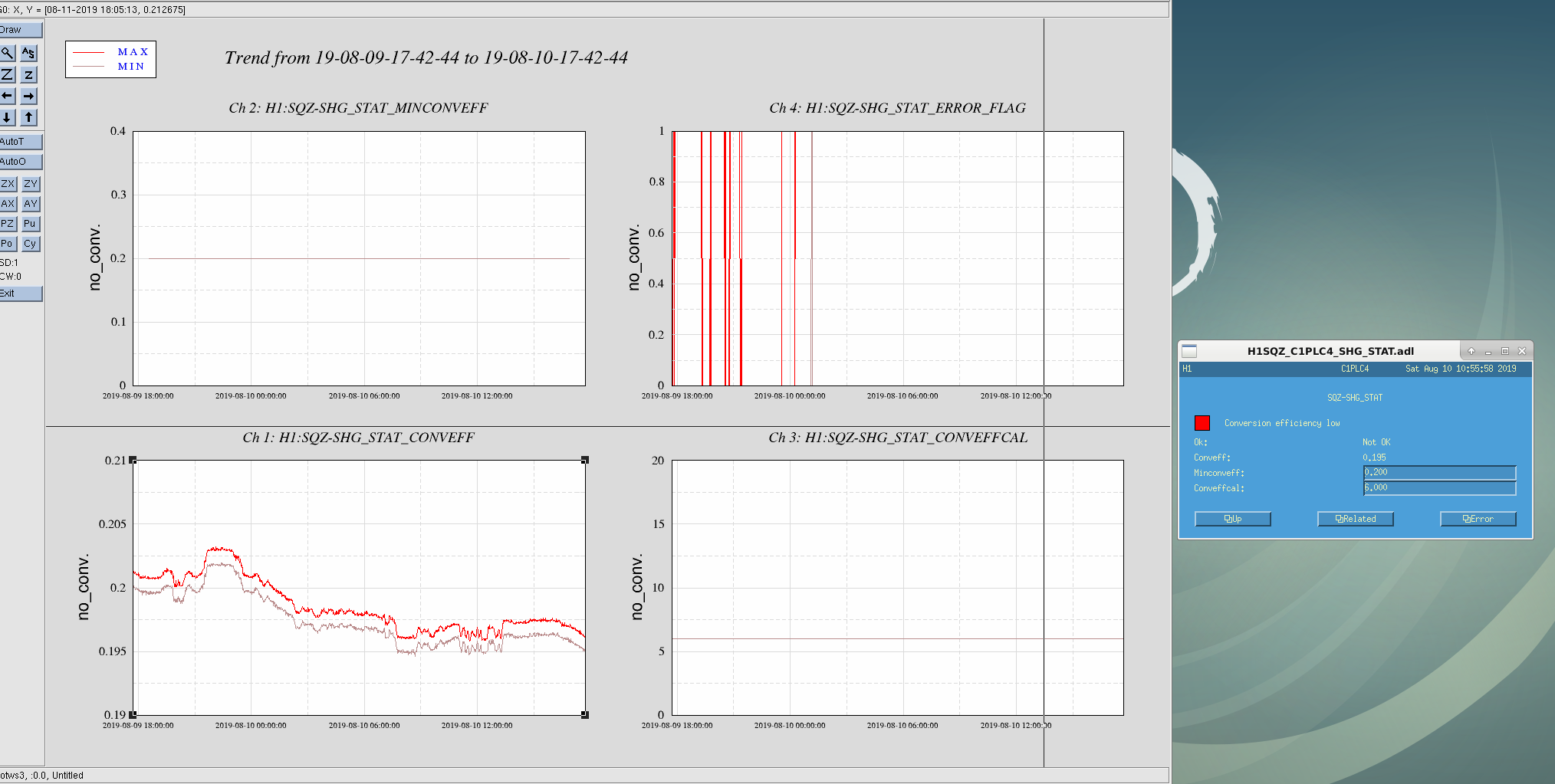
  C1PLC4_SHG_STAT shows a conversion efficiency low error. The attached plot shows the error flag state changing at 01:12 UTC on 08/10. There is a downward trend in the SHG_STAT_CONVEFF starting around 23:00 UTC on 08/09. This may be related to the issues documented in aLOG #51177.

Range has recovered a bit (111.3Mpc). Will monitor and call support if the range continues to suffer.
TITLE: 08/10 Owl Shift: 07:00-15:00 UTC (00:00-08:00 PST), all times posted in UTC
STATE of H1: Observing at 113Mpc
INCOMING OPERATOR: Jeff
SHIFT SUMMARY: Dropped briefly out of observing twice by the TCS_ITMY_CO2 guardian. Rode through lightning storm.
LOG:

09:18 - 09:19 UTC Knocked out of observing by TCS_ITMY_CO2 node
10:23 - 10:25 UTC Knocked out of observing by TCS_ITMY_CO2 node
Dropped briefly out of observing twice by the TCS_ITMY_CO2 guardian. No other issues.
TITLE: 08/10 Owl Shift: 07:00-15:00 UTC (00:00-08:00 PST), all times posted in UTC
STATE of H1: Observing at 109Mpc
OUTGOING OPERATOR: Niko
CURRENT ENVIRONMENT:
    Wind: 19mph Gusts, 13mph 5min avg
    Primary useism: 0.03 μm/s
    Secondary useism: 0.07 μm/s
QUICK SUMMARY: Saw several impressive lightning strikes on the drive in.
TITLE: 08/09 Day Shift 23:00 – 07:00 (16:00-00:00), all times posted in UTC
STATE of H1: Observing
INCOMING OPERATOR: Patrick
SHIFT SUMMARY: Slow shift, not much happened. Locked for 32 hours, Observing for 11.
LOG:
23:00 (16:00) Sno-Valley to EY for chiller repairs
03:51 (20:51) Noticed a van leaving the property on the cameras (EDIT: It was Sno-Valley leaving, Jeff Jones confirmed)
Ops Shift Transition: 08/09/2019, Eve Shift 23:00 – 07:00 (16:00-00:00) - UTC (PT)
State of H1: Locked
Intent Bit: Observing
Weather: 0-20mph wind
Primary 0.03 – 0.1Hz: 0.01 um/s
Secondary 0.1 – 0.3Hz: 0.1 um/s
Outgoing Operator: Ed
Quick Summary: BNS range has been moving around a lot for unknown reasons. Been locked for 25 hours, Observing for over 3 hours.
H1 in Observing for 3hrs 36 min. This will be a 15 minute standown.
TITLE: 08/09 Day Shift: 15:00-23:00 UTC (08:00-16:00 PST), all times posted in UTC
STATE of H1: Observing at 100Mpc
INCOMING OPERATOR: Niko
SHIFT SUMMARY:
LOG:
15:46 Thunder from nearby storm producing apparent noise in control room.
18:00 Gave Control room and outside drop-in tour to Eric Muller and sons from the Exploratorium.
23:00Tour into the CR
23:00 GRB Stand Down
23:00 Handing off to Niko
Our BNS range became rattier since yesterday (t=-100000 in the attached left). The range goes up and down slowly, and when it is bad, we can see an increase of feature-less noise in DARM between 70 and 500-ish Hz (attached right, red). Quite often it comes down to 100Mpc, sometimes less.
The only thing that changed is the squeezing. Since the shot noise level for f>1kHz looks OK, it's not like the squeezing level is changing, but it could still be something related to squeezing.
We could disable the squeezer, but our baseline BNS range w/o SQZ is ~100Mpc. The variation we're seeing right now is mostly at the level better than 100Mpc and therefore will be masked once we disable SQZ. It would be difficult to tell anything conclusive by doing that.

The TTFSS would be the first thing to check, if not done already.
Since the current increase earlier (51167), it looks like the squeezer laser power drop has stopped, although the DARM noise is still poor.
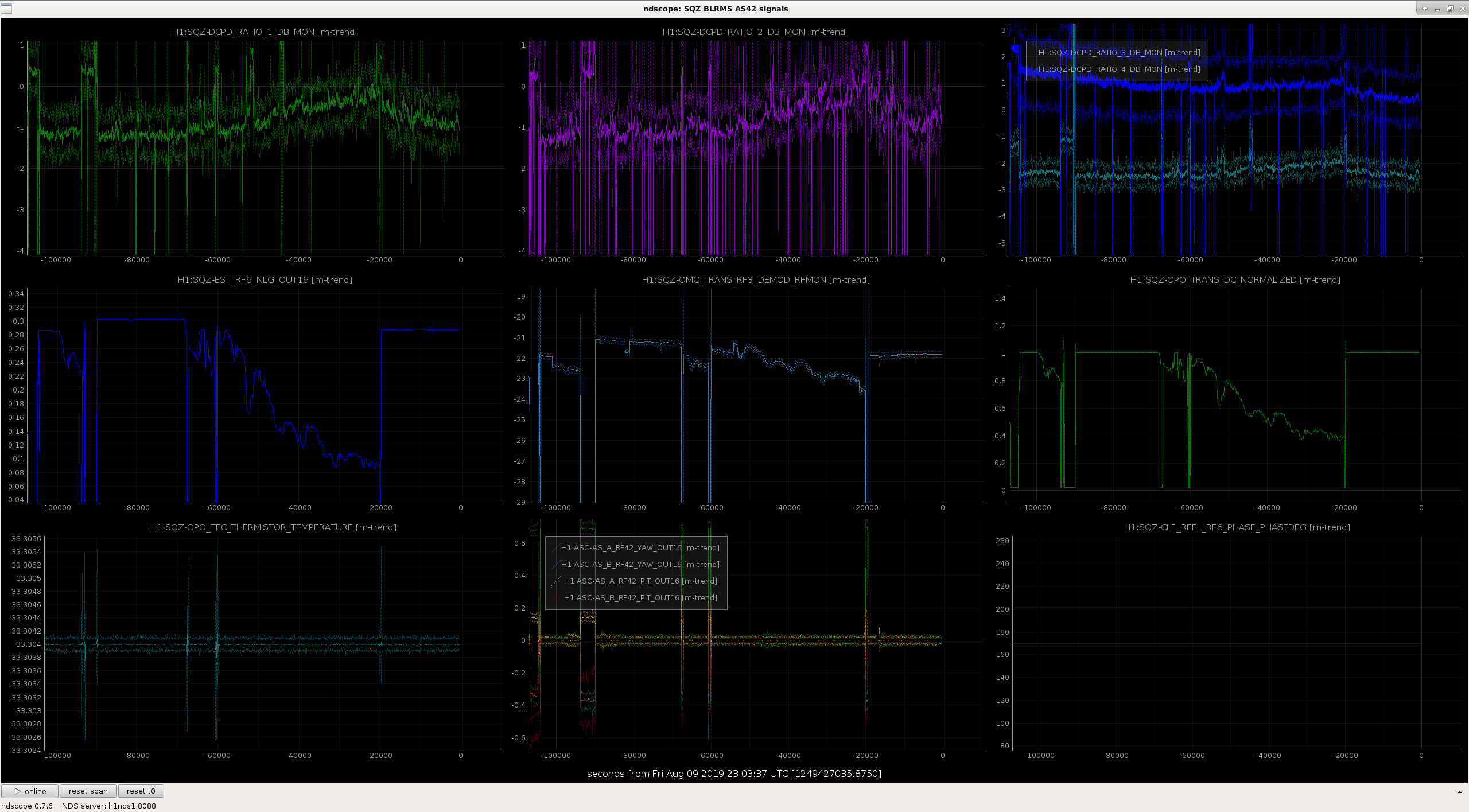
The attached screenshot shows DCPD BLRMS (these are the ratio of SUM to NULL BLRMS, intended for monitoring squeezing, but they also see other DARM noise and are pretty well correlated with the DARM BLRMS). Before the squeezer laser current was changed, you could imagine that the worse DARM noise was correlated with the squeezer nonlinear gain dropping (due to the green power drop), but DARM isn't restored to normal once the nonlinear gain is fixed.
The TTFSS looks OK (nothing is railed, it is locked and looks normal), although I can't promise there's nothing wrong with it none of the obvious things have gone wrong.
It still seems possible that the squeezer is to blame for today's troubles, and we will continue to plan on swapping the laser Tuesday, but it also seems possible that the squeezer is working pretty normally and there is a different problem with the IFO, Keita is posting about some DARM coherences that seem unlikely to be caused by the squeezer laser problems.
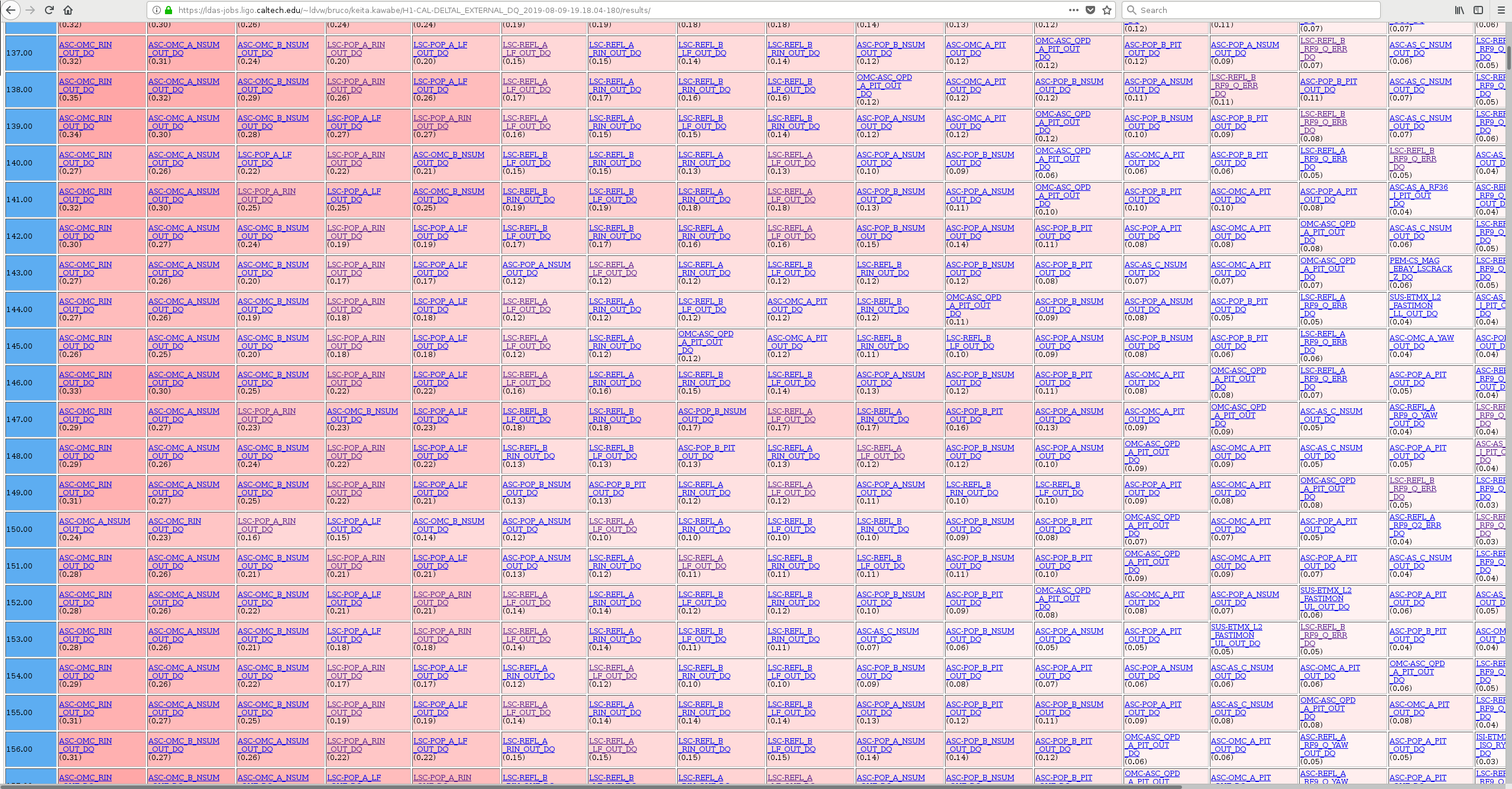
I ran Bruco here:
https://ldas-jobs.ligo.caltech.edu/~ldvw/bruco/keita.kawabe/H1-CAL-DELTAL_EXTERNAL_DQ_2019-08-09-19.18.04-180/results/
Among other things POP_A_LF and REFL LF and REFL RIN had big-ish coherence of about 0.2+.
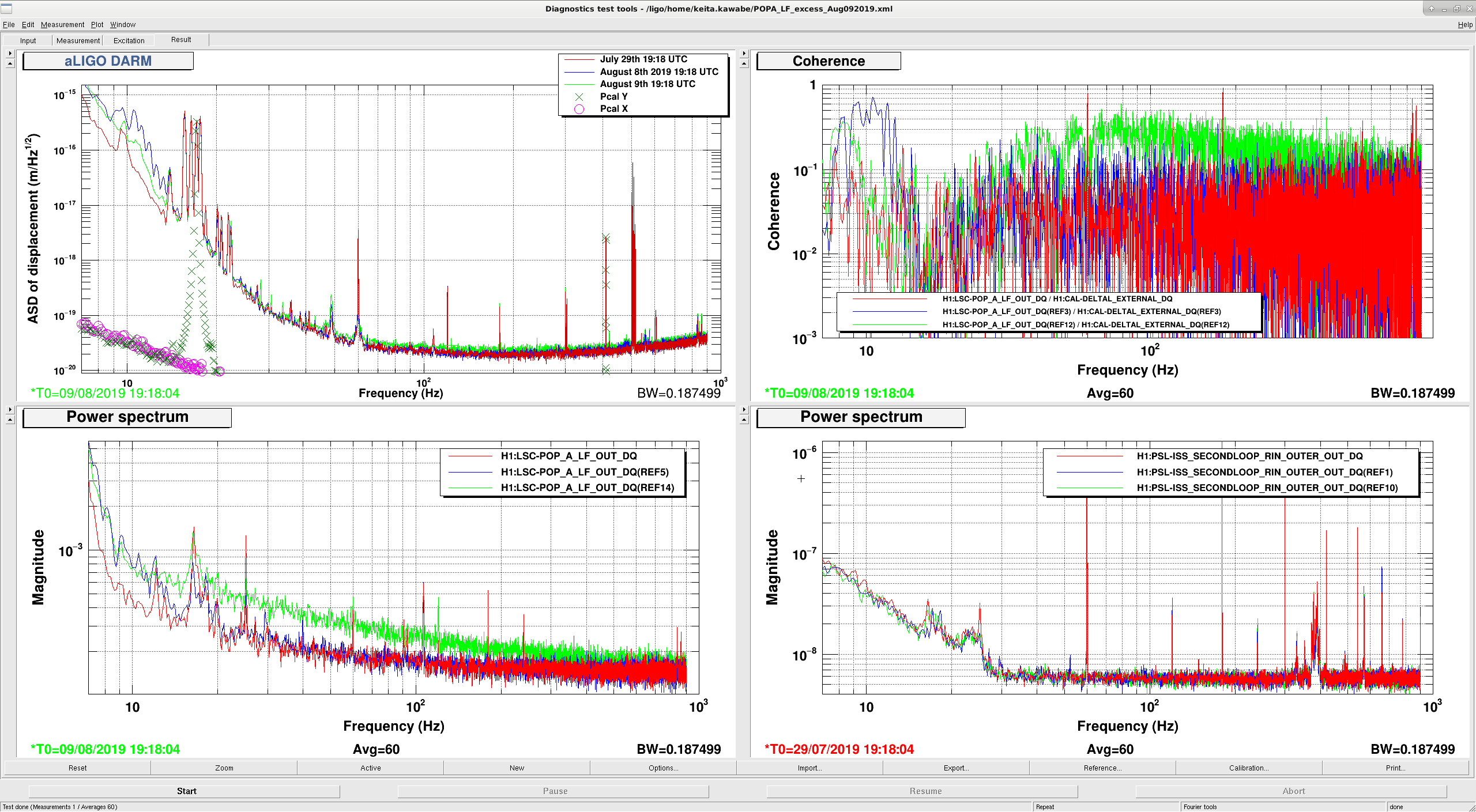
In the attached DTT screenshot, green is today (bad time), blue is 2 days ago (reasonable), red is July 29 (before the green camera incident). POP_A_LF noise is larger today, it's not the coupling but the noise itself that increased.
We checked ISS 2nd loop but it was fine.
Daniel checked and CM signals looked OK.
Jitter? Something else?
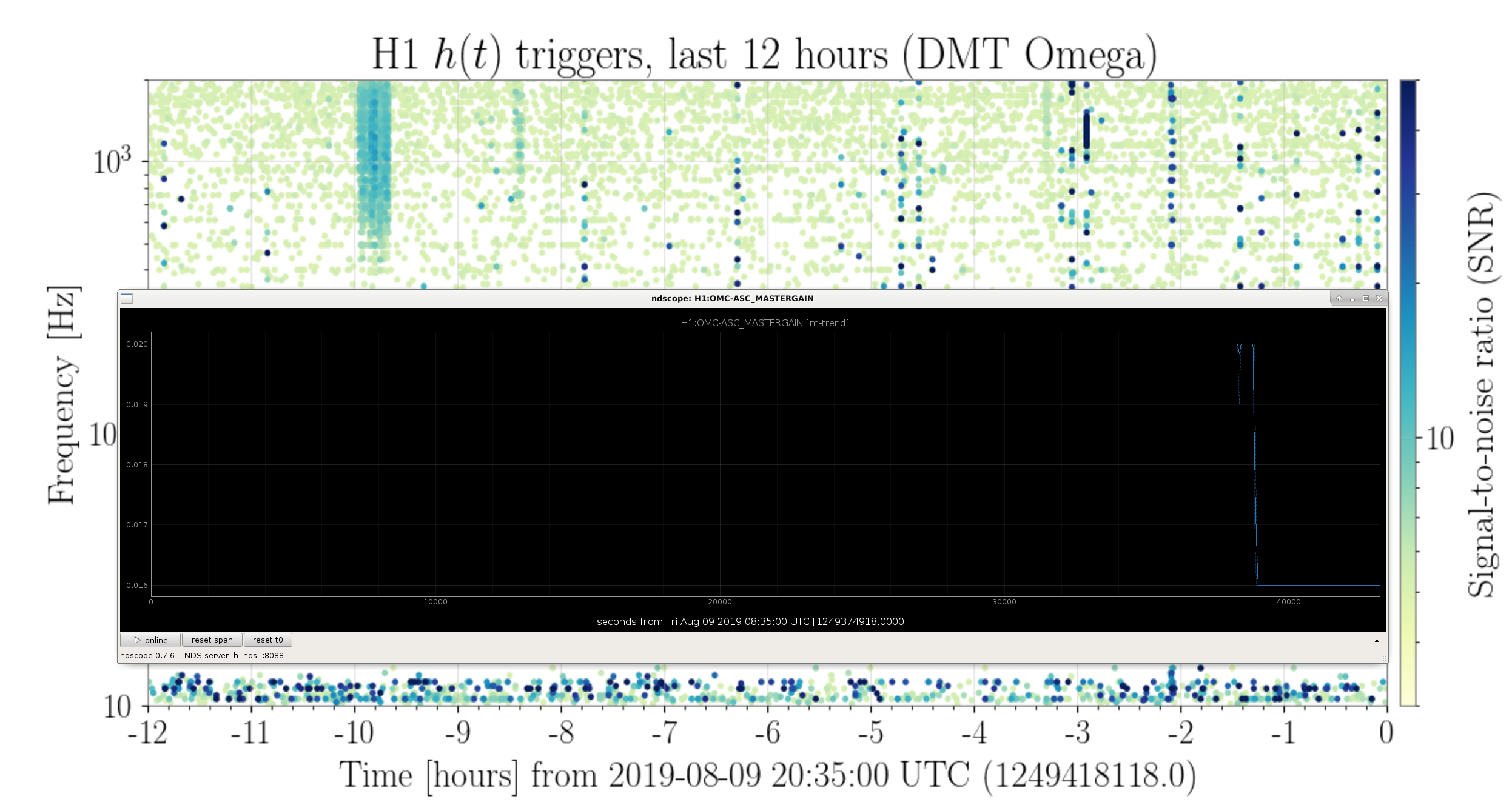
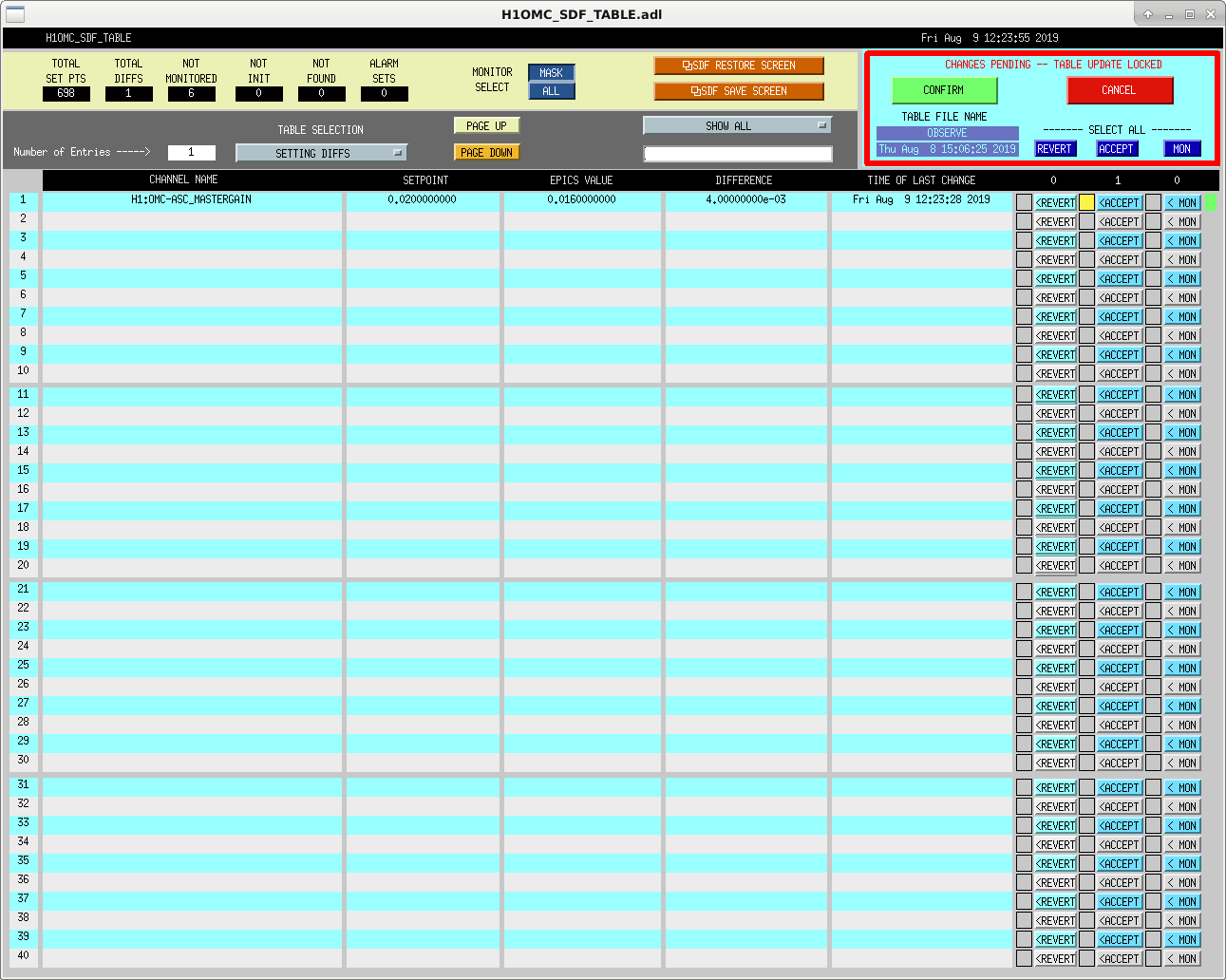
I have reduced the OMC ASC gain from 0.02 to 0.016, in hopes that this will help reduce the scattered light glitches at low frequency. We'll run like this for an hour or so to see if this has a beneficial effect.
I have accepted the new gain in SDF so that we could go back to Observe, but I have not modified guardian yet.
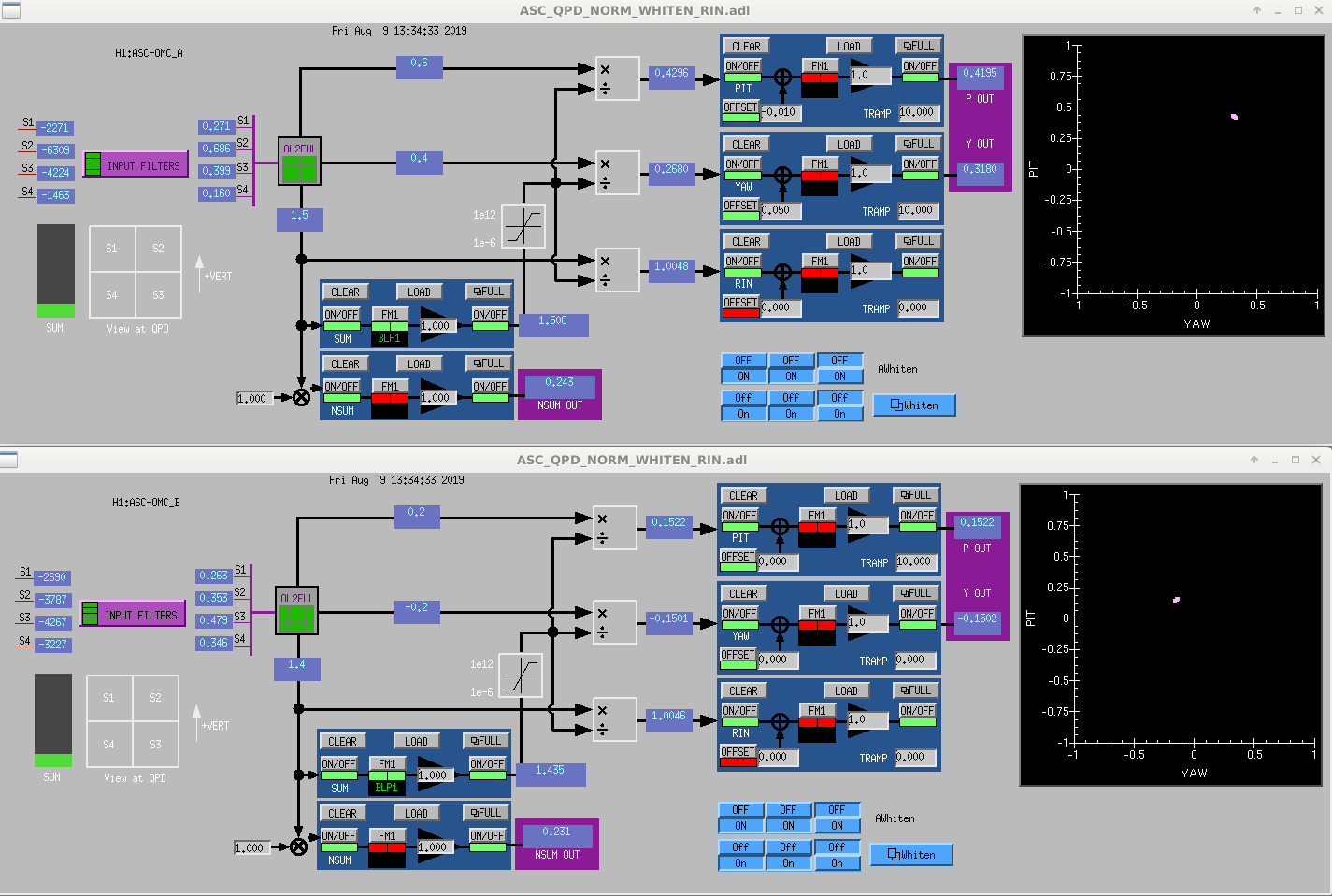
The beams on the OMC QPDs aren't too close to the edges of the QPDs, although we are pretty solidly off into one of the quadrants of QPD A (see 1st attachment).
Lowering the OMC ASC gain from 0.2 to 0.16 does seem to have lowered the highest frequency that the scattering affects. In the second attachment I have overlayed the 12 hour DMT Omega glitch gram with the OMC ASC gain, and there is a bit of a step down in the width of the glitchy low frequency band. The glitches are still there, just aren't affecting as high a frequency.
If things continue to go well (i.e. the OMC ASC isn't causing problems, which I don't think it will) and the lowering of glitch frequency stays true, we might consider further lowering the OMC ASC gain.