Displaying reports 39621-39640 of 88963.Go to page Start 1978 1979 1980 1981 1982 1983 1984 1985 1986 End
Reports until 16:05, Friday 26 July 2019
LHO General
thomas.shaffer@LIGO.ORG - posted 16:05, Friday 26 July 2019 (50838)
Ops Day Shift Summary

TITLE: 07/26 Day Shift: 15:00-23:00 UTC (08:00-16:00 PST), all times posted in UTC
STATE of H1: Observing at 117Mpc
INCOMING OPERATOR: Corey
SHIFT SUMMARY: Slightly rough time getting back from a lock loss (see alog50840). Since then we have been observing for 4.5 hours.
LOG:

H1 DetChar
derek.davis@LIGO.ORG - posted 15:21, Friday 26 July 2019 (50845)
Impact of increased frequency noise compared to whistle glitches

Derek Davis, Adrian Helmling-Cornell, Brennan Hughey, Jenne Driggers

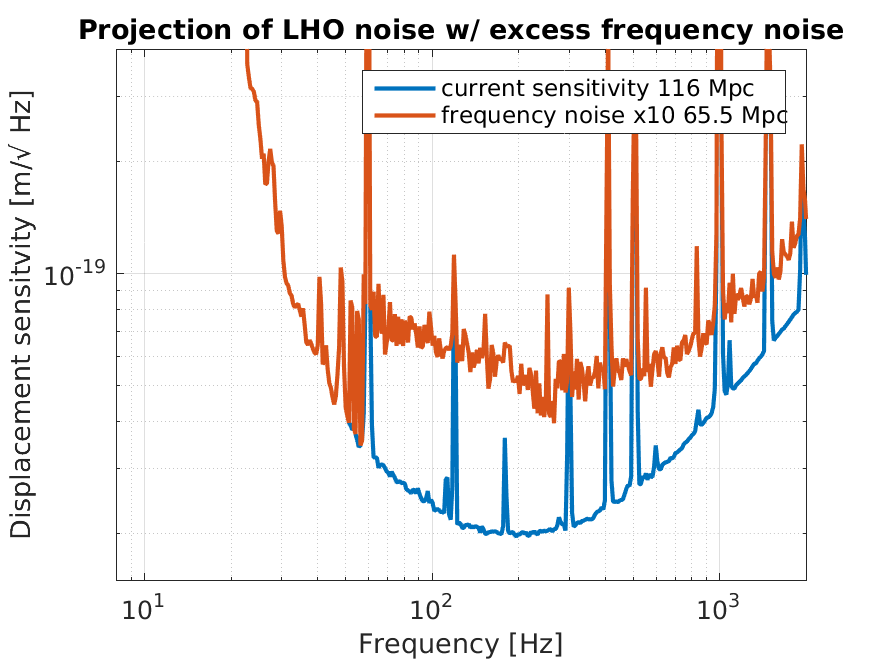
Summary: Any increase in frequency noise at Hanford is worse than the current impact of whistles

Whistles currently are one of the most problematic noise sources for burst searches, and hence are a high priority to mitigate. Approximately 1% of data is corrupted by whistle glitches, although they can be easily identified in general. 

At Livingston, the rate of whistles dramatically decreased after swapping out the VCO. We investigated whether the same swap would be beneficial here at Hanford. The main trade off is a significant increase in frequency noise. 

The overall impact of a factor of 10x increase in frequency noise can be seen in attachment 1. Such an increase in frequency noise would drop the range down to ~65 Mpc. Even a more modest increase of 3x would lower the range to ~105 Mpc. As this decrease is much more significant than the current impact of the whistles, we conclude that any whistle fix must not significantly increase frequency noise for it to be beneficial. 
 

Images attached to this report
H1 DetChar (DetChar, SEI)
anne.baer@LIGO.ORG - posted 15:12, Friday 26 July 2019 - last comment - 07:51, Thursday 29 August 2019(50846)
Impact of Extremely Large EQs in O3

Anne Baer, Derek Davis

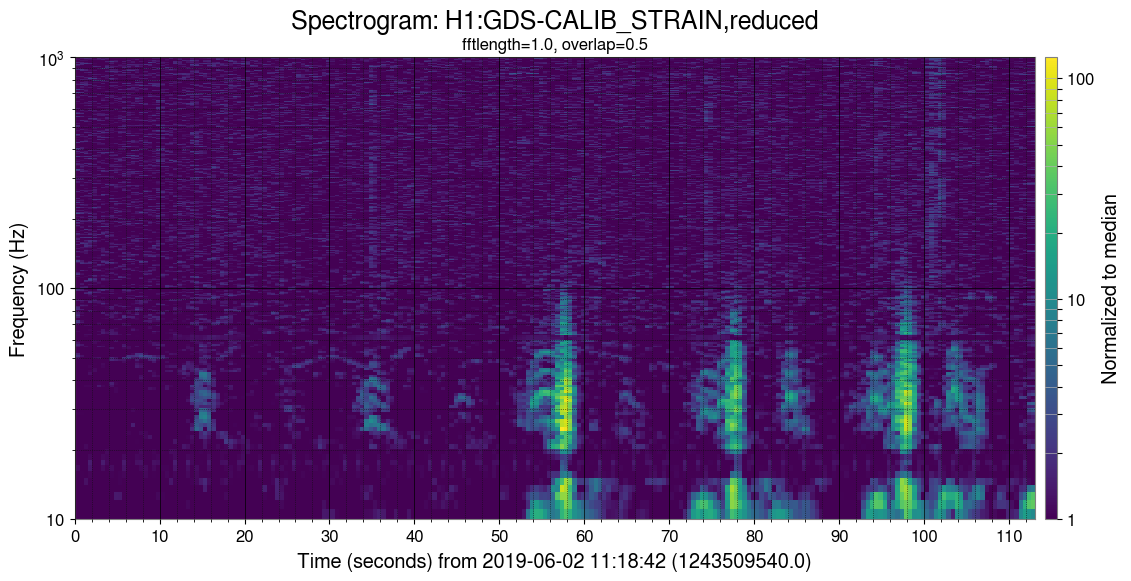
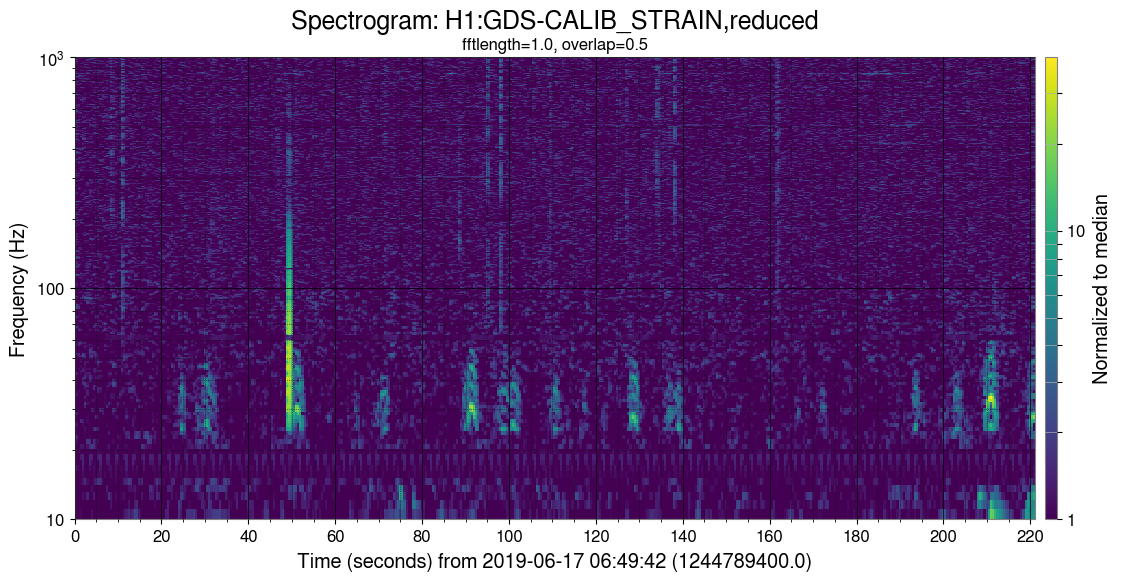
Summary: Extremely large earthquakes create short periods of significant periods of scattering that can produce significant background triggers for the searches.

Through mid-June of O3 there have been eight earthquakes that resulted in ground motion above 1000 nm/s. For half of these times, the interferometer was able to stay in lock throughout the entire period of the earthquake.

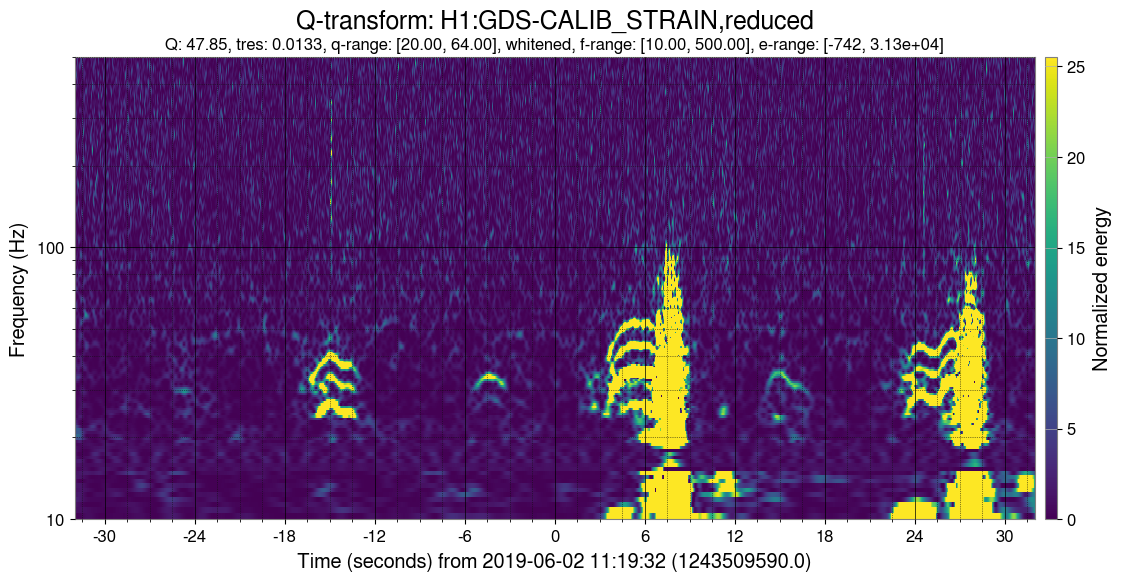
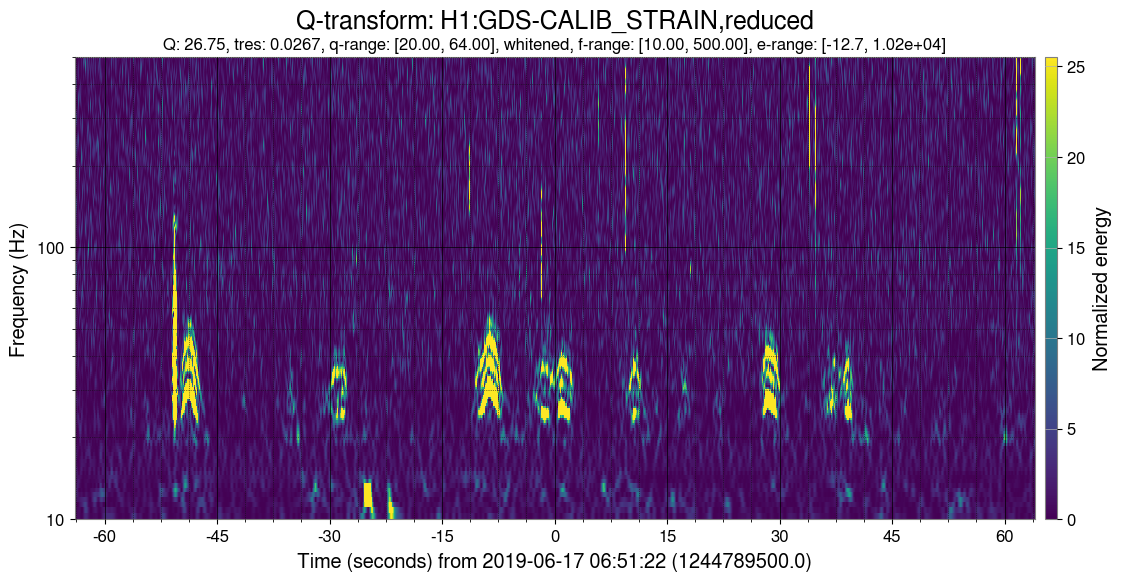
Half of these high earthquake times have significant periods of loud scattering arches that impact the searches. It is not clear what causes these times to result in a larger number of glitches. When this scattering does occur, the glitches tend to produce loud outliers in the PyCBC background, especially for templates with durations of 0.5-4.0 seconds. Earthquake-related glitching is one of the limiting sources of noise for this part of the parameter space.

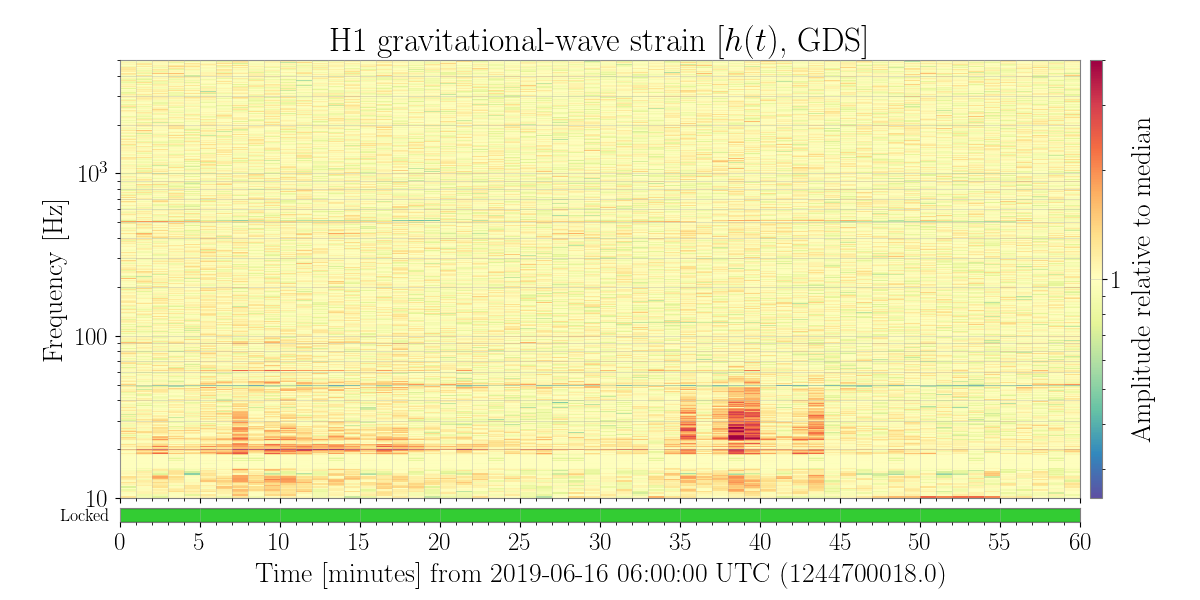
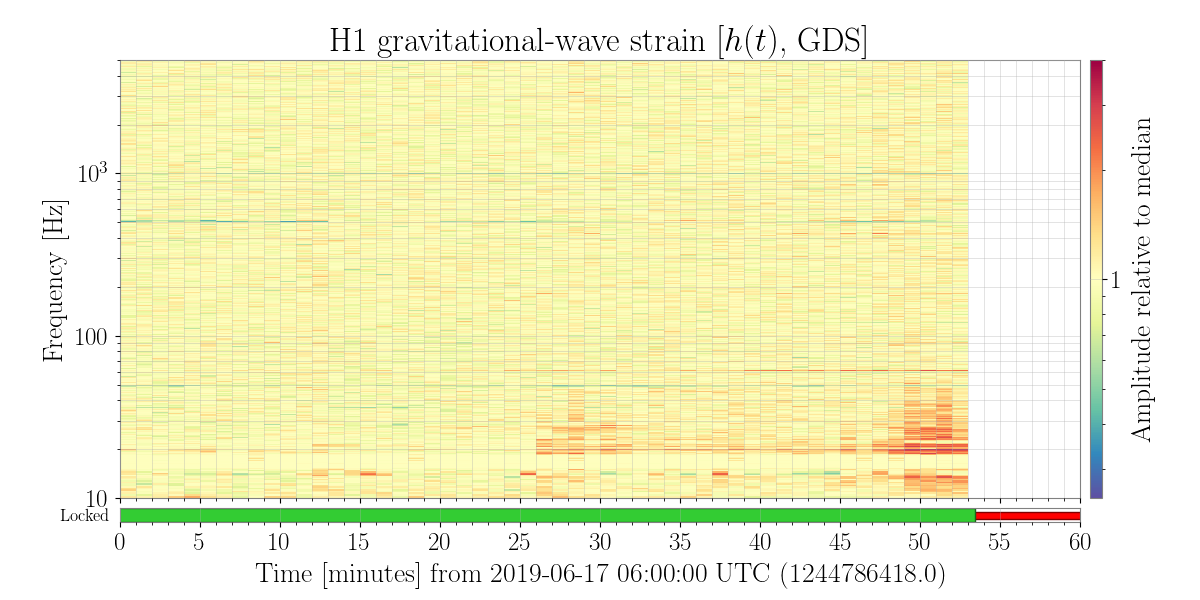
Spectrograms showing the duration of the high earthquake periods show significant noise at low frequency (see attachments 1 and 2), corresponding to scattering arches in the zoomed in omega scans (see attachments 3 and 4).

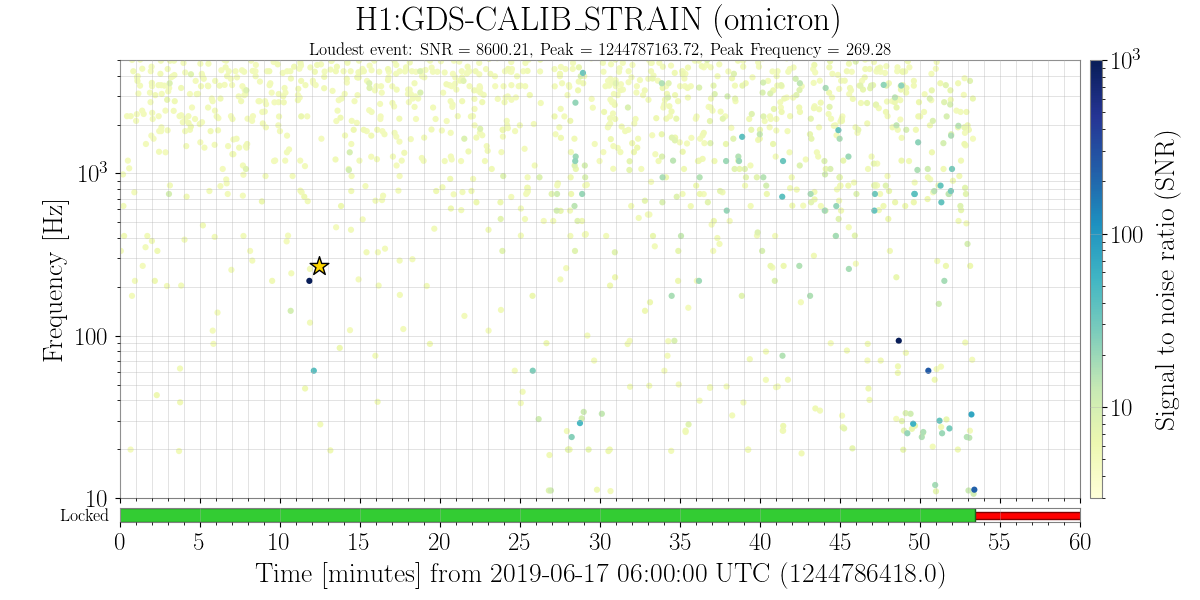
The excess noise produced by these large earthquakes is also visible in hourly omicron glitch plots, with excess glitching at 20-50 Hz lining up with the start of the earthquake periods (see attachment 5, 6, 7, and 8).

In all, extremely large earthquakes are related to significant periods of excess noise and should be flagged by the searches. However, as noted in alog 50844, this glitching is not significant enough to warrant leaving observing mode and sacrificing the increase in observing time.

Images attached to this report
Comments related to this report
anne.baer@LIGO.ORG - 07:51, Thursday 29 August 2019 (51600)

Here is the link to the rest of the analysis I did during the noise sprint, as requested.  


H1 DetChar (DetChar, FRS, SEI)
brennan.hughey@LIGO.ORG - posted 14:21, Friday 26 July 2019 (50844)
It is okay to leave IFO in observing while switching the LHO SEI Sensor Correction Configuration
John Zweizig, Dripta, Nicolas Arnaud, Brennan Hughey

In FRS ticket 13123 it was asked whether it was okay to leave H1 in observation ready/intent while transitioning to earthquake mode.  The short answer is "yes", it appears okay to leave the IFO in observation ready mode when making this transition.

We examined glitch rate based on omicron triggers, BNS range, and other metrics during the ~minute-long period when the transition into earthquake mode was taking place for 55 of these transitions during observing time.  We compared the values to periods within a few minutes before and after the transition into earthquake mode to see whether the actual transition was having a negative impact on data quality.  The average glitch rate for SNR>6 omicron triggers does appear elevated by a factor of ~1.6 relative to surrounding times during the transition periods, but this is not nearly a substantial enough increase to warrant taking the IFO out of observing. This increased glitch rate wasn't traceable to a specific type of glitch, as the increase in glitch rate is very broad band.  Average BNS range is about 105 Mpc during the transitions into earthquake mode, which is not substantively different than the average BNS range in the minutes immediately surrounding the transition.  A direct check of the coherent WaveBurst online burst analysis shows that loud background triggers (as characterized by a significance of about one event per year of background) occur ~50% more often during the earthquake mode transition times than one would expect at a random time during the run, which is a pretty minor deviation from average background.

When assessing the data quality of candidate triggers it will be worth noting if they occur during one of these transition periods, so it will be useful for John Zweizig to continue generating the segments he produced to enable this study.  However, the impact of the transition into earthquake mode on data quality appears pretty modest.  It isn't an issue the transient searches will need to automatically veto, and it certainly isn't worth taking the IFO out of observing during the transition period.

    
H1 General
thomas.shaffer@LIGO.ORG - posted 11:25, Friday 26 July 2019 - last comment - 13:45, Friday 26 July 2019(50840)
Observing 1818 UTC

1st attempt:

2nd attempt:

Initial Alignment:

3rd attempt:

SDF:

Comments related to this report
thomas.shaffer@LIGO.ORG - 13:45, Friday 26 July 2019 (50843)

Doesn't look like the code was loaded in for the new SR2 states. The states screen confused me. We will have to try it out in Tuesday.

H1 DetChar
anne.baer@LIGO.ORG - posted 10:18, Friday 26 July 2019 (50841)
O3 Blip Glitch Studies
Anne Baer, Adrian Helmling-Cornell, Siddharth Soni, Derek Davis

Summary: Blip glitch behavior at Hanford has changed slightly between O2 and O3, but generally appears with the same features as before. Blip glitches do not appear related to the high-SNR glitches seen in O3.


We investigated blip glitches at Hanford and how they have, or have not, changed from O2 to O3 using the blip data from GravitySpy.

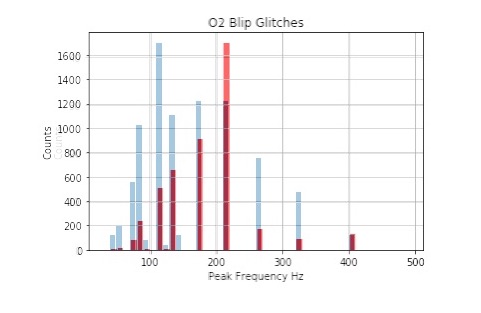
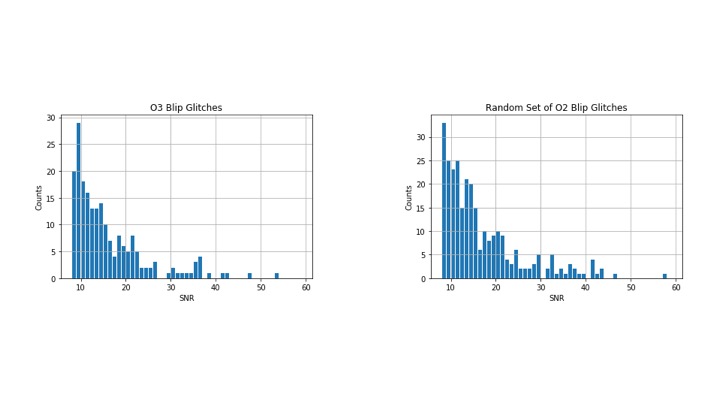
Comparing the displayed quality factor, and the distributions of SNR and peak frequency of the blips, we found that the peak frequency seems to have shifted lower for O3 (see attachment 1, O2 in red, O3 in blue). The distributions of SNR show only a minimal difference between O2 and O3. Notably, this suggests that blip glitches do not account for the large number of high-SNR glitches observed in O3 (see attachment 2).

The minimum frequency also appears to have slightly dropped in O3, but we are unsure whether this is a statistical noise or not. However, this does match the expected change from a constant amplitude source.

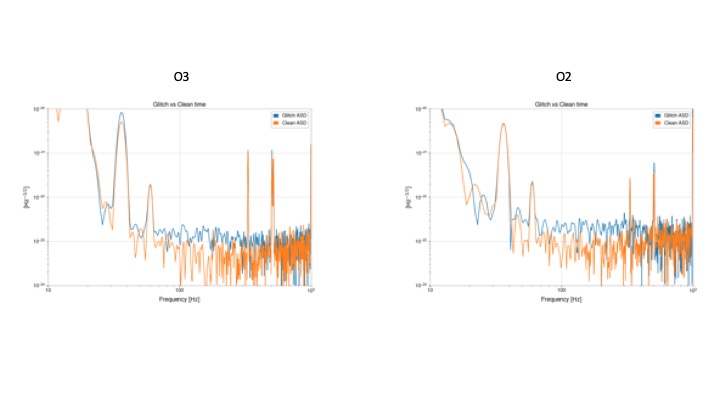
The ASD curves of the blips from O2 and O3 do not show any significant differences in glitch spectra, nor does the spectra seem to indicate any significant features, looking mostly like white noise after 70 Hz (see attachment 3 for example ASDs)

The distance of the blips from the start or end of a lock segment also seems to be very similar, indicating that the blips are not related to lock loss or acquisition. O3 blips seem to be slightly more likely to be towards the beginning of lock and O2 more towards the end, but neither significantly so. The time duration between individual glitches also appears to follow that expected from a random process.

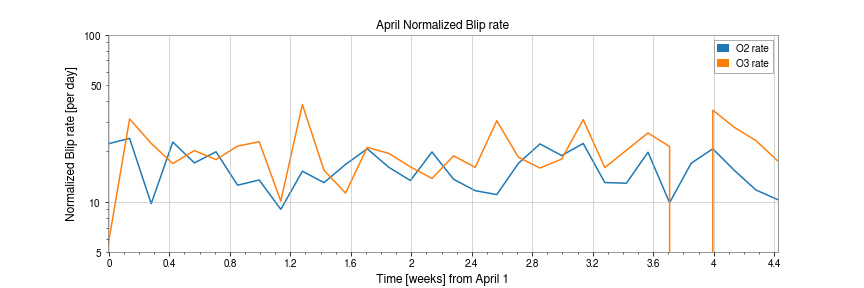
Comparing the rates of blip glitches in April of O2 and O3 at Hanford, there does appear to be a small increase in the number of glitches (see attachment 4). However, this rate was highly variable in O2, and higher by an order of magnitude during winter months and periods of low internal humidity. 

Images attached to this report
H1 General
thomas.shaffer@LIGO.ORG - posted 08:41, Friday 26 July 2019 (50839)
Lock Loss 1536 UTC

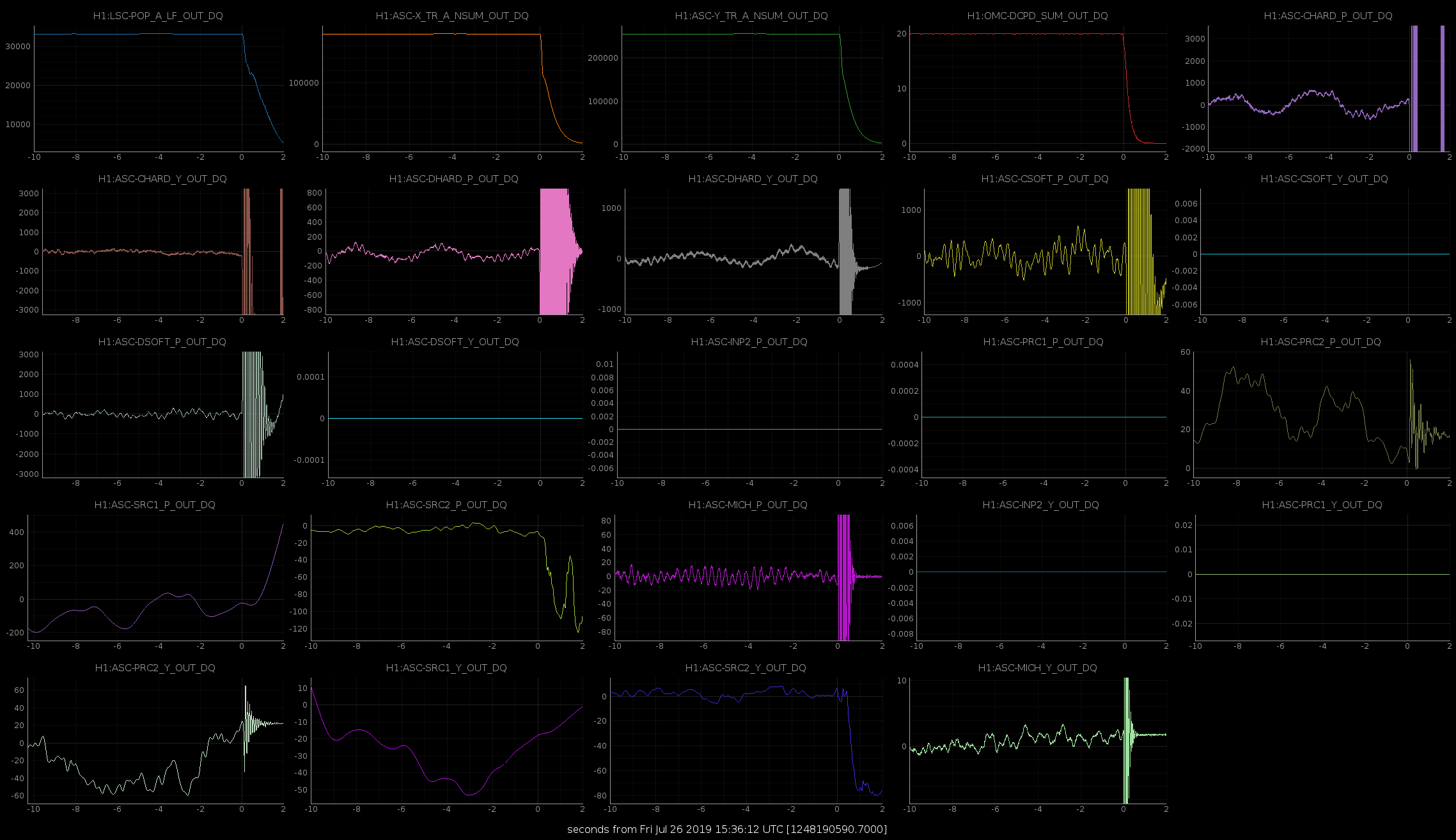
Seems very sudden, nothing obvious from the lock loss plots. 1248190591

Images attached to this report
LHO General
thomas.shaffer@LIGO.ORG - posted 08:03, Friday 26 July 2019 (50837)
Ops Day Shift Transition

TITLE: 07/26 Day Shift: 15:00-23:00 UTC (08:00-16:00 PST), all times posted in UTC
STATE of H1: Observing at 45Mpc
OUTGOING OPERATOR: Ed
CURRENT ENVIRONMENT:
    Wind: 7mph Gusts, 5mph 5min avg
    Primary useism: 0.01 μm/s
    Secondary useism: 0.06 μm/s
QUICK SUMMARY: Almost a 4 hour lock, calm environment. ITMX violin mode 13 is still a bit high.

H1 General
edmond.merilh@LIGO.ORG - posted 07:59, Friday 26 July 2019 (50836)
Shift Summary - Owl

TITLE: 07/26 Owl Shift: 07:00-15:00 UTC (00:00-08:00 PST), all times posted in UTC
STATE of H1: Observing at 118Mpc
INCOMING OPERATOR: TJ
SHIFT SUMMARY:

Everything was stable after the last re-lock. there were a couple of normally expected saturations. Handing off to TJ.
LOG:

H1 General
edmond.merilh@LIGO.ORG - posted 04:13, Friday 26 July 2019 (50835)
Lockloss and recovery 08:54

08:54 Lockloss _HTTS saturation and....

09:28 after much manipulation of both arms' ETMs and TMS, I was able t move on.

09:32 weak PRMI lock and PRMI_ASC caused lockloss.

09:43 IA - Arms not copperating at all. Before this gets too time consuming, I'm doing an alignment.

10:09 IA complete - begin locking

10:24 After reaching a rathr good looking PRMI, Guardian moved to DRMI 1F and failed to catch. Upon moving back to PRMI the mode cleaner be3came unlocked and the ISC_LOCK went back to down.

11:10 NLN

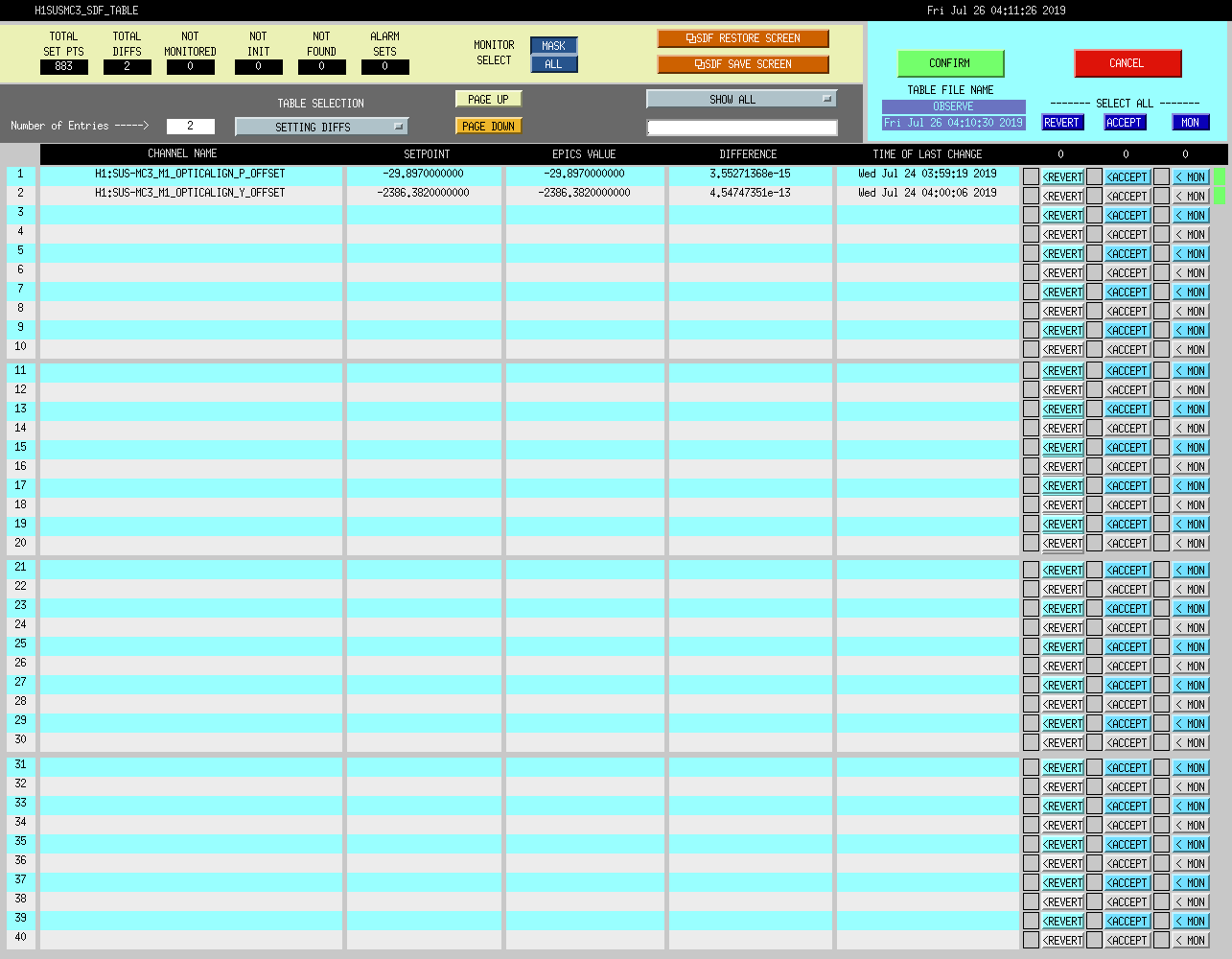
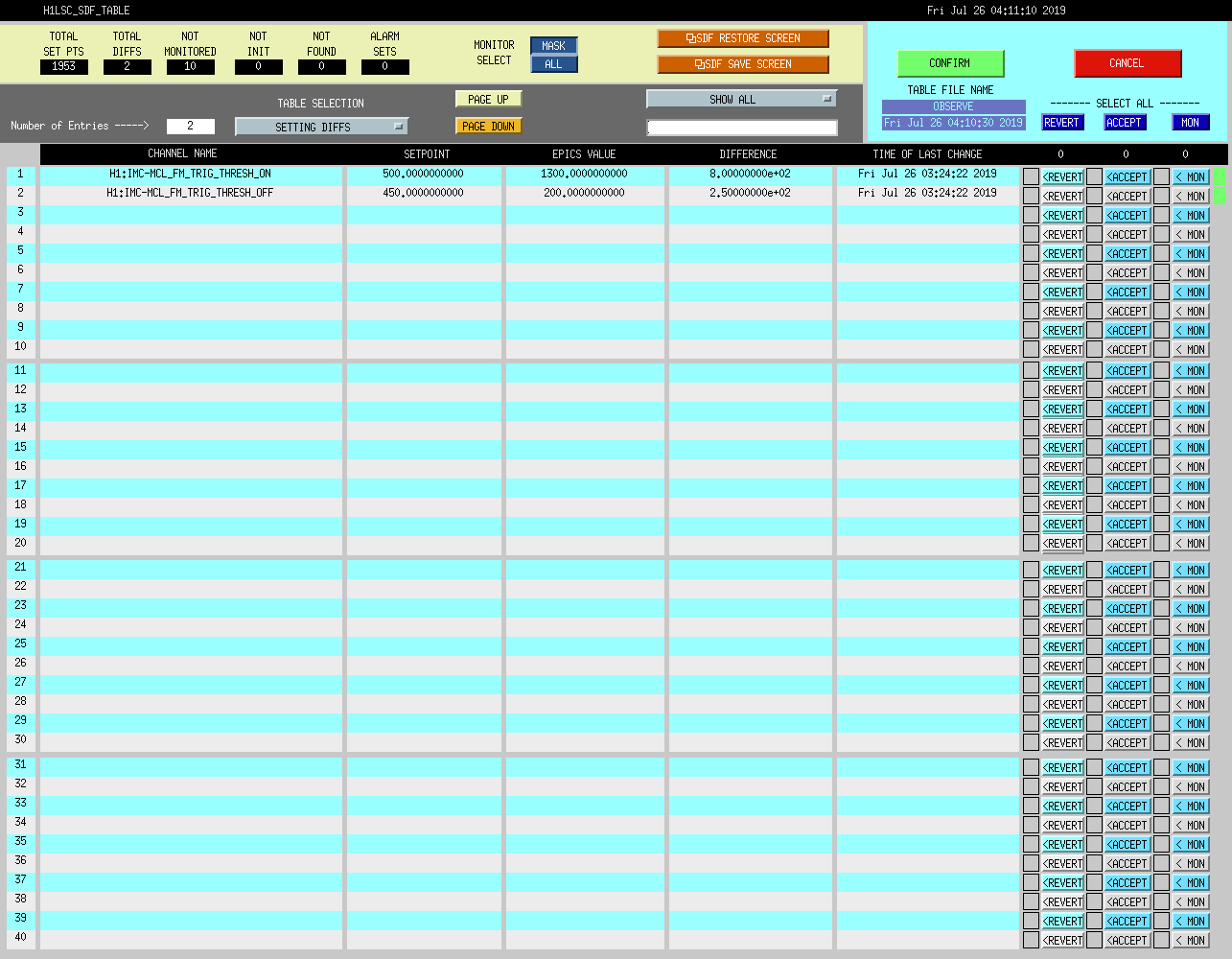
SDF diffs accepted (images below)

11:11 H1 back to Observing


Images attached to this report
H1 General
edmond.merilh@LIGO.ORG - posted 00:17, Friday 26 July 2019 (50834)
Shift Transition - Owl

TITLE: 07/26 Owl Shift: 07:00-15:00 UTC (00:00-08:00 PST), all times posted in UTC
STATE of H1: Observing at 116Mpc
OUTGOING OPERATOR: Travis
CURRENT ENVIRONMENT:
    Wind: 5mph Gusts, 4mph 5min avg
    Primary useism: 0.01 μm/s
    Secondary useism: 0.06 μm/s
QUICK SUMMARY:

Pretty beautiful clear night. Calm winds. ITMX Mode 13 rung up over refernce zbout 9 e-17 but trending downward as per ndscope. Range seemingly not affected.


H1 General (DetChar)
travis.sadecki@LIGO.ORG - posted 00:00, Friday 26 July 2019 (50833)
Ops Eve Shift Summary

TITLE: 07/26 Eve Shift: 23:00-07:00 UTC (16:00-00:00 PST), all times posted in UTC
STATE of H1: Observing at 117Mpc
INCOMING OPERATOR: Ed
SHIFT SUMMARY:  Locked for my entire shift and in Observing for most of it after PEM measurements completed.  No issues to report.
LOG:

23:36 Kyle back from MY

0:46 Switched SEI Config to EARTHQUAKE for 5.1 EQ in California.  

1:14 SEI Config back to WINDY

H1 PEM (Lockloss, PEM)
matthew.ball@LIGO.ORG - posted 17:26, Thursday 25 July 2019 - last comment - 10:30, Friday 26 July 2019(50829)
Power glitch and Lock Loss

M. Ball

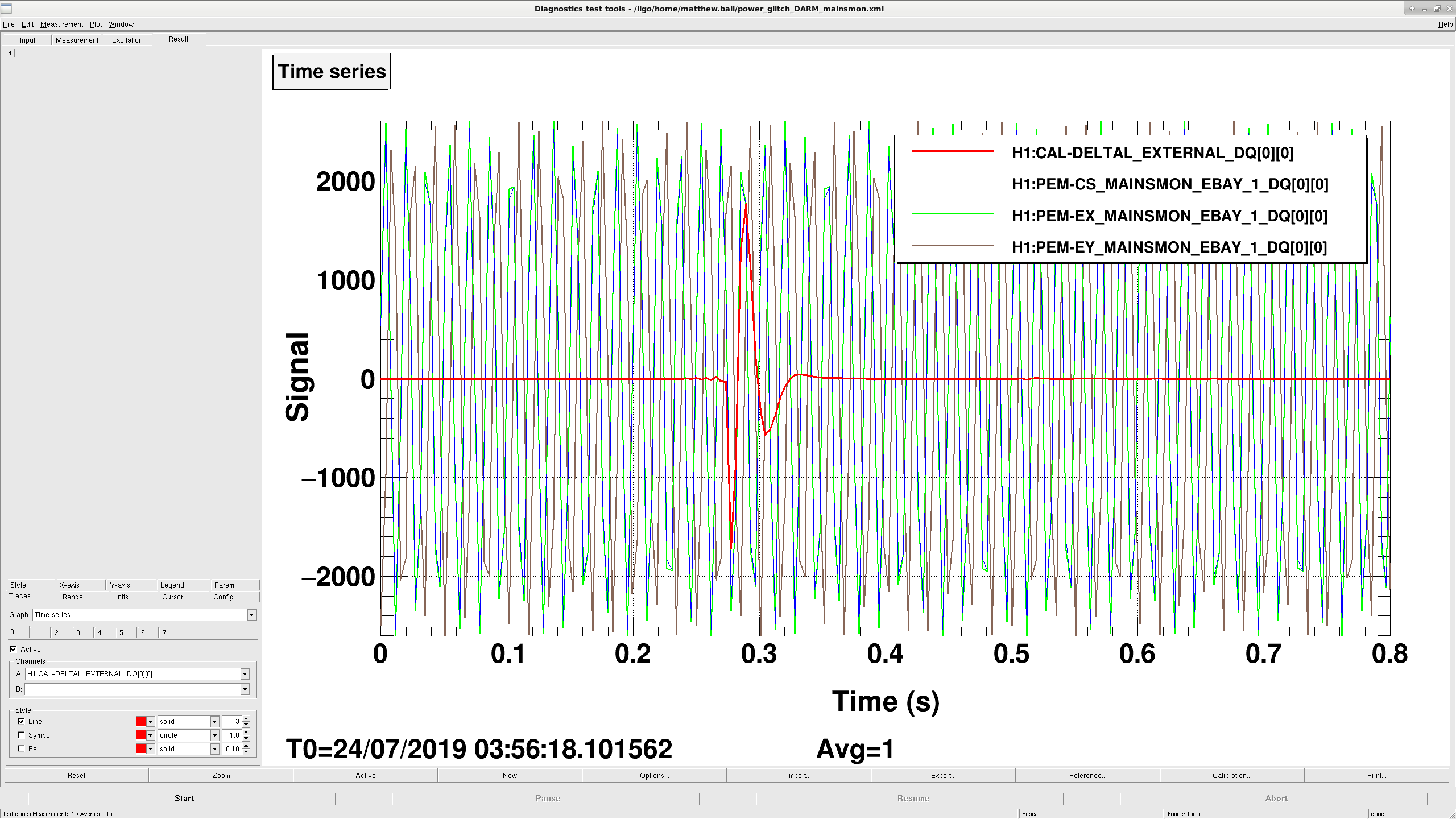
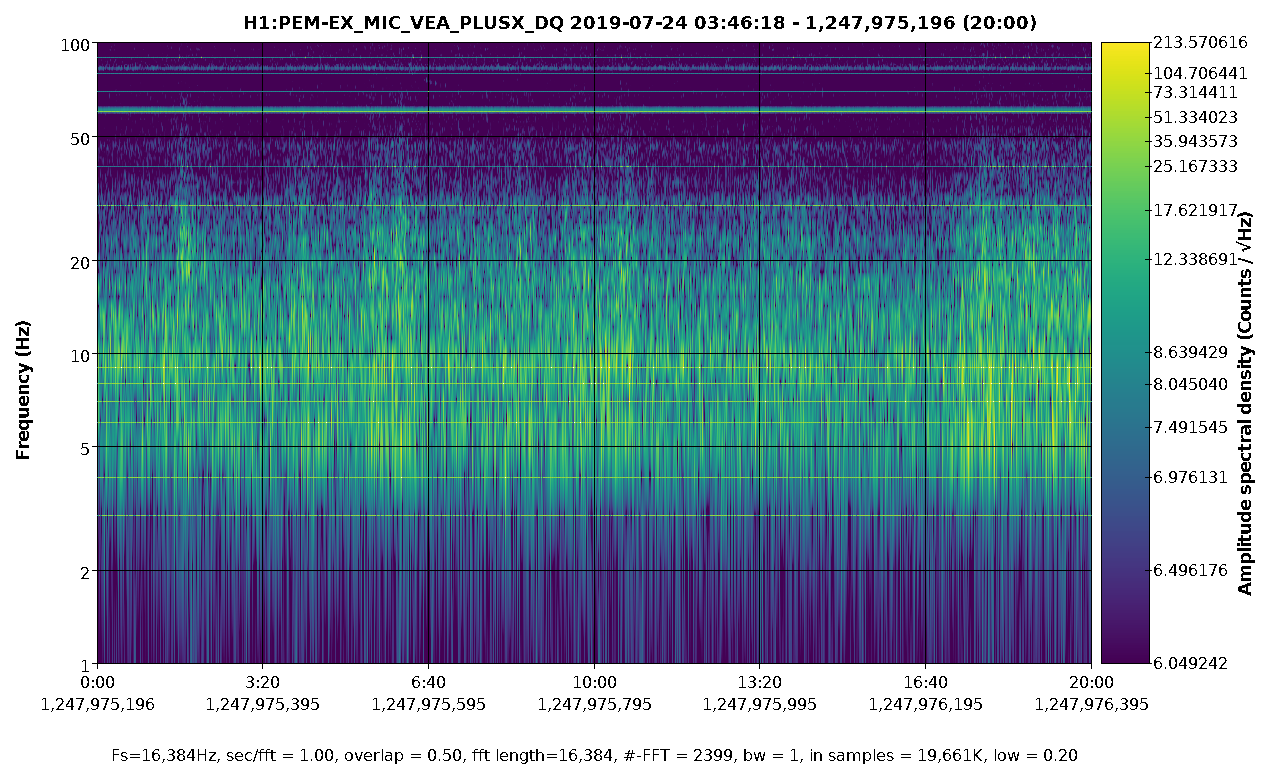
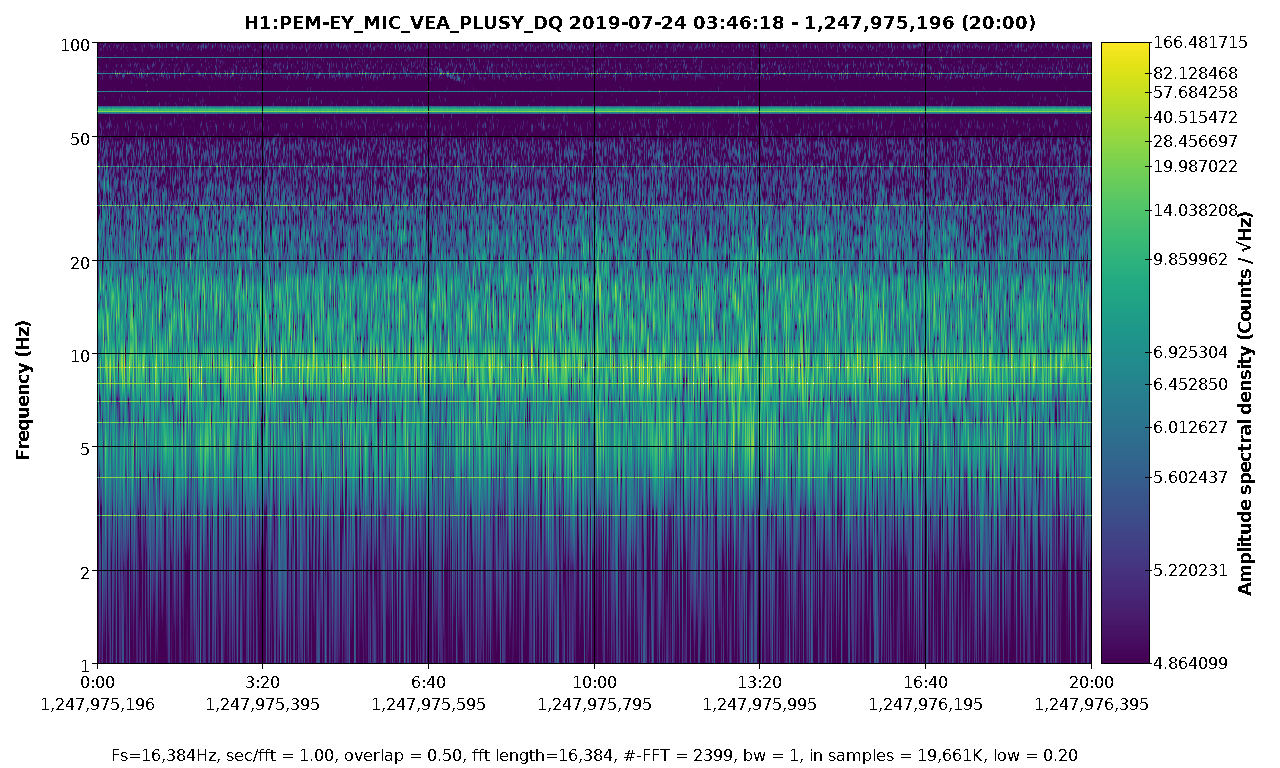
I looked at the electrical voltages measured at the two end stations and the corner station during the lockloss associated with the power glitch during the thunderstorm on 7/24 at 3:56 UTC.

I have attached an image of the voltage signals at these stations and DARM during the glitch showing little to no power dip during this time. Unfortunately, the sample rate of the voltage monitors is too low to see full oscillations, so I can only say with confidence there was less than 10% dip in power.

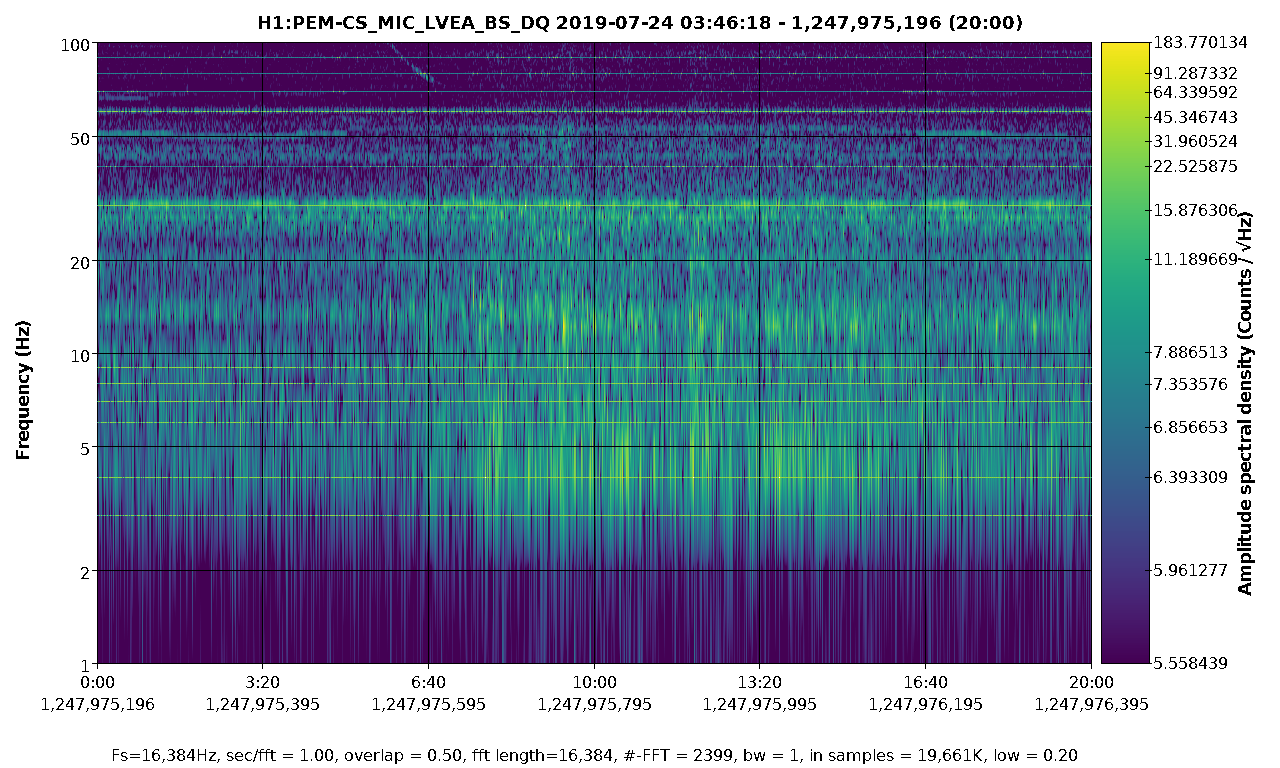
I have also attached microphone spectrograms from 10 minutes on either side of the lock loss, and there are no signs of thunder around this time.

Images attached to this report
Comments related to this report
arnaud.pele@LIGO.ORG - 10:30, Friday 26 July 2019 (50842)

The lockloss from 03:56 seems to be from saturations of EX because of wind, see 50780.

H1 ISC
jenne.driggers@LIGO.ORG - posted 16:37, Thursday 25 July 2019 - last comment - 11:46, Monday 29 July 2019(50823)
New align SR2 state in ALIGN_IFO

I have created a new set of states for the ALIGN_IFO guardian to do the alignment of SR2 with SRM misaligned.  This is something that operators often do by hand when the SRC won't lock.  I have not yet tested these states, but hope to on Tuesday when we're recovering from maintenance, or next time I'm around that we need to do an alignment. Once the states are tested we can add some logic to TJ's INIT_ALIGN guardian to give up on SRC locking after some seconds of trying, do SR2 alignment, then go back to SRC alignment.

Comments related to this report
jenne.driggers@LIGO.ORG - 11:46, Monday 29 July 2019 (50893)

[TJ, Jenne]

We took ~5 min during an initial alignment to commission the new SR2 alignment states.  The states seem to work well, although I need to think more carefully about the guardian paths to get to them.  I have also confirmed that the initial alignment and DRMI guardians reset the SRC1 and SRC2 filter states and in/putput matrices properly after this state is run.

With a bit more thinking on the path situation, we should be able to now include this as part of the auto-initial alignment guardian if SRY isn't locking on its own.

H1 General
travis.sadecki@LIGO.ORG - posted 16:26, Thursday 25 July 2019 (50832)
Observing at 23:21 UTC

Finally!!

H1 General
travis.sadecki@LIGO.ORG - posted 16:02, Thursday 25 July 2019 (50831)
Ops Eve Shift Transition

TITLE: 07/25 Eve Shift: 23:00-07:00 UTC (16:00-00:00 PST), all times posted in UTC
STATE of H1: Commissioning
OUTGOING OPERATOR: TJ
CURRENT ENVIRONMENT:
    Wind: 14mph Gusts, 11mph 5min avg
    Primary useism: 0.02 μm/s
    Secondary useism: 0.05 μm/s
QUICK SUMMARY:  H1 is finally back to locking.  Currently in Commissioning mode for PEM work.

LHO General
thomas.shaffer@LIGO.ORG - posted 16:00, Thursday 25 July 2019 (50807)
Ops Day Shift Summary

TITLE: 07/25 Day Shift: 15:00-23:00 UTC (08:00-16:00 PST), all times posted in UTC
STATE of H1: Commissioning
INCOMING OPERATOR: Travis
SHIFT SUMMARY: Currently commissioning in low noise. Lock reaqusition was a bit tricky, ALSX WFS would pull away whenever it would lock. I got around this by turning off the DOF1 P filter and then turning it on after the rest of the WFS had settled down a bit. Then DRMI looked well aligned and had good triggers, but it just wouldn't hold. An automatic PRMI, then a bit of SRM Y finally let us aquire DRMI. Violin mode 13 on ITMX is a bit elevated, and I have yet to find a good gain/phase setting. Hopefully Travis can crush this mode.
LOG:

H1 ISC
jeffrey.kissel@LIGO.ORG - posted 09:42, Thursday 25 July 2019 - last comment - 15:45, Thursday 25 July 2019(50811)
Still suspecting ISS: ISS QPD Alignment Trend
J. Kissel

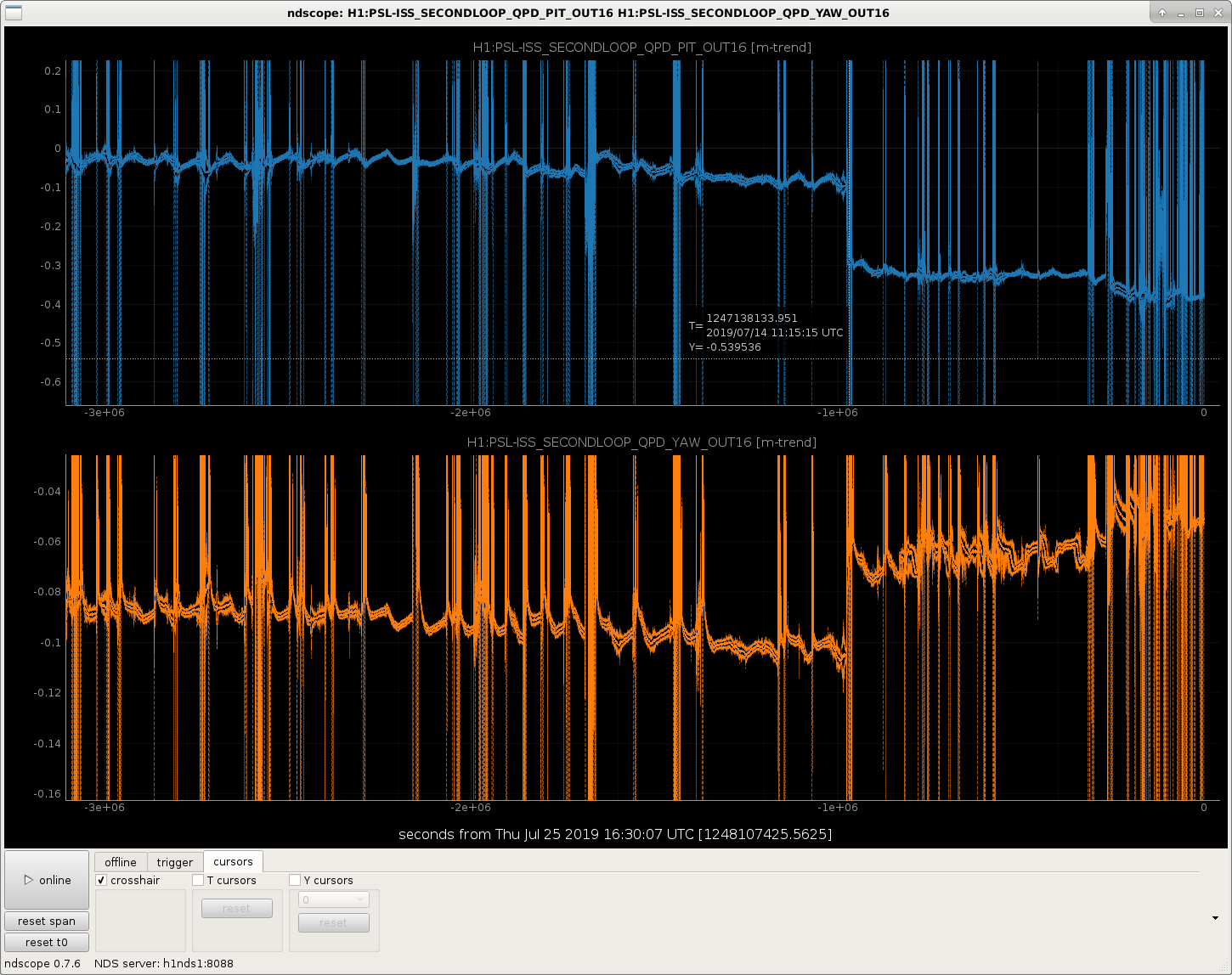
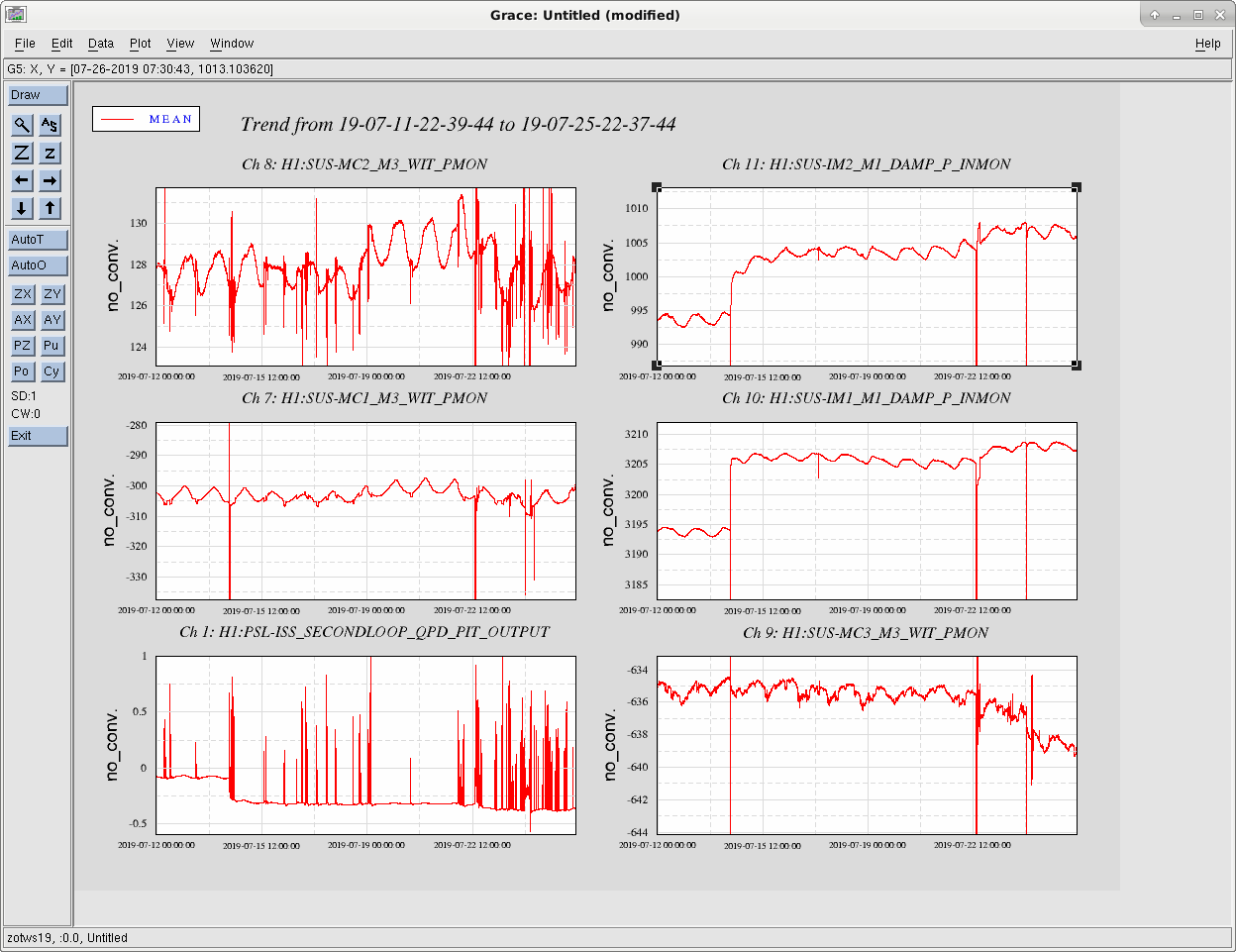
Having lost lock in the same "within a few seconds" timescale from doing nothing but rotate the rotation stage and adjust the "POWER SCALE" -- i.e. take the LASER_PWR -- guardian from POWER_2W to POWER_3W, I'm suspecting PDs falling off of useable area. We not the that IMC global position has moved quite a bit (at the ~10 urad level) from last week -- and since then we've had two major crashes (dolphin crash on Monday, and ) -- Here's a trend of the ISS QPDs. There's a major change on 2019-07-14 ~11:53 UTC (Sunday Jul 14 2019 04:53:00 PDT), but nothing recently of note.

Attached is a trend from June 19 2019 to now (prior to June 19th, we're stable at the Jun 19th value since the start of O3).
Images attached to this report
Comments related to this report
cheryl.vorvick@LIGO.ORG - 15:45, Thursday 25 July 2019 (50830)

IM1 and IM2 shifted in pitch, alogged here: alog 50571, and I called in, and talked to the operator, to make them aware.

Images attached to this comment
Displaying reports 39621-39640 of 88963.Go to page Start 1978 1979 1980 1981 1982 1983 1984 1985 1986 End