TITLE: 06/20 Day Shift: 15:00-23:00 UTC (08:00-16:00 PST), all times posted in UTC STATE of H1: Commissioning INCOMING OPERATOR: Jeff SHIFT SUMMARY: Sheila and Georgia currently taking IFO to observing without squeezing for noise budget measurements. LOG: 16:25 UTC Sundae to optics lab 16:41 UTC Corey filling small LN2 dewar 17:06 UTC Lock loss 17:08 UTC Filiberto to vault 17:09 UTC Corey done 17:37 UTC Chandra, Kyle and Gerardo to mid Y 17:40 UTC Filiberto back 17:46 UTC Lockloss from ENGAGE_SOFT_LOOPS 18:08 UTC Dave to end X 18:10 UTC Karen to mid Y 18:17 UTC Dave at end X 18:28 UTC Dave back 18:31 UTC GRB alert (E336744) Unlocked, ignoring 18:45 UTC Observing 19:29 UTC Ace through gate to end X to fix portapotty 19:44 UTC Ace at end X 19:45 UTC Portapotty stood back up 19:46 UTC Portapotty being sprayed down 19:51 UTC Ace leaving end X 20:06 UTC Tour outside control room 20:11 UTC Ace leaving site 21:20 UTC Ken to mechanical warehouse 21:30 UTC Mike leading tour down x arm (in car) 21:31 UTC Ken done 21:46 UTC GRB alert (E336758) Confirmed with LLO. LLO says to stand down. Called Mike, to avoid driving down arm. Says he is at overpass and will return to the control room. EDIT: Just realized I had forgotten to set INJ_TRANS to INJECT_KILL. Too late at this point. 22:16 UTC Kyle done at mid Y 22:27 UTC Mike leading tour out of control room 22:56 UTC Sheila and Georgia taking IFO to observing without squeezing
Here are some MC_F spectra.
Modal analysis of the reference cavity can be found at the 40m wiki.
Here is the same spectrum with updated calibration. I neglected the 2 poles around 15kHz (Change 3 in E1900103).
The calibration for MC_F is:
In transmission of the IMC the cavity pole at 8.8kHz needs to be added.
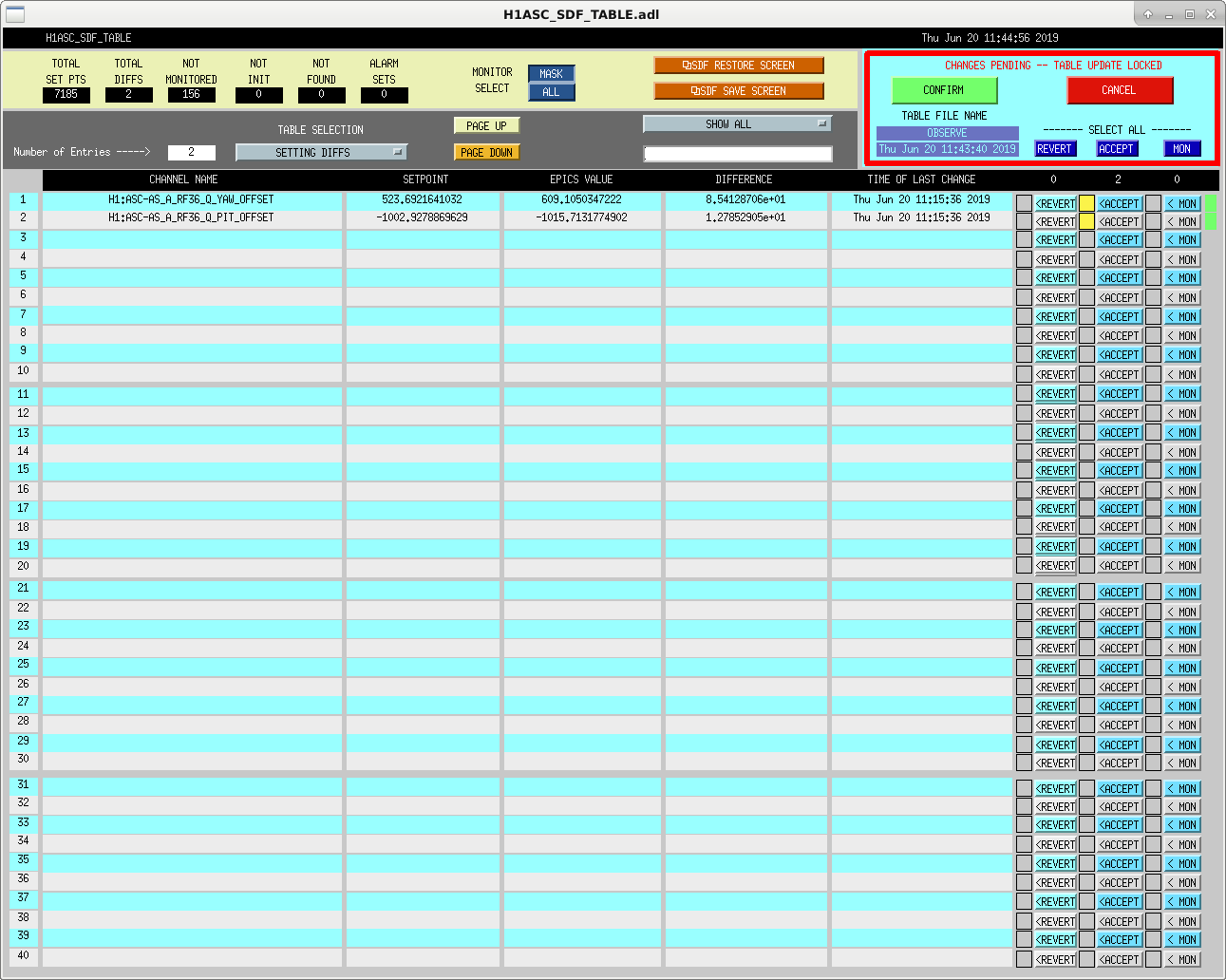
18:45 UTC Accepted attached ASC SDF differences.
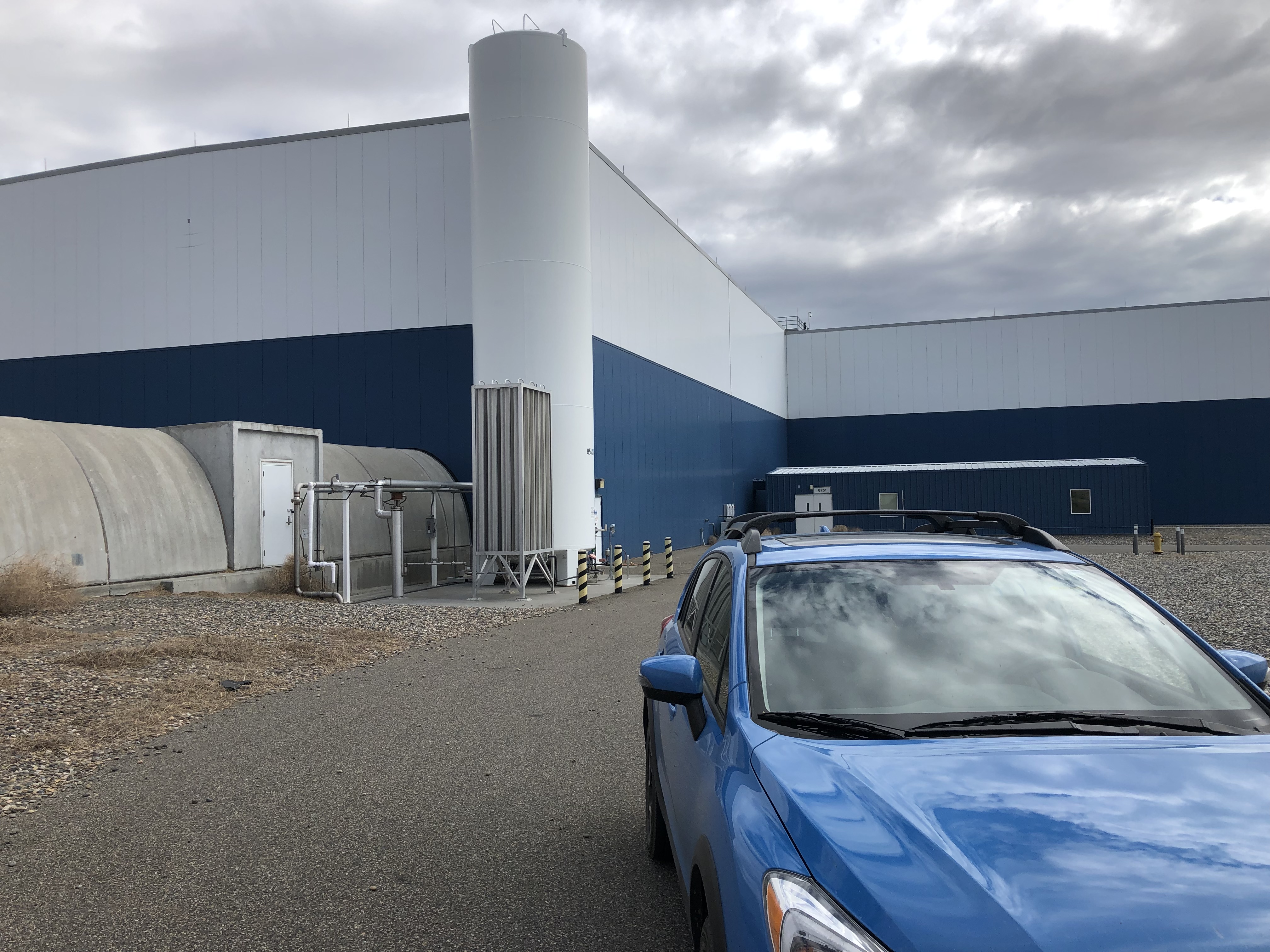
16:56 - 17:05 UTC: Vehicle near CP1 to fill small LN2 dewar for outreach.
I needed to fill our small LN2 dewar for an outreach event in a few hours & wanted to tag this activity under DetChar.
This activity is not on our Accepted/Not Accepted document (T1500425) for Observing Run activities, but when I asked the operator if it was OK, we had Robert nearby & were able to defer to him. He said this is fine. I mentioned driving my vehicle nearby and his only concern was a vehicle driving on the inner road (near H2 Electronics room) since this is closer to H1 than the standard Y-arm path. I decided to avoid that path as much as possible and drove on the Y-arm road and backed in (photo attached) toward CP1 a little bit.
Just to be mindful of rare activities such as this, Robert asked me to alog the times of this activity.
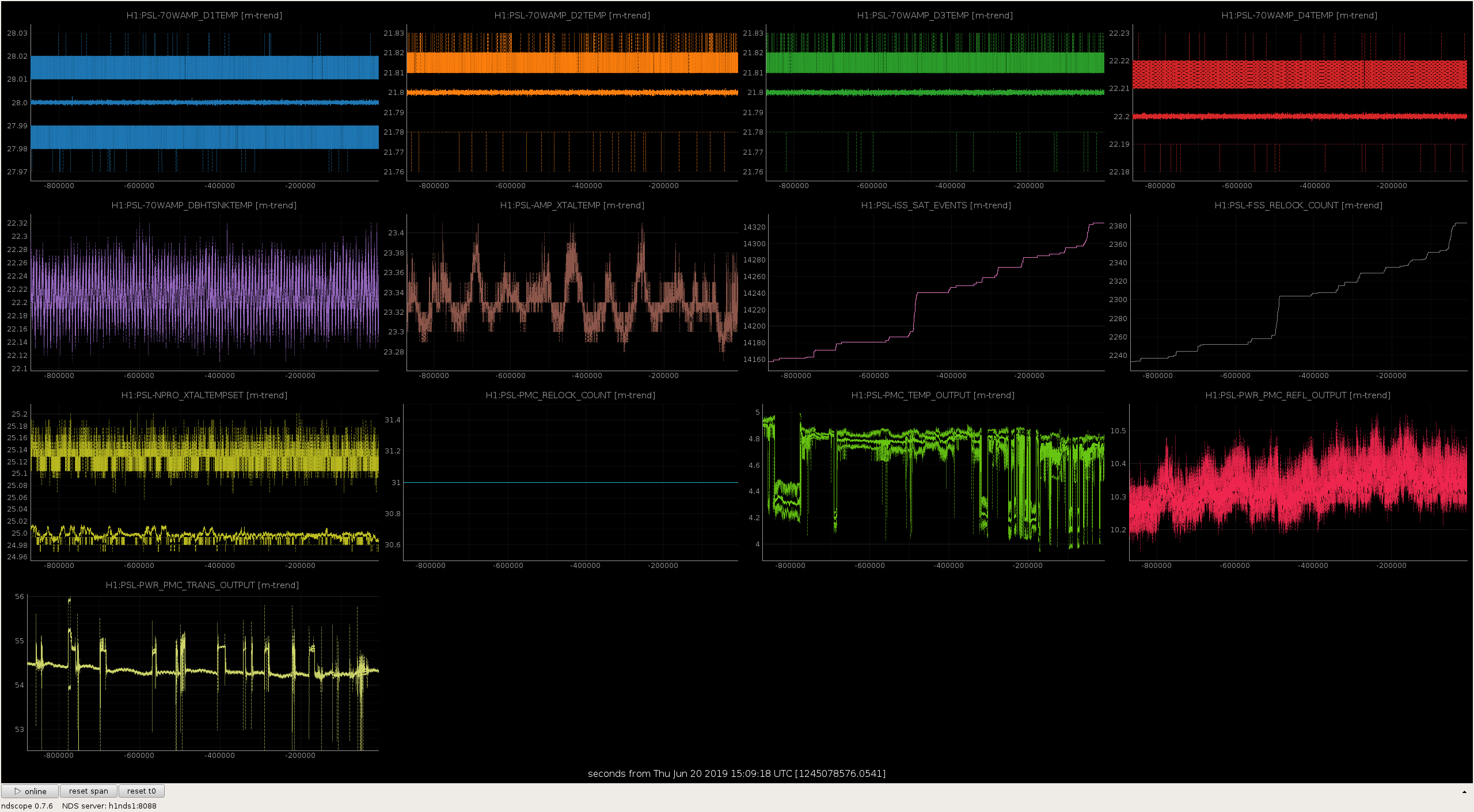
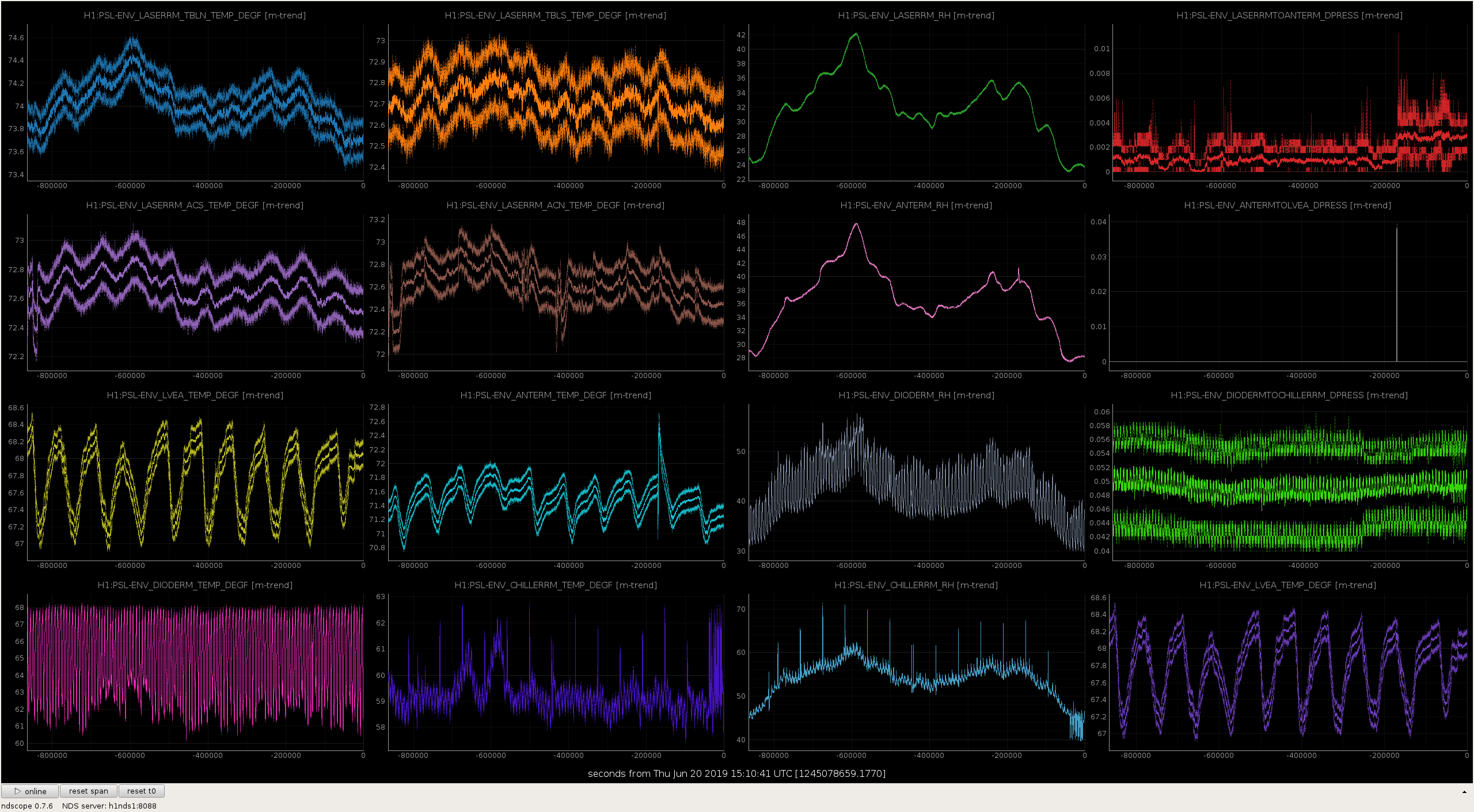
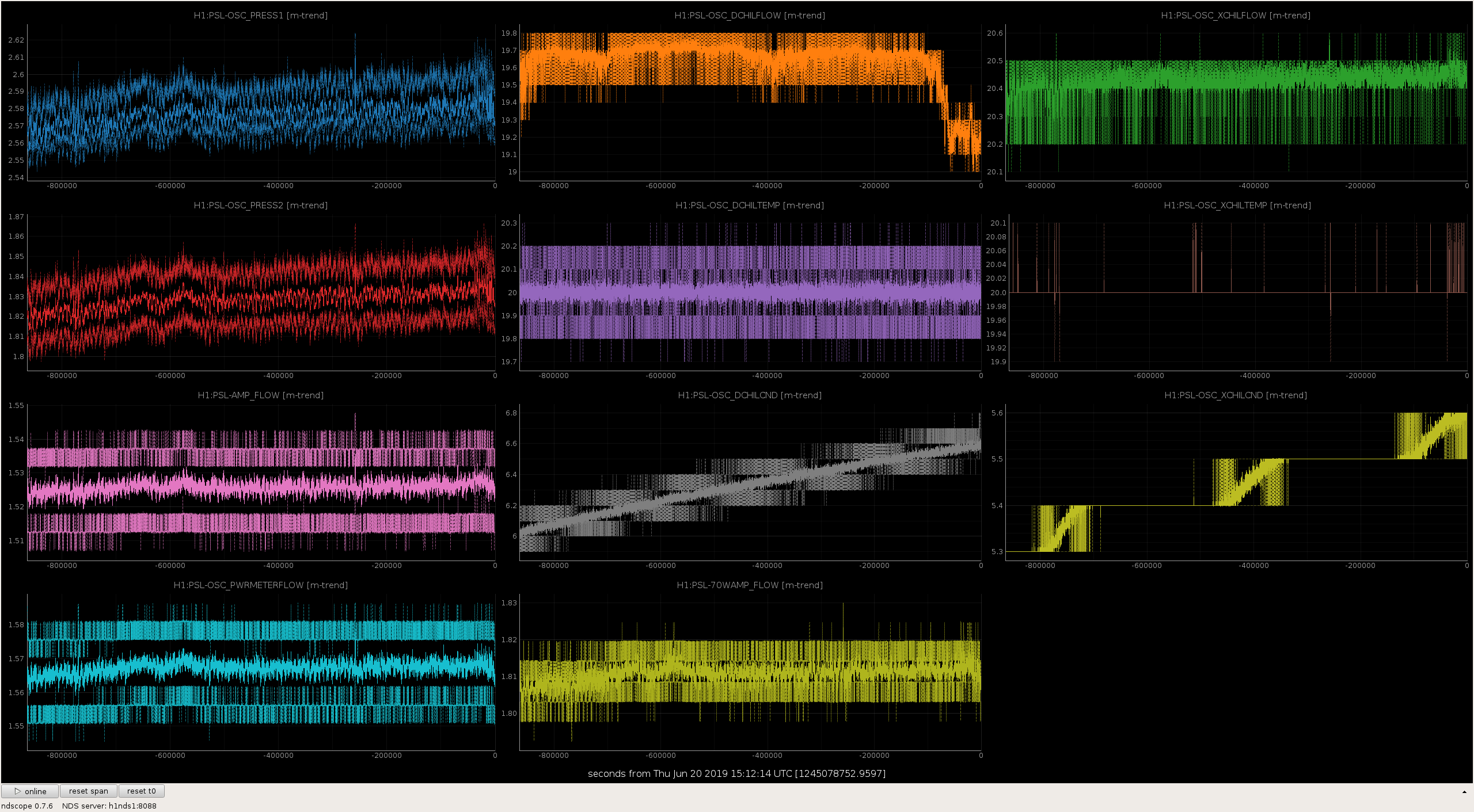
All plots in good nominal ranges
TITLE: 06/20 Day Shift: 15:00-23:00 UTC (08:00-16:00 PST), all times posted in UTC
STATE of H1: Observing at 113Mpc
OUTGOING OPERATOR: Niko
CURRENT ENVIRONMENT:
Wind: 19mph Gusts, 16mph 5min avg
Primary useism: 0.04 μm/s
Secondary useism: 0.07 μm/s
QUICK SUMMARY:
No issues.
TITLE: 06/20 Owl Shift 07:00 – 15:00 (00:00-08:00), all times posted in UTC
STATE of H1: Observing
INCOMING OPERATOR: Patrick
SHIFT SUMMARY: Quiet shift with a few GRB’s, medium winds, and one EQ scare that turned out to be no big deal
LOG:
07:00 (00:00) Start of shift
08:14 (01:14) Switching from WINDY to EARTH_QUAKE mode for an incoming 5.7 from Niue
08:19 (01:19) Switching back to WINDY after lackluster EQ
12:10 (05:10) GRB (E336722). Trigger duration too long, can be ignored
13:53 (06:53) GRB (E336728). Trigger matches criteria, standing down for 15 minutes
14:18 (07:18) Peter to Optics Lab
15:00 (08:00) End of shift
DQ Shifter: Evan Goetz DQ Shift Mentor: Beverly Berger LSC Fellow(s): Laurence Datrier DQ shift wiki page Summary (highlights) of the shift: * LHO cluster problems crashed summary pages Friday and recovery is ongoing. This was due to the large number of files from summary pages/plots and other DetChar tools (~500 million combined). There are some missing or incomplete plots starting Thursday, but many more Friday/Saturday. Omicron and Hveto are incomplete or non-existant from Friday - Sunday. * Observing summary: (71.06 + 59.53 + 62.41+ 98.06 + 35.29 + 90.35 + 67.60) / 7 = 69.19%; more or less in line the mean observing time for H1 during O3 thus far. * Several earthquakes in the latter part of the week took away from observing time. Also, when H1 was locked or re-locked near earthquake times, the whistle glitches were much more problematic because of the increased ground motion. * Whistle glitches remain problematic for the early part of the week [Omicron problems prevented late week Hveto updates] as evidenced by round 1 or 2 channel winner LSC-REFL_A_LF_OUT_DQ. The other ongoing common round 1 or 2 winner remained LSC-POP_A_LF_OUT_DQ. * Low frequency narrow spectral artifacts in H1 remain problematic. They are quite dynamic (changing day by day) and very prevalent below 100 Hz compared with L1. * The 48 Hz feature is still present with varying amplitude, as reported by previous DQ shifts. I looked through some accelerometer spectra and I am unsure if I see correlation by eye. I will continue to look in more detail. * Several other features seem to have cropped up this weekend at the start of lock stretches, but then seem to reduce in amplutide during the course of a lock stretch (~550 Hz, ~850 Hz, possible violin harmonic near 1010 Hz) - see below. * PCALX showed some differences in the spectrum [likely not immediately problematic for h(t)], perhaps indicative of an unstable optical follower servo as resetting the offset has helped the stability. * Later in the week violin resonances seem more rung up at the start of locks than early in the week. Note that I'll update the shift summary once some of the backfilled summary pages are updated.
Summary pages have mostly been recovered. So a minor addendum: * Observing summary: (71.06 + 59.53 + 62.41+ 98.06 + 57.92 + 90.35 + 67.60) / 7 = 72.42%; a little higher than the mean observing time for H1 during O3 thus far. * The 48 Hz feature is still present with varying amplitude, as reported by previous DQ shifts. I looked through PEM summary page spectra and time series, but I do not see anything that obviously correlates by eye. Further investigation is needed.
One comment about the lines below 100 Hz which are not present at LLO.
Marie made a plot comparing HAM6 seismometers at LLO and LHO (see figure 2) 46603 Are the extra lines in the HAM6 GS13s at the same frequencies as the extra lines in DARM?
Around 4:17 pm local ion pump #6 in corner station tripped. I restarted the power supply and it seems to have recovered normally down to 162 micro-amps and falling.
FRS ticket 13069, closed.
https://services.ligo-la.caltech.edu/FRS/show_bug.cgi?id=13069
18:31:36-18:32:58 Out of OBSERVING
Once again H1 was dropped out of OBSERVING (for ~82 secs) due to the another case of the laser unlocking (lasted ~6hrs since last occurence) as mentioned in Jim's shifts. Saw same symptoms as Jim:
[Aidan]
TCS crew is looking into this.
The issue of the TCS CO2 laser reacquiring lock is a known operational state. The instances in which it has occured in the last few years are summarized in the following table. Except for recently, it looks like it's occuring roughly once a month during observing.
| Date | aLOG | Note |
| 13-June-2019 | 49877 | Several drops from OBSERVING |
| 28-May-2019 | 49501 | Manual set of lock-point |
| 25-April-2019 | 48775 | Dropped out of OBSERVING |
| 29-Mar-2019 | 48017 | Several drops from OBSERVING |
| 6-Jan-2019 | 46251 | CO2 lock-loss issue during commissioning |
| 5-June-2018 | 42339 | Restart of Guardian node |
| 6-May-2017 | 36059 | Dropped out of OBSERVING |
| 4-April-2017 | 35329 | Dropped out of OBSERVING |
| 16-Mar-2017 | 34871 | Dropped out of OBSERVING |
| 3-Feb-2017 | 33875 | Dropped out of OBSERVING |
| 24-Jan-2017 | 33576 | Dropped out of OBSERVING |
| 18-Dec-2016 | 32700 | Dropped out of OBSERVING |
| 1-Dec-2016 | 32090 | Dropped out of OBSERVING |
| 12-Nov-2016 | 31440 | Dropped out of OBSERVING |
| 2-Feb-2016 | 25332 | Finalizing initial installation |
| 30-Jan-2016 | 25267 | Initial installation |
Now associated with FRS ticket 13095.
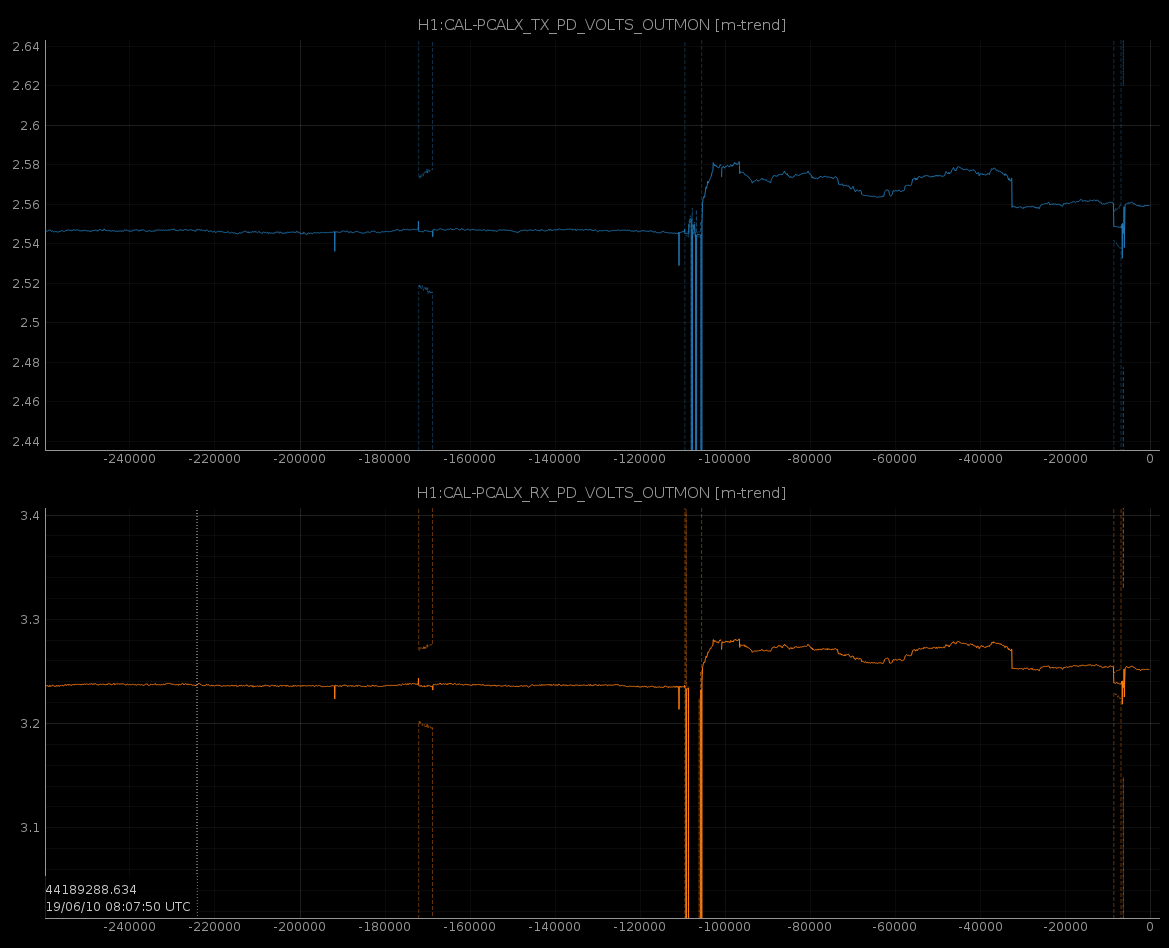
The Pcal reciever-side photodiode at EX is showing unwanted spikes at various frequencies. Jeff helpfully pointed out that these changes started after we performed an end station calibration during maintenance yesterday. Looking at the spectra of the transmitter-side photodiode and reciever-side photodiode before and after maintenance (pcalx_spec.pdf), we can see that there is indeed a significant difference, and the fact that we see it in both photodiodes tells us that these changes are happening inside the transmitter module.
Looking average time series of both photodiodes before and after maintenance (pcalx_trends.png) shows that the voltage output of these sensors is much less stable after we perform the end station calibration.
Given that the voltage on the photodiodes (and hence the laser power) appears to to be unstable and larger than before, I would hazard a guess that the issue is with the Optical Follower Servo and not with the laser dying. However, I'm not sure how our work yesterday would have caused this. We will continue to investigate.
Reduced offset on PCALX medm screen from 3.7 to 3.1, the excitations were saturating the OFS. This seems to have solved the issue for now.
Now associated with FRS 13112.
~22:03 Seismon: Jenne noticed DIAG_MAIN gave note about "Seismon system not updating"
Open/Close FRS 13108---DaveB, can we reduce or elliminate these freezes?
Summary: Looking over O3 H1 data so far, spectral lines in 1800 s long Fourier transforms continue to be problematic and will be degrade astrophysical results of continuous gravitational wave searches. It would be helpful if commissioning/engineering teams can compare with what the LLO team has done in order to mitigate most spectral contamination. I'll note that I'm getting greedy because O3 data is already much better for spectral content than O2 data for both detectors (and better broadband sensitivity!). Again, my thanks to the entire team on the progress over O2! When I see how clean of spectral features L1 data appears compared to H1, however, I want both detectors to have equally clean data. I hope some improvements to hardware configuration will mitigate the H1 spectral lines, but this needs attention from boots on the ground at LHO. Details: Keith Riles has a very nice week-by-week and running cumulative pages for looking at H1 and L1 spectral data computed from the standard set of 1800 s long, Tukey windowed Short Fourier Transforms--SFTs (see here for H1 and here for L1). I want to draw attention in particular to two problematic features that require attention: 1) Below 100 Hz, the prevalence of lines in H1 data is much greater than L1. See attached figure 1 (H1) compared with figure 2 (L1) showing both the most recent week of data and the cumulative O3 data up to now. 2) The behavior of the spectral features is quite dynamic from day to day and week to week. This can be seen, for example, in attached figure 3 showing the ratio of this week's H1 data divided by the cumulative H1 data. Spikes above the mean show an increase in line activity, while spikes dropping below the mean show a decrease in line activity. Every week shows a slightly different figure, meaning the lines and/or coupling is changing with time. Figure 4 shows the L1 data, which is much better behaved, probably because there are so few lines present in the data. These features are likely going to limit some searches for long duration gravitational wave signals, and may obscure putative signals that could be detectable during O3. With lines present in the data, especially when the lines are dynamic as they appear to be in H1, will require changes to searches and increase the amount of time spent to deal with these artifacts in post-processing. With improvements (as demonstrated by L1), the searches will be more sensitive and can be published more timely.
FRS ticket 13115 created, link given below,
https://services.ligo-la.caltech.edu/FRS/show_bug.cgi?id=13115
For other reasons, Marie made a comparison of HAM6 motion between L1 and H1, which shows many more lines at LHO than at LLO. Are there lines at the same frequencies as the lines in DARM? (I made this comment on a different alog of Evan's, but since this log is the one which is in FRS I am repeating it here.) https://alog.ligo-la.caltech.edu/aLOG/index.php?callRep=46603
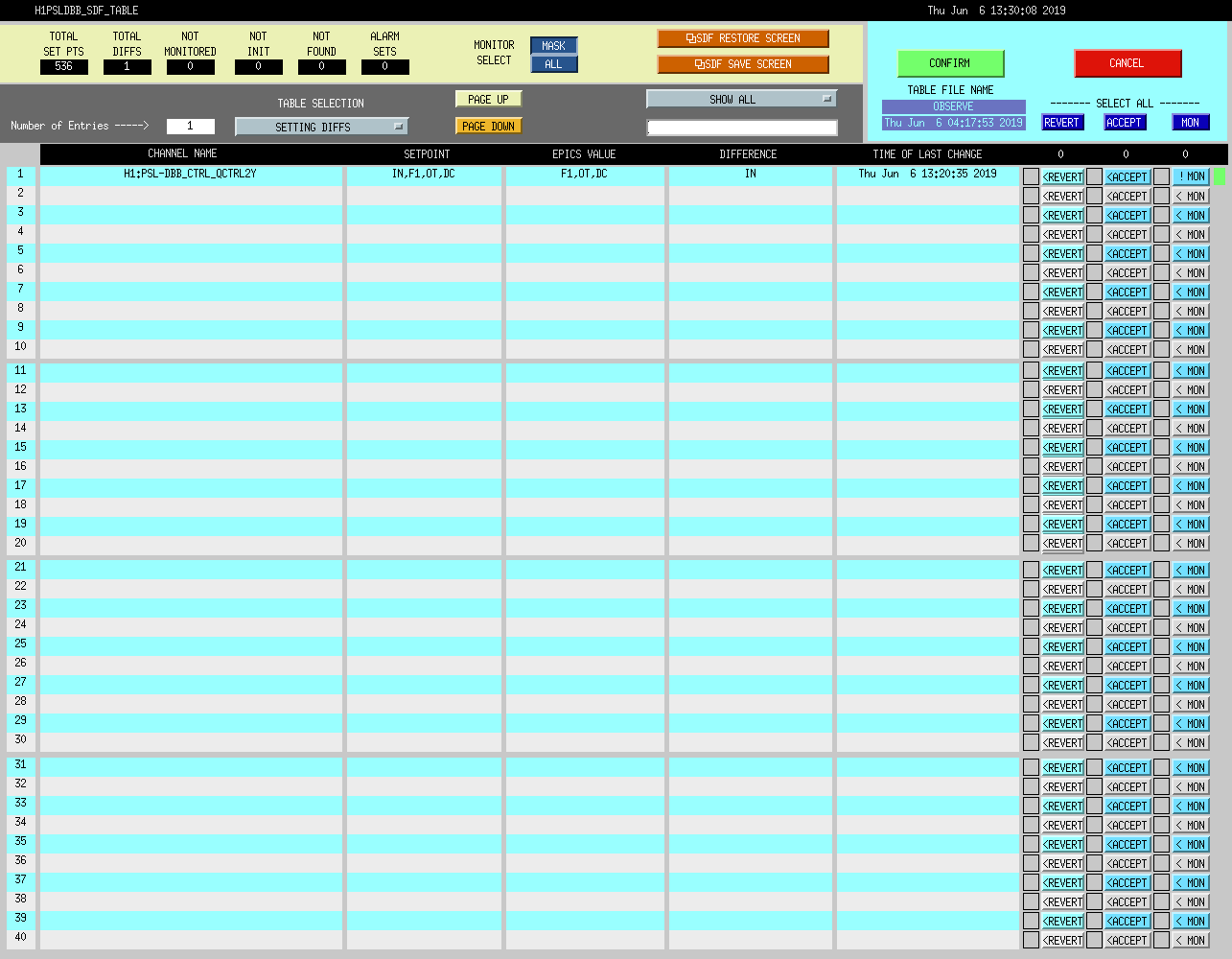
Apparently this occurred at 20:20 UTC. I had muted Verbal Alarms while Amber was in the control room recording and interview with a TV reporter and forgot to UNmute. Apologies for that one. The SDF diff that occurred is still a bit of a mystery and perhap[s be UNmonitored?
20:30 Accepted diff and returned to OBSERVING
The DBB is offline, not to mention physically no longer on the table.
Since the DBB is not a part of H1 operations, should we UNMONITOR? (Why did this change during OBSERVING?)
Yes, I think the DBB should be unmonitored. I don't know why it would have changed while we were in observe though.
Entered FRS ticket 13107 for this.
J. Kissel After restarting the front wall Main DELTAL EXTERNAL ASD figure of merit, I saw that PCALX did not show the expected high-frequency roaming line. A quick look at the PCALX overview, and it was easy to see that the optical follower servo (OFS, the intensity stabilization and linearization servo for PCAL) was railed. The main time-series trend on the overview, of the OFS PD -- H1:CAL-PCALX_OFS_PD_OUTMON -- was steady at -7.7 V, with no sign of the expected ~kHz oscillation. I trended back to find out when the OFS had railed, and it appears coincident with the Beckhoff restarts this morning at 15:06:46 UTC (08:06:46 PDT). The OFS PD went to zero then, and then a few minutes later (at 15:13:44 UTC, 08:13:44 PDT), after bouncing around between OFF and RAILED, it settled on RAILED. I fixed this by turning OFF, then turning ON the OFS loop, i.e. toggling the orange H1:CAL-PCALX_OPTICALFOLLOWERSERVOENABLE "loop enable" switch next to the diagram of the loop -- also on the PCALX overview. I did so at 23:11:55 UTC (16:11:55 UTC), before we resumed any observation ready segments, so this has no permanent impact on that quality of data. We should consider adding "check on the PCALs!!" to the recovery checklist after any maintenance day in which a Beckhoff restart has taken place. We should also add "Restart the wall FOMs!" to the recovery checklist after any maintenance day in which a DAQ restart has taken place. Such activities should be considered akin to a physical VEA sweep done at the close maintenance.
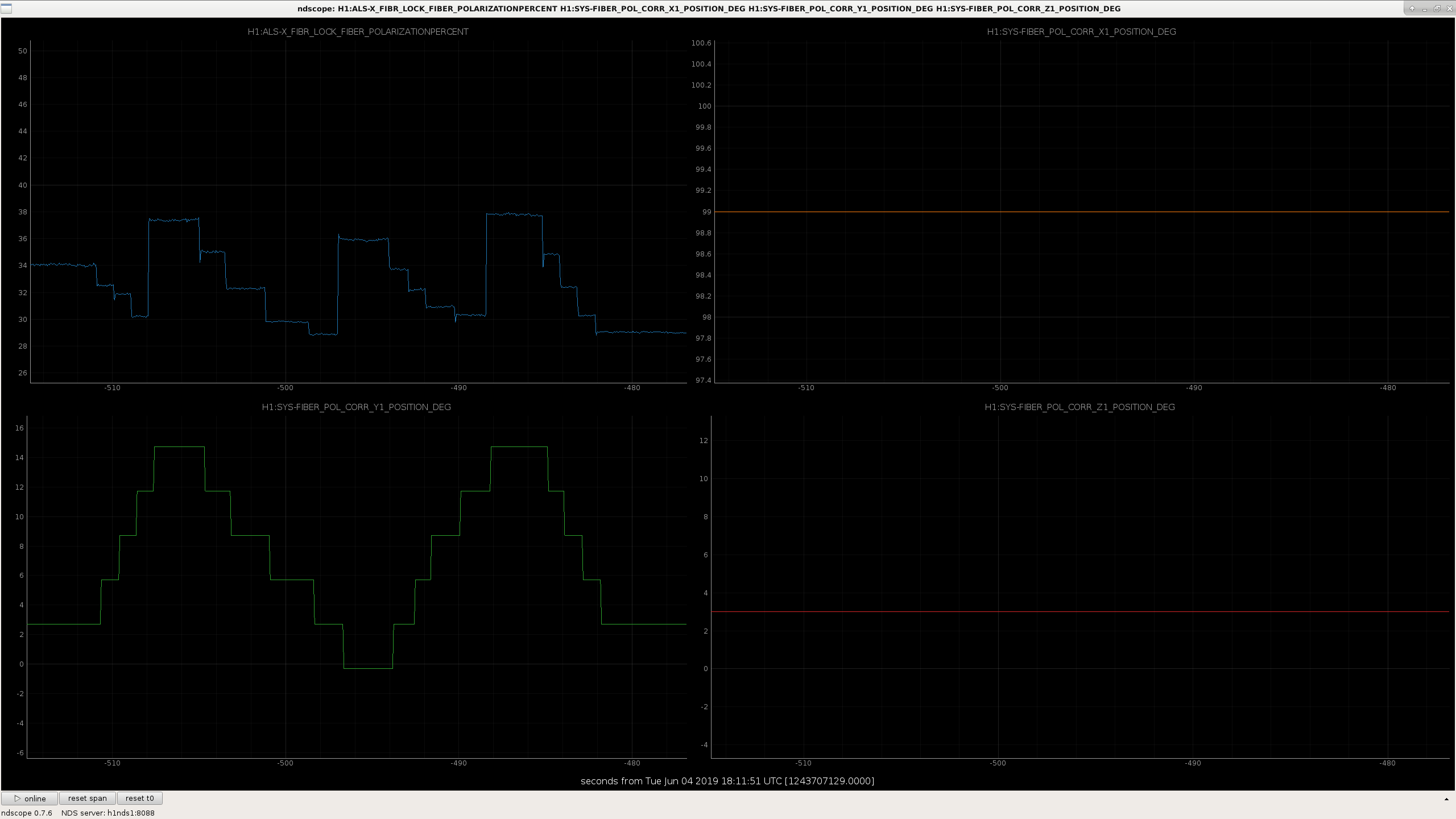
Operators have been saying that they have difficulty adjusting the ALS polarizations lately. I tried to adjust the Y fiber polarizaton today and saw the stange behavoir in the attached screenshot. There are certain steps that are not like the others, and seem to make a large jump in the polarization.
FRS ticket 13111
https://services.ligo-la.caltech.edu/FRS/show_bug.cgi?id=13111
After the laser power was reduced, there is no longer enough power coming out of SHG to deliver 20 mW into the fiber. This problem was compounded a few days ago when the offset to the power servo was reset to the wrong sign. Compared to the past, we currently run with about 70% of the power into the OPO (or ~14 mW into the fiber). The SHG output power currently reads about 26 mW when it was up 50 mW in the past. HW9 on ISCT6 needs to be adjusted.
FRS ticket 13109,
https://services.ligo-la.caltech.edu/FRS/show_bug.cgi?id=13109
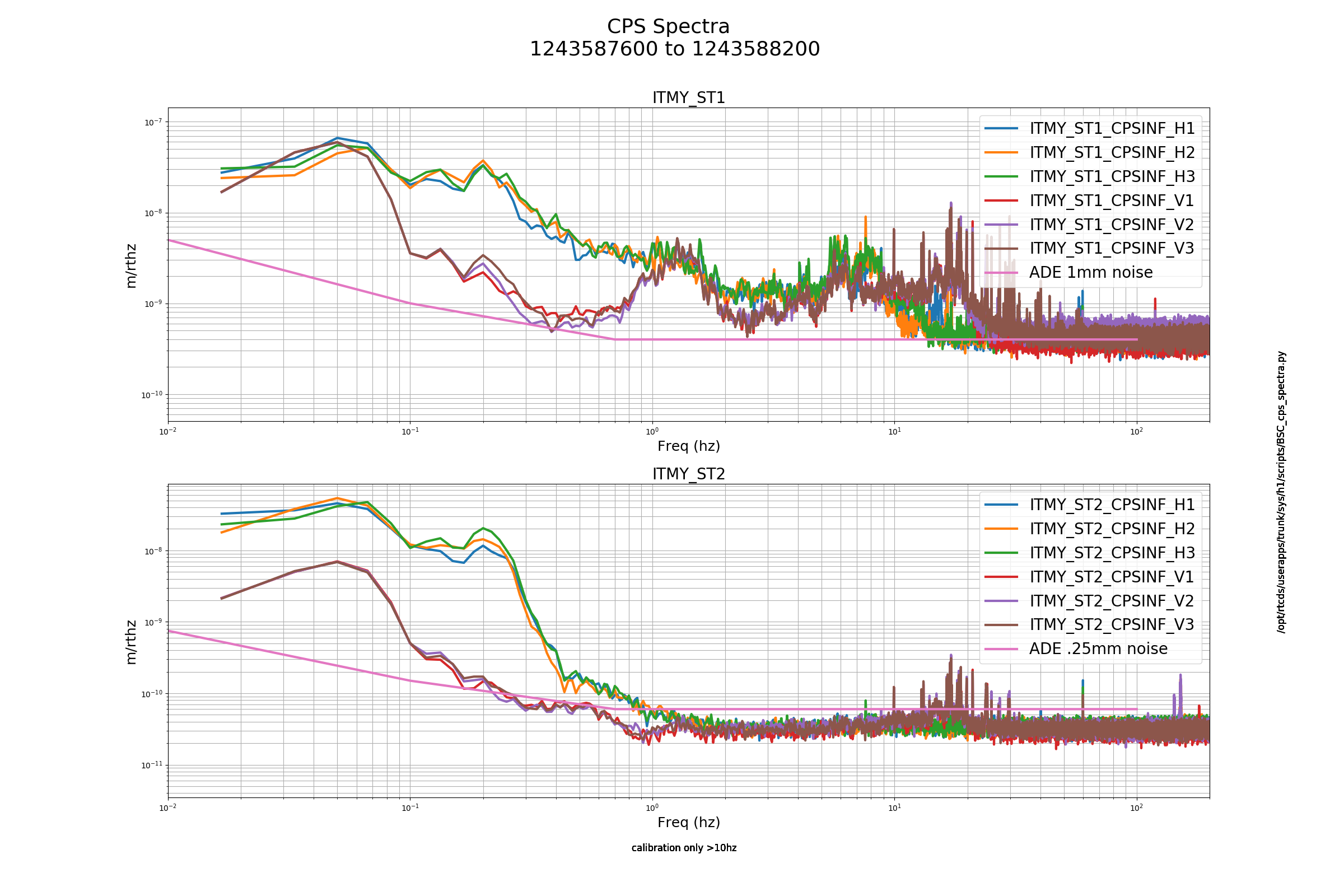
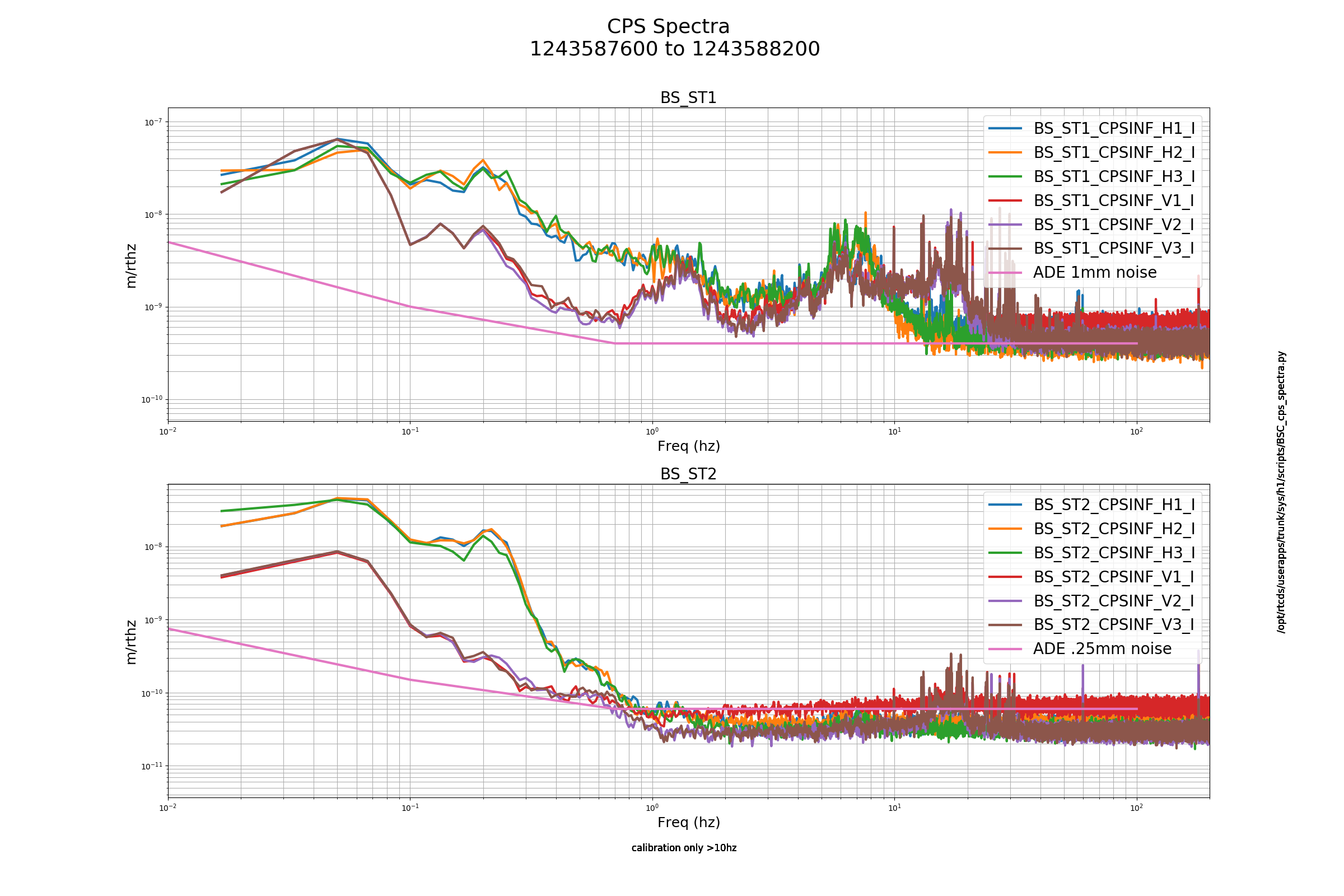
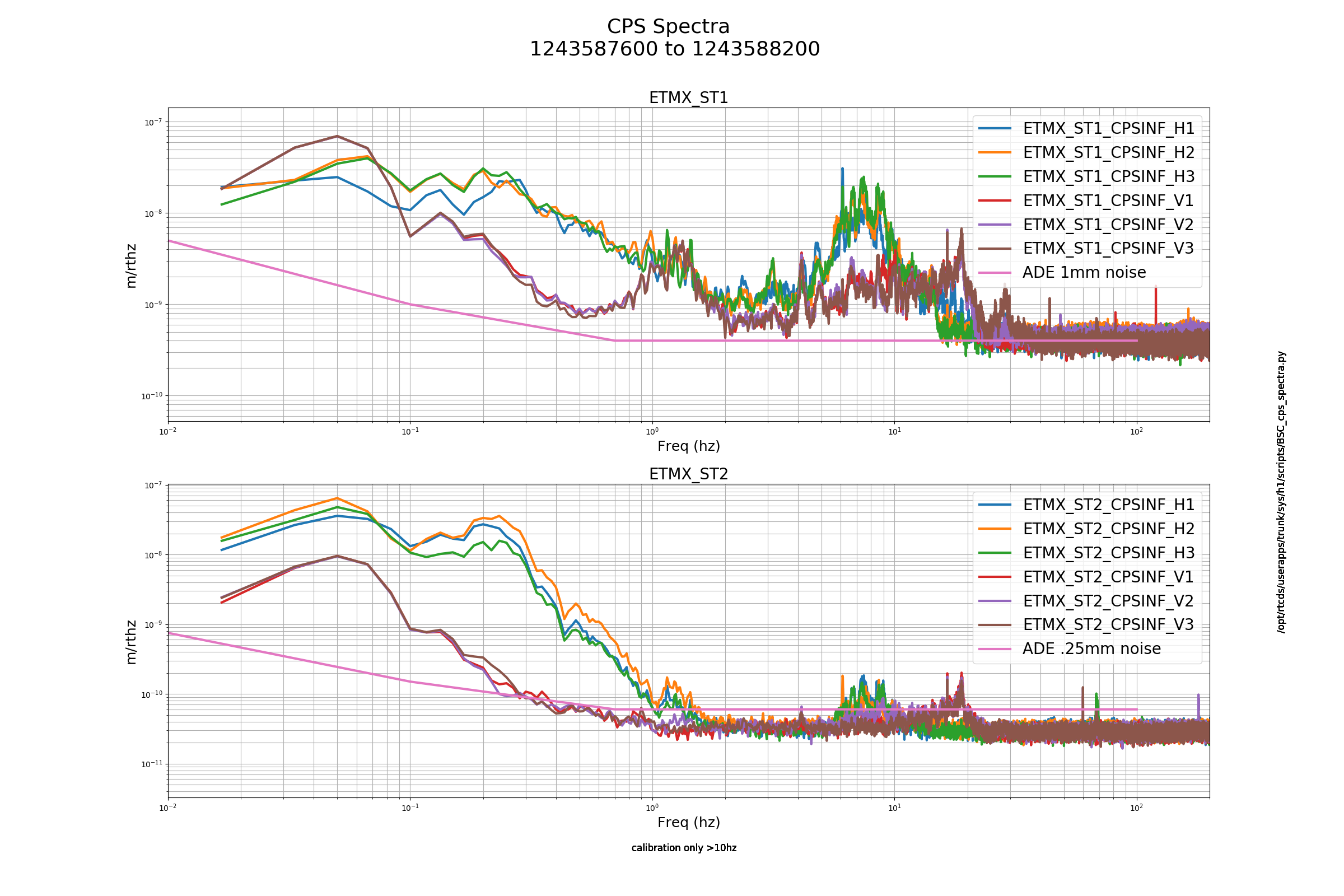
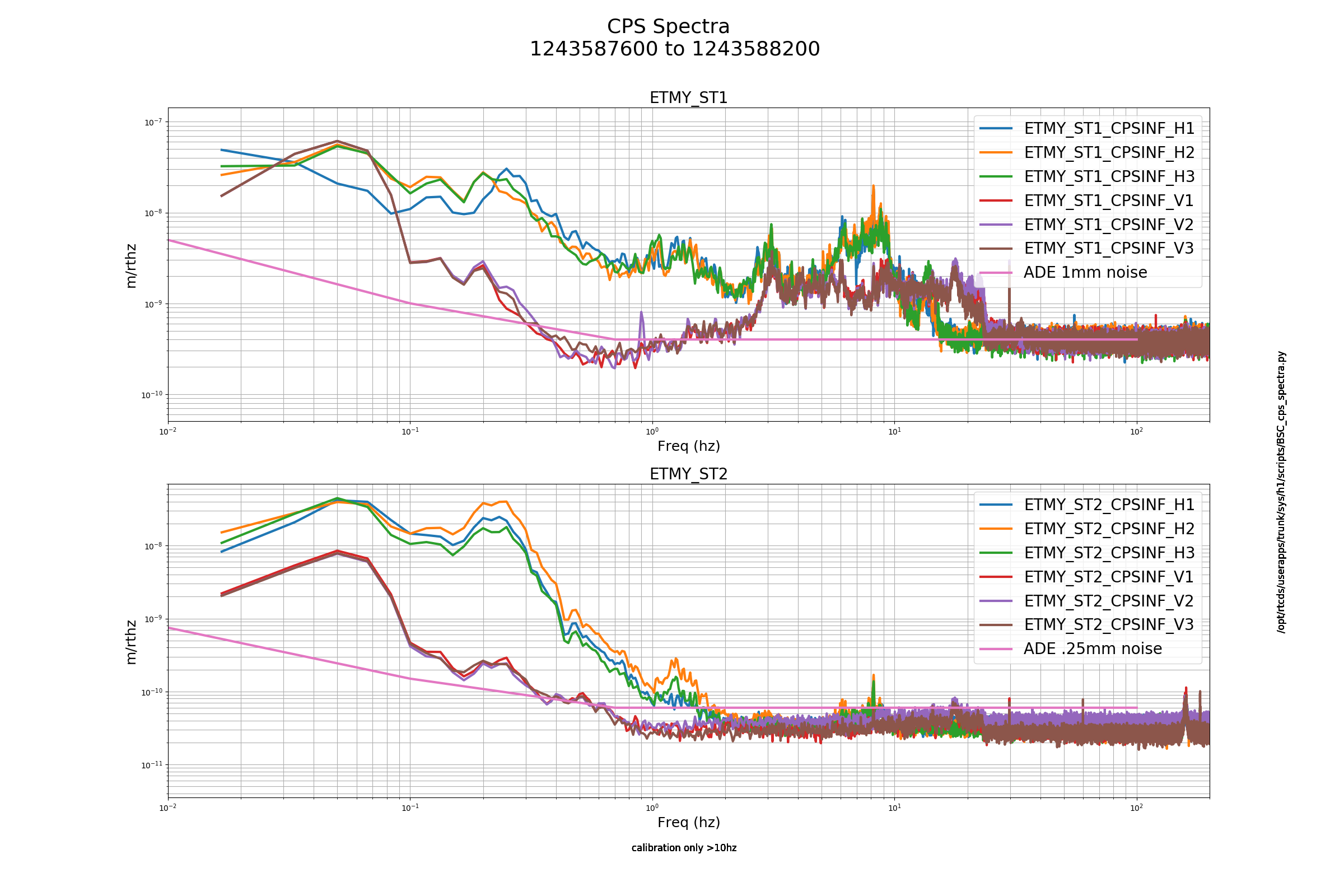
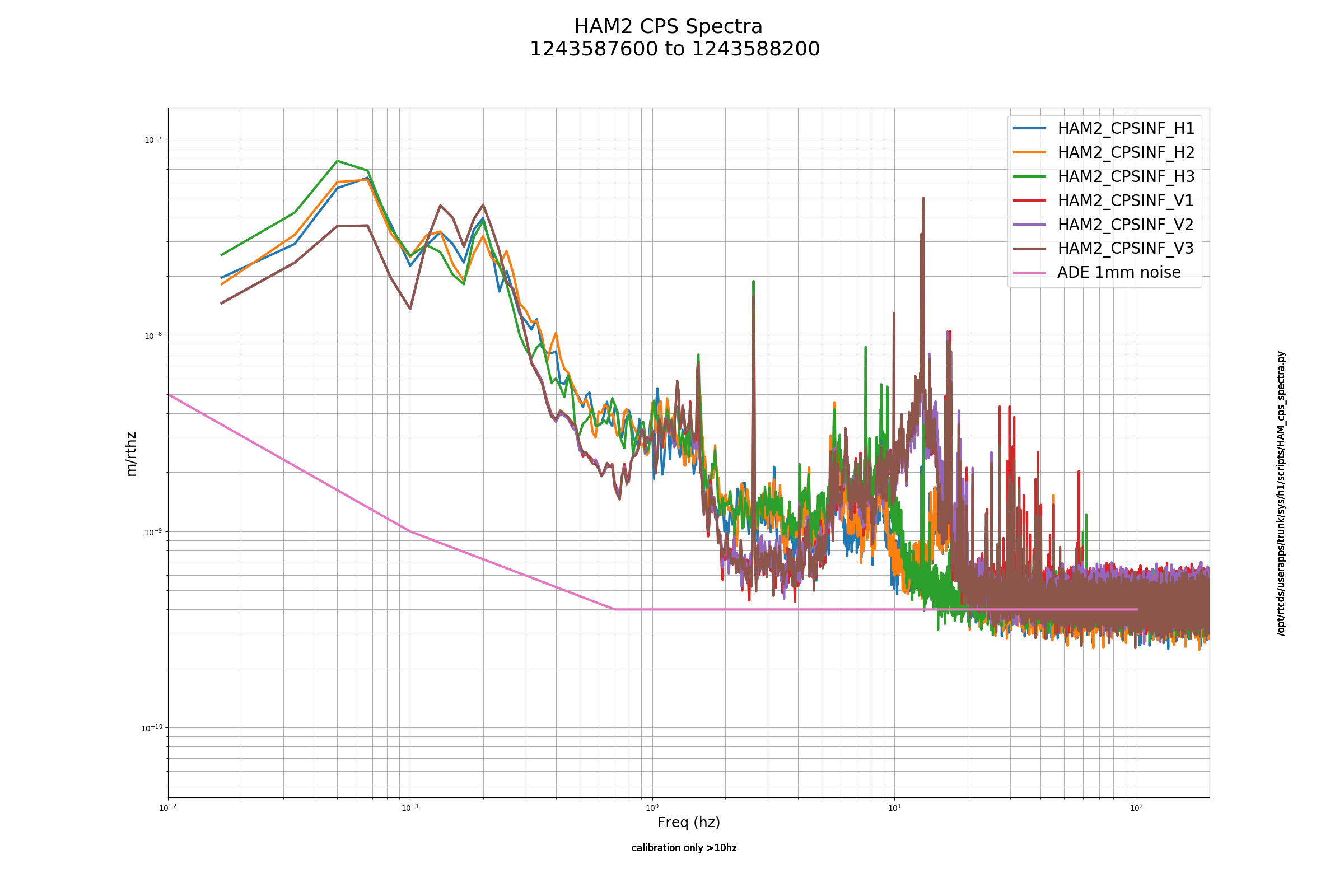
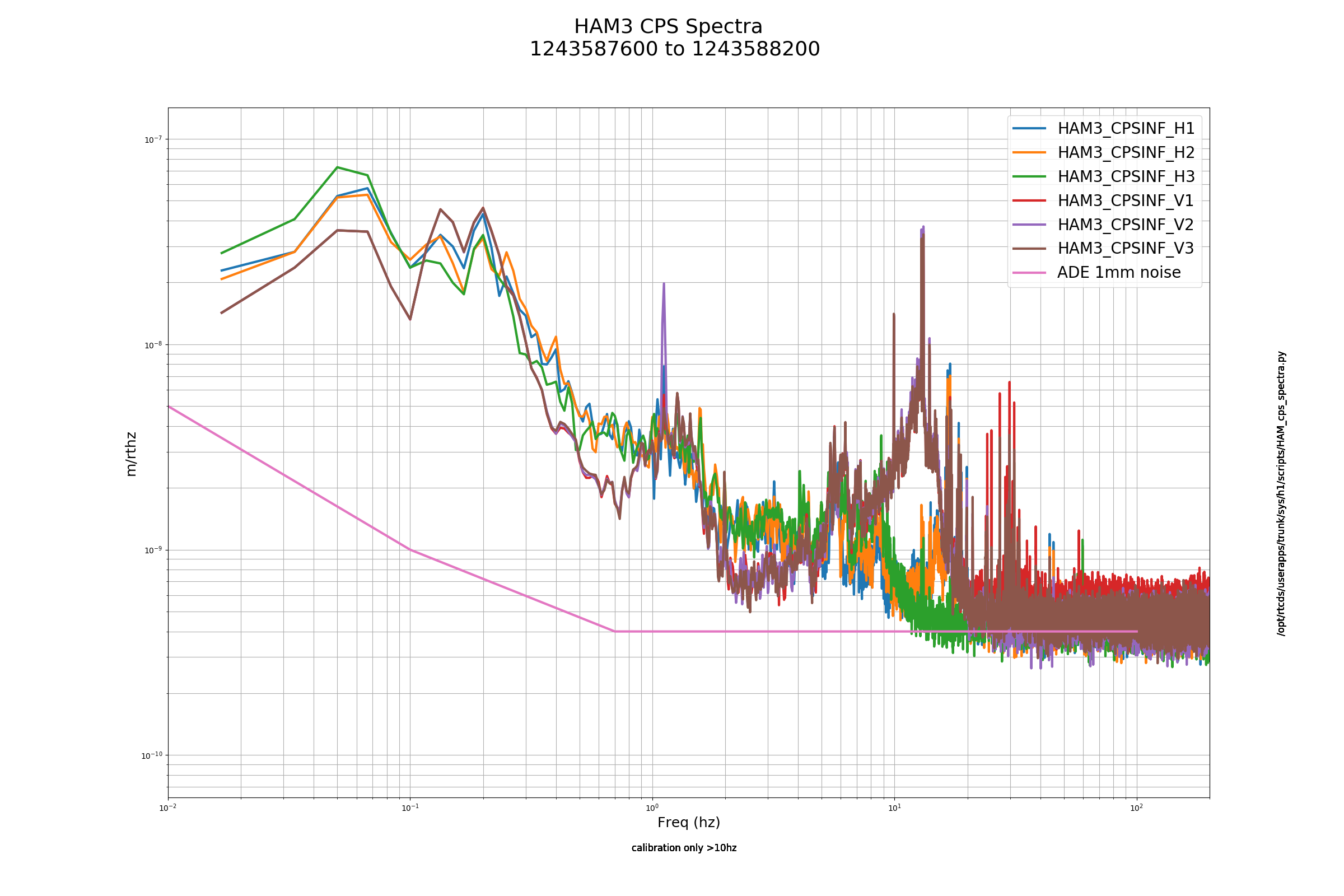
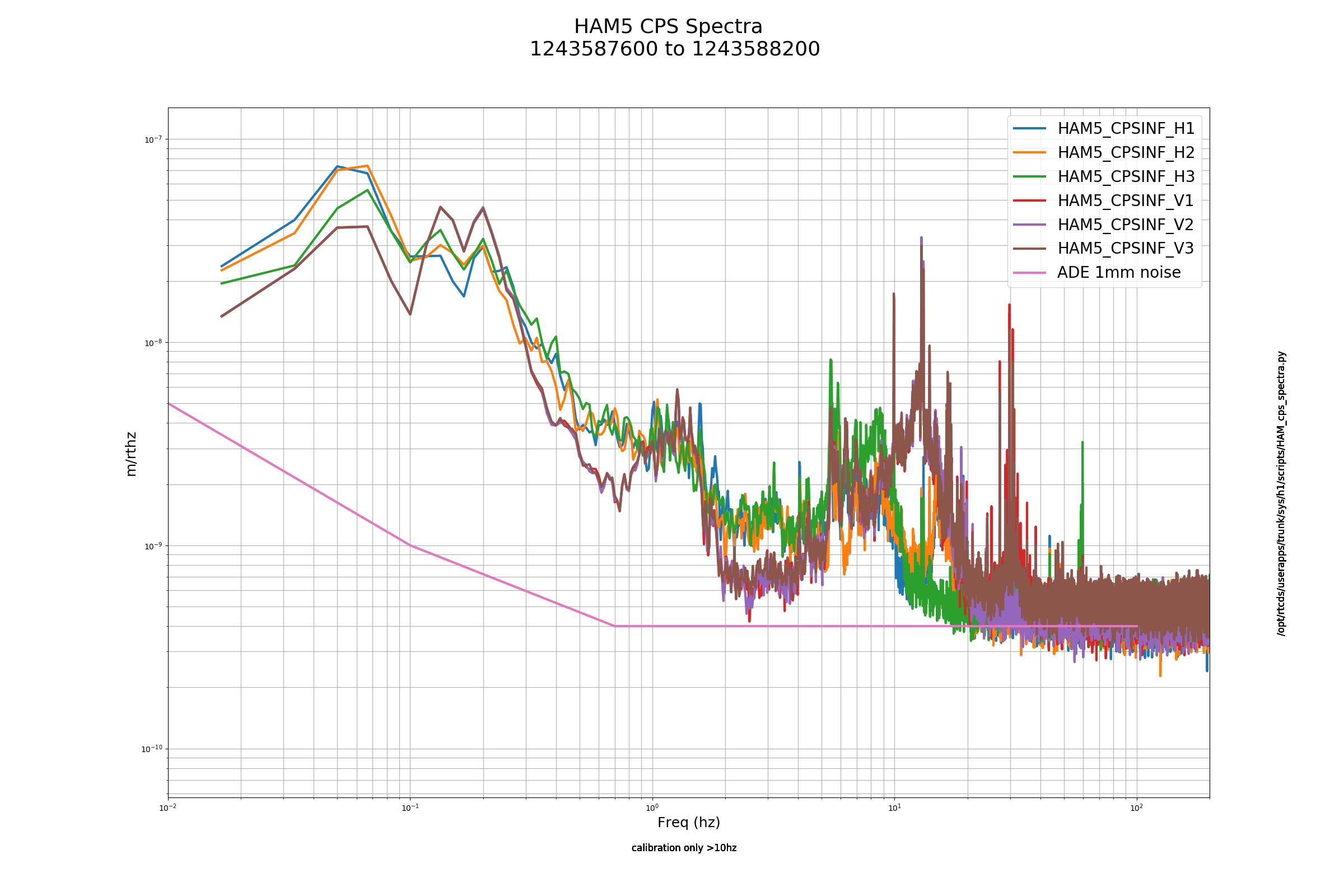
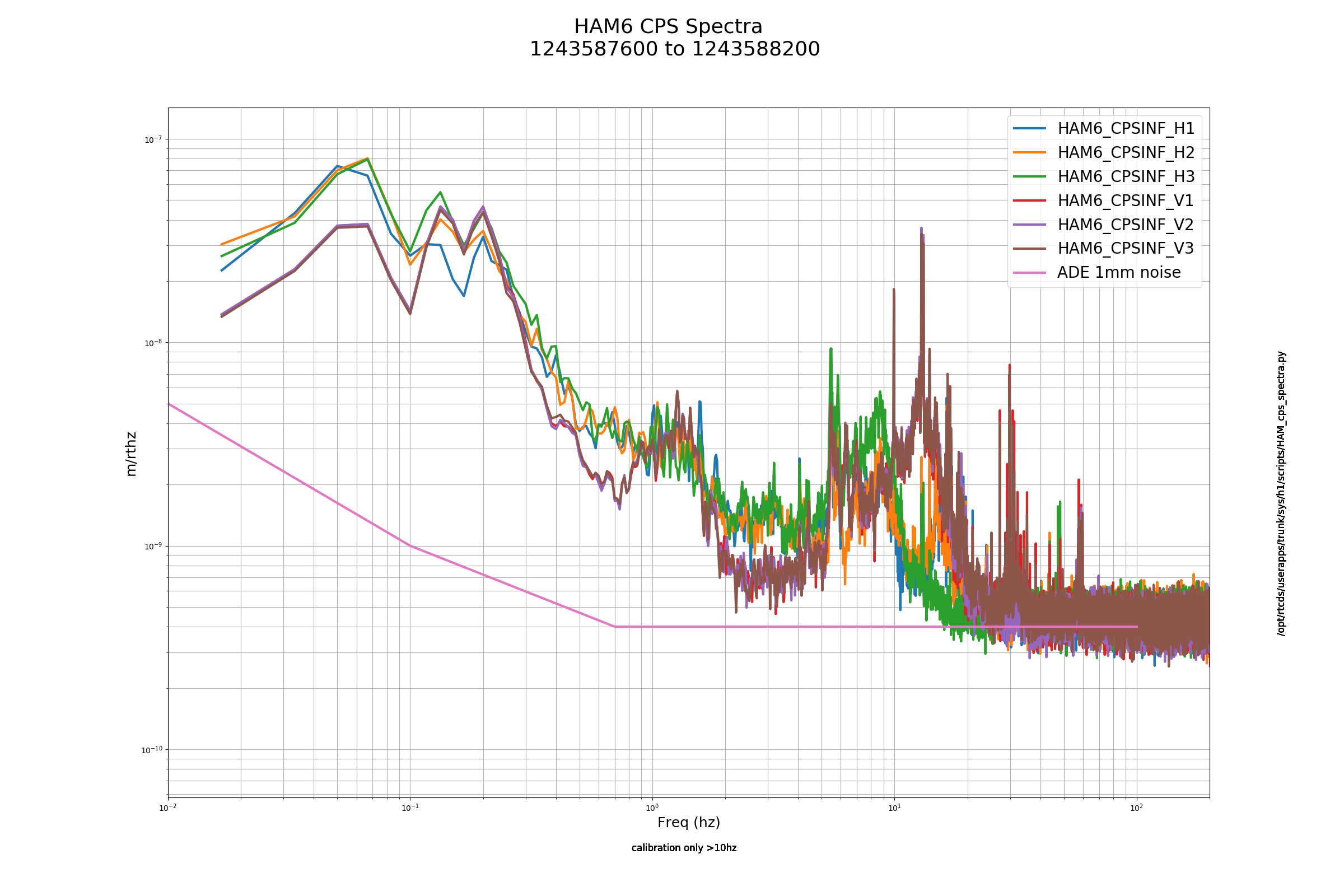
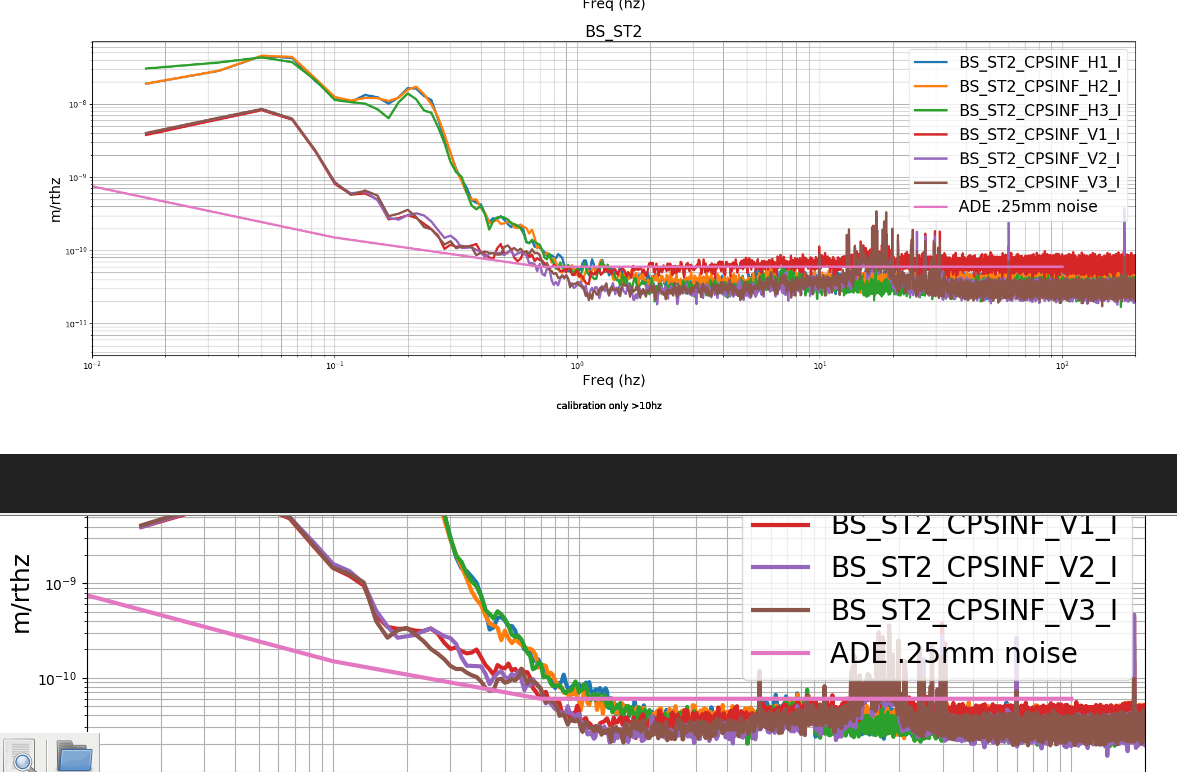
Following CPS are over threshold:
FRS 13075
During Tuesday Maintenance, the BS was taken to DAMPED and the CPS Interface chassis was power cycled in the CER. This power cycled the satellite racks as well. I did not un- & re-seat the gauge board cards in the satellite rack which is one thing we do to mitigate the elevated noise on a CPS.
Attached is a comparison of the BS Stage2 CPS between the spectrum Corey alogged here from June 3 and one taken this morning at 2am. This noise wasn't really too elevated but it sure looks much quieter now or this morning at least. Will update/close the FRS.