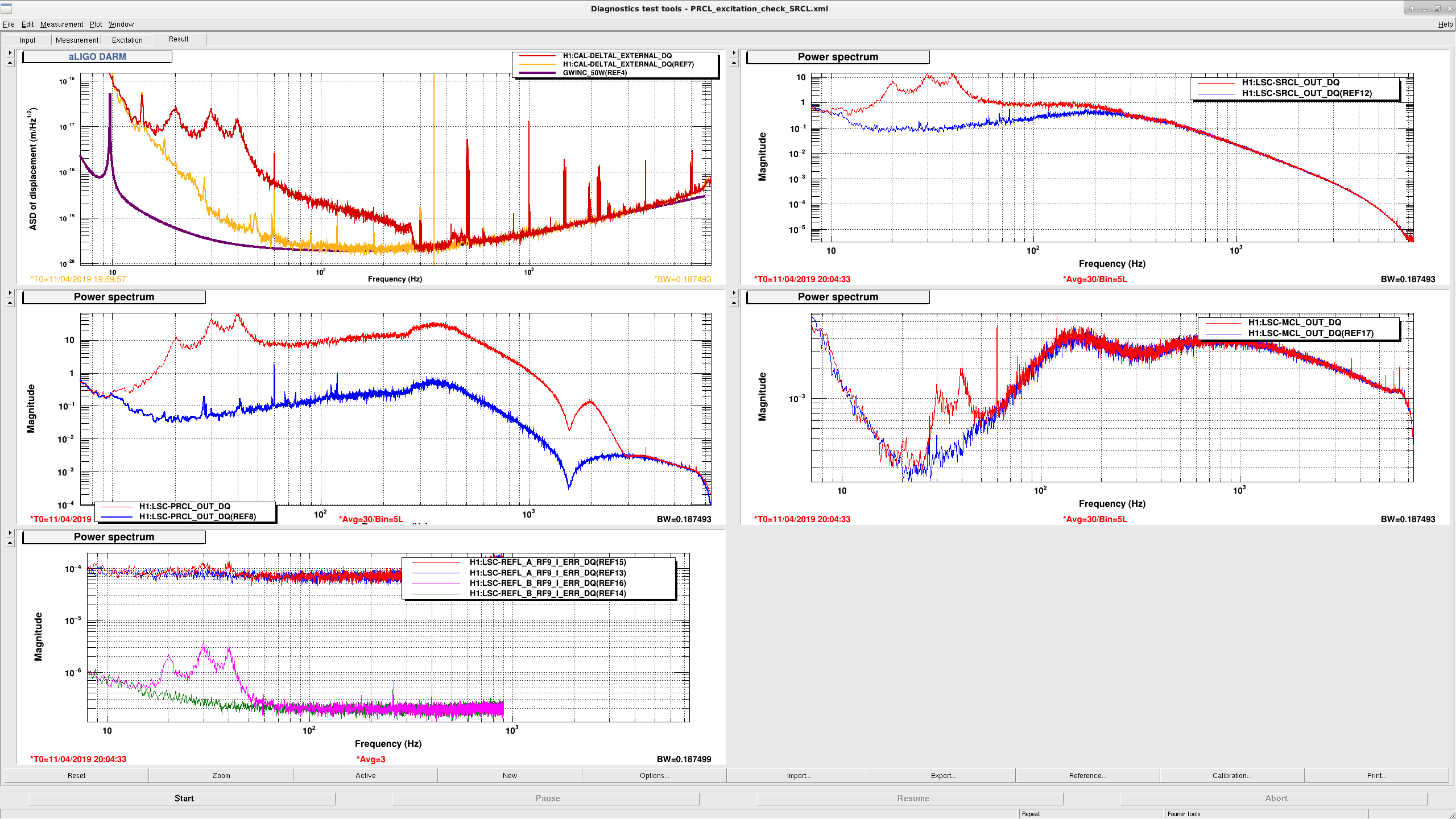
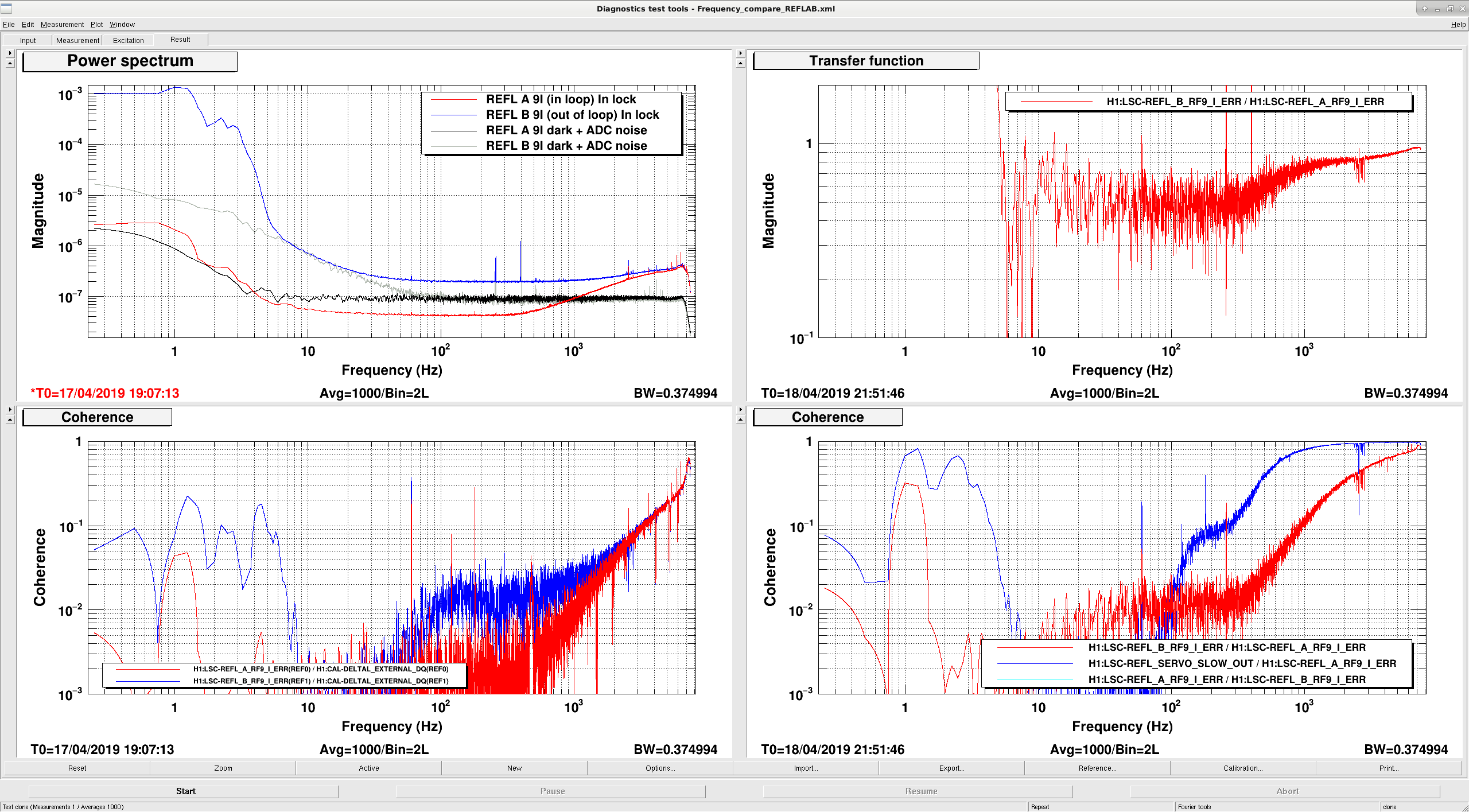
Nothing unusual to report. There was an EQ that caused some minor shaking:
08:35 DCPD glitch
09:18 incoming EQ from Phillipines 6.3
09:30 BLRMS starting to rise with P&S waves (1900+seconds to R wave arrival)
10:19 BLRMS maxxed at .7um/s. EX saturations but H1 rode it out well without having to change SEI CONFIG. No significant drop in range.
10:26 EX saturations
10:28 big DCPD glitch
Livingston went down ~40 minutes ago.
TITLE: 04/22 Owl Shift: 07:00-15:00 UTC (00:00-08:00 PST), all times posted in UTC
STATE of H1: Observing at 109Mpc
OUTGOING OPERATOR: Travis
CURRENT ENVIRONMENT:
Wind: 6mph Gusts, 4mph 5min avg
Primary useism: 0.01 μm/s
Secondary useism: 0.12 μm/s
QUICK SUMMARY:
H1 locked. All is quiet environmentally. Geo, Hanford, and Livingston all in "Observing".
TITLE: 04/22 Eve Shift: 23:00-07:00 UTC (16:00-00:00 PST), all times posted in UTC
STATE of H1: Observing at 110Mpc
INCOMING OPERATOR: Ed
SHIFT SUMMARY: In Observe for ~4 hours. No issues after relocking.
LOG:
23:17 PEM injections commencing
2:43 PEM crew to MX
2:46 Locked at NLN but in Commissioning mode for PEM injections
3:57 Observing
Philippe Nguyen, Robert Schofield
This time we cut it close from the other side of a candidate: we delayed starting PEM injections until 10 minutes after a candidate (rather than ending 10 minutes before). Then we learned of the candidate and stood down. When we were able to start again, we made acoustic injections in the LVEA and PSL, searched for the magnetic coupling site around HAM3 and made impulse injections on the input arm. We also injected at MX. Unlike last time, we did not see any coupling to DARM at MX, other than glitches when we banged the cryopumps - probably from particulate.
This brings us to a total of 12 Hours. We have several more hours of work to do, hopefully tomorrow.
Times (UTC):
21:47 – 22:15
23:20 – 0:28
2:53 – 3:20
PEM crew done for the day. At some point during PEM work, the SQZ lost lock. I encountered the same problems and solutions detailed in Patrick's 48483.
HTTS saturation alarm coincided with lockloss. PEM crew was in LVEA at the time.
TITLE: 04/21 Eve Shift: 23:00-07:00 UTC (16:00-00:00 PST), all times posted in UTC
STATE of H1: Observing at 110Mpc
OUTGOING OPERATOR: Jim
CURRENT ENVIRONMENT:
Wind: 12mph Gusts, 7mph 5min avg
Primary useism: 0.05 μm/s
Secondary useism: 0.12 μm/s
QUICK SUMMARY: Lock is 46 hours old.
TITLE: 04/21 Day Shift: 15:00-23:00 UTC (08:00-16:00 PST), all times posted in UTC
STATE of H1: Observing at 109Mpc
INCOMING OPERATOR: Travis
SHIFT SUMMARY:
LOG:
21:47 Out of observing for PEM injections that were aborted for a while, back to Observe at 22:15
TITLE: 04/21 Owl Shift: 07:00-15:00 UTC (00:00-08:00 PST), all times posted in UTC
STATE of H1: Observing at 110Mpc
INCOMING OPERATOR: Jim
SHIFT SUMMARY: 38 hr lock, squeezer dropped its lock briefly once.
LOG:
Locked for 34 hrs. Briefly dropped out of observing because the squeezer lost lock, but it relocked with no issues.
TITLE: 04/21 Owl Shift: 07:00-15:00 UTC (00:00-08:00 PST), all times posted in UTC
STATE of H1: Observing at 107Mpc
OUTGOING OPERATOR: Travis
CURRENT ENVIRONMENT:
Wind: 19mph Gusts, 12mph 5min avg
Primary useism: 0.04 μm/s
Secondary useism: 0.11 μm/s
QUICK SUMMARY: 30hr lock, wind is picking up slightly.
TITLE: 04/21 Eve Shift: 23:00-07:00 UTC (16:00-00:00 PST), all times posted in UTC
STATE of H1: Observing at 107Mpc
INCOMING OPERATOR: TJ
SHIFT SUMMARY: H1 locked for the entire shift and in Observing for ~7 hours post-PEM work. ~30 hour total lock duration thus far.
LOG:
23:22 PEM crew to EY
0:10 PEM crew done
Philippe Nguyen, Robert Schofield
We made a shaker injection at the corner station and several impulse injections at EY.
Also, I manipulated the HVAC. This was done during observation mode, as in the past, since we don't drop observing for automatic and other usual HVAC changes. The figure shows that the HVAC is costing us 3 or 4 MPc. I then did a bunch of manipulations to narrow down the source. The dominant problem seems to be AHU 1,2 and 3, and, to a lesser extend, the turbines at the end stations. These are all running at higher rates than they were during O2. I will try do some further manipulations tomorrow to determine how much range we could get by going back to normal flows (my understanding is that they were increased for improved temperature control, I believe during the winter).
Here is the list of manipulations :
Switching all off. Begin: 16:35; All off: 16:44
Switching all back on. Begin 16:59; All on 17:10
Switching all off: Begin 17: 22; All off: 17:33
Switching all back on: Begin 17:48; All on: 17:57
Switching all off: Begin: 18:14; All off: 18:25
Switching all on: Begin 18:44; All on: 19:06
Switching off EY. Begin: 19:31; EY off: 19:39
Switching EY back on. Begin: 19:49; on: 19:55
Switching off CS AHU-3. Begin: 19:54; AHU-3 off: 19:55
Switching on CS AHU-3 and turning off CS AHU-1&2. Begin 22:02; Complete: 22:03
Switching off CS chiller. Begin 20:13; off: 20:20
Switching on CS AUH-1&2 and chiller AND switching off EX. Begin: 20:25; Complete: 20:35
Switching on EX. Begin: 20:49; End: 20:51
Switching EX off. Begin: 21:06; All off: 21:15
Switching EX back on. Begin: 21:30; All on: 21:45
Switching CS AHU4 (office area) off. Begin: 21:57 Off: 21:58
Switching CS AHU4 ON and turning EX off. Begin: 22:06; Complete: 22:15
Switching EX on. Start: 22:31; EX on: 22:33
Switching CS AHU1,2,3, chiller off. Start: 22:50; Complete: 22:59
Switching CS back on: 23:07
A correction: the corner station AHU 1,2 are not running at higher flows than they have been historically, while AHU 3 and the end stations are. This means there will be less to gain, so we didnt get back to shutting down on Sunday. Nevertheless, there could be some gain by dropping the EY and EX flow rates from about 11k CFM to between 8 and 9k CFM, and AHU3 down to about 6 per 5 & 6 from about 7k CFM per fan to about 6k CFM. Hopefully I will get a chance to try this.
PEM crew done for the day. Back to Observing.
TITLE: 04/20 Eve Shift: 23:00-07:00 UTC (16:00-00:00 PST), all times posted in UTC
STATE of H1: Commissioning
OUTGOING OPERATOR: Jim
CURRENT ENVIRONMENT:
Wind: 11mph Gusts, 8mph 5min avg
Primary useism: 0.04 μm/s
Secondary useism: 0.14 μm/s
QUICK SUMMARY: In Commissioning for PEM injections. Lock is ~22 hours young.
TITLE: 04/20 Day Shift: 15:00-23:00 UTC (08:00-16:00 PST), all times posted in UTC
STATE of H1: Commissioning
INCOMING OPERATOR: Travis
SHIFT SUMMARY: Robert spent most of the day turning chillers and air handlers on and off
LOG:
19:00 Knocked out of Observe by PEM driven temperature changes, Robert was turning off chillers, this drove some ecat loops to make some SDF diffs
19:20 Knocked out of Observe again, when squeezer unlocked, possibly driven by temperature drifts from PEM stuff
23:00 Something dropped out of Observe again, but didn't catch waht it was, Robert was about to start more measurements anyway.
Robert is continuing his FMCS chiller tests. I've reinstated the alarm bypasses for the water pump status. With the warmer temperatures today, we got a supply over-temp alarm this morning, so I've added the supply channels to the bypass.
Bypass will expire:
Sat Apr 20 20:36:11 PDT 2019
For channel(s):
H0:FMC-EY_CY_H2O_PUMPSTAT
H0:FMC-CS_CY_H2O_PUMPSTAT
H0:FMC-EX_CY_H2O_PUMPSTAT
H0:FMC-CS_CY_H2O_SUP_DEGF
H0:FMC-EX_CY_H2O_SUP_DEGF
H0:FMC-EY_CY_H2O_SUP_DEGF
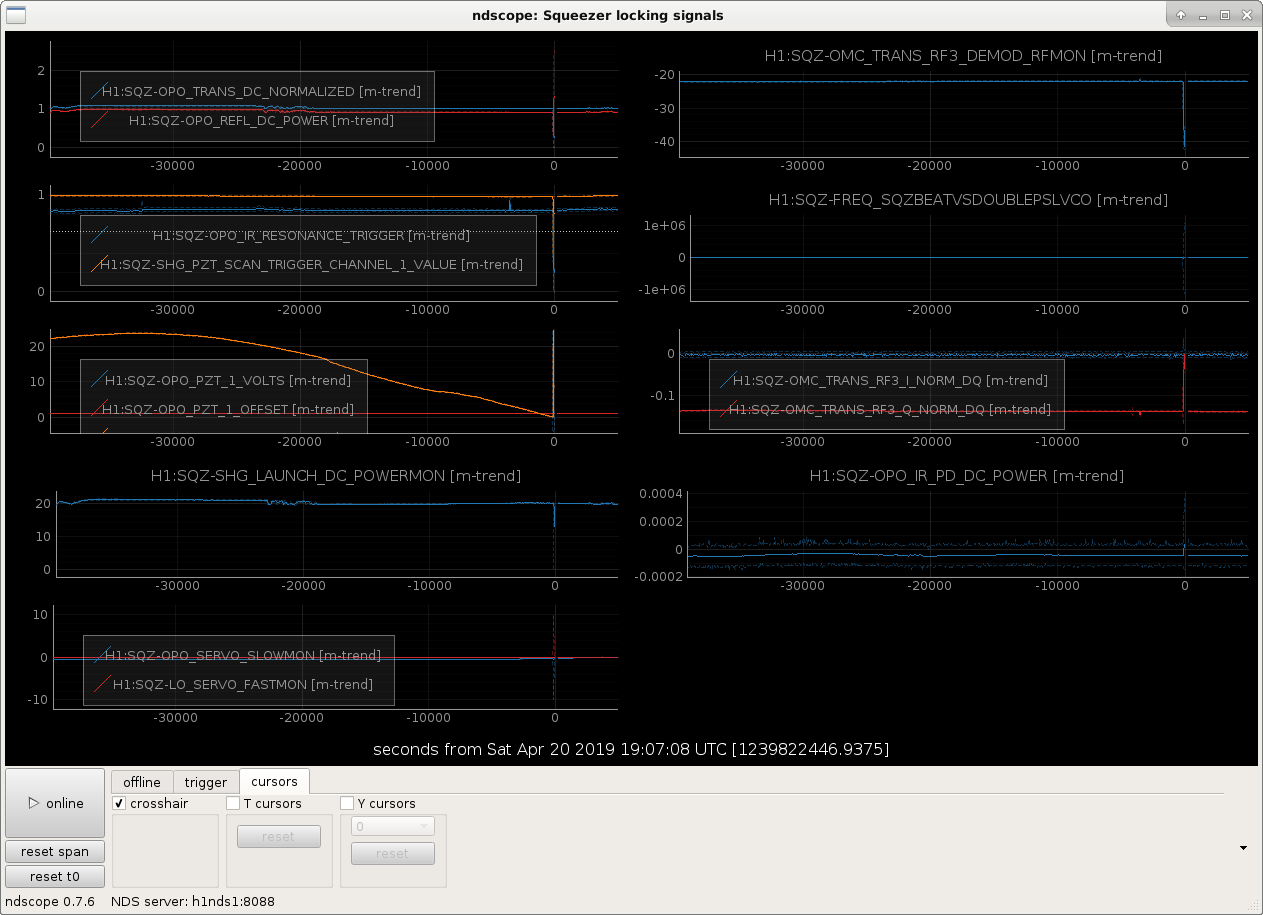
The squeezer took H1 out of observing at around 19:02 UTC, because the SHG PZT ran out of range. The attached screen shot shows the PZT hitting it's rail, this is made using the ndscope called "Locking signals" linked from the SQZ overview screen.
The squeezer guardian tried to recover from this on it's own, but when it re-opened the beam diverter, no 3MHz signal showed up on the OMC DCPDs. I cleared the history of the sqz ASC loops, after which everything locked up fine.
I've made a function called turn_off_sqz in the squeezer manager guardian, which is called in several places where there was previously boilerplate code. I've added to this function to clear the history of the ASC loops after turning off the squeezer, this is loaded and will hopefully allow the squeezer to relock itself more smoothly in the future.
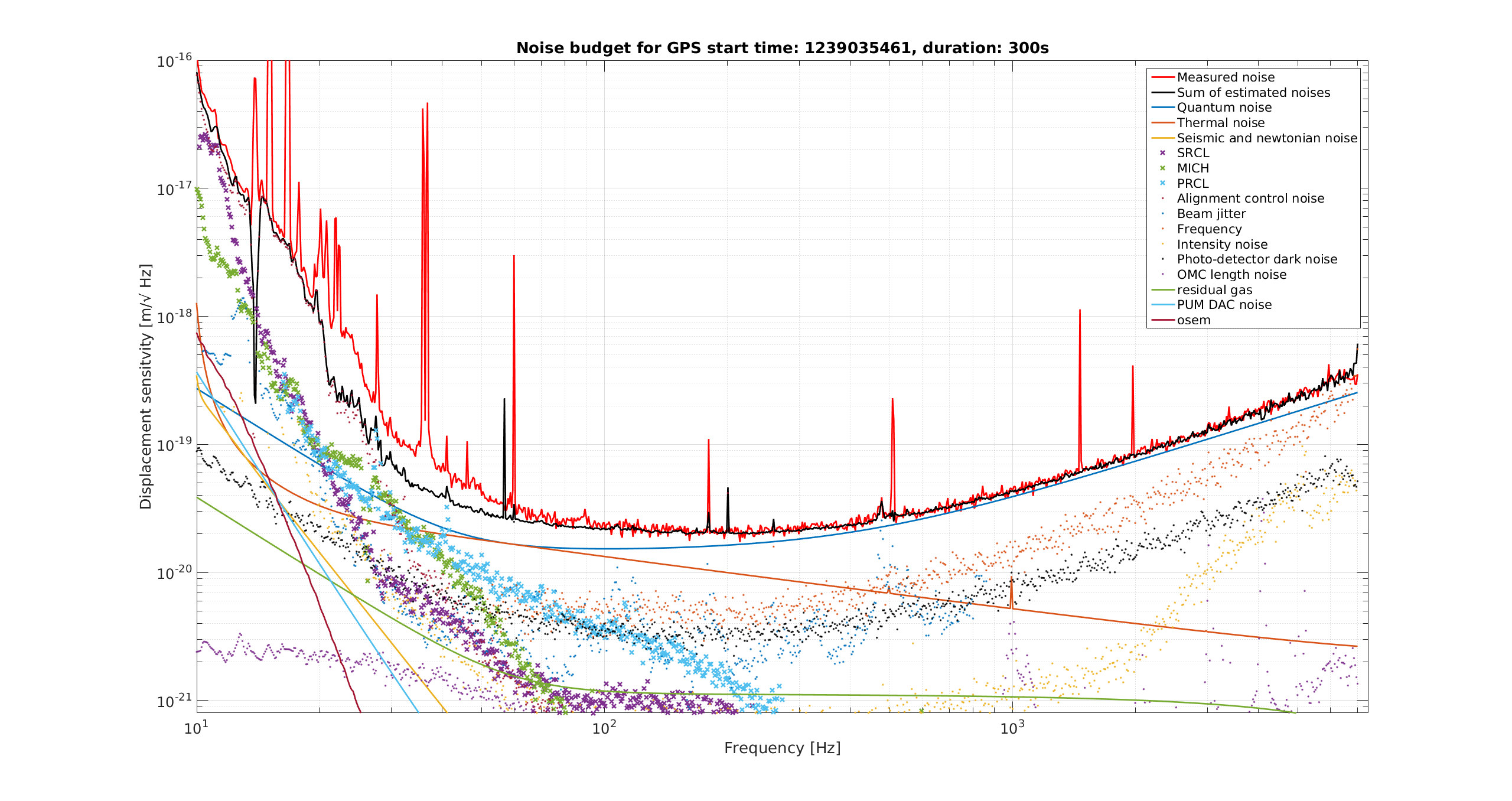
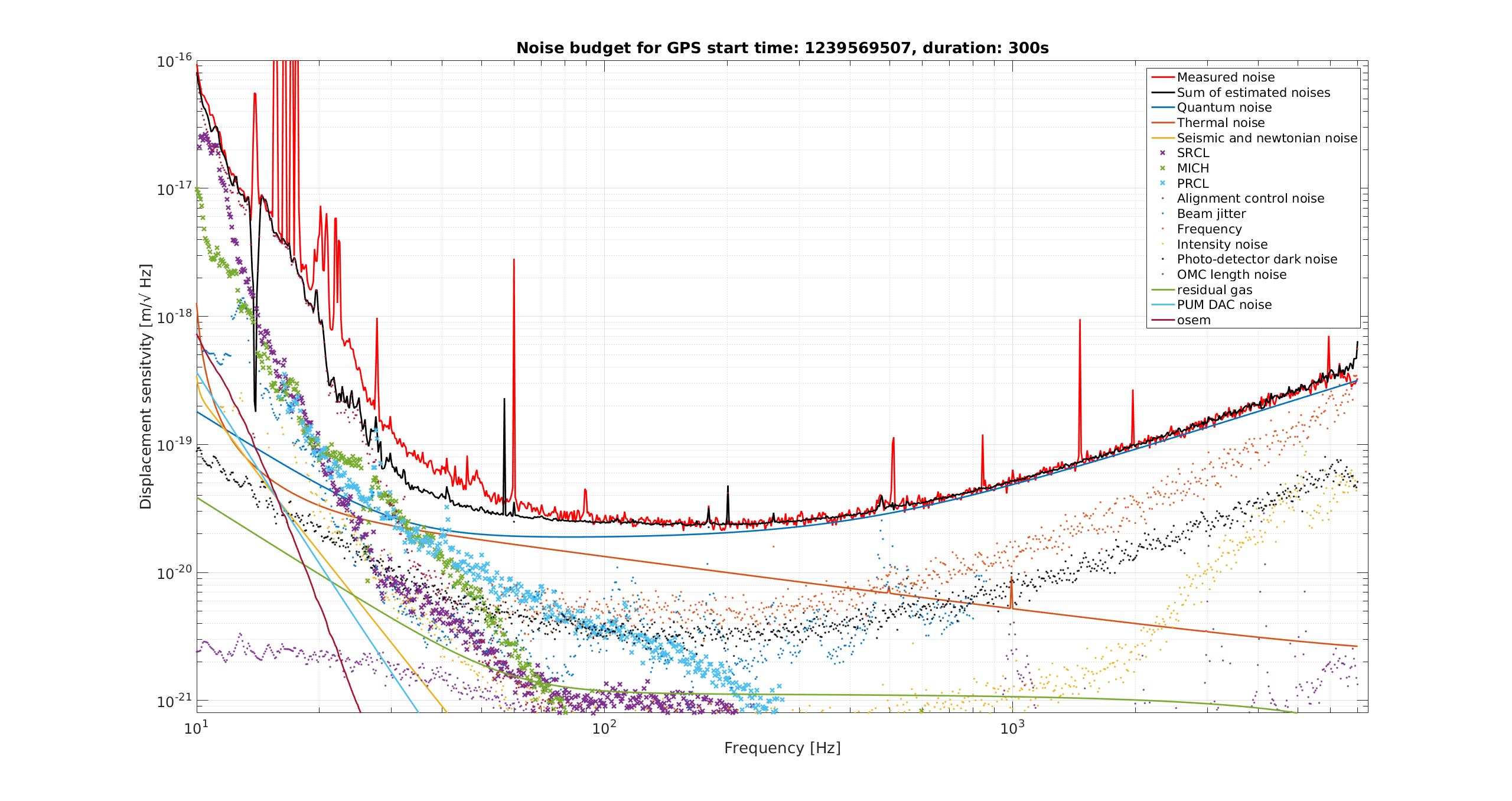
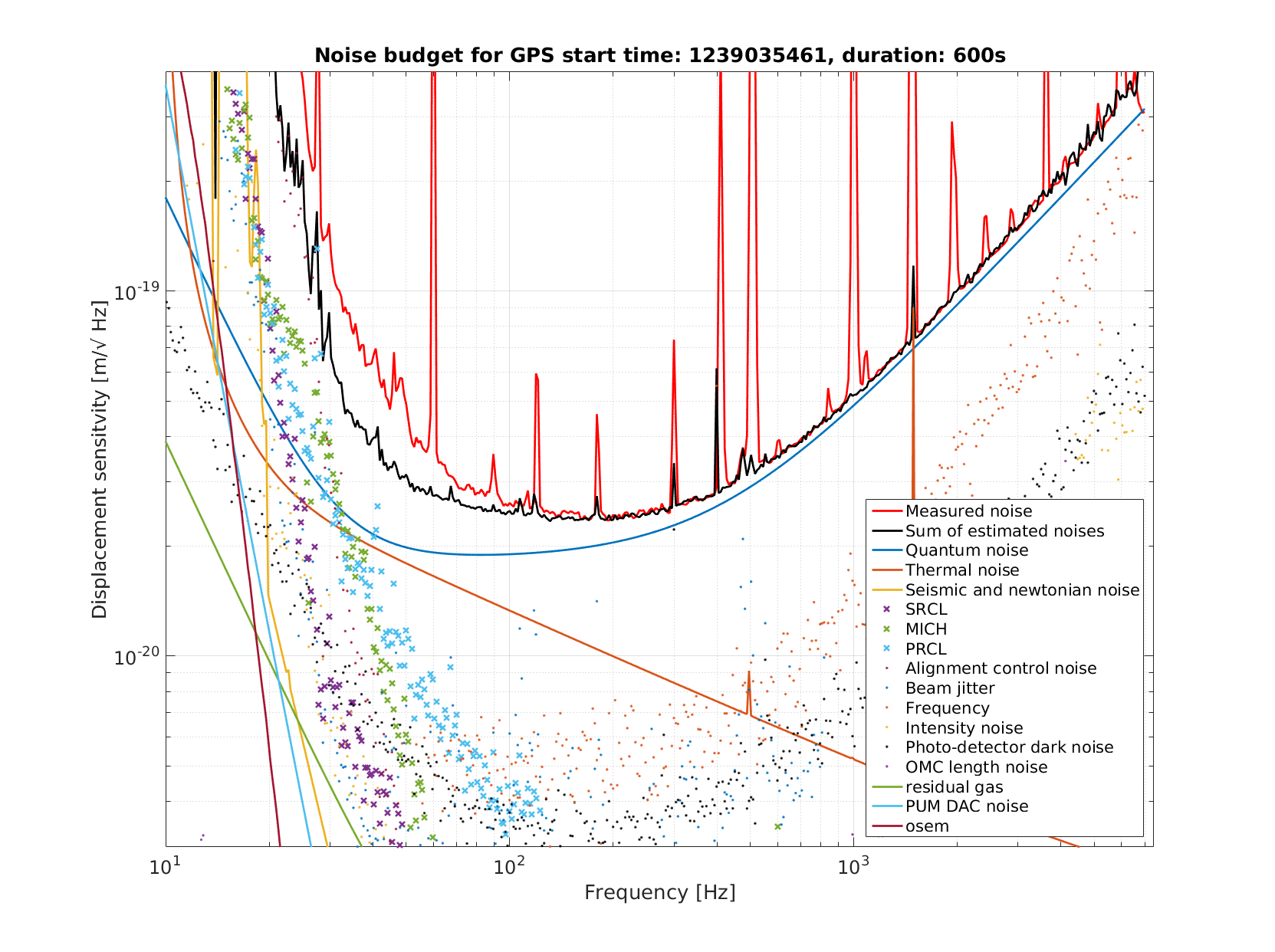
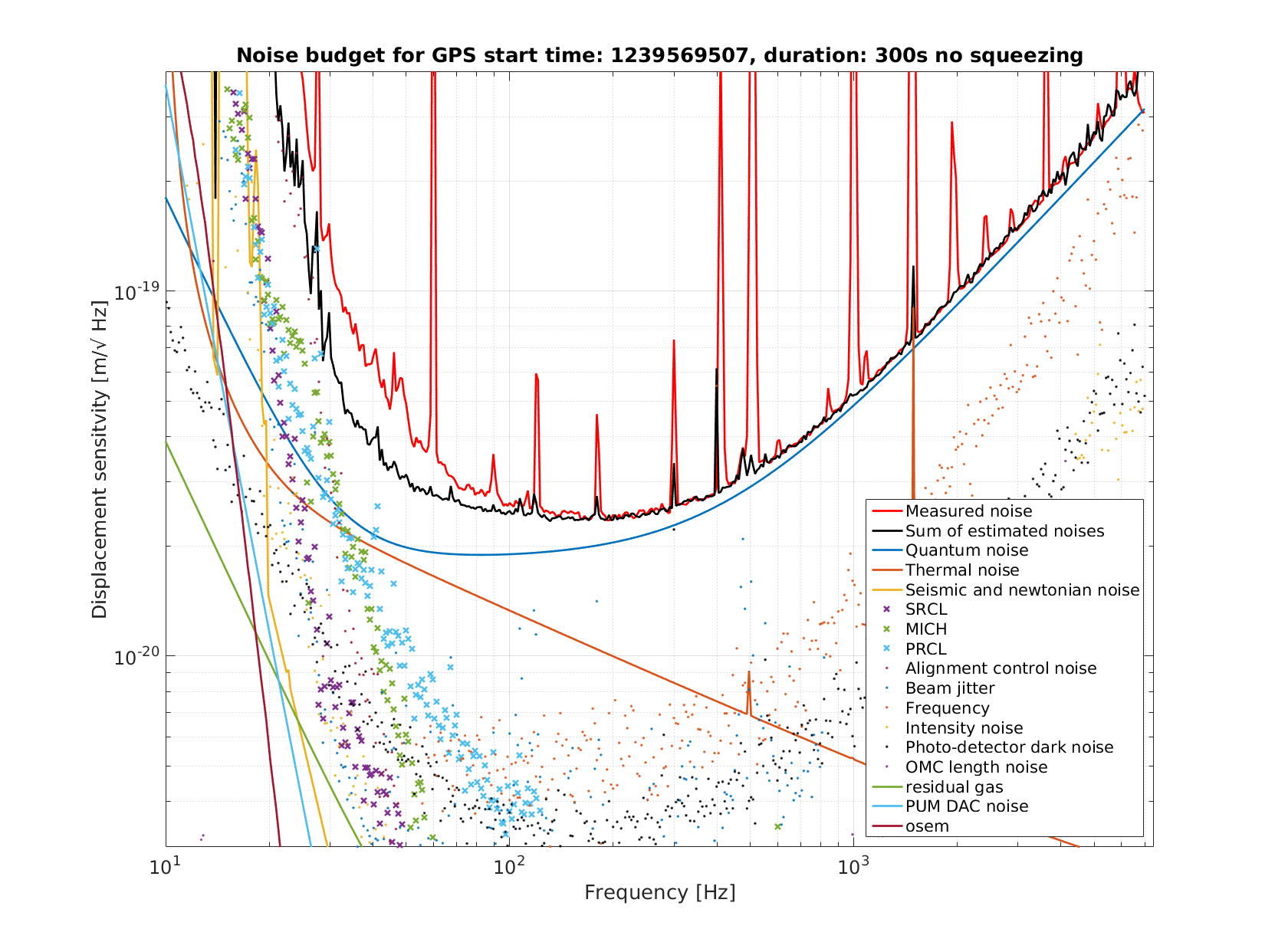
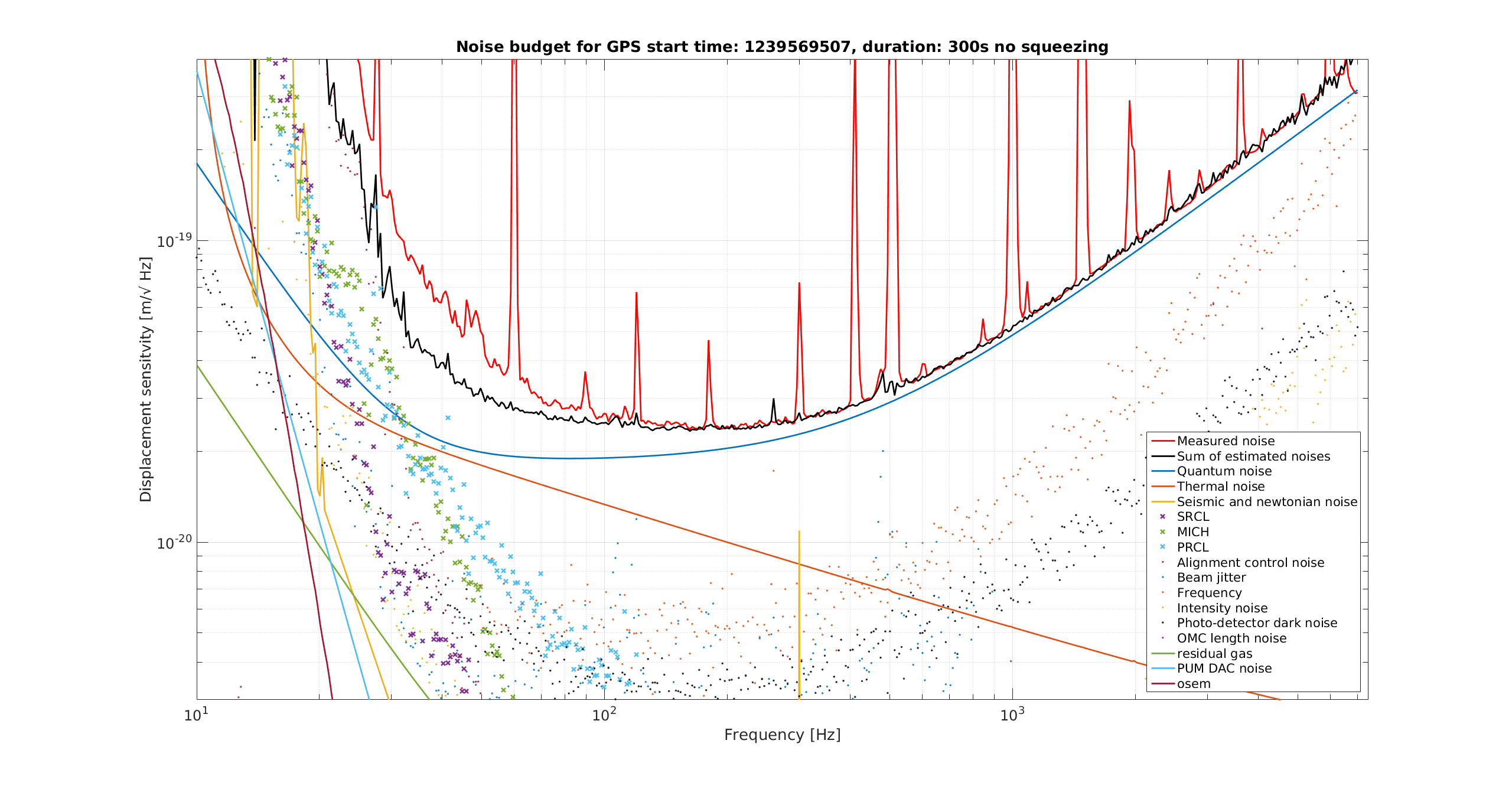
This is a quick update on the noise budget injections that we did last week. The first attachment is the noise budget for a time with squeezing, the second attachment is for a time without.
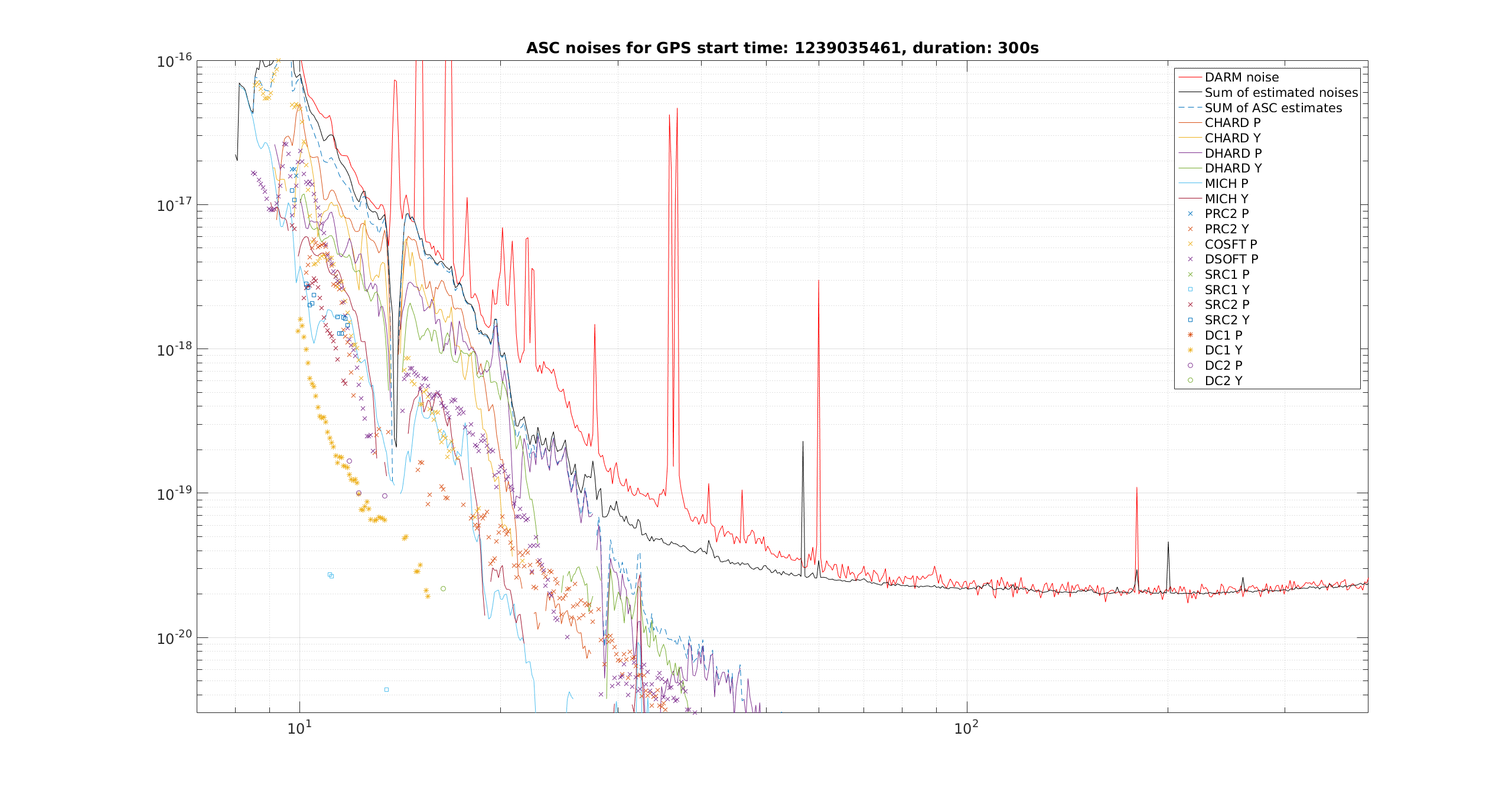
Some things that can still be improved in this noise budget:
I used the noise budget to look a little more closely at the quantum noise.
The first two attachments are the noise budgets with and without squeezing (same data as above, logarithmic binning fixed using some code from Tobin Fricke).
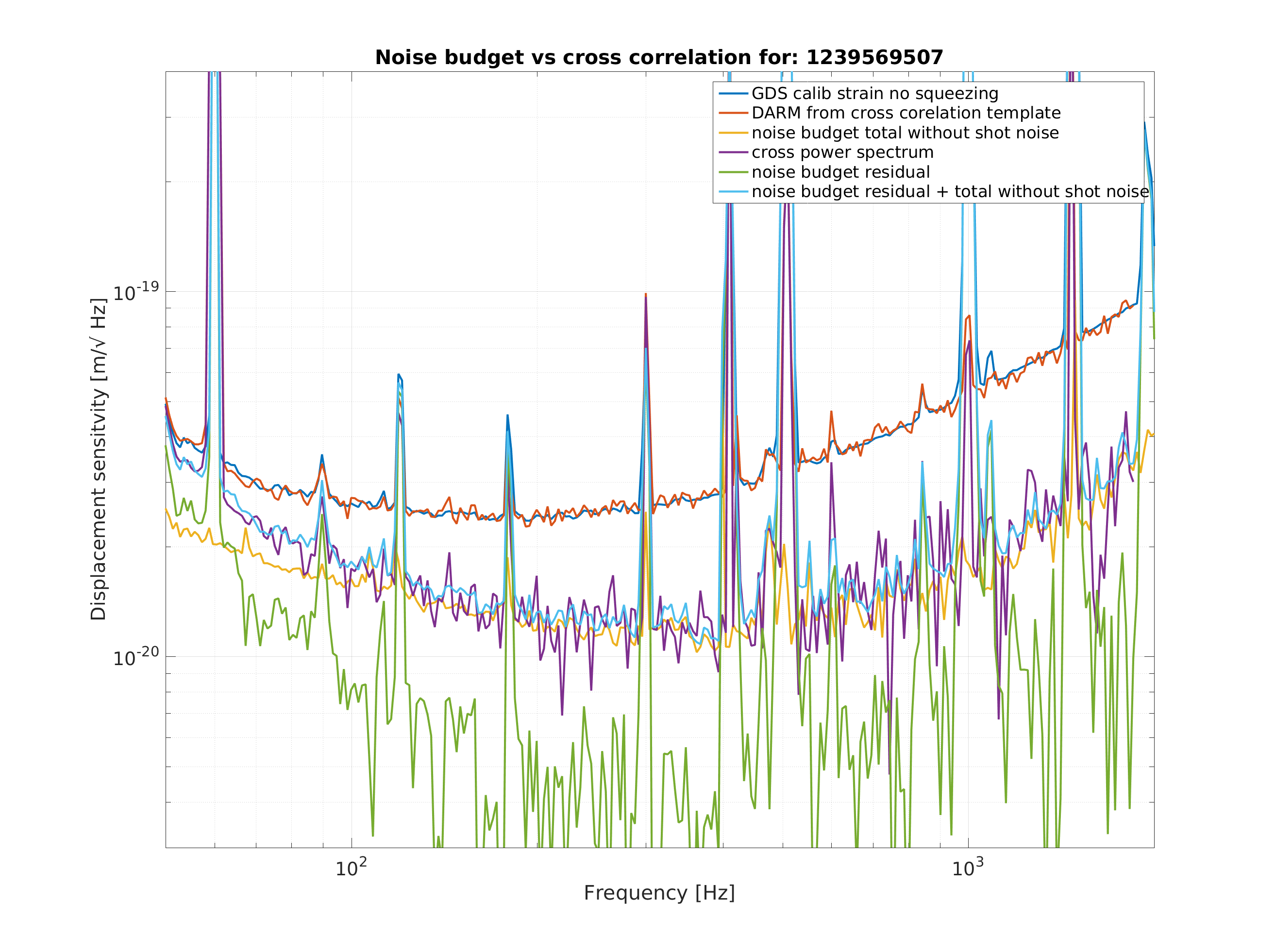
The next attachment is a comparison of the cross correlation (produced by the front end) for the no squeezing time to the noise budget. The main message here is that the cross correlation is in rough agreement with the noise budget above 150Hz, and the noise budget residual below 150 Hz is due to noise that is correlated between the two detectors.
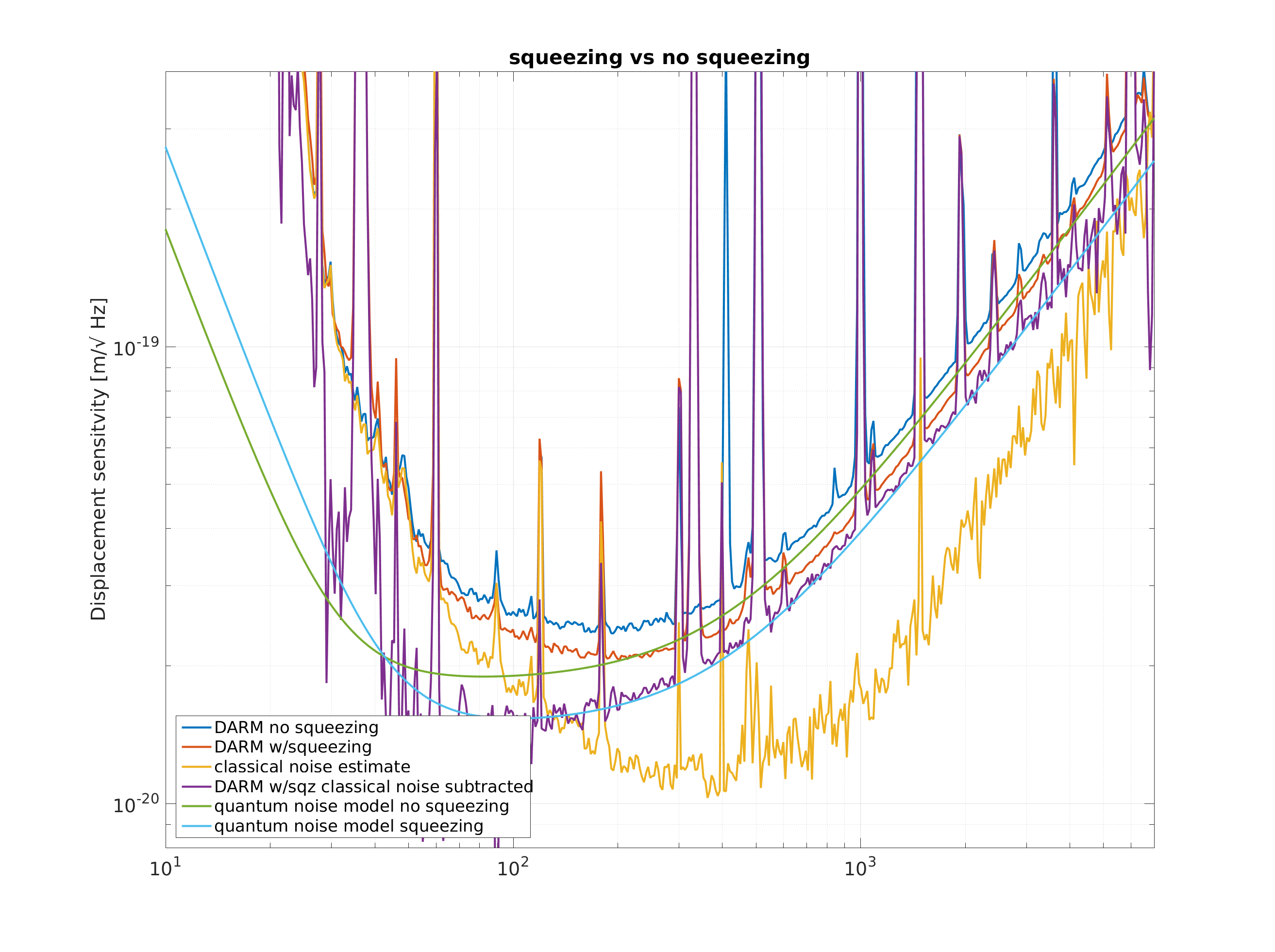
The fourth attachment shows a comparison of the DARM sensitivity with and without squeezing, and the modeled quantum noise in each case.
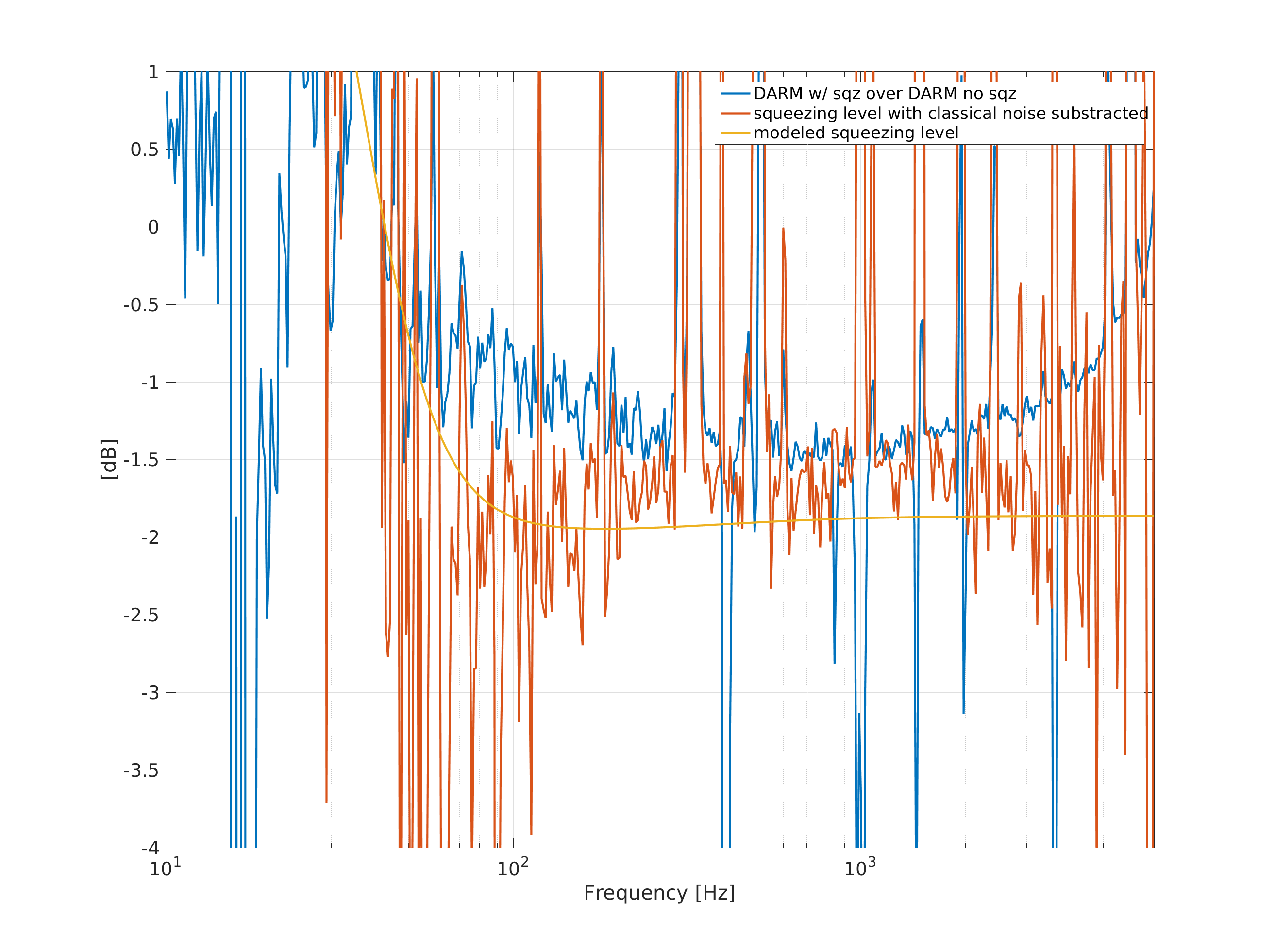
The 5th attachment shows the squeezing level based on the estimates used to make the 4th attachment.
The first two plots in the comment above were mixed up, the correct plots are attached here.
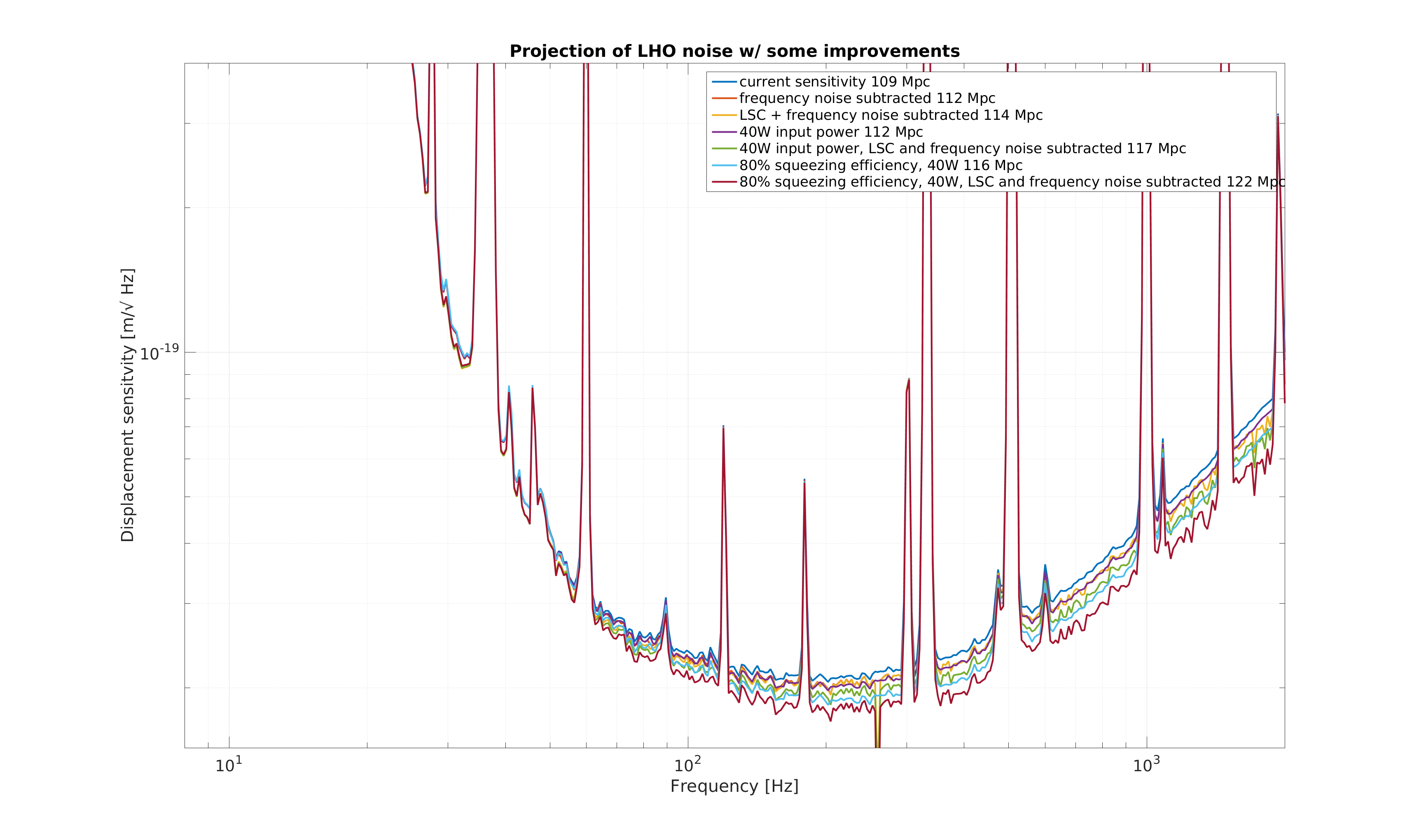
I estimated some of the improvements that we might be able to make to DARM in the third attachment, estimated ranges are in the legend.
We would gain a couple of Mpc each from improving our LSC feedforward (including PRCL which we aren't doing right now), and from reducing the frequency noise. The projection of 5MPc total for both of these is assuming that we can get rid of them totally, which is optimistic. We can get a similar improvement by increasing the power into the IMC to 40W, assuming that the circulating power continues to scale with the input power. Combining an increase in the input power and improvements in LSC and frequency noise, we can start to approach 120 Mpc.
I also estimated what we would get if we had 3dB of squeezing. I estimated this as an improvement in the losses, with our current nonlinear gain and phase noise of 150 mrad, we would need about 78% efficiency to reach 3dB of squeezing. This could also be achieved by a different route, which would result in slightly different anti squeezing levels. This would indicate that with 3dB of squeezing, 40W power into the IMC, improved LSC feedforward, and reduced frequency noise, we could reach just above 120 Mpc.