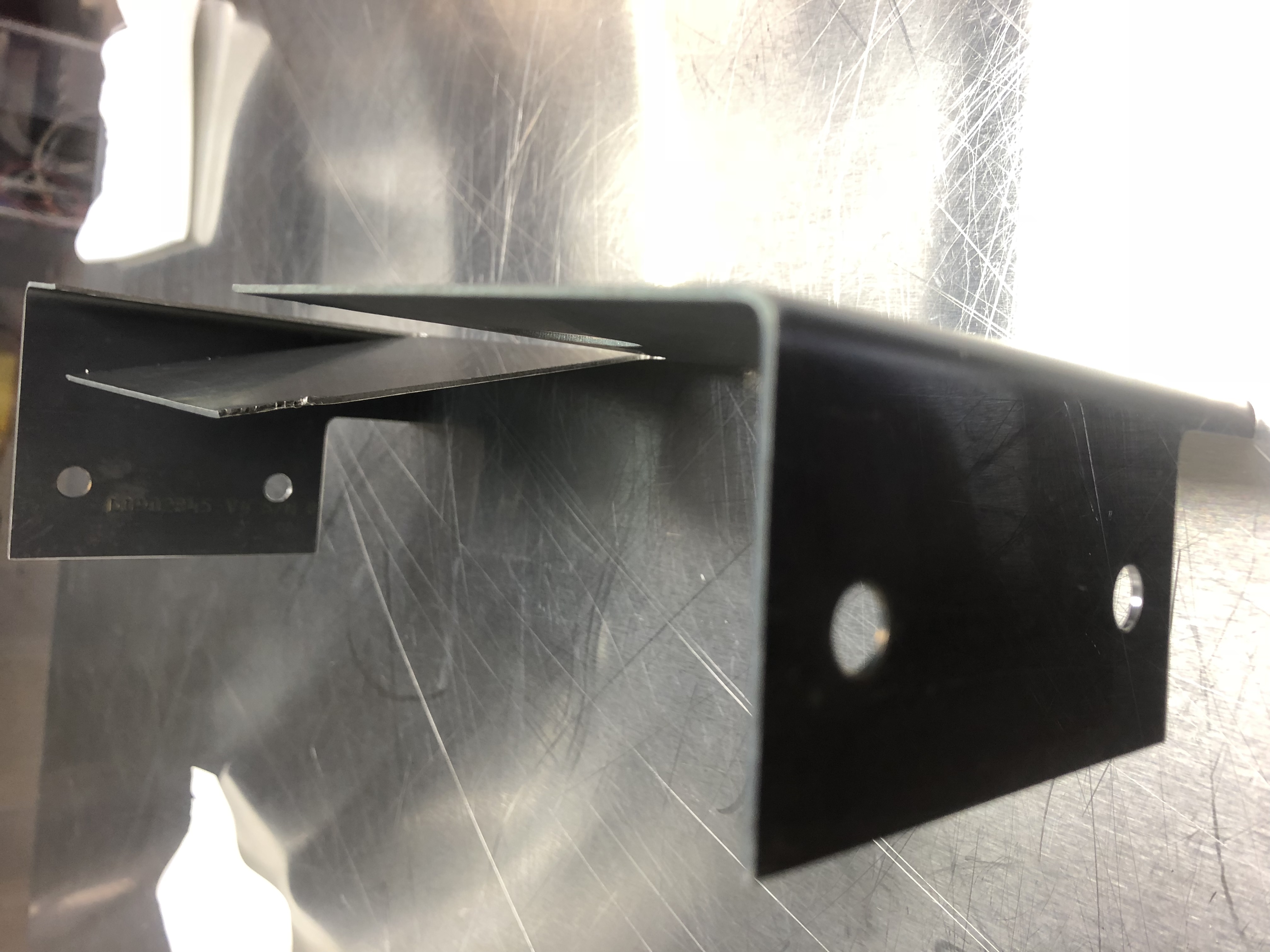
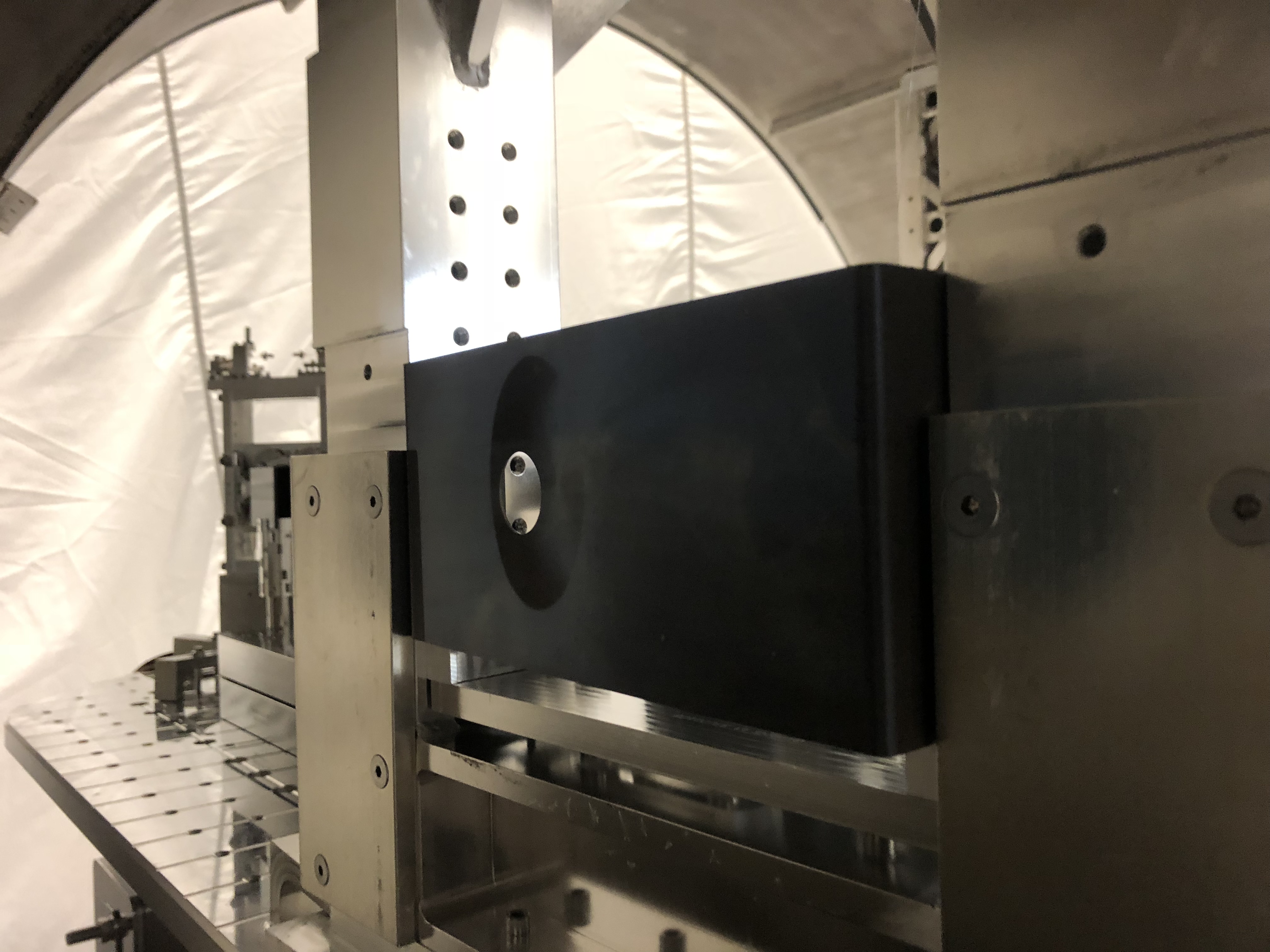
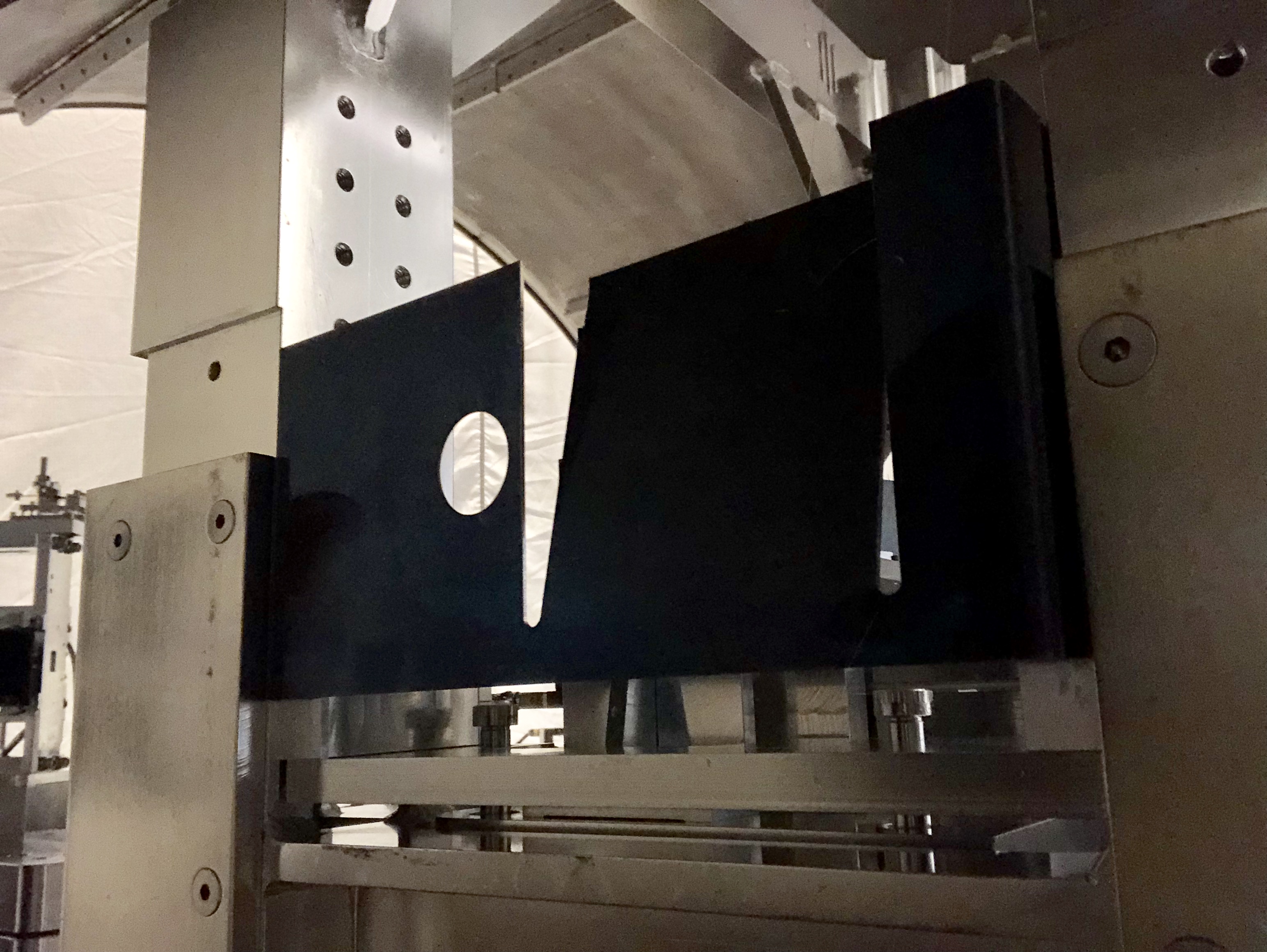
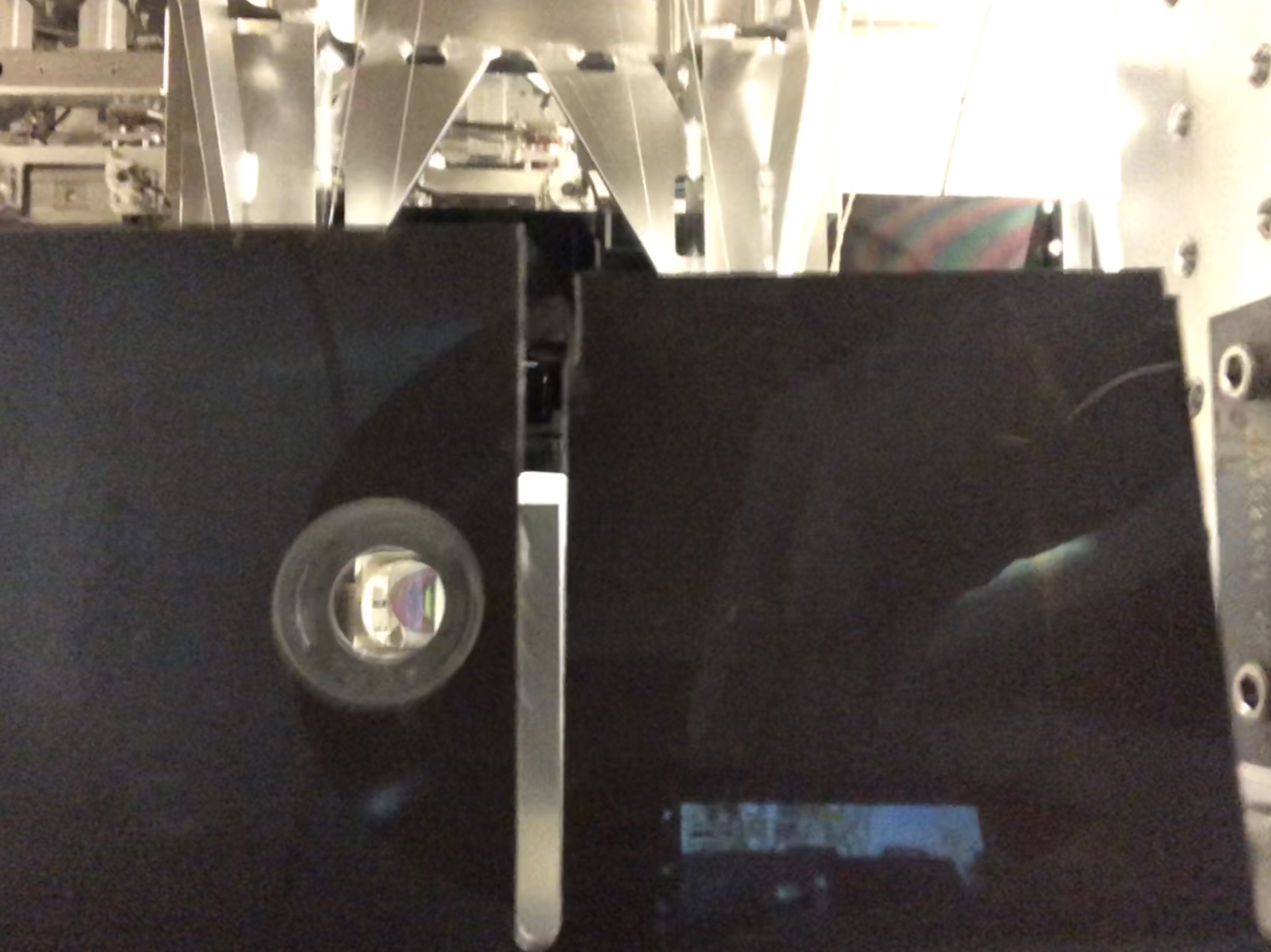
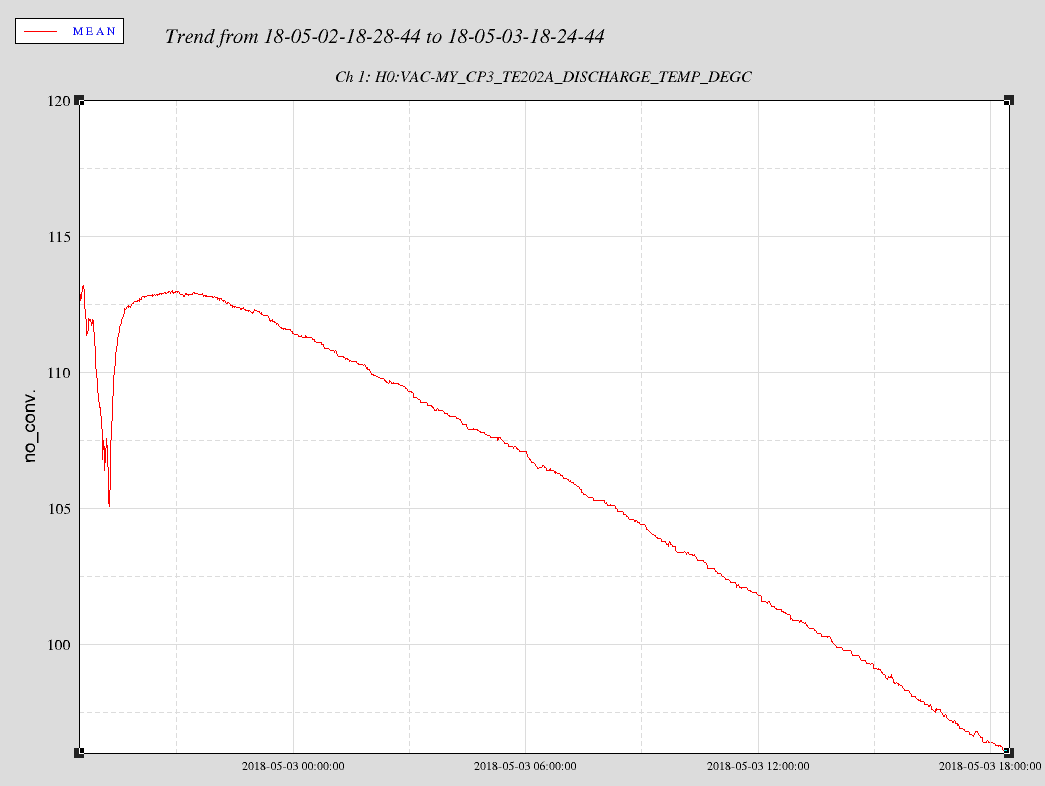
I came in to do some last DRMI/PRMI tests, and found the laser is off. This happened about 4:15 am pacific time. THe epics channels don't show any problems with the chillers, and it looks like the power watch dog tripped after the laser went off. (screenshot attached)
It looks like this possibly was the power watchdog. The NPRO power and currents have been stable since the HPO has been off, but the PSL-AMP_PWR channels show that the power had been dropping before the laser shut off. The Beckhoff status screen shows that everything is normal except the power watchdog.
Jason logged in remotely and restarted the PSL.
Various data trends are attached. At the time the power watchdog was engaged the output power was ~34.8 W. There is no indication that the power decreased by 15% since the watchdog was enabled. Trend data also suggests that the amplifier dropped out before the NPRO.
Indeed the front end laser was tripped off by the power watchdog. The trigger signal for the watchdog is the output of the third
amplifier stage and not the output of the front end - something that is rectified with the upcoming front end laser modifications.
When the watchdog was last engaged the power was ~106. The watchdog tripped in at ~90, ie at the 15% drop level. So the watchdog
worked as it should.
Oh and the drop in power is most likely due to the large drop in relative humidity. We know the e-beam sputtered coatings
for the pick-offs have issues with relative humidity.
I plan to make a check of the (3) turbo pumps in the LVEA as well as the LVEA purge-air supply (a.k.a. the "Kobelco") in the Mechanical Room. Following that, I'll be back and forth between the VPW (tweeking VBOC) and the Y-mid VEA doing work related to WP#7335. I won't be operating pwr tools, using the crane or climbing on ladders. Gerardo M. is my "phone buddy" and is aware that I am here and what I'm doing. I'll text him at 3 pm or whenever I leave whichever comes first. I'll also make a comment to this log entry when I leave.
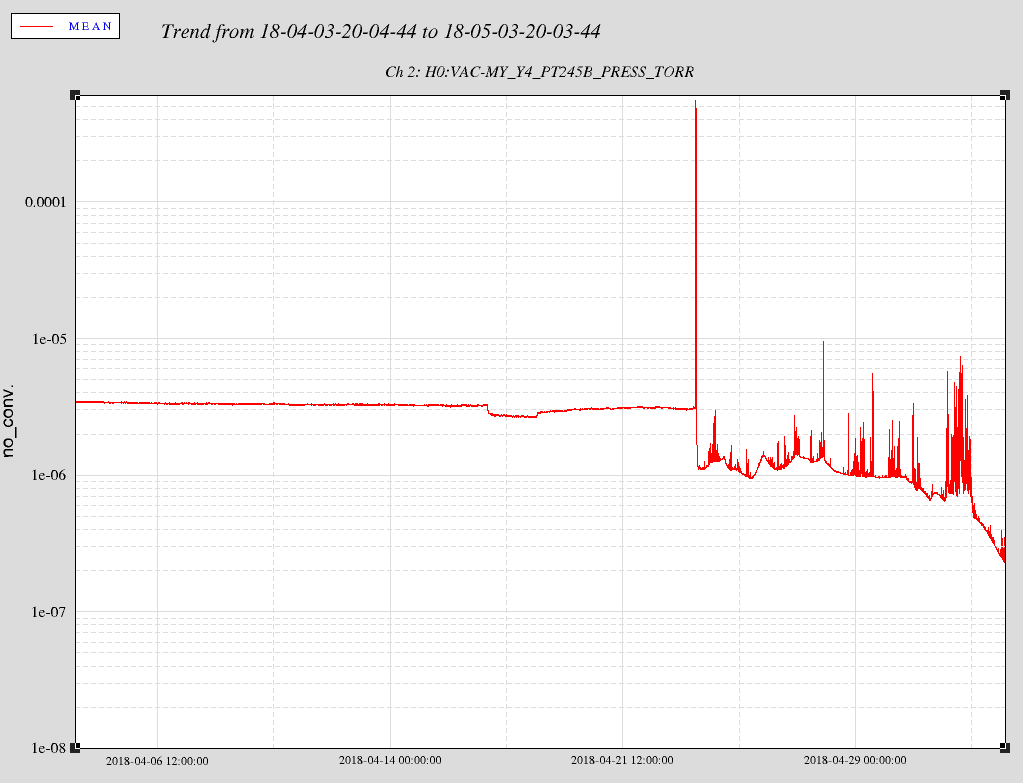
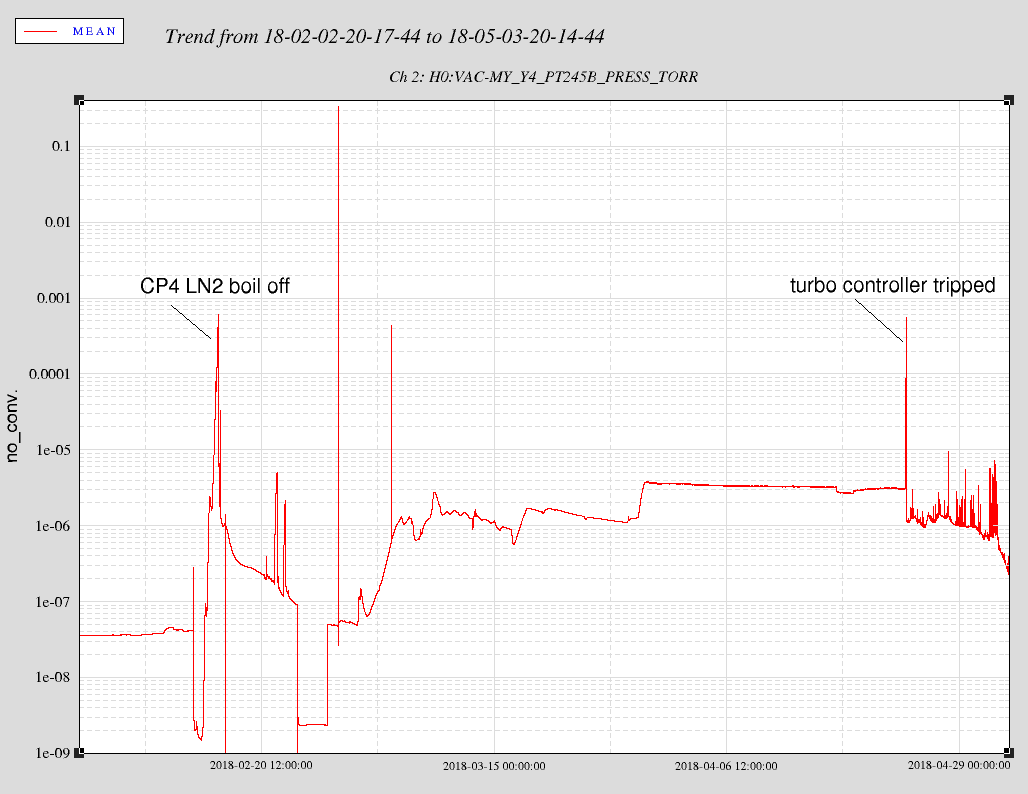
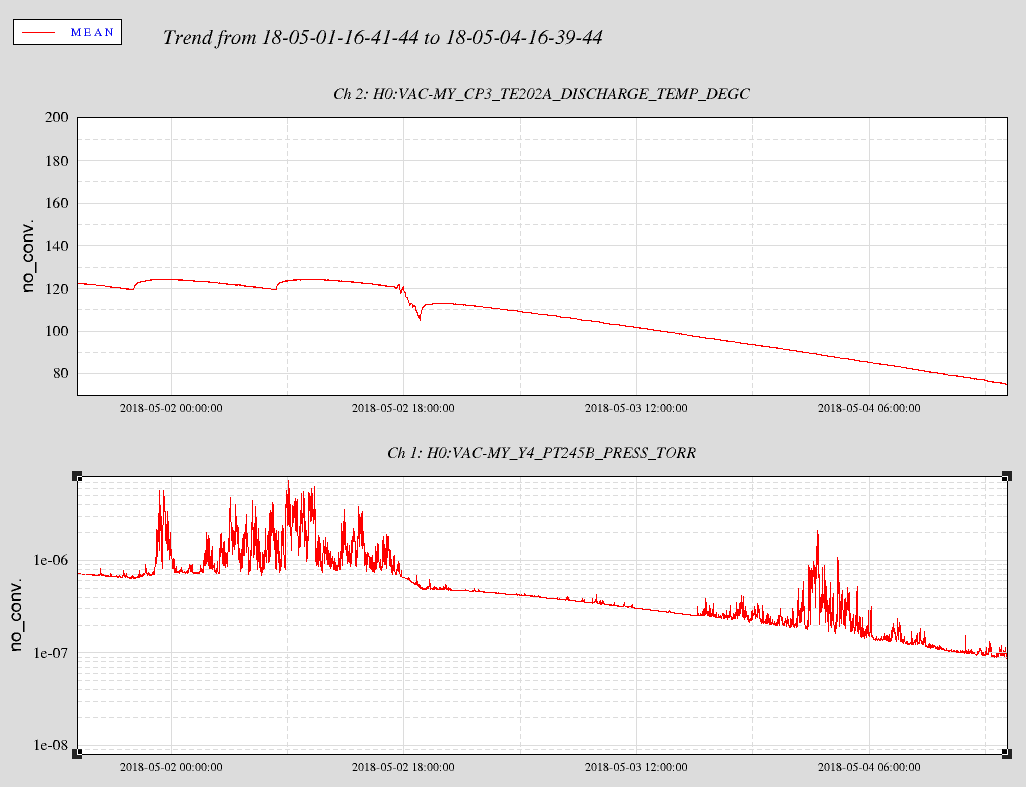
Baking of turbo+RGA components at CP4's 10" valve was started at around 1530 hrs. local time. I'll need to come back tomorrow morning and again tomorrow evening to make adjustments. I expect PT245 to increase as a response to the adjacent warming parts but have no idea what to expect as to rate of rise or peak value. I also can't remember what the alarm set point for PT245 is currently set to. So, we may get an alarm at some point. ~1700 hrs. local -> Kyle leaving site now.
Alarm set point is 1e-7 Torr for gauge at CP4.
Terry, Nutsinee
Got some measurement of the EOT faraday isolator on the green path:
Over all transmission ~ 91% (S and P pol)
Isolation ~ -26dB
Couldn't find a non-polarizing beam splitter for 532 so I used a dichroic beam splitter set at weird angle (~30 degree or so) to partially let light though. I used one of the precision photonics mirror found in the SQZ bay drawer to reflect transmitted light straight back into the faraday and measure the light that bounced back from the beam splitter. I couldn't measure the part of back reflected light that went though the beam splitter so I guesstimated the transmission knowing what came in and what gets transmitted on its way into the faraday. Terry thinks this number is disappointingly low, given the dodgy set up I'd take this number as an upper limit (in a sense that it can't get any worse). But again, given the nearly 10% loss maybe we just have a not-so-great isolator.
Correction: according to the manual here the measurement is still within the spec. The isolation is a bit low but that could be due to our dodgy set up.
This afternoon Georgia and I locked PRMI and ran a2l for PRM, PR2, and PR3.
| PRM | PR2 | PR3 | |
| P2L | 1.099 | 0.173 | 2.614 |
| Y2L | 0.046 | -8.34 | -0.050 |
There is a file called by the a2l scripts (for the matrices) that is no longer in the place it used to be. We added the ads matrix to the list of matrices used in ISC_library, so that these scripts now import and use that.
I have converted these P2L and A2L values to spot position using Alexa and Kiwamu's numbers for the HSTS (PRM & PR2) and HLTS (PR3), shown in alog-14788, and the same maths as in alog-40422.
| A2L | L_{euler} | a_{euler} | alpha | spot position* [mm] | |
| PRM p | 1.099 | .25 | 5.2382 |
0.0524 |
-2.21 |
| PRM y |
.046 |
.25 | 5.2382 | 0.00220 | 0.0926 |
| PR2 p | .173 | .25 | 5.2382 | 0.00826 | -0.348 |
| PR2 y | -8.34 | .25 | 5.2382 | -0.398 | -16.797 |
| PR3 p | 2.614 | .25 | 2.4096 | 0.271 | -14.2 |
| PR3 y | -0.05 | .25 | 2.4096 | -0.00518 | -0.492 |
*spot position relative to center of mirror, face-on.
Another round of alignment, rubbing checks, TFs, rinse, repeat were done today. We got to the reaction chain positioned in approximately the right location with respect to the main chain in the longitudinal direction and the pitch close enough that the inter-chain bump stops are approximately equidistant. We decided to stop at this point to run some TFs, which, of course, showed some issues. We eventually got the main chain free of rubbing and took a full suite of low resolution TFs, enough to tell us that we are healthy and free-swinging.
For next Monday, we have on the docket to do some cable and ESD checkouts with EE and take a set of fully suspended violin mode measurements. Then on to fine alignment of both chains.
TITLE: 02/09 Day Shift: 16:00-00:00 UTC (08:00-16:00 PST), all times posted in UTC
STATE of H1: Planned Engineering
INCOMING OPERATOR: None
LOG:
15:52 (7:52) Bubba, guest to LVEA, Vertex
16:00 (8:00) Start of shift
16:16 (8:16) Hugh to LVEA
16:16 (8:16) Bubba, guest out of LVEA
16:23 (8:23) Hugh out of LVEA
17:15 (9:15) Peter to LVEA
17:19 (9:19) Peter out of LVEA
17:24 (9:24) Corey to Optics Lab -- Pick up parts
17:24 (9:24) Karen to Mid-Y
17:33 (9:33) Corey to LVEA -- Deliver parts
17:50 (9:50) Peter, Phil to End-Y, End-X -- Access control installation
18:05 (10:05) Karen leaving Mid-Y
18:06 (10:06) Corey back from LVEA
18:23 (10:23) Travis to End-Y
18:26 (10:26) Terry to SQZ Bay -- Place optics, label cables
18:26 (10:26) Sheila, Georgia to HAM6
18:37 (10:37) Richard, Phil, Peter to End-X
18:40 (10:40) Nutsinee to SQZ Bay
18:40 (10:40) Travis back from End-Y, going to Optics Lab
18:49 (10:49) Mark to Mid-Y
18:56 (10:56) Mark to CER -- Sticker delivery
19:00 (11:00) Mark back from CER
19:01 (11:01) Jason to LVEA -- Grab cart
19:12 (11:12) Jason out of LVEA
19:13 (11:13) Mark back from Mid-Y
19:14 (11:14) Richard back from End-X
19:50 (11:50) Jason to PSL enclosure -- Delivering equipment
19:57 (11:57) Jason back from PSL enclosure
20:10 (12:10) Evan to Electronics Bay -- Take photos
20:11 (12:11) Nutsinee out of SQZ Bay
20:15 (12:15) Evan back from Electronics Bay
20:42 (12:42) Corey back from Optics Lab
20:47 (12:47) Nutsinee to SQZ Bay
20:53 (12:53) Elizabeth to End-X -- Installing network switch
21:07 (13:07) Hugh to Optics Lab
21:10 (13:10) Betsy and Travis to End-Y -- ETMY work
21:19 (13:19) Elizabeth back from End-X
21:32 (13:32) Mark to Mid-X
21:52 (13:52) Nutsinee back from SQZ Bay
23:12 (15:12) Hugh to LVEA
23:35 (15:35) Ken back from Mid-X
23:49 (15:49) Travis and Betsy back from End-Y
23:59 (15:59) Hugh out of LVEA
00:00 (16:00) End of shift
Marc, Daniel
We installed the RF multipliers and the RF distribution amplifiers for the the 118.3 MHz (13th harmonics) and 72.8 MHz (8th harmonics) signal chains. The entire RF distribution chain now shows green. There is still a temporary 2W amplifier mounted at the bottom of ISC-C4 to drive the EOM.
[Georgia, Jenne]
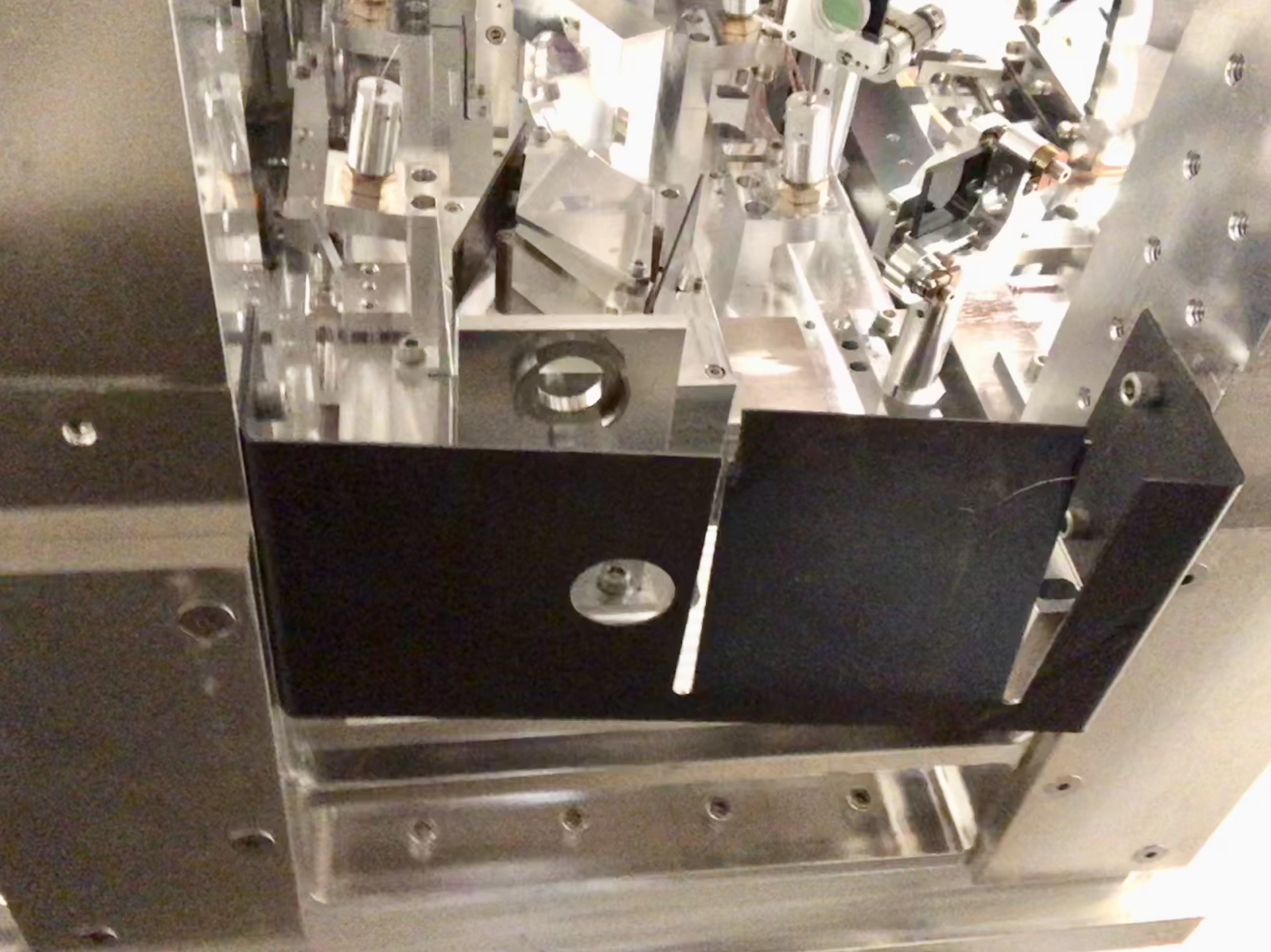
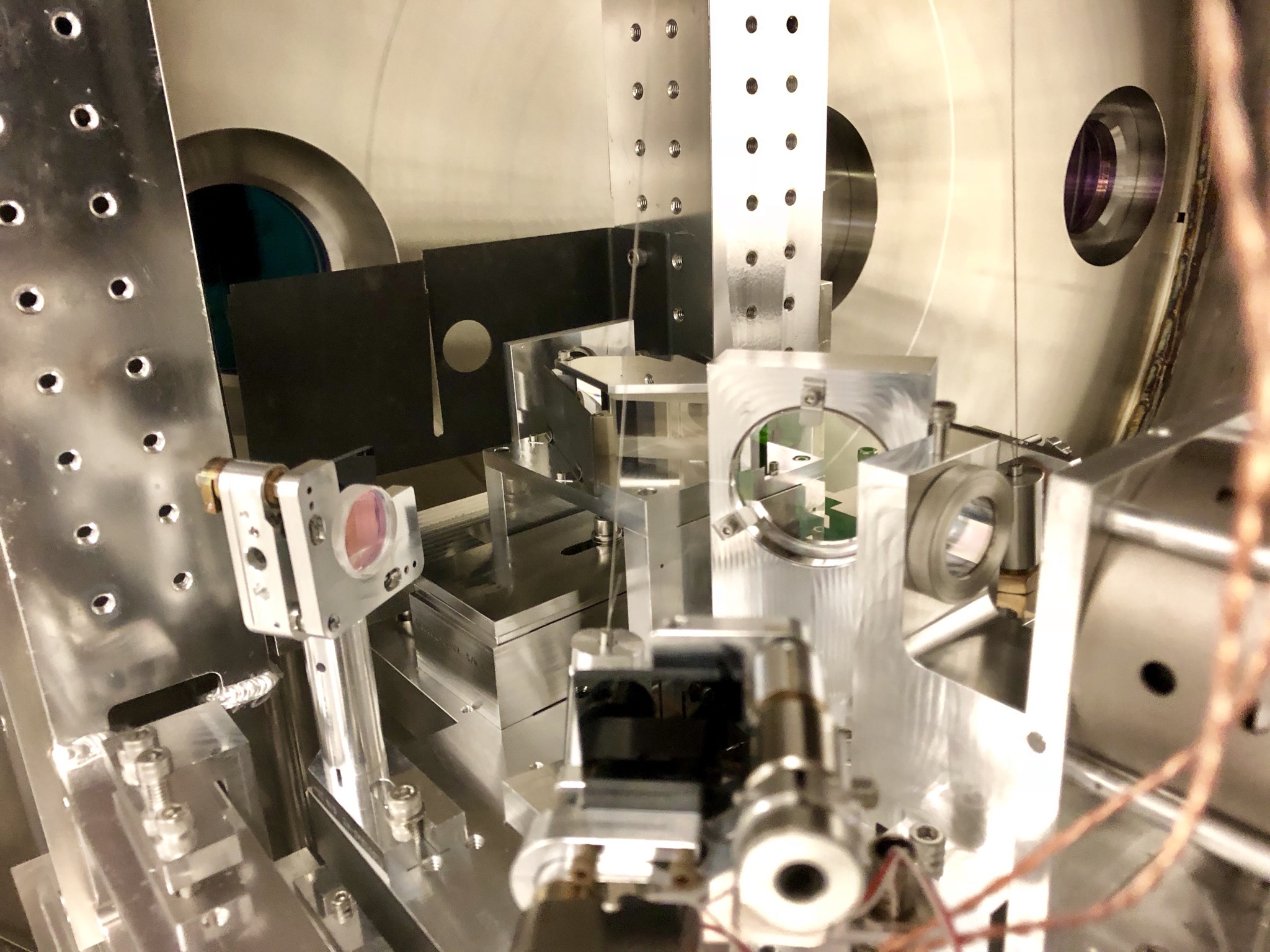
With the new alignment after the arm peek and the locking of DRMI, we popped in to HAM6 to confirm that all of the clearances are okay, and the beam is well centered on all of the in-vac optics. Summary: we need a dog clamp (email already out to Corey to grab us some), and a teeny bit more work tomorrow, then we're done.
* Clearances seem good, although it would be good for another set of eyes to have a look at the shutter-closed wire clearance.
* We were a bit high on the last steering mirror and the lens in front of AS_C, so Georgia centered us up using the steering mirrors closer to the OM1 transmission point.
* We need to re-look at the AS WFS path. We're a little too close to the edge of the first mirror in transmission of OM3, but can't move the mirror appropriately until we have another dog clamp. Right now it's got one dog, and one bolt in a hole. But, we need to move another mm or so, and then won't be able to use the bolt hole. We're a little close in range on the steering mirror in front of AS_B, so we might also relieve some of that with the upstream mirrors while we're in chamber tomorrow. Also, the beam isn't centered well enough on the BS that splits the 2 WFS beams, or on the lens in front of that BS. So, basically the whole AS WFS path needs attention, but the first thing is that first mirror that needs a new dog clamp.
* There is a connection on the fast shutter that seems like it might be loose. Georgia will post a photo in a comment to this alog. We should make sure this is fully seated.
Here's the photo of the potentially dodgey shutter connection. I'm not sure what these are supposed to look, but it seems like it's on an angle and maybe not all the way in.
We went in today and successfully finished fixing up the AS WFS path.
There are 2 steering mirrors, a lens, and then the beamsplitter before the WFSs. We shifted the first steering mirror after OM3 position so the beam hits its center (clamped with a new dog), and steered this mirror to re-center the beam on the second steering mirror. We used the second steering mirror to center the beam on AS_A. We then re-centered the beam on AS_B with the mirror directly in front of it, this is now no longer at the edge of its range. The fine alignment was done using the AS-centering and OMC QPD loops.
TITLE: 02/08 Day Shift: 16:00-00:00 UTC (08:00-16:00 PST), all times posted in UTC
STATE of H1: Planned Engineering
INCOMING OPERATOR: None
16:00 (8:00) Start of shift
16:27 (8:27) Ken to Mid-Y
16:41 (8:41) Bartlett to cleaning area -- may open rolling door to receiving area
16:41 (8:41) Mark and Bubba to Mid-Y
17:27 (9:27) Bartlett back from cleaning area
17:42 (9:42) Mark and Bubba back from Mid-Y
17:42 (9:42) Mark to End-X, Mid-Y -- Grab clean room sock
17:56 (9:56) Kyle to LVEA, Mid-Y -- Inspect pipes
18:07 (10:07) Dave to CER -- Take photos
18:16 (10:16) Dave back from CER
18:50 (10:50) Hugh to End-X
19:03 (11:03) Nutsinee to SQZ Bay
19:07 (11:07) Phil and Richard to End-X -- Safety testing
19:29 (11:29) Hugh back from End-X
19:55 (11:55) Karen to Mid-Y -- Cleaning
19:59 (11:59) Phil and Richard back from End-X
20:12 (12:12) Jason and Robert to PSL enclosure -- Look for noise
20:15 (12:15) Nutsinee back from SQZ Bay
20:25 (12:25) Jason and Robert back from PSL enclosure
20:39 (12:39) Karen heading back from Mid-Y
21:12 (13:12) Bartlett to LVEA -- ITM camera work
21:36 (13:36) Phil and Peter to End-X -- Safety testing
21:37 (13:37) Mark to Mid-Y -- Put light bulbs in
21:42 (13:42) Hugh to Optics Lab, LVEA -- Look for cables
21:47 (13:47) Travis, Jim, Bubba to End-X
21:48 (13:48) Ed, Jason to Mid-X -- Grab amplifiers
21:56 (13:56) Jenne and Georgia to HAM6 -- Verify no clipping
21:56 (13:56) Bartlett out of the LVEA
22:23 (14:23) Travis, Jim, Bubba back from End-X
22:24 (14:24) Ed, Jason back from Mid-X
22:36 (14:36) Hugh out of LVEA
22:47 (14:47) Nutsinee to Optics Lab/SQZ Bay
23:41 (15:41) Jenne and Georgia back from HAM6
23:49 (15:49) Mark back from Mid-Y
00:00 (16:00) End of shift
-Commissioners going into HAM 6 late this week/early next week
-ITM cameras need to be locked down
-ITMY SAT amp swap next week
-ESD checkout set for Monday
-EX CR gross cleaning early next week
-EX move weld room (crane)
-HAM6 door off on Monday
-HVAC in lab ~Mar 5th
Tuesday Maintenance
-OAF Model
-ISI Model deferred ~Feb 20th
-DAQ Restart
Robert, Nutsinee
We have been having a mysterious SHG PZT drift at a rate of 2V/hr overnight when the table was shut and the fan was turned off. The downward drift kept on going for at least 20 hours without a sign of it turning back. The cause is still unclear (I will be posting more about this later in a separate alog). To gather more information we installed a temporary thermistor (a 200k Ohms resistor) near by the SHG housing to see how the temperature behaves around the area (the sensor will move around, for now that's where we started). The box is powered at 5V (external temporary power supply). We borrowed PEM patch panel for the input voltage and the read back. The read back is routed to the PEM rack by HAM4. The channel is PEM-CS_ADC_28_2k_OUT_DQ. The thermistor calibration is 100mV/C.
Terry, Daniel, Nutsinee
All four flippers now talk to Beckhoff and they work fine. The green pump flipper input was hooked up with a temporary cable for testing purpose, seed flipper doesn't have a read back cable hooked up yet (one of the two missing cables). Right now ON means flipper UP, and OFF means flipper DOWN. Nominal stage hasn't been set up for any of these flippers.
A quick guide to configure the Thorlabs MFF101 flippers with APT software:
0) Find a Window machine, download APT software from Thorlabs website (just look up the flipper model, software download is on the right). Run the .exe file and hit a bunch of nexts to finish the installation.
1) Hook up your flipper via a usb cable (should come with the flipper). Go to APT User found in Program file>Thorlabs. Not the APT Config that the software auto generates the icon on your desktop.
2) Confirms that your software and your flipper is talking to each other but clicking Position2 and Position1. Position2 is flipper UP, Position1 is flipper DOWN (in my case anyway, the manual says otherwise). This configuration is hard coded. Don't bother trying to change it. Once that's confirmed, go to Settings.
3) Digital I/O Pin 1 Operating Mode should be "Input: Goto Position" and the Digital I/O Pin 2 Operating Mode should be "Output: At Position". That configures your I/O input and output for Beckhoff communications. Check "Persist Settings to Hardware" box then hit OK. As far as I'm concerned. that's all you need.
4) Now try clicking Position1 button again. The flipper should flip and come right back up. That's normal. The flipper will only stay in down position as long as you hold the output value, you can't do that with the APT software, Beckhoff could.
And you're done.
Jenne, Georgia, Sheila
After yesterday's peak down the X arm, we worked on locking the vertex with our ITMX and input beam pointing set by the X arm.
We started with locking PRX+PRY, this worked fine, the refl spot is low and to the left on the REFL camera. We had to make some guardian adjustments throughout the day in places where we were using ASAIR sensors.
With PRX+PRY locked, we walked the RM alignments until they were close enough that we could turn on the REFL WFS centering loops.
We aligned MICH by moving ITMY, then later adjusted the beam splitter. We were able to lock MICH using the ASC_AS_B_RF45 sum, to do so we needed to flip the sign. We also reduced the gain setting by a factor of 2.
We locked PRMI without any problems, and adjusted the alignment by hand.
We then set the SR3 alignment for the new beam by feeding AS_C centering back to SR2 and moving SR3 until we started to loose power on AS_C_SUM. We set SR2 to center on AS_C, and searched for the SRM alignment that gave us SRY flashes. We were able to lock SRY using the new AS45 sensor, with a sign flip and no gain adjustment.
We locked DRMI, the only things that were different from the guardian default settings was that we reduced the MICH trigger from 20 to 7, and we have 3.3W into the IMC. We weren't able to turn on ASC but we will come back to that tomorrow.
With the new alignment, Sheila and I checked that we could resonate beam in the OMC. With DRMI locked, we turned the PSL injected power down until we had only a few mW in HAM6 (as measured by AS_C). Then we realigned OM3 and were able to turn on the regular OMC ASC loops (the centering loops for the AS WFS were already on). We ended up not getting the OMC to lock, but can certainly scan past resonances, so we should be fine alignment-wise with the OMC.
Ken (electrician) started to strip wiring from these two large gate valves as prep for upcoming CP4 Bake. Both GV11 and GV12 are hard-closed and locked out. The MEDM OPEN/CLOSE status is indicating YELLOW as the result of lifted limit switch wiring.
Daniel, Sheila, Nutsinee
Nominal laser output power measured (with a PDA100A) as 18 mW through a 98% beam splitter (Rp 98%). Transimpedance=1500 Ohms, responsivity=.221A/W (variable gain setting on PDA100A set to 0dB).
Green output power measured (with a PDA100A) as 2 mW through 95% beam splitter (~100mW IR -> 40mW green). Transimpedance=1500 Ohms, responsivity=.313A/W (variable gain setting on PDA100A set to 0dB).
NewFocus 1611 detector to lock laser to PSL: Beat frequency signal measured with spectrum analyser ~ -14dBm at 155MHz as measured from the -1dB coupled output on the TTFSS pre-amp. Note there is a signal decrease by around 5dB with large (squeezing) laser frequency shifts (~500MHz or more) that seems to be due to beam pointing errors on the 1611 detector. However locking signal depends on phase and is largely insensitive to amplitude fluctuations so we should be ok. Responsivity=.75A/W, Transimpedance=-10k Ohm, gain setting 0, Voltage = -1.6V.
Power to 1611 detector: .30mW from PSL + .67mW from sqz laser -> .49mW on detector after 50/50 beam-splitter. MEDM screen reads .21mW ?? If the transimpedance is adjusted to -5k Ohm MEDM screen reads correct, but I suspect something is still odd about this.
Fibre (PSL) power rejected = 1.3 uW measured with a PD1A detector (2 K impedance).
Fibre (PSL) power launched = 27 uW measured with a PD1A detector from a 10% beam splitter. Disabled gain selection setting (alog 40161) has been corrected. Note the beamsplitter was changed from 2% transmission in the original drawing (BS8) to 10% transmission.
I calibrated three more PDs today. Both are Thorlabs SM1PD1A. Assuming a transimpedance of 2kOhms.
CLF Rejected PD: measured 4mW through a PBS cube. Responsivity = 4.1 A/W
Seed Launch PD: measured 9uW through a 98:2 BS. Responsivity = 4 A/W.
LO Launch PD: So little light gets through the 95:5 beam splitter so I measured the power before the beam splitter, take 5 percent of that and calibrate the PD accprdingly. The measured power (before BS10) was 85um. 5% of that is about 4um. I added 30dB gain to the detector and set the responsivity to 0.07 A/W to match what it's supposed to read.
The only photodiode left to calibrate is the CLF Launch PD.
CLF launch PD calibrated last week before the table was craned. Power transmitted was 44.4mW. Responsivity = 0.4 A/W.
Correction to the above comment, CLF Rejected and Seed Launch PD have resposivity of 0.41 and 0.4 A/W respectively.