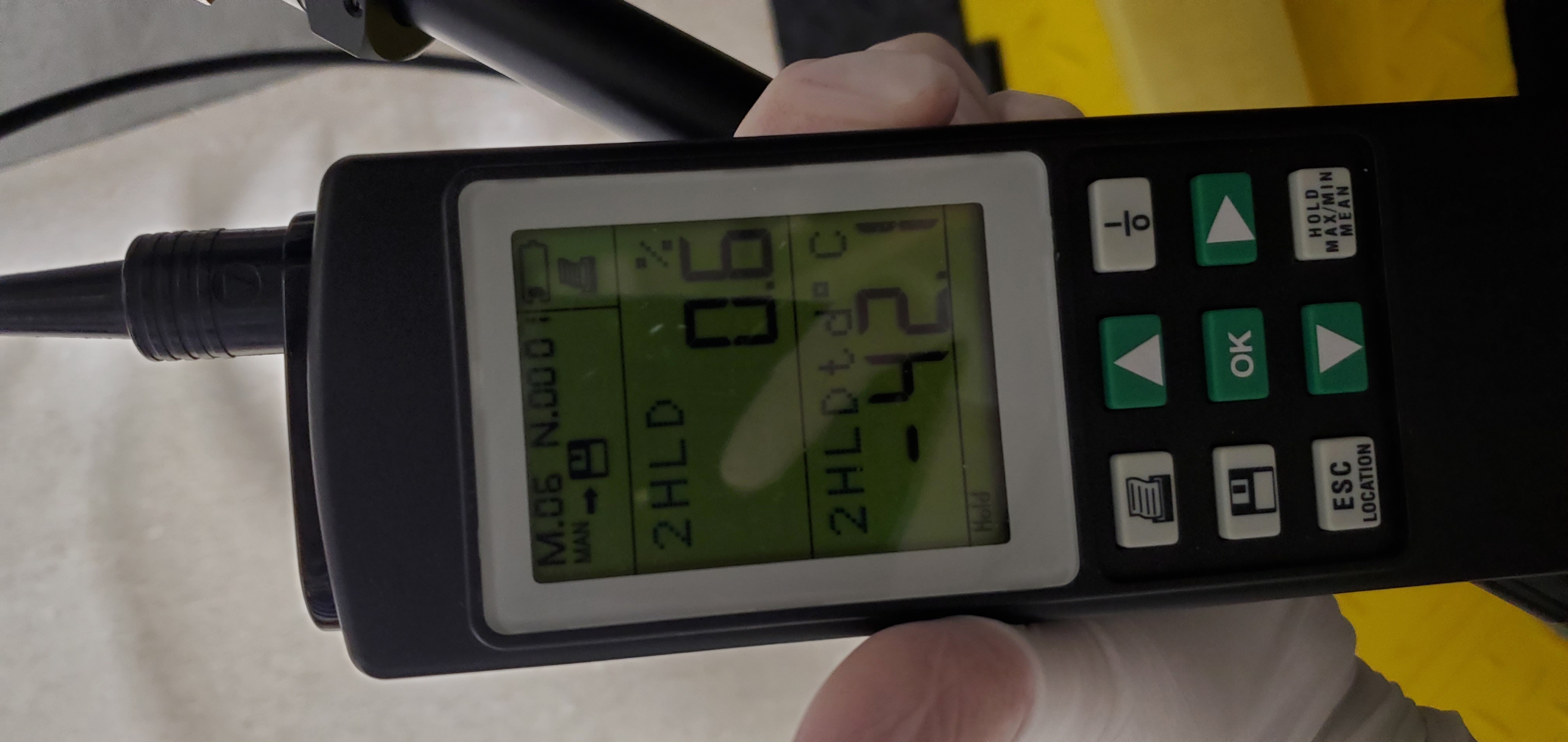
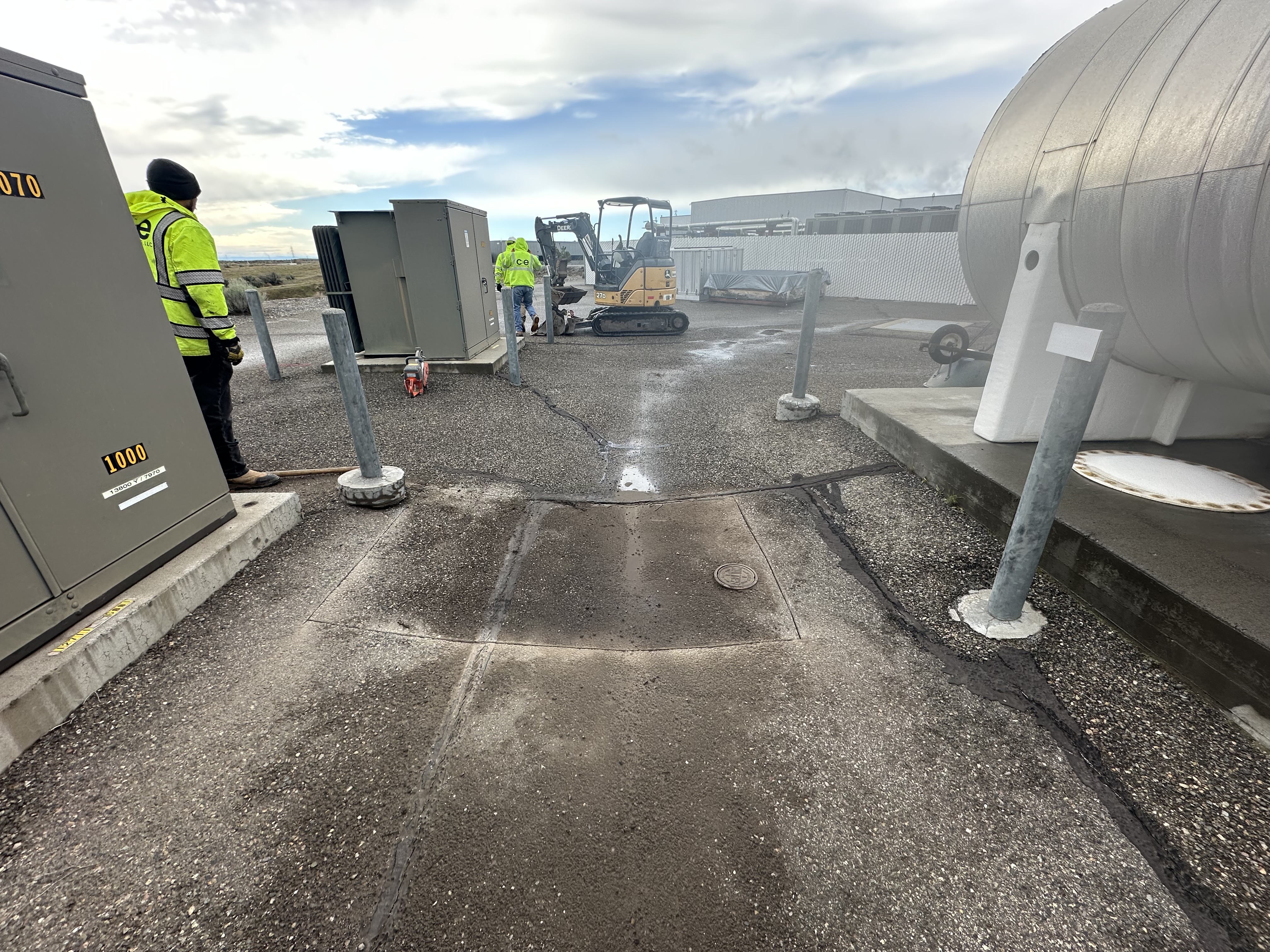
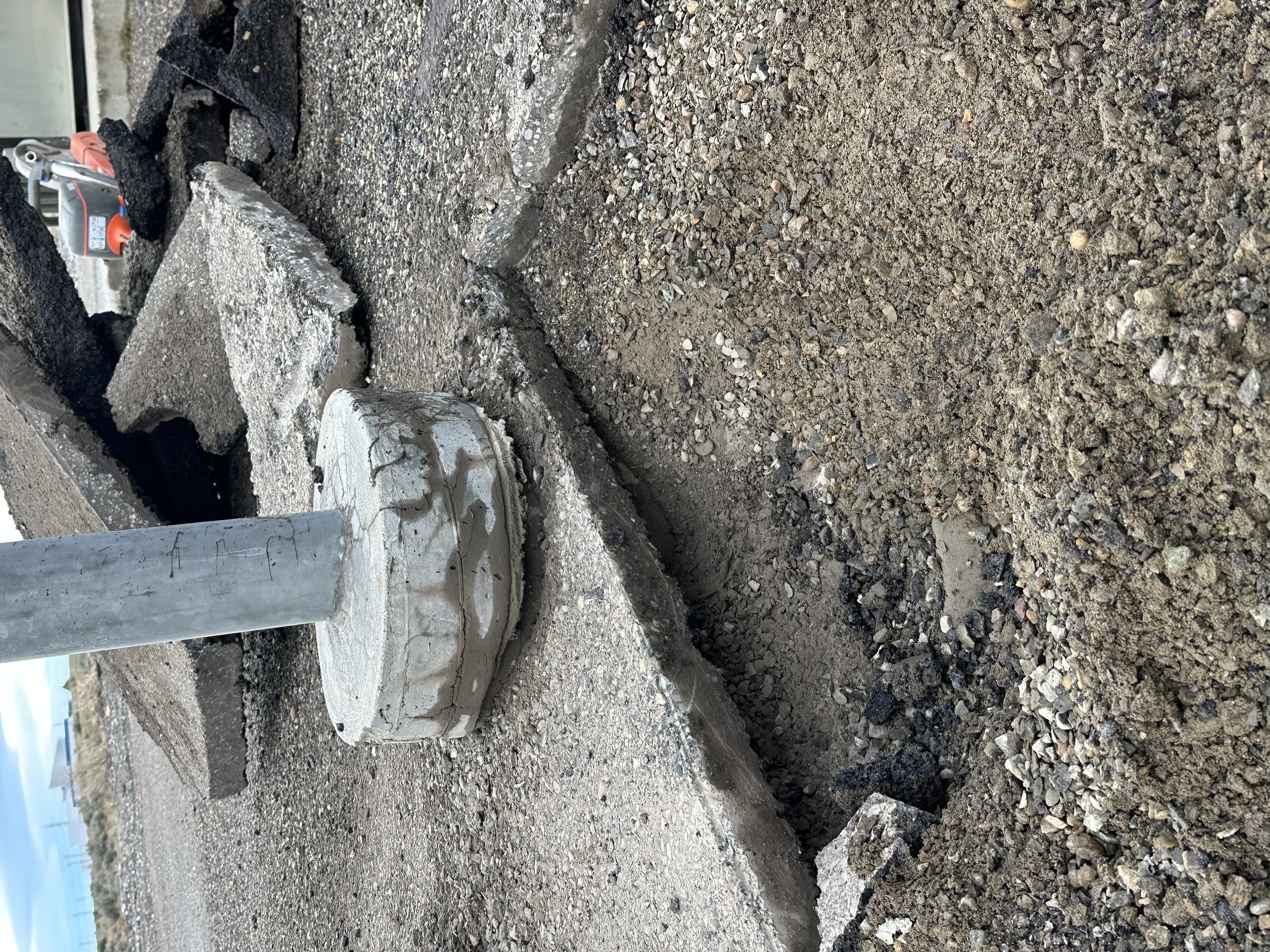
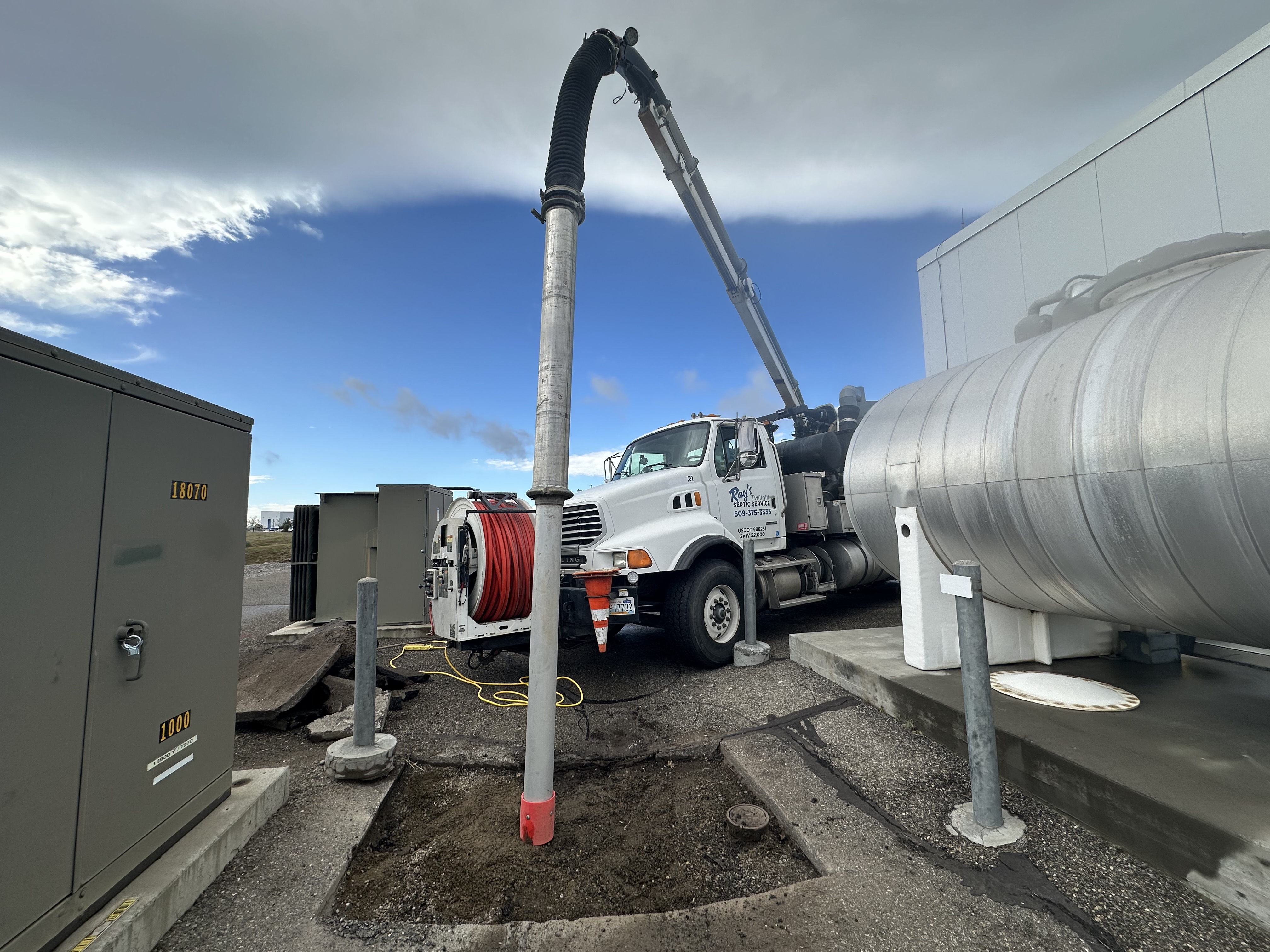
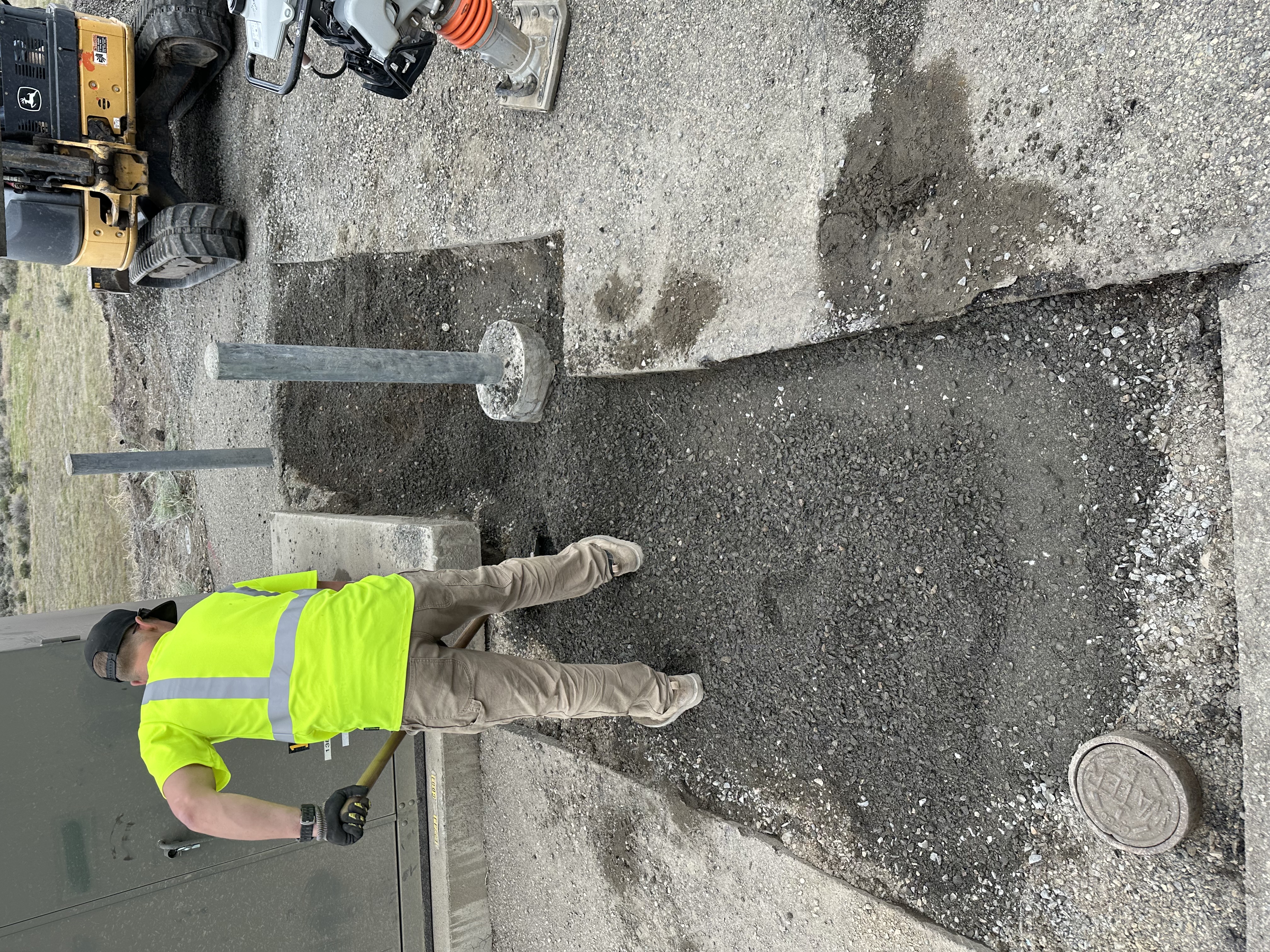
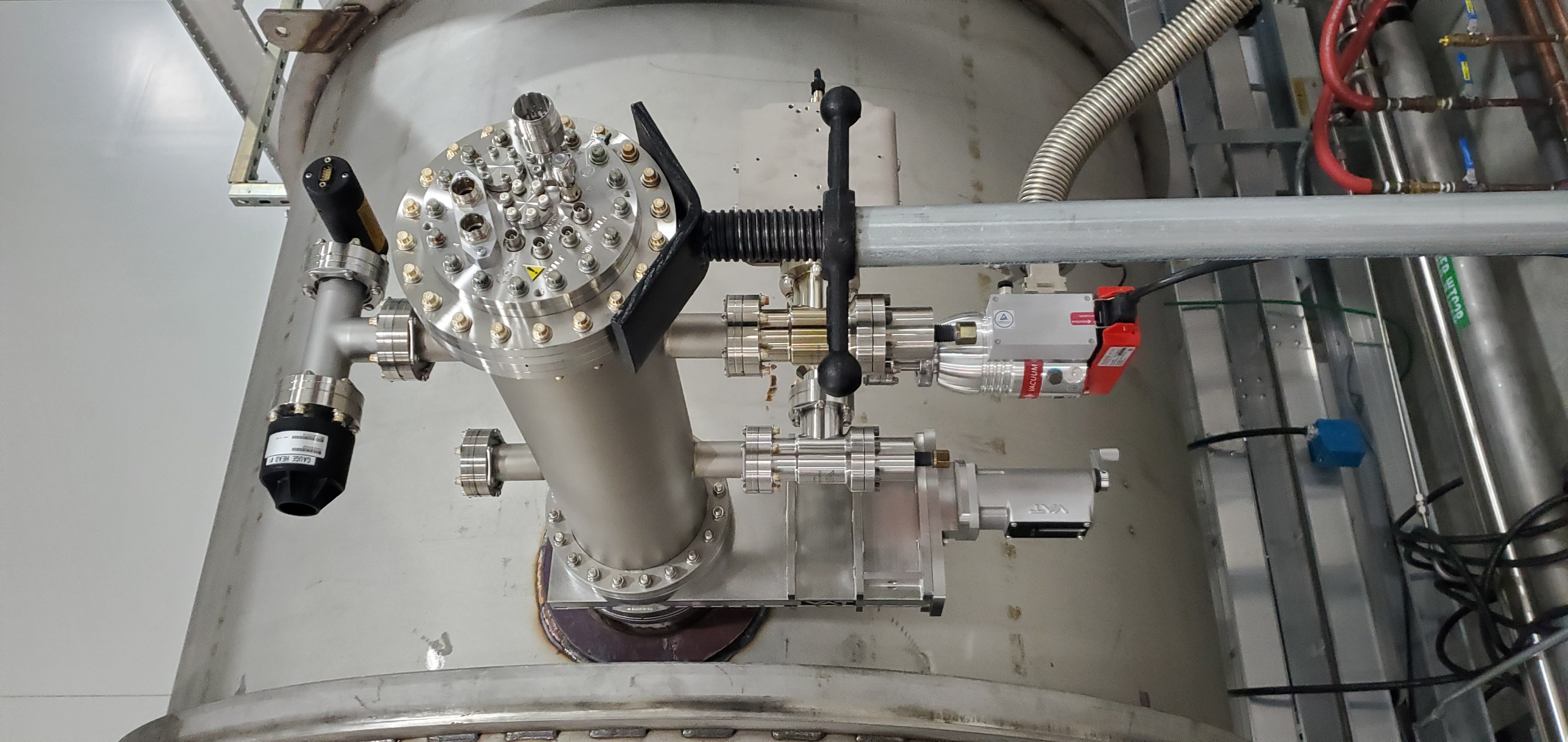
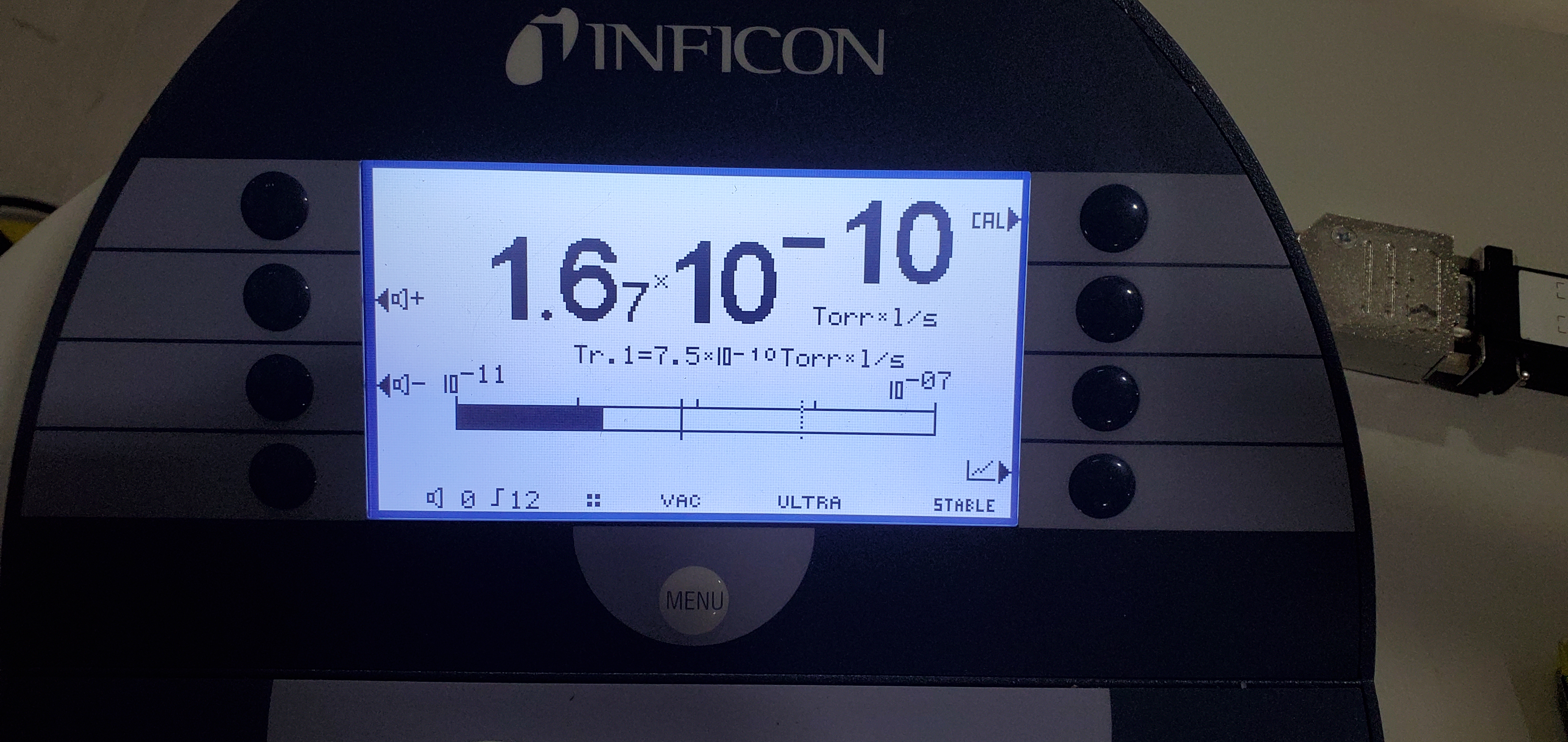
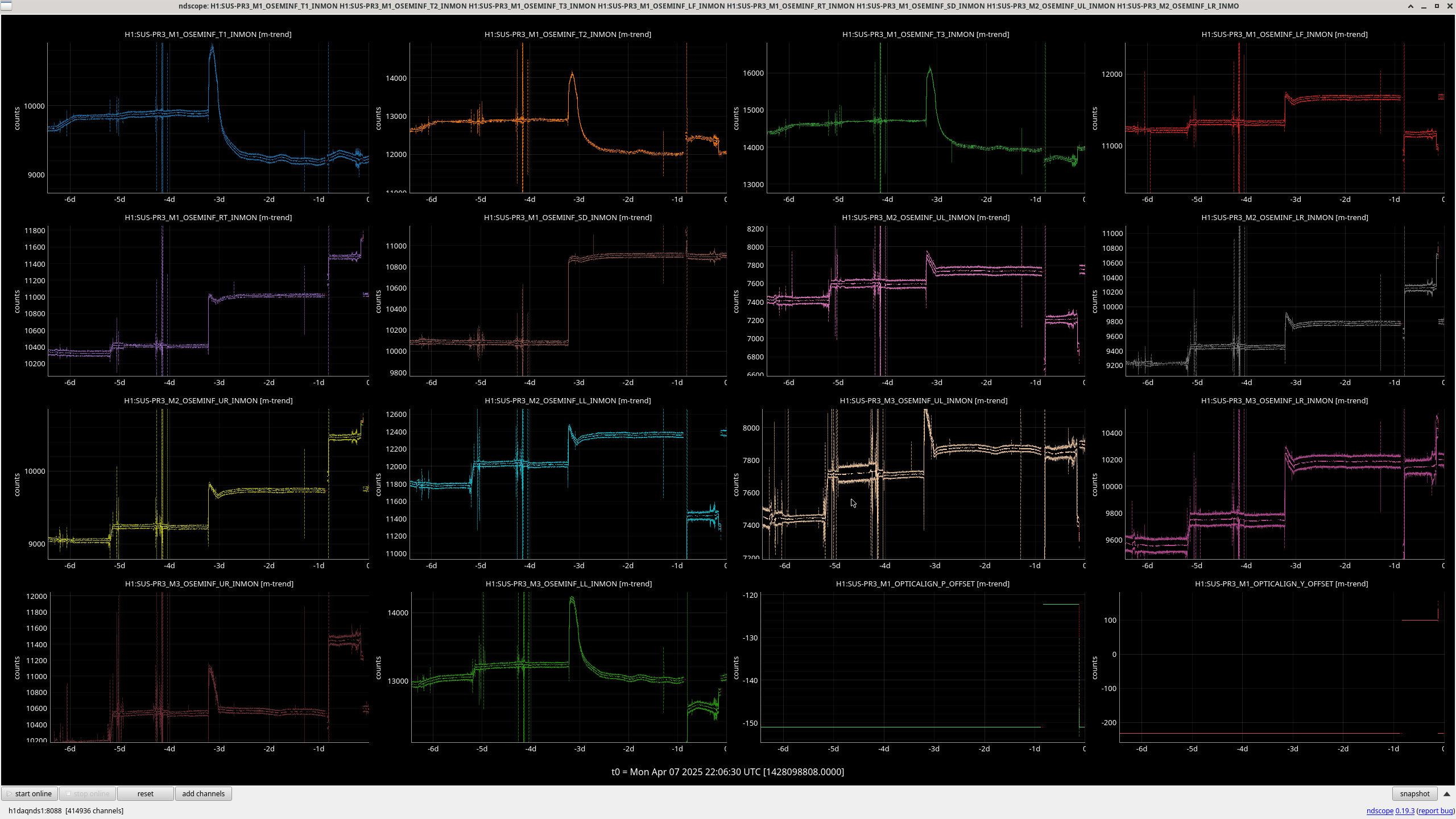
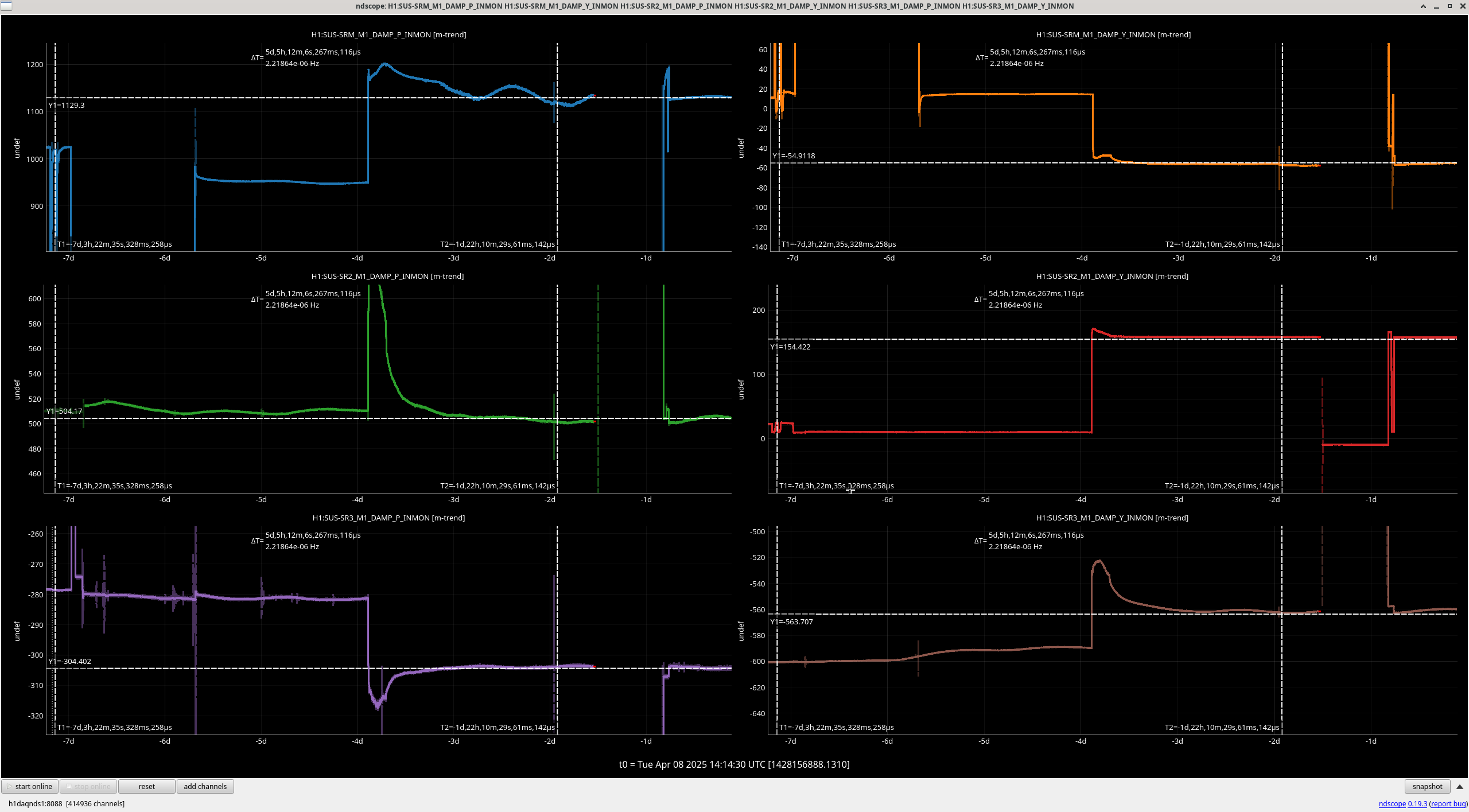
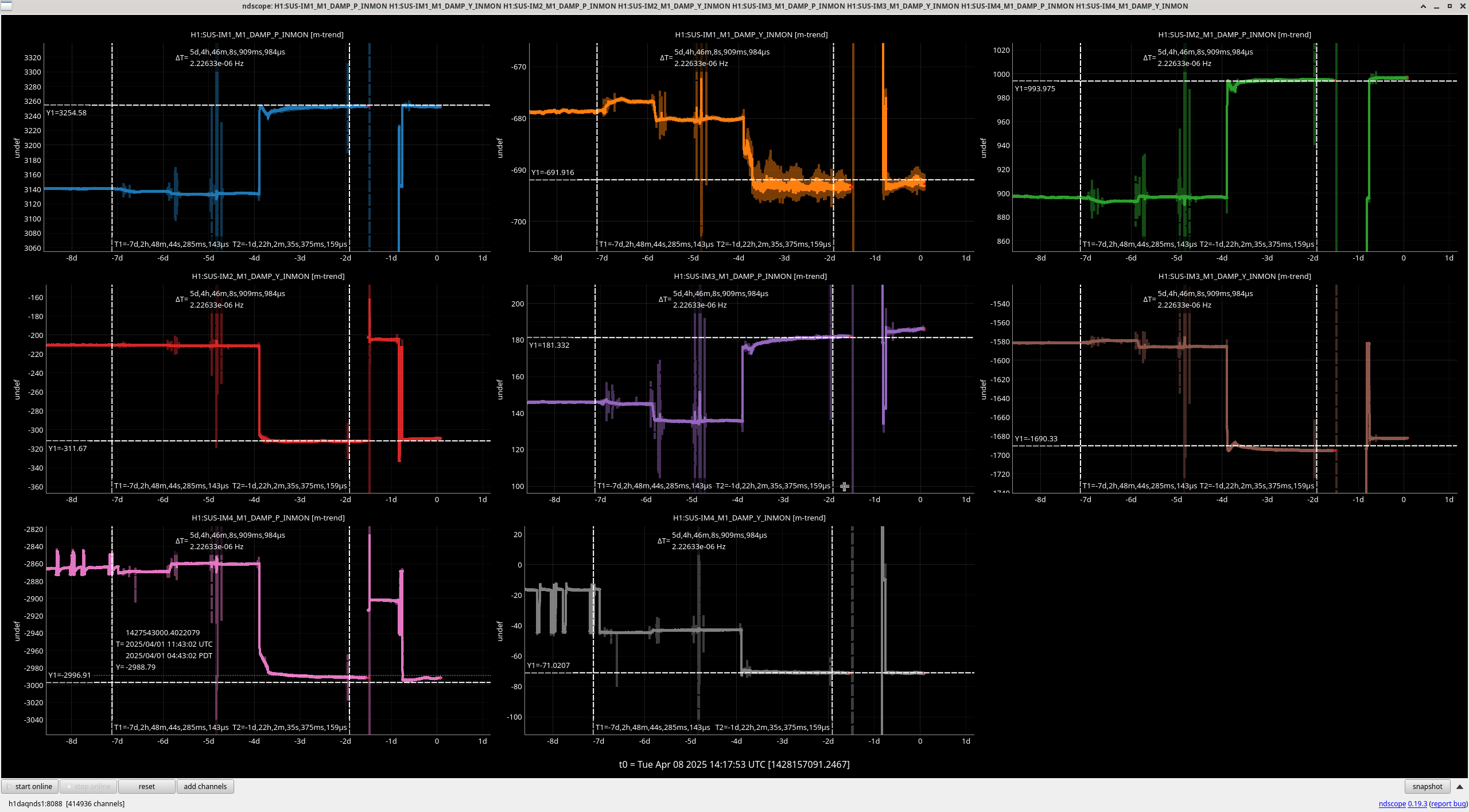
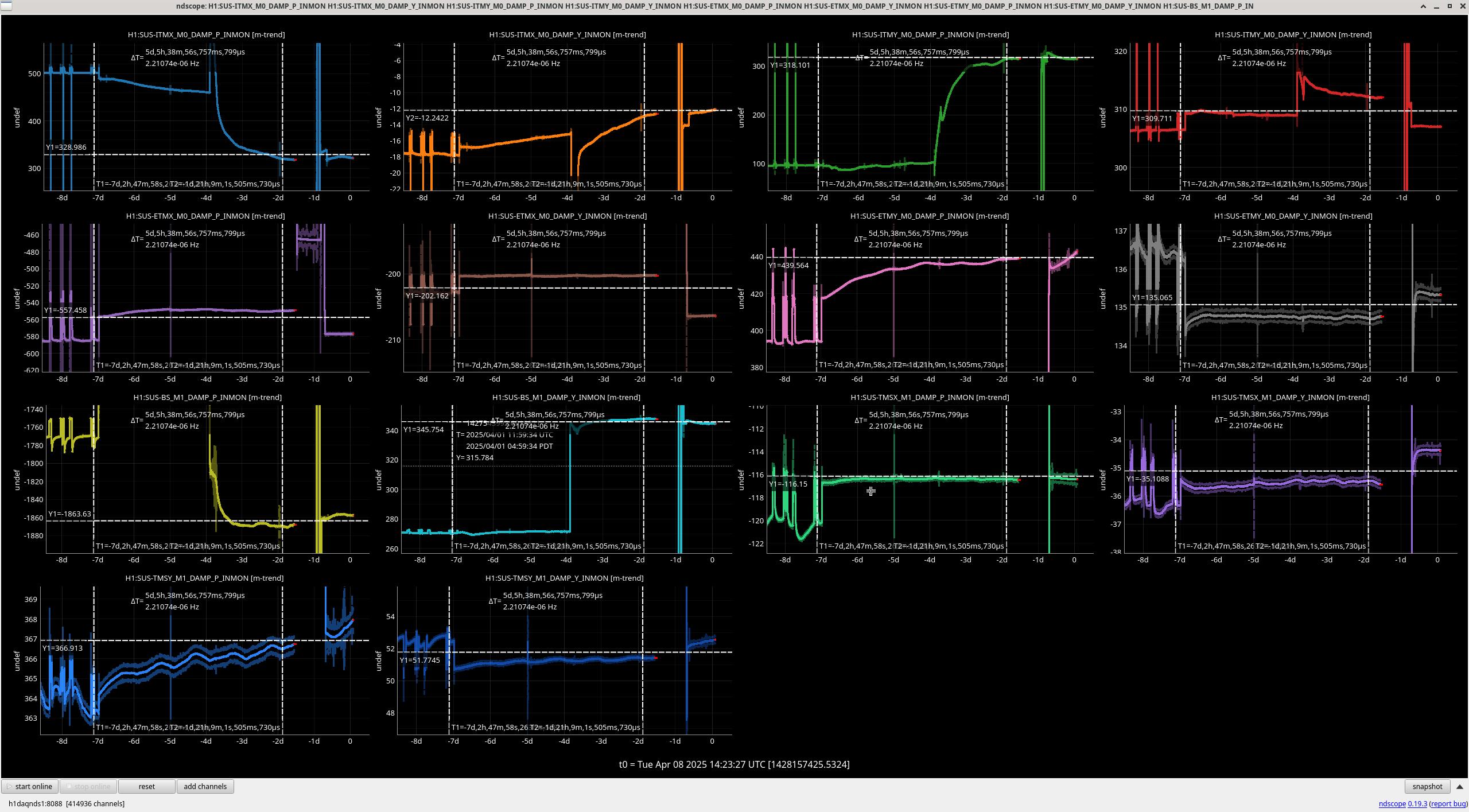
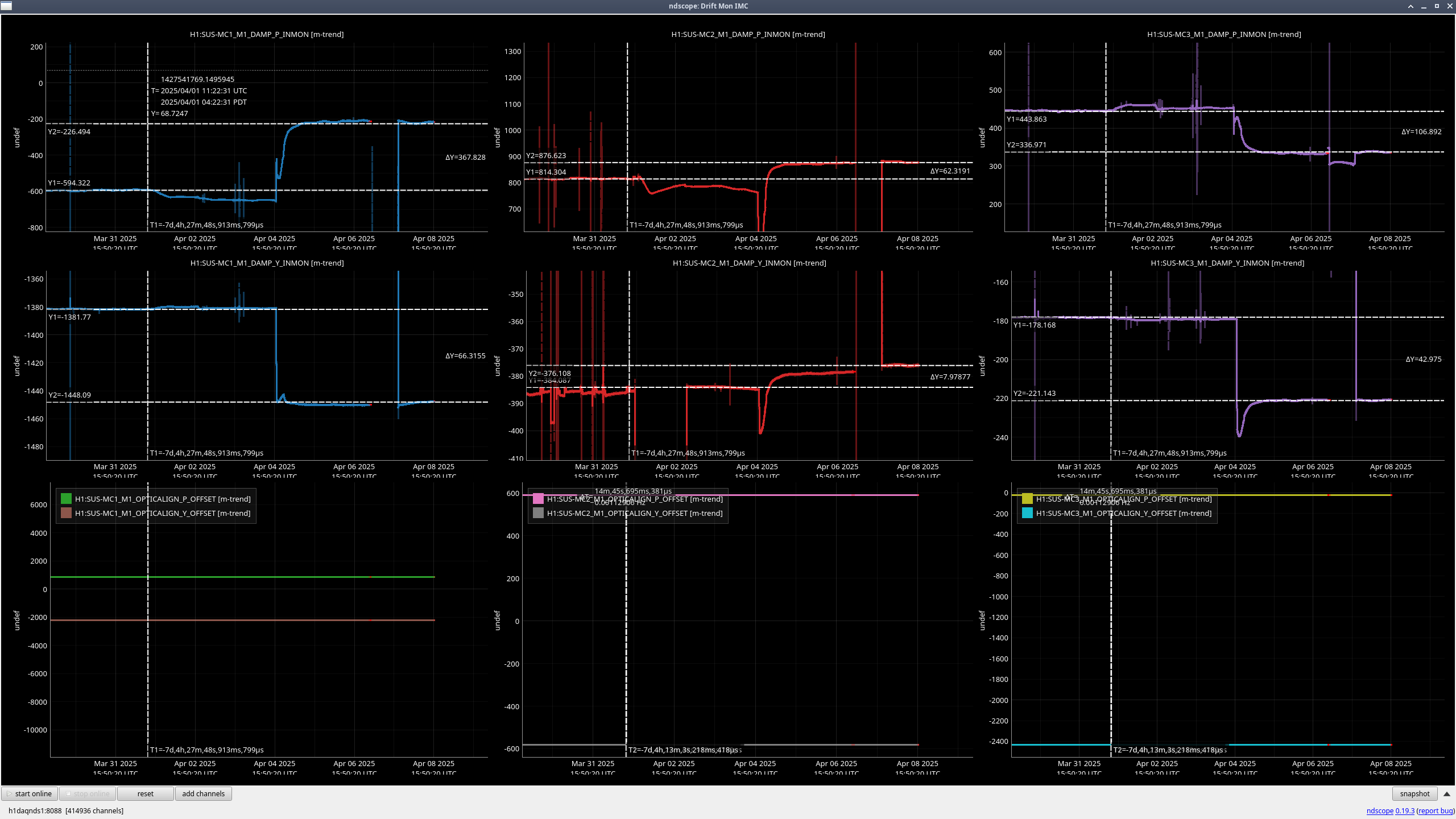
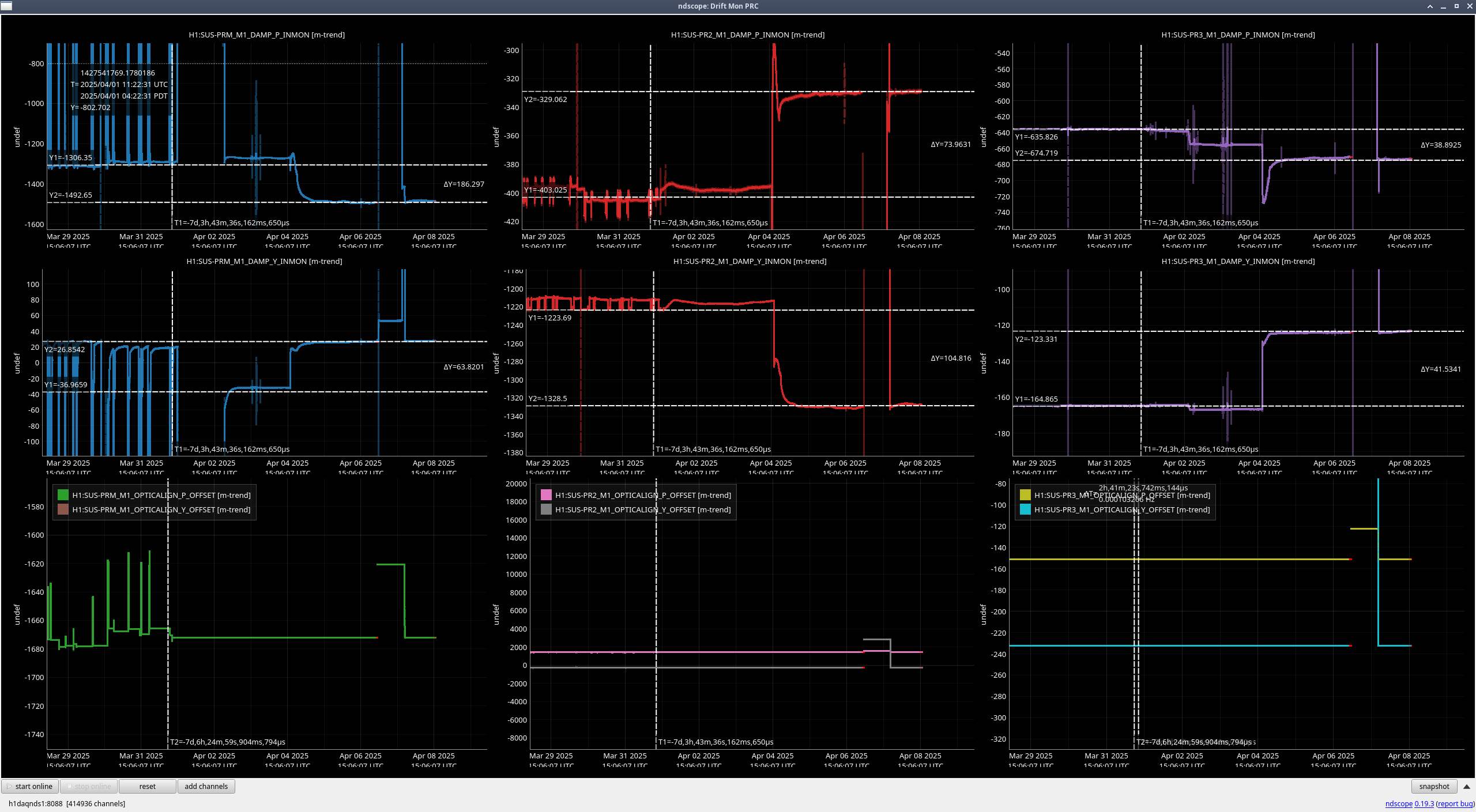
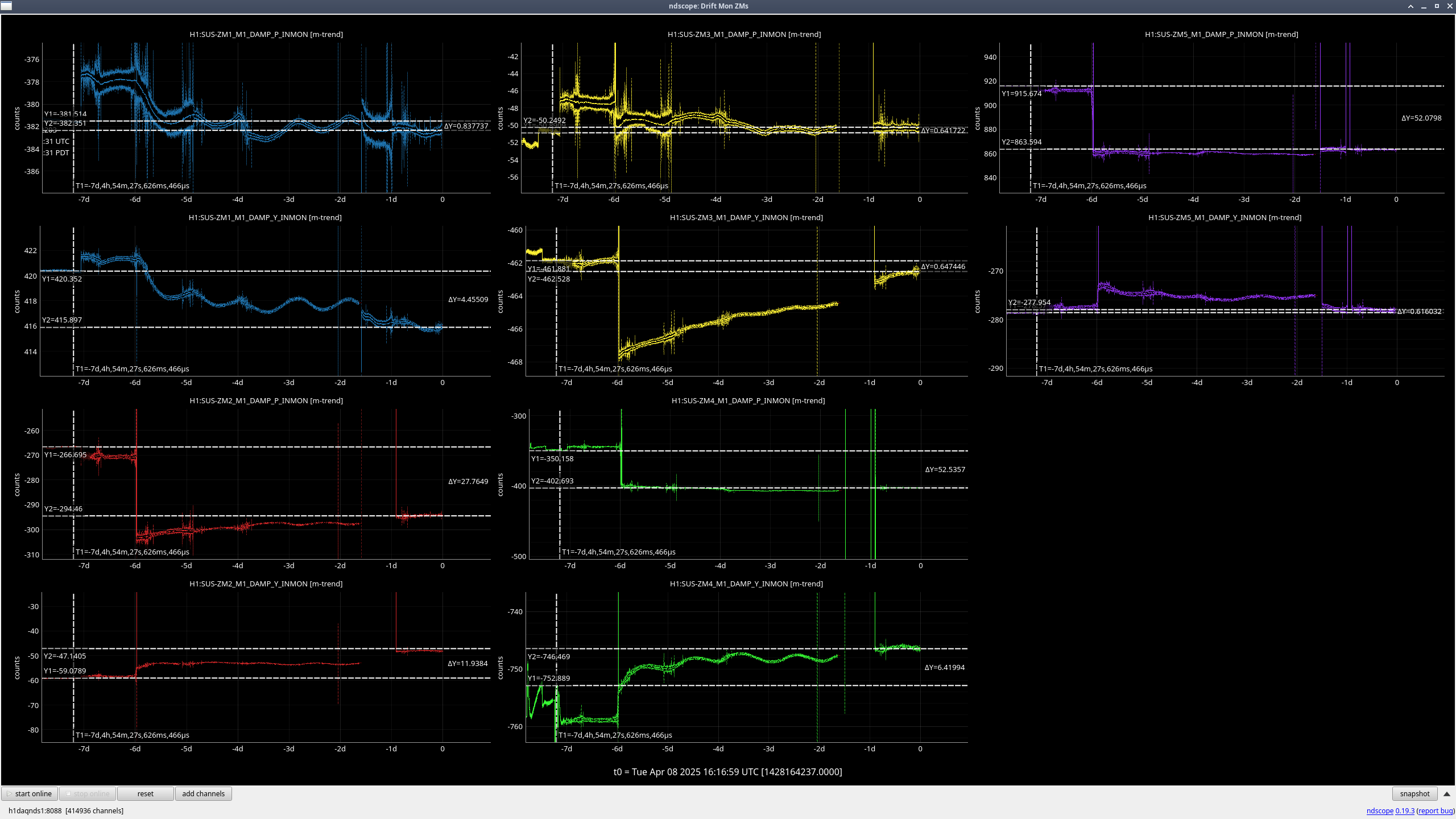
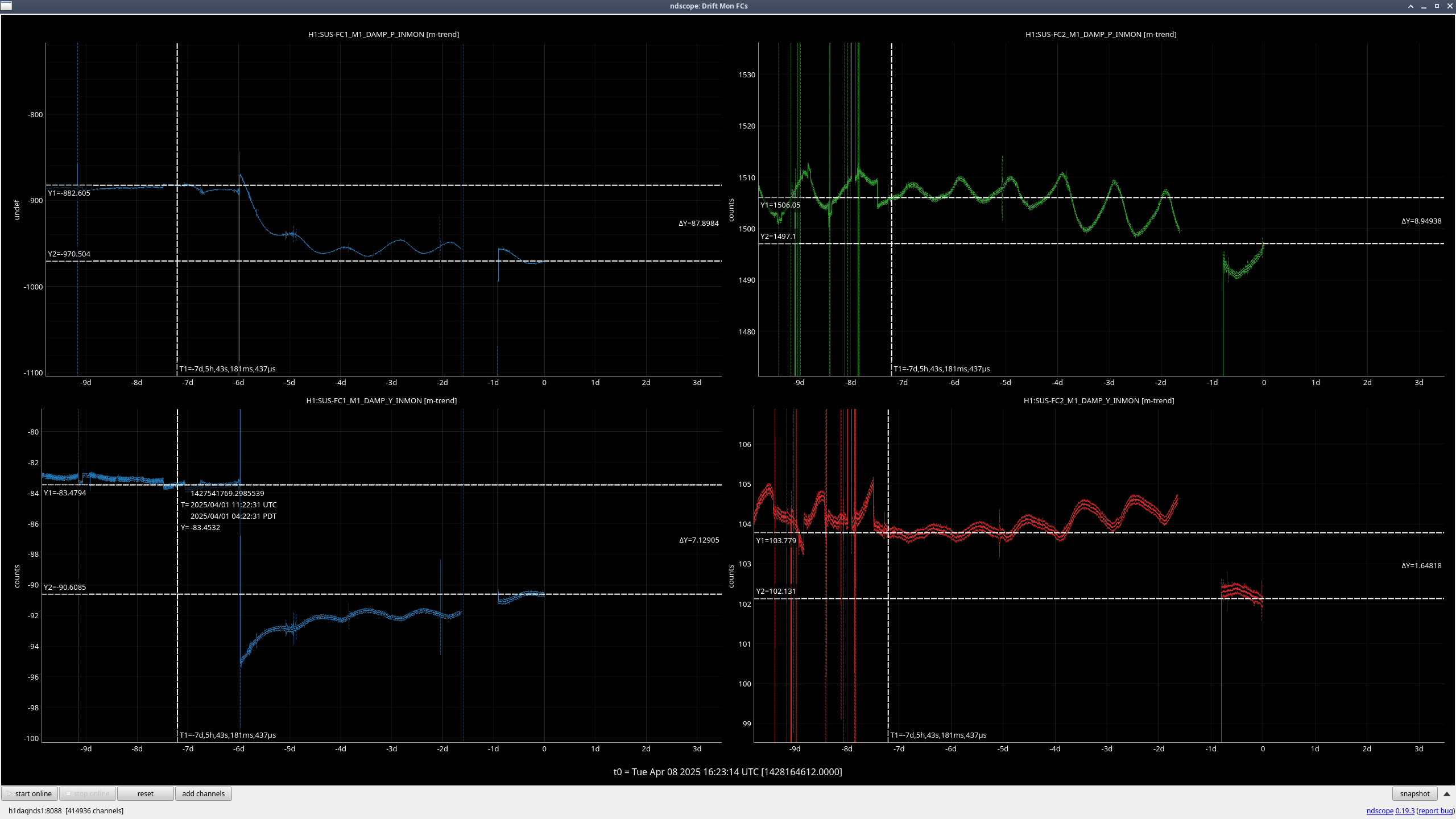
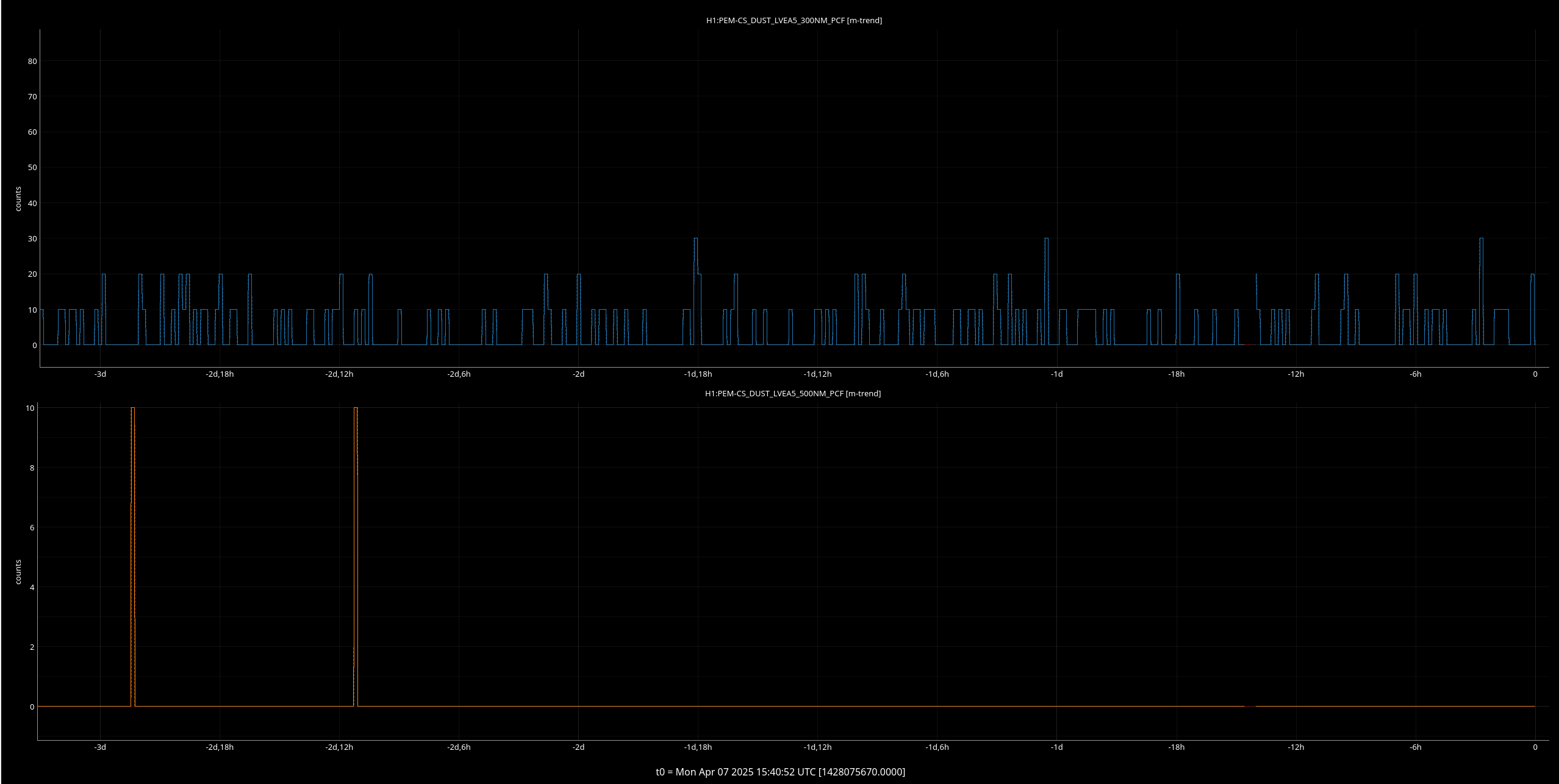
Mon Oct 21 10:13:00 2024 INFO: Fill completed in 12min 56secs
Jordan confirmed a good fill curbside.
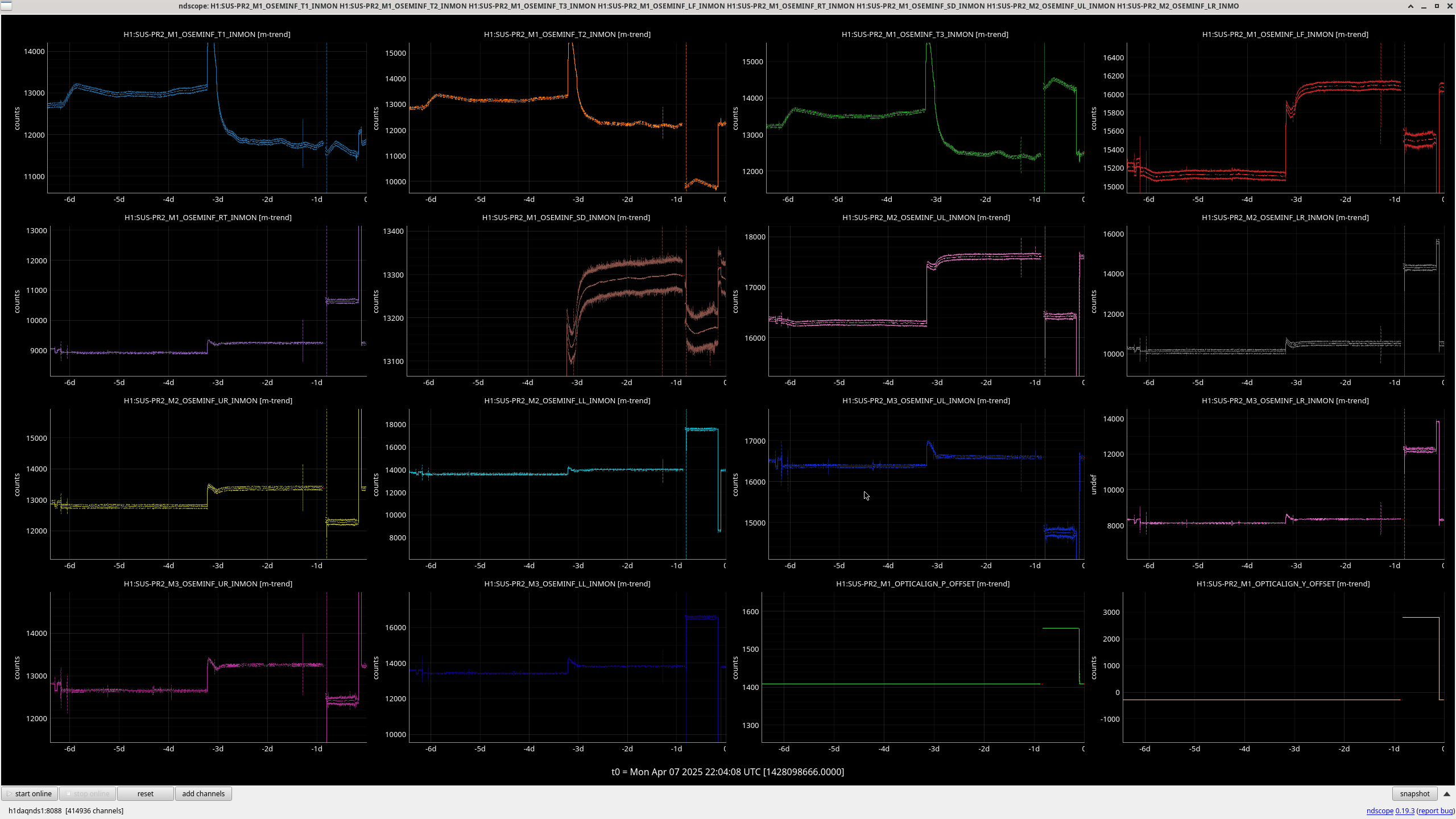
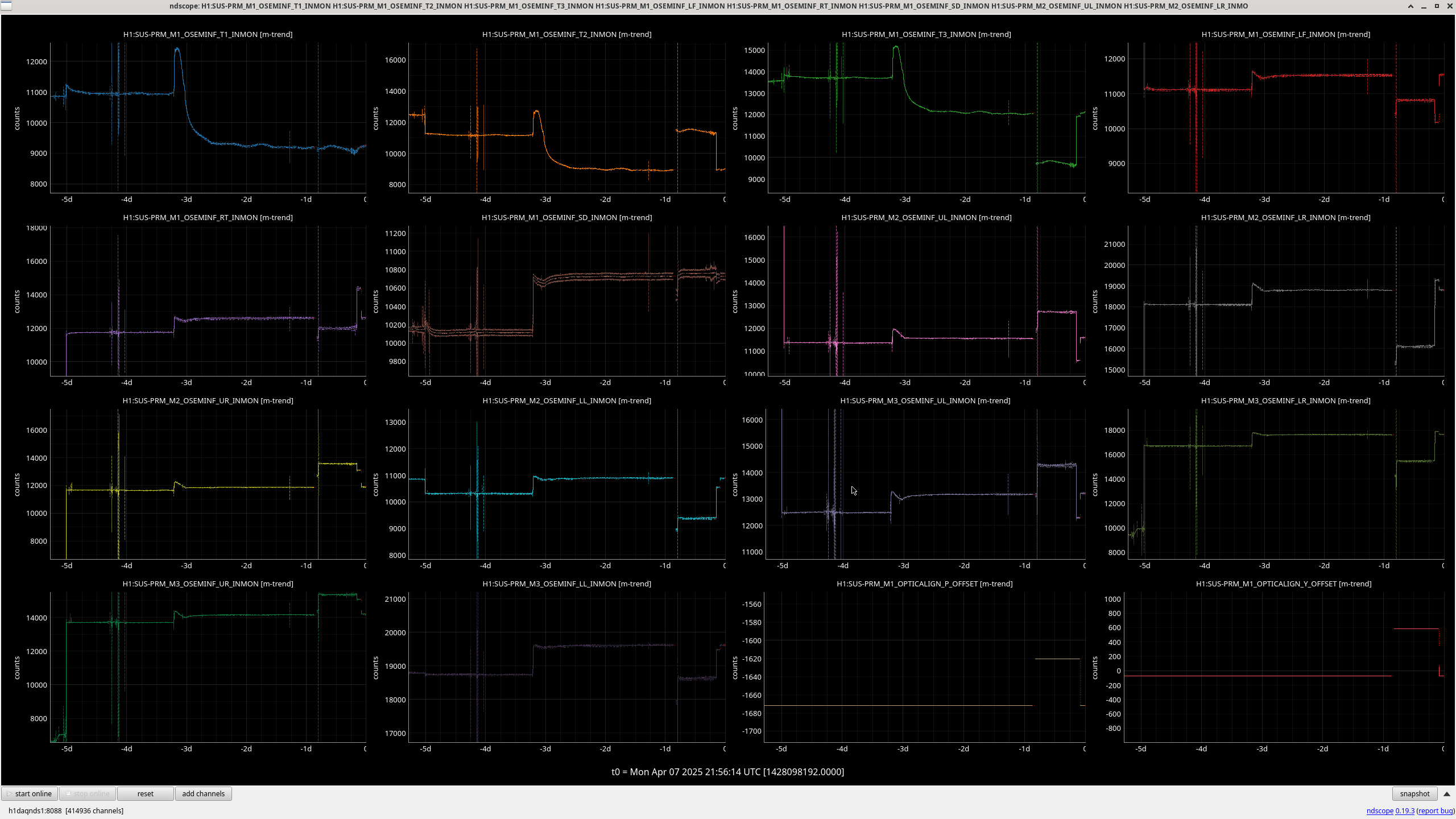
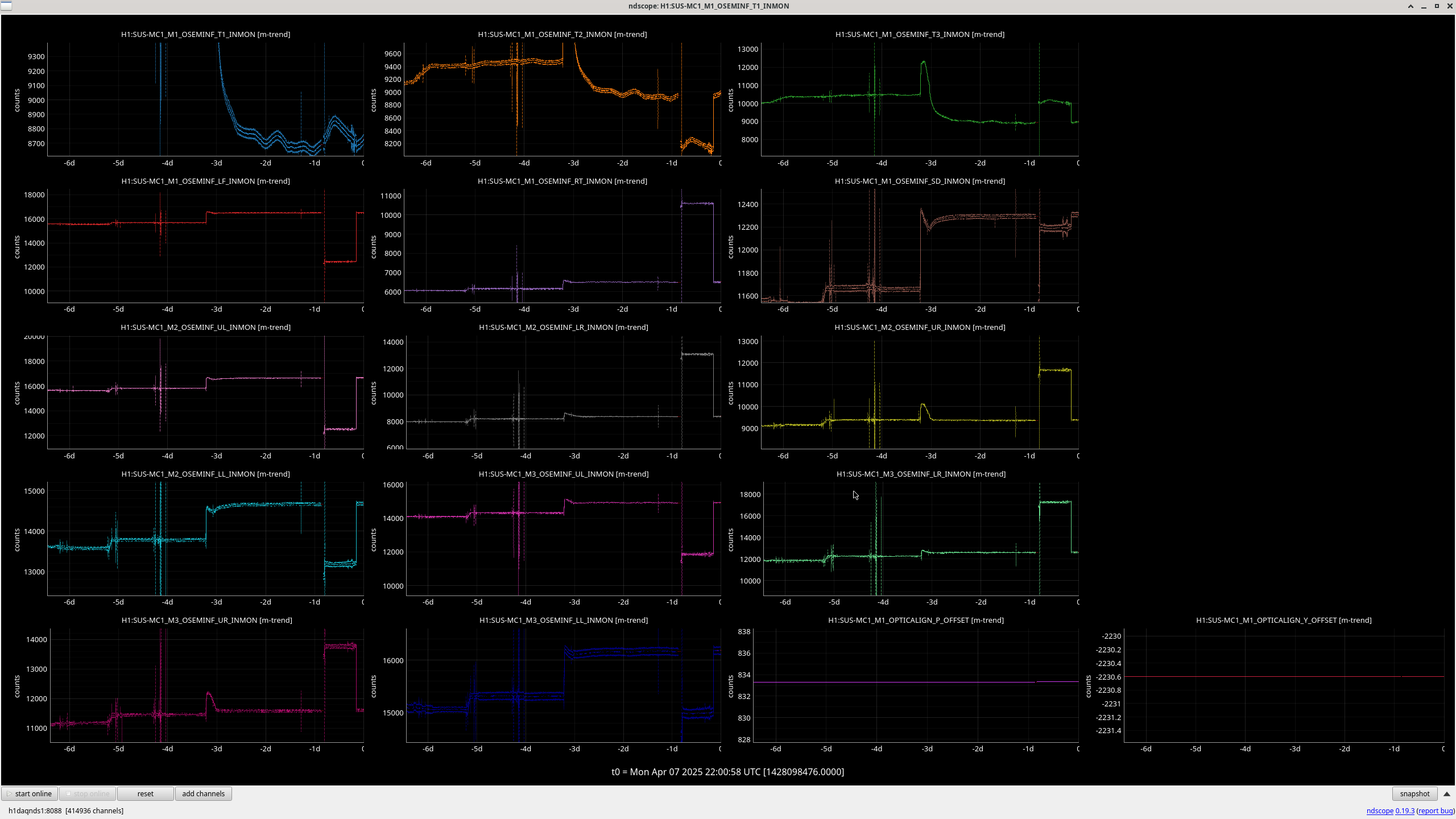
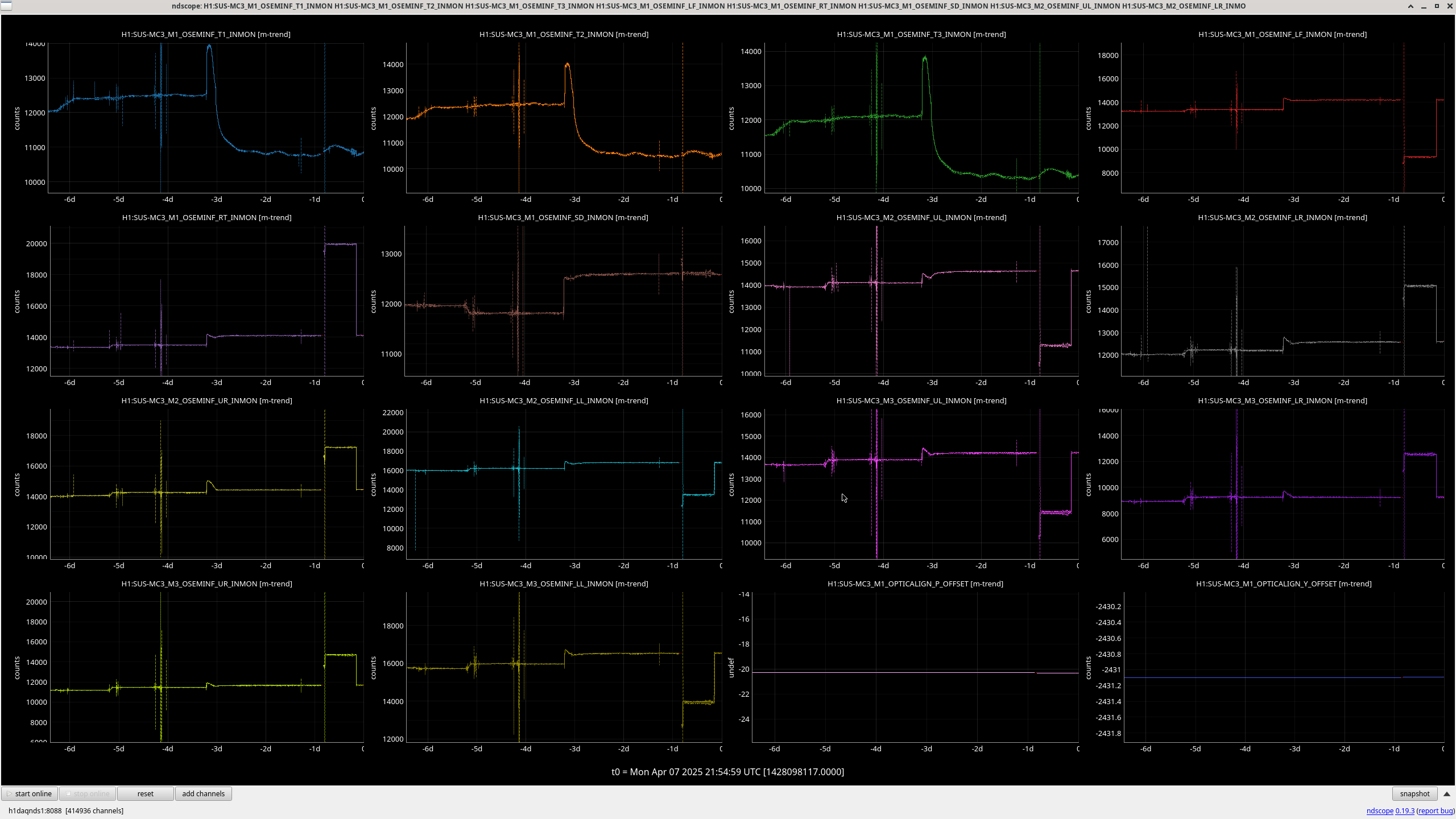
We had two site-wide power gltiches at 04:15:48 and 04:52:39 PDT Mon 21oct2024.
Both were seen in CS and EX MAINSMON channels. EX saw voltage drop for all three phases, CS saw this for two phases. Voltage drop persisted for about 3 cycles and then recovered.
h1susauxh2 and h1susauxex rebooted on the first glitch at 04:15, their models restarted around 04:17. No other model restarted at these times. There were no IPC errors and no long cpu-runs. We currently don't know why these two susaux machines rebooted by themselves.
Opened FRS32411
Notes from Fil:
The HAM6 PZT had to be restarted
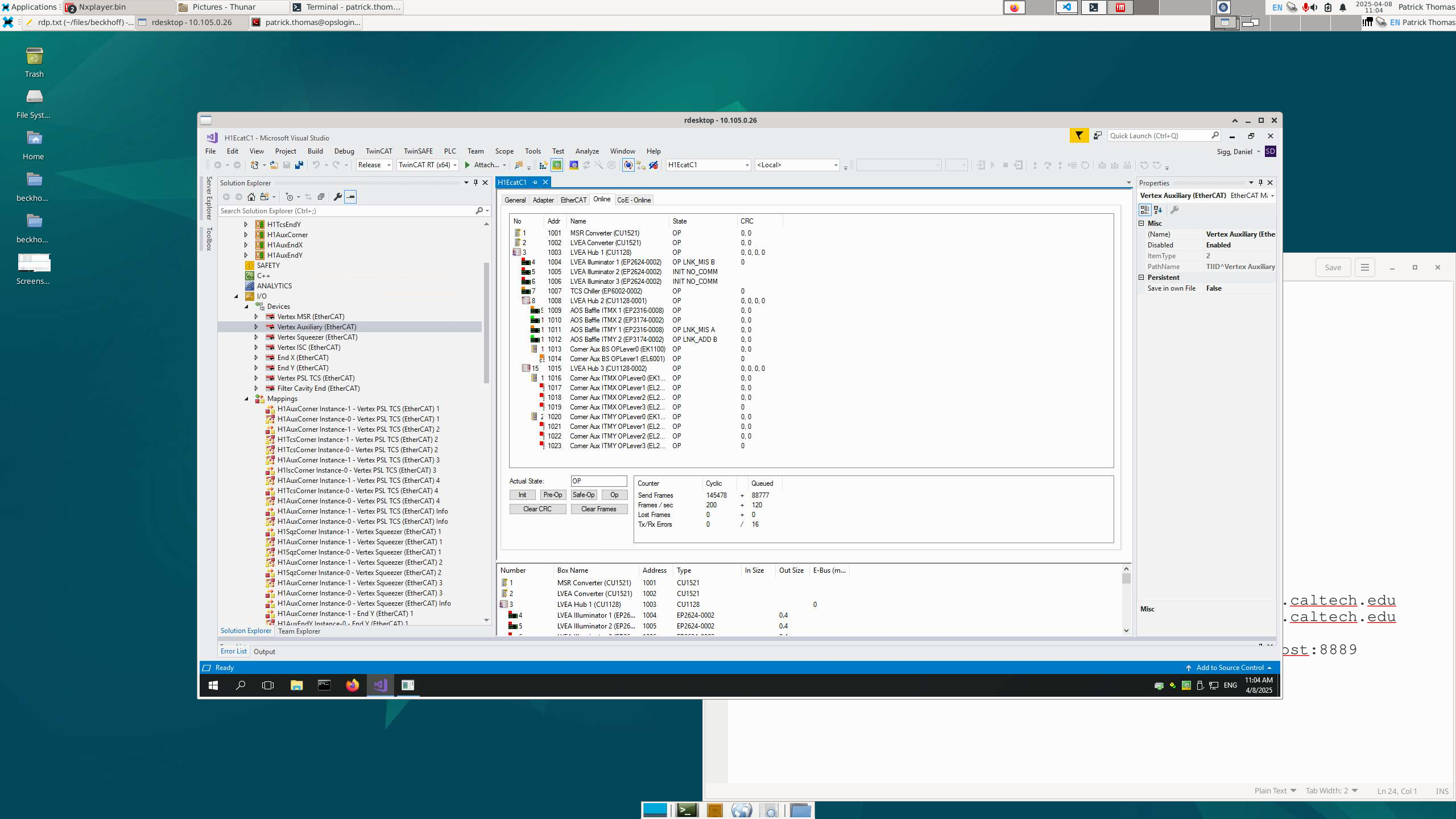
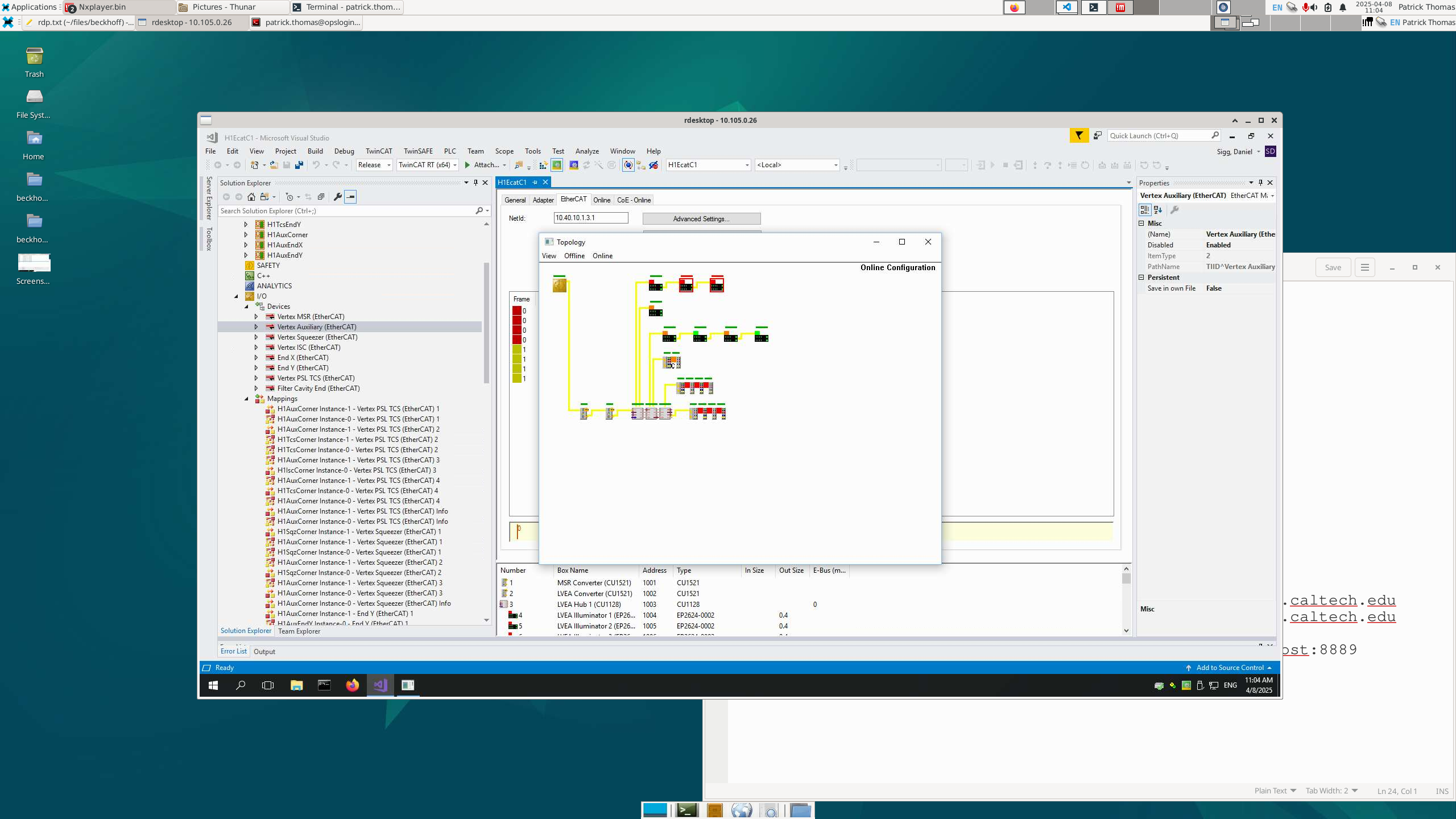
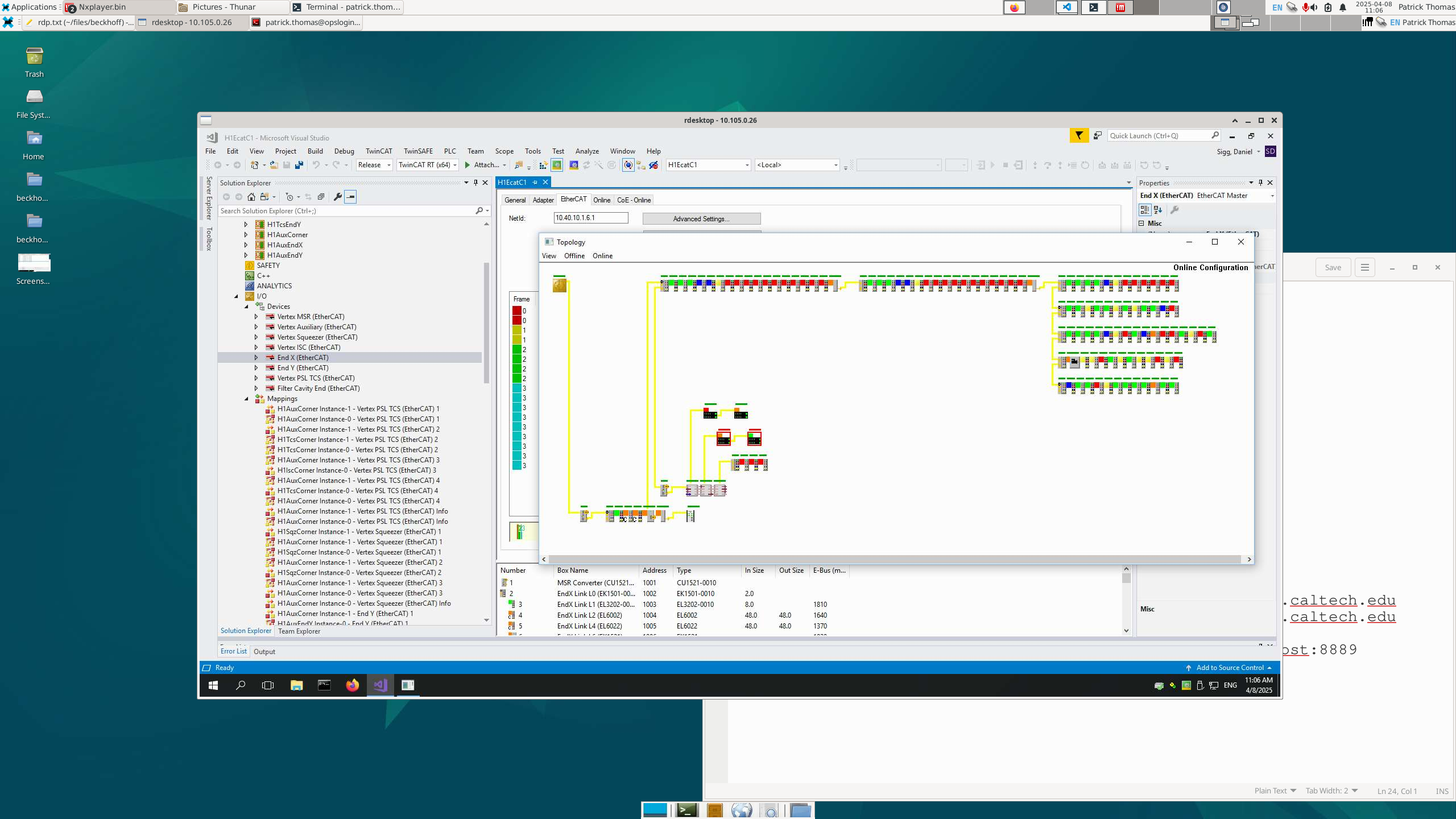
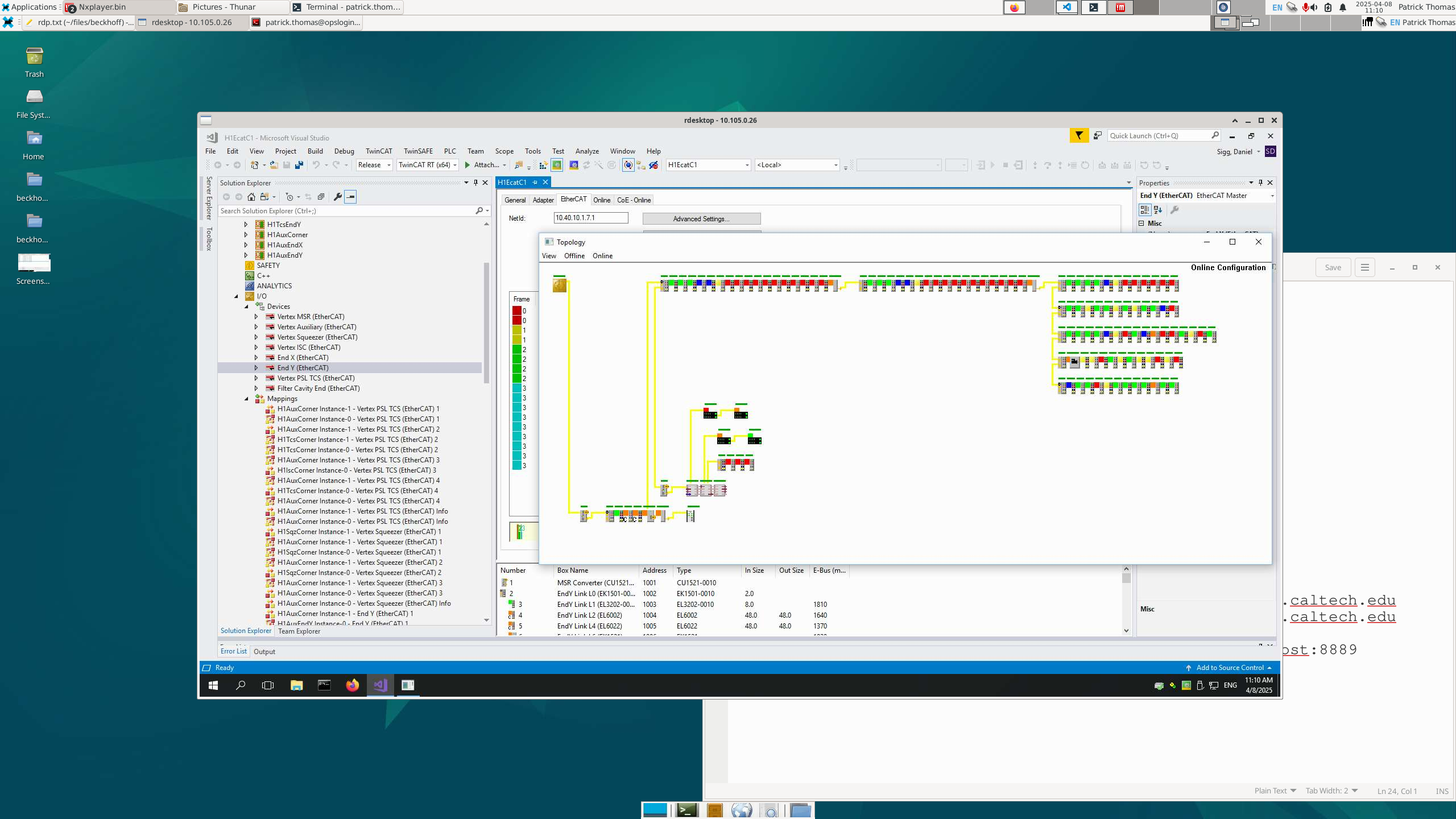
Work on Beckhoff DAC power monitors
Both GC and CDS UPS units switched to battery backup power for both of these times. The GC unit sent email notifications, the CDS unit did not.
GC was on battery for 5 seconds, CDS for only 1 second.
FMC-EX_MAINS Channels seeing the outage at the reported times.
Outage 1: 4:15:48
Outage 2: 4:52:39
TITLE: 10/21 Day Shift: 1430-2330 UTC (0730-1630 PST), all times posted in UTC
STATE of H1: Corrective Maintenance
OUTGOING OPERATOR: Ryan C
CURRENT ENVIRONMENT:
SEI_ENV state: CALM
Wind: 9mph Gusts, 3mph 3min avg
Primary useism: 0.02 μm/s
Secondary useism: 0.11 μm/s
QUICK SUMMARY:
IFO is in MAINTENANCE due to NPRO and AMPs being disabled likely because of some power fault. Seems like the OWL shift was quite busy and that there are some PSL and LASER_PWR issues - will try to figure out what was going on.
Dave, Ibrahim
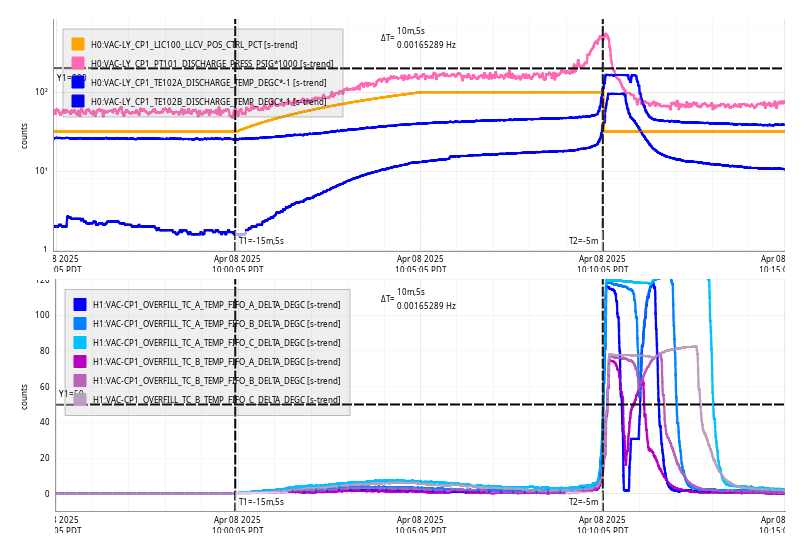
A significant power glitch on all 3 phases occured at 4:15:48 Local. PSL power issues Ryan C had were due to this (alog 80782). Plots below.
H1 called for help after "Not ready for 15 minutes" at 11:38 UTC. IMC_LOCK and LASER_PWR are in fault. My medms aren't opening on my no machine unless I do guardmedm in the console. IMC lock is saying the PMC and FSS can't lock, LASER_PWR is in fault, unable to get to 2Ws "IMC has no power". Following the IMC locking issues wiki page I've tried DOWN initing ISC_LOCK, IMCLOCK, and LASER_PWR, the FSS noise eater is green.
The MCs and IMs alignment all looks fine. The AMPs and NPRO all went to disabled about an hour ago.
The NPRO and AMPs are all disabled as of 11:15 UTC
Running PSL weekly scripy yielded the following:
Laser Status:
NPRO output power is 0.1373W (nominal ~2W)
AMP1 output power is -0.4512W (nominal ~70W)
AMP2 output power is 0.1128W (nominal 135-140W)
NPRO watchdog is RED
AMP1 watchdog is RED
AMP2 watchdog is RED
PDWD watchdog is GREEN
PMC:
It has been locked 0 days, 0 hr 1 minutes
Reflected power = -0.1761W
Transmitted power = -0.02753W
PowerSum = -0.2036W
FSS:
It has been locked for 0 days 0 hr and 0 min
TPD[V] = -0.01628V
ISS:
The diffracted power is around 3.0%
Last saturation event was 0 days 1 hours and 26 minutes ago
Possible Issues:
NPRO power is low
AMP1 power is low
AMP2 power is low
NPRO watchdog is inactive
AMP1 watchdog is inactive
AMP2 watchdog is inactive
FSS TPD is low
NPRO error, see SYSSTAT.adl
After talking to Jason, there's not much to do about this right now. More investigation needs to be done to see what happened to the laser, potentially needs to be swapped.
There power issues on the Hanford site that could have easily glitched our power and caused the npro to trip.
Fil re-enabled the PMC high voltage after arriving on site, then I brought the PSL back up with little issue. One hiccup I ran into was with the new PDWD for the amplifiers; when the NPRO shut off this morning, the regular power watchdogs tripped the system off, but the PDWD did not. This meant I had to disable the PDWD before I was able to reset the system and turn the NPRO back on. After that, there were no issues recovering the PSL.
TITLE: 10/21 Eve Shift: 2330-0500 UTC (1630-2200 PST), all times posted in UTC
STATE of H1: Observing at 157Mpc
INCOMING OPERATOR: Ryan C
SHIFT SUMMARY: Two locklosses this shift, one from the PSL glitching, each followed by fully automatic relocks. Otherwise, it's been a fairly quiet evening.
Lockloss @ 03:25 UTC - link to lockloss tool
The NPRO/FSS had been glitching with high frequency for about a minute prior to the lockloss, so I feel confident saying it's the cause here.
H1 back to observing at 04:23 UTC. Fully automatic relock.
Lockloss @ 01:09 UTC - link to lockloss tool
No obvious cause; doesn't look like the FSS, and I don't see evidence of an ETM glitch or DARM wiggle.
H1 returned to observing at 02:18 UTC after a fully automatic relock.
TITLE: 10/20 Day Shift: 1430-2330 UTC (0730-1630 PST), all times posted in UTC
STATE of H1: Observing at 156Mpc
INCOMING OPERATOR: Ryan S
SHIFT SUMMARY:
IFO is in NLN and OBSERVING as of 21:31 UTC
Mostly quiet shift with one fussy lock acquisition.
Lock Acquisition had no special problems but rather, a slew of small annoyances (unknown cause Lockloss alog 80773):
Other:
LOG:
None
Vicky, Sheila
Summary: Today we learned that frequency independent anti-squeezing is a very good way to determine which sign the homodyne angle is.
Background: I've been working on using code from Vicky's repo and the noise budget repo to do some checks of a quantum noise model, this is in a new repo here.
Details about how this model is made:
The first attached plot illustrates how these models and plots are made. It starts with a no squeezing time, and an esitmate of non quantum noises from the noise budget, (dark gray, this one is from Elenna's recent run of the noise budget: 80603 ) and an estimate of the arm circulating power along with other parameters set in a quantum parameters file in the same format that is used by the noise budget. It fits the readout losses by adding a gwinc model of quantum noise with the noise budget estimate of other noises, and adjusting the readout losses of the gwinc model, this is done from 1.5-1.8kHz in this case.
Based on this readoutlosses we get a model of quantum noise without squeezing, and subtract that from the no squeezing trace to get an estimate of the non-quantum noise. This is enough different from the noise budget one that I've used that as the estimate of the non-quantum noise for the rest of the traces.
By subtracting this subtraction estimate of the non-quantum noise, it estimates squeezing in dB, and finds a median level of dB from 1.5-1.8kHz for anti-squeezing and squeezing. This should be the same with and without the filter cavity, but in this data set there is slightly more anti-squeezing in the time without the filter cavity, so I've used FIS and FIAS to estimate the nonlinear gain and total efficiency for squeezing. The nonlinear gain is translated into generated squeezing for gwinc, and the injection losses for squeezing are set so that the injection efficiency* readout efficiency = total squeezing efficieny.
With this information we can generate models for anti-squeezing and squeezing traces, but fitting the squeezing angle to minimize or maximize quantum noise. Then for the mid angle traces, the squeezing angle is fit to minimize the residual between the data and the quadrature sum of the subtraction estimate of non quantum noise and the model. We can then look at these plots and try manually changing parameter in the quantum parameter file.
Homodyne angle:
We've been stumped for a while about the excess noise we see with low frequency anti-squeezing, in 79775 I went through old alogs and see that we've had this mismatch of model with our data for a long time. Today we tried flipping the sign of the homodyne angle and see that low frequency anti-squeezing is much closer to fit both with and without the filter cavity. Compare the 2nd and 3rd attachments to see this.
We still have more work to do on this model, including adding in the additional traces near squeezing and near anti-squeezing that Camilla took, and checking if it can give us any information about arm power (it doesn't seem very useful for that), or the mode mismatches.
I neglected to mention that this is based on the nice data set that Camilla collected here: 80664, and that three is more work to be done with this, checking SRC detuning, mode mismatch, and including the +/- 10 deg data.
Sumary: seems the current (+) side of DARM is better for FDS, although it is opposite of our previous quantum noise models. But given the current sign is actually better for DARM, the model error doesn't really matter, and it's not really worth changing signs.
The wrong HD angle sign seems to be why none of our quantum noise models, despite fitting all other SQZ angles well, have ever fit FIAS properly. We will update our quantum noise models for the noise budget. Attached are some quantum noise models and DARM plots for Camilla's recent SQZ dataset lho80664.
Plots with optimal FDS (optimal fc detuning) for both signs of the homodyne angle: showing 1st just the quantum noise models without adding back non-quantum noise (NQN), and 2nd showing QN models + NQN.
Third attachment (3rd) shows a wider range of homodyne angles, from +15 deg to -10 deg. So far the code for these plots is living here.
---------------------------------------------------------------------------------------------------------------------------------------------------------------------------------------------------
Altogether this is making progress on the quantum noise models for the noise budget!
Summarizing updates and what we're learning:
Vicky, Sheila
Based on the fit of total squeezing efficiency and nonlinear gain (which is based on subtracted SQZ and ASQZ from 1.5-1.8kHz), and known losses from loss google sheet, we can infer some possible maximum and minimum arm powers using the no squeezing data.
The first attachment shows the same plot as above, but with the latest jitter noise measured by Elenna in 80808 We noticed this afternoon that there is a problem with the way these jitter noises are being added in quadrature by the noise budget, but we haven't fixed that yet. In this data set, we have 15.1dB of anti-squeezing and 5.1dB of squeezing from 1.5-1.8kHz, we can use the Aoki equations to solve for nonlinear gain of 14.6 and total efficiency eta for squeezing of 73%. Since the known readoutlosses are 7.3% and the known squeezer injection losses are 8.8%, this gives us a minimum readout efficency of (eta/(1-known injection loss) = 79% and a maximum of 1-known readout loss = 91.2%. Using the level of noise between 1.5-1.8kHz with no squeezing (and an estimate of the non quantum noise) we can use these max and min readout efficencies to find min and max circulating powers in the arms.
These arm power limits will be impacted by our estimate of the non-quantum noise, the homodyne angle, and the SRC detuning. With 0 SRC detuning, and a homodyne angle of 7 degrees, this resutls in a range of arm powers of 324-375kW. the estimate of non-quantum noise is the most important of these factors, while SRC detunings large engouh to change these estimates significantly seem outside the range that is allowed by other squeezing mesurements.
I've run the comparison of the model to different squeezing configurations for the low and high range and the nominal parameters (0 SRC, 7 degrees homodyne angle). Frequency independent squeezing and both types of mid squeezing are sensitive to the arm power from 50-100Hz, this comparison shows that the low end of the arm power range seems to have slightly too little arm power and the high range slightly too much. However these frequencies are also sensitive to homodyne angle and SRC detuning.