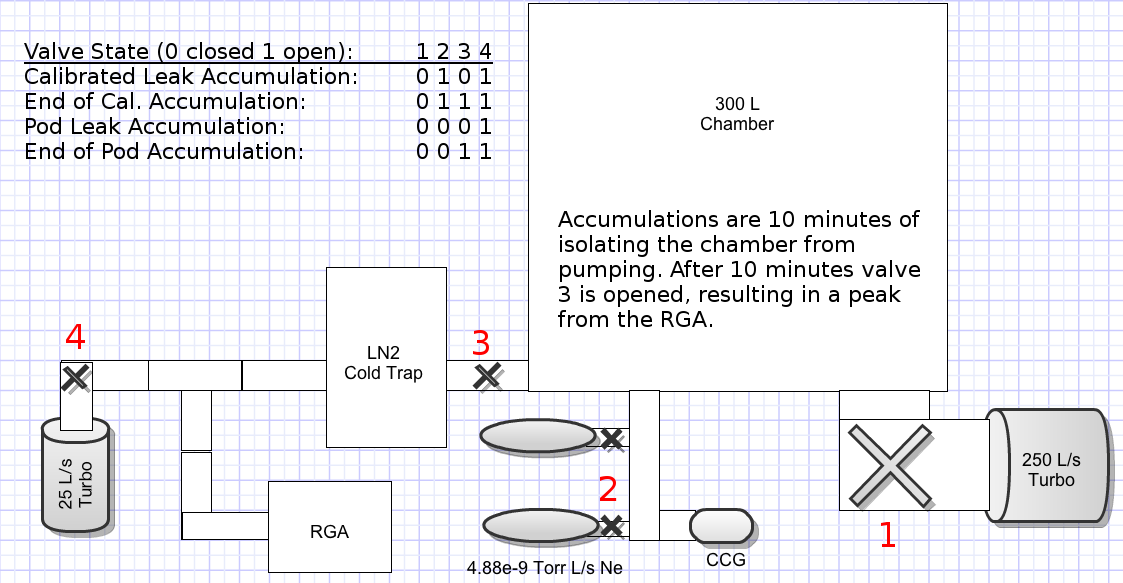
Kyle, Gerardo Summary -> Looking for large leaks -> We found a total of (7) leaking conflat flanges that will need to be addressed (>10-6 torr*L/sec typical). In all cases, these were the large 10" and 12" joints and not the smaller feed-through joints. We wrapped the leaking joints in RED UltraTape for indentification. Also, both O-rings of the septum between HAM3 and BSC2 are leaking (inner high 10-4 torr*L/sec, outer mid 10-5 torr*L/sec), these are the O-rings on the BSC2 side which are integral to the septum plate. Kyle Vented H1 input MC
We took down h1boot for about 3 hours from 10am to 12:20 during this morning's maintenance in order to clone its boot drive. Michael unlocked the H1 PSL prior to the shutdown, and relocked it after h1boot was restored. The cloned drive will be used to create x1boot as an identical copy of the production H1 and H2 systems. A new backup VLAN network cable was installed to h1boot, and the switch reconfigurations were submitted to SVN.
The code which reads the data from the FMCS web server and writes it to EPICS has been moved over to new code. I had tried this earlier, but it appeared to have some bugs, which these changes address. The same things noted here apply.
First vacuum and wipe down of BSC2 were completed on Friday, 25 May. The dome was also documented and cleaned. Second vacuum of BSC2 was started on Friday and completed this morning. Final inspection was finished before lunch. FTIR samples were taken right after lunch and then dust barriers were removed. One dust barrier was wiped down and moved to the transition area between BSC2 and HAM4. The dome was replaced on BSC2 and torqued down.
J. Garcia, J. Kissel Jeff launched a set of TFs on ETMY before heading out on Friday, just after Team TMS finished up in chamber, and Travis had set ETMY's EQ Stops to pump-down ready ~0.75 mm distance to confirm that the SUS was still free. Attached are the results. Everything looks just as it did before, matches up with other SUS's up its type, and agrees well with the model. Things are looking good, couldn't ask fo mo betta!
The data was taken by the template collection script /ligo/svncommon/SusSVN/sus/trunk/QUAD/H2/ETMY/collectTF_H2SUSETMY_M0R0_allDoFs.m which saved the data to the following raw files M0 Raw Data (and diary of workspace): /ligo/svncommon/SusSVN/sus/trunk/QUAD/H2/ETMY/SAGM0/Data/2012-05-25_H2SUSETMY_M0_0p01to50Hz_allDOFs_DAMPSOFF_tf.mat /ligo/svncommon/SusSVN/sus/trunk/QUAD/H2/ETMY/SAGM0/Data/2012-05-25_H2SUSETMY_M0_0p01to50Hz_allDOFs_DAMPSOFF_tf_diary.txt R0 Raw Data (and diary of workspace): /ligo/svncommon/SusSVN/sus/trunk/QUAD/H2/ETMY/SAGR0/Data/2012-05-25_H2SUSETMY_R0_0p01to50Hz_allDOFs_DAMPSOFF_tf.mat /ligo/svncommon/SusSVN/sus/trunk/QUAD/H2/ETMY/SAGR0/Data/2012-05-25_H2SUSETMY_R0_0p01to50Hz_allDOFs_DAMPSOFF_tf_diary.txt These were processed and plotted using /ligo/svncommon/SusSVN/sus/trunk/QUAD/Common/MatlabTools/plotquad_matlabtfs.m which produced the 2nd and 3rd attached set of detail plots, as well as the usual generic data file: /ligo/svncommon/SusSVN/sus/trunk/QUAD/H2/ETMY/SAGM0/Results/2012-05-25_H2SUSETMY_M0_fiber_model_MATTF.mat /ligo/svncommon/SusSVN/sus/trunk/QUAD/H2/ETMY/SAGR0/Results/2012-05-25_H2SUSETMY_R0_erm_model_MATTF.mat This data set has been added to the list of measurements and plotted against other selected measured measurements in /ligo/svncommon/SusSVN/sus/trunk/QUAD/Common/MatlabTools/plotallquad_dtttfs.m which generates the first attachment's collection of plots.
Attached are plots of dust counts > .5 microns.
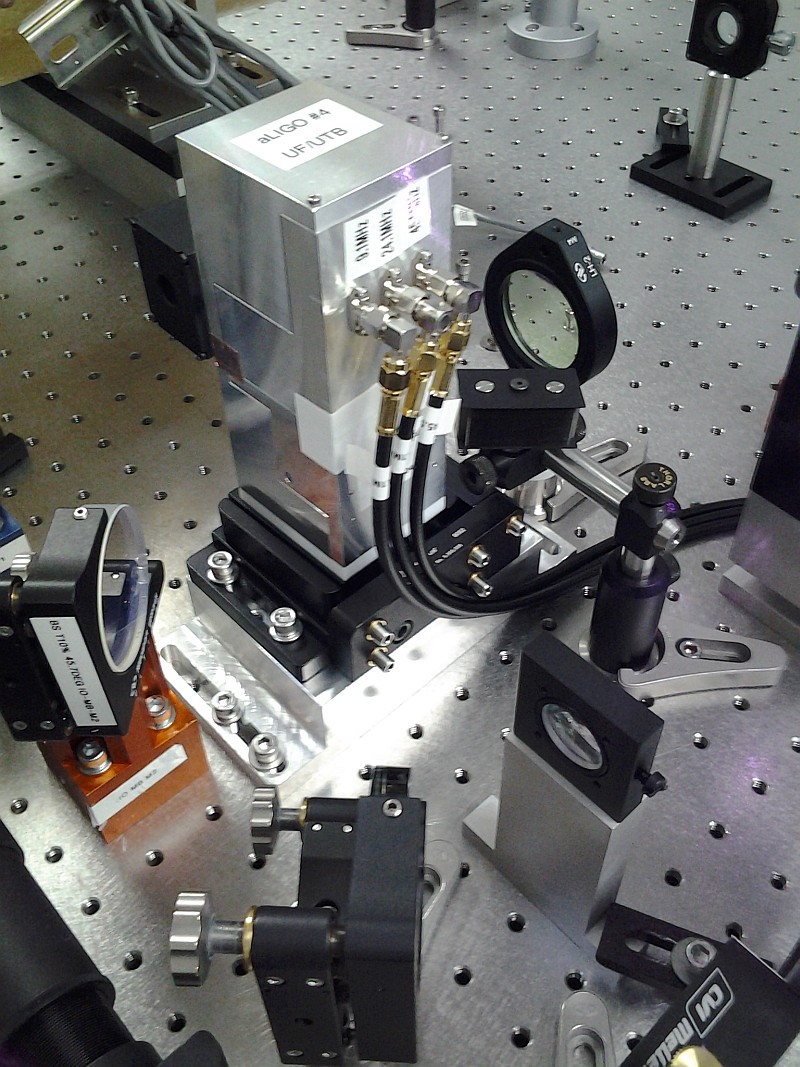
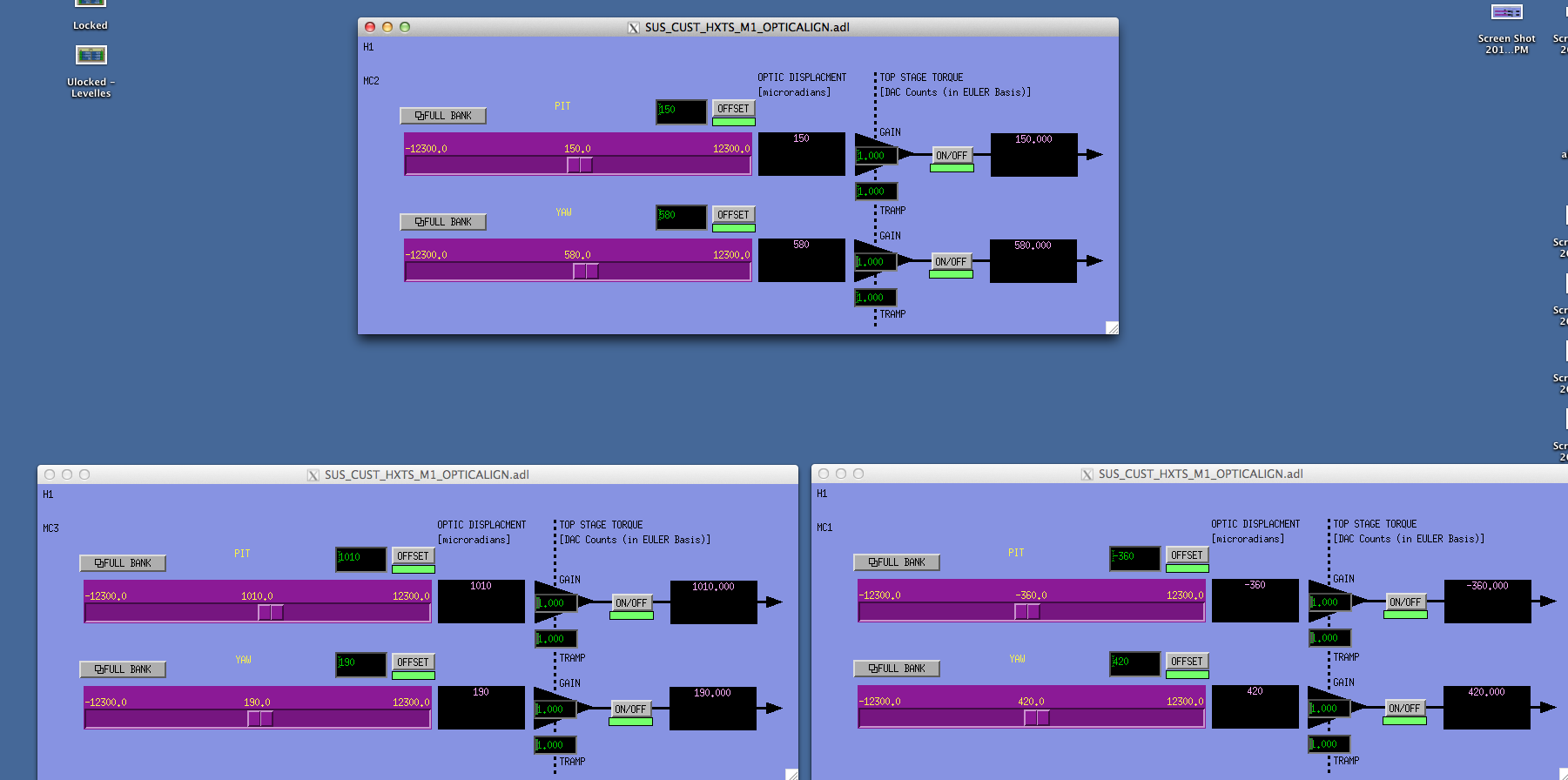
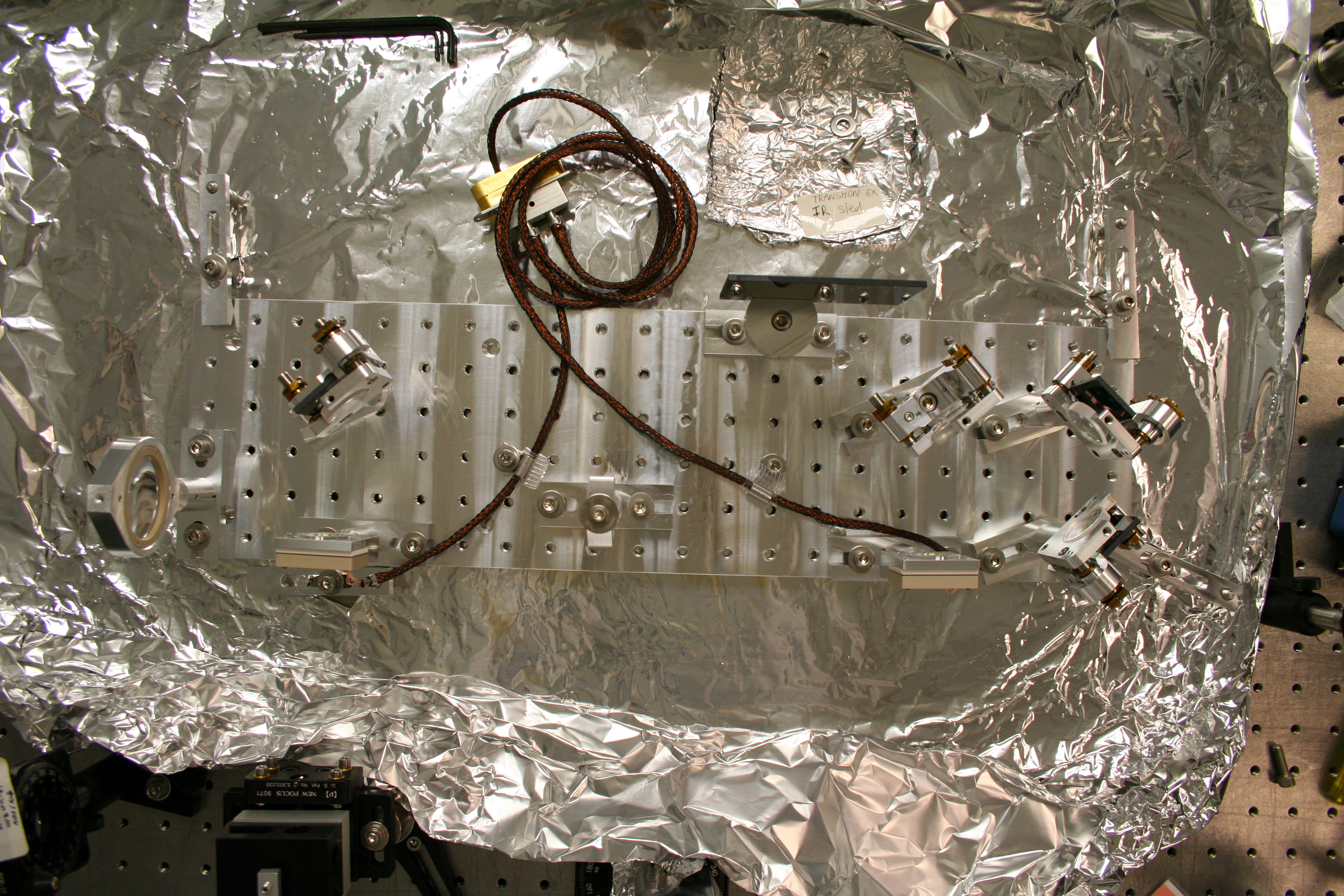
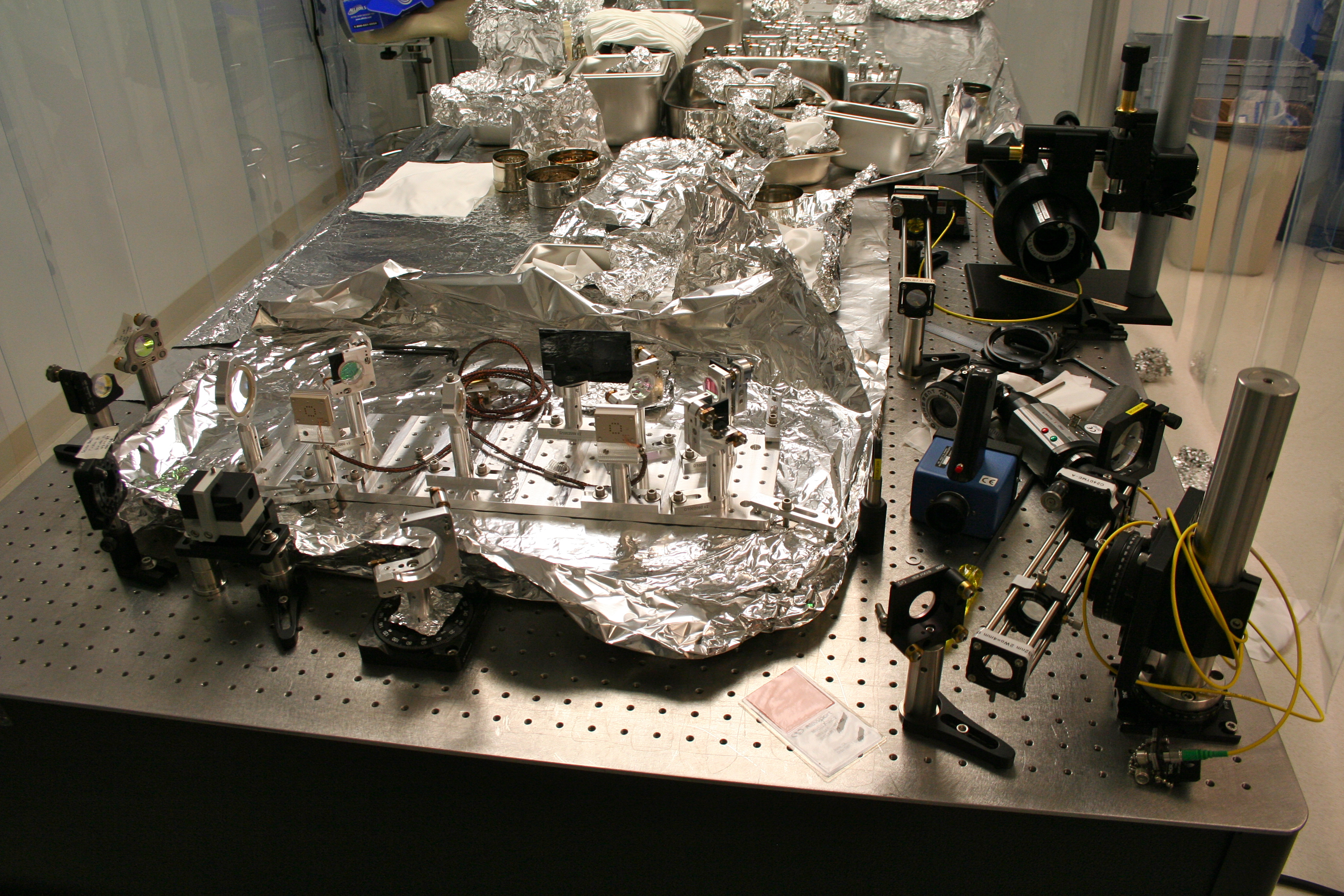
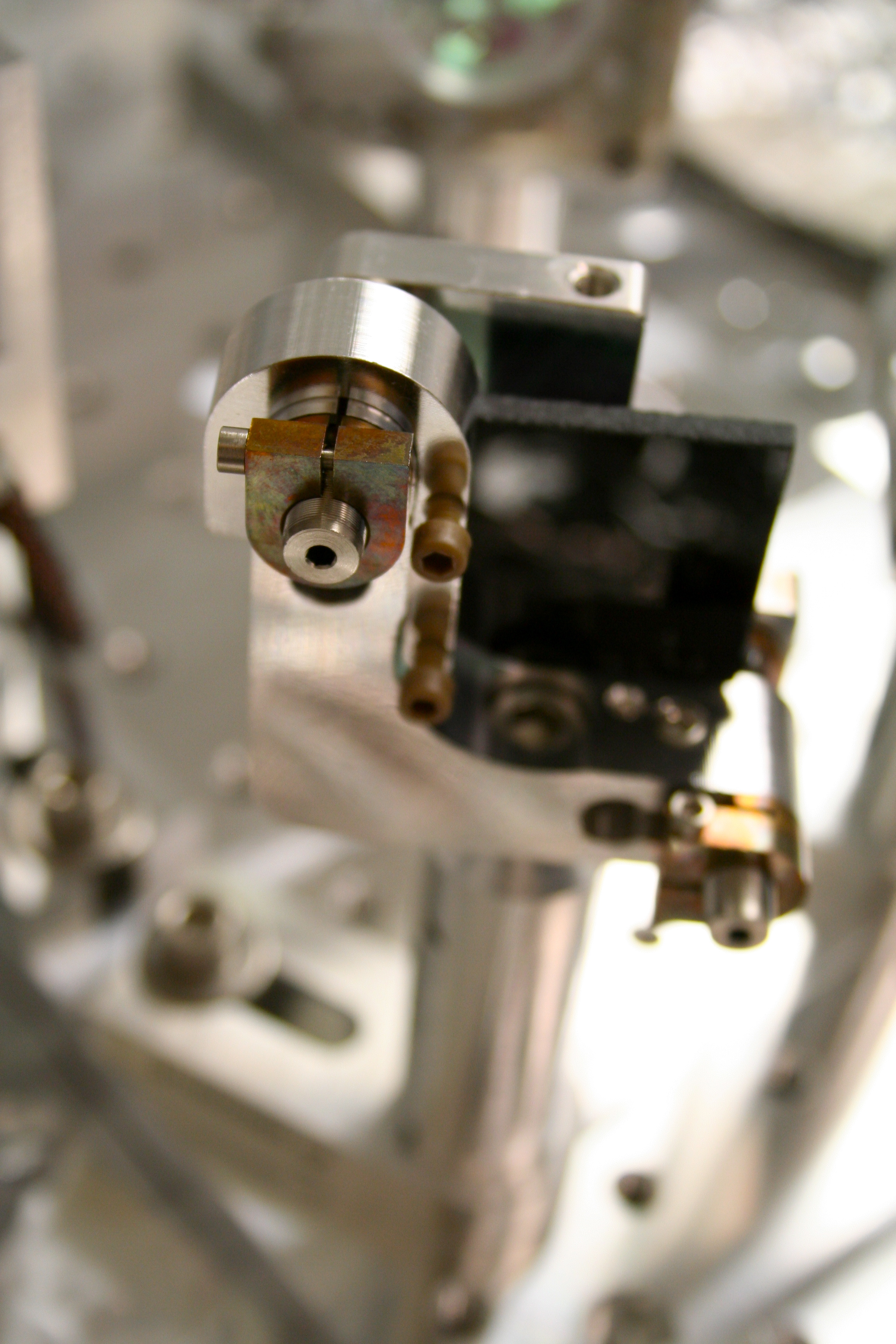
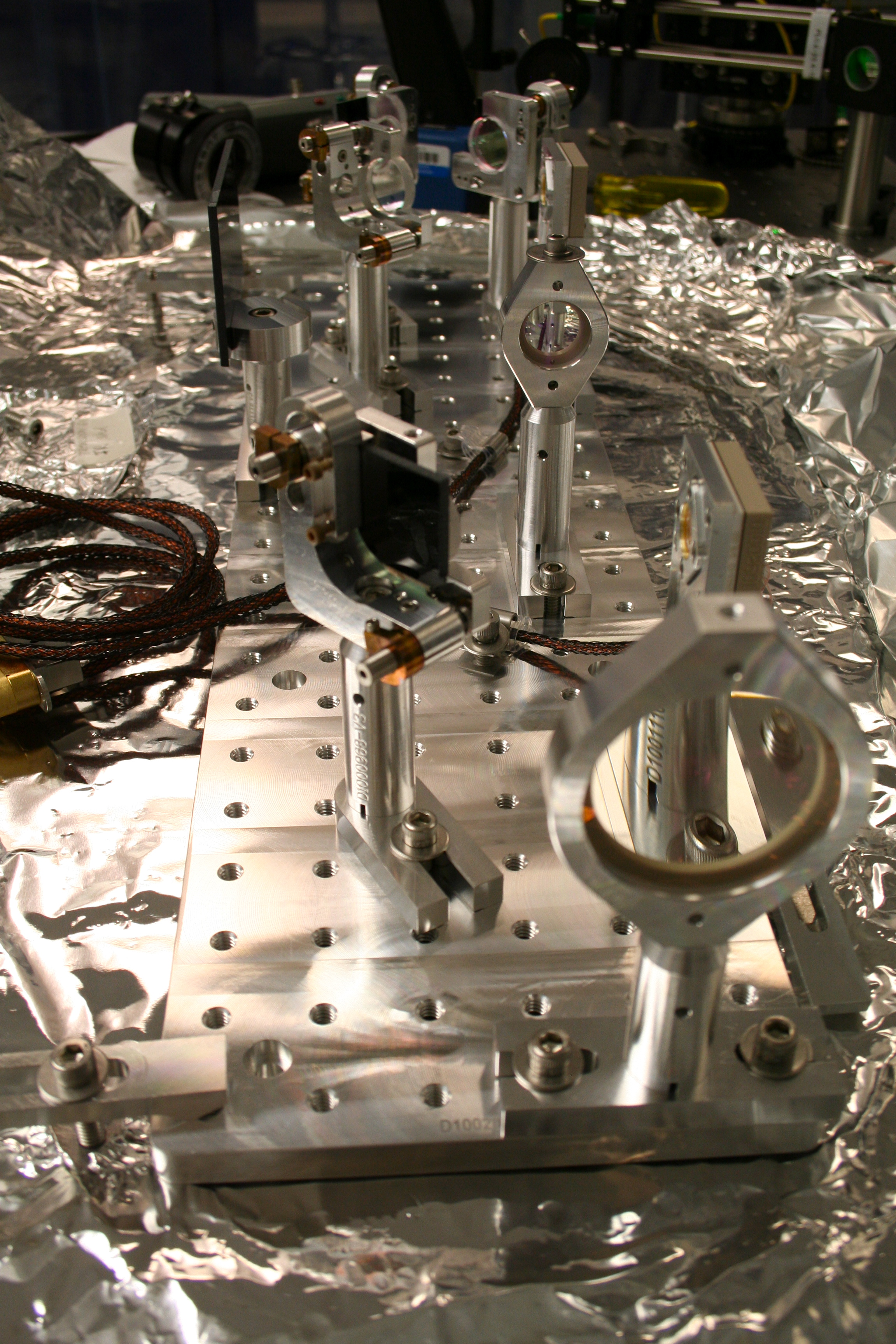
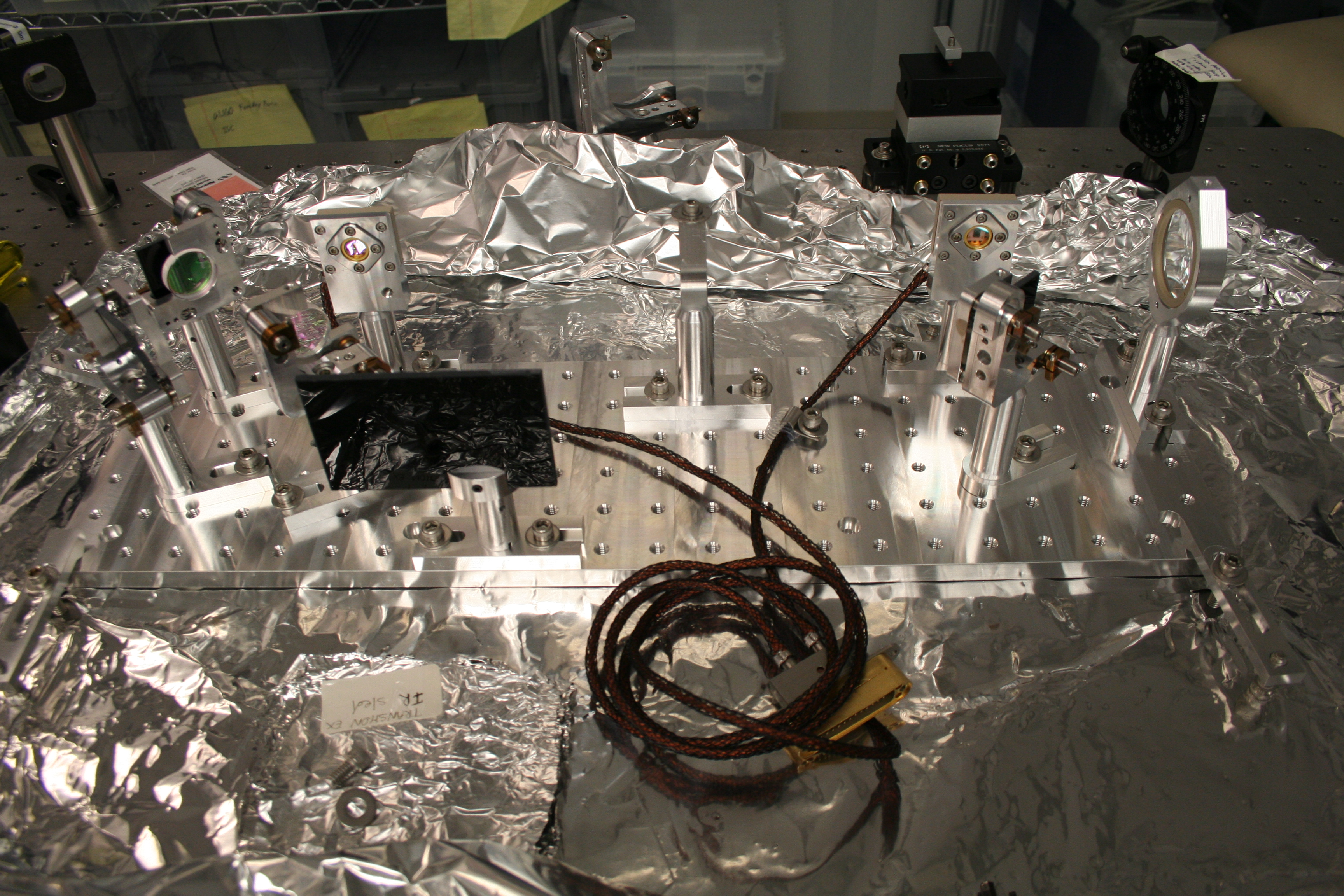
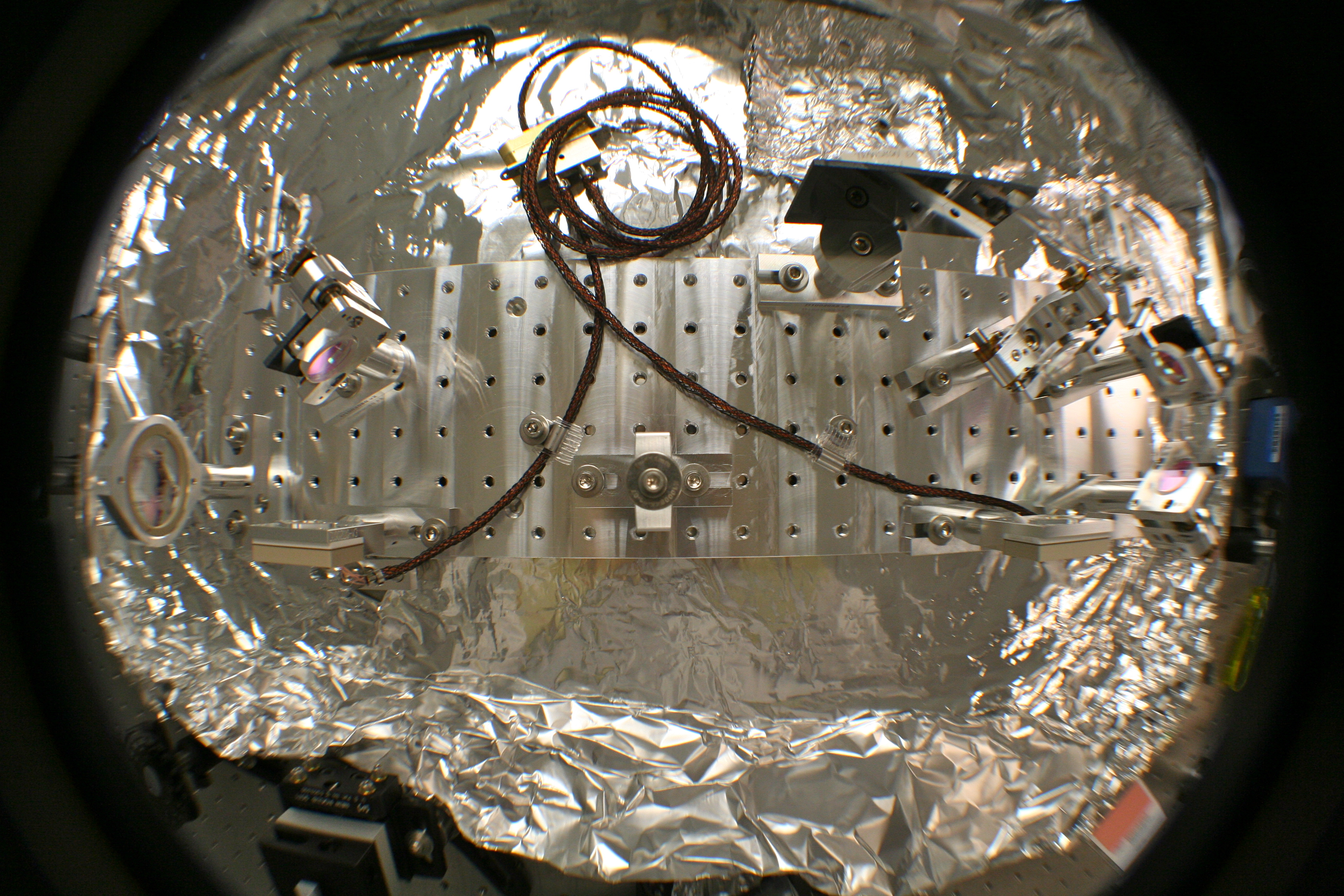
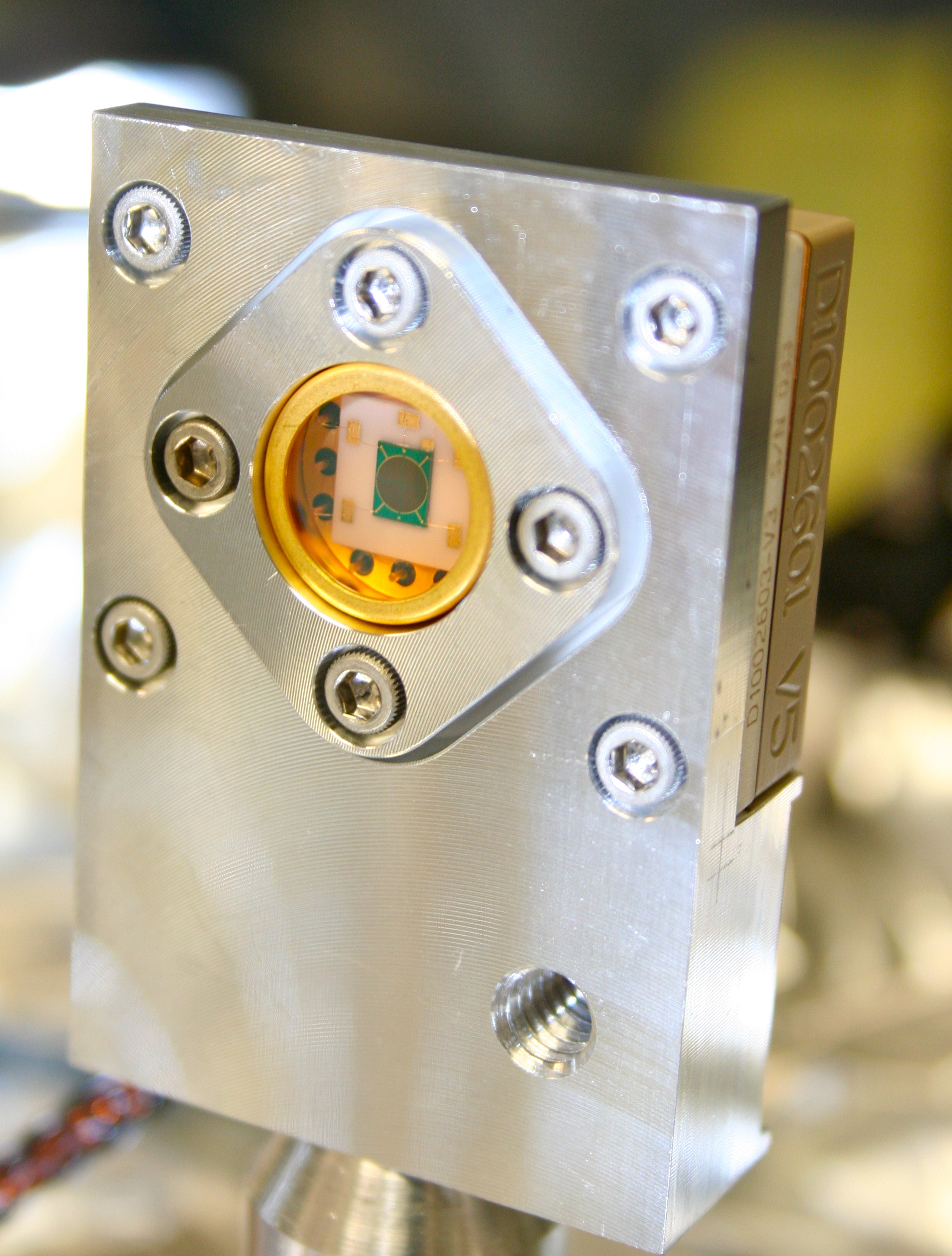
For posterity, I wanted to show how the picomotor signal from the driver box is broken up into the individual DOF signals. In the pictures attached, the signal from the driver box goes to the Picomotor Break-out Feedthrough Panel [image 1]. This box takes the DB25 cable and splits it into two DB9 cables [2,3]. These DB9 cables go to a Picomotor Breakout Box, which rests inside the table on the cable tray. This box has a PCB which splits the signals on the DB9 cable into four 4-pin RJ45 connectors, which are the pitch and yaw signals for two different picomotor assemblies [4,5].
- Travis visited the Y-End station, EQ stops and FC removal of ERM, see his entry for more. - Jason at Y-End station, alignment check up of ETMY, see his entry for more. - TMS team was at Y-End station, see Keita's entry for more. - Filiberto visited Y-End station to check on reports of odd smell, no smell found in or out of the building. - Kyle checking for leaks in the H1 input tube. The various activities at Y-End generated some dust, counts up to 1500.
This was the first attempt after the viewport was rotated back, and our alignment was still at the same bad position and the beam was not hitting the ETM. So apparently something moved, but we couldn't figure out what.
Anyway, we steered the beam back by adjusting the ALS table periscope mirrors, using the green QPDs on the TMS ISC table. then steering the TMS itself so the beam retro reflects back to the ALS table through an aperture we set up on the ALS table. We didn't use the picomotors as we knew that the alignment was pretty good two weeks ago and we were sure that that the picomotors were not moved since then.
After some tweaking, the beam looked really good at the secondary, F2, and the primary (Cheryl took pictures). It was low on F1 (a bigger of the two folding mirrors on the TMS telescope), but in the end I think it's more important to have the secondary and the primary reasonably well centered than the folding mirrors, and the beam retro reflects, so I think we're in a good shape.
The new offsets: 16000 counts for PIT, -5100 counts for YAW.
Before we started, Cheryl noticed that the EQ restraint bar is not centered any more (it used to be reasonably centered). We readjusted the bar position.
We also relieved that crazy PZT offset. It was on YAW of the upstream PZT mirror. Since the PZT mirrors themselves don't have any fine manual adjustment, we used the closest steering mirror. The input to the MCL PZT controllers were terminated. This made a tiny change in the alignment (which we were able to measure by QPDs) but these were taken care of manually by the periscope mirrors later.
The diff-single converter on the field rack as well as the anti-imaging chassis on the ISC rack was turned off.
Pictures from today's realignment: 1) beam position on first steering mirror 2) beam on secondary mirror - there are two ghost beams, one above and one below the real beam 3) beam on the primary mirror 4) viewport from inside - the small green dot below the input beam is the Hartmann beam 5) viewport form the outside - beam going through viewport - Dan's idea to see if we could show how the surfaces and substrate are scattering 6) viewport form the outside - input and retro-reflected beam are seen separately in this shot
For future reference, the sums of the green TMS QPDs with ~20mW of light going into the chamber are: ~315 counts on QPDA ~325 counts on QPDB
Earlier this week, I have installed new symmetrization filters and new damping filters on ISI-BSC8. The damping filters are fed by the geophones signals in the Cartesian basis (L4C for stage 1 and GS13 for stage 2). It works fine (spectra). All filters are built using one unique set of transfer functions (~400TFs). Next, I started to work on the isolation filters. After installing them, I was surprised that the low performance controllers were not all stable. The scripts to build the filters were retested in August 2011 and I didn't work on them until now However, the model was modified.
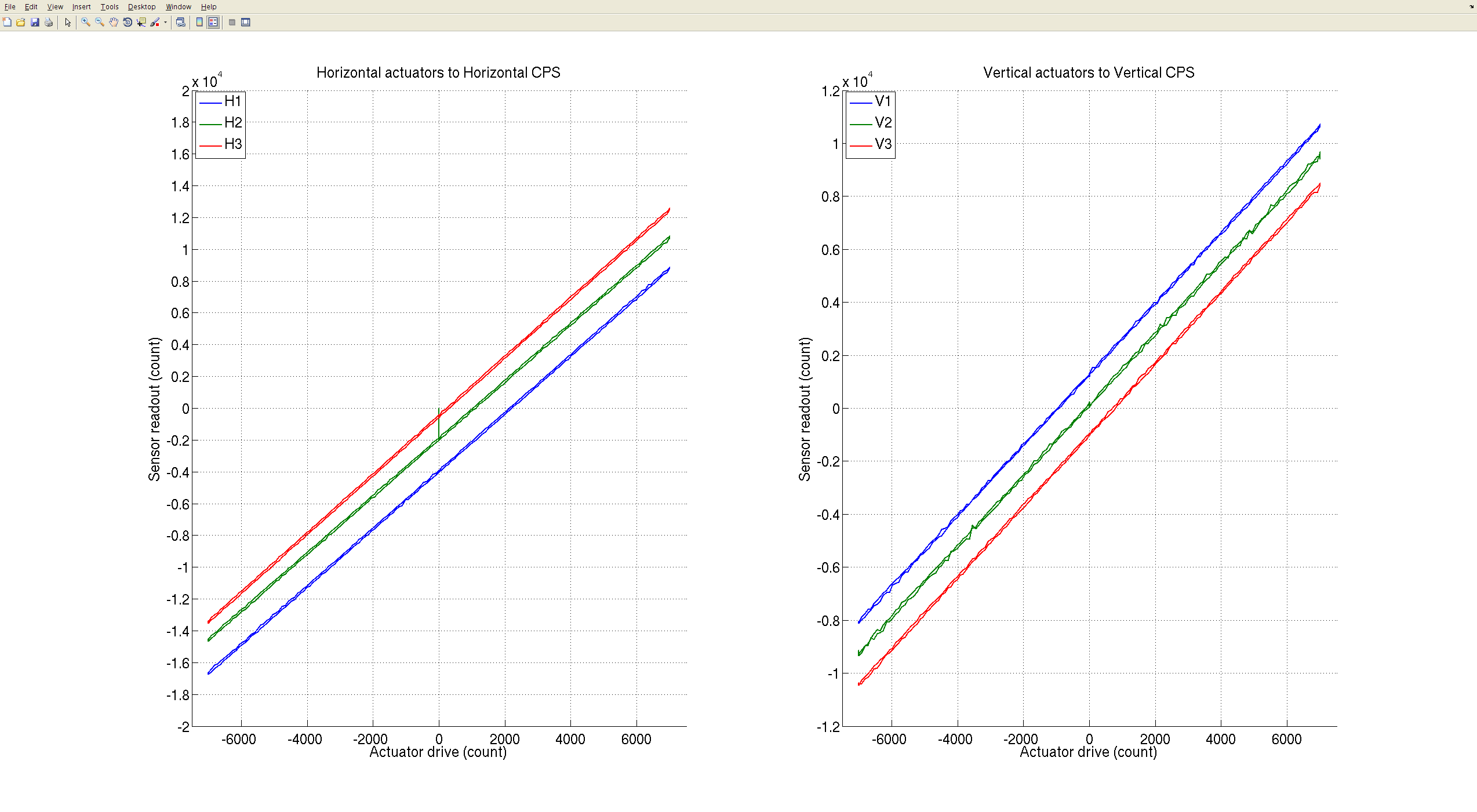
I compared the transfer functions of the damped ISI measured when dirving in the Cartesian basis with the simulated transfer functions (using TF measured when the ISI is undamped). They don't match as shown in the attachment (Z and RZ seem swapped). Next, I looked carefully into the model and I saw that some connections have been rerouted. In the Cartesian basis, ISI channels are in the following order X, Y, RZ, Z, RX, RY and the HEPI channels are: X, Y, RZ, HP, Z, RX, RY, VP. This order is not respected after the CPS alignment matrices (for stage 1 and stage 2) if we want to have identity matrices by default (no correction). I will fix the model on Tuesday.
Comparison_Measurements_vs_Simulation_TF_ST1_Z_Drive_2012_05_25.fig
Measurements on H2 SUS ETMY M0 & R0 are scheduled to begin tonight around ~19:30 PST.
Attached is a plot of the pump-down of the YBM.
This should affect all users logged in to the H2 control room network - Scripts that configure your environment have been modified to include configurations in /opt/rtcds/userapps/release and /opt/rtcds/rtscore/release. This was done to support guardian development.
I double checked all of the IAS equipment setup: re-leveled everything, made sure all equipment was over the proper monuments, and checked that all required lines were properly sighted (especially important for the Brunson). With this done I remeasured the pitch and yaw of the ETMy, the results are:
The yaw reading is consistent with the one taken yesterday. The alignment equipment is set up properly, so I think this change in yaw is real and not a result of improperly set up gear; this also means the source of this yaw movement is still unknown.
We have installed and aligned the AOSEMs on HLTS PR3. This suspension is ready for testing. AOSEM Open Light Values Intermediate Mass : UL = 18318, LL = 20793, UR = 19426, LR = 18210 Bottom Mass : UL = 17727, LL = 23463, UR = 25154, LR = 17820
The report for HAM-ISI Unit #5 - Assembly Validation is now posted under the DCC for validation.
This unit was tested at the begining of the month with testing horizontal GS13s (alog #2802). These testing pods were replaced with production pods. All tests involving GS13s were performed again this week. This report is now waiting for approval. This Unit will then be our second HAM-ISI coming out of the staging building with a full set of production GS13s (the first one was HAM-ISI Unit #4).
Reports regading the Assembly validation of previous units at LHO are also available on the DCC:
HAM-ISI Unit #1 - Assembly Validation
HAM-ISI Unit #2 - Assembly Validation
HAM-ISI Unit #3 - Assembly Validation
HAM-ISI Unit #4 - Assembly Validation
This testing report is now approved
Following is the list of items that need to be completed (in roughly the order below) before we can close this chamber. Some of the items have been finished and are still on the list as markers for redlining the installation procedure. Please add a comment if I have missed any steps 1) Electrical grounding checks - DONE 2) IAS SEI alignment complete, ISI & HEPI floating - DONE 3) IAS ETMy alignment Round 1 - DONE 4) TMS alignment - DONE 5) ESD continuity check 6) Clamp ETMy EQ stops 7) Reapply FirstContact to ETMy-HR and ERM-AR 8) Swap Flooring - Waiting for FTIR on new set, can slip down list but not beyond 14a. 9) Viewport in-situ cleaning (or swap if deemed necessary) 10) TMS OSEM alignment 11) Close the ring heater and set fiber guard to "nominal" position 12) Unlock ETMy, remove all TFE except TM line stops, and physically check for rubbing as per T1200213 (still drafting) 13) ETMy BOSEM alignment, factoring in buoyancy as per T1100616 14a) ETMy testing (See Phase 3a G1100693) 14b) IAS ETMy alignment again (if testing showed interference and suspension was adjusted to fix) 15) Repeat step 14 until all Phase 3a testing is complete - usually done in 3 rounds in order to clear all issues. Note, IAS requires removal of ETMy-HR FC completely. 16) TMS alignment check if needed 17) Lock down flooring nuts if loose 18) Set all EQ stops as per M1100256 19) Final FirstContact cleaning if needed 20) Remove TM line stops 21) Take pictures and count number of PEEK clamps 22) Set witness plates 23) Remove all tools Shut the doors.
The good news is we're working down the list. The bad news is, I added a few more items to the list. Edited to reflect actual order:
1) Electrical grounding checks (moved down the list since it was DONE on the test stand, not on the chamber)
2) IAS SEI alignment complete, ISI & HEPI floating - DONE
3) IAS ETMy alignment Round 1 - DONE
4) TMS alignment - DONE
5) TMS OSEM alignment - moved up list since DONE
6) ESD continuity check
7) Clamp ETMy EQ stops - DONE
8) Reapply FirstContact to ETMy-HR and ERM-AR - (did not so ETM-HR since sheet was still somewhat intact) DONE
9) Swap Flooring - Waiting for FTIR on new set, can slip down list but not beyond 14a.
10) Viewport in-situ cleaning (or swap if deemed necessary)
11) SEI Electrical grounding checks
12) SUS Electrical grounding checks
13) Close the ring heater and set fiber guard to "nominal" position
14) Unlock ETMy, remove all TFE except TM line stops, and physically check for rubbing as per T1200213 (still drafting)
15) ETMy BOSEM alignment, factoring in buoyancy as per T1100616
16a) ETMy testing (See Phase 3a G1100693)
16b) IAS ETMy alignment again (if testing showed interference and suspension was adjusted to fix)
17) Repeat step 16 until all Phase 3a testing is complete - usually done in 3 rounds in order to clear all issues. Note, IAS requires removal of ETMy-HR FC completely.
18) TMS alignment check if needed
19) Lock down flooring nuts if loose
20) Set all EQ stops as per M1100256
21) Final FirstContact cleaning if needed
22) Remove TM line stops
23) Take pictures and count number of PEEK clamps
24) Set witness plates
25) Remove all tools
Shut the doors.
Update to closeout checklist:
1) Electrical grounding checks (moved down the list since it was DONE on the test stand, not on the chamber)
2) IAS SEI alignment complete, ISI & HEPI floating - DONE
3) IAS ETMy alignment Round 1 - DONE
4) TMS alignment - DONE
5) TMS OSEM alignment - moved up list since DONE
6) ESD continuity check
7) Clamp ETMy EQ stops - DONE
8) Reapply FirstContact to ETMy-HR and ERM-AR - (did not so ETM-HR since sheet was still somewhat intact) DONE
9) Swap Flooring - Waiting for FTIR on new set, can slip down list but not beyond 14a. DONE
10) Viewport in-situ cleaning (or swap if deemed necessary) IN PROCESS
11) SEI Electrical grounding checks
12) SUS Electrical grounding checks
13) Close the ring heater and set fiber guard to "nominal" position
14) Unlock ETMy, remove all TFE except TM line stops, and physically check for rubbing as per T1200213 (still drafting) DONE (PenRe has be relocked due to flag repair) Also, 1/4-20 x 3/4" vented screws installed for sleeve (these were overlooked in the making of this list).
15) ETMy BOSEM alignment, factoring in buoyancy as per T1100616
16a) ETMy testing (See Phase 3a G1100693)
16b) IAS ETMy alignment again (if testing showed interference and suspension was adjusted to fix)
17) Repeat step 16 until all Phase 3a testing is complete - usually done in 3 rounds in order to clear all issues. Note, IAS requires removal of ETMy-HR FC completely.
18) TMS alignment check if needed
19) Lock down flooring nuts if loose
20) Set all EQ stops as per M1100256
21) Final FirstContact cleaning if needed
22) Remove TM line stops
23) Take pictures and count number of PEEK clamps
24) Set witness plates
25) Remove all tools
Shut the doors.
Update to closeout checklist:
1) Electrical grounding checks (moved down the list since it was DONE on the test stand, not on the chamber)
2) IAS SEI alignment complete, ISI & HEPI floating - DONE
3) IAS ETMy alignment Round 1 - DONE
4) TMS alignment - DONE
5) TMS OSEM alignment - moved up list since DONE
6) ESD continuity check
7) Clamp ETMy EQ stops - DONE
8) Reapply FirstContact to ETMy-HR and ERM-AR - (did not so ETM-HR since sheet was still somewhat intact) DONE
9) Swap Flooring - Waiting for FTIR on new set, can slip down list but not beyond 14a. DONE
10) Viewport in-situ cleaning (or swap if deemed necessary) DONE
11) SEI Electrical grounding checks
12) SUS Electrical grounding checks
13) Close the ring heater and set fiber guard to "nominal" position DONE, AS MUCH AS IT CAN BE
14) Unlock ETMy, remove all TFE except TM line stops, and physically check for rubbing as per T1200213 (still drafting) DONE (PenRe has be relocked due to flag repair) Also, 1/4-20 x 3/4" vented screws installed for sleeve (these were overlooked in the making of this list). DONE
15) ETMy BOSEM alignment, factoring in buoyancy as per T1100616 DONE
16a) ETMy testing (See Phase 3a G1100693) DONE
16b) IAS ETMy alignment again (if testing showed interference and suspension was adjusted to fix) DONE
17) Repeat step 16 until all Phase 3a testing is complete - usually done in 3 rounds in order to clear all issues. Note, IAS requires removal of ETMy-HR FC completely. DONE (PENDING FINAL SET OF TFS TODAY)
18) TMS alignment check if needed IN PROCESS
19) Lock down flooring nuts if loose
20) Set all EQ stops as per M1100256 DONE
21) Final FirstContact cleaning if needed
22) Remove TM line stops
23) Take pictures and count number of PEEK clamps
24) Set witness plates
25) Remove all tools
Shut the doors.