J. Garcia, J. Kissel I've reprocessed J. Garcia's results from the latest X1 SUS QUAD03 (an ETM-type QUAD) to include a few extra measurements and the appropriate model. Results on both chains look identical to QUAD04 (now H2 SUS ETMY), and match the model(s) quite well. For both suspensions, all measurements are with lacing cables down the reaction chain. The earlier measurements of each (2011-11-19 for QUAD04 and 2012-01-24 for QUAD03), are the first attempt at lacing the cables and the later measurements are after some adjustment. As one can see, the main chains (M0) are for-all-intensive-purposes identical in all four measurements. On the reaction chains (R0), the only the pitch transfer functions appear different between the cabling adjustments, and most notably the second mode at ~1.7 Hz. As for the over all shape difference from the model (e.g. much lower magnitude at DC, over shift up in mode frequencies), we understand this is due to cables stiffening up the pitch degree of freedom in general. Because we've seen this now in 3 suspensions that have had their reaction chains cabled: X1 SUS QUAD 04, X1 SUS QUAD 03, and H2 SUS ITMY (ITMY is not shown in these plots because it's a different reaction chain type, but you can see the change referenced in aLOGs 1831, 1769, etc); AND the change in stiffness appears consistent and reproducible, we are not concerned. Pending no further mechanical additions / adjustments need to be made (i.e. he's as assembled as he can be before moving on to get have his lower have exchanged for glass), this suspension is good to go. However, we should leave him on the mechanical test stand for exploratory measurements (e.g. OSEM to OSEM basis transfer functions, long-term noise and stability studies). Details ------- The script that produces these plots is ${SusSVN}/sus/trunk/QUAD/Common/MatlabTools/plotallquad_dtttfs.m to which I've made several improvements to while making these plots (because of the bug in how the script adds models to the plots): - Now recalculates appropriate model on the fly according to quadType of last measurement, as opposed to using loaded model precalculated in the last measurement analysis. - Cleaned up messages to command window regarding loaded files. - Now only loads files that are in useMeasts. - No longer addpath genpaths, because it was unnecessary to begin with. - Moved useMeasts and figFileTag to top, so it's more visible. - Corrected 2012-01-06 measType. - Other small changes that I've now forgotten. So please svn up before using this script again!
I often find myself bouncing between the LHO, LLO, and now SEI aLOGs. It would be nice to have links to other aLOGs be added to each of these respective (and any future) aLOGs. Maybe in the second row of header link buttons (Home, Search, Add Report, etc.) but justified to the right-hand-side, and have the button be the color of the other aLOG (LHO is Blue, LLO is Green, and SEI is Red).
The H2 ETMY QUAD has been cabled from the clean cables routed through the ISI to the mounted teststand feedthrough. The "dirty" cables outside of the clean room have also been connected, and readout of the ETMY OSEM signals was confirmed via MEDM.
The aLOG update is complete. The quick search area on the top of the screen is now a little more intelligent. There is more that can (and will be done). Links in the entry headers now have a white background so that they do not disappear if a low contrast background is set for that section. As a reminder when you log in to the aLOG that log in will eventually expire. If you are working on a entry and your log in expires your data is not lost. Simply log back in and look in the drafts area (4th tab when you are logged in).
Yesterday Travis and I finished lacing the OSME cables and suspending the ETMy reaction chain. The chain is hanging side-shifted 1-2mm relative to the main chain, so we will need to make some adjustments to fix that. We made one round of coarse pitch adjustment and now Jason is looking at the DOFs closer with the theodolite/autolevel.
Set up an optical level to look at the ERM and while I currently have no way of quantitatively measuring the ERM height, I can at least confirm that it is in fact sitting slightly high and little to the left (when viewing from the HR side of the ETM). If I had to guess, I'd say the ERM is sitting roughly 1mm high.
Earlier this month, we had made a complete assessment of all aLIGO SUS signs and flips across suspension types (see T1200015) and currently functional builds of those types (see SignStatus_120111.pdf). In doing so we identified: - Some suspensions had a few of their magnets flipped - The BSFMs had some mistakes in their Basis Transformation Matrices - Some suspensions had there OSEMINF sat-amp compensation filters defined with more poles than zeros For the most part, we have now rectified these problems. I attach a new assessment. The remaining action items are - Fix H2 ITMY M0's F2 and F3 magnet sign; to fix when we swap out for real ITM Optic - Figure out what's wrong with X2 PR3's SD OSEM; currently under investigation.
In regards to the issue with PR3's SD OSEM: Because of the arrangement and tight quarters in HAM2, it has been decided (RODA pending!) that some suspensions have their OSEMs Sensor/Coils over on "opposite side" (as opposed to the "side"), i.e. -Trans side of the suspension -- see E1100109 for which is which. It turns out PR3 is one of those suspensions. We therefore expect the magnet polarity to be [N] not [S], which means the COILOUTF gain should be [+] not [-]. Once this COILOUTF gain was flipped, the Transverse damping loop closed and was stable, just the like the rest of the DOFs. Mystery solved! *achoo!*
I replaced a fuse in the break-out box for the dust monitor at location 7 in the LVEA. From a plot of H0:PEM-LVEA_DST7_MODE, it looks like it went out around January 28, 2012 at 17:15 UTC. Attached are plots of dust counts > .5 microns. Seems like high counts in the LVEA, including in the clean room around BSC8 (H0:PEM-LVEA_DST15_5).
The H2:FMY_M1_OSEMINF_*_ filters were modified via foton to remove the high frequency components that added a 180 degree phase shift to the signal. This remedied the earlier confusion with the FMY sign conventions not matching the expected electronics sign conventions. The foton file is now saved locally as: /opt/rtcds/lho/h2/chans/H2SUSFMY.txt A repository version was committed under: /opt/rtcds/lho/h2/userapps/release/sus/h2/filterfiles/H2SUSFMY.txt The coefficients were loaded into medm, then the H2:FMY_M1_COILOUTF_*_ gains were flipped for each individual OSEM. The damping loops were checked by being closed and were confirmed stable.
I will be updating the LHO aLOG software tomorrow 31 Jan 2012 at 10am Pacific. Please save all of your entries prior to that time. This update requires that I reconfigure the webserver software, you WILL be logged out of the aLOG. Updates: * Expanding the quick search facilities to search through more information (auth, task, ...) * Changing the authentication configuration of the aLOG to help with log posting when sessions expire.
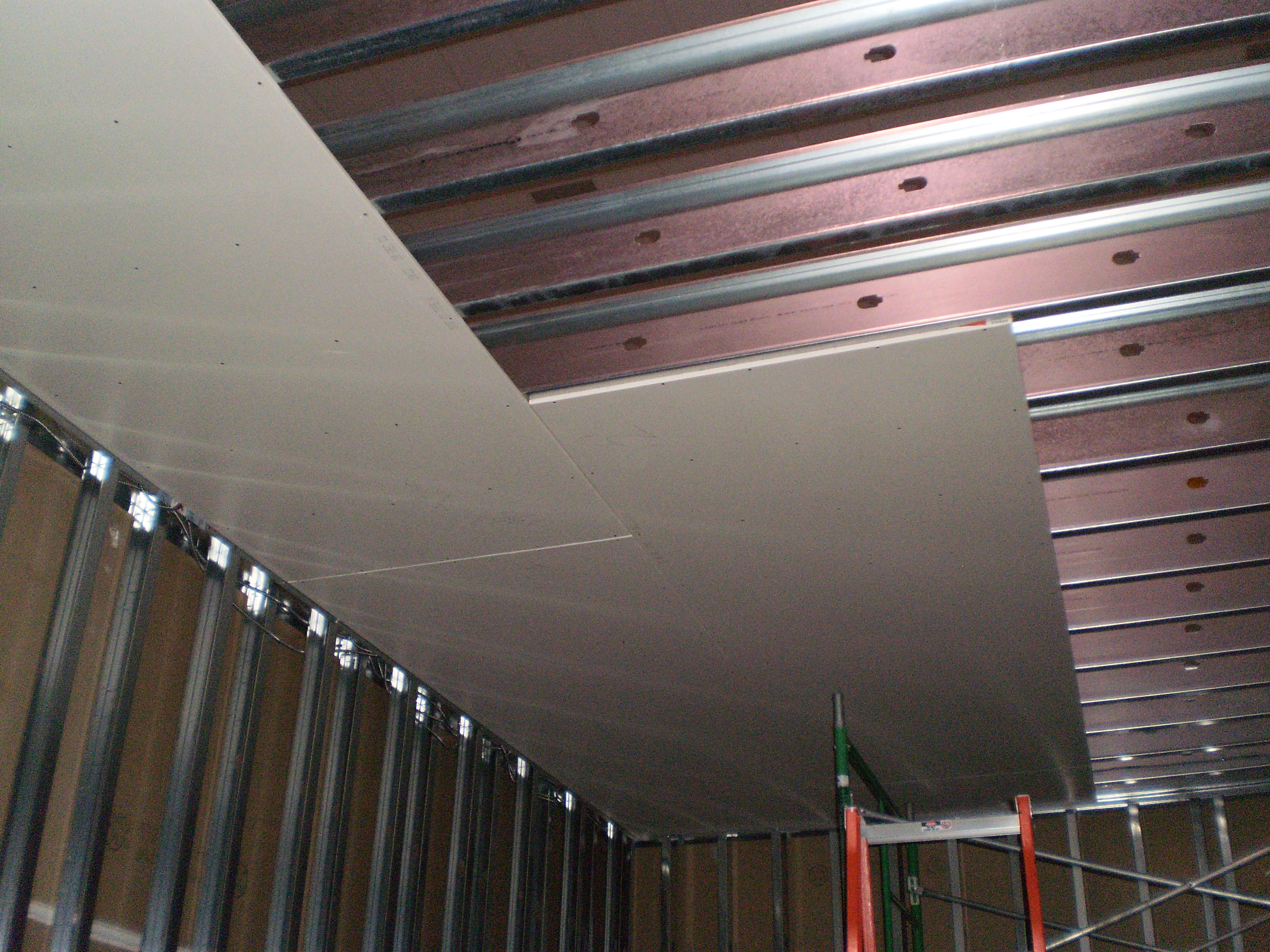
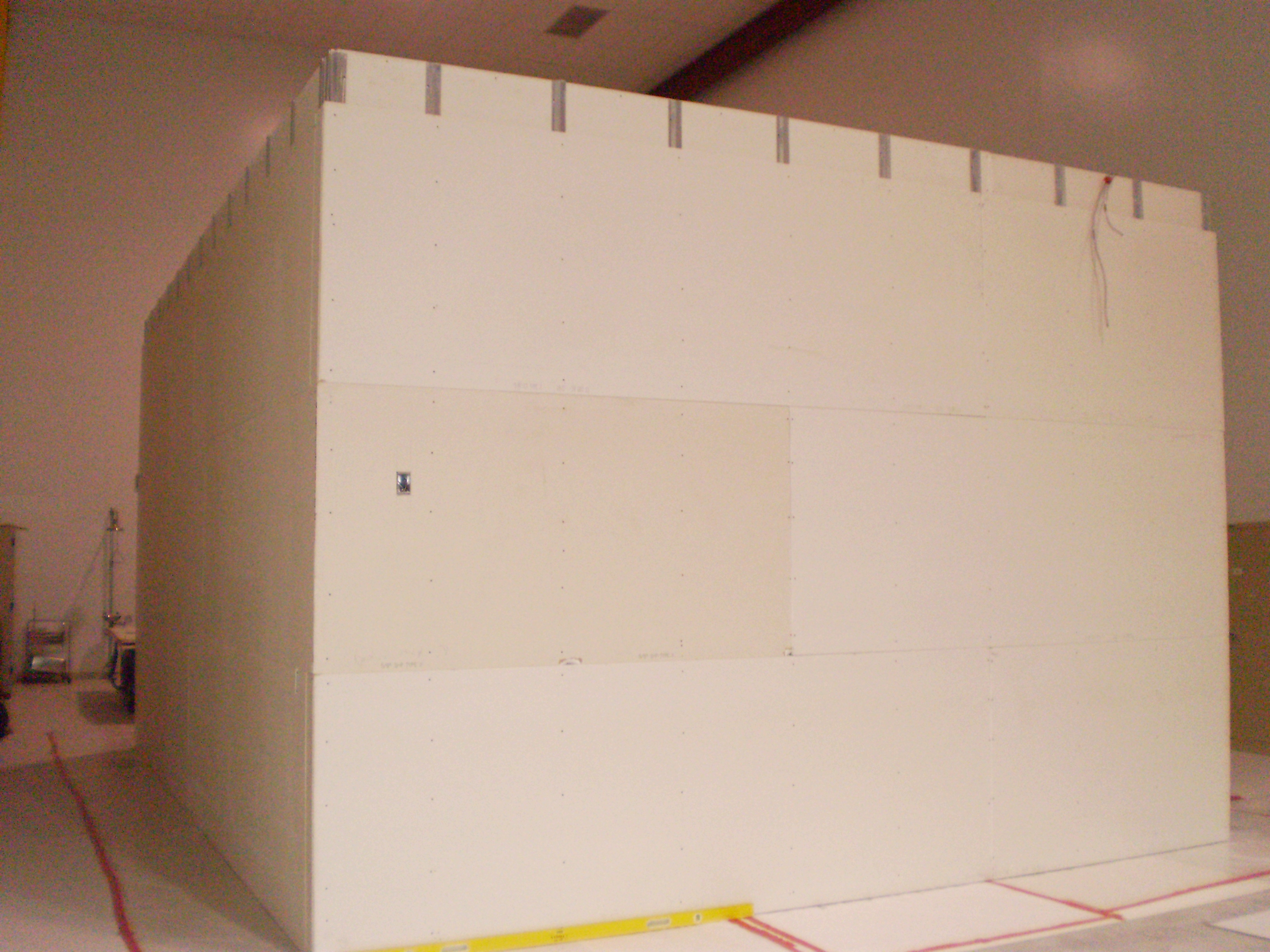
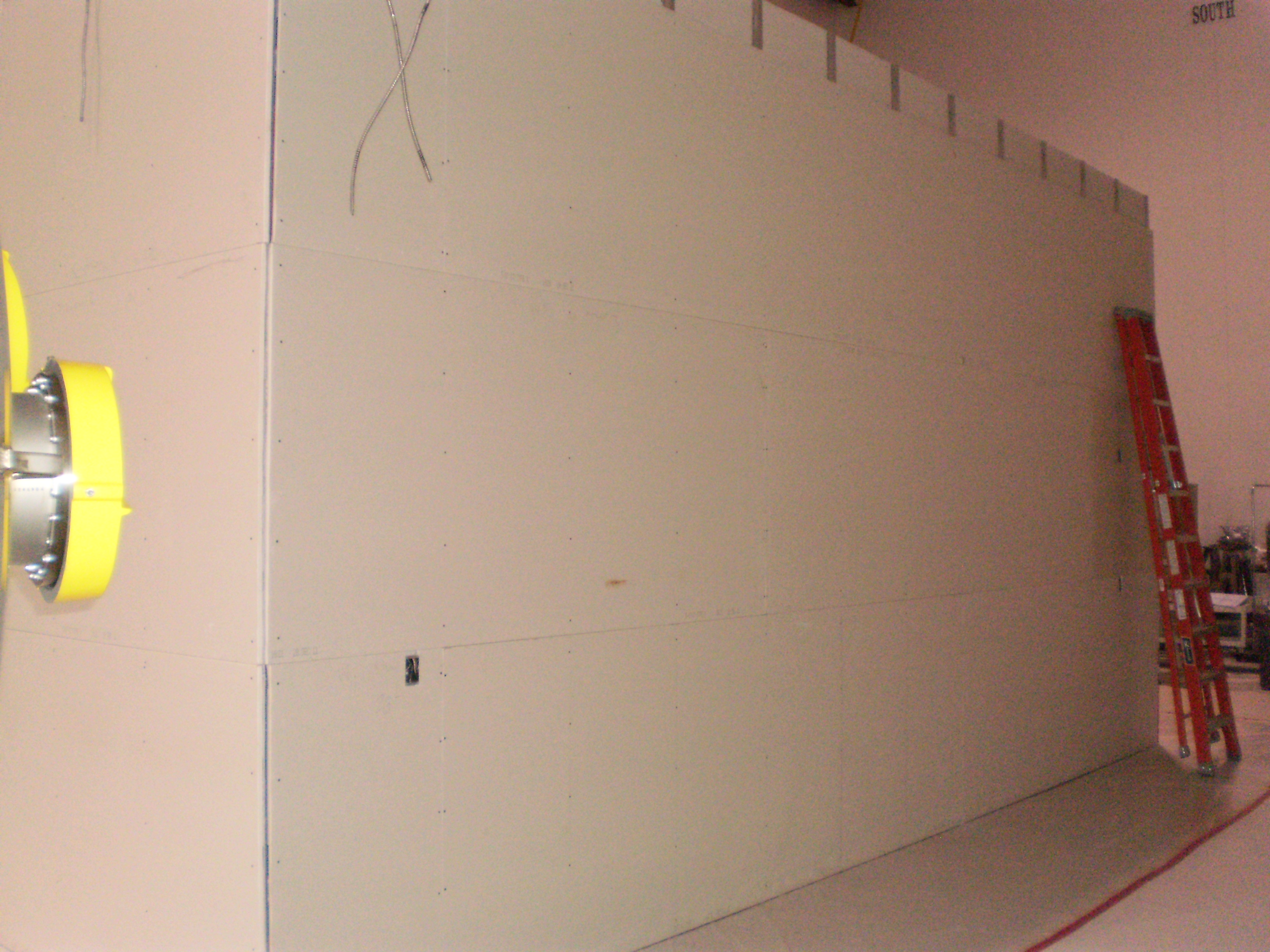
More work on the floating layer of drywall. Several of the interior roof drywall panels were attached as well.
The H2 PSL is back up and essentially where it was before the power outage. PMC and ISS are both locked, FSS is turned off due to work on servo board. We are getting 150W downstream of the PMC.
We had some issues getting the HV power supply working, it was determined that a zener diode on the PMC locking board blew, I have replaced that board with a spare.
List of relavent settings:
Note that the phase on the PMC LO will be reset to a different value when the function generator loses power. To set the phase, sweep the cavity by turning on the ramp in the medm screen. Look at the locking PD with a scope and adjust the phase until the sidebands disappear (there are LEMO cables labeled “SPARE” which run from inside the laser room to the racks outside). Then add 180 degrees to get the optimized phase.
For future reference:
Oscillator settings
Frontend settings
Pretty exciting day today. Hanford Fire Department came due to the power outage at approximately 8:40 AM It's taking a while for the system to come back to functioning status, the medm screens are not booting and neither is data viewer, the cameras work though. Full system restored at approximately 12:30 PM Waste Disposal came for cardboard Kingsoft water Contractors from Rebel Construction 3 contracting companies came for a walk-around with John W.
Mark and I just finished setting all of the face and side BOSEMs on the ITMy and FMy to nominal 50% OLV (+/- 200 counts). We also set the top BOSEMs (Left and Right) for both suspensions to account for buoyancy, as per Mark's T1100616 document. https://dcc.ligo.org/cgi-bin/private/DocDB/ShowDocument?docid=77041 The suspensions have been left suspended.
X1 QUAD 03 BUILD 03 Attached are plots of the X1 QUAD 03 BUILD 03 M0 & R0 TF measurements from last night along with measurements from 01/06/2012. For the M0 mass, there is virtually no change in the resonances from the two measurements, which is expected. The R0 chain, however, is the chain where the cabling attaches between stages. On R0, all DoFs except Pitch appear to have not been affected by the cable lacing. The R0 Pitch plot (pg 5) indicates the second major pitch mode has stiffened quite a bit since the 01/06/12 measurement. The DC Pitch also decreased slightly for this measurement. Cabling between the stages may be the cause of the extra Pitch stiffening on R0, so a reassessment of the R0 cabling could prove useful.
This sort of R0 Pitch stiffening is expected, and acceptable once cables are laced down the reaction chain. See discussion of similar before vs. after lacing on ITMY: LHO aLOG 1769. I'm actually more concerned about R0 Roll: The second mode (~0.85 Hz) seems to have split, or now has two couplings virtually right on top of each other. We should look into this further!
I've often been confused by the functionality of the "Quick Search" and the "Search Tasks" shortcuts in the top middle of the aLOG home page. Rather, I understand the "Search Tasks" field -- I just think it's functionality is not needed -- and the "Quick search" is not reliable enough at returning good search results to be useful. More accurately, "Quick search" only searches for the entered text as a keyword. For example a search for "kissel" doesn't return anything written by me, only the one's to which I've added my name in the text. Another example, if I enter in an aLOG entry number "1933" it returns nothing. Conversely, I think the "Search" page has enough versatility that it returns exactly what I want, everytime. In summary I suggest: Removal of the "Search Tasks" possibility, and have the "Quick Search" use the user input as all possible search fields (Section/Task, Report ID, Date, Authors, and keywords), if we want to keep the quick search at all.
The quick search area should be more versatile now. The task selection is staying on the main page so that users can easily filter to only a specific task if needed.