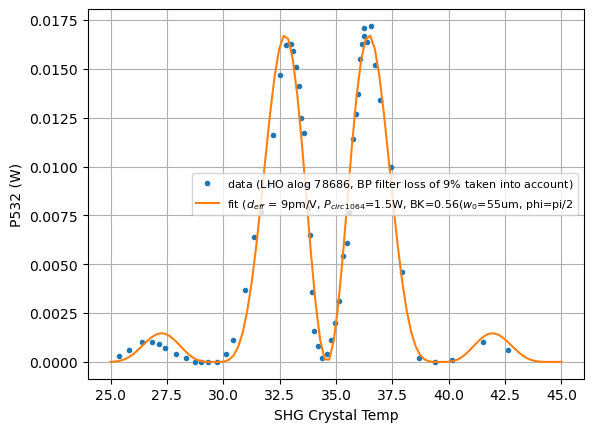
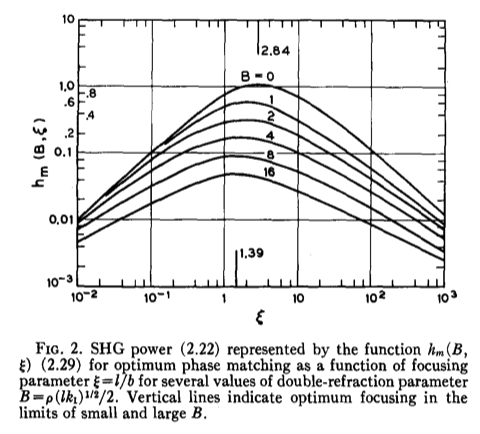
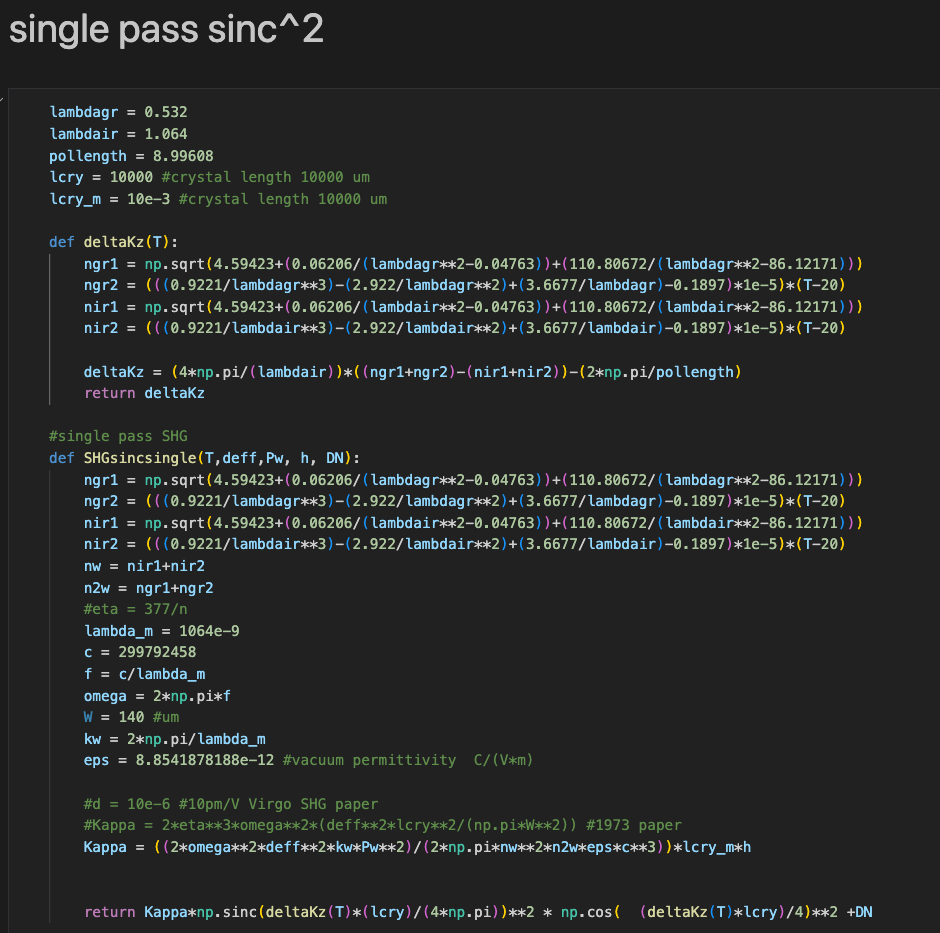
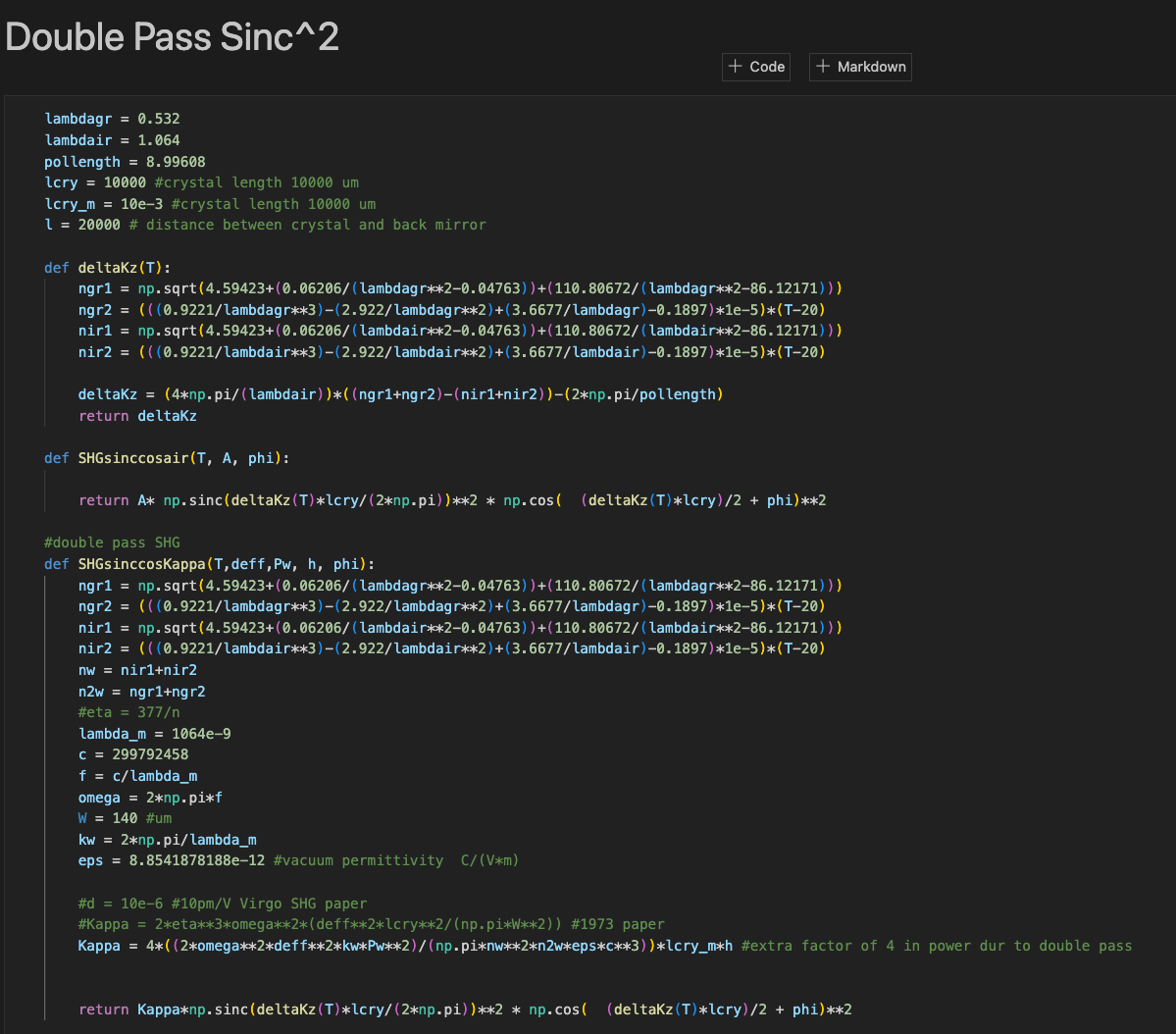
Updated the H1:ASC-OMC_[A/B]_SEG[1..4]_OFFSET (OMC QPD dark offsets) for the channels to read 0 inthe dark state.
Cleared the H1:ASC-OMC_A_[PIT/YAW]_OFFSET, since we have a new OMC, so the old offsets are no longer meaningful.
Updated the DCPD offsets, even thout they were tiny.
SDF attached.
Trent Matt and Jennie
We looked at the pitch and yaw of the IFO output mirrors (OM1-3+C) this morning around 6am and the same pitch and yaw channels at 6am yesterday; the only one that we saw with significant differences were OM2 Pitch and Yaw, which both went down about 30 and 20 microradians (we think this is the unit counts represents), respectively.
Fri Mar 08 10:11:29 2024 INFO: Fill completed in 11min 26secs
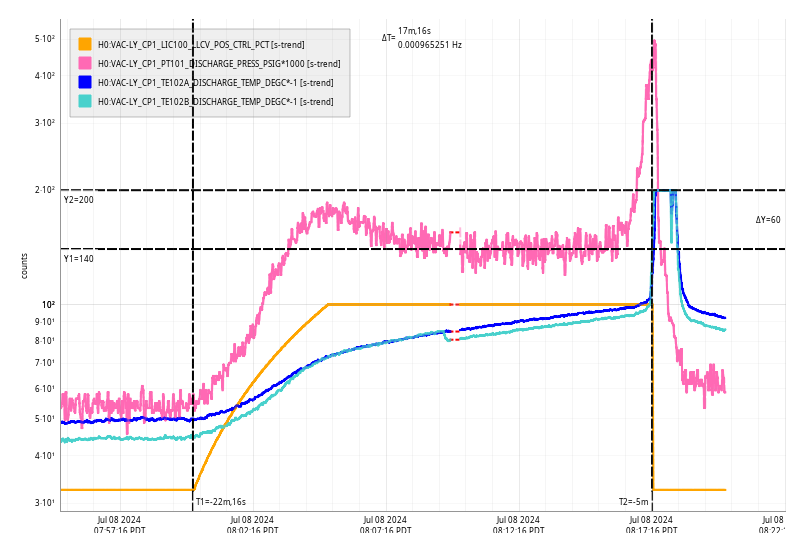
Gerardo confirmed a good fill curbside. TCs started around -30C, so I've transitioned to -100C trip temps. Plot's y-cursors have been changed accordingly.
Stefan B, Jennie W, Sheila
Summary: Checked OMC step responses and they converge in 30s or less without saturating suspensions. These loops can be slowed down if need be.
Since locking yesterday there has been no light through the OMC.
Sheila decreased the OMC QPD whitening gain as the QPDs were saturating. This was turned up during the vent so she changed it back to what it was in O4a.
We still had some sort of signal into the OMC QPDs. We turned off the pitch and yaw offsets to these QPDs and then went into the whitening filters and turned off the bottom row of gain filters so only the low pass filters are on and set the offsets to be the negative of OUTMON. First image is original filters for QPD B and second is the filter once setting the offsets (QPD A was done in the same way).
We did this dark offset procedure for QPD A and B on OMC and then Stefan manually set the offsets on DCPD A and B to 0.03 on input to filters.
Sheila did the step responses for the OMC ASC loops by switching on offsets in the POS X, Y and ANG X, Y filters in turn.
POX X offset causes POS X and ANG X to move, POS X converges in 30s and ANG X converges in less than 5s. This means we could decrease the gain in ANG X loop. See image 3.
POS Y offset coupled to both POS Y and ANG Y (half as much) and they both converge in 30s.
ANG Y offset does not couple to other DOFs and converges in 20s.
ANG X offset also does not couple in to other DOFs and converges in 20s.
First image shows POS X and ANG X offsets being inplemented and second shows POS Y and ANG Y.
TITLE: 03/08 Day Shift: 16:00-00:00 UTC (08:00-16:00 PST), all times posted in UTC
STATE of H1: Planned Engineering
OUTGOING OPERATOR: None
CURRENT ENVIRONMENT:
SEI_ENV state: CALM
Wind: 2mph Gusts, 1mph 5min avg
Primary useism: 0.02 μm/s
Secondary useism: 0.32 μm/s
QUICK SUMMARY:
More locking today!
The pressures: HAM7: ~2.7E-7 Torr HAM8: ~5.34E-7 Torr Corner: ~4.4E-8 Torr EX: ~5.0E-9 Torr Today's activities: - At the MY and EY stations the turbo-side Hepta header filters have been added, closing WP11570 - At these stations, Turbo functionality test was also done, see here more in-detail: https://alog.ligo-wa.caltech.edu/aLOG/index.php?callRep=76196 - HAM8 Turbo was valved out, and HAM8 was valved together with IP24 (FCV-9 open). However, there is still a big jump in pressure, the Ion pumps turned around only as of this writing - HAM7 Annulus Ion Pump has been taken care of. It was believed that the G3/8 plug is the reason for the railing Ion-pump, but in the end a simple controller swap solved the issue - Relay tube - HAM7 - HAM8 further schedule: This volume will be valved in to the main volume tomorrow, as soon as the commissioning team needs it - RV1; FCV1; FCV2; FCV3; FCV4; FCV8 will be opened
While H1 was running an initial alignment this evening, I took the opportunity to do a quick tune-up of the FSS RefCav alignment from the control room using the two picomotor-controlled mirrors in the FSS path. I was only able to get a marginal improvement, but I did get the signal on the TPD to increase from 0.7V to 0.8V as a result of the alignment tweak.
[Jenne, Stefan, Georgia, Matt, Elenna, Ryan S]
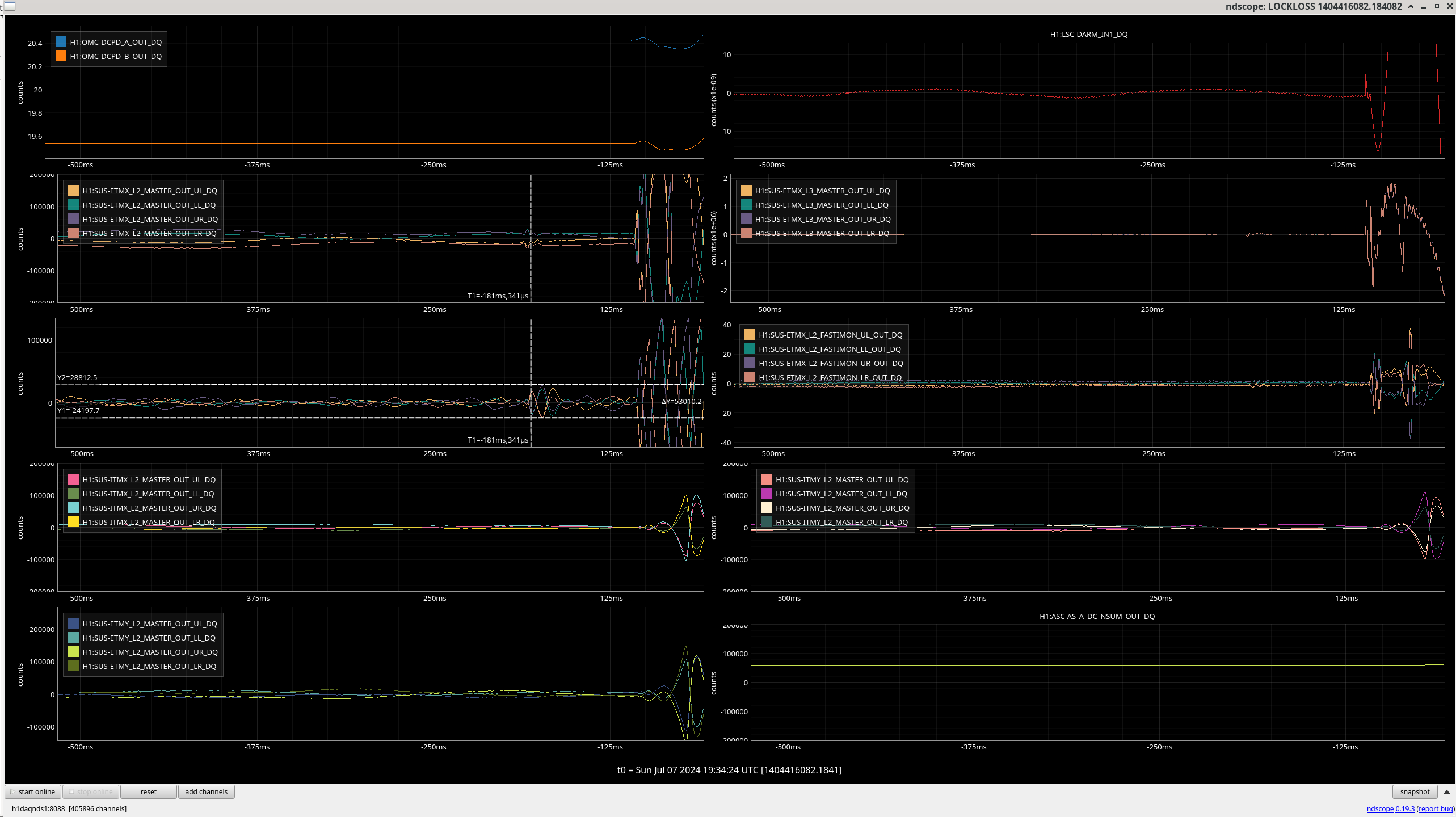
We have made it almost through the "Max Power" state of the guardian! During the last power up step from 55 to 60W we had a fast lockloss. It appears to be about 16 Hz and in the DARM loop itself. Since we are down and reset the green references, we are running an initial alignment. Once that completes, we will try locking again, possibly with a slow power up by hand and measurements of the DARM loop gain. The violins are a bit high but Ryan engaged the 2W damping settings and they were coming down well.
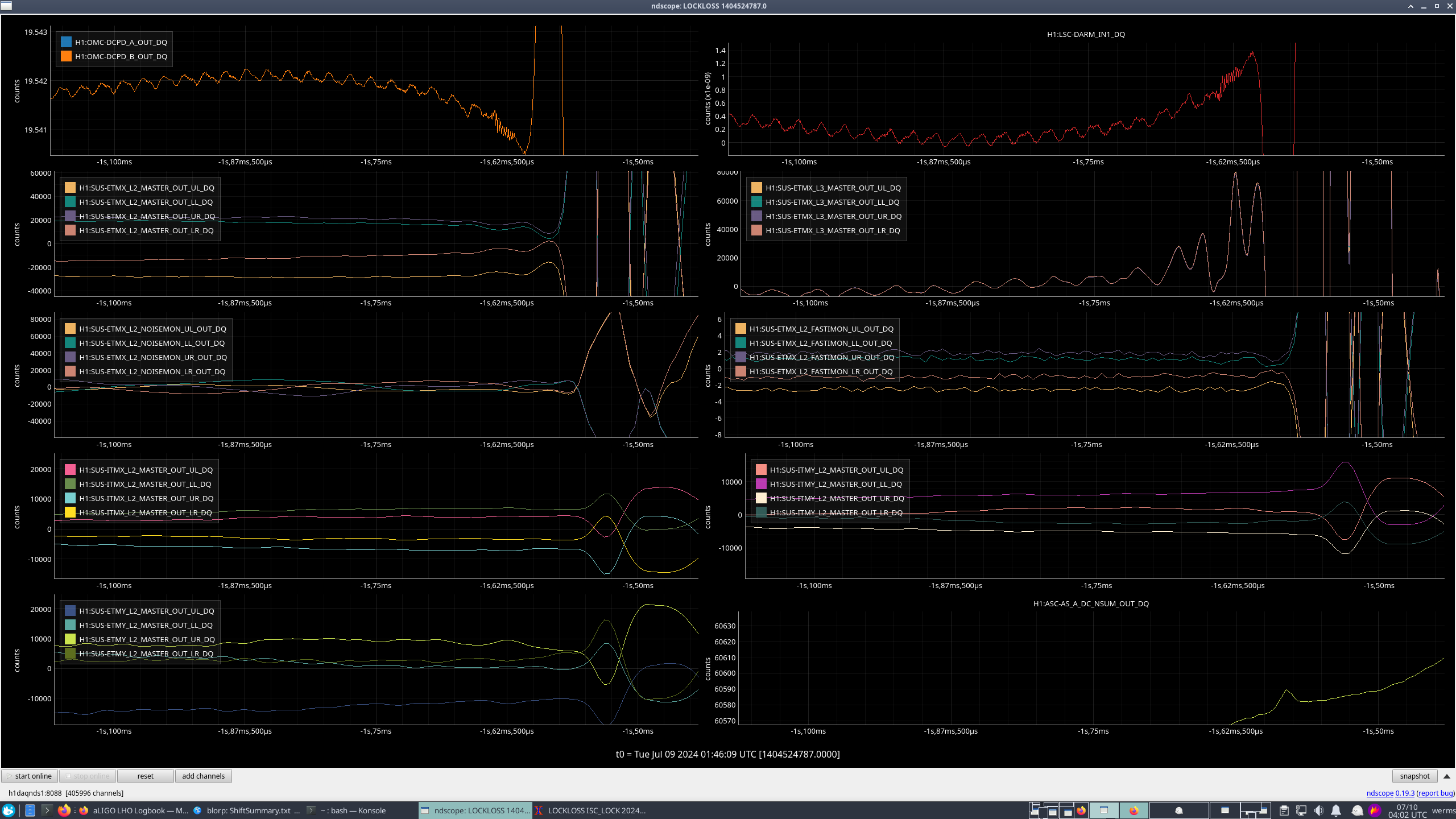
We reran initial alignment with the new green references. We used the guardian to lock the interferometer without human intervention. Except Gabriele touched the PRM alignment while DRMI was locked to improve the POP18 buildup. We realized that while we were powering up to 25W the spot on the OMC trans camera was drifting in yaw. The OMC suspension started to saturate. At 25W we switched DARM back to RF by reverting the LSC input matrix by setting the OMC to DARM input matrix element to zero. The AS_A_RF45Q to -1E-6. We took the OMC guardian to down and gracefully cleared the history of the OMC SUS. We're not sure why the OMC_ASC failed. Gabriele and Camilla are looking into it. The error signal seems to have frozen between CHECK_VIOLINS_BEFORE_POWERUP and POWER_10W.
We are leaving the interferometer down.
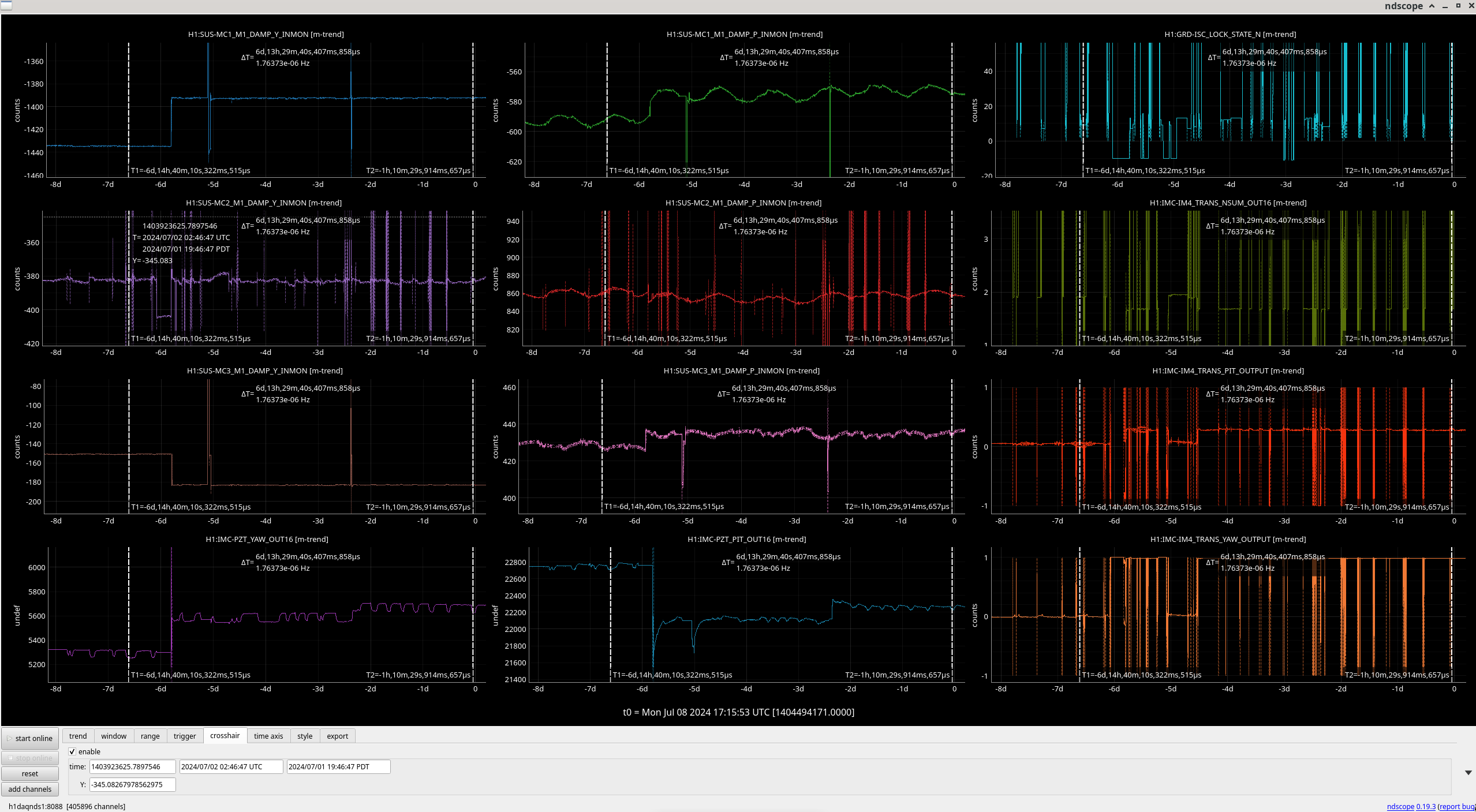
More trends of OMC alignment signals
It looks to me like the OMC QPD were saturating
Trent, Vicky, Nutsinee
As part of the 8dB HD squeezing recovery effort we went and tweaked the HD visibility on SQZT7. We now have 99.15% fringe visibility on PDA and 98.17% on PDB. Green power coming out of the SHG dropped so SHG ISS was railing. I've increased the amount of green availible to the pump fiber coupler. More squeezing plots to follow.
Vicky and I accepted FC1 and ZM1 alignment SDFs, Vicky found that the OPO and CLF ISS loops are not good, we might need to adjust gains/boosts.
I reduced opo_grTrans_setpoint_uW to 78uW in sqzparams.py to give us 20.4 SHG Launch, NLG = 17.1 (Amp/Unamp =0.377/0.022). Following "how to NLG" 73801 instructions.
Leaving SQZ in DOWN, SQZ_MANAGER in NO_SQUEEZING, FC_MISALIGNED
We ran the functionality test on the main turbopumps in MY and EY. The scroll pump is started to take pressure down to low 10^-02 Torr, at which time the turbo pump is started, the system reaches low 10^-08 Torr after a few minutes, then the turbo pump system is left ON for about 1 hour, after the hour the system goes through a shut down sequence.
MY Turbo:
Bearing Life:100%
Turbo Hours: 211
Scroll Pump Hours: 76
EY Turbo:
Bearing Life:100%
Turbo Hours: 1279
Scroll Pump Hours: 75
No issues encountered for either turbopump
Closing WP 11755
[Jenne, Elenna]
We have saved many different versions of the green offsets during the process, to hold on to our progress as we improved the alignment. For simplicity, I will only attach the final final v2 version of these offsets. These offsets were set after we converged the alignment in "engage_asc_for_full_ifo" and "engage_soft_loops", while DARM is on RF.
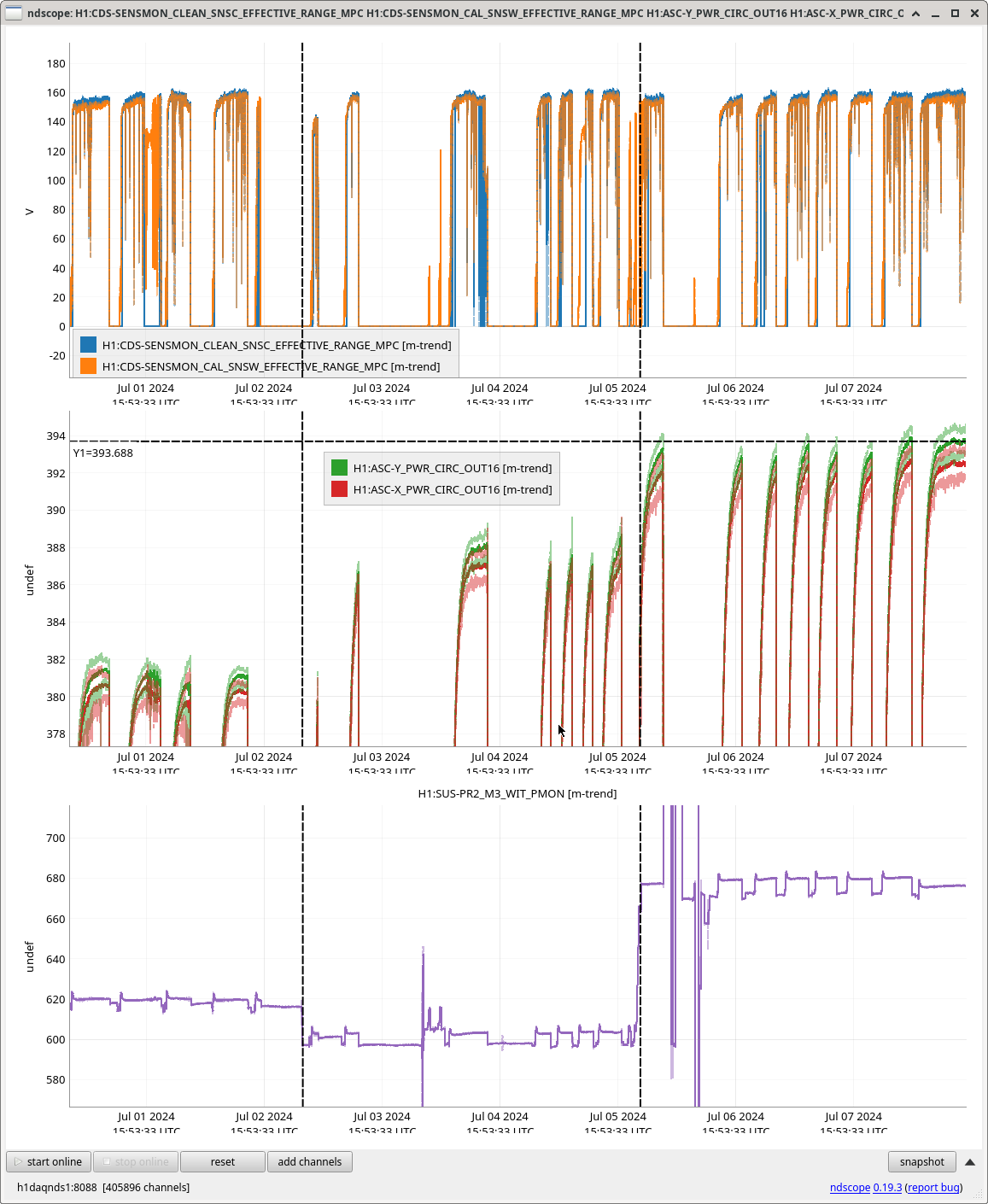
We had some funny guardian issue that caused the top mass integrators to not be on for ITMX and ITMY. We engaged those integrators and let the alignment converge before setting these offsets. Once we lose lock, an initial alignment should be run on these new offsets.
The offsets for the QPDs and cameras are set according to the directions in this alog post: 50968.
I also set the POP A offsets based on our new alignment. This loop is not engaged in full lock, but PRC1 is usually engaged in DRMI ASC and will set the PRM alignment. Once we add PRC1 back to the guardian for DRMI, that will properly offload the PRM in the correct place.
All SDFs are saved, and the five attached screenshots show the ALS Y QPD offsets, ALS Y cam offsets, ALS X QPD offsets, ALS X cam offsets, and POP A offsets.
For our future knowledge, we also took green camera references after every big alignment improvement, such as DHARD WFS engagement, walking alignment error signals to zero, etc. This gives you the ability to reset to your "save point" and not have to start all over with the process at every lockloss.
Another helpful idea is to run the code to set the green offsets while alignment changes are made, so that the green arms stay aligned with the IFO alignment changes.
TITLE: 03/07 Day Shift: 16:00-00:00 UTC (08:00-16:00 PST), all times posted in UTC
STATE of H1: Planned Engineering
INCOMING OPERATOR: None
SHIFT SUMMARY:
Today commissioning team mainly worked on ASC (in the afternoon mainly at the PREP ASC FOR FULL IFO state). Other notables: X-Arm controlled burns continued and HAM7 annulus ion pump leak work,
Nuc30's DARM dtt session had to be closed/restarted, and it also timed out as well---so you have to keep an eye on it.
LOG:
Sheila, Gabriele, Corey, Jennie, others
Summary of guardian changes that are useful to make when we are recovering from a vent, for future reference:
Some guardian changes made yesterday to think about maybe reverting:
We increased the ITMY camera exposure (H1:VID-CAM23_EXP) from 30 to try to see the beam location once we're in resonance.
Comparing the ITMY camera (intra-cavity) from last lock in O4a to now, beam position seems similar in pitch, slightly more right in yaw. Caveats: as we have a dimmer beam X/Y reported position may be more effected by scatted light, and we are comparing different locking states (500 before, 300-400 now) plot attached.
I added a new state to the ISC_LOCK guardian called IDLE_ALS, which sets ALS_DIFF and ALS_COMM to IDLE, as shown in the attached graph. This can be used to avoid shuttering ALS, but when we are finished with resetting the green reference we can set the weight to not use this path any longer.
As we have been moving alignments today, we have unlocked the green arms. The ALS_XARM and ALS_YARM guardians have a fault checker in the LOCKED_IR state that checks the beckhoff ALS PDH fault checker, which checks things related to the green PHD. This causes the guardian to try to relock the green arm, and if it suceeds it can turn the green WFS back on, which caused us some confusion today. I've removed this fault checker.
In this situation, we need to turn on the script that adjusts the QPD offsets to keep the green aligned to the arm while we move the arm alignments, this can be done once the ALS_ARM guardians are in RED_LOCKED and the green WFS are off.
Jonathan, Patrick, Dave:
Around 14:00 yesterday (Wed 06mar2024) we upgraded the camera network link to h1digivideo3 from 1GE TPE to 10GE fiber. After running overnight, all of the cameras on this server are still running and, with the exception of ETMY, no further VALID=0 have been seen (2 day trend attached, upgrade at the 18h mark).
ETMY continues to have an hourly VALID=0 which flashes the camera client images blue-screen for a few seconds. This happens at roughly the 20 minute mark in the hour and it slowly advances through the hour.
The ETMY periodicity is not changed by h1digivideo3 reboots, suggesting it is in the camera itself. To test this, I power cycled the ETMY camera at 08:34 this morning.
Power cycling the ETMY camera (h1cam27) appears to have fixed the hourly blue-screen flashing.
We have had no camera drop-outs or VALID=0 issues over the past 24 hours. Looks like h1digivideo3's problems have been resolved, I'm closing out FRS30615
Per commissioner request, I've made two changes to the early main locking steps as set in ISC_LOCK:
Changes have been loaded and committed to svn.
I've also commented out SQZ_MANAGER from the list of managed nodes in ISC_LOCK. This allows SQZ to work independently without main IFO locking telling SQZ_MANAGER what to do for now.
EDIT: We later learned that lines 214-215 of ISC_LOCK needed to be commented out as well since this is a request of SQZ_MANAGER in the DOWN state.
Furthering this effort as main IFO locking is progressing, I've commented out the first couple lines in the LOWNOISE_LENGTH_CONTROL state which interacts with SQZ_MANAGER, which at this point is not managed.
Naoki, Vicky - We have undone these changes guardian changes for the break (brought back SQZ_MANAGER in list of managed nodes, in first few lines of LOWNOISE_LENGTH_CONTROL, and lines 214-215 requesting sqz to down).
SQZ_MANAGER is back to being managed in ISC_LOCK as usual. We will see the lock sequence through a few times and get it running smoothly, and update on that after relocking.
Trent, Matt, Georgia, Jennie W
fit_peak.py takes a chosen field and mode peak and fits a lorentzian curve to it. The problem with it was that all important arguments like gps_time, duration, field, and mode were all hard coded. We wanted to edit this code so that you can input these values as command line arguments. This new file fit_peak_w_args.py lives in my forked branch of labutils tgayer.
This code also calculates the finesse of the cavity from the calculated full width half max and prints it out to the command line.
We would also like to further improve this code by changing the fit so that we factor in the baseline of the data so that the tails of the fit better match the baseline.
An example of what you run on the command line [python3 /ligo/gitcommon/labutils/omc_scan/fit_peak_w_args.py 1393542033 80 "two watt single bounce side bands nominal" "single bounce" "carrier" "00"]
[/ligo/gitcommon/labutils/omc_scan/fit_peak.py]
[/ligo/gitcommon/labutils/omc_scan/fit_peak_w_args.py]
I fixed a problem with the plot title labeling. It would always say carrier but now it displays the properly shown field. I also colored the section of the plot that we fit the lorenztian to. Attached is an example.