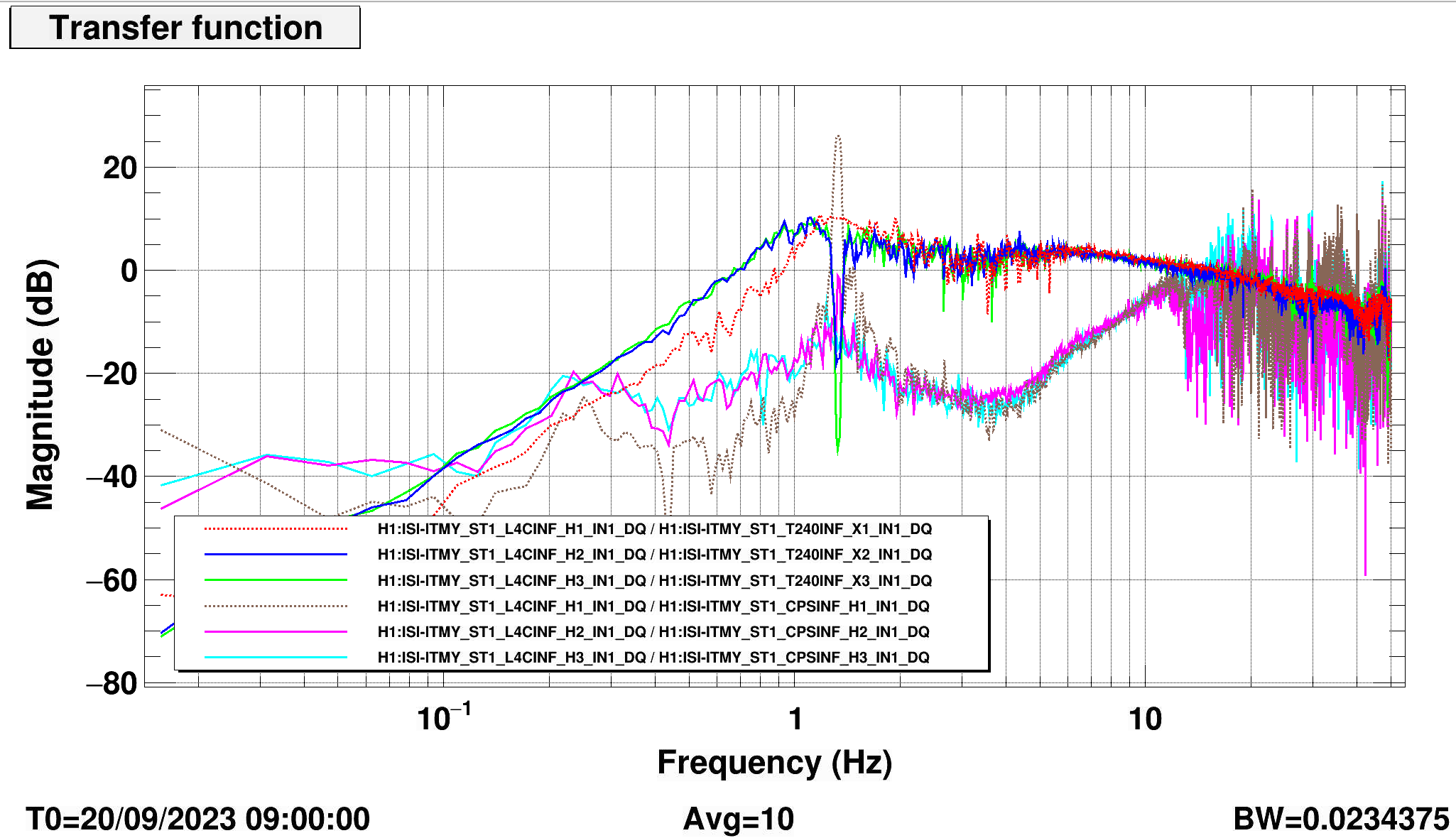
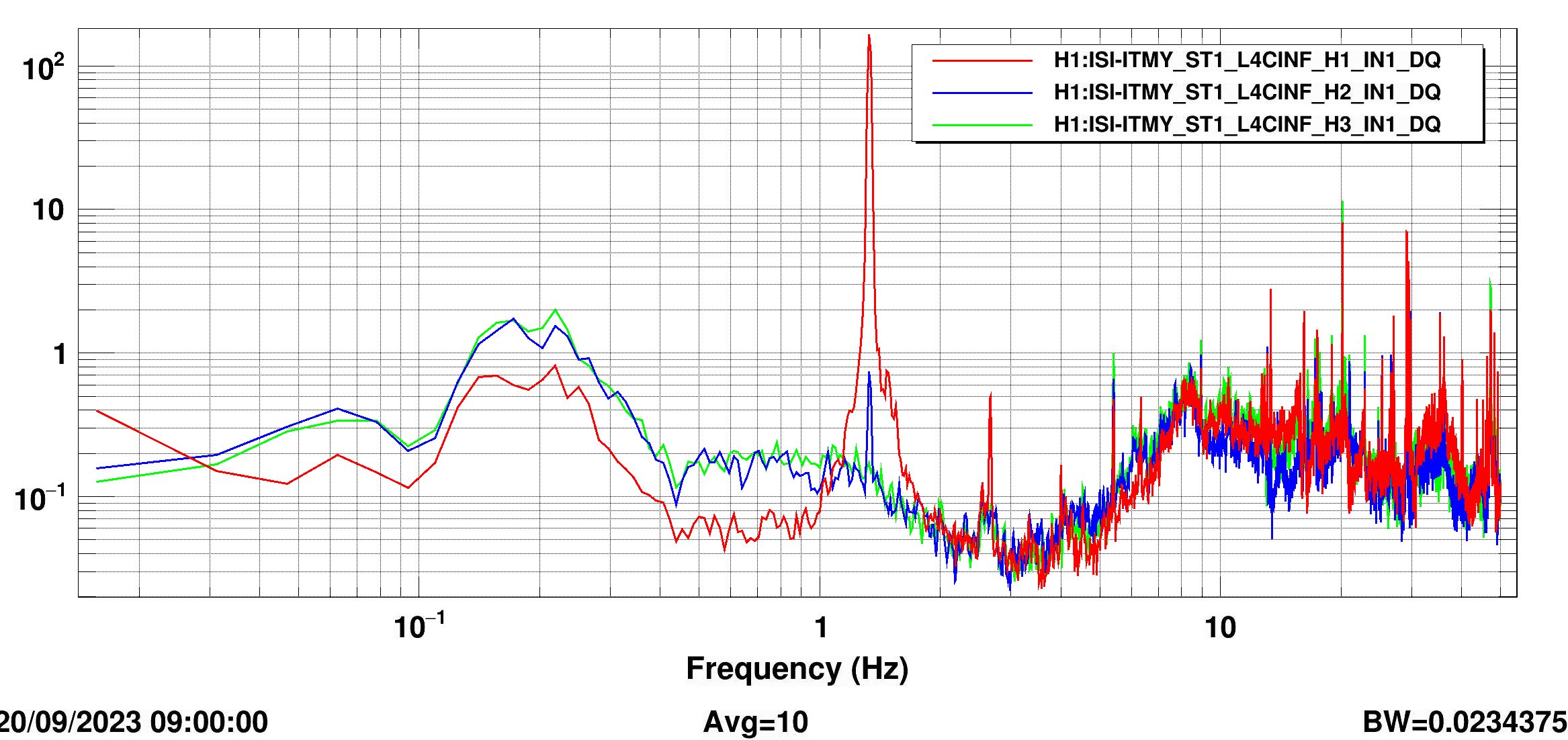
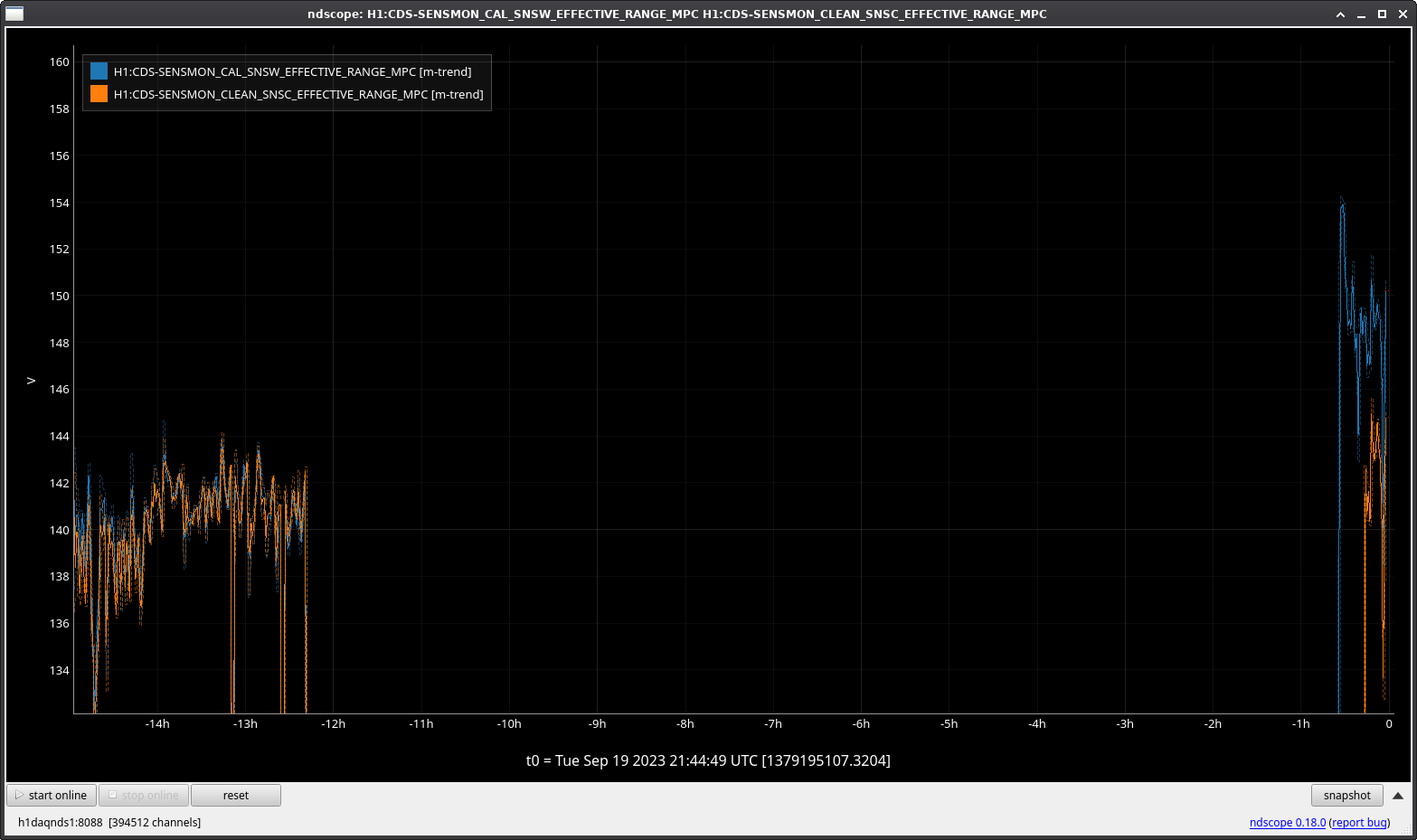
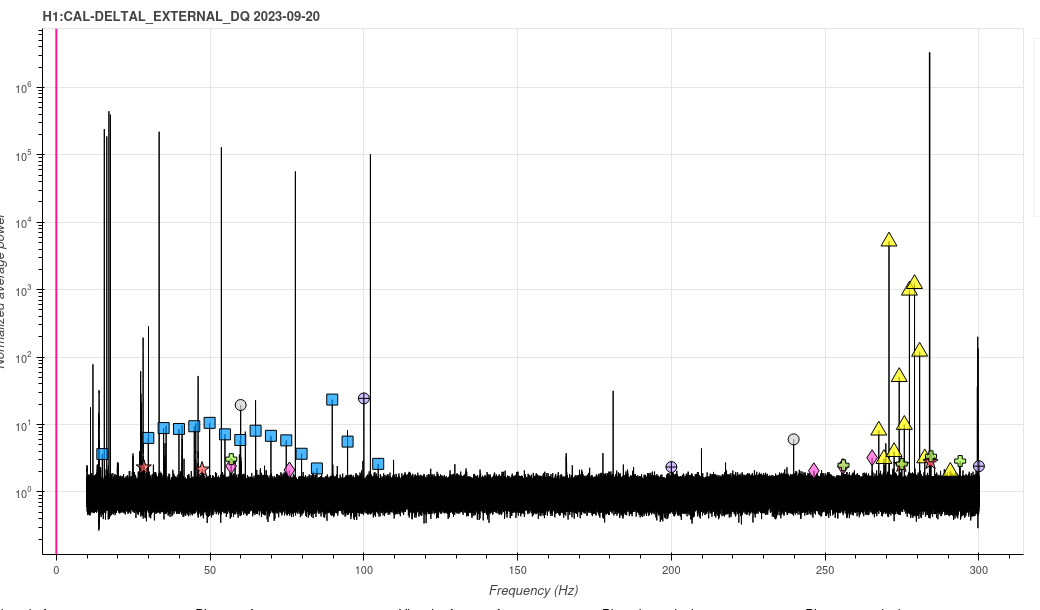
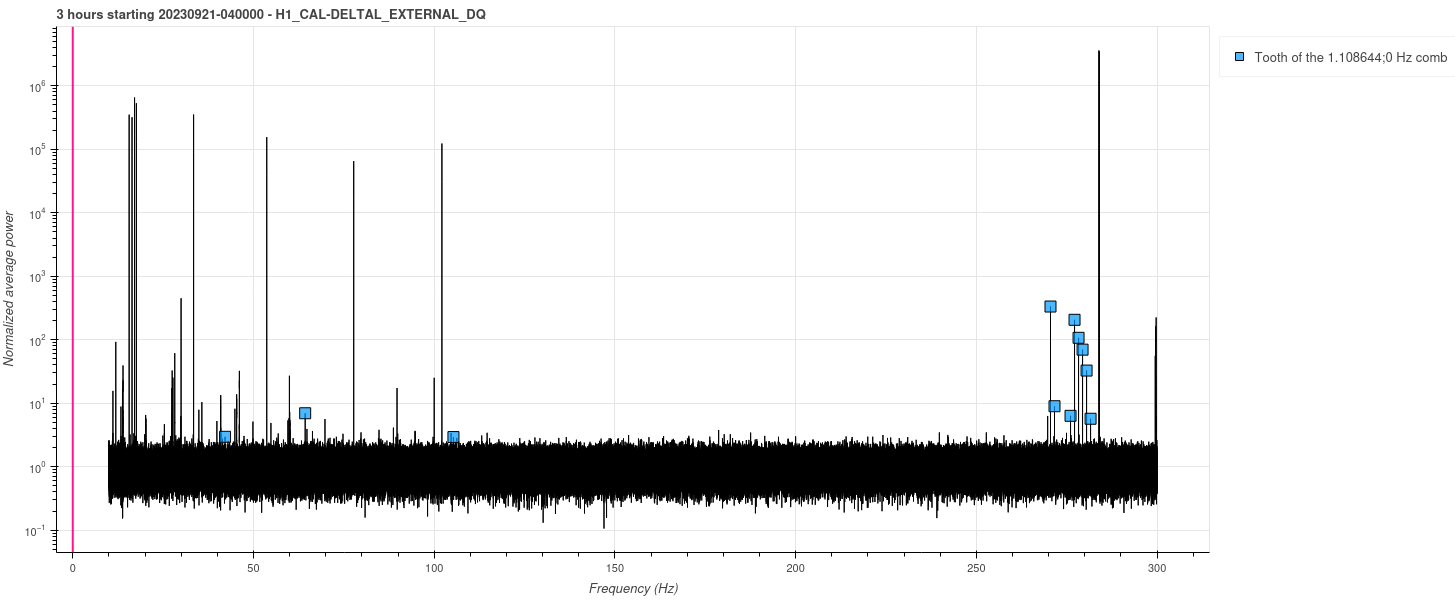
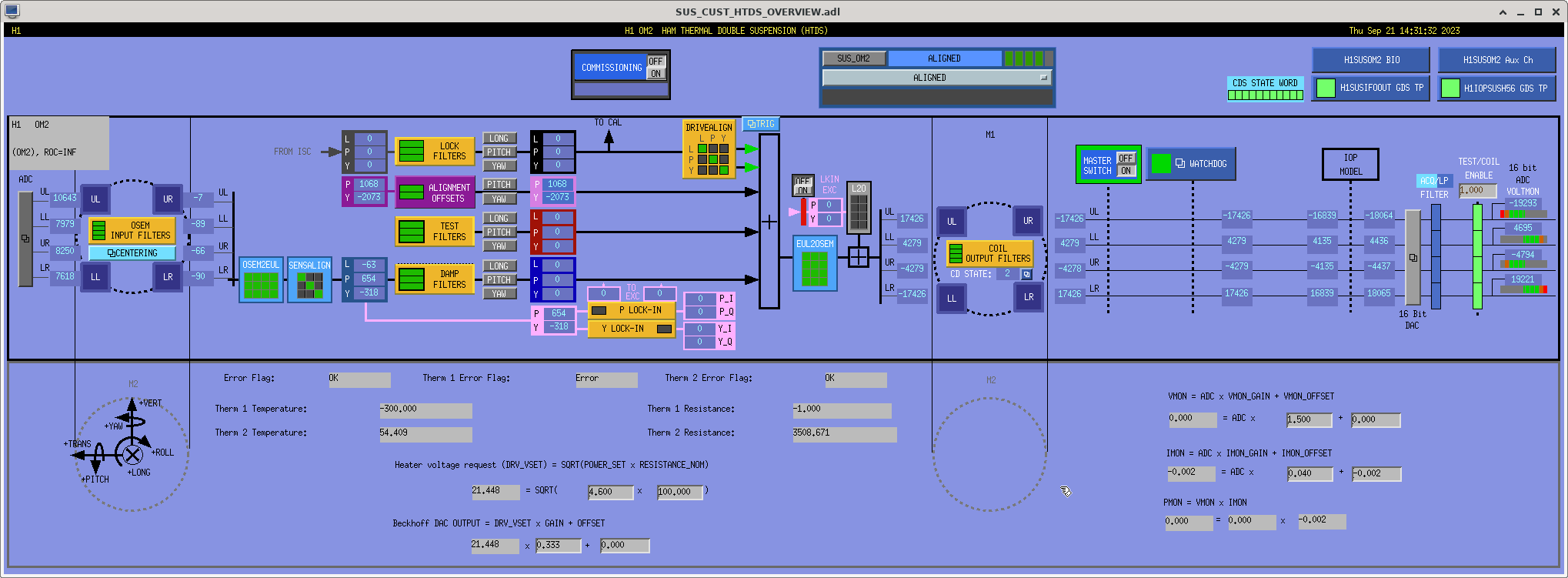
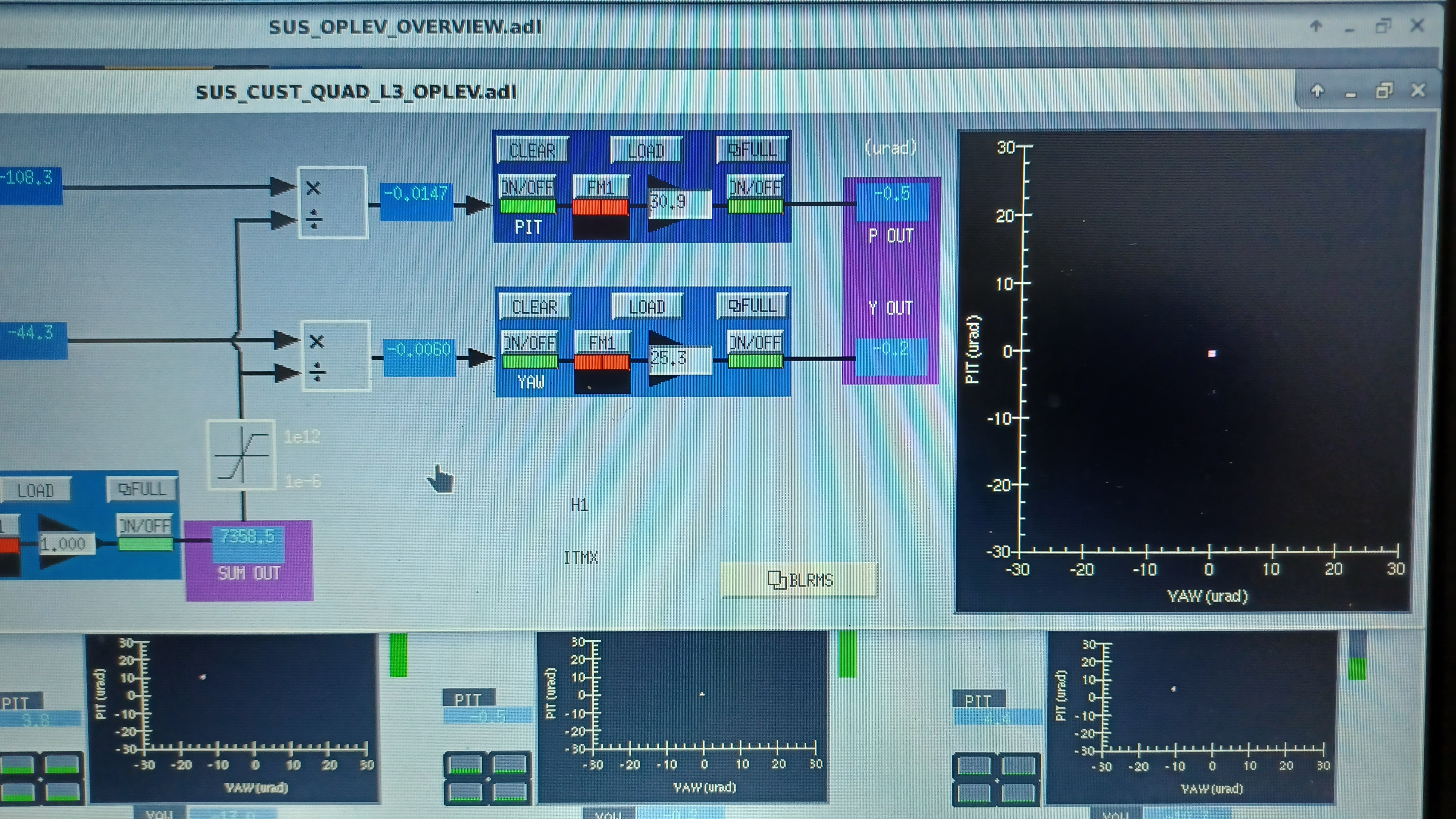
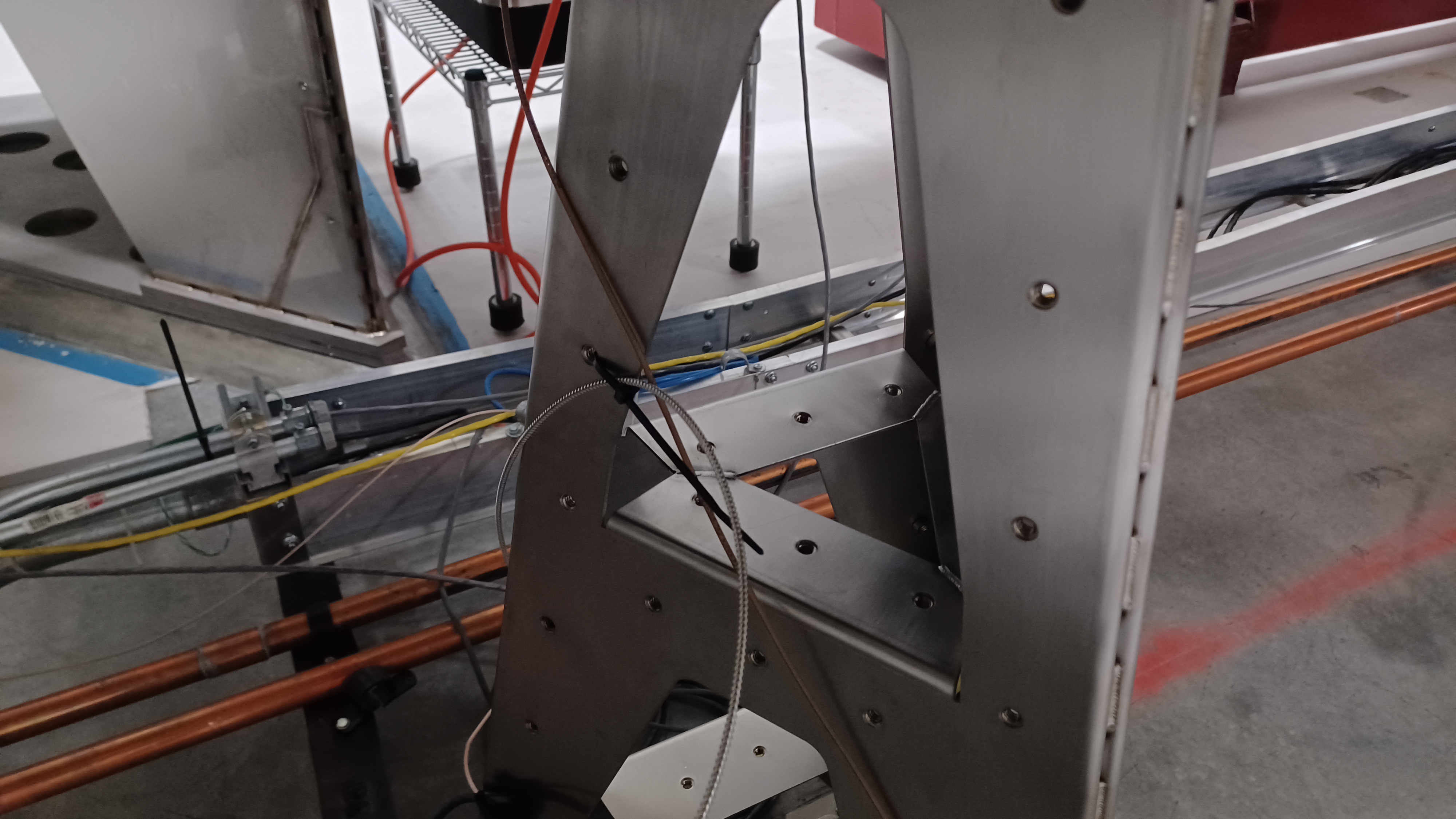
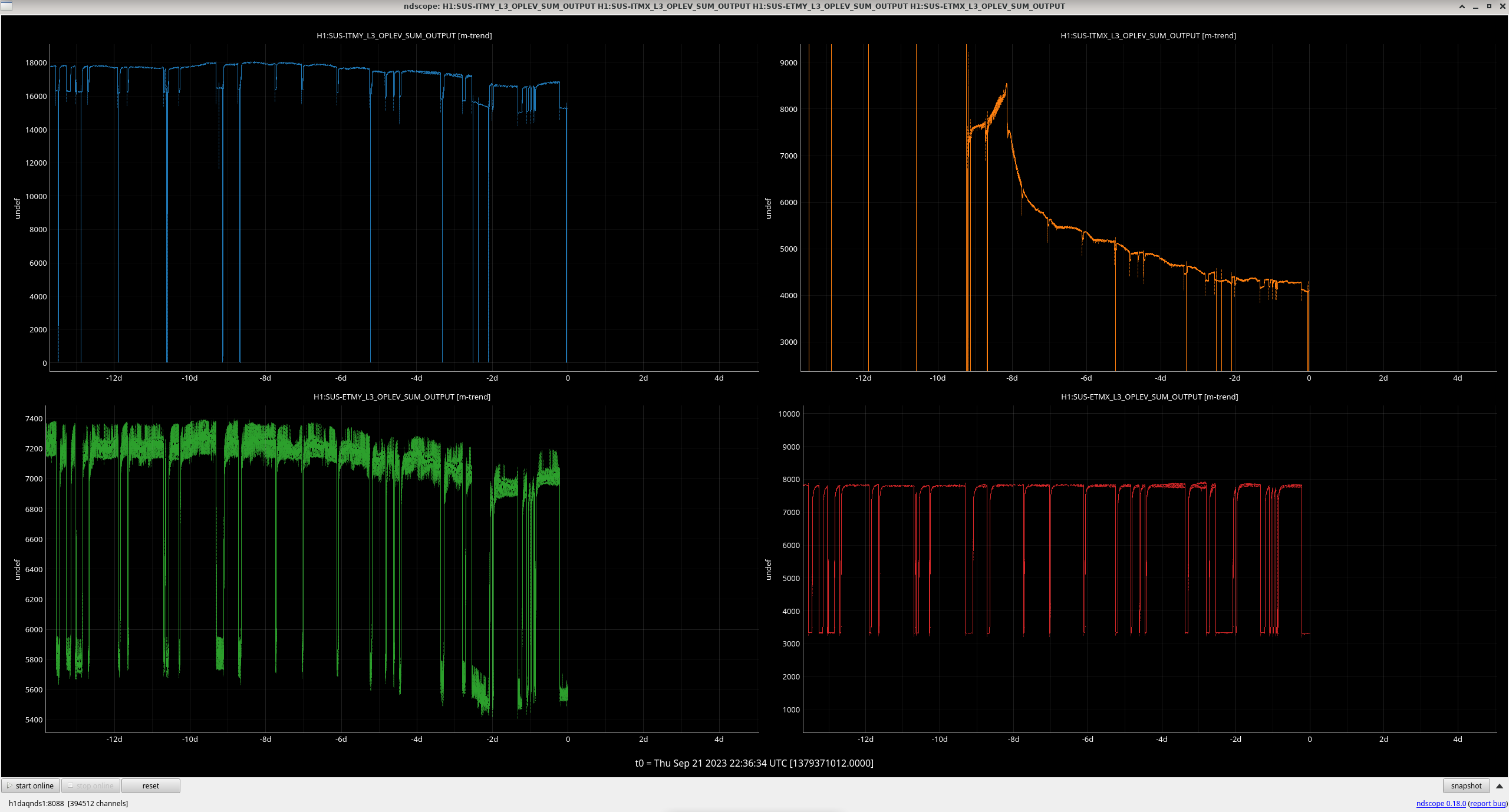
ITMX ISI stage 1 & 2 watchdogs tripped which caused a Lockloss, Seismon was showing an increase in motion but not by that much. The T240s saw a large increase in motion, the values are going crazy. LSC_CPS_FF is now a lot noisier than it was before the trip
STATE of H1: Observing at 144Mpc
Still locked (52hrs), everythings good
TITLE: 07/09 Owl Shift: 07:00-15:00 UTC (00:00-08:00 PST), all times posted in UTC
STATE of H1: Observing at 140Mpc
CURRENT ENVIRONMENT:
SEI_ENV state: CALM
Wind: 11mph Gusts, 9mph 5min avg
Primary useism: 0.01 μm/s
Secondary useism: 0.06 μm/s
QUICK SUMMARY:
Everything looks stable, locked for over 49 hours!
TITLE: 07/09 Eve Shift: 23:00-07:00 UTC (16:00-00:00 PST), all times posted in UTC
STATE of H1: Observing at 141Mpc
SHIFT SUMMARY:
IFO is LOCKED and OBSERVING - now for 48 hours and 35 minutes and counting, O4 record!
Other:
Squeezer unlocked without unlocking full IFO, which knocked us out of observing briefly, but quickly and automatically recovered within three minutes, putting us back in observing. This resulted in a data gap in GWISTAT during this time (4:34:38 UTC to 4:37:12 UTC), which was communicated on the RRT O4 mattermost channel and on teamspeak upon clarification.
LOG:
Tagging TCS: Out of observing 07:47 - 07:48 UTC as the CO2X laser unlocked, see attached. This happened on 06/28 too 70910. Unsure why, the PZT doesn't seem to be drifting out of range it just quickly drops, see attached.
Tagging SQZ, this is an old alog of SQZ_MANAGER taking us out of observing 2023/07/09 04:34UTC for 1m51s. This looks to be because the SQZ_SHG got to 0V and ran out of range, attached plot.
We do have a checker in LOCK_SHG and SQZ_READY_IFO to check H1:SQZ-SHG_PZT_VOLTS is between 15V and 85V 70076, but this was 46 hours into the lock where SHQ_PZT started at 40V so editing the checker wouldn't help here. We just need to stop the slow drift, LVEA temp is steady during this time.
>> guardctrl log -n 500 -a "2023/07/09 4:34:00 UTC" -b "2023/07/09 4:37UTC" SQZ_SHG
2023-07-09_04:34:37.763756Z SQZ_SHG [LOCKED.run] USERMSG 0: PZT voltage limits exceeded.
2023-07-09_04:34:37.825851Z SQZ_SHG JUMP target: SCANNING
Closes FAMIS 25589, previously checked in alog 70981
Outbuilding Fan Vibrometers: Around 4 days ago, EY_FAN1_470_1 jumped from 0.31 to 0.33 counts (3rd screenshot zoomed in illustrates this). Compared to last week, this is a new increase. Compared to last month, it is within normal fluctuation (and rather, last week was just particularly low vibration). However, prior fluctuations were gradual unlike this sudden, glitch-form spike.
CS Fan Vibrometers: No changes of note compared to last week.
State of H1:
NLN and Observing (no lock losses - 44.5 hr lock so far!)
Other:
5.5 EQ from Solomon Islands - didn't affect lock. Verbal alerts warned of its arrival.
My earthquake analysis finds ground velocities at the time of earthquake peaks then finds if it is responsible for lock loss. For more details for how an earthquake is defined, refer to the LLO alog: https://alog.ligo-la.caltech.edu/aLOG/index.php?callRep=65657
In O3, there were 434 total earthquake events detected at H1; the detector lost lock for 194 and survived 240 of these earthquakes. In the first five weeks of O4 (May 24 - June 28, 2023), there were 73 total earthquakes at H1; the detector lost lock for 46 and survived 27 earthquakes. Thus, the probability of survival at H1 for O3 is 0.530 and for O4 is 0.370.
So far, the probability of H1 surviving an earthquake event in O4 is lower than the survival probability in O3.
There are 8 attached plots. The editor won't let me post the plots in-text, so I've attached them.
Four of the attached plots show the peak vertical/horizontal ground velocities of each earthquake and if the detector survived or not. Each of these plots is followed by a histogram of the survival probability at different bins of vertical velocities. Information about the number of survived and total earthquakes in each bin is provided beneath each set of plots. All probability plots are separated by the same peak vertical velocity bins: [50, 300, 1000, 300000] (nm/s). The error bars are calculated as 1/sqrt(total earthquakes in bin).
(49.999, 300.0] 149 survived, 207 total (300.0, 1000.0] 67 survived, 125 total (1000.0, 300000.0] 24 survived, 102 total
(49.999, 300.0] 132 survived, 167 total (300.0, 1000.0] 47 survived, 108 total (1000.0, 300000.0] 6 survived, 87 total
(49.999, 300.0] 21 survived, 45 total (300.0, 1000.0] 5 survived, 20 total (1000.0, 300000.0] 1 survived, 8 total
(49.999, 300.0] 25 survived, 38 total (300.0, 1000.0] 1 survived, 11 total (1000.0, 300000.0] 0 survived, 6 total
TITLE: 07/08 Eve Shift: 23:00-07:00 UTC (16:00-00:00 PST), all times posted in UTC
STATE of H1: Observing at 143Mpc
CURRENT ENVIRONMENT:
SEI_ENV state: CALM
Wind: 10mph Gusts, 9mph 5min avg
Primary useism: 0.02 μm/s
Secondary useism: 0.06 μm/s
QUICK SUMMARY:
IFO is in NLN and OBSERVING (~40 hr lock)
Dust at LVEA10 (beer garden) fluctuating but below alert levels
Superevent S230708cf at 23:09 UTC
TITLE: 07/08 Day Shift: 15:00-23:00 UTC (08:00-16:00 PST), all times posted in UTC
STATE of H1: Observing at 145Mpc
SHIFT SUMMARY:
- Second Saturday tours! 10 am - 2:30 pm
- Event @ 17:17 - has since been retracted
- 20:07 - inc 5.6 EQ from Taiwan, SEI transition back to CALM @ 20:51
- Leaving H1 locked, going on 40 hours to Ibrahim. Systems appear stable and seismic/wind motion is low.
LOG:
| Start Time | System | Name | Location | Lazer_Haz | Task | Time End |
|---|---|---|---|---|---|---|
| 20:13 | VAC | Janos | EX | N | Dismantle pump | 20:42 |
H1 has been stable, going on a 37.5 hours lock. Seismic motion and wind stable, no alerts on alert handler.
Sat Jul 08 10:07:36 2023 INFO: Fill completed in 7min 35secs
Closes FAMIS 25713, last completed on June 5th
There are 11 T240 proof masses out of range ( > 0.3 [V] )!
ETMX T240 2 DOF X/U = -0.723 [V]
ETMX T240 2 DOF Y/V = -0.826 [V]
ITMX T240 1 DOF X/U = -0.678 [V]
ITMX T240 1 DOF Z/W = 0.416 [V]
ITMX T240 3 DOF X/U = -0.65 [V]
ITMY T240 3 DOF X/U = -0.468 [V]
ITMY T240 3 DOF Z/W = -0.877 [V]
BS T240 1 DOF Y/V = -0.424 [V]
BS T240 3 DOF Y/V = -0.386 [V]
BS T240 3 DOF Z/W = -0.54 [V]
HAM8 1 DOF Z/W = -0.409 [V]
All other proof masses are within range ( < 0.3 [V] ):
ETMX T240 1 DOF X/U = 0.15 [V]
ETMX T240 1 DOF Y/V = 0.108 [V]
ETMX T240 1 DOF Z/W = 0.115 [V]
ETMX T240 2 DOF Z/W = -0.273 [V]
ETMX T240 3 DOF X/U = 0.09 [V]
ETMX T240 3 DOF Y/V = 0.054 [V]
ETMX T240 3 DOF Z/W = 0.092 [V]
ETMY T240 1 DOF X/U = 0.036 [V]
ETMY T240 1 DOF Y/V = 0.061 [V]
ETMY T240 1 DOF Z/W = 0.12 [V]
ETMY T240 2 DOF X/U = -0.073 [V]
ETMY T240 2 DOF Y/V = 0.139 [V]
ETMY T240 2 DOF Z/W = 0.069 [V]
ETMY T240 3 DOF X/U = 0.126 [V]
ETMY T240 3 DOF Y/V = 0.054 [V]
ETMY T240 3 DOF Z/W = 0.101 [V]
ITMX T240 1 DOF Y/V = 0.29 [V]
ITMX T240 2 DOF X/U = 0.097 [V]
ITMX T240 2 DOF Y/V = 0.189 [V]
ITMX T240 2 DOF Z/W = 0.198 [V]
ITMX T240 3 DOF Y/V = 0.122 [V]
ITMX T240 3 DOF Z/W = 0.131 [V]
ITMY T240 1 DOF X/U = 0.038 [V]
ITMY T240 1 DOF Y/V = -0.017 [V]
ITMY T240 1 DOF Z/W = -0.129 [V]
ITMY T240 2 DOF X/U = 0.073 [V]
ITMY T240 2 DOF Y/V = 0.146 [V]
ITMY T240 2 DOF Z/W = -0.032 [V]
ITMY T240 3 DOF Y/V = 0.002 [V]
BS T240 1 DOF X/U = -0.262 [V]
BS T240 1 DOF Z/W = 0.002 [V]
BS T240 2 DOF X/U = -0.157 [V]
BS T240 2 DOF Y/V = -0.073 [V]
BS T240 2 DOF Z/W = -0.257 [V]
BS T240 3 DOF X/U = -0.281 [V]
HAM8 1 DOF X/U = -0.239 [V]
HAM8 1 DOF Y/V = -0.203 [V]
Assesment complete.
All STSs prrof masses that within healthy range (< 2.0 [V]). Great!
Here's a list of how they're doing just in case you care:
STS A DOF X/U = -0.579 [V]
STS A DOF Y/V = -0.756 [V]
STS A DOF Z/W = -0.601 [V]
STS B DOF X/U = 0.486 [V]
STS B DOF Y/V = 0.793 [V]
STS B DOF Z/W = -0.338 [V]
STS C DOF X/U = -0.426 [V]
STS C DOF Y/V = 0.952 [V]
STS C DOF Z/W = 0.151 [V]
STS EX DOF X/U = -0.103 [V]
STS EX DOF Y/V = 0.071 [V]
STS EX DOF Z/W = 0.079 [V]
STS EY DOF X/U = 0.24 [V]
STS EY DOF Y/V = -0.885 [V]
STS EY DOF Z/W = 0.973 [V]
STS FC DOF X/U = 0.38 [V]
STS FC DOF Y/V = -0.796 [V]
STS FC DOF Z/W = 0.734 [V]
TITLE: 07/08 Day Shift: 15:00-23:00 UTC (08:00-16:00 PST), all times posted in UTC
STATE of H1: Observing at 141Mpc
CURRENT ENVIRONMENT:
SEI_ENV state: CALM
Wind: 14mph Gusts, 9mph 5min avg
Primary useism: 0.02 μm/s
Secondary useism: 0.07 μm/s
QUICK SUMMARY:
- H1 locked for 32.5 hours
- SEI/DM/CDS ok
- Note from Ibrahim's log: DM counts seemed to have leveled back out
TITLE: 07/08 Owl Shift: 07:00-15:00 UTC (00:00-08:00 PST), all times posted in UTC
STATE of H1: Observing at 141Mpc
SHIFT SUMMARY:
Superevent S230708z
Locked for 32:35
LOG:
No log for this shift
STATE of H1: Observing at 143Mpc
We've been locked for 28:40 minutes, everythings stable. Dust counts are low.
TITLE: 07/08 Eve Shift: 23:00-07:00 UTC (16:00-00:00 PST), all times posted in UTC
STATE of H1: Observing at 142Mpc
SHIFT SUMMARY:
IFO is still in NLN and Observing (~26hr lock now!)
Superevent S230708t at 5:37UTC
Other:
The dust in the alerted dust monitor LVEA10 (beer garden) has settled - see screenshot below. There are small but insignificant jumps in the dust (more than NUC32's window scale but less than the yellow alert threshold. It is affecting all LVEA dust monitors (both 300 and 500 counts) apart from the PSL room.
LOG:
TITLE: 07/08 Owl Shift: 07:00-15:00 UTC (00:00-08:00 PST), all times posted in UTC
STATE of H1: Observing at 142Mpc
CURRENT ENVIRONMENT:
SEI_ENV state: CALM
Wind: 17mph Gusts, 12mph 5min avg
Primary useism: 0.04 μm/s
Secondary useism: 0.07 μm/s
QUICK SUMMARY:
State of H1:
NLN and Observing (no lock losses)
Other:
LVEA10 Dust Monitor (beer garden according to wiki) 300NM and 500NM increased rapidly starting 1:10 UTC. The 300NM counter went past the minor threshold (yellow alarm) at 1:10 UTC and past the major threshold (red) at 1:30 UTC, where it peaked at 62k counts (the threshold for red alarm is 30k at present). Called PEM contact to no answer. 500NM did not increase to the yellow threshold). Thankfully both have been steadily and slowly decreasing for the last hour (but quite slowly). This is the highest dust event for this particular monitor since Apr 18th 2023 and the cause for this kick is still unknown (wind has steadily been decreasing so it's not that). Screenshots of various stages of this scope are below. (the vertical y-lines denote the two alarm thresholds). As of now, the dust count is 25870 - which is right between the minor (Y) and major (R) alarms. It has fluctuated in this area for the last hour, only sampling below 20k once. UPDATE: While writing this, the dust monitor counts finally settled to ~11k counts, the lowest it has been in around 2 hours and the largest decrease in that much time. Screenshot 4 illustrates this. As of now, the count is 11350 counts with nothing else of note.
Jenne, Evan, Nutsinee
We quickly repeated what Shiela had done in 2016 to see if we can see and reduce the scatter noise by injecting 0.1 Hz excitation to H1:SUS-ITM{X,Y}_R0_TEST_L_EXC. We were able to see scatter shelves with both CP X and Y excitaiton and we were able to improve the higher frequency shelve. However we ended up making some of the lower frequency shelve worse (ITMY CP Y=390 for example). Jenne thought that was unusual and worth alogging. More details and cleaner data to follow. We ended up at the gain of 400 for ITMX and 600 for ITMY. The slider bar were left at the place we thought the scattered noise was improved. That's PIT = 30 and YAW = 200 for ITMX CP and PIT=0 and Y=330 for ITMY CP. We didn't go very far in changing ITMY PIT slider bar. Something to revisit.
I tweaked these some more and arrived at the values (−300, −100) for the CPX offsets and (+300, −300) for the CPY offsets. I saw similar behavior to what Nutsinee said — moving CPY sometimes made the third-order shelf better but the second-order shelf worse, or vice versa. I finally found something that improved both, but we may want some more fine-tuned optimization of CPY.
For both CPs the relevant step size is about 100 μrad or so on the sliders, perhaps 20 μrad for fine tuning. Going much beyond ±300 μrad on the sliders will saturate the OSEMs.
Looks like Evan forgot to hit confirm on the SDF acceptance, but great news everyone! The guardian works as expected- at the lockloss we continued to return to "Check_SDF" until we figured out that we needed to confirm the changes. So all is well, these changes are confirmed and the SDF team has done their job well.
Around 2023-04-13 02:00:00 Z I drove SR3 up to 0.8 μm pkpk in length at 0.11 Hz, but could not make excess scattering appear in DARM. Approaching 1 μm pkpk caused a lockloss.
Around 2023-04-13 06:30:00 Z I drove OM1 up to 0.5 μm pkpk in length at 0.22 Hz, but could not make excess scattering appear in DARM.
Nutsinee's injections around 2023-04-10 22:20:00 Z amounted to about 15 μm pkpk length drive for CPX and 23 μm pkpk length drive for CPY.
Summary of these changes. The values after 10 April 2023 are currently used during O4.
| Offset | Before 10 April 2023 |
After 10 April 2023 |
|---|---|---|
| SUS-ITMX_R0_OPTICALIGN_P_OFFSET | 0 | −300 |
| SUS-ITMX_R0_OPTICALIGN_Y_OFFSET | +200 | −100 |
| SUS-ITMY_R0_OPTICALIGN_P_OFFSET | 0 | +300 |
| SUS-ITMY_R0_OPTICALIGN_Y_OFFSET | +170 | −300 |