bypass will expire:
Tue 29 Aug 2023 09:02:01 PM PDT
For channel(s):
H0:FMC-EY_CY_H2O_PUMPSTAT
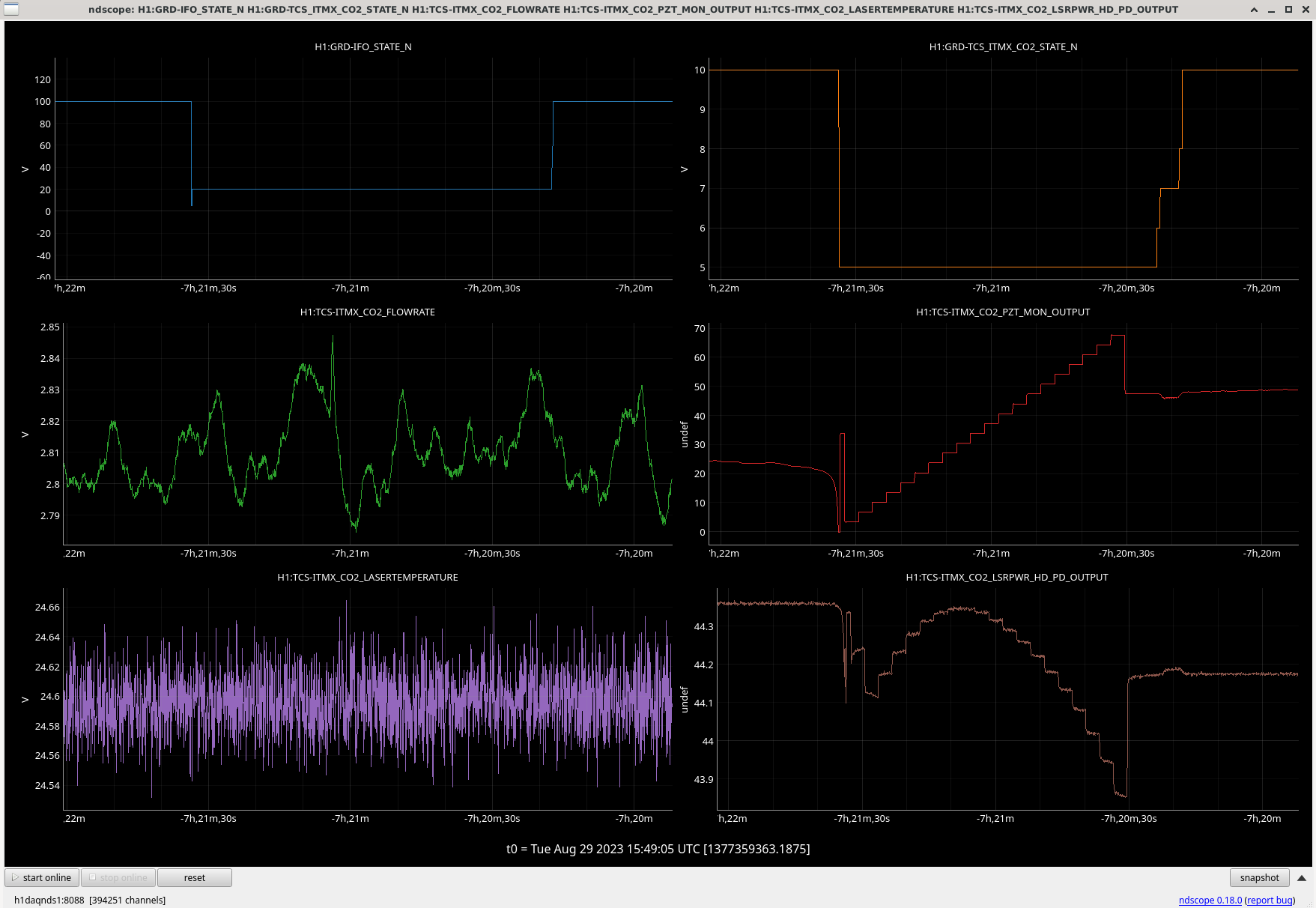
Last night at 0827 UTC we dropped out of Observing fir just over a minute while TCSX relocked. This is a known issue (see alog72220 for a quick reference), but I wanted to keep record here in the alog.
TITLE: 08/29 Day Shift: 15:00-23:00 UTC (08:00-16:00 PST), all times posted in UTC
STATE of H1: Lock Acquisition
OUTGOING OPERATOR: TJ
CURRENT ENVIRONMENT:
SEI_ENV state: CALM
Wind: 13mph Gusts, 10mph 5min avg
Primary useism: 0.01 μm/s
Secondary useism: 0.07 μm/s
QUICK SUMMARY:
TITLE: 08/28 Eve Shift: 23:00-07:00 UTC (16:00-00:00 PST), all times posted in UTC
STATE of H1: Observing at 159Mpc
INCOMING OPERATOR: TJ
SHIFT SUMMARY:
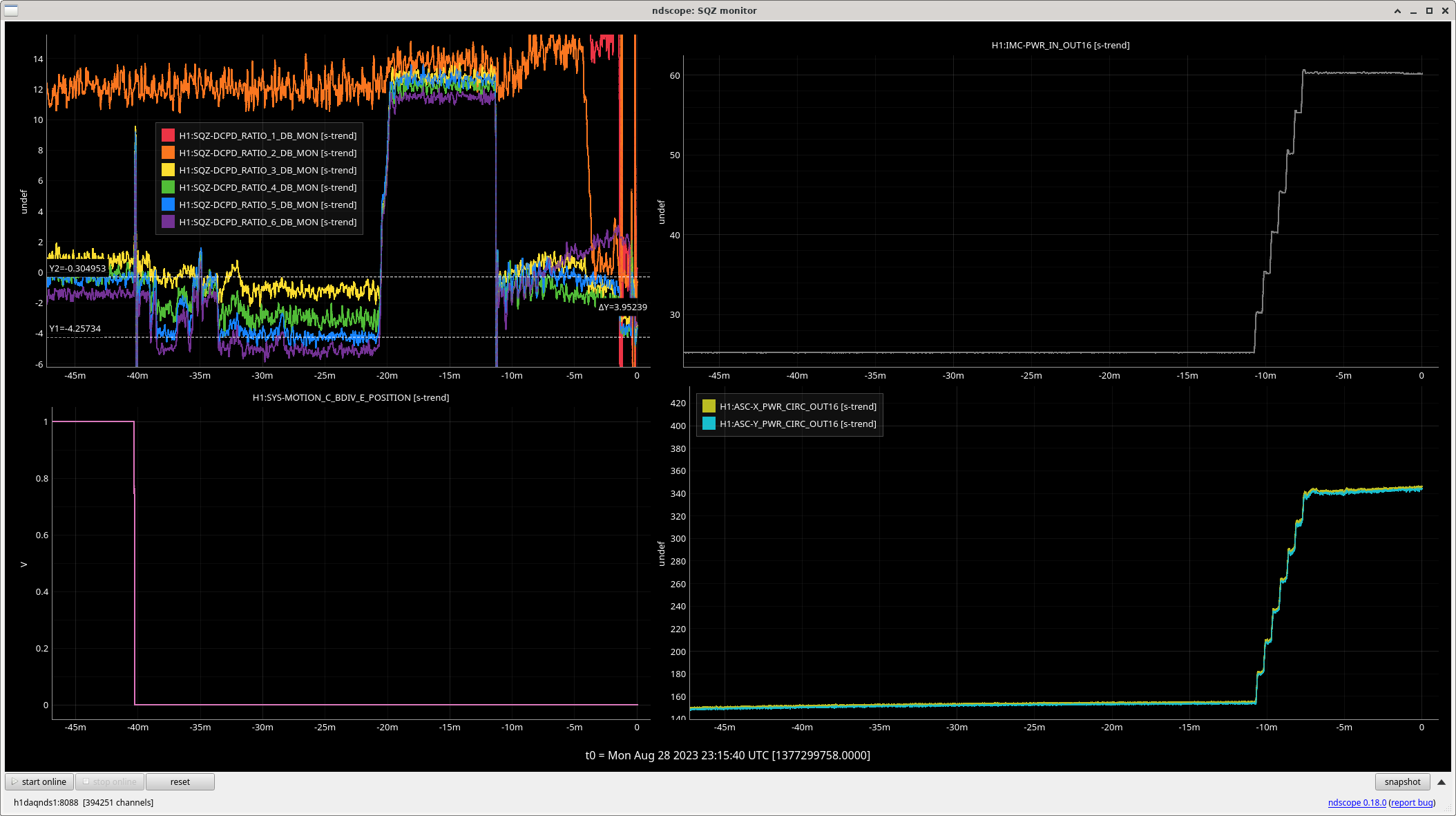
- Arrived to a relocking IFO, just got back to NLN @ 23:15
- Lockloss @ 23:20 - 5 minutes later :), no obvious cause
- Had a few locklosses at FIND IR and noticing the ITM CAM error signals are poor for both arms, so will be running an initial alignment
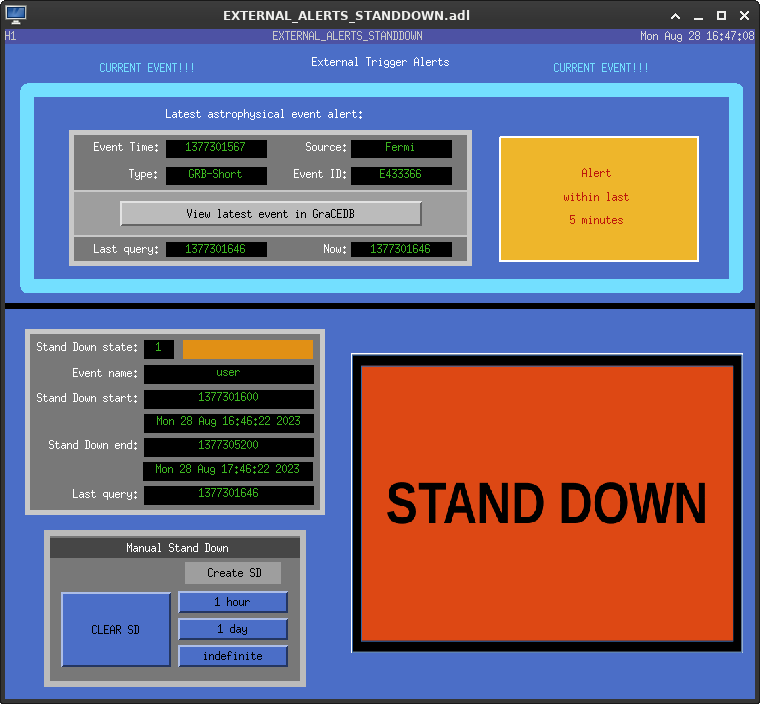
- 23:46 UTC - had a verbal alert for a GRB-Short (E433366) and a STAND DOWN - believe this came from Fermi, as we are currently running an IA
- Back to low noise @ 0:51/OBSERVE @ 1:56
- 4:54 - inc 5.9 EQ from Indonesia
- Overall a quiet night, leaving H1 to TJ in managed mode
LOG:
No log for this shift.
Naoki, Vicky
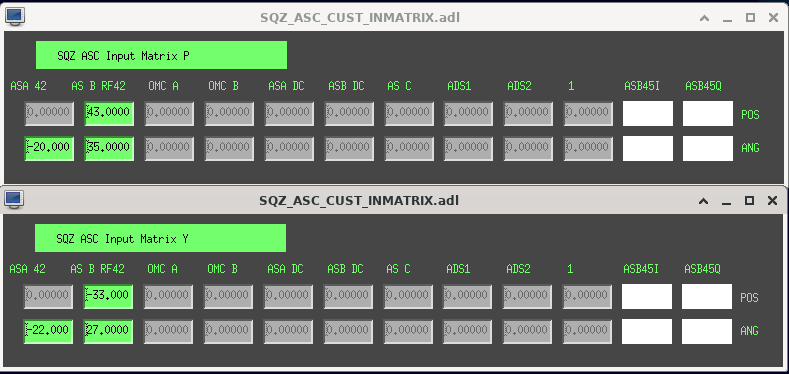
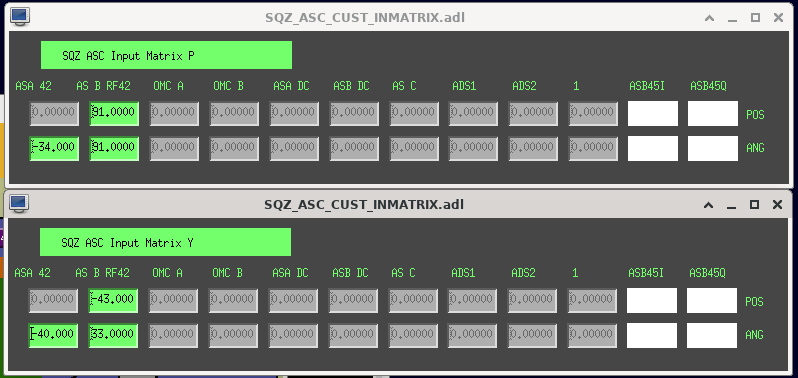
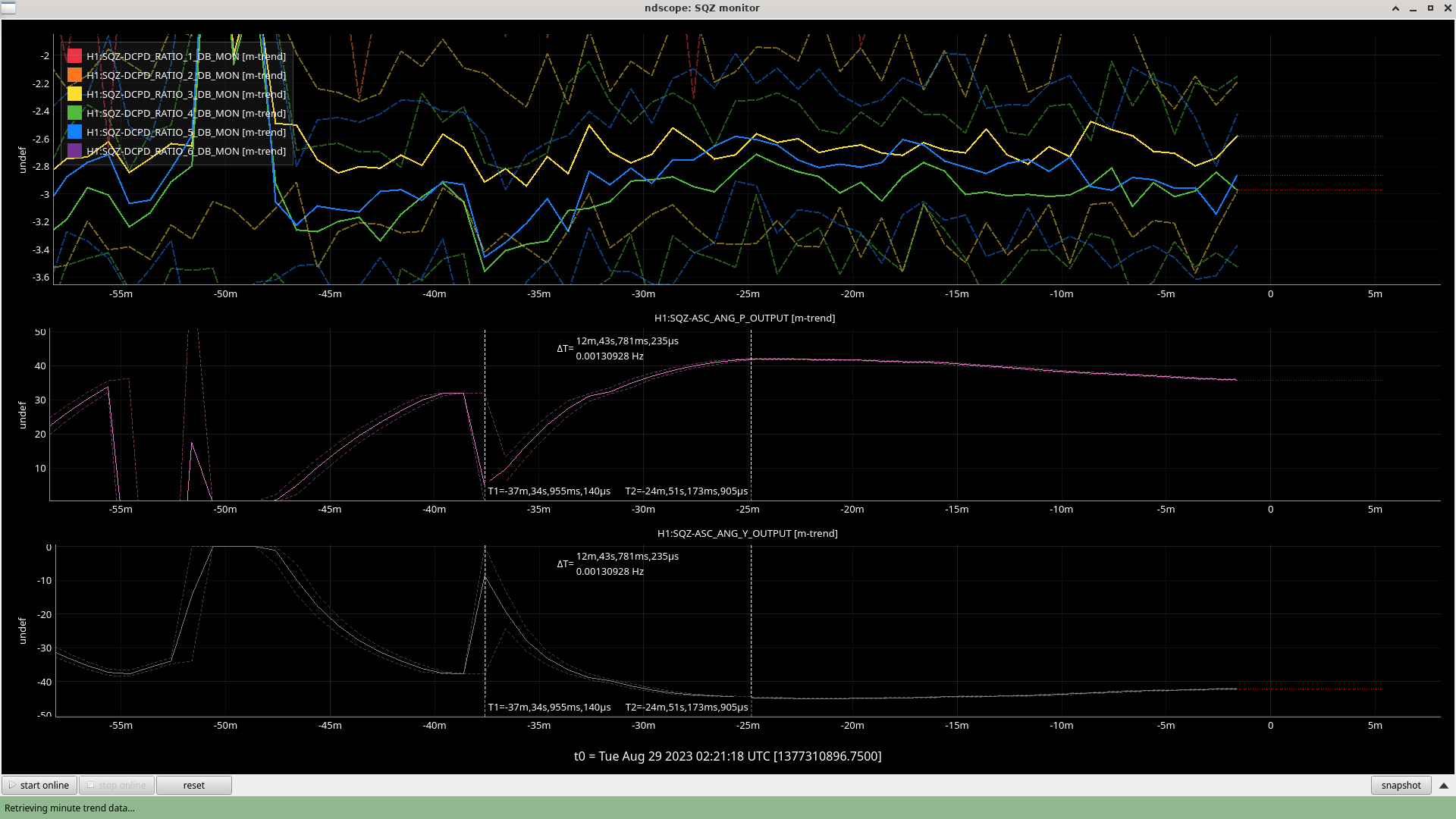
After alog72496, we turned on the SQZ ASC, but the ANG P/Y ran away for the first 10 minutes as already reported in alog71217. We remeasured the SQZ ASC sensing matrix and decided the input matrix as shown in the first and second attached figures (first: old, second: new). However, the behavior of ANG P/Y with new input matrix is similar to before (third attached figure). The ANG P/Y ran away and SQZ BLRMS got worse for the first 10 minutes and started to converge after that.
H1 has been locked for just over 2 hours. IFO appears to be behaving nominally, and ground motion looks to have recovered from the 7.1 EQ earlier today.
Naoki, Vicky
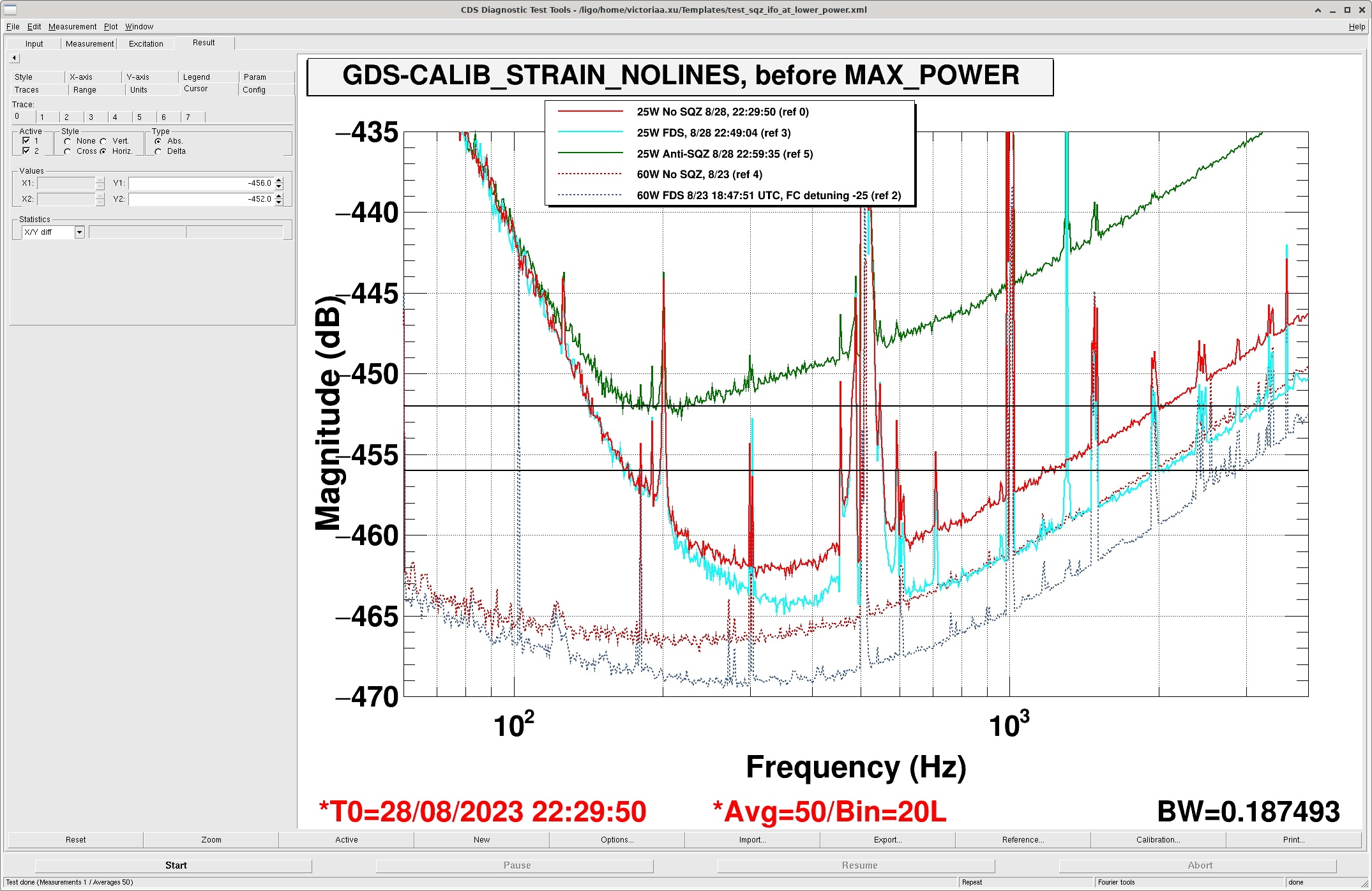
At 25W, holding at REDUCE_RF45_MODULATION_DEPTH before MAX_POWER, we did a quick anti-sqz/sqz measurement to see if we could loosely infer sqz losses with the IFO relatively cold. We did not see clearly more squeezing here at lower power / colder ifo, as we have in the past, e.g. 66877. We weren't able to easily engage ASC here (it was before move_spots), but slider values are similar to when IFO was last locked and a little bit of walking alignment didn't make a big difference, so we left ASC off.
Looking at DARM (based on GDS), and the SQZ BLRMS, we can read the sqz levels:
which are surprisingly consistent to what we have at full power, e.g. the recent sqz dataset in 71902 with IFO at 60W and thermalized in full lock.
Thoughts:
-- I'm not sure what it means that now we have similar amounts of squeezing with the IFO at low and high power.
-- For this test, we left PSAMS at 200V/200V and didn't try walking PSAMS, though in 66877 we saw better squeezing with a cold IFO and lower PSAMS.
-- The slope of DARM at high ~kHz frequencies seems to be slightly different between 25W and 60W? From the dtt, compare red dashed = "60W no sqz" & cyan line = "25W FDS". Here, the lock sequence was at REDUCE_RF45_MODULATION_DEPTH, so before lownoise length control and laser noise suppression.
We then measured NLG ~ 11.05. In the sqz dataset 71902 we did not separately measure NLG, but given that the NLG has remained consistently accurate with the Feb 2023 NLG calibration, so we can re-affirm that trusting the calibration is probably okay, assuming opo temperature is well-tuned. For comparison, NLG calibration suggests NLG=11 (gen sqz ~ 14.75dB) with opo_trans=80uW.
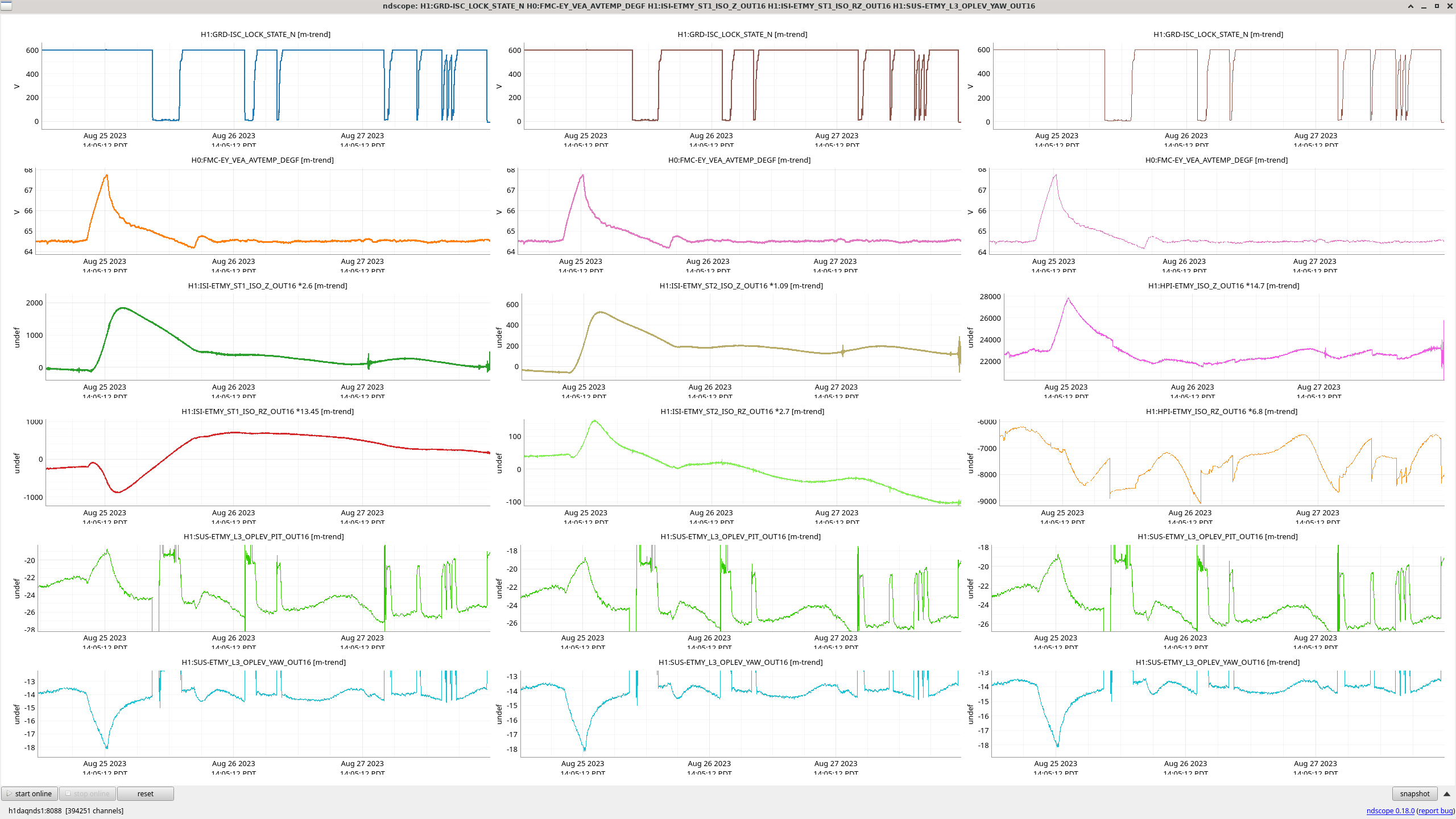
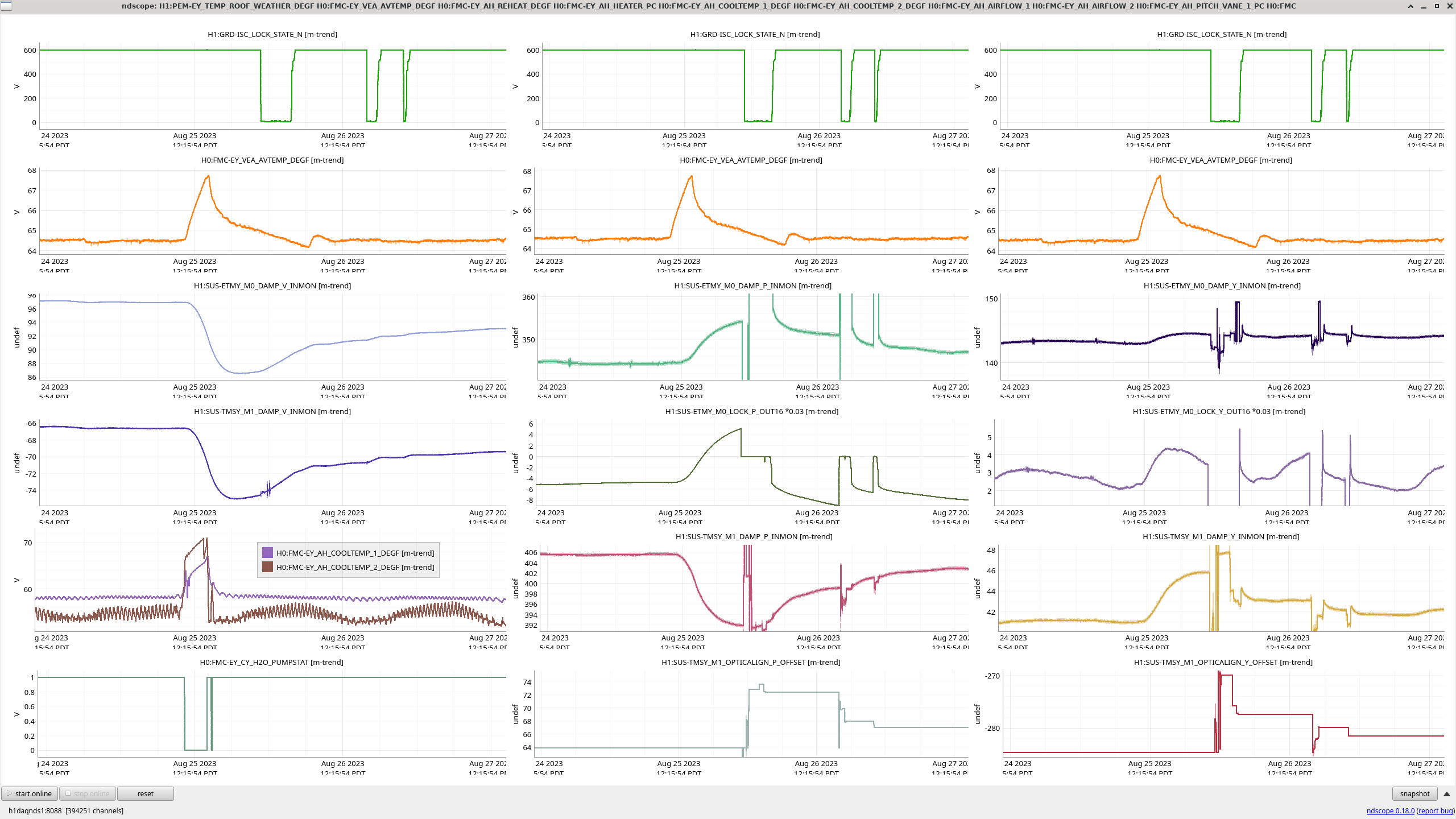
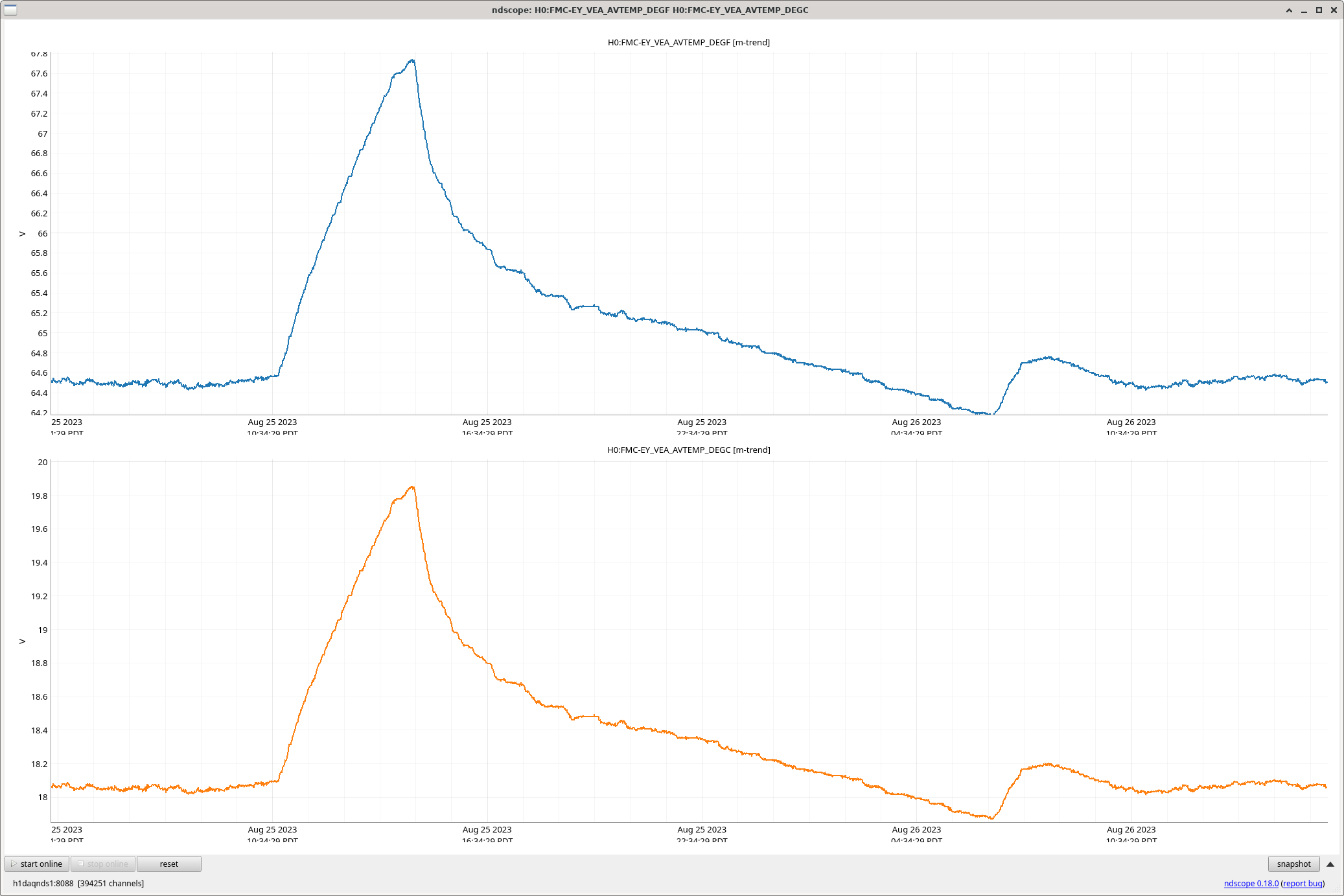
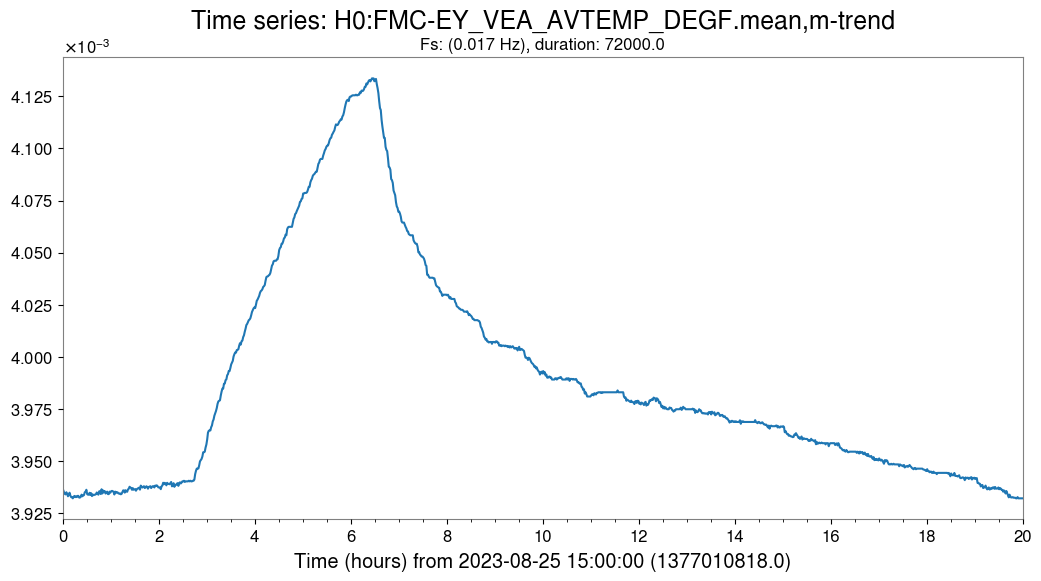
J. Kissel, J. Warner Given the lovely "natural experiment" of the Aug 25th 2023 ~3.2 [deg F] / 1.8 [deg C] temperature increase "impulse" over 4 hours at EY (see LHO:72444 and LHO:72428), I wanted to understand both (a) How the IFO handles it / what caused the lock loss (b) Document the levels and time-scales of alignment change that resulted in bad alignment for *several* lock stretches -- indeed *days* after the impulse. We often wave our hands saying things like "well, the vacuum system acts like a low pass filter, with a time constant of [[insert hand-waivers favorite time-scale on the order of hours]]." I wanted to see if we could quantify that, and if not, add a bit more clarity to how complicated the situation is. To do so, I looked at the Y End Stations' signals in Z, RZ, PIT, and YAW that are either (1) out of loop, or (2) when in-loop -- the loop's feedback control output using the "classic trick" of approximating G/(1+G) ~ 1, where G >> 1, such that (plant) * CTRL = out-of-loop signal as though the loop wasn't there. Those sensors include - HPI ST1 ISO OUT (which are the IPS, under DC-coupled feedback control) -- calibrated into nano- meters or radians - ISI ST1 ISO OUT (which are the CPS, under DC-coupled feedback control) -- calibrated into nano- - ISI ST2 ISO OUT (which are the CPS, under DC-coupled feedback control) -- calibrated into nano- - SUS ETMY M0 LOCK OUT (i.e. the WFS, under DC-coupled global ASC control) -- calibrated into micro- meters or radians - SUS ETMY M0 DAMP IN (which are "out-of-loop" because the local damping loops are AC-coupled) -- calibrated into micro- - SUS TMSY M1 DAMP IN (equally "out-of-loop") -- calibrated into micro- - ETMY L3 Optical Levers -- calibrated into micro- (I'm pleasantly surprised at how well they all agree, to the ~0.25 micro- kind of level that I have for these trends.) I conclude: (I) The IFO Yaw is most impacted by the SEI system's RZ motion, due to the Z to RZ cross-coupling of the radially symmetric system of triangular ISI blade springs, as the blades sag from temperature increase (i) The total SEI system's yaw swung ~2 [urad] during the excursion dominated by ISI ST1, (ii) The SUS ETMY and SUS TMSY follow this input in common, and (ii) ISI ST1 takes the longest time to recover alignment -- then trending over *days* slowly back to pre-impulse equilibrium -- and still not yet there as of Aug 28 (II) The IFO Pitch most impacted by the ETMY and TMSY SUS system's expected Pitch and Vertical sag from temperature increase. (i) The IFO's global alignment drives the pitch of ETMY, which drifted *down* in pitch over ~10 [urad] before losing lock, presumably from running out of range (ii) The ASC signals seem to slowly drive the ETMY off into-the weeds trying to recover the original, pre-impulse, alignment, causing *eventual* subsequent lock losses as it pushes the optic *past* the pre-impulse alignment position (iii) The TMS, which does not have global control, pitches a similar amount, ~14 [urad] in the *opposite direction, up* in pitch, and also taking *days* to get back the original value (somewhat alleviated ) (iv) The fact that the Sus-point blades are the *same* for the QUAD and TMS, they're the biggest blades in either SUS, and the order of pitching is about the same implies to me that the pitching is dominated by the upper, Sus-point blades. I attached the trends that drive me towards these conclusions. Give yourself time -- I've stared at these all afternoon to come to these conclusions. And honestly, I *still* don't think I've looked at enough plots (e.g. I don't show the ETMY alignment sliders that are the operators and/or initial alignment drives trying to make up for the SEI blades yaw and SUS blades pitch). I also attach a .txt file that goes into more detail about how I calibrated the various CTRL signals, including where I got the transfer function values that are scaling the trends that you see.
Very Interesting!
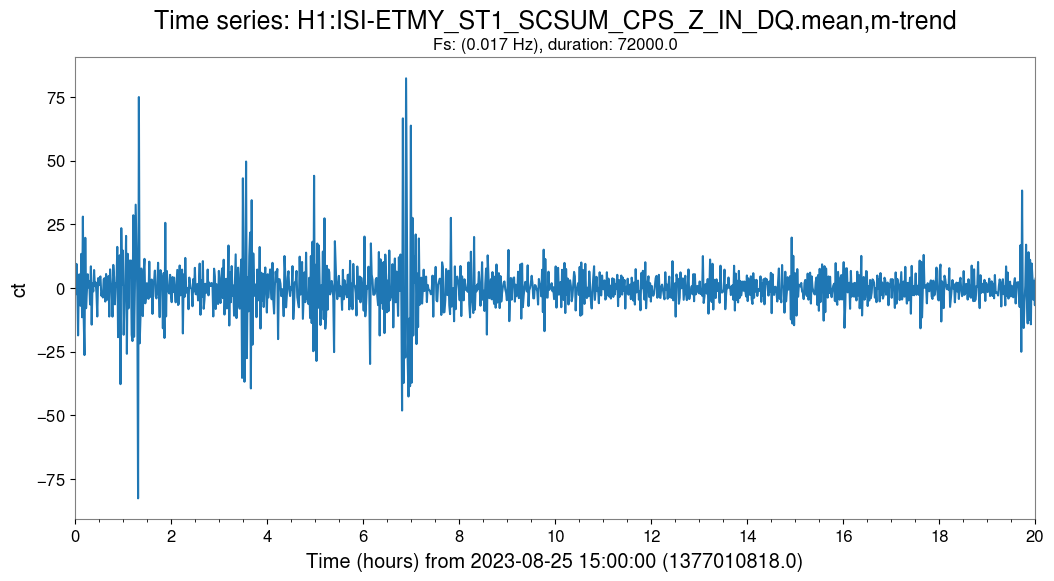
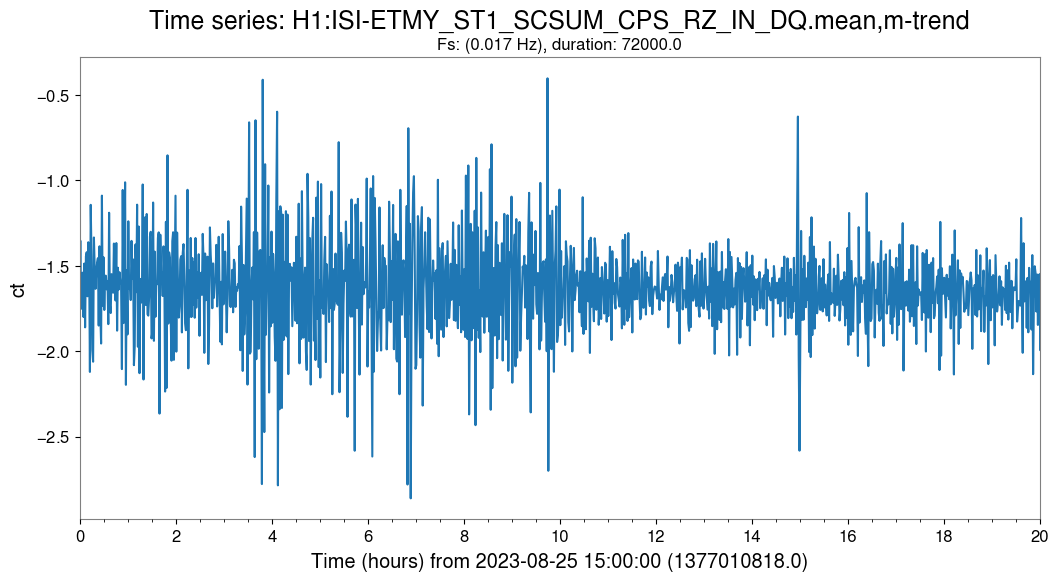
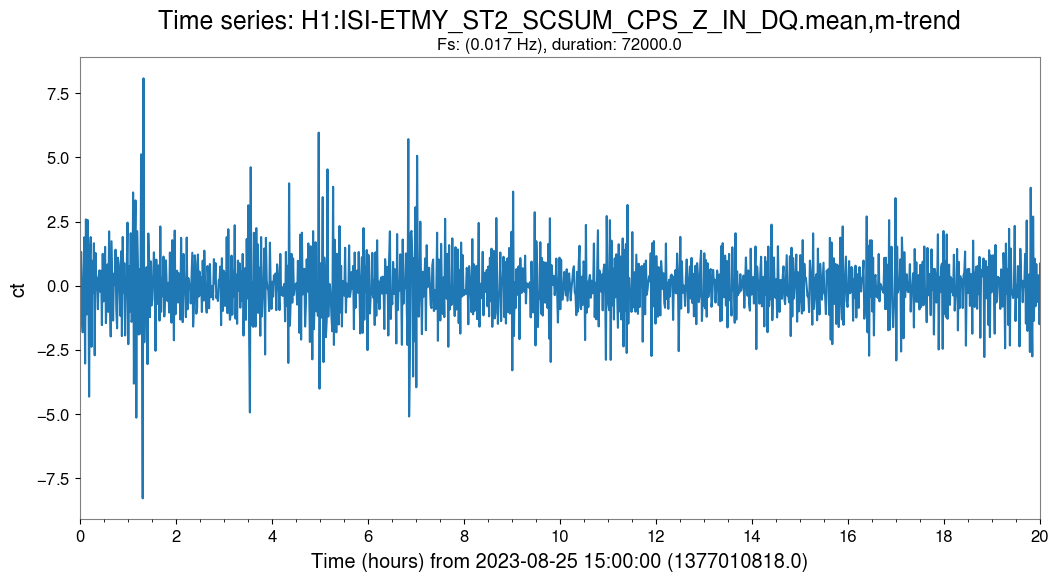
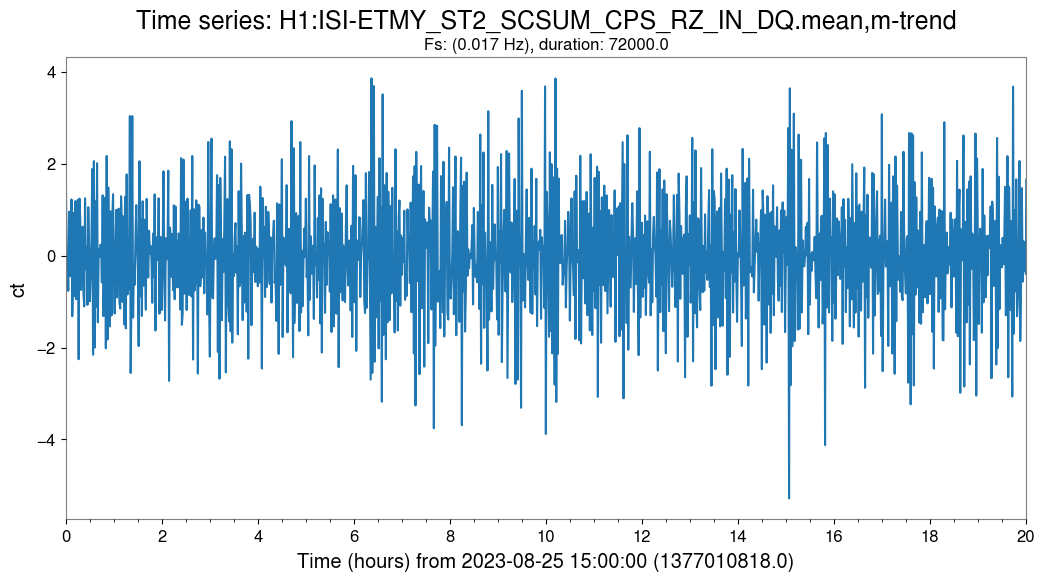
I've added a few more plots which show the in-loop motion as measured by the CPS sensors on ETMY. These show that the platform didn't move down or twist during the temperature excursion. This is what you would expect, given Jeff's plots from above - the springs sag, and the servos compensate. That's all just peachy, so long as there is no yaw seen at the optic - but the oplev does see yaw.
Either - there is some yaw in the ISI which is not seen by the CPS sensor (eg the sensor itself is temperature sensivity - but this should be pretty small) , or
- the yaw is just from SUS, or
- oplev is affected by temperature, or
- the yaw is coming from somewhere else (HEPI, piers, SUS, the devil, etc)
I've not thought about this very hard yet - but I attach a 20 hour time stretch from the temp sensor (calibration is crazy, but the shape matches. not sure what's up) and 4 CPS cart-basis sensor signals (calibration should be nanometers or nanoradians). The in-loop change on the CPS is less than 1 nanorad.
Lockloss @ 23:20, DCPD saturation right before, cause unknown.
TITLE: 08/28 Day Shift: 15:00-23:00 UTC (08:00-16:00 PST), all times posted in UTC
STATE of H1: Observing at 145Mpc
INCOMING OPERATOR: Austin
SHIFT SUMMARY:
Quiet shift until the noisy earth rolled a Mag7.1 Earthquake to H1. Made it back to Low Noise (but then it just lost lock).
(Jim discovered LVEA lights were on...probably had been for several days!)
LOG:
Looks like I forgot to mention some items from my log (due to me not Saving My Alog Draft, getting logged out and losing morning logged items. Apologies for not having the time, but just wanted to note:
TITLE: 08/28 Day Shift: 15:00-23:00 UTC (08:00-16:00 PST), all times posted in UTC
STATE of H1: Commissioning
OUTGOING OPERATOR: Tony
CURRENT ENVIRONMENT:
SEI_ENV state: SEISMON_ALERT
Wind: 14mph Gusts, 10mph 5min avg
Primary useism: 0.06 μm/s
Secondary useism: 0.12 μm/s
QUICK SUMMARY:
- H1 is holding off at REDUCE RF45 for SQZ work
- SEI looks to have mostly recovered from the EQ earlier
- CDS/DMs ok
After H1's longest lock of O4 thus far (60hr29min Lock from 8/23(wed) 1020amPT -- 8/25(fri) 11pmPT), H1 has has been finicky with locking and also has had a degrading inspiral range.
The primary issue prior to this lockloss was the EY temperature increase of 3+degF due to FAILURE of Chiller Pump #1 at EY. From about 10am-5pm the temperatures were NON-nominal (but H1 remained locked this whole time(!) as ASC maintained the pointing for EY during this HUGE temperature swing).
With that said about the temperature drift, and at TJ's request, wanted to also list Commissioning changes which occured during the 2.5days of the lock.
(Times in PT)
Aug23 (Wed)
Aug24 (Thurs): Nothing in alog
Aug25 (Fri)
Aug26 (Sat)
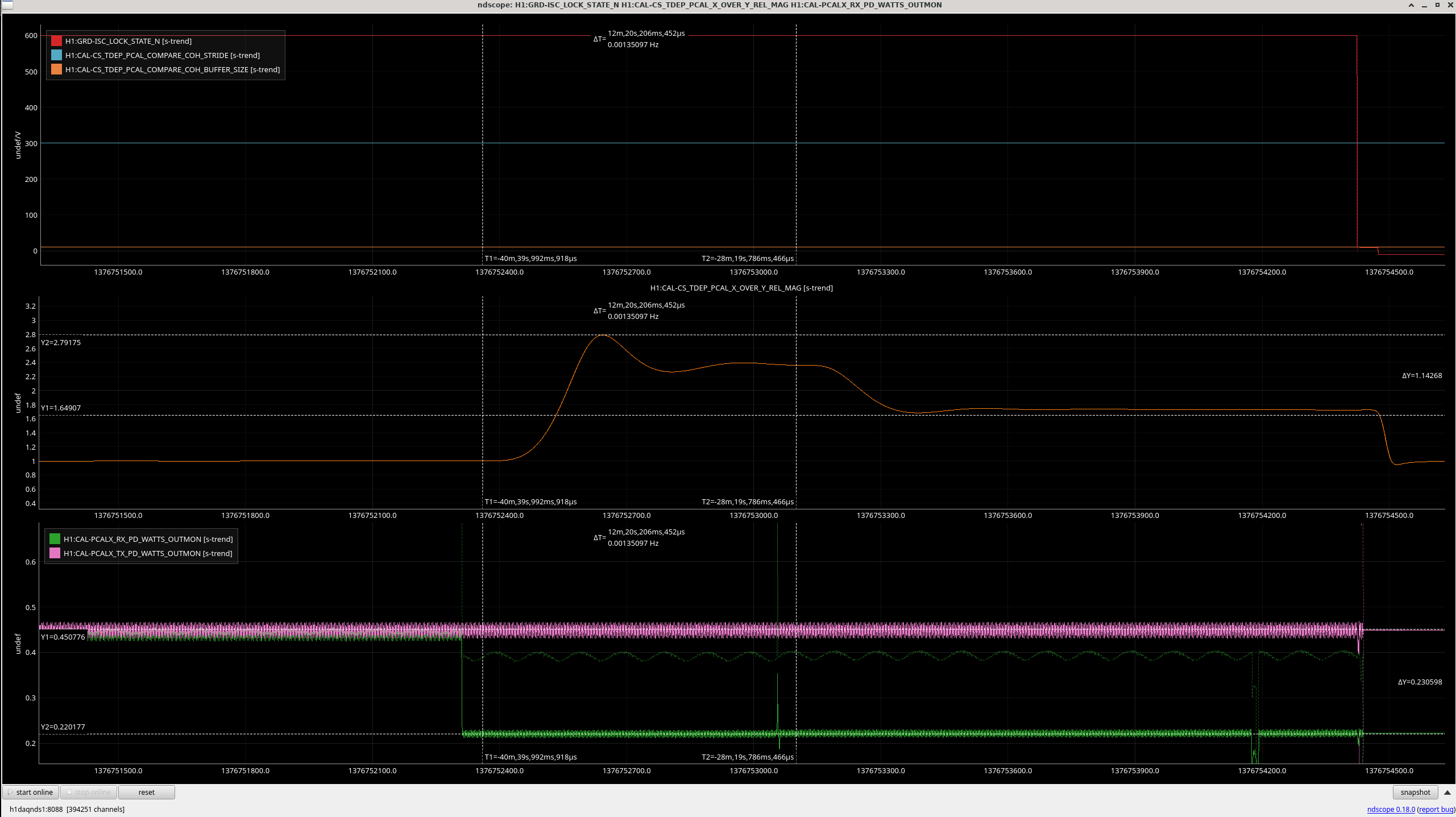
Last Tuesday (Aug 21, 2023) Rick and I went down to the EX station while the IFO was still locked.
We asked the operator to turn off BRS sensor correction (Sitemap-> ISI_CONFIG ->SEI_CONF ->WINDY_NO_BRSX). This was to allow us to gentley walk to the other side of the beam tube to access the PCAL Transmitter module.
Once there Rick and I opened the Tx enclosure and blocked the Outer ( Lower ) PCAL beam at GPStime: 1376752360
We saw the following motion of the PCAL channel : H1:CAL-CS_TDEP_PCAL_X_OVER_Y_REL_MAG .
We did expect this to go up and then settle down. We were suprised by how long it took to settle down.
At GPStime 1376753100 we blocked the inner (Upper) beam was blocked.
That seems to last uninteruppted until GPStime: 1376754170
At 1376754420 ISC_LOCK went to from NOMINAL_LOW_NOISE to DOWN and signals the the start of the End station measurments made that day.
More analysis coming soon.
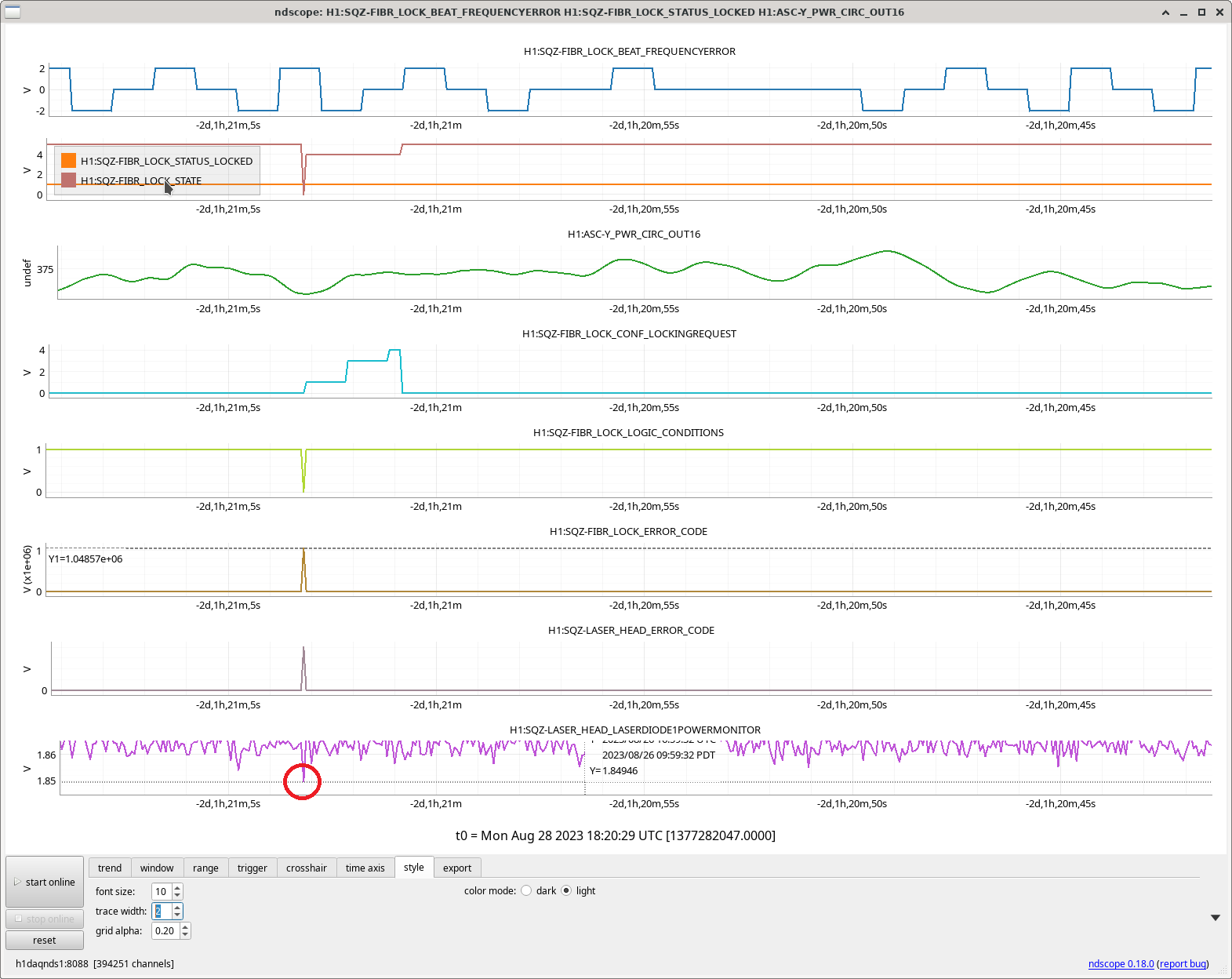
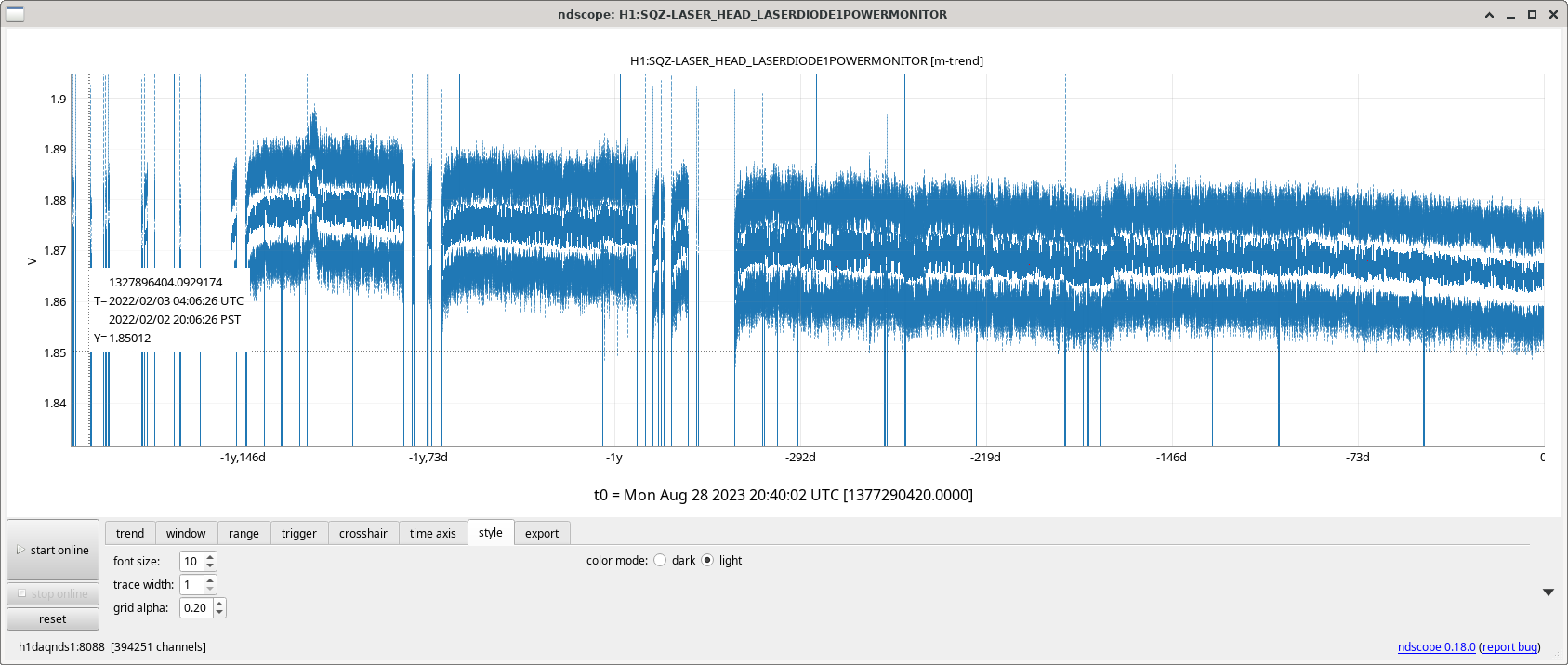
The nominal value of the squeezer laser diode current was change to 1.863 from 1.95. The tolerance is unchanged at 0.1. Looking at trends we sometimes read a value just below 1.85 leading to a failed laser condition which in turn triggers a relocking of the squeezer laser. However, since we are already locked, all we see is the fast and commen gains ramping down and up.
Looking at this diode current trend over the past 500 days, we see it fairly stable but trending down very slowly. It may have lost 10 mA over the past year. Resetting the nominal value should keep us in the good band for a while if this trend continues.
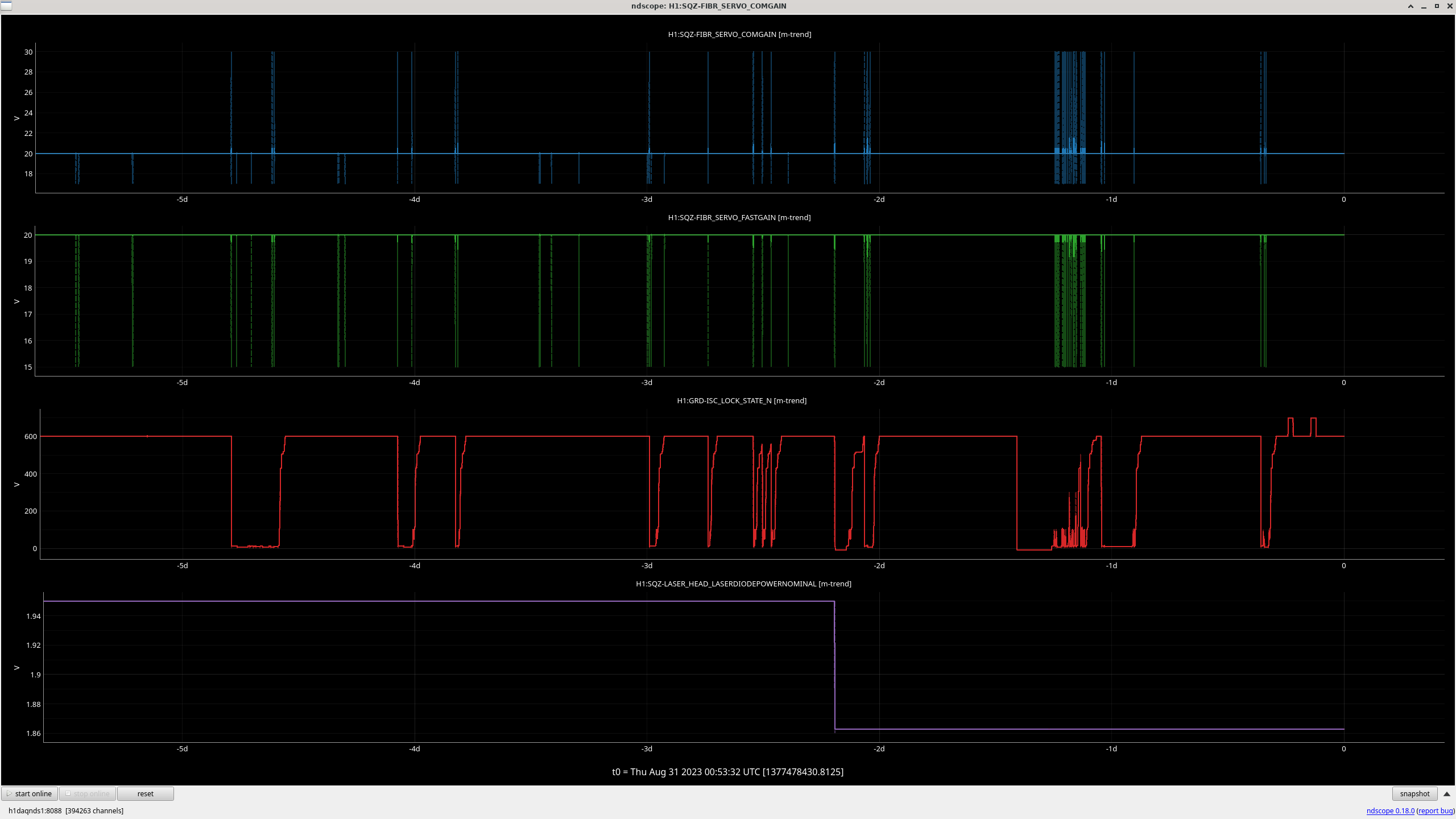
So far this seems to have fixed the TTFSS gain changing issue! Haven't seen gain changes while locked in the past couple days, since Daniel changed the laser diode nominal current (bottom purple trend).
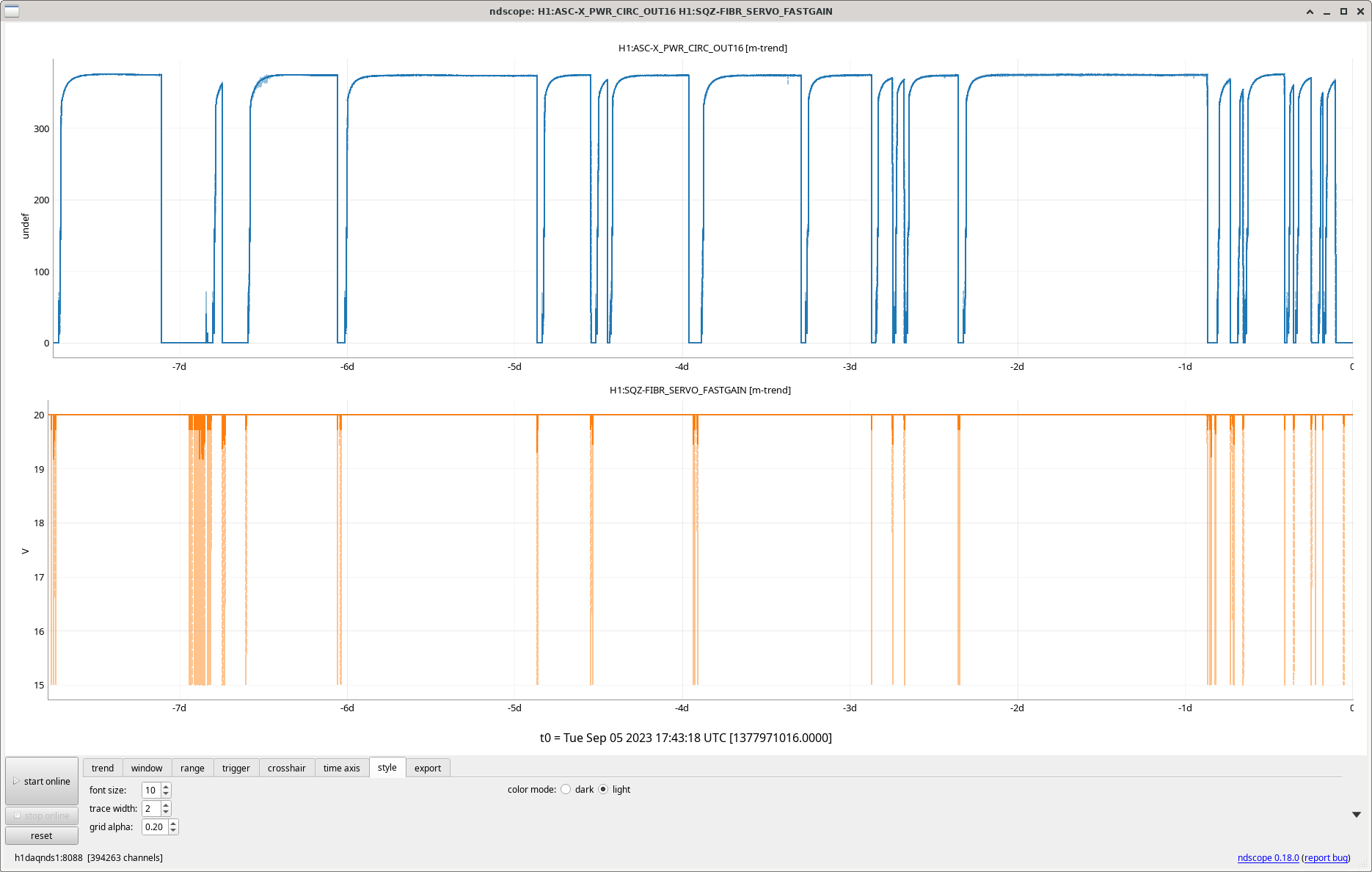
In the past week there wasn't single TTFSS gain ramping incident during lock. The fast and common gains are again monitored in SDF.
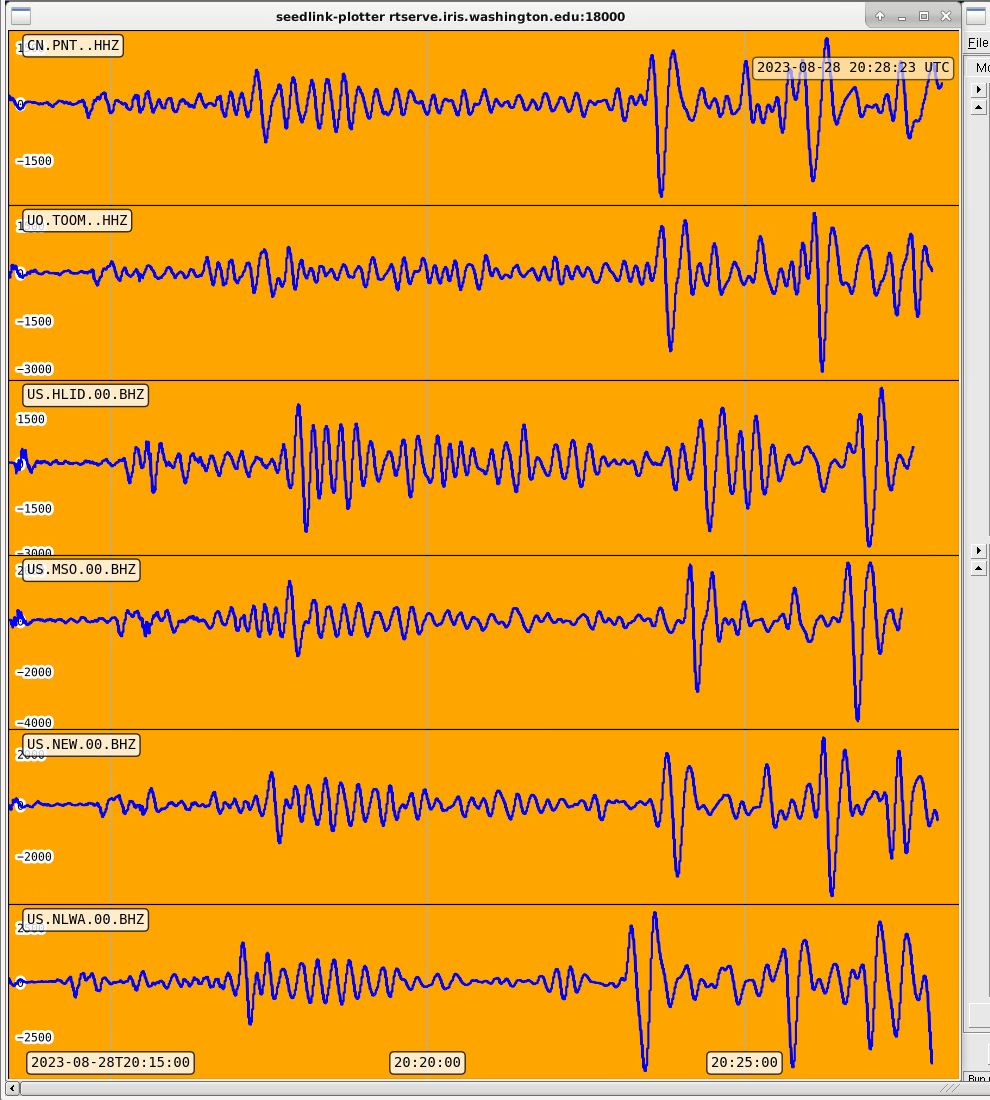
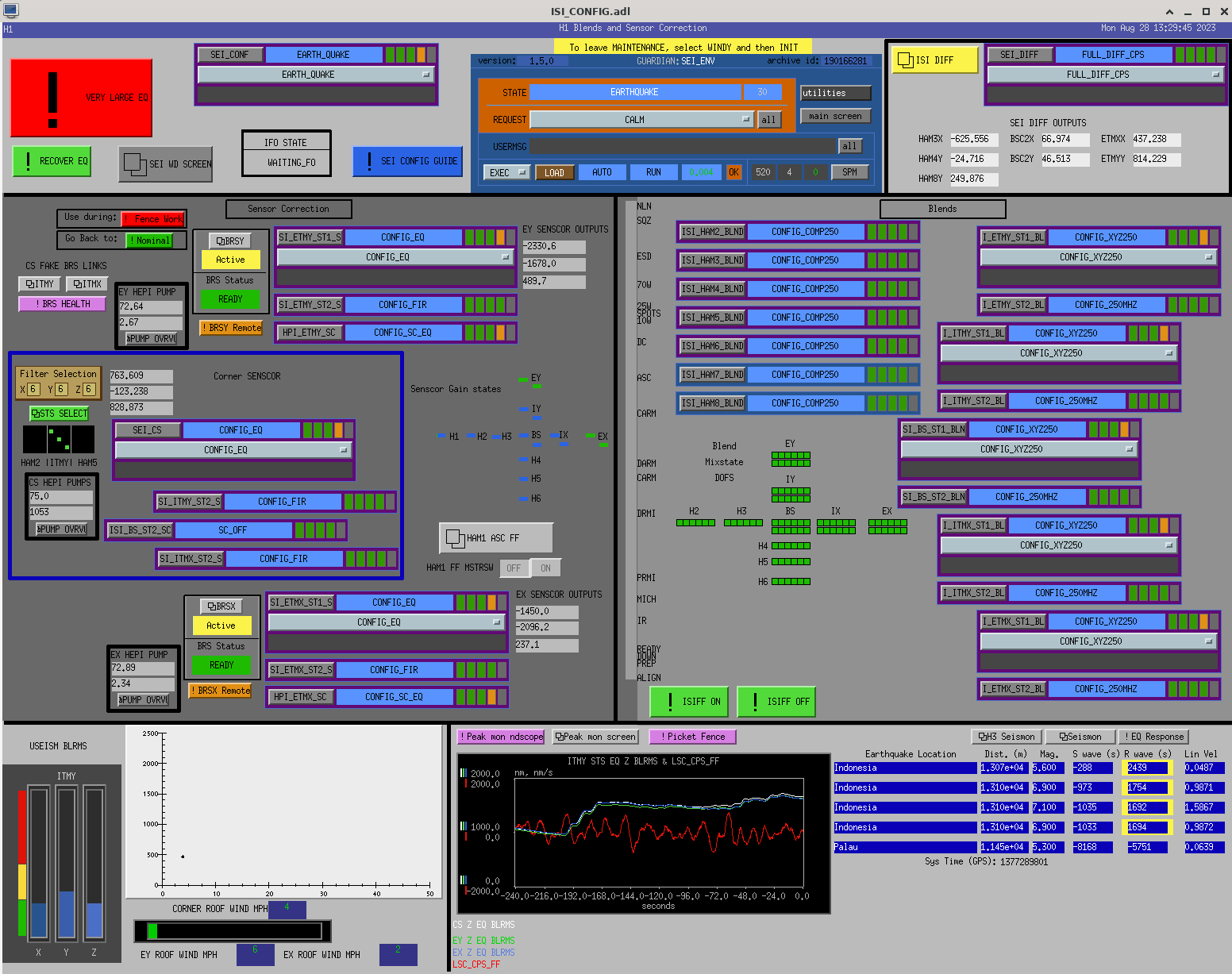
2016 H1 lost lock due to 7.1 south pacific earthquake.
We rode through the P & S waves....the R wave is still about 30+min away and it will be "spicy" ~Jim W.
I have taken H1 to IDLE....while we wait for the R wave to pass & for the planet to calm down after that.
Attached are some screenshots Tony snapped.
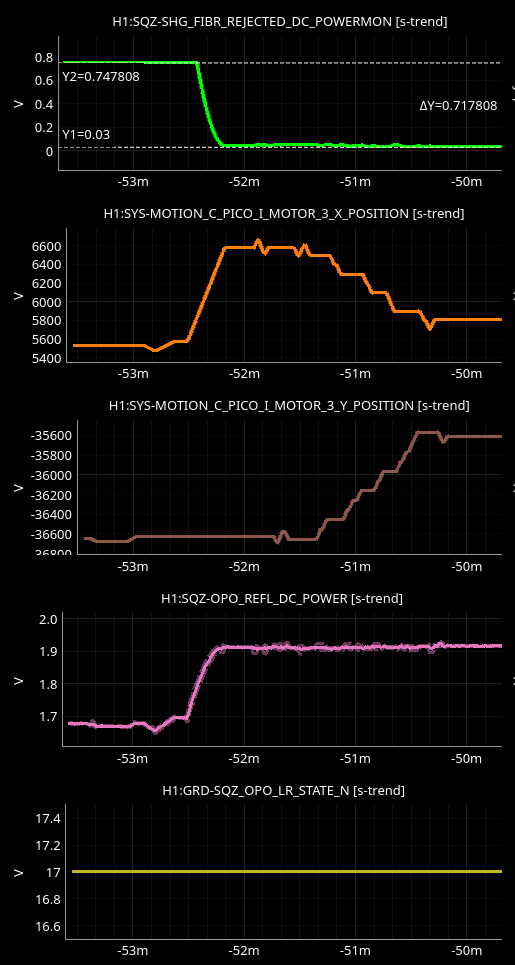
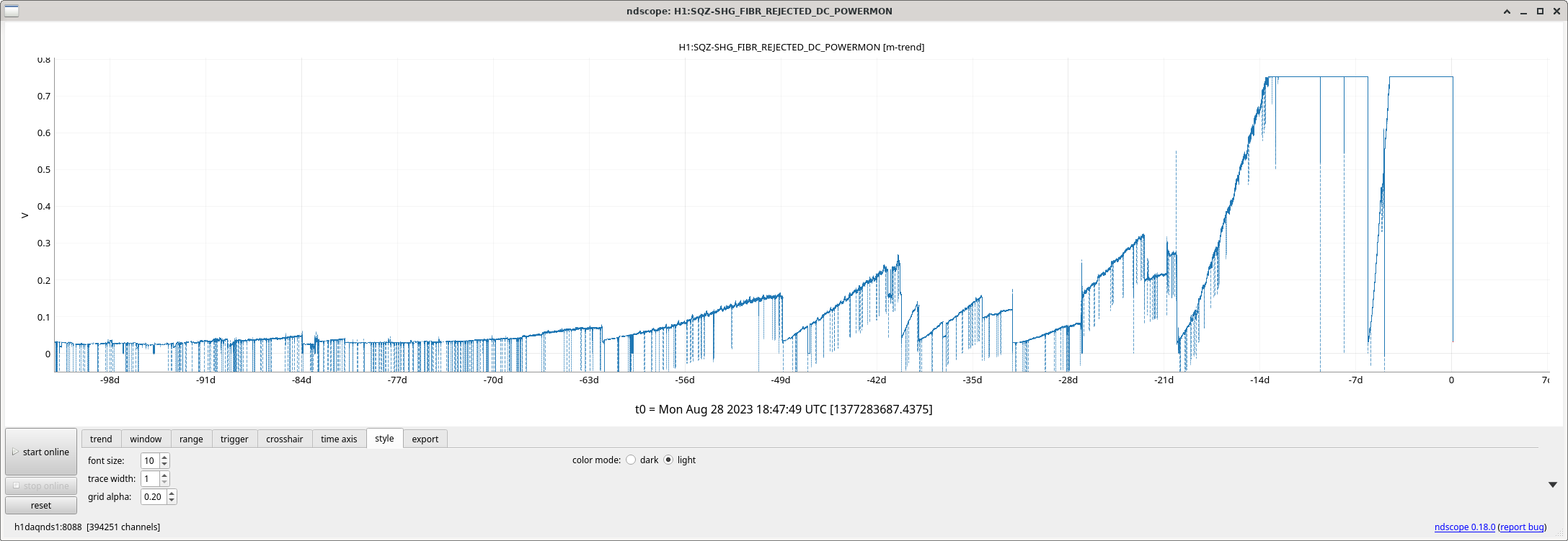
Naoki noticed the pump fiber rejected PD (in ham7, rejects pump fiber light that comes out in the wrong polarization) was saturated, so today I re-aligned the pump fiber polarization using sqzt0 pico's (described recently also in 71761).
I'm not sure why pump fiber needs to have its input polarization readjusted so often; I checked the CLF fiber and FCGS fiber, and they both seemed relatively well-aligned despite having not adjusted those in a while. Especially this time, it seems the fiber polarization got misaligned more quickly than before.
Austin had to reset the sqz pump ISS again on Sunday (72474), lowering the generated sqz level by lowering OPO trans from 80uW (recent nominal) to 65uW. Sqz level correspondingly went down. Naoki and I have re-aligned the pump fiber polarization, and brought the squeezer back to the nominal 80uW generated sqz level.
It's strange that we had to re-align the pump fiber polarization, again. The pump fiber polarization seems to be misaligning more quickly recently, see trends. This time, the fiber polarization misaligned to saturation in 1-2 days (last time was several days, before that we never saw it misaligned to saturation). It also needed both the L/2 and L/4 waveplates to re-align it. We should definitely monitor this situation and see if we can understand/fix why it's happening.
J. Kissel, D. Barker As of today Dave helped me install the new front-end, EPICs controlled oscillators discussed in LHO:71746. Then, after crafting a few new MEDM screens (see comments below), I've turned ON some of those oscillators in order to replace the unstable function of the CAL_AWG_LINES guardian. So, there're no "new" calibration lines (not since we turned CAL_AWG_LINES back ON last week at 2023-07-25 22:21:15 UTC -- see LHO:71706) -- but they're now driven by front-end, EPICs controlled oscillators rather than by guardian using the python bindings for awg (which was unstable across computer crashes, and other connection interruptions). This is true as of the first observation segment today: 2023-08-01 22:02 UTC However, due to a mishap with me misunderstanding the state of the PCALY SDF system (see LHO:71879), I accidentally overwrote the PCALXY comparison line at 284.01 Hz, and we went into observe. Thus, The short observation segment between 22:02 - 22:11 UTC is out of nominal configration, because there's no PCALY line contributing to the PCALXY comparison. The was rectified by the second observation segment starting on 2023-08-01 22:16 UTC. Also, because of these changes the subtraction team should switch their witness channel for the DARM_EXC frequencies to H1:LSC-CAL_LINE_SUM_DQ. The PCALY witness channel remains the same, H1:CAL-PCALY_EXC_SUM_DQ, as the newly used oscillators sum in to the same channel. Below, I define which oscillator number is assigned to which frequency. Here's the latest list of calibration lines: Freq (Hz) Actuator Purpose Channel that defines Freq Changes Since Last Update (LHO:69736) 8.825 DARM (via ETMX L1,L2,L3) Live DARM OLGTFs H1:LSC-DARMOSC1_OSC_FREQ Former CAL_AWG_LINE, now driven by FE OSC; THIS aLOG 8.925 PCALY Live Sensing Function H1:CAL-PCALY_PCALOSC5_OSC_FREQ Former CAL_AWG_LINE, now driven by FE OSC; THIS aLOG 11.475 DARM (via ETMX L1,L2,L3) Live DARM OLGTFs H1:LSC-DARMOSC2_OSC_FREQ Former CAL_AWG_LINE, now driven by FE OSC; THIS aLOG 11.575 PCALY Live Sensing Function H1:CAL-PCALY_PCALOSC6_OSC_FREQ Former CAL_AWG_LINE, now driven by FE OSC; THIS aLOG 15.175 DARM (via ETMX L1,L2,L3) Live DARM OLGTFs H1:LSC-DARMOSC3_OSC_FREQ Former CAL_AWG_LINE, now driven by FE OSC; THIS aLOG 15.275 PCALY Live Sensing Function H1:CAL-PCALY_PCALOSC7_OSC_FREQ Former CAL_AWG_LINE, now driven by FE OSC; THIS aLOG 24.400 DARM (via ETMX L1,L2,L3) Live DARM OLGTFs H1:LSC-DARMOSC4_OSC_FREQ Former CAL_AWG_LINE, now driven by FE OSC; THIS aLOG 24.500 PCALY Live Sensing Function H1:CAL-PCALY_PCALOSC8_OSC_FREQ Former CAL_AWG_LINE, now driven by FE OSC; THIS aLOG 15.6 ETMX UIM (L1) SUS \kappa_UIM excitation H1:SUS-ETMY_L1_CAL_LINE_FREQ No change 16.4 ETMX PUM (L2) SUS \kappa_PUM excitation H1:SUS-ETMY_L2_CAL_LINE_FREQ No change 17.1 PCALY actuator kappa reference H1:CAL-PCALY_PCALOSC1_OSC_FREQ No change 17.6 ETMX TST (L3) SUS \kappa_TST excitation H1:SUS-ETMY_L3_CAL_LINE_FREQ No change 33.43 PCALX Systematic error lines H1:CAL-PCALX_PCALOSC4_OSC_FREQ No change 53.67 | | H1:CAL-PCALX_PCALOSC5_OSC_FREQ No change 77.73 | | H1:CAL-PCALX_PCALOSC6_OSC_FREQ No change 102.13 | | H1:CAL-PCALX_PCALOSC7_OSC_FREQ No change 283.91 V V H1:CAL-PCALX_PCALOSC8_OSC_FREQ No change 284.01 PCALY PCALXY comparison H1:CAL-PCALY_PCALOSC4_OSC_FREQ Off briefly between 2023-08-01 22:02 - 22:11 UTC, back on as of 22:16 UTC 410.3 PCALY f_cc and kappa_C H1:CAL-PCALY_PCALOSC2_OSC_FREQ No Change 1083.7 PCALY f_cc and kappa_C monitor H1:CAL-PCALY_PCALOSC3_OSC_FREQ No Change n*500+1.3 PCALX Systematic error lines H1:CAL-PCALX_PCALOSC1_OSC_FREQ No Change (n=[2,3,4,5,6,7,8])
As a part of depricating CAL_AWG_LINES, I've updated the ISC_LOCK guardian to use the new main switches for the DARM_EXC lines for the transitions between NOMINAL_LOW_NOISE and NLN_CAL_MEAS. That main switch channel is H1:LSC-DARMOSC_SUM_ON, which enables excitations to flow through to the DARM error point when set to 1.0 (and blocks it when set to 0.0). I've committed the new version of ISC_LOCK to the userapps repo, rev 26039.
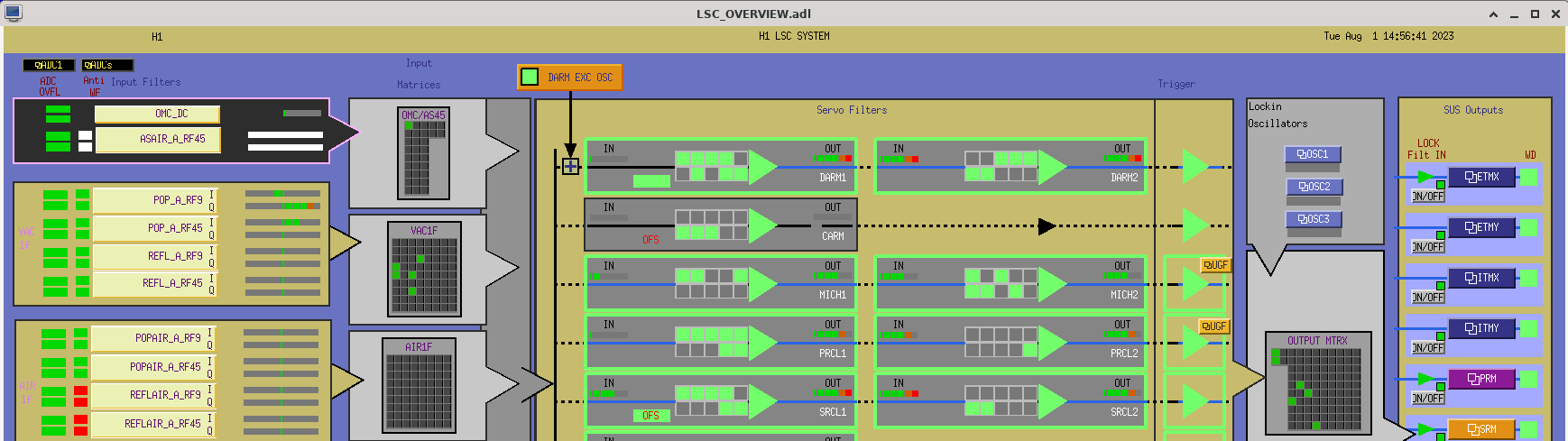
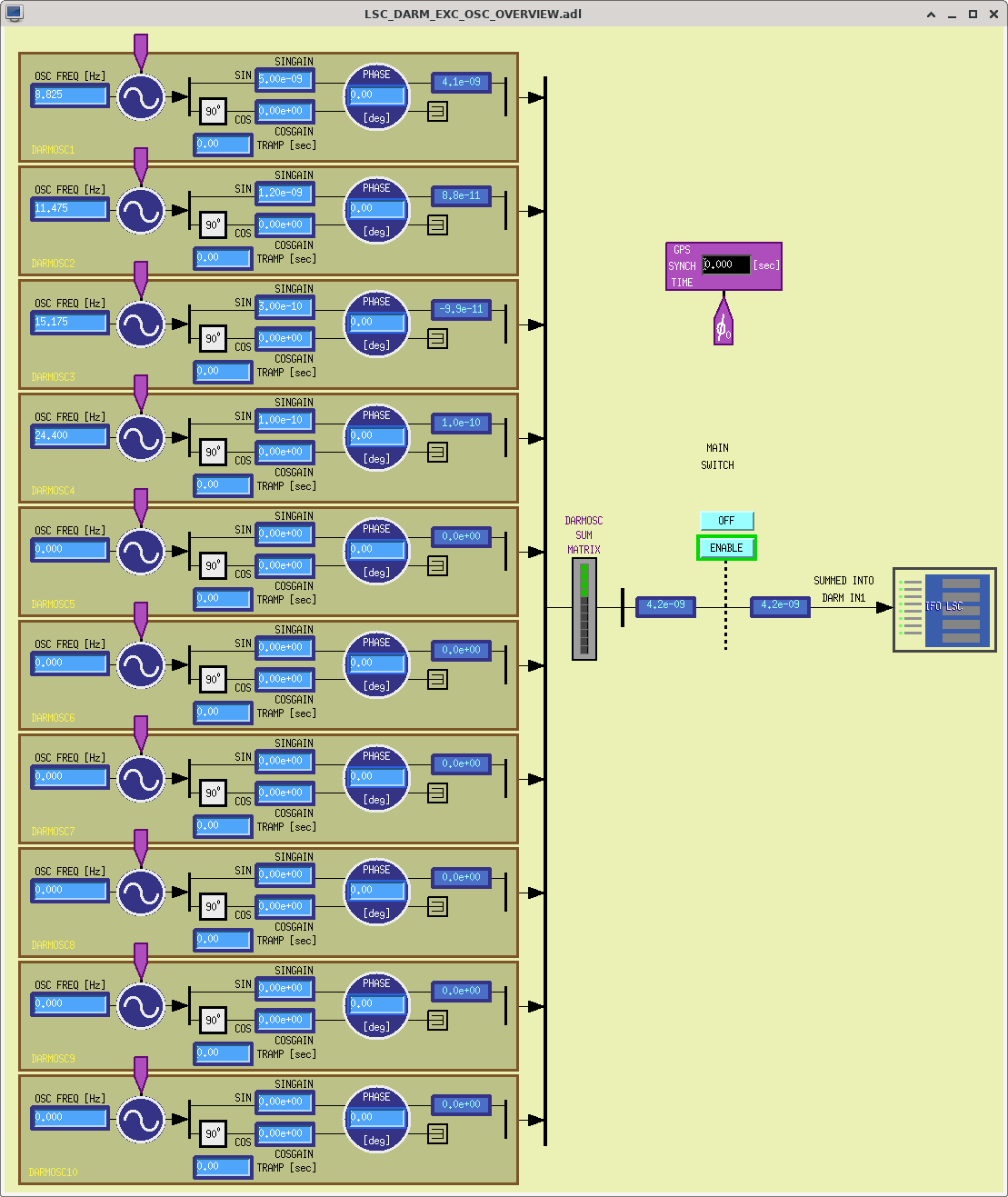
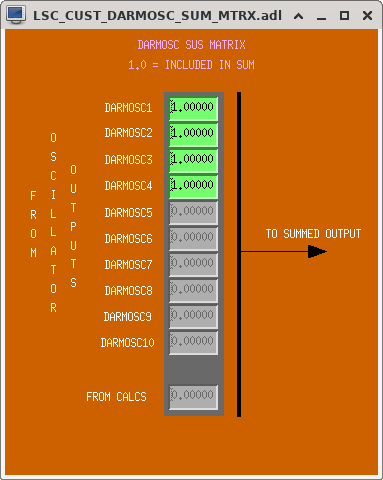
Here's the updated
/opt/rtcds/userapps/release/lsc/common/medm/
LSC_OVERVIEW.adl
LSC_DARM_EXC_OSC_OVERVIEW.adl
LSC_CUST_DARMOSC_SUM_MTRX.adl
The new DARM oscillators screen (LSC_DARM_EXC_OSC_OVERVIEW.adl) is linked in the top-middle of the LSC_OVERVIEW.adl. The only sub screen on the LSC_DARM_EXC_OSC_OVERVIEW.adl is the summation matrix (LSC_CUST_DARMOSC_SUM_MTRX.adl).
I have not yet gotten to adding all the new PCAL oscillators to their MEDM screens, but I'll do so in the fullness of time.
detchar-request git issue for tracking purposes.
I found a bug in the
/opt/rtcds/userapps/release/lsc/common/medm/
LSC_DARM_EXC_OSC_OVERVIEW.adl
where DARMOSC1's TRAMP field was errantly displayed as all the 10 oscillator's TRAMPs; a residual from the copy pasta I made during the screen generation.
Fixed it. Now committed to the above location as of rev 26170.
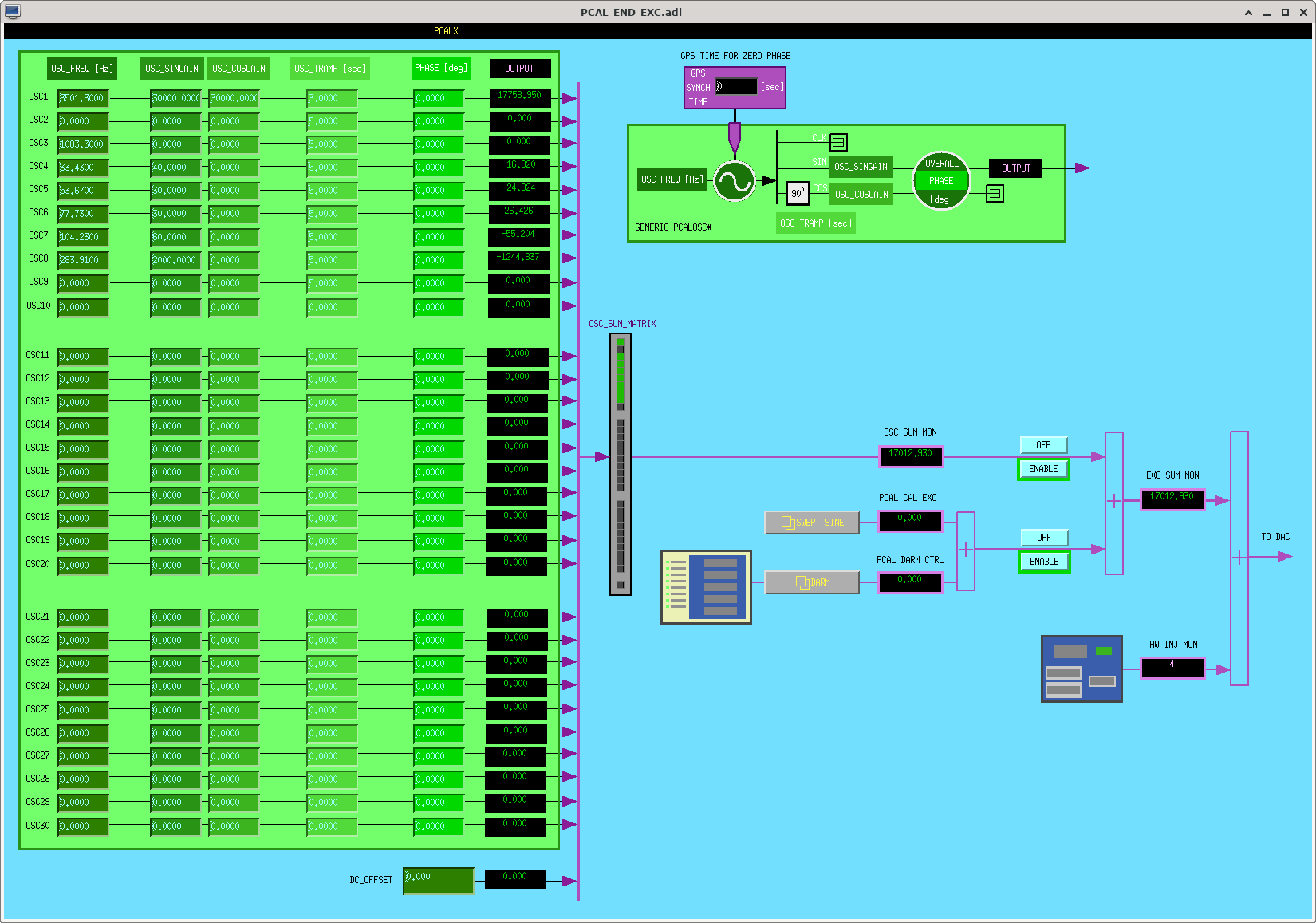
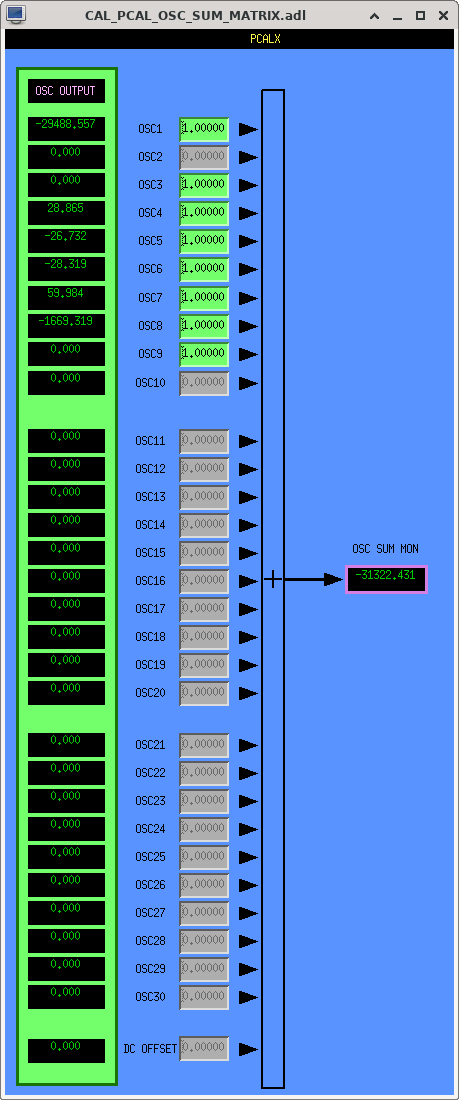
Finally got around to updating the PCAL screens. Check out
/opt/rtcds/userapps/release/cal/common/medm/
PCAL_END_EXC.adl
CAL_PCAL_OSC_SUM_MATRIX.adl
as of userapps repo rev 26179.
See attached screenshots.
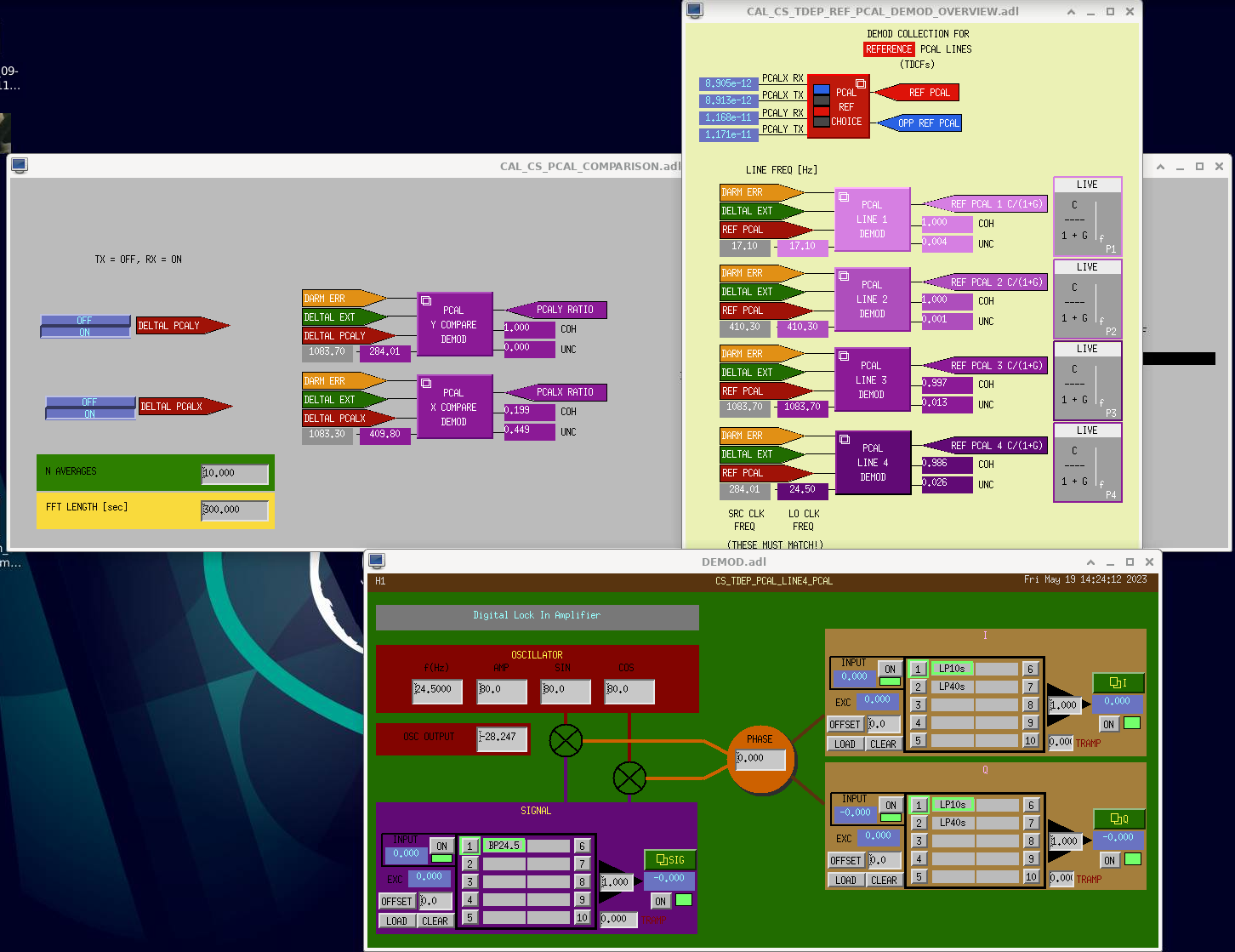
Evan Goetz noticed that there is a mismatch between the Pcal injected frequency and "matching" demodulator for PCALY line 4. This line at 24.5 Hz is in place for temporary monitoring of the thermalization effects on calibration, eg, alog 69478. I don't think that this is detrimentally affecting our calibration at this time, so I'm not going to call Jeff while he's on vacation. He can take a look Monday morning to make it more clear which frequency is supposed to be where.
Ya, unfortunately, because the PCAL oscillator numbers and DEMOD oscillator numbers within their name are defined by front-end code, then you have to do some nasty MEDM trickery that results in this confusing display. In short -- the DEMOD can demodulate any arbitrary frequency, and as long as the *local* oscillator within the DEMOD matches the real signal, then you'll get a sensible answer. In this case, we're using the PCALY LINE4 demod to demod the 24.5 Hz line that's driven by awg with the CAL_AWG_LINES gaudian, so there *is* no end station OSC frequency we can display on this user interface. So, the former mapping of the PCALY LINE4 DEMOD to the PCALY OSC FREQ still shown on the screen (which drives the 2084.01 Hz line), but is meaningless.
Same goes for the PCALXY comparison line display that's shown in the background.
Jenne concluded the right thing -- that this does not impact the output of the calibrated data:
(a) The front-end demodulation of the systematic error pipeline is NOT the primary monitor (produced by GDS)
(b) the 24.5 Hz line is temporary, and (hopefully) will be turned off once the run starts
(c) the PCALXY comparison is, this far, just a monitor and not used to correct any live data.
In the fullness of time this user interface will be cleaned up, but in the mad scramble to make sense of all of these new features some things have been sloppy and confusing. I promise those commissioning the systems are aware of this sloppiness and successfully dancing around it for the time being.
I've committed the local changes to the MEDM screen that resolve this confusion. See
/opt/rtcds/userapps/release/cal/common/medm
CAL_CS_PCAL_COMPARISON.adl
as of rev 26174.
HOWEVER -- we should really modify this screen to use a local-to-each-IFO macro file, since the oscillator number used to drive these PCAL lines (and any PCAL line) is pretty arbitrary, and not, in general, synchronized between sites.
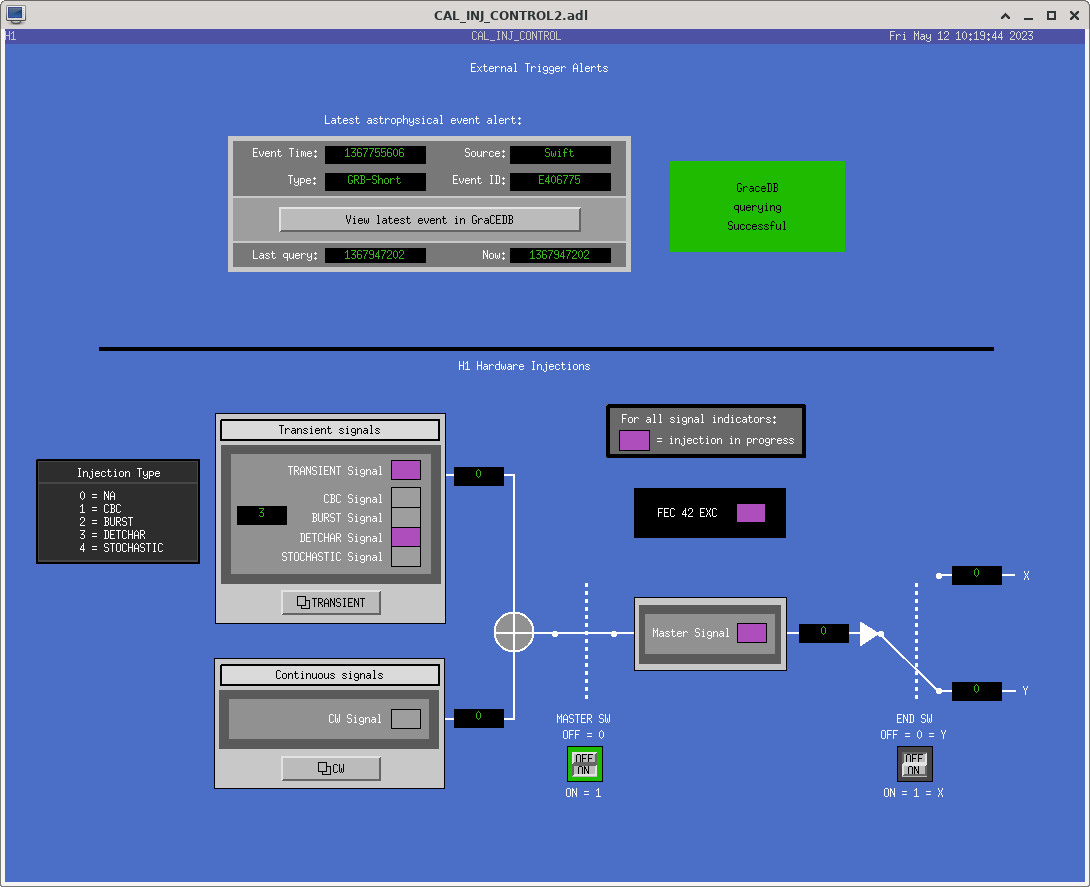
I went through the hardware injection screens (CAL_INJ_CONTROL2, PCAL_END_EXC) and cleaned them up based on the way that we're now handling hardware injections
I then did some test injections and confirmed that all the status bits were working as expected. Here's an example of the screen with an active "detchar" injection (as labeled by the H1:CAL-INJ_TINJ_TYPE record):

The H1:CAL-INJ_STATUS bit word (purple indicators) behaved correctly, and reset appropriately when the EXC was stopped.
I also note that the H1CALINJ_INJ_TRANSIET filter bank was found to have most of it's filters disengaged. TJ previous determined that all the banks should be engaged. I re-engaged all the fitlers and SDF accepted the change.
I've committed the changes to the PCAL_END_EXC.adl screen (removing the HWINJ master switch, and choice switch for which end-station to drive) to the svn under
/opt/rtcds/userapps/release/cal/common/medm/
PCAL_END_EXC.adl
as of userapps svn repo rev 26171.
Same goes for
/opt/rtcds/userapps/release/cal/common/medm/
CAL_INJ_CONTROL2.adl
committed to rev 26173.
Tue 29 Aug 2023 09:38:31 PM PDT
For channel(s):
H0:FMC-EY_CY_H2O_PUMPSTAT
H0:FMC-EY_CY_H2O_SUP_DEGF