
Sometimes it seems like the FSS gets noisy, and I don't think anything else is happening in the IFO.
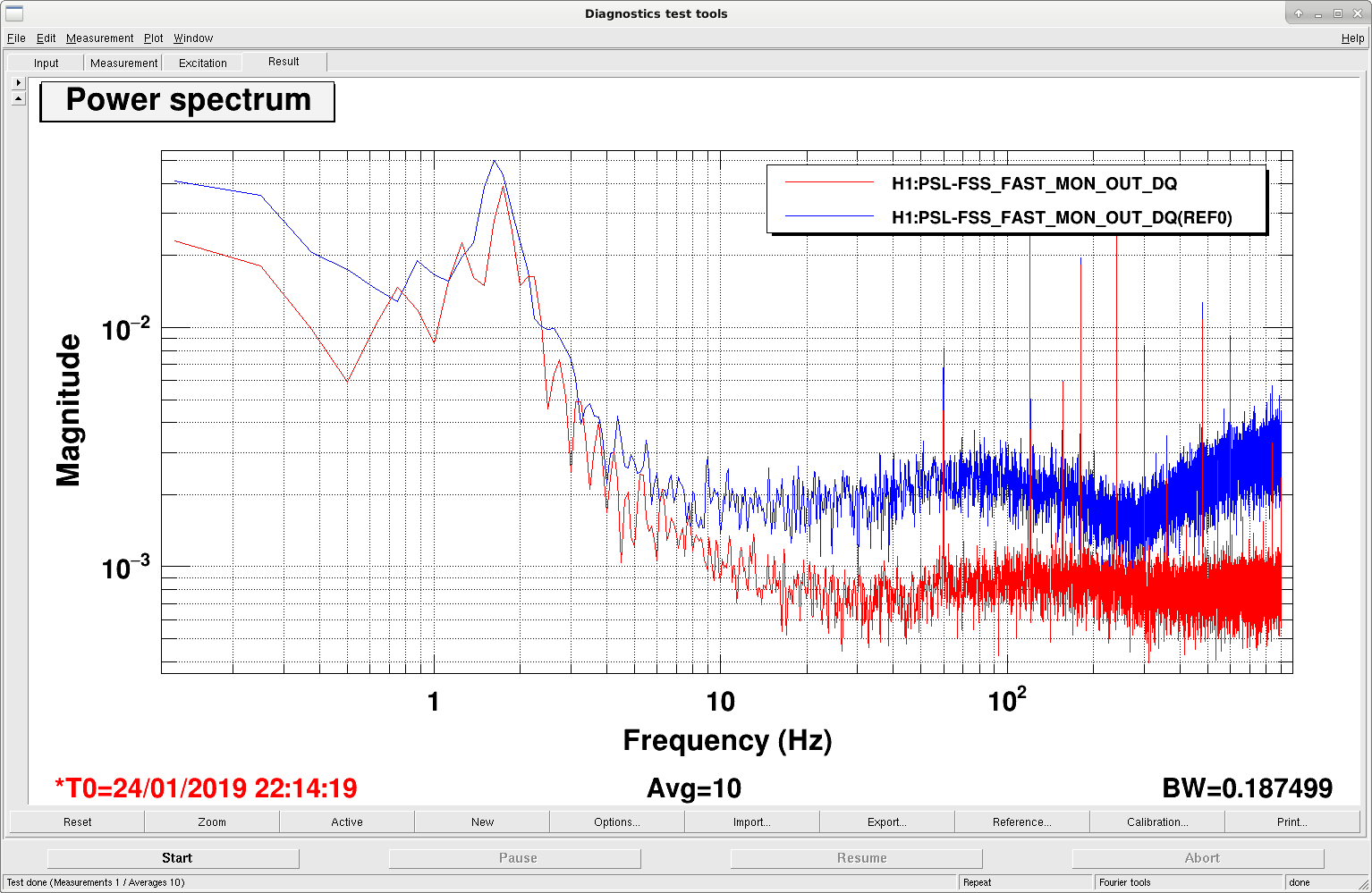
I caught it happening again, and am posting a quick time series and spectrum to show that it's definitely changing. Does anyone in PSL-land know what this might be? Perhaps (as Sheila suggests) someone could take a look at PSL PEM sensors to see if anything changed in there?
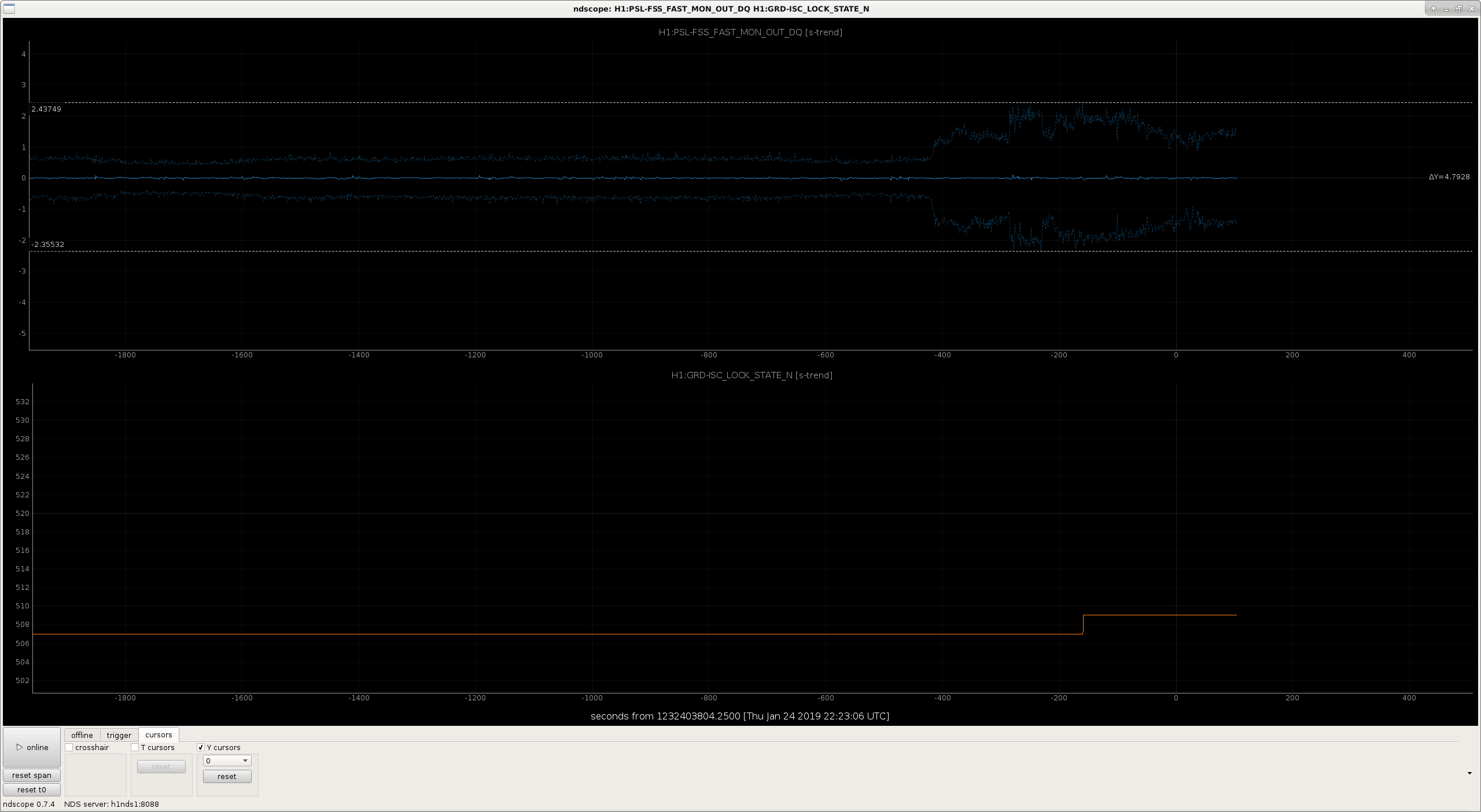
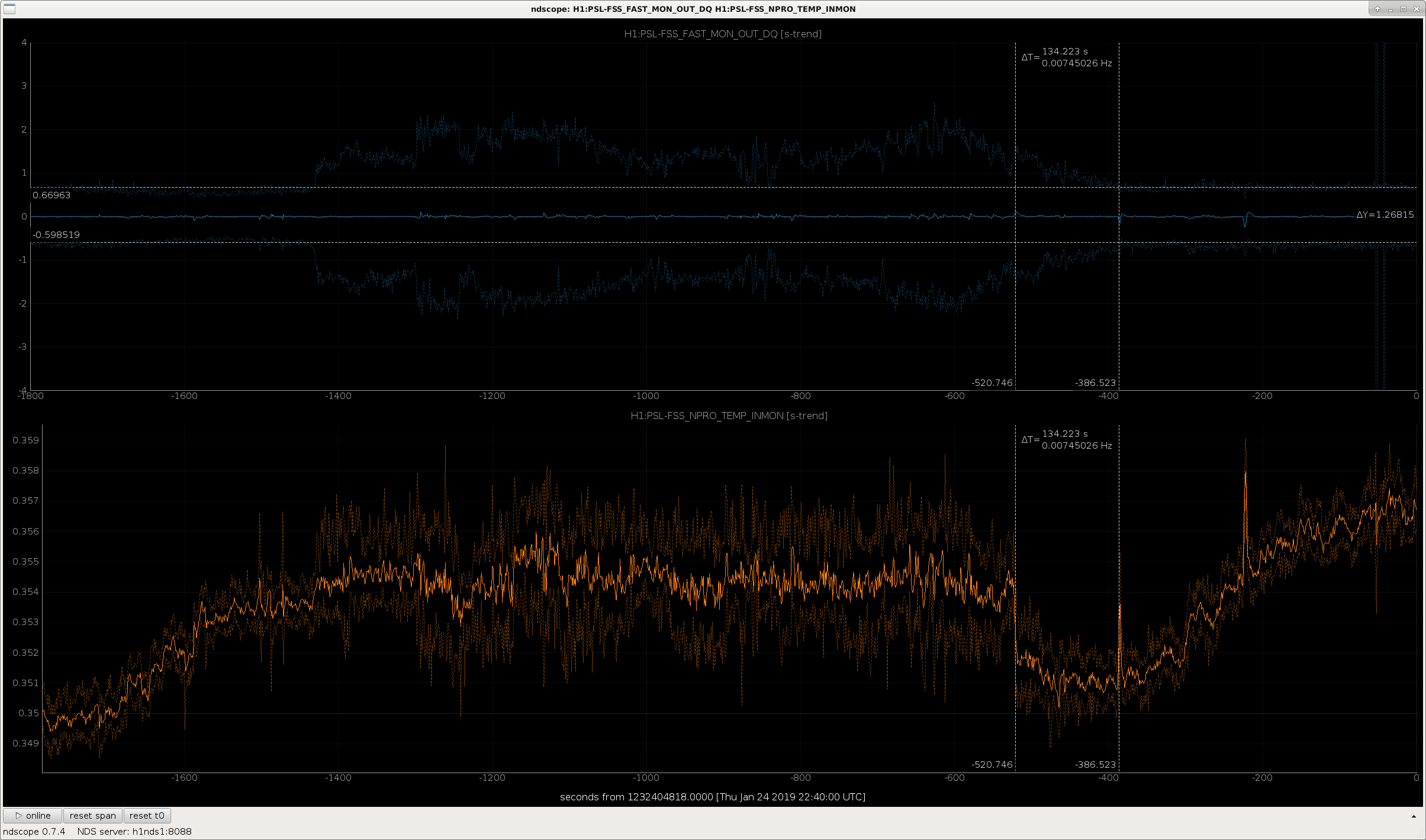
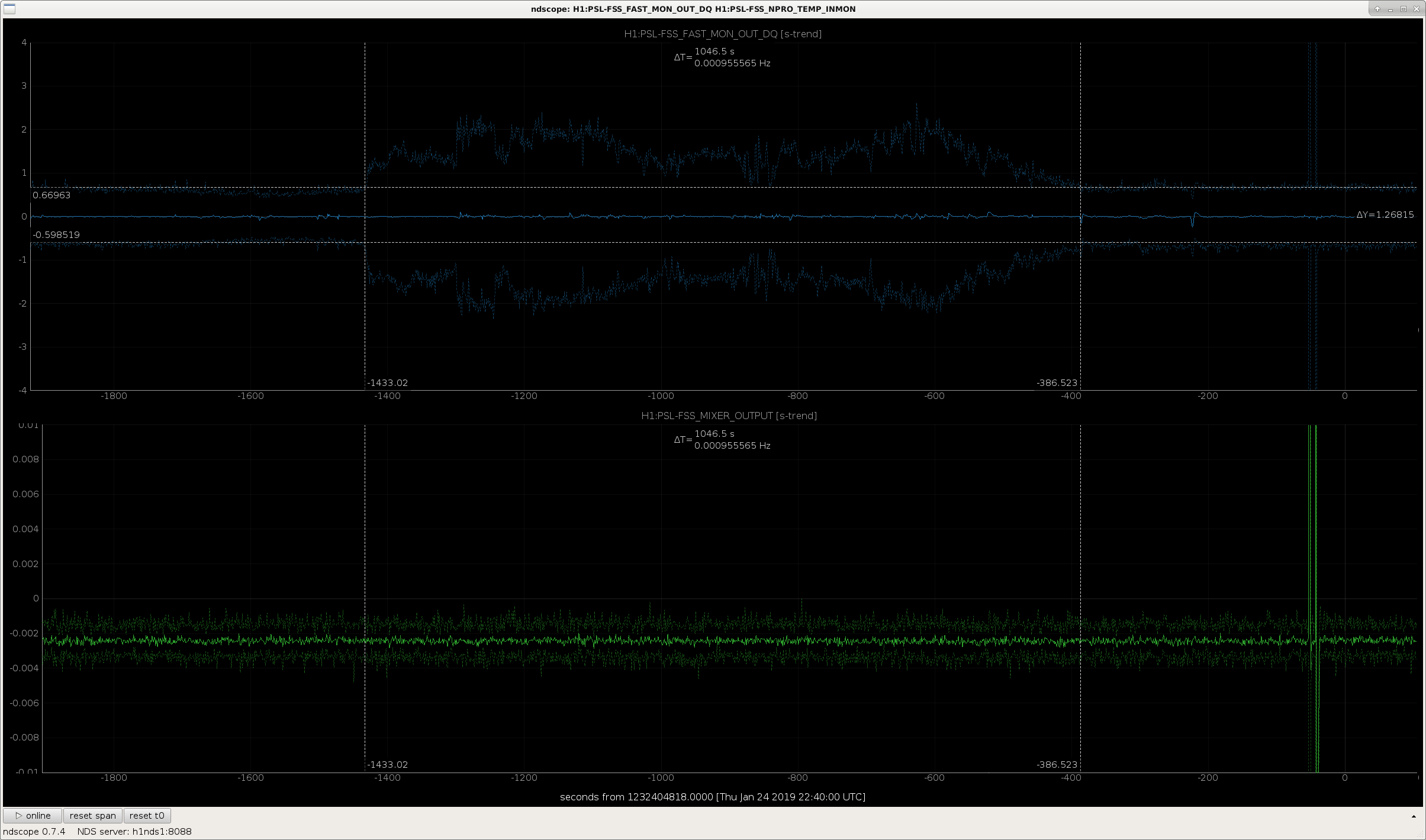
First attachment contains the 2 FSS control channels, the NPRO PZT (fast) and the NPRO crystal temperature (slow), and covers the entire period of the noise "event" Jenne notes above. As can be seen the noise is visible in both channels (not entirely surprising) and lasts for ~1047 seconds. ~134 seconds before the NPRO PZT returns to its usual peak-to-peak swings, the NPRO crystal temperature sees a small downward jump and then slowly returns to its normal peak-to-peak behavior over those 134 seconds.
I also looked at several other signals over the same time frame and compared them to the FSS fast signal:
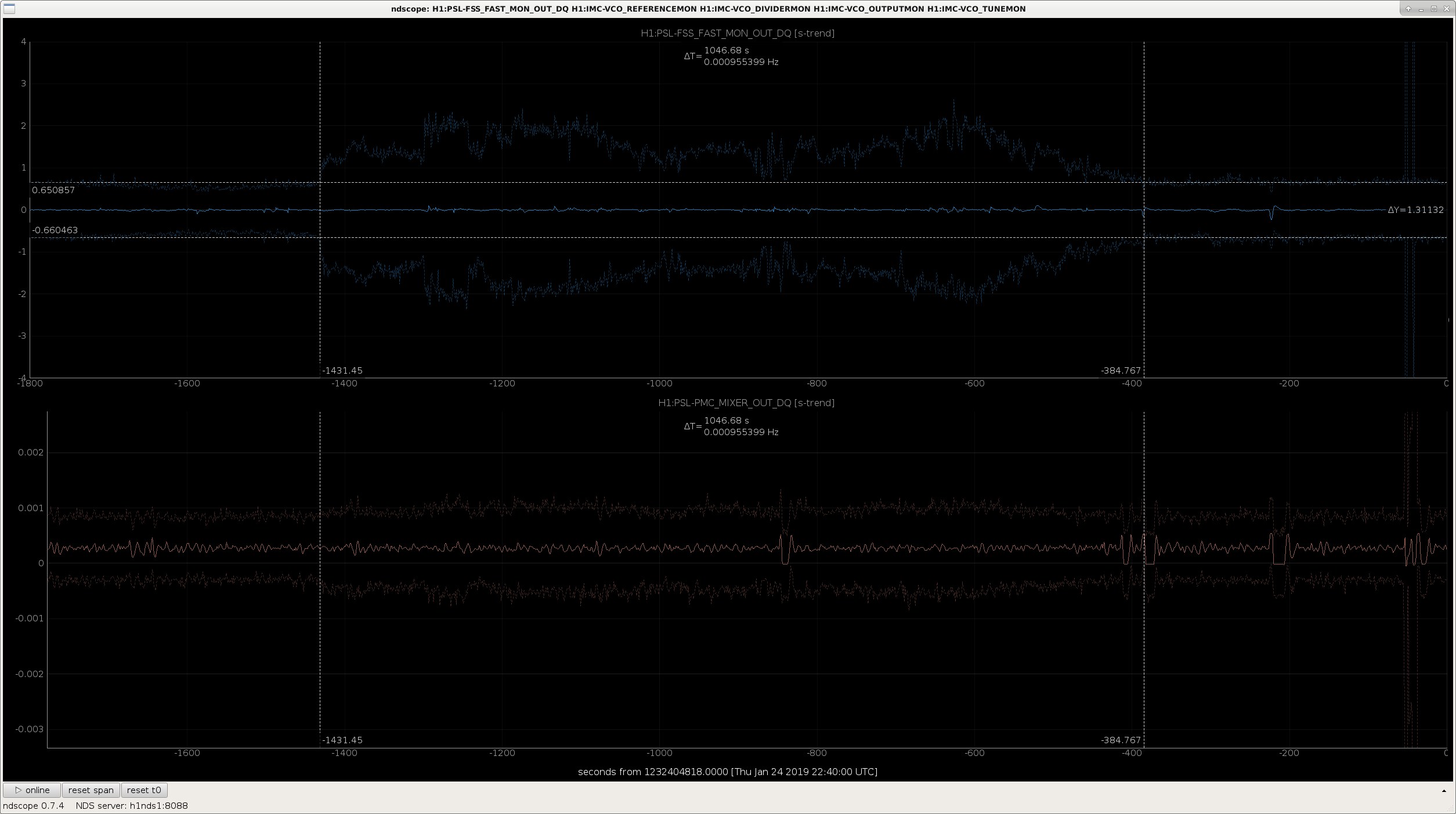
- 2nd attachment: FSS fast with FSS RefCav mixer
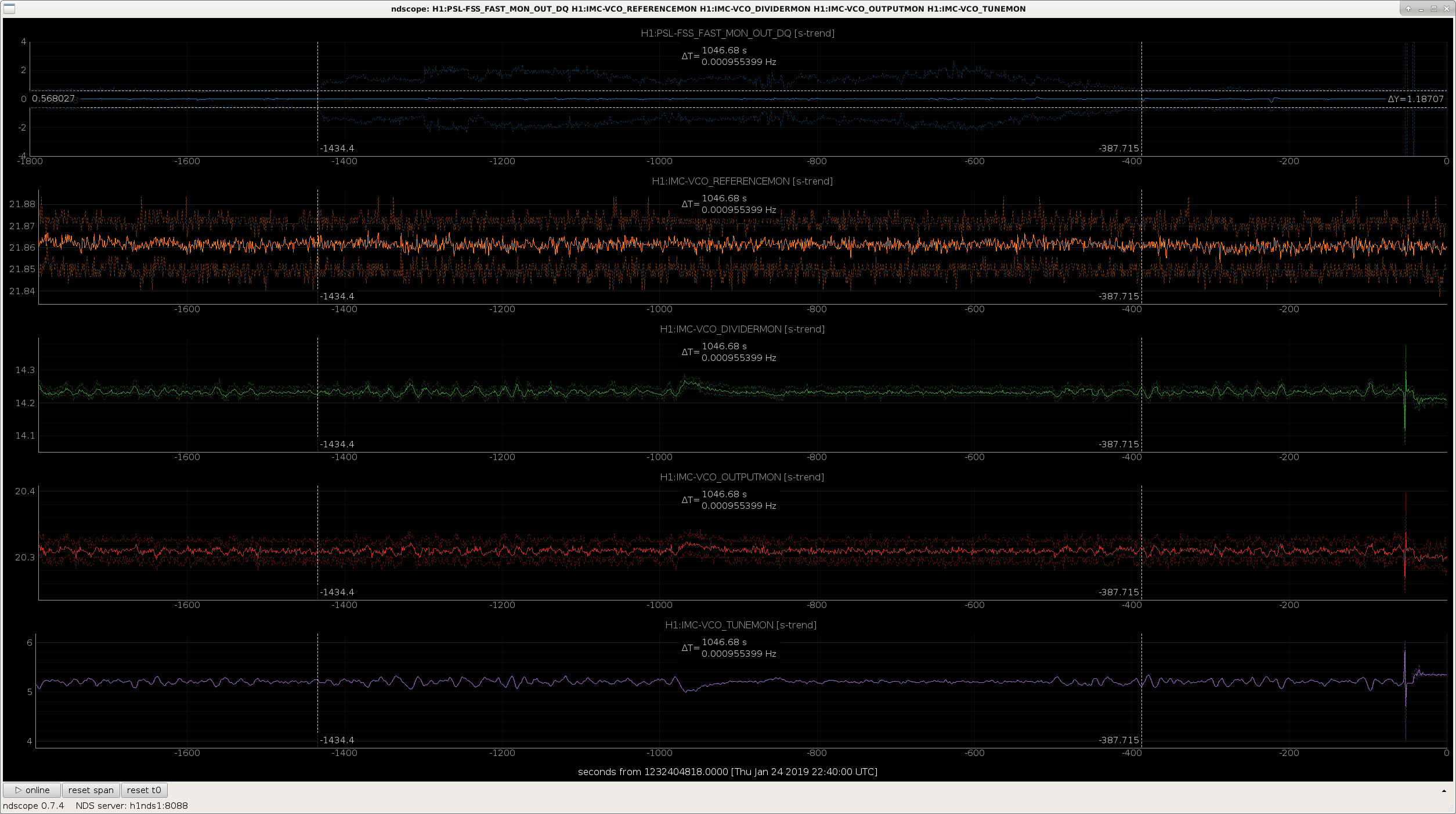
- 3rd attachment: FSS fast with various VCO signals
- 4th attachment: FSS fast with PMC mixer
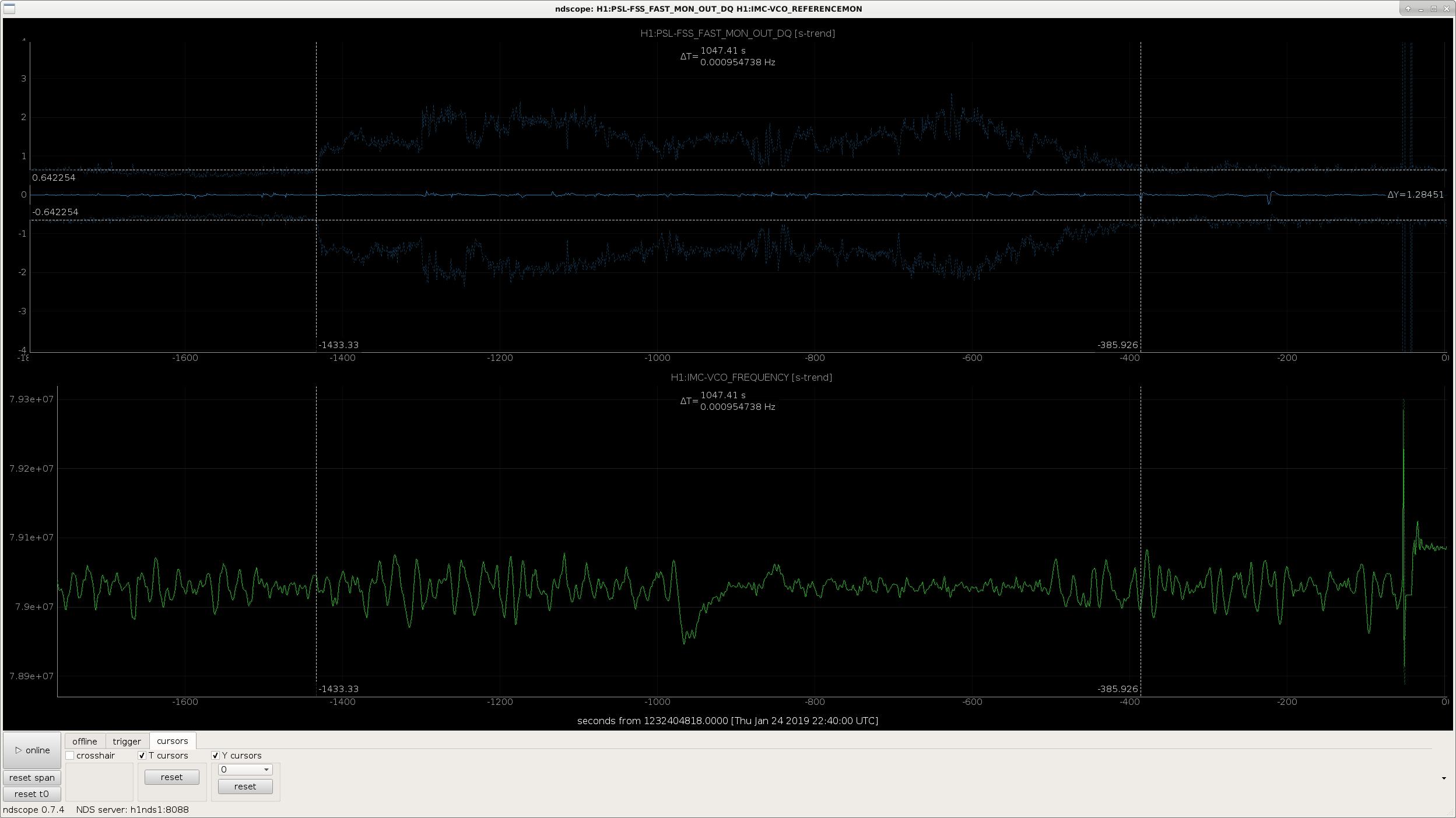
- 5th attachment: FSS fast with VCO frequency
This noise does not appear in any of these other channels that I can see; so far I've only seen it in the FSS fast and slow channels. After a quick chat with Peter we have 2 possibilities to explore:
- Does the noise coincide with VCO whistles?
- Maybe unlikely, but could someone from DetChar check this? Thanks.
- The PSL NPRO could be close to a mode hop region
Excess high frequency signals are clearly visible in the PC_MON. This is an RMS measure of the signal sent to the Pockels cell.

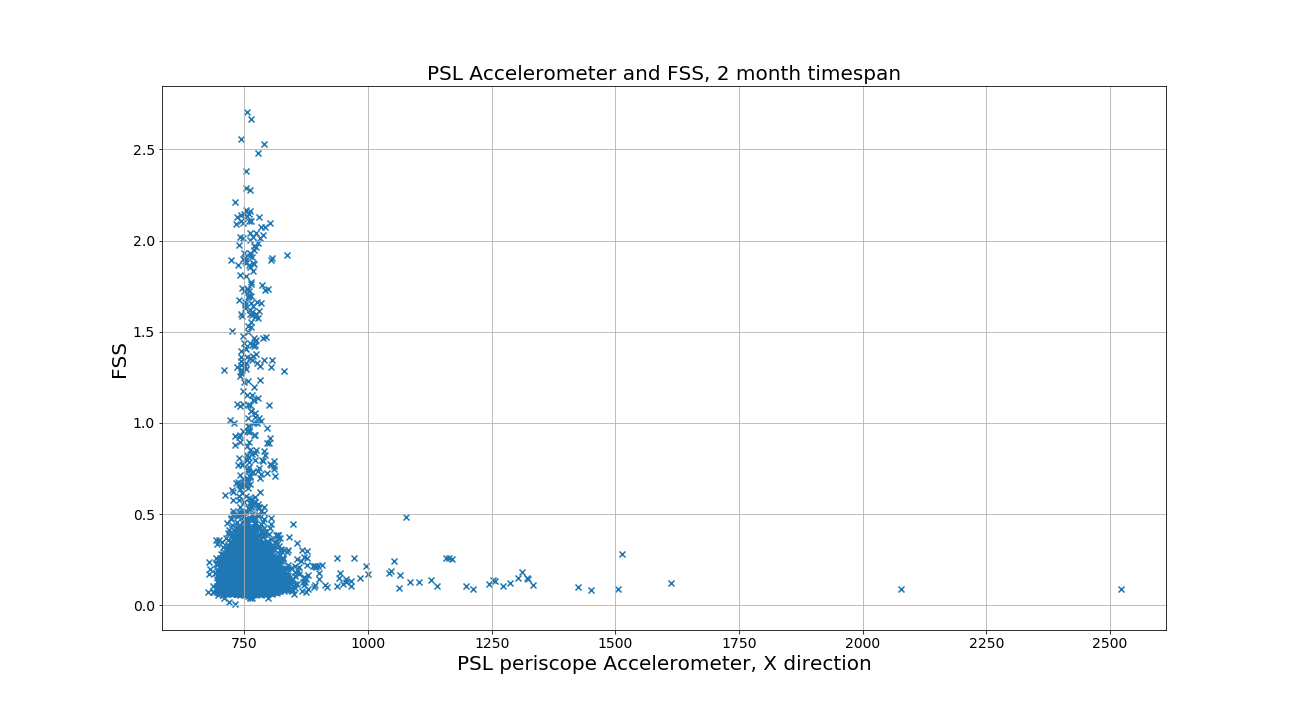
I looked at correlations between the FSS and several PEM monitors in the PSL, these were: the microphone, the dust monitor, and the x-direction accelerometer on the periscope.  I compared the 10s maxima of the PEM channels with the 10s maxima of the FSS over a 2 month span of time using only time segments when the interferometer was in nominal low-noise, and found no correlations.  Attached is a plot comparing the PSL periscope accelerometer, and the FSS.

Jenne saw this noise in FSS while the interferometer was still acquiring lock, and as long as it doesn't interfere with locking, it shouldn't be a problem.
During the Commissioning Meeting yesterday I kept an eye on the PZT voltage, the laser crystal temperature and the EOM monitor
drive voltage.  The larger fluctuations in the PZT voltage seem to coincide with large values of the EOM voltage.  A brief
discussion with Daniel the other day where he suggested looking at increasing the EOM gain to reduce the EOM voltage since its
average value is somewhat above 0, led me to think about the cross over.

    This morning I moved the cross over around by adjusting the fast gain.  Sure enough increasing the fast gain reduces the
EOM drive and lowering it, increases the EOM drive.  The EOM drive voltage seems to be minimised when the fast gain is set
to 19 dB.  More than this and the EOM drive voltage increases, whilst the PZT remains pretty much the same.  Adjusting the
common gain had little or no effect.

    The cross over bears some re-examination.  The last time this was measured, as I recall, was around the time of the
installation of the 70 W amplifier where a series of transfer function measurements were made.