Bubba, Niko, Dave:
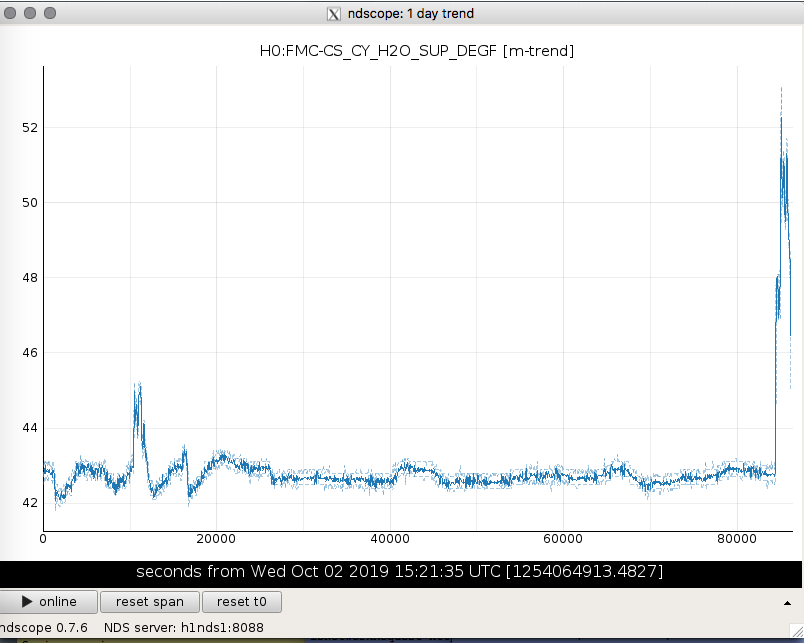
Starting around 8am PDT we received chiller cell phone alarms. Attached 24-hour trend shows the corner station supply water temperature was elevated. Bubba is investigating, in the mean time I have bypassed the cell phone alarms for this channel
Bypass will expire:
Sun Oct 13 08:23:38 PDT 2019
For channel(s):
H0:VAC-LX_Y0_PT110_MOD1_PRESS_TORR
H0:FMC-CS_CY_H2O_SUP_DEGF
Note that since a bypass is already in effect for PT110, I cannot issue a separate 6-hour bypass for the CS-CY-CHILLER. Therefore I will ensure that the FMCS channel is taken out of the bypass list when the issue has been resolved.
Ops Shift Transition: 10/03/2019, Day Shift 15:00 – 23:00 (08:00-16:00) - UTC (PT)
State of H1: Planned Engineering
Intent Bit: Commissioning
Weather: 0-5 mph wind
Primary 0.03 – 0.1Hz: 0.01 um/s
Secondary 0.1 – 0.3Hz: 0.1 um/s
Outgoing Operator: None
Quick Summary: Vacuum work underway, no other work started yet
[Rick Savage, Jeff Kissel, Timesh Mistry]
Today (02 October 2019) we received the NCAL mount parts from RDL. Most of the parts have arrived thus we proceeded to assemble the mount in preparation for the remaining parts.
We are still missing part number D1900245.
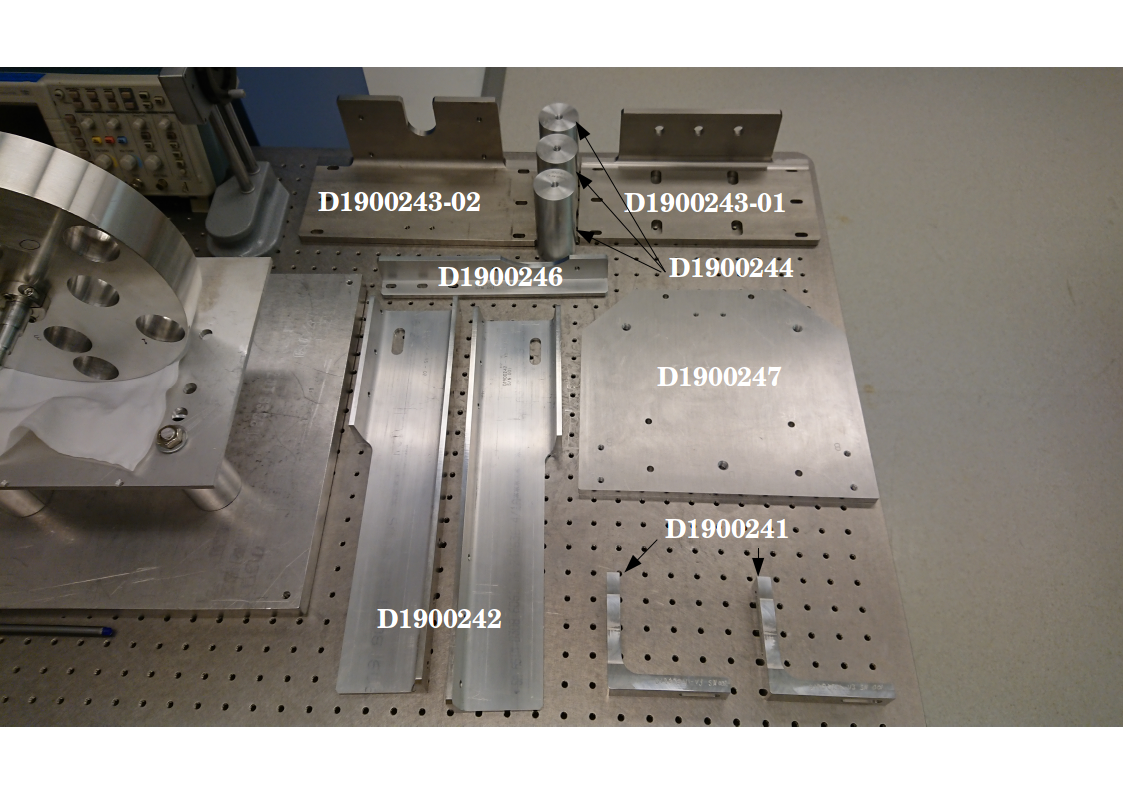
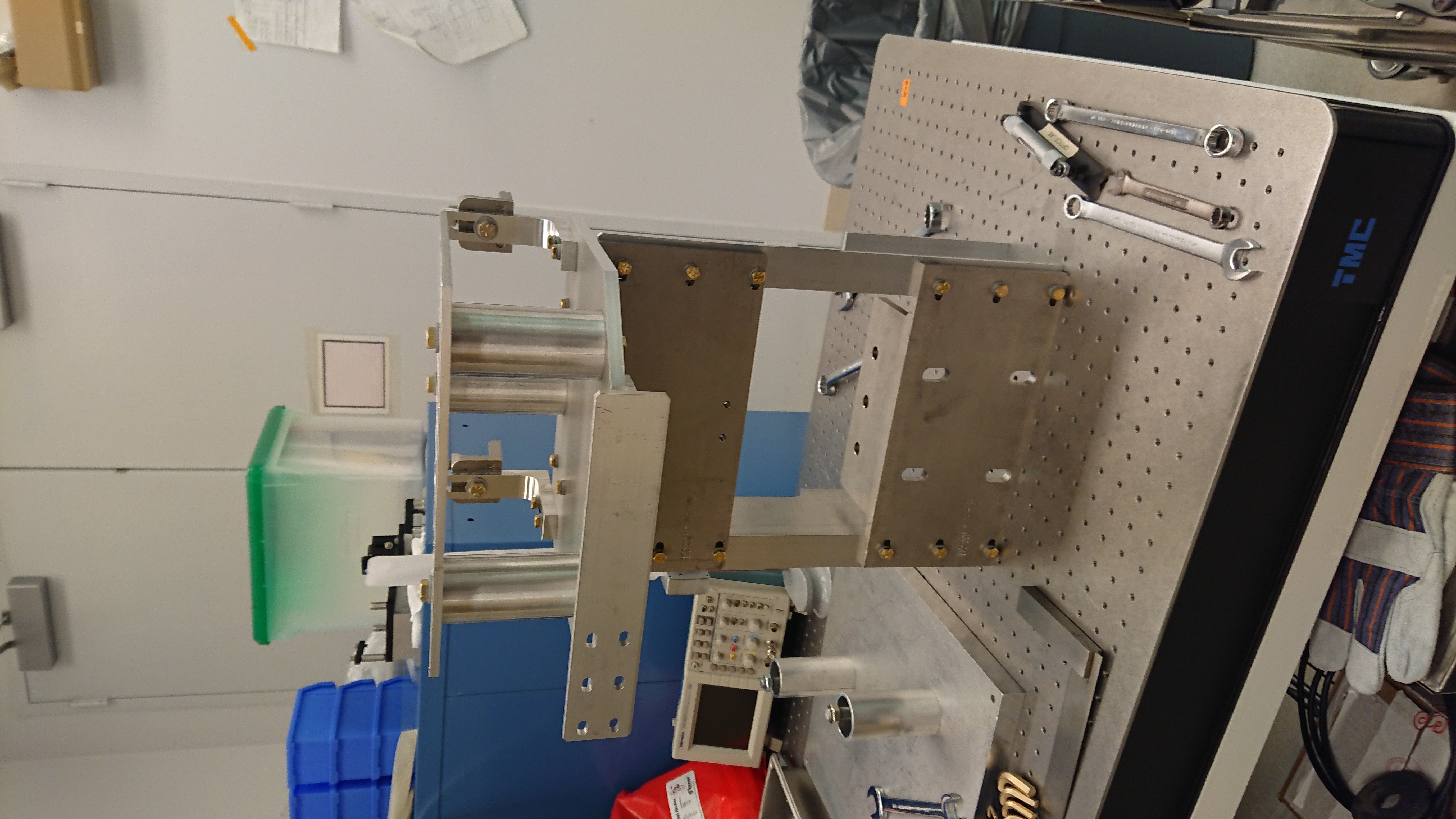
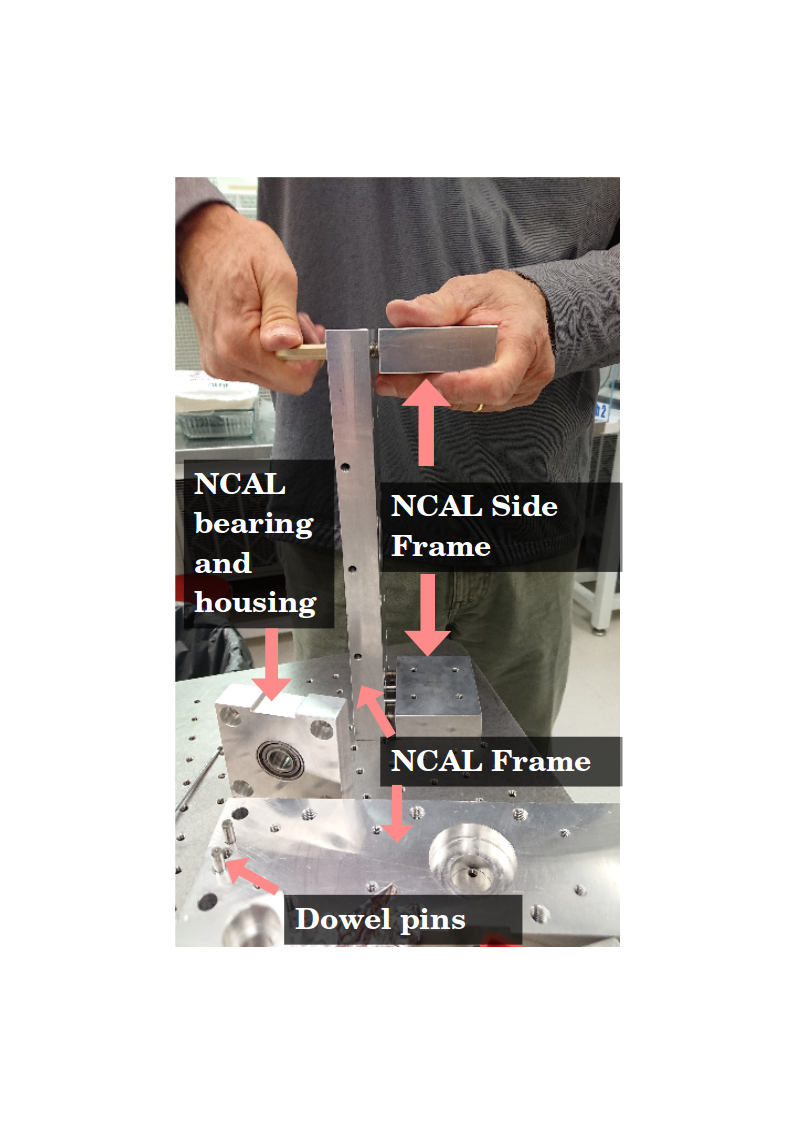
I assembled the NCAL frame in the optics lab in preparation for a fitment and clearance check at the X end station. The full process/assembly instructions will be detailed in another document however I will summarise the process I underwent to assemble the mount. The parts referenced can be found from the NCAL document tree or using the parts names quoted below (or in the figure 1). All parts are hand tightened but not torqued to specifications at this point and all the fasteners used are given in the full assembly CAD drawing D1900145. The final assembly (without the NCAL) looks is given in figure 2.
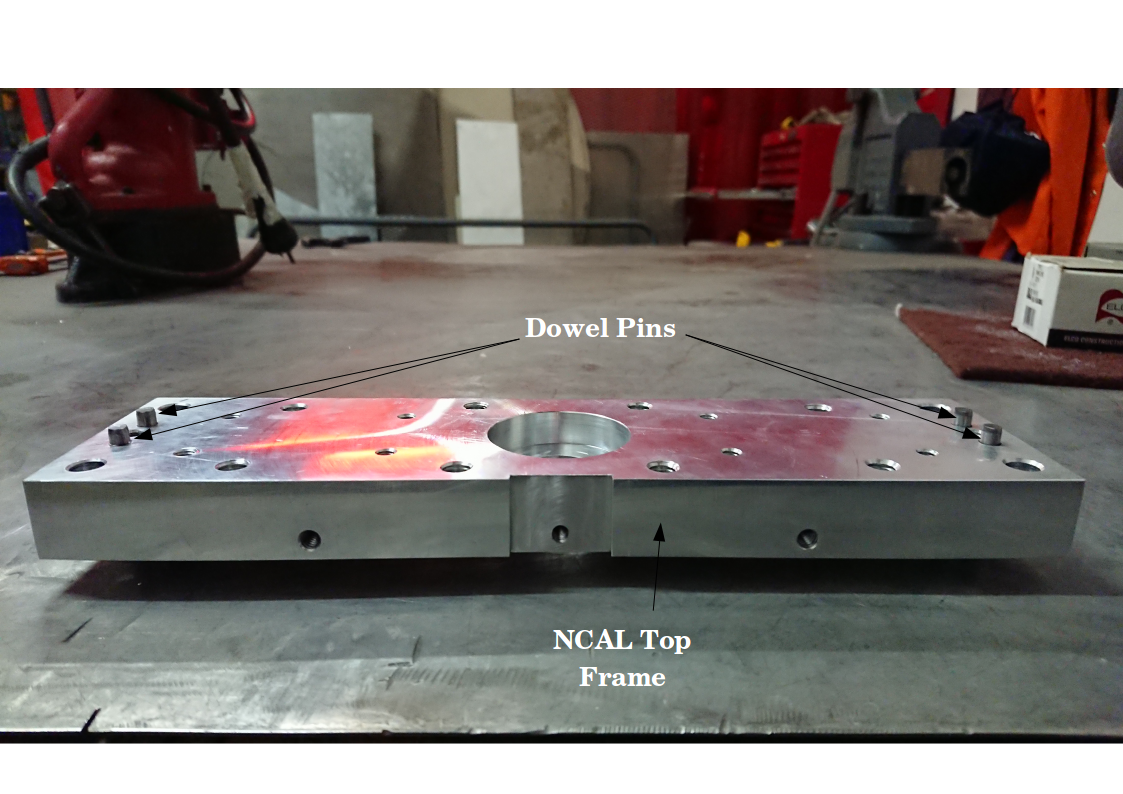
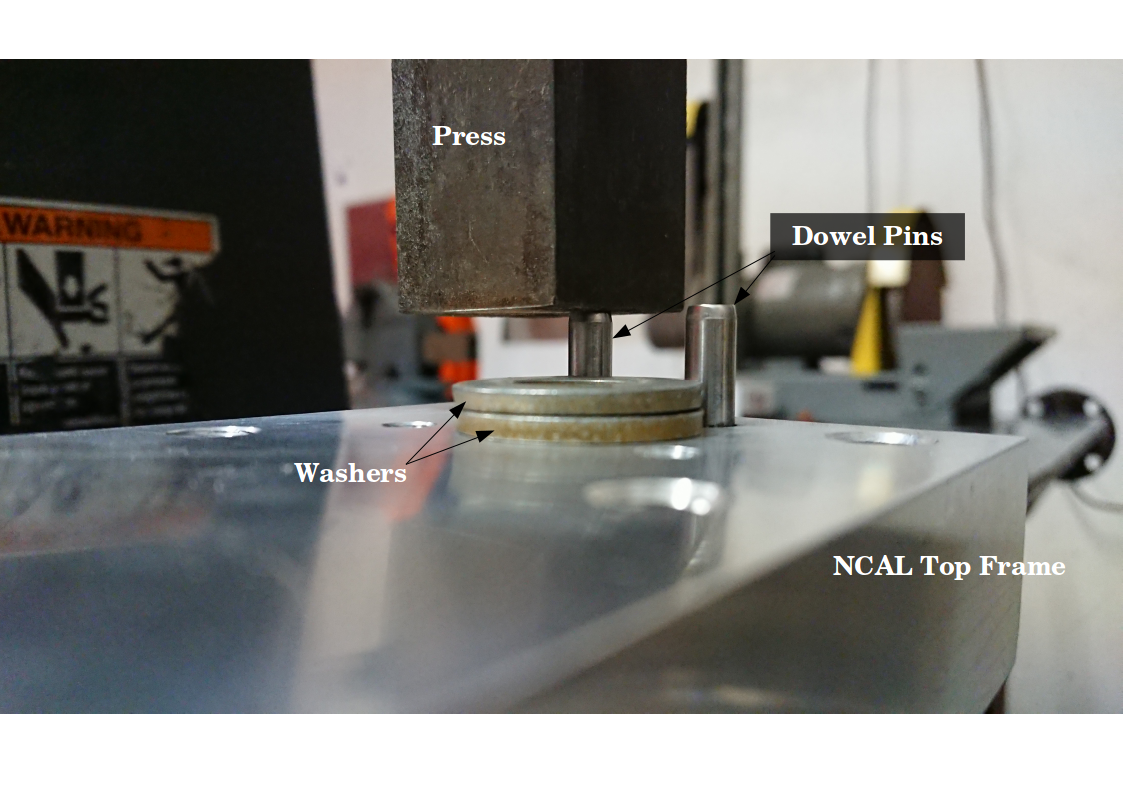
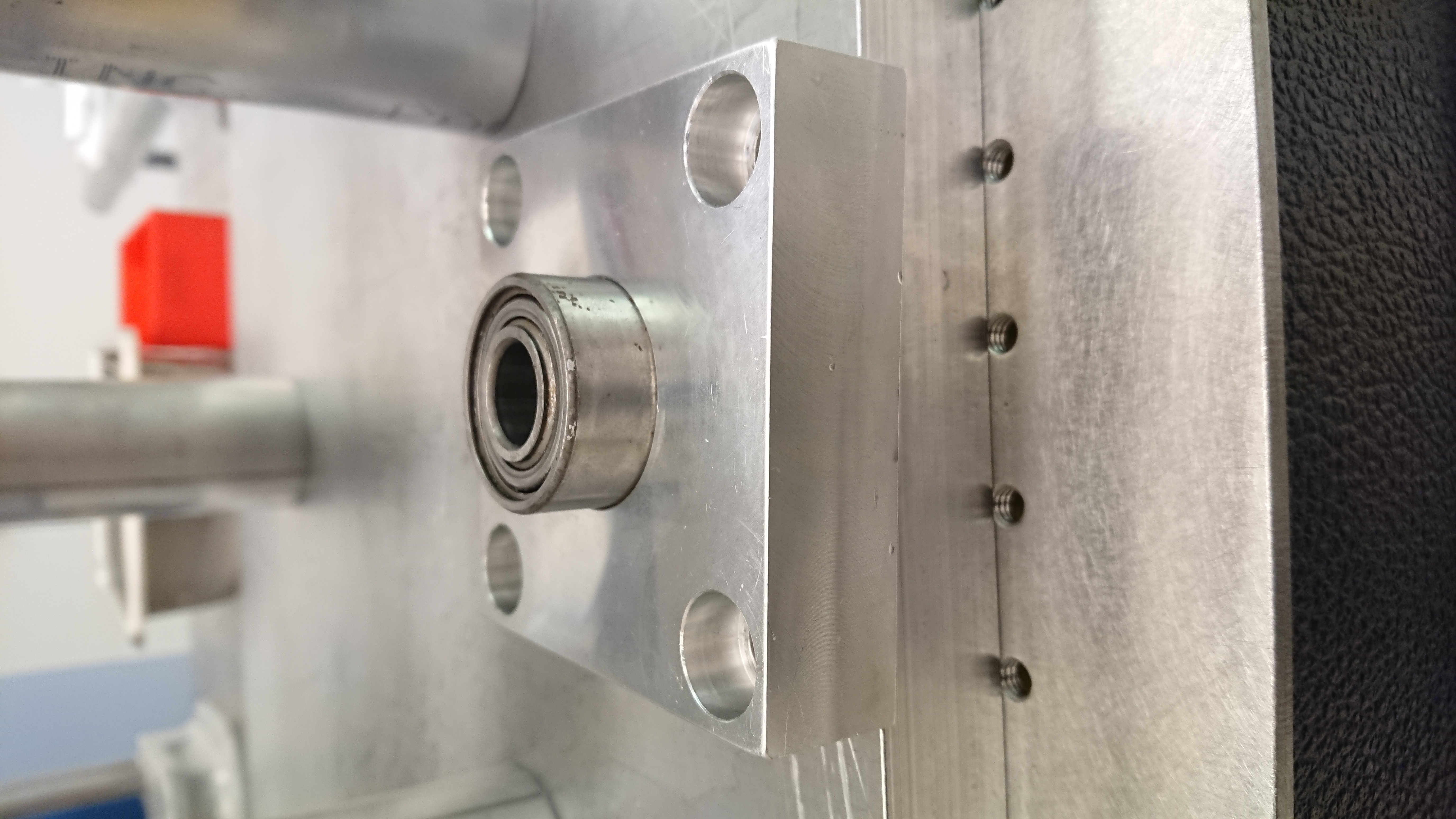
From LHO alog 52258, we had a few proposals to address the dowel pins on the top and bottom NCAL frames. We decided to partially press the dowel pins out (see figure 3). We used a press to push the dowel pins out and used washers to set the height of the dowel pins (see figure 4).The process in which we achieved this was:
We found that it required more force than expected to press the pins out. Upon closer inspection of the outer surface of the pins, it is clear to see that is had seized into the NCAL frame. We suspect that the tolerances, for the holes that the pins are housed in, are too tight.
(Jeff J, Gerardo M)
Removed and replaced gauge for BCS8 PT-180, removed gauge BPG402-SE SN120. Replace it with BCG450-SE SN216. The old copper gasket was stuck for a bit, so I had to use the big tool to remove it.
The gauge is in fault mode right now so the readback is not valid, the new and the old gauge are very different, so a software update is needed in the Beckhoff world, to be done tomorrow morning.
Nutsinee Fabrice Sheila Gerardo Daniel
After the vent, the fiber transmission recovered, back up to 6 mW (from about 3mW before the vent). The unit was de-installed and will be shipped back to MIT for diagnostic. The new unit (SN6) was installed.
Power measurements with old fiber after the vent:
Power measurement with new fiber:
-- Fabrice not happy. 5m fiber swapped for a new one. --
Power measurement with new in-air fiber:
-- Fabrice is less diapointed (transmission was better on the test bench) --
We left the laser on for the night, at lower power (~12mW input) to monitor the health of the power transmission.
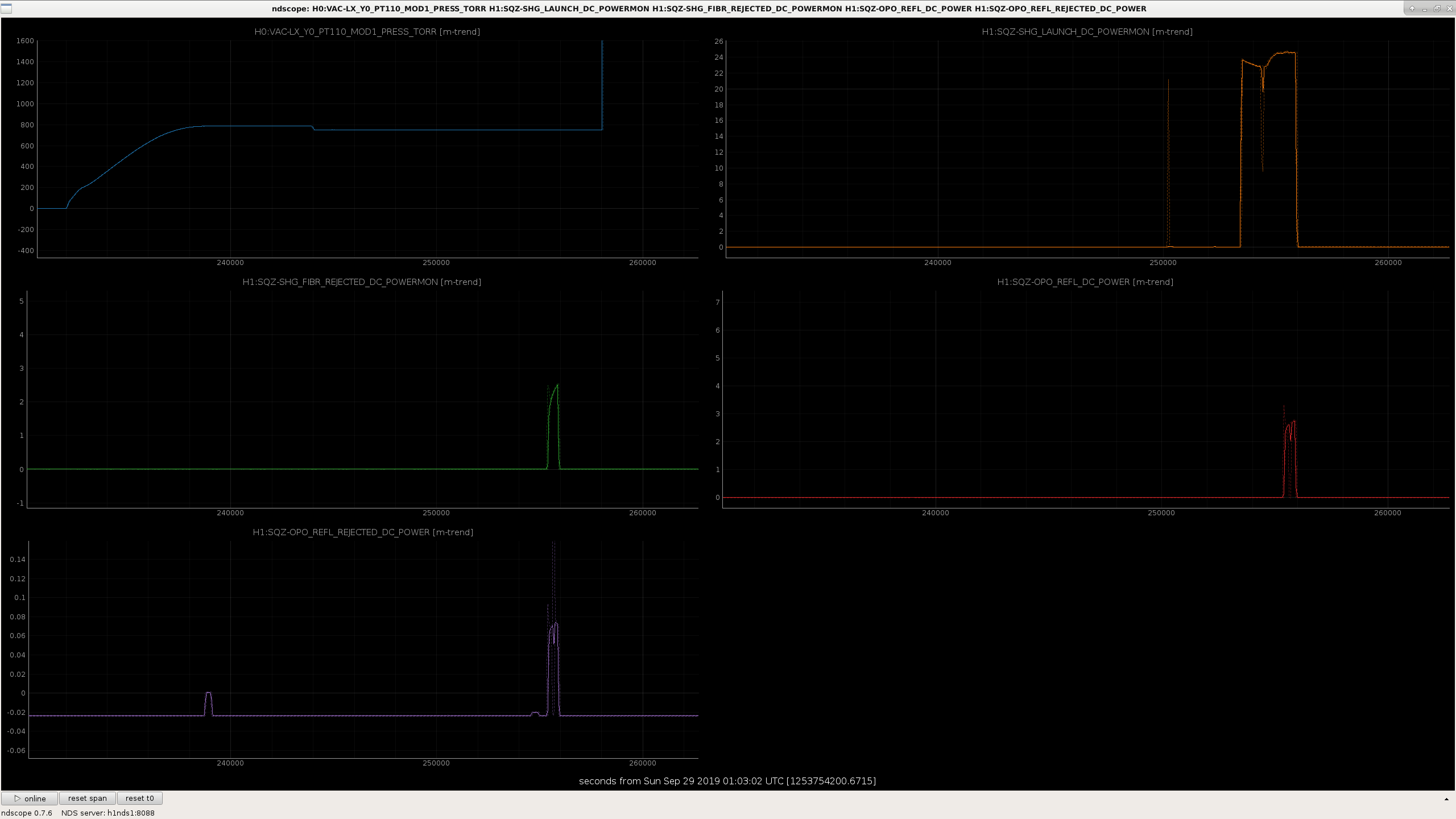
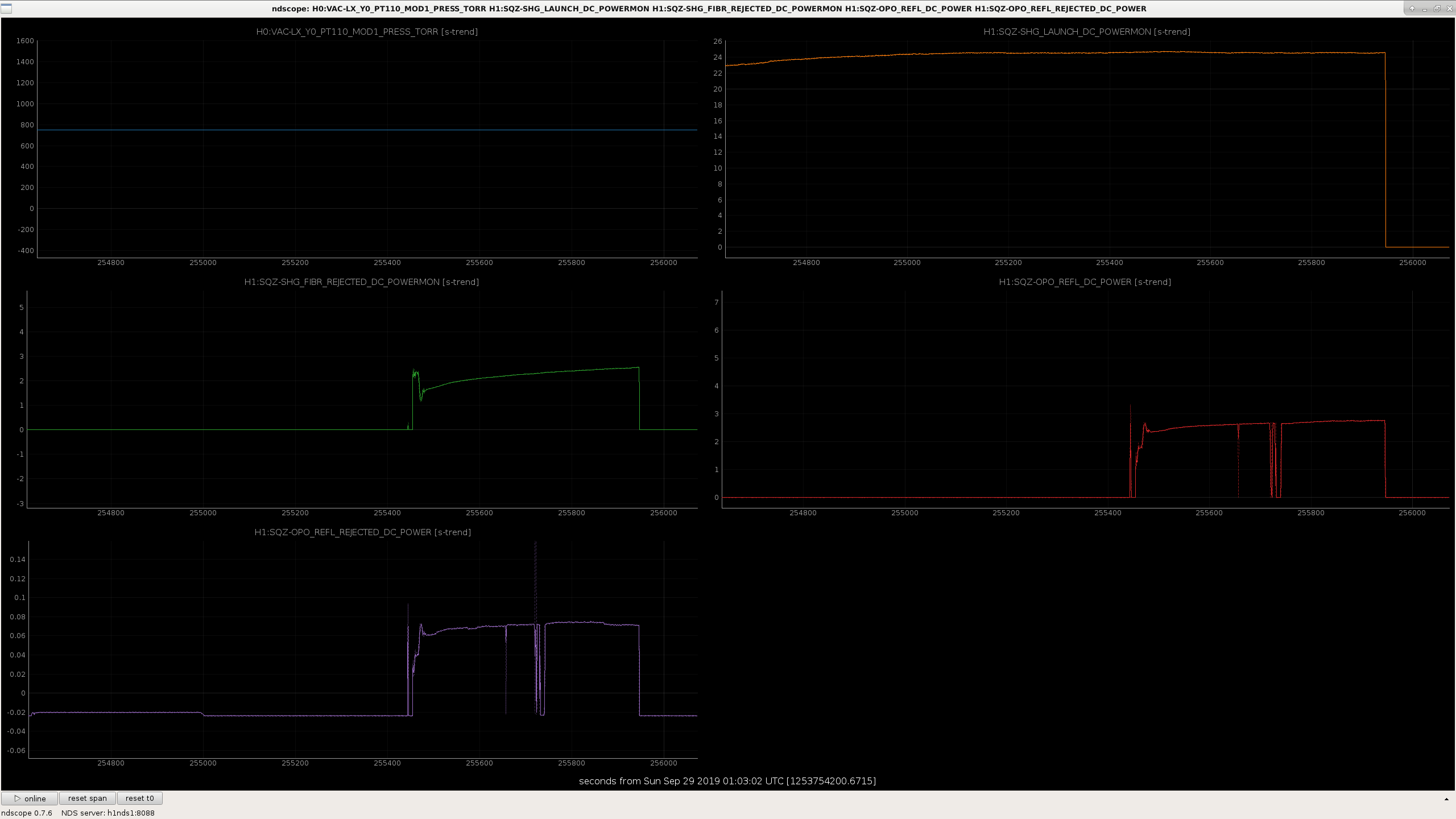
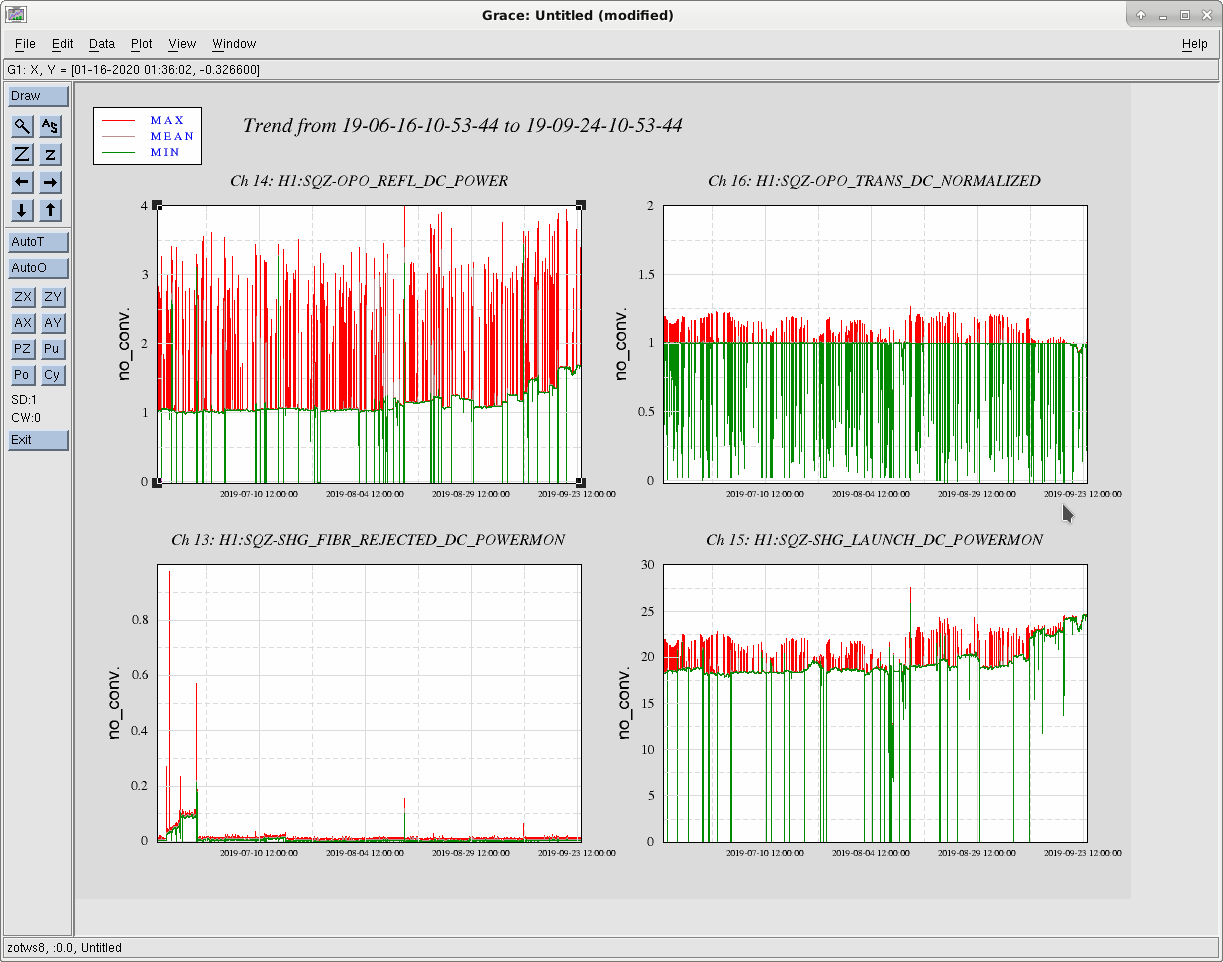
Here are trends of the pressure in HAM6, the SHG launched power, the green fiber rejected polarization and the OPO reflection.
During this time Daniel was adjusting the polarization into the fiber, so we need to look at the sum of the rejected polarization and the reflected power. It seems that this recovery isn't happening slowly over the hours between the vent and when we first measured, but it is happening more quickly around the time that we first let light into the fiber (which was also around the time that we went to the chamber to make measurements).
(Kyle R, Tyler G, Rahul K, Chris S, Gerardo M)
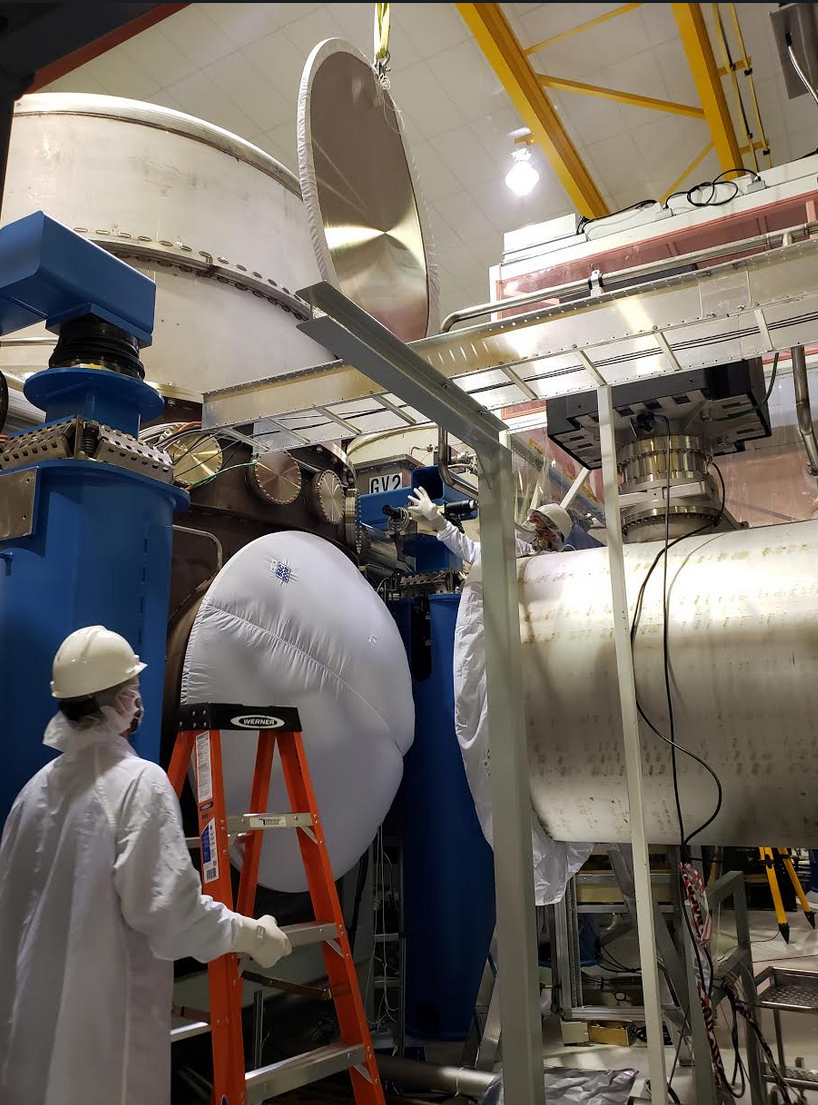
Removed doors for HAM6, north door first, we had a small glitch with o-ring sticking in two places, with handy tool we were able to take care of those issues.
East door no issues to report.
Chamber left with purge air going.
{Bubba, Chris, Tyler, Chub, Jordan, Chandra}
Another good day of H2 decoupling work. We removed the expansion spool from BSC7 and installed the new door with no issues. Annulus pumped down quickly indicating no inner and outer o-ring leaks. We then blew down XBM volume (-37degC dew point) and proceeded to rough out volume. PT170 is currently reading 5 Torr. We will valve the QDP80 out for the night and resume pumping tomorrow morning.
Had time to vent YBM and remove expansion spool on BSC8. BSC8 flange is currently covered with C3 soft cover with a healthy purge air flow. The spool is connected to west crane and will be transferred to LVEA high bay area tomorrow morning when we're in full laser safe mode.
I moved the annulus pumping system from BSC7 to BSC8 in preparation for door installation tomorrow morning.
Well done!
New BSC7 door is PN D1800205. The PN and SN were accidentally stamped on vacuum side of plate! (same with BSC8 plate)
I verified the PRG calculation at LHO, motivated by Aidan's PRG comparison between LHO and LLO. It's correct. I've updated the medm screen to reflect what I found in the h1lsc and h1ascimc simulink models. I couldn't find in the alog where the PRG calculations were, so I'm reproducing them here. PRG = Power in PRC/Input Power incident on back of PRM. The input power on the back of PRM is calibrated into watts using IM4 Trans NSUM, fixed in alog 46590. If we trust this calibration, thenPower on back of PRM/Requested Input Power = 88%Power in PRC is calculated from POP A LF IN1. POP A LF OUT is calibrated into microwatts via a "to_uW" filter module with gain = 4.015. POP A gets its power from transmission through PR2 and a 90:10 beamspliter (DCC D1000313). PR2 has transmission of 228 ppm.Power in PRC [W] = POP A LF IN1 [cts] * 4.015 [uW/cts] * 1e-6 [W/uW] / (T_PR2 * T_BS) Power in PRC [W] = POP A LF IN1 [cts] * 0.175 [PRC W/cts]The "calib" filter in the PR_GAIN filter module has gain 0.1745. Assuming the calibrations of the PDs are correct, the PRG calculation is correct.PRG = POP A LF IN1 [cts] * 0.175 [PRC W/cts] / IM4 TRANS NSUM [Input W]
TITLE: 10/02 Day Shift 15:00 – 23:00 (08:00-16:00), all times posted in UTC
STATE of H1: Planned Engineering
INCOMING OPERATOR: None
SHIFT SUMMARY: Finished BSC7 work, vented YBT manifold, PSL work ongoing, SQZ work ongoing.
LOG:
15:07 (08:07) Christina to LVEA
15:19 (08:19) Gerardo to LVEA -- assist door crew
15:39 (08:39) Jeff to LVEA -- check spool removal/HAM6 cleaning progress
16:15 (09:15) Betsy to LVEA -- check work progress
16:17 (09:17) Chris out of LVEA
16:22 (09:22) BSC7 door on, turbo pump warming up for BSC8 vent
16:58 (09:58) Travis to LVEA -- help with HAM6 work
17:09 (10:09) Sheila, Nutsinee to SQZT6 -- prep for laser hazard work
17:13 (10:13) TJ, Hugh to LVEA -- wait for door to come off, lock ISI
17:30 (10:30) TJ out of LVEA -- unable to lock HAM6 ISI
17:30 (10:30) Chris, Tyler, Gerardo out of LVEA -- HAM6 doors off, soft covers on
17:34 (10:34) TJ, Hugh to LVEA -- locking HAM6 ISI
17:53 (10:53) Chris to LVEA -- move spool to high bay
17:56 (10:56) Vanessa to EX
18:05 (11:05) Jason, Ed to LVEA -- check status of HAM5/6 laser enclosure
18:14 (11:14) TJ, Hugh out of LVEA -- HAM6 ISI locked
18:18 (11:18) Travis, Tyler, Chris out of LVEA
18:21 (11:21) Jenne, Brittany, Gavin, Dripta, Vlad to LVEA -- walkthrough
18:47 (11:47) SQZ laser being turned on (no elevated work)
18:52 (11:52) Jason to Optics Lab
19:00 (12:00) Jason out of LVEA
19:13 (12:13) Jenne, Brittany, Gavin, Dripta, Vlad out of LVEA
19:20 (12:20) Jeff to LVEA -- inform SQZ team of OPO SUS trip
VOPO locked (cause of trip)
19:48 (12:48) Karen to EY
19:49 (12:49) Sno-Valley here for chiller work
19:55 (12:55) Daniel, Nutsinee, Sheila, Fabrice, Dripta out of LVEA -- HAM5/6 area back to laser safe
20:40 (13:40) Chandra, Gerardo to LVEA -- break BSC8 bolts
20:47 (13:47) Karen leaving EY
20:54 (13:54) Jason, Georgia to PSL enclosure -- ALS bypass pick-off work
21:15 (14:15) Jamie, guests to LVEA
21:18 (14:18) Jeff to LVEA -- check on work progress
21:19 (14:19) Gerardo to LVEA -- replace PT-180 pressure gauge
21:40 (14:40) Betsy to LVEA -- help Gerardo
22:25 (15:25) Tyler out of LVEA
22:25 (15:25) SQZ crew taking HAM5/6 area to laser safe
22:34 (15:34) Jeff out of LVEA
22:35 (15:35) Timesh to Optics Lab
22:41 (15:41) Chandra, Jordan, Chub, Bubba out of LVEA for the day
22:47 (15:47) Rahul, Brittany, Chiara, Ethan to LVEA -- walkthrough
[Rick Savage, Jeff Kissel, Timesh Mistry]
This post is a delayed post from yesterday.
Since 10 Aug 2019, the Newtonian Calibrator (NCAL) had been fully disassembled and cleaned. The condition to which the parts were required to be cleaned to was not more than a Class B specification i.e. remove surface grime, particulates and residue. This has been completed by Chris Soike (many thanks) and the parts now moved into the optics lab for NCAL re-assembly.
We have not re-assembled the NCAL because we believe there to be some re-work of some of the parts as well as replacing some parts with more suitable components. Therefore, a summary of the todays' efforts are as follows:
The NCAL mount was expected Oct 1 and has not arrived yet.
The NCAL drill fixture (jib) has already been tested [LHO alog 51605].
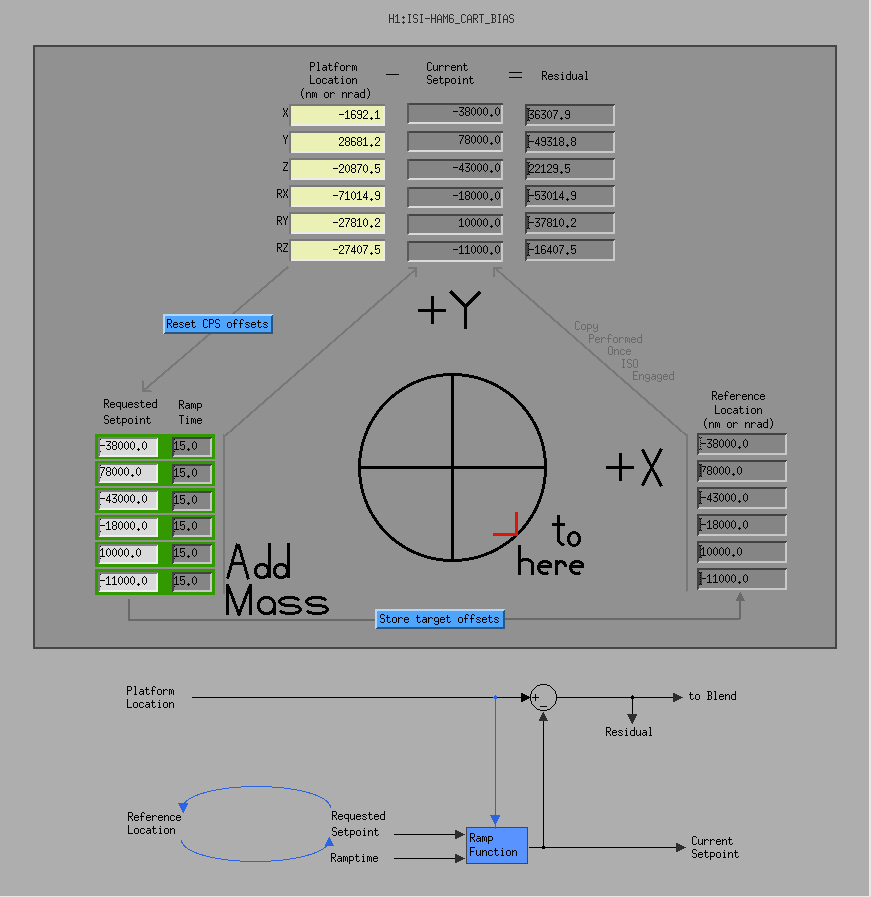
Hugh and I locked the B, C, and D lockers on the HAM6 ISI this morning. The A locker was inaccessible with only the North and East doors off. The attached screenshot shows the CPS residuals in nm and nrads.
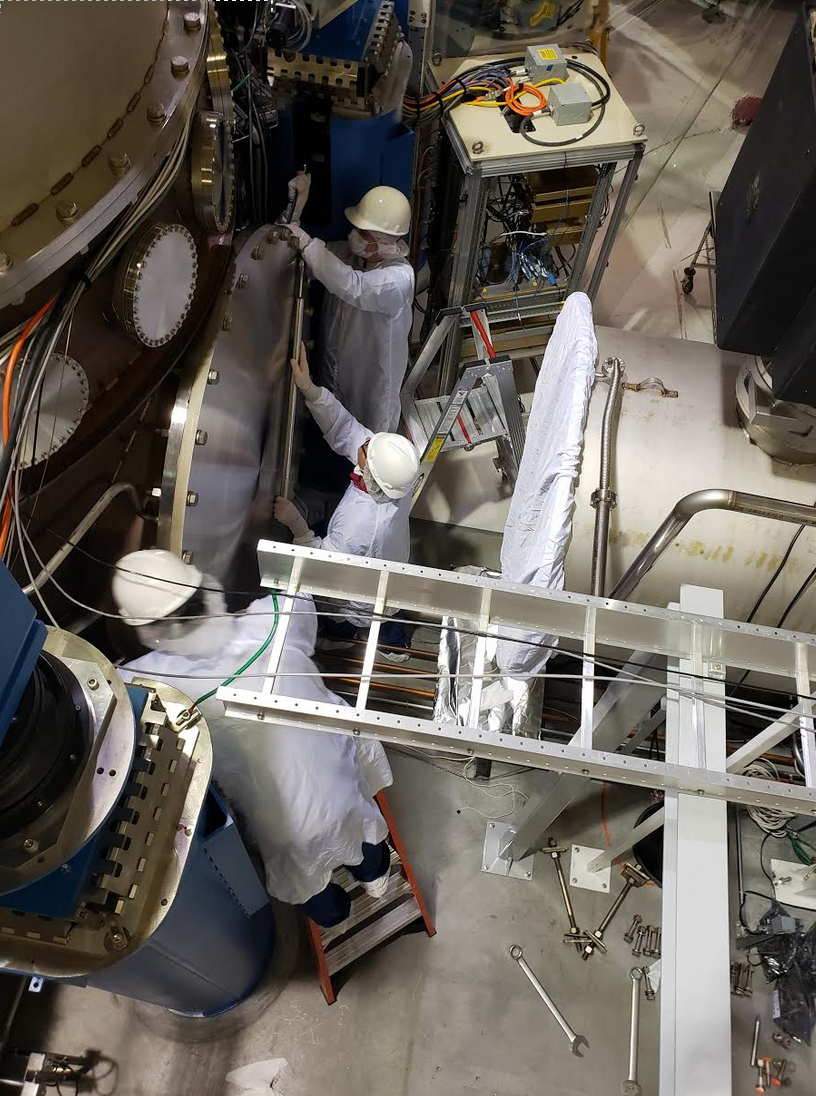
Note, Kyle, Gerardo, Tyler, and Rahul doors off by about 10am this morning, Hugh and TJ were on lockers shortly after and the SQZ team went in for some pre measurements before lunch.
I restarted the control room FOM to display the new CDS overview.
Added 100 mL to the crystal chiller. Filters look okay.
Ops Shift Transition: 10/02/2019, Day Shift 15:00 – 23:00 (08:00-16:00) - UTC (PT)
State of H1: Planned Engineering
Intent Bit: Commissioning
Weather: 0-5 mph wind
Primary 0.03 – 0.1Hz: 0.01 um/s
Secondary 0.1 – 0.3Hz: 0.1 um/s
Outgoing Operator: None
Quick Summary: Quiet morning, no early engineering work started yet as far as I know (maybe door crew in the LVEA).
J. Kissel I've confirmed that all activity has ceased in the LVEA (End-VEA activity was done early this afternoon), with all work planned completed for the day. [Last person out was Gerardo, whom got a jump start on replacing the PT-110 Vacuum Gauge on top of HAM6; aLOG pending.] The SQZ laser has been keyed OFF by the 532 nm Fiber Measurement Team. High voltage for components in and around HAM6 remain ON.
Took advantage of the quiet time at the end of the day to change the gauge at top of HAM6. No problems to report during the installation of the new gauge.
Issue report per FRS ticket 10750, gauge still needs further testing to close such ticket.
Serial number of gauge removed 168.
Serial number of new gauge installed 217.
Logged into h0vaclx and set the units and trip points through the CoE parameters.
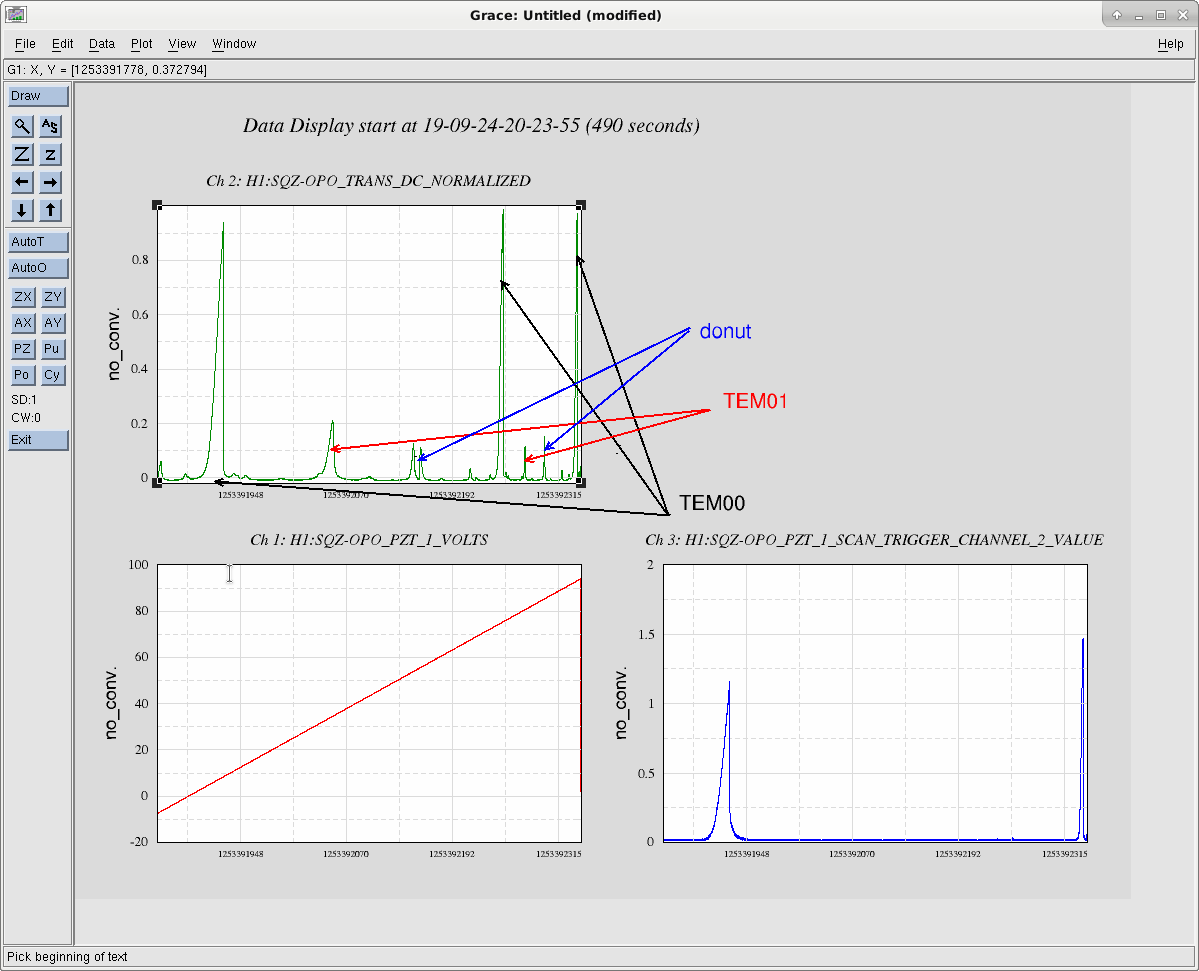
While trying to scan the higher order modes in the OPO the green trans camera wouldn't show any beam. The camera turned out to be misaigned. This was fixed with a short incursion into SQZT6.
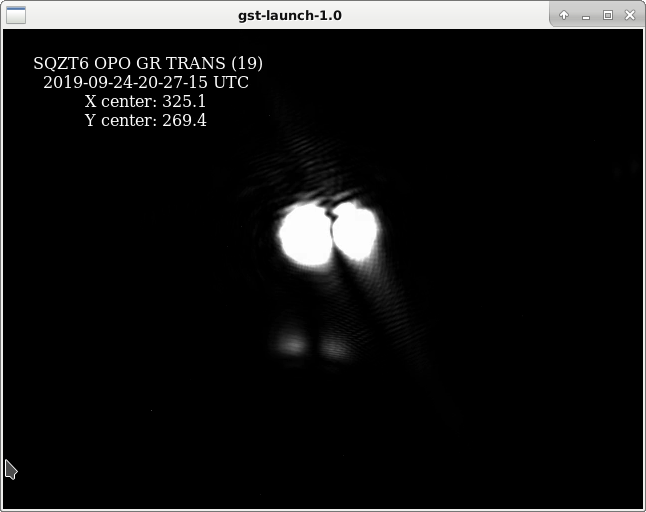
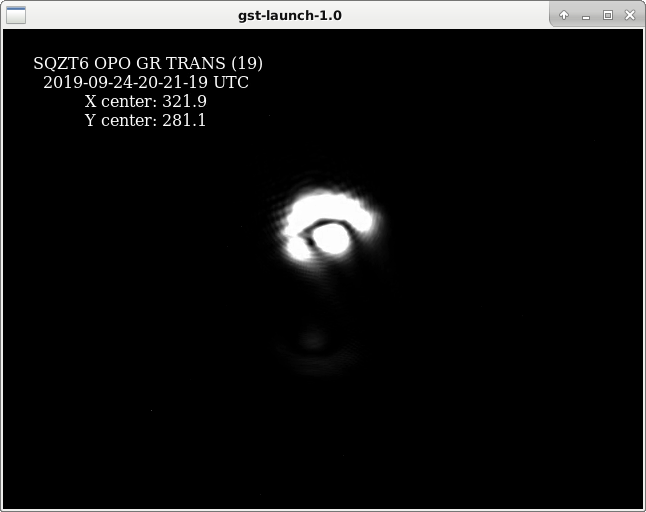
The plot below shows a typical scan. The next 3 snapshots show a TEM00, TEM01 and donut mode resonances, respectively.
The donut mode always seems to have an amplitude around 12-14% of the carrier, whereas the TEM01 mode seems to be larger at lower PZT values. The highest I observed was 25% (near 0V at the PZT) and the lowest around 10% (near 100V PZT offset). In the center of the range the TEM01 seems to be around 15%-20%.
I tried to verify this by locking at different carrier PZT offsets. With 23.3mW at the fiber launch point, when locked at -7V offset the transmitted power was at 89%, When locked at 49V or 92V, the transmitted power was both at 96%. So, at the very low end we seem to loose about 7% in the build-up power. Even so the trend is the same as with the scan results, it doesn't agree very well numerically.
Lookig at the trends in the last plot, we can see that the launch power as well as the OPO reflected green power has started to increase around mid August, while the transmitted power was kept constant. The reflected power has increased by about 50%, whereas the launch power increased by about 25%. This looks like the fiber has started to degrade again.
I check the actual volatge put out by the PZT driver. If you ask for 100V it will output 100V. However, the readback is about 5% short of this. Looking at the schematics, the monitor is a resistive divider 240K/12K that is directly fed to a Beckhoff terminal. From experience the later has about 250K input resistance.