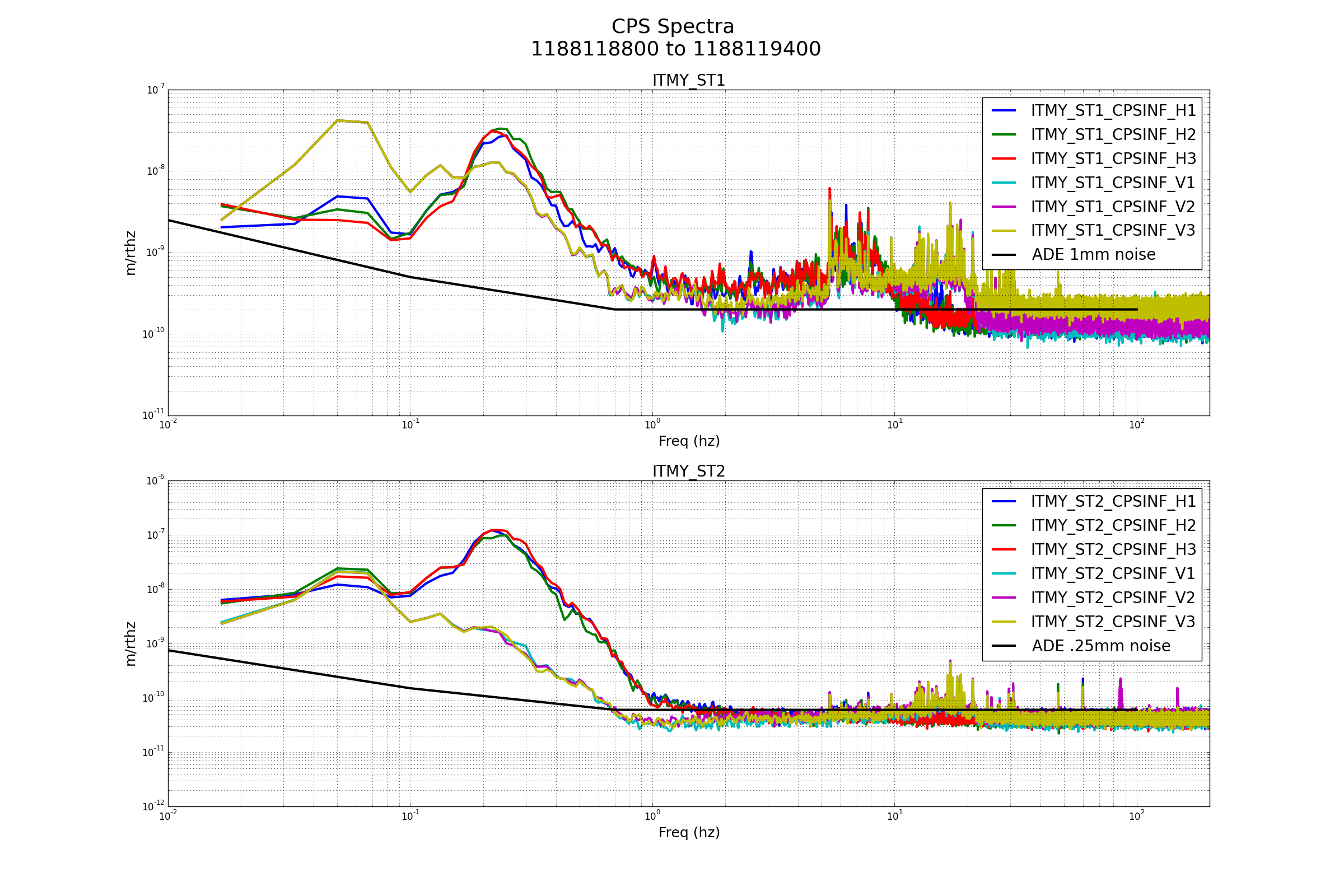
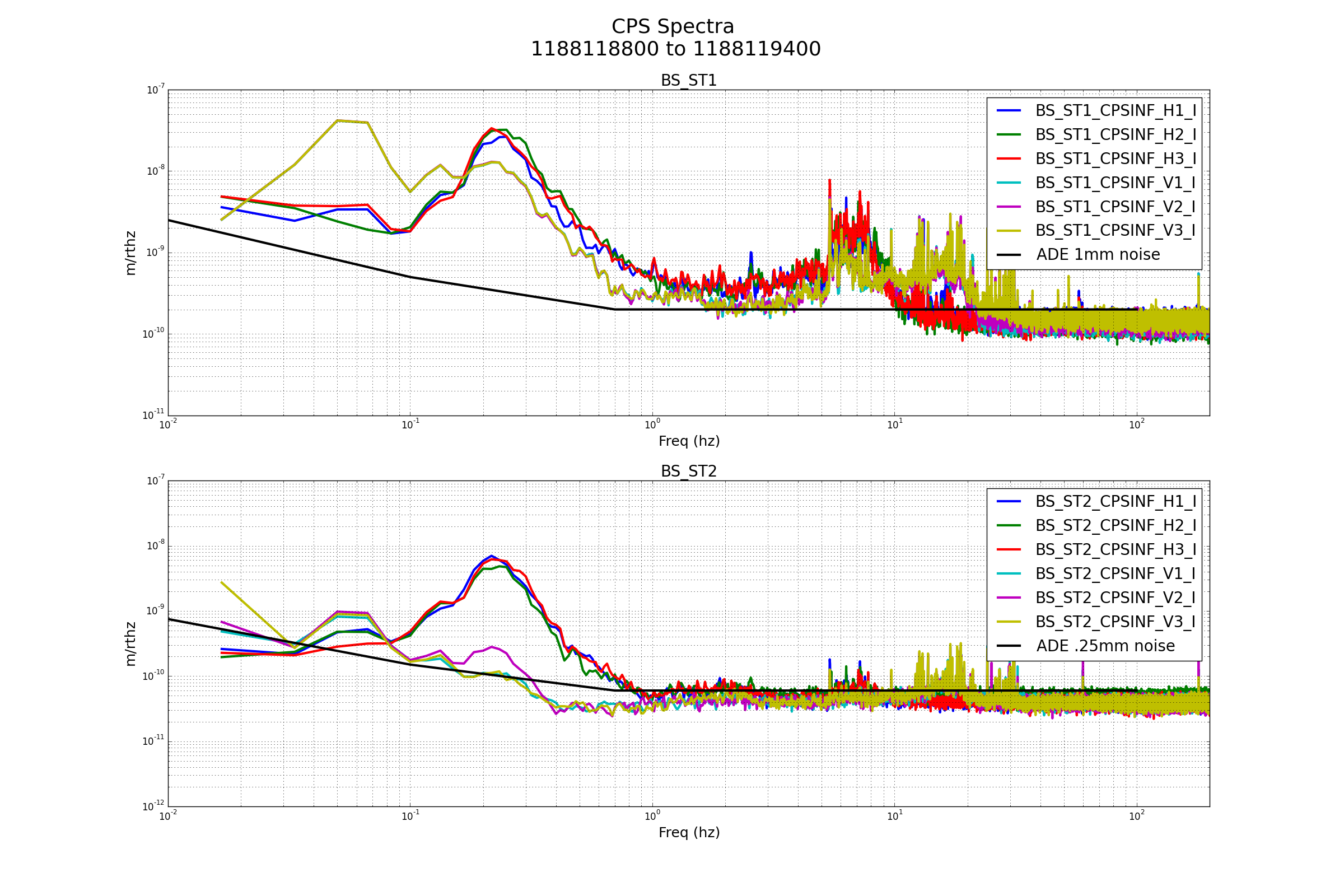
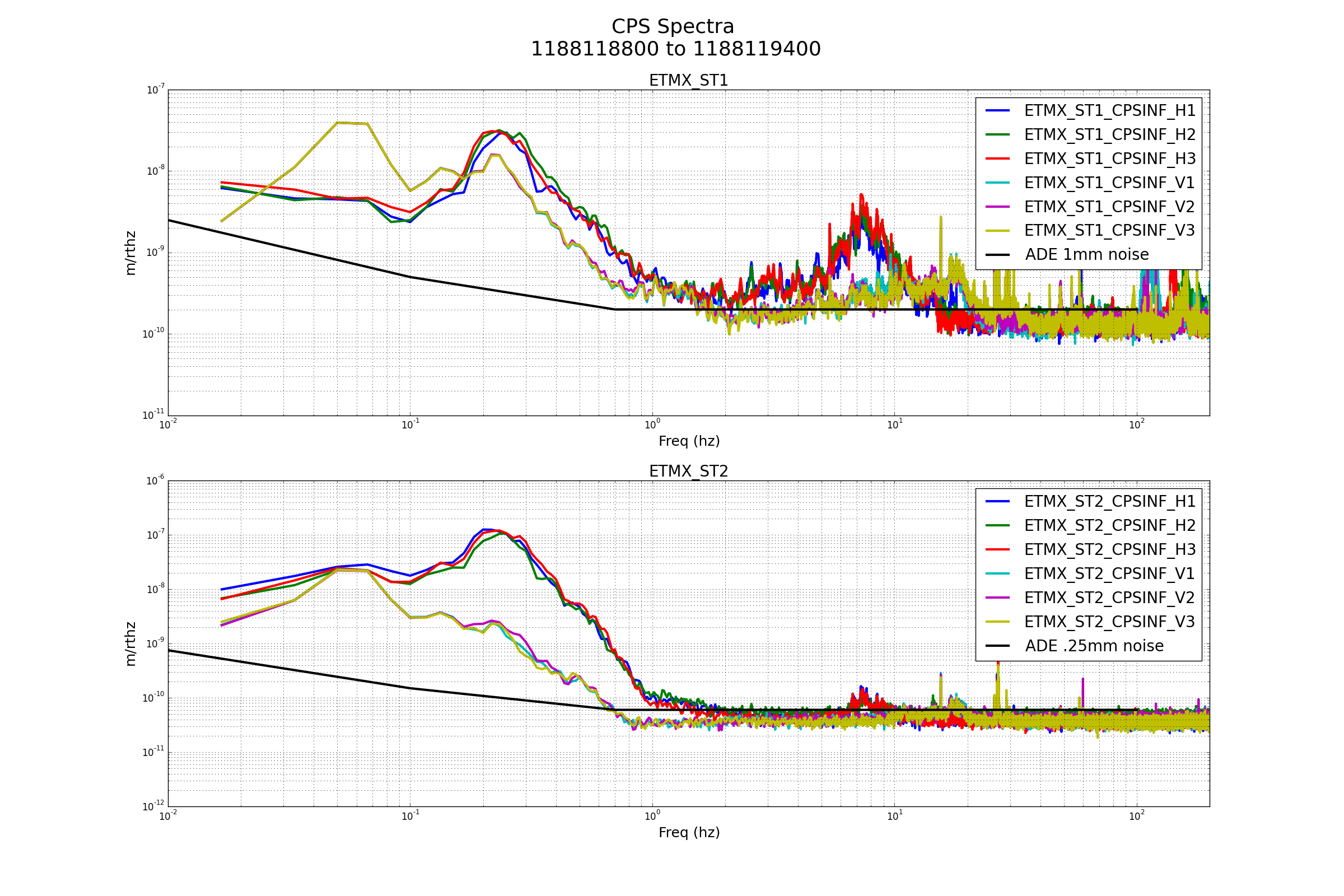
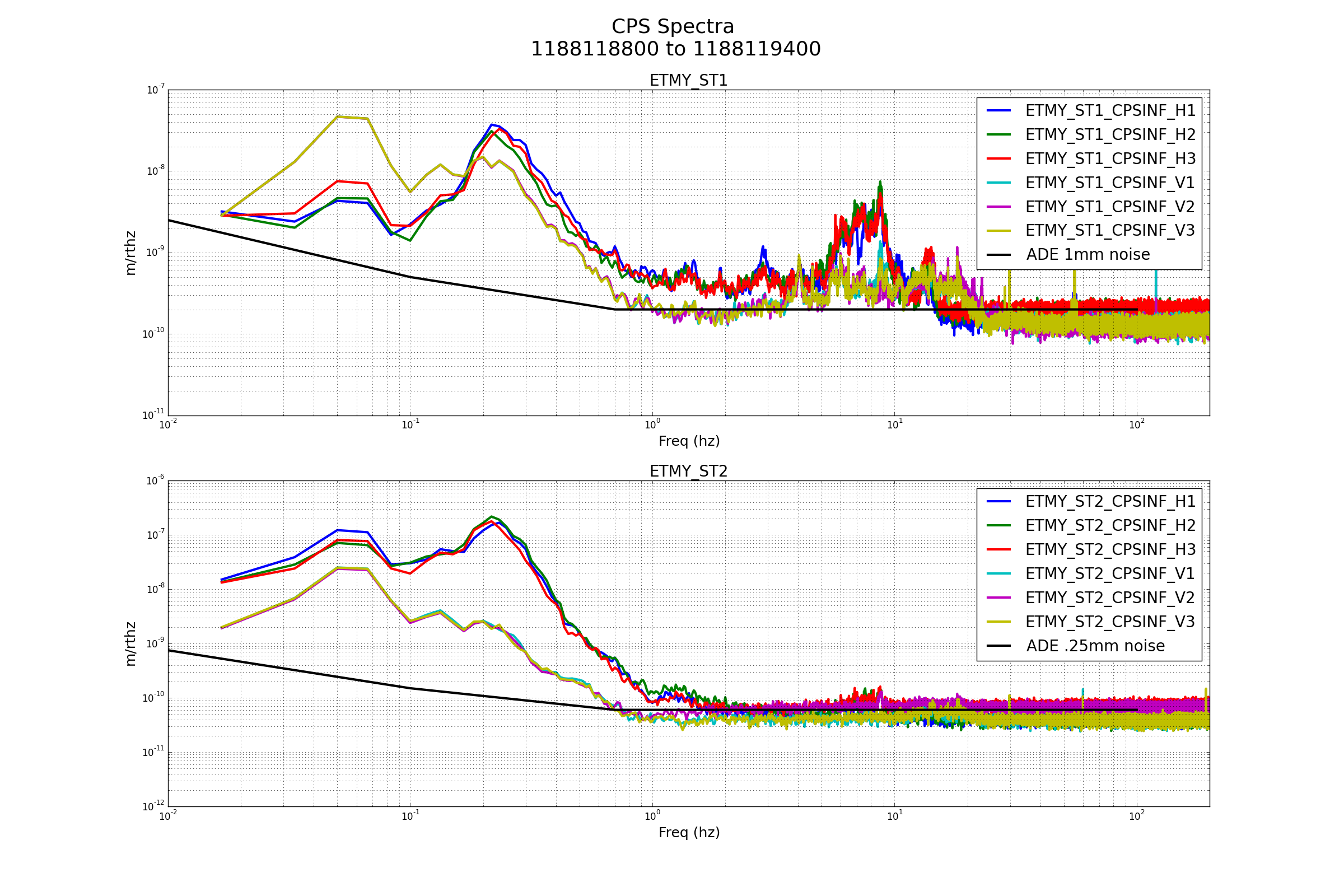
753 channels added. 8 channels removed. List attached.
I went back to EY again this morning and was successfully able to recenter BRSY this time. Because I was still a little sore from yesterday, I rethought my positioning at the viewport for the adjustment. I used the yellow stool from the ISC table and some foam to make myself a comfortable bench to lie down on and used the side of the stool to support my elbows. I also moved the workstation to the floor so I could see it more easily. Much better than curling up as small as I could, cross-legged on the floor for hours at a time.
Two things I still wish I had for this : a tablet or laptop that I could see the diagnostic plots on in the box so I didn't have to turn away from the viewport and a couple of padded c-clamps that I could use as wrist rests. I had one on the right side (this is clamping down the table for a co-located sts2) and my left shoulder is sore, I think from a combination of holding my left arm up and looking left continuously to see the diagnostic plots. Not a big deal for a couple minutes, but if you're camped out for a couple hours...
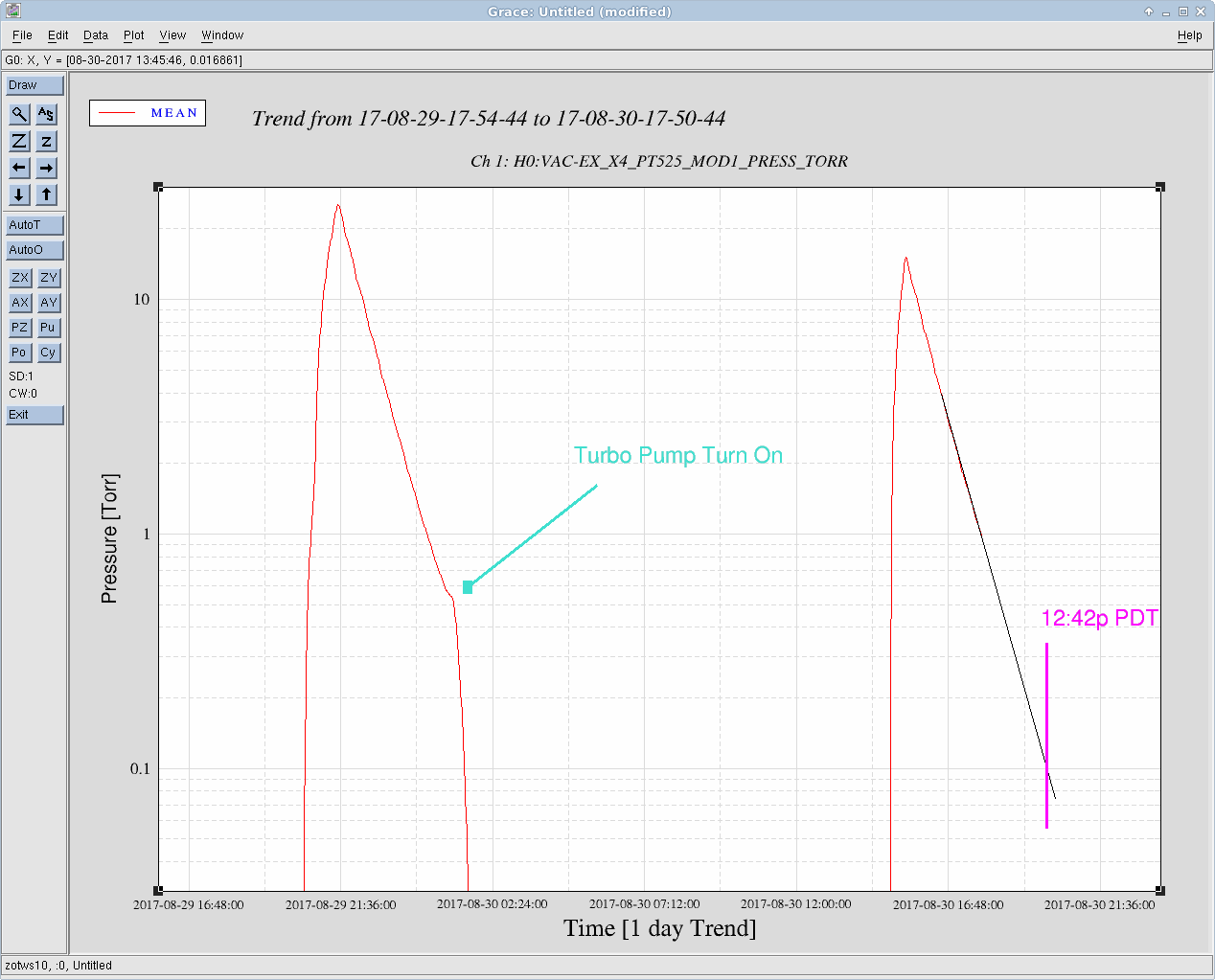
J. Kissel, N. Mavalvala, K. Ryan, D. Sigg We've successfully completed the second cycle of the Test Mass Discharge System on H1 SUS ETMY (BSC9/BSC5). Operation went much more smoothly today that yesterday. We were open to the chamber sending ions in by 08:00a PDT, and valved out by 08:30a PDT. We decided only to go up to a BSC chamber pressure of 15 [Torr], partially due to person-power constraints, but mostly because the bulk to the ion neutralization happens when the TMDS is first valved in; as more clean air is in the chamber, the ionic mean free path to the test mass decreases. This should also help us a little on pump-down time. All other settings were identical to what worked well yesterday (see LHO aLOG 38430): - clean air flow rate of ~70 [L/min] (or "slm") - ion "current" (voltage) occasionally measured by the electrometer with high-amplitude square wave (12Vp amplitude) of +/- 8 [V] - pressures inside the TMDS of ~100 [Torr] as measured by the baratron Attached are the raw notes (but they're not very exciting -- just 4 measurements of the ion "current" during the 1/2 hour discharge cycle). Based on the current pump-down rate, we expect to perform our third and final cycle around 01:00p PDT today.
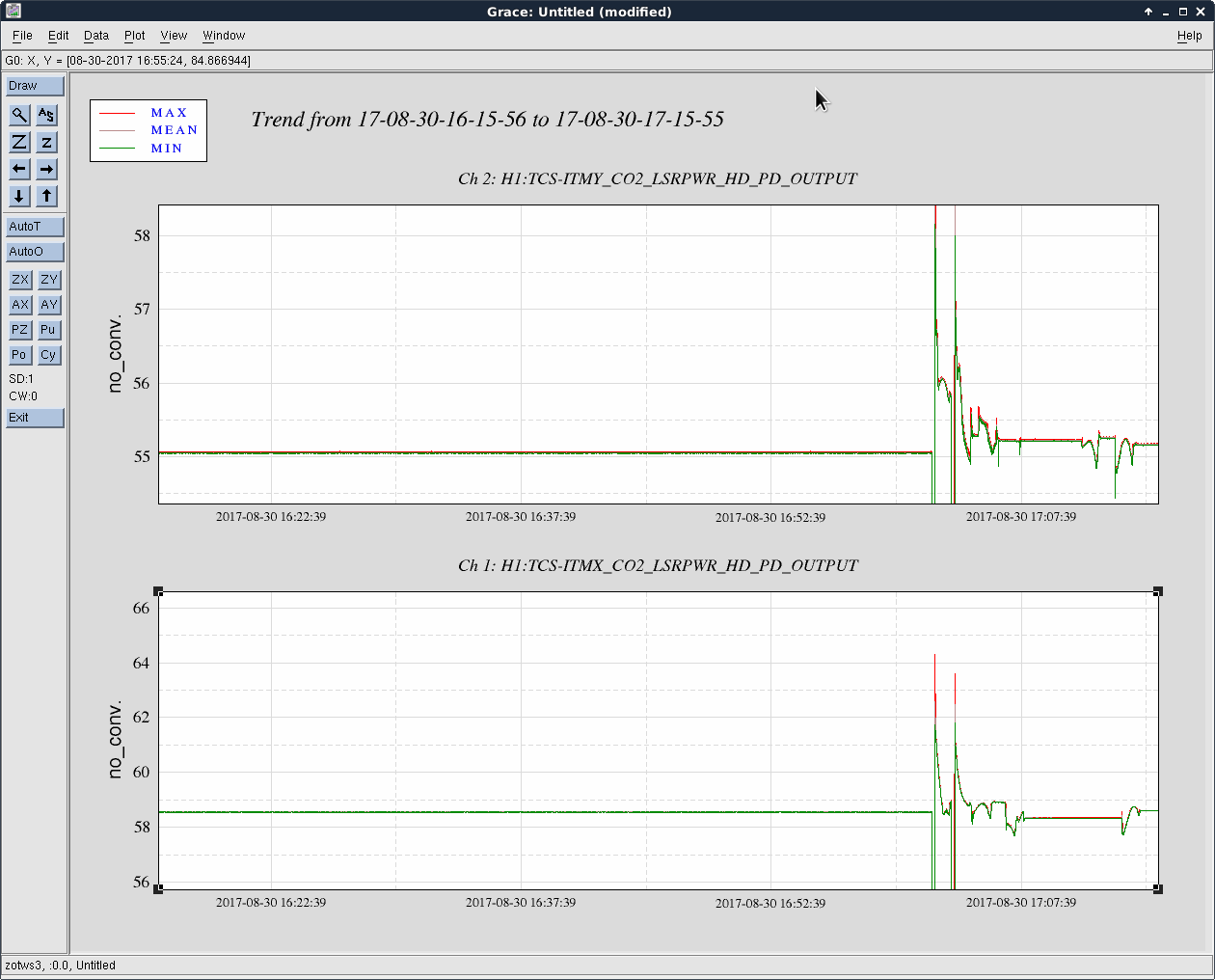
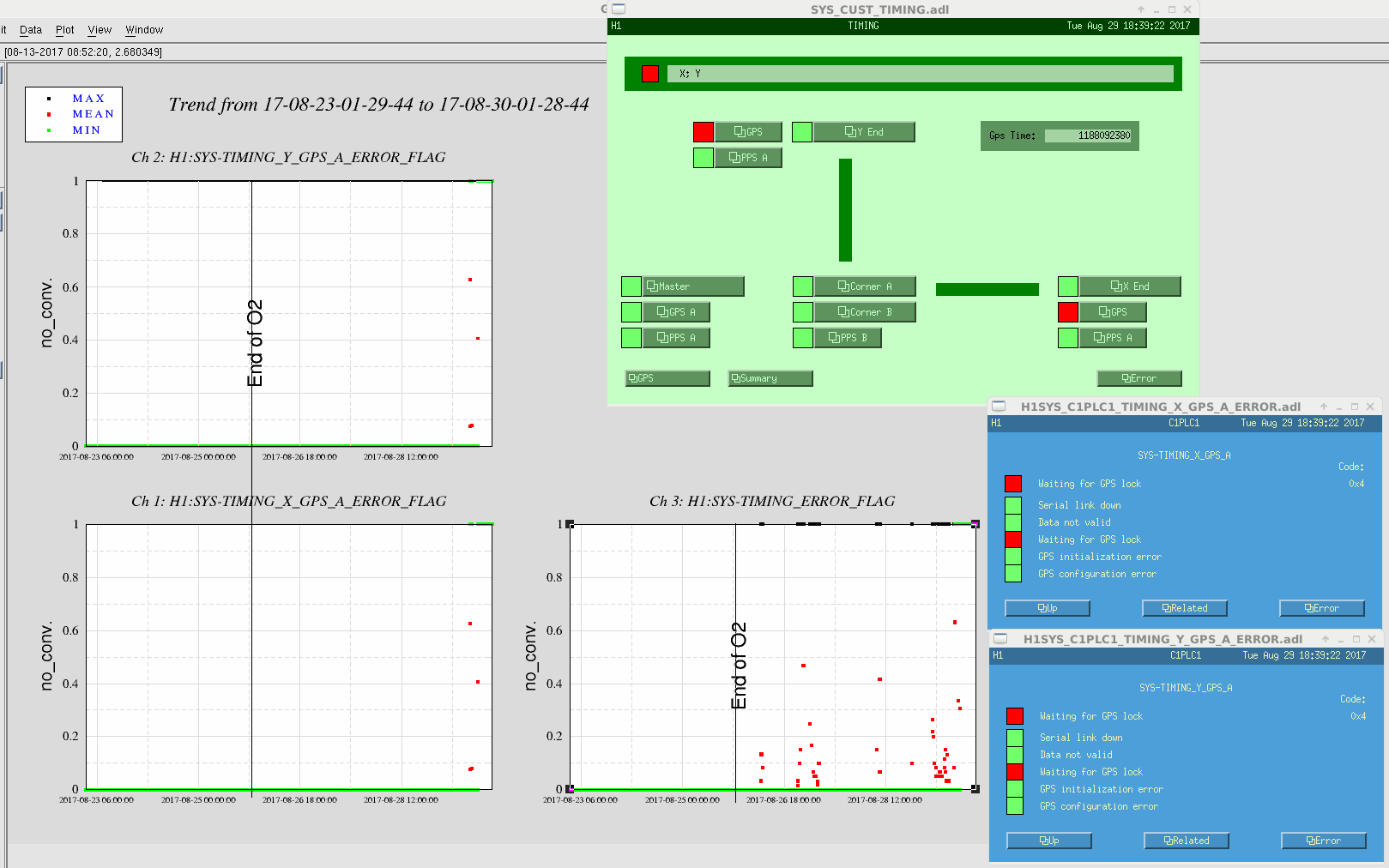
Received "TCSX [& Y] CO2 laser output off" Verbal Alarms at 1702utc. (this was followed by a timing system error Verbal Alarm for SYS-TIMING_C_GPS_A_ERROR_FLAG).
Attached is a 1-hr trend of the TCS CO2 lasers which show a glitch, but are still close to the powers they had been running at.
yesterday at 10:00 PDT I modified h1susey's BIOS setting for 'Power Technology' from 'Max Performance' to 'Disabled'. The CPU usage of several models subsequently ran about 1uS longer showing the setting was indeed changed. The hope was that this would stop the occasional IOP model glitching, where we see either a transient ADC error (STATE_WORD=4) or a combined transient ADC and Timing error (STATE_WORD=6).
Trending SUS-EY IOP STATE_WORD (listed below) shows glitches after this change was made. I am masking out the upper bits of the STATE_WORD, only showing the first 3 bits to remove reporting on Overflows. EX glitches are also shown for comparison as an unmodified machine.
h1iopsusey STATE_WORD:
Aug 28 2017 17:17:42 PDT 6
Aug 29 2017 05:57:42 PDT 6
Aug 29 2017 08:12:42 PDT 6
Aug 29 2017 08:13:42 PDT 6
**** BIOS Modified 10:00 PDT
Aug 29 2017 13:50:42 PDT 6
Aug 29 2017 13:51:42 PDT 6
Aug 29 2017 14:23:42 PDT 4
Aug 29 2017 14:24:42 PDT 4
Aug 30 2017 03:23:42 PDT 6
Aug 30 2017 03:24:42 PDT 6
Aug 30 2017 05:36:42 PDT 6
Aug 30 2017 06:25:42 PDT 6
Aug 30 2017 06:26:42 PDT 6
Aug 30 2017 07:24:42 PDT 6
h1iopsusex STATE_WORD:
Aug 28 2017 21:28:42 PDT 6
Aug 29 2017 17:19:42 PDT 6
Aug 29 2017 17:20:42 PDT 6
Aug 29 2017 18:43:42 PDT 6
Aug 29 2017 18:44:42 PDT 6
Aug 30 2017 00:00:42 PDT 4
Aug 30 2017 00:01:42 PDT 4
Aug 30 2017 00:44:42 PDT 4
Aug 30 2017 00:45:42 PDT 4
Aug 30 2017 05:20:42 PDT 6
Aug 30 2017 06:23:42 PDT 4
Aug 30 2017 06:24:42 PDT 4
Aug 30 2017 07:12:42 PDT 6
Aug 30 2017 07:13:42 PDT 6
Aug 30 2017 09:49:42 PDT 6
Aug 30 2017 09:50:42 PDT 6
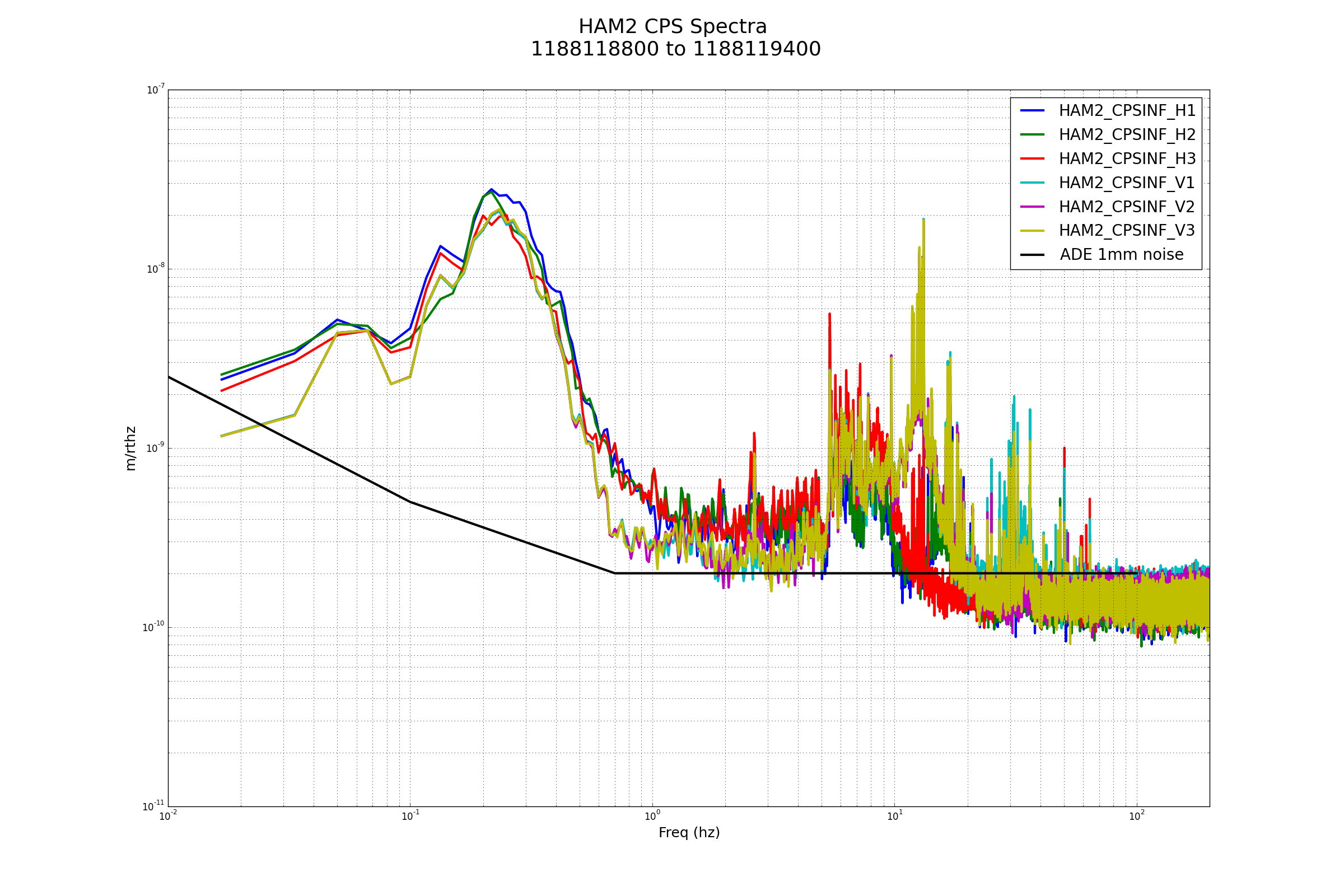
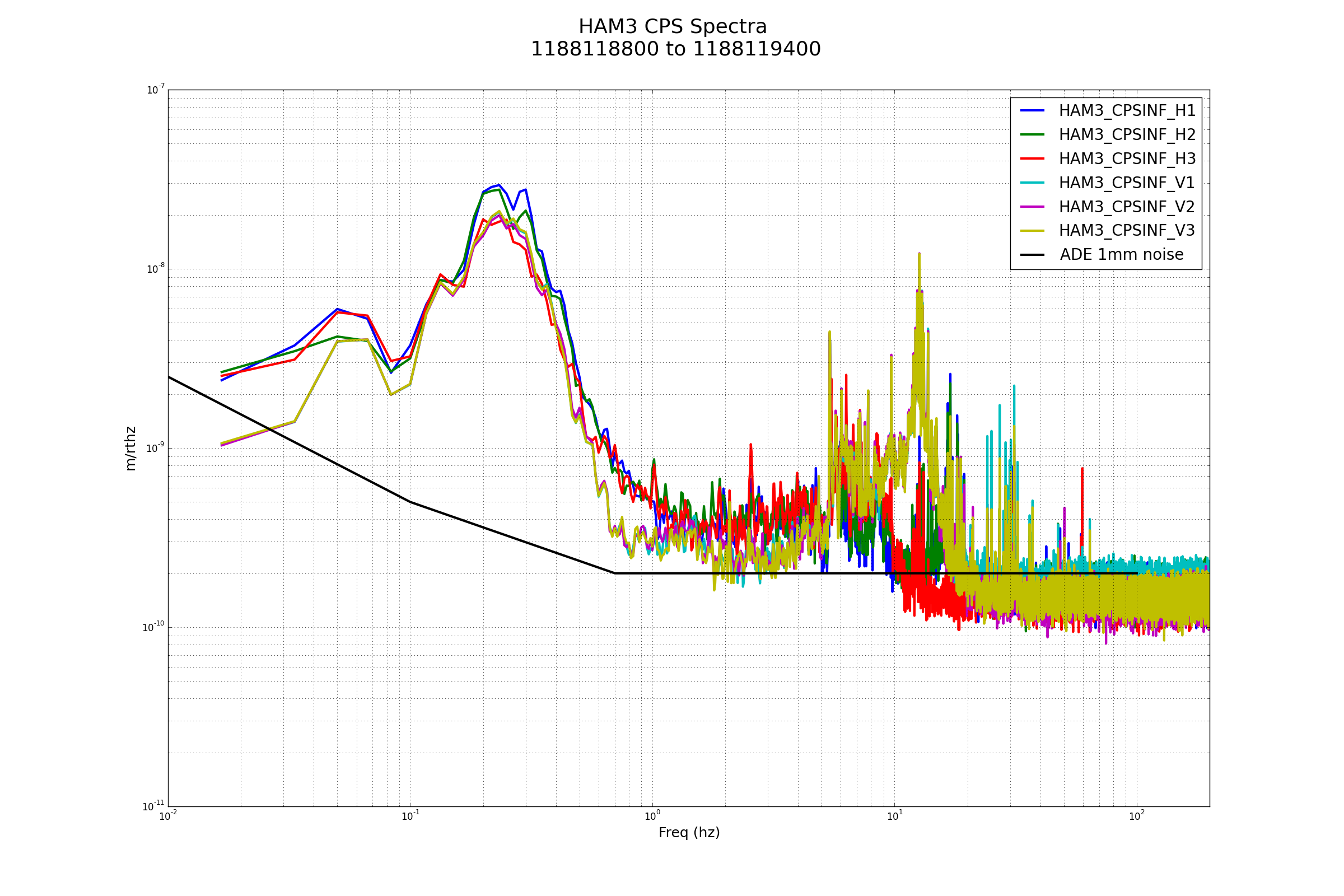
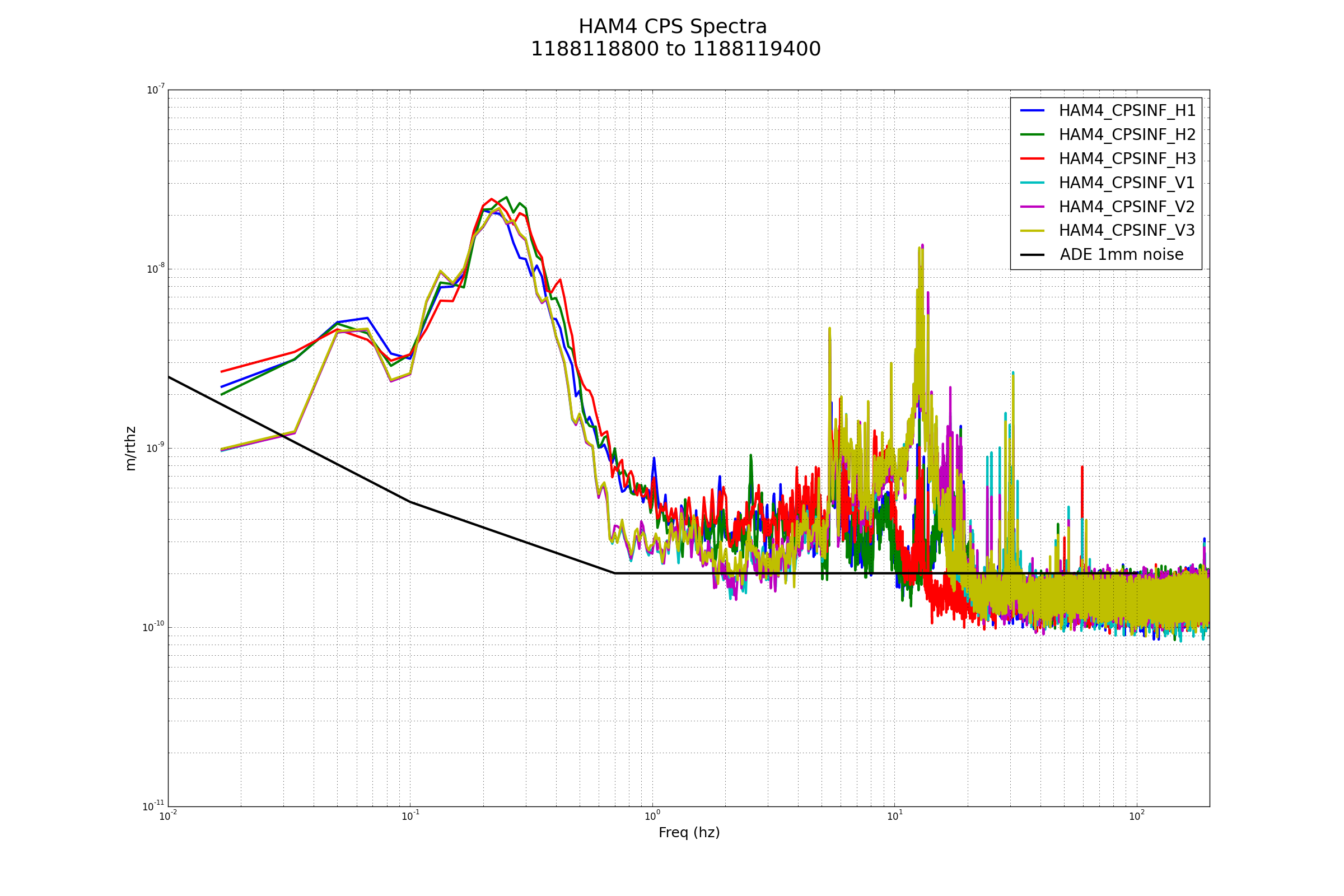
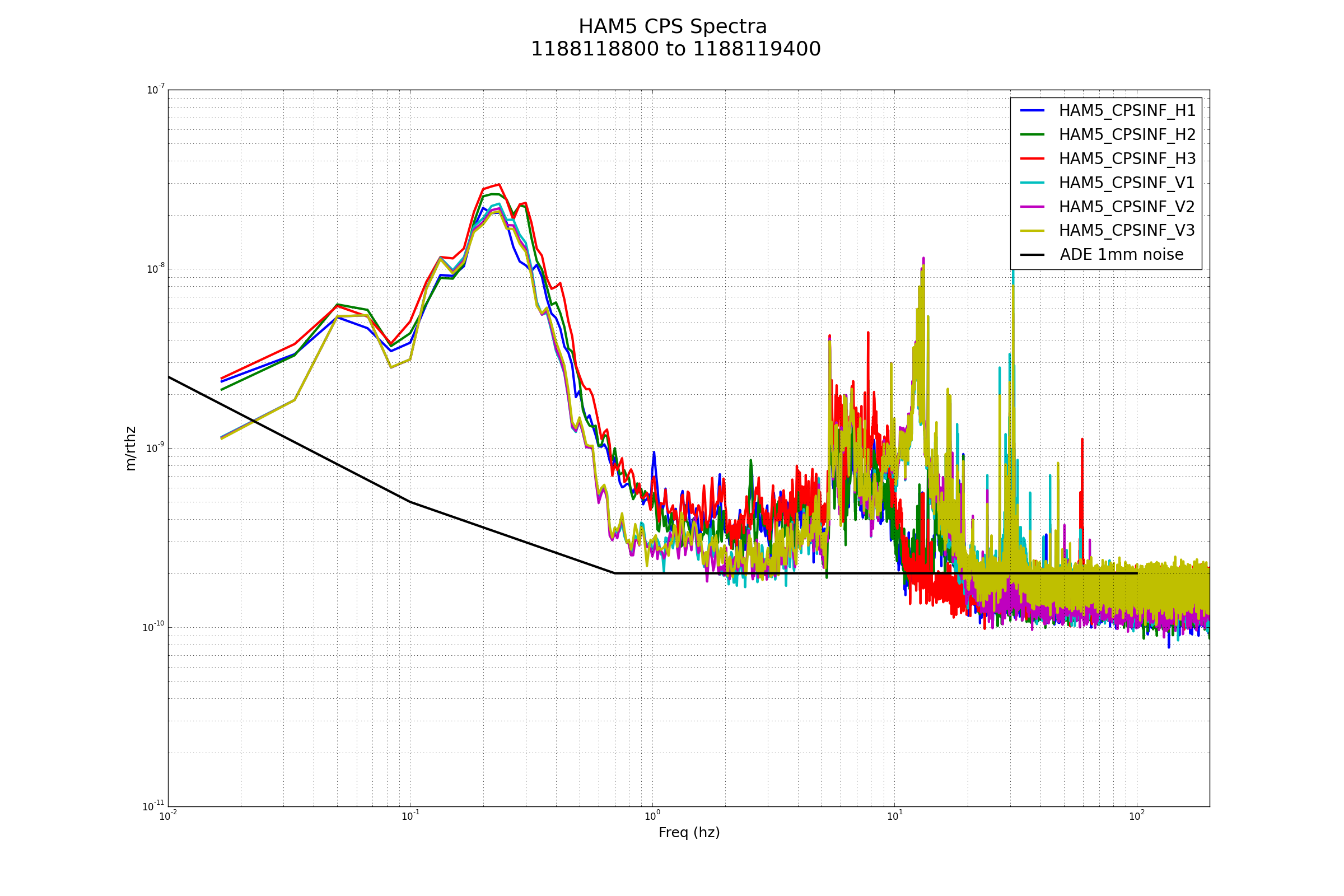
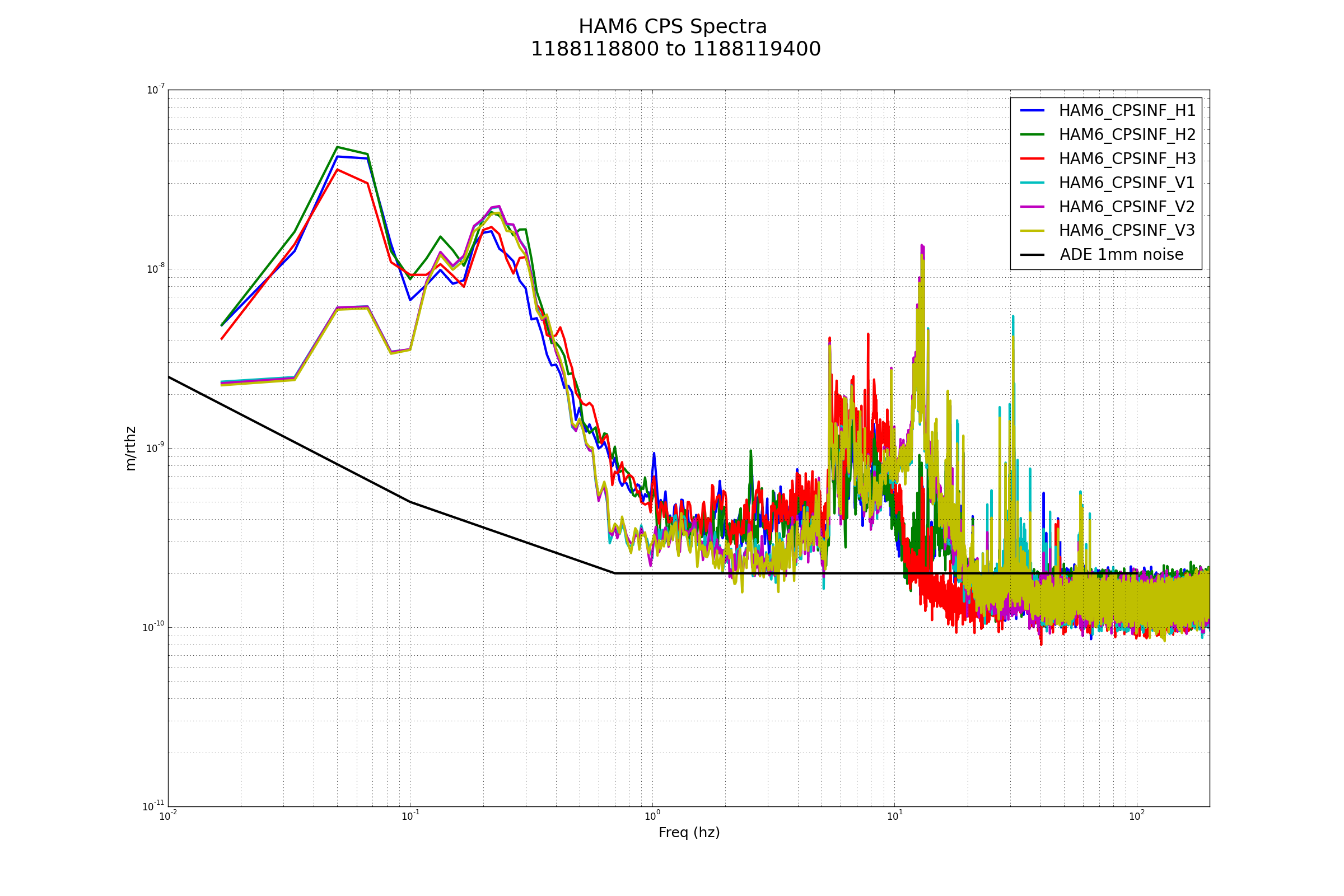
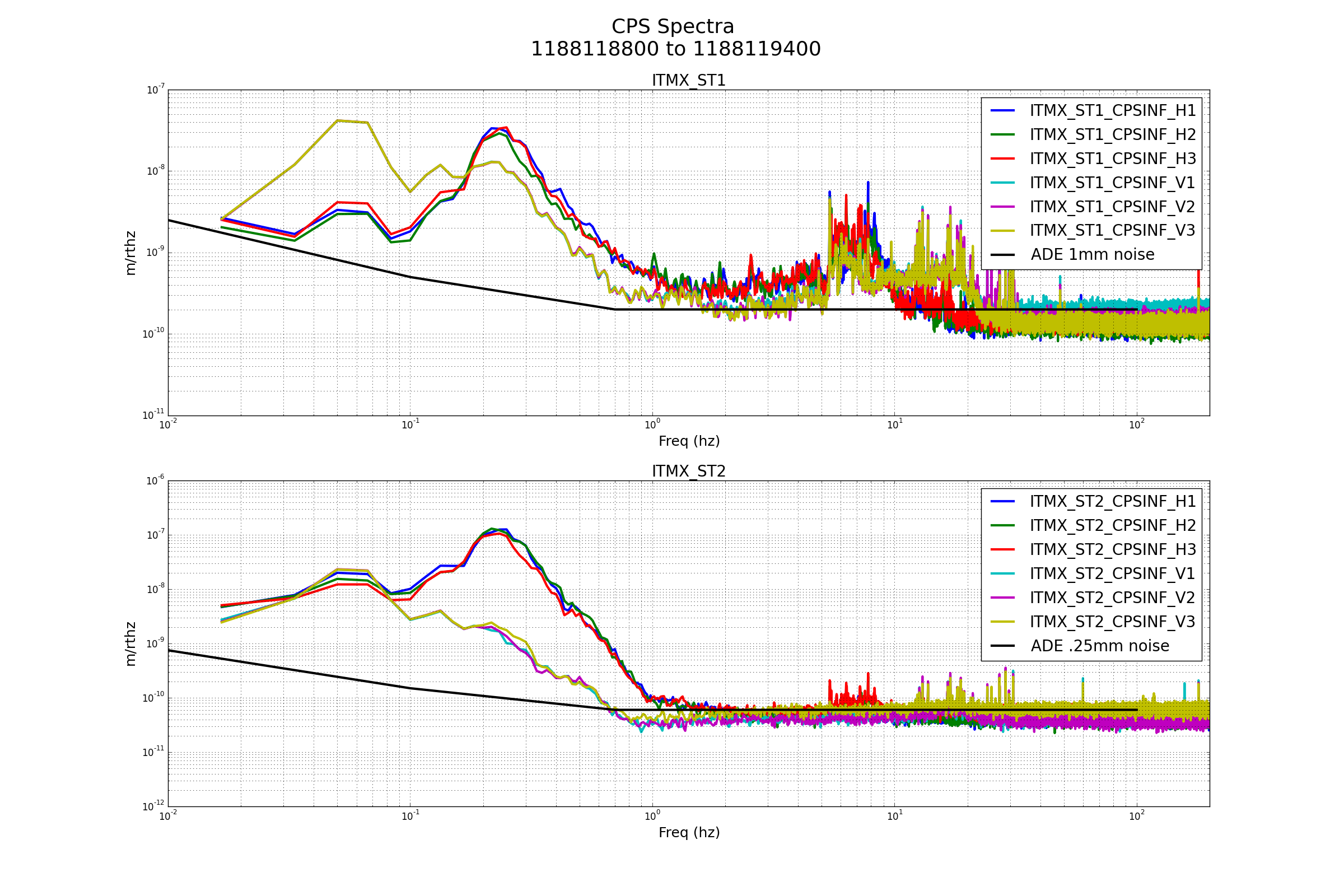
HAM CPS's: Do not see any high frequency effects worth noting. HAM CPS spectra attached.
TJ, TVo
We opened the CO2 laser tables to look at the direction of the picomotor actuation in order to confirm the ITM HWS orientation based off of aLOG-35336.
| Picomotor Counts Request | Actuation Screw Direction |
| +YAW | Clockwise |
| -YAW | Counterclockwise |
| +Pitch | Counterclockwise |
| -Pitch | Clockwise |
Comparing our results to Aidan's, we match in pitch but disagree in yaw.
The above table is true for both ITMX and ITMY (as expected). If correct, this means that the aLOG-35336 analysis of the point absorber would have a flip in the horizontal direction and would predict the point absorber is on the lower right of ITMX as viewed from the BS. We will double check this with Aidan.
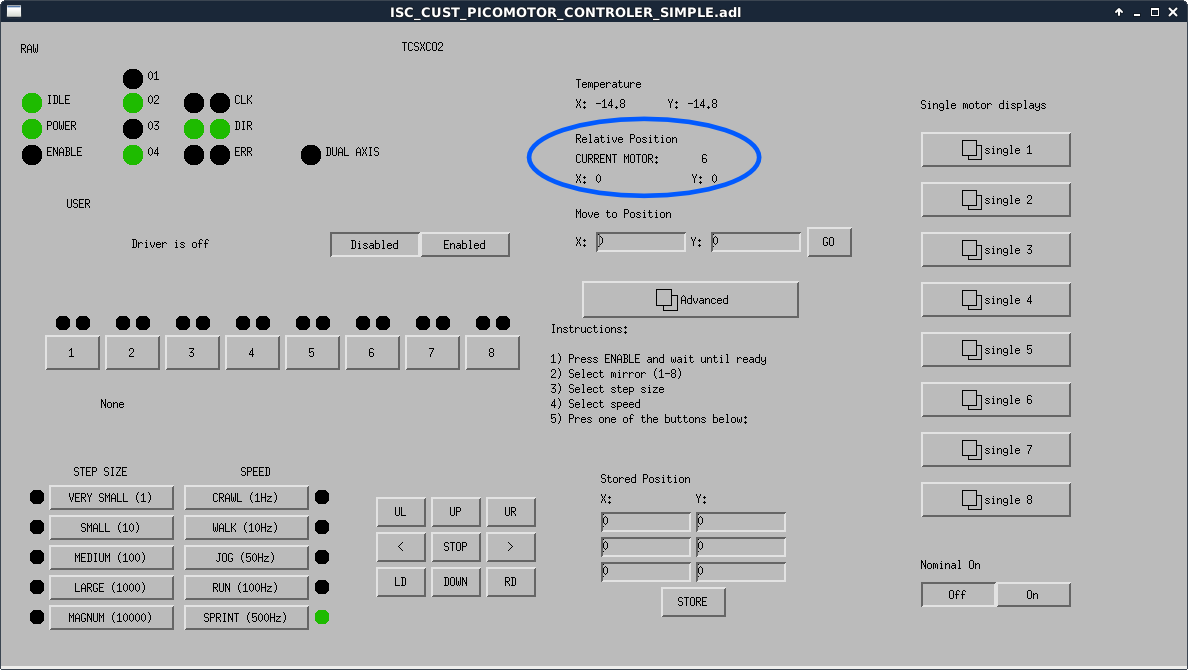
Edit: To clarify what I mean by "Picomotor Counts Request", I only used the readback from the channels denoted in attached screenshot by a blue ellipse:
H1:SYS-MOTION_C_PICO_F_CURRENT_X_POSITION & H1:SYS-MOTION_C_PICO_F_CURRENT_Y_POSITION
where X-axis is referring to YAW & Y-axis is referring to PITCH.
Is it possible to have this changed in software? I would think it'd be more consistent if clockwise was adopted to be the + direction for both yaw and pitch, rather than having to remember that it's positive for one and negative for the other.
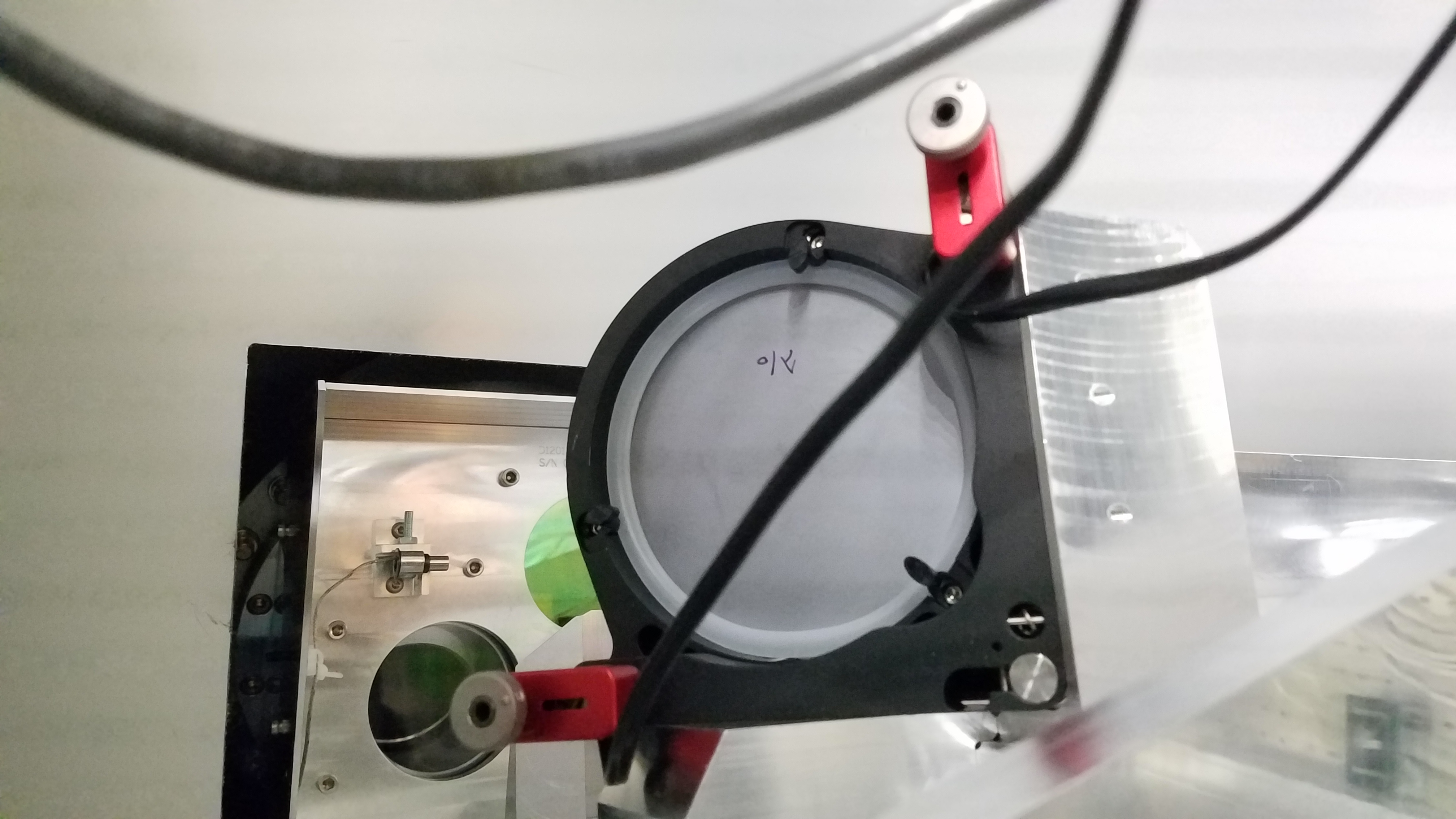
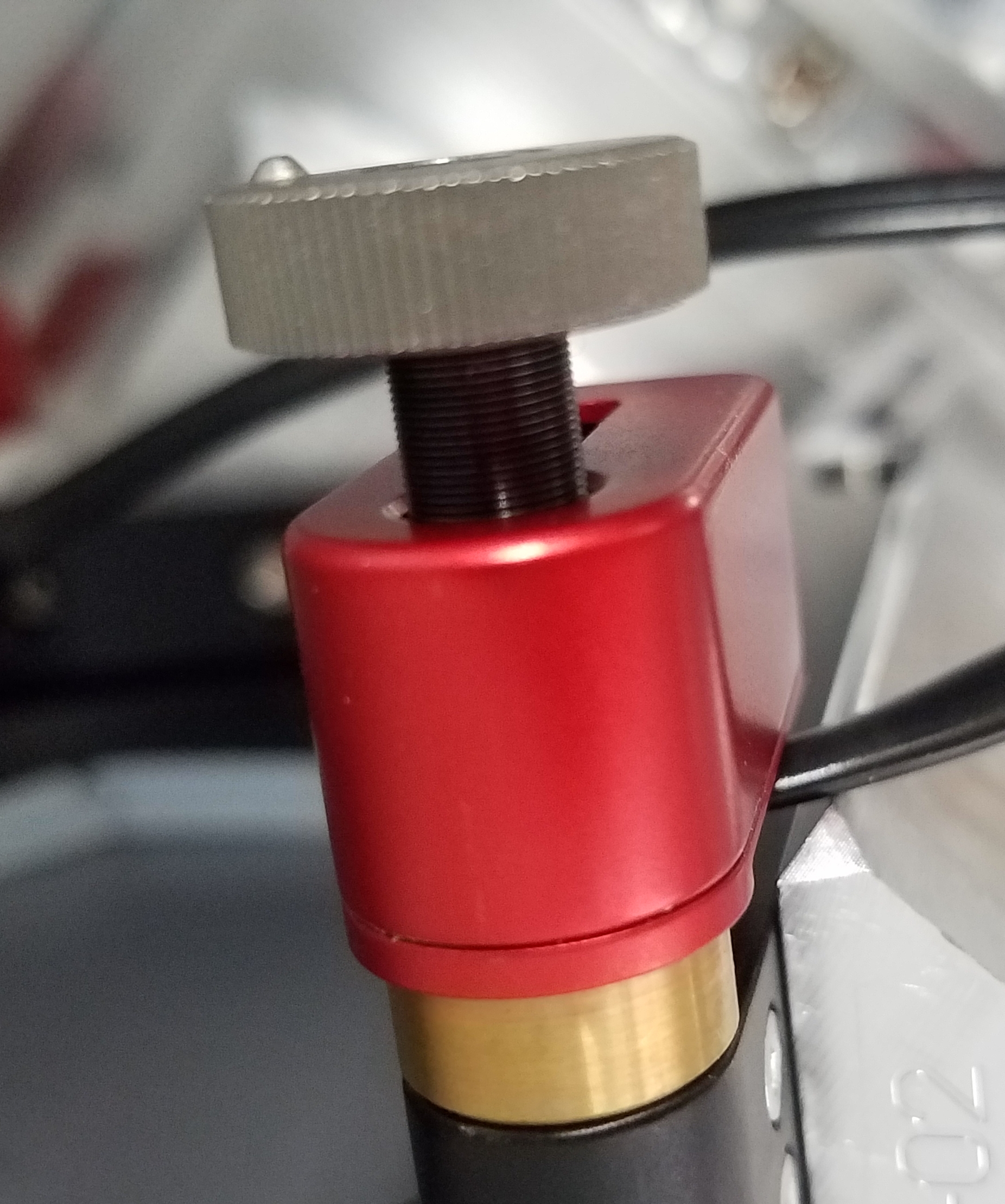
Here are a few pictures and a link to a video of the knobs moving with our audio.
Video: LIGO-G1701750
1st attachment: Wide view of steering mirror
2nd: view if threads. These appear to be standard and not reversed.
TITLE: 08/30 Day Shift: 15:00-23:00 UTC (08:00-16:00 PST), all times posted in UTC
STATE of H1: Commissioning
CURRENT ENVIRONMENT:
Wind: 5mph Gusts, 4mph 5min avg
Primary useism: 0.17 μm/s
Secondary useism: 0.11 μm/s
QUICK SUMMARY:
Note left for work at EX: 14:33 (7:33amPDT) TMDS work continued (Nergis, Kissel, Sigg, Kyle)
See Chris in LVEA working around HAM6.
On Verbal Alarm had a few alarms since end of DAY shift yesterday:
DIAG Main Message:
Daniel just walked into Control Room at 15:42 (8:42amPDT) to say they've burped & are now pumping down. Will perform another burp around 1pm.
J. Kissel, D. Sigg, K. Ryan, N. Mavalvala TMDS Operations resume. We've head to the X end station at ~14:33 UTC / 07:33 PDT.
Ionized dry air admitted until X-end pressure reached ~30 torr. This was then followed by pumping to rough vacuum. I am leaving the pumps valved-out overnight. The plan is to begin the second cycle the first thing tomorrow morning provided enough dry ice is left from today.
We started having timing errors about 10 hours after the conclusion of O2, and today we started having end station timing errors at the same time at around 16:30 UTC or 9:30 local time. It seems like the end station witness GPS units are not locked.
The GPS timing error is due to a change of the default mode. LLO uses Position Hold, whereas the LHO units are configured for 3DFix. We need to reconfigure our GPS units to use Position Hold. Bottom line: GPS units work fine.
(Daniel Patrick)
We updated the corner EtherCAT software which now includes the squeezer code (PLC 4). We also added the additional EtherCAT NIC and the Anybus gateway (in corner 2) to the system configuration. The PLCs are running again, but the squeezer code aborts with a divide-by-zero error. This needs more bug chasing.
The new squeezer chassis are not installed and all their hardware modules are disabled. Next week we will upgrade ISC corner 4 and 6,. That will add RF monitor channels for the SQZ WFS and the expanded RF distribution.
J. Kissel, N. Mavalvala, K. Ryan, D. Sigg, J. Worden Executive / Expert Summary: We've completed our first cycle of the Test Mass Discharge System. We ran into a little confusion when we first started with the TMDS valved into the chamber (around 13:30 PDT) because our clean air flow rate was too low (only ~30 [L/min] or "slm"). With that input rate, our electrometer readings of the ion flow were only ~+/-3 [V], and the pressure inside the TMDS (as measured by the Baratron) only read ~18 [Torr]. However, our patience drove us to investigate when the BSC chamber pressure only was increasing at a rate of [0.1 Torr/ 10 min]. After increasing the clean are input flow rate to ~70 [L/min], we were able to reliably put in +/- 7.5 [V] (we were not able to get as high as the design value of +/- 13 [V]), and pressure in the TMDS came up to near the desired value, around 95 [Torr] (desired value is 120 [Torr]). However, even with ~70 [L/min] of ionized gas going into the chamber -- it took us twice as long (about an hour) to reach the desired BSC chamber pressure of 30 [Torr] -- because we have two BSCs worth of volume (BSC9 and BSC5) (obvious in retrospect!). After completing the first cycle (by 14:30 PDT -- note, twice as long, LLO only took ~1/2 hour to get that high), we're now pumping on the two-chamber volume with the QDP80, but it'll likely also take twice as long. We're going to continue to monitor the pressure into the evening, with the hope to get another cycle in tonight. If not -- two cycles tomorrow, one starting first thing in the morning the other mid-afternoon. Right now we're suggesting that gate valves will be open first thing Thursday (but we may get there faster). Details The documentation that proved to be most helpful: T1500057: -v2 of Rai's procedure for operating the TMDS, and associated documentation uploaded from S. McCormick and R. DeRosa's using of the TMDS at LLO. E1500252: Video of Calum and Ben running the TMDS system (valved out of chamber) T1400713: "Final" Design Documentation, Figure 1. Changes in the system since the above documentation: - The electrometer and ion generator are all powered from the TMDS interface, D1500152, and connected to the electrometer and ion generator as shown in LHO aLOG 38358 - Not included in the "final" design Figure 1, but included in Rai's hand-drawn diagram in T1500057 is a temperature controlled heater that's re-heating the clean input air to room temperature after being cooled and filtered by the cold trap. With the input clean air as low as we started out, at 30 [L/min], we did not need to use the heater. However, once we increased the flow rate to 70 [L/min], Future User Guidance (as gleened from documentation and use of the system by Daniel and Nergis): - Step 12 of T1500057 is the most exciting part, and the paragraph is pretty loaded. One of the more important sentences is "Reduce the amplitude of the square wave [fed to the electrometer] to 2 Vpp, and leave this value for most of the filling. Occasionally raise the square wave voltage to 25 Vpp and note the +/- ion current." What Rai's elluding to: The electrometer is measuring the ion current (converted into voltage by a resistor). However, the higher the amplitude of square wave, the more ions are being sucked into the electrometer to be measured. That means less ions are getting into the chamber. So, one should - Before the TMDS is valved into the chamber, constantly "measure" the ion current (once at the desired clean air input flow rate) with a high square wave amplitude (say the max, 25 Vpp), while turning up the HV VARIAC knob, watching the HV readback of the ion generator to ensure you're just at the border line of major distortion of the HV waveform (some small amount of distortion is OK -- we want the most amount of ions going into the chamber as possible). The ion current (voltage) from the electrometer should show *roughly* equal +/- voltage. Both Ryan's results (see LLO aLOG 35636), and our experience shows that one cannot get a perfect balance; a deviation from perfect of ~0.5-1 [V] / ~10 [V] = 5-10% is OK. - Just before valving into the chamber, turn down the square wave amplitude to something low -- 2 +/- 0.5 [V] is fine, no need to be more precise. Once you've turned down the square wave amplitude, the measurement on the electrometer degrades, so you'll see a reduction of ion current (voltage), and likely the imbalance of +/- will increase or change. This is OK, you're just trying to back the electrometer out of the way, and let all the charged ions go into the chamber. - Now Rai's second sentence, and Ryan's data makes more sense. Every once and a while (every 10-15 minutes, or at your favorite increment of pressure), bring the amplitude of the square wave back up, and measure the ion current (voltage). This is just a double check, to make sure that your ion current is still balanced, and you're still sending in (roughly) equal number of positive and negative ions - Before doing anything, Kyle had turned off all high-voltage power supplies to anything in-and-around the chamber. Good. However, as a triple layer of precaution, we should also make sure that we're not requesting any digital high-voltage. As such, in the future, operators should - Bring the QUAD's ESD Bias Voltage to Zero - Reduced the requested Ring Heater power to Zero - Turn off any suspension alignment offsets (though it's nice to leave the suspensions damped -- don't forget about the TransMon / TMTS) - Turn off / disable the in-vac pico-motor control - Make sure that the transmon pico motors are disabled. - 4 Piezo controllers are on the ISCT EX / EY for the green WFS centering, and centering the green input onto the TransMon QPDs. Since these are external to the chamber, you don't *have* to turn them off, but we don't need them, so might as well.
Attached are the raw notes / timeline from today's work -- attempting to capture both vacuum information (i.e. like Scott's log) and the electrometer information (i.e. like Ryan's log) -- but because of the confusion with pump speed and electrometer "on/off" during the measurement, we only got ~2 readings of the ion "current" (voltage), so they're not really that useful. We'll take more useful / sensible measurements tomorrow now that we understand the system better.
The ESD and Ring Heater power supplies were de-energized and the Picomotor drives were disabled prior to the admission of gas. This was done during my preparations for this partial "vent" but was not conveyed to the TMDS folks. Also attached is a picture of the spring table support used to temporarily mount the Surface Discharge Ionizer to BSC9. This "contraption", along with the Ionizer. gets removed after the discharge exercise.
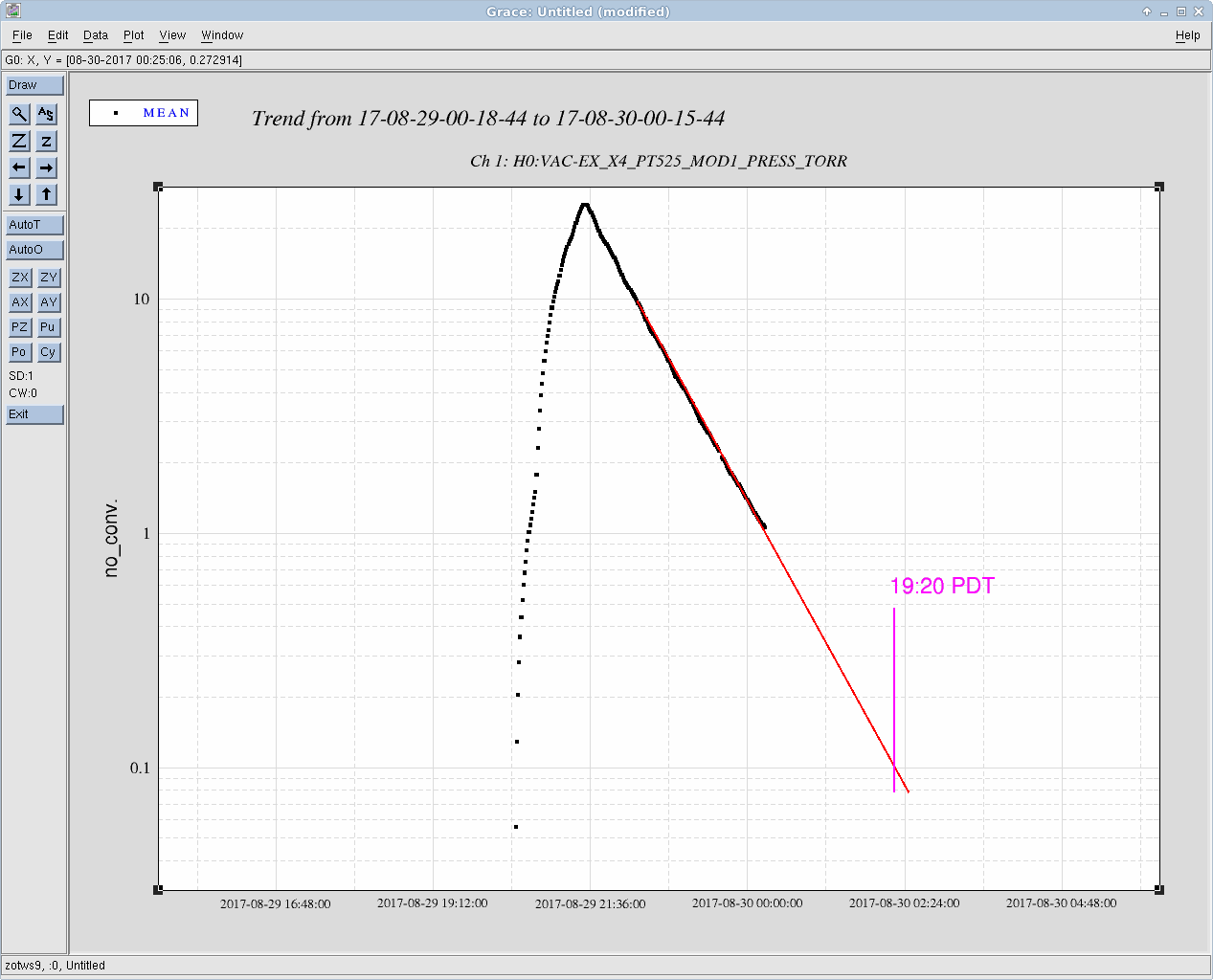
It looks like it won't be until ~19:20p local time (PDT) before we hit the desired BSC chamber pressure of ~0.1 [Torr], so we've deciding to punt on a second cycle for the evening. (For the record, that's 17:30 - 14:30 PDT ~= 5 hour pumpdown time from ~30 [Torr] to 0.1 [Torr].) The game plan is now to perform a second cycle starting at 07:00a local time (PDT) tomorrow, and another after mid day. Still hope to open EX gate valve to the arms and begin IFO recovery Thursday morning.